
Implementation of the performance management system in senior secondary schools in Botswana: the perspective of the senior management team
283
0
0
Full text
(2) Implementation of the Performance Management System in Senior Secondary Schools in Botswana: The Perspective of the Senior Management Team. Thesis submitted by Philip BULAWA Diploma in Secondary Education (University of Botswana), BA (University of Botswana), MEd (Bristol University) in June 2011. for the degree of Doctor of Philosophy in the School of Education James Cook University.
(3) For My late wife Agnes ―Agie‖ Bulawa and my late daughter Chendzimu Bulawa whose untimely deaths broke my heart.
(4) CONTRIBUTION OF OTHERS. Financial support I was awarded a scholarship by the University of Botswana which commenced in February 2007 and terminated in December 2010. This scholarship included my stipend for the duration of my study, and my travel to and from Botswana for my data collection. During the data collection the University of Botswana also provided my hotel accommodation, transport, and all the material I needed for the data collection. I thank the University of Botswana for their support.. The School of Education James Cook University also provided a Student Stipend to cover the costs of consumables used in this study. I thank them for this support.. Editorial Support and Research Assistance Dr Josephine Balatti, my Principal Supervisor, provided feedback and advice on all aspects of the research design and this thesis. I sincerely thank Jo for offering her time and energy to me.. Dr Pauline Taylor and Professor Colin Lankshear gave feedback and advice on the different chapters, and provided their understanding of the doctoral research process. Pauline and Colin‘s supervision enhanced my research journey and I thank them for this.. i.
(5) DECLARATION OF ETHICS. The research presented and reported in this thesis was conducted within the guidelines for research ethics outlined in the National Statement on Ethics Conduct in Research Involving Human Participants (1999), the Joint NHMRC/AVCC Statement and Guideline on Research Practice (1997), the James Cook University Policy on Experimental Ethics, Standard Practices, and Guidelines (2001), and the James Cook University Statement and Guidelines on Research Practice (2001). The proposed research methodology received clearance from the James Cook University Experimental Ethics Review Committee (approval number: H2714).. ____________________. _______________. ii.
(6) ACKNOWLEDGEMENTS. This research is very significant to me. Never in my wildest dreams did I ever imagine that I would one day complete a doctorate. I had expected that on completion of my Master of Education degree, I would work for the public service and then retire to give more time to my family. Joining the University of Botswana as a member of staff offered this delightful opportunity to undertake a PhD.. Many people at James Cook University supported me and assisted me in completing this work. I sincerely thank my Principal Supervisor Doctor Josephine Balatti and my Co-Supervisors Doctor Pauline Taylor and Professor Colin Lankshear for their guidance, feedback and support. I sincerely thank all in the School of Education for the support they gave me in this journey.. I thank the Ministry of Education in Botswana for allowing this research to take place within senior secondary schools. I also thank all members of the senior management teams in the schools for their participation in this research.. I thank in particular my two children Mbakiso and Tapiwa for enduring almost four years of my absence. I am genuinely grateful for their patience. They were terrific. I am incredibly indebted to all my brothers Jimmy ―Haskins‖ and Jonah ―Majuba‖, and sisters Esther ―Kobi‖, Ngoni ―Tono‖ and Masa ―Mararwa‖ for their inspiration and their confidence in me. I thank all my in-laws for the support and love which saw me through my years of non-stop study and the care they provided to my children while I was away. I thank in particular my sister in-law Segametsi Mafa and her husband Michael Mafa for taking good care of my little daughter Tapiwa, and my sister Ngoni for taking care of my son Mbakiso. I thank my young brother Jonah ―Majuba‖ for managing my cattle post for the period I was away. It‘s a difficult job to do but he persevered all the way. Thank you Majuba. .I sincerely thank my aunt Mma-Bayedzi ―Tebe‖ and my mother in-law Mma-Gaorelathe ―Miza‖ for the motherly love they have given me. I love them both very much.. I thank all members of my community in Sekakangwe for their support in my whole life experience. I love each one of them.. iii.
(7) I thank my Mother for loving me and for being my inspiration to my life. Although she passed away before I commenced this study, she had shaped the strong, confident and capable man I am today. Finally I thank my late wife Agnes ―Agie‖ and my late daughter Chendzimu for their love and inspiration. I can only wish they were here now. I will forever miss them. I dedicate this research to these two wonderful people that I loved so much.. iv.
(8) ABSTRACT Public sector organisations worldwide have implemented performance management systems to improve performance. They were initially designed by the private sector in western countries and then adopted by the public sector. Now, the performance management system (PMS) has become a global reform also implemented in the public sector of less developed countries such as Botswana. Success in implementing the PMS in public sector organisations has varied. This study investigates the less than satisfactory implementation of the PMS in the education sector in Botswana. While similar to performance management systems elsewhere, the PMS in Botswana differs from most in that it does not tie pay to performance. Furthermore, unlike most reforms of this magnitude in less developed countries that are funded by donor agencies, it was self funded. However, a similarity that it does share with other less developed countries is that it attempted to implement PMS models developed in western countries.. The PMS was introduced in the education sector in Botswana in 1999, but eight years later, schools had not yet fully implemented it. This study sought to investigate why the PMS had not become fully established in the senior secondary schools, the relatively better funded part of the schooling system. As well, the study limited itself to the perspective of the schools‘ senior management teams, the on the ground implementers and managers of the PMS. The study used an adapted grounded theory approach to explore senior management‘s perceptions of the PMS in their schools. In total, interview data were collected from 94 senior management team members from 22 of the 27 senior secondary schools existing in Botswana in early 2008. The school heads were interviewed individually while deputy heads and heads of houses were interviewed in their respective schools as groups. The data were analysed using a repetitive process of coding to develop categories leading to theory development that explains the participants‘ lived experience of the implementation process.. This study concludes that eight years after the introduction of the PMS, the on the ground implementers in the senior secondary schools of Botswana are caught between the government‘s insistence that the PMS be seen as operating effectively (principally through reporting mechanisms), and a school environment that prevents this from happening. In summary, the PMS limps along as schools go about their business seemingly unaffected by the absence of a successfully embedded PMS.. v.
(9) Overall, the study showed that senior management did not reject the PMS reform. They saw it as a reform that could benefit their schools. The potential of the PMS to help senior management teams manage performance better was acknowledged. The use of the PMS as a tool for strategic planning and for holding people accountable for their performance through objective monitoring was identified as a strength. Value was also perceived in its requirement for teamwork amongst members of staff and in the professional development that would ensue from responding to teachers‘ professional needs. Senior management also recognised the significance of their role as ―overseers‖, a term acquired from their training, which involved the coordination of the school strategy plan; the cascading of the PMS to the entire staff; the internal monitoring of the implementation process; and reporting and liaison with regional office. However, the impediments they encountered constrained their capacity to effectively implement this reform.. In general, the difficulties resulted from a mismatch between the PMS and the existing cultural and organisational structures within the schooling system, and the school managers‘ lack of capacity to effect changes either to the existing school environment or to the PMS itself. Impediments reported included PMS performance indicators that did not match what teachers valued; school staff who did not have the skills required to implement the PMS; school managers‘ lack of confidence to lead the PMS; resourcing constraints; increasing resistance by staff; and failure to liaise with the regional office.. Two particular impediments constrained their efforts to effectively lead the implementation process. First, was the ministry‘s use of the cascade approach to implement the PMS. This approach followed a top-down hierarchical structure whereby the strategic plan at the ministry level was cascaded to departments, regions, and ultimately to the schools. Reporting was in the reverse order. When blockages between regional offices and schools occurred, the process faltered. As soon as this link was broken, as it did happen in some cases, implementation of the PMS did not work. Training also followed the cascade approach. The major problem with this ―train the trainer‖ approach was that the level of expertise of the trainers diminished at each level of the ―cascade‖. The quality of the information received at the. vi.
(10) school level was often distorted and did not accurately resemble the information delivered in the first round of training.. The second major challenge was trying to implement a reform that had been transplanted into an environment that was different from where it originated. Participants believed there was a mismatch between the PMS and their particular context. Not only did it originate in industry and the corporate world, but also in foreign countries different from Botswana. Despite this, the government had made no attempt to contextualise the PMS and had implemented it as a package across the whole public sector without undertaking trials or pilots.. Transplanted reforms from industry and from more developed countries have found their way into the schools of less developed countries. This study‘s focus on the school management‘s perspective of the implementation process of the PMS will inform not just policy makers in less developed countries, but also potential international foreign aid donors. To increase their chances of success, future school reforms need to better take into account the distinctive conditions at grass-root level in schools where the reforms are to be implemented.. vii.
(11) TABLE OF CONTENTS CONTRIBUTION OF OTHERS .......................................................................................................................... I DECLARATION OF ETHICS ............................................................................................................................ II ACKNOWLEDGEMENTS ............................................................................................................................... III ABSTRACT.................................................................................................................................................... V TABLE OF CONTENTS ................................................................................................................................VIII LIST OF TABLES .........................................................................................................................................XIV LIST OF FIGURES ........................................................................................................................................XV CHAPTER ONE: BACKGROUND TO THE STUDY ............................................................................................. 1 1.0 INTRODUCTION .............................................................................................................................................1 1.1 PURPOSE OF THE STUDY ..................................................................................................................................3 1.2 SIGNIFICANCE OF THE STUDY ............................................................................................................................4 1.3 SEQUENCE OF THE STUDY ................................................................................................................................5 CHAPTER TWO: THE BOTSWANA CONTEXT ................................................................................................. 7 2.0 INTRODUCTION .............................................................................................................................................7 2.1 BOTSWANA AT A GLANCE ................................................................................................................................7 2.1.1 Demographics of Botswana ..............................................................................................................7 2.1.2 Linguistic landscape of Botswana ...................................................................................................10 2.1.3 A brief history of Botswana .............................................................................................................11 2.1.4 Economic status of Botswana .........................................................................................................13 2.2 HISTORY OF EDUCATION IN BOTSWANA ............................................................................................................15 2.2.1 Pre-colonial education.....................................................................................................................16 2.2.2 Missionary and colonial education..................................................................................................17 2.2.3 Education at independence .............................................................................................................18 2.2.4 The first major review of the public education ................................................................................19 2.2.5 The second review of public education ...........................................................................................20 st. 2.2.6 Structure of the education system in the 21 century.....................................................................21 2.2.6.1 Private education ..................................................................................................................................... 21 2.2.6.2 Pre-school education ................................................................................................................................ 22 2.2.6.3 Primary education .................................................................................................................................... 23 2.2.6.4 Secondary education ................................................................................................................................ 24. viii.
(12) 2.2.6.5 Expansion of senior secondary education ................................................................................................ 25 2.2.6.6 Management of secondary education ...................................................................................................... 27. 2.3. IMPACT OF INCREASED PARTICIPATION ON TEACHER TRAINING .............................................................................27 2.4 TEACHER UNIONS ROLE IN POLICY DECISION MAKING ...........................................................................................30 2.5 IMPLEMENTATION OF REFORMS IN SCHOOLS IN BOTSWANA .................................................................................31 2.5.1 Implementation of performance reforms ........................................................................................31 2.5.2 Implementation of management reforms .......................................................................................32 2.6 THE IMPLEMENTATION OF THE PERFORMANCE MANAGEMENT SYSTEM IN BOTSWANA ...............................................34 2.7 SUMMARY..................................................................................................................................................39 CHAPTER THREE: LITERATURE REVIEW ...................................................................................................... 40 3.0 INTRODUCTION ...........................................................................................................................................40 3.1 NEO-LIBERALISM AND MANAGERIALISM AT WORK IN THE PUBLIC SECTOR ................................................................40 3.1.1 The public sector .............................................................................................................................40 3.1.2 Neo-liberalism and managerialism .................................................................................................42 3.1.2.1 How neo-liberal policies are implemented in the public sector ............................................................... 43 3.1.2.2 How neo-liberal policies and managerialism have transformed education ............................................. 44 3.1.2.3 Critique of neo-liberal policies and managerialism .................................................................................. 45. 3.1.3 What is a performance management system? ...............................................................................47 3.1.3.1 The purpose of the PMS ........................................................................................................................... 47 3.1.3.2 Components of the PMS ........................................................................................................................... 49 3.1.3.3 The migration of the PMS to the education sector .................................................................................. 50. 3.2 PERFORMANCE MANAGEMENT SYSTEMS IN SCHOOLS IN DIFFERENT CONTEXTS .........................................................51 3.2.1 The United Kingdom context ...........................................................................................................51 3.2.2 The Australian context ....................................................................................................................56 3.2.3 The New Zealand context ................................................................................................................59 3.2.4 Implementing school reform in less developed countries ...............................................................61 3.3 THE PERFORMANCE MANAGEMENT SYSTEM IN THE SCHOOL CONTEXT .....................................................................69 3.3.1 Learnings to do with the implementation process ..........................................................................72 3.3.1.1 The PMS creates new tensions between school managers and staff ....................................................... 73 3.3.1.2 Inadequate professional development impedes implementation ........................................................... 76 3.3.1.3 The cascade approach to training can be problematic ............................................................................. 78 3.3.1.4 PMS requires time and resources for effective implementation ............................................................. 79 3.3.1.5 Teacher confidence in the PMS process is required for it to be accepted ............................................... 80. 3.3.2 Learnings to do with the PMS as a reform ......................................................................................81 3.3.2.1 Relevance of the PMS to a school’s core business is questioned ............................................................. 82 3.3.2.2 PMS can change the culture of the school for the worse ......................................................................... 82. ix.
(13) 3.3.2.3 The PMS is perceived as potentially undermining teachers’ professionalism .......................................... 83 3.3.2.4 Using the PMS to link performance to pay can be problematic ............................................................... 84. 3.4 CHAPTER SUMMARY .....................................................................................................................................86 CHAPTER FOUR: METHODOLOGY .............................................................................................................. 87 4.0 INTRODUCTION ...........................................................................................................................................87 4.1 ELEMENTS OF THE GROUNDED THEORY APPROACH .............................................................................................88 4.1.1 Overview of the grounded theory approach ...................................................................................89 4.1.2 Theoretical sensitivity ......................................................................................................................90 4.1.3 Theoretical sampling .......................................................................................................................92 4.1.4 The coding process ..........................................................................................................................93 4.1.5 Constant comparative method........................................................................................................96 4.1.6 Theoretical memos ..........................................................................................................................97 4.1.7 Criteria for judging quality of grounded theory studies ..................................................................98 4.2 CRITIQUE OF THE GROUNDED THEORY APPROACH ...............................................................................................99 4.2.1 Debate between Glaser and Strauss .............................................................................................100 4.2.2 Strengths of the grounded theory approach .................................................................................103 4.2.3 Limitations of the grounded theory approach ..............................................................................104 4.3 RESEARCH METHODS ..................................................................................................................................106 4.3.1 Participants in the study ................................................................................................................106 4.3.1.1 School heads ........................................................................................................................................... 107 4.3.1.2 Deputy school heads .............................................................................................................................. 109 4.3.1.3 Heads of houses ..................................................................................................................................... 110. 4.3.2 Interview data collection ...............................................................................................................111 4.3.3 Taping of interviews ......................................................................................................................114 4.3.4 Transcription .................................................................................................................................114 4.3.5 Data interpretation .......................................................................................................................115 4.3.5.1 Field notes .............................................................................................................................................. 115 4.3.5.2 Description of the coding process used .................................................................................................. 116. 4.4. ETHICAL CONSIDERATIONS ..........................................................................................................................125 4.5 ROLE OF THE RESEARCHER ...........................................................................................................................126 4.5.1 Concerns relating to the interview process ...................................................................................126 4.5.2 Response to my concerns as a novice researcher ..........................................................................128 4.5.3 Potential for bias during the study ................................................................................................130 4.6 LIMITATIONS OF THE STUDY .........................................................................................................................131 CHAPTER FIVE: RESEARCH FINDINGS I: THE PERFORMANCE MANAGEMENT SYSTEM “IN THEORY” ........ 133. x.
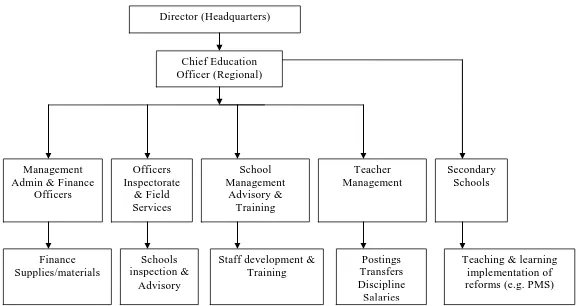
(14) 5.0 INTRODUCTION .........................................................................................................................................133 5.1 INTENDED PURPOSE OF THE PMS .................................................................................................................135 5.1.1 A reform for managing performance ............................................................................................135 5.1.1.1 A tool for strategic planning ................................................................................................................... 135 5.1.1.2 A tool for accountability ......................................................................................................................... 137. 5.1.2 A reform for improving performance ............................................................................................142 5.1.2.1 A reform for improving performance in the workplace ......................................................................... 142 5.1.2.2 Professional development perceived as key to improving performance ............................................... 146. 5.2 INTENDED ROLES OF THE SENIOR MANAGEMENT TEAM ......................................................................................147 5.2.1 School heads accountable for the PMS .........................................................................................148 5.2.1.1 Overseeing the implementation process................................................................................................ 150 5.2.1.2 Leading the implementation process ..................................................................................................... 150 5.2.1.3 Managing the performance management system ................................................................................. 153 5.2.1.4 Providing professional development ...................................................................................................... 154 5.2.1.5 Reporting to the regional office ............................................................................................................. 156. 5.2.2 Deputy school heads’ role essential to the PMS ............................................................................156 5.2.2.1 Assisting in leading the implementation process ................................................................................... 157 5.2.2.2 Delivering professional development to staff about the PMS ................................................................ 157 5.2.2.3 Overseeing the monitoring of classroom supervision ............................................................................ 157. 5.2.3 Heads of houses’ role essential to the PMS ...................................................................................158 5.2.3.1 Taking responsibility for staff and student performance in their ‘houses’ ............................................. 159 5.2.3.2 Checking and helping teachers develop their performance development plans ................................... 161 5.2.3.3 Providing professional development for staff in their ‘houses’ .............................................................. 162 5.2.3.4 Managing student welfare issues in their ‘houses’ ................................................................................ 162. 5.3 ANTICIPATED CONCERNS ABOUT THE PMS......................................................................................................163 5.3.1 The risk of inadequate resourcing .................................................................................................163 5.3.2 Uncertainty regarding how PMS defines performance quality .....................................................164 5.3.3 Limited skill base available to implement the PMS .......................................................................165 5.4 CHAPTER SUMMARY ...................................................................................................................................165 CHAPTER SIX: RESEARCH FINDINGS II: PERFORMANCE MANAGEMENT SYSTEM IN “PRACTICE” .............. 167 6.0 INTRODUCTION .........................................................................................................................................167 6.1 EXPERIENCED BENEFITS OF THE PMS .............................................................................................................168 6.1.1 Improved planning at school level.................................................................................................168 6.1.2 Better accountability .....................................................................................................................170 6.1.3 More school-based professional development..............................................................................171 6.1.4 More teamwork ............................................................................................................................172. xi.
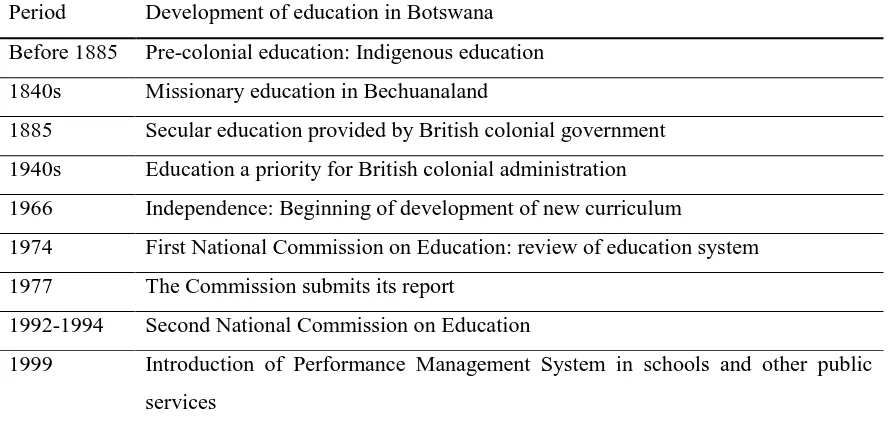
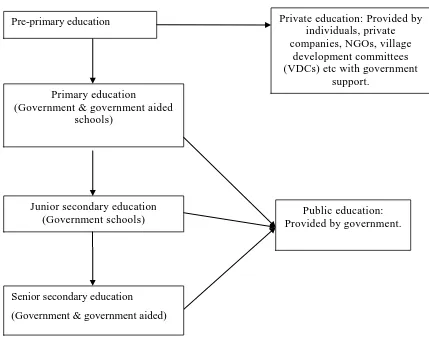
(15) 6.2 MANAGEMENT DISSATISFIED WITH THEIR CAPACITY TO IMPLEMENT THE PMS .......................................................173 6.2.1 Unable to effectively lead the PMS ...............................................................................................173 6.2.1.1 Lacking confidence to lead the PMS ....................................................................................................... 174 6.2.1.2 Losing confidence in the PMS ................................................................................................................. 175. 6.2.2 Unable to effectively manage the PMS .........................................................................................176 6.2.2.1 Inadequate resources available to support implementation ................................................................. 176 6.2.2.2 Increasing resistance .............................................................................................................................. 178 6.2.2.3 Managers of paper not people ............................................................................................................... 179. 6.2.3 Unable to effectively liaise with regional office ............................................................................180 6.3 FACTORS IMPEDING SENIOR MANAGERS IMPLEMENTING THE PMS ......................................................................181 6.3.1 The PMS in constant flux ...............................................................................................................181 6.3.2 Priorities of the PMS not a priority of the schools .........................................................................183 6.3.2.1 PMS skills not a priority for school personnel ........................................................................................ 183 6.3.2.2 Tasks not relevant to the core business of the schools .......................................................................... 184 6.3.2.3 PMS does not belong in schools ............................................................................................................. 185. 6.3.3 Inadequate training.......................................................................................................................187 6.3.3.1 Limited time for training......................................................................................................................... 188 6.3.3.2 Unskilled trainers.................................................................................................................................... 189. 6.3.4 Disconnect between schools and regional offices .........................................................................190 6.3.4.1 Performance indicators imposed not negotiated ................................................................................... 190 6.3.4.2 Using strategic plans to connect schools with regional offices unsuccessful ......................................... 191 6.3.4.3 Using reviews to connect schools with regional offices unsuccessful .................................................... 192. 6.4 CHAPTER SUMMARY ...................................................................................................................................193 CHAPTER SEVEN: SUMMARY, SYNTHESIS AND DISCUSSION .................................................................... 194 7.0 INTRODUCTION .........................................................................................................................................194 7.1 SUMMARY OF FINDINGS ..............................................................................................................................195 7.2 SYNTHESIS ................................................................................................................................................197 7.2.1 Senior management’s experience in implementing the PMS ........................................................197 7.2.2 Reasons why school managers cannot effectively implement the PMS ........................................200 7.2.2.1 Lack of fit between the PMS and the school context ............................................................................. 200 7.2.2.2 Senior management limited capacity to adapt....................................................................................... 201 7.2.2.3 Accountability chain broken ................................................................................................................... 202. 7.3 DISCUSSION ..............................................................................................................................................203 7.3.1 Pay not linked to performance ......................................................................................................203 7.3.2 Weak systemic links ......................................................................................................................204 7.3.3 Powerlessness of the managers ....................................................................................................205. xii.
(16) 7.3.3.1 PMS requirements for cultural and structural shifts in the school ......................................................... 206 7.3.3.2 Grass root commitment to the PMS limited ........................................................................................... 207 7.3.3.3 Limited capacity of managers to implement the PMS ............................................................................ 208. CHAPTER EIGHT: CONCLUSION ................................................................................................................ 212 8.0 INTRODUCTION .........................................................................................................................................212 8.1 SUMMARY OF THE STUDY ............................................................................................................................212 8.2 CONTRIBUTION TO THE FIELD .......................................................................................................................213 8.3 IMPLICATIONS FOR PRACTICE ........................................................................................................................214 8.3.1 Adequate training .........................................................................................................................214 8.3.2 External monitoring.......................................................................................................................215 8.3.3 Decentralised decision-making process ........................................................................................215 8.3.4 Decision to implement the PMS hasty ...........................................................................................216 8.3.5 Participation of implementers in the reform formulation process ................................................216 8.4 DIRECTIONS FOR FURTHER RESEARCH .............................................................................................................216 8.5 CONCLUSION ............................................................................................................................................217 REFERENCES ............................................................................................................................................ 218 APPENDIX A: PERFORMANCE MANAGEMENT SYSTEM FORMS FOR SCHOOL STAFF ................................ 234 APPENDIX B: INTERVIEW SCHEDULE FOR PARTICIPANTS ......................................................................... 240 APPENDIX C: PARTICIPANT INFORMATION SHEET AND CONSENT FORM ................................................ 242 APPENDIX D: TWO EXAMPLES OF FIELDNOTES ........................................................................................ 245 APPENDIX E: EXAMPLES OF CODES AT THE OPEN CODING LEVEL ............................................................ 255 APPENDIX F: EXAMPLE OF A MINDMAP GENERATED AFTER OPEN CODING ............................................ 258 APPENDIX G: JAMES COOK UNIVERSITY ETHICS APPROVAL..................................................................... 260 APPENDIX H: BOTSWANA MINISTRY OF EDUCATION FOR PROJECT APPROVAL ...................................... 262 APPENDIX I: EXTRACT FROM THE PERFORMANCE MANAGEMENT SYSTEM INDUCTION BOOKLET .......... 264. xiii.
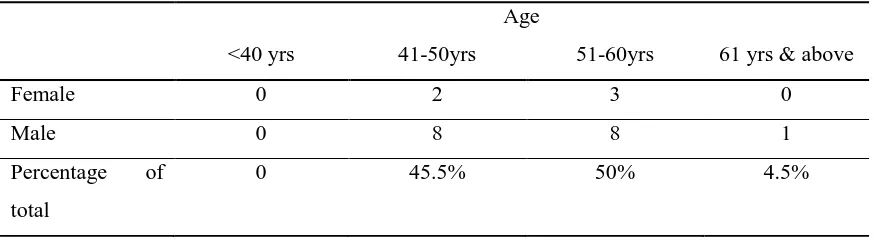
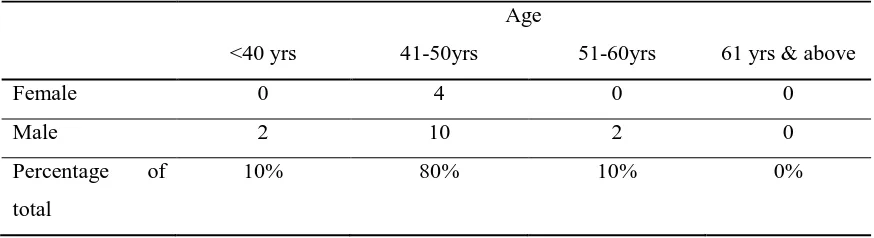
(17) LIST OF TABLES TABLE 1. POPULATION OF BOTSWANA 1971-2001 .......................................................................................................9 TABLE 2. SCHOOL HEADS BY GENDER .......................................................................................................................107 TABLE 3. AGE RANGE OF SCHOOL HEADS BY GENDER ...................................................................................................108 TABLE 4. SCHOOL HEADS’ QUALIFICATIONS BY GENDER................................................................................................108 TABLE 5. DEPUTY SCHOOL HEADS BY GENDER ............................................................................................................109 TABLE 6. AGE RANGE OF DEPUTY HEADS BY GENDER ...................................................................................................109 TABLE 7. DEPUTY HEADS’ QUALIFICATION BY GENDER .................................................................................................110 TABLE 8. HEADS OF HOUSES BY GENDER ...................................................................................................................110 TABLE 9. AGE RANGE OF HEADS OF HOUSES BY GENDER ...............................................................................................110 TABLE 10. HEADS’ OF HOUSES QUALIFICATION BY GENDER ...........................................................................................111 TABLE 11. EXTRACT OF THE OPEN CODING SPREADSHEET .............................................................................................119 TABLE 12. EXTRACT FROM SPREADSHEET ILLUSTRATING INCLUSION OF DATA FROM THE SECOND INTERVIEW ..........................120 TABLE 13. INTEGRATION OF STEMS AND CODES .........................................................................................................123 TABLE 14. SENIOR MANAGEMENT EXPECTATIONS OF THE PMS ....................................................................................134 TABLE 15. CATEGORIES PORTRAYING THE PMS AS A PLANNING TOOL ............................................................................136 TABLE 16. CATEGORIES CONCERNING THE PMS AS A TOOL FOR ACCOUNTABILITY .............................................................138 TABLE 17. CATEGORIES REPRESENTING VIEWS ABOUT IMPROVEMENT OF TEACHING AND LEARNING .....................................143 TABLE 18. CATEGORIES REPRESENTING VIEWS ABOUT PROFESSIONAL DEVELOPMENT ........................................................146 TABLE 19. CATEGORIES REPRESENTING EXPECTED ROLES OF SCHOOL HEADS ....................................................................149 TABLE 20. CATEGORIES REPRESENTING DEPUTY HEADS’ PERCEPTIONS OF THEIR PMS ROLE ................................................157 TABLE 21. CATEGORIES REPRESENTING HEADS’ OF HOUSES PERCEPTIONS OF THEIR PMS ROLE ............................................159 TABLE 22. SENIOR MANAGEMENT TEAMS’ EXPERIENCE OF THE PMS .............................................................................168 TABLE 23. CONCEPTUAL CATEGORIES PORTRAYING EVIDENCE OF EXPERIENCED BENEFITS OF THE PMS .................................168 TABLE 24. CATEGORIES REPRESENTING PARTICIPANTS’ CONCERNS ABOUT IMPLEMENTATION ..............................................173 TABLE 25. CONCEPTUAL CATEGORIES PORTRAYING CONSTRAINTS TO THE IMPLEMENTATION...............................................181. xiv.
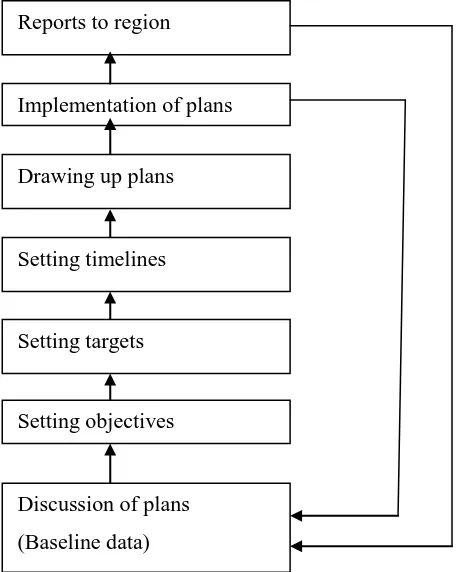
(18) LIST OF FIGURES FIGURE 1. MAP OF BOTSWANA ..................................................................................................................................8 FIGURE 2. PERCENTAGE AGE DISTRIBUTION OF BOTSWANA POPULATION 1971-2001 ..........................................................9 FIGURE 3. DEVELOPMENT OF THE EDUCATION SYSTEM IN BOTSWANA ..............................................................................15 FIGURE 4. STRUCTURE OF SCHOOLING IN BOTSWANA ...................................................................................................22 FIGURE 5. REGIONAL STRUCTURE OF THE DEPARTMENT OF SECONDARY EDUCATION IN BOTSWANA IN 2008 ...........................28 FIGURE 6. KEY ELEMENTS OF THE PERFORMANCE MANAGEMENT SYSTEM IN OPERATION ......................................................38 FIGURE 7. PERCEIVED RESPONSIBILITIES OF THE SCHOOL HEADS IN THE PERFORMANCE MANAGEMENT SYSTEM .......................149 FIGURE 8. FACTORS IMPACTING SENIOR MANAGEMENT’S CAPACITY TO IMPLEMENT THE PMS ............................................198. xv.
(19) CHAPTER ONE: BACKGROUND TO THE STUDY. 1.0 Introduction The period from the late 1970s through to the mid 1990s witnessed governments around the globe introducing management reforms in the public sector from the private sector as a way of improving performance. New Zealand, in particular, and other countries such as Australia and the United Kingdom, emerged as the leading proponents of such reforms which became models emulated elsewhere. Countries such as Korea, Brazil, Portugal and Sweden followed suit as government sector reform transformed public management (Kettl, 1997).. It was against this background that the performance management system came into effect as a management reform. Its intent was to address and redress concerns organisations had about performance (Sharif, 2002). In line with the global trend of public sector reforms, the government of Botswana in 1999 introduced the performance management system into the entire government system including the education sector (Republic of Botswana, 2002a).. Governments, including that of Botswana, wanted a performance management system that would ensure effective and efficient public service delivery at a minimal cost thus reducing the burden on taxpayers. This was seen as achievable, but as pointed out by Brignall and Modell (2000), only if the public services adopted management techniques from the private sector. According to Hughes (2003), governments, like the private sector, were now insisting on the development of performance indicators as a way of measuring progress in public organisations. The understanding was that the performance of staff over a given period of time would be measured more systematically than it had ever been before.. Brignall and Modell (2000) refer to this wave of public sector reforms as neo-liberal market systems whose orientation is that of business. As noted by Dixon, Kouzmin, and Korac-Kakabadse (1998), these reforms are based on the managerialist belief ―that there is a body of sound management practice applicable to the private sector that is generic in its scope and thus, directly transferable to the public sector‖ (p. 168). So the new public managerialism had become a major vehicle through which the old public service management style was being transformed (Hill, 2003; Simkins, 2000). Its proponents argued that it could replace the authority and rigidity characteristic of the public sector with flexibility (Kettl, 1997).. 1.
(20) Managerialism had the potential to reorganise the public sector along the lines of best commercial practice. Advocates argued that managerialism recognised the value of delegating managerial responsibilities, as well as the value of initiative and problem solving (Ball, 1998). Managerialism also brought with it new forms of surveillance and self-monitoring mechanisms such as appraisal systems, target-setting, and output comparisons (Ball, 1998). This is reflected in the increased demand for employee performance measurement and high demands for public accountability in an endeavour to achieve specified outcomes (Mahony, Hextall, & Menter, 2004). With specific reference to education, Cutler and Waine (2001, p. 71) argue that performance management requirements are a form of managerialism in which school managers ―operate as line managers with the ultimate carrots and sticks of the PRP [performance-related pay] system‖.. However, the reality has been that public sector organisations have found it difficult to cope with the massive changes they are being subjected to in the name of efficiency and accountability. The perceptions of management and staff regarding the need for change, including the manner it should be implemented, have been often negative (O‘Brien, 2002).. Governments have experienced difficulties in implementing performance management systems in public sector organisations. For instance, it has been difficult to determine what it is that has to be measured as well as how to interpret performance measures (Cutler & Waine, 2000). This includes, ―what contextual factors ought to be taken into account in comparing public sector organisations such as schools or health authorities‖ (Cutler & Waine, 2000, p. 326). In addition, Cutler and Waine (2000) pointed out that there has also been some argument that many performance indicators constitute inappropriate targets. Collecting performance data, as well as collating and analysing it, have also received criticism for consuming both time and resources (Waggoner, Neely, & Kennerley, 1999).. When performance management was introduced in Botswana in 1999, it was a major national initiative that received wide coverage by the country‘s media, both public and private. The politicians, together with top government officials, promoted the reform as having the potential to help the country solve the recognised problem of non-delivery of services in public sector organisations (Republic of Botswana, 2002a). Personally and professionally as an academic in the field of organisational studies in education at the University of Botswana, I developed an interest in how the performance management system (PMS) would be implemented, particularly in schools.. 2.
(21) In 2005, the government of Botswana engaged a team to evaluate the extent to which the implementation of the PMS had progressed in all the Ministries and their departments since its inception in 1999. The findings which were released in 2006 showed that in all these Ministries and departments there were major impediments which inhibited the successful implementation of the PMS (Republic of Botswana, 2006b). The question this raised for me was ―Why did these problems exist eight years after the inception of the PMS?‖ In terms of Fullan‘s (2000) analysis of reform implementation, one would have thought that after eight years, the PMS in Botswana would have gone beyond the implementation stage and be institutionalised. Fullan (2000) argued that reforms that were not institutionalised were, for instance, easily undone by change in leadership.. My interest in the question prompted this study which I commenced in 2007. It was against this background that this qualitative study looks at the implementation of the PMS in the public education sector in Botswana, specifically in senior secondary schools.. 1.1 Purpose of the study This project is a grounded theory study that sought to explore the implementation process of the performance management system in senior secondary schools in Botswana from the perspective of the senior management teams in the schools. The senior management team comprises the school head, the deputy school head, and heads of houses.. The focus of the study is on the senior management team of senior secondary schools for several reasons. First, is the recognition that it is this team that is held accountable for the overall management of the school and for the implementation of any policy in the school, which in this particular case, was the performance management system. In addition, I took into account the fact that in Botswana, most senior secondary schools have been in existence for a longer time in comparison to junior secondary schools, with some having been established before independence in 1966, and as such, have had more experience in the implementation of policy. Moreover, they are better resourced with more facilities of superior quality. With this comparative advantage over the other levels of education, the senior management teams in senior secondary schools were seen as standing a better chance of implementing the performance management system. Lastly, all senior secondary schools are readily accessible since they are located in areas where such infrastructure as roads is well developed. This, in my view, was an advantage since it would enable me to collect the data within the limited time available to me.. 3.
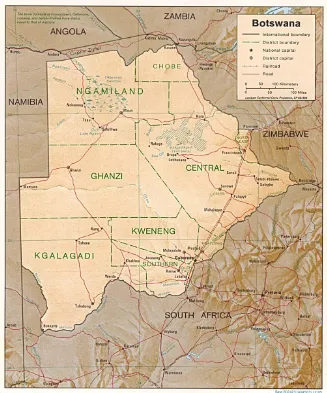
(22) This study was driven by three research questions:. 1. What are the perceptions of the senior management team in senior secondary schools regarding the purpose of the performance management system? 2. What are the perceptions of the senior management team concerning their roles as implementers of the PMS? 3. What are the perceptions of the senior management team regarding the factors that impact on the implementation of the performance management system?. The aim of the study therefore was to develop an understanding of why the problems identified in the government‘s commissioned evaluation should exist eight years on from the introduction of the PMS in one area of the public service. To do this, the approach this study took was to explore the on the ground implementers‘ understanding of three key elements of their experience, namely, the purpose of the PMS, their role in its implementation, and the organisational conditions that influence the implementation process.. 1.2 Significance of the study This study contributes to the body of research on performance management in schools in two ways. It adds to our understanding of the implementers‘ experience of implementing a performance management system in schools and it contributes to the research in this field conducted in less developed countries.. The empirical studies that have been undertaken about performance management systems have, in the main, been evaluative in nature. They have tended to evaluate the implementation process (e.g., Brown, 2005; Piggot-Irvine, 2000) or they have evaluated the effectiveness of performance management systems in improving performance (e.g., Cutler & Waine, 2001; Propper & Wilson, 2003). Studies about reforms in less developed countries, and especially Africa, also have tended to be evaluations. Kremer‘s (2003) evaluation of factors that affect performance in education in less developed countries and Hacker and Washington‘s (2004) evaluation of the impact of the performance management system in the public service in Botswana are two examples.. In contrast with most empirical studies in the field of performance management, this study is not an evaluation. The focus of this grounded theory study is on the senior management teams‘ perceptions about the process of implementing the PMS in their schools. In this study, the senior 4.
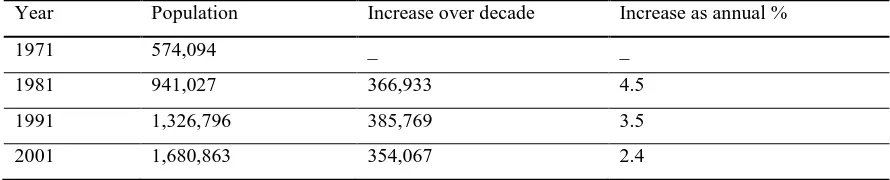
(23) managers had the opportunity to express their own views regarding what they were doing or supposed to be doing without being judged or evaluated. The substantive theory inductively developed from this study is based on the participants‘ perspectives of their own experiences of what they were doing. As Glaser (2002) pointed out, grounded theory is a perspective based methodology in which the researchers have a responsibility to discover people‘s multiple perspectives in the data.. While there is an extensive body of research, albeit mainly evaluative, on performance management systems in schools, these studies have mainly taken place in western countries. Very few studies have been conducted about the implementation of this reform in schools in African countries. This study contributes to a small but developing research literature on the performance management system in African countries.. 1.3 Sequence of the study This thesis has eight chapters, with chapter one explaining the purpose and the significance of the study. Chapter two presents the contexts necessary to make meaning of the case. These include an overview of the country, the education system and the circumstances that led to the implementation of the PMS across the country‘s public service.. Chapter three, the literature review chapter, reviews empirical studies about the performance management system as a global reform intended to ensure greater efficiency in the public service. It highlights the different perspectives regarding this particular trend especially as it concerns education. Discussed are the learnings gained from the implementation of performance management in schools in western countries and in less developed countries. Chapter four outlines the research methodology adopted for this study and its limitations. It provides a comprehensive explanation on the methodology of grounded theory including justification for its choice in this study. It further explains in detail the research procedures including the data collection and analysis processes.. The research findings are presented in chapter five and chapter six. Chapter five focuses on the participants‘ understanding of what the PMS should have been ―in theory‖. The chapter includes the participants‘ perceptions of the intended purpose and intended benefits of the PMS, the role they anticipated to take in the implementation and the challenges they expected. Chapter six focuses on the PMS ―in practice‖. Here are reported the participants‘ perceptions regarding their 5.
(24) actual experiences in attempting to implement the PMS. These include their perceptions about the benefits their schools had experienced from their efforts to date in implementing the reform and also the challenges they encountered in embedding the PMS in their schools.. Chapter seven is an analysis and interpretive discussion of the research findings leading to an explanation for why senior management teams in Botswana found implementing the PMS in their schools a problem. The final chapter, chapter eight, describes the contribution that this study has made to our knowledge on implementing performance management reforms in schools and the implications it has for practice. To conclude, areas for further research are recommended.. 6.
(25) CHAPTER TWO: THE BOTSWANA CONTEXT. 2.0 Introduction This chapter provides overviews of the contexts in which the Botswana senior secondary schools operate. As an introduction, a brief historical and socio-cultural account of pre- and postindependence Botswana is given. An overview of the development of education from the precolonial period through to the missionaries, the colonial era and to the present day is then presented. The overview shows that education did not just come with colonisation; formal and informal education existed prior to colonisation. In the discussion of post-colonial education, reference is made to pre-primary, primary, and junior secondary education as well as to senior secondary education. Although the study pertains to senior secondary schools only, developments at these other levels of education have had an impact on the expansion of senior secondary education. The chapter concludes with an overview of the more recent reforms leading up to and including the PMS that have been implemented in the education sector and in particular, in senior secondary schools.. 2.1 Botswana at a glance 2.1.1 Demographics of Botswana Botswana is a landlocked country with a total land area of 582, 000 square kilometres, about the same size as Kenya and France. It shares borders with Namibia, South Africa, Zambia and Zimbabwe. Botswana is far away from the sea, and rainfall in the country is low and unpredictable (Tsayang & Bulawa, 2007). The map in Figure 1 shows the location of Botswana in relation to its neighbouring countries in southern Africa.. Botswana is sparsely populated. The population and housing census is conducted every ten years and the last census held in 2001 recorded the country as having a population of 1,680,863 people (Republic of Botswana, 2003a). The locations of the senior secondary schools reflect the density of the population. Most of the schools are along the eastern margin of the country. Twenty-three of the 27 senior secondary schools are located less than two hundred kilometres from the railway line and main road linking major urban and semi-urban areas such as Lobatse, Gaborone (the capital), Palapye and Francistown. Only four senior secondary schools are located outside this area in Letlhakane, Maun, Gantsi and Kang. The number of senior secondary schools has increased by one to 28 since the data collection was undertaken.. 7.
(26) Figure 1. Map of Botswana Courtesy of the University of Texas Libraries, University of Texas Austin. (http://www.lib.utexas.edu/maps/africa/botswana_rel95.jpg) The population of Botswana over the last 30 years has shown trends that have consequences for education. Table 1, which summarises data from national records (Republic of Botswana, 2003a), shows that the population has increased from one decade to the next but that the average annual growth rate has declined. For example, for the decade 1991-2001, the average annual growth rate was 3.5% but for the decade 1991-2001, the growth rate was 2.4%. An important feature of Botswana‘s population is that it is predominantly youthful (see Figure 2), with the population aged 15 years and under constituting approximately 36.75% of the total population, while the sixty-five plus cohort is only 5%. The 15 years and under age group shows a 8.
(27) decline from the 1981 and 1991 levels of 47.7% and 43.2% respectively (Republic of Botswana, 2003a) to 36.7% in 2001 (Tsayang & Bulawa, 2007). Table 1. Population of Botswana 1971-2001 Year. Population. Increase over decade. Increase as annual %. 1971. 574,094. _. _. 1981. 941,027. 366,933. 4.5. 1991. 1,326,796. 385,769. 3.5. 2001. 1,680,863. 354,067. 2.4. Note. Table compiled from data in the National Development Plan 9 2003/04-2008/09 (Republic of Botswana, 2003a).. Figure 2. Percentage age distribution of Botswana population 1971-2001 Note: From 2001 Population and Housing Census Dissemination Seminar Republic of Botswana, 2003, Gaborone: Government Printer. http://www.cso.gov.bw/images/stories/Census/paper7.pdf The declining rate of population increase including that of young people could be attributed to the declining fertility rate (Tsayang & Bulawa, 2007). The HIV/AIDS pandemic that has affected the country may also have contributed to this decline. According to Greig and Koopman (2003), data from UNAIDS in 2002 estimated that 38.8% of the sexually active group aged between 15 and 49 years in Botswana was HIV positive. 9.
(28) The large 15 and under age group nevertheless has exerted pressure on schools to cope with the very high demand for education at all levels of the system. Schools have had to accommodate an increasing number of students. The population of primary school pupils as reflected in the 2001 population census was 345 845 for the year 2006 while for 2008 it was estimated at 352 792. The secondary school population was 160 690 for 2006 and was projected to be 166 880 for the year 2008 (Tsayang & Bulawa, 2007). The increases impact on the education system‘s capacity to cope with the demand to absorb more students in the schools.. 2.1.2 Linguistic landscape of Botswana The Batswana are an ethnically diverse group who speak a range of languages. Setswana, one of the local languages, is the national language. Before British rule commenced in 1885, the land that the missionaries and the British colonial government came to call Bechuanaland or land of the Bechuana, had belonged to some Setswana and non-Setswana speaking population groups (Arthur, 1998; Mgadla, 2003). The hunter-gatherer Basarwa people are generally acknowledged to have been in what is now Botswana before any other group. The eight ethnic groups known as the ‗principal‘ tribes of Botswana are all speakers of the Setswana language, though with dialectical variations. Up to 20% of the population belong to ethnic groups other than the eight Setswana speaking groups. These include the Babirwa, Basubiya, Bayeyi, Bakalanga, Bakgalagadi, Baherero, Batswapong, Hambukushu and the Basarwa. The largest of these other groups is the Bakalanga who speak Ikalanga and live mainly in the North East District and some parts of the Central District (Arthur, 1998). The Basarwa are Botswana‘s indigenous ethnic group, a group ―made up of about seventeen … ethnic groups who speak different languages‖ (Nyati-Ramahobo, 2000, p. 253). They are also known to some people as the ―San‖ or ―Bushmen‖. Both ―San‖ and ―Bushmen‖ are terms that are considered derogatory in Botswana and Basarwa is officially used to refer to them (Bolaane, 2004). It is difficult to establish their total population as the country‘s population census does not provide population figures for the different ethnic groups. According to Nyati-Ramahobo (2000), they are estimated at four percent of the total country‘s population. They are found in several parts of the country including the Kalahari, Nata, Boteti and Okavango (Solway & Lee, 1990). No exact figures are available on the ethnic composition of the population. Data are not collected on this aspect of the population in the census. 10.
(29) English is the official language of the Batswana, a decision taken upon gaining independence from Britain in 1966. English is also the language of instruction in schools from the second year of primary school onwards; prior to the second year, the local language is the medium of instruction. English, however, still effectively remains a foreign language for the majority of the population.. In spite of English having been declared the official language and medium of instruction, for the majority of students and teachers it is either a second or third language, an issue that impacts on teaching and learning. For example, some students mainly the Basarwa and others living in the Kgalagadi District, one of the remote districts in the southwest of Botswana, can neither speak English nor Setswana and yet they cannot learn in their own languages. Furthermore, the common practice of transferring teachers from one geographical region to another means that most of the teachers in schools with such language problems cannot speak the local languages spoken by the students.. 2.1.3 A brief history of Botswana In addition to the official language, Botswana lives with other legacies from the British including aspects of its political and legal systems. However, prior to the arrival of the British, the Batswana had their own societal structures that organised community life.. Historically, the Batswana lived in a capital village, with crop production lands around the village, while the grazing lands were located beyond that. The organisational pattern of the different Batswana groups revolved around a kgosi (chief) usually the oldest male in the lineage of the royal family. Other members of the extended family were appointed as wards headmen within the larger village (Adamolekun & Morgan, 1999). According to Morapedi (2005), these pre-colonial groups were independent and autonomous, each headed by the Kgosikgolo (paramount chief) who was head of his own tribe and did not have any superior authority to whom he had to pay allegiance.. Botswana attained self-governance in 1965 after eighty years as a British Protectorate (Hacker & Washington, 2004; Republic of Botswana, 2003a). According to Morapedi (2005), the Bechuanaland Protectorate was established by what was called the Order-in-Council of 1885 as part of the ―Scramble for Africa‖ (p. 177) by European countries which resulted in most of the African countries coming under European rule (Tsayang & Bulawa, 2007). Although Britain was reluctant to declare a protectorate over Bechuanaland, she was compelled to do so because of the perceived 11.
(30) threat posed by the Germans, Portuguese and Boers. The British fear was the possibility of Bechuanaland falling under the control of any of these rival countries. They feared that this could have led to the sealing off the road to the north which was perceived as providing access to riches in such parts of the world as Central Africa (Morapedi, 2005).. Botswana attained her independence on 30 September, 1966. Unlike many African countries, this did not happen after a protracted war between the colonial country and the colonised. Instead, radical nationalists such as the Botswana People‘s Party which was formed in 1960 and demanded independence, mobilised people around the issues of racial discrimination which characterised the colonial government. One way in which they put pressure on the government to accede to their demand for independence was to call a boycott of white-owned businesses (Mogalakwe, 2006).. At independence, Botswana launched its own constitution and governmental arrangements, whose features included an elected President by the National Assembly and a parliament in which the majority party formed the government. The country therefore adopted a Westminster parliamentary government similar to that of the colonial power Britain. The elections were to be held every five years through a multiparty democracy. A fifteen member House of Chiefs was also created to advise government on matters relating to customary laws, practices, and tribal affairs, but its advice was not to be constitutionally binding (Adamolekun & Morgan, 1999). Also described as significant by Adamolekun and Morgan (1999) was the country‘s constitution which documents civil liberties. These, together with other laws, are interpreted by an independent judiciary. The country adopted Roman Dutch common law and English criminal law. These were complemented by traditional courts which use customary law to resolve civil and criminal disputes depending on the preferences of the parties in the dispute. Customary courts are presided over by the dikgosi (chiefs) in the villages and secular court presidents in urban areas (Adamolekun & Morgan, 1999).. As a British colony, the institutions and culture of the colonial power were imposed on Botswana, with many Batswana made to believe that their cultural heritage was inferior to that of the British (Republic of Botswana, 1977). One indication of the British cultural imposition on the Batswana was in the late colonial period when the British gave their High Commissioner power to appoint, suspend or to dismiss dikgosi (chiefs). Chiefs were no longer able to rule independently but had. 12.
(31) their previous powers concerning law and order removed and carried out by what were called the native authorities appointed by the High Commissioner (Adamolekun & Morgan, 1999).. As pointed out by Morapedi (2005), the powers of dikgosi (chiefs) were reduced through what the British colonial government referred to as the Order-in-Council of 1891. This meant that the High Commissioner could only respect traditional law and custom provided they did not contravene laws, interests and policies of the British colonial government. After independence the new government further scrapped much of what was left of the powers of the dikgosi (Morapedi, 2005), and they are now civil servants paid by government under the direct supervision of a cabinet minister (Adamolekun & Morgan, 1999). Over time, Botswana‘s traditional practices such as the customary laws have been drastically eroded in a country now dominated by a western culture (Morapedi, 2005).. 2.1.4 Economic status of Botswana Since independence, Botswana has made great advances in economic and social terms. When the country became independent in 1966, it was predominantly rural and ranked amongst the 25 poorest in the world (Clover, 2003; Fombad, 1999). It depended mainly on agriculture, with the beef industry being the mainstay of the economy in terms of export earnings (Republic of Botswana, 2003a). It also depended on labour migration to the South African mines (Meyer, Nagel, & Snyder, 1993). Prospects of economic development appeared remote and the government depended heavily on foreign aid for both its investment projects and recurrent expenditure. The country‘s remarkable social and economic growth has been mainly a result of the mining and processing of minerals, especially diamonds (Tsie, 1996). Clover (2003) draws attention to the Moody‘s Investor Services which has given Botswana an A-plus credit rating in recent years, which has been the highest sovereign credit rating in Africa. Clover (2003) further states that the country has continued to experience one of the highest levels of per-capita growth in the world. Botswana is unique in the Southern African Development Community (SADC) region as it has not adopted World Bank-IMF structural adjustment programmes. There has been no need to do so since it has always recorded substantial balance of payment surpluses. Clover (2003) notes that, unlike most other African countries, foreign aid represents a small portion of the country‘s national budget.. The country has hence moved from its previous ranking as one of the poorest African countries to a position of a middle-income country, making it one of the best economic performers globally 13.
(32) (Siphambe, 2000; Tsie, 1996). When African economies were experiencing slow growth in the 1970s, Botswana was the main exception experiencing the highest world economic growth (Collier & Gunning, 1999). One indicator of good performance in Botswana‘s favour according to Gylfason (2000) has been its expenditure on education which is rated to be among the largest in the world. According to Schiavo-Campo (1996), while the civil service in many African countries in the subSaharan Africa is described in literature as having continued to sharply deteriorate, Botswana has been applauded as one of the few exceptions. Fombad (1999) argues that the country‘s good economic performance can be partly attributed to a civil service that has proved to be ―competent and efficient‖ (p. 243) in the management of the economy.. Despite this impressive economic track record, the country faces several challenges. One of the major challenges is the country‘s narrow economic base which has proved an impediment to employment opportunities. The country‘s economy is not sufficiently diversified to create job opportunities. Although the government has responded by adopting economic diversification as a development strategy as reflected in its successive National Development Plans (NDPs), this economic diversification has not adequately addressed the problem of unemployment (Siphambe, 2000).. Clover (2003) shows that there are still many people who have not reaped the benefits of the country‘s economic growth and development success. Botswana continues to face such problems as high levels of unemployment, poverty and inequality. Clover provides some examples of pockets and regions of acute poverty mainly amongst what is often referred to as low-status ethnic groups in particular the Basarwa who live mainly in Remote Area Dweller (RAD) settlements and cattleposts. Cattle-posts are communal areas used for grazing and where pastoral farmers in the country keep their cattle and other domestic animals such as goats and sheep. The grazing areas are often far away from human settlements such as urban areas and villages, and therefore social facilities like schools are also unavailable at cattle-posts. It is mainly the Basarwa who are hired as cattle herders. Bolaane (2004) describes the Basarwa ―… as the most marginalised of all the groups of people in Botswana‖ (p. 401) while Good (1999) describes them as the group ―… most exploited and impoverished‖ (p. 191) in the country.. Affording the Basarwa education has remained a major problem and most of the children identified as missing from primary schools in Botswana are those of the Basarwa and other semi-nomadic minority groups in remote area settlements (Pansiri, 2008; Tshireletso, 1997). Low level of 14.
Figure
+7


Related documents
Keywords: Attention-deficit hyperactivity disorder (ADHD), cognitive behavioral therapy (CBT), booster sessions, randomized controlled trial.. * Correspondence:
The trial designated Prevention Of Decline in Cogni- tion After Stroke Trial (PODCAST) was designed to assess the safety and tolerability of intensive versus guideline BP and
AIM: This study aims to understand (a) the relationship between periodontal disease and metabolic syndrome and (b) the associations between periodontal disease and
Primers were designed based on genomic sequence data, and the products from multiple overlapping RT-PCRs allowed the verification and construction of the 3,099-bp coding sequence
The objective of such evalua- tions is to distinguish patients with treatment-resistant se- vere asthma, in whom the symptoms remain uncontrolled despite the highest level
ACF: Ambuja Cement Foundation; ASHA: Accredited social health activist; CHW: Community health workers; CSR: Corporate social responsibility; FGD: Focused group discussion;
relationship of BRAF V600E, TERT and NRAS mutations for papillary thyroid carcinoma patients in Northwest China.. Meiling Huang † , Changjiao Yan † , Jingjing Xiao, Ting Wang * and
1. Gonzalez-Diaz, H., Vilar, S., Santana, L., Uriarte, E., 2007, " Medicinal chemistry and bioinformatics--current trends in drugs discovery with networks topological
