EFFECTIVENESS OF MIRROR THERAPY UPON MOTOR FUNCTION OF UPPER EXTREMITY AMONG STROKE PATIENTS
By
PRADEEPHA. N
A DISSERTATION SUBMITTED TO THE TAMILNADU DR.M.G.R MEDICAL UNIVERSITY, CHENNAI, IN PARTIAL FULFILLMENT OF THE
REQUIREMENTS FOR THE DEGREE OF MASTER OF SCIENCE IN NURSING
EFFECTIVENESS OF MIRROR THERAPY UPON MOTOR FUNCTION OF UPPER EXTREMITY AMONG STROKE PATIENTS
Approved by the dissertation committee on : ___________________________
Research Guide : ___________________________
Clinical Guide : _____________________________
.
Medical Guide : ____________________________
A DISSERTATION SUBMITTED TO THE TAMILNADU DR.M.G.R MEDICAL UNIVERSITY, CHENNAI, IN PARTIAL FULFILLMENT OF THE
REQUIREMENTS FOR THE DEGREE OF MASTER OF SCIENCE IN NURSING
OCTOBER 2017
Dr. LathaVenkatesan,
M.Sc (N)., M.Phil (N)., Ph.D. (N).,
Ph.D. (HDFS)., M.B.A (HM) .,
Principal cum Professor Apollo College of Nursing Chennai – 600 095.
Dr. Lizy Sonia.A, M.Sc (N),Ph.D.(N)
Vice Principal
H.O.D of Medical Surgical Nursing, Apollo College of Nursing,
Chennai - 600 095.
Dr. Sivarajan Thandeshwaran,
MBBS., MRCP(UK)
Consultant Physician,
Stroke and Neurovascular Medicine Apollo Main Hospital,
DECLARATION
I hereby declare that the present dissertation entitled "Effectiveness of Mirror Therapy upon Motor Function of Upper Extremity among Stroke Patients" is the outcome of the original research work undertaken and carried out by me under the guidance of Dr.Latha Venkatesan, M.Sc (N)., M.Phil (N)., Ph.D. (N)., Ph.D. (HDFS)., M.B.A (HM)., Principal, Apollo College of Nursing, and Dr.Lizy Sonia.A, M.Sc (N)., Ph.D (N).,Vice Principal, Medical Surgical Nursing department, Apollo College of Nursing, Chennai. I also declare that the material of this has not found in anyway, the basis for the award of any degree or diploma in this university or any other university.
i
ACKNOWLEDGEMENT
“Give thanks to the LORD, for He is good; His love endures forever” I thank God Almighty for showering his blessings upon me and showing me the way to conduct my work with spirit of joy and enthusiasm throughout my study.
I dedicate my heartfelt thanks and gratitude to our esteemed leader Dr. Latha Venkatesan, M.Sc (N)., M.Phil (N)., Ph.D. (N)., Ph.D.(HDFS)., M.B.A (HM)., Principal cum Professor of Apollo College of Nursing for her tremendous help, continuous support, enormous auspice, valuable suggestions and tireless motivation to carry out my study successfully.
I take this opportunity to express my warm pleasure and deep sense of gratitude to my HOD Dr. Lizy Sonia. A, M.Sc (N)., Ph.D., (N)., Vice Principal, H.O.D of Medical Surgical Nursing, Apollo College of Nursing for her valuable support and continuous encouragement and inspiring guidance throughout my study.
I owe my special thanks and gratitude to Dr. K. Vijayalakshmi, M.Sc (N)., Ph.D(N)., M.A., (Psychology)., Research Coordinator, Apollo College of Nursing for her prolonged patience and continuous guidance in completing my study.
My genuine gratitude to Mrs.Dhanalaksmi, MSc(N)., Course Coordinator for her consecutive ideas and enormous concern.
ii
Main Hospital, Greams Road, for his valuable suggestions and opinion towards the study.
I profoundly thank Dr. Muralidharan, Director of Medical Education, Apollo Main Hospital and Dr.C.Paul Dilip Kumar, Additional Director of Medical Services, Apollo Speciality Hospital, Vanagaram and Ms.Sunitha.D Nursing Superintendent, Apollo Main Hospital for permitting me to conduct my study in their esteemed institution and providing continuous encouragement throughout the study.
I also extend my special thanks to all the Faculty in the Department of Medical Surgical Nursing for rendering their valuable guidance in completing my study.
I am immensely grateful to all the Experts for validating the tool. I am thankful to all the Head of the Departments, Faculty and my Colleagues who helped me directly or indirectly in carrying out my study.
I express my sincere gratitude to the Librarians of Apollo College of Nursing for their help throughout the study.
My special gratitude to Mr.R.Babu, Netway computers for his constructive and creative efforts in typing the dissertation
iii SYNOPSIS
An Experimental Study to Assess the Effectiveness of Mirror Therapy upon Motor Function of Upper Extremity among Stroke Patients at Selected Hospitals, Chennai.
The Objectives of the Study were,
1. To assess the level of motor function of upper extremity before and after mirror therapy in the control group and the experimental group of stroke patients.
2. To determine the effectiveness of the mirror therapy by comparing the motor function of upper extremity between the control group and the experimental group of stroke patients.
3. To assess the satisfaction regarding mirror therapy in the experimental group of stroke patients.
4. To find out the association between the demographic variables and the motor function of upper extremity among the control group and the experimental group of stroke patients.
5. To find out the association between the clinical variables and the motor function of the upper extremity among the control group and the experimental group of stroke patients.
iv
A quasi experimental study was conducted to achieve the objectives of the study. The present study was conducted at Apollo Hospitals, Chennai. The study subjects were selected using purposive sampling technique. The study included 30 subjects from Apollo Main Hospital and 30 subjects from Apollo Specialty Hospital who satisfied the inclusion criteria.
An extensive review of literature and guidance from experts laid the foundation for the investigator for developing demographic variable proforma, clinical variable proforma in order to obtain the baseline data by interview method. The researcher also used the observation checklist Fugl-Meyer upper extremity motor function assessment tool for stroke patients and rating scale to assess the satisfaction of mirror therapy. The data collection tools were validated and reliability was established. After confirming the feasibility and research ability through pilot study, the data for main study was conducted during a period of six weeks. The collected data was analyzed by using appropriate descriptive and inferential statistics.
The Major Findings of the Study were
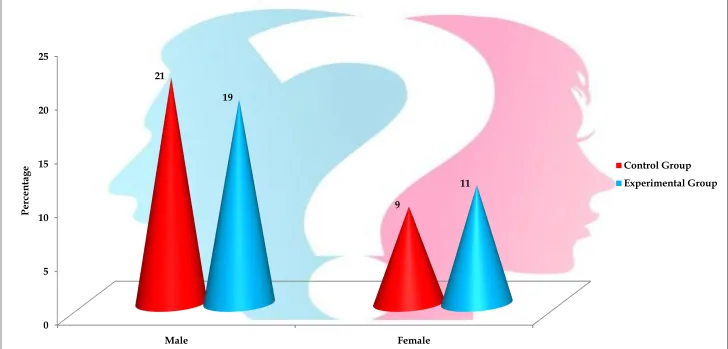
In the age group between 36-50 years, there were 36.66% of stroke patients are equally distributed, most of them were males (70%, 63.33%) and (43.33%, 43.33%) were employed in the control group and the experimental group respectively.
v
Most of the stroke patients were diagnosed to have ischemic stroke (63%, 63.33%) with duration of illness 1-4 months (33.33%, 26.66%), smokers (66.66%, 43.33%) and (30%, 43.33%) were alcoholics, (30%, 30%) had comorbid illness in the control group and in the experimental group respectively.
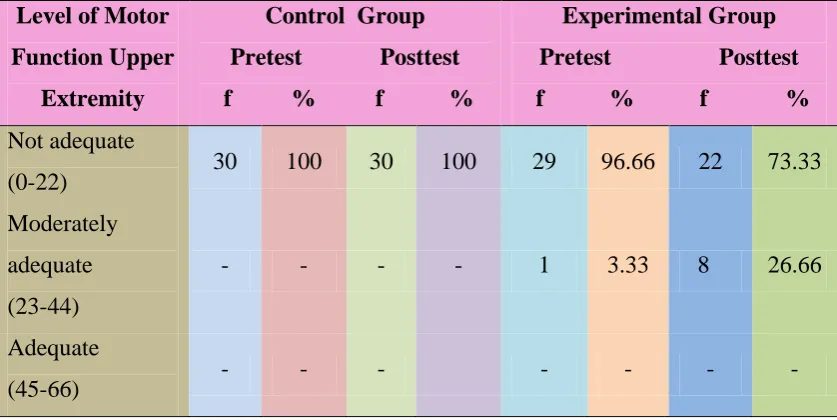
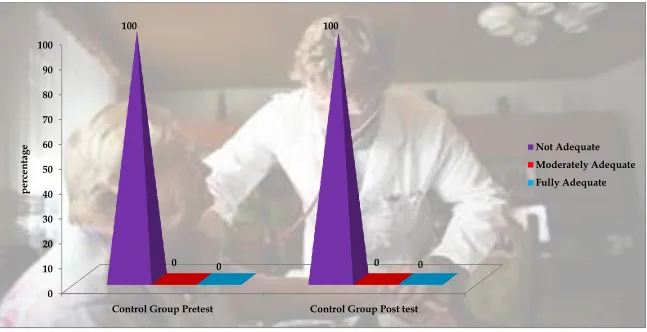
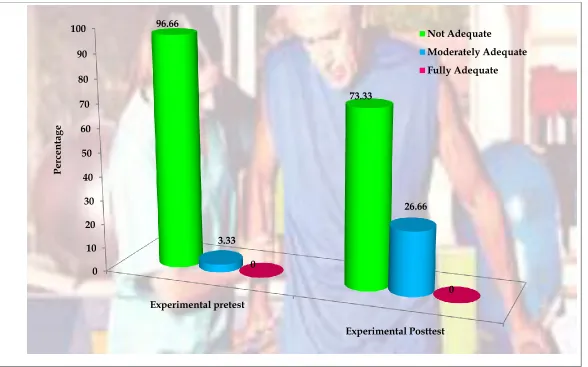
The motor function of the upper extremity in the control group was not adequate (100%) during the pretest and remained the same (100%) during the posttest also, whereas in the experimental group the motor function was moderately adequate (26.66%) during the posttest when compared to (3.33%) during pretest among stroke patients.
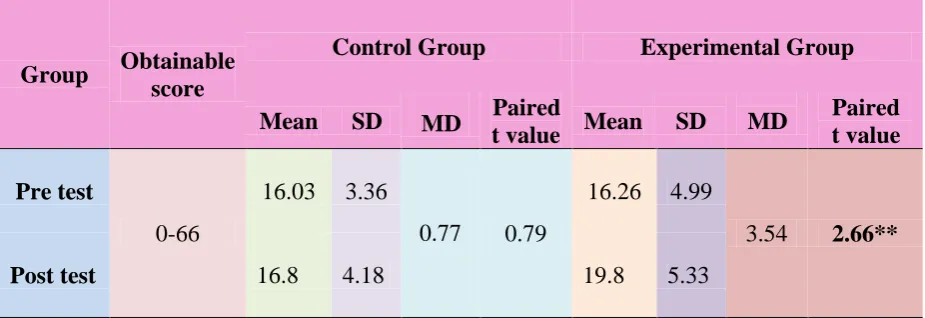
There was no significant difference between pretest (M=16.03, SD=3.36) and posttest (M=16.8, SD=4.18) in motor function of upper extremity among stroke patients in the control group, whereas there was statistically significant difference between pretest (M=16.26, SD=4.99) and posttest (M=19.8, SD=5.33) in motor function of upper extremity among stroke patients in the experimental group at p<0.01 level.
vi
extremity before and after mirror therapy in the control group and the experimental group of stroke patients was rejected.
Majority of the stroke patients undergoing mirror therapy in the experimental group were highly satisfied with the demonstration of mirror therapy (93.33%), the effectiveness of therapy (90%) and approach of researcher (93.33%).
There was no significant association between the demographic variables namely age, gender, occupation, educational status with motor function of upper extremity in stroke patients. Hence the null hypothesis H02 stating that, there will be no significant association between the demographic variables and motor function of upper extremity before and after mirror therapy in the control group and the experimental group of stroke patients was retained.
vii Recommendations
A similar study could be undertaken on larger scale for more valid generalization.
The present study could be replicated in different settings.
Similar study can be conducted to improve the lower extremity motor function among stroke patients.
A study could be conducted to assess the sensory function of stroke patients after mirror therapy.
Study can be conducted to compare the effectiveness of mirror therapy with other interventions upon upper extremity motor function among stroke patients.
viii
TABLE OF CONTENTS
Chapter Contents Page No.
I INTRODUCTION 1-13
Background of the Study
1 Need for the Study
3 Statement of the Problem
6 Objectives of the Study
6 Conceptual and Operational Definitions
7 Assumptions
9 Null Hypothesis
9 Delimitations
9 Conceptual Framework for the Study
9 Projected Outcome
13 Summary
13 Organization of the Research Report
13
II REVIEW OF LITERATURE 14-24
Stroke and its Complication
14 Mirror Therapy among Stroke Patients
18
ix
III RESEARCH METHODOLOGY
25-37 Research Approach 25 Research Design 26 Intervention Protocol 28 Variables 29 Research Setting 30 Population, Sample 31 Sampling Techniques, Sampling Criteria
32 Selection and Development of the Study Instrument
33 Psychometric Properties of the Instruments
34 Pilot Study
35 Ethical Considerations
36 Data Collection Procedure
36 Plan for Data Analysis
37 Summary
37
IV ANALYSIS AND INTERPRETATION
38-56
V DISCUSSION
57-63
VI SUMMARY, CONCLUSION, IMPLICATIONS
RECOMMENDATIONS AND LIMITATIONS 64-71
REFERENCES
72-76 APPENDICES
x
LIST
OF TABLES
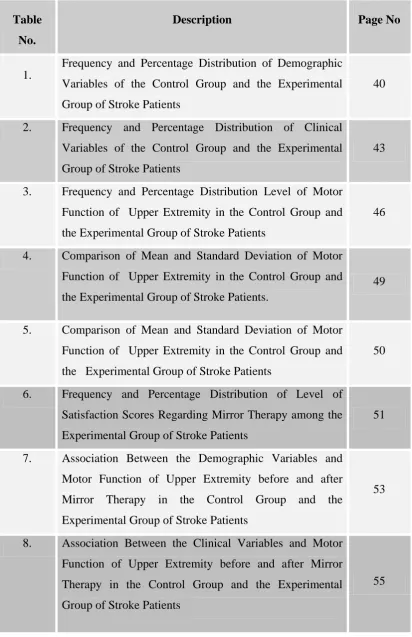
Table No.
Description Page No
1.
Frequency and Percentage Distribution of Demographic Variables of the Control Group and the Experimental Group of Stroke Patients
40
2. Frequency and Percentage Distribution of Clinical Variables of the Control Group and the Experimental Group of Stroke Patients
43
3. Frequency and Percentage Distribution Level of Motor Function of Upper Extremity in the Control Group and the Experimental Group of Stroke Patients
46
4. Comparison of Mean and Standard Deviation of Motor Function of Upper Extremity in the Control Group and the Experimental Group of Stroke Patients.
49
5. Comparison of Mean and Standard Deviation of Motor Function of Upper Extremity in the Control Group and the Experimental Group of Stroke Patients
50
6. Frequency and Percentage Distribution of Level of Satisfaction Scores Regarding Mirror Therapy among the
Experimental Group of Stroke Patients 51
7. Association Between the Demographic Variables and Motor Function of Upper Extremity before and after Mirror Therapy in the Control Group and the Experimental Group of Stroke Patients
53
8. Association Between the Clinical Variables and Motor Function of Upper Extremity before and after Mirror Therapy in the Control Group and the Experimental Group of Stroke Patients
[image:13.595.102.515.120.758.2]xi
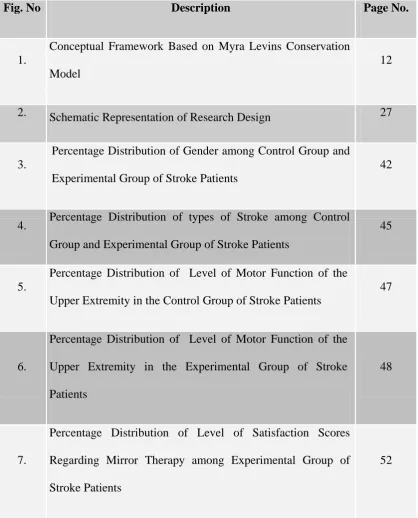
[image:14.595.99.518.117.636.2]LIST OF FIGURES
Fig. No Description Page No.
1.
Conceptual Framework Based on Myra Levins Conservation Model
12
2. Schematic Representation of Research Design 27
3.
Percentage Distribution of Gender among Control Group and Experimental Group of Stroke Patients
42
4. Percentage Distribution of types of Stroke among Control Group and Experimental Group of Stroke Patients
45
5.
Percentage Distribution of Level of Motor Function of the Upper Extremity in the Control Group of Stroke Patients
47
6.
Percentage Distribution of Level of Motor Function of the Upper Extremity in the Experimental Group of Stroke Patients
48
7.
Percentage Distribution of Level of Satisfaction Scores Regarding Mirror Therapy among Experimental Group of Stroke Patients
xii
LIST OF APPENDICES
Appendix Description Page No.
I Letter Seeking Permission to Conduct the Study xiii-xiv II Ethics Committee Clearance Letter xv-xvi III Letter Seeking Permission for Content Validity Xvii IV List of Experts for Content Validity xviii
V Content Validity Certificate xx
VI Research Participants Consent Form xxi
VII Letter Seeking Permission to Use the Study Tool xxii
VIII Plagiarism Originality Report xxiii
IX Certificate for English Editing xxiv
X Demographic Variables Proforma xxv
XI Clinical Variables Proforma xxvii
XII
Fugl Meyer Observational Checklist to assess the Motor Function of Upper Extremity
xxix
XIII
Rating Scale to Assess the Level of Satisfaction on Mirror Therapy In Stroke Patients
xxxiv
XIV Data Code Sheet xxxvi
XV Master Coding Sheet xxxvii
1 CHAPTER I INTRODUCTION Background of the study
“The more you do the better you become”
-Dena Tyson
Stroke is becoming an important cause of premature death and disability in low-income and middle-low-income countries like India, largely driven by demographic changes and enhanced by the increasing prevalence of the key modifiable risk factors. A majority of stroke survivors continue to live with disabilities, and the costs of on-going rehabilitation and long term care are undertaken by family members, which causes improvishement.
According to the World Health Organization, 15 million people suffer stroke worldwide each year. Of these, 5 million die and another 5 million are permanently disabled. High blood pressure contributes to more than 12.7 million strokes worldwide. (WHO, 2016).
2
Europe averages approximately 650,000 stroke deaths each year. There are more than 100,000 strokes in the UK each year; that is around one stroke every five minutes. There are over 1.2 million stroke survivors in the UK. Every two seconds, someone in the world will have a stroke. (Stroke Association, 2016).
In India, from 2003 to 2013, the relative rate of stroke death fell by 33.7% more among those >65 years and the actual number of stroke deaths declined by 18.2%. Yet each year, 795,000 people continue to experience a new or recurrent ischemic or hemorrhagic stroke. (WHO, 2016).
Arm function is ubiquitous in all aspects of a person’s life and thus, a loss of arm function can be devasting to stroke patients. The patient’s arm affected by hemiplegia is a common problem following a stroke, and it has been estimated that 50-80% of stroke patients experience such a problem. Despite rehabilitation treatments to an affected arm, permanent and persistent disability may result. Care management of a patient with a hemiplegic arm following a stroke is not the prerogative of one specific discipline in one specific specialty. (Wade et al, 2015). There are about 6.2 million non-institutionalized stroke survivors are alive today. (National Center for Health Statistics, 2012).
Mirror therapy is a form of motor imagery in which a mirror is used to convey visual stimuli to the brain through observation of one’s unaffected body part as it carries
3
Mirror therapy is a specific therapy designed to strengthen arms and hands weakened by a stroke. In mirror therapy, we use movements of the stronger hand and arm to trick the brain into thinking that the weaker arm is also moving. Researchers have shown that this tricking of the brain actually causesthe brain areas responsible for making the weaker arm move become stimulated. (Canadian Heart and Stroke Foundation, 2016).
A motor impairment to an arm following a stroke may be owing to either damage to the motor cortex of the brain or damage to the descending fibers of the corticospinal tract. If this neurological damage is above motor decussation, the signs and symptoms will be seen in the limb on the opposite side of the body. (Kenny, 2002).
Need for the study
Stroke death rates declined more among people aged ≥65years from 534.1 to 245.2 per 1,00,000 than among those aged 45 to 64 years from 43.5 to 20.2 per 1,00,000 or those aged 18 to 44 years from 3.7 to 2.0 per 1,00,000. (Mozaffarian, 2016).
Kim (2016) conducted a study on twenty-five stroke patients who were receiving physical therapy and other group received mirror therapy. The therapies were applied for 30 minutes per day, five times per week, for a total of 4 weeks. Upper limb function was measured with the action research arm test, Fugl- Meyer assessment, and the box and block test, and activities of daily living were measured with functional independence measure. The findings of this study demonstrated that mirror therapy is more effective than conventional therapy for the training of stroke patients to improve their upper limb function and activities of daily living.
4
of evaluating the effects of mirror therapy program in addition with physical therapy methods on upper limb recovery in patients with sub-acute ischemic stroke. 15 subjects followed a comprehensive rehabilitative treatment, 7 subjects were in control group received only conventional therapy and 8 subjects received mirror therapy for 30 minutes every day, five times a week, for 6 weeks. Results revealed there were improvement in the motor function of upper extremity and moreover mirror therapy is an easy and low-cost method to improve motor recovery of the upper limb.
Mirror therapy has been proposed to improve the motor function of chronic individuals with stroke from mild to moderate impairment with regard to severe upper limb paresis, mirror therapy has shown to provide limited motor improvement in the acute or sub-acute phase. The aim of this study was to determine the effectiveness of mirror therapy on chronic stroke survivors with severe upper-limb impairment in comparison with passive mobilization. Results of this study is in comparison with passive mobilization, mirror therapy in chronic stroke survivors with severely impaired upper-limb function may provide a limited but positive effect on light touch sensitivity while providing similar motor improvement. (Colomer, 2015).
Ezendam (2009) conducted a systematic literature search to identify studies concerning mirror therapy in upper extremity. The included journal articles were reviewed according to a structured diagram and the methodological quality was assessed. Fifteen studies were identified and reviewed. The present review showed a trend that mirror therapy is effective in upper limb treatment of stroke patients.
5
arm function were seen for constraint-induced movement therapy, electromyographic biofeedback, mental practice with motor imagery, and robotics. Improvements in transfer ability or balance were seen with repetitive task training, biofeedback, and training with a moving platform. Physical fitness training, high-intensity therapy usually physiotherapy, and repetitive task training improved speed.
Buccino (2006) found that Mirror neurons got activated during the execution of hand object-directed actions and during the observation of the same actions performed by other individuals. Researcher reviewed the experimental evidence on the role of the mirror neuron system in action understanding, imitation, complex actions, and internal rehearsal called motor imager of actions. On the basis of features of the mirror neuron system and its role in action understanding and imitation, researcher discussed the possible use of action, observation and imitation as an approach for systematic training in the rehabilitation of patients with motor impairment of the upper limb after stroke.
Stevens (2003) conducted a study to examine the effectiveness of using motor imagery training in the rehabilitation of hemiparesis. A motor imagery training program consisting of imagined wrist movements like extension, pronation-supination and mental simulations of reaching and object manipulation making use of a mirror box apparatus. The main outcome of this study was grip strength, 4 wrist functionality measurements, and 3 timed performance tests.
6
During the clinical experience, the researcher had come across several stroke patients having upper extremities disability after stroke. Regulated upper extremity motor function is essential for day to day activities for every stroke patient. Hence the researcher envisioned that providing mirror therapy improves the motor function of upper extremity among stroke patients. This therapy can be used in home care setting, rehabilitation center and also in hospital settings. Hence the investigator has undertaken this study to assess the effectiveness of mirror therapy upon motor function of upper extremity among the stroke patients.
Statement of the problem
An Experimental Study to Assess the Effectiveness of Mirror Therapy upon Motor Function of Upper Extremity among the Stroke Patients at Selected Hospitals, Chennai.
Objectives of the Study
1. To assess the level of motor function of upper extremity before and after mirror therapy in the control group and the experimental group of stroke patients.
2. To determine the effectiveness of the mirror therapy by comparing the motor function of upper extremity between the control group and the experimental group of stroke patients.
3. To assess the satisfaction regarding mirror therapy in the experimental group of stroke patients.
7
5. To find out the association between the clinical variables and the motor function of the upper extremity among the control group and the experimental group of stroke patients.
Conceptual and Operational Definitions Effectiveness
Conceptual definition
It refers to the capability of producing a desired result when something is deemed effective. (Oxford dictionary)
Operational definition
In this study it refers to improvement of motor function in upper extremity after administration of mirror therapy among stroke patients, as measured by Fugl-Meyer motor function assessment tool.
Mirror therapy Conceptual definition
Mirror therapy is a form of motor imagery in which a mirror is used to convey visual stimuli to the brain through observation of one’s unaffected body part as itcarries out a set of movements. (Heart and Stroke Foundation, 2016).
Operational definition
8 Motor function
Conceptual definition
Motor function is a skill which involves the precise movement of muscles with the intent to perform a specific act. (Educlaim).
Operational definition
In this study it refers to movements and actions of muscles of the upper extremity among stroke patients as measured by Fugl-Meyer motor function assessment tool.
Upper extremity Conceptual definition
The upper extremity is the region in a person extending from the deltoid region to the hand, including the arm, axilla and shoulder. (Wikipedia).
Operational definition
In this study it refers to the affected right or left upper limb from the deltoid region to the hand, including the arm, axilla and shoulder with the loss of motor functions occurred after stroke.
Stroke
Conceptual definition
Stroke occurs when a blood vessel that carries oxygen and nutrients to the brain is either blocked by a clot or bursts causes damage to the brain. (American Stroke Association, 2017)
Operational definition
9 Assumptions The study assumes that
Stroke patients cannot perform routine work due to stroke disability.
Upper extremity complications are common following stroke and may be seriously debilitating to the patients.
Mirror therapy will help to improve the motor functions of upper extremity among stroke patients.
Null Hypothesis
Ho1: There will be no significant difference in the motor function of upper extremity between the control group and the experimental group of stroke patients.
Ho2: There will be no significant association between demographic variables and motor function of upper extremity among the control group and the experimental group of stroke patients.
Ho3: There will be no significant association between clinical variables and motor function of upper extremity among the control group and the experimental group of stroke patients.
Delimitations
The study was limited to stroke patients who are having hemiplegia of upper
extremity
The data collection period was limited to 6 weeks duration.
Conceptual Framework for the Study
10
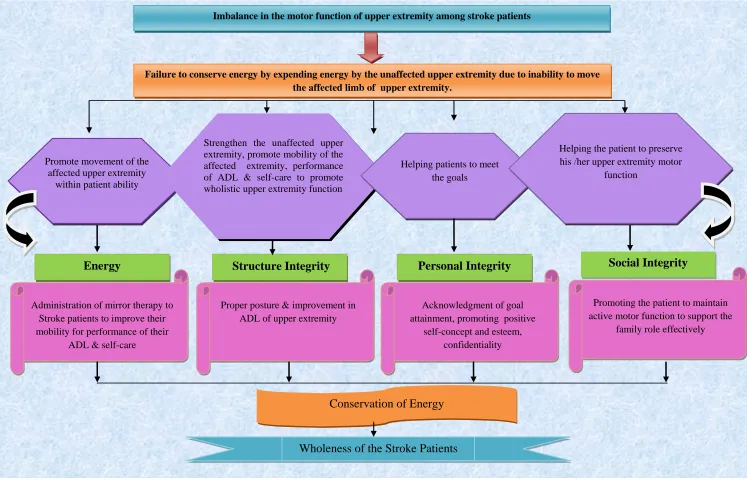
The conceptual framework of present study was based on Myra Levine’s energy conservation model. This model focus in promoting adaptation and maintaining wholeness using the principles of conservation. The model guides the nurse to focus on the influences and responses at the organismic level. The nurse accomplishes the goals of the model through the conservation of energy, structure, personal and social integrity. (Levine, 1967).
Key concepts of Conservational Principles
Myra Levine described the four Conservation Principles. These principles focus on conserving an individual's wholeness.
I . Conservation of Energy:
Refers to promote the movement through mirror therapy to stroke patients in order to improve their mobility for performance of their ADL and self-care within patient ability. Stroke patient’s experiences mobility to their upper extremity. A moderate intensity movement helps to restore the energy level.
II. Conservation of Structural Integrity:
Refers to maintaining or restoring the structure of body preventing physical breakdown and promoting healing. In this study, stroke patients were assisted to strengthen the unaffected upper extremity, promote mobility of the affected extremity, performance of ADL and self-care to promote wholistic extremity functions promoting mobility and assisting adaptation to decreased mobility.
III. Conservation of Personal Integrity:
11
promoting positive self-concept and self-esteem, confidentiality. Patients were helped to accomplish the goals.
IV. Conservation of Social Integrity:
12
Imbalance in the motor function of upper extremity among stroke patients
Failure to conserve energy by expending energy by the unaffected upper extremity due to inability to move the affected limb of upper extremity.
Promote movement of the affected upper extremity
within patient ability
Energy
Conservation of Energy
Wholeness of the Stroke Patients Strengthen the unaffected upper
extremity, promote mobility of the affected extremity, performance of ADL & self-care to promote wholistic upper extremity function
Helping patients to meet the goals
Helping the patient to preserve his /her upper extremity motor
function
Structure Integrity Personal Integrity Social Integrity
Administration of mirror therapy to Stroke patients to improve their mobility for performance of their
ADL & self-care
Proper posture & improvement in ADL of upper extremity
Acknowledgment of goal attainment, promoting positive
self-concept and esteem, confidentiality
Promoting the patient to maintain active motor function to support the
[image:27.792.25.772.52.532.2]family role effectively
13
Projected outcome
This study will be helpful in obtaining evidence for the nurse in clinical practice. In turn, this will be helpful in improving the motor function of upper extremity among stroke patients and thereby empowering the nurses to gain efficiency with the treatment protocol.
Summary
This chapter has dealt with the background, need for the study and statement of the problem, objectives, conceptual and operational definitions, assumptions, null hypotheses, delimitations and conceptual framework.
Organization of Report
Further aspects of the study are presented in following five chapters. CHAPTER – II : Review of literature
CHAPTER – III : Research methodology includes research approach, research design, setting, Populations, sample and sampling techniques, tool description, content validity and reliability of tools, pilot study, data collection procedure and plan for data analysis.
CHAPTER – IV : Analysis and interpretation of data. CHAPTER – V : Discussion
14 CHAPTER II
REVIEW OF LITERATURE
A literature review is an organized written presentation of what has been published on a topic by scholars (Burns & Groove, 2014).
The task of literature review involves the identification, selection, critical analysis and reporting of existing information on the topic of interest. A review acquaints the researcher with what has been done in the field and minimizes possibilities of unintentional duplication. It justifies the need for replication, provides the basis for future investigations and helps to relate the findings of one study to another.
This chapter deals with a review of published and unpublished research studies and material related to the present study. The review helped the investigator to develop an insight into the problem area and in building the foundations for the study.
The review of literature for this study was presented under the following headings.
Stroke and its Complications
Mirror Therapy among Stroke Patients
Stroke and its Complications
15
performing a task, the cerebral cortex motor area of the right cerebral hemisphere activates. Thus, the left hemisphere, which is the dominant cerebral hemisphere due to the lateralization of the cerebral hemisphere, is more closely related with motor planning in ADL performance and the same relationships were shown after cerebral hemisphere injury due to stroke.
Human manipulatory skills require some of the most complex levels of brain function and interactions, subtended by central representations that include widely distributed neural networks across cortical and sub cortical structures. Consequently, dexterous behaviours used during daily routine and vocation are often impaired to varying degrees in patients with brain damage.
A major goal of rehabilitation research is to determine how neurological problems in specific patient groups affect normal mechanisms. Stroke rehabilitation is a combined and coordinated use of medical, social, educational,
and vocational measures to retrain a person who has suffered a stroke to maximal
physical, psychological, social, and vocational potential, consistent with
physiologic and environmental limitations. (Bonita, 2017)
16
Therefore, the upper limb function of stroke patients is an important factor in daily living that needs to be emphasized in the rehabilitation field.
Upper limb weakness following a stroke affects patients’ abilities to undertake activities of daily living and has a negative impact on rehabilitation treatment. Nurses have a role in providing therapy to patients and will need to apply expert clinical judgement and reasoning to assess and identify the effects of individual treatment techniques for patients with upper limb weakness. (Pollock, 2014).
India, like other developing countries, is in the midst of a stroke epidemic. There is a huge burden of stroke with significant regional variations. Stroke units, thrombolysis, and rehabilitation are predominantly available in urban areas, particularly in private sector hospitals. The government is focusing on early diagnosis, management, infrastructure, public awareness, and capacity building at different levels of health care for all the non-communicable diseases including stroke, an organized effort from both the government and the private sector is needed to tackle the rising stroke burden in India. (Pandian, 2013).
17
The onset of spasticity has huge variations and may occur shortly or more than one year after stroke.The current understanding of spasticity onset is complicated by the role of contractures, which have been assumed to arise out of spasticity but may have a role in its cause. Other possibly predictive factors for the risk of post-stroke spasticity have been identified, including early arm and leg weakness, left-sided weakness, early reduction in activities of daily living and a history of smoking.
Although capitalizing on existing therapies is well justified, flexibility has to be built into the system to facilitate the successful application of new diagnostic and therapeutic approaches. It should be possible to introduce new tools and technologies, revise protocols, and modify the composition of the stroke care team to fit the requirement of new developments in the field. By doing so, the stroke care system will remain flexible and will be amenable to incorporate advances that will continue to improve the care for the patient with stroke. (Hachinski, 2010).
Hemiplegia is paralysis of one side of the body. Hemiplegia results from damage to the motor area of the cortex or the pyramidal tract fibers. Haemorrhage or clot in the brain’s right side causes left-sided hemiplegia, and vice versa. This is because nerve fibers cross over in the pyramidal tract as they pass from the brain and spinal cord. Other cortical areas may be affected producing localized symptoms when voluntary muscle control is destroyed, strong flexor muscles overbalance the extensors. This can cause serious deformities (Polaski, 2010).
18
low birth weight, race/ethnicity and genetic factors. Well-documented and modifiable risk factors include hypertension, exposure to cigarette smoke, diabetes, atrial fibrillation and certain other cardiac conditions, dyslipidaemia, carotid artery stenosis, sickle cell disease, postmenopausal hormone therapy, poor diet, physical inactivity, and obesity and body fat distribution. Less well-documented or potentially modifiable risk factors include the metabolic syndrome, alcohol abuse, drug abuse, oral contraceptive use, migraine headache, hypercoagulability, inflammation, and infection. (Goldstein, 2006).
Mirror Therapy among Stroke Patients
Gurbuz (2016) conducted a study on the use of mirror therapy in motor function recovery of the upper extremity in stroke patients. The patients in both groups underwent conventional therapy for 4 weeks of 60 minutes/day for 5 days in a week among the stroke patients. The patients were evaluated at the beginning and end of the treatment by using the Brunnstrom stage, Fugl-Meyer Assessment upper extremity score, and the Functional Independence Measure self-care score. There was an improvement in Brunnstrom stage and the FIM self-care score in both groups, but the post-treatment FMA score was significantly higher in the mirror therapy group than in the conventional treatment group. Mirror therapy in addition to a conventional rehabilitation program was found to provide additional benefit in motor recovery of the upper extremity in stroke patients.
19
move as if he was moving the affected limb. A combination of mirror therapy with conventional rehabilitation obtained significant improvements mainly in motor function but not that much on sensory function and functional performance. About the effect of mirror therapy on hemi neglect, there are significant improvements.
A paretic upper extremity is a common consequence of a stroke. Upper extremity function is essential in most activities of daily living and therefore upper extremity motor recovery can help maintain independence and improve the quality of life for stroke victims. There are several evidence-based treatments for post stroke upper extremity recovery. Most treatments for improving the paretic upper limb are labour intensive and need one-on-one interaction with a therapist for several weeks. But mirror therapy is a simple, inexpensive, and patient-directed treatment that may provide better upper extremity capacity. (Park, 2015).
20
Lim, (2015) conducted study were the subjects were randomly divided into two groups. The mirror therapy group underwent a mirror therapy program together with conventional therapy for 20 minutes per day on 5 days per week for 4 weeks. The control group received a sham conventional therapy program under the same schedule as the mirror therapy group. The Fugl-Meyer Motor Function Assessment (FMA), Brunnstrom motor recovery stage, and Modified Barthel Index (MBI) were evaluated. In this study, they found that the mirror therapy containing functional task was effective in terms of improving the upper extremity functions and activities of daily living in patients with sub-acute stroke.
A randomized controlled trial which was conducted by Pandian (2014) Forty-eight patients were randomized to mirror therapy (n=27) or the control group (n=21). Improvement in the scores on the star cancellation test over 6 months was greater in the mirror therapy. Similarly, improvement in the mirror therapy group was observed in the scores on the picture identification task p< 0.001 and line bisection test (p=0.006). In patients with stroke, mirror therapy is a simple treatment that improves unilateral neglect. This study provides Class I evidence that for patients with neglect from thalamic and parietal lobe strokes, mirror therapy improves neglect.
21
When compared with all other interventions, mirror therapy was found to have a significant effect on motor function (p<0.001)). Additionally, mirror therapy was found to improve activities of daily living (p=0.02). Researcher found a significant positive effect on pain (p=0.03), which is influenced by patient population. The effects on motor function were stable at follow-up assessment after 6 months.
Radajewska (2013) conducted a study to evaluate the effect of mirror therapy on arm and hand function in sub-acute stroke patients. The study included 60 hemi paretic right-handed patients after ischemic stroke 8-10 weeks after onset. However, there was a significant improvement in self-care of activities of daily living in the right arm paresis subgroup in the mirror group measured using the Functional Index Repty. Mirror therapy improves self-care of activities of daily living for patients with right arm paresis after stroke.
Carvalho (2013) found in her research that mirror neurons are involved in imitative learning through interactions with neural motor areas in humans. The application of mirror therapy techniques, based on the functions of the mirror neuron system, in post-stroke patients has demonstrated good results, mainly when combined with other therapies. Moreover, the studies showed that the mirror neuron system interacts with vision, proprioception and motor commands, promoting the recruitment of mirror neurons and the cortical reorganization and functional recovery of post-stroke patients.
22
motor recovery of the upper limb in sub-acute stroke patients. While mirror therapy use has been advocated for acute patients with no or negligible motor function, it can be usefully extended to patients who show partial motor recovery. The easiness of implementation, the low cost and the acceptability makes this therapy a useful tool in stroke rehabilitation.
Lee (2012) confirms that mirror therapy program is an effective intervention for upper-limb motor recovery and motor function improvement in acute stroke patients. The purpose of this study was to evaluate the effects of the mirror therapy program on upper-limb motor recovery and motor function in patients with acute stroke. Twenty-six patients who had an acute stroke within 6 months of study commencement were assigned to the experimental group (n = 13) or the control group (n = 13). Both experimental and control group members participated in a standard rehabilitation program, but only the experimental group members additionally participated in mirror therapy program. In upper-limb motor recovery, the scores of Fugl-Meyer Assessment by (shoulder/elbow/forearm items, 9.54 vs. 4.61; wrist items, 2.76 vs. 1.07 hand items, 4.43 vs. 1.46, respectively) were improved more in the experimental group than in the control group (p< 0.05).
23
the two groups. The untrained left hand improved significantly more in the mirror training group compared with the control group. Hamzei (2012)
Rothgangel (2011) conducted a systematic review of studies regarding the use of mirror therapy interventions among adult patients with stroke. Mirror therapy was defined as the use of a parasagittal mirror or modified mirror device to superimpose movements of the unaffected limb on the affected limb. Studies were required to include outcome measures of activity level in patients with stroke. All 6 RCTs used a parasagittal mirror and the intervention was typically used in conjunction with conventional therapy. Review of the literature revealed moderate evidence to indicate that mirror therapy as an additional intervention improves recovery of arm function, after stroke.
Michielsen (2010) conducted a phase II randomized controlled trial. In this study he found the effectiveness for mirror therapy in chronic stroke patients and is the first to associate mirror therapy with cortical reorganization. The mirror therapy group performed bimanual exercises while watching the unaffected hand in a mirror, during physiotherapy sessions. The control group performed bimanual exercises at the same frequency and duration, with sight of both hands. Future research has to determine the optimum practice intensity and duration for improvements to persist and generalize to other functional domains.
24
equivalent control therapy. Outcome measures were the Fugl-Meyer sub scores for the upper. In the subgroup of 25 patients with distalplegia at the beginning of the therapy, mirror therapy patients regained more distal function than Control group patients. Mirror therapy improved recovery of surface sensibility. Neither of these effects depended on the side of the lesioned hemisphere. Mirror therapy stimulated recovery from hemi neglect.
Yavuzer (2008) conducted a randomized controlled trial to evaluate the effects of mirror therapy on upper-extremity motor recovery, spasticity, and hand-related functioning of inpatients with sub-acute stroke. In this study total of 40 inpatients with stroke, all within 12 months poststroke. The scores of the Brunnstrom stages for the hand and upper extremity and the FIM self-care score improved more in the mirror group than in the control group after 4 weeks of treatment (by 0.83, 0.89, and 4.10, respectively; all p<0.01) sub-acute stroke patients, hand functioning improved more after mirror therapy in addition to a conventional rehabilitation program compared with a control treatment immediately after 4 weeks of treatment and at the 6-month follow-up, whereas mirror therapy did not affect spasticity.
Summary
25
CHAPTER-III
RESEARCH METHODOLOGY
The methodology of research study is defined as the way the information from participants is gathered in order to answer the research questions or analyze the research problem.
This chapter provides a brief description of the different steps undertaken by the researcher for the study. It involves research approach, research design, setting, population, sample and sampling technique, sampling criteria, selection and development of the instruments, validity and reliability of instruments, pilot study, data collection procedure and plan for data analysis.
The present study was conducted to assess the effectiveness of mirror therapy upon motor function of upper extremity.
Research Approach
Research approach is the most significant part of any research. The appropriate choice of research approach depends on the purpose of research study which is undertaken.
26 Research Design
According to Polit and Beck (2016), a research design is the overall plan for addressing research questions, including specifications for enhancing the integrity of the study.
Quasi experimental design pre-test and post-test research design was used in this study.
O1 O2 O1 X O2
O1-Pre-test in the experimental group and the control group.
27
Figure: 2 Schematic Representation of Research Design Selection of samples through purposive
sampling technique
Quasi experimental research design
Control group of 30 stroke patients
Experimental group of 30 stroke patients
patients
Pre test
Motor function of upper extremity
Pre test
Motor function of upper extremity
Accessible Population Stroke Patients in Apollo
Hospitals Data collection using Demographic variable, Clinical variable proforma, Fugl- Meyer motor assessment tool,
Rating scale on level of satisfaction
Post test
Motor function of upper extremity
Post test
Motor function of upper extremity
Analysis and interpretation by descriptive and inferential statistics
Administration of mirror therapy Target Population
28 Intervention Protocol
In mirror therapy, a mirror is placed in the client’s sagittal plane so the client cannot see the affected upper limb. The client watches in the mirror the movements made with the healthy limb and simultaneously tries to move the affected limb on the other side of the mirror. To explain why the reflection of the healthy limb in the mirror helps with the motor recovery of the affected limb, the current hypothesis is that the mirror neurons in the brain are activated during the imitation movements and interact simultaneously with the motor neurons. Hence the affected limb hasten speedy recovery. The duration of mirror therapy is for 20-30 minutes for 5 days per week totally for a period of 3 weeks for each sample.
The movements in front of the mirror must be done simultaneously on the affected and the non-affected side. This encourages bilateral use of the upper limbs. If the mirror therapy involves use of an object by the healthy upper limb, the affected upper limb must try to reproduce the movement as accurately as possible but without the object.
Movements
• Flexion and extension of the shoulder, elbow, wrist and fingers. • Abduction and adduction of the shoulder and fingers
29 Actions
• Squeeze and release the fist • Open and close the hand • Tap the fingers on the table
• Oppose (touch) each finger to the thumb, one by one
• With the hand closed, try to lift each finger, including the thumb
Tasks
• Connect the dots
Variables
An abstract concept when defined in terms that can be measured is called a variable
Independent Variable
The variable that is believed to cause or influence the dependent variable is called as independent variable (Polit and Beck, 2016)
In this study, Mirror therapy was independent variable.
Dependent Variables
The variable hypothesized to depend on or be caused by another variable is the dependent variable. (Polit and Beck, 2016)
In this study dependent variable was motor function of upper extremity.
Attribute Variables
30
In this study, the attribute variables are all demographic characteristics of patients who are suffering from having stroke.
Research Setting
Setting is the physical location and condition in which data collection takes place in a study. (Polit and Beck 2016).
The present study was conducted at Apollo Main Hospitals, and Apollo Specialty Hospitals, Vanagaram in Chennai. These settings were selected on the basis of the feasibility and cooperation of concerned authorities to conduct the study. Apollo Main Hospital is Joint Commission Accredited and it is a part of Asian’s foremost integrated healthcare group. Apollo centre for excellence is powered by a relentless pursuit of perfection in Neurosciences and Cardiac specialty. The Apollo Neuro Intensive Care Unit is a 25 bedded NICU which exclusively treats neuro medical and neurosurgical patients.
31 Population
Population is the entire aggregation of cases which meet the designed set of criteria (Polit and Beck, 2016).
Target Population
The target population is the group of population that the researcher aims to study and to whom the study findings will be generalized.
In this study, the target population comprises of all patients who are having upper extremity hemiplegia after stroke.
Accessible Population
The accessible population is the list of population that the researcher finds in the study area.
In this study the accessible population comprises of patients who are having upper extremity hemiplegia in Apollo main hospital and Apollo Specialty Hospitals, Vanagaram, Chennai.
Sample
The Sample is the subset of the population, selected to participate in the study (Polit and Beck, 2016).
32 Sample Size
The sample size of this study consisted of 60 patients, in that 30 were in experimental group and 30 in the control group. The sample size is decided based on the feasibility and availability of the sample.
Sampling Technique
Sampling is the process of selecting a portion of the population to represent the entire population (Polit and Beck, 2016).
Purposive sampling technique was adopted for this study. Purposive sampling is also known as judgmental sampling in which the researcher chooses the sample based on who they think would be appropriate for the study.
In this study the researcher selected the patients admitted in wards and the patients coming for physiotherapy who met the inclusion criteria at Apollo Specialty Hospital and Apollo Main Hospital.
Sampling Criteria Inclusion Criteria
The study included,
Patients who were diagnosed to have stroke.
Patients with upper extremity hemiplegia with stroke. Adult male and female patients.
33 Exclusion Criteria
The study excluded,
Patients who are very sick and unable to co-operate Patients with altered consciousness.
Patients who underwent any surgery with in last 2 months Patients with sensory perceptual alterations.
Terminally ill patients.
Selection and Development of Study Instruments Demographic variable proforma
Clinical variable proforma
Fugl-Meyer motor function assessment tool
Tool to assess the satisfaction of mirror therapy among stroke patients.
Demographic Variable Proforma
This proforma was used by the researcher for collecting demographic variables such as age, gender, occupation, educational status.
Clinical Variable Proforma
In this study, Clinical variables includes, types of stroke, side affected with stroke, habits of smoking, alcohol and history of co-morbid illness.
Fugl-Meyer Motor Function Assessment Tool
34
fully performed with scores ranging from 2 to 0, except item number 1 and 2. Hence the total obtainable score was 0-66. Item number 1 & 2 had 2 responses such as elicited and not elicited with scoring 0 and 2 respectively.
Obtained score is converted into percentage and interpreted as follows Score Interpretation
Score Percentage Level of motor function
0-22 33 Not adequate
23-44 31 Partly adequate
45-66 36 Adequate
0=Not Adequate 1=Partly Adequate 2=Adequate
Scoring was done based on the assessment of subparts in the tool.
Psychometric Properties of the Instruments Validity
Content validity is the degree to which an instrument measures what it is supposed to measure. Content validity is the sampling adequacy of the content being measured. (Polit and Beck 2016).
35
assessing effectiveness of mirror therapy. These modifications and suggestions of experts were incorporated in the final preparation of the tool.
Reliability
Reliability is the degree of consistency with which an instrument measures the attribute it intended to measure (Polit and Beck, 2016).
The reliability of the tools was determined by using the inter rater technique. Karl Pearson’s ‘r’ was computed for finding out the inter rater reliability. For upper extremity motor function (r= 0.99)
Pilot Study
According to Polit and Beck, (2016), a pilot study is a miniature of some part of the actual study, in which the instruments are administered to the subjects drawn from the population. It is a small scale version or trial run done in preparation for the major study. The purpose was to find out the feasibility and practicability of the study design and pretesting of tools.
36
study, the study was found to be feasible and the study instruments were found appropriate.
Ethical Considerations
The study was conducted after obtaining ethical clearance from ethics
committee, Apollo Hospitals, Chennai.
Permission was obtained from Director of Medical Education of Apollo
Hospitals.
Permission was obtained from Principal, Head of Department, Research
and Medical guide.
Consent was obtained from all the patients for participating in the study
before the data collection.
Confidentiality was maintained throughout the study.
Data Collection Procedure
Data collection is the precise systematic gathering of information relevant to the research purpose. The investigator collected the data from Apollo Main Hospitals and Apollo speciality Hospitals Vanagaram after obtaining ethical clearance and proper administrative permission from concerned authorities. The observation time schedule was from 8am to 5pm the data collection period was from November to December.
37
variable proforma and upper extremity motor function assessment tool in control and experimental group of stroke patients. Post-test was conducted after three weeks of the intervention in the control group and the experimental group of stroke patients. Interview method was used to collect the data. After completion of the intervention, assessment of the experimental groups satisfaction regarding mirror therapy was ensured using rating scale.
Problems Faced During the Process of Data Collection Some patients’ relatives were not interested to provide information.
Plan for Data Analysis
Data analysis is the systematic organization, synthesis of research data and testing of null hypothesis by using obtained data (Polit and Beck, 2016)
The analysis and interpretation of the data was carried out by using descriptive and inferential statistics. Descriptive statistics like frequency, percentage, mean, standard deviation and inferential statistics like t-test and chi square test were used to analyze data.
Summary
38 CHAPTER IV
ANALYSIS AND INTERPRETATION
Data analysis is conducted to reduce, organize and give meaning to the data. The results obtained from data analyses require interpretation to be meaningful. Interpretation of data involves examination of the results from data analysis, formation of conclusions, consideration of the implications for nursing, exploration of the significance of the findings and suggestion of further studies (Polit and Beck, 2016).
This chapter deals with analysis and interpretation of data including both descriptive and inferential statistics. The data were analyzed according to the objectives and hypothesis of the study. Analysis of the data was compiled after all the data was transferred to the master coding sheet. The data were analyzed, tabulated and interpreted using appropriate descriptive and inferential statistics.
Organization of Findings
The findings of the study were organized and presented under the following headings.
Frequency and Percentage Distribution of Demographic Variables in the Control Group and the Experimental Group of Stroke Patients.
Frequency and Percentage Distribution of Clinical Variables in the Control Group and the Experimental Group of Stroke Patients.
39
Comparison of Mean and Standard Deviation of Motor Function before and after Mirror Therapy in the Control Group and the Experimental Group of Stroke Patients.
Comparison of Mean and Standard Deviation of Motor Function before and after Mirror Therapy in the Control Group and the Experimental Group of Stroke Patients.
Frequency and Percentage Distribution of Level of Satisfaction Scores Regarding Mirror Therapy among the Experimental Group of Stroke Patients.
Association between the Demographic Variables and Motor Function before and after Mirror Therapy in the Control Group and the Experimental Group of Stroke Patients.
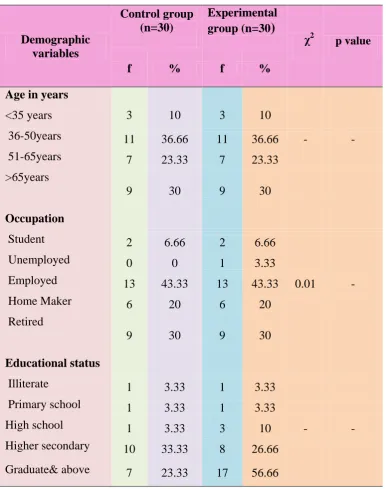
40 Table: 1
Frequency and Percentage Distribution of Demographic Variables in the Control Group and the Experimental Group of Stroke Patients.
Demographic variables
Control group (n=30)
Experimental group (n=30
)
χ2
p value
f % f %
Age in years
<35 years 3 10 3 10
36-50years 11 36.66 11 36.66 - -
51-65years 7 23.33 7 23.33
>65years
9 30 9 30
Occupation
Student 2 6.66 2 6.66
Unemployed 0 0 1 3.33
Employed 13 43.33 13 43.33 0.01 -
Home Maker 6 20 6 20
Retired
9 30 9 30
Educational status
Illiterate 1 3.33 1 3.33
Primary school 1 3.33 1 3.33
High school 1 3.33 3 10 - -
Higher secondary 10 33.33 8 26.66 Graduate& above 7 23.33 17 56.66
41
From the table inferred that 36.66 % of the patients were in the age group between 36-50 years and most of them were males (70%, 63.33%), 43.33% of them were employed in control group and in experimental group respectively.
42
Fig :3 Percentage Distribution of Gender for Control Group and Experimental Group of Stroke Patients.
0 5 10 15 20 25
Male Female
21
9 19
11
Perce
nta
ge Control Group
43 Table.2
Frequency and Percentage Distribution of Clinical Variables in the Control and the Experimental Group of Stroke Patients.
Clinical Variables
Control Group (n=30)
Experimental Group (n=30)
f % f %
Affected limb
Left upper limb 17 56.66 18 60
Right upper limb
13 43.33 12 40
Co-morbidities
Absent 7 23.33 7 23.33
Hypertension 9 30 9 30
Coronary artery disease 6 20 8 26.66
Obesity 8 26.66 3 10
Any other
0 - 3 10
Duration of illness
<1 month 8 26.66 9 30
1-4 months 10 33.33 8 26.66
5-8 months 5 16.66 8 26.66
9-12 months
7 23.33 5 16.66
Habit of smoking
Yes 20 66.66 13 43.33
No
10 33.33 17 56.66
Habit of alcoholism
Yes 9 30 13 43.33
No 21 70 17 56.66
44
45
Fig:4 Percentage Distribution of Types of Stroke in Control Group and Experimental Group.
19
11 19
11
0 2 4 6 8 10 12 14 16 18 20
Ischemic Stroke Hemorrhagic Stroke
Perce
nta
ge
46 Table.3
Frequency and Percentage Distribution of Level of Motor Function of the Upper Extremity in the Control and the Experimental Group of Stroke Patients. (N=60)
Level of Motor Function Upper
Extremity
Control Group Pretest Posttest f % f %
Experimental Group Pretest Posttest f % f % Not adequate
(0-22) 30 100 30 100 29 96.66 22 73.33
Moderately adequate (23-44)
- - - - 1 3.33 8 26.66
Adequate
(45-66) - - - -
47
Fig:5 Percentage Distribution of Level of Motor Function of the Upper Extremity in the Control Group of Stroke Patients
0 10 20 30 40 50 60 70 80 90 100
Control Group Pretest Control Group Post test
100 100
0 0 0 0
perce
nta
ge Not Adequate
48
Fig:6 Percentage Distribution of Level of Motor Function of the Upper Extremity in the Experimental Group of Stroke Patients
0 10 20 30 40 50 60 70 80 90 100
Experimental pretest
Experimental Posttest 96.66
73.33
3.33
26.66
0
0
Perce
nta
ge
Not Adequate
49 Table.4
Comparison of Mean and Standard Deviation of Motor Function of Upper Extremity in the Control and the Experimental Group of Stroke Patients.
(N=60)
Group Obtainable score
Control Group Experimental Group
Mean SD MD Paired t value Mean SD MD Paired t value Pre test
0-66
16.03 3.36
0.77 0.79
16.26 4.99
3.54 2.66**
Post test 16.8 4.18 19.8 5.33
**p<0.01
50 Table: 5
Comparison of Mean and Standard Deviation of Motor Function of Upper Extremity between the Control Group and the Experimental Group of Stroke Patients.
(N=60)
Group
Pretest Posttest
Mean SD
Independent t value
Mean SD
Independent t value Control group
(n=30)
16.03 3.36
0.21
16.8 4.18
2.43* Experimental
group (n=30)
15.6 4.99 19.8 5.33
*p<0.05