INNOVATION IN
HEALTH INFORMATICS
Addendum to Informatics for Health 2017:
advancing both science and practice
Philip J. Scott,
Centre for Healthcare Modelling & Informatics, University of Portsmouth,
Portsmouth, UK
Ronald Cornet,
Academic Medical Center, University of Amsterdam, Amsterdam, The
Netherlands and Linköping University, Linköping, Sweden
Colin McCowan,
Robertson Centre for Biostatistics, University of Glasgow, Glasgow, UK
Niels Peek,
Health e-Research Centre, Division of Informatics, Imaging and Data
Science, University of Manchester, Manchester, UK
INTRODUCTION
This article presents presentation and poster abstracts that were mistakenly
omit-ted from the original publication.1
[1] Scott PJ et al. Informatics for Health 2017: advancing both science and
prac-tice. Journal of Innovation in Health Informatics 2017;24(1):1–185.
SECTION 1: PRESENTATION ABSTRACTS
Abstract no. 268 Meeting clinicians’ needs in the design of
a Personal Health Record
Ian Tite,
Hitachi Consulting, London, UK
Henry Potts,
UCL Institute of Health Informatics, London, UK
Introduction Central to the digital strategy of the UK’s National Health Service and that of other health services around the world is the Personal Health Record (PHR), where individuals have access to and some control over their own medical record. The endpoint for PHR development is often seen as the individual becom-ing the custodian of their own medical data, with clinicians contributbecom-ing to the data at each care episode. However, medical data is traditionally maintained by health-care professionals, with the individual rarely directly contributing. How an individ-ual-controlled PHR might work in the UK context needs investigation?
Method We used a formal method to develop an information architecture, The Open Group’s Architecture Framework (TOGAF). TOGAF helps demystify the pro-cess of development and provides reference to common elements expected in contemporary architectures. Without the use of a formal method, users’ needs can
remain poorly understood and designs may rest on flawed assumptions. An initial
architecture reference model for a PHR was developed based on the literature. This
was then used to guide a series of semi-structured interviews with five clinicians
to elicit requirements. TOGAF was used as a guide to populate a proposed archi-tecture for a patient-controlled PHR meeting clinicians’ needs, including design
principles addressing specification, a conceptual model and a list of architecture
elements to be considered.
Conference Report
Discussion Identified features included: patient access to the medical record identity management, high levels of information
security, secure messaging between patient and clinician, electronic consultations, robust audit trails, accessibility at the point of care device, independence resilience and availability to high standards of Service Level Agreement consent management and standard messaging (e.g. Health Level 7 (HL7), HL7 Fast Healthcare Interoperability Resources (FHIR)) integration with clinical systems and limited decision support. These requirements could be accommodated with some development by con-temporary PHR technologies. However, a central question emerged about how much an individual should steward of their own data. Participants all voiced the need for integrity of the record via the control of access, with editing rights being granted only to
authorised clinicians. The ability to filter parts of the medical record, especially clinicians’ notes and episodic data such as test
results in certain circumstances, was desired. Augmentation of the record by individuals was seen as acceptable.
Conclusion A PHR that meets most clinicians’ requirements can be built today. But desired design elements, for example,
filtering of the medical record, directly contradict government policy, which promises online access to medical records by 2018, and contemporary views on the advantages of transparency in the patient/professional relationship. Such filtering may even
contravene the Data Protection Act; however, an exception can be made where a clinician wishes to avoid distress, where viewing of data without the support of a clinician would be harmful. This area requires greater investigation to develop clear policies and architectures. An information architecture approach presents a useful lens on the requirements of clinicians if they are to successfully use a PHR.
Abstract no. 300
Community detection algorithms for analysis of biological networks
Jonathan Silva,
Department of Informatics, Faculty of Natural and Mathematical Sciences, King’s College London, London, UK
Laura Bennett,
Centre for Process Systems Engineering, Department of Chemical Engineering, University College London, London, UK
Aristotelis Kittas,
Department of Informatics, Faculty of Natural and Mathematical Sciences, King’s College London, London, UK
Lingjian Yang,
Centre for Process Systems Engineering, Department of Chemical Engineering, University College London, London, UK
Songsong Liu,
Centre for Process Systems Engineering, Department of Chemical Engineering, University College London, London, UK
Lazaros Papageorgiou,
Centre for Process Systems Engineering, Department of Chemical Engineering, University College London,
London, UK
Sophia Tsoka,
Department of Informatics, Faculty of Natural and Mathematical Sciences, King’s College London, London, UK
Introduction Community structure is often found in complex networks where the vertices are naturally clustered into tightly connected modules with a large number of within-module edges and a few inter-module links. The ability to identify and analyse such structures has proven to be important in revealing the underlying properties of these networks. For example, sub-groups
in metabolic and cellular networks may reflect distinct functions in biological systems, and the evolutionary properties of bio -logical molecules and species modules found in drug networks may help understand the mechanism of action of compounds where this process is still unknown and help re-purpose the existing drugs to treat different diseases. Therefore, the modular view of networks provides a clearer understanding on how complex systems are constructed from a number of fundamental components and sheds light into the interactions of such components.
Method We present a suite of optimisation models for detecting communities by maximising modularity, a popular metric of the goodness of network partitions, reformulated to each type of problem accordingly. We implement these algorithms
using mathematical programming techniques, where optimisation problems are defined by a set of specific mathematical rules
expressed as constraints and objective functions and later solved by suitable solution algorithms, commonly based on branch-and-bound principles. This framework has been shown to outperform state-of-the-art algorithms, also allowing for more
math-ematically descriptive solutions to community detection in biological networks. Such methodologies can be easily modified to incorporate additional features according to specific user requirements, for example, constraining the minimum/maximum mod
-ule size or balancing among mod-ules, thereby enabling more flexible modelling frameworks. More specifically, we showcase algorithms designed for different types of networks: OptMod, for static undirected networks (weighted or unweighted); DiMod, for directed networks; OverMod, a model that detects overlapping modules, to account for the fact that entities in a network might belong to more than one community; SeqMod, an extension of previous models to detect groups in a temporal network; and finally, SimMod, for the type of networks with multiple layers, also called multi-layer or multiplex networks.
illustrate the integration of biological data from various sources to implement community detection via consensus clustering
(SimMod). Such models that can accommodate multiple data inputs and produce composite communities spanning diverse interaction sets are thought to reflect biological knowledge more accurately and may lead to development of enhanced bio -medical applications.
Abstract no. 314
Which outcomes matter to patients? Comparing the relationship between
patient-reported and traditional outcome measures on patient satisfaction in surgery
Catrin Jones,
Royal Infirmary of Edinburgh, Edinburgh, UK
Thomas Drake,
Royal Infirmary of Edinburgh, Edinburgh, UK
Stephen O’Neill,
Royal Infirmary of Edinburgh, Edinburgh, UK
Kenneth McLean,
Royal Infirmary of Edinburgh, Edinburgh, UK
Catherine Shaw,
Royal Infirmary of Edinburgh, Edinburgh, UK
Stephen Wigmore,
Royal Infirmary of Edinburgh, Edinburgh, UK
Ewen Harrison,
Royal Infirmary of Edinburgh, Edinburgh, UK
Aims Surgical outcomes have traditionally been described using clinician-centred measures such as 30-day mortality, com-plication and reintervention rates. However, there has been a growing recognition that these measures may fail to capture the outcomes that truly matter to patients and, therefore, are poorly equipped to drive improvement in patient-centred care. This study explored the relationship among patient experience measures, patient reported outcome measures and traditional out-come measures on the overall satisfaction of surgical patients with the outout-come of their procedure.
Methods The patient demographics, operation details and 30-day clinical outcome data of every patient who underwent emergency intra-abdominal surgery at a large teaching hospital over a 4-week period and patients who underwent cholecystec-tomy over an 8-week period were collected. Ethical approval was obtained to administer validated Patient Reported Experience
Measures and Patient Reported Outcome Measures questionnaires. Multiple regression analysis was performed for factors significantly associated with satisfaction in univariate analysis.
Results For patients undergoing emergency, intra-abdominal surgery, good communication (b = −1.26, (95%, CI: 0.18–2.34), p = 0.020), trust in staff (b = −1.51, (95%, CI: 0.54–2.49), p = 0.003) and a quiet ward (b = −1.35, (95%, CI: 0.56–2.14), p = 0.001) were all strongly associated with increased overall patient satisfaction on linear regression analysis. Minor compli
-cations (b = 0.3 and p = 0.405), reintervention (b = −0.4, p = 0.640), surgical sites infection (b = 0.5 and p = 0.586) or abscess (b = 1.5 and p = 0.298) had no effect. Similarly, for patients who had cholecystectomies, knowing who to contact (b0.17 (95%, CI: 0.05–0.29), p = 0.008) was associated with higher satisfaction, while complications (b0.26 (95%, CI: −0.07–0.59), p = 0.12)
had no effect.
Conclusions Traditional outcome measures are poor predictors for patient satisfaction and fail to capture factors that are most important to patients. Patient reported experience and outcome measures should be used more widely and given more importance in evaluating surgical outcomes.
Abstract no. 326 Clinical Decision Support for Diabetes in Scotland: evaluation of clinical
processes and outcomes
Nicholas Conway,
University of Dundee, Dundee, UK
Scott Cunningham,
NHS Tayside, Dundee, UK
Ann Wales,
University of Dundee, Dundee, UK
Introduction Nearly three million people in the UK have diabetes (>6% of adults), with prevalence expected to double over
the next two decades. Clinician Decision Support Systems (CDSS) are associated with improved adherence to clinical guide-lines. CDSS was implemented within the Scottish National Electronic Health Record, Scottish Care Information (SCI) Diabetes and has been live within NHS Tayside and Lothian since December 2013, serving a combined diabetes population of ~30,000. This study aims to describe users’ attitudes and reactions to the system and to quantify impact on clinical processes and outcomes.
Method Health care professional (HCP) opinion was sought via focus groups and questionnaires. SCI-Diabetes data were extracted for two time periods: December 2013–February 2014 (Ninewells Hospital, Dundee, UK) and August 2014–November
2014 (St John’s Hospital, Livingston, UK). SCI-Diabetes usage was quantified using HCP interaction (‘mouse-clicks’) and time
spent within the patient record. HCP behaviour was compared between instances where CDSS messages were displayed, with instances where not (corrected for user-role, patient age, diabetes type/duration, co-morbidity and deprivation). Case-control comparison was made to assess clinical processes and outcomes. Cases were patients whose HCP received a CDSS
mes-sage during the consultation. Controls were matched for age, sex, diabetes type and duration BMI and clinic attendance in
areas outwith the pilot. Clinical process measures were screening for hypercholesterolaemia, kidney, foot and thyroid disease. Clinical outcomes included HbA1c cholesterol blood pressure and urinary albumin/creatinine (UACR) at 1 year. Comparison was made using multivariable regression.
Results Pre- and post-intervention HCP questionnaire response rates were 57/105 (54%) and 39/105 (37%). Three focus
groups were held (n = 8–9/group). The majority of respondents/participants had a positive or neutral response to the
sys-tem. Early-adopters reported usage within clinical workflow. CDSS messages were displayed on opening 6,665/17,280 (39%)
records. For nurses, the presence of CDSS message was associated with increased SCI-Diabetes usage, compared with
instances where no message was displayed (median ‘clicks’ 19 (IQrange: 8–37) versus 16 (7–32), adj.p = 0.014). For doctors, CDSS messages were associated with reduced time within the patient record (median duration 33 (IQrange: 5–86) versus 38
(12–97) secs, adj.p = 0.032). 1,883 cases attended clinic, matched to 3,557 controls. Probability of receiving screening more
than doubled for hypercholesterolaemia (adjOR 2.4, (95%, CI: 1.6–3.0)), creatinine (2.5 (1.6–3.9)), UACR (2.3 (1.9–2.8)) and foot screening (2.9 (2.3–3.6)) – all p < 0.001. Screening for hypothyroidism increased slightly (0.8 (0.7–1.0), p = 0.035). For
those attending clinic, study group did not predict clinical outcomes at 1 year. Post-hoc analysis of all patients with a CDSS
prompt (n = 5,692) showed small improvements in mean HbA1c (−2.3mmol/mol versus −1.1, B1.2 (0.4–2.0), p = 0.003) com
-pared to controls (n = 10,667). Mean UACR increased in both groups but more so in controls (baseline 8.7 mg/mmol versus 9.3, increasing by +1.6 versus +4.4, B2.9 (0.7–5.1), p = 0.01).
Discussion and Conclusion The CDSS was associated with improved efficiencies in working practices (dependent on role)
and large improvements in guideline adherence. If replicated nationally, thousands more individuals would receive appropriate
screening tests. These evidence-based early interventions can significantly impact on costly and devastating complications such as foot ulcers, amputations, cardiovascular disease, renal failure and death. The potential benefits of this project extend
beyond the Scottish diabetes population, as NHS Scotland considers how best to realise the full potential of CDSS.
Abstract no. 330 Evaluation of CPRD GOLD e-learning
Yuewen Wu,
Clinical Practice Research Datalink, London, UK
Yvonne Kaserebe,
Clinical Practice Research Datalink, London, UK
Helen Strongman,
Clinical Practice Research Datalink, London, UK
Rachael Williams,
Clinical Practice Research Datalink, London, UK
Introduction Clinical Practice Research Datalink (CPRD) provides a one-day training course to introduce users to the CPRD real-world primary care database known as “GOLD”. Historically, the course has been delivered face to face or through video
conferencing. Demand has grown due to an increase in organisations and individuals who use CPRD data. In March 2015, CPRD replaced this course with a Massive Open Online Course (MOOC). The MOOC is available through the Medicines and
Method A descriptive quantitative analysis of user audit data from the e-learning tracking system was carried out to
evalu-ate the uptake and completion of the CPRD GOLD e-learning. Qualitative e-mail and telephone surveys were carried out with
seven completers and three non-completers to assess the effectiveness of the course as a learning resource.
Results From March 2015 to October 2016, 390 people registered on the e-learning system of whom 250 completed at least one module and 161 completed all modules. This compares to 132 individuals who were trained through face-to-face or real-time online delivery over the preceding 18 months. Significant researcher time was invested in developing the e-learning and there has
been considerable learning along the way. However, this has since then freed up 10–20 days of CPRD trainer time per annum. For the nominated users from a CPRD GOLD licensee organisation, it is mandatory to complete all the e-learning modules and 24
of the 161 completers were nominated users. The total distinct count of registered organisations was 74, among which 46 had at least one completer. The 46 organisations included 22 academic, 18 pharmaceutical, 2 government and 4 other organisations. All
seven of the completers improved knowledge about CPRD from the e-learning and six considered the course to have been useful for their work. Recommendations for improvement included providing real-world case studies and an online forum for questions. Reasons for not completing related to early modules satisfying learning requirements when the course was accessed.
Discussion The CPRD e-learning has reached a larger audience than the traditional training method, at a lower ongoing cost to resource. The interest in the e-learning and CPRD is beyond CPRD GOLD nominated users and licensee organisations.
Qualitative feedback was highly positive and provided useful suggestions for improvement.
Conclusion E-learning has attracted a wide interest and allowed CPRD to build capacity of a wider audience, contributing to CPRD’s mission of supporting public health research. Experience from developing the CPRD GOLD e-learning has also been used to build a new e-learning course aimed at general practitioners (GPs) who are interested in real-world pragmatic studies supported by CPRD.
Abstract no. 338 Evaluating the impacts on health outcomes of Welsh Government funded
schemes designed to improve the energy efficiency of the homes of low-income households
Sian Morrison-Rees,
ADRC, Swansea University, Swansea, UK
Introduction Living in fuel poverty often means living in an inadequately heated house. The World Health Organisation (2007) recognises that living in a cold and/or damp house may be harmful to health, increasing the risk of morbidity, mortality and excess winter deaths. As part of its strategy to reduce fuel poverty in Wales, the Welsh Government developed a
demand-led fuel poverty scheme caldemand-led Nest to improve the energy efficiency of homes. Warm Homes Nest provided home energy efficiency improvements to those most likely affected by fuel poverty, including low income and vulnerable households from 2011 to 2015. The energy efficiency measures provided included insulation and heating upgrades, such as a more efficient
boiler. The overall aim of the project is to evaluate the health impacts of Welsh Government funded schemes through the use of existing data linked to the routine health records held in the SAIL Databank at Swansea University.
Methods A longitudinal data set was created using the anonymised residential dwelling that has received home energy
efficiency improvements linked to a summary of their health measures (hospital admissions, reason for the admission, GP
prescriptions and clinical diagnoses).
For each year of the study period, we used a stepped wedge design to construct cohorts of people who had already received the intervention and for a control group of people who had applied for measures but not yet received them. We used difference in difference estimations to compare any changes in the health of people before and after the intervention with any concurrent
change in health in those who required, but had yet to receive, the intervention. Our first analysis focuses on cardiovascular,
respiratory and general health.
Results The anonymised linking process created a data set for over 35,000 individuals of all ages living in homes that
received home energy efficiency upgrades. An early and indicative analysis of the data suggests a positive impact on health
for recipients of the Nest scheme. Recipients had decreased the rates of hospital admissions for both respiratory and cardio-vascular conditions the winter after measures were installed compared to those who were eligible for the Nest scheme but who had not yet received measures. Recipients of the Nest scheme also had a smaller increase in GP prescriptions the following
winter than those waiting for measures, suggesting a ‘protective effect’ on overall general health. We anticipate concluding the analysis in 2016 in order to inform the development of a future Welsh Government demand-led fuel poverty scheme due to succeed Nest from September 2017. Our results will compare specific interventions for their impacts on health. We will be able
to report whether particular population groups, for example, those suffering from particular health conditions gain particular
Discussion Providing home energy efficiency interventions has the potential to benefit population health. Our findings will inform more effectively focussed home energy efficiency schemes in order to reduce the numbers of people living in fuel pov -erty and, thus, improve the health and wellbeing of people living in Wales.
Abstract no. 350 Involving physical activity in insulin recommender systems with the use of
wearables
Beatriz López,
University of Girona, Girona, Spain
Alejandro Pozo,
University of Girona, Girona, Spain
Ferran Torrent-Fontbona,
University of Girona, Girona, Spain
Introduction Type Diabetes Mellitus 1 (TDM1 patients are able to determine the amount of insulin to be injected in
a dose according to the most recent food ingested and other factors such as physical activity or menstruation. Dealing with all these factors is a complex task, and patients suffering this illness are very active in looking for tools that can help them in these daily decisions. In that regard, insulin recommender systems are decision support system (DSS) designed
with the aim of providing the appropriate insulin dose to a given patient in a given moment. Moreover, the deployment of
such kind of DSS in mobile devices is offering the opportunity to use new sensors that may provide additional information to improve the recommendations. For example, sensors like smartwatches or wrist bands offer the opportunity to track patients’ physical activity or even their stress level in order to feed the next insulin recommendation decision with this information. Our work concerns the development of an adaptive recommender system that exploits the information from
wearables, in order to improve the recommendation provided to TDM1 patients.
Method The recommender system relies on case-based reasoning methodology. This methodology has been proved to be useful in medical domains, since it is able to provide personalised recommendation to patients. The recommendations are based on several parameters such as carbohydrates and fats ingested, recent and future physical activity, stress, etc. In that regard, the information entered manually by people regarding physical activity is subjective, as it depends on the people’s appreciation about that concept. Walking 500 m could not be an exercise if it is performed with calm, but it could be if walked at a given pace. On the other hand, smartwatches and wristbands are wearable sensors able to provide some measures from which to estimate the type and intensity of the physical activity. In that regard, the estimation depends on the average physical activity of the user and is unique (personalised) for each person. Our work consists of a physical activity module that complements the recommender system with the gathered and processed sensor data. It reads the steps data provided by a sensor and returns the type and intensity of the activity performed before a bolus recommenda-tion. Two types of physical activity are being considered (aerobic and nonaerobic) and four levels of intensity. The
quanti-fied intensity depends on the average physical activity of the user.
Results The system has been implemented using the eXiTCBR tool. The first prototype will be tested in 2017.
Discussion Physical activity quantification removes uncertainty involved in the person’s subjective evaluation about that
concept. The system requires some initial data. Other consideration to be taken into account, in order to exploit mobile devices, is contextual information.
Conclusion Providing useful insulin recommendations requires the management of several parameters, among them the physical activity. Physical activity is a subjective concept. Wearables offer the opportunity for estimating the physical activity.
This project has received funding from Horizon 2020 No. 689810.
Abstract no. 393 Supporting biomarker discovery using text mining
Paul Thompson,
University of Manchester, Manchester, UK
Katherine Boylan,
University of Manchester, Manchester, UK
Anthony Freemont,
University of Manchester, Manchester, UK
Introduction The Manchester Molecular Pathology Innovation Centre (MMPathIC) is creating an environment to develop new biomarker tests, using molecular pathology techniques to facilitate patient stratification. To ensure well-informed decisions, MMPathIC combines medical expertise with skills from other research areas. In particular, text mining (TM) techniques are
being applied to vast volumes of unstructured electronic text, to automatically locate and link various types of biomarker-related information, which may remain hidden using traditional search techniques.
Methods We are using TM techniques to detect various aspects of the semantic structure of text, for example, recognition
of concept mentions (genes, their variants, diseases, risk factors, drugs, patient groups, etc.) and relationships among these
concepts (variants of a gene having an association with a disease in specific types of patients, etc). The Argo web-based TM workbench (http://argo.nactem.ac.uk/) facilitates complex processing of text, by integrating various TM tools and machine learning capabilities, allowing tools to be tailored to specific tasks. Tools are combined into TM processing pipelines, performing
various levels of linguistic and semantic processing to recognise complex information in large document collections.
Results While in the early stages of the project, we are developing and applying Argo pipelines to a sub-set of MEDLINE
abstracts to assess their performance. First, we are combining the outputs of several concept recognition tools, taking advan-tage of their differing strengths. We are also exploiting sentence structure to collect a set of linguistic patterns that are used to describe known gene-disease relations and applying these patterns to larger data sets to uncover novel associations. Subsequently, we will link in contextual information (such as patient characteristics, response to drugs, etc.) to create more complex relationships.
Discussion We take inspiration from, but build upon, techniques that have been employed in existing systems that allow searching for gene-disease associations, for example, FACTA+ (http://www.nactem.ac.uk/facta-visualizer/) and DisGeNET (http://www.disgenet.org/). However, our approach will include a number of novel aspects, aimed at making it easier to discover
and filter information of interest. These will include the detection of contextual information and linking of information that is dis -persed across multiple documents, in order to construct more detailed and complex relationships amongst concepts. We will additionally classify the relations in different ways (e.g. according to whether a biomarker has diagnostic or prognostic value,
whether the relation is stated as a hypothesis or an experimental result, if there is any degree of any speculation specified).
Accordingly, it will be possible to locate answers to complex queries, for example, In which population sub-groups is there
evi-dence that Gene X is a putative biomarker for Disease Y?
Conclusion In contrast to many related efforts, Argo’s cloud-based processing capabilities make it feasible to apply
our TM pipelines not only to abstracts, but also to huge collections of full articles, which are likely to contain much richer
information relating to biomarkers. Our ultimate aim is develop an advanced semantically oriented search environment
that provides medical experts with the means to efficiently locate evidence to support or motivate the development of
biomarker tests.
SECTION 2: POSTER ABSTRACTS
Abstract no. 31 A new data opportunity for community nutrition surveillance: estimating
spatial patterning of dietary behaviours using grocery transaction data
Hiroshi Mamiya,
Department of Epidemiology, Biostatistics and Occupational Health, McGill University, Montreal, QC, Canada
Erica Moodie,
Department of Epidemiology, Biostatistics and Occupational Health, McGill University, Montreal, QC, Canada
David L. Buckeridge,
McGill Clinical and Health Informatics, Department of Epidemiology and Biostatistics, McGill University,
Montreal, QC, Canada
Objective To demonstrate the application of digital grocery transaction records to measure community food selection with high spatial granularity.
Introduction Unhealthy diet is becoming the most important preventable cause of chronic disease burden. Identification
of neighbourhood-level inequality in healthy food selection is necessary for the planning of targeted and tailored com-munity intervention. Although survey has been a primary public health tool to collect diet-related risk factors, cost of it
prevents mass administration required to assess food selection at high geographic resolution. Marketing companies such
as the Nielsen Corporation continuously collect and centralise scanned grocery transaction records from a geographically representative sample of retail food outlets to guide and evaluate product promotions. These data can be harnessed by
public health researchers to develop a model for the demand of specific food(s) using store and neighbourhood attributes, providing a rich and detailed picture of the neighbourhood dietary preference. In this study, we generated a spatial profile of food selection from estimated sales in food outlets in Montreal, QC, Canada, using regular carbonated soft drinks (i.e.
Methods From the Nielsen Corporation, we obtained weekly grocery transaction data generated by a sample of 86 grocery stores and 42 pharmacies in Montreal in 2012. Extracted store-specific soda sales were standardised to a single serving size
(240 ml) and averaged across 52 weeks, resulting in 128 data points. Using linear regression, natural log-transformed soda sales
were modelled as a function of store type (grocery versus pharmacies), chain identification code and socio-demographic attributes of store neighbourhood (e.g. income and education) as measured by the 2011 Canadian Household Survey. The final model
selected by cross-validation was applied to all operating chain grocery stores and pharmacies in 2012 (n = 980) recorded in a
comprehensive and commonly available business establishment database. The predicted store-specific weekly average soda
sales were divided by population denominator and spatially interpolated to provide a geographical representation of unhealthy food preference.
Conclusions The current lack of neighbourhood-level dietary surveillance impedes effective public health actions aimed at encouraging healthy food selection, such as development of community health campaign and evaluation of neighbourhood-level response to social and economic policies, including taxation and food subsidiary program. Our method leverages existing grocery transaction data and stores location information to address the gap in population monitoring of nutrition status and urban foodscapes. Future applications of our methodology include demand prediction from other store types (e.g. convenience stores) and food products across multiple time points (e.g. mouths and years).
Abstract no. 56 C3-Cloud: a federated collaborative care and cure cloud architecture for
addressing the needs of multi-morbidity and managing poly-pharmacy
Gökce Banu Laleci Erturkmen,
SRDC Software Research Development and Consultancy Corp., Ankara, Turkey
Mustafa Yuksel,
SRDC Software Research Development and Consultancy Corp., Ankara, Turkey
Theodoros Arvanitis,
Institute of Digital Healthcare, WMG, University of Warwick, Coventry, UK
Introduction A growing share of the population (15% in 2010) in Organization for Economic Cooperation and Development (OECD) countries is over 65 and expected to reach 22% by 2030. Older age is associated with an increased accumulation of multiple chronic conditions. More than half of all older people have at least three chronic conditions and a significant pro
-portion has five or more. The clinical management of patients with multi-morbidity is much more complex, disconnected and
time-consuming than that of those with single diseases. As a result, multi-morbid patients with long-term care need experience shortcomings and gaps in their care provision. There is an increasing need to organise the care around the patient with the involvement of all stakeholders, and as a response to this requirement, the C3-Cloud project aims to achieve high quality inte-grated care with the support of information and communication technologies (ICT).
Method C3-Cloud will establish an ICT infrastructure to enable continuous coordination of patient-centred care activities by
a multidisciplinary care team (MDT) and patients/informal care givers. A Personalised Care Plan Development Platform will allow, for the first time, collaborative creation and execution of personalised care plans for multi-morbid patients through sys -tematic and semi-automatic reconciliation of clinical guidelines. This will be accomplished through Clinical Decision Support
Modules for risk prediction and stratification, recommendation reconciliation, poly-pharmacy management and goal setting. Fusion of multimodal patient data will be achieved via C3-Cloud Interoperability Middleware for seamless integration with
existing health/social care information systems. Active patient involvement and treatment adherence will be realised through a Patient Empowerment Platform, ensuring patient needs are respected in decision making. In order to demonstrate the feasibil-ity of the C3-Cloud integrated care approach, pilot studies will focus on diabetes, heart failure, renal failure and depression in different comorbidity combinations and operate for 15 months in three European regions with diverse health and social care systems, in addition to a diverse ICT landscape (South Warwickshire, Basque Country, Jämtland-Härjedalen). In total, 150
patients for intense evaluation, 600 patients for large-scale impact assessment and 62 MDT members will be involved in pilot
operation and evaluation activities.
Results In the first five months of the project, ideal to-be scenarios have been produced by the end-users, which, following user-centred design principles, led to the identification of technical use cases and formal requirements of the C3-Cloud archi -tecture. Work is now focused on the design of the architecture and the critical analysis of relevant clinical guidelines.
Discussion Unfortunately, current European medical models focus primarily on short and medium term interventions on the basis of single conditions, failing to integrate care planning well across providers and often overlooking the interconnected
Conclusion As a result of 15 months of piloting in diverse settings, C3-Cloud aims to strengthen the evidence base in coordi-nated care of patients with multi-morbidity and to inform future development of more streamlined and optimised multi-morbidity care pathways.
Abstract no. 160 The Biomedical Informatics Network for Education, Research and Industry
(BINERI) at the University of Leicester
Tim Beck,
University of Leicester, Leicester, UK
Anthony Brookes,
University of Leicester, Leicester, UK
Introduction A wide range of biomedical informatics, healthcare data management and information technology expertise operate together in Leicester under a strategic grouping called Biomedical Informatics Network for Education, Research
and Industry (BINERI). This network works in a unified way on topics such as bioinformatics training, data science,
expertise sharing, data discovery and sharing, bio-banking, big data analysis, ethics, governance, patient engagement, information technology, etc.
Method By integrating various complementary disciplines, combining resources, sharing Ph.D. students and staff, and apply-ing jointly for local, national and international fundapply-ing, BINERI members are propellapply-ing forward high impact informatics initia-tives across its research and NHS Trust stakeholders. These stakeholders include the following.
• Leicester Precision Medicine Institute (LPMI)
• University Hospitals of Leicester NHS Trust • Leicester Cardiovascular BRU
• Leicester Respiratory BRU
• Leicester-Loughborough Diet, Lifestyle and Physical Activity BRU • Leicester Clinical Trials Unit
• NIHR Collaborative Leadership in Applied Health Research and Care • Cancer Research UK Leicester Centre
• University of Leicester IT Services
• University of Leicester Bioinformatics and Biostatistics Analysis Support Hub • University of Leicester College of Medicine, Biological Sciences and Psychology
• University of Leicester College of Science and Engineering.
BINERI is founded on the principle that data (primary data, aggregated data, metadata and resulting knowledge) need to be used optimally – which implies aligning research and healthcare activities to ensure professional and forward-looking data cap-ture, management, curation, security, discovery, sharing and re-use (as per Global Alliance for Genomics and Health (GA4GH) and “Findable, Accessible, Interoperable, and Reusable” (FAIR) principles). It will also be important to stress patient-centric
aspects of such developments, not least human-computer interactions and patient control of ‘their’ data.
Results BINERI teams promulgate their extensive experience in the required tooling, such as concerning healthcare data
warehouses (e.g. i2b2, tranSMART and LabKey), tissue tracking (e.g. OpenSpecimen), patient relationship management (e.g. CiviCRM), electronic case report form platforms (e.g. REDCap (Research Electronic Data CAPture) and OpenClinica), Clinical
Data Interchange Standards Consortium (CDISC) standards, data discovery (e.g. Cafe Variome) and sequence variant valida-tion (e.g. VariantValidator).
Ongoing exemplar projects include the following.
• Integration of primary care data from more than 100 GP surgeries in the East Midlands for the purposes of follow-up
cardiovascular and diabetes research.
• Pragmatic randomised controlled trial nested within UK primary care data to evaluate the real-life effectiveness of diabetes drugs.
• Technical underpinning of an EU-wide, federated network of Alzheimer’s disease patient data sets enabling discovery (without revealing data) of subjects suitable for a multi-site longitudinal readiness cohort for clinical trials.
• Management of translational clinical and research data across large-scale UK and EU consortia in the context of
precision medicine (e.g. respiratory disorders and radiotherapy).
Discussion The resulting vibrant and productive bioinformatics environment in Leicester is further strengthened by having a
dedicated bioinformatics hub, launching and funding the LPMI, holding monthly workshops between data scientists, and initiat -ing many cross-disciplinary studentships with an emphasis on bioinformatics and personalised medicine.
Conclusion BINERI collaborations with teams across the UK and internationally are diverse and numerous, with the door very much open to discussing further opportunities.
Abstract no. 175 Simulated data: an object oriented approach
Athanasios Anastasiou,
Farr CIPHER – Swansea University Medical School, Swansea, UK
The objective of this poster is to demonstrate the structure and use of DGen, an object-oriented approach to Data GENeration and DeGENeration of clinical data in various formats.
The generation of artificial data is a topical subject for clinical research as it offers ways to stress-test systems, test algo
-rithms in the presence of known data and of course for training and educational purposes. The generation of artificial data is characterised by two competing specifications: data should be generated according to pre-specified rules and data should be realistic. The impact of these two competing specifications is high for educational purposes as, it is desirable to train students over known, simple test-cases but not so simple as to be obvious and ‘text-book’ examples.
A number of tools (and techniques) for the simulation of data in general and clinical data in particular already exist at various
levels of complexity in installing, seting up and operating them. DGen attempts to address the problem of generating artificial
clinical data, of realistic complexity, by a framework of elementary Data Generators and Pertubators. Generators are respon-sible for creating random variables with full control over the characteristics of their values, and Pertubators are responrespon-sible for applying commonly encountered errors such as punctuation, abbreviation, data omission and others to the generated values.
DGen uses operator overloading to define a very simple ‘algebra’ of combining generators to form complex cases (such as con
-ditionally probable ones) and generalisation to create more complex entities such as ‘Patient’, ‘CasePatient’, ‘ControlPatient’
and others.
DGen is written in Python and is by no means complete. Future work includes improving the way random variables are
described and formalising the transformation to specific data formats via the use of renderers.
Abstract no. 204 User-oriented oncological wiki through requirements prioritisation based
on Kano-classification
Danijela Schlue,
Niederrhein University of Applied Sciences, Krefeld, Germany
Bernhard Breil,
Hochschule Niederrhein, Krefeld, Germany
Jörg Haier,
Universitätsklinikum Hamburg-Eppendorf, Hamburg, Germany
Introduction To establish a national knowledge management system and a reference work for standardised cancer
docu-mentation, a prototype of an oncological wiki (http://www.tumor-wiki.de) was designed and implemented as a flexible model with different views. Usability and user friendliness of the existing web interface were tested in July and August 2016. The
responses from six users varied considerably. The issue of the right requirements management was raised. The objective of
this work is to involve the user in the requirement prioritization process, to determine specific options for actions, and to identify
requirements for further research. The aim of this approach is to classify user requirements with regards to their effect on user satisfaction.
Methods Requirements definitions are based on contact with project workers and analysis of scientific literature. The require
-ments data collections comprised an e-mail survey among medical experts and documentation officers in addition to telephone
interviews. Informatics experts drafted a questionnaire based on the results of structured surveys with six categories: functions for compilation of terms, functions for term usage, data, ergonomics, interfaces and documentation. The Kano approach sug-gests a systematic process for classifying system features and associated user requirements based on a questionnaire. A set
for each requirement. Questionnaires are presented to the future users, project partners from four German Comprehensive
Cancer Centres and the group of medical documentarists.
Results The questionnaire consists of 46 requirements in six categories on five pages. Three of ten asked persons (one physician and two documentation officers) sent completed questionnaires back. The most relevant category is the ‘Must-be’-category, which currently contains 23 items. Seven items belong to the A-category. There were not any items in the Q-category.
Discussion A first pre-test gave valuable input for further optimization to follow a user-oriented design. First, results of this
questionnaire gave valuable insights as to which requirements are most important and which functions are critical for a broad
user acceptance of the implemented wiki. A main disadvantage of the Kano-classification is the length of the questionnaire. The
questions might also be misunderstandings while reading the requirements.
Abstract no. 366 Sharing the process: the performance and portability of the ICONIC de
novo sequence assembly pipeline in a virtual environment
Anil Gunesh,
University College London, London, UK
Dan Frampton,
University College London, London, UK
Tiziano Gallo Cassarino,
University College London, London, UK
Myrto Kremyda-Vlachou,
University College London, London, UK
David Wong,
University College London, London, UK
Andrew Hayward,
University College London, London, UK
Eleni Nastouli,
University College Hospital, London, UK
Paul Kellam,
Wellcome Trust Sanger Institute, Cambridge, UK
Deenan Pillay,
Africa Health Research Institute, Durban, South Africa
Zisis Kozlakidis,
University College London, London, UK
Introduction The rate and volume of data acquisition are ever increasing in the areas of clinical pathogen research especially with the advent of next generation sequencing and the link of genomic to healthcare records. However, in the majority of cases, downstream analysis of the sequencing data takes place in dedicated high-performance computing cluster research environments within Universities on physical CPUs and with a small potential of further portability. The current distributed, replicated NHS setup creates many unforeseen problems in analysing large sequencing data sets. Different NHS sites have different information technology systems, hardware and availability of human skills. Due to these
differences, the installation and configuration of genomic analysis software is often time-consuming and complex and results in a non-standard, site-specific installation.
Methods The ICONIC (InfeCtion respONse through vIrus genomiCs) project has created and successfully implemented a virus agnostic de novo genome assembly pipeline capable of generating whole genome sequences from raw sequencing reads for
HIV (human immunodeficiency virus), HCV (hepatitis C virus), Influenza, MERS Co-V (Middle East Respiratory Syndrome coro
-navirus), Norovirus, RSV and Measles viruses. The purpose of the pipeline is to facilitate parallel processing of large numbers of
viral samples within the current operations of the public health system: both routinely and in real time in response to an outbreak.
Results The results of the pipeline have been used in the UCLH and Barts Health NHS Trusts to assemble viral genomes from clinical (residual diagnostic) samples and to report on genomic variability and underlying drug resistance. This information can be used by virologists applying appropriate treatments and/or infection control measures.
Virtualisation allows this software to be installed in a virtual environment in which the number of processors and allocated memory can be dynamically increased or decreased according to the demand. Virtualisation also allows the complex software pipeline to be easily ported and installed in a number of different virtual environments by greatly reducing the complexity of
installation and configuration under local constraints. In this instance, virtualisation was achieved within the eMedlab environ -ment using the Red hat Openstack Platform. Distribution of the pipeline has been achieved through Docker as the latter auto-mates the deployment of applications within software containers.
a shorter time, thereby reducing costs, variability and increasing consistency. The ICONIC project and the virtual appliance approach demonstrate how this method can be utilised as a practical solution to the current fragmented NHS environments as part of an established routine service.
Abstract no. 426 A process evaluation of a web-based self-management tool
Sara Ahmed,
McGill University, Montreal, QC, Canada
Owis Eilayyan,
McGill University, Montreal, QC, Canada
Marie-France Valois,
McGill University, Montreal, QC, Canada
Introduction My Asthma Portal (MAP) is a web-based self-management support system that couples evidence-based behav -ioural change components (self-monitoring of symptoms, physical activity and medication adherence) with real-time monitor-ing, feedback and support from a nurse case-manager. The objective of this study was to evaluate the process implementation
of MAP over a 6-month period as part of a randomised controlled trial that evaluated the impact of MAP on asthma control and
asthma-related quality of life.
Method Forty-nine individuals randomised to MAP were asked to log-in a minimum of once a week over a period of 6 months. MAP provides: 1) tailored asthma education, 2) asthma-related personal health data and monitoring tools and 3) e-mail access
to the care team with feedback to modify health behaviours related to medication adherence, action plan use and physical
activity. Audit trails (computer logs) were used to evaluate the usage of MAP and the nurse case-management system. The Technology Acceptance Model was used to assess perceptions of usefulness and ease of use.
Results The average time spent logged into MAP was 7 min/login (range 20 s to 2 h). Access to MAP during the first three months ranged 1–69 (mean, SD: 24, 16), and 0–38 between three and six months among the 47 individuals who received the intervention 16% had no logins between three and six months. Logins were more frequent in the first four weeks (mean, SD: 12, 8) and then tapered off thereafter (mean, SD: 36, 42). The most frequently accessed components of the portal were the monitoring questionnaire and the asthma feedback centre, with an average of 4.5 views in the first week, 2.2 in the second
week, 1.5 from week 2 to 7 and then 1 time per week for the remainder of the trial. The least frequently accessed component
was the static Learning Centre. Participants emailed the nurse to discuss medications (30%), clarify the action plan (18%), monitor MAP feedback (15%) and follow-up related to control status (5%). Sixty-one percent of alerts to the nurse were related to medication adherence, 17% indicated a need to review the action plan, 11% were because the patient did not login, and 7% were related to delayed initiation of the action plan by patients. Most participants (82%) agreed/strongly agreed that MAP was
useful for managing their asthma.
Discussion Ongoing access by participants supports the feasibility of using the system to deliver self-management for
indi-viduals who accept to start using the system. Given that logins decreased over time, this may reflect that once indiindi-viduals learned about their medications and action plan they found less benefits of logging in to report symptoms and receive feedback
that they became more familiar with over time.
Conclusion The results of this process evaluation will be used to inform future changes to MAP including tailoring content and features over time to changes in individuals’ knowledge, confidence and symptoms.
Abstract no. 540 Sharing medical images: challenging issues and lessons learned from
pilot implementation at a tertiary university hospital in South Korea
Taeki Kim,
Seoul National University Bundang Hospital, Seongnam-si, South Korea
Sooyoung Yoo,
Seoul National University Bundang Hospital, Seongnam-si, South Korea
Hyun Young Baek,
Seoul National University Bundang Hospital, Seongnam-si, South Korea
Eunyoung Heo,
Seoul National University Bundang Hospital, Seongnam-si, South Korea
Jeong-Whun Kim,
Seoul National University Bundang Hospital, Seongnam-si, South Korea
Introduction This study implemented a pilot of a picture archiving and communication system based on international stan-dards. The medical environment of a tertiary university hospital was used.
Methods For exchange of medical images, an authentication process on a portal site was required before the use of the
ser-vice. The range of images such as computed tomography (CT), magnetic resonance imaging (MRI) and sonography was set for 4 general hospitals, 20 hospitals and 60 clinics, and the system at each hospital was assessed to be archived in the picture
archiving system. Both standardised and non-standardised images from each of the hospitals were analysed and used for the development of the medical image exchange system. The developed system has been evaluated through questionnaire survey
of 48 patients and 17 medical staff who used the system from March 14 to 31, 2016.
Results For the exchange of the image data in selected hospitals, an integrated system based on the Integrating the Healthcare Enterprise (IHE) Cross-Enterprise Document Sharing standards (XDS.b, XDS-I.b) and Digital Imaging and Communications in
Medicine (DICOM) was established, which enabled the transfer and retrieval of the images. The ISO27001 standard was used
for system security. The hospital administrators could transfer the images to the system only for the patients who had given their consents, and the administrators also had to be registered according to the standardised codes of the hospital. The physicians
at the hospital could use the Patient Identifier Cross-Referencing to check the patients’ previous images. They were able to
download the images of the patients if necessary and upload them on the picture archiving and communication system (PACS) of the hospital to request for readings and use them for diagnosis. As a result of the survey conducted after using the system,
94% of respondents answered that the medical service was quick and accurate and 96% of them answered that it shortened the treatment period. 71% of the medical staff responded positively to the rapid diagnosis, 65% of them responded to the accu
-racy of the diagnosis and 100% of the medical staff responded that they were able to avoid the double check.
Discussion This system had many benefits for patient diagnosis but there were some limitations in the procedural aspects.
Some patients were capable of ordinary daily life but those who used the image exchange system mostly had multiple examina-tions previously most were emergency patients or patients of chronic illnesses with histories of diagnosis in primary, secondary and tertiary hospitals and were in the older age group who visited the hospitals with the help of their guardians.
The use of this service to transfer and retrieve patient images requires an informed consent, so it was necessary to enhance the convenience of doing this.
Conclusion The system developed in this study could be used by all subjects, and patients could use their previous image data from anywhere in Korea to assist their diagnosis.
If medical record and image exchange becomes integrated in the future, it would help prevent and diagnose patients, while supporting the record management and eradication at times of national pandemic. This work was supported by the IT R&D program of Seoul National University Bundang Hospital.
Abstract no. 545 Semantic technologies for improved primary and secondary use of
clinical data
Stefan Schulz,
Institute for Medical Informatics, Statistics and Documentation, Medical University of Graz, Graz, Austria
Markus Kreuzthaler,
Institute for Medical Informatics, Statistics and Documentation, Medical University of Graz, Graz, Austria
Diether Kramer,
CBmed - Center for Biomarker Research, Graz, Austria
Werner Leodolter,
Steiermärkische Krankenanstalten, Graz, Austria
Markus Pedevilla,
Steiermärkische Krankenanstalten, Graz, Austria
Berthold Huppertz,
Steiermärkische Krankenanstalten, Graz, Austria
Karine Sargsyan,
Biobank Graz – Medical University of Graz, Graz, Austria
Dagmar Becker,
Biobank Graz, Graz, Austria
Robert Fasching,
SAP, Walldorf, Germany
Thomas Pieber,
CBmed, Graz, Austria
Introduction Heterogeneous content of electronic health records are increasingly considered a promising data treasure for
primary and secondary use. The Austrian Center for Biomarker Research in Medicine investigates and implements methods
Method Structured and unstructured content is standardised and analysed, using natural language processing, terminology
standards (e.g. Systematized Nomenclature of Medicine - Clinical Terms (SNOMED CT)), big data management and predic -tive content analytics. Semantically explicit data extracts are stored in a data warehouse based on SAP-HANA (Systems, Applications & Products [in Data Processing] High-performance ANalytic Appliance). Four different application scenarios are being investigated and implemented.
(i) Recruiting facilitates the creation of patient cohorts and related data sets according to semantic filtering criteria, using
graphical interfaces for querying and visualization.
(ii) Prediction applies predictive analytics methods to semantically enriched patient profiles, in order to estimate the
probability of future events, for example, hospital re-admissions.
(iii) QuickView will provide an automatic summary of decision-relevant patient data, depending on the preferences of user groups and tasks.
(iv) Coding will facilitate the assignment of administrative codes to care episodes, triggered by routine data.
Results For scenario (i), a first retrieval and information extraction show case (defined by Biobank Graz) could be success
-fully integrated into SAP HANA, with structured data produced by an NLP pipeline analysing de-identified free-text discharge summaries. For (ii), prediction scenarios were defined and prototypically implemented using supervised and unsupervised
machine learning. So far, prediction methods were tested on re-admission risk, risk of delirium in geriatric patients and probable
comorbidity ICD (International Classification of Diseases) codes. For scenario (iii), interviews with physicians have been carried out, resulting in a first design and implementation mock-up for patient-based navigation and summarization. Finally, scenario
(iv) has just started with collecting requirements.
Discussion Early results in scenarios (i)–(iii) are promising, but numerous challenges will have to be addressed in this long-term project, such as heterogeneous data landscape, local medical terminology, semantic standards, diverse information needs, data quality and user acceptance and performance.
Conclusion A high-performance data warehouse technology, together with semantic technologies, opens new frontiers for mas-sive clinical data (re)use. However, all use cases need to be carefully evaluated so that they can be applied in a clinical setting.
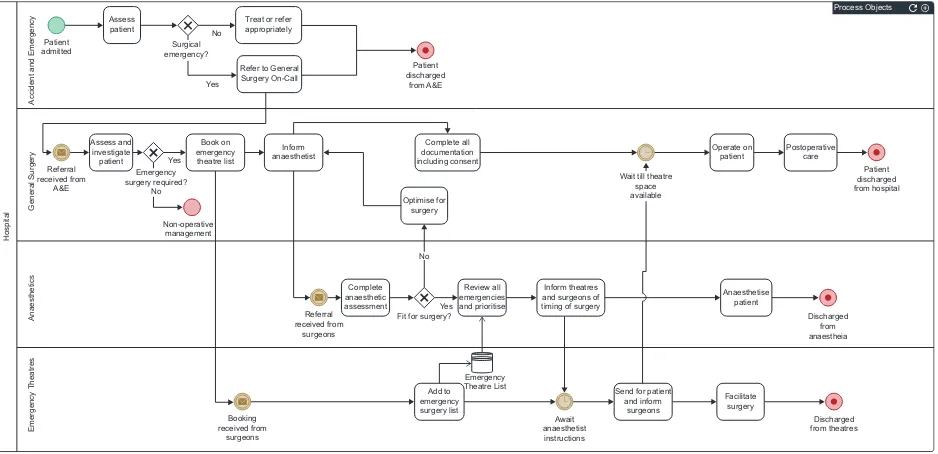
Abstract no. 588 Automating clinical pathways using executable business process model
and notation
Vishnu Vardhan Chandrabalan,
Manchester Royal Infirmary, Central Manchester Foundation Trust, Manchester, UK
Mohan Shanmugham,
Manchester Royal Infirmary, Central Manchester Foundation Trust, Manchester, UK
Introduction Clinical pathways are similar to business process in many aspects. Well-structured clinical workflows improve the efficiency and safety of healthcare delivery. Business Process Model and Notation (BPMN) is an open standard for the graphical representation of business processes. Executable BPMN deployed using a ‘process engine’ allows for interactive and
semi-automated processing of user tasks and decision-making.
Patients admitted with acute surgical conditions requiring emergency surgery follow predictable clinical pathways. Optimisation
of these pathways not only improves patient experience and outcome but can also result in significant healthcare cost benefits. The aim of this abstract is to demonstrate a ‘proof-of-concept’ application of executable BPMN to an emergency surgery clinical pathway. Methods Healthcare tasks undertaken during the course of treatment of a patient with a surgical emergency were listed. These tasks were ordered in a time-based sequence and were categorised based on the healthcare professionals responsible for delivering these tasks. Exclusive and parallel gateways were determined using clinical decision nodes. These were used to
create a BPMN model using an open-source modeller.
Task forms were designed to capture information that was relevant to the movement of the patient along the pathways. User
roles were defined and tasks were assigned to users as would happen in a real-world clinical scenario. Automated notifications
were used to inform users of pending tasks.
Results The BPMN process model designed for an emergency surgery clinical pathway is shown below. HTML forms were
designed for each task allowing capture of data relevant to decision making as well as to automate progression along the path-way by facilitating automated communication between team members involved in the patient’s care.
but also allows for analysis of bottle-necks and organisational optimisation. Dashboard views of overall workload and activities in progress allow healthcare providers and managers to deploy resources in a more dynamic manner in real-time.
Conclusion Executable BPMN with interactive forms run using a process engine can be easily adapted to routine healthcare processes to produce significant improvements in efficiency with minimal investment in IT resources.
Abstract no. 589 GlobalSurg: enabling global health research in surgery
Thomas Drake,
University of Edinburgh, Edinburgh, UK
Riinu Ots,
University of Edinburgh, Edinburgh, UK
Catherine Shaw,
Royal Infirmary of Edinburgh, Edinburgh, UK
Ewen Harrison,
University of Edinburgh, Edinburgh, UK
Introduction The provision of safe surgery across the world has been recently identified as a key area that requires urgent attention to reduce health inequalities. There is a specific lack of data across the world on infection following surgery, which
is a key driver of morbidity. This study aimed to describe the epidemiology of surgical site infection following gastrointestinal surgery across the world.
Methods Data were collected by clinicians across the world, through a network of senior clinicians who were responsible for their country. Collected data were subsequently validated by investigators at each centre to ensure accuracy. Data entry was
facilitated via a web-based server platform (REDCap). An analysis workflow was then enabled using an API, permitting
real-time data visualisation and study management. Embedded sub-studies also tested the feasibility of asynchronous mobile data
upload in low-middle income countries (LMICs).
Results In total, 376 hospitals across 65 countries (30 high, 18 Middle and 17 low income countries) collected data on 15,936
patients. Data collection via a mobile platform with asynchronous upload reduced the time required to enter data, the resources
required and proved feasible in an LMIC setting.
Discussion This study demonstrated collecting patient level data on an international level is feasible, even in low resource settings. Use of mobile platforms with asynchronous upload facilities reduces the workload and resources required to achieve
this. Future research should focus on deploying new technologies to LMICs, including machine learning and feedback to clini -cians for quality improvement.
Process Objects
Accident and Emergenc
y General Surger y Hospital Patient admitted Referral received from A&E Referral received from surgeons Booking received from surgeons Non-operative management
Fit for surgery? No
Yes
Yes Yes
Assess
patient Treat or referappropriately
Refer to General Surgery On-Call Patient discharged from A&E Surgical emergency? Assess and investigate patient Book on emergency theatre list Complete all documentation including consent Optimise for surgery Operate on
patient Postoperativecare Patient discharged from hospital Emergency Theatre List Emergency surgery required? No Inform anaesthetist Await anaesthetist instructions Discharged from anaestheia Discharged from theatres Complete anaesthetic assessment Review all emergencies and prioritise Inform theatres and surgeons of timing of surgery
Send for patient and inform surgeons Facilitate surgery Anaesthetise patient No Anaesthetic s Emergency Theatre s
Wait till theatre space available
[image:15.595.65.534.41.268.2]Add to emergency surgery list
Abstract no. 590 A precision medicine approach to the prediction of kidney stones
formation for an at-risk population of individuals admitted to the Emergency Room
Zhaoyi Chen,
University of Florida, Gainesville, FL, USA
Victoria Bird,
University of Florida, Gainesville, FL, USA
Mattia Prosperi,
University of Florida, Gainesville, FL, USA
Introduction Kidney stones are detrimental and painful and carry a high cost to the health care system. Large-scale, long-term electronic health record (EHR) data bases of patients presenting to the Emergency Room (ER) can be exploited to identify risk patterns of developing kidney stone formation (KSF). Our objective is to study a large 12-year ER data base and infer a statistical model for the risk of KSF. The ultimate goal is to make a personalised predictive tool for the population presenting to ERs with urinary symptoms as well as the general population.
Methods Data from the MIMIC-III EHR data base included 38,158 adult subjects who visited the ER between 2000 and 2012. We selected patients diagnosed with KSF, n = 216 compared to those who had other urinary conditions, n = 14,358
and controls, n = 23,584 (all other conditions). Statistical analysis was conducted on demographic characteristics, Charlson Comorbidity Index (CCI), other disease diagnoses, charted events and lab tests. ICD diagnoses and lab/chart events were
identified using univariate analysis (Bonferroni-adjusted). Multivariable (with forward selection) logistic regression models were fitted, and discriminative ability of models were tested using under the receiver operating characteristic (ROC) analysis with 30% holdout test. All statistical analysis was conducted using SAS 9.4.
Results Differences in age and gender between KSF and other two groups were observed. The highest rates of KSF were
seen in the age group 71–80 for both males (29.59%) and females (22.8%). KSF tends to be associated with the overweight category for males and obese for females. Among CCI categories, male and female KSF had significantly lower CCI of 0–1 compared to other groups (p < 0.0001). Among all ICD diagnoses that significantly differently distributed between KSF and other two groups, essential hypertension (45.2%), disorders of fluid, electrolyte and acid-base balance (44%), septicaemia (41.7%), atelectasis and acute respiratory distress syndrome (30.1%), heart failure (25%) has the highest frequencies in KSF. The area under the ROC obtained on holdout testing data was 87% for model with lab/chart event, 78% for model with ICD diagnosis and 65% for model with the CCI. The sensitivity was about 70% and 80% at 75% specificity for model with ICD diag -nosis and model with lab/charted events respectively.
Discussion This data showed different presentation patterns in terms of age, gender, body mass index and CCI. Some
unex-pected diagnoses and lab/chart events were identified to be associated with KSF, and future studies could focus on address
these associations and to discover potential underlying mechanism. In terms of predictive ability, multivariable models can
discriminate well KSF, but the low sensitivity and specificity warrant investigation of other potential markers, especially for early
detection.
Conclusion We examined the risk patterns of developing KSF in an ER/ICU setting, and several ICD diagnoses, lab tests
and charted events potentially associated with KSF were identified. Further model optimization is needed to improve the predic -tive ability and generalizability of our models.
Abstract no. 591 GIS mapping of Dengue incidence in Punjab, Pakistan
Suleman Atique,
Taipei Medical University, Taipei, Taiwan
Chien-Yen Hsu,
National Taipei University of Nursing and Health Sciences, Taipei, Taiwan
Syed-Abdul Shabbir,
Graduate Institute of Biomedical Informatics, Taipei Medical University, Taipei, Taiwan
Introduction Dengue has become a great threat to public health in tropical and sub-tropical regions, leading to 2.5 billion, almost half of world’s population, people at risk of dengue fever on the globe as estimated by World Health Organization and
case fatality rates vary between 0.5 and 3.5% in Asian countries. There were approximately 8.3 million cases of dengue fever
in 1990 and 58.3 million apparent cases in 2013 and more than two billion people are at risk of being infected with dengue virus
leading to about 55,000 people requiring hospitalization. Majority of these who require hospitalization are children.