Implementation Note: 3
Corporate Parenting:
Collaboration
Implementing Section 60
Dr Lisa Ann Kennedy
April 2016
08
This is the third in a special series of ‘implementation notes’
developed by CELCIS, with support from corporate parents,
to assist in the implementation and enactment of a specific
duty (or a set of duties) included in Part 9 (Corporate
Parenting) of the Children and Young People (Scotland) Act
2014 (the Act).
The aims of each implementation note are to:
Assist corporate parents in deciding ‘how’ they will meet their ‘corporate parenting’ duties.
Identify solutions to the practical challenges faced by corporate parents, associated with implementing duties ‘in so far as consistent with the proper exercise of their other functions’.
Support corporate parents in their efforts to make a positive and meaningful contribution towards improving the lives of looked after children and care leavers.
Implementing Section 60: Collaboration
Implementation is the process of putting a plan (or legislation or innovation) into effect. It’s the ‘doing’ part and, as such, it’s the part which largely determines whether a law is successful in delivering the change or outcome it was designed to. The text of a law rarely changes much on the ground; it’s how relevant organisations and individuals put that law into effect which determines its impact.
Effective implementation of legislation requires leadership, planning, commitment, good communication and hard work. This paper aims to help you, as a corporate parent, to understand what is meant by collaboration, and what such collaboration looks like in practice when implementing Section 60.
Summary of Part 9
Collectively, the duties established by Part 9 are designed to ensure that the attention and resources of various publicly funded organisations are explicitly focused on the task of safeguarding and promoting the wellbeing of looked after children and care leavers. In particular, Section 58 of the Act states that every corporate parent must:
Be alert to matters which, or which might, adversely affect the wellbeing of an eligible young person.
Assess the needs of eligible children and young people for any services or support provided.
Promote the interests of eligible children and young people.
Take appropriate action to help eligible young people access those opportunities. Keep their approach to corporate parenting under constant review, seeking out
[image:3.595.180.422.169.456.2]improvement wherever possible.
Figure 1: Illustration of corporate parenting ‘responsibilities’
Under Sections 59 – 65, corporate parents must also publish detailed corporate parenting plans and reports, collaborate with each other, follow directions and guidance, and
provide relevant information to Scottish Ministers.
Collaborative working: the statutory requirement
Section 60 of the Act states that:
1 Corporate parents must, in so far as is reasonably practicable, collaborate with each other when exercising their corporate parenting responsibilities [Section 58] or any other functions under this Part [Sections 59 to 65], where they consider that doing so would safeguard or promote the wellbeing of children or young people to whom this Part applies [all looked after children and care leavers].
2 Such collaboration may include:
a) Sharing information
c) Coordinating activities (and seeking to prevent unnecessary duplication) d) Sharing responsibility for action
e) Funding activities jointly
f) Exercising functions under this Part jointly (for example, by publishing a joint plan or joint report)
Collaboration, in this context, refers to two or more corporate parents working together towards a common or shared goal. The overall aim is to benefit either an individual looked after child, young person or care leaver, or a group there of (up to and including the entire population of these young people).
Collaboration should be seen as a mutually beneficial process, through which you can increase the chances and / or reduce the cost of achieving a shared outcome.
Collaboration can occur along a spectrum, ranging from the relatively informal and / or short term, to the formal and / or ongoing. It may involve the joint development of
structures to support sharing resources and making decisions, and the exercise of mutual authority and accountability. There has been an increased drive for collaborative working from the Scottish Government, as evidenced in a wide variety of policy documents and directives which encourage and mandate collaboration and partnership working to achieve optimal health and wellbeing for everyone. There is also recognition on the ground that achieving positive outcomes for individuals can best be achieved through working constructively with other organisations and agencies.
Effective collaboration can:
Improve the co-ordination, effectiveness and efficiency of services Increase responsiveness to the needs of service-users
Allow for novel approaches to be explored when addressing problems or issues
Collaboration and corporate parenting
In the context of Scotland’s complex social, political, governmental and economic
dynamics, any organisation seeking to improve outcomes for children and families must join forces and pool resources in a co-ordinated and collective effort. Collaboration is not new, and many corporate parents will already be collaborating with one another, for example, around children’s services planning and community planning. Under the Act, corporate parents must collaborate with other corporate parents, but this does not restrict you from other collaborations that will support your corporate parenting duties and responsibilities, for example, collaborating with third sector organisations.
Collaboration will be essential for corporate parents who do not have direct contact with children and young people (indirect service providers), to ensure that they are in a position to fulfil the duties ‘to be alert’ (Section 58 (1)(a)) and to assess the needs (Section 58 (1)(b)), among others1. Collaboration will also be important to corporate
parents who work directly with young people, seeking to fulfil their duty to ‘promote the interests’ of looked after children and care leavers (section 58(1)(c)) or to help eligible young people to access the opportunities, services and support they provide (Section 58(1)(e)).
Due to the wide range of corporate parents listed in schedule 4 of the Act, and their varying functions, it is envisaged that in many collaborations one corporate parent may have significantly more responsibilities than the other(s). It is therefore imperative that roles and responsibilities are clearly articulated and agreed upon by all those involved in the collaboration.
In any collaborative effort you should recognise your interdependence in addressing a given problem or issue, and you should be able to identify the mutual benefit of working together to tackle this issue. These should both be clearly recorded in the corporate parenting plan and / or the corporate parenting report. When all parties in a collaborative effort can do this, commitment and accountability will be strengthened as partners
recognise the relevance to their own work, rather than focusing on any immediate costs associated with collaboration.
Effective collaboration can be impeded if the objectives and individual benefits of that collaboration are not clear from the outset. This can prevent the development of appropriate structures and processes to support the achievement of the desired
outcomes. Each partner in the collaboration also needs to know what strengths or added value they bring to the endeavour. For example, two corporate parents may have a shared outcome to increase the employability skills of looked after children in a particular area. One corporate parent has access to the names and school addresses of each looked after child, while the other has the skills and expertise to run an effective intervention. Alone these corporate parents could not achieve their shared outcome. Bringing their strengths together would mean real advances could be made for a very vulnerable population.
Links with Children’s Services Plans
The Scottish Government is committed to delivering services which are fully integrated from a service user perspective, and they will be paying close attention to the detail on collaboration included in corporate parenting plans and reports. Part 3 of the Children
1Implementation Note 2 Corporate Parenting: to be alert and assess outlines how these corporate parents can work with
and Young People (Scotland) Act 2014 requires certain specified public bodies to work together to produce a joint children’s services plan, rather than individual organisational plans, and new arrangements for Children’s Services Plans are outlined. The Act specifies that these plans should describe how public bodies will safeguard, support and promote the wellbeing of children and young people in a particular Community Planning
Partnership area – goals which are consistent with the aims of corporate parenting. Responsibility for the development of these Children’s Services Plans resides with local authorities and health boards, and will likely require the kind of collaboration described in this paper.
When developing the Children’s Services Plan, the Act requires health boards and local authorities to consult with organisations that represent children, young people and their families, as well as other relevant organisations providing services for children and young people – again, these sorts of collaborations will likely contribute to the corporate
parenting duty to collaborate. As with corporate parenting plans, the Act requires that Children’s Services Plans be kept under review and be revised regularly.
Types of collaboration
Collaboration among corporate parents may involve (but is not restricted to):
Sharing information - may involve improving the co-ordination of information and data between different corporate parents. In most cases, it should be possible to share
relevant information without requiring the disclosure of personal information. A good example of information sharing that can have a real impact on the lives of looked after children and care leavers, is when exam timetables are shared with SCRA (the Scottish Children’s Reporter’s Administration) to minimise the impact of hearings on a child’s educational journey. When you wish to disseminate information about the activities and support you provide, you should collaborate with those corporate parents (such as local authorities) who have direct contact with children and young people, and can distribute information on your behalf. Where the sharing of personal information is required in order to safeguard or promote the wellbeing of a child or young person, this should be done proportionately, in compliance with the principles and provisions of the Data Protection Act 1998.
Providing advice or assistance - may involve mentoring other corporate parents, sharing new / best practice ideas or facilitating the process by which other corporate parents can meet their duties or obligations. Similar corporate parents could meet to share and compare their corporate parenting plans (Section 59) or their corporate parenting reports (Section 61), facilitating learning from each other and avoiding duplication of effort.
issue or concern relevant to looked after children and care leavers, or the co-ordination of human, financial and other resources. It may also involve planning activities or interventions together, to avoid unnecessary duplication and to ensure services can be deployed to the greatest effect. Sequencing of related activities should be logical and meet the needs of looked after children and care leavers (for example, corporate parents offering interview skills coaching should liaise with corporate parents offering job
interviews, ensuring the events take place in a coordinated manner). The benefit is an increase in the ‘value added’ by each intervention or activity, compared to badly planned or isolated activities.
Sharing responsibility for action - may involve corporate parents with a similar set of skills or a similar remit working together to achieve a common goal and also reduce their individual workload. For example, local authorities may have issues of shared interest and each local authority could share responsibility for producing guidance of a given issue (such as assisting children to access their Child Trust Fund, or how to make ‘Continuing Care’ a reality).
Jointly funding activities - may involve corporate parents pooling their resources to meet an identified need or objective. By combining resources, corporate parents could offer a wider range of quality opportunities, services and supports for looked after children and young people. While recognising that organisational resources are under incredible pressure, it will not be acceptable for a corporate parent to claim resource constraints as the reason why an opportunity, service or support cannot be provided, without evidence of comprehensively exploring collaborative opportunities (including joint funding) with other corporate parents.
Collaboration and information sharing
Collaboration will generally involve some degree of information sharing. In most cases, it will be possible to share relevant information without requiring the disclosure of personal information. For example, you may wish to publicise services and activities related to corporate parenting. If you are not a direct service provider or do not generally work directly with looked after children and care leavers, then you should approach corporate parents who are direct service providers (such as local authorities) and do have direct contact with children and care leavers, and distribute information via them. If the sharing of personal information is required in order to safeguard or promote the wellbeing of a child or young person, this should be done proportionately, in compliance with the principles and provisions of the Data Protection Act 19982, as recommended in the
statutory guidance on Part 93 . Additional advice on information sharing under the
Getting it Right for Every Child (GIRFEC) approach to working with children and young people is available on the Scottish Government website. The Information Commissioner’s
Office has also offered guidance4 on information sharing between services in respect of
children and young people.
The format of collaborative working
Section 60 does not prescribe a format for collaborative working. Some corporate parents may wish to develop formal partnerships - pooling resources, expertise and
responsibility. Others may wish to use existing collaborative structures (such as
Community Planning Partnerships). Existing structures may have limited memberships, so corporate parents choosing this option will need to consider how they could also engage with corporate parents outside of these structures. For some corporate parents, in view of their other functions, collaborative working will only ever be appropriate on an ad hoc basis, and / or in a limited way. Ultimately, it is the responsibility of each
corporate parent to identify how and with whom they collaborate. Corporate parents are not expected to collaborate with every other corporate parent – they are expected to collaborate in instances where such a collaboration would benefit an individual looked after child or care leaver, or a group there of.
Any collaboration should be recorded in the corporate parenting report (please see Implementation Note 4 - Corporate Parenting: planning and collaborating). When no collaboration has taken place over the course of a corporate parenting report, an
explanation should be provided. There are no corporate parents on schedule 4 for whom collaboration is impossible. Cooperating to facilitate research, or contributing to another organisation’s continuing professional development opportunities, would constitute collaboration. Where you work together constructively in the interests of looked after children and care leavers, you are collaborating.
Elston (2013)5 presents a useful table to frame key dimensions of partnership working
(please see Table 1). Each of these dimensions can be considered as evidence under the duty to collaborate in Part 9 of the Act (excluding co-existence / competition). More informal collaborations (such as networking and co-operation) could involve corporate parents meeting informally to guide, advise and share experiences relating to corporate parenting with each other. More formal collaborations will involve a greater shared investment of resources including time, staff and financial resources.
4 http://www.gov.scot/Resource/0041/00418080.pdf
5 Elston, J. (2013) 7.4 Partnerships. In Guest, C., Ricciardi, W., Kawachi, I., & Lang, I. (Eds.). (2013). Oxford
Pathways to successful collaboration
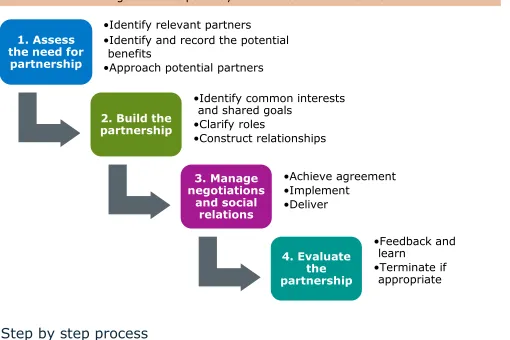
[image:10.595.48.558.152.492.2]This process (summarised in Figure 2) will help to ensure you develop (or continue) purposeful and successful collaborative working.
Figure 2: The pathway to a successful collaboration
Step by step process
Step one: Assess the need for partnership
You should identify an objective, the achievement of which requires the resources, expertise or input of one or more other corporate parents:
a) Identify relevant partners, and summarise what they hope those partners will bring to the collective endeavour. This step will be made easier if all corporate parents publicise (for example, through their websites) their current corporate parenting activities, what they can do as a corporate parent and who to contact with corporate parenting queries.
b) Identify and record the potential benefits for each corporate parent potentially involved in the collaboration.
c) Approach the other corporate parents identified at stage 1a. and present your case for joining forces / collaboration.
1. Assess the need for
partnership
•Identify relevant partners
•Identify and record the potential benefits
•Approach potential partners
2. Build the partnership
•Identify common interests and shared goals
Step two: Build the partnership
a) Identify common interests and shared goals – partners in the collaboration
consider their areas of shared interest and work together to develop shared goals for the collaboration. At this stage, each corporate parent should be confident that their role in the collaboration fits with their primary function and remit.
b) Clarify roles – each partner in the collaboration should have a clear idea of what their role in the collaboration is, what resources they are expected to bring and their area of influence.
c) Construct relationships – agree on any ground rules and governance mechanisms. Open, frank and frequent discussion nurtures trust and mitigates the fear of
exploitation. This can also be achieved by ensuring there is a shared
understanding of the purpose of the collaboration, by dividing the workload fairly, by sharing credit for achievements, by addressing power imbalances and by cultivating a clear sense of leadership.
Step three: Manage negotiations and social relations
a) Achieving agreement – Use problem-solving techniques (such as brainstorming) to reach agreement on relevant issues.
b) Implementation – Each partner completes the actions they agreed to.
c) Delivery – the partners work together successfully to deliver on the endeavour.
Step four: Evaluate the partnership (process and impact)
d) Feeding back and learning – the collaboration should be seen as an iterative process, with ongoing feedback and evaluation, so that troubleshooting can happen in a timely fashion and the impact of the collaboration can be assessed. e) Termination if appropriate – if the collaboration was for a short-term project or
one-off event, it can come to a close once the desired outcome has been achieved.
Appendix 1 sets out a checklist to help you develop successful collaboration working.
What factors can influence the success of collaboration?
Professional – Collaboration efforts can be threatened in situations where there are conflicting ideologies and values, or conflicting views about the aims or goals of the collaborative effort.
Financial - Differences in funding mechanisms, as well as differences in levels of resources, can hamper collaborative efforts if not tackled effectively.
Relational – Trust must be built and maintained between the parties in any collaborative effort. This can be achieved by identifying shared goals, assigning individual areas of responsibility and delivering on commitments.
Structural – Inter-organisational complexity, over-lapping boundaries, differences in planning and budgetary cycles can all impede collaboration if not articulated early.
Making collaboration effective and productive
Do make sure the right people are involved – those who can influence resource use in their organisation and / or have a stake in the outcome. The skills required forsuccessful collaboration should inform staff selection procedures.
Do make sure the right number of people are involved – too many people involved makes it difficult to navigate conflicting viewpoints positively.
Do make sure those involved have partnership skills, such as problem-solving, negotiation and management.
Do make sure discussions focus on outcomes rather than resources.
Do ensure performance is regularly evaluated in order to identify and address issues as they arise.
Avoid adopting defensive behaviours which could result in ‘turf wars’ over professional roles and boundaries: Be reflective about your contribution and focus on the shared goal identified at the outset.
When a corporate parent finds they are opposing something, they should articulate the reason(s) honestly and clearly. If they are opposing it because it genuinely goes against the interests of looked after children or care leavers, they should be able to support this with evidence and should work with the partners in the collaboration to identify how to better meet their needs. If, however, a corporate parent opposes something because they feel it goes against the interests of their organisation, they should revisit both the aims of their organisation and the role of a corporate parent before trying to make a case for their opposition.
Knowing if collaboration has been successful
Collaboration can be said to have been successful if all parties in the collaboration:
Appreciate that they must work together to achieve the desired outcome of their collaboration
Can identify what they can bring to the collaboration, and what the collaboration will help them achieve
Have a sense of commitment to the group and its objectives
Can participate fully and are satisfied that decision-making is by consensus Can openly express feelings and raise issues of disagreement
Trust each other
Can resolve conflict effectively
Feel that there is mutual support and shared problem solving Adopt an ‘enabling’ and ‘can do’ approach
Implement and deliver actions to achieve outcomes Participate in critical and constructive self-evaluation
Not all collaborations will be successful - some may fail to achieve the desired results, while others may achieve some, but not all, of the desired goals. It is important to record and document the process and outcomes of collaborative efforts. Such records will
provide evidence that corporate parents have met their duty to collaborate with each other, and will form an important element of the corporate parenting report (Section 61). These records will also provide useful learning on what does and does not work in terms of collaboration. This learning will help corporate parents to meet their duty to ‘improve’ how they exercise their corporate parenting duties and responsibilities in the future (Section 58).
Authors note
Please note this paper does not replace or supersede the Scottish Government’s
Statutory Guidance on Part 9 (Corporate Parenting), published in July 2015, to
which all corporate parents must have regard. As implementation of Part 9 will
look different for each corporate parent, in view of their distinct functions and
context, guidance or papers cannot provide a simple ‘how-to’ guide. As such, this
series of implementation notes have no statutory basis, but instead provide
additional, optional advice and ideas, as well as generic ‘good practice’ in respect
of the fulfilment of specific corporate parenting duties. The Scottish Government
and its agencies may also refer to these papers when reviewing corporate
parents’ performance.
Appendix 1: Checklist for successful collaboration
Step 1: Assess the need for partnership
What is the objective of the collaboration?
What partners do we need to achieve this? (Include a reason for each partner being involved.)
What are the benefits of each partner of being involved in this collaboration? Can we present a strong case for collaboration to each potential partner?
Step 2: Build the partnership
Have we identified common interests and shared goals with our partners? Have we clarified the roles of each partner in the collaboration?
Have we developed a memorandum of understanding to detail the roles identified and the process of dealing with disputes?
Have we agreed on any ground rules and governance mechanisms?
Step 3: Manage negotiations and social relations
How do we plan to reach agreements?
Is each partner doing what they said they would? Is the aim of the collaboration being achieved?
Step 4: Evaluate the partnership (process and impact)
Are we feeding back and learning throughout the collaborative effort?
About CELCIS
Our goal is simple. We want to make a difference. We are totally committed to making positive and lasting improvements in the experiences, life
chances and outcomes for Scotland’s looked after children and young people. Taking a multi-agency, collaborative approach towards making lasting change in thinking and ways of working, with everyone whose work touches the lives of looked after children.