Rochester Institute of Technology
RIT Scholar Works
Theses Thesis/Dissertation Collections
1-2014
Design for Implementation of Image Processing
Algorithms
Jamison D. Whitesell
Follow this and additional works at:http://scholarworks.rit.edu/theses
This Thesis is brought to you for free and open access by the Thesis/Dissertation Collections at RIT Scholar Works. It has been accepted for inclusion Recommended Citation
Design for Implementation of Image Processing Algorithms
by
Jamison D. Whitesell
A Thesis Submitted in Partial Fulfillment of the Requirements for the Degree of Master of Science in Electrical Engineering
Supervised by Dr. Dorin Patru
Department of Electrical and Microelectronic Engineering Kate Gleason College of Engineering
Rochester Institute of Technology Rochester, NY
January 2014
Approved By:
Dr. Dorin Patru
Associate Professor – R.I.T. Dept. of Electrical and Microelectronic Engineering
Dr. Eli Saber
Professor – R.I.T. Dept. of Electrical and Microelectronic Engineering
Dr. Mehran Kermani
Dedication
To my family,
Acknowledgements
I would like to thank:
Dr. Dorin Patru for giving me the opportunity to be a part of this research and for guidance throughout the thesis process;
Brad Larson, Gene Roylance, and Kurt Bengston for their insight and continued support; Ryan Toukatly and Alex Mykyta for their research efforts which lay the technical
groundwork for this project;
James Mazza, Sankaranaryanan Primayanagam, and Osborn de Lima for providing valuable suggestions during the course of this work;
Abstract
Color image processing algorithms are first developed using a high-level mathematical modeling language. Current integrated development environments offer libraries of intrinsic functions, which on one hand enable faster development, but on the other hand hide the use of fundamental operations. The latter have to be detailed for an efficient hardware and/or software physical implementation. Based on the experience accumulated in the process of implementing a segmentation algorithm, this thesis outlines a design for implementation methodology comprised of a development flow and associated guidelines.
The methodology enables algorithm developers to iteratively optimize their algorithms while maintaining the level of image integrity required by their application. Furthermore, it does not require algorithm developers to change their current development process. Rather, the design for implementation methodology is best suited for optimizing a functionally correct algorithm, thus appending to an algorithm developer’s design process of choice.
Table of Contents
Dedication ... ii
Acknowledgements ... iii
Abstract ... iv
Table of Contents ...v
List of Figures ... vii
List of Symbols ...x
Glossary ... xii
Chapter 1: Introduction ...1
Chapter 2: Background ...5
2.1 Related Work ...5
2.2 Prior Research Leading to the Multichannel Framework ...8
2.3 The GSEG Algorithm as a Test Vehicle ...10
Chapter 3: Algorithm Modifications...13
3.1 Design for Implementation Test Vehicle ...13
3.2 Modifications to the MCF Instruction Set ...20
Chapter 4: Design for Implementation ...24
4.1 Design for Implementation Flow ...24
4.2 Design for Implementation Guidelines ...26
4.3 General Applicability of the Proposed Methodology ...29
Chapter 5: Implementation of the Test Vehicle ...31
5.1 Conversions between Programming Languages ...31
5.2 Image Quality Metrics and Validation ...35
Chapter 6: Results and Discussions ...39
6.1 Validation of Algorithm Modifications ...39
6.2 Cases of Significant Degradation ...42
6.3 Logic Utilization, Power Consumption, and Execution Time...47
Chapter 7: Conclusion ...55
References ...57
Appendix A: Hardware and Software Used ...59
Hardware ...59
Software ...59
Appendix B: Color Images ...60
List of Figures
Figure 2.1: R. Toukatly’s Dual-Pipe PR CSC Engine, Reproduced from [2]. ... 9
Figure 2.2: A. Mykyta’s Multichannel Framework, Reproduced from [3]. ... 10
Figure 2.3: Block diagram of GSEG algorithm, Reproduced from [4]. ... 11
Figure 3.1: A. Mykyta’s Generic Instruction Word Format, Reproduced from [3]. ... 21
Figure 3.2: Packet Format, Modified from [3]. ... 23
Figure 4.1: The Design for Implementation Iterative Flow. ... 25
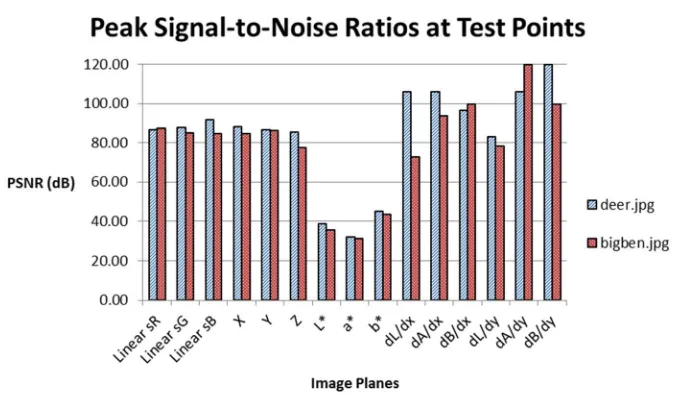
Figure 6.1: Two-dimensional correlation coefficients for all modified stages of the GSEG algorithm. The right-hand side shows an enhanced view of the range from 0.99 to 1.00. 40 Figure 6.2: Peak signal-to-noise ratios for all modified stages of the GSEG algorithm. . 41
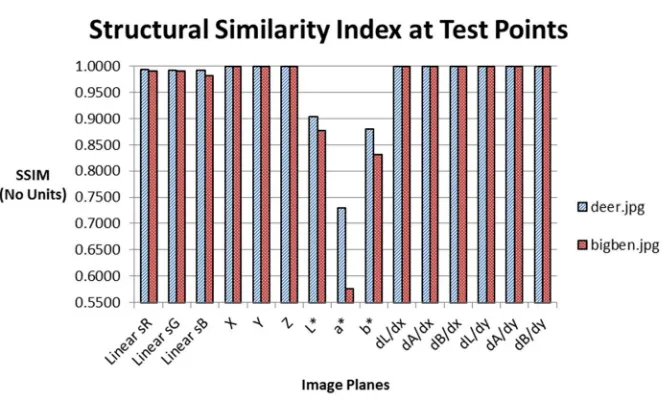
Figure 6.3: Structural similarity indices for all modified stages of the GSEG algorithm. 42 Figure 6.4 (LEFT): The GSEG result in the CIE L*a*b* color space. ... 43
Figure 6.5 (RIGHT): The MCF result in the CIE L*a*b* color space. ... 43
Figure 6.6 (LEFT): The GSEG result in the CIE L*a*b* color space. ... 44
Figure 6.7 (RIGHT): The MCF result in the CIE L*a*b* color space. ... 44
Figure 6.8: Block Diagram of the MCF with all GSEG Modules, Modified from [3]. .... 45
Figure 6.9 (LEFT): The Edge Map generated by the GSEG algorithm in MATLAB. ... 46
Figure 6.10 (RIGHT): The Edge Map generated from successive modules in the MCF. 46 Figure 6.11 (LEFT): The Edge Map generated by the GSEG algorithm in MATLAB. ... 47
Figure 6.12 (RIGHT): The Edge Map generated from successive modules in the MCF. 47 Figure 6.13: Block Diagram of the MCF with five channels utilized, Modified from [3]. ... 48
List of Tables
List of Symbols
R’8-bit Red pixel value in the Standard RGB color space G’
8-bit Green pixel value in the Standard RGB color space B’8-bit Blue pixel value in the Standard RGB color space R’sRGB Red pixel value normalized in the sRGB color space G’sRGB Green pixel value normalized in the sRGB color space B’sRGB Blue pixel value normalized in the sRGB color space RsRGB Redpixel value in the Linearized sRGB color space GsRGB Greenpixel value in the Linearized sRGB color space BsRGB Bluepixel value in the Linearized sRGB color space
X X pixel value represented in the CIE 1931 XYZ color space
Y Y pixel value represented in the CIE 1931 XYZ color space
Z Z pixel value represented in the CIE 1931 XYZ color space
Xn X component of the CIE XYZ tri-stimulus reference white point Yn Y component of the CIE XYZ tri-stimulus reference white point Zn Z component of the CIE XYZ tri-stimulus reference white point
L* Luminance pixel value represented in the CIE 1976 L*a*b* color space
a* First color pixel value represented in the CIE 1976 L*a*b* color space
b* Second color pixel value represented in the CIE 1976 L*a*b* color space
x Variable representing an X, Y, or Z pixel value in a function
L*’ Luminance pixel value denoted with a prime to avoid redundancy
a*’ Color pixel value denoted with a prime to avoid redundancy
b*’ Color pixel value denoted with a prime to avoid redundancy
m Total number of rows of pixels in a given image
n Total number of columns of pixels in a given image
i Present row in a matrix of pixels
j Present column in a matrix of pixels
t Present time (i.e., in a series of sequential operations)
p Pixel value at location given by i and j or by t
gx(i,j) Vector gradient calculated in the x direction of an image
gy(i,j) Vector gradient calculated in the y direction of an image
g(i,j) Vector gradient calculated in an arbitrary direction based on k
f Known good image for comparing result images against
g Result image being compared against a known good image
r(f,g) Two-dimensional correlation coefficient
̅ Mean of known good image
̅ Mean of result image
b Number of bits used to represent a pixel value
Glossary
ASIC Application-Specific Integrated Circuit
CIE International Commission on Illumination (Commission Internationale de l'éclairage)
CMYK Cyan-Magenta-Yellow-Key
CORDIC Coordinate Rotation Digital Computer (Square-rooting Algorithm)
CORR2 Two-Dimensional Correlation Coefficient
CSC Color Space Conversion
DFI Design for Implementation
DPR Dynamic Partial Reconfiguration
DSP Digital Signal Processing
FIFO First-In-First-Out Buffer
FPGA Field Programmable Gate Array
GSEG Gradient-Based Segmentation
HDL Hardware Description Language
HP Hewlett Packard
ICAP Internal Configuration Access Point
IP Intellectual Property
L*a*b* The 1976 CIE L*a*b* Color Space
MCF Multichannel Framework
MEX MATLAB Executable
MRI Magnetic Resonance Imaging
PC Personal Computer
PCI Peripheral Component Interconnect
PCIe PCI-Express
PRR Partially Reconfigurable Region
PSNR Peak Signal to Noise Ratio
Reg-bus CSC Register Bus
RGB Red-Green-Blue
RR Reconfigurable Region
RTL Register Transfer Level
sRGB Standard Red-Green-Blue (HP & Microsoft Collaborative Color Space)
SSIM Structural Similarity Index
SRAM Static Random-Access Memory
TRD Targeted Reference Design
Verilog Verify-Logic Hardware Description Language
VHDL Very-high-speed integrated circuits Hardware Description Language
Chapter 1:
Introduction
Most often the same individual or group of individuals does not perform both: the design of the high-level model of an algorithm and its implementation. Algorithm development typically focuses on achieving functional correctness, which comes at the expense of high computational resources. The goal of implementation, on the other hand, is to achieve maximum efficiency. This means minimal computational resources, low power, and high execution speed. When algorithms are tailored for efficiency, precision is often sacrificed, creating a dichotomy. The lack of cross-disciplinary expertise may result in valuable optimization opportunities to be missed. During the implementation phase of multi-step image processing algorithms, hardware/software engineers may be reluctant to modify the high-level model of the algorithm to improve efficiency, due to their limited imaging science background. For these reasons, this work argues that the selection of implementation-efficient operations and optimal number representations, among other algorithm optimizations, should be performed during the high-level modeling of the algorithm.
can be computed in parallel. Other methods such as selective reset strategies and resource sharing can reduce overall resource utilization and congestion. As the well-known Amdahl’s Law can be adapted to this matter, these hardware-centric optimization techniques are theoretically limited by the inherent nature of the algorithm being implemented. In order to maximize the number of possible optimizations, modifications for efficiency should be taken into consideration during the initial development process of the algorithm.
As the continuation of a sponsored research project for Hewlett Packard (HP), the original goal of this work was to further evaluate the use of Field Programmable Gate Arrays (FPGAs) as viable alternatives to Application Specific Integrated Circuits (ASICs). The emergence of Dynamic Partial Reconfiguration (DPR) for FPGAs created the possibility for image processing modules to be effectively swapped with modules of a different functionality at run-time. By foreseeing the potential gains of masking dynamic reconfiguration with active processing, R. Toukatly et al. and A. Mykyta et al. [2, 3] developed a multichannel framework (MCF). A color space conversion (CSC) engine provided by HP was used to initially evaluate this framework. A variety of image processing modules was needed to further evaluate its viability.
Chapter 2:
Background
2.1
Related Work
The goal of achieving an efficient design implementation is paramount to drive cost down. This requires design parameters such as execution time, silicon area, and power consumption to be reduced. A number of methods for optimizing these parameters for FPGA based implementations of algorithms have been used over recent years [1]. Exploring optimization at an even higher level of abstraction, the functional partitioning of a design has yielded improvements compared to structural partitioning [5]. Additionally, partitioning, while leveraging the dynamic partial reconfiguration feature, has been shown to increase speedup [3]. These techniques, however, are all limited by the optimizations inherent within the algorithm presented to the hardware/software engineer.
An automated compiler for generating optimized HDL from MATLAB was developed by M. Haldar et al. [7]. By using the automated compiler to optimize the MATLAB code, improvements in implementation parameters were shown as reductions in resource utilization, execution time, and design time. Although in some cases the execution time was longer, the authors argued that the compiler significantly reduced the design time. It could be further argued that an engineer would spend less time optimizing the generated HDL than if he were starting from scratch. Regardless, numerous gains were reported and were even increased with the integration of available Intellectual Property (IP) cores, which are typically provided by the FPGA manufacturer in the synthesis tools. These IP cores are capable of targeting specific structures within an FPGA, leading to optimal use of resources.
can be simulated until the acceptable image quality threshold is reached. Theoretically, the iterative approach ensures that an optimal design for the application is obtained.
It is apparent that additional gains can be made if cross-disciplinary collaboration can be facilitated. Bridging the gap between algorithm developers and hardware/software engineers to enable co-design is not a new idea. In fact, considerable research has been done to enable collaborative design based on task dependency graphs. Research by K. Vallerio and N. Jha [9] created an automated tool to extract task dependency graphs from standard C-code, therefore supporting hardware/software co-synthesis. Vallerio and Jha argued that large gains could be made in system quality at the highest levels of design abstraction, where major design decisions can have major performance implications [9].
2.2
Prior Research Leading to the Multichannel Framework
Previous generations of this research project evaluated several different dynamic partial reconfiguration (PR) techniques in FPGAs using a CSC engine provided by HP. The CSC engine is a multi-stage, pipelined architecture capable of converting color images to a desired color space via pre-computed look-up tables. Originally, two main conversion stages – one for three-dimensional inputs and one for four-dimensional inputs – existed sequentially in the pipeline. This architecture lent well to DPR as only one module was needed based on the number of dimensions presented at the input. As a result, a PR region was defined within the engine such that it could be reconfigured for 3D or 4D processing, as seen in Figure 2.1. Here, 3D processing would be resulting in a color space such as RGB, whereas 4D processing would result in a color space such as Cyan-Magenta-Yellow-Key (CMYK).
durations. This research laid the groundwork for the development of the multichannel framework.
Figure 2.1: R. Toukatly’s Dual-Pipe PR CSC Engine, Reproduced from [2].
The multichannel framework is presented in Figure 2.2, and shows the numerous changes made to the dual-pipeline design [3]. Namely, the CSC Register Bus (Reg-bus) was eliminated from the design, allowing for data to be multiplexed into the various channels. Another important aspect is that only one Internal Configuration Access Port (ICAP), which controls the bit-streams used for reconfiguring the modules, is available for a PR operation at any time.
Figure 2.2: A. Mykyta’s Multichannel Framework, Reproduced from [3].
2.3
The GSEG Algorithm as a Test Vehicle
high-level block diagram of the GSEG algorithm is shown below in Figure 2.3, but does not show the iterative nature of the region growth and region merging processes.
Figure 2.3: Block diagram of GSEG algorithm, Reproduced from [4]. The segmentation algorithm begins with a color space conversion from the sRGB color space to the 1976 CIE L*a*b* color space. This conversion is necessary because the CIE L*a*b* color space models more closely the human visual perception [4] than the sRGB color space – which was designed as a device-independent color definition with low overhead [12]. The use of the CIE L*a*b* space as the basis for creating the edge map produces segmentation maps that more closely resemble those generated by humans [4]. This color space conversion can be partitioned into three smaller steps. The first two steps convert the 8-bit sRGB pixels into linearized sRGB values, followed by the conversion to CIE XYZ values. Finally, the CIE XYZ values transformed into 8-bit CIE L*a*b* values. The conversion from linear sRGB to CIE XYZ uses constants derived from a Bradford chromatic adaptation [13]. These transforms are presented in detail in the next chapter.
regions of the image. The region growth and region merging processes are iterative, but the number of iterations to be performed is adjustable via segmentation parameters. The final region map is merged with a texture model – based on local entropy filtering – to produce a segmentation result. The segmentation map consists of clusters of similar pixels, deemed so based upon color, texture, and spatial locale relative to edges.
Chapter 3:
Algorithm Modifications
3.1
Design for Implementation Test Vehicle
Before any modifications are made to the algorithm, all high-level intrinsic functions must be recoded, i.e. replaced with explicit known fundamental operations. This step is essential for an implementation-friendly design, and for one that can be translated to any implementation platform. There may be cases where high-level function calls can map directly to a specific intellectual property (IP) core of a given synthesis tool, however the number of these cases is most likely small. It is, however, expected that basic arithmetic operations are readily available as IP cores for a variety of synthesis tools. For the modifications to our GSEG algorithm, the knowledge of available IP cores within the Xilinx software suite was critical [14]. In this chapter, we present the modifications to the GSEG algorithm in “low-level” MATLAB code, which means that all high-level intrinsic functions have been recoded.
requires special floating-point units for processing, fixed-point representation is chosen. As a result and as shown in Equations 3.1b, normalization can be removed.
= ÷ 255.0
= ÷ 255.0
= ÷ 255.0
(3.1a)
= ÷ 255.0 256.0 ≅
= ÷ 255.0 256.0 ≅
= ÷ 255.0 256.0 ≅
In the second case of the if-clause, the exponent of 2.4 can be distributed to the numerator and denominator by using basic algebraic manipulation and exponentiation identities. To raise a number to the exponent of 2.4 is not a standard operation and requires a relatively large amount of custom design time. By approximating this exponent with 2.5
and using another exponentiation identity, raising an arbitrary number to the exponent of
2.5 becomes the product of the number’s square and square root. Squaring a number is effectively a multiplication with itself and square rooting can be implemented via the available CORDIC IP core [14]. Looking at the denominator, the division by a constant can be replaced with a multiplication by the inverse of the constant. Since the inverse of the constant is less than one, it is scaled up by 28 so that integer multiplication can be
performed. Finally, focusing on the numerator, the constant being added must be scaled by 28 to match the scaling already applied to the 8-bit sRGB values. The piece-wise function after the application of these modifications is shown in Equations 3.2b.
, , ≤ 0.03928
= ÷ 12.92
= ÷ 12.92
= ÷ 12.92
&'(& ) , , > 0.03928
= +, + 0.055./1.0550
1.2
= +, + 0.055./1.0550
1.2
= +, + 0.055./1.0550
1.2
, , ≤ 10
= ≫ 4
= ≫ 4
= ≫ 4
&'(& ) , , > 10 = ,
+ 14.1 5, + 14. 56.0
= , + 14.1 5, + 14. 56.0
= , + 14.1 5, + 14. 56.0
(3.2b)
With the first transform in the color conversion process modified, the conversion from the linear sRGB color space to the CIE XYZ color space follows next [12]. As shown in Equation 3.3a, the RGB values are arranged as a column vector and pre-multiplied by a 3x3 matrix of constants. In order to facilitate integer arithmetic, all elements of the constant matrix are scaled by a factor of 212. With additional down scaling implied in Equation
factor of 216. As can be seen, there is not much else that can be done to this stage to make it more implementation-friendly. Matrix multiplication is easily mapped to an FPGA via the use of multiply-accumulate operations, a standard method in digital signal processing (DSP). Rather than creating our own custom core to implement this operation, an existing IP core has been used and our overall design time has been shortened.
678 9: = 6
0.4361 0.3851 0.1431 0.2225 0.7169 0.0606
0.0139 0.0971 0.7141: 6 : (3.3a)
678 9: = 6
1786 1577 586 911 2936 248
57 397 2924: 6 : (3.3b)
Once the pixel values are converted to corresponding values in the CIE XYZ color space, the final conversion to the CIE L*a*b* color space is performed [13]. Note that the following constants – based on a reference white point – are needed for this transform: Xn = 0.964203, Yn = 1.000, and Zn = 0.824890. Equations 3.4a, 3.5a, and 3.6a, show that the
X, Y, and Z values from the previous transformation step need to be divided by these constants. In the case of 8 8
<, the constant is one and no division is required. For the
other two cases, division could be replaced by a multiplication with the inverted and scaled up constants. However, since the inverted constants are approximately one, we have chosen to eliminate this step completely. These modifications are captured in Equations 3.4b, 3.5b, and 3.6b.
=∗ = 116 ,8 8
<. − 16 (3.4a)
=∗ = 116 8 − 16
@∗ = 500 A ,7 7
<. − ,8 8<.B (3.5a)
@∗ = 500 C 7 − 8 D
(3.5b)
E∗= 200 A ,8 8
<. − ,9 9<.B (3.6a)
E∗ = 200 C 8 − 9 D (3.6b)
Function f(x) is a piece-wise function [13] and is given in Equation 3.7a. Since the input values to this step are scaled by a factor of 216, the constant value that the input values are compared against must also be scaled by the same factor – which is a similar modification to the one performed in Equations 3.2a. In the first case of Equation 3.7a, a cube root operation is required. To create a custom core to perform this operation would be time consuming and there are no pre-existing Xilinx IP cores for this operation. Using a set of basic algebraic manipulations, the cube root operation can be replaced by the product of multiple square root iterations, as shown in Equation 3.7b. To handle the second case of Equation 3.7a the constant 7.787 can be rounded to 8.0, which effectively replaces the multiplication with a three bit-shifts to the left. The addition of a constant value must be scaled by 216 in order to match the scaling already applied to the input value. These changes are shown in Equation 3.7b.
= F G H, ) > 0.008856
7.787 + 16 116, ) ≤ 0.008856 (3.7a)
= I G 2 G GJ, ) > 580 ≫ 3 + 9040, ) ≤ 580
The resulting CIE L*a*b* pixel values are finally scaled to 8-bit integer values using equations 3.8 and 3.9. Note that the results from equations 3.4a, 3.5a, and 3.6a have been labeled with apostrophes to avoid duplicated symbols. For Equation 3.8, the division by 100 can be combined with the multiplication by 255, resulting in a multiplication by 26
– not shown. The addition of a constant needs no modifications in Equations 3.9.
=∗ = 255 ,=∗
100.0. (3.8)
@∗ = @∗ + 128.0
E∗ = E∗ + 128.0 (3.9)
rows m or columns n must be specified in conjunction with the input format of the image. By modifying the instruction set of the framework (MCF), a custom user instruction has been added to load the appropriate value, which is denoted by k in Equation 3.12, and discussed in more detail in the next section.
K Lℎ& &NO@L)PK( E&'PQ, '&L R, @K S E& Lℎ& T@ )&KL( )K Lℎ& @K )T&UL)PK(
P @K V E W )X@ &.
YOTLℎ&TXPT&, '&L Z @K [ E& TPQ @K UP'OXK )K )U&(, @K \ E& @ ]) &' ^@'O& @L @
'PU@L)PK QTL Z @K [ PT QTL @ L)X& _.
R ), ` = a
] ) + 1, ` − ] ), ` , PT ) = 1, K
b] ) + 1, ` − ] ) − 1, `2 c , PLℎ&TQ)(& (3.10)
S ), ` = a
] ), ` + 1 − ] ), ` , PT ` = 1, X
b] ), ` + 1 − ] ), ` − 12 c , PLℎ&TQ)(& (3.11)
S ), ` = dC] L + 1 − ] L D ≪ 1,C] L + 1 − ] L − 1 D, PLℎ&TQ)(&PT L = 1, f
(3.12)
3.2
Modifications to the MCF Instruction Set
amounts of data. The generic instruction word format, seen in Figure 3.1, was built to meet requirements for PR and the HP CSC engine, while also allowing for custom user actions to be added in the future.
Figure 3.1: A. Mykyta’s Generic Instruction Word Format, Reproduced from [3]. Leveraging the flexibility of the instruction word format, a new instruction word was created for the vector gradient modules. The custom user instruction Ld Gradient
Counter is automatically sent after the Flush MCF and Channel Sync commands when the
vector gradient processing module is specified in the MCF job script. This command loads a register in the custom user circuit with the height or width, in pixels, of the image being processed. This value was denoted by k in the previous section and is required to trigger special cases of subtraction when the edges of the image are being processed. By modifying the instruction set to add this capability to the user circuit, one vector gradient module was able to be used for both the x direction and y direction gradients.
current MCF instructions is presented in Table 3.1, with the custom command appended to the instruction words from the work of A. Mykyta et al..
Bit Position 63 62 61 60 ... 56
User Instruction Burst Start PR Instruction
Operation Resulting Opcode
Non-Processing Commands:
No Operation 0 0 0 0x0 0x00
Start PR Burst Data 0 1 1 0x1 0x61
Flush MCF 0 0 0 0x2 0x02
Channel Sync 0 0 0 0x8 0x08
CSC Commands:
Reg-Bus Write 1 0 0 0x1 0x81
Start Pixel Burst 1 1 0 0x2 0xC2
Custom Commands:
[image:36.612.94.519.144.353.2]Ld Gradient Counter 1 1 0 0x5 0x85
Table 3.1: Supported Instruction Word Opcodes, modified from [3].
The corresponding packet format for the Ld Gradient Counter custom instruction word is shown in Figure 3.2. The packet format is very similar to a Start PR Data Burst
instruction or a Start Pixel Burst Instruction. The similar format allowed for a very quick and effortless implementation of the new instruction. The modified packet format diagram is included for completeness and shows how all 8-bytes are used for each instruction. Note that gray areas in the figure represent bits that are unused.
63 56 55 0
No Operation 0x00
63 56 55 32 31 0
Start PR Data Burst 0x61 burst_count
PR Burst Data pr_word_1 pr_word_0
63 56 55 0
Flush MCF 0x02
63 56 55 4 3 0
Channel Sync 0x08 channel_id
63 56 55 50 49 32 31 0
Register Write 0x81 reg_addr reg_data
63 56 55 32 31 0
Start Pixel Burst 0xC2 burst_count
63 48 47 32 31 16 15 0
Pixel Burst Data csc_data_3 csc_data_2 csc_data_1 csc_data_0
63 56 55 32 31 0
[image:37.612.105.524.69.313.2]Ld Gradient Counter 0x85 pixel_count
Chapter 4:
Design for Implementation
In the previous chapter, the first steps of the GSEG algorithm were modified to achieve an efficient implementation in an FPGA. The design flow used during this process was documented and a set of design guidelines were generated from observations. The design flow and guidelines have been paired to develop a general methodology for tailoring algorithms for implementation. In this chapter, the Design for Implementation (DFI) methodology is presented in detail.
4.1
Design for Implementation Flow
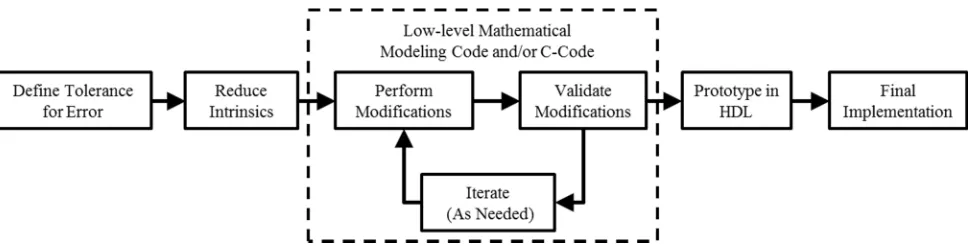
In order to justify or validate the algorithm modifications presented in the previous chapter, a metric is needed to observe and evaluate changes in the resulting image. With a metric selected, a threshold is chosen based on what is considered acceptable image degradation for the given application. The selection of image quality metrics and the definition of tolerable error serve as the initial step in the DFI flow, which is illustrated in Figure 4.1. The image quality metrics used to evaluate the GSEG algorithm modifications are discussed in more detail in the next chapter.
Figure 4.1: The Design for Implementation Iterative Flow.
As mentioned in the Introduction, the next step in the implementation process of an algorithm is to replace the intrinsic functions. The reduction of these intrinsic functions to fundamental operations, or low-level code, is a vital step since any HDL code needs to be written in terms of these operations. The low-level code serves as a basis for justifying all modifications made to the original algorithm and is recommended to be written in the same high-level programming language as the original image processing algorithm. Next, the conversion of the low-level algorithm to C-code is performed. This step is not absolutely necessary, but can be used to generate a bit-exact model to compare with future HDL results. Finally, functions for different image quality metrics can also be easily written in these languages, may even be intrinsic, or exist already.
lend well to the generation of test vectors that are necessary to validate any C and HDL code. After laying out the pipeline stages, the design is prototyped using an HDL such as Verilog or VHDL. Again, the results generated from the HDL, whether from a test bench or emulation, can be verified using the same high-level programming language as before.
4.2
Design for Implementation Guidelines
As presented in Chapter 3 and validated by the results in Chapter 6, during the design for implementation process of the GSEG algorithm, it was discovered that a number of changes made to the original algorithm resulted in a more efficient implementation. These were compiled into a set of guidelines that, when coupled with the design flow, form the DFI methodology.
At the present time, the DFI guidelines are:
• Selecting an appropriate image quality metric and defining a tolerable amount of
degradation.
The tolerance for error in the overall result of the algorithm is a valuable parameter as it will be used to validate all modifications made to the original algorithm. Once it has been defined, it serves as the basis for evaluating the results of the remaining guidelines. This prevents striving for functional correctness at a higher precision than is required by an application, a practice which should be avoided as much as possible.
In high-level models of algorithms, standard operand sizes are often used. This is perfectly acceptable for achieving functional correctness, but implementing a 64-bit floating-point number is very costly, especially if only eight to sixteen bits are required. Selecting efficient representation ranges for operands is an easy way to reduce resource utilization and congestion during implementation.
• Using scale factors to represent fractional numbers as fixed-point integers.
o Subsequently, using integer arithmetic units whenever possible.
The use of floating-point numbers also requires the use of floating-point arithmetic units. This can be avoided by using large constant multipliers as scale factors. By scaling fractional numbers up to integers, any required amount of precision can be preserved. This allows for the use of standard integer arithmetic units, which require fewer resources than floating-point units.
• Rounding constant multipliers/divisors to powers of two.
When the second operand of a multiplication or division is a constant that can be reasonably rounded to a power of two, the operation can be effectively eliminated. The determination of “reasonably” is left to the expertise of the algorithm developer and his definition of tolerable degradation. If this method of rounding is not acceptable, round constants to the nearest integer and try to apply the next guideline.
• Avoiding division at all costs.
always be replaced by multiplication. The constant can be inverted, and if a fractional portion remains, another scale factor can be applied to facilitate integer multiplication. For cases where the divisor is not a constant and no simplifications exist, then action should be taken to use a division algorithm that is most efficient for the application. This may require weighing a tradeoff between execution time and resource utilization.
• Using pre-existing IP cores whenever possible.
Chances are that most of the operations required by an algorithm have already been implemented as IP cores or even custom cores. Having a working knowledge of the cores available to the hardware designer should influence the operations chosen by the algorithm developer when the DFI methodology is applied.
• Accepting an approximate operation.
For cases where no pre-existing cores are applicable, an approximate operation may be required (e.g., approximation of the cube root presented in Chapter 3). Consider suitable replacement operations and evaluate their effects based on metrics or subjective evaluation of the resulting image. A custom core or adaptation of an existing core may ultimately be necessary if the approximation is not tolerable.
• Applying the DFI process iteratively.
modifications could result in reaching the threshold of image quality; however, some may be more efficient than others in terms of standard implementation parameters. That is, the tolerable level of image degradation may be reached solely by maximally reducing the representation range of the operands and data buses. On the other hand, the same level of image degradation could be achieved by balancing a reduction in representation range and also an approximation of an operation. These tradeoffs should be considered by the designer in order to achieve a truly efficient algorithm implementation for their given application.
4.3
General Applicability of the Proposed Methodology
The major benefit of the DFI methodology is that it is ultimately flexible in nature. As algorithm developers likely have their own design process based upon experience, it was imperative to propose a design methodology that could be used as an addendum to their current processes. This allows the methodology to be applied to algorithms that have already been designed, as well as algorithms that are currently in development. Once a developer has been introduced to the concepts of designing for implementation, it is likely that many of the guidelines will be taken into account as supplemental procedures during their own design process.
can contribute differently to overall image quality [8], but also impact other design parameters. Elaborating further, an inexperienced developer could spend the majority of their time attempting to optimize a portion of the algorithm that won’t result in a noticeable reduction in execution time, logic utilization, or power consumption. For this reason, a method of analyzing the savings attributed to the different guidelines presented in the previous section would be useful. This could be done with a type of cost-table solution for different transforms and guidelines, but such an addition would be done as future research and would require the application of this methodology on a variety of image processing algorithms.
Chapter 5:
Implementation of the Test
Vehicle
In the previous two chapters, an example of designing an algorithm for implementation and a design for implementation methodology were shown. The DFI methodology can transform high-level MATLAB code into synthesizable HDL code, according to the design flow presented in Chapter 4. In this chapter, the overall process of implementing the various modules from MATLAB code is described in detail. More specifically, the conversions between different programming languages and programming levels are discussed.
5.1
Conversions between Programming Languages
Converting the high-level model of the algorithm into a low-level model, using the same programming language, is a relatively quick way to verify that the fundamental operations and representation ranges identified were correct. Once the low-level model is written in terms basic operations or functions for which the details are known, a C-code version can be written. In principal, a C-code model could be written directly from the high-level model of the algorithm, however it would not be as easy to verify the operations. Regardless of whether or not a low-level model is created as an intermediate step, the conversion from a high-level modeling language to C-code presents a number of difficulties. Using MATLAB as an example language for a starting point, the complications experienced from a conversion to C-code are presented here.
This leads directly into the next difficulty experienced with such a conversion between languages. Most MATLAB functions have multiple options for a given operation based on the input type, since the input types aren’t known until execution time. Additionally, input parameters can be added to certain intrinsic functions or defaults will be used if none are specified. These make a conversion to C-code more difficult, as some functions may change based upon input type. One example of this is the basic histogram function. Without going into great detail, one can see that the creation of an 8-bit histogram is slightly different than that of a 16-bit histogram. Again, this would likely not be considered when writing the high-level model in MATLAB, however, when writing a C-code model these details need to be known.
Other complications are the special operators that are intrinsic within MATLAB. Operators such as [ ], ‘, and (:) are specifically matrix declarations and matrix math operations. The [ ] operator is used to declare arrays and matrices in-line, and the (:)
operator is used to denote an entire row of an array. The special operator ‘ denotes a matrix transposition, which would require a number of for-loops to implement in C-code. Additionally, the matrix mathematic versions of multiplication and division require multiple for-loops to implement. There are number of other special operators that do not map directly to a C function, adding complexity to the conversion between languages.
As mentioned earlier in this section, the input types are not known to the function until execution. To add to this complication, the sizes are not known either. Take the following lines of MATLAB code as an example:
A = [1 2 3; 4 5 6; 7 8 9;]; B = [5 5 5; 5 5 5; 5 5 5;]; C = A(A>B)
D = A>B
The results from the sample code are as follows:
C = 7
8
6
9
D = 0 0 0
0 0 1
1 1 1
In this simple example code, two three-by-three matrices were defined. In the third line, C is calculated at run-time to be a four-by-one column vector of type double. Note that only two special operators were used in the line where C was calculated and that the inputs A and B were both of type double. In the fourth line of the sample code, D is calculated using only one special operator and the result is a three-by-three matrix of type
logical. This sample code shows how simple nuances between two lines of code can change both the size and type of results, based on the indexing involved for calculating C. When converting to C-code, the designer needs to take into account the variable types and sizes that are the result of a function execution.
these functions don’t give the user any insight as to what calculations are taking place, the only way around them is to research similar functions. Once a number of possible functions are found from literature, they can be modeled in MATLAB and the results can be compared. In some cases, the algorithms found during this research may have results that match MATLAB’s results exactly. Other times, an approximation can be found and the results have to be deemed acceptable for the application in order to move forward.
In fact, for almost all algorithm steps presented in Chapter 3, the results were reproduced exactly with the low-level model (without modifications). For the conversion from sRGB to linear sRGB, an approximate function is being used. The color space conversion function implemented by MATLAB uses curve-fitting procedures that were deemed inefficient for the hardware implementation in this work. A review of literature regarding color space conversions found an alternative piecewise function for the operation, which was shown in Chapter 3. The results produced by the low-level model of the alternative function were deemed to be acceptable for the application when compared to the intrinsic MATLAB function’s results.
5.2
Image Quality Metrics and Validation
1, test images and image quality metrics are selected. The same images database used for evaluating the GSEG algorithm [15] is selected to evaluate the DFI methodology. By using this database, any degradation or effects on the overall segmentation maps can be assessed by comparison with original GSEG results.
Next, the image quality metrics are selected. Those chosen include: the 2-dimensional correlation coefficient [16] (CORR2), the peak signal-to-noise ratio [17] (PSNR), and the structural similarity index [18] (SSIM). Each of the metrics selected can only compare two two-dimensional image planes, which are represented by variables f and
g in the equations presented in this section. Thus, if an RGB image is being compared to a known good image, three CORR2 results would be calculated, one for each red, green, and blue plane.
The 2D correlation coefficient is selected for its ease of use, as it is an intrinsic MATLAB function. Another advantage is that it produces a single result, between zero and one, as opposed to a matrix of results for the image plane being validated. The CORR2 function shows the linear dependence, or lack thereof, between the two planes by way of Equation 5.1, and the result is denoted by r.
T , = ∑ ∑ hi < i,<− ̅jh i,<− ̅j
5,∑ ∑ hi < i,<− ̅j1. ,∑ ∑ hi < i,<− ̅j1.
with the Mean Squared Error (MSE) in Equation 5.2a. The PSNR is then calculated in decibels using the MSE and the total number of bits used to represent a pixel’s value, denoted as b in Equation 5.2b.
klm , = ∑ ∑ h i,<− i,<j
1 <
i
XK (5.2a)
nlo = 'P Gp 2 − 1
1
klm (5.2b)
The structural similarity index (SSIM) is the final metric selected to evaluate the modifications made to the GSEG algorithm. The SSIM method is chosen in addition to the PSNR method, since it has been shown that specific cases of image degradation are not reflected by the PSNR [18]. Namely, when the MSE is equal to zero the PSNR does not reflect the difference in image quality. Although the SSIM equations are not presented here in detail, they can be found in their original publication [18]. The authors also provided a MATLAB function for calculating the SSIM index, which is used in this work [19].
repetitive use of the scripts ensured that there were no discrepancies or user errors between tests.
5.3
Test Setup
This section describes the software and hardware used throughout this work. The high-level programming language used was MATLAB version 7.11.0, release name R2010b. All low-level code was written in MATLAB, as well as functions for generating image quality metrics, when not provided. For generating HDL, Xilinx ISE Design Suite 14.5 was used. Plan Ahead version 14.5, with a Partial Reconfiguration license, was used for generating bit-streams while iMPACT was used for programming. The FPGA targeted was a Virtex-6, as part of the Xilinx ML605 XC6VLX240T-1FFG1156 evaluation board. All programming of the FPGA was performed via JTAG over USB.
Chapter 6:
Results and Discussions
In this chapter, the results from emulating the first steps of the GSEG algorithm are presented and discussed. First, the algorithm modifications made in Chapter 3 are validated using the image quality metrics presented in Chapter 5. Next, some emulation result images are shown in comparison to the known good images. Finally, design parameters of interest are presented. These include logic utilization, power consumption, and execution time for each processing module.
6.1
Validation of Algorithm Modifications
evaluate the degradation from all stages sequentially and the overall effects of this processing on the segmentation map.
[image:54.612.97.545.304.447.2]Figure 6.1, below, displays the 2-dimensional correlation coefficient [16] (CORR2) values for each image plane at all test points. As is shown, the results are nearly ideal for almost all cases. In the CIE L*a*b* case, the error is attributed to the approximation of the cube root and the nature of the equations 5b and 6b, where the input values are subtracted from one another. Specifically, due to the reduction in representation range, the subtraction operands may become equal.
Figure 6.1: Two-dimensional correlation coefficients for all modified stages of the GSEG algorithm. The right-hand side shows an enhanced view of the range from 0.99 to 1.00.
paragraph. The PSNR values of all other stages suggest very little difference between images, and a human visual check confirmed the assumption.
Figure 6.3: Structural similarity indices for all modified stages of the GSEG algorithm. The results presented in this paper suggest that modifications can be made to an algorithm design with minimal effects on image quality. All image planes are subject a human visual check in addition to the image quality metrics. This ensures that there are no cases of image degradation that were missed by the metrics.
6.2
Cases of Significant Degradation
previous section confirmed this hypothesis. Degradation was visible for this module and two separate cases are shown in the next paragraph.
The first case shown is for the picture of two deer, referred to as deer.jpg in the previous three figures. Two images are shown for comparison in Figure 6.4 and Figure 6.5 of the known good image and the MCF emulation result, respectively. Although they are shown in black and white here, color versions are provided in Appendix B, at the end of this thesis. The degradation is more easily seen as “fuzziness” in a blown up version of the image on the right, however, at this size one would struggle to find any major discrepancies.
Figure 6.4 (LEFT): The GSEG result in the CIE L*a*b* color space. Figure 6.5 (RIGHT): The MCF result in the CIE L*a*b* color space.
[image:57.612.127.560.331.475.2]more visible in the form of striations in the sky of the picture. This is a good example of the content of the image may react differently to the modifications made in the algorithm. On one hand, the image of the deer would appear to be almost identical, but on the other hand the image of the two officers might be considered unacceptable. Such is not the case for our GSEG algorithm, as features such as texture modeling can be tuned to avoid segmenting the striations. These results confirm that different applications can tolerate different amounts of degradation.
[image:58.612.125.558.270.585.2]Similar to the first two modules implemented, the vector gradient module produced ideal results. In fact, all CORR2 and SSIM results were equal to the ideal value of 1.000. The PSNR values ranged from 72 dB to 106 dB across the variety of image planes. These results were also expected due to the simple nature of integer subtraction in the calculation.
[image:59.612.127.500.328.616.2]For another configuration used in testing, the MCF was instantiated with a different user-circuit in every channel. Each of the four GSEG modules from this work, and a fifth null channel, were implemented as static channels to show the flexibility of the framework with different types and sizes of algorithms. A basic block diagram of this implementation is shown in Figure 6.8.
This implementation was also used to evaluate the total amount of image degradation seen from using the modules successively. With the output of each GSEG module being fed back into the framework as the input of the next module via the host PC, a sequential pipeline was emulated. Using portions of the GSEG algorithm in MATLAB, the emulation results were loaded and used to calculate an edge map. The original GSEG edge map of the two deer is shown in Figure 6.9, while the edge map generated from the successive emulations is shown in Figure 6.10. It is important to note that the images are being displayed using a scale function, and as a result of the noise introduced in the MCF result the edges do not appear as bright compared with the MATLAB result. The edge maps of the deer have a CORR2 of 0.3041, a PSNR of 17.9572 dB, and a SSIM Index of 0.5355. These image quality results suggest a significant amount of image degradation; however, an inspection of the images shows that this is an acceptable amount of degradation.
Figure 6.9 (LEFT): The Edge Map generated by the GSEG algorithm in MATLAB. Figure 6.10 (RIGHT): The Edge Map generated from successive modules in the MCF.
from the successive emulations is shown in Figure 6.12. Again, scaling is applied to display the images. The two edge maps of Big Ben have a CORR2 of 0.5833, a PSNR of 18.5982 dB, and an SSIM Index of 0.4070. Similar to the case of the deer image, the image quality results suggest significant image degradation. A visual inspection shows that this is an acceptable edge map, with the majority of the degradation seen in the windows of the clock tower and as striations in the sky.
Figure 6.11 (LEFT): The Edge Map generated by the GSEG algorithm in MATLAB. Figure 6.12 (RIGHT): The Edge Map generated from successive modules in the MCF.
6.3
Logic Utilization, Power Consumption, and Execution Time
implementation of the GSEG modules in the other channels do not hinder the operation of the HP CSC engine in the final channel, which continued produced known good results under testing.
for each module, fewer resources are used for routing and therefore the problem of congestion is alleviated. Other modifications removed entire steps completely or substituted IP cores to efficiently use DSP48 slices instead of Look-Up-Tables and Flip-Flops, surely reducing logic utilization.
Slices FFs LUTs BRAM DSP48 BUFG BUFR MMCM
MCF 2,546 1,857 2,447 0 0 0 0 0
7% 1% 2% 0% 0% 0% 0% 0%
PCIe 12,094 26,721 20,568 75 0 11 2 2
32% 9% 14% 18% 0% 34% 6% 17%
GSEG Modules:
sRGB to Lin sRGB 91 137 243 0 9 2 0 0
0.24% 0.05% 0.16% 0% 1% 6% 0% 0%
Lin sRGB to XYZ 51 158 79 0 3 2 0 0
0.14% 0.05% 0.05% 0% 0% 6% 0% 0%
XYZ to L*a*b* 652 679 1973 0 2 1 0 0
1.7% 0.23% 1.3% 0% 0% 3% 0% 0%
Vector Gradient 116 201 234 0 0 2 0 0
0.31% 0.07% 0.16% 0% 0% 6% 0% 0%
Available in
[image:63.612.95.534.186.451.2]xc6vlx240t: 37,680 301,440 150,720 416 768 32 36 12
Table 6.1: FPGA Resource Utilization1, MCF & PCIe taken with permission from [3]. The individual module logic utilization numbers presented in Table 6.1 can be used to predict the utilization numbers for implementing all four GSEG modules within the framework. To predict utilization, all resource types except the BUFG (global buffer) can be summed. The global clock buffers are associated with the interface to the PC, thus to predict the BUFG usage for the configuration with four channels only the PCIe is
considered. The logic utilization numbers for the two configurations previously mentioned are presented in Table 6.2.
The first row of data corresponds to the prediction of resource usage suggested by summing the individual module usage statistics. These numbers can be compared directly to the second row, which is reported logic utilization for the corresponding implementation. In only case did the logic usage actually decrease, which is likely due to the variations seen between place and route operations. In the third and final row, the full five-channel implementation utilization numbers are reported. As expected, the inclusion of the HP CSC engine has caused an increase in most types of resources. The buffers (BUFG and BUFR) and mixed mode clock managers (MMCM) were not expected to increase, as they are associated with the PCIe interface only.
Slices FFs LUTs BRAM DSP48 BUFG BUFR MMCM
MCF 4-Channels Suggested Utilization
15,550 29,753 25,544 75 14 11 2 2
41% 10% 17% 18% 2% 34% 6% 17%
MCF 4-Channels (GSEG & Null)
13,135 30,430 28,190 75 14 11 2 2
35% 10% 19% 18% 2% 34% 6% 17%
MCF 5-Channels (GSEG & CSC)
16,240 34,278 36,783 135 30 11 2 2
43% 11% 24% 32% 4% 34% 6% 17% Available in
[image:64.612.95.544.387.534.2]xc6vlx240t: 37,680 301,440 150,720 416 768 32 36 12
these power consumption numbers do not represent each module alone, but one instance of the module along with the MCF and PCIe supporting hardware. The final two rows of data correspond to the configurations with multiple active channels. All power consumption statistics are estimated based on each channel operating at a frequency of 50 MHz and the PCIe interface operating at a frequency of 250 MHz.
A. Mykyta’s work showed that the MCF and PCIe logic contributed 2599 mW toward dynamic power consumption [3]. Based on the numbers shown in Table 6.3, the GSEG modules themselves consume an insignificant amount of power. This was suggested by the low logic utilization parameters presented in Table 6.1. An interesting result is that the power consumption estimate decreased for the implementation with four GSEG modules when compared with each individual GSEG implementation. This is due to the variations within the implementation process and the estimates based on implementation results, which vary between runs.
Configuration mW
sRGB to Lin sRGB
Dynamic Power 2646 Quiescent Power 6388
Total 9034
Lin sRGB to XYZ
Dynamic Power 2648 Quiescent Power 6388
Total 9036
XYZ to L*a*b*
Dynamic Power 2649 Quiescent Power 6388
Total 9037
Vector Gradient
Dynamic Power 2651 Quiescent Power 6388
MCF 4-Channels (GSEG & Null)
Dynamic Power 2622 Quiescent Power 6387
Total 9009
MCF 5-Channels (GSEG & CSC)
Dynamic Power 2643 Quiescent Power 6388
[image:66.612.189.424.69.185.2]Total 9031
Table 6.3: Power Consumption Estimates2.
Finally, the execution time for each module can be inferred due to the deterministic nature of the image processing pipelines. Based on the clock frequency controlling the advancement of data throughout the pipeline, the number of stages in each pipeline, the number of bytes of data being processed, and the number of stages in input/output abstraction layer developed in [3], the execution time for each module can be calculated. These execution times are presented in Table 6.4, along with the original MATLAB algorithm execution times. The first module has a latency of five 50 MHz clock cycles. The Linear sRGB to CIE XYZ stage has a sub-pipeline operating at a clock frequency of 250 MHz, allowing the stage to have a latency of one 50 MHz clock cycle. In the case of the CIE XYZ to CIE L*a*b* conversion, the pipeline has a latency of twelve 50 MHz clock cycles, causing the execution time to be longer due the extra cycles required to fill and empty the pipeline. The vector gradient module, on the other hand, has a latency of three 50 MHz clock cycles.
GSEG Module Execution Time (ms)
MCF MATLAB
sRGB to Lin sRGB 3.08818
283.321 Lin sRGB to XYZ 3.08808
XYZ to L*a*b* 3.08830
[image:67.612.194.420.71.212.2]Vector Gradient 6.1761 98.363
Table 6.4: Comparison of Execution Times3.
As Table 6.4 shows, the emulation of the algorithm stages in hardware produces a considerable speedup. Even in the case where the color space conversion from sRGB to CIE L*a*b* has been partitioned into three separate modules, each requiring data to be fed via the PCIe link. By adding the first three execution times and comparing with the MATLAB GSEG-CSC results, a speedup of 30.5 is observed. In the case of the vector gradient module, two separate images must be fed to the module to produce the six necessary results. The MATLAB GSEG vector gradient is executed via three sequential function calls, each calculating the gradient in both the x and the y directions for each image plane. Again, a considerable speedup of 15.9 has been achieved. The MATLAB code used to generate the execution times is provided in Appendix C.
Although the power consumption estimates need to be evaluated more detailed tools, the results presented within this section are enough to support A. Mykyta’s claims that FPGAs are viable alternatives to ASICs [3]. The advantages of ASIC designs are well
3 It is important to note that the execution times reported under MCF are calculated from the
Chapter 7:
Conclusion
In this thesis, a methodology of designing algorithms for efficient implementation is presented and evaluated. A design flow and a list of guidelines are proposed which, when applied, result in more efficient physical implementations. The color space conversion and vector gradient portions of an image segmentation algorithm are used as test vehicles to evaluate the proposed design for implementation methodology. Applying this methodology in a step-by-step example shows that a number of steps in the calculations can be simplified, approximated, or in some cases removed completely without drastically affecting overall image quality.
Two test images were used to measure the effects of the modified algorithm implemented in an FPGA. A variety of image quality metrics and a human visual check of suggest that these modifications do not unacceptably affect image quality for the individual stages of the algorithm. Additionally, the two test images were processed through all implemented modules successively, allowing the degradation introduced by each module to compound into a total amount of degradation. Although the image quality metrics for these results were relatively poor compared to those from the individual stages, the results were considered to acceptable based on the strength of the edges in the edge map.
could potentially extend the current DFI guidelines. Additionally, an already implemented algorithm could be used as test vehicle for applying the methodology in an effort to quantify savings or gains in terms of standard design parameters (e.g., logic utilization, power consumption, execution time, maximum operating frequency).
Leaning more toward the hardware aspect of this research, there are many potential areas for future research. First, the algorithm stages implemented in this work could target Xilinx’s ZYNQ platform, which combines reconfigurable FPGA fabric along with a dual core ARM Cortex CPU on the same silicon die. This would allow for different portions of the algorithms to be processed using the ARM CPUs while other portions could target the FPGA fabric. A potential area of interest would be to evaluate the usage of the CPUs to perform the processing that must maintain a high precision while the fabric could be used to accelerate the less important operations.
References
[1] S. M. Qasim, S. A. Abbasi, and B. Almashary, "A review of FPGA-based design methodology and optimization techniques for efficient hardware realization of computation intensive algorithms," in Proc. IEEE Int. Conf. Multimedia, Signal
Processing and Communication Technologies, Aligarh, 2009, pp. 313-316.
[2] R. Toukatly, "Dynamic partial reconfiguration for pipelined digital systems: a case study using a color space conversion engine," M.S. thesis, Dept. Elect. Eng., Rochester Inst. of Technology, Rochester, NY, 2011.
[3] A. Mykyta, "Reconfigurable framework for high-bandwidth stream-oriented data processing," M.S. thesis, Dept. Elect. Eng., Rochester Inst. of Technology, Rochester, NY, 2012.
[4] L.G. Ugarriza et al., “Automatic image segmentation by dynamic region growth and multiresolution merging,” IEEE Trans. Image Process., vol. 18 , no. 10, pp. 275-2288, Oct., 2009.
[5] F. Vahid et al., "A comparison of functional and structural partitioning," in Proc.
9thInt. Symp. on System Synthesis, La Jolla, CA, 1996, pp. 121-126.
[6] D. G. Bailey and C. T. Johnston, "Algorithm transformation for FPGA implementation," in Proc. 5th IEEE Int. Symp. Electronic Design, Test and
Application, Ho Chi Minh City, Vietnam, 2010, pp. 77–81.
[7] M. Haldar et al., "A system for synthesizing optimized FPGA hardware from Matlab(R)," in Proc. Int. Conf. Computer-Aided Design, San Jose, CA, 2001, pp. 314-319.
[8] G. Karakonstantis et al., "Design methodology to trade off power, output quality and error resiliency: application to color interpolation filtering," in Proc. Int. Conf.
Computer-Aided Design, San Jose, CA, 2007, pp. 199-204.
[9] K. S. Vallerio and N. K. Jha, "Task graph extraction for embedded system synthesis," in Proc. 16th IEEE Int. Conf. VLSI Design, 2003, pp. 480-486.
[10] S. Gupta et al., "SPARK: a high-level synthesis framework for applying parallelizing compiler transformations," in Proc. 16th IEEE Int. Conf. VLSI Design,
2003, pp. 461-466.
[11] J. Huang and J. Lach, "ColSpace: Towards algorithm/implementation co-optimization," in Proc. IEEE Int. Conf. Computer Design, Lake Tahoe, CA, 2009, pp. 404-411.
[12] M. Stokes et al., “A standard default color space for the internet – sRGB,” in Proc.
4th Color Imaging Conf.: Color Science, Systems, and Applications, 1996, pp.
[13] G. Sharma, Ed., "Digital color imaging handbook", New York: CRC Press, 2003, pp. 158-162, pp. 327-328.
[14] “Intellectual Property”, ed: Xilinx Inc., June, 2013, <http://www.xilinx.com/products/intellectual-property/>.
[15] D. Martin et al., “A database of human segmented natural images and its application to evaluating segmentation algorithms and measuring ecological statistics,” Proc.
8th IEEE Int. Conf. Computer Vision, Vancouver, BC, 2001, pp. 416-423.
[16] A. Papoulis and S. U. Pillai, Probability, Random Variables and Stochastic
Processes, New York: McGraw-Hill, 2002, pp. 210.
[17] A. Horé and D. Ziou, “Image Quality Metrics: PSNR vs. SSIM,” Proc. 20th IEEE
Int. Conf. Pattern Recognition, Instanbul, 2010, pp. 2366-2369.
[18] Z. Wang et al., “Image Quality Assessment: From Error Visibility to Structural Similarity,” IEEE Trans. Image Process., vol. 13, no. 4, pp. 600-612, Apr., 2004. [19] Z. Wang et al., (2012, January 20). ssim_index.m [MATLAB Script]. Available:
Appendix A:
Hardware and Software Used
Hardware
• FPGA Development Board
o Xilinx ML605
o FPGA Family: Virtex-6 LXT
o Device: xc6vlx240t-1ff1156-1
o Programming Interface: JTAG over USB
o Debugging Interface: UART over USB
• Development and Implementation PC:
o OS: Microsoft Windows 7 (x86, SP1)
o CPU: Intel Core 2 Duo, 2.66 GHz
o RAM: 3 GB
• Testing PC:
o OS: Linux Fedora 10 (2.6.27.5 Kernel version)
o CPU: Intel Core 2 Duo, 2.40 GHz
o RAM: 2 GB
o PCI-Express slot populated with ML605 FPGA card.
Software
• Windows 7 Development PC:
o Xilinx ISE Design Suite: 14.5 System Edition
![Figure 2.1: R. Toukatly’s Dual-Pipe PR CSC Engine, Reproduced from [2].](https://thumb-us.123doks.com/thumbv2/123dok_us/103204.9637/23.612.117.497.136.310/figure-toukatly-dual-pipe-pr-csc-engine-reproduced.webp)
![Figure 2.3: Block diagram of GSEG algorithm, Reproduced from [4].](https://thumb-us.123doks.com/thumbv2/123dok_us/103204.9637/25.612.129.555.129.201/figure-block-diagram-gseg-algorithm-reproduced.webp)
![Figure 3.1: A. Mykyta’s Generic Instruction Word Format, Reproduced from [3].](https://thumb-us.123doks.com/thumbv2/123dok_us/103204.9637/35.612.99.520.167.270/figure-mykyta-s-generic-instruction-word-format-reproduced.webp)
![Table 3.1: Supported Instruction Word Opcodes, modified from [3].](https://thumb-us.123doks.com/thumbv2/123dok_us/103204.9637/36.612.94.519.144.353/table-supported-instruction-word-opcodes-modified.webp)
![Figure 3.2: Packet Format, Modified from [3].](https://thumb-us.123doks.com/thumbv2/123dok_us/103204.9637/37.612.105.524.69.313/figure-packet-format-modified-from.webp)