EFFECTIVENESS OF KNOWLEDGE BASED APPROACH FOR THE
IMPROVEMENT OF PATIENT ADHERENCE AND REDUCING THE SEVERITY OF ADVERSE DRUG REACTION IN ANTI TUBERCULAR THERAPY
Dissertation Submitted to
The Tamil Nadu Dr. M.G.R. Medical university, Chennai, in partial fulfillment
for the requirement of the Degree of
MASTER OF PHARMACY
(Pharmacy Practice)
APRIL 2012
Submitted by MATHEW T FRANCIS
Register no: - 26107284
Under the Guidance of
Mr. K. CHANDRASEKARAN, M. PHARM.,
COIMBATORE - 641 048
.
Prof. Dr. A.
R
AJASEKARAN, M.Pharm., Ph.D.,
Principal,
KMCH College of Pharmacy, Kovai Estate, Kalappatti Road, Coimbatore- 641 048 (T.N).
CERTIFICATE
Prof. Dr. A. RAJASEKARAN, M.Pharm., Ph.D., PRINCIPAL
\
K. CHANDRASEKARAN, M. Pharm., Asst. Professor and Clinical Pharmacist, Department of Pharmacy Practice, KMCH College of Pharmacy, Coimbatore.
CERTIFICATE
K. CHANDRASEKARAN, M. Pharm.,
Asst. Professor and Clinical Pharmacist
DECLARATION
I do hereby declare that the dissertation work entitled “EFFECTIVENESS OF KNOWLEDGE BASED APPROACH FOR THE IMPROVEMENT OF PATIENT ADHERENCE AND REDUCING THE SEVERITY OF ADVERSE DRUG REACTION IN ANTI TUBERCULAR THERAPY” submitted to the Tamil Nadu Dr. M.G.R Medical University, Chennai, in partial fulfillment for the Degree of Master of Pharmacy Practice, was done by me under the guidance of Mr. K. CHANDRASEKARAN, M.Pharm., at the Department of Pharmacy Practice, KMCH College of Pharmacy, Coimbatore, during the academic year 2011-2012.
EVALUATION CERTIFICATE
This is to certify that the dissertation work entitled “EFFECTIVENESS OF KNOWLEDGE BASED APPROACH FOR THE IMPROVEMENT OF PATIENT ADHERENCE AND REDUCING THE SEVERITY OF ADVERSE DRUG REACTION IN ANTI TUBERCULAR THERAPY” submitted by MATHEW T FRANCIS, University Register No: 26107284 to the Tamil Nadu Dr. M.G.R Medical University, Chennai, in partial fulfillment for the Degree of Master of Pharmacy in Pharmacy Practice is a bonafide work carried out by the candidate at the Department of Pharmacy Practice, KMCH College of Pharmacy, Coimbatore and was evaluated by us during the academic year 2011-2012.
Internal Examiner External Examiner
Convener of Examination
To God Almighty
“the most compassionate the most merciful”
To my beloved parents
To the contemporary pharmaceutical care practitioners who continue
to expand their impact on patient out comes and there by serve as role
models for their colleagues and students while clinging tenaciously to
the highest practice of standards of practice.
To my respected teachers
&
To my most loving friends
ACKNOWLEDGEMENT
This is my occasion to whole heartedly thank all of those who helped and supported me for the triumphant achievement of this mission.
First and foremost I am obliged to The God Almighty “the most compassionate, the most merciful”, without His blessings this project would never have been veracity.
me to this echelon with their moral adoring shore up and encouragement for this profession and exposition.
It is my concession to tender my cordial sense of gratitude and respectful regard to my beloved Guide Mr. K. CHANDRASEKARAN, M.Pharm., Assistant Professor and Clinical Pharmacist, Department of Pharmacy practice, KMCH College of Pharmacy, Coimbatore, who was an immense liberation for me and anchored a chief role in completion of this mission. His extensive and ample comprehension in the topic and admirable supervision towards the goal was an inspiration and a confidence booster for me right through the episode of the exposition work.
I widen my heartfelt and truthful thankfulness to my most respected clinical guides Dr. V. R. PATTABHIRAMAN, M.D, DIPNB., Consultant Respiratory and Sleep Medicine, and Dr. S. MAHADEVAN, M.D., Consultant Respiratory medicine, for their expensive guiding principle in the exposition work. I am really courtesies and pleased to them for openhanded an opportunity to work along with them as an element of healthcare squad.
I feel enchanted and warm thanks to Mr. A. VIJAYAKUMAR, M.Pharm., (Ph.D), Asst. Professor, Department of Pharmacy practice, KMCH College of Pharmacy, Coimbatore, for his prop up to my thesis with a unique curiosity on my work.
Still words are not plenty for his timely lend a hand with his expertise counsel and priceless direction towards this thesis and my professional existence.
I put across my honest thanks and gratitude to our Principal, Prof. Dr. A. RAJASEKARAN, M.Pharm., Ph.D., KMCH College of Pharmacy, for providing me with a cooperative and artistic milieu to facilitate me to work outstandingly.
I am indebted to Dr. NALLA G. PALANISWAMI, M.D., AB (USA), Chairman of Kovai Medical Center and Hospital and Madam Trustee, Dr. THAVAMANI D. PALANISWAMI, M.D., AB (USA), for providing passable amenities to make this mission a hit. I thank them both.
I enlarge my heartfelt exceptional thanks to all my favorite teachers Dr. SUCHANDRA SEN, M.Pharm., Ph.D., Mr. V. SIVAKUMAR, M.Pharm., Mr. S. PALANISWAMY, M.Pharm., (Ph.D)., Mrs. K. GEETHA, M.Pharm., (Ph.D)., Mr. C. DANDAPANI, M.Pharm., and all other teaching and non-teaching staffs for their inspirational motivations, imperative advices and insightful comments at various stages of this critique to finished it a splendid triumph.
The string of appreciation will not finish if I fall short to convey my plus point to Mr. SAINUL ABIDEEN. P. M.Pharm, Mr. SHERIL K. C. (M.Pharm), and Mr. SABIR. T. V. K (M.Pharm), for their prized holds up in various stages of my dissertation.
I coverage my thanks to the patients and their family members involved in my study, who gave their chock-full mutual aid in all the stages of this thesis for completion of this work.
Last but not the least I would also like to thank, my classmates, seniors, juniors, my most adoring and loving friends and those who directly or indirectly helped and encouraged in the completion of this thesis as without their prayer and hold up this would not have been achievable.
Abbreviations
ADR - Adverse Drug Reaction
ALT - Alanine Transaminase
AST - Aspartate Transaminase
ATT - Anti Tubercular Therapy
DOTS - Directly Observed Therapy Short Course
DR - Drug resistance
EPTB - Extra Pulmonary Tuberculosis
FDC - Fixed Drug Combination
GI - Gastrointestinal
INH - Isoniazid
LFT - Liver Function Test
MDR TB -Multi drug Resistant Tuberculosis
NIAID - National Institute of Allergy and Infectious Disease
NSAIDs - Non steroidal Anti Inflammatory Drugs NTP - National Tuberculosis Program
OPD - Out Patient Department
PAS - Para-aminosalicylic Acid
PPD PTB
-Purified Protein Derivative - Pulmonary Tuberculosis
SHPA - Society of Hospital Pharmacists of Australia
TB - Tuberculosis
INDEX
SL.No CONTENTS
1
INTRODUCTION2
REVIEW OF LITERATURE3
OBJECTIVE OF THE STUDY4
METHODOLOGY5
RESULTS AND DISCUSSIONS6
TABLES AND GRAPHS7
SUMMARY AND CONCLUSION8
BIBLIOGRAGHY9
ANNEXURESAnnexure I : Patient Data Collection Form
Annexure II : Patient Information Pamphlet
INTRODUCTION
Tuberculosis (TB) is the most prevalent human infections and causes more deaths worldwide than any other infectious disease. Tuberculosis (TB) is the leading communicable disease among the ten cause of global mortality. It is caused by Tubercle bacillus, known as
Mycobacterium tuberculosis, and more rarely Mycobacterium bovis whose host is human.1
Tuberculosis is on the rise throughout the world. Better understanding and knowledge about TB remains an important tool in its control. 2
Estimates show that approximately one third of the global population is infected and 8 million new cases of TB occur each year, leading to nearly 3 million deaths annually. The World Health Organization (WHO) reported that, TB is almost exclusively a disease of the developing countries.3 About 5,000 persons were infected per day, of which 95% are from developing countries.1 In India, almost 70% of TB patients are aged between 15 and 54 years. While 2/3 are male, TB takes a disproportionately larger among young females, with more than 50% of female cases occurring before 34 years of age, according to the Revised National TB Control Programme's (RNTCP) 2011 report. The direct and indirect cost of TB to India amounts to an estimated $23.7 billion annually. Studies suggest that on an average three months of work time is lost as a result of TB.4
disease is present, a bare minimum of 2 drugs and generally 3 or 4 drugs must be used simultaneously.
The duration of the treatment depends on the condition of the hosts, extent of disease, presence of drug resistance, and tolerance of medications. The shortest duration of treatment is generally 6 months, and 2 to 3 years of treatment is necessary for cases of multi drug resistance TB (MDR TB). As it is a long term treatment vigilant follow up is required to improve the treatment outcome. 5
Some more facts about TB:
• There are 3, 00,000 new cases annually; 1, 37,000 are infectious, smear-positive cases;
• The annual incidence of TB is 99 per 1, 00,000 population for smear-positive cases and 221 per 1,00,000 for all forms;
• TB causes 70,000 deaths per year;
• The case detection rate is 41% (NTP, 2003);
• The cure rate of detected cases under DOTS is 84% (with 3, 00,000 new cases annually, those cured comprise only 3.2% of all new cases);
Conditions.eg. overcrowding;
• The female: male ratio is 2:5 among new smear-positive cases registered for treatment.3
Every day in India, under the Revised Nation TB Control Programme, more than 15,000 people are examined. Estimates suggest that two persons die every three minutes due to tuberculosis and 5,000 new TB cases are diagnosed per day. Three lakh children drop out from school due to TB-related problems in the family. Globally, one in every five new cases of TB comes from India; A single patient can infect 10-15 people in a year.6 Despite the availability of effective treatment, TB is still a major health problem in most of countries. The poor out-come was accredited to poor patient adherence, and to interruption partly due to adverse drug reaction (WHO, 1997).3 Non-compliance is cited as a major obstacle to the control of tuberculosis at the level of public health. It is also a serious problem in the treatment of individual patients and in the development of drug resistant strains. 7
Medication adherence or the older term, medication compliance, is defined as the extent to which a person‟s medication use behavior coincides with medical or health advice; and persistence as the duration of time from initiation to discontinuation of therapy.
After several decades of research, we have learned that medication non-adherence is due to many factors including lack of adequate knowledge about medication and treatment goals, beliefs about the medication, complex regimens that are difficult to manage, side effects, and costs associated with medications.8
adherence during TB therapy. For this quantitative study, seven hundred and eighty TB patients consecutively registered since 2006 in 13 counties (districts) were queried with a prearranged questionnaire. There are almost 16 factors described which leads to the non adherence for the TB treatment. Majority of them are due to the lack of knowledge about the importance of the completion of therapy which includes, Symptoms have been relieved and it is not necessary to continue treatment (26.83%), Treatment course is too long and the dose is too large (15.85%), treatment is not necessary as I am so old (8.54%), I worry about my body damaged by anti-tuberculosis drugs (15.85%). One of the most vital stuff which associated to our study was, out of these 16 factors 37.80% (which is the uppermost percentage) of patients were non adherent due to the severe ADRs. From this study it was come across that the lack of knowledge about the treatment and ATT induced ADRs are the two major factors which leads to the patient‟s non-adherence to the TB therapy. The study accomplished that more magnitude should be given to treatment adherence under the current TB control program. Also more patient centered interventions and superior concentration to structural barriers are needed to improve treatment adherence.9
requires the active participation of the patient in self management of treatment and cooperation between the patient and the health care provider.
All healthcare providers need to counsel TB patients not only on the importance of taking their drugs regularly but also on the importance of completing their course of treatment. Poor adherence with tuberculosis treatment is more dangerous than no treatment as it may increase the risk of developing multi drugs resistant tuberculosis strains (MDR-TB).1
The failure to take prescribed medication is a universal perplexing phenomenon. This fact must be taken into consideration when one endeavors to treat a patient or control diseases in a community. TB is a communicable disease requiring prolonged treatment, and poor adherence to a prescribed treatment increases the risk of morbidity, mortality and spread of disease in the community.10
Current anti-tuberculosis therapy consists of a cocktail of drugs taken over a period of at least 6 months for new patients and 8 months for retreatment patients. Because of this long duration of the therapy, there is a risk of treatment interruption or default, an experience that contributes to prolonged infectiousness, drug resistance, relapse and death. Efforts to improve treatment outcomes require a proper understanding of particular barriers to and facilitators of patient's adherence.9
FACTORS ASSOCIATED WITH ADHERENCE TO TREATMENT
However, certain other patient-related variables have been associated with adherence behavior. These include:
• Awareness about treatment regimens
• Patient perception of profit derived from treatment and barriers to treatment
• Socio-demographic factors, including homelessness, mental illness, lack of communal support, and higher number of life stressors
• Specific cultural beliefs about medication taking, disease spread and disease progression which can also influence medication-taking behavior.
Provider characteristics may influence the quality of patient-physician relationships and thus have an impact on patient behavior. In particular:
• The quality of physicians‟ interpersonal skills has been shown to affect adherence
• Positive outcomes may be more likely when physicians make efforts to explain treatment regimens and address patient concerns
• Non adherence has been noted increasingly in situations where physicians appear insensitive, use medical terminology, view patients as complainer, or do not provide clear messages about the cause of the illness or reasons for treatment.
Clinic facilities affect patients‟ access to care and therefore can impact on compliance.
Important factors that may get in the way of adherence are: • Long waiting times before appointments
• Inconvenient clinic timing.
Characteristics of treatment regimens can also affect patients‟ ability and willingness to
adhere to them. Adherence has been shown to decrease with an increase in: • Number of medications, frequency of dosing, and complexity of regimen •Duration of regimen.
• Adverse drug reactions.
• Special instructions, such as dietary change
Disease characteristics have also been shown to influence adherence. Non adherence may be more common among patients with:
•Chronic illness rather than acute illness •Greater disability created by the disease
• Resolution of disease symptoms, because patients who are no longer symptomatic feel that they don‟t have to continue the medications .11
The World Health Organization (WHO) defines an adverse drug reaction (ADR) as any response to a drug which is noxious and unintended, and which occurs at doses normally used in man for prophylaxis, diagnosis or therapy of disease, or for the modification of physiological function. 12
hepatitis, join pain, skin rash, gastro intestinal upset (nausea/vomiting/GI upset), hyperuricemia, Constipation, peripheral neuropathy, and visual disturbances.
According to World Health Organization (WHO) the poor out-come was attributed to poor patient compliance, to primary multidrug resistance and to interruption partially due to ADR (WHO 1997). TB hampered with poor patient compliance and intolerance at least partially due to the ADRs134 (26%) out of 519 TB patients from the study of Schaberg T et al., were discontinued therapy due side effects.13
The influence of side effects – real, anticipated or interpreted on compliance to treatment was mentioned in a number of studies. Some patients reported stopping medication due to adverse effects while others complained that they were not educated about side effects and what to do to counter those.14
In-depth interviews among both TB patients and local doctors point out that ADR is a motive for treatment non-adherence. Worry of the risks of ADRs leads some TB patients to break off the treatment. Local health workers often cannot find out this discontinuation of treatment due to the lack of an ADR surveillance system under the current DOTS program.
"The majority of TB patients in my village have good adherence to treatment. However,
some patients are reluctant to cooperate with us. The main reasons are the adverse reactions
and long course of treatment. For example, one patient didn't visit my clinic to take drugs as
regularly. So I called him immediately. He told me that he didn't want to continue as he felt much
“… I don’t want to take these pills, because they make me sick, they hurt me…” (Female TB
patient, Bolivia)14
Anupa KC et al., evaluated the rate of ADR during DOTS treatment for a period of 5 months at the Regional Tuberculosis Center (RTC) in Pokhara, Western Nepal. Totally 137 patients were included in the study, amongst 54.74% (n=75) of patients reported occurrence of ADRs. The study concluded that, it is fundamentally required a system for proper monitoring of ADRs due to anti tubercular drugs. Counseling of patients for timely hindrance, revealing and management of ADRs was also highly suggestive.15
ROLE OF PHARMACIST IN ATT- AS A PART OF HEALTH CARE TEAM
The long term treatment period was poorly understood by patients and adherence seems to be facilitated where patients understood the importance of completing treatment.
Since knowledge plays an important role in patient compliance, the implementation of education programme can enhance the treatment outcome.14
Here comes the role of pharmacist. Clinical pharmacist has the responsibility to identify, prevent and resolve medication related problems. The services given by the clinical pharmacist include medication history interview, medication order review, providing drug information, prevention, assessment and management of drug interaction, patient medication counseling and management of ADRs which will improve patient compliance and reduce health care costs.17
The pharmacist should educate patients on the importance of continuing their chemotherapy despite symptomatic improvement. Pharmacists should become a part of multidisciplinary band (with nurses, physicians, social workers) devoted to successful chemotherapy of TB patients and their families.5
spite of this, very rare adverse reaction on hepatotoxicity induced by pyrazinamide was recorded in few (0.7%) of the patients during personal interview. With respect to improvement in the health condition, majority of the patients realized that they felt much better while taking their medications strictly. Patients that take their medications in an irregular and unreliable manner are at high risk of treatment failure, relapse and development of drug-resistance TB strains.1
Moadebi S et al., conducted a study entitled as “Patient Satisfaction with Anti tuberculosis Medication Counseling: A Comparison of Services Provided by Pharmacists and Nurses” with core objective to evaluate patient satisfaction as an important method of measuring the quality of pharmaceutical services. From this study, it was evident that, compliance to treatment requires the active participation of the patient in self-management of management and cooperation between the patient and the health care providers. The reasons for non adherence are complex, and include lack of knowledge about medications and their side effects. Pharmacists who dispense anti tuberculosis medications provide counseling to enhance patients‟ understanding of why they are taking the medication and the potential side effects of treatment, thereby helping to guarantee patient adherence. The pharmacist‟s role in advocating patient compliance is important for eradicating disease and for preventing relapse and development of resistant strains.
Patients counselled by pharmacists were more likely to be very satisfied with information provided about adverse effects As well, patients found the written information provided by pharmacists more meaningful when used in conjunction with the pharmacist‟s counseling
ability to recall their medication and increases patients‟ knowledge of side effects after medication counselling. In addition, the pharmacist‟s involvement in the TB counseling program has been beneficial in ensuring that drug histories are more accurate and complete.18
REVIEW OF LITRATURE
An evaluation study for the drug adherence amongst TB patients in the University of Ilorin Teaching Hospital, Ilorin, Nigeria, was carried out by Bello SI and Itiola OA.1 Totally two hundred and eighty patients enrolled in this study of which 166 were males and 114 were females who received structured questionnaires. Study reported that there is an association between education and patients‟ adherence to their medications. Age has no significant association with patient‟s drug adherence, whereas education was significantly linked with patient‟s drug adherence Positive effect of counseling on the patient‟s adherence to their medications was also recorded.
Erhabor G.E et al.,7 carried out a retrospective study to explore the impact of directly observed therapy (DOT) on patient adherence and the factors influencing it, at Chest clinic of Obafemi Awolowo University Teaching Hospitals Complex, Ile-Ife, Nigeria. Totally 199 patients comprising 91 males and 108 females, were seen during the study period .They were mostly between the ages of 16 years and 45 years. From this, 73% complied and all of them were cured. The only factor that significantly influenced rate of compliance was closeness to the chest clinic. The study concluded as the Non-adherence is cited as a major obstacle to the control of tuberculosis and the DOTS therapy improves the rate of adherence.
close follow-up, early recognition, and the immediate withdrawal of the causative agent are vital to prevent progression and allow the liver to heal. This topic is of broader importance in the developing countries where both TB and liver diseases are endemic.
A systematic review of qualitative research study were performed by Munro SA et al.,14 to understand the factors considered by patients, caregivers and health care professional in contributing to TB medication adherence. Authors searched 19 electronic databases (1966– February 2005) for this qualitative study. Study described that adherence to the lengthy course of TB treatment is a multifaceted, dynamic phenomenon with a wide range of factors impacting on treatment-taking behavior. Patient‟s compliance to their medications was influenced by a number of factors which include personal characteristics, treatment side effects, financial burden of TB Treatment and awareness, Attitudes, and Beliefs about TB Treatment. Some patients reported that they stopped medication because of adverse effects of TB drugs. The result of this review promoting that more patient-centered intervention, and more attention to structural barriers, were needed to improve treatment adherence for reducing the global disease burden attributable to TB. Jaggarajamma K et al.,10 conducted a study to elicit reasons for treatment default from a cohort of 186 TB patients under RNTCP and their DOT providers. From the study population 16 had completed treatment, 25 died after defaulting, and 4 could not be traced. The study find out that main reasons for non-compliance among the TB patients were: drug related problems, migration, relief from symptoms, employment related, alcohol consumption, treatment from other centers, respectively. The study concluded that intensifying motivation and counseling of this group of patients are likely to improve their compliance and reduce default.
patients‟ ability to recall their medication and increases patients‟ knowledge of side effects after medication counselling. In addition, the pharmacist‟s involvement in the TB counselling program has been beneficial in ensuring that drug histories are more accurate and complete.
Lee JIA and Hyun JC19 carried out a retrospective study to determine the prevalence of drug resistance and risk factors of drug resistance in patients with tuberculosis and to evaluate the clinical characteristics and socioeconomic status of patients with drug resistant tuberculosis. Drug susceptibility test and clinical and socioeconomic records for 308 cases of culture positive mycobacterium tuberculosis infection, diagnosed from March 1995 to February 2000 were included in the study. DR at least one drug was identified in 75(24.4%). DR group shows lesser adherence to adherence than drug sensitivity group. Drug resistant group showed more frequent self-interruption of medication, lower completion rate of therapy, and higher failure rate of follow up than the drug sensitive group. The study concluded that previously treated TB is a most important risk factor for DR. DR group especially acquired DR showed less compliance with treatment. The study recommending that more proper education and attention to prevent self-interruption should be given to a previously treated group.
A qualitative and quantitative study on adherence to anti-tuberculosis treatment among pulmonary tuberculosis patients were conducted by Weiguo X et al.,9 in which 780 sputum-smear positive TB patients in 13 districts were queried with a structured questionnaire. The study revealed that the risk of non-compliance was lower among patients who was under DOTS by village doctors or regular home visits by health workers. Finally study concluded that more importance should be given to treatment adherence under the current TB control program. High financial burdens, lack of social support, ADRs and personal factors are associated with non-adherence. In which about 37.80% of patients are non-adhere due to severe ADR and which is the primary reason when compare to other reasons for non-adherent during ATT
Schaberg T et al.,13 conducted a study to determine the incidence of side effects severe adequate to cause intolerance of standard ATT with rifampin, isoniazid and pyrazinamide in patients hospitalized as a result of PTB. 519 patients with proven PTB, who initially received standard ATT, were retrospectively studied in a chest hospital. Final termination of rifampin, isoniazid or pyrazinamide because of severe side-effects was necessary in 23% patients. The most severe side effects leading to final termination of one drug were hepatotoxicity (11%), exanthema (6%), and arthralgia (2%). Pyrazinamide showed more side effects with15% than isoniazid with 7% and rifampin with 1.5%. The study concluded that the side-effects of standard ATT are frequent in hospitalized patients aged ≥60 yrs or with a history of hepatitis, and are possibly due to pyrazinamide rather than to isoniazid or rifampin
Khalid M et al.,21 carried out a prospective cohort study at Civil Hospital Karachi from July 2004 for one year to evaluate the severity and frequency of liver toxicity caused by ATT and to evaluate whether concurrence of risk factors influence the Antituberculosis drug induced liver toxicity. A total of three hundred and thirty nine patients diagnosed of active tuberculosis with normal pretreatment hepatic function were monitored clinically as well as biochemically. ATT induced liver toxicity was observed in 67 (19.76%) out of three hundred and thirty nine patients. Females were more prone to TB when compared to males (26.3% vs. 19.7%). Factors such as alcohol, paracetamol and low levels of serum cholesterol were proved as predisposing factors. It was found that most of the patients, 61%, developed the liver toxicity within 2 weeks of starting ATT with mild to moderate change in ALT and AST. Study concluded that ATT induced liver toxicity is significant and can cause permanent injury and death. Early detection with immediate removal of causing agent is most important factor to arrest its development and allow liver to heal.
A 5 month period study was performed by Anupa KC et al.,15 to determine the ADRs occurring during DOTS therapy and to assess their causality; severity and predisposing factors at the Regional Tuberculosis Center (RTC) in Pokhara, Western Nepal. Totally 137 patients included, among that 54.74% (n=75) reported occurrence of ADRs. Almost 24 types of ADRs were experienced which includes Tingling and burning sensation in hands and feet (11.03%), Joint pain (10.34), Dermatological manifestations (10%) and Anorexia / Nausea /Vomiting (9.66%). The study highlighting that there is a need of a system for proper monitoring for ADRs due to antitubercular drugs. Counseling of patients for timely prevention, detection and management of ADRs was also highly suggestive through this study.
Kheirollah G et al.,23 performed a study to assess the rate of ADR induced by ATT drugs in the infectious disease department of a hospital at Iran for a period of one year. During the study time, total 83 patients received ATT; of them forty four patients developed at least one ADR. A total of 81 ADRs was detected in this study. ADRs were recognized as the major cause of hospitalization in 11 (13.3%) patients. The most frequent organ affected by ADRs was Liver and biliary system (37%). Hepatitis was observed in 25.3% patients causing to death in two patients. The study concluded that ATT drugs could cause significant ADR which will lead to hospital admissions, prolonged hospital stay or even death. So that more attention was need to prevent these reactions.
Jasmin J et al.,24 analyzed the factors associated with drug resistance in tuberculosis by doing a prospective study. It is found that treatment default was the most important factor associated with drug resistance. Travel to different places, relief in symptoms, cost of the treatment and adverse drug effect were observed the reasons for default. The study concluded that drug resistance is a major problem in the control of tuberculosis. Its initiate should be controlled by scrupulously monitoring and ensuring patient compliance.
considered tuberculosis as a preventable disease. This study concluded that majority of study subjects had poor knowledge about tuberculosis, its prevention and magnitude. Proper knowledge and education about tuberculosis is vital to deal the challenge of this devastating disease
Bhatt CP et al.,25 conducted a prospective study included 300 diagnosed cases of PTB who were attending the DOTS programme of Nepal to assess their knowledge about tuberculosis. The study found that most of the patients had satisfactory knowledge regarding the signs and symptoms of TB but their knowledge regarding causative agent for TB, disposal method for body fluids and sputum and preventive method for tuberculosis was still low. The authors recommended that National tuberculosis control authority should design health education programme. Such awareness campaign will increase the patient‟s general awareness about the disease and will aid to reduce transmission of disease, prevent DR cases and improve the efficacy of DOTS programme.
Purohit SD et al.,26 conducted a pilot study between January and June 1986 to determine the awareness about tuberculosis among 1000 from different walks of life. 3 sets of questions pertaining to general aspects, diagnosis and treatment and preventive aspects of TB were introduced to general population to assess the extent of their knowledge about tuberculosis. From the study it is found that general knowledge about tuberculosis was poor in illiterate and low socio-economic population and high in literate and high socio-economic group. And finally the study extracted that, what is required at this stage it is necessary need a systematic, simple and regular programme for educating public about tuberculosis
confident that they will be able to recover,which makes them refuse treating. The study concluded that a better awareness can improve the results of treatment and the outcomes of the disease.
Whalen C C et al.,28 performed a trial in 2736 patients with HIV-infection in Kampala, Uganda to evaluate the three regimen to prevents TB in adults infected with HIV. with positive tuberculin skin tests with purified protein derivative (PPD) were randomly assigned to 1 of 4 regimens: placebo, isoniazid daily for six months, isoniazid, rifampin, and pyrazinamide daily for three months or isoniazid and rifampin daily for three months,. Subjects with anergy were randomly assigned to be given either placebo or six months of isoniazid. The medicine was dispensed monthly and was self-administered. And they concluded as for PPD-positive, HIV-infected adults a six-month course of isoniazid confer short-term protection against tuberculosis. Multidrug regimen with isoniazid and rifampin taken for 3 months can also be used to reduce the risk of tuberculosis.
A cross-sectional study on patients receiving DOTS regimen was conducted by Bagchi S et al.,29 at Mumbai, India. To determine the poor adherence with ATT among PTB patients. Of the 538 patients, 84% were adherent to the treatment and 16% were non adherent. Men were more likely to be non adherent than women. Smoking during treatment and travel-related expenditure factors were considerably associated with non-compliance in the newly-diagnosed patient. The study concludes that proper counseling, life style modification and motivating the patient to come to clinic and taking medication is important to complete the therapy.
and found that 95 % of non-adherent patient agree to do so and only 5 % have taken full dose for whole period. It was found that male sexual category have more noncompliance majority of treatment defaulter were from 31-45 years. The study did not find much role for the socio-economic factors for non adherence in ATT, but still the major hurdle was found to be the education, income and occupation.
A Literature review study on Adherence to tuberculosis care in Canadian Aboriginal populations was done by Orr P31 in the year 2010. A systematic search and analytic review studies was undertaken, including an online electronic databases search and governmental and non-governmental agencies‟ publications. The study states that the poor adherence to therapy is the most common cause of treatment failure in tuberculosis. Adherence to the TB care is necessary for both the patient as well as the society. The International Standards for Tuberculosis Care and the Patients Charter outline the responsibilities for compliance on the part of both patients and providers. The use of directly observed programs provides the most reliable and accurate information about adherence, provided that the treatment is indeed observed. Patient self report of adherence is not consistently reliable. The study also pointed out some of the barriers of the non adherence in the TB care, following are some of them, (1)Health system factors, for example long waiting time to meet the physician, unclean clinics, lack of trust, respect or dignity in relationship between patients and health care workers, Staff that are insufficiently knowledgeable or skilled in the diagnosis, investigation and management of TB, particularly the potential side effects and toxicity of therapy etc., (2) personal factors such as; Knowledge, attitudes and beliefs, Co-morbidities and life stressors, Social factors like poverty, Social stigma, and Self and community efficacy. This study concludes that the compliance behavior is influenced by complex interactions between health system, personal factors and societal factors, rather than directly from individual factors acting independently.
barriers interact over time. During the study they found that unemployment led to a chain of interconnected barriers for most TB patients. Lack of income during the treatment, cost of the therapy and noncooperation from the family or friends made patients more vulnerable to non-adherence. So the study concludes that the Interventions to facilitate compliance to ATT need to address both local factors and time-specific factors.
A Retrospective study on factors associated with mortality in patients with drug-susceptible PTB” by Nahid P et al.,33 from 1990-2001 was carried out. In which 565 patients were included according to the inclusion criteria, of which 37 patients died in the study period. Of this 37 deaths, 12 (32.4%) had Tuberculosis listed as contributing factor. From the study it was evident that the advanced age, non adherence and HIV co-infection of which non adherence primarily contributes to death. Thus improving adherence during early TB treatment may improve tuberculosis outcomes with decrease mortality.
Martinson N A et al.,34 conducted a study about “New Regimens to Prevent Tuberculosis in Adults with HIV Infection” at Johns Hopkins Medicine and the University of the Witwatersrand, South Africa From September 2002 through June 2005. In this study 1150 patients were included. Of these 1150 patients, 215 patients were receiving antiretroviral therapy. The most common reasons for stopping the treatment were non adherence, antiretroviral therapy and pregnancy. In their study, almost 90% of HIV patients completed treatment. In summary, rifamycin-based preventive treatment had similar efficacy to 6 months of isoniazid in tuberculin-positive adults infected with HIV. In preventing reactivation of and re-infection with M.tuberculosis continuous treatment with isoniazid may be effective.
Next important reasons were feeling better and lack of time (14.4% & 13.5%) respectively. Alcoholism, going out of station, domestic problems etc were also found to have more influence in defaulting the treatment. Non-adherence was found to be due to adverse effects of medicines, lack of time, and unawareness. So proper education to the patients about various aspects of TB medication and some measures to decrease side effects is of utmost importance.
Liefooghe R et al.,36 carried out a randomised trial of the impact of counselling on treatment adherence of tuberculosis patients in Sialkot, Pakistan to find out the impact of counselling for the TB patients. Total 1019 patients were included in the study and out of that 49 % patients were assigned in the intervention group and 51% to the control group. Counseling was given to the interventional group in different ways including the hospitalized patients. The control group got the usual care from the hospital. And the out come was measured on the basis of default from the therapy. There was a default rate of 54% in the control group where as in interventional group it was 47%. The impact of counseling was stronger on women patients than male patients. Thus the study suggests that counseling has a significant impact on the TB treatment.
Pirmohamed M et al.,37 conducted a prospective observational study to ascertain the burden of ADRs through a prospective study of all admissions to hospitalfrom Nov 2001 to Apr 2002 in two hospitals in Merseyside. It shows that 1225 admissions related to an ADR, giving a prevalence of 6.5%, with the ADR directly leading to the admission in majority of cases.
study concluded that first-line anti-tuberculosis drugs are associated with considerable ADRs. There are a number of risk factors colligated with the development of ADRs and more focus needs to be paid to the development of effective, safe and affordable pharmaceutical treatments.
Yee D etal.,39 conducted a study to evaluate the incidence of ADRs from first-line anti tuberculosis drugs among patients treated for active Tuberculosis at a Chest Institute (Montreal, Canada) between 1990 and 1999. It was found that skin rash, hepatitis followed
by GI disturbances were the major ADRs for ATT. One of the major conclusions of this
study is the occurrence of pyrazinamide induced skin irritation and toxicity of the liver during treatment for active TB was significantly greater than the other first-line ATT.
Koay TK40 performed a multistage random sampling methodological study in a selected community in the district of Kudat, Sabah to evaluate their knowledge about TB. From 210 selected houses, 205 respondents were interviewed using a standardized questionnaire to assess their knowledge and attitude towards tuberculosis. The study indicates that the knowledge about TB were poor among the people in the community. At last the author‟s promoted that health education, health activities and training to both health care workers and to the patients were necessary for a better treatment outcome.
Frederick ADK etal.,42 made a study in Ndola, Zambia, to investigate factors leading to treatment non compliance and awareness of TB transmission among patients during TB treatment, in order to propose a community-based intervention that could promote adherence. A household based survey was conducted in 6 randomly selected catchment areas of Ndola. Four hundred out of seven thirty six patients getting TB treatment within the 6 months period were included in the study. All patients were interviewed with the help of a pre-tested structured questionnaire. Overall, 29.8% of the patients were dropped out of the anti TB treatment. The major factors leading to noncompliance included patients beginning to feel better (45.1% (male) and 38.6% (female)), unawareness on the benefits of adhering to a treatment course (25.7%), finishing of drugs stock at home (25.4%) and anti-TB drugs too tough (20.1% and 20.2%). The results in this study showed that, when they started feeling better, approximately 39.8% of all TB patients did not adhere to their treatment regimen.
To determine compliance, attitude and knowledge with TB treatment by Pulmonary TB patients, Mweemba P et al.,43 done a descriptive study at a tertiary hospital in Lusaka, Zambia. An interview schedule comprising of four sections (compliance, knowledge, demographic, and attitude) were used to collect data. A total of one hundred and four respondents aged 18 to 66 years were enrolled in the study. About half of the respondents (49%) had normal awareness of TB treatment. The implication of study is that there is a call for for health care workers to better understand the attitude of each patient, peculiarly those that influence adherence and to take these into consideration when creating teaching strategies to enhance assimilation of information. This study correlated that when the knowledge about ATT is high; it shows a good or positive attitude which in turn helps to increase the compliance.
OBJECTIVE OF THE STUDY
METHODOLOGY
STUDY DESIGN: It is a prospective observational study STUDY CRITERA:-
INCLUSION CRITERIA:-Both in patients and outpatients who received the treatment for Anti Tubercular Therapy and aged between 16 to 75 years.
EXCLUSION CREITERIA:-
• Patients who referred to their nearest clinic or physician for continuation of the treatment after diagnosing from the present study site.
• Patient with MDR TB.
• Psychologically ill patients.
• Patient with co-morbidity. DURATION OF STUDY:-
• Six months.
STUDY SITE:-Department of Pulmonology, Kovai Medical Center and Hospital, Coimbatore.
STUDY POPULATION:-
• All Patients who are diagnosed with TB and aged between 16 to 75 years.
STUDY PERIOD: Study conducted over a period of 6 month from July-December 2011.
STUDY TOOLS USED:
• A self prepared data entry form of the patient.
the seriousness of the ADR by the patient. The pamphlet provide the information's on TB, possible ADR during ATT and the emergency contact number of both the physician and pharmacist to report ADR by the patient itself once if they suspect the ADR.
• A knowledge evaluating questionnaire prepared on the basis of patient information pamphlet.
DRUG REGIMEN: -
Intensive phase drug regimen mainly comprises of Rifampicin (R), Isoniazid (INH), Pyrazinamide (P), and Ethambutol (E). Streptomycin and levofloxacin were also added to the initial treatment regimen whenever necessary. The dosages of the drugs were: Rifampicin (150/450/600mg), Pyrazinamide (400/750mg), Ethambutol (275/800/1000mg), Isoniazid (75/300mg) and Levofloxacin (750mg). Pyridoxine (20/40mg) was integrated in all prescriptions to lessen the incidence of peripheral neuropathy.
STUDY DESIGN AND ITS OPERATIONAL MODALITY: - Educational module
A well experienced and skilled pharmacist meticulously educated the tuberculosis patient regarding the disease, duration of the treatment, importance of treatment completion and about possible adverse effects by using the pamphlet. The patient information pamphlet which consists of information concerning possible ADRs and the contact numbers to report ADR were given to the patient during the time of counseling itself. Ultimately the pharmacist enables the patient to screen the ADR during the treatment and how to tackle them. The knowledge was evaluated after the counseling for analyzing the knowledge of the patient regarding his treatment. And re-counseling was performed if it is necessary.
Patients were informed to check their LFT (SGPT and Total bilirubin), once every 15 days of two months and to come for review. Proper follow up of the patient were noticed during the review period and occurrence of ADR get monitored for the first 2 months of therapy.
First review: 15th day after discharging from the hospital. For some patients, physician will propose to come before the normal review in accordance to the disease condition.
Second review: 15th day after the second review
RESULTS AND DISCUSSIONS
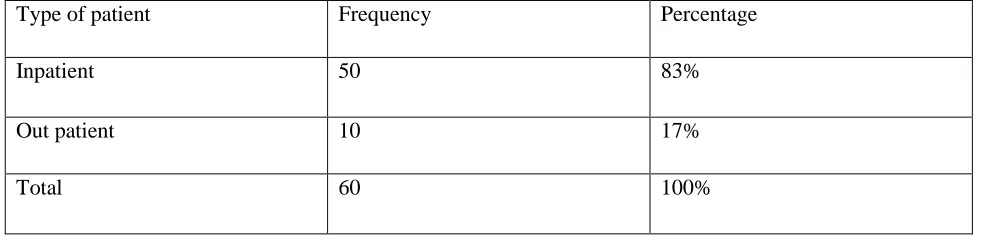
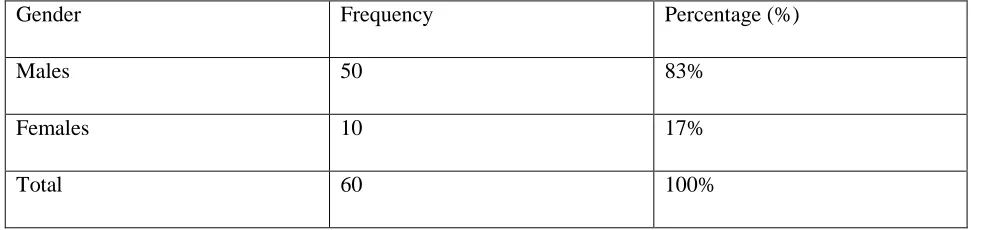
The study was carried out in the pulmonology department of Kovai Medical Center and Hospital at Coimbatore, over a period of 6 months from July to December 2011. A total of 60 patients were incorporated in the study. Of the whole population 50 (83%) were inpatients and 10 (17%) were outpatients [Tab 1, Fig 1]. Among the total population, 50 (83%) were male and 10 (17%) were females [Tab 2, Fig 2]. It is found that males were more prone to tuberculosis when compared to females with a ratio of 8:2. A study conducted by Mahmood I et al., reveals that the pervasiveness of tuberculosis is more in males than females with a ratio of 5:1. Also the NTP summarized as the ratio of the occurrence of TB between the male and female were 5:2.3 One of the study performed by Jaggarajamma K et al., has the identical outcome alike to ours in case of the gender wise occurrence of the TB, which contributes that a 7:2.5 ratio of male and female incidence of TB.10 Not only these studies some other studies also point out that the TB is more prone to male gender.13,21,22,38.
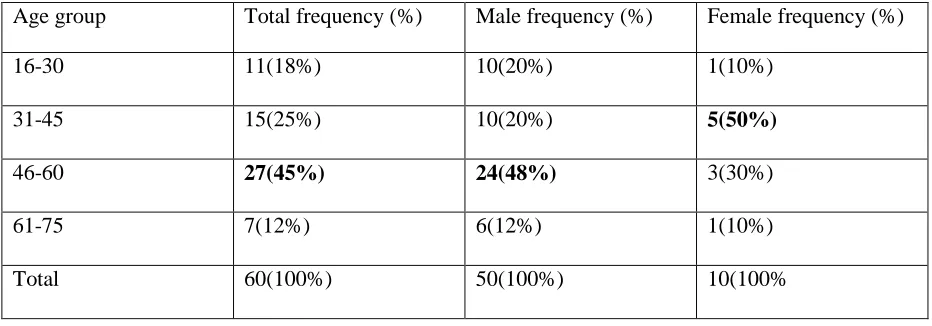
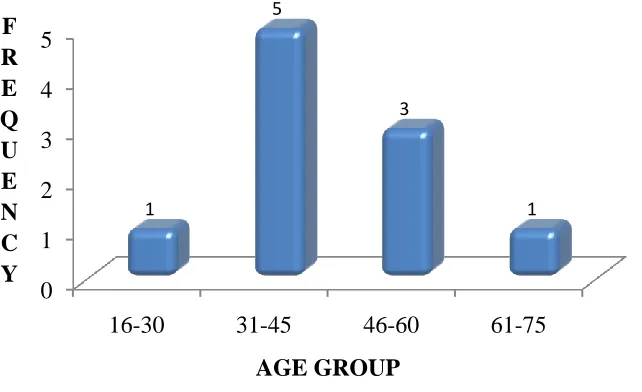
15(25%) patient. Age group analysis of male and female patients demonstrated that, 24(48%) male patients and 5(50%) female patients fit in to the age range of 46-60 and 31-45 respectively.[Table 3; Fig 3A,3B & 3C] Over all the study shows that the most prominent age group for the occurrence of TB was 40-60, as which is proved by the preceding studies.
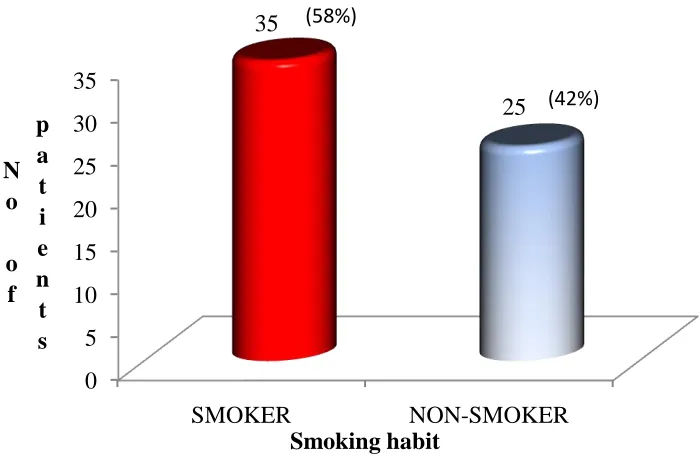
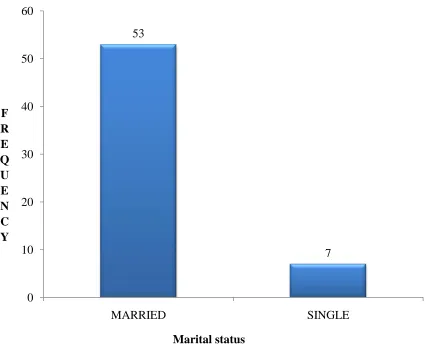
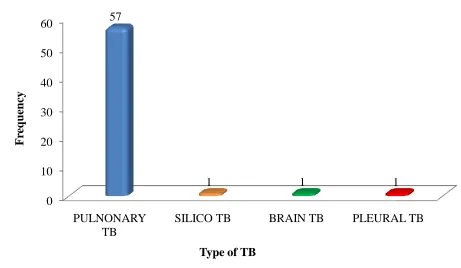
Out of the study population, 35(58%) patients were having the smoking habits [Tab 4, Fig 4]. Among the total population, 53(88%) were married.[tab 6, fig 6]. Summarized forms of TB diagnosis of our study were illustrated in table [6] and figure [6]. 57(95%) patients were diagnosed as pulmonary TB in our study population. About 92% of the populations in the research of Jaggarajamma K et al., were diagnosed as PTB.10 A study reported by Habib-ullah K et al., 22 interpret that 73% of the study population were diagnosed as PTB which was matching to our study. Of the remaining patients in our study, 1(1.6%) patient was found to have silico TB, 1(1.6%) patient was found to have brain TB and 1(1.6%) patient was found to have TB pleural effusion. It shows that when compared to EPTB, PTB shows most occurrences as per the prior study conclusions. It shows that when compared to EPTB, PTB shows most occurrences as per the prior study conclusions.10,21,22
pamphlet after the primary counseling shows that out of 60 patients, 53 (88%) patients were answered correctly [Tab8, Fig 8]. Remaining 7 (12%) patients were not answered correctly and who were re-counseled. The patients demonstrated a high level of knowledge of their medication regimens, which illustrates the benefit of additional support provided by pharmacists.35
Among the full population 60(100%) patients came for the first review 58(96.60%) patients came for the second review and 54(90%) patients came for the third review.[Tab 9, Fig 9] According to study by Susanne Moadebi etal..18, the reasons for poor adherence are multifaceted and complex, and include lack of knowledge about medications and their side effects. Pharmacists who dispense antituberculosis medications provide counselling to enhance patient‟s understanding of why they are taking the medication and the potential side effects of treatment, thereby helping to ensure patient adherence. Patients expressed greater satisfaction with the information about medication side effects that was provided by pharmacists, and there was a trend toward greater satisfaction with information about side effect management provided. Another study by Frederick ADK etal.,42 concluded that 29.8% of TB patients failed to comply with TB drug taking regimen once they started feeling better where as in our study we found that about 10% of patients failed to continue the proper follow up.
In our study, the patients were categorized in four different groups with High, Above Average, Average and Poor living standards consisting 5,6,24 and 25 patients respectively having 100%,83%,87% and 92% of review patients in the third review.[Tab 11, Fig 11A,11B,11C] In this it is clear that the patients from high living standards and poor living standards are more adherence with the TB treatment. Even though, the difference is very small when compare to other two groups. Unlike the study by Munro S A etal., 14 where as the study by Mahmood I et al., clearly says that Most of the patients are from low socioeconomic class. It supports
malnutrition to be a risk factor for tuberculosis. 3
Among the full population 15 (25.00%) patients experienced at least one ADR during the time of study period [Tab 12, Fig 12]. The prevalence of ADR occurrence as per three different studies (Mahmood I et al., Marra F et al., Anupa KC et al.,) during the intensive phase of ATT were found to be 22%, 30%, and 55%.3, 15, 38 Out of 15 ADR victims 14 (93%) were male and 1 (7%) was female [Tab 13, Fig 13]. Majority of them were males and the statistically there is no significant relation between the occurrence of ADR and gender.15, 21 The most prone age group for ADR incidence was found to be “46-60” group comprising of 11(73.33%) patients[Tab 14, Fig 14].. This result is controversial to the study of Anupa KC et al., in which the most prominent age group for the occurrence of ADR for ATT were belongs to “21-30” group. The statistical result shows that there is no significant relationship between the age and ADR which is similar to the previous study.15
is seen that a 20% hepatotoxic ADR victims in the study of Khalid M et al.,21 Previous studies proved that liver and biliary system and gastro intestinal system were the most frequent organ system for the development of ADRs for anti tubercular drugs.1,20,21,22,38, It shows that hepatitis followed by the vomiting were the major ADRs occurred in the population of the study of Marra F et al., which is similar to our study.38
The time interval between start of therapy and onset of ADR is given in the table [Tab 16, Fig 16]. It was found that 10 (67%) ADRs occurred within the first visit after starting the therapy. An overview of the table [16] and graph [16] shows that as there is a decreased incidence of ADRs when the days get increased. This is quite similar to the study of Kheirollah G et al.,23
The ADR victims and the review pattern by those patients is given in Tab [17] and Fig [17] which shows that the percentage of drop out patients from the ATT before the third review is more[13.33%] when compare with that of total population with [10%] of patients fails to adhere with the ATT by the completion of intensive phase. Even in the study by Munro S A etal., also reveals the same, the influence of side effects on adherence to treatment was mentioned in a number of studies some patients reported stopping medication because of adverse effects, while others reported that they were not informed about side effects and what to do to counter them, patients acknowledged that side effects had influenced their decision to abandon treatment. 14
Even other studies also agree with the point that side effects of the anti-tuberculosis agents have negative impact on patient‟s drug adherence.1,9,10,
TABLES AND GRAPHS
TABLE 1: WARD WISE DISTRIBUTION OF TOTAL PATIENTS (n=60)
Type of patient Frequency Percentage
Inpatient 50 83%
Out patient 10 17%
[image:58.612.187.366.479.668.2]Total 60 100%
FIGURE 1: WARD WISE DISTRIBUTION OF TOTAL PATIENTS (n=60)
83% 17%
IP PATIENTS
TABLE 2: GENDER WISE DISTRIBUTION OF TOTAL PATIENTS (n=60)
Gender Frequency Percentage (%)
Males 50 83%
Females 10 17%
[image:59.612.64.557.196.311.2]Total 60 100%
FIGURE 2: GENDER WISE DISTRIBUTION OF TOTAL PATIENTS (n=60)
83% 17%
MALES
TABLE 3: AGE WISE DISTRIBUTION OF PATIENTS
FIGURE 3A: AGE WISE DISTRIBUTION OF TOTAL PATIENTS (n=60)
Age group Total frequency (%) Male frequency (%) Female frequency (%)
16-30 11(18%) 10(20%) 1(10%)
31-45 15(25%) 10(20%) 5(50%)
46-60 27(45%) 24(48%) 3(30%)
61-75 7(12%) 6(12%) 1(10%)
FIGURE 3B: AGE WISE DISTRIBUTION OF MALE PATIENTS (n=50) 0 5 10 15 20 25 30
16-30 31-45 46-60 61-75
11 15 27 7 F R E Q U E N C Y AGE GROUP 0 5 10 15 20 25
16-30 31-45 46-60 61-75
FIGURE 3C: AGE WISE DISTRIBUTION OF FEMALE PATIENTS (n=10)
TABLE 4: SMOKING HABITS IN TOTAL PATIENTS (n=60)
Smoking habit Number of patients Percentage (%)
Smokers 35 58%
Non smokers 25 42%
0 1 2 3 4 5
16-30 31-45 46-60 61-75 1
5
3
1 F
R E Q U E N C Y
FIGURE 4: SMOKING HABITS IN TOTAL PATIENTS (n=60)
TABLE 5: MARITAL STATUS OF THE PATIENTS
STATUS No of patients Percentage (%)
Married 53 88%
Single 7 12%
[image:63.612.62.563.560.655.2]FIGURE 5: MARITAL STATUS OF THE PATIENTS
TABLE 6: TYPES OF TUBERCULOSIS DIAGNOSED (n=60) 53
7
0 10 20 30 40 50 60
MARRIED SINGLE
F R E Q U E N C Y
Marital status
Diagnosis Frequency Percentage (%)
Pulmonary tuberculosis 57 95%
FIGURE 6: TYPES OF TUBERCULOSIS DIAGNOSED (n=60)
0 10 20 30 40 50 60
PULNONARY TB
SILICO TB BRAIN TB PLEURAL TB 57
1 1 1
F
re
q
u
en
cy
Type of TB
Brain TB 1 1.6%
\
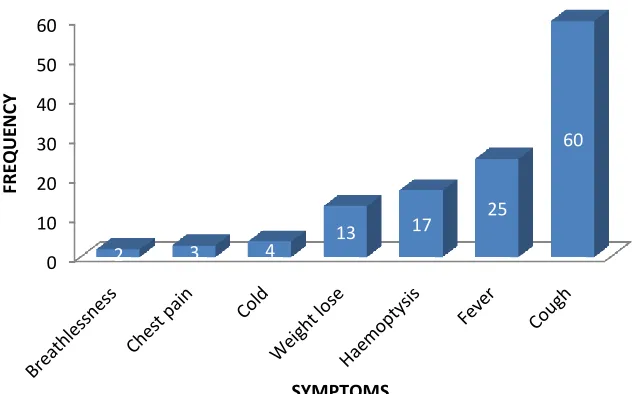
TABLE 7: SIGNS & SYMPTOMS
SIGNS & SYMPTOMS NO OF PATIENTS
breathlessness 2
chest pain 3
cold 4
wt lose 13
Haemoptysis 17
Fever 25
Cough 60
FIGURE 7: SIGNS & SYMPTOMS
0 10 20 30 40 50 60
2 3 4 13
17 25
60
FRE
QUE
N
CY
[image:66.612.149.467.513.710.2]TABLE 8: COUSELING STATUS OF THE PATIENTS (n=60)
Counselling status frequency Percentage (%)
Patients who were not re-counseled 53 88%
Patients who were re-counseled 7 12%
TABLE 9: REVIEW PATTERN OF THE PATIENTS (n=60)
First review 100%(60)
Second review 96.60%(58)
Third review 90%(54)
53
7
0 10 20 30 40 50 60
Patients who were not re-counseled Patients who were re-counseled
F
re
q
u
en
cy
patients
FIGURE 9: REVIEW PATTERN OF THE PATIENTS (n=60)
TABLE 10: LITERACY LEVEL OF THE PATIENTS (n=60) & REVIEW PATTERN
EDUCATION FREQUENCY 3RD REVIEW 2ND REVIEW 1ST REVIEW
Primary 27 26 0 1
Secondary 7 5 2 0
Degree 8 7 0 1
100%
96.60% 90%
[image:69.612.64.558.601.709.2]Masters 5 5 0 0
[image:70.612.71.557.72.130.2]Nil 13 11 2 0
FIGURE 10: LITERACY LEVEL OF THE PATIENTS (n=60) & REVIEW PATTERN
TABLE 11: LIVING STANDARED OF THE PATIENTS (n=60)
LIVING STD FREQUENCY
HIGH 5
0 5 10 15 20 25 30
27 7 8 5 13
Primary Secondary Degree Masters Nil
26 5 7 5 11 0 2 0 0 2 1
0 1 0 0
[image:70.612.77.542.248.514.2]ABOVE AVG 6
AVERAGE 24
[image:71.612.64.571.72.137.2]POOR 25
FIGURE 11 A: LIVING STANDARED OF THE PATIENTS (n=60)
FIGURE 11 B: LIVING STANDARED OF THE PATIENTS & REVIEW PATTERN (n=60) 0
5 10 15 20 25
High above
average
average Poor
5 6
24 25
[image:71.612.150.489.312.524.2]FIGURE 11 C: LIVING STANDARED & PERCENTAGE OF 3RD REVIEW (n=60)
TABLE 12: DISTRIBUTION OF PATIENTS WHO DEVELOPED ADR (n=60) 0 5 10 15 20 25
5 6 24 25
Professional Non professonal Labours Others
5 5
21 23
0 0 1 0 1 2 2 0
[image:72.612.139.480.411.650.2]ADR occurrence Frequency Percentage (%)
ADR developers 15 25%
ADR non developers 45 75%
FIGURE 12: DISTRIBUTION OF PATIENTS WHO DEVELOPED ADR (n=60)
0 5 10 15 20 25 30 35 40 45
TABLE 13: GENDER WISE DISTRIBUTION OF ADR VICTIMS (n=15)
GENDER FREQUENCY PERCENTAGE
MALE 14 93%
[image:74.612.73.559.405.648.2]FEMALE 1 7%
FIGURE 13: GENDER WISE DISTRIBUTION OF ADR VICTIMS (n=15)
14 1
MALE
TABLE 14: AGE WISE DISTRIBUTION OF ADR VICTIMS (n=15)
AGE group Frequency
16-30 2
31-45 1
46-60 11
[image:75.612.116.499.409.703.2]61-75 1
FIGURE 14: AGE WISE DISTRIBUTION OF ADR VICTIMS (n=15)
0 2 4 6 8 10 12
16-30 31-45 46-60 61-75
TABLE 15: TYPES OF ADR DEVELOPED (n=16)
TYPE OF ADR FREQUENCY
Abdominal pain
1
Breathlessness
1
Chest pain
3
Giddiness
1
Nausea
1
numbness of feet
1
Skin rashes
2
Vomiting/elevated liver enzyme
6
TABLE 16: DEVOLEPMENT OF ADR (n=15)(%)
1ST VISIT 10(67%)
2ND VISIT 4(26%)
3RD VISIT 1(7%)
FIGURE 16: DEVOLEPMENT OF ADR (n=15) 0
1 2 3 4 5 6
1 1
3
1 1 1
2
6
F
re
q
u
en
cy
[image:77.612.65.505.416.521.2]TABLE 17: ADR VICTIMS AND REVIEW PATTER (n=15)
ADR VICTIMS FREQUENCY PERCENTAGE (%)
Total ADR victims 15
100%
ADR victim came for 3rd review 13 86.67%
0 2 4 6 8 10 12
1st visit 2nd visit 3rd visit
No
of
AD
R
FIGURE 17: ADR VICTIMS AND REVIEW PATTERN
TABLE 18: LOCALITY WISE DISTRIBUTION OF THE PATIENTS (n=60) & REVIEW PATTERN
AREA Total 3rd
review
2nd review
1st review
Coimbatore/thirupur/palladam/pollachi 22 21 0 1
Erode/ooty 10 10 0 0
12 12.5 13 13.5 14 14.5 15
Salem/namakkal/villupuram/dindigul/dharmapuri/kannanur 28 23 4 1
FIGURE 18: LOCALITY WISE DISTRIBUTION OF THE PATIENTS (n=60) & REVIEW PATTERN
0 5 10 15 20 25 30
total 3rd review 2nd review 1st review
22
21
0 1
10 10
0 0
28
23
4
1
Coimbatore/thirupur/palladam/po llachi
Erode/ooty
SUMMARY AND CONCLUSION
A well communicated health care team work study was performed in the department of pulmonology at Kovai Medical Center and Hospital, Coimbatore. This study was principally emphasized in absolute care of tuberculosis patients throughout their intensive phase therapy by providing a knowledge based approach to improve the drug adherence and reducing the severity of adverse drug reaction.
A patient information pamphlet named as “THINGS TO BE NOTICED WHILE TAKING MEDICINES FOR TUBERCULOSIS” was already prepared which was used in the current study which includes the essential information regarding therapy, possible ADRs during the ATT and the emergency number to contact in case of any emergency due to adverse drug reactions or to take prior booking for the next review. A well experienced and skilled pharmacist counseled the patients with the help of scheduled pamphlet and enables the patients to adhere with the ATT and deal with the possible ADRs.
Entirely 60 patients were included in our study. Tuberculosis was predominant in males. Our study found that TB occurred chiefly in age group of “46-60”. Majority of them had PTB. Most of the patients needed hospitalization (83%) during the initial phase of the study. A total of 58% patients had smoking habit which could be a result of increasing the risk of infection with TB mycobacteria in these individuals. Smoking can decrease the immunity or damage the functioning of cilia in the airways which may increase the risk of getting infected easily.
were re-counseled by the clinical pharmacist. So that they could understand the treatment properly and adhere to ATT.
A total of 60 patients that is entire population came for the