Rochester Institute of Technology
RIT Scholar Works
Theses
Thesis/Dissertation Collections
5-20-2015
Crystalline
Nicholas Buonarota
John Dunham
Alexander Herdzik
Matthew Mundell
Follow this and additional works at:
http://scholarworks.rit.edu/theses
This Master's Project is brought to you for free and open access by the Thesis/Dissertation Collections at RIT Scholar Works. It has been accepted for inclusion in Theses by an authorized administrator of RIT Scholar Works. For more information, please [email protected].
Recommended Citation
Crystalline
By
Nicholas Buonarota
John Dunham
Alexander Herdzik
Matthew Mundell
Project submitted in partial fulfillment of the requirements for the degree of
Master of Science in Game Design and Development
Rochester Institute of Technology
B. Thomas Golisano College of Computing and Information
Sciences
i
Acknowledgements
We would like to give a heartfelt thank you to all of our committee members for helping us craft
Crystalline into the game it is today. These people include Dr. Jessica Bayliss, Kevin Bierre, Alberto
Bobadilla, Chris Cascioli, and Jesse O’Brien. In addition, we would like to thank our supporting
professors at the Rochester Institute of Technology and the Interactive Games and Media Faculty in
general. Additional thanks go out to all who playtested our game, including the designers at Raven
Software, playtesters at Imagine RIT and RPI GameFest, and family and friends who played and
tested our game while in development.
Executive Summary
Crystalline is a fast action arena shooter with a focus on gunplay. The core objective of this project
was to create a fun multiplayer First Person Shooter. To achieve this goal as a team we had to best
leverage the tools and technology available to us.
As First Person Shooter games typically have teams far larger than our own, we had to work
hard and smart on Crystalline. Unreal Engine 4 was used in lieu of Unity or an in-house engine,
saving hours of development time and allowing us to focus on gameplay and assets more. Thanks to
Unreal Engine 4, we were able to produce a game that, based on playtesting, appears to meet our core
objective. Due to the limited time available for the project, there are still far more designed features to
be implemented. However, the core gameplay has been completed leaving opportunity for expansion
and future work.
This document is divided into nine chapters and an appendix. Chapter 1 will introduce
readers to the core concepts of Crystalline. Market analysis and background research are covered in
Chapters 2 and 3 respectively. The prototypes and general process that took Crystalline from concept
to game are outlined in Chapter 4. Chapters 5 and 6 outline the core design of the final iteration of
Crystalline, technical or otherwise. Chapter 7 describes overall visual designs of the game, both 2D
and 3D. Playtesting data is reported and assessed in Chapter 8, and a post mortem is detailed in
iii
Table of Contents
1. Introduction ... 1
1.1 Tagline ... 1
1.2 Vision Statement ... 1
1.3 Elevator Pitch / Paragraph Summary ... 1
2. Game Genre Background and Market Analysis ... 2
2.1 Genre Background ... 2
2.2 Competitive Analysis ... 2
2.2.1 The Market ... 2
2.2.2 Our Game’s Place in the Market ... 17
3. Background Research ... 18
3.1 Game Design Research... 18
3.1.1 Level Design (Nicholas Buonarota) ... 18
3.2 Technical Research ... 35
3.2.1 Networking Architecture Research (Alexander Herdzik) ... 35
3.2.2 Terrain Feel (John Dunham)... 38
3.2.3 Graphics (Matthew Mundell) ... 43
4. Game Development Process ... 53
4.1 Team Structure ... 53
4.3 Prototypes ... 57
4.3.1 Overscoped ... 57
4.3.2 Toy Box Arena ... 58
4.3.3 Colony Crisis ... 59
4.3.4 Crystalline Prototype ... 60
4.4 Tools ... 66
4.4.1 Google Drive ... 66
4.4.2 Source Control ... 66
4.4.3 Trello ... 67
4.4.4 Engine ... 67
4.5 Schedule ... 69
4.6 Design Process ... 70
5. Game Design ... 72
5.1 Features ... 73
5.2 Game Narrative ... 73
5.3 Game Types ... 74
5.3.1 Game Type Descriptions ... 74
5.3.2 Game Options ... 74
5.4 Characters ... 75
5.4.1 Player Character ... 75
v
5.5 Weapon Sandbox ... 77
5.5.1 Crystal Gun ... 77
5.5.2 Pistol ... 81
5.6 Combat ... 82
5.7 Player Health ... 82
5.8 Multiplayer Environment ... 83
5.9 Camera... 86
5.10 Graphical User Interface ... 87
5.121 Control Scheme Summary ... 91
5.12 Player Personalities ... 92
6. Technical Design ... 94
6.1 Target Platforms ... 95
6.1.1 Minimum System Requirements ... 95
6.1.2 Maximum System Requirements... 95
6.2 C++ Style ... 96
6.3 Menu System ... 97
6.3.1: Main Menu Level ... 99
6.3.2: Lobby Level ... 100
6.4 Character ... 102
6.5 Inventory ... 103
6.5.2 Crystal Swapping... 104
6.6 Weapon System ... 105
6.6.1 ACGWeapon ... 105
6.7 UI Widget System ... 107
6.7.1 UCGHUDWidget ... 107
7. Asset Overview ... 109
7.1 Visual Design ... 109
7.1.1 Character Design ... 109
7.1.2 Weapon Design ... 112
7.1.3 Environment Design ... 114
7.1.4 UI Design ... 116
7.2 Audio Design ... 118
8. Play Testing and Results ... 119
8.1 Procedure ... 119
8.2 Data ... 121
8.3 Conclusions ... 128
8.4 Iterations ... 129
8.4.1 Map Iterations ... 129
9. Post Mortem ... 131
9.1 What Went Right ... 131
vii
9.1.2 Artistic Workflow ... 132
9.1.3 Modular Art Set ... 133
9.2 What Went Wrong ... 136
9.2.1 Communication ... 136
9.2.2 Architecture Design ... 137
9.2.3 Scope ... 139
9.3 Future Work ... 140
9.3.1 Crystal Combinations ... 140
9.3.2 Additional Maps ... 140
9.3.3 Additional Game Modes ... 142
Bibliography ... 144
Appendices ... 150
A.1 Visual Assets ... 150
A.1.1 Akashi Font... 150
A.1.2 Ammo ... 150
A.1.3 Arid Desert Pack ... 152
A.1.4 Cave Drip ... 152
A.1.5 Character ... 153
A.1.6 Crystal Rock ... 156
A.1.7 Crystals ... 158
A.1.9 Drill ... 161
A.1.10 Flag ... 168
A.1.11 HUD ... 169
A.1.12 King of the Hill Indicator ... 173
A.1.13 Lobby Images ... 174
A.1.14 Modular Art Set ... 175
A.1.15 RIT Logo ... 179
A.1.16 Ship ... 180
A.1.17 Skybox ... 181
A.1.18 Space Crate ... 182
A.1.19 Tutorial Room... 184
A.1.20 Unreal Logo ... 187
A.1.21 Weapons ... 188
A.2 Sound Assets ... 196
A.3 Feedback Data ... 197
A.3.1 Playtesting Survey ... 197
A.3.2 Internal Playtests... 202
A.4 Designed but not Implemented ... 207
A.4.1 Multiplayer Maps ... 207
A.4.2 Map Editor ... 207
ix
A.4.4 Gameplay: ... 218
A.4.5 Drilling Outposts ... 219
A.4.6 Crystal Resources ... 222
A.5 Colony Crisis Design Doc ... 224
List of Figures
Figure 1 Meme of Han Solo (Han Solo Meme, n.d.) ... i
Figure 2 Battleborn Gameplay (PC Gamer 2014) ... 4
Figure 3 Battlefield 4 Gameplay (BF4Central 2015) ... 5
Figure 4 Commander Tablet Application (Tom's Hardware 2014) ... 5
Figure 5 Borderlands 2 co-op gameplay (Next Gamer 2012) ... 6
Figure 6 Call of Duty 2 (Takahashi 2015) ... 7
Figure 7 Call of Duty: Black Ops II (Takahashi 2015) ... 7
Figure 8 Firefly Clothing (Massey 2012) ... 8
Figure 9 Firefly "space cowboy theme" (Palmer n.d.) ... 8
Figure 10 Halo 2 multiplayer gameplay (jkdmedia 2005) ... 9
Figure 11 Halo 2's pre-game lobby: The Virtual Couch (Microsoft 2015) ... 9
Figure 12 League of Legends gameplay (Tictac Town n.d.) ... 10
Figure 13 An alien player as a Gorge, the healer class. The unusual alien “mouth cam” can be seen here. (Natural Selection 2 n.d.) ... 11
Figure 14 A marine commander viewing an alien attack on the human team’s base. (Natural Selection 2 n.d.) ... 11
Figure 15 The FPS view on the Gate Map (Interwave studios 2011) ... 12
Figure 16 The commander view on the Oasis map(Interwave studios 2011) ... 12
Figure 17 Large scale warfare in Star Wars: Battlefront II (LucasArts 2005) ... 13
Figure 18 Titanfall gameplay (Respawn Entertainment 2014)... 14
Figure 19 Tribes Ascend Gameplay(Hi-Rez Studios 2012) ... 16
xi
Figure 21 Figure from Lee Perry's article on modular design (Perry 2002) ... 25
Figure 22 Bungie's "fronts" ... 30
Figure 23 Counter-Strike's "choke points" ... 31
Figure 24 Bungie's "layers" ... 32
Figure 25 Bungie's "AI Blinds" ... 32
Figure 26 Counter-Strike's Dust 2 using a "Ledge Blind" in addition to having 2 layers ... 33
Figure 27 Bungie's "cover clusters" ... 33
Figure 28 Bungie's "movement" diagram ... 34
Figure 29 Dust 2's Bombsite A showing movement terminology in action ... 34
Figure 30 Example of a simulated terrain (DICE 2012) ... 38
Figure 31 Our animated character in Maya ... 45
Figure 32 Physically based rendering in action (Walker 2014) ... 47
Figure 33 A metallic surface in game ... 48
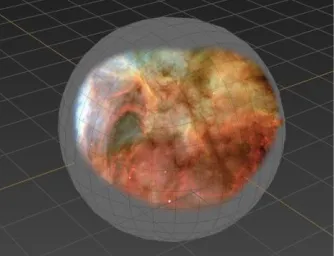
Figure 34 Carina Nebula through ultraviolet filter ... 50
Figure 35 Venus through ultraviolet filter ... 50
Figure 36 Painting the source images as layers on skybox in Mudbox ... 51
Figure 37 Painting the source images as layers on skybox in Mudbox ... 51
Figure 38 Skybox being painted in Mudbox ... 51
Figure 39 Final Skybox output from Mudbox ... 51
Figure 40 Final in-game sky showing light shaft occlusion and bloom ... 52
Figure 41 Final in-game sky showcasing planet and spaceships ... 52
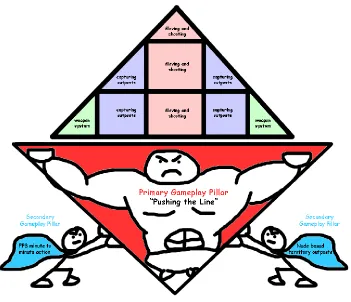
Figure 42 Game pillars concept image ... 54
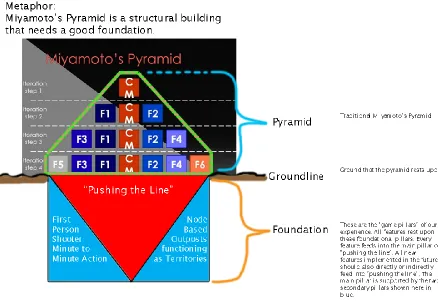
Figure 43 Miyamoto’s Pyramid Metaphor ... 55
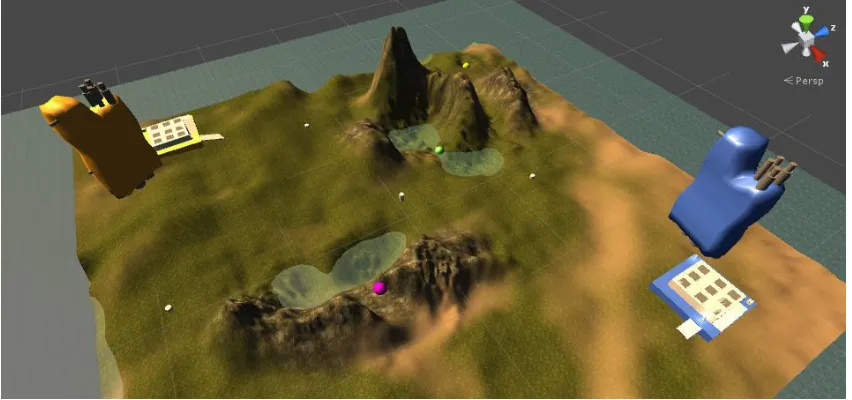
Figure 44 Toy Box Arena prototype ... 58
Figure 45 Colony Crisis prototype ... 59
Figure 47 Gunstar Heroes Lightning and Chaser Power Up combination (Sega 1993) ... 62
Figure 48 Initial mockup of the slotting crystals in the Crystal Gun... 63
Figure 49 Heads Up Display Mockup ... 65
Figure 50 Player characters and faction emblems ... 75
Figure 51 Crystal Gun ... 77
Figure 52 Crystal Gun with Power Modifier ... 78
Figure 53 Crystal Gun with Precision Modifier ... 79
Figure 54 Crystal Gun with Energy Modifier ... 80
Figure 55 Pistol ... 81
Figure 56 Standard map. Main showcase map for capstone. Designed for the conquest game type ... 83
Figure 57 Representation of “Lanes” in pink. 3 lanes total: left, middle, and right.. ... 83
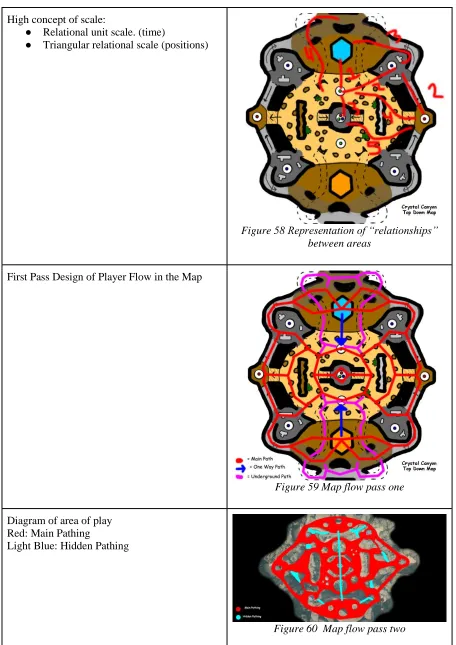
Figure 58 Representation of “relationships” between areas ... 84
Figure 59 Map flow pass one ... 84
Figure 60 Map flow pass two ... 84
Figure 61 Map flow pass three ... 85
Figure 62 Area of Play ... 85
Figure 63 HUD Concept ... 87
Figure 64 HUD Iteration 2 ... 87
Figure 65 HUD Iteration 3 ... 88
Figure 66 HUD Iteration 4 ... 89
Figure 67 HUD Final Iteration ... 90
Figure 68 Controls ... 91
Figure 69 Pregame Lobby: prototype 1 ... 97
Figure 70 Pregame Lobby: prototype 2 ... 97
Figure 71 Development Main Menu Screen... 98
xiii
Figure 73 Diagram of Main Menu Level Interactions ... 100
Figure 74 Lobby Screen ... 100
Figure 75 Generated UML for ACGCharacter ... 102
Figure 76 Generated UML for the ACGInventory ... 103
Figure 77 Generated UML for the Weapon System ... 105
Figure 78 State Diagram for the weapon state machine ... 106
Figure 79 Generated UML for the UI Widget System ... 107
Figure 80 Crystalline’s Character ... 109
Figure 81 Crystalline’s Weapons ... 112
Figure 82 Example of an Arizona strip mine (Nature's Crusaders 2009) ... 114
Figure 83 A screenshot from the game map, “Crystal Canyon” ... 114
Figure 84 Color Palette ... 115
Figure 85 Final HUD iteration ... 116
Figure 86 First iteration of pre-playtest and post-playtest surveys... 119
Figure 87 How often playtesters play FPS games ... 121
Figure 88 How playtesters felt about Crystalline ... 122
Figure 89 How Crystalline compares to other FPS games to playtesters ... 123
Figure 90 How playtesters felt about the Weapon Sandbox of Crystalline ... 124
Figure 91 How playtesters felt about the tutorial of Crystalline ... 125
Figure 92 How playtesters felt about the tutorial’s difficulty... 125
Figure 93 How playtesters felt about the visuals of Crystalline ... 126
Figure 94 How playtesters felt about the HUD of Crystalline ... 127
Figure 95 Subtractive Geometry in Editor ... 129
Figure 96 A screenshot from in the hill ... 129
Figure 97 : A screenshot from a player outside and under the hill ... 129
Figure 99 Arid Desert Modular pack by Tris Baybayan (the arid desert pack was used to create the
majority of the environment that the player interacts with in Crystalline) ... 134
Figure 100 Custom Modular pack by Crystalline Team ... 135
Figure 101 Blueprints in action ... 138
xv
List of Tables
Table 1 Summary of Similar Games Analysis ... 3
1. Introduction
1.1 Tagline
“The 8 player networked free for all, where magic fantasy weapons meet fast action gunplay.”
1.2 Vision Statement
Crystalline is a fast-action, arena shooter which takes place in the far future. In Crystalline, players
use both their twitch reflexes and planning skills to harvest crystals and defend their space fleet. By
modifying their weapon, players have a free reign on how they approach their goal of planetary
domination.
1.3 Elevator Pitch / Paragraph Summary
Crystalline is an 8 player networked first-person shooter that takes place in the far reaches of outer
space. Crystalline’s gameplay revolves around combat in which players modify a single weapon to
defeat their opponents. The weapon sandbox can be thought of like the magical weapons from
Dungeons and Dragons or other fantasy adventure games. In D&D, “magic runes” can often be
inserted into weapons giving them extra abilities. For example, if you insert a “fire rune” into your
sword, then it becomes a magic sword of fire and does additional fire damage. Likewise in our
weapon sandbox, if you insert a “precision modifier crystal” into the crystal gun it becomes more
accurate and behaves more like a single shot rifle than a fully automatic rifle. Our weapon system
brings a new and unique approach to First Person Shooter (FPS) weapon sandboxes by incorporating
2
2. Game Genre Background and Market Analysis
2.1 Genre Background
Genre: First Person Shooter
Fast skirmishes punctuated with strategic planning to take control of the battlefield define the typical
match of Crystalline. The core control metaphor and combat mechanics draw heavily from the Action
and First Person Shooter genres, the current top selling video game genres (Entertainment Software
Association 2013). The FPS elements take cues from franchises such as Tribes and Halo, focusing on
fast paced combat and an interesting weapon sandbox. As a point of innovation in the FPS genre
we’ve co-opted elements from the classic Sega Genesis game Gunstar Heroes, namely the power up
slotting mechanic, to make the weapon sandbox far more accessible and customizable for the entry
level player. In addition to the FPS genre, Crystalline was originally planning to borrow select
elements from the MOBA genre. The primary game modes in Crystalline were also meant to have a
lane structure in which the player must simultaneously capture and defend “lanes” similar to a MOBA
game such as DOTA 2 and League of Legends.
2.2 Competitive Analysis
2.2.1 The Market
Abstract: Here we acknowledge similar games in the marketplace, how they impacted our design,
how our game is different from those products, and finally how we plan to improve upon ideas and
Title Gameplay Mechanics Takeaway
Battleborn FPS MOBA Team based play,
unique characters
team-oriented play
Battlefield FPS large maps, vehicles details matter
Borderlands FPS, RPG Co-op play,
Massive Weapon Sandbox, Skill Trees Interesting Weapon Sandbox, Multiplayer Experience
Call of Duty FPS action solid experience that
people return to year after year
Firefly TV Series space cowboy look and feel
Halo FPS arena multiplayer game feel
League of Legends MOBA Outpost Destruction,
Levelling up
Lanes are good, Shorter matches means happier players
Natural Selection FPS / RTS unique combinations
of genre, adding more to the average FPS match
too much can overwhelm new players
Nuclear Dawn FPS / RTS unique combinations
of genre, adding more to the average FPS match
simply mashing two genres together doesn’t always work
Star Wars: Battlefront Third Person Shooter, Conquest
Node Capture, Unique Roles
Feeling of a large scale war, node capture
Tribes Series FPS, CTF Jet pack, Skiing, Base
Equipment and Deployables
Focus on Base strategy and upgrading
Titanfall FPS High-tech weapons,
fast-paced gameplay
People like fun mechanics
4
Battleborn (Gearbox Software n.d.) - After the success of Borderlands, Gearbox is now working on
Battleborn, an FPS Multiplayer Online Battle Arena (MOBA). Preliminary gameplay video and news
shows a game like League of Legends or Defense of the Ancients (DotA), but in the first person
perspective. Teams of 5 unique characters face other human or computer controlled players, and each
character has unique weapons and abilities.
Figure 2 Battleborn Gameplay (PC Gamer 2014)
Battleborn takes the traditional elements of a MOBA, specifically the unique characters and
team-based play, and adds an FPS perspective. We wanted to have team-based play and a lane based
map like in MOBAs, but our gameplay is based more on traditional FPS games where characters are
not unique innately and more than 5 players per team are supported. Battleborn is a MOBA, and
Crystalline was originallyintended to be a FPS with some elements of MOBAs.
than 50 million players worldwide as of 2012, and with a popular hit iteration after iteration, it should not be ignored.
Figure 3 Battlefield 4 Gameplay (BF4Central 2015)
Figure 4 Commander Tablet Application (Tom's Hardware 2014)
In Battlefield 4, there was a second screen tablet “Commander” application. This was a feature that
our team was very impressed with and influenced a few aesthetic features throughout the game development.
Borderlands series (Gearbox Software 2012)- Borderlands is Gearbox’s flagship FPS/RPG
franchise. Boasting a near infinite amount of guns, character classes, skill trees and more dubstep than
recommended by a sane physician. Borderlands is largely story driven, but the real fun comes in the
four player co-op that allows players to explore the world of Pandora, rich in atmosphere and
character, utterly destroying anything in their path with a litany of firearms, explosives and powers.
6
Figure 5 Borderlands 2 co-op gameplay (Next Gamer 2012)
Borderlands integrates RPG and FPS elements in a near flawless manner. The player doesn’t
feel limited by the skill progression, as they can refund their skills and try and find a combination that
works for them. Additionally, the RPG skills feel good to use: when the player phases in and out as a
Siren they can feel her power and ability, but are still able to use a gun and
pick the enemy off without getting their hands dirty.
The co-op feels like it adds to the game rather than detracting. This largely due to the fact that
players are still able to explore the environment as they see fit, but can share in crazy fights and
experience the alien scenery together. Borderlands is good at making emergent stories in this way.
That being said, not having friends can be less interesting. The game becomes a bit of a grind fest
when a player is alone and while the humor is great in the single player, jokes alone can’t carry player
interest. Additionally, while the weapon sandbox is great the weapons sometimes feel “floaty”, as a
result the satisfaction from using weapons can be sometimes diminished.
Borderlands influenced Crystalline’s emphasis on an interesting weapon system and helped
always accessible to new players, a fact we are attempting to account for in our weapon sandbox’s
power up based system.
Call of Duty Series (Activision 2015) - The Call of Duty series is one of the most known FPS
intellectual properties on the market. From titles ranging from WWII to future sci-fi settings, the
series has sold over 100 million copies. The series is one of the top grossing FPS games and has
dominated the multiplayer console FPS market for the last few years. Its faced paced action is top
notch.
Figure 6 Call of Duty 2 (Takahashi 2015) Figure 7 Call of Duty: Black Ops II (Takahashi 2015)
This is not a game series to be ignored if you are planning on developing an FPS and going to
market. One major feature that the last few CoD games have had is the “custom starting load out”
feature. This lets players spawn with exactly the weapons they want. In Crystalline, we plan to
implement a different type of weapon system, which encourages player movement on the battlefield
and player on the spot adaptability.
Firefly
“[N]ine people looking into the blackness of space and seeing nine different things”
-Will Wheaton (quoted in Brioux[2004])
An iconic work in the realm of space westerns, Firefly has inspired our aesthetic and thematic choices
8
sense of wonder and adventure in the viewer. Firefly also captures a sense of independence and
survival that incorporates technology in a manner we’ve found important to our design at all stages.
The character designs are striking, but simple, inspiring the notion that these characters have travelled
the half ‘verse, and are willing to travel the other half to live freely and survive. As Crystalline at its
core is about two sides attempting to survive in space, we’ve found this general aesthetic feel to be
valuable.
Figure 8 Firefly Clothing (Massey 2012) Figure 9 Firefly "space cowboy theme" (Palmer n.d.)
Halo Series (Microsoft 2015)- Halo is a first person shooter with a heavy sci-fi narrative campaign
and a genre revolutionizing multiplayer experience for console FPSs. The game series got many
positive reviews for its multiplayer experience. Bungie had a runaway hit. It was so good that many
console FPSs tried to emulate its qualities for the next 10 years. Halo: Combat Evolved the first entry
in the series got a lot of things right in transferring the FPS experience from a PC to the console and
set up a great foundation for the series multiplayer experience by creating a quality local multiplayer.
Halo 2 innovated in the multiplayer space even further, revolutionizing how console
multiplayer was delivered at a fundamental level. Some of the major additions to Halo 2 included
Xbox Live, the networking multiplayer aspect for Microsoft’s Xbox. Halo 2 set industry standards for
Xbox Live by establishing and highlighting the party system. The party system took the “friends list”
attempt to “virtualize” the couch multiplayer experience they refined from Halo: Combat Evolved.
The other major contribution was the idea of a “quick play” system. Opposite to the traditional, host a
server - join a server model, “quick play” had the player push a button, which effectively said, “I want
a play a game. Find me other players that want to play. Pick a host. Pick a game type. Pick a map. Get
me into the game as fast as possible.” In addition to these innovations, the Halo series had many other
great qualities to admire. The attention to detail and game feel is another quality of the series that we
highly respect.
Figure 10 Halo 2 multiplayer gameplay (jkdmedia 2005)
Figure 11 Halo 2's pre-game lobby: The Virtual Couch (Microsoft 2015)
The Halo series did a good job of creating a quality action arena experience. We plan to
expand upon that game feel and incorporate strategy elements from other genres to create an
altogether new and exciting experience.
League of Legends (Riot Games 2015)- League of Legends is a MOBA game set in a fantasy realm,
and is one of the most popular games in the world. The player takes control of one of over 100
characters to take down towers, slay champions, and win the game by destroying the enemy nexus.
Though the end result of development has not much in common with League of Legends, our main
similarity to League of Legends in our original design is the use of lanes to focus the player’s
attention. Having lanes almost acts as a funnel for the action and combat that takes place in a game.
10
think having areas of focus like lanes in our games would keep our players engaged. In addition,
League of Legends has smaller minions that periodically spawn to give players a sense of game flow
between skirmishes with actual players and completing objectives. In Crystalline’s early iterations,
we had drones that were able to be spawned. Though drones were not a great threat to the player, they
gave the player something to shoot at or assist on the way to the “front lines” of the current game.
Drones also functioned as support to help capture objectives, as minions do in League of Legends.
Figure 12 League of Legends gameplay (Tictac Town n.d.)
The main difference between League of Legends and our original concept is that League of
Legends is 100% MOBA, whereas Crystalline is mostly a First-Person Shooter. In contrast to “Hard
MOBAs” like League of Legends and DotA, Crystalline is primarily a First-Person Shooter, and was
going to borrow mechanic from the MOBA genre. Our combat is mostly PVP, instead of a mix of
PVP and PVE like MOBA games are. In addition, we are hoping to have a game community that is
more positive than that of League of Legends, whose community is notoriously toxic. One way we
plan to achieve this is through quicker matches (losing isn’t so bad if you start another match in 10
Natural Selection Series (Unknown Worlds Entertainment 2010)- Natural Selection is a
multi-player, team oriented video game series that combines the FPS genre with the Real Time Strategy
(RTS) genre. It is set in a science fiction universe in which a human team fights an alien team for
control of resources and territory in large indoor facilities. The gameplay is very asymmetric. Human
marines rely highly on various tech and guns, while the alien team relies primarily on melee attacks
and bio-evolution. Both teams have one player act as a commander, who is given a top-down view of
the map, and tasked with placing buildings, researching upgrades, and supporting the FPS players on
the front.
Figure 13 An alien player as a Gorge, the healer class. The unusual alien “mouth cam”
can be seen here. (Natural Selection 2 n.d.)
Figure 14 A marine commander viewing an alien attack on the human team’s base. (Natural
Selection 2 n.d.)
Natural Selection has a very high barrier for entry. There are many things going on in this
world. If the player doesn’t know everything about it, then they will have a very difficult time playing
with other players in this real time environment. With Crystalline, we decided to address this problem
by having a very low barrier for entry and a system of patterns that are very easily identifiable for
new players, yet still offer depth to explore for players who have the time to spend learning the ins
and outs of our systems.
Nuclear Dawn (Interwave studios 2011)- Nuclear Dawn is a post-apocalyptic FPS-RTS hybrid.
Gameplay consists of one player on each team acting as a commander, who directs the team from an
12
interesting and novel concept, Nuclear Dawn simply merged the two genres into one game, 50 / 50.
But not nailing the gameplay merge between these two similar, but radically different genres Nuclear
Dawn suffers from balance issues and stagnant gameplay.
Figure 15 The FPS view on the Gate Map (Interwave studios 2011)
Figure 16 The commander view on the Oasis map(Interwave studios 2011)
With Crystalline, we are creating an FPS that has elements of strategy games that fit and
complement each other. We are being very selective in what elements we bring to the FPS genre, in
an effort to avoid the pitfalls that Nuclear Dawn fell into.
Star Wars: Battlefront Series (LucasArts 2005)- Battlefront is a game from LucasArts putting the
players into the iconic battles of the Star Wars universe. The player chooses one of several classes of
troopers or droids to play as and then spawns at a node belonging to the player’s team. Then, along
with a small army of AI units, the player moves to an uncaptured or enemy node and stands near it to
capture it. Over time, each side takes casualties which reduces the number of reinforcements
available per team. A team wins by either capturing all the nodes and holding them for a time, or by
reducing the enemy team’s reinforcement count to 0. In the battlefield there are also points where the
Figure 17 Large scale warfare in Star Wars: Battlefront II (LucasArts 2005)
What we like about Battlefront and Battlefront 2 is the feeling of being in a large scale battle.
This is mainly accomplished by having a large reinforcement count that implies a larger war going on
than just the currently spawned units. By capturing nodes, the player can feel like they are making a
meaningful contributing to this larger war on their own. Players also have roles to play in the
battlefield through the distinctive class system, where they can either be a generic trooper, a sniper, an
engineer, a heavy trooper with a rocket launcher for destroying vehicles, or a commando with a
unique ability. Despite these positives, there is not much more there beyond the capturing of
outposts, and the game also suffered from the fact that once a player’s side starts losing, it is difficult
to make a comeback.
The feeling of playing a part in a larger battle is an important element that we want the player
to experience in our game. We use a similar concept of node capturing so that a ‘line’ of battle forms
as teams contest the various points. That way players can feel like they are making that meaningful
contribution when they help to push the line and capture the next node. We originally planned to
14
create the effect of a larger war by having combat effects in the 3D skybox beyond the playable
space.
Titanfall (Respawn Entertainment 2014)- Respawn’s flagship sci-fi multiplayer First-Person Shooter,
set on a variety of colonized planets in the far future. Players make use of futuristic technology such
as jetpacks and giant mechs in order to gain an edge over their enemies. Gameplay is fast-paced and
relies heavily on using your weapons to your advantage. One of the main features of Titanfall are the
giant mechs, which players are able to pilot. Using your mechs effectively is the key to victory in
Titanfall.
Figure 18 Titanfall gameplay (Respawn Entertainment 2014)
One of the things that we wanted to bring in from Titanfall was the feel of fast-paced
multiplayer gameplay with strategy elements involved. Titanfall’s gameplay mechanics and weapons
are highly conducive to frantically-paced running and shooting. Even some of Titanfall’s items like
the lock-on Smart Pistol do most of the aiming work for you, so focus is put more on the wall-running
match that of Titanfall’s. One thing about Titanfall that we don’t want to mirror is the lack of strategy
elements. One notable thing about Titanfall is that it is an almost purely FPS experience. Even the
mech pilot’s interface mirrors that of the standard soldier’s. As a result, the game is less about
thinking and more about positioning and fast reflexes. Though it would be nice to have those
elements in Crystalline, we also want Crystalline to be an exercise in strategy as well. We believe we
can achieve this through having victory being tightly coupled with completing objectives.
Tribes Series (Hi-Rez Studios 2012)- Beginning with Dynamix’s Tribes and Tribes 2 and later
Tribes Ascend when the franchise was picked up by Hi-Rez Studios, the Tribes franchise is fast-paced
sci-fi FPS that sets itself apart by featuring large, open landscapes rather than the tight maps of
traditional games in the genre. This is made possible due to each player’s jet pack and the ability to
ski. Skiing is a mechanic by which you negate friction and move along the terrain quickly, picking
up speed as you fall and using your jetpack to get up slopes without losing any momentum. This
allows skilled players to gain surprising amounts of speed and cover whole maps even in heavy
armor. Each team also has a base with essential equipment, such as inventory stations that allow the
players to get weapons and tools they don’t start with, and defensive turrets. This makes base
defense and repair an important part of the gameplay experience. Typical games are capture the flag
matches for up to 32 players, and players get points for kills, capturing the flag, and repairing and
16
Figure 19 Tribes Ascend Gameplay(Hi-Rez Studios 2012)
The mechanics we like most about Tribes are the skiing which literally makes the gameplay
fast-paced, and the emphasis on base defense and equipment interactivity. The downside of Tribes is
that it can get repetitive. Each player has access to the same things at all times, with the exception of
the last game in the series, Tribes Ascend, which was free-to-play and had unlockable weapons and
equipment that could be obtained by paying or by getting experience in the game.
We wanted to take the emphasis on base equipment and make it possible to build things in
our game. In earlier iterations of Crystalline, the outposts represented small bases, and each had a
small number of slots on which equipment can be built. Our game is unique from the Tribes series in
that it also originally included a resource management system in the form of crystals, which were
currency for building upgrades. Our weapon system also allows players to modify their weapons in
the field by slotting different crystals in them, and use unique abilities depending on which crystal is
2.2.2 Our Game’s Place in the Market
While the FPS genre may be saturated, it is not so much so that a niche can’t be found. Canonical
games (Halo, Call of Duty, and Battlefield) typically don’t stray too far from the norm in their design
for the sake of safety, or when they shift seriously (Halo 2) they redesign it. While there are a lot of
FPS’s that straddle genre lines (Borderlands, Battleborn) they typically aren’t very accessible to new
players. Over specificity of skill trees and builds can sometimes be daunting for new players (League
of Legends) scaring them away before they can even get immersed in the game.
A brief assessment of the market yields that accessibility is an area that FPS games tend to
ignore, typically targeting a hardcore crowd, the stereotypical “gamer”. Players are more diverse than
that, leaving a well of untapped potential that Crystalline intends to address. Every design decision is
intended to produce an experience that welcomes new players with open arms. Where Borderlands
has a near infinite weapon sandbox, Crystalline has a compact system in which the player need only
learn three power ups to access a litany of options. Where some games seek depth through complexity
and number of choices (League of Legends) Crystalline targets depth through the nuances of a basic
power up system.
Crystalline’s success lies in the fact that it doesn’t attempt to be a combination of different
genres, becoming too bloated to easily comprehend. Rather, Crystalline recognizes that mechanics
18
3. Background Research
3.1 Game Design Research
3.1.1 Level Design (Nicholas Buonarota)
3.1.1.1 Introductions and Definitions
Level design is the “craft”, “procedure”, or “process” of creating a playspace that revolves around the
set of rules in your game. Some say it is, “The Art of Level Design” others say, “The science of Level
Design”. It’s a little bit of both. At some points along the process its more one than the other. But in
the end just like game design, level design is both an art and a science.
Level design is essentially secondary mechanic design. The real purpose of level design is to
highlight the main mechanics in your game. Let’s look at an example in context. The main mechanic
in a First Person Shooter is Player 1 shoots Player 2. The level design in the game should highlight
that. The level designer needs to create a space that enables Player 1 shooting Player 2. If Player 1 has
a sniper rifle, then create a space where they can use a sniper rifle effectively. If Player 1 has a
shotgun, then create a space where they can use a shotgun effectively. For example, tight corners,
small rooms, one / two way entrances.
If the game in question is a platformer named Super Mario Brothers (Nintendo 1985), then
the main mechanic of the game is “Mario jumps from platform to platform”. The level design should
highlight that. The level designer needs to create a space that enables Mario to jump from platform to
platform. In this case, the level designer needs to think about jump distances. For example, near
platforms will make your level easy, platforms on the borderline of your character’s jump distance
will make your level hard, and platforms beyond your character’s jump distance will make your level
impossible. Are there obstacles in the way of jumping to the next platform? If Player 1 has a double
jump power, then create a space where they can use that ability to maybe reach a secret area. These
Figure 20 Mario punching and kicking the sky (Nintendo 1985)
That’s it! That’s everything you need to know about level design. You can leave now and
stop reading. But if you want a better understanding of level design theory, processes, workflows, and
more context examples, then stick around, there is more great stuff on the way!
Rudolf Kremers has written one of the best books on level design that I have ever read. In his
introduction he goes on to say that level design is an all-encompassing field and there are few jobs in
the games industry as satisfying or important as that of a level designer. It is however a relatively new
official position in the industry and is often misunderstood or misrepresented, which is regrettable.
Level design is exciting and important. Good or bad level design can make or break a game,
so it is unfortunate and is surprising how little reference material and documentation there is for
people who wish to get into level design and have a deeper understanding of the field. Most of what is
out there is community written wiki articles on the websites of mod communities, and more recently a
slim few Game Developers Conference (GDC) presentations. These GDC presentations are
categorized under “Level Design in a Day”. LDD has been a regular series of presentations for the
last few years at GDC. It is a day-long event, usually on the Tuesday of GDC from 9-4PM. It gathers
a bunch of people who present on level design and level design related topics. The lunch session is
also converted to a portfolio review session, which is helpful for those who wish to get critique from
others.
Because of these things, most people who work as level designers are self-taught or have
20
information on this subject. Well, that was one of the goals of Kremers’ book. He wishes to bring
some of that knowledge to the public. On a personal note, that is also one of my goals. Over the years
I have been collecting information, such as design documents, presentations, and post mortems. I’ve
been taking notes, collecting resources, and writing tutorials on these subjects. As I’ve been collecting
this raw information, I’ve been processing it, trying to make it easier to understand with a low barrier
for entry in order to release it to the community and public.
“Bad level design can ruin a good game.” and “A bad game cannot be saved by good level
design.” Before one can understand the function of level design, one must understand the function of
game design. Unfortunately, designers don’t always agree on what game design is, but that’s okay
because design is just a collection of opinions anyway. Some people agree more on certain things
than other things, but in the end it's all just opinions.
One of the most famous definitions of game design is from Sid Meier. He says, “A game is a
series of interesting choices.” Further explanation of “interesting” often includes the following
qualifiers.
● No choice should be consistently better than the others. (Or it would make the other choices
uninteresting or redundant.)
● The choices shouldn’t be the same. (It becomes meaningless to differentiate between
choices.)
● Choices must be informed. (Lest they become arbitrary or random.)
Yet of course there are games that do away with interesting choices. Example, DDR, “Hit the right
button at the right time!”
This isn’t the time to go into detail, but a good designer needs to be familiar with both
Ludologist and Narrativist viewpoints. Some designers focus more on one than the other. Neither is
“right”, but a good designer needs to be familiar with both.
Good designers are also aware of the external goals of their game. Good designers look at
they should be able to reverse engineer and have ideas of how game design might function to achieve
that end purpose.
Case study: A simple chair.
● A chair’s design is subject to many things, but the main identifiable goal is to allow a person
to sit on it.
This goal leads to other related requirements that describe what the chair has to be:
● strong enough to support the weight of most people.
● stable
● affordable (in the sense of cost)
● moveable
● aesthetically pleasing
At this point, a designer takes these goals and requirements and turns out some functional designs. So
the first step in game design is to identify the game’s external goals and interpret them so that they are
represented in the rules.
Now let’s apply the same case study to games:
Game: goal is to provide a fun and profitable gameplay experience.
This leads to other requirements on what the game has to be:
● pretty
● easy to learn
● hard to master
● of sufficient quality
● showcase high production values
However, it is important not to confuse these goals with the game’s internal or intrinsic goals.
Before more details can be given, some more terms need to be defined. Everyone has their
own definition of what a “game” is. According to Kremers, a game is defined as, “An often
22
behind the creation of a game itself can be diverse, for example including commercial, educational,
artistic, or other elements.”.
From that we can infer what it means to be a game designer, aka, someone who practices
game design. According to Kremers, “A game design is a coherent set of rules that formalizes a
game’s content in such a way that it facilitates appropriate gameplay, in order to achieve the game’s
fundamental goals.” In layman’s terms, “creating a set of rules that guides the act of play toward a
particular goal.”
So if that is game design, then what is level design? A good designer asks this question and
looks to game design’s definition as a starting point. As stated before, after reading papers, watching
presentations, and experiencing the workflow, it has become my opinion that level design is the craft,
procedure, and process of creating a playspace that revolves around the set of rules in your game.
Why is level design important to game design? Well, it is important that your playspace
revolve around your rules and mechanics of your game because the rules is what guides your players
toward your “game vision”. Level design is a supporting role. Your playspace needs to highlight your
mechanics. Your playspace needs to support rules and convince the player that these are the best
freaking rules in the history of playing games.
A good designer should note the similarities here. Level design has been around for a very
long time. In a historical context, we can find good level design in sports, board-game layouts, pinball
machines, and Dungeons and Dragons. There is probably a good homework assignment in here for
someone teaching a class on level design.
Here are some pretty famous game designers’ opinions on level design:
● Jay Wilbur: “making sure the player is taught the rules of play”
● Sam Sharami: “responsible for the implementation of gameplay in a title.”
● John Romero: “maps are where the game takes place.”
As a summary of the views so far, level design takes all the disparate elements of the game
game takes place. These opinions combined with historic examples provide us with a good foundation
of what level design truly is.
As a summary of the function of level design so far, video games are still in a state of
infancy. There are a lot of opinions on what is “law” and “right”. A lot of designers say different
things. A good designer should back up their opinions with data and examples. They need to help
answer the question of “why?”. Together all these opinions have value. These designers are people
with passion about these ideas. Each designer’s opinion has a single thread of truth usually
somewhere in their argument. We can all learn and grow from each other’s differentiating opinions.
As a summary of game design compared to level design so far, it is important to note that
level design is not game design, but they are co-dependant and interrelated. A designer needs to
understand both to be good at level design. After all, how can a designer interpret game design
without knowledge of it? And conversely, how can we define rules for an experience we don’t
understand?
A game designer designs the gameplay rules. The level designer designs how the player is
confronted with those rules. A game designer formulates the rules, while the level designer interprets
them for maximum results. A good level designer will always produce maximum results. To a certain
degree one represents theory, while the other represents practice.
Just as a theatrical play needs a performance to be complete, a video game’s rules need
gameplay to occur to be complete. The basic purpose of level design is to interpret the rules, and to
translate them into a construct, a level, that best facilitates play. According to Kremers, level design is
applied game design, not a separate function subordinate in a game design hierarchy, but as a
description of its main function and purpose. To understand certain level design issues, we have to
understand certain game design issues. They are different sides of the same coin. Again, comparing
game design and level design to our theatrical metaphor from before, is a written play superior to its
theatrical performance? The answer is no. Neither is better than the other, especially not alone. Only
24
These observations, bar-room discussions, and debates of what is and is not level design and
what its function is are not unimportant. If we don’t understand the nature of our work, we cannot
defend our work. We can’t iterate on the process and definition to improve upon it. It is important to
understand how we got here. We need to be able to explain it to others, as much as to explain it to
ourselves, why we made these choices in the first place. We need to know the function of our work is,
what our responsibilities are so we can make clear defensible choices from the get go.
3.1.1.2 Teaching Mechanisms
“A videogame is an artificial construct that, when well made, rewards the player with fun.” ~ Rudolf
Kremers. Much of traditional play is all about teaching “skills” and “testing” the player’s proficiency.
It is rewarding to master a task. It is even more rewarding to show to others that you have mastered a
task and then receive their praise and admiration. Games teach skills. Gameplay allows the players to
put these skills to the test in a controlled setting. A good game strikes a balance between teaching
skills and providing enjoyable “testbeds” to try out the new skills.
“Good level design teaches the player how to play and enjoy the game.” ~ Ed Byrne. Good
level design is not just teaching the player the rules of the game, but also allowing the player to use
those rules in a way that is rewarding and fun. Much of the fun comes to the surface when the player
is tested.
Teaching mechanisms are meaningless unless that which is taught is tested and put into
practice. In other words, there is no point in learning new skills if you never use these skills. Testing
is a part of teaching. It can be assumed that when we speak of teaching mechanisms, we also speak of
3.1.1.3 Modular Design Processes
Figure 21 Figure from Lee Perry's article on modular design (Perry 2002)
Introduction
Lee Perry, the lead level designer on Epic’s Gears of War, wrote an article for “Game Developer
Magazine’ that explains how we go about creating complex worlds from modular static mesh pieces,
aka modular level design. Although the article was written about Unreal Engine 2, Unreal’s approach
has remained very much the same for UE3 and UE4. The approach of modular level development is
even more valid now, given the increased complexity of each mesh.
Necessity is the mother of invention. The modular level design approach arose from the need
to have great-looking, high detailed levels, environments, and worlds without having to build and
texture every nook and cranny of the environment. Audiences have high expectations. Environment
creation has become much more complex since the days of Doom and Quake. Players expect more
detail in the geometry now. Flat walls with textures don’t but it anymore. The standard now is more
3D geometry that “pops”.
Sometimes, before we can improve our practice, we need to study our past. In the past there
was rarely an exclusive “level designer”. Level designer was usually a sub role that another team
member also handled in addition to their other hats. For example, there were larger roles on the
26
designer, who focused on the design and fun of the level, the artist, who focused on making the level
pretty, and the programmer, who understood the engine and maximized efficiency on their levels.
For the purposes of not having this section go on for 30 pages on its own I have cut the in
depth analysis of these roles, their positive and negative impacts on a team, and how they aren’t a
viable option in a modern game development production cycle. But should you have an interest in
reading about these topics, I do have additional slideshows and notes in my personal google drive
folder that I would be happy to share with you. Please email me at [email protected], with
the subject line pertaining to this topic, and I will continue the conversation with you.
Modular Design
Studying the past you can see why we can to where we are today. A common practice of many
studios is modular design. Modular design is a better solution that uses prefabricated modular
component based geometry in creative ways to achieve level of detail that players expect to see in
their game worlds.
An efficient modular set should be reusing high detailed components in new creative
combinations, saving development time, and have a focused base development that doesn’t create
wasted assets. Other secondary components, that make a superb modular set, include having a
pre-planned scale, utilizing grids, lots of planning, starting with the basics, utilizing the concepts of
“mirror-mirror”, selecting proper object origins, not forgetting to accessorize, compartmentalizing
your accessories, selecting specific custom pieces, and creating objects with the end goal of assembly
in mind. Again, these terms and definitions deserve explanation of their own, so if you are curious on
the topic and not satisfied with the conclusion summary below, then please feel free to email me.
In Conclusion
Even if the modular construction doesn’t seem like something your project can utilize, there are a few
key benefits to consider before making that decision. First and First and most importantly. After
thoughts are rampant and a fact of life in the game industry. How many times have you heard, “Oh
piece, while having every instance of that piece automatically update throughout the entire world. For
example, if a designer doesn’t like that texture on that monitor, then they can implement it for now
and go back and change it later.
Sometimes entire pieces of geometry can change as long as the new piece fits the same
function and grid space. Working with “Lego-like” chunks of geometry allows for easy re-working on
the designers end without having to go back and consult with artists. Are testers telling you that you
need an additional exit in that room? No problem in modular land!
There is also a technical advantage of using a modular set. This is for the hard core
programmers in the crowd. The “We do not believe it is good enough” people. In modular level
design, you can load the components into memory and work with many instances of the same object.
Instead of 100’s of custom pieces, you have 10 pieces used over and over and over. Even the
densest-detail environment can get away with only using a handful of meshes in memory.
Modular level design also presents an opportunity for maintaining consistency. With bigger
teams and multiple level designers and artists, consistency becomes an issue. By using a prefab set,
even a fast sprawling, robust level will maintain a consistent style throughout. A feat much harder to
do when everything is custom geometry.
Another benefit of modular design is that, modular design is very compatible with LOD
scaling. As you can swap out components for lower LOD components if a user’s computer isn’t that
powerful.
On paper, this workflow can maximize skill efficiency. Modularity allows team members to
concentrate on doing what they are best at. Level designers with strong gameplay skills needn’t worry
about creating the loads of detail required in high-end graphics. With a modular construction set, they
focus on laying out the game and not get bogged down trying to create what should be considered art
assets. Let the artists do that!
Finally, modularity also contributes to community and shelf life of a game. Working in a
28
community should you decide to make one. For example: Elder Scrolls Series, Halo’s Forge, Age of
Empires, Starcraft, et, et. These titles that have used modular / tile based techniques have made their
editability a key selling point. Editability helps extend the shelf-life and creates a stronger user
community.
With all the great things, it should also be noted that there are potential limitations and
drawbacks. Sometimes developers see the words “modular” and “component-based” and they panic.
Old school graph-paper Dungeons & Dragons levels and Dungeons come to mind. Ninety degree
hallway corners, and evenly spaced doorways creep into their nightmares. The bottom line is that
modular level design is indeed more restrictive than having a staff of dozens create an entire level as
custom geometry and unique art work. But for most teams, that kind of content creation isn’t feasible.
It’s important to find the right level of modularity for your project and your team.
Still some designers find it difficult to work with geometry they didn’t create. This is a
common scenario for designers who came up through the trenches and upbringing of where they had
to do it all. It’s part of what made them a valuable asset to the team. This modular construction makes
them feel threatened. But soon they’ll realize that being able to see one’s gameplay ideas realized
quickly is much more valuable.
Future of Modular Design
As a plan for your team for further down the road, modular practices early on can help future version
of your product. Content can easily be ported to a procedural world generating algorithm for
randomized dungeons and worlds. Possible for content to have future potential. Sequels of Series,
DLC, Expansion Packs. Examples: Old school Disney animations; Modern Pixar movies. This
technique has been around in other industries for a while. It’s not just a fad. It’s useful.
3.1.1.4 First Person Shooter Level Design
Level design for an FPS isn’t that different from level design in general if you follow the same idea
can be aware of specifically for first person shooters to give them an upper hand and make the
difference between an A level and an A+ level.
Design Theory: Terms - Areas
“Areas” for lack of a better term are important to your map. Having standard terms is useful for
describing ideas to others in the field or on your team. Here are some Left 4 Dead specific area
definitions, “Close Quarters, Flow, Narrow Flow, Wide Flow, Capillaries, Masking, Sanitizing, Tube,
King of the Hill, Fish in a Barrel, One-Way, Return, Holdout.”
Close Quarters for example, is defined as a series of small combat spaces where the survivors
must deal with the infected at a close proximity. Typically, the infected can get within 50 feet of the
survivors before they are vulnerable. For example, the apartment building at the beginning of No
Mercy campaign in Left 4 Dead is a CQB space. (Close Quarters Battle)
In this space, zombies have the advantage of appearing at close range. Zombies don’t have
ranged attacks. Usually survivors have the ability to shoot before zombies get close and can attack.
CQB takes that advantage away from players. Zombies and players come around tight corners and
have the possibility of quickly becoming overwhelmed. Although the infected have the advantage of
appearing at close range, the survivors don’t have too many entrances to cover and protect
themselves. Some weapons that are useful here are melee and close range weapons.
All the L4D terms are available as a part of the L4Dictionary on the source SDK wiki here:
“https://developer.valvesoftware.com/wiki/Left_4_Dictionary” A good designer should analyze these
spaces. They aren’t L4D specific. The concepts can be generalized to other FPSs and even other
genres. You should utilize this knowledge of these areas in your maps.
Design Theory: Terms - Fronts
Designers at Bungie like to split up their campaign encounters into areas with fronts. They define
fronts as, “the line in the battlefield between the player and his enemies. It is created by the paths and
cover in the space.” The fronts themselves are divided into three parts, a safe territory, a killing
30
Figure 22 Bungie's "fronts"
Safe territory is a space that the player can safely retreat to if he starts to get overwhelmed.
Bungie designers believe that there should always be sufficient cover in this area for the player to
recharge their shields (a mechanic of Halo). This should also be where the player enters the space
nearly all of the time.
On the complete other side of the encounter space from safe territory is enemy territory. Here
the enemy AI has total control and it is very dangerous for the player. This is nearly always where the
exit of the space is found.
Most of the combat happens in the Killing Ground. This is the area in the middle. Bungie
designers believe that sight lines in this area should be clear enough that the player can see the battle
playing out and changing. For example, if the AI retreats then the player should be able to tell.
In the example that Bungie gives, the terms are specifically given in the context of a single
player campaign. But as good designers we need to break down this design and look for similarities
across game types and genres. There are a few articles on “worldofleveldesign.com” that focus on
“choke point design” in the Counter-Strike series. If you read the article, then you’ll notice that the
design seems very similar to the “fronts” of the Halo 3 presentation. This middle meet up zone, aka
area of the map that sees the most action. It is where it all goes down. It is where Player 1 meets
Player 2.
Another large point in the “choke point” articles is made on timing. Because Counter-Strike
is multiplayer and not single player, designers can’t hold the player’s hand as much and therefor it's
harder to gauge pacing of when players will have certain encounters. Here, designers rely a lot on
timing, or how long it takes a player to arrive at a point with no obstacles presented to them. This
technique is useful in determining where/when opposing teams will meet up, and where your
multiplayer map’s “choke point” or “killing ground” is.
Figure 23 Counter-Strike's "choke points"
Another thing about these areas is that they need to be populated by both enemies and
geometry. Other terminology used for populating these spaces include “layers” and “blinds”. Layers
are areas within a space that can’t be moved between trivially. These layers are used together during
combat. They are not considered separate spaces. Combat can occur between layers, but the player
will use different tactics depending on which layer he is in. Some example layers in halo maps are
32
Figure 24 Bungie's "layers"
Figure 25 Bungie's "AI Blinds"
Blinds are environment features that allow the player to move a short distance without the AI
being able to see them. In Halo, they are used to hide and recover shields after taking too much
damage, force the AI to search for you, and attack an enemy from an unexpected direction. Bungie
believes that every space should have AI blinds. Blinds are best when they allow the player to switch
between two territories, for example, retreating from the Killing Ground into Safe Territory, or
between two layers. Some examples of different types of blinds include perimeter blind, loop blind,
Figure 26 Counter-Strike's Dust 2 using a "Ledge Blind" in addition to having 2 layers
Bungie also likes to give terminology to their cover types. Cover is a staple of the FPS genre.
Having different types of cover help give shape, texture, and flair to a fight. Most of the time cover in
a space should be grouped. These groups will naturally be useful as Safe Territory or Enemy
Territory, and the spaces between them will make good killing grounds. Examples of common terms
for the cover clusters include tall cover cluster, short cover cluster, ledge/hilltop cluster, thick cluster,
and thin clusters.
Figure 27 Bungie's "cover clusters"
Lastly an FPS playspace should also support and complement movement. If your FPS
supports a jump ability, then you can take some established tricks from 3D platformers and apply
them to your map. Types of movement that Designers at Bungie identified for Halo 3 include Player
34
Player Shortcut Paths are routes that the AI cannot normally take, but the player can. They
usually take less than 5 seconds to traverse, and they are best when they connect two territory-types
or two layers. They are also often AI blinds. Every once in a while, the AI will use these paths
through hints or scripting, which makes the AI seem more lifelike and intimidating. One-Way Paths
are paths that require the player to commit to a course of action and don’t allow him to retreat. They
very often lead directly into Enemy Territory and can lead to a successful flanking…or a quick death.
The player must jump down from a ledge or balcony and cannot jump back up to escape. Ninja Paths
are just fun. They make the player feel like a ninja. Usually they do not shorten the time it takes to
get somewhere (often they take longer than a direct path) but they
are just cooler. Sometimes they allow the Player to attack from an unexpected direction, as well.
Jump chains, crouch-jumps. Lastly if your game supports vehicles, like Halo 3, you need to be aware
of how these vehicles move through the environment. Vehicles usually have different sizes and
speeds than an infantry unit does. If you expect to have both infantry and vehicles in the same combat
space, then you need to think about those different needs and create a space that works to both ends.
Figure 28 Bungie's "movement" diagram Figure 29 Dust 2's Bombsite A showing movement terminology in action
In conclusion, the terminology can be often broken down into general cases that can be
game design” a good designer will remember that everyone and everything is your teacher, and that
you can often learn something in a place that you may not expect.
3.2 Technical Research
3.2.1 Networking Architecture Research (Alexander Herdzik)
Since we essentially wanted to make an FPS game since our group was created, a lot of the
networking research was done with this in mind. The first place that we went to was the GDC vault.
Though there were not many results by searching for “networking”, we found one talk that was
immensely useful for us, especially in regards to tips for creating a functional, lightweight networking
architecture. The talk “I Shot You First: Networking the Gameplay of HALO: REACH” by David
Aldridge gave a lot of insight into the approaches of AAA developers for writing the networking for
FPS games. One main takeaway from this talk was the idea of each object that needs to be networked
having a priority number. Data from high-priority objects gets sent over the network more often than
low-priority objects. However, the idea is that all objects get synced up and gets their data sent
eventually. As a result, the networking architecture becomes “scalable”. Players with lower
bandwidth will have a smaller amount of data sent to and from their machines, but they will get all
data eventually. The difference between high-bandwidth and bandwidth players is that
low-bandwidth players will receive mostly high-priority object data, where as a player with almost
unlimited bandwidth will receive all data regardless of bandwidth equally. The talk also goes through
common simplified approaches to networking, such as deterministic networking, the TCP protocol,
an