CARING FOR PATIENTS.
BY
Malarvizhi .A
A DISSERTATION SUBMITTED TO THE TAMILNADU DR.M.G.R.MEDICAL UNIVERSITY, CHENNAI, IN PARTIAL FULFILMENT OF
THE REQUIREMENTS FOR DEGREE OF MASTER OF SCIENCE IN NURSING
Approved by the dissertation committee on :
Research Guide :
Prof.S.Ani Grace Kalaimathi, M.Sc(N)., PGDNA.,DQA., Ph.D. Principal,
MIOT College of Nursing, Chennai.
Nurse Guide :
Prof.N.Jayasri,
M.Sc(N).,M.Phil(N)., Ph.D.
Vice Principal&
HOD , Department of Medical surgical
Nursing,
MIOT College of Nursing, Chennai.
Medical Guide :
Dr.R.Thanikgaivasan,
M.S., Mch(cardiothoracic surgery).,
FICS., FIACS.
Director of Medical Education&
Medical superintendent,
MIOT hospitals, Chennai.
A DISSERTATION SUBMITTED TO THE TAMILNADU DR.M.G.R.MEDICAL UNIVERSITY, CHENNAI, IN PARTIAL FULFILMENT OF
THE REQUIREMENTS FOR DEGREE OF MASTER OF SCIENCE IN NURSING
I hereby declare that the present dissertation entitled “KNOWLEDGE, PRACTICE AND
TECHNIQUE ON HAND HYGIENE AMONG NURSES WHILE CARING FOR PATIENTS.” is the outcome of the original research work carried out by me under the guidance of Prof. S.Ani Grace Kalaimathi M.Sc(N)., PGDNA., DQA., Ph.D, Research
Guide and .Prof.N.Jayasri M.Sc(N)., M.phil(N)., Ph.D,HOD, Department of Medical
Surgical Nursing, MIOT College of Nursing, Chennai. I also declare that the material of this
has not been formed in any way, the basis for the reward of any degree or diploma in this
university or other universities.
Malarvizhi. A
wisdom whose salutary benign benison enables me to achieve this target.
“Man needs challenges and difficulties as they need to enjoy the real success.”
In order to achieve the success, there are many hands who enlightened my
path way with their continuous motivation, guidance and valuable suggestions.
Without acknowledging their effort, my study is meaningless. I would like to express
my gratitude to all those who shaped my study, a meaningful one.
Firstly, I wish to acknowledge my heartfelt gratitude to our Managing Trustee
of MIOT Educational Institutions for providing me an opportunity to undertake
M.Sc(N) program in MIOT College of Nursing.
It is a great privilege that I extend my heartfelt thanks and deep appreciations
to Prof.S.Ani Grace Kalaimathi, M.Sc (N).,PGDNA.,DQA., Ph.D., Principal
&Research Guide, MIOT College of Nursing for her genuine concern, continued
motivation and constructive suggestions above all her interest of showing perfection
throughout this study.
My special thanks and deep sense of gratitude to Prof.N. Jayasri, M.Sc(N) .,
M.Phil (N)., Ph.D,Vice principal&HOD, Department of medical &surgical nursing,
MIOT College of Nursing for her concern, motivation ,valuable suggestions and
timely help in each step of my study.
I express my genuine gratitude to Dr.R.Thanikgaivasan, M.S., Mch. (cardio
thoracic surgery)., FICS., FIACS.,Director of Medical Education& Medical
Superintendent, MIOT Hospitals for his constant guidance, highly constructive
and presentation of data.
It is my pleasure and privilege to express my heartfelt sincere thanks and deep
appreciation to Ms. Kanimozhi, M.Sc(N)., Lecturer , MIOT College of Nursing for
her constant guidance, thought provoking stimulation in each step of my study. I
express my sincere thanks to Mrs. Kavitha, M.Sc(N).,Lecturer, MIOT College of
Nursing for the continuous encouragement, expert guidance and highly constructive
suggestions in each step of my study. I owe my special thanks to all the faculty
members for their valuable guidance and suggestions.
I thank our librarian Mrs. Bhuvaneswari, M.Lis., for her constant help in
reviewing the literature during the course of my study.
My heartfelt thanks to my beloved husband Mr. Siva Muthu Kannan and my
lovable daughter S.M.Sarah Shivani for their patience, great support, understanding
hand hygiene among the nurses while caring for patients in selected areas of a
selected hospital. The conceptual frame work was developed on the basis of Becker
and Miman’s health belief model.
In this study, quantitative research approach and descriptive research design
were used to achieve the objectives of the study. The study subjects were nurses from
Medical Intensive care unit, Coronary care unit, Trauma Intensive care unit and Post
operative ward. The nurses were selected through convenience sampling technique.
Pilot study was done and all the strengths and weaknesses were analyzed. Data
collection was done for 6 weeks. Assessment of practice and technique on hand
hygiene among nurses was done by concealed participatory observation method and
questionnaire was provided on the last two days of data collection in each of the four
settings to assess the knowledge on hand hygiene among the nurses. The collected
data were tabulated and analyzed using descriptive and inferential statistics.
The demographic revealed that majority of the participants were females
(93.9%), below 25 years (84.8 %), B.sc nurses (57.6%).45.5% of the nurses were
having total work experience of 7-12 months and48.5% of them were having 7-12
months work experience in the current area.. Only 63.3 % of the nurses had previous
source of information on hand hygiene and among this group 48.5%of the nurses got
the information only from textbooks. It was noted that only 39.4% of the nurses had
adequate knowledge on hand hygiene. It was also noted that 21 nurses (63.6%) were
having the average (51%-64%) score on hand hygiene technique, whereas one nurse
good & excellent hand hygiene practice before and after procedures.
The study findings revealed that the age of the nurses had significant
association with knowledge on hand hygiene at the level of P<0.05. The age, present
experience of the nurses had significant association with technique on hand hygiene at
the level of P<0.01.It was also revealed that the age of the nurses had significant
association with practice before and after procedure on hand hygiene of nurses at the
level of P<0.001. No other demographic variables had significant association with
knowledge, practice and technique on hand hygiene. It also found that there was a
negative correlation between knowledge with practice and technique. It was also
revealed that there was a positive correlation between practice and technique. There
was no significant relationship between knowledge, practice and technique. This
could be interpreted that even though the nurses had adequate knowledge, continuous
monitoring was needed to enhance adherence to practice and technique on hand
hygiene. It was also revealed that through the results, the researcher found that an in-
service education should be conducted periodically to update knowledge on hand
hygiene and to improve the practices and techniques among the nurses. The
researcher conducted in -service education on hand hygiene among the nurses in all of
I
INTRODUCTION 1-7• Need For Study
• Statement of the problem
• Objectives
• Operational definition
• Assumptions
• Limitation
• Projected out come
II
• Review of Literature 8-20• Conceptual frame work
III
METHODOLOGY 21-25• Introduction
• Research Approach
• Research design
• Setting
• Population
• Sample
• Sample size
• Sampling technique
• Inclusion criteria
• Exclusion criteria
• Data Collection tool
• Validity
• Reliability
• Pilot study
• Data collection procedure
Chapter Contents Page No
IV
DATA ANALYSIS AND INTERPRETATION 26-43V
DISCUSSION 44-48VI
SUMMARY, CONCLUSION, LIMITATIONS, NURSING IMPLICATION & RECOMMENDATION 49-54REFERENCES 55-61
APPENDICES X-XXXVI
1 Distribution of samples according to demographic characteristics.
27
2 Percentage distribution of knowledge score 30
3 Correlation between knowledge, practice and technique 37
4 Association between knowledge score and demographic variables
38
5 Association between technique score and demographic Variables
40
6 Association between practice score and demographic variables
42
Sl.No Description Page No
1 Mean knowledge score on hand hygiene among nurses 29
2 Mean practice score on hand hygiene among nurses
before and after Procedure
31
3 Mean practice score on hand hygiene among nurses at
different levels
32
4 Mean technique score on hand hygiene among nurses 33
5 Distribution of level of practice score on hand hygiene
before &after procedures
34
6 Distribution of level of practice score on hand hygiene
at different levels
35
Sl.No Description Page No
1 Data collection tool X-XX
2 Lesson Plan on Hand hygiene XXI-XXXI
3 Power point presentation XXXII-XXXIV
4 Hand washing technique XXXV
5 Alcohol hand rub technique XXXVI
CHAPTER I
INTRODUCTION
“Hospitals are intended to heal the sick, but they are also the sources of infection”.
Though we have an advanced medical facility that increase the life span of
human beings, yet we face the problem of hospital acquired infections. Health
care-associated infections occur worldwide and affect both developed and resource-poor
countries. Infections acquired in health-care settings are among the major causes of
death and increased morbidity in hospitalized patients. They represent a significant
burden for both the patient and his or her family and for public health. A prevalence
survey conducted under the auspices of WHO in 55 hospitals of 14 countries revealed
that on an average, 8.7% of hospital patients affected from nosocomial infections. At
any time, over 1.4 million people world widely suffered from infectious
complications associated with health care and 80,000 deaths annually. In England,
health care-associated infection caused 5,000 deaths each year among the critically ill,
even in highly resourced units, at least 25% of patients who admitted would be
affected with a health care-associated infection. In some countries, this proportion
might be much higher. For example, in Trinidad and Tobago as many as two-thirds
of patients who admitted in intensive care units affected with at least one health
care-associated infection. Tribune news service, Chandigarh (2006) reported that in some
About 5-10% of hospital acquired infections (HAI) are in most developed nations; in
India, one in four patients admitted into hospital suffer hospital acquired infections.
The Center for Disease Control and Prevention (CDC) said that ‘’Hand
washing is the single most effective way to prevent the transmission of disease.”
Among all steps of infection control or infection prevention “hand washing” is the
cheapest, easiest and most desirable method. Unfortunately, infection control in the
majority of our hospitals is completely neglected and hand hygiene had never been
given priority. The hands of nurses who provide health care to patients palpate,
percuss, and perform procedures, comfort parents and hold children, among many
other activities. These procedures provide ideal chances for microorganisms to travel
between the nurse and the patient.
“Hands that heal are hands that harm”
Nurses use their hands to perform countless deeds that heal and comfort. They
connect catheters for the critically ill. Their reassuring grip calms tense mothers in
childbirth. And their steadfast clasp brings silent dignity to patients experiencing
peaceful death. Nurses use their hands constantly to dispense expert care. Ironically,
when they rush to meet patients’ needs, nurses may unwittingly be dispensing
something else to patients via their hands; disease-causing germs. Nurses routinely
check patient identification wristbands before administering medication; they know
that dispensing the wrong drug to patients could be disastrous. Like this, they should
give importance to hand hygiene also. If proper hand hygiene becomes as habitual
activity among nurses as patient identification checks hospital infections might
safety into their profession. Hence the hands of the nurse that heal would no longer
dispense unintended harm.
Need for study
“Clean hands save lives”
With advances in the health care system, the threats to hospital acquired
infections (HAI) are still remain. Hospital acquired infections are known to result in
substantial morbidity and are estimated to cause or contribute to nearly 80,000 deaths
annually in the United States. Many nosocomial infections are caused by pathogens
transmitted from one patient to another by the way of health care team members who
did not wash their hands between patients. Although Semmelweis demonstrated that
hand washing itself was sufficient in reducing the incidence of nosocomial infections,
compliance of health care team members with the recommended hand washing
practice remains low. Poor compliance is associated with lack of awareness among
personnel.
Medical hand hygiene pertains to the hygiene practices relating to the
administration of medicine and medical care that prevents or minimizes the spreading
of disease. The main medical purpose of washing hands is to clean the hands off
pathogens (including bacteria or viruses) and chemicals which can cause personal
harm or disease. To reduce the spread of germs, it is better to wash the hands and/or
use a hand antiseptic before and after treating a sick person. If your hands are not
visibly dirty or soiled, washing one's hands with a good hand antiseptic like alcohol
hand rub is the most effective way to prevent the spread of infectious disease. If your
effective overall way to prevent the spread of infectious disease. Hand hygiene
reduced the incidence of health care associated infection (66.67 %). In 1960, a
prospective controlled trials sponsored by the National Institute of Health and Office
of the surgeon general demonstrated that infants cared by nurses who did not follow
hand hygiene practice acquired staphylococcus aureus infections more often and more
rapidly than infants cared by nurses who followed hand hygiene. The care of critically
ill patients in the intensive care unit (ICU) is a primary component of modern
medicine. ICUs created potential for recovery in patients who otherwise may not have
survived. However, they may suffer from problems associated with nosocomial
infections. Urinary tract infections are the most frequent nosocomial infection,
accounting for more than 40% of all nosocomial infections. Critical care units
increasingly use high technology medicine for patient care such as hemodynamic
monitoring, ventilator support, haemo dialysis, parenteral nutrition, and a large battery
of powerful drugs, particularly antibiotics to counter infection. Inspite of using
modern medicines the hospital acquired infections would occurr more in intensive
care settings.
Nurses put themselves as well as their patients at risk when they don’t follow
hand hygiene said, Georia Dash, RN,MS,CIC president of Association of
Professionals in Infections control and Epidemiology .The purpose of the study is to
understand the level of knowledge, practice and technique among the nurses in
various intensive care settings on hand hygiene. Despite advances in infection control
and hospital epidemiology, nurses’ adherence to recommended hand hygiene practice
is unacceptably low. From the investigator’s own experience in the hospital setting
because of poor adherence to hand hygiene .So the investigator would like to know
the nurses’ knowledge and adherence to hand hygiene practices and techniques.
Statement of the problem
A study to assess the knowledge, practice and technique on hand hygiene
among the nurses while caring for patients in selected areas of a selected hospital.
Objectives
• To assess the knowledge on hand hygiene among the nurses while caring for patients.
• To assess the practice & technique on hand hygiene among the nurses while caring for patients.
• To correlate knowledge, practice and technique on hand hygiene among the nurses while caring for patients.
• To associate the knowledge, practice and technique on hand hygiene among the nurses with selected demographic variables.
Operational Definition
Knowledge
In this study, knowledge refers to the state or fact of knowing about hand
hygiene by the nurses.
Practice
In this study, practice refers to the act of carrying out hand hygiene before and
after doing the procedure while taking care of patients.
In this study, technique refers to the practical method or art applied to hand
hygiene-7steps of hand washing or using alcohol hand rub before and after doing the
procedures.
Hand hygiene
In this study, hand hygiene refers to the act of cleansing of hands with the
cleaning agent such as soap & water or using alcohol hand rub.
Nurses
In this study, nurses refer to the persons educated and trained to care for the
sick or disabled at selected hospital.
Patients
In this study, Patients refer to the persons who require medical care.
Selected Areas
In this study, selected areas are Trauma intensive care unit (TICU), Medical
intensive care unit (MICU), and Coronary care unit (CCU), Post operative ward
(POW). Here after, these are referred to as TICU, MICU, CCU and POW in this
study.
Assumptions
•
Hand hygiene is imperative in hospital setting.•
Nurses may have adequate knowledge on hand hygiene.•
Nurses are not following adequate hand hygiene practice & technique forsafety of themselves & patients.
Delimitation
•
The duration of the study is limited to 6 weeks.Projected Outcome
The results of the study will help the researchers and hospital administrators to
know the level of knowledge, practice and technique on hand hygiene among the
nurses.
Through the results of the study, the investigator would be able to conduct an
in-service education on hand hygiene and also recommend the hospital to prepare
CHAPTER II
REVIEW OF LITERATURE
Introduction
A literature review involves the systematic identification, location, scrutiny,
and summary and written materials that contain information on a research problem.
(Polit&Beck, 2004)
This chapter deals with a review of published and unpublished research
studies and from related materials for the present study.
This review of literature in this chapter is presented under following headings.
Section A-Literature related to hospital acquired infections
Section B–Literature related to hand hygiene
Section C-Literature related to nurses’ knowledge on hand hygiene
Section D-Literature related to nurses’ adherence to hand washing practice and
technique
Section E-Literature related to importance of education on hand hygiene
Section A - Literature related to hospital acquired infections
Karthikeyan kumaraswamy (2010) researcher at the University of Madras
stated that the hospitals in India don’t have registers regarding mortality and
Mathew Wainstock (2009) pointed out that 90% of the nosocomial infections
can be prevented by proper hand washing.
Umesh S Kamat et al. (2009) conducted a prospective observational study on
hospital acquired infections among 498 in-patients at the Medical College hospital in
Goa. The findings showed that overall infection rate was eight per 100 admissions and
33.6% of the catherized patients developed hospital acquired urinary tract infections.
New York Times (2008) reported that in a given year, 1.7 million patients got
hospital acquired infections during the hospital stay. Out of those, 99,000 patients
annually or about 170 per day died.
Shabins Habib et al. (2008) conducted a prospective observational study on
182 patients to assess the rate of nosocomial infections in the department of pediatrics
at All India institute of medical sciences in New Delhi. The findings of the study
showed that 77% of the patients got pneumonia, 24% got urinary tract infections
followed by 24% got bloodstream infections.
The Pennsylvania hospital cost containment council (2007) reported that the
average hospital charge without a hospital acquired infection is nearly six times less
than for patients who experienced hospital acquired infection.
CDC (2002) reported that over 2 million patients experienced hospital
acquired infection per year and 88,000 of those people died as a result of direct or
indirect cause of infections.
Piett et al. (2000) presented data from the University of Geneva Hospital
stated that the total cost of hand hygiene promotion corresponded to less than 1% of
Williams Jarvis (2000) stated that at least 5% of the patients who are receiving
care in the acute care hospitals get hospital acquired infections.
Section-B Literature related to hand hygiene
Carol Taylor (2008) stated that WHO guidelines recommended of removing
all the jewellery (except wedding rings) in which bacteria tends to accumulate.
Meers et al. (2008) conducted the laboratory study of shedding of skin
squames and viable bacteria from hands before and after washing with bar soap,
surgical scrubs containing either Chlorhexidine Gluconate, hexachlorophene or
povidone-iodine, or an alcohol hand rinse among 16 nurses in Medical intensive care
setting at UK hospitals. Bacterial shedding is greatest with bar soap, and least with
Chlorhexidine Gluconate detergent and alcohol rinse.
APIC(2005) stated that nail polish did not appear to increase the number of
micro organisms as long as the polish is not chipped.
CDC (2005) reported that hand hygiene using only with soap and water
prevented the patients from clostridium difficile associated diseases; alcohol based
hand rubs was not effective against spores forming bacteria.
Doebbeling et al. (2005) stated that the bacteria were able to penetrate gloves
and contaminate hands of volunteers. So he emphasized the need of cleaning hands
after glove removal.
In 2005, the Geneva hospital launched a highly visible program including
promoting the use of alcohol hand sensitizer. He found that hand hygiene compliance
had risen from 17%to 60% after four months.
Arthur et al. (2004) conducted a study at Walter reed army medical center,
preparation, the 10 minute routine scrub and the 90 second Hydro scrub, in reducing
microbial numbers under the fingernails was determined. Bacteriological cultures of
162 subungual areas of nine subjects revealed that pre scrub microbial counts were up
to 1.9 X 10⁵ colony-forming units per area. After the surgical scrub, bacterial
concentrations were reduced to a different degree among the persons tested. The study
results showed that scrubbing hands removed subungual bacteria more effectively
when fingernails were short.
CDC (2002) collaborated with the society for health care epidemiology and
the infectious Disease society of America, released updated guidelines for hand
hygiene in health care settings. They also included the routine use of alcohol hand
sensitizers in clinical settings.
Pottinger et al. (2002) undertook a culture survey of flora on fingertips of 56
nurses with artificial nails and 56 with natural nails before and after hand washing at
veterans administration medical center, Sioux. The results found that a greater number
of gram-negative rods were recovered from the fingertips of nurses with artificial
nails both before and after hand washing.
Korniewicz et al. (2001) Johns Hopkins University, Baltimore stated that
Serratia marcescens was able to penetrate vinyl gloves more frequently than latex
gloves under conditions simulating clinical use. He emphasized the importance of
cleaning the hands after removal of gloves.
McNeil et al. (2001) stated that switch from soap and water hand washing to
an alcohol-based hand rub in a Russian neonatal intensive care unit resulted in a slight
Berndt et al. (2000) conducted a prospective, randomized clinical trial of
comparing the impact of soap and water hand washing with an alcohol hand gel on
skin condition of nurses’ hands among 25 nurses at Friedrich-Schiller-University,
Jena, Germany. Objective measurements and visual assessments of nurses’ hands
documented that nurses experienced significantly less skin dryness when using the
alcohol hand gel.
Piett et al. (2000) stated that hand sanitizers containing a minimum of 60 to
95% alcohol were efficient germ killers. Alcohol rub sanitizers killed bacteria,
multi-drug resistant bacteria (MRSA and VRE), tuberculosis, and viruses (including HIV,
herpes, RSV, rhinovirus, influenza, and hepatitis) and fungus. Alcohol rub sanitizers
containing 70% alcohol killed 99.9% of the bacteria on hands 30 seconds after
application and 99.99 to 99.999% of the bacteria on hands 1 minute after applications.
Rotter et al. (2000) conducted a prospective, randomized; double blind study
among 20 nurses at Hygiene-Institute, University Vienna, Austria to assess the
acceptability of alcohol hand rinse with and without emollients. The results revealed
that skin condition of hands was significantly better when nurses used the alcohol
rinse containing emollients.
Section C Literature related to nurses’ knowledge on hand hygiene
Tai et al. (2009) conducted a multi center exploratory study among 129
healthcare personnel at 4 acute care hospitals in Honkong. The results revealed that
the knowledge score was 59.3% and practice was also less than50% on hand hygiene.
It was also revealed that hand hygiene practice before procedure was very low (30%)
Akyol et al. (2007) conducted a descriptive study among 129 clinical nurses at
University of Ege faculty of medicine .The findings showed that the nurses had poor
(<50%) knowledge on hand hygiene.
Kennedy et al.(2004) conducted a descriptive study in NICU to assess the
knowledge and practice among the three categories of nursing personnel .The findings
revealed that only 31.2% of the nurses had excellent knowledge(>89%)and there was
a significant differences among the groups on hand hygiene practice.(p<.001).
Beghadadli et al. (2003) conducted a survey in a Western Algerian hospital to
assess the knowledge & practice on hand hygiene. The results revealed that the
majority of the nurses (95%) washed their hands after removing the gloves and 69%
of them washed their hands between two patients. It also found that the knowledge
level of the nurses on hand hygiene was poor
Section D -literature related to nurses’ adherence to hand hygiene practice and technique
DiaNM et al. (2008) conducted a descriptive study on 256 health care
personnel at Fann hospital to assess the nurses’ adherence to hand hygiene technique.
They found that 59% of the health care personnel were not adhering to hand hygiene
technique completely followed by 34% of them were not used dry towels.
Chandra PN (2007) conducted an observational study in neonatal unit at
Mahathma Gandhi Institute of medical sciences, New Delhi to assess the lapses in
measures recommended for preventing HAI. These results showed that lapses in hand
washing were observed with 41% of the time where as lapses in method of drying
McArdle et al. (2006) conducted a 10-month study involving 124 hours of
observation in an intensive care unit among the nurses at Edinburgh Royal Infirmary,
Edinburgh, UK. The results inferred that each patient was contacted an average of
159 times/day and contacts with the immediate environment occurred 190 times/day,
which would require 230 minutes/patient/day for hand hygiene if compliance were
100%. The authors noted that time requirements for hand hygiene are not frequently
considered when determining staffing levels for intensive care units.
Voss et al. (2004) documented that it took an average of 62 seconds for
intensive care nurses to walk to a sink, wash hands, and return to patient care in the
intensive care settings. The duration of hand washing was required four times more
than using an alcohol hand rub available at patient bedsides. So it was concluded that
using alcohol hand rub saves the time.
Olsen et al. (2003) conducted a study to assess the need for hand hygiene after
removing gloves among health care workers at Harborview Medical Center, Seattle. It
revealed that healthcare workers contaminated their hands with patient skin flora
despite wearing gloves during patient contact, presumably via tiny holes in gloves or
by contaminating their hands when removing the gloves.
Vernon et al. (2003) conducted an observational study to assess the adherence
to hand hygiene in 14 intensive units at Cook county hospital, Chicago with varying
sink-to-bed ratios (range, 1:1 to 1:6). They found that adherence was less than 50% in
all units and there was no significant trend towards improved hand hygiene with
increased sink-to-bed ratios.
Lankford et al. (2003) conducted a comparative study to assess the adherence
hospital and a new hospital with improved facilities at Northwestern Prevention
Epicenter, Chicago. Surprisingly, adherence was lower in the new hospital.
Adherence was lower when a high-ranking healthcare worker in the hospital did not
wash their hands, suggesting that role models may influence hand hygiene habits
among healthcare workers
Lucet et al. (2002) undertook a study to compare the use of hand washing with
an antimicrobial soap and hand disinfection with an alcohol-based hand rinse among
43 healthcare workers at Bichat-Claude Bernard hospital, Paris, France. The results
revealed that the reduction of bacterial counts on the hands of personnel significantly
with alcohol hand rub was better than washing hands with plain soap.
Quashmaq IA (2000) conducted a prospective observational study to assess
the adherence to hand hygiene among 115 health care personnel at King Faisal
specialist hospital & research center, Jeddah, Saudi Arabia. The findings revealed that
all the health care personnel adhered to hand hygiene before putting on gloves and
57.4% of them were not adhered fully to hand hygiene technique whereas 42.6% did
not attend to hand hygiene at all.
Section E Literature related to importance of education on hand hygiene among the nurses.
Dr.Anitha Sharma (2010) conducted a study to assess the impact of multi
method approaches to improve the adherence to hand hygiene practice among nurses
at Fortis hospital Mohali, India. The study results revealed that hand hygiene
compliance was improved from 30% to 62% after providing all the adequate supplies,
displaying hand hygiene posters ,conducting induction programs and performing
Horne Briter et al. (2010) conducted a quasi experimental study to assess the
practice on hand hygiene among the nurses. The findings showed that the adherence
to hand hygiene among nurses was significantly improved (p<0.01) five months after
conducting education paired with positive behavior interventions.
Susan C Lathan (2008) conducted a study to assess the impact of monitoring
of hand hygiene among nurses in intensive care setting .The results found that 38%
hospital acquired infections were reduced after 2 years.
Williams Picheansathan (2008) conducted the quasi experimental study to
identify the impact of promotion program on hand hygiene practice and its effect on
nosocomial infections rate among the 26 nurses in NICU of University hospital,
Thailand. After 7 months of implementing hand hygiene promotion program,
compliance with hand hygiene among the nurses was improved.
JB Suchitra, N Lakshmi Devi (2007) conducted a study among 150 HCWs,
doctors (n=50), nurses (n=50) and nursing aides (n=50), on nosocomial infections at
Mysore University, Mysore. Subjects in each category of staff (n=10) were observed
for compliance to hand washing practices in the ward after giving an education. The
study showed an increase in the number of subjects in each category scoring good and
excellent in the post-education questionnaire. Total compliance was 63.3% (95% CI=
58.80-88.48).The study stressed that an education has a positive impact on retention
of knowledge, attitudes and practices in all the categories of staff. In order to reduce
the incidence of nosocomial infections, compliance with interventions are mandatory.
Bischoff et al. (2005) conducted a pre experimental study to assess the
effectiveness of education on hand hygiene practice among 150 nurses in medical
The results showed that the hand hygiene compliance was 9% (before),22%(after) in
medical ICU and 3%(before),13%(after)in the surgical ICU respectively. After
education hand hygiene compliance was increased to 4% (before),25%(after) in
medical ICU and 6%(before),13%(after) in cardiac surgery ICU. After introduction of
alcohol hand rub, hand hygiene compliance was increased to 19% (before) & 41%
(after) with 1 dispenser per 4 beds and 23% (before), 48% (after) with 1 dispenser per
each bed.
Victor Daniel Rosenthol et al. (2001) conducted the pre experimental study to
assess the effect of education and performance feedback on hand hygiene among the
health care personnel in intensive care units of 3 hospitals at Argentina. The study
results revealed that the baseline rate of hand hygiene before contact with patients
increased from17% to 44% (p<0.001) with education and the rate is further increased
to58% with education and performance feedback.
Muto et al. (2000) stated that a brief educational program and making an
alcohol hand rub available in wards did not necessarily lead to sustained improvement
in hand hygiene compliance among the health care personnel. Implementing long
term multidisciplinary program should be conducted to promote hand hygiene
practice and technique.
A crossover intervention trial was conducted by Larson et al. (2005) in two
pediatric units at New York-Presbyterian hospital, New York. They used observations
and counting devices installed in manual and in touch-free alcohol hand sanitizer
dispensers to compare the frequency of hand hygiene episodes and the level of
compliance among the personnel. Although the overall compliance rate was low
hand hygiene episodes per indication were significantly greater when touch-free
dispensers were in use. The authors suggested that electronic counters or unit-specific
sanitizer volume measurements may have a value as methods for monitoring hand
hygiene compliance.
CONCEPTUAL FRAME WORK
Introduction
The theoretical framework for research study presents that the reasoning on
which the purposes of the proposed study are based.
Theoretical framework consists of concepts and proposition about how these
concepts are related. The frame serves three important functions in nursing research.
• It clarifies the concepts on which the study is built.
• It identifies and states the assumptions, hypotheses underlying study.
• It specifies relationship among the concepts.
The framework provides the prospective from which the investigator views the
problem and is not merely “restatement of previous research but an integration of
the existing theoretical traditions and knowledge about the topic”.
Becker and Miman’s health belief model
The framework for this study was based on Becker Miman’s health belief
model. The health belief model was proposed by Becker & Miman (1975) who
understanding and predicting how the clients will behave in relation to their health
and how they will comply with health care therapies. This study focuses on accessing
nurses’ knowledge on hand hygiene and to identify whether they are adhering to hand
hygiene practice & technique or not. It also predicts the relationship between
knowledge, practice & technique.
The first component of this model involves the nurses’ perception of
susceptibility to hospital acquired infection.
The second component is the nurses’ perception of the seriousness of the
inadequate knowledge, practice & technique on hand hygiene.
This perception is influenced and modified by demographic variables like age,
present &total years of experience, timing of duty, setting, previous sources of
information, and perceived threats of hospital acquired infection to patient and
themselves. Cues to action were from posters, booklets, in service education program
and protocols.
The third component is the likelihood of recommended action that a nurse will
take preventive action resulted from the nurses’ perception of the benefits of adequate
hand hygiene knowledge, practice & technique. It enhances the health promotion &
optimal health. Barriers for these were increased work load, inadequate staffing, and
inadequate supplies to take action. Preventive action may include conducting
inservice education program, displaying posters in each ward.
The health belief model helps the nurses to understand the factors influencing
inadequate knowledge, practice & technique on hand hygiene in order to plan care
that will most effectively assist clients in maintaining or restoring health and
21
Individual perception
Modifying factors
Likelihood of action
Demographic variables
Age, sex, educational qualification, setting, years of experience at
present area, total years of experience, timing of duty, previous source of information
Perceived threat to illness
Inadequate knowledge, practice & technique of nurses cause hospital acquired infection to patients and themselves
Cues to action Posters, booklets, in-service education program, protocols.
Likelihood of recommended preventive action Conducting in-service education
program, displaying posters in each ward, protocols preparation
and providing to each ward Perceived benefits Adequate hand hygiene knowledge Practice & technique.
leads to health promotion & optimal health Perceived barriers Increased work load, inadequate
staffing, inadequate supplies Perceived susceptibility to
illness
Adherence to hand hygiene practice, technique & adequate knowledge among nurses leads to reduction of hospital acquired infection.
Perceived seriousness of Disease
Nurses had poor awareness on effects of inadequate knowledge, practice & technique on hand hygiene to patients and themselves
22
CHAPTER III
METHODOLOGY
This chapter deals with Research methodology adopted by the researcher to
assess the knowledge, practice and technique on hand hygiene among the nurses.
Research approach
As this study attempted to assess the knowledge, practice and technique on
hand hygiene, the quantitative research approach was found to be appropriate.
Research design
The research design used for this study was descriptive research design.
Setting of the Study
The present study was conducted at a selected hospital with the bed strength of
450 equipped with qualified health care personnel and recent technologies. It was
done in following four settings :TICU, Post operative ward, MICU and CCU.
Population
The population in this study comprised of all the staff nurses who were
working at a selected hospital.
Sample
Samples consisted of the staff nurses who were working in selected areas
(MICU, TICU, CCU, and POW) of a selected hospital.
Sample size
To assess the knowledge, practice and technique on hand hygiene, samples of
33 nurses were selected.
Sampling technique
Inclusion criteria
The study included nurses who were working in selected areas (TICU, MICU,
CCU, Post operative ward)of a selected hospital.
Exclusion criteria
• ANMS
•
Student NursesData Collection tool Description of tool
The tools used in this study were demographic variable proforma,
questionnaire on assessing knowledge, observation checklists on assessing practice
and technique on hand hygiene among the nurses.
Section-A of this tool consisted of demographic variables which were collected
through interview among the nurses.
Section -B of this contained questionnaire on assessing knowledge on hand hygiene
among the nurses. It consisted of thirty questions regarding knowledge on hand
hygiene. The score of one was given for correct response and zero was given for
incorrect response. The total score was 30.
Grading for knowledge score
>80% Highly adequate
65% - 79% Adequate
50% - 64% Moderately adequate
Blue print of the tool
Section –C of this tool consisted of the observation check list for assessing hand
hygiene practice among the nurses. It consisted of 22 hand washing opportunities and
performance before & after the procedure. The observations in this check list were
categorized as low risk, medium risk & high risk. The number of the times, in which
the nurses had an opportunity to practice hand hygiene, is marked in hand hygiene
opportunity (HH OPP) column.
The number of the times, which the nurses performed hand hygiene is marked
in ‘Yes’ column in hand hygiene observations and other observations which is not
performed by nurses is marked in ‘No column. YES - carries 1 mark; NO- carries 0
mark.
Practice % = Hand hygiene performance X 100
Hand hygiene opportunity
Content Knowledge No of Items Comprehension No of Items Skills No of Items total Hospital
acquired
infection 1,2,3,4,5,6 6 - 0 - 0 6
Hand
Hygiene 7,8,9,10 4 - 0 - 0 4
Hand washing practice & Technique
- 0 12,15,22 3
11, 13,14,16, 17,18,19,20,
21,
9 12
Alcohol hand rub practice & Technique
- 0 28 1 26,27,29,30 23,24,25, 7 8
Grading for practice score
>80% Excellent
65% - 79% Good
51% - 64% Average
Below 50% Poor
Section D of this tool contained observation check list for assessing hand hygiene
technique among the nurses. It consisted of 24 observations. If nurses performed
correct technique, tick mark was put on the ‘Yes’ option. If not, tick mark was put on
the ‘No’ option. YES - carries 1 mark; NO- carries 0 mark.
Grading for technique score
>80% Excellent
65% - 79% Good
51% - 64% Average
Below 50% Poor
Validity
The tool was developed through a review of literature. For content validity, the tool was reviewed by experts in the area of study.
Reliability
Reliability of the knowledge questionnaire was established by test retest
method with the score of 0.86 and observation check lists on hand hygiene practice
and technique by inter rater reliability method with the score of 0.87.which indicates
Pilot study
The pilot study was conducted on 6 samples of nurses. The results proved that the
instrument was valid and reliable and the present study was feasible to conduct.
Data collection procedure
Investigator conducted the study for 6weeks.The data collection was done in
three different shifts (morning, afternoon, evening) in TICU, MICU, CCU and POW
among 33 nurses. Assessment of the practice, technique on hand hygiene was done by
using concealed participatory observation method. The knowledge was assessed by
providing questionnaire after getting oral consent from the nurses on the last day of
data collection in each of the four setting
Human rights protection
The pilot study and main study were conducted only after approval of the
research proposal by the college of nursing and the institutional ethical committee.
The permission for conducting the study was obtained from the administrative heads.
The verbal consent was obtained only for assessing the knowledge and the consent
was not obtained for assessing practice and technique, being a concealed study
CHAPTER IV
DATA ANALYSIS AND INTERPRETATION
Chapter IV deals with data analysis and interpretation. Data analysis is defined
as the method of organizing data in such a way that the research question can be
answered. Interpretation is the process of making sense of the result and of examining
the simplification of finding with in a broader context. (Polit and Beck 2004).
Organization of findings
The findings of the study based on the descriptive and inferential statistical
analysis are presented under the following headings.
Section 1: Distribution of sample according to demographic characteristic.
Section 2: Existing level of knowledge on hand hygiene among nurses.
SECTION 1
[image:41.612.131.523.234.684.2]This section consists of distribution of sample according to demographic characteristics.
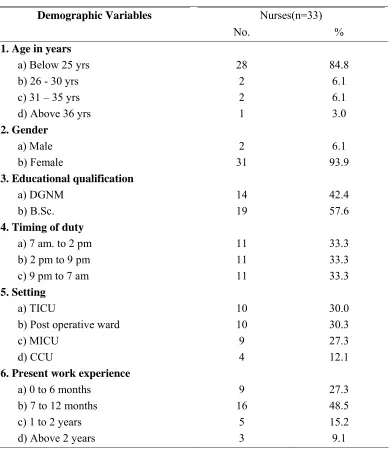
Table 1: Distribution of sample according to demographic characteristics.
Nurses(n=33) Demographic Variables
No. % 1. Age in years
a) Below 25 yrs b) 26 - 30 yrs c) 31 – 35 yrs d) Above 36 yrs
28 2 2 1 84.8 6.1 6.1 3.0 2. Gender a) Male b) Female 2 31 6.1 93.9 3. Educational qualification
a) DGNM b) B.Sc. 14 19 42.4 57.6 4. Timing of duty
a) 7 am. to 2 pm b) 2 pm to 9 pm c) 9 pm to 7 am
11 11 11 33.3 33.3 33.3 5. Setting a) TICU
b) Post operative ward c) MICU d) CCU 10 10 9 4 30.0 30.3 27.3 12.1 6. Present work experience
a) 0 to 6 months b) 7 to 12 months c) 1 to 2 years d) Above 2 years
7. Total years of work experience a) 0 to 6 months
b) 7 to 12 months c) 1 to 2 years d) Above 2 years
6 15 3 9 18.2 45.5 9.1 27.3 8. Previous source
a) Yes b) No 21 12 63.6 36.4 9. Previous source details
a) Text book information b) Workshop attended c) In-service education d) No 16 4 1 12 48.5 12.1 3.0 36.4
The table 1 reveals that the majority of the participants were females (93.9
%), below 25 years (84.8 %), B.sc nurses (57.6%). 45.5 % of the nurses were having
the total work experience 7-12 months and 48.5% of the nurses were having 7-12
months experience in the current area. Only 21 nurses (63.3 %) had previous source
of information on hand hygiene and 48.5%of the nurses got the information only from
textbooks among them. Through the results, the researcher found that the selected
hospital was having shortage of experienced staff nurses. The investigator felt that
continuing education on hand hygiene can be provided to all the nurses to improve the
SECTION 2
[image:43.612.151.509.227.507.2]This section consists of existing level of knowledge on hand hygiene among nurses.
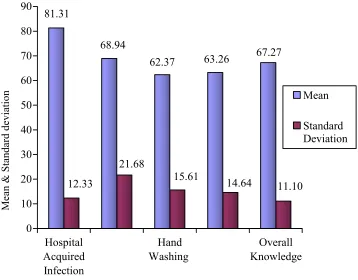
Figure 1 Mean knowledge score on hand hygiene among nurses (n=33).
81.31 12.33 68.94 21.68 62.37 15.61 63.26 14.64 67.27 11.10 0 10 20 30 40 50 60 70 80 90 M ea
n & Sta
ndard de vi at io n Hospital Acquired Infection Hand Washing Overall Knowledge Mean Standard Deviation
Figure 1 shows that the nurses were having the high mean knowledge score of (81.31)
with standard deviation (12.33) on hospital acquired infection .They had almost same
score(60 to 70) on all other aspects(hand hygiene, hand washing practice & technique,
alcohol hand rub practice &technique). These results imply the need of conducting
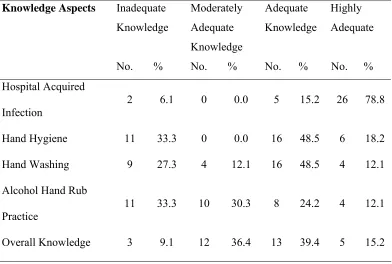
Table 2: Percentage distribution of knowledge score on hand hygiene among Nurses (n=33).
Inadequate Knowledge
Moderately Adequate Knowledge
Adequate Knowledge
Highly Adequate Knowledge Aspects
No. % No. % No. % No. % Hospital Acquired
Infection 2 6.1 0 0.0 5 15.2 26 78.8
Hand Hygiene 11 33.3 0 0.0 16 48.5 6 18.2
Hand Washing 9 27.3 4 12.1 16 48.5 4 12.1
Alcohol Hand Rub
Practice
11 33.3 10 30.3 8 24.2 4 12.1
Overall Knowledge 3 9.1 12 36.4 13 39.4 5 15.2
[image:44.612.129.521.162.426.2]
Table 2 reveals that the majority of the participants (78.8 %) were having
highly adequate knowledge on hospital acquired infection. Regarding hand washing&
hand hygiene, 48.5% of them were having adequate knowledge ,where as for alcohol
hand rub, only 24.2%were having adequate knowledge. It also noted that only 15.2%
SECTION 3
[image:45.612.135.514.220.452.2]This section consists of existing level of practice & technique on hand hygiene among nurses.
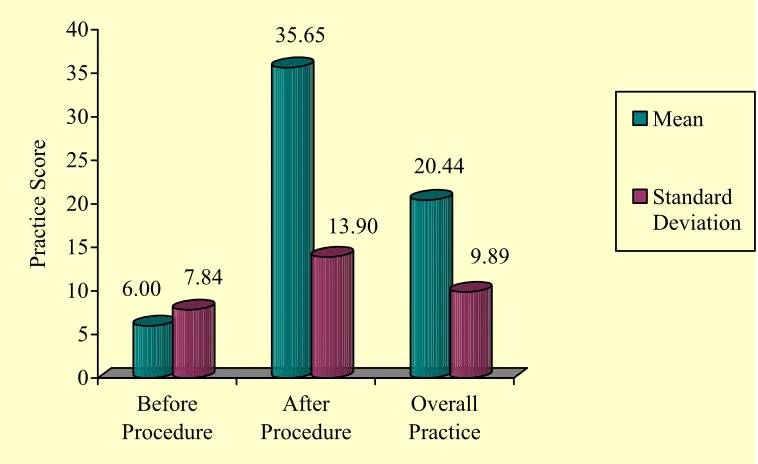
Figure 2 Mean practice score on hand hygiene among nurses before and after procedure 6.00 7.84 35.65 13.90 20.44 9.89 0 5 10 15 20 25 30 35 40 P rac ti ce S co re Before Procedure After Procedure Overall Practice Mean Standard Deviation
Figure 2 reveals that nurses were having the mean practice score of 35.65 with
the standard deviation of 13.90 after procedure and the mean practice score of 6 with
standard deviation of 7.84 before procedure. It reveals that though the nurses had
more adherences to hand hygiene after procedure than before procedure, still the
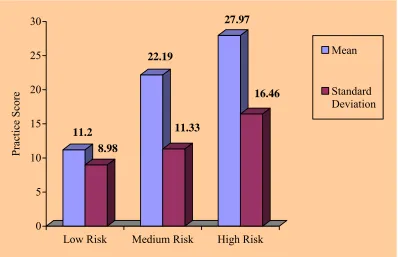
Figure 3 Mean practice score on hand hygiene among nurses at different levels
11.2 8.98
22.19
11.33
27.97
16.46
0 5 10 15 20 25 30
P
rac
ti
ce
S
core
Low Risk Medium Risk High Risk
Mean
Standard Deviation
Figure 3 reveals that a mean score of 27.97was noted for practice on hand
hygiene in high risk category with the standard deviation of 16.46 but for medium and
low risk category was 22.19 and 11.9 respectively. This showed that nurses were
Figure 4 Mean technique score on hand hygiene among nurses
86.87
18.52
55.65
11.08
47.57
12.99
54.18
9.06
0 10 20 30 40 50 60 70 80 90
Techniqu
e score
Pre procedure Hand washing procedure
Alcohol hand rub procedure
Overall Technique
Mean
Standard Deviation
Figure 4 reveals that a high mean score of 86.87 was noted for pre procedure
technique on hand hygiene with the standard deviation of 18.52. They had almost
same score (45 to 60) on all other aspects (hand washing & alcohol hand rub
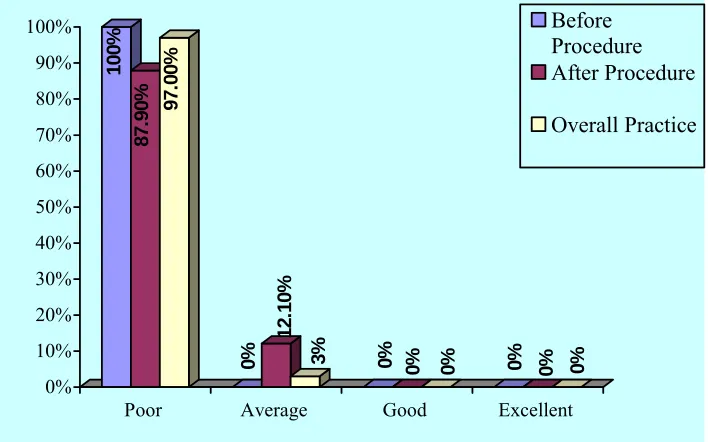
Figure 5 Distribution of level of practice score on hand hygiene among nurses
before and after procedures
10
0%
87.
9
0
% 97.0
0%
0%
12
.1
0%
3% 0%
0% 0% 0% 0% 0%
0% 10% 20% 30% 40% 50% 60% 70% 80% 90% 100%
Poor Average Good Excellent Before Procedure After Procedure
Overall Practice
Figure 5 reveals that 97 % of the nurses were having poor (<50 %) total hand
hygiene practice and 100 % of the nurses were having poor (<50%) hand hygiene
practice before procedure. Through the results, the researcher found that the practice
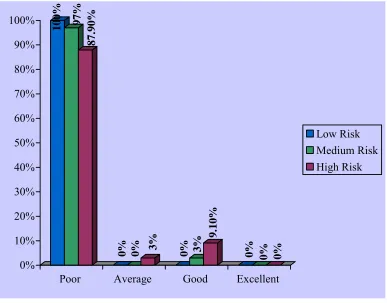
Figure 6 Distribution of level of practice on hand hygiene among nurses at different levels
100
%
97
%
87.90
%
0% 0% 3% 0% 3%
9
.10%
0% 0% 0%
0% 10% 20% 30% 40% 50% 60% 70% 80% 90% 100%
Poor Average Good Excellent
Low Risk Medium Risk High Risk
Figure 6 reveals that all the nurses were having poor (<50%) hand hygiene
practice at low risk level followed by 97 % of the nurses were having poor (<50%)
hand hygiene practice at medium risk level and 87.9 % of the nurses were having poor
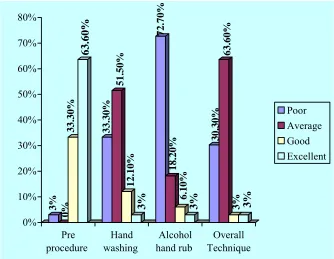
Figure 7 Distribution of level of technique score on hand hygiene among nurses 3% 0% 33 .30% 63 .60% 33. 30% 51 .50% 12.1 0 % 3% 72 .70% 18.20 % 6. 10% 3% 30.30 % 63 .60% 3% 3% 0% 10% 20% 30% 40% 50% 60% 70% 80% Pre procedure Hand washing Alcohol hand rub Overall Technique Poor Average Good Excellent
Figure 7 reveals that 63.6 % of the nurses were having excellent score (>80%)
for pre procedure followed by 51.5 % of the nurses were having average score (51 to
64%) and 72.7 % of the nurses had poor score (<50 %) for alcohol hand rub. It also
revealed that 63.6 % of nurses were having average technique score overall. The
results inferred that continuous supervision, feedback monitoring and positive
reinforcement are needed to improve the adherence to hand hygiene technique among
SECTION 4
[image:51.612.128.518.240.348.2]This section consists of correlation between knowledge, practice and technique among nurses.
Table 3: Correlation between knowledge, practice and technique among nurses
Knowledge Score Practice Score Score
r - value P - value r - value P - value Technique r = -0.113 P = 0.531 (N.S) r = 0.321 P = 0.069 (N.S)
Practice r = -0.275 P = 0.122 (N.S)
Table 3 shows that there was a negative correlation between knowledge with
practice and technique. It was also revealed that there was a positive correlation
between practice and technique. There was no significant relationship between
knowledge, practice and technique. This could be interpreted that even though the
nurses had adequate knowledge, continuous monitoring was needed to enhance
SECTION 5
[image:52.612.110.543.237.669.2]This section consists of association between knowledge, practice & technique scores and demographic variables among nurses
Table 4: Association between knowledge scores and demographic variables among nurses
Inadequate Moderately
Adequate Adequate
Highly Adequate Demographic
Variables (n=33)
No. % No. % No. % No. %
Chi Square value & P
value 1. Age in years
a) Below 25 yrs 1 3.6 11 39.3 12 42.9 4 14.3 χ 2 = 18.547,
b) 26 - 30 yrs 1 50 0 0 0 0 1 50 d.f = 9
c) 31 – 35 yrs 0 0 1 50 1 50 0 0 P=0.029 *
d) Above 36 yrs 1 100 0 0 0 0 0 0
2. Gender
χ 2 = 5.077,
a) Male 1 50 0 0 1 50 0 0 d.f = 3
b) Female 2 6.5 12 38.7 12 38.7 5 16.1 P=0.166 (N.S)
3. Educational
qualification χ 2 = 5.187,
a) DGNM 3 21.4 5 35.7 5 35.7 1 7.1 d.f = 3
b) B.Sc. 0 0 7 36.8 8 42.1 4 21.1 P=0.159 (N.S)
4. Timing of duty χ 2 = 3.915,
a) 7 am. to 2 pm 1 9.1 5 45.5 5 45.5 0 0 d.f = 6
b) 2 pm to 9 pm 1 9.1 3 27.3 5 45.5 2 18.2 P=0.688 (N.S)
c) 9 pm to 7 am 1 9.1 4 36.7 3 27.3 3 27.3
5. Setting
a) TICU 2 20 0 0 6 60 2 20 χ 2 = 12.176,
b) POW 1 10 4 40 3 30 2 20 d.f = 9
c) MICU 0 0 6 66.7 3 33.3 0 0 P=0.204 (N.S)
d) CCU 0 0 2 50 1 25 1 25
6.Present work experience
a) 0 to 6
months 1 11.1 3 33.3 4 44.4 1 11.1 χ 2 = 8.689,
b) 7 to 12
months 0 0 7 43.8 5 31.3 4 25 d.f = 9
c) 1 to 2
years 1 20 2 40 2 40 0 0 P=0.466 (N.S)
d) Above 2
years 1 33.3 0 0 2 66.7 0 0
7. Total years
of experience
a) 0 to 6
months 1 16.7 2 33.3 2 33.3 1 16.7 χ 2 = 6.292,
b) 7 to 12
months 0 0 7 46.7 5 33.3 3 20 d.f = 9
c) 1 to 2 years 0 0 1 33.3 2 66.7 0 0 P=0.710 (N.S)
d) Above 2
years 2 22.2 2 22.2 4 44.4 1 11.1
8. Previous
source χ 2 = 2.357,
a) Yes 2 9.5 7 33.3 10 47.6 2 9.5 d.f = 3
b) No 1 8.3 5 41.7 3 25 3 25 P=0.502 (N.S)
9. Previous
source details
a) Text book 2 12.5 5 31.3 8 50 1 6.3 χ 2 = 5.739,
b) Workshop 0 0 1 25 2 50 1 25 d.f = 9
c) In-service 0 0 1 100 0 0 0 0 P=0.766 (N.S)
d) No 1 8.3 5 41.7 3 25 3 25
[image:53.612.116.527.116.583.2]Note: * - P<0.05 Level of Significant, N.S. – Not Significant
Table 4 reveals that the age of the nurses had significant association with
knowledge on hand hygiene at the level of P<0.05. None of the other demographic
Table 5: Association between technique score and demographic variables among nurses
Poor Average Good
(<50%) (51-64%) (65 – 75%)
Demographic Variables(n=33)
No. % No. % No. %
Chi Square value & P
value
1. Age in years
a) Below 25 yrs 9 32.1 18 64.3 1 3.6 χ 2 = 17.398,
b) 26 - 30 yrs 1 50 1 50 0 0 d.f =6
c) 31 – 35 yrs 0 0 2 100 0 0 P=0.008 **
d) Above 36 yrs
0 0 0 0 1 100
2. Gender χ 2 = 1.217,
a) Male 0 0 2 100 0 0 d.f = 2
b) Female 10 32.3 19 61.3 2 6.5 P=0.544 (N.S)
3. Educational
qualification χ 2 = 2.899,
a) DGNM 4 28.6 8 57.1 2 14.3 d.f = 2
b) B.Sc. 6 31.6 13 68.4 0 0 P=0.235 (N.S)
4. Timing of duty
a) 7 am. to 2 pm 3 27.3 7 63.6 1 9.1 χ 2 = 1.200,
b) 2 pm to 9 pm 3 27.3 7 63.6 1 9.1 d.f = 4
c) 9 pm to 7 am 4 36.4 7 63.6 0 0 P=0.878 (N.S)
5. Setting
a) TICU 1 10 9 90 0 0 χ 2 = 5.287,
b) Post operative
ward 4 40 5 50 1 10 d.f = 6
c) MICU 3 33.3 5 55.6 1 11.1 P=0.508 (N.S)
d) CCU 2 50 2 50 0 0
6.Present work
experience
a) 0 to 6 months 1 11.1 8 88.9 0 0 χ 2 = 17.858,
b) 7 to 12 months 8 50 8 50 0 0 d.f = 6
c) 1 to 2 years 1 20 2 40 2 40 P=0.007 **
d) Above 2 years 0 0 3 100 0 0
7. Total years of
experience
a) 0 to 6 months 1 16.7 5 83.3 0 0 χ 2 = 9.462,
b) 7 to 12 months 7 46.7 8 53.3 0 0 d.f = 6
c) 1 to 2 years 1 33.3 1 33.3 1 33.3 P=0.149 (N.S)
d) Above 2 years
1 11.1 7 77.8 1 11.1
8. Previous source χ 2 = 4.108,
a) Yes 6 28.6 15 71.4 0 0 d.f = 2
b) No 4 33.3 6 50 2 16.7 P=0.128 (N.S)
9. Previous source
details
a) Text book
information 4 33.3 6 50 2 16.7 χ 2 = 5.500,
b) Workshop
attended 4 25 12 75 0 0 d.f = 6
c) In-service
education 2 50 2 50 0 0 P=0.481(N.S)
d) No 0 0 1 100 0 0
[image:55.612.99.549.104.522.2]Note: ** - P<0.01 Level of Significant, N.S. – Not Significant
Table 5 indicates that the age and present experience of the nurses also had
significant association with technique on hand hygiene at the level of P<0.01. None of
the other demographic variables had a significant association with technique on hand
Table 6: Association between overall practice score and demographic variables among nurses
Practice score Demographic Variable (n=33)
Number Mean S.D.
F – Test Value & P – Value 1. Age in years
a) Below 25 yrs b) 26 - 30 yrs c) 31 – 35 yrs d) Above 36 yrs
28 2 2 1 18.36 27.12 21.02 64.28 5.64 4.98 10.68 0.0 F= 20.658 P= 0.000 ***
2. Gender a) Male b) Female 2 31 21.54 20.37 2.91 10.20 F= 0.025 P=0.875 (N.S) 3. Educational qualification
a) DGNM b) B.Sc. 14 19 22.07 19.24 13.46 6.28 F= 0.654 P=0.425 (N.S) 4. Timing of duty
a) 7 am. to 2 pm b) 2 pm to 9 pm c) 9 pm to 7 am
11 11 11 25.84 18.09 17.39 13.89 3.21 7.84 F= 2.743 P= 0.081 (N.S)
5. Setting a) TICU
b) Post operative ward c) MICU d) CCU 10 10 9 4 16.20 26.01 20.67 16.60 4.78 14.88 6.64 3.19 F= 2.058 P=0.128 (N.S)
6. Present work experience a) 0 to 6 months
b) 7 to 12 months c) 1 to 2 years d) Above 2 years
9 16 5 3 16.18 20.33 29.95 17.97 7.14 5.69 19.70 5.16 F= 2.453 P=0.083 (N.S)
7. Total years of experience a) 0 to 6 months
b) 7 to 12 months c) 1 to 2 years d) Above 2 years
6 15 3 9 16.29 19.64 17.01 25.68 8.92 5.15 3.56 15.58 F= 1.397 P=0.264 (N.S)
9. Previous source details a) Text book information b) Workshop attended c) In-service education d) No
16 4 1 12
18.63 18.11 28.57 22.96
5.32 5.21 0.0 14.80
F= 0.718 P=0.549 (N.S)
[image:57.612.133.522.108.203.2]Note: *** - P<0.001, Level of Significant, N.S. – Not Significant
Table 6 reveals that the age of the nurses had significant association with
practice on hand hygiene at the level of P<0.001. None of the other demographic
CHAPTER V
DISCUSSION
This chapter deals with discussion of study finding. The present study was
designed to evaluate the knowledge, practice and technique on hand hygiene among
33 nurses. The descriptive design was used to assess the knowledge, practice and
technique on hand hygiene among nurses in Trauma ICU, Medical ICU, CCU, Post
operative ward at a selected hospital.
The demographic characteristics reveal that majority of the participants were
females (93.9%), below 25 years (84.8 %), B.sc nurses (57.6%). It could be
interpreted that the females led the nursing field and also there was a steady growth of
B.Sc. nursing graduates .45.5 % of the nurses were having 7-12 months of total work
experience and 48.5 % of them were having 7-12 months of experience in the current
area. It is inferred that these selected areas had young nursing population than
experienced ones. Only 21 nurses 63.3 % had previous source of information on hand
hygiene and 48.5% of them got the information only from textbooks. The investigator
felt that continuing education on hand hygiene can be provided to all the nurses.
The first objective was to assess the knowledge on hand hygiene among nurses while caring for patients
Figure 1 shows that the nurses were having the high mean knowledge score of
81.31 with standard deviation of 12.33 on hospital acquired infection. They had
almost same score of 60 to 70 on all other aspects like hand hygiene, hand washing
practice &technique, alcohol hand rub practice& technique. These results imply the
need of conducting an in-service education on hand hygiene to update the knowledge
Table 2 reveals that the majority of the participants 78.8 % were having highly
adequate knowledge on hospital acquired infection. Regarding hand hygiene &hand
washing 48.5% were having adequate knowledge ,whereas for alcohol hand rub, only
24.2% had adequate knowledge .It was also noted that only15.2% of the nurses had
highly adequate knowledge overall. Through these results, the researcher found that
the in-service education can be conducted to improve the knowledge on hand hygiene
in order to reduce the incidence of nosocomial infections.
These results can be supported by the study of JB Suchitra, N Lakshmi Devi
(2007)among 150 HCWs, doctors (n=50), nurses (n=50) and nursing aides (n=50) on
nosocomial infections. Subjects in each category of staff (n=10) were observed for
compliance to hand washing practices in the ward after giving an education. The
study showed an increase in the number of subjects in each category scoring good and
excellent in the post-education questionnaire. Total compliance was 63.3% (95% CI=
58.80-88.48).The study stressed that an education has a positive impact on retention
of knowledge, attitudes and practices in all the categories of staff. In order to reduce
the incidence of nosocomial infections, compliance with interventions are mandatory.
The second objective was to assess the practice and technique on hand hygiene among nurses
Figure 2 infers that 63.6 % of the nurses had average score on hand hygiene
technique and very less number of nurses (3 %) were having excellent and good
score. The result necessitates the need for continuing education, supervision, feedback
monitoring and positive reinforcement.
Figure 3 reveals that nurses were having the mean practice score of 35.65 with
standard deviation of 7.84 before procedure. It revealed that though the nurses had
more adherences to hand hygiene after procedure than before procedure still the
overall mean practice score was 20.44 only with standard deviation of 16.46. The
investigator felt that continuous education and reinforcement are required for the
nurses to improve the adherence to hand hygiene practices.
A mean score of 27.97 was noted for practice on hand hygiene in high risk
category but for medium risk and low risk category it was 22.19 & 11.2 respectively.
(Figure4). This showed that nurses were comparatively more cautious while
performing high risk procedures.
Figure 5 reveals that 97 % of the nurses were having poor (<50 %) total hand
hygiene practice and 100 % of the nurses were having poor (<50%) hand hygiene
practice before procedure. Through the results, the researcher found that the practice
on hand hygiene among the nurses should be improved by multi method approach.
Figure 6 reveals that all the nurses were having poor (<50%) hand hygiene
practice at low risk level followed by 97 % of the nurses were having poor (<50%)
hand hygiene practice at medium risk level and 87.9 % of the nurses were having poor
hand hygiene practice at high risk level.
In this study, the researcher noted a lack of alcohol-based hand rub on each
bed and non availability of dry towel as the major deficiencies. It was also found that
breaks in the technique were common, and duration of hand washing an