Polymer
Chemistry
www.rsc.org/polymersISSN 1759-9954
Polymer
Chemistry
PAPER
Cite this:Polym. Chem., 2015,6, 7264
Received 18th March 2015, Accepted 10th April 2015
DOI: 10.1039/c5py00396b
www.rsc.org/polymers
Polysulfobetaine-based diblock copolymer
nano-objects
via
polymerization-induced self-assembly
†
Kay E. B. Doncom, Nicholas J. Warren and Steven P. Armes*
A zwitterionic polysulfobetaine-based macromolecular chain transfer agent (PSBMA38) was prepared by
reversible addition–fragmentation chain transfer (RAFT) solution polymerization of [2-(methacryloyloxy)-ethyl] dimethyl(3-sulfopropyl) ammonium hydroxide (SBMA) in an aqueous solution containing 0.5 M NaCl at 70 °C. This PSBMA38macro-CTA was then utilized for the RAFT aqueous dispersion
polymeriz-ation of a water-miscible monomer, 2-hydroxypropyl methacrylate (HPMA). The growing PHPMA block became hydrophobic in situ, leading to polymerization-induced self-assembly. Systematic variation of the mean degree of polymerization of the PHPMA block and the copolymer concentration enabled access to pure phases of spheres, worms or vesicles, as judged by transmission electron microscopy and dynamic light scattering studies. A detailed phase diagram was constructed and the thermo-responsive behavior of selected PSBMA38-PHPMAX nanoparticles was investigated. Finally, the salt tolerance of
PSBMA38-PHPMA400vesicles was compared to that of PGMA71-PHPMA400vesicles; the former vesicles
exhibit much better colloidal stability in the presence of 1 M MgSO4.
Introduction
It is well known that amphiphilic AB diblock copolymers spon-taneously undergo self-assembly in aqueous solution in order to minimize the unfavorable interactions between the hydro-phobic blocks and the solvent.1The resulting copolymer mor-phology depends on the so-called packing parameter,p, which is related to the relative volume fractions of the hydrophilic and hydrophobic blocks.2 A wide range of copolymer mor-phologies have been reported, including spherical micelles,3 worm-like particles4and vesicles.5
Traditionally, diblock copolymer self-assembly in solution has been achieved via post-polymerization processing tech-niques such as thin film rehydration6,7 or a solvent switch,8 where the copolymer chains are initially dissolved in a good solvent for both blocks and then a selective solvent for one of the blocks is added in order to induce self-assembly. This approach usually involves additional purification steps to remove the non-selective solvent, e.g. by dialysis or evapor-ation. This self-assembly route also suffers from a major
dis-advantage: it is almost invariably conducted in dilute solution (typically <1% w/w copolymer).
Recently, we9–13and others14–18have reported that polymer-ization-induced self-assembly (PISA) of various amphiphilic diblock copolymers can be readily achieved using either aqueous dispersion polymerization10,19 or aqueous emulsion polymerization20–22 based on reversible addition– fragmenta-tion chain transfer (RAFT) chemistry.23–26 This approach allows various copolymer morphologies to be readily prepared in situat relatively high copolymer concentrations and requires no post-polymerization processing. One early formulation based on RAFT aqueous dispersion polymerization utilized a zwitterionic phosphobetaine homopolymer, poly(2-(methacryl-oyloxy)ethyl phosphorylcholine) (PMPC), as the stabilizer block and poly(2-hydroxypropyl methacrylate) (PHPMA) as the core-forming block to access a range of copolymer morphologies.10 However, the relatively high mass of the MPC repeat units meant that highly anisotropic copolymer compositions had to be targeted at relatively high copolymer solids (ca. 16–25%) in order to access non-spherical copolymer morphologies (e.g. worms or vesicles).
Polysulfobetaines are closely related to polyphospho-betaines and both classes of polyzwitterions have been shown to be salt-responsive.27–35The presence of salt generally leads to higher water solubility, which is sometimes known as the ‘anti-polyelectrolyte’ effect.36 Certain polysulfobetaines also display thermo-responsive behavior, with their upper critical solution temperature (UCST) depending on both the copoly-mer molecular weight and copolycopoly-mer concentration.29,37–39
†Electronic supplementary information (ESI) available: Additional kinetic data;
1H NMR spectra for CTA, macro-CTA and diblock copolymer; TEM images of S 38
-H400vesicles dispersed in pure water and in an aqueous solution of 1 M MgSO4;
digital photographs of S38-H400and G71-H400vesicles in aqueous solutions
con-taining MgSO4. See DOI: 10.1039/c5py00396b
Department of Chemistry, University of Sheffield, Brook Hill, Sheffield, S3 7HF, UK. E-mail: s.p.armes@sheffield.ac.uk
Open Access Article. Published on 13 April 2015. Downloaded on 16/02/2016 12:40:36.
This article is licensed under a
Creative Commons Attribution 3.0 Unported Licence.
View Article Online
Like polyphosphobetaines,40–42 polysulfobetaines have been shown to be highly biocompatible and exhibit anti-fouling properties.41,43–46 Importantly, polysulfobetaines are signifi-cantly cheaper than polyphosphobetaines.
In 2014 Pei and Lowe reported the synthesis of a range of diblock copolymer nano-objects comprising a polysulfobetaine stabilizer block and 2-phenylethyl methacrylate (PEMA) as the hydrophobic block. However, these copolymers were prepared viapost-polymerization modification. First, a poly(2-(dimethyl-amino)ethyl methacrylate) (PDMA) macro-CTA was employed for the ethanolic RAFT dispersion polymerization of PEMA.16 These precursor diblock copolymers underwent self-assembly during their PISA synthesis to yield a range of copolymer mor-phologies, including spheres, worms and vesicles. The PDMA stabilizer block was subsequently quaternized using 1,3-propa-nesultone to yield polysulfobetaine-based nanoparticles. However, 1,3-propanesultone is known to be carcinogenic and the PISA synthesis was conducted in ethanol rather than water (with the purified copolymer nanoparticles being redispersed in water).
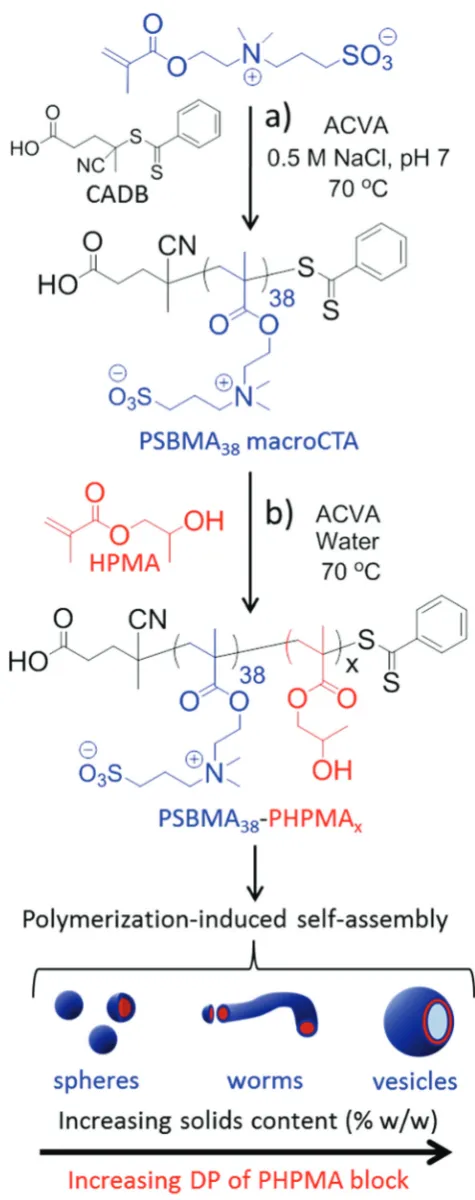
Herein we employ poly(2-(methacryloyloxy)ethyl dimethyl-(3-sulfopropyl)ammonium hydroxide) (PSBMA) as a polysulfobe-taine macro-CTA; this is used as a steric stabilizer to conduct the RAFT aqueous dispersion polymerization of 2-hydroxypropyl methacrylate (HPMA) in order to generate a thermo-responsive core-forming block. This formulation yields a range of PSBMA-PHPMA diblock copolymer nano-objects directly via PISA (see Fig. 1). Our approach is both versatile and efficient: it avoids post-polymerization modification with carcinogens such as 1,3-propanesultone and affords the desired nano-objects directly in water (hence subsequent transfer from ethanol to water is not required). Moreover, thermo-responsive behaviour is conferred on the resulting diblock copolymer nano-objects.
Experimental
Materials
4-Cyanopentanoic acid dithiobenzoate (CADB), [2-(methacry-loyloxy)ethyl] dimethyl(3-sulfopropyl) ammonium hydroxide (SBMA) and deuterium oxide (D2O) were obtained from
Sigma-Aldrich U.K. and were used as received. 4,4′ -Azobis(4-cyanovale-ric acid) (ACVA, 99%) and 2-hydroxypropyl methacrylate (HPMA, 98%) were obtained from Alfa Aesar (UK) and were used as received. Deuterated methanol (CD3OD) was obtained from
Cambridge Isotope laboratories. Dialysis tubing was received from SpectraPor. Deionized water was used in all experiments.
Methods
Synthesis of PSBMA38 macro-CTA. CADB RAFT agent
(0.75 g, 2.7 mmol), SBMA monomer (30.0 g, 108 mmol) and ACVA (151 mg, 0.54 mmol, CTA/ACVA molar ratio = 5.0) were weighed into a 500 ml round-bottomed flask containing a stir bar. 0.5 M NaCl solution (150 g) was added and the pH slowly adjusted toca.pH 7 using dilute aqueous NaOH. The solution was purged with nitrogen for 45 minutes and sealed with a
Fig. 1 (a) Synthesis of the PSBMA38macro-CTAviaRAFT aqueous
solu-tion polymerizasolu-tion of SBMA. (b) RAFT aqueous dispersion polymeriz-ation of HPMA using this PSBMA38macro-CTA at 70 °C to afford various
PSBMA-PHPMA diblock copolymer nano-objects via polymerization-induced self-assembly (PISA).
Open Access Article. Published on 13 April 2015. Downloaded on 16/02/2016 12:40:36.
This article is licensed under a
[image:3.595.308.546.45.646.2]rubber septum under a positive nitrogen pressure. The flask was then immersed in a pre-heated oil bath set at 70 °C. The polymerization was quenched after 2 h by rapid cooling in liquid nitrogen (final monomer conversion = 88%). The crude PSBMA was purified by exhaustive dialysis (SpectraPor mem-brane, MWCO = 3.5 kDa) against water, followed by lyophiliza-tion to yield 1 as a pink powder in 86% yield; Mn NMR =
11 kDa,Mn SEC= 6.9 kDa,Mw/Mn= 1.09.
Synthesis of PSBMA38-PHPMAXviaRAFT aqueous dispersion
polymerization. A typical protocol for the synthesis of PSBMA47-PHPMA200is as follows: PSBMA47macro-CTA (0.44 g,
0.038 mmol), HPMA (0.82 g, 7.4 mmol), ACVA (2.0 mg, 0.008 mmol, CTA/ACVA molar ratio = 5.0) and water (4.5 g) were weighed into a round-bottomed flask containing a stir bar. The solution was purged with nitrogen for 30 minutes and sealed with a rubber septum under a positive nitrogen pressure, prior to immersion in a pre-heated oil bath at 70 °C for 6 h. The reaction was quenched by exposure to air and rapid cooling at 20 °C. 1H NMR spectroscopy analysis in CD3OD indicated less than 1% of residual HPMA monomer.
For kinetic studies, aliquots were periodically removed for analysis by 1H NMR spectroscopy. For brevity, the notation S38-Hx-Y is used where S stands for PSBMA, H for PHPMA, xis the DP of the PHPMA block and Yis the solids content (% w/w) used for the copolymer synthesis.
Polymer characterization
Molecular weight distributions were assessed by aqueous gel permeation chromatography (GPC) at 40 °C using a guard column, a 5 µm PL Aquagel-OH 30 column and a 5 µm PL Aquagel-OH 40 column connected in series to an Agilent Technologies 1260 Infinity refractive index detector, using a phosphate buffer eluent (0.08 M Na2HPO4; adjusted to pH 8.9
using NaOH) at a flow rate of 1.0 ml min−1. The number-average molecular weight (Mn) and polydispersity (Mw/Mn)
were calculated using a series of near-monodisperse poly(ethyl-ene oxide) calibration standards.
1H NMR spectra were acquired using a Bruker AV1-400 MHz
spectrometer in either D2O or CD3OD. At least 64 scans were
recorded for each sample. All chemical shifts (δ) are reported in ppm.
DLS measurements were performed using a Zetasizer Nano-ZS instrument (Malvern Instruments, UK) equipped with a 4 mW He–Ne laser operating at 633 nm. Light scattering was detected at 173°. Hydrodynamic diameters were determined using the Stokes–Einstein equation and averaged over three consecutive runs. Copolymer dispersions were diluted to 0.2% w/v prior to analysis at 25 °C. Viscosities (and refractive indices) for aqueous solutions of 1 M NaCl, 2 M NaCl and 1 M MgSO4 at 20 °C were calculated to be 1.096 mPa s (1.343),
1.219 mPa s (1.372) and 1.884 mPa s (1.355) respectively.47 Transmission electron microscopy studies were conducted using a Phillips CM 100 TEM instrument operating at 100 kV, equipped with a Gatan 1k CCD camera. Copper/palladium TEM grids (Agar Scientific) were surfaced-coated in-house to produce a thin film of amorphous carbon. The grids were then
plasma glow-discharged for 30 seconds to yield a hydrophilic surface. 10 µL of the aqueous dispersion (diluted to 0.1% w/w) was placed on the grid, then blotted after 1 minute to remove excess sample. The grids were then negatively stained using uranyl formate solution (10 µL, 0.75% w/w) for 20 seconds, fol-lowed by blotting to remove excess staining solution and dried using a vacuum hose.
Rheology measurements were performed using an AR-G2 rheometer equipped with a variable temperature Peltier plate, a 40 mL aluminium cone and a solvent trap. Storage (G′) and loss (G″) moduli were measured as a function of percentage strain and temperature in order to identify the linear visco-elastic region and also to determine the critical degelation temperature. Percentage strain sweeps were conducted at con-stant temperature (37 °C) using an angular frequency of 1.0 rad s−1. Angular frequency sweeps were carried out at a stant applied strain of 1.0%. Temperature sweeps were con-ducted at an angular frequency of 1.0 rad s−1and an applied strain of 1.0%. The temperature was increased by 2 °C, with 5 minutes being allowed for thermal equilibrium between each measurement.
Results and discussion
Synthesis of the PSBMA38macro-CTA
Synthesis of a PSBMA38homopolymer using 4,4′
-azocyanovale-ric acid (ACVA) initiator and 4-cyanopentanoic acid dithio-benzoate (CADB) as the RAFT agent was conducted in aqueous solution containing 0.50 M NaCl at 70 °C. The reaction solu-tion pH was adjusted to 7.2 to facilitate dissolusolu-tion of the RAFT agent and electrolyte was added because it is well known that this enhances the water solubility of PSBMA.27,30,31 The polymerization kinetics for SBMA exhibited a linear semi-log-arithmic plot and reached high conversion (90%) within 3 h (see Fig. S1 in ESI†). The Mn increased monotonically with
conversion and the polydispersities remained low throughout the polymerization (Mw/Mn< 1.30). The crude PSBMA was
puri-fied by dialysis against water and recovered by lyophilization to yield macro-CTA1as a pink powder (Mn= 5 kDa,Mw/Mn= 1.09 vs.poly(ethylene oxide) standards).
Analysis of the1H NMR spectrum of1recorded in D2O
indi-cated a mean DP of 38, as calculated by comparing the inte-grals of the aromatic RAFT end-group signals (k, n and m) between 7.4 ppm and 8.0 ppm with the polymer side-chain signals at 2.98, 3.18, 3.54, 3.78 and 4.46 ppm (assigned asj,f,
g,eandd; see Fig. 2).
Polymerization-induced self-assembly
A series of PSBMA38-PHPMAx(hereafter referred to as S38-Hx) diblock copolymers was prepared using this PSBMA38
macro-CTA for the RAFT aqueous dispersion polymerization of PHPMA in deionized water at 70 °C. It was decided to avoid using an aqueous salt solution to enable direct comparison of the results obtained with this PISA formulation to those pre-viously reported for the PMPC-PHPMA system.10It is known
Paper Polymer Chemistry
Open Access Article. Published on 13 April 2015. Downloaded on 16/02/2016 12:40:36.
This article is licensed under a
Creative Commons Attribution 3.0 Unported Licence.
that the UCST of PSBMA is reduced in the lower molecular weight limit.29,37,38 More specifically, Willcock et al.
investi-gated the effect of chain length at a solution concentration of 1.0 g dm−3: No UCST was observed for PSBMA homopolymers with molecular weights of 20 kDa (DP = 70) or below.39
There-fore, given its relatively low molecular weight and anionic car-boxylate end-group (which also suppresses UCST behavior),48 the PSBMA38macro-CTA used in this work was not expected to
exhibit a UCST in the absence of salt. Indeed, control exper-iments confirmed that a 15% w/w aqueous solution of PSBMA38remained water-soluble even at 4 °C and all aqueous
dispersion polymerization syntheses were performed using an initial PSBMA38 concentration of 12% w/w (or lower). The
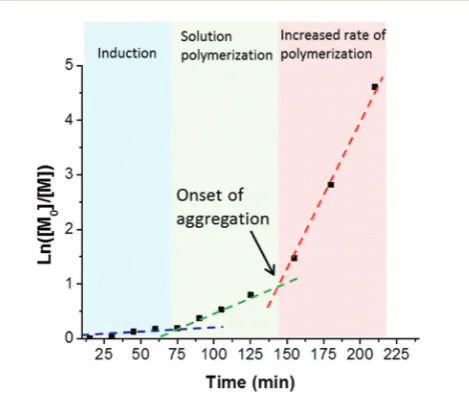
total solids content of the PISA formulation was varied from 10% w/w to 25% w/w. High HPMA conversions were obtained within 3 h at 70 °C. Three distinct regions can be observed in the semi-logarithmic kinetic plot (see Fig. 3).
There is an induction period for the first 75 min, which is commonly observed for RAFT polymerizations of methacry-lates conducted with dithiobenzoates,49,50 followed by a sig-nificant increase in rate for the next 70 min as solution polymerization occurs and water-soluble diblock copolymer chains are formed. The rate of polymerization further increases after 145 min, since this coincides with micellar nucleation.51At this point, the HPMA monomer becomes par-titioned within the micellar core, thereby increasing the local monomer concentration and hence accounting for the enhanced rate of polymerization.51The point at which micellar nucleation occurs corresponds to a HPMA conversion of 67% for this particular PISA formulation, which equates to a mean DP of 133 for the growing PHPMA block. This value is signifi-cantly higher than the critical degree of polymerization of 92 reported by Blanazs et al.when polymerising HPMA using a poly(glycerol methacrylate) (PGMA47) macro-CTA. This diff
er-ence can be rationalized by the higher molecular weight of the PSBMA38 block (10.9 kDa) compared to the PGMA47 block
(7.5 kDa). Thus the former block occupies a larger volume frac-tion than the latter and, although the PSBMA38stabilizer block
is shorter, a longer core-forming PHPMA chain is needed to induce micellization.
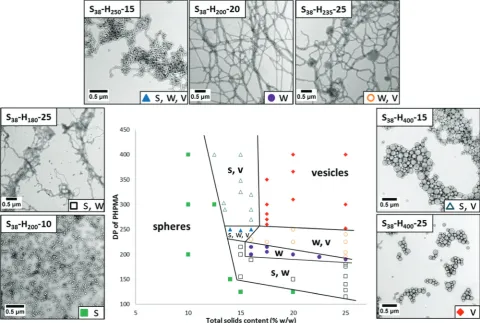
[image:5.595.53.286.52.160.2]Systematic variation of the mean DP of the core-forming PHPMA block and the total solids content (Y) enabled a detailed phase diagram to be constructed for the synthesis of S38-Hx-Y nanoparticles (see Fig. 4; full characterization data can be found in Table S1 in the ESI†). The final copolymer compositions were determined by 1H NMR analysis (see Fig. S3 in ESI†). This phase diagram is rather similar to that reported by Sugiharaet al.for a zwitterionic PMPC25stabilizer
block10and by Blanazs et al.for a PGMA78stabilizer block.11
In each case, the final copolymer morphology is strongly con-centration-dependent, with kinetically-trapped spheres being obtained at lower solids (since the probability of sphere– sphere fusion is reduced under these conditions) while equili-brium vesicular morphologies are formed at higher solids. As is usually the case,10–13the pure worm phase occupies a rela-tively narrow region and is bounded by mixed phases. There is also a small region corresponding to around 14–16% w/w solids and a PHPMA DP of 250 that contains all three copoly-mer phases (i.e.spheres, worms and vesicles).
TEM studies indicate a strong correlation between the mean sphere diameter (DTEM) and the target PHPMA block DP.
ThusDTEM= 34 ± 4 nm for PHPMA200,DTEM= 42 ± 3 nm for
PHPMA300andDTEM= 54 ± 6 nm for PHPMA400. TEM
consist-ently undersizes these diblock copolymer nanoparticles rela-tive to DLS. This is because the former technique examines dehydrated nanoparticles with collapsed stabilizer blocks, while the latter interrogates hydrated nanoparticles in aqueous solution. In addition, TEM reports a number-average diameter whereas DLS reports az-average diameter, which is inherently biased towards larger nanoparticles. If S38-H400nanoparticles
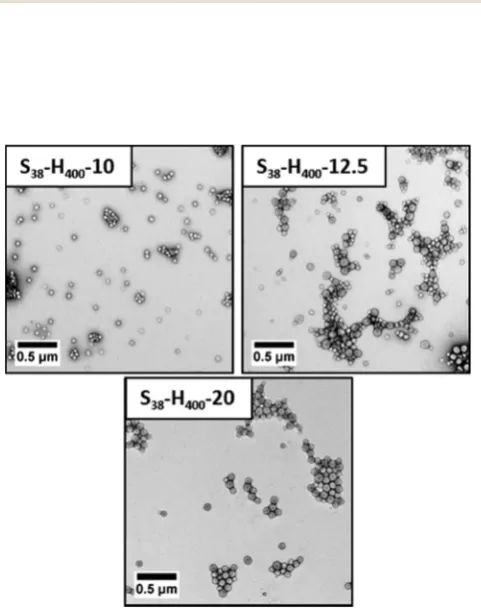
are prepared at higher solids contents (12.5% w/w), then the DLS diameter increases up to 111 nm ( polydispersity = 0.05). Along with the greater turbidity of the dispersion, this suggests Fig. 2 Assigned1H NMR spectrum recorded for PSBMA macro-CTA1in
D2O.
Fig. 3 First-order kinetic plot for the RAFT aqueous dispersion polymerization of HPMA conducted using a PSBMA38 macro-CTA in
deionized water at 70 °C and 20% w/w solids. Reaction conditions: [PSBMA38] : [HPMA] : [ACVA] = 200 : 1 : 0.20. Three regimes can be
ident-ified: an induction period of approximately 75 min, a relatively slow rate
ofsolutionpolymerization up to 145 min, and a relatively fast rate of
dis-persionpolymerization after 145 min. The onset of micellization
aggre-gation occurs at 150 min, which corresponds to a HPMA conversion of 67% and equates to a mean PHPMA DP of 133.
Open Access Article. Published on 13 April 2015. Downloaded on 16/02/2016 12:40:36.
This article is licensed under a
[image:5.595.53.288.425.622.2]the presence of larger particles. TEM analysis indicates two distinct populations, corresponding to spheres (DTEM = 57 ±
6 nm) and relatively well-defined vesicle (DTEM= 97 ± 7 nm).
The vesicles dimensions observed by TEM correlate quite well with those indicated by DLS. However, the latter technique is insensitive to spheres as the light scattering is dominated by the larger vesicles. Increasing the total solids concentration to 20% w/w for the synthesis of S38-H400nanoparticles produces
a pure vesicle phase (DTEM= 98 ± 13 nm), as indicated by TEM
analysis, with DLS studies reporting a z-average diameter of 114 nm ( polydispersity = 0.04). Thus the mean size of the pure vesicles is comparable to that of the vesicle population within the spheres plus vesicles mixed phase (Fig. 5 and 6).
Varying the target DP of the PHPMA block at a fixed total solids concentration of 20% w/w allows access to pure spheres, worms and vesicles, as well as various mixed phases compris-ing these two or more morphologies (see Fig. 7). For example, targeting S38-H125 leads to ill-defined spheres (TEM indicates DTEM= 27 ± 5 nm; DLS reports az-average diameter of 34 nm
( polydispersity = 0.14)). Increasing the target DP of the PHPMA block to 150 produces a mixed phase of spheres and
worms, as indicated by TEM analysis. Visual inspection of this dispersion confirms an increase in turbidity and formation of a free-standing gel. Targeting a PHPMA block DP of 200 results in the formation of a pure worm phase.
Both S38-H225and S38-H250formulations produced a mixed
phase comprising worms and vesicles, with a higher pro-portion of vesicles being observed in the latter case as
esti-mated by TEM analysis. The visual appearance and
macroscopic behavior of these two dispersions were consistent with these TEM observations. S38-H225formed an opaque
free-standing gel, while S38-H250 comprised an opaque viscous
solution. A pure vesicle phase was obtained when targeting a PHPMA block DP of 310 or higher. TEM studies indicate the formation of relatively polydisperse vesicles ranging from approximately 90 nm to 520 nm (DTEM= 214 ± 122 nm), which
correspond quite well to the z-average diameter of 202 nm reported by DLS analysis.
Thermo-responsive behavior of S38-Hx-Ydispersions
There is considerable literature precedent for thermo-respon-sive PHPMA-based nano-objects in aqueous solution.12,13,52,53 Fig. 4 Detailed phase diagram constructed for the preparation of S38-Hx-Ydiblock copolymer nano-objects by RAFT aqueous dispersion
polymer-ization of HPMA at 70 °C (for brevity, S denotes PSBMA and H denotes PHPMA). The target DP of the PHPMA block (x) and the total solids content (Y) were systematically varied and the diblock copolymer morphologies were assigned bypost mortemTEM analysis of thefinal copolymer disper-sions after appropriate dilution. Also shown are representative TEM images obtained for the various phases;Sdenotes spheres,Wdenotes worms andVdenotes vesicles.
Paper Polymer Chemistry
Open Access Article. Published on 13 April 2015. Downloaded on 16/02/2016 12:40:36.
This article is licensed under a
Creative Commons Attribution 3.0 Unported Licence.
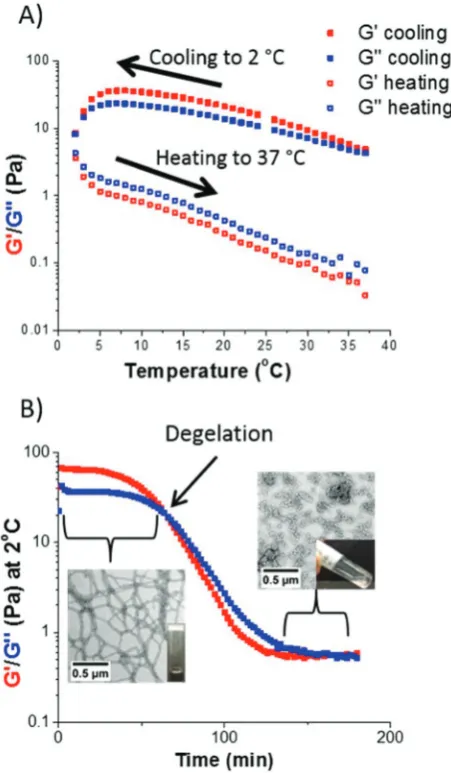
[image:6.595.57.538.51.374.2]Hence the thermo-responsive behavior of selected S38-Hx-Y dis-persions were investigated using variable temperature oscil-latory rheology. For example, a S38-H200-10 dispersion formed
a rather soft worm gel (G′ ∼ 15 Pa) at 20 °C. A temperature sweep from 37 °C to 2 °C led to an increase in gel strength up to approximately 40 Pa, which is consistent with previous observations made by Warren et al.13It is suggested that the initially short worms become longer upon cooling, hence a larger number of inter-worm contacts leads to a higher gel strength.G″exceededG′at around 2 °C, indicating degelation. This is a result of greater solvation of the PHPMA core, which lowers the packing parameter1 and results in a morphology transition from a worm gel to free-flowing spheres.52,53However, this thermal transition proved to be irre-versible, since G″ remained greater than G′ throughout the subsequent heating cycle (see Fig. 8A). This thermo-responsive behavior is in contrast to that reported for PGMA54-PHPMA140
worm gels,52but is similar to that observed by Warren et al. for a PEG113-PHPMA220 worm gel.13 During such thermal
cycling, the temperature was lowered by 2 °C for each measure-ment, with 5 min being allowed between each data point to ensure thermal equilibrium. The time required to induce dege-lation at a given copolymer concentration was also examined. The same S38-H200-10 worm gel was held at 2 °C for 200 min
(see Fig. 8B). For the first 60 min, the worm gel remained intact since G′ exceeded G″ (and G′ ∼ 65 Pa). However, G″ became greater thanG′after 60 min, producing a free-flowing liquid. Degelation was confirmed by visual inspection. TEM studies were undertaken, both for the original worm gel at 20 °C and also 2 h after this dispersion was held at 2 °C. There was a dramatic change in copolymer morphology from worms to spheres, which accounts for the observation of degelation. Fig. 5 TEM images and corresponding DLS particle size distributions
obtained for spherical S38-Hx-10 nanoparticles whenx= 200, 300 or
400.
Fig. 6 Representative TEM images obtained for PSBMA38-PHPMA400
nanoparticles prepared at various solids contents. The copolymer mor-phology evolves from kinetically-trapped spheres (10% w/w) to equili-brium vesicles (20% w/w)viaa spheres plus vesicles mixed phase (12.5% w/w).
Fig. 7 Representative TEM images obtained for PSBMA38-PHPMAx
(denoted as S38-Hx-20 for brevity) nano-objects prepared by RAFT
aqueous dispersion polymerization of HPMA at 70 °C at a total solids concentration of 20% w/w. A digital photograph of the physical appear-ance of each copolymer dispersion is shown as an inset in each TEM image. The scale bar in each case is 0.5 µm. The tube inversion test confirms the formation of free-standing gels in three cases, whereas the other three dispersions remained free-flowing.
Open Access Article. Published on 13 April 2015. Downloaded on 16/02/2016 12:40:36.
This article is licensed under a
[image:7.595.59.278.46.310.2] [image:7.595.311.549.50.210.2] [image:7.595.49.290.357.664.2]DLS studies of the diluted copolymer dispersions were also consistent with these TEM observations: the z-average dia-meter of the original worms at 20 °C was 420 nm ( polydisper-sity = 0.29), whereas the z-average diameter was reduced to 30 nm ( polydispersity = 0.25) after cooling to 2 °C for 2 h. The latter dimensions suggest the formation of polydisperse spheres.
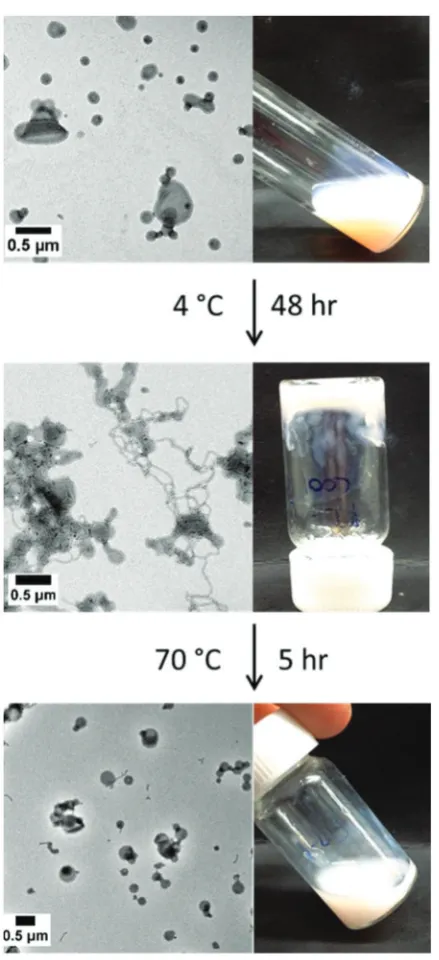
A dispersion of S38-H310-25 vesicles was cooled to 4 °C for
48 h. The original dispersion was an opaque viscous liquid at 20 °C. Visual inspection of the cold dispersion at 4 °C con-firmed the formation of a turbid gel, as demonstrated by the tube inversion test. TEM studies indicated that the initial vesi-cles had transformed into a mixed phase comprising worms and vesicles (see Fig. 9).
Formation of the worm population accounts for the obser-vation of macroscopic gelation. This dispersion did not undergo degelation on warming to room temperature, even on a time scale of several weeks. However, heating to 70 °C for 5 hours resulted in degelation. TEM studies indicated the pres-ence of mainly vesicles, but some short worms are also observed. These short worms persist even after heating at 70 °C for 16 h.
Therefore this transition cannot be considered to be fully reversible. Again, this behavior is similar to that of the PEG113
-PHPMA220worms reported by Warrenet al.13
The above examples suggest that S38-Hx nano-objects can be transformed into lower-order morphologies upon cooling. This indicates a reduction in the packing parameter under these conditions, which is consistent with a higher degree of plastici-zation of the PHPMA core-forming block. However, it appears that this thermo-responsive behavior is not fully reversible. This aspect is not yet understood and warrants further studies.
Behavior of S38-Hxnano-objects in the presence of added
electrolyte
As previously discussed, polysulfobetaines such as PSBMA are known to exhibit enhanced aqueous solubility in the presence of salt compared to pure water.27,30,31Therefore the tolerance of PSBMA-stabilized vesicles towards the addition of electrolyte was investigated. S38-H400-25 vesicles were diluted to 0.02% w/v
using either water or various salt solutions and their colloidal stabilities were compared to that of PGMA71-PHPMA400-20
(denoted G71-H400-20) vesicles. Each aqueous dispersion was
analyzed by DLS immediately after dilution, again after 24 h and finally after ageing for one week at 20 °C. In such exper-iments, any apparent increase in size is taken to be evidence of particle aggregation caused by colloidal destabilization. The results are summarized in Table 1 (see overleaf ).
S38-H400-25 vesicles remained stable in either 1 M or 2 M
NaCl solution. In 1 M MgSO4 solution, the vesicles actually
[image:8.595.54.280.50.437.2]appearsmallercompared to that observed in water (119 nmvs. 140 nm). TEM studies confirmed that no discernible change in copolymer morphology occurred under these conditions (see Fig. S4 in ESI†). A possible explanation for these DLS obser-vations is that the PSBMA chains expressed at the outer leaflet of the vesicles become less hydrated in the presence of 1 M MgSO4, which in turn reduces the mean hydrodynamic
dia-meter of the vesicles. In contrast, exposure to 2 M MgSO4
solu-tion results in macroscopic precipitasolu-tion of the S38-H400
vesicles (see Fig. S5 in ESI†). This is commonly known as the “salting out” effect. Dissolution of this 2 : 2 electrolyte pro-duces a significantly higher ionic strength than 1 : 1 electro-lytes such as NaCl, which explains why the S38-H400vesicles
remain colloidally stable in 2 M NaCl, but become aggregated in the presence of 2 M MgSO4.
As a comparison, G71-H400-20 vesicles were also exposed to
various salt solutions. These vesicles also exhibited reasonable colloidal stability in either 1 M or 2 M NaCl for at least a week (see Table 1), although a small degree of aggregation can be detected in the particle size distributions obtained by DLS (see Fig. 8 (A) Storage (G’) and loss (G’’) moduli recorded for a 10% w/w
S38-H200worm gel upon cooling from 37 °C to 2 °C followed by heating
up to 37 °C. Irreversible degelation occurred at 2 °C. (B) Storage (G’) and loss (G’’) moduli recorded for a 10% w/w S38-H200worm gel held at 2 °C
for 200 min. Degelation occurred after 60 min at this temperature to produce a free-flowing liquid. TEM images recorded before cooling and 2 h after being held at 2 °C confirmed a worm-to-sphere transition. Both sets of measurements were conducted at 1.0% applied strain using an angular frequency of 1.0 rad s−1.
Paper Polymer Chemistry
Open Access Article. Published on 13 April 2015. Downloaded on 16/02/2016 12:40:36.
This article is licensed under a
Creative Commons Attribution 3.0 Unported Licence.
Fig. 10). However, unlike the S38-H400spheres and vesicles, the
G71-H400vesicles proved to be unstable with respect to particle
aggregation in the presence of 1 M MgSO4, with immediate
macroscopic precipitation being observed under these con-ditions (see Fig. S5 in the ESI†). In summary, these ‘added salt’studies indicate that the zwitterionic PSBMA38block is a
somewhat more salt-tolerant steric stabilizer than the non-ionic PGMA71block under the same conditions, which is
con-sistent with earlier literature reports.27,37,54–56
Conclusions
[image:9.595.59.279.44.525.2]A near-monodisperse polysulfobetaine macro-CTA with a mean DP of 38 has been utilized as the water-soluble stabilizer block for the RAFT aqueous dispersion polymerization of HPMA to produce a range of copolymer morphologies via polymeriz-ation-induced self-assembly (PISA). Systematic variation of the Table 1 Summary ofz-average DLS diameters obtained for PSBMA38
-stabilized vesicles and PGMA71-stabilized vesicles at 20 °C in the
pres-ence of either water or added salt
Nanoparticle type
Aqueous solution
Initial DLS diameter/nm (PDI)
DLS diameter after one week/nm (PDI)
S38-H400-25 vesicles Water 140 (0.03) 140 (0.03)
1 M NaCl 140 (0.04) 141 (0.03) 2 M NaCl 140 (0.04) 145 (0.02) 1 M MgSO4 119 (0.05) 118 (0.09)
G71-H400-20 vesicles Water 314 (0.14) 315 (0.12)
1 M NaCl 307 (0.19) 310 (0.22) 2 M NaCl 314 (0.19) 312 (0.15) 1 M MgSO4 Precipitate —
Fig. 9 TEM images and physical state of the dispersions obtained for (top) S38-H310-25 vesicles at 20 °C and (middle) a mixed phase of worms
and vesicles formed after being held at 4 °C for 48 h and (bottom) a mixed phase of vesicles and short worms obtained after heating to 70 °C for 5 hours.
Fig. 10 Intensity-average particle size distributions obtained by DLS for (a) S38-H400vesicles and (b) G71-H400vesicles after being aged in various
aqueous salt solutions for one week.
Open Access Article. Published on 13 April 2015. Downloaded on 16/02/2016 12:40:36.
This article is licensed under a
[image:9.595.306.539.71.573.2]mean DP of the structure-directing hydrophobic PHPMA block and the copolymer concentration enables pure spheres, worms or vesicles to be obtained. However, construction of a detailed phase diagram is required for reproducible targeting of pure worms, since this anisotropic morphology occupies rather narrow phase space. Degelation of a S38-H200worm gel occurs
on cooling: this thermal transition isirreversibleas judged by both the tube inversion test and temperature-dependent oscil-latory rheology studies. TEM images recorded for dried diluted aqueous dispersions prepared before and after cooling suggests that degelation is the result of a worm-to-sphere tran-sition. In addition, a pure vesicle phase undergoes a sol–gel transition upon cooling as a result of formation of a mixed phase comprising worms and vesicles. Finally, the colloidal stability of S38-H400vesicles in the presence of added salt was
compared to that of a control sample of G71-H400vesicles. The
S38-H400vesicles remained stable with respect to aggregation
in the presence of 1 M MgSO4, whereas G71-H400 vesicles
underwent macroscopic precipitation under the same con-ditions. Thus, the zwitterionic PSBMA stabilizer confers sig-nificantly higher salt tolerance than a non-ionic poly(glycerol monomethacrylate) stabilizer.
Acknowledgements
SPA acknowledges the European Research Council for a five-year ERCAdvanced Investigatorgrant (PISA 320372) which pro-vided post-doctoral support for KD. EPSRC is also thanked for a Platform grant (EP/J007846/1) to support NJW. Rheanna Perry is acknowledged for providing the PGMA71-PHPMA400
vesicles.
Notes and references
1 A. Blanazs, S. P. Armes and A. J. Ryan, Macromol. Rapid Commun., 2009,30, 267–277.
2 J. Israelachvili,Intermolecular and Surface Forces, Academic Press, London, 2nd edn, 1991.
3 G. Riess,Prog. Polym. Sci., 2003,28, 1107–1170.
4 L. Zhang and A. Eisenberg,Science, 1995,268, 1728–1731. 5 D. E. Discher and A. Eisenberg,Science, 2002,297, 967–973. 6 K. Kita-Tokarczyk, J. Grumelard, T. Haefele and W. Meier,
Polymer, 2005,46, 3540–3563.
7 J. Du and R. K. O’Reilly,Soft Matter, 2009,5, 3544–3561. 8 L. Zhang and A. Eisenberg, J. Am. Chem. Soc., 1996, 118,
3168–3181.
9 Y. Li and S. P. Armes, Angew. Chem., Int. Ed., 2010, 49, 4042–4046.
10 S. Sugihara, A. Blanazs, S. P. Armes, A. J. Ryan and A. L. Lewis,J. Am. Chem. Soc., 2011,133, 15707–15713. 11 A. Blanazs, A. J. Ryan and S. P. Armes, Macromolecules,
2012,45, 5099–5107.
12 V. Ladmiral, M. Semsarilar, I. Canton and S. P. Armes, J. Am. Chem. Soc., 2013,135, 13574–13581.
13 N. J. Warren, O. O. Mykhaylyk, D. Mahmood, A. J. Ryan and S. P. Armes,J. Am. Chem. Soc., 2013,136, 1023–1033. 14 Z. An, Q. Shi, W. Tang, C.-K. Tsung, C. J. Hawker and
G. D. Stucky,J. Am. Chem. Soc., 2007,129, 14493–14499. 15 G. Delaittre, M. Save and B. Charleux, Macromol. Rapid
Commun., 2007,28, 1528–1533.
16 Y. Pei and A. B. Lowe,Polym. Chem., 2014,5, 2342–2351. 17 C. A. Figg, A. Simula, K. A. Gebre, B. S. Tucker, D. M.
Haddleton and B. S. Sumerlin,Chem. Sci., 2015,6, 1230–1236. 18 J. Rieger, C. Grazon, B. Charleux, D. Alaimo and C. Jérôme,
J. Polym. Sci., Part A: Polym. Chem., 2009,47, 2373–2390. 19 N. J. Warren and S. P. Armes,J. Am. Chem. Soc., 2014,136,
10174–10185.
20 J. Rieger, F. Stoffelbach, C. Bui, D. Alaimo, C. Jérôme and B. Charleux,Macromolecules, 2008,41, 4065–4068.
21 V. J. Cunningham, A. M. Alswieleh, K. L. Thompson, M. Williams, G. J. Leggett, S. P. Armes and O. M. Musa, Macromolecules, 2014,47, 5613–5623.
22 J. Rieger, G. Osterwinter, C. Bui, F. Stoffelbach and B. Charleux,Macromolecules, 2009,42, 5518–5525.
23 J. Chiefari, Y. Chong, F. Ercole, J. Krstina, J. Jeffery, T. Le, R. Mayadunne, G. Meijs, C. Moad and G. Moad, Macro-molecules, 1998,31, 5559–5562.
24 G. Moad, E. Rizzardo and S. H. Thang,Aust. J. Chem., 2005,
58, 379–410.
25 G. Moad, E. Rizzardo and S. H. Thang,Aust. J. Chem., 2012,
65, 985–1076.
26 D. J. Keddie,Chem. Soc. Rev., 2014,43, 496–505.
27 A. B. Lowe, N. C. Billingham and S. P. Armes, Macro-molecules, 1999,32, 2141–2148.
28 A. B. Lowe and C. L. McCormick, Chem. Rev., 2002, 102, 4177–4190.
29 Y. J. Che, Y. Tan, J. Cao and G. Y. Xu, J. Macromol. Sci., Phys., 2010,49, 695–710.
30 P. Mary, D. D. Bendejacq, M. P. Labeau and P. Dupuis, J. Phys. Chem. B, 2007,111, 7767–7777.
31 J. C. Salamone, W. Volksen, A. P. Olson and S. C. Israel, Polymer, 1978,19, 1157–1162.
32 J. Virtanen, M. Arotçaréna, B. Heise, S. Ishaya, A. Laschewsky and H. Tenhu,Langmuir, 2002,18, 5360–5365.
33 D. Wang, T. Wu, X. Wan, X. Wang and S. Liu, Langmuir, 2007,23, 11866–11874.
34 M. Kobayashi, Y. Terayama, M. Kikuchi and A. Takahara, Soft Matter, 2013,9, 5138–5148.
35 J. Rodríguez-Hernández and S. Lecommandoux, J. Am. Chem. Soc., 2005,127, 2026–2027.
36 W. Schärtl, Light Scattering from Polymer Solutions and Nanoparticle Dispersions, Springer-Verlag, Berlin Heidel-berg, Berlin, 2007.
37 D. N. Schulz, D. G. Peiffer, P. K. Agarwal, J. Larabee, J. J. Kaladas, L. Soni, B. Handwerker and R. T. Garner, Polymer, 1986,27, 1734–1742.
38 Z. Dong, J. Mao, D. Wang, M. Yang, W. Wang, S. Bo and X. Ji,Macromol. Chem. Phys., 2014,215, 111–120.
39 H. Willcock, A. Lu, C. F. Hansell, E. Chapman, I. R. Collins and R. K. O’Reilly,Polym. Chem., 2014,5, 1023–1030.
Paper Polymer Chemistry
Open Access Article. Published on 13 April 2015. Downloaded on 16/02/2016 12:40:36.
This article is licensed under a
Creative Commons Attribution 3.0 Unported Licence.
40 J. Du, Y. Tang, A. L. Lewis and S. P. Armes, J. Am. Chem. Soc., 2005,127, 17982–17983.
41 S. L. West, J. P. Salvage, E. J. Lobb, S. P. Armes, N. C. Billingham, A. L. Lewis, G. W. Hanlon and A. W. Lloyd,Biomaterials, 2004,25, 1195–1204.
42 J. P. Salvage, S. F. Rose, G. J. Phillips, G. W. Hanlon, A. W. Lloyd, I. Y. Ma, S. P. Armes, N. C. Billingham and A. L. Lewis,J. Controlled Release, 2005,104, 259–270. 43 Y. J. Shih, Y. Chang, A. Deratani and D. Quemener,
Bio-macromolecules, 2012,13, 2849–2858.
44 Y. J. Shih and Y. Chang,Langmuir, 2010,26, 17286–17294. 45 Y. Chang, W. Y. Chen, W. Yandi, Y. J. Shih, W. L. Chu,
Y. L. Liu, C. W. Chu, R. C. Ruaan and A. Higuchi, Biomacro-molecules, 2009,10, 2092–2100.
46 Y. Chang, S. C. Liao, A. Higuchi, R. C. Ruaan, C. W. Chu and W. Y. Chen,Langmuir, 2008,24, 5453–5458.
47 F. Lee Rodkey,Clin. Chem., 1966,12, 517–518.
48 F. Liu, J. Seuring and S. Agarwal, J. Polym. Sci., Part A: Polym. Chem., 2012,50, 4920–4928.
49 C. Barner-Kowollik, M. Buback, B. Charleux, M. L. Coote, M. Drache, T. Fukuda, A. Goto, B. Klumperman, A. B. Lowe, J. B. McLeary, G. Moad, M. J. Monteiro, R. D. Sanderson, M. P. Tonge and P. Vana, J. Polym. Sci., Part A: Polym. Chem., 2006,44, 5809–5831.
50 G. Moad,Macromol. Chem. Phys., 2014,215, 9–26.
51 A. Blanazs, J. Madsen, G. Battaglia, A. J. Ryan and S. P. Armes,J. Am. Chem. Soc., 2011,133, 16581–16587. 52 A. Blanazs, R. Verber, O. O. Mykhaylyk, A. J. Ryan,
J. Z. Heath, C. W. I. Douglas and S. P. Armes,J. Am. Chem. Soc., 2012,134, 9741–9748.
53 J. Madsen, S. P. Armes, K. Bertal, S. MacNeil and A. L. Lewis,Biomacromolecules, 2009,10, 1875–1887. 54 S. F. Lascelles, F. Malet, R. Mayada, N. C. Billingham and
S. P. Armes,Macromolecules, 1999,32, 2462–2471.
55 A. B. Lowe, N. C. Billingham and S. P. Armes, Chem. Commun., 1996, 1555–1556.
56 Z. Zhu, J. Xu, Y. Zhou, X. Jiang, S. P. Armes and S. Liu, Macromolecules, 2007,40, 6393–6400.
Open Access Article. Published on 13 April 2015. Downloaded on 16/02/2016 12:40:36.
This article is licensed under a