Abstract: The dazzling leap of military technology is changing the paradigm of war. The development of advanced information and communication technology (ICT) is creating a network-centric operational environment (NCOE). And securing robotic technology in a wide range of fields enables the operation of unmanned combat systems, transforming the concept of war execution before the future. In the future, the use of unmanned combat systems is expected to surge in the future, considering the importance of human life, overcoming the physiological limitations of human beings, reducing the troop force, and increasing the speed of mission resolution. As a result, our defense future technology needs an innovative leap forward based on an intelligent hyperlinked network that overcomes time and space. In other words, all com-bat assets should be able to embed communication functions and implement intelligent communication technologies and services for mutual communication. The importance of ICT-based networking for unmanned combat systems is already well known in the military operations of the US Predator UAV in Afghanistan (2001) and Iraq (2003). At that time, Predator photographed the enemy's dynamics with the mounted surveillance camera and broadcasted it simultaneously to the US mainland's command center on the opposite side of the globe through the WGS (Wideband Global SATCOM system) satellite in the United States. Thus, network systems must be advanced together to ensure the integrity of military operations of unmanned combat systems. It is essential that the introduction of optimal network construction technology for control and information transmission of unmanned combat system should be fused with various advanced ICT such as AI, IoT communication, mobile communication, data link, satellite communication and so on. Therefore, this study proposes the future technology structure and development direction for the network system of the army drone battle system.
Index Terms: Drone-bot network system (centralized, distributed), unmanned combat system, UAV, ICT
I. INTRODUCTION
The importance of information and communication technology (ICT) based networking on unmanned combat systems can be seen through military operations of U.S. Predator drones in the war against Afghanistan ('01) and the war against Iraq ('03)[1]. At that time, Predator filmed the enemy's movements with a mounted surveillance camera and
Revised Manuscript Received on May 28, 2019.
Ho-Sung Lee,Department of IT Policy and Mgmt., Soongsil University, Seoul 156-743, Korea
Hyungwoo Park, School of Electonic Engineering, Soongsil University, 369, Sangdo-Ro, Dongjak-Gu, Seoul, 06978, Korea
Jong-Bae Kim, Graduate School of Software, Soongsil University, 369, Sangdo-Ro, Dongjak-Gu, Seoul, 06978, Korea (Corresponding Author)*
simultaneous relayed via the WGS satellite simultaneously to the U.S. mainland on the opposite side of the Earth while remotely adjusting the Predator to strike the enemy's command[2]. The completeness of military operations in this un-manned warfare system was ensured by the upgrading of the net-work system. With the expansion of the unmanned warfare system, experts argue that the unmanned warfare system is now changing the way of war. In particular, the elimination of targets using un-manned combat systems has become a part of the war system[3]. U.S. President Barack Obama also stressed, "Drone is now part of a war of justice as a last resort to protecting our safety"[4]. India, following the United States, Britain, Australia, Spain, the Nether-lands and France, is also planning to introduce unmanned combat systems. Given human life-importance thought, overcoming human physiological limitations, reducing troop strength and increasing mission determination, the utilization of unmanned warfare systems is expected to soar further in the future.
Accordingly, future technology of the unmanned warfare system needs to take an innovative leap based on an intelligent super-connected network that overcomes time and space. In other words, all combat assets must have built-in communication capabilities and be able to implement intelligent communication technologies and services for mutual communication. Because the introduction of optimal network deployment technology for control and information transmission of unmanned warfare systems is essential, it should be developed along with various advanced ICTs such as AI, IoT communication, mobile communication, data link and satellite communication. Therefore, this article will present the technical structure and future development plans for the establishment of a network system of drone combat systems in the military sector.
II. RELATED RESEARCH A. Drone-bot Combat System Definition and Components
Drone started for military purpose for combat and reconnaissance, but now the market rapidly expands in the industrial sector such as broadcast, communication relay, agriculture, delivery, leisure and the private sector. Generally, and academically, "drone" is used as a term to refer to a multi-copter type compact unmanned aerial vehicle, and in some cases, drone, unmanned aerial aircrafts, unmanned aerial vehicles and others are collectively referred to as "drone". The term "drone-bot" refers to a combination of drones and robots, and the drone's combat system can be
Development Plan of Drone-Bot Network
System
defined as the unmanned warfare system centered on drones. In other words, the battle system is designed to increase the effectiveness and efficiency of combat by supplementing or replacing combat forces in the battlefield by utilizing drone-bot[5].
The drone system consists of a drone body, wireless communication technology, controller, and details are shown in Table 1. Wire-less communication technologies between drones and controller include Bluetooth, Wi-Fi, cellular systems, and satellite communications, and LTE and 5G mobile communication technologies are emerging in recent years. Military data link technology (CDL[6], TDL[7]) is a wireless communication technology that is in operation or planned to develop by securing separate frequencies between ground control systems and UAVs in the military UAVs. This technology provides anti-jamming and multi-net functions through frequency sharing function and fast frequency take-off. The military data link is classified into a control link and an information trans-mission link for each use. The control link is an uplink for control-ling the drone in the controller. The link for information transmission is a downlink that transmits mission information and various data collected through the drone to the ground control system.
Table 1. Drone-bot System Component [8]
Drone Body Wireless Communication
Technology Controller
Multi-copter UAV(Unmanned Aerial
Vehicle) Lightweight plane
Bluetooth Wi-Fi Mobile Communication
(LTE 4G, 5G) Datalink of Military
Use(CDL, TDL) Satellite Communication
Ground Control System
Ground Relay System
The ground control system can be divided into a ground control system and a ground relay system according to the operation and control size of the drone-bot. The ground control system processes a wireless data link capable of transmitting a control & command and flight status that can be controlled at a long distance of the air-craft and it plays a role to provide processes this and to provide the user interface[9].
B. Wireless communication technology between drone bot and ground control system
To develop drones in a battle system to use it militarily, the cost of production and operation is high, so in the current system, it consists mostly of single or small numbers. Drone wireless communication systems require long distance communication and require very high communication energy to guarantee the loss of communication control signals. In addition, due to the high mobility of drone, partial communication link disruption may cause paralysis of the whole system. In order to solve these problems, research on a FANET (Flying Ad hoc Network) system which simultaneously operates many drones is actively under way.
The drone-bot control network is based on tight wireless communication technology, and these research can be categorized largely as a centralized type and distributed type. Centralized network [10] is that refers to the drone combat system as a single large system and operates a single drone.
[image:2.595.301.554.278.374.2]In other words, one server or representative node knows the link state between all nodes and calculates the routing table of each node. On the other hand, the distributed network [11] is a structure that completes the routing table without a server and a representative node. Each drone-bot is not preprogramed, acting collaborate and no leader distributed behaviors. In other words, within the network given to you, act depending on some situation information. In order to smoothly and safely control the drone-bot combat system, it is necessary to establish an operation concept to suit military application fields and introduce optimized wireless communication technology. Table 2 compares the characteristics of the centralized network system operating a single drone-bot and the distributed network system operating a large number of drone-bot simultaneously from various aspects.
Table 2. Drone-bot System Characteristic [12]
Feature
Centralized Drone-bot Network
(Single Drone-bot System)
Distributed Drone-bot Network (Multi Drone-bot
System) Required Drone-bot
performance
High Low
Drone-bot cost High Low
System stability Low High
System scalability Low High
System complexity Low High
It is difficult to find suitable communication technology that can be used immediately for military applications which does not improve the performance of wireless communication technology applicable to the drone-bot combat system at present. Based on the military concept of operation of the drone-bot combat system, drone-bot wireless communication technology with efficient use of spectrum and cyber protection should be developed. To that end, it is necessary to secure the core technology and resources of various wireless communication, especially it is an important to secure the frequency for setting up the data link between the drone-bot and the ground control system, to develop anti-jamming capability and high-speed data transfer capability, and to against from the enemies cyberattack threat [13]. In the frequency domain affecting the operation of wire-less communication technology, not the technical aspect but the aspect of resource availability is more important, but in order to sufficiently secure the frequency resources of all drone-bot combat systems, in consideration of the fact the current frequency resources that it is not enough, from the technical point of view, it is necessary to utilize the latest ICT to improve the efficiency of the missing frequencies and to introduction of technology and system is necessary that can reuse the limited frequency resources wireless communication.
C. Drone-bot Military Use
This is because military pioneers, including the United States, continue to invest enormous resources and resources in developing high-tech unmanned aerial vehicles. The range of activity of a drone-bot is increasing from command control, information, maneuvers, firepower, protection, and combat functions to surveillance reconnaissance, communication relay, barrier installation, supply transportation, precise strike operation. However, there are also many restrictions that make use of drone-bot for military purposes. There are still many areas to be solved by military use of drone combat systems such as unmanned aerial vehicles, weather effects (strong rain, strong winds and temperatures), operating frequencies, hacking and security technologies, and collision avoidance technology between drones. Table 3 covers the military application field and military operation concept of drone-bot. It is necessary to draw and clarify limitations to over-come based on the operating concepts of the drone's combat system and establish a model for deploying wireless communication technology and network architecture.
Table 3. The field of military use of Drone-bot[14]
Classific ation
Field of Use Operating Concept
Comman d Control
Messenger Communication
Relay Wire Construction
Communications cut off and personnel is not allowed Communication angle, limited area
communication relay Wire construction for restricted installation of communications by
military force Intellige
nce
Surveillance Reconnaissance
Meteorological Observation
Deception / Hacking Electronic
Surveillance reconnaissance of enemy situations Collect weather data in operating
regions
Enemy air defence radar deception / neutralize enemy drone hacking Enemy signal acquisition, Electronic
attack Manoeu
vre
Assault Force Infiltration Subjugating
Obstacle Obstacle Installation
Infiltration of the assault unit using a manned drone
Removing obstacles such as mines Installation of obstacles such as
spraying
Fire Power
Guide of Fire Battle Damage
Assessment Missile Attack
Rifle Attack Bomb drop / Self-explosion Lighting / Smoke
screen support
Provide target information and inducement of firepower Identify enemy damage and situation
Attack on anti-tank and air-to-ground missiles Attack with rifle such as machine
guns and grenade Bomb-inning drop / Attack Operation area illumination /
Supporting smoke screen Protectio
n
Security Capture Nuclear, Biological &
chemical reconnaissance/de
contamination
Security of command post and combat services Capture of enemy drones Detect and reconnaissance of expected chemical attack areas /
decontamination areas
Operatio nal Sustaina
bility
Supplies / ammunition
transport Patient evacuation
Supplies / ammunition transport Emergency patient transport
III. RESULTS AND DISCUSSIONS
In the defense sector, military drones are developed in various forms as unmanned combat systems, and it is
essential to build a system-based network infrastructure for successful mission complete by echelon and function. Up to now, the development trend of drone has been dominated by a centralized network structure, but researches on distributed network technologies recently integrated with ICT-based intelligent network technology have been actively conducted, and to increase military use, full-scale research is in progress is going on mainly in the United States, China, Russia and others. Accordingly, it is going to propose future development plans according to drone-bot combat system network technologies based on both centralized and distributed technologies.
[image:3.595.47.292.326.739.2]A. Centralized Drone-bot Network
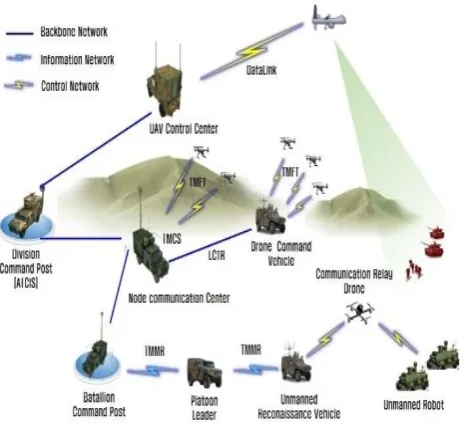
Fig.1: A Concept of a Centralized Drone-bot Network System
Centralized drone-bot network deployment is divided into four types depending on operational ranges. As Table 4 shows, the base within 2km is a close-range network technology for the use of ultra-small drones for private combat use. Short-range and medium-range network within 60 km were presented as technologies that utilize commercial mobile communication network and military-only tactical mobile communication system for simultaneous operation of multiple drones and efficiently reuse of frequencies. In addition, the network system deployment model was presented for a long-range of more than 60 km divided into technologies utilizing military-only data links and satellite net-works.
Table4 . A Model for the construction of a Centralized Drone-bot Network System
Close-range Network
- Support for personal search and inspection of enemy areas and buildings
- Development of an NFC protocol dedicated to the local area network and allocation of frequencies Short-range
Network
- Company-level surveillance inspection, support of attack missions
Medium-range Network
- Battalion-level surveillance reconnaissance, support of attack missions - Utilizing military-only tactical mobile communication system and data link technology Long-range
Network
- Division-level surveillance reconnaissance, support of attack missions - Military-only data link and military satellite
communication technology
SI units are strongly
Figure 1 shows how to build an information transmission net-work and control an unmanned aircraft operating radius from close-range to long-range to military capability based on drone's wireless technology. Network technologies that conform to drone-bot's operational purpose and echelon characteristics differ in capacity, distance and time of flight, and radio frequency bandwidth according to drone-bot capabilities. Thus, network technologies should also be applied differently. In the case of short and medium-range, the frequency needs to be distributed, recalled, and managed in order to utilize the various radio frequency bands as a sudden increase in the frequency demand is expected when multiple drone combat systems are introduced. In addition, the construction of a drone-bot traffic control system that can establish and approve flight plans, control flight, air-space control, etc. should also be developed based on airspace control and network technology.
1. Close-range Network
Personal reconnaissance drones designed to carry out search and reconnaissance missions inside and outside of enemy areas and buildings by individuals have been developed as microbial technology based on combat loads and portability, and are being prepared by the U.S. Army. PD-100 PRS Black Hornet in Figure 2 is a small hand-sized drone developed in Norway that weighs 18 grams and can be recessed in a bulletproof vest if not in use. Real-time video day and night can be provided to opera-tors and Network construction of these ultra-small reconnaissance drones is difficult to control due to radio interference when using unlicensed ISM bandwidth (2.4 GHz and 5.8 GHz). Therefore, it is necessary to develop network technologies by allocating dedicated communication protocols and dedicated frequencies.
Fig.2 Ultra-small Reconnaissance Drone for a private combat [15]
2. Short-range Network
Within operating radius of less than 10 km, it suggests technologies that apply LTE. The LTE communication technology is a new communication standard created by the demand for faster data transmission speed in cellular systems. And high-quality video transmission is possible. Because large LTE network is established throughout the country, it can be used as a drone's unmanned delivery system. The LTE
[image:4.595.316.549.222.315.2]service is available any-where in areas where LTE network is well established. In particular, if a drone network is deployed as a commercial mobile network to support monitoring and reconnaissance missions in coastal or enemy areas, convergence with the latest ICT is possible, making it easier to create innovative services. Although it is possible to provide high-speed service such as real-time video transmission due to increased distance range, security measures should be prepared when connecting with military internal net-work. For this purpose, a technology implementation that physically isolates internal and external defense networks by establishing a military-only mobile communication gateway is needed.
Fig. 3 The model for Commercial Mobile Network(LTE)
In order to utilize the existing private commercial mobile network as the network of short-range drone combat systems, the following must be considered technically. First, when utilizing commercial mobile network (LTE), malfunction can occur due to delay of transmission and reception of control signals such as landing, take-off of drones and change of direction so drone control measures should be technically prepared to complement the communication delay problem. Second, when the military surveillance inspection system is interlinked with the drone by using commercial mobile networks, a technical solution is needed to integrate the images collected through the drone and those collected by the independent military surveillance system. Third, it is necessary to prepare security measures such as establishing a link between drone video information server and defense net-work in commercial mobile network, for using video information captured by drones on commercial mobile network base in defense internal network.
In this way, when utilizing the commercially available mobile network (LTE) for the drone-bot combat system, it is possible to reduce the operating frequency of the insufficient drone-bot, introduce timely the commercial drone of various uses, and to facilitate military application. But military security measures must be taken.
3. Medium-range Network
[image:4.595.100.251.559.657.2]commercial mobile network (LTE) is not available, compared to commercial mobile network (LTE), it has a mobile network expansion capability, service support, and independent nature that is not affected by other based communication systems.
Figure 4 presents a model for building drones using military-only tactical mobile communications systems. Using the trans-mission mobile communication station of each unit node, control the drones and load the tactical telephone modules into the drone's main body utilizing the advantages of small, light and low power of the tactical telephone modules. If a small mobile drone is equipped with a tactical mobile base station antenna, the drone-bot control network can be connected to the command post of high-level unit through a military-only base station.
Fig. 4 A Model for the construction of Drone-bot Using Military-only Tactical Communication Systems
At this time, when installing a tactical mobile base station antenna in a small portable drones’ command car, it is possible to operate a mobile phone and link the drone-bot control network to the command post of a higher-level unit through a base station of a military-only tactical communications system and also possible to maneuver operations. If the drone-bot control network is connected to the military-only tactical communications system, the scope of the drone-bot combat system can be expanded further.
4. Long-range Network
The drone-bot network technology for long-range over 60km presents dedicated data link (CDL, C2DL) and satellite link technology. This technology operates the first and second datalink and the third link uses the satellite link. The CDL (first link, main link) is the main link for controlling drone-bot and transferring large amounts of information, and it operates with dedicated frequencies allocated to ground control equipment and drones. If non-visual mission requirements are generated, they can be converted to satellite links for utilization. However, since the satellite link can be limited in real-time control due to the transmission delay, it is necessary to further enhance the autonomous
mission-performing function when the satellite link is switched to the satellite link.
The C2DL (second link, auxiliary link) is expected to increase the lack of spectrum resources as the number of drone operations increases. To address these issues, the C2DL frequency should be changed from FDD(Frequency Division Duplexing) to TDD(Time Division Duplexing) and improved from specified frequency fixed allocation to interoperable frequency sharing. It is necessary to develop into a controlled data link technology that can control multiple drones with one ground control device. In particular, increasing the transmission speed to transmit large amounts of information will require a high-performance antenna, thereby increasing the weight of the drones' mountings and ensuring sufficient frequency bands for transferring large amounts of information. In order to operate these dedicated data link technologies efficiently, it is necessary to newly establish a frequency operation control organization that distributes and recovers frequencies within the allocated frequency band in real time and reseeds.
B. Distributed Drone-bot Network
Distributed networks are intelligent network technologies to ensure the viability and speed of mission information distributed in the future clustered unmanned warfare system. It can also be defined as a cluster network. Distributed network requires an autonomous network configuration capability and adaptability to achieve the objective in cooperation (Cluster Functions) between objects without central control in a battlefield environment changing from the existing centralized network structure and also requires network toughness from faults and losses. In particular, the so-called "swarm" operation, which operates small drones in clusters, is expected to be highly utilized since various tasks such as reconnaissance and strike can be carried out. Cluster operation can be operated in a way that many small drones can act autonomously, without having to control one drone from the controller through AI-based cluster intelligence, which is operated by pre-populated algorithms for each drone. A number of countries are actively researching autonomous change of transmission power and transmission speed in order to prevent collision risk by in-creasing density between multiple drones through location in-formation sharing and accommodate variation in range of information transmission power. In addition, to reduce control dependence of centralized nodes, we need to support autonomous flight and multi-hop of AI learning base. To satisfy this problem, low-complexity and high-efficiency self-learning algorithms that can change the output control and communication modulation method depending on the circumstances are under study.
[image:5.595.53.285.245.457.2]underlying technologies of clustering's networking optimization and light-weighting techniques.
[image:6.595.320.547.233.365.2]Based on the concept of these networks, we presented the construction model of the drone-bot network system as shown in Table 5. A distributed drone network can be divided into three networks: a multi-level ad-hoc network with multiple ad-hoc networks, a drone ad-hoc and a relay network. The drone-bot ad-hoc network requires a data link for tasks and swarm technology using parent and child drones. Multi-level Ad-hoc networks require the implementation of multi-beam antenna technology to combine multiple drone ad-hoc networks into a single network. Communication relay network needs link broadcasting technology between drones and ground relay equipment to expand scope of mission.
Table 5. A Model for the construction of a Distributed Drone-bot Network System
Ad-hoc -Precision surveillance at low altitudes after extensive surveillance at high altitudes - Utilization of datalink and swarm drones
Technology Multi-level
Ad-hoc
-Combine multiple drone ad-hoc networks and consolidate into one network
- Utilizes multi-beam antenna technology (BDMA, Massive MIMO)
Communication Relay
- Utilizing datalink - based relay function and ground communication relay equipment - Extending the scope of the mission, controlling
beyond-visual lines and providingground communication relay services
1. Drone Ad-hoc Network
The drone Ad-hoc network has an Ad-hoc structure form for autonomous network by mutual feedback between individual congestion systems as a basic structure of a distributed network. Figure 5 is a type of drone Ad-hoc, in which a broad range of surveillance information is obtained using a backbone drone at high altitudes, and at low altitudes information is obtained with precise monitoring reconnaissance at low altitudes. At this time, since the congested drones are operated in close proximity, they can be operated with low transmission power, and can be mounted even at small size, light weight, and low cost. The net-work construction technology for this purpose requires the data-link technology and the swarm drone’s technology for the back-bone drones.
Fig.5 A Concept of droneAd-hocnetwork
A case in point for understanding distributed network technology is the U.S. micro unmanned aircraft called PERDIX, which has recently attracted the attention of military strategists [16].
2. Multi-level Drone Ad-hoc Network
[image:6.595.318.544.527.644.2]The multi-level drone Ad-hoc network combines multiple different drone Ad-hoc networks into a single integrated network in a way, as shown in Figure 6, it must be able to communicate with multiple drone Ad-hoc networks via a single backbone drone. In particular, for multiple drones with different networks to perform heterogeneous tasks, they must have separate collaboration capabilities on a distributed network basis. This requires an improvement in the lack of spectrum due to multiple drone concur-rent operations. This requires multi-beam antenna technology (BDMA, Massive MIMO). The multi-level drones Ad-hoc network method can minimize the manpower and equipment of the ground control equipment because it can autonomously operate multiple drones with different networks.
Fig.6 A Concept of multi-level droneAd-hoc network
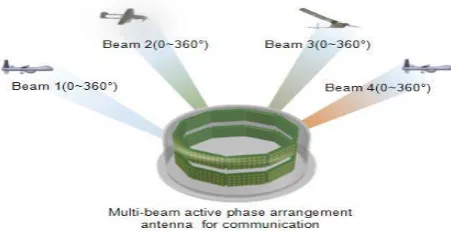
The multi-beam antenna technology can support multiple drones simultaneously with each beam while using one frequency using multiple beams as shown in Figure 7.
It is possible to construct a public network by using a multi-beam antenna which is formed independently of each other and to supports beam azimuth angle "360 degrees’ support" using 4 or more multi-beam antennas and has tracking function so this is a key technology that enables the implementation of distributed networks
Fig.7 Multiple beam active phase arrangement antenna technology for communication
3. Communication Relay Drone Network
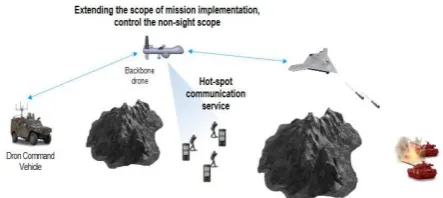
[image:6.595.57.278.589.693.2]control by applying the concept of public backbone or telecommunication relay.
This enables communication connections to terminals whose communication has been cut off during ground operations, as well as hot-spot communication service support to a number of operating teams.
[image:7.595.62.284.209.308.2]The backbone drone in the air needs to stay in a certain area for a certain period of time, so it needs to be equipped with a physical and protective capacity. Communication platforms and antenna technologies should also be developed to enable communication services to members of ground operations units.
Fig. 7 A Concept of the network configuration using backbone drones
Figure 7 shows connectivity of various telecommunication services through drone command vehicles and communication broadcasting using backbone drones. Backbone drone should be equipped with multi-band multifunction communication waveform for supporting terminals for military and commercial network (LTE) broadcasting in operational areas. It should also have a gateway function that can accommodate heterogeneous networks. In the Drone-bot combat system, relay networks should be designed based on distributed structures to support small data links for terminal subscribers and to support large data links. Network technologies should be continuously developed so that each echelon can implement the C4I system and super-connectivity.
The deployment of such a relay network ensures operational unit mobility and rapid deployment by expanding the area of communication. And also maximum operational effectiveness can be achieved with minimal effort by enabling flexible and scalable operations.
IV. CONCLUSION
So far, we have presented a model for building a drone-bot net-work system based on the network structure that operates the drone-bot combat system. In order to establish the structural design and construction methodology of the drone combat sys-tem, the concept of operating drone, flight distance, altitude, duration of construction, and mounting weight must be established first. Based on this, consideration should be given to net-work deployment technologies such as appropriate frequency bands and bandwidth and output levels required by the drone's combat system. Designing the structure of the drone combat system network system should monitor the technological trends of the rapidly diversifying global drone markets and update the methodology. Especially, as the demand for military drone technology market is expected to continue to grow by the mid-2020s, the
drone combat system is expected to be developed for which discharge, what use, and some decisions are needed at the government and defense level. At this time, it is believed that net-work technologies will be a key element in establishing standards for introducing drone robots.
Network technology is the eyes and behavioral nerve component of the unmanned warfare system in the control and communication of unmanned combat systems that are not human. There-fore, research on the development of network technologies should be developed based on the military concept of the drone combat system.
REFERENCES
1. Daniel L. Haulman, US Unmanned Aerial Vehicles in Combat, 1991-2003: Air Force Historical Research Agency, June 9, 2003 2. David A. Fritz, Bharat T. Doshi, Andrew C. Oak, Steven D. Jones,
Military Satellite Communications: Space-Based Communications for the Global Information Grid, Johns Hopkins APL Technical Digest, Volume 27, Number 1 (2006)
3. Michael V. Hayden, ‘To Keep America Safe, Embrace Drone Warfare’, The New York Times, Feb 16, 2016
4. James Rogers, ‘Drone Warfare : The Death of Precision’, in voice of Tomorrow, May 12, 2017
5. Republic Of Korea Army, ‘Development Plan of Dronebotcombat system’, Dronebot combat development conference, April 2018 6. Richard Galindez, Darren Morrow, A common Data Link(CDL) For
Space-Based Communications: Migration of Airborne Hardware to Space, Technical Session VII, 2005
7. LI Yun-ru, Tactical Data Link and Its Application Technology, Journal of China Academy of Electronics and Information Technology, February 2007
8. Sung-Hwa Son,Jin-Hyuk Kang, ‘Overview and issues of Drone wireless communications’,Korea Institute Of Communication Sciences, January 2016, pp.93-94
9. Marty, Joseph A., Vulnerability Analysis of the MAVLink Protocol for Command and Control of Unmanned Aircraft, Master's thesis, Wright-Patterson Air Force Base, Ohio, March 2014
10. Sung-Joon Park, ‘Network Infrastructure Build of a Drone Formation’,Korea Institute Of Communication Sciences, February 2016, pp.110
11. Sujatha, R., and M. Lawanya. "An Unified Approach by Implementing the Secured Authentication Protocol Scheme in Wireless Sensor Networks." Review of Information Engineering and Applications 1. 1 (2014): 24-38.
12. Suryanto, T., Haseeb, M., & Hartani, N. H. (2018). The Correlates of Developing Green Supply Chain Management Practices: Firms Level Analysis in Malaysia. Int. J Sup. Chain. Mgt Vol, 7(5), 316. 13. Do-Yup Kim, ‘Survey on Topology Management Techniques in
Unmanned Aerial Vehicle Networks’, The Journal of Korean Institute of Communication and Information Sciences, Vol.43, No.02, February 2018, pp.334-339
14. Jee-won Kim, Sang-jun Park, Kwang-ho Lee, Chan-gi Jung, A Study on Vulnerability of Cyber Electronic Warfare and Analysis of Countermeasures for swarm flight of the NBC Reconnaissance Drones, Journal of Information and Security, June 2018, pp.133-139 15. Chang-Soo Ryu, ‘The Concept and Application of the unmanned
combat unit’, The monthly magazine of Korean Defense and Technology, January 2018, pp.123
16. Ozuomba, S., Johnson , E &Chinyere, N.“Characterisation of Propagation Loss for a 3G Cellular Network in a Crowded Market Area Using CCIR Model”. Review of Computer Engineering Research, 5.2 (2018).: 49-56. DOI: 10.18488/journal.76.2018.52.49.56
![Table 2. Drone-bot System Characteristic [12]](https://thumb-us.123doks.com/thumbv2/123dok_us/8202878.261368/2.595.301.554.278.374/table-drone-bot-system-characteristic.webp)
![Table 3. The field of military use of Drone-bot[14]](https://thumb-us.123doks.com/thumbv2/123dok_us/8202878.261368/3.595.307.546.222.445/table-field-military-use-drone-bot.webp)
![Fig.2 Ultra-small Reconnaissance Drone for a private combat [15]](https://thumb-us.123doks.com/thumbv2/123dok_us/8202878.261368/4.595.100.251.559.657/fig-ultra-small-reconnaissance-drone-a-private-combat.webp)