This is a repository copy of
Implications for public health research of models and theories
of disability : a scoping study and evidence synthesis
.
White Rose Research Online URL for this paper:
http://eprints.whiterose.ac.uk/103434/
Version: Published Version
Monograph:
Berghs, Maria Jeanne orcid.org/0000-0002-6512-7921, Atkin, Karl Michael
orcid.org/0000-0003-1070-8670, Graham, Hilary Mavis orcid.org/0000-0001-7949-6819 et
al. (2 more authors) (2016) Implications for public health research of models and theories
of disability : a scoping study and evidence synthesis. Research Report. NIHR Journals
Library
https://doi.org/10.3310/phr04080
[email protected] https://eprints.whiterose.ac.uk/
Reuse
Items deposited in White Rose Research Online are protected by copyright, with all rights reserved unless indicated otherwise. They may be downloaded and/or printed for private study, or other acts as permitted by national copyright laws. The publisher or other rights holders may allow further reproduction and re-use of the full text version. This is indicated by the licence information on the White Rose Research Online record for the item.
Takedown
If you consider content in White Rose Research Online to be in breach of UK law, please notify us by
VOLUME 4 ISSUE 8 JULY 2016 ISSN 2050-4381
Implications for public health research of
models and theories of disability:
a scoping study and evidence synthesis
of models and theories of disability:
a scoping study and evidence synthesis
Maria Berghs,
1
Karl Atkin,
1
* Hilary Graham,
1
Chris Hatton
2
and Carol Thomas
2
1
Department of Health Sciences, University of York, York, UK
2
Faculty of Health and Medicine, Furness College, Lancaster University,
Lancaster, UK
*Corresponding author
Declared competing interests of authors:Karl Atkin is a member of the National Institute for Health Research Public Health Research Funding Board. Chris Hatton’s salary is part-funded by Public Health England through his role as a codirector of their Learning Disabilities Public Health Observatory.
Published July 2016
DOI: 10.3310/phr04080This report should be referenced as follows:
ISSN 2050-4381 (Print)
ISSN 2050-439X (Online)
This journal is a member of and subscribes to the principles of the Committee on Publication Ethics (COPE) (www.publicationethics.org/).
Editorial contact: [email protected]
The full PHR archive is freely available to view online at www.journalslibrary.nihr.ac.uk/phr. Print-on-demand copies can be purchased from the report pages of the NIHR Journals Library website: www.journalslibrary.nihr.ac.uk
Criteria for inclusion in thePublic Health Researchjournal
Reports are published inPublic Health Research(PHR) if (1) they have resulted from work for the PHR programme, and (2) they are of a sufficiently high scientific quality as assessed by the reviewers and editors.
Reviews inPublic Health Researchare termed‘systematic’when the account of the search appraisal and synthesis methods (to minimise biases and random errors) would, in theory, permit the replication of the review by others.
PHR programme
The Public Health Research (PHR) programme, part of the National Institute for Health Research (NIHR), evaluates public health interventions, providing new knowledge on the benefits, costs, acceptability and wider impacts of non-NHS interventions intended to improve the health of the public and reduce inequalities in health. The scope of the programme is multi-disciplinary and broad, covering a range of interventions that improve public health. The Public Health Research programme also complements the NIHR Health Technology Assessment programme which has a growing portfolio evaluating NHS public health interventions.
For more information about the PHR programme please visit the website: http://www.nets.nihr.ac.uk/programmes/phr
This report
The research reported in this issue of the journal was funded by the PHR programme as project number 12/182/14. The contractual start date was in May 2014. The final report began editorial review in November 2015 and was accepted for publication in March 2016. The authors have been wholly responsible for all data collection, analysis and interpretation, and for writing up their work. The PHR editors and production house have tried to ensure the accuracy of the authors’report and would like to thank the reviewers for their constructive comments on the final report document. However, they do not accept liability for damages or losses arising from material published in this report.
This report presents independent research funded by the National Institute for Health Research (NIHR). The views and opinions expressed by authors in this publication are those of the authors and do not necessarily reflect those of the NHS, the NIHR, NETSCC, the PHR programme or the Department of Health. If there are verbatim quotations included in this publication the views and opinions expressed by the interviewees are those of the interviewees and do not necessarily reflect those of the authors, those of the NHS, the NIHR, NETSCC, the PHR programme or the Department of Health.
© Queen’s Printer and Controller of HMSO 2016. This work was produced by Berghset al.under the terms of a commissioning contract issued by the Secretary of State for Health. This issue may be freely reproduced for the purposes of private research and study and extracts (or indeed, the full report) may be included in professional journals provided that suitable acknowledgement is made and the reproduction is not associated with any form of advertising. Applications for commercial reproduction should be addressed to: NIHR Journals Library, National Institute for Health Research, Evaluation, Trials and Studies Coordinating Centre, Alpha House, University of Southampton Science Park, Southampton SO16 7NS, UK.
Public Health Research
Editor-in-Chief
Professor Martin White Director of Research and Programme Leader, UKCRC Centre for Diet and Activity
NIHR Journals Library Editor-in-Chief
Professor Tom Walley Director, NIHR Evaluation, Trials and Studies and Director of the EME Programme, UK
NIHR Journals Library Editors
Professor Ken Stein Chair of HTA Editorial Board and Professor of Public Health, University of Exeter Medical School, UK
Professor Andree Le May Chair of NIHR Journals Library Editorial Group (EME, HS&DR, PGfAR, PHR journals)
Dr Martin Ashton-Key Consultant in Public Health Medicine/Consultant Advisor, NETSCC, UK
Professor Matthias Beck Chair in Public Sector Management and Subject Leader (Management Group), Queen’s University Management School, Queen’s University Belfast, UK
Professor Aileen Clarke Professor of Public Health and Health Services Research, Warwick Medical School, University of Warwick, UK
Dr Tessa Crilly Director, Crystal Blue Consulting Ltd, UK
Ms Tara Lamont Scientific Advisor, NETSCC, UK
Professor Elaine McColl Director, Newcastle Clinical Trials Unit, Institute of Health and Society, Newcastle University, UK
Professor William McGuire Professor of Child Health, Hull York Medical School, University of York, UK
Professor John Norrie Health Services Research Unit, University of Aberdeen, UK
Professor John Powell Consultant Clinical Adviser, National Institute for Health and Care Excellence (NICE), UK
Professor James Raftery Professor of Health Technology Assessment, Wessex Institute, Faculty of Medicine, University of Southampton, UK
Dr Rob Riemsma Reviews Manager, Kleijnen Systematic Reviews Ltd, UK
Professor Helen Roberts Professor of Child Health Research, UCL Institute of Child Health, UK
Professor Helen Snooks Professor of Health Services Research, Institute of Life Science, College of Medicine,
Swansea University, UK
Professor Jim Thornton Professor of Obstetrics and Gynaecology, Faculty of Medicine and Health Sciences, University of Nottingham, UK
Please visit the website for a list of members of the NIHR Journals Library Board: www.journalslibrary.nihr.ac.uk/about/editors
Editorial contact: [email protected]
Professor Geoffrey Meads Professor of Health Sciences Research, Health and Wellbeing Research and Development Group, University of Winchester, UK
Research (CEDAR), MRC Epidemiology Unit, Institute of Metabolic Science, School of Clinical Medicine, University of Cambridge; Visiting Professor, Newcastle University; and Director, NIHR Public Health Research Programme
Professor Jonathan Ross Professor of Sexual Health and HIV, University Hospital Birmingham, UK
Dr Eugenia Cronin Senior Scientific Advisor, Wessex Institute, UK
Abstract
Implications for public health research of models and
theories of disability: a scoping study and evidence synthesis
Maria Berghs,
1Karl Atkin,
1* Hilary Graham,
1Chris Hatton
2and Carol Thomas
21Department of Health Sciences, University of York, York, UK
2Faculty of Health and Medicine, Furness College, Lancaster University, Lancaster, UK
*Corresponding author [email protected]
Background:Public health interventions that are effective in the general population are often assumed to apply to people with impairments. However, the evidence to support this is limited and hence there is a need for public health research to take a more explicit account of disability and the perspectives of people with impairments.
Objectives:(1) To examine the literature on theories and models of disability; (2) to assess whether or not, and how, intervention studies of effectiveness could incorporate more inclusive approaches that are consistent with these theories and models; and (3) to use the findings to draw out implications for improving evaluative study designs and evidence-based practice.
Review methods:The project is a scoping review of the literature. The first stage examines theories and models of disability and reflects on possible connections between theories of disability and public health paradigms. This discussion is used to develop an ethical–empirical decision aid/checklist, informed by a human rights approach to disability and ecological approaches to public health. We apply this decision aid in the second stage of the review to evaluate the extent to which the 30 generic public health reviews of interventions and the 30 disability-specific public health interventions include the diverse experiences of disability. Five deliberation panels were also organised to further refine the decision aid: one with health-care professionals and four with politically and socially active disabled people.
Results:The evidence from the review indicated that there has been limited public health engagement with theories and models of disability. Outcome measures were often insensitive to the experiences of disability. Even when disabled people were included, studies rarely engaged with their experiences in any meaningful way. More inclusive research should reflect how people live and‘flourish’with disability.
Limitations:The scoping review provides a broad appraisal of a particular field. It generates ideas for future practice rather than a definite framework for action.
Conclusions:Our ethical–empirical decision aid offers a critical framework with which to evaluate current research practice. It also offers a resource for promoting more ethical and evidence-based public health research that is methodologically robust while being sensitive to the experiences of disability.
Future work:Developing more inclusive research and interventions that avoid conceptualising disability as either a‘burden’or‘problem’is an important starting point. This includes exploring ways of refining and validating current common outcome measures to ensure that they capture a diverse range of disabling experiences, as well as generating evidence on meaningful ways of engaging a broad range of disabled children and adults in the research process.
Contents
List of tables xi
List of figures xiii
List of boxes xv
List of abbreviations xvii
Note on terminology xix
Plain English summary xxi
Scientific summary xxiii
Chapter 1Background to the study 1
Disability and public health 1
Public health research 2
Why do the research? 3
Aims of the study 4
Conclusion 4
Chapter 2Methods 5
Stage 1: scoping different models of disability 6
Aims of first scoping review 6
Initial inclusion criteria 7
Data selection 8
Refinement of inclusion criteria 9
Reflections on the literature 9
Stage 2: reviewing public health interventions 11
Scoping public health interventions 16
Inclusion criteria 16
Data selection and analysis 16
Interrogating two selected reviews in more detail 18
Developing a decision aid and checklist 18
Deliberation panels 19
Role of the project steering committee 21
Conclusion 21
Chapter 3Scoping models and theories of disability 23
Mapping a shifting debate 23
The medical model 26
International Classification of Impairments, Disability and Handicap 27
International Classification of Functioning, Disability and Health 28
The human rights model 32
Strengths 33
A social model approach 35
Strengths 36
Potential weaknesses 37
Critical disability studies 38
Strengths 39
Potential weaknesses 39
Conclusion 40
Chapter 4Developing an ethical–empirical decision aid 41
Mapping of models and theories 41
Disability, poverty and inequality models 43
Human rights and public health 45
A rights-based framework and an ethical–empirical decision aid 46 The use of outcome measures in public health and their relevance to different types
of disability 49
European Quality of Life-5 Dimensions 53
Short Form questionnaire-36 items 56
Client Service User Receipt Inventory 57
Moving forward 58
Conclusion 58
Chapter 5Scoping reviews of interventions 61
Generic reviews of public health interventions 61
Nominal inclusions 63
Theoretical and methodological disconnects 63
The ethics of social inclusion 64
Public health and disability 64
The continued influence of the medical model 66
Life-course perspectives and disability 67
Engaging with a lack of evidence 67
Participation, ethics and equity 68
Appraising and assessing public health research studies 68
Assessing public health interventions: school-based physical activity programmes 68
Linking theory to empirical design 70
Disability and mainstreaming 71
Disability and intersectionality 71 Assessing public health interventions focusing on disability: physical activity levels with a
diagnosis of dementia 72
Clinical interventions and outcome measures 72
The ethics of participation 74
Inclusion, intersectionality and inequalities 74
Conclusion 75
Chapter 6Findings from the deliberation panels 77
The meaning of public health 77
The role of public health interventions 79
A human rights approach 82
Dignity 83
Inclusion 83
Intersectionality 85
Accessibility 85
Equity 86
The value of a human rights checklist 87
Chapter 7Discussion 89 How can different models and theories of disability appropriately inform research on the effectiveness of public health interventions, and to what extent can intervention research be sensitised to accommodate different configurations of diversity within and among
general and disabled populations? 89
How do different models of disability map on to current research on public health
interventions? 91
What are the implications for commissioning research into public health interventions inclusive of or for disabled people in a way that accommodates appropriate terminology and measurement and that takes account of different causes and types of impairment, while being sensitive to the experiences and needs of different demographic groups
associated with gender, socioeconomic position, ethnicity, sexuality and age? 92 How should participants, the public and stakeholders be involved in research and what
does inclusive research practice look like? 93
What study designs and relevant outcomes best capture experiences of impairment and disability in a way that maximises health benefits and ensures that mainstream research
reflects the experiences of people with disabilities? 94
Conclusion 95
Chapter 8Conclusion 97
Reflections on the research 97
Future research 99
Developing practical guidance for inclusive research practices 100 Advice to primary stakeholders: public health and disability checklist 101
Conclusion 105
Acknowledgements 107
References 109
Appendix 1Implications for public health research of models and theories of
disability: a scoping review project flow diagram 147
Appendix 2Data extraction table for identifying models and theories of disability 149
Appendix 3Flow charts for stage 2 scoping 151
Appendix 4Effective public health practice project quality assessment tool 153
Appendix 5Extraction table for the second stage of the scoping:
scoping interventions 155
Appendix 6Charting individual evaluations of public health interventions 157
Appendix 7Contacting the corresponding authors 159
Appendix 8Briefing 161
List of tables
TABLE 1 Journals overview: January 1990 to May 2014 11
TABLE 2 Geographical location of papers 11
TABLE 3 Search for‘public health’AND . . . 13
TABLE 4 Search for‘public health’AND/OR‘disability’AND/OR . . . 14
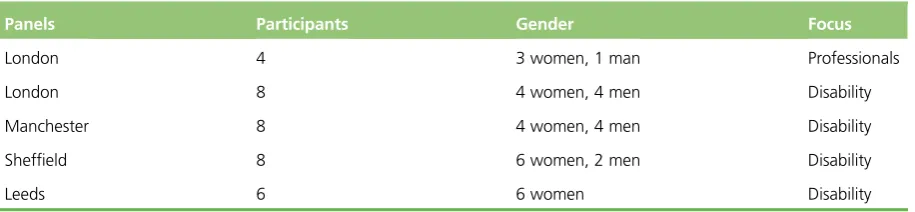
TABLE 5 Deliberation participants 20
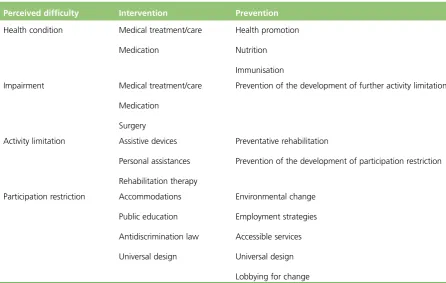
TABLE 6 Intervention or prevention 30
TABLE 7 The CRPD and public health indicators 47
TABLE 8 Translating Article 3 into indicators 50
TABLE 9 Our decision aid/checklist 52
TABLE 10 Generic reviews of public health interventions 62
TABLE 11 Reviews of public health and disability 65
TABLE 12 School-based physical activity reviews 69
TABLE 13 Dementia-based physical activity review 73
List of figures
FIGURE 1 Scoping flow chart 10
FIGURE 2 Mapping theoretical approaches on to reviews of interventions 15
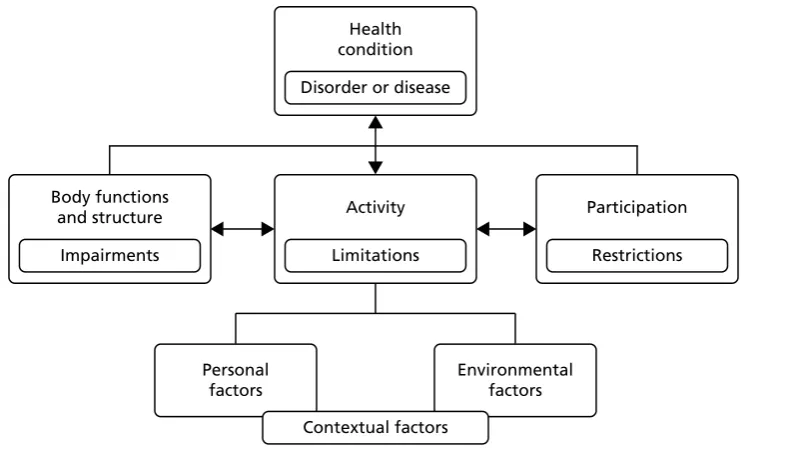
FIGURE 3 The ICF 29
FIGURE 4 The public health ecological model 42
FIGURE 5 Social determinants of diversity 43
FIGURE 6 The chronic deprivation/entrenched inequalities matrix (adapted from Yeo) 44
FIGURE 7 Modelling the CRPD 45
FIGURE 8 Modelling Article 3 from the CRPD 49
FIGURE 9 The IDEAS decision aid 90
FIGURE 10 Retrospective prevention 92
FIGURE 11 Prospective promotion 92
FIGURE 12 Key elements for public health research incorporating disability into
the development and evaluation process 101
List of boxes
BOX 1 Database overview 7
BOX 2 Survey example 25
BOX 3 Article 3 and RE-AIM 51
BOX 4 Future research recommendations 100
BOX 5 Checklist for researchers 103
BOX 6 Checklist for commissioners 104
List of abbreviations
ADHD attention deficit hyperactivity disorder
ADL activities of daily living
BME black and minority ethnic
CDS critical disability studies
CRPD Convention on the Rights of
Persons with Disabilities
CSRI Client Service User Receipt Inventory
DALY disability-adjusted life-year
DSM Diagnostic and Statistical Manual of Mental Disorders
EPHPP Effective Public Health Practice Project
EQ-5D European Quality of Life-5 Dimensions
EQ-VAS EuroQol visual analogue scale
GBD Global Burden of Disease
HIV human immunodeficiency virus
HRQoL health-related quality of life
ICD International Classification of Diseases
ICF International Classification of Functioning, Disability and Health
ICIDH International Classification of Impairments, Disability and Handicap
IDEAS Inclusion, Dignity, Equality, Accessibility and Intersectionality
MeSH medical subject heading
MRC Medical Research Council
MS multiple sclerosis
NICE National Institute for Health and Care Excellence
NIHR National Institute for Health Research
OPCS Office of Population Census and
Surveys
PHR Public Health Research
PPI patient and public involvement
QALY quality-adjusted life-year
QoL quality of life
RCT randomised controlled trial
RE-AIM Reach Effectiveness Adoption Implementation Maintenance
SDG sustainable development goal
SDH social determinant of health
SF-36 Short-Form questionnaire-36 items
UN United Nations
Note on terminology
I
n this project, we tried to be inclusive of all theories and models of disability. The language used reflects this. Impairment and disability are used interchangeably. In doing so, we acknowledge that these words assume different meanings depending on the paradigms or social movements with which they become associated. It is equally important to acknowledge that disabled people might wish to choose their own definitions, which may or may not accord with standard classifications. We did not want to impose contested definitions on the experiences of people with disabilities, although, to be helpful, we provide a summary of common approaches, reflected in the literature and with which our report engages.Medical models tend to define disability in terms of a biological pathology located in an individual body, which requires medical technology, medicine or rehabilitation to make a person well. Human rights approaches use person-first definitions, such as‘persons with disabilities’, and are keen to establish legal, political, cultural, social and economic rights, consistent with the normative values associated with the society within which a disabled person lives. A social model of disability makes a distinction between disability as the experience of oppression and disadvantage and impairment as a physical, sensory, cognitive or mental health condition. Therefore, when a person refers to himself or herself as a disabled person, they are referring to his or her identification with the experience of disablement. Critical disability studies approaches use terminology such as‘differently able’or view disability along a continuum of human diversity. This includes people who might take pride in their specific form of disability or their social experiences of disability, such as‘psychiatric system survivors’. Finally, there are people who have
Plain English summary
P
ublic health interventions can improve population health and reduce inequalities. However, we do not know how far these interventions–or the research that informs them–include the experiences of those with disabilities.Our research asked whether or not current research on public health could do better to include the experiences of those with disabilities. We began by looking at what has been written about the experiences of disability. What we learned was then used to explore how well current research on public health interventions captured the experiences of people who have disabilities.
We found that disability can affect anyone, at any age. It can also affect those who are already ill. There is no typical experience. Public health research has been slow to understand this. Disabled people face many different forms of disadvantage and discrimination. This often means that they cannot get the help that they need. It appears that research has not always recognised this and has ignored how people can ‘flourish’and‘thrive’with a disability. Policy, therefore, has not always known how best to support disabled people and has often had no information on which to base decisions.
Following discussions with politically active disabled people and public health professionals, we aimed to provide advice to those involved in research. This included developing a decision aid, called IDEAS (Inclusion, Dignity, Equality, Accessibility and Intersectionality), which aims to help researchers,
commissioners and policymakers to make decisions that are more sensitive to the experiences of disabled people. Encouraging researchers and commissioners to take disability more seriously should hopefully improve what we know about the experiences of disability. It should also help society to develop interventions that improve disabled people’s health. This includes asking disabled people about the research that they think is important and involving them in the research process, as well as making resources available to support their participation in research.
Scientific summary
Background
Nearly 10 million people in England experience significant difficulty with day-to-day activities linked to disability. Many of these people are living with other chronic conditions. Experiences of disability are also strongly age related. Moreover, the impact of impairments has a marked social gradient. People with disabilities are disproportionately disadvantaged with regard to the social factors that contribute to health inequalities, such as educational and employment opportunities, poverty and poor housing, and inequitable access to services. These environmental disadvantages are, in turn, disabling and create barriers to social inclusion.
Public health interventions that are effective in the general population are often assumed to apply to people with impairments. However, the evidence for this is limited. Our current evidence base, therefore, might not adequately capture the experiences of disability, with public health research having little to say on appropriate study designs and measures of how to actively engage disabled people. In addition, public health research does not demonstrate much of an understanding of the different consequences of having lifelong, acquired or fluctuating conditions, or of how social disadvantage, gender, ethnicity, sexual orientation and life-course mediate everyday experiences, including experiences of health. However, the potential impact of public health interventions on a particularly disadvantaged population is considerable, hence the need for more inclusive and better informed research. We have some important platforms on which to build, which offer alternative ways of defining and engaging with disability.
Method and design
Our two-stage project scopes models and theories of disability, and, by assessing whether or not, and how, existing intervention studies incorporate more inclusive approaches consistent with these models, draws out implications for improving study designs and evidence-based practice.
First, we undertook a scoping review and synthesis of research critiquing models and theories of disability. This review summarised the range of models and theories (medical, human rights, social and critical), their place within disability studies and social movements of disabled people and their potential contribution to public health theory, research and policy. We then connected these disability models to public health paradigms to provide a conceptual framework and initial checklist or decision aid with which to explore critically the inclusivity of intervention studies in public health. This decision aid was iteratively developed as the research progressed.
Our synthesis offers a critical commentary on the models and theories of disability underpinning the intervention and research; the terminology and categorisation of disability used or, if there is no discussion of this, a consideration of the potential relevance of the intervention to the experiences of disabled people; whether or not a life-course perspective is evident; methods of participant and public involvement; and (inclusive) study designs and outcomes.
Findings
The review indicated that disability mainstreaming was not a part of generic evaluations and that many of the specific evaluations focusing on disability were not disability-sensitive. It identified a range of ethical and empirical gaps within the evaluation of interventions, including what appeared to be an absence, or inappropriate use, of outcome measures; the needless exclusion of disabled people; and difficulties in offering a meaningful analysis of disabling experiences. A particular disconnect occurred between theories of disability and the evaluation of public health interventions.
Our proposed human rights and ethical decision aid [Inclusion, Dignity, Equality, Accessibility and
Intersectionality (IDEAS)] offers a critical framework by which to evaluate public health research. It can also function as a capacity-building tool, illustrating how different models of disability could positively inform the development and evaluation of public health interventions. Furthermore, our decision aid could help connect evidence-based practice to the diverse needs of those with disabilities, while also being ethically sensitive to broader concerns about social disadvantage, accessibility and inclusion. In doing so, it could connect the need for methodologically robust research with more inclusive and ethical social practices.
Conclusion
The findings of this report illustrate a need for more guidance on how to integrate a disability-inclusive approach into durable evaluations of public health interventions. On the deliberation panels, socially and politically active disabled people, as well as professionals, agreed that having a disability-sensitive paradigm within which research could be designed and implemented represented a positive step forward. Our conclusions suggest that current evaluation designs, however, do not link to current disability and public health perspectives or develop outcome measures that evaluate how people could live well or flourish with disability. Our project illustrated how models and theories of disability remained untapped resources for establishing a more sensitive reinvention of public health research practices.
Our report gives a specific example of how disability equity could be achieved using a human rights paradigm. Human rights approaches, which can connect more critical models of disability to the ecological models evident in public health paradigms, offer a potential framework with which commissioners and researchers can assess the consequences of choices and decision-making when attempting to develop more inclusive and empirically robust public health research.
Chapter 1
Background to the study
T
he research was commissioned by the National Institute for Health Research (NIHR) Public Health Research (PHR) programme in response to a call,‘Implications for public health research of models and theories of disability’(see www.nets.nihr.ac.uk/__data/assets/pdf_file/0004/129559/CB-12-182-14.pdf). Consistent with the scope of this commissioned call, the project presents a critical and informed discussion of how best to encourage more inclusive research practices, in a way that enables public health research evidence to better reflect the diverse experiences of people with a range of different disabilities.This introductory chapter explains why the research is important.
Disability and public health
According to the Family Resources Survey,1estimates of disability in the UK have remained stable, at 19%
of the population. Consequently, 10 million people in England experience significant difficulty with day-to-day activities linked to long-term conditions; this population includes those with lifelong and later-life conditions.1As ageing is associated with functional decline, nearly half of those living with
impairments are aged 60 years or over.2Many disabled people also live with other physical conditions,
such as coronary heart disease, diabetes and respiratory conditions, alongside mental health problems.1
There are marked social gradients in disability across the life-course, with evidence of enduring effects associated with childhood circumstances.3–10In addition, and at each stage of the life-course, people with
disabilities are disproportionately exposed to the social factors that contribute to health inequalities, including proximal risk factors such as smoking, obesity and lack of physical activity,11,12alongside broader
determinants associated with educational and employment opportunities, poverty and poor housing, and inequitable access to services.6,13,14These environmental disadvantages are, in turn, disabling and create
further barriers to social inclusion.12,15,16
There is growing appreciation of the diversity of disabling experiences, with different impairments having their own aetiologies and trajectories, acquired in a wide range of circumstances, and mediated by individual, social and political contexts. The public face of impairment is also challenging previous
perceptions by encouraging a more encompassing understanding of‘being disabled’.17Disability, although
socially patterned, can affect anyone, including those with pre-existing chronic conditions, mental health problems and intellectual and cognitive impairments.6,18–20Furthermore, international understandings
have moved away from a strictly medical definition, where‘disability’is‘caused’by functional deficits (such as physical injury or intellectual disability), to one that is sensitive to environmental determinants and in tune with how people experience disability as they go about their day-to-day lives.21This shift is a
fundamental aspect of our analysis.
The United Nations (UN) Convention on the Rights of Persons with Disabilities (CRPD) reflects these changes, such that disability is understood to result‘from the interaction between persons with
impairments and attitudinal and environmental barriers that hinders their full and effective participation in society on an equal basis with others’.22Human rights and equality frameworks are also increasingly
employed to articulate the moral claims and service needs of people with disabilities,12,23,24in order to
reflect impairment complexity.25,26The CRPD, for example, sets out an international framework for citizens
’ rights and state obligations on health-care provision, rehabilitation, accessibility and research with and for disabled people.22The UK is a signatory to this framework, which is further supported at a national level
by the Human Rights Act (1998)27and the Equality Act (2010)28which make discrimination on the basis
of disability illegal, while also requiring an equality duty in health-care provision.29The duty to involve
Public health research
Public health interventions have a critical part to play in advancing the status and well-being of people with disabilities. Interventions to tackle underlying causes of ill-health and reduce health inequalities have the potential to transform lives.6These interventions also support wider policy objectives to promote
independent living and care at or close to home.32However, there are significant challenges to developing
an evidence base,33and four broad inter-related concerns can be identified: a lack of engagement with
more theoretical conceptualisations of disability; a lack of methodological sophistication in including and capturing the experiences of disability; limited public engagement; and failing to ensure that research findings produce evidence that reflects the diverse experiences associated with disabling conditions. These challenges explain why public health research has been criticised for largely overlooking the experiences of disabled people and has been slow to accommodate shifts in understandings of–and the politics around–disability,34–39despite equity being an increasingly salient feature of public health
interventions.40Perspectives and assumptions can, for example, be outmoded and inappropriate, with
disability represented as a‘burden’and a‘cost’to society.41–43
Consequently, there is limited evidence on the types of public health interventions that are likely to be effective and on the kinds of measures that should be used when evaluating effectiveness.44There remains
a dearth of public health material discussing intervention design, methods, including economic evaluation, and strategies to actively make mainstream disability-sensitive research by adapting universal and inclusive designs.45–48There is also little debate about how best to actively engage disabled adults, young
people and children, particularly when trying to identify interventions consistent with disabled people’s preferences.49–54Further difficulties are associated with accommodating the differences generated by
lifelong, acquired or fluctuating conditions, where experience is further mediated by sociodemographic factors such as gender, social class, ethnicity, sexuality and age.10,55–57Few studies, for example, assess the
impact of public health interventions aimed at specific groups of disabled people, with diverse circumstances across the life-course.58,59
This report seeks to fill these gaps by facilitating a discussion on the most appropriate ways in which to generate research evidence that is sensitive to a broad range of disabling experiences.21,60This is
challenging. Nonetheless, disability studies and allied perspectives offer alternative ways of defining and engaging with disability, which can improve future intervention research.61–66However, these
perspectives typically derive from a different epistemological and ontological starting point to that informing mainstream public health research and policy.67–70They might, for example, encourage a
suspicion of any public health interventions that seek to‘rehabilitate’or‘normalise’behaviour, believing them to be a form of oppression and to deny the rights of disabled people.23,71
Such perspectives–aligned to social and political movements–conceptualise disability as generated by the wider structures of social inequality and as a human rights issue.72Research perspectives and methods
that have been built from these perspectives are grounded in an appreciation that disability is–and is experienced as–a dynamic interplay between impairment, attitudes and the environment.73Consequently,
disability seen to be generated by normative values and assumptions, embedded in discursive practices, where failure to accommodate diversity and difference denies the experiences of people with disabilities, generates oppression and produces inequalities.
These approaches have generated a rich literature on disability–including that developed by the World Health Organization (WHO)–which accommodates social, relational, ecological, economic and medical models.12Recent international reviews, for example, have examined the application of different theories to
public health interventions in terms of measurement, applicability and standardisation.62,63,74These reviews
challenge mainstream practices and generate alternative ways of doing research. Some reviews, for example, have examined how public health theories could connect to specific disability measurements.75
There are also studies assessing the relevance of public health outcome measurements to the experiences of people with disabilities.43,61,76–79Other work, although oriented to specific forms of impairments or
groups, such as intellectual disabilities, mental health or younger populations, explores how disability impacts on and is affected by public health interventions,55,58,80–82including health information;83
health-promotion interventions;57,84,85health checks;86self-management;87personalisation;88self-advocacy;89,90and
access to health care.82,91Despite providing valuable insights into more inclusive research strategies,36,51,65
this disparate literature has yet to be synthesised in a way that makes it accessible to those commissioning and undertaking public health research.92Connecting this more critical literature on the experiences of
disability to the models and theories associated with public health is an important starting point, from which more inclusive research may emerge.
Why do the research?
Public health interventions aim to improve population health and reduce inequalities. As we have seen, people with disabilities are at particular risk of poor health and are disproportionately disadvantaged vis-à-vis the social factors that contribute to health inequalities. Although people with disabilities constitute a major recipient group for public health interventions, research has not engaged in any systematic way with the experiences of people with disabilities.93This undermines the ability of public health research to
promote equity and social inclusion.40
An appreciation of how different models of disability can inform the development and evaluation of public health interventions, together with the provision of guidelines on the most appropriate ways in which to incorporate the perspectives and experiences of those with disabilities, could be especially beneficial to research and policy.94,95It can help connect evidence-based practice to the diverse needs of those with
disabilities, while also being sensitive to broader concerns about social disadvantage, accessibility and inclusion.
It is against this background that the NIHR PHR programme commissioned research on the public health implications of models and theories of disability. Public health interventions have been a key feature of successive governments’policies, with a focus on developing interventions that both improve overall population health and reduce health inequalities. This drive has occurred against the backdrop of an ageing and increasingly diverse disabled population, and a cost-saving agenda that places a premium on people with impairments remaining in the community and accessing–and remaining in–the labour market, supported by effective health- and social-care interventions.
Increasing attention is being given to understanding how public health can deliver appropriate models of support and ensure better outcomes for disabled people, in which their rights are respected.96The
Department of Health, for example, began a partnership with the Disability Rights Commission (now part of the Equality and Human Rights Commission) to‘improve information and services, communications and levels of awareness of disability issues’.97,98Such strategies promote the inclusion of disabled people, their
rights and needs in all public services,99including public health.100–102
There are particular advantages of integrating current public health research to emerging ideas that see those with disabilities as active citizens, part of wider social networks (such as partners and parents) and as stakeholders in the services that they use.56,103Incorporating such perspectives, while maintaining a
commitment to understanding what–and how–interventions work, can lead to a range of public health benefits.104These include the promotion of health, social inclusion and equality. For example, the life
expectancy of those with mental health problems is 20 years lower than the population norm.105One of
the reasons for this includes the difficulty of maintaining a healthy lifestyle.106,107Smoking cessation raises
particular challenges, particularly given that evidence suggests that current interventions are not sensitive to the experiences of those with mental health problems or the ways in which people have to negotiate social disadvantages associated with their disability.108A more inclusive approach, committed to ensuring
Aims of the study
As we have argued, the complex and nuanced nature of disability is rarely considered in public health debates, especially when evaluating interventions. With a large and growing population of disabled people, the UK needs a strong evidence base on which to build future intervention research, and one that specifically offers advice on how to reconcile established research designs with those informed by more inclusive models. Without this, we shall continue to know little about what will work, for whom and under what circumstances. In line with the commissioning brief, our research questions are:
1. How can different models and theories of disability appropriately inform research into the effectiveness of public health interventions? To what extent can intervention research be sensitised to accommodate different configurations of diversity within and among general and disabled populations?
2. How do different models of disability map on to current research on public health interventions? What are the implications of commissioning research into public health interventions that are inclusive of, or for, disabled people in a way that accommodates appropriate terminology and measurement and takes account of different causes and types of impairment, while being sensitive to the experience and needs of different demographic groups associated with gender, socioeconomic position, ethnicity, sexuality and age?
3. How should participants, the public and stakeholders be involved in research and what does inclusive research practice look like?
4. What study designs and relevant outcomes best capture the experiences of impairment and disability in a way that maximises health benefits and that ensures that mainstream research reflects the experiences of people with disabilities?
To answer these questions, the project was organised in two parts (seeAppendix 1). First, we scoped models and theories of disability and explored their relevance for public health paradigms; and, second, we assessed their implications for public health by reviewing a sample of systematic reviews of public health interventions, explored how far current intervention designs incorporated approaches consistent with disability models and theories. Our analysis, along with discussions with politically active disabled people and professionals working in public health, informed the iterative development of a decision aid. The decision aid aimed to critically evaluate current research practices and evidence bases, while looking to the future by enabling commissioners to assess the likelihood that commissioned public health research will produce more inclusive evidence relevant to the experiences of those with disabilities.
Conclusion
This opening chapter established the context for the research and the reasons why it is necessary. To be relevant, public health research needs to reflect a diverse range of disabling experiences. Otherwise, current evidence will struggle to engage with social disadvantage, accessibility and inclusion and thereby will risk generating inappropriate responses and wasting valuable resources. Our research explores how mainstream public health research can be more sensitive and inclusive of disability, in terms of how research is commissioned and how interventions are developed and researched. This includes connecting theoretical debates about how disability is conceptualised with current research practice to assess how current research design captures, engages and explains the experiences of disability. Our final conclusions will enable commissioners to judge the likelihood that research on a particular intervention will apply to a range of different disabilities, as experienced in different social contexts. It will also encourage researchers to adapt more inclusive approaches, including examples of best practice, from which successful public health interventions can be developed.Chapter 2outlines how we operationalised our research questions by discussing the methodological basis of our work.
Chapter 2
Methods
T
he previous chapter established the broad aim of the project, which is to explore whether or not, and how, current research on public health interventions captures a diverse range of disabling experiences. Our analysis has to connect the more theoretical and sometimes polemical literature on the experiences of disability, in which various critical voices question the underlying assumptions of the research and policy process, with the mainstream public health literature, concerned with generating an evidence base on effectiveness. This required us to provide an overarching account of the different ways in which disability is conceptualised and to translate this into a language accessible to those engaged with public health. In this chapter, we explain:l how we carried out a two-stage scoping review to investigate what implications differing theories and models of disability could have for understanding the effectiveness of public health interventions
l how we generated and analysed public health interventions of two types:
¢ generic public health interventions potentially relevant to the lives of disabled people, in order to gain insights into the ability of mainstream research to capture the experiences of disability
¢ specific public health interventions targeted at people with disabilities, which enabled us to explore the potential of more inclusive designs
l how our analysis informed the development of a decision aid/toolkit
l how we organised a consultation with politically and socially active disabled people and public health professionals to deliberate our findings.
Our first scoping review identified the range of disability theories and models and considered their strengths and possible limitations in generating inclusive approaches and capturing diverse experiences. We assessed the potential contribution of these theories and models to public health research and policy by developing a decision aid to evaluate and inform more inclusive research practice. The second stage of the project examined purposively selected public health reviews from the Cochrane (international) Library of Intervention Reviews and, to further support diversity, relevant databases held by the Campbell Collaboration and Joanna Briggs Institute. A total of 30 Cochrane reviews deal with mainstream,
generic interventions. This enables the research to consider the potential for more inclusive designs. Another 30 Cochrane reviews include people with disabilities as a key target group, thereby enabling the research to assess the extent to which a more inclusive research question was able to capture the experiences of disabled people. Two reviews from each arm of the review were then purposively sampled and subjected to more detailed analysis. Finally, deliberation panels with socially and politically active disabled people and public health professions helped to refine our conclusions.
Stage 1: scoping different models of disability
We sought to identify, appraise and summarise relevant works on disability according to an explicit and reproducible methodology. Typically, scoping reviews are inclusive, and encompass relevant literature, concept or policy mapping, in addition to stakeholder consultations.110–112This can be a strength when
assessing the depth and breadth of a research field and particularly one characterised by diverse approaches.113–115However, it can also be a potential weakness, which underplays specificity and
encourages imprecision,112while the perceived lack of defined quality assessment can affect empirical
robustness and, in turn, policy uptake.114,116
Aware that we had to provide a broad (theoretical) overview of a research field, while mindful of potential weaknesses in our approach, we relied on Arksey and O’Malley’s110widely used framework to establish
transparency, which helpfully parallels those used for more conventional systematic reviews. This
framework informs a structured approach to reviewing, while incorporating an iterative searching process, with search terms subject to refinement in the light of the studies identified. The framework also enables us to contextualise our discussion in broader debates. We further supplemented our approach with reference to Levacet al.’s115and Daudtet al.
’s117recommendations of enhancement, which include
(1) identifying the research question; (2) identifying relevant studies; (3) study selection; (4) charting the data; (5) collating, summarising and reporting the results; and (6) a consultation exercise.
To this extent, our approach is more akin to a knowledge review. Such reviews, developed by the Social Care Institute for Excellence (see www.scie.org.uk/), provide a thematic, explanatory exploration of the relevant literature. Knowledge reviews are especially useful in informing more reflexive commissioning, policy and practice112,114and more broadly in assessing theory and models.118They also allow an appraisal
through‘mapping’the literature rather than giving an‘assessment’of the‘quality of the individual studies’, while highlighting gaps in current available reviews.112Moreover, knowledge reviews do not take
the available evidence at face value but generate important questions about, for example, what research is commissioned and whose priorities it reflects.112
Aims of first scoping review
The stage 1 scoping review offers a critique of different (largely theoretical) understandings of disability and explores six inter-related themes by:
1. identifying and summarising the range of disability models, definitions and theories and assessing their potential contribution to public health research and policy
2. locating different definitions, models and theories within the field of disability studies and the social and political movements of disabled people
3. appraising how well different definitions capture the diverse range of experiences associated with disability, with a particular focus on how different causes, aetiologies and trajectories mediate this experience, including a consideration of the impact of comorbidities
4. assessing whether or not, and how, the different consequences of impairment and the context in which it is realised inform debates, including a focus on how well different theories of disability take account of broader sociodemographic variables and experience
5. investigating the consequences of adapting particular terminologies, study designs and outcome measures when evaluating public health interventions
We began by developing a protocol, outlining all major methodological decisions taken. Identified references were entered into an EndNote (version 7.4, Thomson Reuters, CA, USA) library. This enabled studies to be retrieved by key word, subject heading or medical subject heading (MeSH) searches. We intended to identify relevant studies through:
l searches of major electronic databases
l cross-checking with major publications in the field of disability studies, history and policy
l scanning reference lists of relevant papers l internet searches
l searches of key books and book chapters (an important source of literature on this subject) l examining major policy documents
l consulting experts in the field by cross-checking key texts with members of the project
steering committee.
As can be seen inInitial inclusion criteria, we had to refine our initial approach to one that was more focused and consistent with the aims of the project. We next explain the development of our thinking and how we arrived at our eventual methodological approach.
Initial inclusion criteria
All resources were searched from 1990 onwards, as this is when critiques and new models begin to appear in the UK (as seen in the work of writers such as Nasa Begum and Gerry Zarb,66Colin Barnes and
colleagues,67Mike Oliver72and Jenny Morris119). These authors also capture the history of the various
disability and civil rights movements, thereby adding further context, enabling us to locate material within broader social movements.
We then set about identifying MeSH terms. In doing so, we included a range of different physical,
intellectual and mental impairments, while reflecting the different political, economic and cultural disabling consequences of having a lifelong, acquired or fluctuating condition. These were cross-referenced against those terms used in disability studies, sociological literature and public health policy. Our MeSH terms included:‘model*’,‘theor*’,‘disab*’,‘handicap*’,‘persons with disabl*’,‘mentally disabled*’, and ‘chronic disab*’. We used Boolean operators such as‘AND’to widen or narrow the searching in our databases. Our search strategy included the following electronic databases: Scopus, MEDLINE, Cumulative Index to Nursing and Allied Health Literature, PsycINFO and Social Sciences Citation Index. We set an inclusion and exclusion date (1990 and 2014, respectively). We supplemented the electronic database searches with hand-searching of key journals, along with website and grey literature searches (such as the Conference Proceedings Citation Index).
Our inclusion criteria mean that an output was considered relevant only if it was in English; informed by one or more of the key guiding issues highlighted in the review questions; clearly focused on models and theories; and met our operationalisation of the study objectives/review questions. Studies were excluded if they were not in the English language. Studies published before 1990 or after May 2014 were excluded. If the studies did not incorporate our MeSH terms, they were also excluded.Box 1illustrates preliminary results when using the SCOPUS database.
BOX 1 Database overview
(1990 to May 2014) AND (‘disabilit*’AND‘theor*’)=4970.
(1990 to May 2014) AND (‘disabilit*’AND‘model*’)=26,415.
We had a large number of‘hits’, but closer scrutiny revealed that many of the included studies were not unequivocally discussing models or theory linked to‘disability’. We realised that the scoping in the databases was rather unwieldy, as the overview of theories and models of disability was too extensive. We checked if this would be the case in the PubMed database using the same MeSH terms.‘Hits’were still in the thousands. On further analysis, the way in which‘theory’could be defined was too diffuse for the purposes of our review. There were also different conceptual levels of theories, comparisons and meta-analysis, based in a plethora of paradigms evident across psychology, law, social sciences, medicine, statistics and public health. We discussed this as a team and with our project steering committee.
Following these discussions, the research team decided to refine and refocus our scoping approach to ensure that we adequately captured the theoretical richness and diversity of‘disability’in a way that was consistent with our aims.118,120Consequently, we oriented our search towards specific journals in which we
felt that this diversity would be reflected. This not only offered a more manageable approach, but also ensured the inclusion of different disability theories and models. Following discussions with the project steering committee, we made a list of the 10 most influential peer-reviewed journals considered likely to contain articles about theories or models of disability and, at the same time, to capture the experiences of various impairments, different social and political experiences of disability and perspectives that took account of intersectionality.
Using this more focused approach, we hand-searched 10 journals and followed up key papers, reports and texts. The 10 journals wereDisability & Society; Scandinavian Journal for Disability Research;Disability Studies Quarterly; Journal of Intellectual Disability Research; British Journal of Social Work; Human Rights Quarterly; Journal of Disability Policy Studies; Social Science & Medicine; Ethnicity & Health; andSocial Theory and Health. We did not include journals such as theDisability and Health JournalorDisability and Rehabilitation,as we wanted to avoid a focus on rehabilitation. We also wanted the selected journals to ensure representation across not only impairments, age, socioeconomic class, geography and ethnicity but also the political and social spectrum.
We searched the archives of each of these journals from January 1990 to May 2014. For each journal, we kept a record of the possible articles of interest. In keeping with both a conceptual and genealogical approach, we decided to make our MeSH terms more flexible and inclusive to accommodate the historically changing language and policy landscape. The abstract or title of a paper thus had to include at least one of the following search terms:‘model’,‘paradigm’,‘perspective’,‘approach’,‘formulation’,‘conceptual frame’, ‘discourse’,‘definition’,‘understanding’,‘theory’or‘framework’. We were especially aware that early articles may not use the word‘model’. There also had to be an explicitly named perspective of viewing disability in the title or abstract. If we were unsure, but the title included possible MeSH terms that could be linked to a specific way of viewing disability, we included it. For example, we included papers that were about‘human rights’,‘social understanding’,‘United Nations Convention on the Rights of Persons with Disabilities’,‘International Classification of Impairments, Disability and Handicap’(ICIDH),‘International Classification of Functioning, Disability and Health’(ICF),‘ecological’, and‘critical disability studies’(CDS). Finally, we tried to be inclusive of language that was applicable to specific disabilities or language that may now be considered politically incorrect, such as‘normalisation’or‘retardation’.
Ideally, we would have liked to have included a journal with an explicit focus on childhood disability. However, potential journals such asArchives of Disease in Childhoodhad a biomedical focus, whereas more specialist journals, with a large number of papers on childhood, such asAutism, were too broad in scope. The 10 journals selected, however, did include papers on childhood disability, although we acknowledge a potential gap in our approach, which we attempted to address when interrogating reviews of intervention studies.
Data selection
We located 182 articles from the 10 journals and printed these for further hand-searching. We mapped these papers according to the guidelines of Arksey and O’Malley110by providing a summary of each paper.110
Methodologically, Campbellet al.118noted that there are no real guidelines linked to theoretical reviews.
Particular challenges include charting the relationship of a model vis-à-vis a theory, theoretical explanation and/or development.121We also realised that, in order to understand the applications of some models, we
had to be methodologically inclusive of how they had been translated. As we have seen, scoping reviews are especially useful in allowing an appraisal through‘mapping’of the literature rather than giving an ‘assessment’of the‘quality’of the individual studies. They are also useful in highlighting gaps in current available reviews.112
Conceptually, we wanted to understand theory development and implications of use. This informed our approach to charting. A data extraction sheet was designed to quickly map details on the five inter-related themes (seeAppendix 2). This enabled us to identify and summarise a range of disability models, assess their potential contribution to public health research and policy, and appraise how well different
definitions capture the diverse range of experiences associated with disability. Following discussions with our project steering committee, we wanted to ensure balance in how we represented theories and models, by illustrating both their strengths and their weaknesses.
Refinement of inclusion criteria
In charting each article, we further refined the explicit discussion of theoretical models by offering an analysis of a particular model, paradigm or perspective; a comparative analysis or comparison between models, paradigms or perspectives; and a meta-analysis of models, paradigms or perspectives. We included grey literature if relevant, for instance, an extensive book review presenting a critique of a particular model and any subsequent rebuttals. We excluded applications of a model to a specific impairment or group of impairments, research-based papers or testing of a model or paradigm. We also excluded sociocultural understandings of disability, statistical approaches and in-depth theoretical or philosophical analyses unless specific to a model, paradigm or perspective. Although some commentaries and editorials were interesting, we excluded them if they referred to a study that was already included or critiques made more extensively elsewhere.
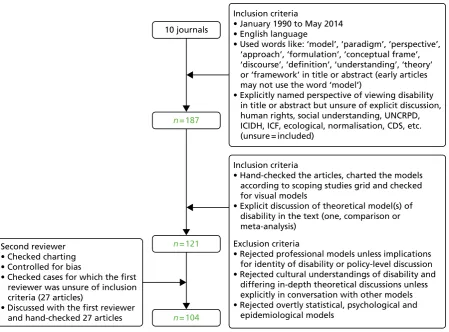
The refinement of the inclusion criteria through the mapping exercise meant that we were left with 121 articles. After scoping by the primary reviewer (MB), a second reviewer (KA) examined the validity of the findings of the primary reviewer. The second reviewer also checked and charted the 27 articles about which the first reviewer was unsure. As most of these articles were concerned with explicit discussions about disability and were not research-based, the first and second reviewer did not have to engage in an analysis of the methods and methodology or robustness of the research undertaken.
The results of our initial search strategy finally identified 104 articles explicitly about disability models, paradigms and theories (Figure 1). We used these articles to identify relevant secondary sources and grey literature such as major books and theories on disability theory and sociological theory linked to disability (such as that on chronic and long-term illness) as well as public health policy documents from national and global institutions such as the Human Rights Commission, the WHO, the UN, the UN Children’s Emergency Fund, the International Monetary Fund and the World Bank. An initial list was drawn up largely based on the volume of citations. We also discussed and agreed with our project steering committee what the more influential and most important texts (books and chapters) on disability theory, models and definitions were. This literature provided important and nuanced theoretical context to our analysis, while reflecting current debates about disability and how these have changed over time. To this extent, our account is a broad and extensive map of current theories and models of disability.
Reflections on the literature
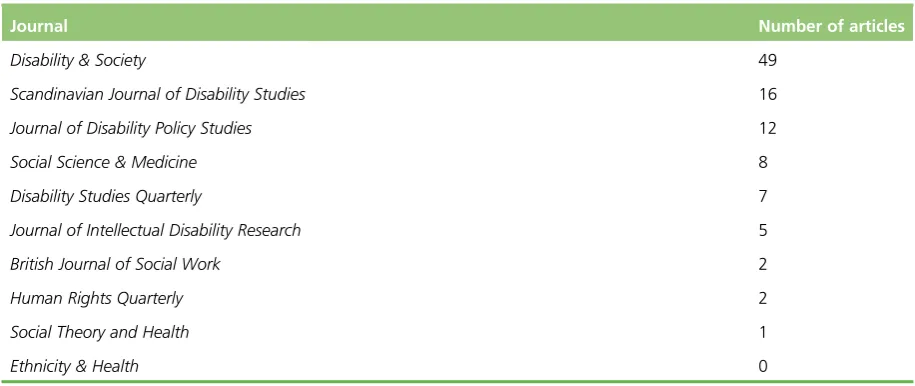
More theoretically informed articles were found in two journals, namelyDisability & Societyand Scandinavian Journal of Disability Research.Furthermore, although we assumed that journals such as Human Rights Quarterlywould include discussion about disability rights, our review suggested otherwise. Ethnicity & Healthhad no discussions of models andSocial Theory & Health, for example, contained only one article that was relevant (Table 1). The journalDisability & Societywas largely UK focused, although it published foundational work on the social model and functioned as a genealogical review through which to find books, articles and grey literature. The Scandinavian Journal for Disability Researchfocused on Scandinavian or European thought on disability with well-established international academics and was especially strong on linking more relational and psychological accounts of disability.
The most geographically diverse journal was theJournal of Intellectual Disability Research. By way of contrast, theJournal of Disability Policy Studies was completely US based.Social Science & Medicinewas heavily biased towards the international application of more medical models of disability andDisability Studies Quarterlywas the most innovative by linking disability with cultural studies. We would have expected there to be a lively debate on models of disability in theBritish Journal of Social WorkorSocial Theory and Health; however, this rarely occurred. Furthermore, despite an interest in disability and human rights, especially in an international context,‘disability’tended to be undertheorised inHuman Rights Quarterly. Although research on disability had been published inEthnicity & Health, no conceptual discussions were found.
Geographically, most discussion of theoretical models were located in the Global North (the UK, the USA and Europe) rather than the Global South, where, it is argued, more disabled people are located.12,122
Across our review period, we found only one article discussing a rights-based model from the Global South (Table 2).
10 journals
n = 187
Inclusion criteria
• January 1990 to May 2014 • English language
• Used words like: ‘model’, ‘paradigm’, ‘perspective’, ‘approach’, ‘formulation’, ‘conceptual frame’, ‘discourse’, ‘definition’, ‘understanding’, ‘theory’ or ‘framework’ in title or abstract (early articles may not use the word ‘model’)
• Explicitly named perspective of viewing disability in title or abstract but unsure of explicit discussion, human rights, social understanding, UNCRPD, ICIDH, ICF, ecological, normalisation, CDS, etc. (unsure = included)
Second reviewer • Checked charting • Controlled for bias
• Checked cases for which the first reviewer was unsure of inclusion criteria (27 articles)
• Discussed with the first reviewer and hand-checked 27 articles
Inclusion criteria
• Hand-checked the articles, charted the models according to scoping studies grid and checked for visual models
• Explicit discussion of theoretical model(s) of disability in the text (one, comparison or meta-analysis)
n = 121
n = 104
Exclusion criteria
[image:37.595.86.536.69.401.2]• Rejected professional models unless implications for identity of disability or policy-level discussion • Rejected cultural understandings of disability and differing in-depth theoretical discussions unless explicitly in conversation with other models • Rejected overtly statistical, psychological and epidemiological models