through self-transformation
by Steven Joseph Reissig
Submitted in fulfilment of the requirements for the
Degree of Doctor of Education
University of Tasmania
This thesis contains no material that has been accepted for the award of any other degree or diploma in any university.
To the best of my knowledge and belief this thesis contains no material previously published by any other person except where due acknowledgement has been made.
Signature:
Date: ···f···
/7
-Tul1-1
-
)a),
This thesis works to deepen my understandings of empathic intelligence in relation to leadership. It builds upon experiences I have had as an education leader and as a fellowship holder in the United States where I discussed strategy and practice with key theorists, visited and observed at selected schools, and interviewed students and teachers, as well as principals who uniquely led their educational communities. The professional relationships formed during this experience provoked questions about my own leadership style and practice as principal of a rural Tasmanian High School. From these experiences I have developed a thesis that excellent school leaders demonstrate high degrees of empathic intelligence. This work explores the theory of empathic intelligence and how it can elucidate understanding of teaching and leadership. This thesis is structured by five key intentions, which are to:
• unfold an understanding of empathic intelligence informed by Arnold (2005); • explore how empathic intelligence might be understood and enacted in a Tasmanian
high school;
• use these understandings to unfold a concept of effective leadership at a range of levels in the Tasmanian system;
• reflect upon how I might extend my ability as an empathic leader; and • critique and deepen the theory of empathic intelligence (Arnold 2005).
To inform this study and support my personal theorising of highly effective empathic leadership, I critique theories of intelligence and leadership developed by Duignan (2004, 2003, 2002), Arnold (2005), Gardner (2000, 1993, 1991), Blythe et al. (1998) and Perkins (1992).
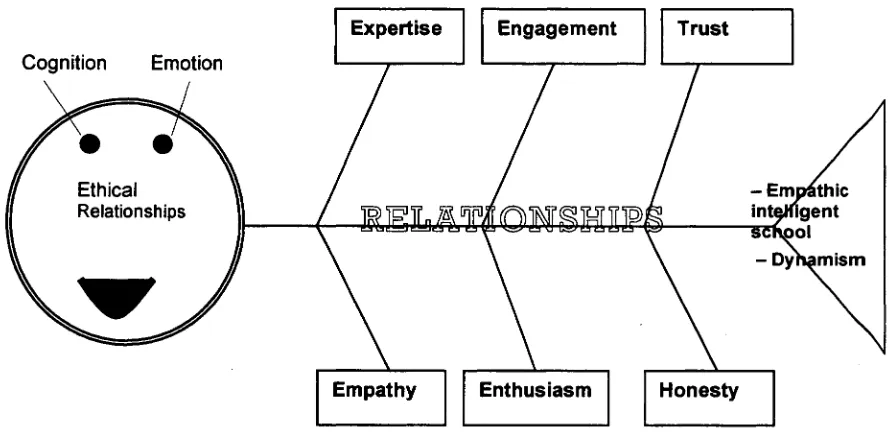
I respond to my thesis intentions through processes of interpreting conversations (Davis et al. 2000; Van Manen 1990), narratives (Eakin 1999; Richardson 2000) and fictionalised letters (Ospina & Dodge 2005; Ellis & Bochner 2000). The processes of inquiry support me to: uncover four key elements of powerful empathic leadership (enthusiasm, engagement, expertise and, of course, empathy); deepen this theory by including the additional elements of trust and honesty; and suggest that links need to be developed through professional relationships.
This work is dedicated to my family who have provided enormous support throughout my writing and commitment. A special appreciation must be extended to my wife Madelaine and children Casey and Keely. Without their patience I would have been unable complete this major inquiry. As a family, they encouraged my ongoing pursuit to deepen my own learning in order to support others in their learning. In addition, I would like to extend my
appreciation to my parents, Joe and Sue, and also to my grandparents, Joe Senior and Charlotte, who instilled in me the importance of working hard and aiming to further my learning at the university level.
Declaration ii
Authority of Access iii Abstract iv
Dedication and thanks v Contents vi
Tables and figures ix
SECTION A: My lived experience — Introduction
1
Chapter 1 My lived experience
2
My frames 2
Frames of others 3
Framing my thesis 4
Professional frames 4
A frame of disempowerment 5
An American frame 6
Present professional frame 7
Current understanding as a frame 9
Framing questions 10
Framing my inquiry 11
Chapter 2 Making connections
12
Philosophical and theoretical framing 12
Frames of Intelligence 13
The intelligence quotient 13
Brain physiology as a frame 16
Empathy as an important frame 17
Empathic intelligence as an emergent frame 18
Definition of empathic intelligence 20
The four Es of empathic intelligence 20
Leadership as a frame 21
Searching the Tasmanian context 24
Chapter 3 Professional framing
26
Why use interviews? 26
My United States experience 28
Framing my conversations — learning through meeting people 29
Summary of Section A 32
SECTION B: Ways of inquiring — Introduction
33
Chapter 4 Interviewing as inquiry
37
Introduction 37
Structured interview 39
Semi-structured interview 39
The perferred form for my inquiry 40
What are the advantages of using interview? 41 What are the cautions in using interview? 42
Interviewing in the United States 44
How I framed the US interviews 45
Design of the semi-structured Interviews — a critique 48
Chapter 5 Writing letters as inquiry
50
Introduction 50
The epistemology and ontology of practice 53
How I understand narrative inquiry 53
The flow experience 55
Approaches to narrative inquiry 58
Crystallisation 61
Narrative inquiry and professional learning 62
Summary of Section B
64
SECTION C: Interpreting my inquiry — Introduction
66
Chapter 6 Enthusiasm: Letters to Amelia
68
Introduction 68
The Amelia letter series 69
Comment 77
Chapter 7 Expertise: Letters to Tim
80
Introduction 80
The Tim letter series 81
Comment 90
The common characteristics of 'expert' teachers 93
Chapter 8 Engagement: Letters to Mike
98
Introduction 98
The Mike letter series 100
Comment 108
Chapter 9 Empathy: Letters to Frank
112
Introduction 112
The Frank letter series 113
Introduction 126 Deepened understandings of empathic intelligence — 129
personal possibilities and school transformations
A renewed conceptualisation of empathic leadership 132 Elaborating on the seven renewed superordinate elements 134
1 Understanding expertise 134
2 Understanding engagement 136
3 Understanding trust 138
4 Understanding relationships 139
5 Understanding empathy 141
6 Understanding enthusiasm 143
7 Understanding honesty 145
My renewed conceptualisation of empathic leadership: some comments 146
Opening possibilities for the Tasmanian educational system 147
Commenting on this inquiry 152
Final words and final questions 154
Appendices
Appendix A: Observational schedule 156
Appendix B: Semi-structured interview questions for teachers/leaders 157
Appendix C: Semi-structured interview for students 159
References
160
Page
Table 1: Gardner's (1993) model of Multiple Intelligences 15
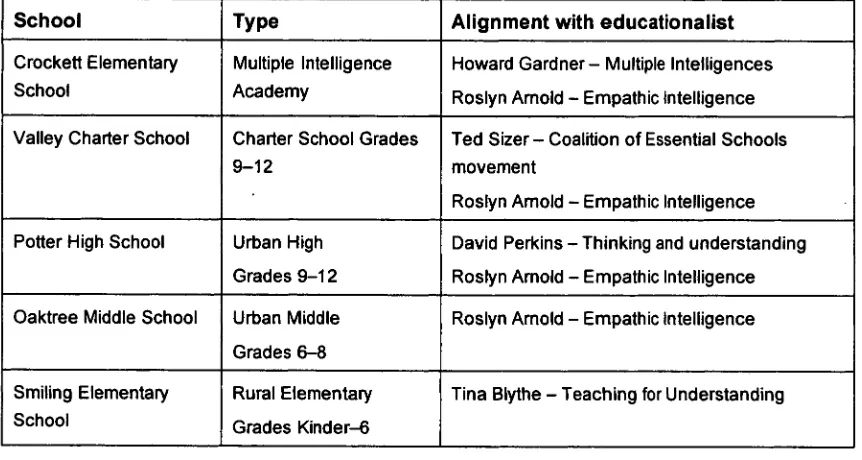
Table 2: Representation of schools visited for inquiry 29 and alignment with educators
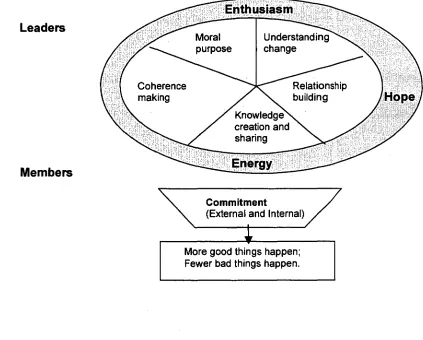
Figure 1: A framework for leadership (Fullan 2001) 131
Introduction to Section A
My lived experience
When undertaking an inquiry into empathic leadership with a focus on self-transformation it is necessary to unfold for oneself and the reader the current understandings that I, as
inquirer, bring to this work. I use the metaphor of frames in Section A. I understand this metaphor through the work of Gadamer (2004) and his conception of pre-understandings. Gadamer suggests that all understandings emerge within the horizons of things we already know and have experienced. He further suggests that all understanding is self-understanding. The importance of interpreting pre-understandings to enable self-transformation has more recently been used by Lakoff (2005) when thinking about how values frame political debate.
CHAPTER
1
My lived experience
My frames
My working life, spanning close to 15 years, has been grounded in the Tasmanian Department of Education. I am immersed within this bureaucracy and have been offered many experiences and opportunities — some exciting, some stressful and many personally rewarding. I am poised to reflect upon recent past experiences, anticipate new ones and create — within my professional expertise and complex sense of identity — the conditions to be a very effective leader. Teaching students and adults, leading a school community and mentoring colleagues allows me to develop an inner sense of satisfaction. I believe every educator in every school should aim to be a teacher, a leader and a learner, but what do those words mean to me? I live and work each day, have hopes to be happy and make a difference to my life and the lives of others. Do we all share these hopes and dreams? For me, life continues to be a journey, a constant examination of my identities underpinned by a firm commitment to be the best educator and leader that I can be.
Each day I hope to make a difference to staff and students by leading a school where informed decisions have a positive impact on teaching and learning. In other cases, by asking probing questions, supporting staff and developing leaders within our school, I intend to empower and develop highly effective teachers and leaders. However small the difference I make may be, what is important is not what I get out of being a school principal, a parent, a husband or an academic inquirer — it is what I become that is truly important (Beistegui 2005; Gadamer 2004). To enable me to achieve these goals, I have committed to a course of inquiry, study, professional reading and writing to internalise the values, processes and insights most likely to inform my practice.
United States as a recipient of a prestigious Hardie Fellowship,' which supported five months of learning. These experiences allowed me to have many rich conversations with academics, teachers and students, with principals and superintendents. I carried out school and class observations and established important professional friendships.
For me, each day is an opportunity; each day presents many doors opening to many new experiences enabling me to develop self-understanding and wellbeing. I find myself wondering, isn't it always our goal to search for experiences and positive feelings within ourselves? Csikszentmihalyi (1990) represents this positive feeling as 'flow', and describes it in his studies of people's optimal experiences:
... every flow activity, whether it involved competition, chance, or any other dimension of experience, had this in common: It provided a sense of discovery, a creative feeling of transporting the person into a new reality. It pushed the person to higher levels of performance, and led to previously undreamed of states of consciousness. In short, it transformed the self by making it more complex. In this growth of the self lies the key to flow activities (Csikszentmihalyi 1990, p. 74).
Frames of others
I consider Csikszentmihalyi's (1990) conception of a fluid self to be parallel with my own understanding of identity. A key frame for my theorising empathic leadership resonates with the work of Van Manen (1990), with its centering on the importance of lived experience. I am really interested in what other people have to say about their lived experience of the classroom, about how they understand their relationships (in schools and classrooms) with a particular focus on the empathic relationships they might form with students. As Mackay (2005) suggests, all social inquiry is based on indirect experience, borrowed data and people's accounts of what they are thinking and feeling.
The broad aim of this inquiry is to understand what empathic leadership actually may look like, to reflect on my own leadership with the ultimate outcome of becoming an empathic leader of a Tasmanian High School. All of these experiences have provoked in me the desire to explore the relationship between empathic intelligence and leadership, to uncover what it looks like in a Tasmanian context, and to examine my own leadership. Here, qualitative inquiry processes suit my interests and offer an appropriate response to the kinds of questions which emerge from inquiring into a phenomenon like empathic intelligence
'The Hardie Fellowship is offered through the Department of Education, Tasmania
(Denzin & Lincoln 2003, 2005). How can I gain this data and be sure that it is trustworthy? I am interested in inquiring into our emerging meanings and understandings about the
relationships we have in our classrooms and in schools because I believe these relationships are linked to empathic leadership. I believe that interviewing is a powerful process to support this inquiry (Denzin & Lincoln 2003, 2005; Hatch 2002; Burns 2000; Oppenheim 1999; Kvale 1996; Seidman 1991). I can make connections between my own lived experiences and other people's stories of experience to deepen my understanding.
Framing my thesis
This inquiry is a story, a reflective process through which I continue to learn. Like
Richardson and St Pierre (2005), I understand writing as a method of inquiry which involves moving through a series of successive stages of self-reflection. The written representations flow from my experiences as an inquirer in the United States and as a teacher and principal in Tasmania. I emerge, I believe, as a better empathic leader, better able to understand and reflect on my behaviours and thinking. A recent search for inspiration uncovered the paper, 'How to Change the World: Lessons for Entrepreneurs from Activists' (Kahane 2001). This paper illustrates that to make any significant change, first it is important to change yourself and your own thinking. It was not just the title that jumped out at me, but also the way the paper finished:
Let me end and summarize ... When he had changed himself, his family changed. And when his family changed, his neighbourhood changed. When his
neighbourhood changes, his country changed. And when his country changed, the world changed (Kahane 2001, p. 25).
Professional frames
search for understanding and personal excellence (Palmer, 1998; Postman, 1979; Harvey, 1996).
This inquiry is underpinned by exploring and extending the values which shape my life. Some of these include equity, social justice, tolerance, honesty, integrity, connectedness, resilience, achievement and responsibility. Some of these values resonate with those values within the Tasmanian Essential Learnings Curriculum Framework2 which are connectedness, resilience, achievement, creativity, integrity, responsibility and equity. Some of my values link with those suggested in the work of Arnold (2005), including hope, trust, resilience and the love of self and others, intelligent caring and empathy.
It is these values that inspired me to seek a position of principal in a school located within a youth detention centre. The opportunity to work with very marginalised students
foregrounded the importance of empathic leadership. Before departing for the United States on my Fellowship in 2004, my experience as a principal of that school, a facility catering for the needs of students aged 11-18 who had been remanded or sentenced in custody, was one of continual reflection on the needs of those students.
A frame of disempowerment
Brett,3 for example, was a student of mine within the youth detention centre, who at 15 years of age was about to be released after serving three months in detention. His case
management plans were arranged, dad was going to meet him at the bus stop in Hobart, and he was to have a youth justice worker on the outside to help him to reintegrate into the community and school. However, upon release, Brett was not met by dad, he walked home only to find dad drunk in the lounge room. The fridge was full of beer and little food. When Brett decided to head into his bedroom he noticed that one of his dad's friends was asleep in his bed. No food, no bed, no-one to meet him at the bus stop, and a dad who was intoxicated — where was Brett to go? Within 12 hours Brett re-offended and was remanded in custody, back to the youth detention centre. I might suggest at this point in his life the detention centre was the only place he called home!
2 Tasmanian Essential Learnings Framework has a set of values and principles underpinning the curriculum.
http://www.education .tas.gov.au/school/educators/curriculum/elscurriculum/valuespurposes.pdf accessed 27/04/06.
The experiences of working with Brett and others like him allow me to reflect on the needs of all students irrespective of socioeconomic status, race, class, ethnicity, gender, rurality, Aboriginality, as well as those students with special and/or additional needs.4 I remember that although routines at the youth detention centre were a strong part of our daily and weekly programs, new challenges were inevitable. There may have been an influx of new students who were remanded, a student may have been released without any planning, or a new student would bring new challenges to the life of our school. My life as a principal was far from boring! Here I came to understand that positive relationships were important and trust was crucial; it was critical that I clearly understood the boundaries for behaviour. My students needed to know through my actions and conversations that I was working in their best interests, that I was genuine. I quickly learnt that positive relationships underpin every moment of every day. Perhaps it was here, with these rich experiences, that I began to understand my sense of being — of being true to myself and, as Duignan (2002) suggests, of becoming an authentic leader. Duignan (2002) implies that authentic leaders generate a rich portfolio of experience as they treat others with dignity; treat them as 'spiritual assets', rather than as just economic commodities, investments or capital.
It was this principalship that, above all else, reaffirmed a strong belief that all students ought have every opportunity to access, participate in and achieve through an educational program that is engaging and purposeful. As a principal, I value the idea that there is no such concept as a bad student, but sometimes students make bad choices. A good education enables students to understand and modulate the influences upon their choices (Dewey 1997; Gardner 1991; Whitehead 1961). The better able I am to understand my values and
experiences, the better positioned I am to help others to do the same (Radnor 2001; Elmore 2000). Throughout these experiences it was important to treat others the way I would like to be treated — the fundamental ethic of the Golden Rule. In my situation, I wondered how my moral and spiritual understandings influenced my leadership and might redress a frame of disempowerment.
An American frame
These experiences as principal of a school inside a youth detention centre inspired me to further my professional learning. I had a new passion: to understand empathic intelligence. Arnold's (2005) strong research around empathic intelligence was a primary motive for me to examine this from a leadership perspective. I wanted to deepen my understanding of
4http://www.dest.gov.au/sectors/school_education/policy_initiatives_reviews/national_goals_for_scho
leadership and effective teaching and thought that I could gain this through visiting schools overseas. Influenced by my academic supervisor, I decided to apply for a Hardie Fellowship.
The Department of Education, Tasmania states: 'The Hardie Fellowship provides a number of teachers employed by the Department of Education, Tasmania with the opportunity to undertake a period of research or study at an approved university or tertiary institution in the United States of America each year'.5 In June 2004, I prepared an itinerary for the upcoming months. Some key decisions were made about which leading academic I would like to work with, which professional learning path I would like to pursue, and how this would all link with my own doctoral work.
In Tasmania, the Essential Learnings curriculum was underpinned by an effective framework for planning learning sequences,6 which led me to seek out Harvard University Graduate School of Education researcher Tina Blythe, author of the Teaching for Understanding Framework (Blythe & Associates 1998). I thought it possible that all the schools I intended to visit, which I thought were linked with leadership and empathic intelligence, would be using the Teaching for Understanding Framework.
As a school principal and one with a passion for learning, I intended to use my experiences in the United States to shape my own doctoral work. I carried out extensive inquiries in five schools and had personal conversations with a range of leading educational scholars, all of which shaped my doctoral work. Each of the five school experiences enabled me to capture the philosophy of the school, its history and its educational fabric. I was able to examine each school and its relationship with the Teaching for Understanding Framework (Blythe & Assoc. 1998). For me, as my interest was with empathic intelligence, I was able to crystallise (Richardson 2000) my observations and thinking with that of empathic intelligence and leadership. It was here I formed a strong interest in an area called empathic leadership.
Present professional frame
Sitting in a small unit with my family in Salem, Massachusetts, we were all having dinner and talking about Tasmania. I remember making notes about my weekly school/university visits, I decided to peruse the Tasmanian Department of Education website to search for advertised principal positions. The experiences throughout the Fellowship were so powerful
5 http://www.education.tas.gov.au/search?mode=results&queries_Contents_query=hardie+fellowship, accessed 08/06/2006.
and motivating, I knew that I needed to work in a larger school in order to really implement these emergent understandings in a new context. This thinking resonates closely with that of author Richard Florida, who as a Professor of Public Policy at George Mason University in the United States discusses the necessity of a creative economy. Florida (2005) argues that societies must invest more energy and opportunities to tap the full creative capabilities of every single human being. He further suggests that to move beyond a model of looking at society as creating opportunities for people, a truly creative society will flourish from the value of opportunities and ideas flowingfrom its people (Florida 2005, p. 248).
Using a creative, imaginative lens to permeate my thinking, an opportunity opened when the Stafford High School principal position was advertised in November 2004. I remember sitting with my family and discussing the opportunity and challenges involved in not only applying, but of relocating if successful. The town of Stafford is 70 km, or a one-hour drive, from Launceston, the second largest city in Tasmania with a population of just over 98,000.7 Stafford is a rural town, the largest in the North East of Tasmania. The main industries are farming, agriculture and the timber industry. Putting possible relocation and travel aside, here was a school with 400 students, over 55 teaching and non-teaching staff and a very supportive community. For me, this was a challenge as I imagined a large field of applicants, the school was known as being very traditional, and the previous five principals had all retired from the school. The facts were: I was 33 years of age, full of innovative ideas and a wealth of professional reading, recent attendance at Harvard University's Graduate School of Education classes, and fresh from carrying out inquiries in a number of schools throughout the United States. After weighing everything up, I decided that this was a great opportunity and any challenge would be met on merit, through collaboration, consultation and decisions based on the needs of students.
After finishing my written application and visualising myself as principal of Stafford High School, I submitted my application from the United States. After three weeks passed, one evening (close to midnight) a telephone caller informed me that I had been short-listed for interview, to occur within the next week. I was then interviewed by telephone, which can be a disadvantage as I was unable to make eye contact with the panel, and it is hard to convey a sense of self by telephone (Davis et al. 2000). I was, however, pleased with the answers to the questions I provided. Two weeks later, while walking through an electrical goods store in New Jersey, the chairperson of the panel called with the news that I was the successful applicant. The following weeks were like a rollercoaster, emotions mixed, a great
opportunity had just been presented and an opportunity to link my United States experiences with a new environment — Stafford High School. More than ever, I felt the need to
understand deeply the events, experiences and opportunities impinging upon my professional life and its challenges.
Current understanding as a frame
As a leader, my practice is always to lead from the front, be a good listener, work well with others, and be caring, kind, supportive and visionary. Each of these qualities can test one's resolve at times, but they form an important constellation of attributes underpinning my practice. As the role of the principal is constantly being stretched with more responsibilities and more central office requirements, the days of having a hierarchical leadership
philosophy are long gone. Perkins (2003), in his book King Arthur's Round Table, suggests that there is much to learn from the most familiar stories of Arthurian legend and the round table. He implies that the complexities of modern business require organizational
collaboration where hierarchies are reduced, collaboration enhanced and interactions easier. Like King Arthur, Perkins (2003) argues that successful leaders must rely on the input and expertise of those around them, and that decision-making processes must be opened to anyone who can offer insight and wisdom. Similarly, Davis et al. (2000) foreground the importance of dialogue in processes of teaching and learning.
The challenges as a leader are always centred on relationships. Who can you trust? Who is the best to consult with on this matter? What skills and insights do others have within the leadership team? Who, on staff, but not having a 'leadership title' can I develop as a future leader and effective contributor now? One of the challenges I face is developing a shared vision that is research-based, futuristic, yet maintains those practices and processes that are important to our school. Balance is important, support for everyone critical. Hargreaves (2003) suggests that radical innovation starts from the future and works backwards. Interestingly, another bestselling author, Collins (2001), in analysing why some leading companies made the transition from good to great, presents a view that the key to effective transformation is getting the right people before planning change. 'The executives who ignited the transformations from good to great did not figure out where to drive the bus and then get people to take it there. No, they first got the right people on the bus (and the wrong people off the bus) and then figured out where to drive it' (Collins 2001, p. 41).
schools in Tasmania, is that senior staff positions are usually already in place when moving to a new school. Hence, the immediate challenge is to understand each leader's, (and potential leader's) personal attributes, strengths and areas where they can contribute to school growth and enhancement. The irony of leadership is that to me it appears at different levels, places and times. As a principal, to be effective in such a rapidly changing
educational world, I frequently have to critique and reconstruct the way in which leadership at our school level is conceptualised and practised.
I can no longer rely on philosophies, beliefs about leadership and management practices that were developed for schooling conditions of the early twentieth century. As I interact with many people within school on a daily basis, the challenge is to construct and reconstruct the reality of living and working productively, yet compassionately and empathically together each day. In the past, and perhaps in some schools today, there is still a passé focus on the principal as the sole leader or manager of the school. Duignan and Bezzina (2006) suggests that a contemporary view of leadership in a complex organisation, such as a school, requires the energy, commitment and contributions of everyone who works there. Duignan presents a view that leadership should be perceived as a shared communal phenomenon derived from the interactions and relationships of groups. These thoughts have helped me frame the intentions and questions that frame my inquiry.
Framing questions
From this set of frames, and in looking inward, a set of questions around what it means to be an empathic leader emerge. In many ways, effective principals start by asking questions and see themselves as being able to ask the right questions to generate the right answers. What is important for me in developing leadership is breaking down the perception that leaders have all the answers, in favour of the more dynamic view of leaders being able to ask guided, probing questions. In general, when I think about questioning, I find it hard not to reflect on the contributions of the genius Leonardo Da Vinci. In examining Da Vinci's extraordinary works, Gelb (1998) argues that the Seven Da Vincian Principles may appear obvious to leaders but need to be developed, remembered and applied. These principles offer a way of challenging leadership behaviour and performance, starting with oneself and moving to the interconnectedness of other people and systems. The Seven Da Vincian Principles, in Leonardo's native Italian, are:
1 Curiosita An insatiably curious approach to life and an unrelenting quest for
2 Dimostrazione A commitment to test knowledge through experience, persistence, and a willingness to learn from mistakes.
3 Sensazione The continual refinement of the senses, especially sight, as the means to enliven experience.
4 Sfumato (Literally 'Going up in smoke') A willingness to embrace ambiguity, paradox, and uncertainty.
5 Arte/Scienza The development of the balance between science and art, logic and imagination.'Whole-Brain' thinking.
6 Corporalita The cultivation of grace, ambidexterity, fitness, and poise.
7 Connessione A recognition of and appreciation for the interconnectedness of all things and phenomena. Systems thinking. (Gelb 1998, p. 9)
In many ways these principles might be seen as connected in some way to Arnold's (2005) empathic intelligence. For example, the principles of curiosity, ambiguity,
interconnectedness, balance and imagination all resonate with empathy, engagement, enthusiasm and expertise. For me, leadership attributes are shaped by context. Different leadership opportunities provide me with an opportunity to further develop as a person, a way of inner knowing.
Framing my inquiry
So, my lived experience leads to my inquiry with five intentions; they are to:
1 unfold an understanding of empathic intelligence informed by Arnold (2005); 2 explore how empathic intelligence might be understood and enacted in a
Tasmanian high school;
3 use these understandings to unfold a concept of effective leadership at a range of levels in the Tasmanian system;
4 reflect upon how I might extend my ability as an empathic leader; and 5 critique and deepen the theory of empathic intelligence (Arnold 2005).
From these five intentions the following questions emerge:
• Do all leaders see effective leadership as leading through questioning? • What/who do leaders bring to leadership and leading?
• What/who do you become by leading?
• Do you become a better person by leading others? • Who am I leading?
CHAPTER
2
Making connections
Philosophical and theoretical framings
This chapter inquires into empathic intelligence, links withflow, and also leadership. The inquiry is a search towards understanding of empathic intelligence and its relationship with teaching and leadership. As I reflect on my role as a principal, each week appears to be getting busier and busier, but the irony is that the busier I seem, to be, the more content I am with my responsibilities and, of course, with the many people I have interactions with each day.
Empathic intelligence is taken to mean a sustained system of psychic, cognitive, affective, social and ethical functioning derived from an ability to; differentiate self-states from others' states, engage in reflective processing, mobilise a dynamic between thinking and feeling in self and others and commit to the well-being and development of self and others (Arnold 2005). For the purposes of this inquiry project, and to operationalise it, this broad definition of empathic intelligence is used.
Let us begin by looking inside the formal places where traditionalists believe student
learning occurs — the classrooms. Classrooms are complex places where instruction occurs in an ongoing negotiation of roles between students and teachers, involving lesson content which evolves during a lesson and which is also ongoing over time. The term 'intelligence' has evolved over time, moving from a singular measure of cognition to a more complex interaction involving a number of 'intelligences'. As scientific understanding of the human brain has developed, so have models defining intelligence.
emphasis on caring environments. This chapter explores the concept of empathic intelligence as another 'intelligence' as it correlates with a teacher's or leader's ability to maximise learning outcomes.
The purposes of this chapter are to:
1 investigate the concept of intelligence and discuss two models; 2 develop a surface understanding of brain-based learning;
3 investigate the concept of 'empathic intelligence' and also its relationship with transformative education;
4 discuss what an empathically intelligent organisation, such as a 'community of schools' may look like; and
5 develop an understanding of recent reviews on leadership to examine links with 'empathic intelligence', and so present a new form of leadership — empathic leadership.
Frames of intelligence
Intelligence is a notoriously difficult concept to understand. The way we understand
intelligence can lead us to (positively and negatively) valued differences. Davis et al. (2000), unfold the complicated ideas about intelligence and link concepts of intelligence to particular understandings of education, psychology and being human. Like Arnold (2005), they suggest that intelligence is far more than those factors captured by intelligence quotient assessments. They foreground the importance of language and the relational in understanding intelligent behaviour in the twenty-first century. In the Collins (2003) dictionary, intelligence is 'a quality of being able to understand, learn and think things out quickly'. This definition is limited and ideas or concepts do not always need to be thought out quickly by an individual to define them as 'intelligent'. Two models or theories of intelligence which this thesis discusses are Gardner's (1995) theory of 'Multiple Intelligences' and Sternberg 's (1995) 'Systems Model of Intelligence'. Both theories are somewhat broader than conventional theories of intelligence that focus predominantly on cognition (thought). I uncover some of the more historical views of intelligence in future sections of this chapter.
The intelligence quotient (IQ)
'normal' children. These tests (the bases for the still popular Stanford-Binet IQ tests) were based on the premise that intelligence is innate, stable and inherited, and could be objectively (or scientifically) measured. The concept of an intelligence quotient, or IQ, was one product of this mechanistic and reductionist 'scientific' view. This view posited a limited and
microcosmic interpretation of intelligence. Ithalfa (1994, p. 17) suggested that the IQ concept of intelligence as a single dimension along in which to judge children and adults is among the most personally and socially damaging ideas of the twentieth century. This
reductionist paradigm is congruent with other educational approaches based on behaviourism (see, for example, Skinner 1976), like task analysis and isolated skills training, which were often used as a justification for isolating students with high support needs. This interpretation of psychology as science has fostered a negative view of difference, and entrenched and legitimised differences between groups and individuals.
There are different ways of approaching psychology as a science. At one extreme is the reductionist, rationalist, mechanistic approach which is characterised by theorists like Terman (1916) and Skinner (1976), at the other is a more relational, holistic, ecological approach characterised by theorists like Piaget (Wadsworth 1996).
Gardner (1995) sought to broaden human potential beyond the confines of an IQ score. He questioned the validity of determining one's intelligence by taking a person out of their natural environment and asking them to perform a test of which they would probably not complete again. Gardner (1995) suggested that intelligence has more to do with an individual's capacity to solve problems and 'fashion products' in a context-rich and
naturalistic setting. He suggested that every individual has a range of intelligences, originally seven (now eight) and that individual's possess intelligence in all eight areas, some more developed and evident than others. Gardner (2000) suggests that individuals possess
different kind of minds, featuring different blends of mental representations and as such will approach, tasks differently. For me, Gardner's suggestions have added an important
dimension of complexity to notions of intelligence and the ways students learn.
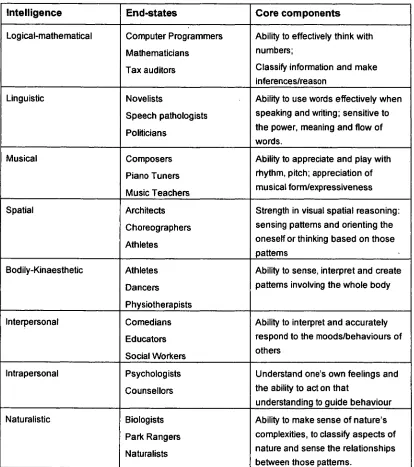
intelligent within it. Gardner's model of eight intelligences is illustrated in Table 1 (Bennet & Rolheiser 2003, P. 342).
Table 1: Gardner's (1993) model of Multiple Intelligences
(Bennet & Rolheiser 2001, p. 342)
Intelligence End-states Core components
Logical-mathematical Computer Programmers
Mathematicians
Tax auditors
Ability to effectively think with numbers;
Classify information and make
inferences/reason
Linguistic Novelists
Speech pathologists
Politicians
Ability to use words effectively when
speaking and writing; sensitive to
the power, meaning and flow of
words.
Musical Composers
Piano Tuners
Music Teachers
Ability to appreciate and play with
rhythm, pitch; appreciation of
musical form/expressiveness
Spatial Architects
Choreographers
Athletes
Strength in visual spatial reasoning:
sensing patterns and orienting the oneself or thinking based on those
patterns .
Bodily-Kinaesthetic Athletes
Dancers
Physiotherapists
Ability to sense, interpret and create
patterns involving the whole body
Interpersonal Comedians
Educators
Social Workers
Ability to interpret and accurately
respond to the moods/behaviours of
others
intrapersonal Psychologists
Counsellors
Understand one's own feelings and
the ability to act on that
understanding to guide behaviour
Naturalistic Biologists
Park Rangers
Naturalists
Ability to make sense of nature's
complexities, to classify aspects of
nature and sense the relationships
between those patterns.
Another model of intelligence posited by Sternberg (1985, 1988) is that of a triarchic theory
intelligence as a relationship with: a) the internal world; b) experience; and c) the external world (Sternberg 1995, p. 395). This model acknowledges that people may apply their intelligence to many different kinds of problems.
Gardner's (1993) and Sternberg's (1985, 1988) models of intelligence have commonalities. Both acknowledge an intelligent person as someone who does not necessarily excel in all aspects of intelligence. Rather, they both suggest, intelligent people know their strengths and weaknesses and find strategies to develop these qualities. Sternberg (1995) presents a view that both models are somewhat broader than conventional theories of intelligence, as they include all aspects of intelligence. He further suggested that a future trend would be toward a broader, rather than narrower interpretation of intelligence. This is supported by educational thinkers like Davis, Samara and Luce-Kapler (2000). My reading of Arnold (2005) supports my understanding that in many models of intelligence, the emotional and empathic is not foregrounded. Yet, we all know our emotional states affect our being.
Brain physiology as a frame
Arnold (2005) leads us to understand that emotion and cognition are inextricably linked through empathic intelligence. The Phineas Gage event which occurred in the mid-1800s was a catalyst for inquirers making a scientific link between emotion and cognition. The event involved a construction foreman receiving brain damage through a railroad accident which damaged an area in his prefrontal cortex. This type of damage — called Phineas Gage Syndrome (Rosenthal 2002, p. 15) — results in a changed personality and behaviours, such as an individual becoming rude, insensitive and boastful which can lead to problems with personal relationships. Damasio (2000) and LeDoux (1996) suggest that a complex relationship exists between the cognitive and emotional parts of our brain. Arnold (2005) further posits the view that educators need to respect that student motivations and feelings should be respected just as much as learning content. Furthermore, it is not just what we learn but how we feel about what we learn, which counts in the future. When one cares about a learning experience, it tends to engage us and influence us more strongly, than if one does not care or sees no relevance whatsoever.
In recent years there have been many curriculum reforms globally that aim to engage students and encourage them to think critically and reflectively. One of these curriculum models places thinking at the centre of all essential learning outcomes in Tasmania.8 Here students are encouraged to think deeply when working through problems and activities.
Andrade (1999) discusses the importance of using rubrics to promote thinking and understanding. Here, she suggests, rubrics allow students to be actively involved in the assessment process by clearly identifying assessment criteria, grading scales and collaboratively developing the various elements within the rubric. The rationale behind engaging students in the process up front, in developing a rubric, is an attempt to place students in the heart of education.
Empathy as an important frame
As global citizens we often hear that there is too little 'caring' in the world today (Noddings, 1992). Educationally, schools aim to be supportive school communities, which are in essence safe and caring places where learning is optimised. Often students refer to a teacher as 'a caring teacher' or a class as being a subject where everyone, including the teacher, 'cares' for each other. It is difficult to define caring in this context; however, one aspect of caring is empathy. Empathy is a complex multidimensional construct. Piaget (1932) conceptualised empathy as a cognitive process involving one's ability to role take. Other psychologists (Eisenberg & Strayer 1987) conceptualised empathy as an affective phenomenon that touches emotional facets that in turn lead to prosocial behaviours and actions. Hoffman (1987) posited a view that a more rigorous and thorough understanding can be found through the study of the contributions of both the cognitive and affective aspects.
Empathic intelligence as an emergent frame
Building on the examples presented in this chapter, there appears room for greater understanding and models of explaining intelligence. Goleman (1996) argues for a new intelligence — emotional intelligence. He suggests that a person's emotional intelligence includes the ability of a person to 'be able to motivate oneself and persist in the face of frustrations; to control impulse and delay gratification; to regulate one's moods and keep distress from swamping the ability to think; to empathise and hope' (Goleman 1996, p. 34). His concept of emotional intelligence suggests a link between cognition (thought) and emotions (feeling). While Goleman (1996) recognises that emotion and cognition have an effect on each other, what appears lacking is the unity between the two. For example, if what one thinks affects how one feels and vice versa, where does the ability of an individual to not only operationalise this for themselves but to imagine this relationship in others? Resonating with this very concept, is a new intelligence advocated by Arnold (2005), that of empathic intelligence.
In recent years a lot has been written about effective teaching and classroom pedagogy (for example, Stronge 2002; Darling-Hammond 2001; Marzano, Pickering & Pollock 2001). Perkins (1992) discusses the concept of 'smart schools' where he suggests that schools should be reconceptualised to foster deep learning and understanding. Blythe and Associates (1998) take the notion of 'smart schools' further by exploring new ways of teaching for understanding. Both these scholars hold the view that there is a link between increased student understanding and high quality pedagogy/classroom environments. Hattie (2003) and Berliner (2002), through empirical inquiry in classrooms, further conclude that teachers make a difference on student learning outcomes. The area that resonates with these views on teaching for understanding, which is posited strongly in their literature but appears deficient, refers to the inner qualities of the teacher. This area, which correlates with Gardner's (1993) intrapersonal and interpersonal intelligences but appears much richer and stronger, is that of empathic intelligence.
possible for one to critically question the nature of empathy and its validity in terms of empathic intelligence. The next part of this chapter explores the concept of empathy and attempts to provide by definition, an understanding of empathic intelligence.
Schlesinger (1984, p. 187) suggests the term 'empathic' has several interpretations. It can be used to characterise a person of whom we approve as an 'empathic person'. This usually means the person has a sensitive regard for others, likes people, is aware of and
accommodates others' needs and is sympathetic with their causes and alert to how they are feeling. In many cases empathy refers to a position from which the analyst interacts with another person. An important concept by which empathy could be scaled or measured in a psychoanalytic environment is proposed by Schlesinger (1984) who suggests that this scale
is like a continuum, at one end alienation with the patient, the other identification. He argues that the space in between the two ends of the continuum is a conflict-free area of empathy where the analysts can move freely towards and away from the patient, but positively enabling identification and alienation throughout the experience. Applied to a school environment, principals or teachers have, on a daily basis, situations where they move between the two poles of alienation and identification. It is through this movement between both that the principal or teacher can draw on an inner quality to effectively manage9 the situation.
Being empathic can contribute constructively to practice through the teacher's ability to recognise a teachable moment (Schoorman, 2002). Olney-Friedrich (2001) discusses a teacher who had a bald spot appearing on her head as part of alopecia areata, a disfiguring auto-immune condition. One student asked the teacher, 'Do you wear a wig?' Rather than adopting a defensive stance, the teacher decided to share the truth with her class. The resulting part of the lesson and subsequent lessons allowed for rich discussions about students being able to empathise with their teacher and each other. The simple discussion about her condition provided students with the opportunity to reflect on how their words can affect the way others see themselves. Students were able to understand other people's situations and feelings, whereby students realised they were not alone in dealing with bullies and negative comments made to others. Olney-Friedrich (2001, p. 61) was able to use this example and story to summise that 'Unless empathy is taught and modelled, students may never realise that many feelings and anxieties are shared by everyone'.
9 '
Definition of empathic intelligence
This chapter has introduced two models of intelligence, defined empathic as an emergent frame and provided an uncovering of empathic intelligence. So, how does one know and understand, by definition, empathic intelligence? Arnold (2005), through many years of empirical inquiry and personal reflection, has provided one definition of empathic intelligence.
Arnold (2005, p. 9) states that empathic intelligence is a sophisticated system of psychic, cognitive, affective, social and ethical functioning that is derived from an ability to:
I differentiate self-states from others' states;
2 engage in reflective and analogic processing to understand dynamics;
3 mobilise a dynamic between thinking and feeling and feeling in self and others; 4 work creatively in tacitly felt, but yet unrealised ways, guided by resilience and
adaptive capacity; and
5 commit to the wellbeing and development of self and others.
This definition allows for self-reflection and knowledge about the ways people learn and process experiences and reflects an educator's view of the world. It allows the development of empathic intelligence to be both affective and cognitive. Arnold (2005) further argues that empathic intelligence can be used to explain the phenomenon of the way some people can influence others through their capacity to engage, employing their enthusiasm, empathy and expertise. Empathic intelligence functions in a dynamic way as people engage with one another, for example, the way some teachers relate with children in their classrooms, principals with their staff and school communities, and students interacting with students.
The four Es of empathic intelligence
In defining empathic intelligence, Arnold (2005) describes four super-ordinate and essential characteristics:
1 Enthusiasm: A personal energy conveyed to others, motivated by belief and hope. 2 Engagement: An ability to attract and hold students' attention through centred,
purposeful interactions.
It is assumed that either an individual or an organisation, such as a school, which exhibits these four characteristics, can be viewed as empathically intelligent. In fact, within this inquiry, I explore the concept of empathic leadership — those leaders who are empathically intelligent. Principals or teachers who demonstrate three of these characteristics, such as enthusiasm, engagement and expertise, but without empathy, may well be effective teachers or leaders but not empathically intelligent. Those organisations or schools where all four characteristics are prevalent would be great places to be. They will be conducive to learning and transformation, which will is discussed in more detail towards the end of this chapter.
Arnold (2005) implies that empathic intelligence can mobilise new meanings and potential from the experience and engagement between individuals. The release of the Department of Education Atelier Report in July 2004, 10 provides a framework and reform of education in Tasmania where a key recommendation allows 'communities of schools'. 11 In Tasmania, within a 'community of schools' there could be a structure where increased funding into these communities could enable principals who demonstrate empathic intelligence to be perceived as empathic leaders. Such a proposition resonates with Fullan (2003, p. 76) who suggests that, designing systems which provide additional resources to schools allows leaders in one school to learn from leaders in other schools.
Though Arnold's (2005) empathic intelligence is an important theoretical framework of my inquiry, I can bring some critiques to her work in relation to understanding leadership. Arnold (2005) does not discuss the specifics of leadership; this is where I bring Fullan (2003), Yukl (1994) and Leithwood et al. (2004) as some leaders who fill the gaps.
Leadership as a frame
Before providing a link between empathic intelligence and empathic leadership, it is important to crystallise an understanding of leadership. At the heart of most definitions are two primary functions: 'providing direction' and 'exercising influence.' Each of these
functions can be carried out in various ways, and such differences will separate many models of leadership from one another (Leithwood et al. 2004, p. 20). There is no doubt that
leadership is a highly complex concept. Yukl (1994, p. 3) suggests that leadership influences ... the interpretation of events for followers, the choice of objectives for the group or
lo
http://www2.education.tas.gov.au/hrh/Docs/Final%20Report%2029%20June.pdf, accessed on 17/07/2004.
11 'Communities of schools' refers to a group of schools where the criteria for grouping schools into
organisation, the organisation of work activities to accomplish objectives, the motivation of followers to achieve the objectives, the maintenance of co-operative relationships and teamwork and the enlistment of support and co-operation from people outside the group or organisation'.
Discussion centred around the effects of school leadership on student learning can be justified by looking at three different kinds of research. Firstly, one source of evidence is the
qualitative case study that is usually conducted in exceptional school settings. These are settings that are seen as contributing to student learning quite considerably above or below expectations (Leithwood et al. 2004). A second source of research evidence about the effects of leadership, they suggest, refers to large-scale quantitative studies. Hallinger and Heck (1996, 1998) conducted several research reviews and concluded that the combined direct and indirect effects of school leadership on student learning outcomes are small but educationally important. The third type of research about leadership's effects is also large-scale and
quantitative in nature. However, rather than inquiring about overall leadership effects, the inquiries focus more on the effects of specific leadership practices. As I write this chapter, I am trying to think about the qualitative nature of empathic leadership, knowing that the nature of my inquiry is focused on people's stories and relating the interpretations to my own lived experience. I am seeking a theory that both explains my practice and offers the
possibility of challenging and extending my practice. I seek a theory that is dynamic and responsive to the circumstances within my sphere of influence as a leader, and sufficiently robust to support my sense of identity and purpose.
A lot of research about the various types and effects of leadership is becoming increasingly cognisant to the contexts in which leaders work and how, in order to be highly effective, leaders need to respond flexibly to their contexts (see, for example, Davis,
Darling-Hammond et al. 2005; Elmore 2000). Significant inquiry has been aimed less at unpacking the development of specific models, and more at discovering how such flexibility is exercised by those within the various leadership positions. To me, an empathic intelligent leader, in order to be as effective as possible, has the capacity to be able to adapt their leadership style and approach to the situation. Hallinger and Heck's (1996) research lends itself to support this claim, suggesting that school-level factors other than leadership explain the variances in student achievement including school mission and goals, culture,
Throughout my reading, the common underpinning of leadership is that successful teacher leaders develop their schools as effective organisations that support and sustain the
performances of teacher leaders and teachers. That is, in schools there is a synergy between the performances of teachers, leaders and students. My own experiences capture this thinking and value the powerful effect of distributing leadership across the school.
Leithwood et al. (2004) suggest that highly successful leaders develop and rely on leadership contributions from many others in their organisation. This concept of distributing leadership overlaps with shared, collaborative, democratic and participative leadership concepts. Supporting this connection, Fletcher and Kaufer (2003, p. 22) imply that distributed
leadership assumes a set of practices that 'are enacted by people at all levels rather than a set of personal characteristics and attributes located in people at the top'.
Elmore (2000) argues that for an organisation to benefit from the capacities of its members, the members must capitalise on the range of their individual strengths and develop, among all organisational members, a fuller appreciation of interdependence and how each
individual's behaviour affects the organisation as a whole. I concur with this thinking and share a firm view that in the area of teamwork, distributed leadership provides a great opportunity for leaders to learn from each other. Gronn (2002) suggests that with holistic forms of distributed leadership, solutions are possible which would be unlikely to emerge from individual sources. It is here, at the heart of holistic discussions of leadership where I think empathic leaders and empathic organisations become visible.
Duignan (2004, p. 8) also posits a view that leadership capability is complex, primarily concerned with expanding people's capabilities so that they can lead valued and meaningful lives and, in so doing, make a significant difference in the lives of those they touch. Duignan (2004, p. 2) also argues that effective leaders, first and foremost, must influence 'self' through the habit of reflective practice before they can improve themselves and other educational leaders. It appears that effective leaders not only should be good managers and efficient practitioners, but they need to be holistic and connected people. Kelly (2000, p. 19) puts it this way, 'In this respect it is not a matter of knowing something, but becoming someone, not just a matter of knowing relevant things, but of becoming a relevant person.'
Leading a school as a principal involves leading many people in many partnerships. Duignan (2006) suggests that at the very heart of leadership — in this connected way — are issues of values and ethics. As a school principal I am faced with dilemmas, paradoxes or tensions that are people-centred, involving the contestation of values and/or ethical contradictions. It is the relational that is important. How can I as a leader address the contradictions that are associated with the complex relationships that are a vital part of working in a school community?
Educational leadership, then, is obviously a very complex endeavour. Being able to make sensible, informed and balanced decisions when faced with difficult situations or tensions requires internal framing. Duignan and Bessina (2006) suggests that leaders in contemporary society require frames of reference that can assist them in managing situations of
uncertainty, ambiguity and paradox. English (1995) prefers to regard paradox as a tension that is mainly described and understood by relationship and complementarity. Rather than recommending that leaders understand and respond to dilemmas and paradox situations in terms of contradiction or polarity, English (1995) suggests that a relationship that
encompasses both competition and complementarity is the preferred approach.
In this thesis I am unfolding my framing for you, as reader, and for me, as inquirer, in the hope that I can come to deeper understandings of myself and of leading empathically. English (1995) further understands the framing which influences leadership through the metaphor of a double-headed arrow. In this thesis I unfold a number of situations in my school that evidence the tensions involved in leading. Each of the situations involves contradiction, competition and complementarity. They are a double-edged sword. I have to think about the balance between the individual and the common good. In thinking about leadership through framing tensions, I can resonate with the model and, conceptually, can appreciate that, while there is not always the one answer or response which will please everyone, the one which I as leader can make, using such internal framing, provides a multidimensional way of internalising leadership paradoxes and tensions. Understanding and accepting ambiguity can be an emotional support in times of tension. This thesis finishes with some examples of resolving tensions through self-reflection.
Searching the Tasmanian context
implementation of the Essential Learning Framework and Atelier Report. Within the recommendations there exists a unique opportunity for a number of schools to collectively work towards being empathically intelligent. As the concept stretches and is embraced, there are opportunities for all stakeholders to develop both personally and professionally. This inquiry explores examples where the concept of empathic leadership is visible through reflection and stories.
This chapter has examined the concept of empathic intelligence, intelligence, brain-based learning and leadership. I have attempted to describe what an empathically intelligent organisation/school or 'community of schools' may look like, in practice. While the role of the principal is essential in this model, empathic intelligence when developed in all
individuals and schools may result in the development of everyone's abilities and
understandings in professional learning communities. To conclude this chapter with a vision, I quote Arnold (2005) who states:
It is fundamental to quality teaching and learning that there be opportunities for students to experience the caring, informed attention of expert educators who know how to engage students in purposeful and enjoyable activities. The outcome of such activities is not only learning about the external world through engagement with it, but also mutual pleasure in the experiences of developing one's abilities and understanding in learning communities (Arnold 2005, p. 5).
To deepen my understanding of the nexus of empathic intelligence, leadership and 'empathic leadership', this dissertation is an inquiry into the search for an understanding of empathic leadership. In order to assist this inquiry, I examine my own leadership, unpack my
CHAPTER
3
Professional framing
Why use interviews?
This chapter examines why I chose interview as a way of connecting and shaping my understanding of Arnold's (2005) theorising about intelligence. My inquiry is cited within a qualitative inquiry frame (Lincoln & Guba, 2000). As the nature of this inquiry involves making meaning from students' and teachers' lived experiences (Van Manen, 1990), I seek information from people's experiences and their interactions within their worlds. Like Polkinghorne (1992, p. 150), I see this construction of meanings from people's experiences in schools and classrooms resonating with constructivist theorising (Vygotsky 1978). With Polkinghorne (1992) I suggest that human knowledge is not a mirrored reflection of reality, but a construction built from processes and interactions with the world of others and self. Like Mackay (2005), I have to admit that my thinking on the construction of understanding involves some doubts:
a bit of subject truth: when I undertake social analysis, I wrestle with doubts with the authenticity of what I am doing. Not the reporting of what people say; that's easy enough to get right. But the account of what is really going on; whether it means anything much; how might it contribute to our understanding of human experience (Mackay 2005, p. 2).
The emotional nature of this inquiry relates to my enthusiasm and commitment to empathic intelligence within the school context (Pryer 2001). I am seeking teachers' and students' stories about their lived experience; therefore quality, not quantity, is important. The stories, however, are chosen as starting points for personal leadership growth and transformation. Inquiring into these stories I hope will lead me to a deeper understanding of my personal values and to an understanding of how [can make a difference in the lives of everyone who is connected to the school of which I am principal. Duignan (2003) states:
Leaders require creative, intuitive frameworks based on in-depth understanding of the nature of human nature and of the ethical, moral, even spiritual dimensions inherent in human interaction and choice. Above all, they need sound judgment and wisdom derived from critical reflection on the meaning of life and work (Duignan 2003, p.19).
Similarly, this thesis is evidence of my own critical reflections.
Interview as strategy allows me, as inquirer, to locate knowledge not 'inside' or 'outside' a person, but within the relationships between people and their worlds. The relationships that are the focus of this inquiry are those formed within schools and classrooms (Kvale 1996). There are inquirers who claim that objectivity cannot be found within qualitative inquiry. For example, Shipman (1997) represents the controversy surrounding the 'validity' of qualitative inquiry like this: 'It is easy to detect subjectivity in social inquiry. It is impossible to confirm objectivity' (p. 18). I celebrate my subjectivity, the relational and dialogical, I make no absolute claim to validity or objectivity, but I do claim to be able to crystallise my understanding through re-interpreting interviews (Richardson 2000).
Hatch (2002) also suggests that for inquirers working with a constructivist perspective, multiple realities exist which are inherently unique and shared across social groups. Furthermore, the epistemology of a constructivist paradigm aligns the inquirer and participants in a process of co-construction. Hatch (2002, p. 15) further implies that it is impossible and undesirable for inquirers to be distant and objective.
Gardner's Multiple Intelligences (1983, 1993, 2000) and the work around Teaching for Understanding (Blythe & Assoc. 1998; Perkins & Blythe 1994).
My United States experience
Framing the data sets
In reading literature about 'understanding' and 'thinking' (Blythe & Assoc. 1998; Gardner 2000; Perkins & Blythe 1994; Ritchart 2002; Stone 1994) as well as the emerging area of empathic intelligence (Arnold 2005), I decided to visit Boston, Massachusetts to conduct further investigations into the practical application of empathic intelligence theory. As four of these prominent educators were based in Boston, it was the chosen destination. The five prominent inquirers were:
1 Professor Roslyn Amold,I2 who posited empathic intelligence (Arnold 2005). 2 Professor Howard Gardner, who posited the notion of multiple intelligences
(Gardner 1983, 1993, 2000).
3 Professor David Perkins, who is a leading academic at Harvard University and has worked extensively in the study of thinking and understanding (Perkins & Blythe,
1994).
4 Tina Blythe, who has posited the Teaching for Understanding Framework (Blythe & Associates 1998) as well as new and innovative ways of looking at student work.
5 Professor Theodore (Ted) Sizer, who was instrumental in the formation of Coalition of Essential Schools in the United States and founder and Principal of one Charter School, which will be explored in this inquiry.
Schools were selected through opportunistic sampling, though it emerged that they shared characteristics with the following criteria:
• their association and deliberate congruence with the inquiry posited by one or more of the above educators;
• the availability of the school principal to meet and ensure that he/she was comfortable with his/her school's involvement with the University of Tasmania Human Ethics Consent Forms and investigation procedures; and
12 Although Professor Roslyn Arnold is my supervisor and the author of Empathic Intelligence, I am