R E S E A R C H A R T I C L E
Open Access
Selective isolation and characterization of
primary cells from normal breast and
tumors reveal plasticity of adipose derived
stem cells
Annika Weigand
1*, Anja M. Boos
1, Kereshmeh Tasbihi
1, Justus P. Beier
1, Paul D. Dalton
2, Michael Schrauder
3,
Raymund E. Horch
1, Matthias W. Beckmann
3, Pamela L. Strissel
3†and Reiner Strick
3†Abstract
Background:There is a need to establish more cell lines from breast tumors in contrast to immortalized cell lines from metastatic effusions in order to represent the primary tumor and not principally metastatic biology of breast cancer. This investigation describes the simultaneous isolation, characterization, growth and function of primary mammary epithelial cells (MEC), mesenchymal cells (MES) and adipose derived stem cells (ADSC) from four normal breasts, one inflammatory and one triple-negative ductal breast tumors.
Methods:A total of 17 cell lines were established and gene expression was analyzed for MEC and MES (n= 42) and ADSC (n= 48) and MUC1, pan-KRT, CD90 and GATA-3 by immunofluorescence. DNA fingerprinting to track cell line identity was performed between original primary tissues and isolates. Functional studies included ADSC differentiation, tumor MES and MEC invasion co-cultured with ADSC-conditioned media (CM) and MES adhesion and growth on 3D-printed scaffolds.
Results:Comparative analysis showed higher gene expression ofEPCAM, CD49f,CDH1 and KRTsfor normal MEC lines; MES lines e.g.Vimentin, CD10, ACTA2andMMP9; and ADSC lines e.g.CD105,CD90,CDH2andCDH11. Compared to the mean of all four normal breast cell lines, both breast tumor cell lines demonstrated significantly lower ADSC marker gene expression, but higher expression of mesenchymal and invasion gene markers likeSNAI1andMMP2. When compared with four normal ADSC differentiated lineages, both tumor ADSC showed impaired osteogenic and
chondrogenic but enhanced adipogenic differentiation and endothelial-like structures, possibly due to highPDGFRBand CD34. Addressing a functional role for overproduction of adipocytes, we initiated 3D-invasion studies including different cell types from the same patient. CM from ADSC differentiating into adipocytes induced tumor MEC 3D-invasion via EMT and amoeboid phenotypes. Normal MES breast cells adhered and proliferated on 3D-printed scaffolds containing 20 fibers, but not on 2.5D-printed scaffolds with single fiber layers, important for tissue engineering.
Conclusion:Expression analyses confirmed successful simultaneous cell isolations of three different phenotypes from normal and tumor primary breast tissues. Our cell culture studies support that breast-tumor environment differentially regulates tumor ADSC plasticity as well as cell invasion and demonstrates applications for regenerative medicine.
Keywords:Normal breast, Breast cancer, Stem cells plasticity, Primary cell lines, Tissue engineering
* Correspondence:[email protected] †Equal contributors
1
Department of Plastic and Hand Surgery and Laboratory for Tissue Engineering and Regenerative Medicine, University Hospital of Erlangen, Friedrich-Alexander University of Erlangen-Nürnberg (FAU), Krankenhausstr. 12, Erlangen D-91054, Germany
Full list of author information is available at the end of the article
Background
To this day, cell lines are pivotal for basic and clinical research and decisive for the analysis of gene/protein ex-pression, signal transduction, pharmacological and toxi-cological experiments. Cell lines are the gold standard for laboratory analyses due to their ease of handling, self-replication, availability and homogenous nature [1]. This is true for breast cancer research, where a wealth of published data is based upon cell lines, however, most were derived from pleural effusion fluids of patients with advanced-stage cancer [2]. The heterogeneity of breast cancer, and the large variety of available breast cancer cell lines require a careful choice of optimal cell lines for specific experimentation [3]. In an analysis of 51 human breast cancer cell lines, recurrent genome aberrations and the resulting transcriptional changes mirrored those of breast tumors, although other substantial differences were detected [4]. Genotypical and phenotypical drift after a range of subcultures of cell lines is also quite frequent, thus contributing to discrepancies when com-paring different studies [5]. Moreover, there are no cell lines for male breast cancer, several rare histopathological subtypes or uncommon chromosomal aberrations/muta-tions of breast cancer [3, 4].
Normal human breast tissue is composed of glands with a network of luminal epithelial, myoepithelial and progenitor cells embedded in a stroma, consisting of cells of mesenchymal lineage, adipocytes, fibroblasts, im-mune, blood and endothelial cells, including the extra-cellular matrix (ECM) essential for three-dimensional microstructure [6]. Breast myoepithelial and luminal epi-thelial cells stem from bipotent or other progenitor cells where myoepithelial cells could also form directly from the luminal lineage [7]. Interestingly, human breast cancer cells are mainly of luminal epithelial lineage, expressing mostly epithelial markers and the myoepithelial cell is thought to even have tumor suppressing properties [8]. According to newer cell classifications, human breast tissue contains two diverse luminal and two basal epi-thelial differentiation states that vary on the basis of CD24, epithelial cell adhesion molecule (EPCAM) and CD49f (Integrin alpha 6 or ITGA6) expression. It is postulated that human breast cancer tissues also contain these four cellular states, but in altered ratios compared to normal tissues [9].
In addition to established cell lines the use of primary cells isolated and grown in culture from human tissue also provides a powerful and representative tool for examining biological processes in vitro. In addition to the frequently poor availability of primary human tissue, the main barriers are the isolation procedure, cultivation and characterization of primary cells. If all these properties are in place, then cell functional studies can be performed to address specific questions. For example, studies have
been performed to address the question of whether primary tumor stromal cells significantly influence the development of breast cancer [10]. Additionally, as the complexity of breast tumor development is based upon the fact that tumor and non-tumorigenic cells co-exist, primary cultures could address why tumor cells have dif-ferent clonal evolution and plasticity, and the contribution of cancer stem and progenitor cells to the observed het-erogeneity [11]. Interestingly, primary adipose-derived stem cells (ADSC) influence MCF-7 cells by increasing their proliferation when co-cultured [12, 13].
Primary cells are also currently implemented for tissue engineering and regenerative studies [14]. For example, to date, several types of breast augmentation for plastic surgery and reconstruction are available: on the one hand implants such as saline and silicone, on the other, autologous fat transfer (AFT). Saline and silicone im-plants do not support growth and vascularization and have a possible risk of leakage, capsule fibrosis and infec-tion, and need multiple changes. In AFT the patient’s own fat tissue from other parts of the body is injected into the breast, however, the procedure often needs sev-eral rounds of grafting, and presently it is unknown how non-breast-fat stem cells differentiate in the breast [15]. Although there are recent reports of increasing numbers of ADSC injections into human breasts, there are no ad-equate data on the potential carcinogenic effects to the mammary epithelium. Taken together, to gain new in-sights into normal and tumor cell development, studying primary cell types in culture, or studying the interaction between different cell types derived from normal and tumor breast tissue, is currently possible [11].
cells in vitro. Last, we demonstrated an application involv-ing primary breast cells for regenerative medicine.
Methods Patients
Tissue samples were obtained from healthy women: normal mammary cells (NORMA1-4) (from women with mean age 37 years) in medically indicated cases or surgery to the breast. Samples were also obtained from two women with breast cancer (mean age 59.5 years), one with invasive inflammatory ductal carcinoma (IFDUC1) and one with triple-negative ductal carcinoma, respectively (TRIDUC1) (Table 1). Human tissue collection was approved by the Ethics Committee of the University of Erlangen-Nürnberg (Germany) (Ethics number 264_13B) in accordance with the World Medical Association Declaration of Helsinki. Informed consent was obtained from all patients.
Isolation of the epithelial (MEC) and mesenchymal (MES) cell fractions
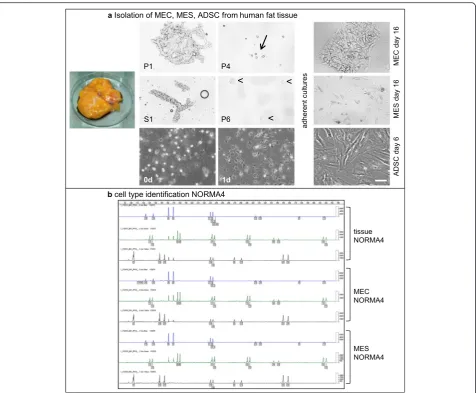
Up to 50 ml of fresh control or tumor breast tissue was isolated and processed in a sterile manner. However, dif-ferent amounts of tissues can be processed accordingly. Tissues were washed extensively with 1 × PBS without centrifugation, incubated in 1 × PBS with 1 × penicillin/ streptomycin (Life Technologies, Carlsbad, CA, USA) (1:1 tissue (ml) to 1 × PBS) for 1 h at room temperature (RT), cut into small pieces with removal of vascular material and then digested with 0.5 × collagenase/hyal-uronidase (StemCell Technologies, Vancouver, BC, Canada) in DMEM plus 1 × penicillin/streptomycin en-zymes according to Smith et al. and Emerman et al. [22, 23] but with some modifications. For 50 ml of tissue the digestion period was 16 h at 37 °C with orbital shaking at 75 rpm. Following digestion, cells were diluted 1:1 with 1 × PBS and then centrifuged using 88 g for 30 s at RT. The top fat layer (yellow) was discarded and the super-natant containing single mesenchymal cells (S1) was transferred into a 50-ml polypropylene tube and further purified later as described below. The remaining pel-let (P1) contained large epithelial duct-like clusters (sometimes called organoids) derived from columnar
epithelium (extralobular) or a double layer of cuboidal epi-thelium (intralobular) (Fig. 1a). P1 was further digested with 0.01 % Trypsin (Gibco/Life Technologies) in 1 × PBS for 30 minutes at 37 °C and 5 % CO2on a rotator
(Milte-nyi Biotec GmbH, Bergisch-Gladbach, Germany) to fur-ther dissociate epithelial cells and any glandular-attached mesenchymal cells. For trypsin inactivation and further fractionation, 5 ml of Epicult media + 5 % FCS (EMF + 5 %) (StemCell Technologies) was added, the cells resus-pended and then centrifuged at 88 g for 30 s at RT. The pellet fraction (P2), enriched of epithelial cells, was then washed with EMF + 5 % and centrifuged 217 g for 3 mi-nutes at RT. In case of remaining residual undigested col-lagen fibers, 10 ml EMF + 5 % was added to the pellet (P3) and then passed through a 100-μm filter (BD, Franklin Lakes, NJ, USA). The flow-through, mainly enriched with single epithelial cells was then washed three times with EMF + 5 % and centrifuged 217 g for 3 minutes at RT. The pellet (P4) was resuspended in EMF + 5 % supple-ment C (StemCell Technologies) and then seeded on pre-viously coated collagen (collagen R from Serva Electrophoresis GmbH, Heidelberg, Germany) tissue cul-ture flasks (approximately 200,000 cells per 75 cm2culture dish). After 24 h the medium was changed to serum-free EMF + 1 × supplement C and 0.5 μg/ml hydrocortisone (StemCell Technologies). Primary normal and tumor mammary epithelial cells (MEC) were grown short-term for up to 30 days without senescence (maximum eight cell passages). Note that primary MEC from TRIDUC1 were not isolated.
To obtain a purer mesenchymal cell fraction the super-natant (S1) was passed through a 40-μm filter (BD) to re-move any small epithelial duct-like glands and centrifuged 217 g for 3 minutes at RT. The remaining pellet (P5) con-sisted of enriched mesenchymal cells and contaminating red blood cells (RBCs). For RBC lysis, the pellet P5 was re-suspended in 1 ml of 1 × PBS and 3 ml RBC-lysis solution (0.8 % NH4Cl, 0.1 mM ethylenediaminetetraacetic acid
[image:3.595.56.542.617.714.2](EDTA), pH: 8.0) on a rotator (Miltenyi) for 12 minutes at RT. The cells were then washed twice with 5 ml of EMF + 5 % at 217 g for 3 minutes at RT and the pellet (P6) was resuspended in EMF + 5 % plus 1 × supplement C and
Table 1Tissues used for cell isolations from patients
Origin Side Tumor Age, years ER PR her2 Ki67 Type
TRIDUC1 breast left yes 73 neg neg neg 70 % basal cell
IFDUC1 breast right yes 46 pos pos 1+ 90 % ductal
NORMA1 breast left + right no 32
NORMA2 breast left + right no 23
NORMA3 breast right no 43
NORMA4 breast left no 50
0.5 μg/ml hydrocortisone. Approximately 200,000 cells were seeded per 75-cm2 culture dish previously coated with collagen R and incubated at 37 °C and 5 % CO2.
Primary normal and tumor mammary mesenchymal cells (MES) were grown up to 30 days without senescence (maximum eight cell passages) (Fig. 1a).
Isolation of adipose-derived stem cells (ADSC)
ADSC isolation was performed according to an adapted protocol of Bunnell et al. [24]. Approximately 30 ml of
breast tissue was minced and digested with 0.1 % colla-genase type I (Biochrom GmbH, Berlin, Germany) at 37 °C for 60–120 minutes. The enzyme digestion was stopped with minimum essential medium (MEM) alpha (Life Technologies) supplemented with 10 % FCS (FCS superior, Biochrom) and centrifuged at 400 g for 10 mi-nutes. The cell pellet was incubated in RBC lysis buffer (17 mM tris-hydroxymethyl-aminomethane, 16 mM NH4Cl) for 10 minutes at RT. After centrifuging at
300 g for 10 minutes, the cell pellet was resuspended in
[image:4.595.62.539.86.479.2]MEM alpha with 10 % FCS and 1 × penicillin/strepto-mycin (Biochrom GmbH), filtered through a 100-μm and 70-μm mesh cell strainer (BD Biosciences, Franklin Lakes, NJ, USA) and seeded in cell culture flasks. The medium was changed two to three times a week. When reaching 80–90 % confluency, ADSC were split in a ratio 1:3 using accutase (400–600 units/ml, Sigma-Aldrich Corporation, St. Louis, MO, USA). Experiments were per-formed at passage 4–7. For characterization, ADSC were seeded on cell culture plates and differentiated into the osteogenic, chondrogenic, adipogenic, and endothelial-like lineages.
DNA fingerprinting of original breast tissue and derived primary cell lines
For cell line identification we employed the analysis of short tandem repeats (STRs), normally used for foren-sic samples and paternity tests using the Powerplex®21 System (Promega, Corporation, Fitchburg, WI, USA). The analysis included the amplification and detection of all 13 combined DNA index system (CODIS) loci (D3S1358, D5S818, D7S820, D8S1179, D13S317, D16S539, D18S51, D21S11, CSF1PO, FGA, TH01, TPOX, vWA) and six loci of Amelogenin, Penta D, Penta E, D1S1656, D2S1338, D6S1043, D12S391 and D19S433. Genomic DNA (500 pg) of the original tissue and different established primary cell lines was isolated and purified. The PCR was performed with the Powerplex®21 System (Promega), the STR amplified, sequenced and visualized.
Immunocytochemistry
For characterization of isolated cells, immunocytochem-ical staining was performed. Cells in passage 4–5 were seeded in 8-chamber culture slides (BD). GATA binding protein 3 (GATA-3) was visualized after fixation with 4 % formaldehyde and permeabilization with 0.25 % Triton-X-100. For reduction of background staining blocking with 10 % goat serum (Life technologies) was performed for 30 minutes. Cells were incubated with a mouse monoclonal GATA-3 antibody (1:100; IgG1, Zytomed Systems, Berlin, Germany) for 1 h at RT and Alexa Fluor® 488 goat anti-mouse IgG1 (γ1) antibody (1:200; Life Technologies) for 1 h at RT. For CD90 stain-ing, cells were fixed with 4 % paraformaldehyde. After blocking with 5 % goat serum for 30 minutes, cells were incubated with anti-CD90 (1:200, mouse monoclonal (F15-42-1) IgG1, Acris antibodies, San Diego, CA, USA) for 1 h at RT. For visualization Alexa Fluor® 594 goat anti-mouse IgG1 (γ1) Antibody (1:200; Life Technolo-gies) was used for 1 h at RT. After fixation of cells with 10 % formaldehyde and blocking with 5 % goat serum for 30 minutes, cells were stained with a monoclonal mouse anti-human cytokeratin (KRT) antibody (type 5, 6, 8, 17 and 19) (1:100; clone MNF116, Dako, Glostrup,
Denmark) for 1 h at RT. For visualization the secondary antibody Alexa Fluor® 488 goat anti-mouse IgG1 (γ1) Antibody (1:500; Life Technologies) was used for 30 minutes at RT.
Cells were fixed with 4 % paraformaldehyde for detec-tion of the epithelial membrane antigen (EMA)/MUC1. Background staining was reduced using 3 % H2O2.
Stain-ing was performed with a mouse monoclonal anti-EMA IgG1 (1:50; clone GP1.4, Abcam PLC, Cambridge, UK) for 1 h at 37 °C using the LSAB System HRP (Dako). Coun-terstaining was performed with hemalaun staining (Merck Millipore, Billerica, MA, USA) and 4',6-diamidino-2-phe-nylindole (DAPI) (1:1 000; Life Technologies). Evaluation of staining was performed with a microscope and a digital camera using computer-assisted image capture software (Olympus IX83, cellSens Software, Olympus Corporation, Tokio, Japan).
Quantification of cytokeratin-positive cell fraction
Cell fractions of NORMA1-3 in passage 4–5 were seeded in 12-well chamber plates to calculate the per-centage of KRT (type 5, 6, 8, 17 and 19)-positive cells within the different cell isolates. After fixation and KRT staining, counting of positive cells was performed auto-matically using the Olympus cellSens Count & Measure Software. The percentage of KRT-positive cells versus total cell amount was calculated.
Real-time PCR
For RNA extraction cells in passage 4–5 were harvested with accutase (400–600 units/ml, Sigma-Aldrich). RNA of all probes was extracted using the RNeasy Mini Kit with corresponding QIAshredder Homogenizer (Qiagen, Hilden, Germany). RNA was reverse-transcribed into cDNA with QuantiTect Reverse Transcription Kit with a DNase I incubation (Qiagen). SsoAdvanced Universal SYBR Green Supermix (Bio-Rad Laboratories, Hercules, CA, USA) with a Light Cycler (Bio-Rad iCycler iQ5) was used for quantitative real-time PCR. All kits were used ac-cording to the manufacturers’ protocols. Samples were tested as triplicates. Tyrosine 3-monooxygenase/tryptophan 5-monooxygenase activation protein, zeta (YWHAZ) was used as a housekeeping gene. Data analysis was performed using the 2-ΔΔCTmethod.
Differentiation of adipose-derived stem cells (ADSC) into four different cell lineages
The differentiation potential of ADSC derived from normal breast tissue (NORMA1-4) and tumor tissue (IFDUC1, TRIDUC1) into osteogenic, chondrogenic, adipogenic, and endothelial-like lineages was investigated. ADSC were seeded in 24-well plates and cultivated in MEM alpha supplemented with 10 % FCS for 3 days, and afterwards were incubated using differentiation conditions.
For osteogenic differentiation ADSC were cultivated in osteogenic induction medium consisting of MEM alpha (Life Technologies) supplemented with 1μM dexametha-sone, 10 mMβ-glycerophosphate and 50μM ascorbic acid (all from Sigma-Aldrich). After 28 days, cells were ana-lyzed with Alizarin red (AppliChem GmbH, Darmstadt, Germany) indicating osteogenic differentiation.
Chondrogenic differentiation of ADSC was studied using cell pellets derived from a series of steps. First, a cell suspension of 1.5 × 10⁶ADSC was diluted in 100 μl 2 % sodium alginate (Sigma-Aldrich) then the cell sus-pension was pipetted and added as drops into a 0.1 M CaCl2solution and allowed to gel for 10 minutes at RT.
After washing with 0.15 M NaCl and PBS the cell pellets were cultivated in hMSC chondrogenesis induction medium (Provitro GmbH, Berlin, Germany) for 28 days. Supplements essential for the chondrogenic induction media included recombinant human insulin, human trans-ferrin, sodium selenite (ITS), dexamethasone, ascorbic-acid-2-phosphate, proline and the human growth factor TGF-β3 (all from Provitro GmbH) and were added to the basal medium. For detection of chondrogenic differentiation Alcian blue staining (Alcian blue 8 GX, Merck Millipore) was performed according to the manufacturer’s protocol.
For differentiation into adipocytes, ADSC were cul-tured in adipogenic induction medium (Provitro GmbH) for 21 days. The medium was supplemented with FCS, L-glutamine and HEPES, insulin, dexamethasone, indo-methacine and 3-isobutyl-1-methyl-xanthine (all from Provitro GmbH). Lipid vacuoles were detected by the Oil Red O staining (Sigma-Aldrich) and counterstaining was performed with hemalaun (Mayer's hemalaun solu-tion, Merck KGaA, Darmstadt, Germany).
The endothelial differentiation potential of ADSC was examined by performing a capillary-like tube formation assay. Each well of a μ-slide (ibidi GmbH, Planegg, Germany) was filled with 10 μl of Matrigel® (Growth Factor Reduced Basement Membrane Matrix, Corning Inc., Corning, New York, NY, USA), which was allowed to polymerize for 30 minutes at 37 °C. Matrigel® con-tains several growth factors like vascular endothelial growth factor (VEGF) (1.0–1.5 ng/ml) and basic fibro-blast growth factor (bFGF) (0.0–0.1 pg/ml) (Corning Inc.: www.corning.com/media/worldwide/cls/documents/
CLS-DL-CC-026 DL.pdf) known to induce differentiation if the tested cell type has endothelial potential [25]. ADSC and human mammary epithelial cells (HMEC) were seeded onto the wells in triplicates at a density of 1 × 10⁴ cells/well and cultured in 50 μl MEM alpha con-taining 10 % FCS or mammary epithelial cell culture medium (Provitro GmbH), respectively, for 5 h.
Evaluation of cells using the different staining proce-dures was performed with a microscope and a digital camera using computer-assisted image capture software (Olympus IX83, cellSens Software, Olympus Corpor-ation, Tokio, Japan). ImageJ (http://imagej.nih.gov) com-puter software was used to measure colony area sizes from differentiated cultures (osteogenic and chondro-genic), or the total number of single cells containing lipid droplets (adipogenic). The following parameters were quantified for endothelial-like capillary structures: 1) total length of each capillary side structure; 2) the area of all closed and non-closed capillary structures; and 3) the total number of closed capillary structures as loops using the Leica application suite V3 (Leica Microsystems, Wetzlar, Germany).
Invasion analysis of breast cancer MEC and MES cells under the influence of conditioned media from different stages of ADSC adipocyte differentiation
Cell invasion assays were performed according to previ-ous reports [26, 27]. Calf skin type I collagen G (Serva Electrophoresis GmbH, Heidelberg, Germany) and rat tail type I collagen R (Biochrom AG, Berlin, Germany) were mixed at a ratio of 1:1 plus 0.1 volume of sodium bicarbonate (23 mg/ml), 0.1 volume of 10 × DMEM, and then the solution was neutralized with sodium hydroxide. An aliquot of 0.6 ml was added to each 12-well plate and then polymerized to obtain a 0.6-cm collagen bed.
For the production of CM, ADSC-NORMA4 and ADSC-IFDUC1 were seeded in 6-well plates and cultivated in 3 ml MEM alpha + 10 % FCS until 80–90 % confluency. Cells were then cultivated in adipogenic differentiation medium supplemented with FCS, L-glutamine and HEPES, insulin, dexamethasone, indomethacine and 3-isobutyl-1-methyl-xanthine (all from Provitro GmbH). Two thirds of the medium were changed every 2 days and the same amount of CM was collected at time points 7, 14 and 21 days. To concentrate, CM was centrifuged in filter tubes (Amicon® Ultra-15 Centrifugal Filter Devices, 3 K; Merck KGaA, Darmstadt, Germany) at 4000 g for 30 minutes and stored at−80 °C until further use.
Normal breast MES cell growth on a 3D printed scaffold substrate and microscopy
Poly(ε-caprolactone) (PCL) scaffolds (20 μm × 20 μm squares) were fabricated using melt electrospinning writ-ing (MEW) as reported elsewhere [29]. The fibers were spaced 150μm apart and deposited at 90° to each other, either as a single strand or layered 20 times. Prior to cell seeding, the PCL scaffolds were pre-treated with ethanol to remove air bubbles, hydrated with sterile deionized water, incubated with 1 M NaOH for 30 minutes at RT and washed several times with 1 × PBS. Each scaffold was then incubated with 10 μg/ml fibronectin isolated from human plasma (Roche Diagnostics, Rotkreuz, Risch, Switzerland) in 1 × PBS for 1 h at RT in a 35-mm tissue culture dish. A polydimethylsiloxane (PDMS) cast ring was placed on top of the scaffold to secure it in place: 250,000 primary fractioned MES cells (NORMA2) were added to the scaffolds in EMF + 5 % plus 1 × sup-plement C and 0.5 μg/ml hydrocortisone. Cells were monitored every 3 days using phase contrast micros-copy (Carl Zeiss AG, Oberkochen, Germany) to docu-ment growth. After 18 days of growth when the cells reached confluence the cells were fixed with 4 % para-formaldehyde for 15 minutes at RT then washed once with 1 × PBS. Cells were stained with the wheat germ agglutinin Alexa Fluor 488 conjugate (Invitrogen/Life technologies) specific for membranes and DRAQ5 (Biostatus Ltd., Shepshed, UK) for cell nuclei according to manufactures’ instructions and then imaged using a confocal laser scanning microscopy (Leica, SP5X). Laser power was set to approximately 1.2 mW to avoid exten-sive photobleaching. Alexa was detected with an Argon laser at 488 nm and DRAQ5 with a He-Ne laser at 633 nm.
Statistics
Data are expressed as the mean ± standard error of the mean. Statistical analysis was performed using SPSS 20.0 for Windows (SPSS Inc., Chicago, IL, USA). Results were interpreted statistically using one-way analysis of
variance (ANOVA) and the Tukey honest significant dif-ference (HSD) post-hoc test. The normal distribution was confirmed using the Shapiro–Wilk test. For non-normal data distributions, the non-parametric Kruskal– Wallis test and the Mann–Whitney U test were used. Results of gene expression in the individual patients were interpreted statistically using the Mann–WhitneyU
test. The level of statistical significance was set atp≤0.05. A p value ≤0.01 was considered highly significant. All graphics were created using Microsoft Excel for Win-dows 2010.
Results
Isolation of mammary epithelial (MEC) and mesenchymal cells (MES) resulted in highly purified and stable primary cell lines
Following the initial overnight digestion of control breast or tumor tissue, cells were diluted and then centrifuged at a low speed and time (88 g for 30 s). This critical low speed and time resulted in two fractions, a pellet (P1) and supernatant (S1), which were the basis for the frac-tionation of epithelial and mesenchymal cells, respect-ively. The P1 fraction was enriched with large epithelial extralobular or intralobular duct-like clusters and with further fractionation steps (P2 and especially P3 and P4) we observed enrichment of single epithelial cells when cultured on collagen-coated dishes (Fig. 1a). The pre-coating of the cell culture dishes with collagen enhanced the attachment and proliferation of the epithelial cells, where cells grew exponentially up to and beyond 30 days as MEC clusters (Fig. 1a). Additionally, the epi-thelial phenotype remained stable in EMF medium, which is a serum-free, hormone enriched medium con-taining hydrocortisone.
The fractionation of mesenchymal cells began with the first supernatant (S1). Following several fractionation steps the remaining cell pellet (P6) yielded single cells with a mesenchymal phenotype when cultured on collagen-coated culture dishes. The mesenchymal cells grew expo-nentially up to and even beyond 30 days in the same EMF medium as above, but containing 5 % FCS (Fig. 1a). Therefore, from four different normal breast tissues and two breast tumors we successfully isolated and established MEC and MES primary cell lines.
Immunocytochemical analysis demonstrated a variety of different cell markers specific for cell types in normal and tumor cells
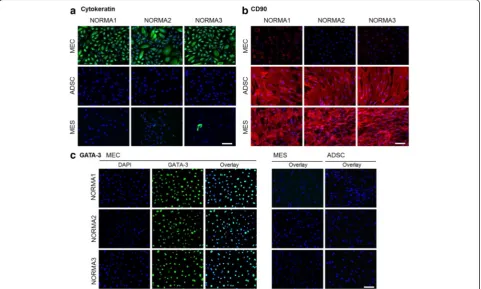
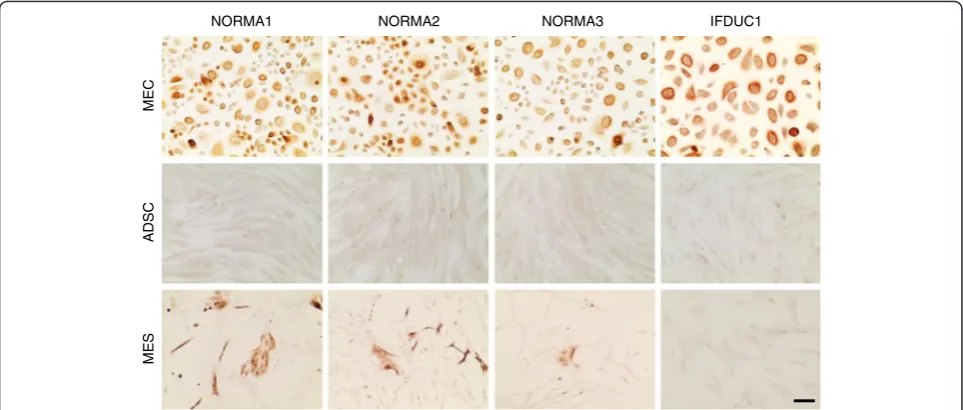
To determine the purity of different cell types following isolation and cell culturing we implemented a variety of antibodies specific for different cell markers, which could distinguish epithelial and mesenchymal origins, in-cluding ADSC. For determination of epithelial cell origin, we used a cytokeratin (KRT) antibody, which could detect a variety of KRT types (5, 6, 8, 17 and 19). All MEC frac-tions had almost 100 % positive KRT staining of the cyto-plasm (Fig. 2a). In contrast, in the ADSC fractions virtually no KRT-positive cells were found but on the other hand some MES cell fractions demonstrated very low percentages of KRT-positive cells (e.g., NORMA2 3.1 % and NORMA3 2.11 %). CD90 immunocytochemical analysis was performed for mesenchymal cell identifica-tion. Positive staining indicated high expression of the cell-surface glycoprotein CD90 in the spindle-shaped
ADSC and MES fractions (Fig. 2b). In contrast, epithelial cells from all fractions were >95 % CD90-negative. Only NORMA1, had a few round-shaped cell colonies (about 10 %), which were sparsely positive. GATA-3, a member of the zinc finger transcription factor family, which plays an important role in cell proliferation and differentiation of luminal glandular epithelial cells in mammary glands, was visualized in epithelial cell isolates using immunocyto-chemical analysis. Over 95 % of epithelial cells from all fractions expressed this transcription factor in the nucleus; however, GATA-3 was not detected in MES or ADSC cultures (Fig. 2c). Additionally, we found that over 90 % of epithelial cells representing all fractions stained positively for the epithelial membrane antigen (EMA)/ MUC1 (Fig. 3). In the MES fractions only a few colonies (<5 %) were MUC1-positive and in the ADSC fraction MUC1 was not detected (Fig. 3). Our findings support that each isolated and established cell line represents >95 % similarity with cell-type-specific markers.
Fig. 2Immunofluorescence staining of cell isolates.aImmunofluorescence hybridization demonstrated the epithelial origin of cell isolates incubated with a pan-cytokeratin (KRT) type 5, 6, 8, 17 and 19 antibody. All epithelial cell fractions had positive localization of the cytoplasm (green). In contrast, in the mesenchymal cell fraction very few positive cells were identified (e.g., normal mammary cells (NORMA)3). Adipose-derived stem cells (ADSC) were KRT-negative. Nuclei were identified using 4',6-diamidino-2-phenylindole (DAPI) (blue).bCD90 immunocytochemical analysis was performed for mesenchymal cell characterization. Positive localization was visible in ADSC and mammary mesenchymal cell (MES) fractions (red). In contrast, epithelial cells were largely CD90-negative. Only in NORMA1 were a few rounded-shape cell colonies sparsely positive. Counterstaining was performed using DAPI (blue).cGATA-3 was visualized in epithelial cell isolates using immunocytochemical analysis. Almost all cells in the epithelial cell fraction expressed this transcription factor but it was not detected either in the MES or ADSC fraction (green). Counterstaining was performed using DAPI (blue).
[image:8.595.58.540.344.633.2]Characterization of ADSC, MEC and MES primary cell lines using real-time PCR
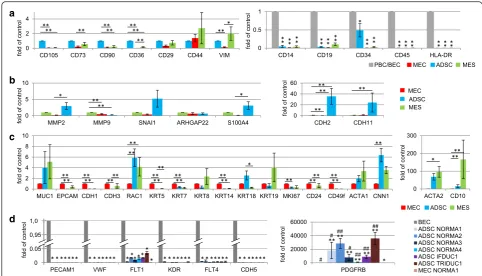
Following our cell-type protein expression analyses de-scribed above, we then profiled all primary cell lines (NORMA1-4) using real-time PCR for 48 genes to help further classify specific cell phenotypes. Compared to all MEC and MES fractions, ADSC fractions had increased expression of the cell surface markers CD105, CD73, CD90, CD36 andCD29, whereCD105, CD90and CD36
expression were significantly higher (Fig. 4a, Additional file 2a-d). The intermediate filament protein vimentin (VIM), a well-known marker for mesenchymal cells, clearly demonstrated significantly higher levels of gene expression in MES when compared to MEC, but was not significantly different to ADSC (Fig. 4a, Additional file 2a-d). Furthermore,N-cadherin (CDH2)andCDH11, additional markers of the mesenchymal phenotype, were strongly expressed in ADSC compared to both MEC and MES primary cell lines (Fig. 4b, Additional file 3a-d). Finally, there was greater expression of the fibroblast mes-enchymal markerS100A4, which is associated with a more differentiated state, in both MES and ADSC compared to MEC (Fig. 4b, Additional file 3a-d). Expression of a range of typical epithelial cell markers was investigated in all pri-mary cell lines using real-time PCR (Fig. 4c, Additional file 4a-d). As expected, MEC expressed epithelial cell markers such asMUC1, EPCAM,E-cadherin(CDH1),P-cadherin
(CDH3) and six cytokeratin genes (KRT5/7/8/14/18/19), supporting a general epithelial phenotype. However, ex-pression of some markers, such asMUC1and the cytoker-atin KRT8 and KRT19 genes expressed on luminal cells,
varied between MES primary cell lines (Fig. 4c, Additional file 4a-d). Significantly greater expression ofRAC1, known as a regulator for various cellular functions including dif-ferentiation of mammary epithelia, was observed in ADSC and MES compared to MEC, supporting different func-tions for this gene among primary breast cells (Fig. 4c).
We also examined other genes in all primary cell lines (NORMA1-4) derived from patients, which correlated with proliferation, stem cells and muscle-specific genes (Fig. 4c, Additional file 4a-d). For example, although all primary cell lines expressed the proliferation marker
MKI67, there was significantly greater expression in MEC compared to the other primary cell lines. Additionally, there was significantly greater expression of the epithelial stem cell markersCD24andCD49fin MEC compared to MES and ADSC. Finally, there was significantly lower ex-pression of markers of basal myoepithelial mammary cells, including calponin (CNN1), alpha smooth muscle actin (ACTA2) and CD10, in all MEC fractions, supporting there being no significant myoepithelial component when compared to ADSC and/or MES cell fractions. In contrast, our results point to a positive association between muscle characteristics (CNN1andACTA2) and ADSC or MES.
Exploring the expression of key genes involved in invasion and signaling pathways, the matrix metallopro-tease (MMP) 2 gene, specific for digestion of the ECM, was significantly greater in ADSC, when compared to MEC, however, there was no difference to MES (Fig. 4b, Additional file 3a-d). In contrast, expression of MMP9 was significantly greater in MES when compared to ADSC and MEC (Fig. 4b, Additional file 3a-d). Interestingly, very
3 A M R O N 1
A M R O
N NORMA2
ADSC
MEC
MES
IFDUC1
[image:9.595.57.539.88.293.2]low expression levels ofSNAI1, a transcriptional repressor ofCDH1expression and a marker of epithelial to mesen-chymal transition (EMT), were associated with each MEC primary cell line when compared to the MES and ADSC. For signaling pathways, although the amoeboid cell shape indicator Rho GTPase activating protein 22 (ARHGAP22) gene was differentially expressed, no significant differences were observed between primary cell lines.
Last, we analyzed the presence of hematopoietic cell markers in all primary cell lines, and endothelial cell marker genes specifically in ADSC lines where, for ex-ample,CD34 is associated with stem cells. We observed that there was significantly lower expression of CD14, CD19, CD45 and HLA-DR, with the exception ofCD34,
on all representative cell types when compared to a positive control consisting of PBC or BEC (Fig. 4a, Additional file 2g-j). These results demonstrate no contamination of peripheral blood cells in the primary cell lines. While there was significantly lower expression ofCD34in MEC and MES normal and tumor primary cell lines compared to blood cells, interestingly, ADSCCD34
expression was in general significantly greater among
primary cell lines (Fig 4a). Although the expression of six endothelial differentiation marker genes (PECAM1,
vWF,FLT1, FLT4,KDR,CDH5) was significantly lower in normal and tumor ADSC, there was significantly greater expression ofPDGFRBin ADSC when compared to BEC and NORMA1 MEC cells (Fig. 4d). These results support the sharing of the progenitorCD34andPDGFRB expres-sion found in endothelial cells and pericytes, which is ne-cessary for angiogenesis [30, 31], in both normal and tumor ADSC.
Characterization and comparison of breast tumor primary cell lines (IFDUC1, TRIDUC1) with NORMA1-4 breast primary cell lines
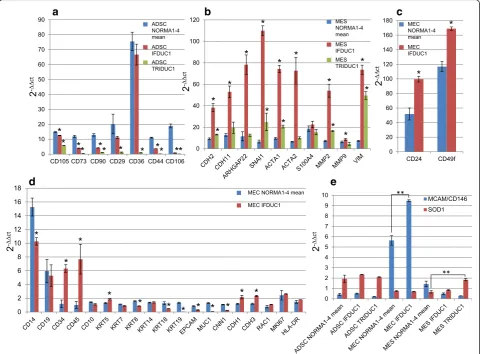
We found significant differences when comparing the gene expression of cell fractions isolated from the tu-mors TRIDUC1 or IFDUC1 with the mean of each gene from normal breast tissues (NORMA1-4). For example, on gene expression analysis there were very low signifi-cant levels of all ADSC stem cell markers in ADSC of TRIDUC1, and only 0.5-fold to 1.0-fold of markers in IFDUC1, when compared to the mean of NORMA1-4
a
b
c
d
Fig. 4Gene expression of cell isolates. Real time PCR results show gene expression (n= 48) genes, including a house keeping gene after comparison to the mean expression of all normal (NORMA1-4) respectiveMEC, MES or ADSC primary cell lines.aExpression of positive stem cell markersCD105,CD73,CD90,CD36,CD29,CD44and of vimentin (VIM) (ADSC=1) and hematopoietic markersCD14, CD19, CD34, CD45, HLA-DRare shown (PBC/BEC=1).bPanel shows invasion and EMT marker genes,MMP2, MMP9 and SNAI1,the fibroblast mesenchymal marker S100A4 and N-cadherin (CDH2) andCDH11, markers of the mesenchymal phenotype (MES=1).cEpithelial cell markers (MEC=1) compared to ADSC and MES. Specific markers include epithelial stem cell markersCD24andCD49fand markers of basal myoepithelial mammary cells (ACTA1, CNN1, ACTA2,
CD10).dSix endothelial marker genes analyzed werePECAM1, VWF, FLT1, KDR, FLT4, CDH5andPDGFRB(BEC=1). Significant values compared with
[image:10.595.55.538.87.363.2](Fig. 5a, Additional file 2e, f ). Interestingly, the stem cell marker CD36 was expressed approximately 7.0-fold higher in both the ADSC NORMA1-4 and the ADSC IFDUC1, when compared to ADSC TRIDUC1 cells (Fig. 5a, Additional file 2e, f ). Considering mesenchymal or muscle specific marker genes, there was generally greater expression for both tumor MES primary cell lines when compared to NORMA1-4 MES cell lines (Fig. 5b, Additional files 2, 3 and 4). For example,VIM
expression in MES IFDUC1 and TRIDUC1 cells demon-strated 8.0-fold to 12.0-fold higher levels, when com-pared to MES cells of NORMA1-4. Significantly higher levels of the CDH2 and CDH11 mesenchymal genes were observed, especially for IFDUC1 MES cells com-pared to NORMA1-4 primary breast cell lines (Fig. 5b).
Both EMT marker genes,SNAI1andARHGAP22, were expressed 17.4-fold and 12.4-fold higher in IFDUC1 MES
than NORMA1-4 MES, respectively, suggesting an active invasive state (Fig. 5b). Further support for activated inva-sion in tumor MES was indicated with MMP2 gene ex-pression, which was over 8.5-fold higher for MES of IFDUC1 compared to NORMA1-4 MES (Fig. 5b).
On comparing the tumor MEC primary cell line from IFDUC1 with all NORMA1-4 cell lines, only minor dif-ferences could be detected in general. WhileKRT18/19, MUC1 and CNN1 were expressed to a lower extent in MEC IFDUC1, there was significantly greater expression of CD34, CD45, CD24, CD49f, CDH1 CDH3 and KRT5
when compared to NORMA1-4 MEC primary cell lines (Fig. 5c, d, Additional file 4e).
Last, we analyzed the expression of novel breast cancer targetsMCAM/CD146andSOD1in the cell lines [32, 33]. Interestingly, there was significantly greater expression of MCAM/CD146 in MEC IFDUC1 compared to MEC
a
d
e
b
c
[image:11.595.58.541.89.443.2]NORMA1-4. Comparing MES NORMA1-4 with MES TRIDUC1 we detected a significant increase in expression ofSOD1in cancer cells (Fig. 5e).
Culture of isolated ADSC resulted in differentiation of four separate cell lineages
To test the multipotent nature of ADSC we performed a variety of cell culture studies following fractionation. Initially, after isolation and seeding we observed that the cells were round-shaped and then became fully attached within 24 h. In approximately 1 week of culturing the cells grew exponentially and had a typical and homogenous mesenchymal-like appearance (Fig. 1a).
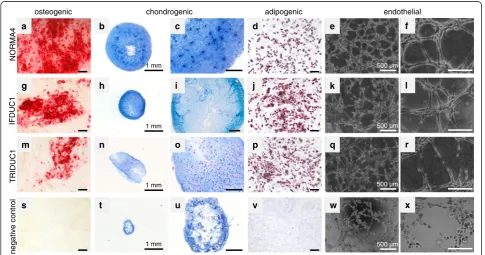
To verify the multipotency of ADSC we performed functional analyses, where normal and tumor ADSC were differentiated into osteogenic, chondrogenic, adipo-genic, and endothelial-like lineages (Fig. 6). NORMA1-4 ADSC differentiated similarly into all four cell lineages thus, were comparable (Fig. 6a-r and data not shown). As an example, NORMA4 had strong osteogenic differen-tiation as demonstrated with Alizarin red staining detect-ing extracellular calcium deposits (Fig. 6a). Alcian blue staining revealed the presence of glycosaminoglycan after chondrogenic differentiation (Fig. 6b, c). Adipogenic dif-ferentiation was shown by staining of lipid droplets with
Oil Red O (Fig. 6d). Last, negative control groups for all of the above were cultivated in standard culture medium alone and there was no positive staining for all lineages (Fig. 6s-v).
It is well-known that endothelial cells form unique branching capillary-like structures on Matrigel®, where one hallmark is the presence of single mesenchymal spindle cells that stretch and line the capillary lumen [25, 34]. Interestingly, within 5 h after the seeding of normal breast ADSC onto polymerized Matrigel® beds, endothelial-like capillary structures were noted, thus supporting that there was differentiation towards angiogen-esis (Fig. 6e, f). Although normal control breast MEC formed web-like colonies (Fig. 6w, x), only ADSC dem-onstrated capillary structures consisting of single mesenchymal-like cells bordering the capillary lumen (Fig. 6f ). Therefore, normal breast MEC cells demon-strated cell-cell adherence properties but represented a negative control in endothelial-like characteristics. Taken together, primary ADSC from normal breast tis-sues differentiated in culture into four separate cellular lineages and thus, retained their stem cell nature after isolation.
Additionally, we performed differentiation studies comparing NORMA4 with ADSC isolated from IFDUC1
1 mm
d c
a
c i n e g o p i d a c
i n e g o e t s
o chondrogenic
negative control
IFDUC1
4
A
M
R
O
N
1
C
U
DI
R
T
b
j i
g h
p o
m n
v
s t
1 mm
1 mm
1 mm u
500 µm
500 µm
500 µm
500 µm endothelial
e f
k l
q r
w x
[image:12.595.56.542.399.654.2]and TRIDUC1. Osteogenic differentiation was impaired for both tumor cell lines compared to NORMA4 (56.9 % for IFDUC1 and 36.1 % for TRIDUC1 compared to NORMA4 set to 100 %) (Fig. 6a, g, m). Chondrogenic differentiation was also reduced for both tumor ADSC (NORMA4 was 12.85-fold higher than negative control set to 1; IFDUC1 was 4.42-fold and TRIDUC1 4.38-fold higher than the negative control) (Fig. 6b, c, h, i, n, o). On the other hand, for adipogenic differentiation of tumor, ADSC was higher compared to NORMA4 set to 1 (IFDUC1 1.52-fold; TRIDUC1 1.38-fold) (Fig. 6d, j, p). We interpret our findings that the tumor environment is negatively influencing tumor ADSC to differentiate into osteogenic and chondrogenic lineages but positively influ-encing tumor ADSC towards adipocyte differentiation.
Interestingly, both breast cancer ADSC also differenti-ated into classical endothelial-like capillary structures similar to normal breast ADSC (Fig. 6e, f, k, l, q, r). However, on measuring different endothelial-like struc-tural characteristics there were significant differences be-tween tube length and area when comparing breast cancer and normal ADSC (Additional file 5a-c). Tubes were sig-nificantly longer in TRIDUC1 compared to NORMA4, suggesting increased cellular physical strength. Although the total capillary loop formation did not differ signifi-cantly between breast cancer and normal ADSC, the endothelial-like area of complete and non-complete capillary structures was significantly smaller for both TRIDUC1 and IFDUC1 when compared to NORMA4, indicating more complete endothelial-like differentiation for the tumor ADSCs.
Conditioned media from tumor and normal ADSC differentiating into adipocytes induced an EMT with increased 3D invasion of breast cancer MEC
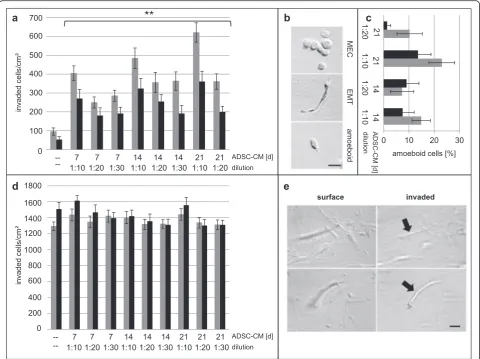
We designed cell culture studies to address a possible tumor function for the overproduction of breast adipo-cytes derived from tumor ADSC compared to normal breast ADSC (Fig. 6 d, j, p; Fig. 7). Our approach in-volved isolating CM from IFDUC1 and ADSC-NORMA4 during adipocyte differentiation at three time points over 21 days. IFDUC1-MEC and IFDUC1-MES were then incubated with the above CM to test the influence on invasion using 3D collagen matrices for 72 h. CM from all adipocyte differentiation stages sig-nificantly increased the invasion of IFDUC1-MEC, where CM at week 3 induced the greatest invasion (Fig. 7a). Additionally, IFDUC1-MEC invasion was aug-mented with CM from differentiated IFDUC1-ADSC compared to NORMA4-ADSC (Fig. 7a). Thus, CM from both breast tumor and normal differentiating ADSC significantly induced invasion of tumor MEC cells, supporting a role of critical adipokine factors. Importantly, all collagen-invaded IFDUC1-MEC consisted mainly of a
mesenchymal phenotype and fewer amoeboid phenotypes, supporting that there is enhancement of an EMT or an epithelial to amoeboid transition (Fig. 7b, c). In contrast, IFDUC1-MES cells showed no significant increase of inva-sion in the presence of CM, but demonstrated high num-bers of invaded mesenchymal cells, indicating innate high invasiveness of breast tumor MES (Fig. 7d, e).
Multiple PCL fiber scaffolds support adhesion and initiation of cellular growth
Presently, there is a need to study the growth of primary cells on biomaterials applicable for tissue regeneration, for example, breast reconstruction. We therefore studied the growth properties of primary normal breast cells on fine, 3D-printed PCL scaffold substrates (Fig. 8a, b) with fiber diameters of 14 ± 1μm. A 2.5D scaffold consisting of only a single strand layer (PCL-1) was compared to a 3D scaffold with 20 alternating fiber layers (PCL-20) for growth with primary NORMA2 MES cells. Following the seeding of MES cells, we observed that cellular growth ini-tiated from the fiber frame within 6 days. Interestingly, these cells appeared to represent a bridge facilitating fur-ther proliferation toward the scaffold center. After 18 days increased cellular confluency of >90 % was observed throughout the 3D scaffold with PCL-20 (Fig. 8a, b), but in contrast no cell growth occurred with PCL-1 (Fig. 8a). Our results indicate how cell adhesion and proliferation is affected through the use of 3D scaffold structures.
Discussion
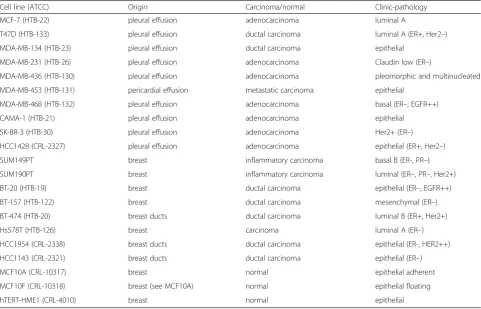
In 1958 an epithelial cell line called BT-20/HTB-19 was established directly from a solid invasive ductal breast carcinoma [35]. Introduced later were many other breast cancer cell lines [4], of which two of the best known are MCF-7 (HTB-22) and MDA-MB231 (HTB-26). However, most of these cell lines, including MCF-7 and MDA-MB231, did not directly originate from the primary tumor (Table 2). MCF-7 was generated from a pleural effusion more than 3 years after mastectomy and radiation/hor-mone therapy; MDA-MB231 was also initiated from a pleural effusion 4 years after mastectomy [36, 37].
In addition to the question of cell comparability between primary tumors and pleural effusions, and the reproduci-bility of tumor-cell-related gene/protein and signaling, many cell lines are contaminated; e.g., human cervix car-cinoma HeLa cells with rodent cells or other misidentified cells [38, 39]. Therefore, it is essential to implement tests to genomically verify the identity of cell lines [39] like DNA fingerprinting, which we demonstrated for one pa-tient’s primary tissue and isolated cell lines.
high/CD49f-/CD24+/KRT8, 18 high/KRT14-/ACTA1 -(alpha skeletal muscle actin)/VIM low); 2) luminal 2 epi-thelial cells (EPCAM high/CD49f+/CD24+/KRT8, 18
high/KRT14-/ACTA1-/VIM+); 3) basal epithelial cells (EPCAM low/CD49f+/CD24-/KRT8, 18 low/KRT14
+/ACTA1 high/VIM high) and 4) mesenchymal cells (EPCAM-/CD49f+/CD24-/KRT8, 18 low/KRT14 low/
ACTA1 low/VIM high) [9, 17, 40]. However, comparing primary normal breast tissues (n= 12) with established normal mammary epithelial cell lines, like HME I (CRL-4010) and HME II, MCF10A (CRL-10317) and 10 F
(CRL-10318), Keller et al. conclude that these particular cell lines do not retain the cellular diversity found in human breast tissues, but appear to be enriched for differentiation states that represent a minority of breast tissues [9]. These findings suggest that only assemblies of cell lines representing multiple cell types can be used to model the cellular heterogeneity of tissues. Con-sidering the most well-known established normal and tumor breast cell lines for research studies, almost all cell lines resulted in only one of the existing cell type lineages (Table 3).
Fig. 7Three-dimensional collagen invasion assays and quantification of cell phenotypes of invasive inflammatory ductal carcinoma (IFDUC)1 mammary epithelial cells (MEC) and mesenchymal cells (MES) incubated with conditioned medium (CM) from different adipose-derived stem cell (ADSC)-differentiated adipocyte stages. IFDUC1-MEC and IFDUC1-MES cells were incubated with CM from ADSC-IFDUC1 and ADSC-normal mammary cells (NORMA)4 during adipocyte differentiation at the time points 7, 14 and 21 days to test the influence on invasion for 72 h.Y-axisrepresents total number of invaded IFDUC1-MEC cells (invaded cells/cm2);
X-axisrepresents ADSC-CM for control (−−= no CM), and CM at 7, 14 and
[image:14.595.58.539.88.447.2]Fig. 8Three-dimensional culture of breast mesenchymal cells for tissue engineering purposes.aPhase contrast microscope image shows the two melt electrospinning writing poly(ε-caprolactone) (PCL) scaffolds,PCL-1(one layer of fibers) andPCL-20(20 layers of fibers) at cell seeding of the normal (NORMA)2 mesenchymal cell (MES) cell line and then consecutively at 6 and 18 days of growth. Note that no growth occurred on PCL-1 throughout the 18-day period.bConfocal microscope image shows NORMA2 MES after 18 days of growth.Imagerepresents an overlay of 43 z-stack sections (each step 1.43μm) equaling 61.49μm.Greenrepresents the WGA Alexa 488 fluorescent cellular membrane and theredthe DRAQ5 (633 nm)-stained nuclei.Blue arrowindicates the PCL scaffold overlaid with the bright field channel.White arrowindicates an area with ongoing cell growth, which originally initiated along the fibers.Bar= 200μm
Table 2A short overview of the most common breast cancer cell lines and their origin
Cell line (ATCC) Origin Carcinoma/normal Clinic-pathology
MCF-7 (HTB-22) pleural effusion adenocarcinoma luminal A
T47D (HTB-133) pleural effusion ductal carcinoma luminal A (ER+, Her2–)
MDA-MB-134 (HTB-23) pleural effusion ductal carcinoma epithelial
MDA-MB-231 (HTB-26) pleural effusion adenocarcinoma Claudin low (ER–)
MDA-MB-436 (HTB-130) pleural effusion adenocarcinoma pleomorphic and multinucleated
MDA-MB-453 (HTB-131) pericardial effusion metastatic carcinoma epithelial
MDA-MB-468 (HTB-132) pleural effusion adenocarcinoma basal (ER–, EGFR++)
CAMA-1 (HTB-21) pleural effusion adenocarcinoma epithelial
SK-BR-3 (HTB-30) pleural effusion adenocarcinoma Her2+ (ER–)
HCC1428 (CRL-2327) pleural effusion adenocarcinoma epithelial (ER+, Her2–)
SUM149PT breast inflammatory carcinoma basal B (ER-, PR–)
SUM190PT breast inflammatory carcinoma luminal (ER–, PR–, Her2+)
BT-20 (HTB-19) breast ductal carcinoma epithelial (ER–, EGFR++)
BT-157 (HTB-122) breast ductal carcinoma mesenchymal (ER–)
BT-474 (HTB-20) breast ducts ductal carcinoma luminal B (ER+, Her2+)
Hs578T (HTB-126) breast carcinoma luminal A (ER–)
HCC1954 (CRL-2338) breast ducts ductal carcinoma epithelial (ER-, HER2++)
HCC1143 (CRL-2321) breast ducts ductal carcinoma epithelial (ER–)
MCF10A (CRL-10317) breast normal epithelial adherent
MCF10F (CRL-10318) breast (see MCF10A) normal epithelial floating
hTERT-HME1 (CRL-4010) breast normal epithelial
[image:15.595.57.539.407.716.2]The conclusion of heterogeneity of normal breast tis-sues or tumors between individuals (heterologous) and a patient’s normal tissue and the tumor itself (autologous) led us to perform simultaneous isolations of MEC, MES and ADSC from normal breast and tumor tissues from the same individual. Therefore, our study presented the opportunity to combine gene expression and protein analyses from isolated breast cell types and perform a direct comparison with published gene expression pro-files of normal and tumor cell lineages. In addition, these cell types can easily be implemented into specific re-search applications, such as cell functional or drug as-says. For example, our functional studies demonstrating that PCL-20 3D-scaffolds containing 20 fibers (but not single-strand (or 2.5D) scaffolds [41]) supported adhe-sion and growth of normal breast MES, have important future clinical implications, especially for breast cancer patients. Although, more studies are needed one could envision that using such 3D-printed scaffolds for re-growing normal breast tissue ex vivo for possible later im-plantation, has translation applications for the expanding field of regenerative medicine [14, 42–44].
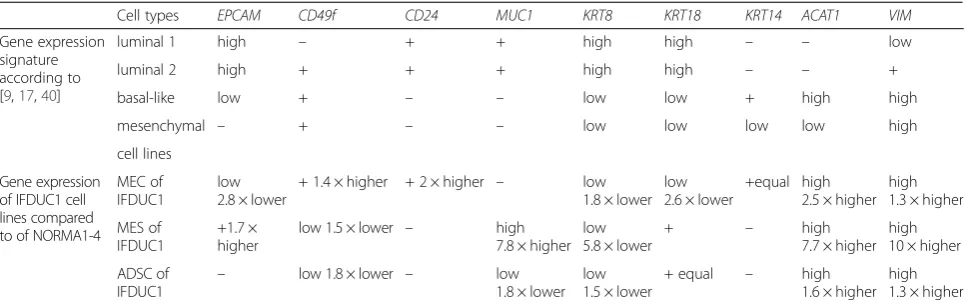
Comparing the four published normal breast cell line-ages (luminal (1 and 2) epithelial, basal-like epithelial and mesenchymal cells) gene/protein expression levels with our normal and breast tumor cell lines assisted us further to confirm cell lineages (Table 3). Interestingly, we interpret that NORMA1 and NORMA2 MEC primary cell lines resembled luminal 1 epithelial cells, whereas NORMA3 and NORMA4 resembled luminal 2 epithelial cells. Additionally, we predict that the IFDUC1 MEC line has a very high conformity of gene expression (EPCAM,
CD49f, MUC1, KRT8/18/14, ACTA1 and VIM) to the basal-like epithelial cell lineage (Table 3). However, ex-pression ofCD24, which is normally expressed in luminal epithelial cells, was 2-fold higher in the IFDUC1 MEC line, thus, was in contrast [9]. Other researchers also
showed that breast tumors expressCD44 and CD24 but are very heterogeneous among different tumors and also within the tumor [45]. The latter analysis also found a
CD44+/CD24- phenotype as the most common in the basal-like subgroup withER-/PR-/Her2-/KRT5/14+ and in BRCA1 hereditary tumors. MEC cells of IFDUC1, derived from a tumor characterized asER+/PR+/Her2+ and non-BRCA1 hereditary were both CD44+ and CD24+. In addition,KRT19expression representing luminal cells was negative for MEC of IFDUC1, whereas KRT5 expression representing basal-like cells was positive in MEC of IFDUC1. On the other hand,CD10expression, represent-ing a basal, bi-potent and myoepithelial cell phenotype was also highly expressed in MEC of IFDUC1. Thus, the
KRT14+, CD49 high, CD10 high and MUC1 expression supports the presence of a high portion of bi-potent pro-genitors in the IFDUC1 MEC primary cell line. Addition-ally, our findings ofCD34+/CD45+IFDUC1 MEC further support more undifferentiated tumor cells [46].
Analyzing IFDUC1 MES and ADSC primary cell lines with the expression signature of the four main cell line-ages, especially the mesenchymal lineage, we found par-tial similarities withCD49f,CD24, KRT8, 14and 18and
VIM (Table 3). Importantly, the elevated levels of VIM
[image:16.595.57.544.98.251.2]in IFDUC1 and TRIDUC1 MES and ADSC primary cell lines supports an invasive potential [47], but could also reflect breast progenitor cells with a bilinear (glandular and myoepithelial) differentiation potential [48]. Our finding that IFDUC1 MES cells additionally expressed significantly higher levels of SNAI1 and MMP2 along with a high invasion capability (mean of 1400 invaded cells per cm2in 3D collagen matrices) further corrobo-rates a high invasive phenotype for MES cells isolated from a patient with an inflammatory breast tumor. Taken together, the three isolated cell lineages MEC, MES and ADSC from IFDUC1 reflect the heterogeneity normally found in tumors and confirm the need to
Table 3Primary cells confirm the heterogeneity of the tissue
Cell types EPCAM CD49f CD24 MUC1 KRT8 KRT18 KRT14 ACAT1 VIM
Gene expression signature according to [9,17,40]
luminal 1 high – + + high high – – low
luminal 2 high + + + high high – – +
basal-like low + – – low low + high high
mesenchymal – + – – low low low low high
cell lines
Gene expression of IFDUC1 cell lines compared to of NORMA1-4
MEC of IFDUC1
low 2.8 × lower
+ 1.4 × higher + 2 × higher – low 1.8 × lower
low 2.6 × lower
+equal high 2.5 × higher
high 1.3 × higher
MES of IFDUC1
+1.7 × higher
low 1.5 × lower – high
7.8 × higher low 5.8 × lower
+ – high
7.7 × higher high 10 × higher
ADSC of
IFDUC1 –
low 1.8 × lower – low
1.8 × lower low 1.5 × lower
+ equal – high
1.6 × higher high 1.3 × higher
establish different cell lines from one tissue to represent its entirety.
There are approximately 0.6 × 10⁶ ADSC per gram of breast tissue total, and nearly 6 % of these cells are ex-pected to be adherent and highly proliferative [49]. It is well-known that these cells cannot be characterized on the basis of one single cell surface marker and therefore a large variety of positive and negative markers are used for the characterization of ADSC in different studies (reviewed in [50]). In 2006 the International Society for Cellular Therapy (ISCT) developed the minimal criteria for defining multipotent mesenchymal stromal cells [51]: (a) adherence to plastic, (b) expression ofCD105,CD73,
CD90, absence ofCD45,CD34,CD14orCD11b,CD79α or CD19 and HLA-DR, and (c) multipotent differenti-ation potential (adipogenic, chondrogenic, osteogenic). In the present study, isolated ADSC from NORMA1-4 fulfill these criteria, where we observed high expression of CD105, CD73 and CD90 in ADSC compared to the other primary cell types and the absence of CD14,
CD19, CD45 and HLA-DR. However, CD34 expression was generally greater but did differ among the patients. While the criteria of the ISCT were reported in a range of publications to have been applied for the characterization of ADSC, others doubt the applicability, because of the expression of CD34 in early passages of ADSC [52]. In an analysis by Baer et al. in ADSC from 16 patients there was high variability in the expression profile ofCD36 and CD34, probably due to the age, body mass index, ethnicity or medical history of the donors [53]. While some markers increase rapidly after plating, such as
CD29, CD44, CD49d, CD73, CD90, CD105 and CD151, others, such asCD31and CD45, decrease. The adipocyte marker CD36is often used for distinguishing mesenchy-mal stem cells from bone marrow and adipose tissue; we observed high expression in all four of our normal and in one breast tumor ADSC primary cell lines [54]. Furthermore, we found that the stem cell markers
CD29 andCD44 [55–57] were expressed in NORMA1 ADSC MEC and MES but not significantly differently. Only some ADSC will lose CD34 expression with in-creasing culture time, while others maintain it for at least 10–20 weeks [57]. Suga et al. suggested that loss of CD34 expression can be seen as a physiological process of maturation and thus, correlates with replica-tive capacity or the differentiation potential of ADSC [58]. In this present study we support the idea that the significant higher expression of known endothelial markersCD34andPDGFRBnoted on both normal and tumor ADSC could be linked with the potential of ADSC to differentiate into an endothelial-like lineage, as discussed below. Furthermore, the highest expression of PDGFRB noted in ADSC TRIDUC1, could verify the overall worse prognosis of this cancer type, due
to the finding that high stromal PDGFRB expression is associated with poor prognosis among patients with breast cancer [59].
Our findings that both IFDUC1 and TRIDUC1 ADSC lines had lower levels of the marker genes (CD105,
CD73, CD90, CD44, CD106) when compared with NORMA1-4, supports a link with impaired tumor ADSC differentiation into osteogenic and chondrogenic lineages. This suggests that the tumor environment may negatively influence the ability of the ADSC to differentiate into these two lineages. On the other hand, our findings that both IFDUC1 and TRIDUC1 ADSC differentiated into significantly more complete endothelial-like capillary tube structures as compared with NORMA1-4 demonstrates that cultured breast ADSC also have an angiogenesis potential, similar to freshly isolated and non-adherent ADSC from non-breast subcutaneous liposuction, which differentiate in vitro into vascular endothelial cells, vascu-lar smooth muscle cells and cardiomyocytes [60]. Thus, breast tumor ADSC play a role in vascularization within the tumor environment.
differentiating into adipocytes induced invasion of tumor MEC, but to a lower degree than tumor ADSC. These findings further point to a possible negative impact of ADSC on residual breast cancer cells in patients who re-ceive AFT for esthetic purposes.
Conclusion
In the present study we successfully isolated three differ-ent cell phenotypes from human primary normal and tumor breast tissue. We could establish a molecular sig-nature for MEC, MES and ADSC and propose that only the ensemble of all cells can represent the tissue or tumor adequately. As commonly used breast cell lines only represent specific cell types or differentiation states, we propose to use assemblies of different cell lines from the same patient.
Tumor-associated ADSC have an impaired plasticity towards chondrogenic and osteogenic differentiation, but an increased adipogenic and endothelial-like differ-entiation, supporting the idea of a stimulus on invasion and angiogenesis in the tumor environment. Co-culturing of isolated autologous and heterologous pri-mary cell lines could help us to understand gene expres-sion, differentiation, invaexpres-sion, hormone and inhibitor/ drug interactions of control versus tumor breast tissue in vitro that are important for tumor biology and regen-erative medicine.
Additional files
Additional file 1:Primer sequences. (DOCX 18 kb)
Additional file 2:Gene expression of stem cell and hematopoietic markers in cell isolates. Mammary epithelial cell (MEC), adipose-derived stem cell (ADSC) and mesenchymal cell (MES) primary cell lines all from the same patients (four normal (NORMA1-4) and two breast tumor primary cell lines are indicated).a-fExpression results of positive stem cell markers
CD105, CD73, CD90, CD36, CD29, CD44andvimentin (VIM)are shown
in four NORMA1-4 and two breast tumor (invasive inflammatory ductal carcinoma (IFDUC)1, triple-negative ductal carcinoma (TRIDUC)1) different primary cell lines using real-time PCR (*p≤0.05).g-lHematopoietic markers,
CD14, CD19, CD34, CD45andHLA-DRare shown from peripheral blood cells
(PBC)/blood endothelial cells (BEC), four NORMA1-4 and two breast tumor (IFDUC1, TRIDUC1) primary cell lines using real-time PCR (*p≤0.05). (PPTX 135 kb)
Additional file 3:Gene expression of invasive and mesenchymal markers in cell isolates. Mammary epithelial cell (MEC), adipose-derived stem cell (ADSC) and mesenchymal cell (MES) primary cell lines all from the same patients (four normal (NORMA1-4) and two breast tumor primary cell lines (invasive inflammatory ductal carcinoma (IFDUC)1, triple-negative ductal carcinoma (TRIDUC)1)) are indicated. Expression results using real-time PCR of genes involved in invasion,MMP2, MMP9andSNAI1and markers of the mesenchymal phenotype,N-cadherin (CDH2)and cadherin11
(CDH11)(*p≤0.05). (PPTX 114 kb)
Additional file 4:Gene expression of typical epithelial cell markers in cell isolates. Mammary epithelial cell (MEC), adipose-derived stem cell (ADSC) and mesenchymal cell (MES) primary cell lines all from the same patients (four normal (NORMA1-4) and the invasive inflammatory ductal carcinoma (IFDUC)1 breast tumor primary cell line) are indicated. Expression results are shown for a range of typical markers for characterization of epithelial cells, the proliferation markerMKI67and
markers of basal myoepithelial mammary cells (ACTA1,ACTA2,CNN1,CD10) using real-time PCR (*p≤0.05). (PPTX 132 kb)
Additional file 5:Endothelial-like differentiation of adipose-derived stem cells (ADSC) into capillary structures. Endothelial-like differentiation was quantified 5 h after seeding ADSC on Matrigel®.aX axisrepresents the tube length in mm for each capillary side cell structure.bX axisrepresents the number of completely closed capillary loop structures.cX axis represents the area in mm2for completely closed and open capillary structures.a-cY axis represents the origin of the ADSC (triple-negative ductal carcinoma (TRIDUC)1, invasive inflammatory ductal carcinoma (IFDUC)1 or normal breast (NORMA)4). Quantification was performed in three wells (total area 0.125 cm2/well). (PPTX 52 kb)
Abbreviations
ACTA1:alpha skeletal muscle actin; ACTA2: alpha smooth muscle actin; ACVRL1: activin receptor-like kinase 1; ADSC: adipose-derived stem cells; AFT: autologous fat transfer; ARHGAP22: Rho GTPase activating protein 22; BEC: blood endothelial cells; CDH1: E-cadherin; CDH2: N-cadherin; CDH3: P-cadherin; CDH5: VE-cadherin; CM: conditioned media; CNN1: calponin; DAPI: 4',6-diamidino-2-phenylindole; DMEM: Dulbecco’s modified Eagle’s medium; ECM: extracellular matrix; EDTA: ethylenediaminetetraacetic acid; EGF: epidermal growth factor; EMA/MUC1: epithelial membrane antigen; EMT: epithelial to mesenchymal transition; EPCAM: epithelial cell adhesion molecule ER estrogen receptor; FCS: fetal calf serum; FLT1: Fms-related tyrosine kinase 1; FLT4: Fms-related tyrosine kinase 4; Her2: human epidermal growth factor receptor-2; IFDUC: invasive inflammatory ductal carcinoma breast cancer; IL: interleukin; KDR: kinase insert domain receptor; KRT: cytokeratin; MCAM: melanoma cell adhesion molecule/CD146; MEC: mammary epithelial cells; MEM: minimum essential medium; MES: mesenchymal cells; MEW: melt electrospinning writing; MMP: matrix metalloprotease; NORMA: normal mammary cells; P: pellet; PBC: peripheral blood cells; PBS: phosphate-buffered saline; PCL: poly(ε-caprolactone); PDMS: polydimethylsiloxane; PECAM1: platelet endothelial cell adhesion molecule; PR: progesterone receptor; RBC: red blood cells; RT: room temperature; S: supernatant; STR: short tandem repeats; TRIDUC: triple-negative ductal carcinoma VEGF, vascular endothelial growth factor; VIM: vimentin; vWF: von Willebrand factor; YWHAZ: tyrosine 3-monooxygenase/tryptophan
5-monooxygenase activation protein, zeta.
Competing interests
The authors declare that they have no competing interests.
Authors’contributions
AW helped with the study design, carried out ADSC isolation, real-time PCR, immunocytochemistry, data analysis, manuscript preparation and revision of the manuscript. AMB helped with the study design and revision of the manuscript. KT performed real-time PCR and immunocytochemistry and helped with manuscript preparation. JPB participated in the study design and patient coordination, and helped with the revision of the manuscript. PDD performed 3D experiments and helped with the manuscript revision. REH helped to design the study, and was responsible for patient coordination and revision of the manuscript. MS and MWB helped with patient coordination and revision of the manuscript. PLS participated in study design, performed MEC and MES cell isolation, invasion assays and data analysis, and helped in preparation and revision of the manuscript. RS participated in the study design, carried out MEC and MES cell isolation and DNA fingerprinting, performed data analysis, and helped with preparation and revision of the manuscript. All authors read and approved the final manuscript.
Acknowledgements