A STUDY TO ASSESS THE EFFECTIVENESS OF GUIDED IMAGERY
IN MANAGEMENT OF POST OPERATIVE PAIN AMONG LOWER
SEGMENT CAESAREAN SECTION MOTHERS (LSCS) IN SELECTED
HOSPITAL AT ERODE.
By
301422651
Dissertation submitted to
The TamilnaduDr.M.G.R. Medical University, Chennai,
In partial fulfillment of the requirements for the degree of
Master of Science
In
Obstetrics and Gynaecological Nursing
under the guidance of
Mrs. K. Vijayalakshmi., M.Sc (N),
PROFESSOR AND HOD
Department of Obstetrics and Gynaecological Nursing
ANBU COLLEGE OF NURSING M G R NAGAR, KOMARAPALAYAM,
A STUDY TO ASSESS THE EFFECTIVENESS OF GUIDED IMAGERY
IN MANAGEMENT OF POST OPERATIVE PAIN AMONG LOWER
SEGMENT CAESAREAN SECTION MOTHERS (LSCS) IN SELECTED
HOSPITAL AT ERODE.
Approved by: ANBU COLLEGE DISSERTATION COMMITTEE RESEARCH GUIDE ………
Mrs. K. Vijayalakshmi., M.Sc (N),
HOD of Obstetrical and Gynaecological Nursing, Anbu College of Nursing
Komarapalayam.
PRINCIPAL ……… Mrs. K. Vijayalakshmi., M.Sc (N),
HOD of Obstetrical and Gynaecological Nursing, Anbu College of Nursing
Komarapalayam.
A DISSERTATION SUBMITTED TO THE TAMIL NADU DR. M.G.R. MEDICAL UNIVERRSITY, CHENNAI, IN PARTIAL FULFILLMENT OF THE REQUIREMENT FOR THE DEGREE OF MASTER OF SCIENCE IN NURSING.
VIVA VOCE:
INTERNAL EXAMINER: ………
ENDORSEMENT BY HEAD OF THE INSTITUTIONS.
This is to certify that the dissertation entitled “A STUDY TO ASSESS THE EFFECTIVENESS OF GUIDED IMAGERY IN MANAGEMENT OF POST OPERATIVE PAIN AMONG LOWER SEGMENT CAESAREAN SECTION (LSCS) MOTHERS IN SELECTED HOSPITAL AT ERODE”. Is a bonafide research work done by Mrs. SUGANTHIRA S. under the guidance of Mrs. K. VIJAYALAKSHMI M. Sc (N), Professor and HOD, Department of obstetrical and gynaecological nursing, Anbu College of Nursing, Komarapalayam.
ACKNOWLEDGEMENT
“Leave your life to god, who prompts act and made it possible dedicate the act, the will and the wish all to god almighty.”
First of all I would like to praise and glory to the God almighty, which is the source, strength
and inspiration to every walk of my life.
I render my sincere thanks to Shri. S. Srinivasan, Chairman of Anbu Educational Institutions, who gave this opportunity to complete my master degree in this esteemed institution.
I privilege to express my grateful thanks to Mrs. K.Vijayalakshmi.M.Sc (N), Principal, Anbu College of Nursing, who has given precious advice, valuable suggestions, and guidance for the completion of thesis in a stipulated period.
My sincere gratitude to all PG Faculties for their guidance and constant motivation throughout the study.
I wish to express my sincere thanks to Mr.Subash, Biostatistician, in carrying out the statistical analysis of the data.
I render my thanks to all the experts who validated tools and provided constructive and valuable opinions.
My sincere thanks to all my friends and beloved juniors for their constant help, ideas and for standing with me during the odds.
I owe my heartfelt gratitude to my Parents Mr.M.Sundaraj, Mrs. S. Ramu for their prayer, constant support and ever memorable help throughout this study.
As to my sweet and beloved little son, C. S. Ashwin Raj, who made my life more beautiful. He is the softest point of my heart. I hope that one day he can read this book and
understand why I spent so much time in front of my Laptop.
Finally, but definitely not the least, I express my gratitude to my dear husband, Mr. A. Charles, M.com., M.A., L. L. B., for standing beside me throughout my career and writing this book. He has been my inspiration and motivation for continuing to improve my
knowledge and move my career forward. He is my most enthusiastic cheerleader; he is my
best friend; and he is an amazing husband and father. Without his love and support, I would
be lost. I am grateful to my husband not just because he has given up so much to make my
career a priority in our lives. My words of thanks cannot compensate their contribution, yet
with all humility, thank him for their noble gesture and splendid support.
Finally, I thank all those well-wishers of mine who have directly or indirectly
ABSTRACT
Statement of the problem:
A study to assess the effectiveness of guided imagery in management of post
operative pain among Lower Segment Caesarean Section (LSCS) mothers in selected hospital
at Erode.
Objectives
1. To assess the intensity of LSCS pain among postnatal mothers before guided imagery.
2. To evaluate the effectiveness of guided imagery in reduction of LSCS pain.
3. To determine the association between level of pain and their selected demographic
variables.
Method
A quasi experimental one group pre test and post test only design was used for the
present study. The sample size consisted of 30 postnatal mothers who had Lower Segment
Caesarean Section. Purposive sampling technique was used to select the samples. Data was
collected by using numerical rating pain scale for assessing Lower Segment Caesarean
Section pain. Guided imagery was conducted for three days twice a day.
The content validity of the tool was done by 5 experts in different fields. Reliability of
the numerical rating pain scale was established by test retest method. Pilot study was
conducted in the selected hospital to find the feasibility for conducting the study.
The collected data were tabulated, analyzed and interpreted by using descriptive and
Major study findings
The mean score of pain in the post test was significantly lower than the pre test score.
The‘t’ test value was highly significant at0.05 level. Hence the stated hypothesis was
accepted.
Regarding effectiveness of guided imagery had significant effect in reducing pain.
The‘t’ value = 10.81was significant at 0.05 level.
There was no significant association between pre test pain in selected demographic
variables with an exemption of age, parity, source of information which has shown a
TABLES OF CONTENTS
CHAPTER
CONTENTS
PAGE NO
I INTRODUCTION
1-12
II REVIEW OF LITERATURE
13-20
III RESEARCH METHODOLOGY
21-31
IV DATA ANALYSIS AND INTERPRETATION
32-53
V DISCUSSION AND SUMMARY
54-60
BIBLIOGRAPHY
61-64
LIST OF TABLES
Table No
TITLE
Page No
4.1
Frequency and percentage distribution of
demographic variables of Lower Segment
Caesarean Section mothers
33
4.2
Distribution of frequency and percentage of
the Lower Segment Caesarean Section
mothers according to pre test and post test
level of post operative pain
45
4.3
Effectiveness of guided imagery on reducing
post operative pain among Lower Segment
Caesarean Section mothers
47
4.4
Association between pre test pain scores and
LIST OF FIGURES
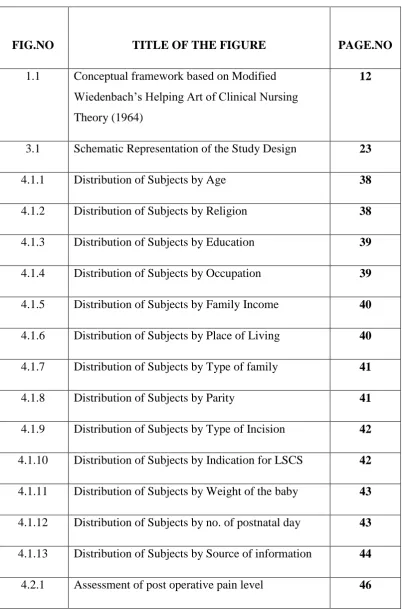
FIG.NO TITLE OF THE FIGURE PAGE.NO
1.1 Conceptual framework based on Modified
Wiedenbach’s Helping Art of Clinical Nursing
Theory (1964)
12
3.1 Schematic Representation of the Study Design 23
4.1.1 Distribution of Subjects by Age 38
4.1.2 Distribution of Subjects by Religion 38
4.1.3 Distribution of Subjects by Education 39
4.1.4 Distribution of Subjects by Occupation 39
4.1.5 Distribution of Subjects by Family Income 40
4.1.6 Distribution of Subjects by Place of Living 40
4.1.7 Distribution of Subjects by Type of family 41
4.1.8 Distribution of Subjects by Parity 41
4.1.9 Distribution of Subjects by Type of Incision 42
4.1.10 Distribution of Subjects by Indication for LSCS 42
4.1.11 Distribution of Subjects by Weight of the baby 43
4.1.12 Distribution of Subjects by no. of postnatal day 43
4.1.13 Distribution of Subjects by Source of information 44
LIST OF ANNEXURES
ANNEXURES CONTENT
A Copy of letter seeking permission to conduct the study
B Copy of the letter seeking expert’s opinion for the content
validity of the tool
C Content Validity Certificate
D List of experts consulted for content validity of the tool
E Tool used for the study
LIST OF ABBREVIATIONS
1
H
Hypothesis
2
F
Frequency
3
SD
Standard deviation
4
P
Probability
5
Df
Degree of freedom
6
N
Number of respondents
7
*S
Significant
8
NS
Not significant
1 CHAPTER-1
INTRODUCTION ‘The nurse is the corner stone of pain control’
(International Journal of nursing studies, London.1988)
Giving birth to a new life is the most painful experience in a woman‟s life, though she
experiences the happiness later by carry the newborn, the pain she endures with patience is
same in both normal as well as caesarean deliveries.
Caesarean section is a surgical procedure used to deliver an infant by an incision on
the abdomen and uterus. C-section is an alternative option to vaginal delivery. This
alternative option is exercised based on the health status of the mother and child at the time of
labour. About 32 percent of mothers prefer planned surgical deliveries. Hence, the outcome
of a normal pregnancy can be achieved either through a vaginal delivery or a C-section. The
post Lower Segment Caesarean Section discomfort experienced by mothers after caesarean
delivery may vary from woman to woman.
Pain is one of the major discomforts which drives post C-section mothers to seek help.
C-section do not eliminate the pain of labour, they often do not eliminate the pain of delivery
either. In vaginal deliveries mothers experiences sever pain before the delivery of the baby
and to some extent up to 2-3 days after delivery in case of episiotomy. Where as in case of
C-section, it is easier to undergo but the after pain is much worse .The numbness around the
incision and occasional aches and pain can last for several months. Not only has that it also
interfered with mother-infant interaction. If the mother is comfortable easier it will be to
2
Many measures are used to reduce post Lower Segment Caesarean Section pain; the
quick and easier method people go for is the use of analgesics to reduce pain. Pain relief
medications reduce pain but cause a variety of unpleasant side effects. But we cannot even
neglect these discomforts as it may cause serious effect on physical and psychological aspect
of post C-section mothers. There are some simple, effective, low cost methods to reduce post
Lower Segment Caesarean Section pain, they are the non-pharmacological methods.
Midwives can help post C-section mothers in reducing the pain by using
non-pharmacological measures.
Alternative and complimentary therapies are commonly used treatment modalities in
present days as it does not have side effects and also it is effective. These are a group of
therapies and practices used in place of conventional medicines or used together with
conventional medicines, for the purpose of increasing comfort or relaxation, maintaining,
improving or restoring health and harmony of the body, mind, and spirit, improving coping
3 NEED FOR THE STUDY:
“Imagination is only intelligence having fun”
Albert Einstein
Pain is complex, multi-dimensional experience. For some people it is major problem others it
is minor. Perception of pain affects all aspects of individual‟s life; it may leads to anxiety,
increased heart rate and disequilibrium in the maintenance of body temperature.
Despite improved analgesics and sophisticated drug delivery systems, surveys
indicate that over 80% of patients experience moderate to severe pain postoperatively.
Inadequate postoperative pain relief can prolong recovery, precipitate or increase the duration
of hospital stay, increase healthcare costs, and reduce patient satisfaction.
The world wide statistics of number of surgeries per day is increasing day by day. In U K
total number of operations in 2005-2006 was around 7 million. Patients report a lack of
information about pain control measures and ineffective pain control.
A patient-based national survey on post operative pain management revealed that pain
intensity monitoring was prescribed for only 2% of cases. However, written post operative
pain evaluation was frequent in surgical wards 93.7%, at intervals of 4.1 hour. Preoperative
pain was reported at the site of surgery in 62.7% of patients. Patients reporting preoperative
pain had significantly more intense postoperative pain at rest and when moving than patients
without preoperative pain. Severe pain was present in 4.2% of patients at rest, 26.9% of
patients during movement and maximal pain since surgery was severe in 50.9% of patients.
Another study was conducted to measure the prevalence of postoperative pain and
assessment was made of 1490 surgical in patients who were receiving postoperative pain
4
(score 0–5), mild pain (score 6–40), moderate pain (score 41–74) or severe pain (score 75–
100). Moderate or severe pain was reported by 41% of the patients on day 0, 30% on days 1
and 19%, 16% and 14% on days 2, 3 and 4. The prevalence of moderate or severe pain in the
abdominal surgery group was high on postoperative days 0–1 (30–55%). A high prevalence
of moderate or severe pain was found during the whole of 1-4 days in the extremity surgery
group (20–71%) and in the back/spinal surgery group (30–64%). Researchers concluded that
despite an acute pain protocol, postoperative pain treatment was unsatisfactory, especially
after intermediate and major surgical procedures on an extremity or on the spine.
Effective postoperative pain control is an essential component of the care of the
surgical patient. Inadequate pain control, apart from being inhumane, may result in increased
morbidity or mortality. The advantages of effective postoperative pain management include
patient comfort and therefore satisfaction, earlier mobilization, fewer pulmonary and cardiac
complications, a reduced risk of deep vein thrombosis, faster recovery with less likelihood of
the development of neuropathic pain, and reduced cost of care. The goal of postoperative pain
management is to relieve pain while keeping side effects to a minimum.
Guided imagery as an alternative therapy is effective in management of pain.
Historically, imagination as a treatment has been used by many cultural groups, including the
Navajos, ancient Egyptians, Greeks and Chinese. Imagination has also been used in religions
such as Hinduism and Judaism as a healing method. Guided imagery is a simple tool which
can empower any one to become a participant in their own healing.
Guided imagery involves far more than just visual sense and this is a good thing given
only about 55% of people have vision as their primary imaginative skill. Over past 24 years
the effectiveness of guided imagery has been established by research findings and that
5
Guided imagery involves the conscious use of imagination to create positive images
in order to bring about healthful changes. Even it cannot replace other medical treatment; it
can be used as a complimentary therapy. Pain is a perception which can be easily diverted by
pleasant imaginations. And guided imagination contributes for a comprehensive relaxation
since the participant takes a very passive role. Guided imagery done during post operative
period doubles the effect since it is added as a compliment with pain medications.
A study published in the journal of pain reveal that among 94 adult cancer patients,
those who received imagery training reported less pain than those who didn‟t receive
imagery. Journal of developmental and behaviouralpaediatrics found that guided imagery
lowered post operative pain in children.
Nurses need to rekindle the original nursing flame to learn ways to incorporate more
caring nurturing behaviours, new therapies and new nursing practices in caring their patients.
Instead of being swept away by the high tech, low touch, fast paced, short staffing line,
nurses need to make a difference in the patient‟s lives by re-establishing and adapting newer
technique and modalities in their practices.
Based on the review of literature and personal experience of the investigator during
her clinical posting found that in many hospitals lower segment caesarean section cares
several practices such as foot massage, relaxation therapy, analgesic to relieve pain and
discomfort.Hence, the researcher is interested to find out the healing power of guided
6 STATEMENT OF THE PROBLEM:
“ A study to assess the effectiveness of guided imagery in management of post
operative pain among lower segment caesarean section mothers in selected hospital at Erode”
OBJECTIVES OF THE STUDY:
1. To assess the intensity of lower segment caesarean section pain among postnatal
mothers before guided imagery.
2. To evaluate the effectiveness of guided imagery in reduction of post operative pain.
3. To determine the association between the level of pain and their selected demographic
variables.
HYPOTHESES:
H1: There is significant difference between the mean pre test and post test pain score after
guided imagery.
H2: There is significant association between pain scores with selected demographic variables.
OPERATIONAL DEFINITIONS: Assess:-
Refers to determine the effectiveness of guided imagery in reduction of post operative
pain by numerical rating pain scale
Effectiveness:-
Refers to the desired changes brought by the guided imagery in reduction of lower
7 Guided Imagery:-
It is a dynamic, psycho physiologic process, in which a person imagines and experiences.It is
an alternative technique for reducing the pain. This should be conducted for 20 to 30 minutes
twice a day.
Lower Segment Caesarean Section:-
It refers to a surgically made incision on the lower segment of a pregnant uterus
inorder to deliver the baby safely
Pain:-
An unpleasant, subjective, sensory and emotional experience by postnatal mothers
due to tissue damage resulted from surgical incision which is assessed by verbal descriptive
pain scale.
Mothers:-
It refers to mothers who have delivered baby by a surgical incision on the abdomen
and uterus from second to fourth day of post Lower Segment Caesarean Section period,
irrespective of her parity.
VARIABLES:
Independent Variable:-
Guided Imagery
Dependent Variable:-
8 ASSUMPTIONS:
Guided imagery is effective in reduction of post operative pain.
DELIMITATIONS: The study was delimited:
To postnatal mothers who are selected in Government hospital at Erode.
Those who knows Tamil or English.
9
CONCEPTUAL FRAME WORK
MODIFIED WIEDENBACH’S HELPING ART OF CLINICAL NURSING THEORY (1964)
Ernestine wiedenbach propose a Prescriptive theory for nursing, which is described as a
conceiving of a desired situation and the ways to attain it. The present study is aimed at
helping the postnatal mothers to reduce post operative pain and the conceptual framework of
the present study is based on Wiedenbach‟s Helping Art of Clinical Nursing Theory. It
consists of three factors: central purpose, prescriptive and realities.
Central purpose
It is the overall goal towards which a nurse strives. In this study the overall goal is to
reduce post operative pain among lower segment caesarean section mothers
.
Prescription
It refers to the plan of care for a patient. In this study, the plan of the care is to provide
guided imagery to the lower segment caesarean section mothers who are admitted in the
hospital, so that it helps to reduce their pain level.
Nursing practice
a)
General information
Wiedenbach‟s views nursing as an art based on goal-directed care. Nursing
practice consists of identifying a patient‟s need for help. In this study the
researcher found out the leading problem faced by the postnatal mothers-post
10
b)
Identification
Involves viewing the patients as an individual with unique experiences and
understanding the patient‟s perception of the condition, It determines a
patient‟s need for help based on the existence of a need, whether the patient
realizes the need, what prevents the patient from meeting the need and
whether the patient cannot meet the need alone. In this study it involves,
identifying the need of the postnatal mothers.
c)
Realities
It consists of all factors-physical, physiological, emotional and spiritual that
play a role in a situation in which nursing activities occurs at a given
environment. It consists of agent, goal, and means of activities, recipient,
framework and reassessment methods.
Five Realities are:
1) Agent- In this study agent was Nurse.
2) Recipient- In this study recipient was postnatal mothers.
3) Goal- In this study goal was to reduce post operative pain among lower segment
caesarean section mothers.
4) Means- In this study means was guided imagery provided by the researcher. In this
study numerical pain scale was used to assess the pain level.
11
d)
Ministration
Requires an identified need and a patient who need help. In this study the
researcher understands the need for guided imagery to reduce the post
operative pain among lower segment caesarean section mothers.
e)
Validation
Refers a collection of evidence that show‟s a patient needs has been met and
that her functional ability has been restored as a result of the nurses action. In
this study validation involves the outcome of guided imagery in reducing post
13 CHAPTER-II
REVIEW OF LITERATURE
Review of literature is a key step in research process. Nursing research may be considered a
continuous process in which knowledge gained from earlier studies is an integral part of
research in general. One of the most satisfying aspects of the literature review is the
contribution it makes to the new knowledge, insight and general scholarship of the
researchers. „A literature review is s complication of resources that provide the ground for
future study‟.
Review of literature is defined as broad, comprehensive, in depth, systematic and
critical review of scholarly publications, unpublished scholarly print materials, and audio
visual materials and personal communications.
The literature reviewed has been presented under the following headings:
1. Literature related to post operative pain
2. Literature related to effects of non pharmacological interventions on post operative
pain
3. Literature related to effect of guided imagery on post operative pain.
1.LITERATURE RELATED TO POST OPERATIVE PAIN
A national study was done to assess the patients post operative pain experience and
the status of acute pain management with random sample of 250 adults who had undergone
surgical procedures by using the telephone questionnaires. Results showed that
approximately 80% of patients experienced acute pain after surgery. Of these patients, 86%
had moderate, severe, or extreme pain, with more patients experiencing pain after discharge
14
(59%) of patients. Almost 25% of patients who received pain medications experienced
adverse effects. Despite an increased focus on pain management programs and the
development of new standards for pain management, many patients continue to experience
intense pain after surgery.
A study was performed to assess the prevalence and course of postoperative pain in
the early postoperative period after ambulatory surgery and 648 patients who underwent
day-case surgery were included in study. Data were collected with interviews and questionnaires
during 4 days after surgery. Results showed thaton the day of the operation, 26% of the patients had moderate to severe pain, 21% on postoperative day 1, 13% on postoperative day
2, 10% on Postoperative day 3, and 9% on Postoperative day 4. Operations of nose and
pharynx, abdominal operations, plastic surgery of the breasts, and orthopaedic operations
were the most painful procedures during the first 48 hours. This study showed that an
important number of patients still experience moderate to severe pain in the postoperative
period after day-case surgery even after a 4 day period.
A pilot study was conducted to predict success with guided imagery for cancer pain
and in this one group pre test post test design, 62 hospitalized cancer patients experiencing
pain had completed questionnaire and used an audio taped imagery intervention. Pain
outcome examined included mean pain intensity & distress, positive and negative effect, and
perceived control over pain. Apathy analysis was conducted using multiple regressions to
evaluate relationship proposed in model. Previous history with imagery predicted outcome
expectancy. Imaging ability predicted mean pain intensity, positive effect, and perceived
control over pain. Outcome expectancy was not a significant predictor of any pain outcomes.
Baseline status and concurrent symptoms, measured as covariates, also played a significant
role in predicting outcomes. Variance explained in pain outcomes ranged from 10% to 52%.
15
current symptom experience, imaging ability may be a useful variable to assess in order to
determine whether guided imagery is an appropriate intervention for individual patients.
Researchers from Florida international university‟s school of nursing in Miami
conducted a randomized control trail on effects of imagery in persons diagnosed with
fibromyalgia, with sample size of 48 (n=48). In this study the experimental group received 6
weeks intervention of guided imagery. The study showed that self-efficacy of managing pain
in experimental group was greater than control group (p=0.03). This study demonstrated the
effectiveness of guided imagery in improving the sense of self efficacy for managing pain.
A longitudinal, randomized clinical trial pilot study was conducted to determine
whether Guided Imagery would reduce pain and mobility difficulties of women with
osteoarthritis. Twenty-eight older women with osteoarthritis were randomly assigned to
either the treatment or the control group. The treatment consisted of listening twice a day to a
10-15 minutes audio taped script that guided the women in Guided Imagery. Repeated
measures ANOVA revealed a significant difference between the two groups in the amount of
change in pain and mobility difficulties they experienced over 12 weeks. The treatment group
reported a significant reduction in pain and mobility difficulties at week 12 compared to the
control group. Members of the control group reported no differences in pain and
non-significant increases in mobility difficulties. A study was designed to assess the strategy,
effectiveness and safety of postoperative pain management in patients undergoing elective
caesarean section in the obstetric unit. The researcher assessed the overall pain since the time
of surgery by visual analogue scale and also recorded any complications since the time of
surgery and patients‟ satisfaction with the pain management. Postoperative pain management
was mostly started and followed by the obstetric team at the hospital. Although the
16
2.LITERATURE RELATED TO EFFECTS OF NON PHARMACOLOGICAL NURSING INTERVENTION ON PAIN
A randomized control trail was conducted on “relaxation and music reduce pain after
gynaecologic surgery” with patients (n=311), age 18 -70 from five Midwestern hospitals.
They were randomly assigned using minimization to either three intervention groups or
control group and were tested during ambulation and rest on post operative days 1 and 2. Pain
sensation and distress were measured using visual analogue scales. Multivariate analysis of
covariance of post-test sensation and distress was used with pre-test control and priori
contrasts. The intervention groups had significantly less post-test pain than control group
(p=022-001) on both days. The three interventions were similar in their effect on pain.
Patients who received the interventions plus patient controlled analgesia had 9%-29% less
pain than controls who used patient controlled analgesia alone. Reduced pain was related to
amount of activity, mastery of the use of intervention. Decreased pulse, respiration and those
who slept well had less pain the following days. Researchers suggested that nurses who care
for gynaecologic surgery patients can provide soft music relaxation tapes and instruct the
patients to use them during post-operative ambulation and also at rest on days.
A quasi-experimental study was conducted with the purpose of comparing effects of
symptom management with guided imagery on pain in patients after surgery. Samples of 40
post-operative patients were assigned to experimental and control group equally, Data was
analyzed by using descriptive statistics & t-test. The major finding shows the post-test mean
score on pain of an experimental group was significantly lower than of the pre-test (X =
7.230, X = 3.75, t=16.335, p<.001). The post-test mean score of pain of an experimental
group was significantly lower than of a control group (X = 3.75, X =6.65, t =-10.627,
17
A descriptive study was conducted to measure and characterize post C-section pain
and to verify its relationship with limitations of physical activities, 60 mothers in
post-operative period of C-section were taken, and intensity of pain was measured with both
numeric scale and McGill pain questionnaire. Limitations of physical activities were
measured with a specific instrument developed for the study. All participants reported that the
pain limited their movements for sitting down and standing up and characterized the pain as
annoying, grasping and straining.
A study was conducted between 1983- 1995 on groups of post-operative mothers,
reported high stress levels. After guided imagery sessions, they had significantly less
self-reported stress; when compared to control groups. The patients were asked to practice on
their own. Studies showed that relaxation, hypnosis, and imagery can protect the immune
system against the effects of stress. Other mind-body approaches have also yielded
impressive results in post-operative group.
A quasi experimental study was conducted by Elizabeth.S,on the effect of planned
teaching programme regarding knowledge of post operative pain among primi mothers
undergone caesarean section in Hassan,2007.A sample of 80 mothers were included in the
study and they were randomly assigned to study and control group. The results showed that
the mean gain level of knowledge between pre and post test in experimental group was 36.69
and that in control group was 0.08.The calculated t value is 22.8(P<0.001) shows that there is
a significant increase in the level of knowledge in the experimental group than the control
18
3. LITERATURE RELATED TO EFFECT OF GUIDED IMAGERY ON POST OPERATIVE PAINS
A randomized single blind study on “effects of guided imagery on post operative
outcomes in patients undergoing same day surgical procedures” was conducted with sample
size 44. Adults (n=44) scheduled for head and neck procedure. This study revealed that
anxiety level decreased significantly in guided imagery (p=.002). After 2 hours, postoperative
patients reported significantly less pain (p=.041).
Another study was conducted on “imagery reduces children‟s post operative pain”. In
this study 73 children of aging 7-12 years having tonsillectomy and adenoidectomies in
ambulatory surgery assigned to treatment group (n=36) and control group(37). Children in
intervention group reported significantly less pain i.e. 28.3% less sensory pain and 8.5 % less
affective pain.
A study was conducted on guided imagery as a coping strategy for preoperative
patients and in this study, patients (elective colorectal patients) {n=130} were randomly
assigned experimental and control group. The experimental group patients received guided
imagery tape. Results showed that post operatively, median increase in the worst pain score
was 72.5 for control group and 42.5 for imagery group (p<0.0014) and least pain was also
significantly different (p<0.001) with a median increase of 30 for control and 12.5 for
imagery group.
For the purpose of identifying the effectiveness of imagery instruction & control of
post surgical pain, a study was conducted with samples of 32 individual having elective
surgery .They were allocated into experimental group who received procedural information
and instruction regarding the use of pleasant imagery. Scores on visual analogue scale and
19
pain and analgesic consumption the patient who received the imagery, significantly less post
surgical pain. These findings suggest that nurses can enhance the management of
post-operative pain by teaching patients to use pleasant imagery.
A pilot study was conducted to find out the effectiveness of alternative methods in
bypass surgery pain. Twenty patients were randomized to one of the three treatments. After
leaving the intensive care unit, patients in the acupuncture and massage groups received
treatment. The guided imagery group received treatment before, during, and after surgery.
Patients in the acupuncture group received therapy in which the acupuncture points related to
relaxation and anxiety were stimulated. Those in the massage group received therapy for
muscles likely to spasm after bypass surgery. Those in the guided imagery group listened to
an audio message designed to cause relaxation. Results showed that these methods are very
effective.
In a randomized pilot study, 60 children (8-12yrs ) who had under gone
appendectomy or lower limb surgery and had been randomly assigned to the experimental
group (n=30) listened to an imagery trip CD where as those in control group (n2=30)
received standard care. An investigator developed questionnaire and visual analogue scale
was used to assess the intensity of pain (before, immediately after, and 1 hour after
intervention or standard care). The children in the experimental group reported having
significantly less pain (p<.001) than the control group and there were no significant
difference in nurse assessed pain scores the type and time of operation were related to pain
intensity in children. They concluded that the nurses underestimated the pain of paediatric
patient‟s .The imagery trip CD can be used to reduce the children‟s post-operative pain in a
20
A pilot study was conducted on the use of guided imagery to manage pain in an
elderly orthopedic population and in this two group experimental repeated measures design,
sample of 13 patients who has under gone joint replacement surgery and 55 years older, were
recruited into 2 groups. The control group received usual care and a music audio tape and the
experimental group received usual care and a guided imagery audio tape. Trends in this pilot
study demonstrated positive outcomes for pain relief, decreased anxiety, and decreased length
of stay. Researcher concluded that complementary therapy holds the promise of increasing
positive outcomes. Further research is needed to validate the findings with a larger
postoperative sample and in other populations. Researchers recommended that there is a
critical need to incorporate the use of guided imagery and other complementary therapies into
all nursing curricula. Nurses must develop expertise and be ready and able to act as patient
educators and advocates in the use of these interventions in programs of care and institutional
21
CHAPTER-III
RESEARCH METHODOLOGY
Research methodology is way to systematically solve the research problem. It is a science of
studying how research is done scientifically.
BT. Basavatappa (2003)
Methodology is a significant part of the research under which the researcher is able to project
a blue print of the research undertaken. This chapter presents the methodology of organizing
research procedure to gather valid and reliable data with research approach, setting of the
study.
Population, sample and sampling technique, development and description of tool, validity and
reliability of tool, procedures for data collection and plan for data analysis
RESEARCH APPROACH
As the investigator wanted to assess the effectiveness of guided imagery on post operative
pain among postnatal mothers, the evaluative research approach seemed to be the most appropriate approach.
RESEARCH DESIGN
Research design is the blue print for conducting the study that maximizes control over factor
that could interfere with the validity of the finding. It guides the researcher in planning and
implementing the study in a way that is most likely to achieve the intended goal.
22
The term research design refers to the plan of a scientific investigation of variable,
their manipulation, control, observation to be made and types of statistical analysis to
interpret the data.
A design was developed to enable the investigator to assess the level of pain among
postnatal mothers and reduce the pain by providing the guided imagery. Considering the
factors, evaluate with experimental,one group pretest-post test only design was used in the present study.
Group Pre test level of pain Treatment Post test level of pain
Experiment O1 X O2
Key
O1- Pre test level of pain
X- Guided Imagery
O2 – Post test level of pain
VARIABLE
The two categories of variables discussed in the present study were:
Independent Variable: Guided Imagery
23
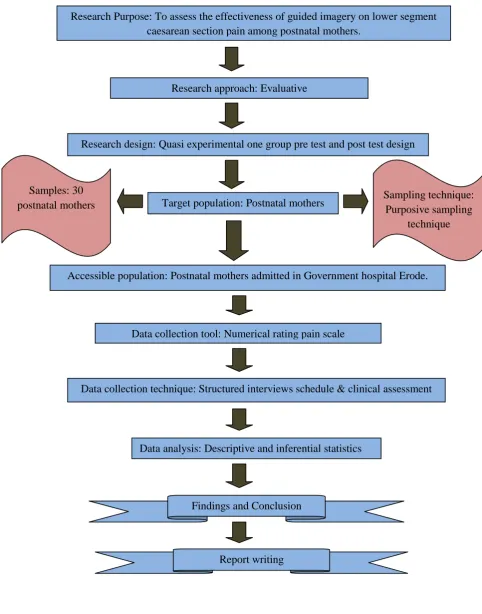
FIGURE: 3.1 SCHEMATIC REPRESENTATION OF STUDY DESIGN.
Research Purpose: To assess the effectiveness of guided imagery on lower segment caesarean section pain among postnatal mothers.
Research approach: Evaluative
Research design: Quasi experimental one group pre test and post test design
Target population: Postnatal mothers
Accessible population: Postnatal mothers admitted in Government hospital Erode. Samples: 30
postnatal mothers Sampling technique: Purposive sampling
technique
Data collection tool: Numerical rating pain scale
Data collection technique: Structured interviews schedule & clinical assessment
Data analysis: Descriptive and inferential statistics
Findings and Conclusion
24 SETTING OF THE STUDY
The study was conducted in Erode Government hospital which has all the facilities.
POPULATION
Population refers to the aggregate or totally of those conforming to a set of specification.
Polit and Beck (2006)
The population of this study was postnatal mothers who delivered by lower segment
caesarean section.
SAMPLE
Sample is the small portion of the population, which represents the whole population. In this
study the samples were postnatal mothers who delivered by lower segment caesarean section
from 2nd – 4th postnatal days in selected hospital at Erode.
SAMPLE SIZE
The sample size for the present study was 30 samples. The sample size was determined based
on the type of study variables being studied. The statistical significance require and
availability of sample and flexibility of conducting the study.
SAMPLING TECHNIQUE
Sampling is the process of selecting a portion of population to represent the entire population.
-Polit and Hungler (1999)
The purpose of using a sample technique was to increase representatives and to decrease bias
25 SAMPLING CRITERIA
In sampling criteria the researcher specifies the characteristic of the population under study
by detailing the inclusion and exclusion criteria. Inclusion criteria are characteristics that each
sample element must possess to be included in the sample. Exclusion criteria are
characteristics that could confound and contaminate the results of the study. Therefore such
participants are excluded from the study.
Inclusion Criteria
Postnatal mothers who:
Includes mothers who are delivered with lower segment caesarean section.
Who are in 2nd – 4th postnatal day.
Who are able to communicate in Tamil or English.
Who are willing to participate in the study.
Who are available during the data collection period.
Exclusion Criteria:
Postnatal mothers who:
Who developed complications of lower segment caesarean section.
Who delivered the baby by normal vaginal delivery.
Who are not willing to participant in the study.
26 DEVELOPMENT OF TOOL
An instrument in research refers to the tool or equipment used for collection of data. The
research tool was developed after extensive review of literature and numerical rating pain
scale was used to assess the level of pain.
DESCRIPTION OF TOOL
The investigator was developed a questionnaire to collect the socio-demo graphic data. The
numerical rating pain scale was developed to assess the level of post operative pain among
postnatal mothers who delivered with lower segment caesarean section. The tool consists of
three sections:
Section A
It includes the demographic data such as age, religion, education, occupation, family income,
residence, type of family, parity, type of incision, indication for lower segment caesarean
section, weight of the baby, No. of postnatal days, source of information.
Section B
It consists of 20 multiple choice questions to assess the knowledge regarding lower segment
caesarean section .Scoring of „1‟ is given for every „RIGHT‟ answer and the score of „0‟ is
27
SCORE RANGING
SCORE PERCENTAGE (%) RANGING
16-20 76-100 Good
11-15 51-75 Average
5-10 26-50 Poor
0-5 0-25 Very poor
Section C
It consists of Numerical Rating Pain Scale to assess intensity of post operative pain. The pain
scale was constructed based on the Numerical Rating Pain Scale given by Erin E Krebs
(2007). It is a pain scale ranging 0 to 10. Point 0 indicates no pain, 1-3 indicates mild pain,
4-6 indicates moderate pain and 7-10 indicates severe pain. The maximum score is 10. It was
used to identify the level of pain in lower segment caesarean section. The subjects in the
28
ASSESSMENT OF LOWER SEGMENT CAESAREAN SECTION PAIN BY USING NUMERICAL RATING PAIN SCALE (ERIN E KREBS, 2007)
RATING PAIN LEVEL DESCRIPTION
0 No Pain No pain, feeling perfectly normal
1-3 Mild Pain Nagging annoying, interfering little with ADLs (Activities of daily living)
4-6 Moderate Pain Interferes significantly with ADLs (Activities of daily living)
29 TESTING OF THE TOOL
Validity
Validity is the degree to which an instrument measures, what it is intended to measure.
-Polit and Hungler (2004)
In the present study, five experts including one obstetrician and four nursing experts were
validating the entire section of the tool. The experts were requested to check for the
relevance, sequence and adequacy of the tool. Reframing of the tool is according to their
suggestion.
Reliability
Reliability is an instrument is the degree of consistency in which it measures the attribute it is
suppose to be measuring.
-Polit and Hungler (2005)
The reliability of the Numerical Rating Pain Scale was established by test retest method
among five postnatal mothers. The post test is conducted after the pre test. The Karl Pearson
correlation coefficient was used „r‟ was found to be r=0.92. The tool was found to be reliable.
PILOT STUDY
The tool was administered and checked for the feasibility and appropriateness. The subject
chosen was similar in characteristics. Formal approval was obtained from the authority. Pilot
study was conducted. The tool was administered to 5 postnatal mothers and guided imagery
30
days post test was conducted. There was a good response. The instrument was found to be
feasible and practicable.
INTERVENTION (TREATMENT)
In the preparatory phase of the study, explained the procedure to the patients, informed
content was obtained and the level of pain is assessed prior to the intervention. Then guided
imagery was conducted. In that the mother is directed to imagine and experience of preferred
imagery (Mental Visualization) for 30 minutes twice a day. At the end of the treatment the
level of the pain was assessed again.
DATA COLLECTION PROCEDURE
Data collection was done in Government hospital, Erode. The data collection was done.
Formal written permission was obtained from the respective authorities. Based on inclusion
criteria, 30 postnatal mothers were selected from the postnatal ward. Samples were selected
by purposive sampling technique. Subjects were selected for postnatal ward on each day
based on the inclusion criteria. The mothers were intimated regarding the purpose of the
study and their consent was secured. Pre test was conducted on the first day before starting
treatment. The lower segment caesarean section pain was assessed by Numerical Rating Pain
Scale. Guided imagery was conducted for 30 minutes twice a day for three days. Post test was
conducted on third day by using the same tool.
PLAN FOR DATA ANALYSIS
The investigator edited the tool, coded the data and entered the data into excel sheet. The
statistical analysis was done on the basis of objectives and hypothesis using descriptive and
inferential statistics. The following plan of analyses was developed. The analysis was made
31
Descriptive Statistics
Frequency, percentage distribution was used to analyze demographic variables.
Mean and standard deviation was used to analyze the level of pain.
Inferential Statistics
Paired‟ test was used to find out the difference between pre and post test scores of the
group.
Chi-square (
x
2) was used to find out the association between post test score and theirselected demographic variables.
ETHICAL CONSIDERATION
The main study was conducted after the approval of the research committee. The purpose and
other details of the study were explained to the respondents. Consent was obtained from
them. Confidentiality was assured to the individuals regarding the study results. Permission
was sought from Hospital authority. Thus the ethical issues were ensured in the study.
SUMMARY
This chapter has dealt with Research Approach, Design of the study, population, Sample,
Sample technique, development of the tool, pilot study, content validity and reliability of the
32
CHAPTER-IV
DATA ANALYSIS AND INTERPRETATION
Polit (2004) states that statistical analysis is a method of rendering quantitative
information and elicits meaningful and intelligible form of research data. Analysis and
interpretation of data of this study was done by using descriptive and inferential statistics.
This chapter deals with analysis and interpretation of data collection to determine the
level of pain among Lower segment Caesarean Section mothers.
The collected data were edited, tabulated, analyzed, interpreted and findings were
presented in the form of tables and diagrams under the following section.
Section I: Deals with the distribution of demographic variables among lower segment caesarean section mothers.
Section II: Deals with the pre test and post test level of pain among lower segment caesarean section mothers.
Section III: Deals with the effectiveness of guided imagery on reducing post operative pain among postnatal mothers.
33 SECTION-I
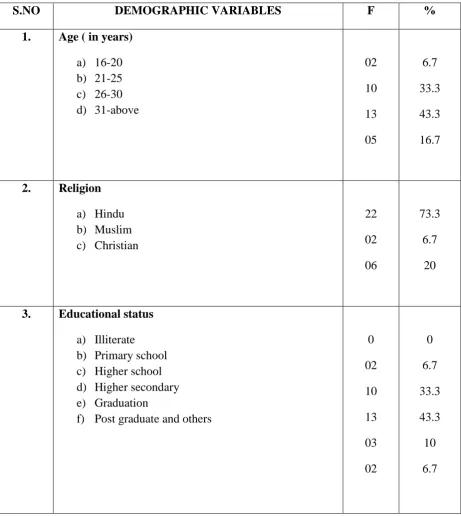
Table 4.1
FREQUENCY AND PERCENTAGE DISTRIBUTION OF DEMOGRAPHIC VARIABLES OF POSTNATAL MOTHERS
N=30
S.NO DEMOGRAPHIC VARIABLES F %
1. Age ( in years)
a) 16-20 b) 21-25 c) 26-30 d) 31-above 02 10 13 05 6.7 33.3 43.3 16.7
2. Religion
a) Hindu b) Muslim c) Christian 22 02 06 73.3 6.7 20
3. Educational status
a) Illiterate b) Primary school c) Higher school d) Higher secondary e) Graduation
f) Post graduate and others
34 4. Occupation
a) Unemployed b) Daily wages c) Employed d) Business 15 08 05 02 50 26.7 16.7 6.7
5. Family income per month (in Rs)
a) <2000 b) 2001-4000 c) 4001-6000 d) 6000 and above
0 05 10 15 0 16.7 33.3 50
6. Residence
a) Urban b) Rural 20 10 66.7 33.3
7. Type of family
a) Joint family b) Nuclear family c) Extended family
11 14 05 36.7 46.6 16.7
8. Parity
a) Primipara b) Multipara c) Grand multipara
19 08 03 63.3 26.7 10
9. Type of surgical incision
35
10. Indication for Lower Segment Caesarean Section
a) Previous LSCS b) Fetal distress
c) Contracted pelvis and CPD d) Placenta praevia
e) Eclampsia 10 03 13 02 02 33.3 10 43.3 6.7 6.7
11. Weight of the baby
a) <2.5 kg b) 2.5 to 3 kg c) 3 to 3.5 kg d) >3.5 kg
08 14 04 04 26.7 46.7 13.3 13.3
12. No. of postnatal day
a) Two b) Three c) Four 15 09 06 50 30 20
13. Source of information
a) Mass media
36
Table 4.1 shows that,
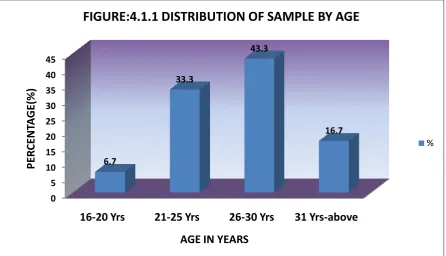
i. 43.3% of the subjects were between the age group of 26 to 30 years, 33.3% belong
to the age group of 21 to 25 years, 16.7% of the subjects were the age group above
31 years and 6.7% belong to 16 to 20 years.(Fig.4.1.1)
ii. Majority (73.3%) of the subjects were Hindus, 20% were Christians and the 6.7%
were Muslims.(Fig.4.1.2)
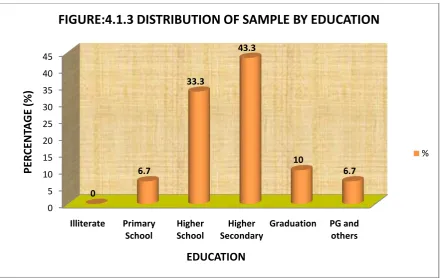
iii. Majority of subjects (43.3%) had completed Higher secondary, 33.3% had
completed high school education, 10% were Graduated, 6.7% had completed post
graduates and primary school.(Fig.4.1.3)
iv. 50% of the subjects were employed, 26.7% were daily wages, 16.7% were house
wives and 6.7% of the subjects were doing business.(Fig.4.1.4)
v. 50% of the subjects were earning Rs.6000 and above per month, 33.3% were
earning Rs.4001 to 6000 per month and 16.7% were earning Rs.2001 to 4000 per
month.(Fig.4.1.5)
vi. Majority (66.7%) of subjects were living in Urban area and 33.3% were living in
Rural area.(Fig.4.1.6)
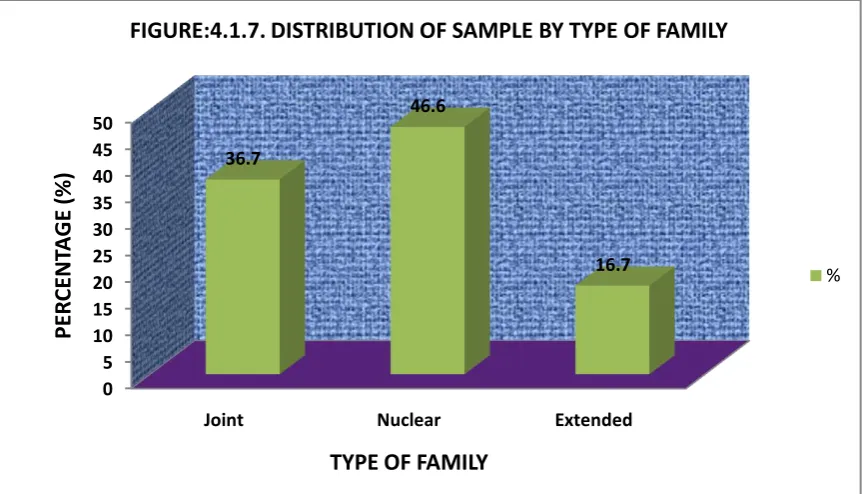
vii. 46% of the subjects belong to Nuclear family and 36.7% of subjects were from
joint family and least 16.7% were from extended family.(Fig.4.1.7)
viii. 63.3% of subjects were primiparas, 26.7% were multiparas and 10% were grand
multiparas.(Fig.4.1.8)
ix. 73.3% of the subjects were having vertical incision; where as 26.7% of the
subjects were having transverse incision. (Fig.4.1.9)
x. 43.3% of the subjects had indication for lower segment caesarean section was
37
segment caesarean section, 10% of the subjects had fetal distress and 6.7% had
placenta praevia and eclampsia. (Fig.4.1.10)
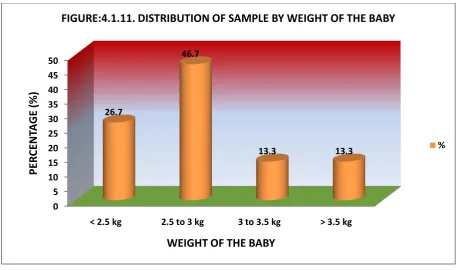
xi. Majority (46.7%) of the babies were 2.5 to 3 kg, 26.7% were below 2.5 kg and
13.3% were 3 to 3.5 kg/above 3.5 kg.(Fig.4.1.11)
xii. Half of the (50%) subjects were in the second postnatal day, 30% were in the third
postnatal day and 20% were in fourth postnatal day.(Fig.4.1.12)
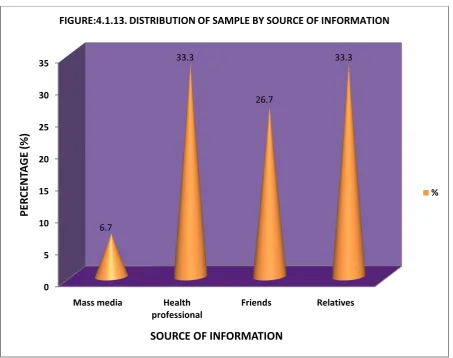
xiii. 33.3% of the subjects had got the information from health professionals and
relatives, 26.7% had got the information from friends and 6.7% were from mass
38 0 5 10 15 20 25 30 35 40 45
16-20 Yrs 21-25 Yrs 26-30 Yrs 31 Yrs-above 6.7 33.3 43.3 16.7 PER CE NT A GE (%)
[image:50.595.76.523.72.328.2]AGE IN YEARS
FIGURE:4.1.1 DISTRIBUTION OF SAMPLE BY AGE
% 0 10 20 30 40 50 60 70 80
Hindu Muslim Christian
[image:50.595.76.520.394.704.2]73.3 6.7 20 PER CE NT A GE (%) RELIGION
FIGURE:4.1.2 DISTRIBUTION OF SAMPLE BY RELIGION
39 0 5 10 15 20 25 30 35 40 45 Illiterate Primary School Higher School Higher Secondary
[image:51.595.78.519.69.347.2]Graduation PG and others 0 6.7 33.3 43.3 10 6.7 PER CE NT A GE (%) EDUCATION
FIGURE:4.1.3 DISTRIBUTION OF SAMPLE BY EDUCATION
% 0 5 10 15 20 25 30 35 40 45 50
Unemployed Daily wages Employed Business 50 26.7 16.7 6.7 PE R CE N TA GE (% ) OCCUPATION
FIGURE:4.1.4. DISTRIBUTION OF SAMPLE BY OCCUPATION
[image:51.595.76.519.394.710.2]40 0 5 10 15 20 25 30 35 40 45 50
< 2000 2001-4000 4001-6000 6000 and above 0 16.7 33.3 50 PER CE NT A GE (%)
[image:52.595.82.514.71.352.2]FAMILY INCOME PER MONTH
FIGURE:4.1.5. DISTRIBUTION OF SAMPLE BY FAMILY INCOME
[image:52.595.79.517.363.674.2]% 0 10 20 30 40 50 60 70 Urban Rural 33.3 66.7 PER CE NT A GE (%) RESIDENCE
FIGURE:4.1.6. DISTRIBUTION OF SAMPLE BY RESIDENCE
41 0 5 10 15 20 25 30 35 40 45 50
Joint Nuclear Extended
36.7 46.6 16.7 PER CE NT A GE (%)
[image:53.595.83.515.72.319.2]TYPE OF FAMILY
FIGURE:4.1.7. DISTRIBUTION OF SAMPLE BY TYPE OF FAMILY
% 0 10 20 30 40 50 60 70
Primipara Multipara Grand multipara 63.3 26.7 10 PER CE NT A GE (% ) PARITY
FIGURE:4.1.8. DISTRIBUTION OF SAMPLE BY PARITY
[image:53.595.79.520.385.673.2]42 0 10 20 30 40 50 60 70 80 Vertical Transverse 73.3 26.7 PER C ENT A GE (%)
[image:54.595.83.515.71.315.2]TYPE OF INCISION
FIGURE:4.1.9. DISTRIBUTION OF SAMPLE BY TYPE OF INCISION
% 0 5 10 15 20 25 30 35 40 45 Previous LSCS
Fetal distress Contracted pelvis Placenta praevia Eclampsia 33.3 10 43.3 6.7 6.7 PE R CE N TA GE (% )
[image:54.595.74.521.325.654.2]INDICATION FOR LOWER SEGMENT CAESAREAN SECTION
FIGURE:4.1.10. DISTRIBUTION OF SAMPLE BY INDICATION FOR LOWER SEGMENT CAESAREAN SECTION
43 0 5 10 15 20 25 30 35 40 45 50
< 2.5 kg 2.5 to 3 kg 3 to 3.5 kg > 3.5 kg 26.7 46.7 13.3 13.3 PER CE NT A GE (%)
[image:55.595.72.529.69.339.2] [image:55.595.72.538.352.685.2]WEIGHT OF THE BABY
FIGURE:4.1.11. DISTRIBUTION OF SAMPLE BY WEIGHT OF THE BABY
% 0 5 10 15 20 25 30 35 40 45 50
Two Three Four
50 30 20 PER CE NT A GE (%) POSTNATAL DAY
FIGURE:4.1.12. DISTRIBUTION OF SAMPLE BY POSTNATAL DAY
44
0 5 10 15 20 25 30 35
Mass media Health professional
Friends Relatives 6.7
33.3
26.7
33.3
P
ER
CENT
A
GE
(%
)
[image:56.595.73.527.66.424.2]SOURCE OF INFORMATION
FIGURE:4.1.13. DISTRIBUTION OF SAMPLE BY SOURCE OF INFORMATION
45
DISTRIBUTION OF REQUENCY AND PERCENTAGE OF THE POSTNATAL MOTHERS ACCORDING TO PRETEST AND POST TEST LEVEL OF POST
OPERATIVE PAIN
Table-4.2
Comparison between pre test and post test pain among postnatal mothers
LEVEL OF PAIN
PRE TEST POST TEST
F % F %
Severe pain (7-10) 14 46.7 0 0
Moderate pain (4-6) 13 43.3 4 13.3
Mild pain (1-3) 03 10 8 26.7
[image:57.595.67.533.253.575.2]No pain (0) 0 0 18 60
Table – 4.2 Shows that pre test among postnatal mothers majority 14 (14.7%) had
severe pain, 13 (43.3%) had moderate pain and 3 (10%) had mild pain.
Regarding post test among the postnatal mothers majority 18 (60%) were not having
pain, 8 (26.7%) had mild pain and 4 (13.3%) had moderate pain.
It was inferred that the pain level was reduced after the guided imagery among
46
FIGURE: 4.2.1
0 10 20 30 40 50 60
Severe Pain Moderate Pain Mild Pain No Pain 46.7
43.3
10
0 0
13.3
26.7
60
PE
R
CE
N
TA
GE
(%
)
LEVEL OF POST OPERATIVE PAIN
Pre test %
47 SECTION III
[image:59.595.93.519.197.496.2]EFFECTIVENESS OF GUIDED IMAGERY ON REDUCING POST OPERATIVE PAIN AMONG POSTNATAL MOTHERS
Table – 4.3
S. No Variables Mean SD ‘t’ value 1
2
Pre test
Post test
2.4
0.53
0.67
0.73
10.81* (P<0.05)
*Significant at 0.05 level
Table – 4.3 Reveals that pre test mean and standard deviations of the postnatal mothers were
2.4 and 0.67 respectively and post test mean and standard deviation were 0.53 and 0.73.
The obtained‟ value (10.81) was significant at 0.05 level. It was inferred that since the„t‟
value of group was significant, the stated hypothesis was accepted. Guided imagery was
effective in reducing the post operative pain among postnatal mothers. The findings support
48
[image:60.595.64.533.218.774.2]SECTION IV
Table 4.4
ASSOCIATION BETWEEN PRE TEST PAIN SCORES AND SELECTED DEMOGRAPHIC VARIABLES
Demographic Variables
Responses Pre test Score Chi square
value
x
2df Below
median
Above median
Age (in Years) 16-20 0 2 10.21*S 3
21-25 0 10
26-30 0 13
31-above 3 2
Religion Hindu 2 20 0.56NS 2
Muslim 0 2
Christian 1 5
Education Illiterate 0 0 10.34NS 5
Primary School 0 2
Higher school 0 10
Higher secondary I 12
Graduation 0 3
Post Graduate 2 0
Occupation Unemployed 1 14 2.84NS 3
Daily wages 0 8
Employed 2 3
49
Family Income <2000 0 0 0.27NS 3
2001-4000 1 4
4001-6000 0 10
6000 and above 2 13
Residence Urban 2 18 0.41NS 1
Rural 1 9
Type of family Joint family 0 11 0.31NS 2
Nuclear family 2 12
Extended family 1 4
Parity Primipara 0 19 20.7*S 2
Multipara 0 8
Grand Multipara 3 0
Type of incision Vertical 3 19 0.12NS 2
Transverse 0 8
Indication for LSCS Previous LSCS 0 10 10.34NS 5
Fetal distress 0 3
CPD and
Contracted pelvis
1 12
Placenta praevia 0 2
Eclampsia 2 0
Weight of the baby < 2.5 kg 0 8 1.14NS 3
2.5 to 3 kg 3 11
3 to 3.5kg 0 4
> 3.5 kg 0 4
No of postnatal day Two 1 14 0.21NS 2
50
Four 1 5
Source of information Mass media 2 0 10.06*S 3
Health professional
0 10
Friends 0 8
Relatives 1 9
NS - NOT SIGNIFICANT
*S - SIGNIFICANT
This section explains association between post operative pain scores and selected
demographic variables. For the purpose of establishing the association between the
demographic variables such as age, religion, education, occupation, income, type of family,
parity, type of incision, indication for lower segment caesarean section, weight of the baby,
no. of postnatal days and source of information.
The overall pain score is divided into two categories as below median and above median.
The null hypothesis was stated as follows:
H03: There will be no significant association between the pre test pain score and
demographic variables. In order to find out the association between pain score and selected
demographic variables
x
2was computed.Association between the pain score of postnatal mothers and their age, the obtained
x
2value 10.21 at df 7.82 was significant. It was interfered that the age group between 26-30
51
pain score of postnatal mothers and their religion, the obtained
x
2value 0.56 at df 5.9 was notsignificant.
Association between the pain score of postnatal mothers and their education, the
obtained
x
2 value 10.34 at df 11.07 was not significant. Association between the pain scoreof postnatal mothers and their occupation, the obtained
x
2 value 2.84 at df 7.82 was notsignificant.
Association between the pain score of postnatal mothers and their family income, the
obtained
x
2 value 0.27 at df 7.82 was not significant .Association between the pain score ofpostnatal mothers and their residence, the obtained
x
2 value 0.41 at df 3.841 was notsignificant. Association between the pain score of postnatal mothers and their type of family,
the obtained
x
2 value 0.31 at df 5.9 was not significant. Association between the pain scoreof postnatal mothers and their parity, the obtained
x
2 value 20.7 at df 5.9 was significant. Itwas inferred that the primi parity had severe pain compared to multiparous mothers.
Association between the pain score of postnatal mothers and their type of episiotomy,
the obtained
x
2 value 0.06 at df 7.82 was not significant. Association between the pain scoreof postnatal mothers and their type of delivery, the obtained
x
2 value 0.12 at df 5.9 was not52
the obtained
x
2 value 1.14 at df 7.82 was not significant. Association between the pain scoreof postnatal mothers and their no. of postnatal days, the obtained
x
2 value 0.21 at df 5.9 wasnot significant. Association between the pain score of postnatal mothers and their source of
information, the obtained
x
2 value 10.06 at df 7.82 was significant. It was inferred that themothers had got the information from the health professionals compared to ot