EFFECTIVENESS OF VIDEO ASSISTED TEACHING PROGRAMME ON KNOWLEDGE AND ATTITUDE TOWARDS THE HAZARDS OF
PLASTIC USAGE AMONG SELECTED HIGHER SECONDARY SCHOOL
STUDENTS
A DISSERTATION SUBMITTED TO THE TAMILNADU DR.M.G.R MEDICAL UNIVERSITY, CHENNAI,
IN PARTIAL FULFILLMENT OF THE REQUIREMENTS FOR THE DEGREE
OF MASTER OF SCIENCE IN NURSING
EFFECTIVENESS OF VIDEO ASSISTED TEACHING PROGRAMME ON KNOWLEDGE AND ATTITUDE TOWARDS THE HAZARDS OF
PLASTIC USAGE AMONG SELECTED HIGHER SECONDARY SCHOOL
STUDENTS
S.KALAIARASI
A DISSERTATION SUBMITTED TO THE TAMILNADU DR.M.G.R MEDICAL UNIVERSITY, CHENNAI,
IN PARTIAL FULFILLMENT OF THE REQUIREMENTS FOR THE DEGREE
OF MASTER OF SCIENCE IN NURSING
CERTIFICATE
This is a bonafide work of S.KALAIARASI,Sakthi College of Nursing, Oddanchatram, Dindigul, Tamilnadu, India submitted in partial fulfillment for the degree of Master of Science in Nursing under the Tamilnadu Dr.M.G.R Medical University, Chennai.
Signature of the Principal---
MRS.V.JANAHI DEVI, M.Sc(N),
EFFECTIVENESS OF VIDEO ASSISTED TEACHING PROGRAMME ON KNOWLEDGE AND ATTITUDE TOWARDS THE HAZARDS OF PLASTIC USAGE AMONG SELECTED HIGHER SECONDARY SCHOOL STUDENTS
Approved by the dissertation committee on ……….
PROFESSOR IN RESEARCH ………. Prof (Mrs).V.JANAHI DEVI,M.SC(N).,
Principal,Sakthi College of Nursing
CLINICAL EXPERT……… (Mrs).ARULSILI NINCHAL,M.sc(N)., Associate professor,
Sakthi College of Nursing
MEDICAL EXPERT ……….
Dr.P.SIVANESAN,M.D. D.P.H., Municipal Health Officer, Dindigul Municipality, Dindigul - 624002.
A Dissertation Submitted To
The TamilnaduDr.M.G.RMedicalUniversity, Chennai, In Partial Fulfillment of the Requirements for the Degree of
Master of Science in Nursing.
ACKNOWLEDGEMENT
Lord God Almighty is Praised for uttering Profusely his blessing and guidance me throughout my endeavour and Sustained me during the hour of need.
I express my heartful thanks to beloved chairman Dr. Vembanan,M.B.B.S.,
M.S and thank our vice Chairman Dr.KokilaVembanan, M.B.B.S,DGO., for having
given me the opportunity to study in this esteemed institution.
I wish to express my immense sense of gratitude to Prof.Mrs.Janahi Devi,M.Sc(N), Principal,Sakthi College of Nursing, for her excellent guidance, Support and Valuable suggestion throughout the study .
My heartfelt thanks with deep sense of gratitude and respect to my guide Mrs.ArulsiliNinchal,M.Sc(N).,Associate professor,Sakthi College of Nursing, for her kind support, invaluable guidance, Constant encouragement and enlightening ideas and willingness to help all the time for the successful completion of this work.
I express my heartfelt thanks to Mrs.Radha, M.Sc(N).,Sakthi College of Nursing, for her guidance, valuable suggestions and strong motivation through the study
I would like to express my sincere thanks to Mrs.Sumathy,M.Sc(N)., class co-ordinator,Sakthi College of Nursing, for her continuous guidance and motivation.
I express my sincere thanks to Mrs.P.UmaMaheswari,M.Sc(N).,Sakthi College of Nursingfor extending necessary guidance and suggestions for this study.
I am deeply indebted to Dr.P.Sivanesan, M.D. D.P.H .,Municipal Health Officer, DindigulMunicipality,Dindigul, my medical guide for his timely advice and
guidance throughout the study.
I extend my sincere thanks to panel of experts who have validated and edited my study and who devoted their valuable hours in solving my doubts and in providing meticulous attention.I extend my sincere thanks to panel of experts.
I express my special thanks to the Head Masters and students of Govt. Higher secondary School. Dindigulwithout whom this study would not have been possible.
I extend my thanks to Mr.Mani, Biostatisticians for their expert guidance in the statistical analysis of the data.I extend my special thanks to Mr.Babu, N Shree computer, for his patience in deciphering the Video.
I extend my sincere thanks to Mrs.A.Chinthamani, Mrs.K.Maheswari, Mrs.BelgiRabila, Mrs.KarolandMrs.Rajalakshmi,for their help throughout this study.
I take my pleasure in expressing my sincere gratitude to my husband Mr.K.R.Kanchidurai,MLM.,Steno.,and my daughterbabyK.Megha, for their love, cooperation, help and motivation throughout the study.
Last, but not the least, I place my worm hearty gratitude to each and every one who helped me in shaping this study directly or indirectly.
ABSTRACT
A study was done to evaluate the effectiveness of video assisted teaching programme on knowledge and attitude towards the hazards of plastic usage.
The objectives of the study were
To assess the existing level of knowledge and attitude towards the hazards of
plastic usage among higher secondary school students.
To evaluate the effectiveness of video assisted teaching programmeon knowledge
and attitude towards the hazards of plastic usage among higher secondary school
students.
To correlate the knowledge with attitude towards the hazards of plastic usage
among higher secondary school students.
To find out the association between posttest knowledge and selected demographic
variables.
To find out the association between the posttest attitude and selected demographic
variables.
The conceptual framework of the study was based upon von bertanlanffy’s
general system theory of learning (1968) model. A quantitative evaluative research approach with experimental (pretest, posttest control group)design was adopted.A total 80 samples were used in this study by simple random sampling technique. A
structured questionnaire and likert type attitude scale was used to assess knowledge and attitude related to hazards of plastic usage. Video assisted teaching programme
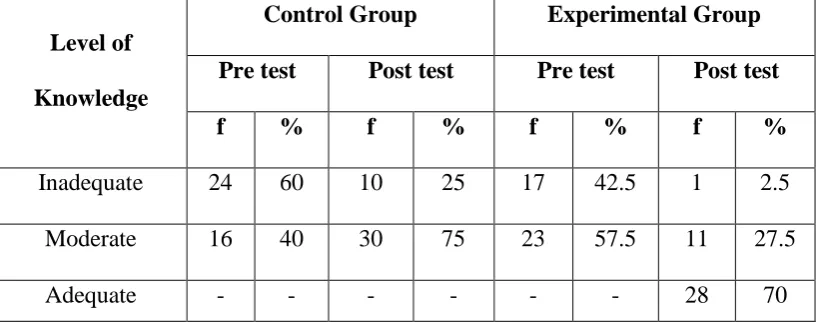
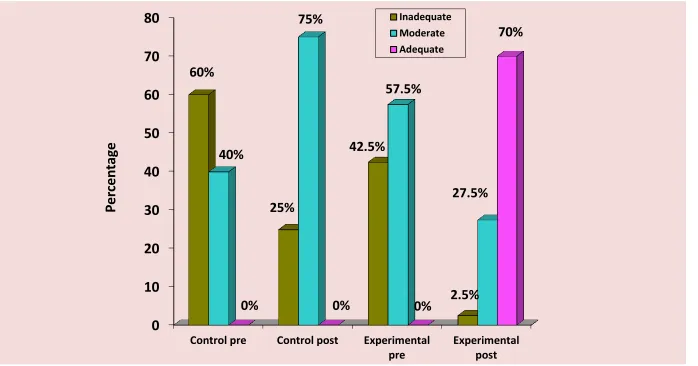
The results showed that, majority of the students in control group (60%) had inadequate knowledge and experimental group (57.5%) had moderately knowledge in
the pretest score. Where as the posttest level of knowledge that few in control group (25%) and very few in experimental group (2.5%) had inadequate knowledge.
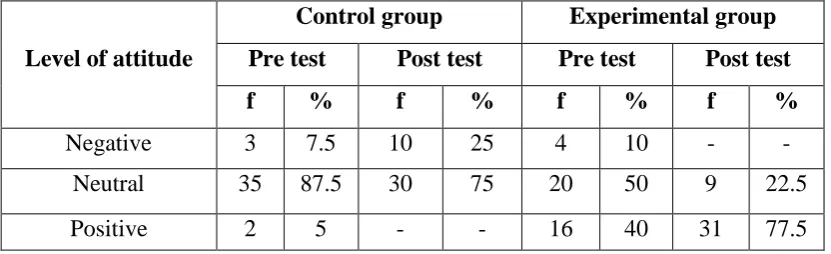
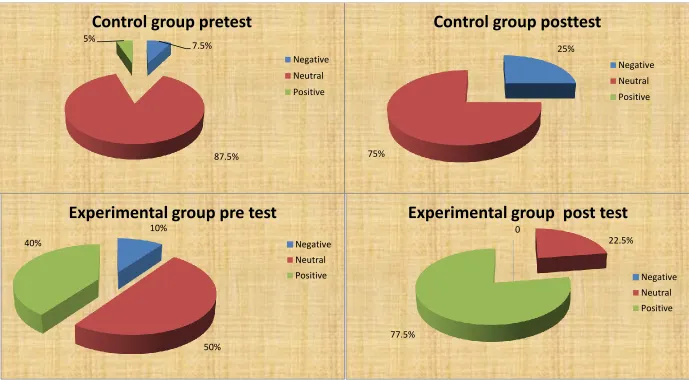
The most of the students in control (87.5) and experimental (50%) groups had
neutral attitude. But after video assisted teaching programme majority of the students in experimental group (77.5%) developed positive attitude towards the hazards of plastic usage.
The over all pretest and posttest knowledge in control (t-4.43) and experimental groups (t-14.56) and between control and experimental (t-10.10) was found highly significant at P<0.001 and also attitude of higher secondary school
students between control and experimental group(7.75) and before and after video assisted teaching programme in control group (4.95) and experimental group (5.46)
was found statistically significant at P<0.001.
There was no significant association found between level of knowledge and attitude with the selected demographic variables.
The study findings revealed that there was a positive correlation between
posttest level of knowledge and level of attitude(r=0.414) at P<0.001.
The study conclude that, the video assisted teaching programme could effectively increase the knowledge and attitude towards the hazards of plastic usage
LIST OF CONTENTS
CHAPTER CONTENTS PAGE NO
I
INTRODUCTION Background of the study Need for the Study
Statement of the Problem
Objective of the Study
Hypothesis
Operational Definitions
Assumptions
Delimitation
Projected Outcome
Conceptual Frame work1-15 1 5 8
8 9
10 11 11
11 12
II REVIEW OF LITERATURE
Studies related to hazards of Plastic Usage Studies related to Knowledge
RegardingHazards of Plastic Usage
Studies related to attitude regarding Hazards of
Plastic Usage
Study related to video assisted teaching
Programme.
16-29 16 23
25
III RESEARCH METHODOLOGY
Research approach
Research design
Research Variables
Setting of the Study
Population
Sample
Sampling technique
Criteria for Sample Selection Description of the instrument
Intervention
Ethical considerations
Validity and Reliability Pilot Study
Data Collection Procedure
Plan for data Analysis
30-38 30 30 32 32 32 33 33 33 33 35 35 36 36 36 37 CHAPTER IV
ANALYSIS AND INTERPRETATION 39
CHAPTER V RESULTS AND DISCUSSION 63
CHAPTER VI
SUMMARY,CONCLUTION,IMPLICATIONSAND RECONMMENDATION
69
REFERENCES 77
LIST OF TABLES
TABLES NO
TITLE PAGE NO
1
2
3
4
5
6
7
Frequency and percentage distribution of demographic variables of higher secondary school students.
Frequency and percentage distribution of level of knowledge towards the hazards of plastic usage among
higher secondary school students
Frequency and percentage distribution of pretest and posttest level of attitude on hazards of plastic usage
among higher secondary school students
Comparison of level of knowledge before and after
video assisted teaching programme in control and experimental groups through paired ‘t’ test.
Comparison of attitude before and after video assisted teaching programme in control and experimental groups of higher secondary school students through paired ‘t’
test.
Comparison of posttest level of knowledge by control
and experimental groups of higher secondary school students using Unpaired ‘t’ test.
Comparison of posttest attitude by control and
experimental groups of higher secondary school students using Unpaired ‘t’ test.
41
45
47
49
50
51
8
9
10
11
12
Correlation between level of knowledge and attitude on hazards of plastic usage among higher secondary school students in control and experimental groups
Association between selected demographic variables and level of knowledge of higher secondary school
students in control group
Association between selected demographic variables
and attitude of higher secondary school students in control group
Association between selected demographic variables
and level of knowledge of higher secondary school students in experimental group
Association between selected demographic variables and attitude of higher secondary school students in control group
53
54
56
58
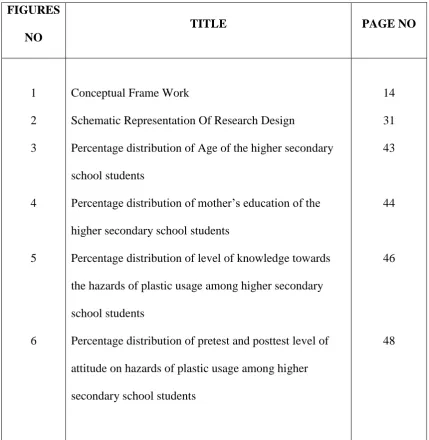
LIST OF FIQURES
FIGURES NO
TITLE PAGE NO
1 2
3
4
5
6
Conceptual Frame Work
Schematic Representation Of Research Design
Percentage distribution of Age of the higher secondary school students
Percentage distribution of mother’s education of the
higher secondary school students
Percentage distribution of level of knowledge towards
the hazards of plastic usage among higher secondary school students
Percentage distribution of pretest and posttest level of attitude on hazards of plastic usage among higher secondary school students
14 31
43
44
46
LIST OF APPENDICES
APPENDIXNO
TITLE PAGE NO
A B C D E F G H I J K
Letter Seeking Permission to conduct the Study
Letter Seeking Permission for Content Validity Certificate for content validity
List of experts
Consent Form – English and Tamil
Certificate for English Editing Certificate for Tamil Editing Questionnaire in English
Part – I Demographic variable proforma Part – II Knowledge questionnaire
Part – III Likert type rating scale Questionnaire in Tamil
Part – I Demographic variable proforma
Part – II Knowledge questionnaire Part – III Likert type rating scale
1
CHAPTER - I
INTRODUCTION
‘‘Say no to plastic or say no to human life’’
- M.S.MODI BACKGROUND OF THE STUDY
According to WHO (1946),Health is a “state of complete physical,mental and social well being and not merely the absence of disease or infirmity.”
Richard C.Thompsonet.al,(2009)explained thatplastics have transformed everyday life ;the environment and human health synthesized current understanding
of the benefits and concerns surrounding the use of plastics and look to future priorities, challenges and opportunities. It is evident that plastics bring many societal
benefits and offer future technological and medical advances: usage is increasing and annual production is likely to exceed 300 million tones by 2010.
L.K.Arnold(1968)found that the first man-made plastic was created by
Alexander parkes in 1862. The material called parkesine was an organic material derived from cellulose that once heated could be molded, and retained its shape when cooled.A material consisting of very large molecules characterized by light weight,
high corrosion resistance, high strength-to-weight ratios, and low melting points. Most plastics are easily shaped or formed.
L.K.Arnold(1968)expressedthat a plastic is made up of a binder together with
plasticizers, fillers, pigments and other additives. Many combinations of the properties of hardness, durability, elasticity and resistance to heat,cold and acid can be
2
Craig FreudenRich.Ph.D(1968)found that there are two types of plastics thermoplastics and thermoset. Thermoplastics are the plastics not undergo chemical
change in their composition when heated and can be molded again and again. examples include polyethylene, Polyprophylene and polyvinylchloride.Thermosets
can melt and take once: after they have solidified, they stay solid .
The average annual rate of growth of 8.1% that brought all solid polymers from 7 million tons in the world in 1960 to 196 million tons in 2005 and to continue reaching over 365 million tons in 2015, 540 million tons in 2020.Plastics Europe
noted that the world wide plastics production rose to 280 million tones in 2011. This represents around 4% increase from 2010. When 270 million tones of plastics were
produced from 2010 to 2016, global plastics consumption is expected to grow by an average of about 4% each year.
Johnson et.al., (2010)explained that plastic playing an increasing role in
packaging and consumer products plastics also take up a growing percentage of municipal solid waste streams and pose environmental challenges. Thin plastic bags made from less than 20 micron thick films are choking the drains of many cities
causing uncontrolled floods during rainy season. Plastic garbage are estimated to be killing a million creatures in the Sea every year. Plastic bags littering has lead to
banned use of thin bags by the consumer industry during retails Sales of Products in many countries.
Knappeeet.al.,(2009) expressed thatdangerous emissions such as dioxins are
3
aggravate respiratory disease like asthma,damage the reproductive system and cause physical symptoms like rashes, nausea and headaches. The vapors released during the
burning process can damage the eyes and affect the central nervous system.
Chlorinated plastic can release harmful chemicals into the surrounding soil, which can then seep into groundwater or other surrounding water sources.This can
cause serious harm to the species that drink this water.
Landfill areas are constantly piled high with many different types of plastics. In these landfills, there are many microorganisms which speed up the biodegradation
of plastics. Regarding biodegradable plastics, as they are broken down, methane is released, which is a very powerful greenhouse gas that contributes significantly toglobal warming.
Plastic pollution has the potential to poison animals, which can then adversely affect human food supplies.Some marine species, such as sea turtles, have been found to contain large proportions of plastics in their stomach. When this occurs, the animal
typically starves, because the plastic blocks the animal's digestive tract. Marine mammals sometimes become entangled in plastic products such as nets, which can
harm or kill them. It has been estimated that over 400,000 marine mammals perish annually due to plastic pollution in oceans.
Plastics contain many different types of chemicals, depending on the type of plastic. Some of the chemicals used in plastic production have the potential to be
absorbed by human beings through skin absorption and can cause dermatitis . In many plastics, these toxic chemicals are only used in trace amounts, but significant testing is
4
inert material or polymer. Plastic pollution can also affect humans in which it may create an eyesore that interferes with enjoyment of the natural environment.
Recycling of plastic is associated with skin and respiratory Problems, resulting
from exposure to inhalation of toxic fumes, especially hydrocarbons and residues released during the Process. The recycled Plastic degrades in Quality and necessitates
the production of more new plastic to make the original product. Plastic wastes clog the drains and thus hit especially urban sewage systems. The plastic wastes being dumped into rivers, streams and seas contaminate the water, soil, marine life and also
the very air we breathe, Choked drains Provide excellent breeding grounds for disease causing mosquitoes besides causing flooding during the monsoons.
Wilkinson C.F ,et.al found thatthe modern risk extra to basic environmental
risks are unsafe use of dangerous chemicals, inadequate disposal of toxic waste and environmental hazards, noise, industrial, pollution, unsafe chemicals in toys and
household products may also harm children. Emerging potential environmental threats to health include global climate change, ozone depletion. Contamination of persistent organic Pollutants and chemicals and other hazards and emerging disease one among
them is the plastic products and its use. Plastic causes serious damage to environment both during its production and disposal. So the only way to reduce the hazards of
plastic is to reduce the use of plastic and there by force a reduction in its production.
The municipal authority under new rules is hold responsible for ensuring usage collection, Storage, Segregation, transportation, Processing and disposal of
5
recyclers, to create awareness among all stakeholders about their responsibilities, and to ensure that open burning of plastic waste is not permitted.
In India,few studies related to the hazards of plastic usage were
conducted.Unfortunately,there are no current practices as this is the routine procedure in most places.The researcher observed that there is a less focus on the hazards of
plastic usage.Children are more vulnerable to the illness.The long lasting ill effects could be brought down through an awareness and modification of the life style at the early age of their life.Use of plastic containers, bottles and other items by children has
become common. It leads to many risk in life. However it could be only prevented rather repenting at the following stage.This could be possible through the education
given to them in the school days.Thus the researcher selected the study to find out the effectiveness of video assisted teaching programme upon on knowledge and attitude
towards the hazards of plastic usage among selected higher secondary school students.
NEED FOR THE STUDY
Plastic, one of the most preferred materials in todays industrial world is posing serious threat to environment and consumer’s health in many direct and indirect ways.
Exposure to harmful chemicals during manufacturing, leaching in the stored food items while using plastic packages or chewing of plastic teethers and toys by children
are linked with severe adverse health outcomes such as cancer, birth defects, impaired immunity, endocrine disruption, developmental and reproductive effects etc., Promotion of plastics substituted and safe disposal of plastic waste requires urgent
and definitive action to take care of this potential health hazard in future.
6
as litter each year or in land fills. Almost 3 million tons of plastic are used to bottle water each year world wide. Nearly 80 Percent of all water bottles are not recycled
and wind up in land fills.
Rachada KasemsupM.D.,et.al., (2011)In 2009, Department of health implemented “Food safety Project” in order to reduce the incidence of food related
diseases among children and improve their nutrition status. The Projected targeted children in schools nation wide and aimed to change behaviors by providing proper source of food and drinking water as well as knowledge. According to this project,
queen Sirikit National Institute of child health started “Safe food, safe plastic containers.” Project which focused on proper use of plastic containers for food and
drinks by studying on current situation among parents and promoting knowledge by using posters, flyers and games.
PVC is widely used material, including extensive use in toys and other children’s products such as chewy teethers,soft figures and inflatable toys. Phthalates
mainly used in converting polyvinyl chloride (PVC) from a hard plastic to a flexible plastic. Phthalates migrates into the air into food and into people including babies in their mother’s wombs. Phthalates can be released from soft PVC by Surface contact,
especially where mechanical Pressure is applied. (eg) during chewing of a PVC
teether.
NaiyanaNeesananet.at., (2011)they noted thatplastic is widely used in daily life especially as food and drink containers. If these containers are used in
7
Ceena (2005)explained thatthe effect of plastic on the environment is much easier to see. The trash island in the middle of the plastic ocean, named the pacific
garbage patch, is an alarming result of our use of plastic. It is every where and it is slowly collection in the middle of the ocean. Plastic cannot biodegrade. The burning
of plastics is also very dangerous as it produces dioxin, a poisonous gas which causes ill effects on human health and environmental cleanliness.
Singh, et.al (2012) found that BisphenolA (BPA) is an estrogen like endocrine disruptor that may leach into food. Research in Environmental Health Perspectives
finds that BPA leached from the lining of tin cans, dental sealants and polycarbonate bottles can increase body weight, insulin resistance, which can lead to inflammation
and heart disease.
Efforts to reduce the use of plastics and to promote plastic recycling have occurred. Some supermarkets charge their customers for plastic bags, and in some
places more efficient reusable or biodegradable materials are being used in place of plastics. Some communities and businesses have put a ban on some commonly used plastic items, such as bottled water and plastic bags.
The evidence from literature showed that hazards of plastic use are highly dangerous to health and environment. The self observation of the investigator regarding the hazards of plastics use motivated to investigate and teach school
children on hazards of plastic usage.
Adolescents is the prime time of life, children explore and learn many things around them and they try to impart many things into practice. Peers and friends are
8
well be stated as the miniature adult. As responsible adults we need to preserve the beauty of the environment with a safe atmosphere for the future generations. Concerning children’s environmental health, the expanded role of the nurse includes a
wide range of activities, such as anticipatory guidance, health education, mass health
campaigns, school health programs and environmental health research. Education aims at behaviour modification and peer influence makes it more influential hence teaching the little children about the hazards of plastic use and its prevention we can
help them to bring about changes and thereby have a safer and greener world to live in.
STATEMENT OF THE PROBLEM
A study to evaluate the effectiveness of video assisted teaching programme on knowledge and attitude towards the hazards of plastic usage amongselected higher
secondary school students in Dindigul.
OBJECTIVES OF THE STUDY
1. To assess the existing level of knowledge and attitude towards the hazards of plastic usage among higher secondary school students.
2. To evaluate the effectiveness of video assisted teaching programme on knowledge and attitude towards the hazards of plastic usage among higher
secondary school students.
3. To correlate the knowledge with attitude towards the hazards of plastic usage among higher secondary school students.
9
5. To find out the association between the posttest attitude and selected demographic variables.
HYPOTHESIS
H1: There will be a significant difference in the pretest and posttest
knowledge towards the hazards of plastic usage among higher
secondary school students.
H2: There will be a significant difference in the control and experimental
groups students knowledge towards the hazards of plastic usage among
higher secondary school students.
H3: There will be a significant difference in the pretest and posttest attitude
towards the hazards of plastic usage among higher secondary school students.
H4: There will be a significant difference in the control and experimental
groups students attitude towards the hazards of plastic usage among higher secondary school students.
H5: There will be a significant relationship between knowledge and
attitude towards the hazards of plastic usage among higher secondary
school students.
H6: There will be a significant association between posttest knowledge and
10 OPERATIONAL DEFINITIONS
Effectiveness
In this studyit refers tothe extent to which video assisted teaching programme developed the desired results as measured by knowledge questionnaire regarding
hazards of plastic usage and expressed in terms of gain in knowledge score.
Knowledge
It refers to the responses given to structured questionnaire regarding hazards of plastic usage among highersecondary schoolstudents.
Attitude
In this study it refers to the way of thinking, believes and feelings regardinghazards of plastic usage as expressed in the form of statement as assessed by
rating scale.
Plastic
A material consisting of very large molecules characterized by light weight,
high corrosion resistance, high strength-to-weight ratios, and low melting points. Most plastics are easily shaped or formed.
Hazards of plastic use
It refers to the ill effects casual by plastic on the environment and health of human beings, in terms of physical and emotional capabilities.
Video assisted teaching programme
11 Higher secondary school students
It refers to thestudents between the ages of 15 and16years studying in
11thstandard of anGovt. higher secondary school students.
ASSUMPTIONS
The study assume that
Students comes from educate family background may have knowledge
towards the hazards of plastic usage.
The knowledge and attitude of highersecondary school students will
influence their practice towards thehazards of plastic usage.
Health education at regular interval will improve their knowledge and
promotes attitude,practices among higher secondaryschool students.
Demographic variables of higher secondary schoolstudents may or may
not influence knowledge and attitude towards the hazards of plastic usage.
DELIMITATION The study was limited
The study will be focus onGovt. highersecondary school students only This study was confirmed to selected school
Data collection period was limit for 6 weeks
Can understand Tamil
PROJECTED OUTCOME
The findings of the study would help to identify the level of knowledge and
12
The development of the video assisted teaching programme would be help to
improve knowledge and attitude towards the hazards of plastic usage among
higher secondary school students.
The used of the video assisted teaching programme was enable the learner to
grasp the information more easily and it remains in their mind for longer.
CONCEPTUAL FRAME WORK
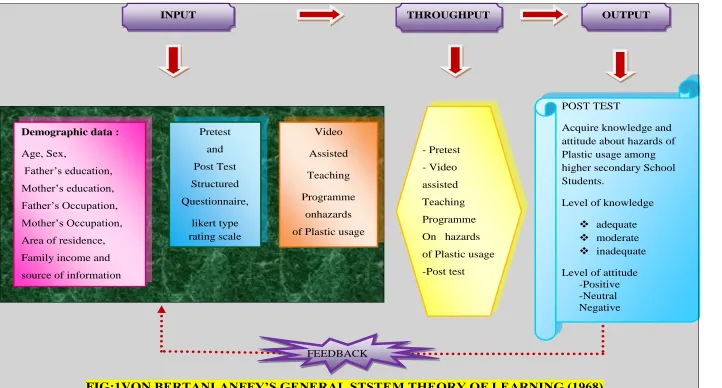
The Conceptual frame work of the present study was developed by the investigators based on von bertanlanffy’s general system theory of learning (1968), A system is set of interrelated parts that comes together to form a “whole” Each part is
necessary to make a complete meaningful whole. This consists of component like
input, throughput, output, feedback.
In the present study, focused on hazards of plastic usage among Govt. Higher Secondary Schools students were considered as an open system because they
receiving information from the environment. The system uses this input to maintain homeostasis.
INPUT
The first component of a system is input, which is the information, energy or matter, which enters a system, For a system to work well input should contribute to achieve the purpose of the system. It refers to demographic data of Govt. Higher
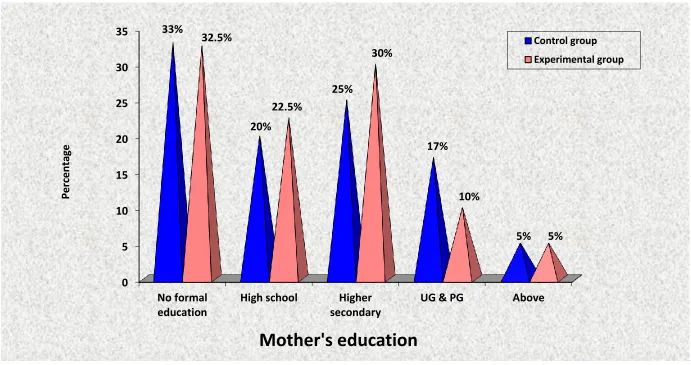
secondary school students, it include age, Sex, Father’s education, Mother’s education, Father’s Occupation, Mother’s Occupation, Area of residence ,family
13
Pretest and posttest knowledge using structured questionnaire and likert type attitude scale on hazards of plastic usage. Video program on hazards of plastic usage it comprises of introduction of plastic, types of plastic, hazards of plastic, disposal of the plastic wastes & prevention of plastic hazards.
These factors were taken into Consideration as input for assessing the knowledge and attitude of Govt. higher Secondary School Students.
THROUGHPUT
It’s the Process that allows the input to be changed, so that is useful to the
system. The action needed to accomplish the desired task. The action is to implement Video assisted teaching Programme to change the level of knowledge and attitude towards the hazards of plastic usage among higher Secondary School students.
OUTPUT
Based on the input and throughput the system returns Output to the environment in an altered State. The end result or product of the system. Outputs vary widely depending on the type and purpose of the system affection the environment. Therefore the Output refers to the adequacy of knowledge and attitude among Govt. Higher Secondary School Students on hazards of plastic usage. Level knowledge was interpreted and the level of attitude was interpreted as positive, neutral and negative.
FEEDBACK
14
FIG:1VON BERTANLANFFY’S GENERAL STSTEM THEORY OF LEARNING (1968)
INPUT THROUGHPUT OUTPUT
- Pretest - Video assisted Teaching Programme On hazards of Plastic usage -Post test
POST TEST
Acquire knowledge and attitude about hazards of Plastic usage among higher secondary School Students.
Level of knowledge
adequate
moderate
inadequate Level of attitude
-Positive -Neutral Negative
FEEDBACK Demographic data :
Age, Sex,
Father’s education, Mother’s education, Father’s Occupation, Mother’s Occupation, Area of residence, Family income and source of information
15
SUMMARY
This chapter has dealt with the introduction,need for the study, statement of the problem, Objectives of the study, hypothesis, Operational definition, Assumption, Delimitation and Projected outcome and conceptual frame work of the study.
Organization of the report
Further aspects of the study are presented in the following five chapters. In Chapter II- Review of literature
In Chapter III - Research Methodology whichincludes, research design, setting,
population, sample and sampling technique, datacollection, tool description, Validationand reliability of tools, pilot study, data
analysis
In Chapter IV - Analysis and Interpretations of data is presented in terms and descriptive and inferential status
In Chapter V - Discussion
In Chapter VI - Summary, Conclusions, Implications, Recommendations and
Limitations are presented.
16
CHAPTER-II
REVIEW OF LITERATURE
A Literature Review involves the systematic identification,location, scrutiny and summary and written materials that contain information on the research problem
(Polit and Beck,2007).
This chapter deals with a review of published and unpublished research studies and from related materials for the present study. This review helped the Researches in building the foundation of the study.
The review of literature in this chapter is presented under the following headings
I.Studies related to hazards on plastic usage
II.Studiesrelated to knowledge regarding hazards on plastic usage III.Studies related to attitude regarding hazards on plastic usage IV.Studies related to video assisted teaching programme.
I.STUDIES RELATED TO HAZARDS ON PLASTIC USAGE
A recent study by researchers from the University of Gothenburg in Sweden, ranked the environmental health hazards of the most common plastics on the market. They found PVC to be the most widely used, hazardous plastic. “PVC should receive
extra attention because of its carcinogenic monomer, being the third largest plastic,
and requiring the most and often several hazardous additives.”(Annie,2011)
17
out of 13 products intended for children.The toxicity of 83 randomly selected plastic products and synthetic textiles. The newly purchased products were leached in pure
(deionised) water for 1-3 days. The acute toxicity of the water was then tested using water fleas (Daphnia magna)."A third of all the 83 plastic products and synthetic
chemicals that were tested released substances that were acutely toxic to the water fleas, despite the leaching being mild. Five out of 13 products that were intended for children were toxic, for example bath toys and buoyancy aids such as inflatable
armbands.The products that resulted in toxic water were soft to semi-soft products made from plasticised PVC or polyurethane, as well as epoxy products and textiles
made from various plastic fibres. The toxicity was mainly caused by fat-soluble organic substances.( Delilah Lithner, 2011 )
The study was conducted atDepartment of Occupational and Environmental
Health, Tongji Medical College of Huazhong University of Science and Technology, in China. Di-(ethylhexyl), phthalate (DEHP) is a common plasticizer used in industrial and diverse consumer products. Animal studies indicate DEHP caused
developmental, reproductive, and hepatic toxicities. However, human studies of the potential effects of DEHP are limited. The exposed site with a history of over 20 years
of waste plastic recycling was located in Hunan Province, China. The reference site without known DEHP pollution source was about 50 km far away from the exposed site. In this study, 181 workers working in plastic waste recycling and 160 gender-age
matched farmers were recruited. DEHP concentrations in water and cultivated soil samples,serum thyroid-stimulating hormone, malondialdehyde (MDA), superoxide
18
reference site (industry wastewater for the exposed: 42.43 μg/l; well water: 14.20 vs. 0.79 μg/l, pond water: 135.68 vs. 0.37 μg/l, cultivated soil: 13.07 vs. 0.81 mg/kg. The
workers had higher median levels of MDA (3.80 vs. 3.14 nmol/ml) and urinary 8-OHdG (340.37 vs. 268.18 μmol/molcreatinine) and decreased SOD activities (112.15
vs. 123.82 U/ml) than the reference group.Multivariate analysis revealed that the history of working in waste plastic recycling was an independent risk factor for the increased urinary 8-OHdG levels in the male workers. It concluded thatthe
occupational DEHP exposure might contribute to oxidative deoxyribonucleic acid damage in the male workers.(Wang Q, et.al, 2011)
In Silent Spring Institute, Newton,USA.,Rudel RA, et.al., (2011) was conducted a study to evaluate the contribution of food packaging to exposure, they measured urinary BPA and phthalate metabolites before, during, and after a "fresh
foods" dietary intervention. They selected 20 participants in five families based on self-reported use of canned and packaged foods. Participants ate their usual diet, followed by 3 days of "fresh foods" that were not canned or packaged in plastic, and
then returned to their usual diet. They collected evening urine samples over 8 days and composited them into preintervention, during intervention, andpostintervention
samples. They used mixed-effects models for repeated measures and Wilcoxon signed-rank tests to assess change in urinary levels across time. Results showed that Urine levels of BPA and DEHP metabolites decreased significantly during the fresh
foods intervention [BPA geometric mean (GM), 3.7 ng/mL preintervention vs. 1.2 ng/mL during intervention; mono-(2-ethyl-5-hydroxy hexyls)phthalate GM, 57 ng/mL
19
substantially reduced when participants ‘diets were restricted to food with limited packaging.
The study was conducted byDepartment of Environmental Chemistry, Barcelona, Spain.Migration of plasticizers phthalates, bisphenol A and alkyl phenols from plastic containers and evaluation of risk.This study investigates the potential
migration of plasticizers, plastic components and additives from several plastic water bottles. Compounds studied were phthalates (dimethyl phthalate, di-n-butyl phthalate, benzylbutyl phthalate, bis(2-ethylhexyl) phthalate), bis(2-ethylhexyl) adipate,
octylphenol, 4-nonylphenol and bisphenol A. Polycarbonate (PC), high-density polyethylene (HDPE), low-density polyethylene (LDPE), polyethylene terephthalate
(PET) and polystyrene (PS) plastics used in the water bottling sector were tested using three kinds of total or specific migration tests: (1) standard method UNE-EN ISO
177; (2) ultrasonic forced extraction; and (3) standard method UNE-EN 13130-1. Inaddition, bottled waters contained in different plastic materials were analyzed to determine the potential migration of target compounds in real conditions. In all cases,
samples were solid-phase extracted using Oasis HLB 200 mg cartridges and analyzed using GC-MS in scan-acquisition mode. Bisphenol A and 4-nonylphenol were
detected in incubated samples, indicating that migration from food plastics can occur at the experimental conditions tested. The total daily intake was calculated according to the levels detected in bottled water and the assessment of the consumers' risk was
evaluated taking into consideration toxicological and legislative values.
According to Yost JL,et.al., (2008),Department of Chemistry, Ashland University, Ashland, USA, determined thatinexpensive plastic jewelry was a possible
20
jewelry items were analyzed for lead content. Beads were screened by soaking in 1 M nitric acid. Nine items found to release more than 30 microg of lead per bead were
further tested for accessible lead, and scrapings of the bead coatings were analyzed for total lead content. The maximum accessible lead found was 49 microg per bead,
which is below the current US Consumer Product Safety Commission limit of 175 microg. However, when the number of beads in each item was taken into account, six of the nine leaded samples contained more than 175 microg accessible lead per item.
The lead in these items appears to be associated with lead-based paints used to produce glossy coatings on imitation pearls and similar items. Coatings obtained by
scraping individual beads contained 3.5-23% lead, which far exceeds the US regulatory limit of 0.06% lead in paints on items intended for children. Our results demonstrate that plastic jewelry items merit the attention of public health and
consumer protection agencies seeking to limit the exposure of children to lead.
A descriptive study was done about the hazards of plastics to the marine environment was conducted at South America and the findings (90%) revealed that
the marine life is at the peak of destruction due to the tons of plastics that are thrown as wastes into the seas. (Kurdi, 2006)
According toSimoneit BR, et.al.,(2005),Environmental and Petroleum Research Group, College of Oceanic and atmospheric Sciences, Oregon State University,USA.The objective of this study was to determined thatCombustion products of plastics as indicators for refuse burning in the atmosphere.To identify
specific tracer compounds generated during such open-fire combustion, both smoke particles from burning and plastic materials from shopping bags, roadside trash, and
21
Samples were collected in Concón, Chile, an area frequently affected by wildfire incidents and garbage burning, and the United States for comparison. Atmospheric
samples from various aerosol sampling programs are also presented as supportive data. The major components of plastic extracts were even-carbon-chain n-alkanes
(C16-C40), the plasticizer di-2-ethylhexyl phthalate, and the antioxidants and lubricants/antiadhesivesIrganox 1076, Irgafos 168, and its oxidation product tris(2,4-di-tertbutylphenyl) phosphate. Major compounds in smoke from burning plastics
include the non-source-specific n-alkanes (mainly even predominance), terephthalic acid, phthalates, and 4-hydroxybenzoic acid, with minor amounts of polycyclic
aromatic hydrocarbons (including triphenylbenzenes) and
tris(2,4-di-tert-butylphenyl)phosphate. 1,3,5-Triphenylbenzene and tris(2,4-di-tert-butylphenyl)- phosphate were found in detectable amounts in atmospheric samples where plastics
and refuse were burned in open fires, and thus we propose these two compounds as specific tracers for the open-burning of plastics.
A quantitative study at Boston was conducted to determine the incidence and
severity of plastic hazards among industrial workers in a polymer factory. 90 samples were collected over a period of 12 months. The investigator concluded that multiple
hazards such as skin (6.5 +0.87) and gastric problems (7.33+1.27) can arise with the use of plastic polymers. (Campbell, 2004)
A descriptive study was conducted about the incidence of complications and their potential risks of hazards of plastics among 72 workers of a factory at Houston.
Convenience sampling was used to select the samples. Data analysis was done using descriptive and inferential statistics. Results revealed that about (6.2 +2.48) 15.4% of
22
A Population-based cross-sectional study was conducted in Finland, with the Objective to find relation between the presence of plastic wall materials in the home
and respiratory health in children. The study population included 2568 children whose parents or other guardians completed a questionnaire (response rate:80.3%). Analysis
was computed using logistic regression models, the result revealed, lower respiratory tract symptoms - persistent wheezing were strongly related to the presence of plastic wall materials, whereas upper respiratory symptoms were not. The risk of asthma
was also increased in children exposed to such materials. The study concluded that emissions from plastic materials indoors have adverse effects on the lower respiratory
tracts of small children.(VeonRykavik,2002)
A Cross-Sectional Study was conducted in China,with the objective to assess the effect of occupational exposure to high levels of phthalate esters on the balance of
gonadotropin and gonadal hormones including luteinizing hormone, follicle-stimulating hormone, free testosteroneand estradiol.They examined urine and blood samples of 74 male workers at a factory producing unfoamed polyvinyl chloride
flooring exposed to di-n-butyl phthalate (DBP) and di-2-ethylhexyl phthalate (DEHP) and compared them with samples from 63 male workers from a construction
company, group matched for age and smoking status. Results showed that,Compared to the unexposed workers, the exposed workers had substantially and significantly elevated concentrations of mono-n-butyl phthalate 644.3 vs. 129.6 μg/g creatinine,
and mono-2-ethylhexyl phthalate 565.7 vs. 5.7 μg/g creatinine. It was significantly lower (8.4 vs. 9.7 μg/g creatinine, in exposed workers than in unexposed workers. It
23
−0.26). In Conclusionthey observed a modest and significant reduction of serum it in
workers with higher levels of urinary MBP and MEHP compared with unexposed
workers.(Guowei Pan, et.al.,1997)
II. STUDIES RELATED TO KNOWLEDGE REGARDING HAZARDS ON PLASTIC USAGE
A study was conducted to assess the effectiveness of peer mediated teaching on knowledge regarding Hazards of Plastic use among School Children in a Selected School, Salem. A quantitative evaluative research approach with pre-experimental
(one group pretest, posttest) design was used among 66 school children in 5thand 6th standard, who were selected by Non probability convenience sampling technique
from Government Elementary School. A closed ended questionnaire was used to assess the knowledge of the school children .Data was analyzed by using descriptive
and inferential statistics. Pretest level of knowledge regarding hazards of plastic use, showed that similar percentage of children 30(50%) had inadequate knowledge and moderately adequate knowledge and none of them had adequate knowledge. During
post-test all of the children 60(100%) had adequate knowledge. The overall pretest knowledge was 31.3% and the posttest mean score was 83.4% revealing a difference
of 51.09%. Highly significant difference found between pre and post test scores of level of knowledge in all the areas and in the overall level of knowledge (t = 33.58**). There was no significant association between the level of knowledge of school
children and their selected demographic variables. The study implied that the peer mediated teaching on level of knowledge of school children regarding hazards of
24
Ceena, P A, (2005) conducted a study on planned teaching programme regarding the hazards of plastic use to the high school students plays an important role
to phase out the use of plastic from daily life and protect the health. The pre-experimental one group pretest post-test design was adopted for this study. The
sample consisted of 100 English medium high school students who met the inclusion criteria in a selected urban setting. The schools were selected conveniently and the sample by stratified random sampling technique .Results showed the data were
analyzed in terms of descriptive and inferential statistics. There was significant increase in the mean posttest (X2 =22.81) when compared with the mean pretest
(X1=14.16) knowledge scores. The computed ‘t’ value (t99=28.7) showed significance in the effectiveness of planned teaching programme. The area wise knowledge scores of post-test were highly significant in all areas except regarding the
use of plastics. The study Concluded,the planned teaching programme has motivated the students to learn on the effective and alternative use of plastic in their daily life
and also spread the news to their friends and relatives.
A study conducted by 2nd year M.Sc nursing students of 2008 batch of K PandyarajahBallal Nursing Institute, College of Nursing,Ullal, to assess the
knowledge of nursing personnel on plastic waste management by using a structured knowledge questionnaire. The study revealed that among 100 subjects, 64% of subjects had poor knowledge, 36% had average knowledge and none of the subjects
had good or excellent knowledge on plastic waste. Based on these assessments, the students gave health teaching using A.V. aids and post test revealed 18% of subjects
25
III.STUDIES RELATED TO ATTITUDE REGARDING HAZARDS ON PLASTIC USAGE
In the year 2012, Samuel Yeboah Asuamah conducted a study to assess attitude toward recycling and waste management: a survey of marketing students in
sunyani polytechnic, Ghana. The aims at contributing to the body of knowledge in the area of waste management by examining students attitude towards solid waste recycling and the strategies for recycling. The research is based on quantitative
research design and a descriptive survey of the Students at Sunyani Polytechnic that were selected using convenience sampling method for a sample of 139. Data were
analyzed using frequency, percentages and One-Way Analysis of variance (ANOVA). Respondents knowledge and attitude towards solid waste recycling is good and positive.
The study was conducted to assess knowledge, attitudes, and practices relating to plastic containers for food and drinks among parents and health personnel. 100 parents and 100 health personnel from Queen Sirikit National Institute of Child
Health are included in the study. The questionnaires which contained 6 parts measuring knowledge, attitudes and practices about plastic containers for food and
drinks are used to collect the data. Results showed there are no differences in knowledge, attitudes and practices relating to plastic containers between parents and health personnel. Even though, 80 percent of participants usually use plastic
containers for food and drinks, their knowledge about plastic is inadequate. The study concluded that,Parents and health personnel were aware of health effects of plastic
26
A study was conducted at the University of Alabama campus, to assess attitudes and behaviors of students related to plastic bags. A survey was developed and administered to 162 students on campus. First, students’ dominant attitude toward
single-use plastic bags is not consistent with dominant behavior or how they use
plastic bags, and present stimuli in many retail environments are strong enough that students generally use plastic bags despite conflicting attitudes. Second, though surveyed students are aware of problems associated with the plastic bag, these items
are a valued part of some students’ shopping experiences. Kate
elizabethmiller(2011)
DuPaul, et.al., (2009) conducted a study in Bangladesh to assess the knowledge, attitude of adolescents regarding problems due to the use of plastic bottles. A random sample of 300 adolescents was taken and a questionnaire was used
to all the study group.The result of the study was, out of 300 adolescents only 23% of population know about the ill effects of plastic bottle like GI problems, cancer etc.
A study designed by Criscitiello, (2008) to assess the knowledge, attitude and practices of students regarding plastic waste management. Karimnagar town (Andhra
Pradesh) has a population of 5.2 lacs. It has 267 students in the community. Out of 267students, 47 were selected by systematic random sampling. A total of 500 study
subjects were selected from these community and the data were collected by one to one interview using pre-tested pre-designed proforma. The result of this study is 30 % of students dispose the plastic properly. Others need proper health education
27
IV.STUDIES RELATED TO VIDEO ASSISTED TEACHING PROGRAMME Nobel Mathew (2012) conducted a study to assess the effectiveness of video assisted teaching programme on knowledge and attitude regarding smoking and smokeless tobacco use and its health hazards in Bangalore. 100 girls and boys of
school students were used as samples. The data collected were analyzed and interpreted based on descriptive and inferential statistics. In pre-test, 35(70%) boys and 41 (82%) girls had poor knowledge, 15(30%) boys and 9 (18%) girls had average
knowledge and none of the sample had good knowledge. Whereas in posttest none of the students had poor knowledge, 13 (26.0%) boys and 22 (44%) girls had average
knowledge and 37 (74.0%) boys and 28 (56%) girls have gained good knowledge regarding smoking and smokeless tobacco use and its health hazards. In pre-test, only 23(54%) boys and 11 (22%) girls had positive attitude towards non tobacco use and
tobacco control programme and 27(46%) boys and 39 (78%) girls had negative attitude towards non tobacco use and tobacco control programme. But in posttest
majority 48 (96%) boys and 50 (100%) girls showed positive attitude towards non tobacco use and tobacco control programme. There was significant difference between mean posttest knowledge score of boys (18.36) and mean pretest knowledge
score (7.48). The finding of the present study reveals that there is a significant gain in knowledge and change in attitude among school students following video assisted
teaching programme. Therefore such program may be used to promote awareness among school students regarding tobacco use and its ill effects on health.
A study was conducted to evaluates the effectiveness of video teaching
28
in post test was higher than pretest knowledge and attitude .It was 61.45 (23.43) and 69.43(47.22) respectively. There was significant difference between pre test and post
test knowledge and attitude regarding sexually transmitted infections among female sex workers they were t=42.12and respectively significant at 0.05 level. This showed
that the video teaching programme was effective. It was observed that video teaching programme plays a vital role in improving the knowledge and attitude of female sex workers. (Uma Maheswari, 2011)
An experimental study was conducted by Shoba.E.Merina., (2008) to evaluate the quality of life of women with cancer cervix who are receiving radiation therapy with chemotherapy before and after a care module in the selected wards of
Christian fellowship community health centre, Ambilikkai.Cluster random sampling method was used to select 60 samples, 30 for control group and 30 samples for the
experimental group. A care module was administered to the experimental group and only assessment was done to the control group. Knowledge questionnaire self rating scale anxiety scale used to collect the data. It was evident from the study finding that
there is improvement in knowledge among the experimental group and there was no reduction in the anxiety level and there was no input of quality of life among the
29
SUMMARY
This chapter had dealt with the review of research literature related to the
problem stated. It has helped the researches to understand the impact of the problem under study. It also enabled the researcher to design the study to develop the tool to plan for data collection procedure and to analyze the data. The literatures collected
30
CHAPTER -III
RESEARCH METHODOLOGY
This chapter deals with the research approach, research design ,variables under the study, setting of the study, population of the study, sample, sample size ,sampling technique, criteria for selection of the sample, description of the interventions, Procedure for data collection, method of data analysis and the report of pilot study.
RESEARCH APPROACH
Evaluative approach was used for this study.
RESEARCH DESIGN
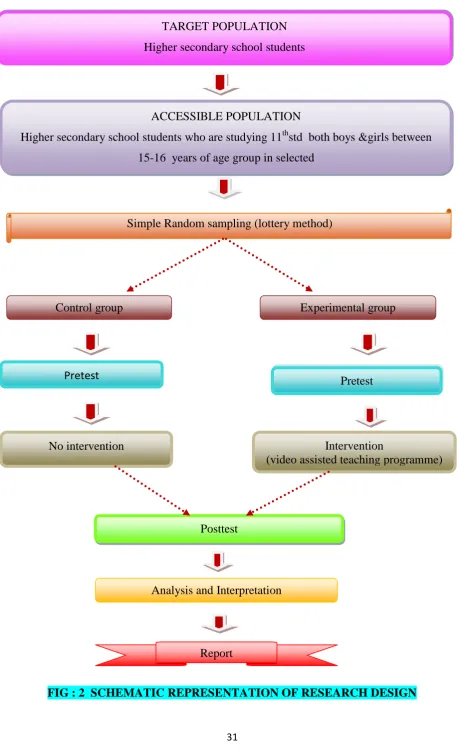
Experimental design, with pretest and posttest control group design was chosen for the study to evaluate the effectiveness of video assisted teaching programme on knowledge and attitude towards the hazards of plastic usage among selected Govt. higher secondary school students in Dindigul.
The design can be represented as:
Pretest Manipulation Posttest
E- RO1 X RO2
C- RO1
-
RO2Key:
E-Experimental group C-Control group R-Randomization O1- Pre test
31
FIG : 2 SCHEMATIC REPRESENTATION OF RESEARCH DESIGN Analysis and Interpretation
Report
ACCESSIBLE POPULATION
Higher secondary school students who are studying 11thstd both boys &girls between 15-16 years of age group in selected
Govt. higher secondary schools at Dindigul TARGET POPULATION
Higher secondary school students
Simple Random sampling (lottery method)
Control group Experimental group
Pretest Pretest
No intervention Intervention
(video assisted teaching programme)
32 RESEARCH VARIABLES
Dependent variables:
Knowledge and attitude of higher secondary school students towards the hazards of plastic usage.
Independent variables:
Video assisted teaching programme on hazards of plastic usage.
Extraneous variables:
Demographic variables includes age,Sex,Father’s education, Mother’s education,Father’s occupation,Mother’s occupation,Area of residence, family
incomeandSource of information.
SETTING OF THE STUDY
This study was conducted in selected Govt.higher secondary schools at Dindigul. It was about 27 km away from the college.The total students is1180 among 148 students studying 11th standard.
POPULATION
The target population is the group of population that the researcher aims to and to whom the study findings will be generalized. In this study the target population
comprises of all the higher secondary school students.
The accessible population in this study isselected Govt. higher secondary school students who are studying 11thstd both boys &girls between 15 and16 years of
33 SAMPLE
Higher secondary school students studying 11th standard between 15 and16
years of age group.
SAMPLING TECHNIQUES
Simple Random sampling method (lottery method) was used to select 80
students out of 148 from Govt.higher secondary schools students in Dindigul.
CRITERIA FOR SAMPLE SELECTION Inclusion Criteria
The study includes students
Both sexes from 15 and 16years of age group.
Studying inGovt.higher secondary Schools at Dindigul.
Who are willing to participate to thisstudy. Who are available on the day of data collection.
Studying11th standard.
Exclusion Criteria
The study excludedstudents
Below 15& above16 years of age group. Who are notwilling to participate to thisstudy. Who are not available on the day of data collection.
Studying in private schools.
34
Part-2: structured knowledge questionnaire. Part-3: likert type scale.
PART-1
Demographic Variables
Demographic variables includes age, Sex ,Father’s education, Mother’s
education, Father’s occupation, Mother’s occupation, Area of residence,
family income and Source of information.
PART-2
Self administered structured questionnaire
To assess knowledge related to hazards of plastic usage. It consisting of 25 items.It is based on
Introduction of Plastic-2
Types of plastic -6
hazards of plastic -8
Disposal of the plastic wastes -1
Prevention of plastic hazards -8
Scoring Procedure
Each item was a multiple choice question with 1 correct answer and 3
distracters. A score of 1 was given for the right answer and 0 for wrong answer. 0 - 50% inadequate knowledge
51 - 75% moderate knowledge
35 PART-3
Likert type attitude scale
To assess the attitude regarding hazards of plastic usage among higher secondary school students. It consists of 15 statements.
Scoring Procedure
Positive attitude - 76 -100% Neutral attitude -51 - 75% Negative attitude - 0 - 50%
INTERVENTION
The investigator made video programme with review of literature and with the expert’s opinion.The content of video assisted teaching programme towards the
hazards of plastic usage includes introduction of plastic, components and uses of plastic, types, hazards of plastic, effects, disposal of the plastic hazards and prevention
of plastic hazards. The time taken for the programme was around 30 minutes.
ETHICAL CONSIDERATIONS
Institutional Human Ethical Committee clearance was obtained. Permission
was obtained to conduct the study in the selected Govt.higher secondary Schools at Dindigul District. Participants were informed about the study and written consent was obtained from the individual participants. The participants were told that they were
under the obligation to participate in this study.
VALIDITY
The tool was validated by 5 nursing experts, one medical officer and one
36
adequacy of the items in the Rating scale.Based on their valid suggestion a few items were modified and final tool was prepared as per the suggestions given by the experts.
RELIABILITY
The reliability of the tool was assessed using test-retest method and the ‘r’ value was computed. The knowledgequestionnaire is reliable at r = 0.8 and attitude at
r = 0.9 .The tool was found to be highly reliable to conduct the study.
PILOT STUDY
Pilot study was conducted to find out the reliability of the tool and feasibility
of conducting the study. Study was conducted for a period of one week from 15.7.13 to 21.7.13 at Devangarhigher secondary school in Chinnalapatti and VidhyaParthi higher secondary school in Dindigul.Study was conducted with 8 samples. The
sample who met inclusion and exclusion criteria was selected by using simple Random sampling technique.Informed consent was obtained from each person. The
administration of the tool and intervention through video assisted teaching programme were implemented.The video was run around 30 minutes. Practicability of the tool was checked to conduct the main study.
DATA COLLECTION PROCEDURE
The main study was conducted in the month of August 2013 in Govt. Higher secondary Schools at Dindigul District. 80 students,who met withinclusion and
exclusion criteria were selected by using simple Random sampling technique .Informed consent was obtained from each participants. The investigator established
37
The data collection procedure was held in control group 2 phases. In the 1st phase, knowledge and attitude towards the hazards of plastic usage was
assessed.During the second phase, post test was conducted to the same group with same structured knowledge questionnaire after one week.
The data collection procedure was held in 3 phases, In the first phase in
experimental group, knowledge and attitude on hazards of plastic usage was assessed, During the second phase, the video assisted teaching programme was administered among higher secondary school students in Dindigul district.
The video was run around 30 minutes, At the end of the programme, content of the programmed was discussed among the group for another 15 minutes. The post test was administered to the same group with same structured knowledge
questionnaire after one week of video assisted teaching programme.
All the subjects were very much cooperative& investigator expressed her attitude for their cooperation.
PLAN FOR DATA ANALYSIS
The data was analyzed in terms of the objectives of the study using descriptive and inferential statistics. The plan of data analysis was follows.
Organize the data in a master data sheet.
Frequency and percentage distribution were used to analyze the demographic
variable for higher secondary school students.
Frequency and percentage distribution were used to assess the level of
38
Mean, percentage, standard deviation,paired and unpaired ‘t’ were used to
assess and compare the pretest and posttest knowledge and attitude. Karl Pearson correlation coefficient and chi square test also were used to
analyze correlation and association of the data.
SUMMARY
39
CHAPTER-IV
ANALYSIS AND INTERPRETATION
This chapter deals with analysis and interpretation of data collection, it includes both descriptive and inferential statistics. Statistics is a field of study
concerned with techniques or methods of data, classification, summarizing, interpretation drawing inferences, testing of hypothesis, making recommendations etc. (Mahajan,2004)
The data was collected from 80 higher secondary school students studying
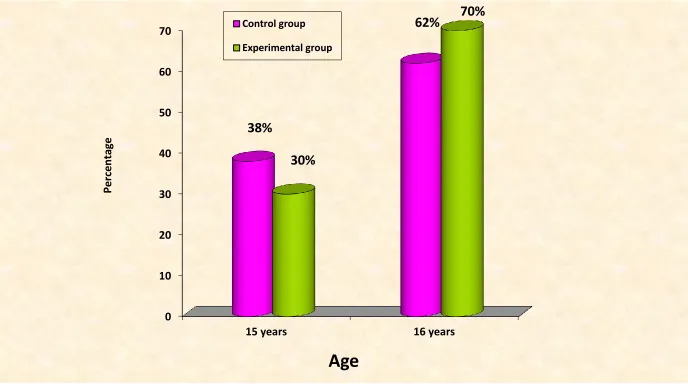
11thstd between the age group of 15 and 16 years among them 40 students were in control group, 40 students in experimental group. This was done to determine the
effectiveness of video assisted teaching programme on knowledge and attitude towards the hazards of plastic usage. The data were analyzed according the objectives and hypothesis of the study. Data analysis was computed after all the data was
transferred to the master data coding sheet. The researcher used the descriptive and inferential statistics for data analysis.
The data was analyzed tabulated and interpreted using descriptive and
inferential using statistics in the sequence as follows.
Organization of findings
The analyzes of the data were organized under following headings.
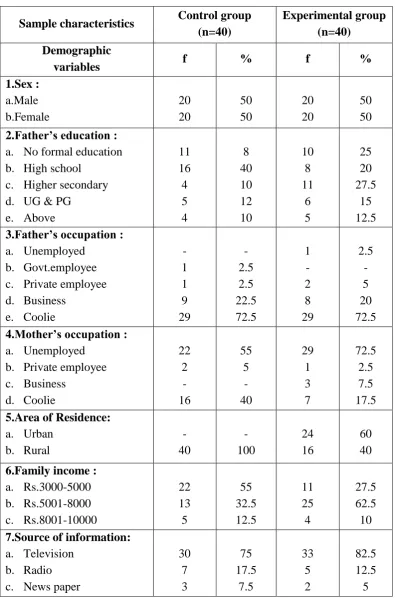
Frequency and percentage distribution of demographic variables of higher
40
Frequency and percentage distribution of level of knowledge towards the
hazards of plastic usage among higher secondary school students
Frequency and percentage distribution of pretest and posttest level of attitude