FORMULATION AND EVALUATION OF SUSTAINED
RELEASE MATRIX TABLETS OF ACECLOFENAC USING
DIFFERENT POLYMERS
A Dissertation Submitted to
The Tamil Nadu Dr. M.G.R. Medical University
Chennai - 600 032
In partial fulfillment for the award of Degree of
MASTER OF PHARMACY
(Pharmaceutics)
Submitted by
M. MANIYARASI
RegisterNo. 26106005
Under the Guidance of
Dr. S. SHANMUGAM, M. Pharm., Ph.D.
Professor
Department of Pharmaceutics
ADHIPARASAKTHI COLLEGE OF PHARMACY
(Accredited By “NAAC” with CGPA of 2.74 on a Four point Scale at “B” Grade)
MELMARUVATHUR - 603 319
CERTIFICATE
This is to certify that the dissertation entitled “FORMULATION AND EVALUATION OF SUSTAINED RELEASE MATRIX TABLETS OF
ACECLOFENAC USING DIFFERENT POLYMERS” submitted to The Tamil Nadu Dr. M.G.R. Medical University in partial fulfillment for the award of the Degree of the Master of Pharmacy (Pharmaceutics) was carried out by M. MANIYARASI (Register No. 26106005) in the Department of Pharmaceutics under my direct guidance and supervision during the academic year 2011-2012.
Place: Melmaruvathur Dr. S. SHANMUGAM, M. Pharm., Ph.D. Date: Professor,
Department of Pharmaceutics,
Adhiparasakthi College of Pharmacy,
CERTIFICATE
This is to certify that the dissertation entitled “FORMULATION AND EVALUATION OF SUSTAINED RELEASE MATRIX TABLETS OF
ACECLOFENAC USING DIFFERENT POLYMERS” the bonafide research work carried out by M. MANIYARASI (Register No. 26106005) in the Department of Pharmaceutics, Adhiparasakthi College of Pharmacy, Melmaruvathur which is affiliated to The Tamil Nadu Dr. M.G.R. Medical University under the guidance of Dr. S. SHANMUGAM, M. Pharm., Ph.D. Professor, Department of Pharmaceutics, Adhiparasakthi College of Pharmacy, Melmaruvathur.
Place: Melmaruvathur Prof. Dr. T. VETRICHELVAN, M. Pharm., Ph.D. Date: Principal,
Adhiparasakthi College of Pharmacy,
Dedicated
to
My parents
&
ACKNOWLEDGEMENT
First and foremost, I wish to express my deep sense of gratitude to his Holiness ARULTHIRU AMMA for his ever growing Blessings in each step of the study.
With great respect and honor, I extend my thanks to our Vice-President THIRUMATHI LAKSHMI BANGARU ADIGALAR, ACMEC trust, Melmaruvathur for her excellence in providing skillful and compassionate spirit of unstinted support to our department for carrying out dissertation entitled “
FORMULATION AND EVALUATION OF SUSTAINED RELEASE MATRIX
TABLETS OF ACECLOFENAC USING DIFFERENT POLYMERS”.
I got inward bound and brainwave to endure experimental investigations in novel drug delivery systems, to this extent. I concede my in most special gratitude and thanks to Dr. S. SHANMUGAM, M. Pharm., Ph.D., Professor, Department of Pharmaceutics, Adhiparasakthi College of Pharmacy, for the active guidance, innovative ideas, and creative works, infinite helps, indulgent and enthusiastic guidance, valuable suggestions, a source of inspiration where the real treasure of my work.
I owe my sincere thanks with bounteous pleasure to Prof. Dr. T. VETRICHELVAN, M. Pharm., Ph.D., Principal, Adhiparasakthi College of
Pharmacy, without his encouragement and supervision it would have been absolutely impossible to bring out the work in this manner.
Department of Pharmaceutics. Mr. K. ANANDAKUMAR, M. Pharm., Assistant Professor, Department of Pharmaceutical Analysis, for encouragement and support for the successful completion of this work.
My sincere thanks to our lab technicians Mrs. S. KARPAGAVALLI, D. Pharm., B.B.A., and Mr. M. GOMATHI SHANKAR, D. Pharm., for their kind help throughout this work.
I am indeed very much thankful to the librarian Mr. M. SURESH, M.L.I.S., for providing all reference books for the completion of this project.
A special word of thanks to Mr. V. KATHAVARAYAN, B. Pharm., Tristar formulation Pvt. Ltd., Puducherry, Mr. S. KUMARESEN, B. Pharm., Managing Director, Nickon Laboratories Pvt.Ltd., Puducherry, for providing the raw materials which is necessary for formulation of present work.
Finally yet importantly, I gratefully forward my affectionate thanks to my family members, especially my parents, sister for their frequent prayers, which has sustained me a lot in the successful completion of my project work.
M. MANIYARASI
CHAPTER TITLES PAGE No.
1. INTRODUCTION
1.1 Oral drug delivery system 1
1.2 Drawbacks associated with conventional dosage forms 1
1.3 Sustained release drug delivery system 2
1.4 Drug properties relevant to sustained release formulation 8
1.5 Design and fabrication of oral systems 14
1.6 Matrix tablets 23
1.7 Methods used in tablet manufacturing 34
1.8 Arthritis 37
2. NEED AND OBJECTIVES 43
3. PLAN OF WORK 45
4. LITERATURE REVIEW 47
5. DRUG AND EXCIPIENTS PROFILE 56
5.1 Drug profile 56
5.2 Excipients profile 59
6. MATERIALS AND EQUIPMENTS 76
6.1 Materials used 76
CHAPTER TITLES PAGE No.
7. EXPERIMENTAL WORK 78
7.1 Preformulation studies 78
7.2 Preparation of tablets 84
7.3 Evaluation of Sustained release tablet of Aceclofenac 84
7.4 Stability study 88
8. RESULTS AND DISCUSSION 90
8.1 Preformulation parameters 90
8.2 Evaluation of granules 99
8.3 Evaluation of sustained release matrix tablets 101
8.4 Stability study 119
9. SUMMARY AND CONCLUSION 121
10. FUTURE PROSPECTS 123
11. BIBLIOGRAPHY 124
TABLE
No. CONTENTS
PAGE
No.
1.1 Classification of NSAID‟s 42
5.1 Various Grades of Hypromellose 62
6.1 List of materials with source 76
6.2 List of equipments with model/make 77
7.1 Composition of Aceclofenac matrix tablets 81
7.2 Standard values of angle of repose 82
7.3 Standard values of Carr‟s index 84
7.4 Specifications of %Weight variation allowed in tablets as
per IP 85
8.1 Solubility of aceclofenac in different solvents 91
8.2 Data of concentration and absorbance for Aceclofenac in
0.1N HCl 92
8.3 Data for Calibration Curve Parameter of 0.1N HCl 93
8.4
Concentration and absorbance for Aceclofenac in Phosphate buffer pH 7.4
93
8.5 Data for Calibration Curve Parameter of Phosphate buffer
pH 7.4 94
8.6 Percentage purity of pure drug 94
No. CONTENTS No.
8.8 Data of DSC thermogram parameters 99
8.9 Flow properties of granules 100
8.10 Physico-Chemical Characterization of Aceclofenac SR
Tablets 102
8.11 In-vitro release drug profile of formulation F1 103 8.12 In-vitro release drug profile of formulation F2 104
8.13 In-vitro release drug profile of formulation F3 104 8.14 In-vitro release drug profile of formulation F4 105 8.15 In-vitro release drug profile of formulation F5 106 8.16 In-vitro release drug profile of formulation F6 106
8.17 In-vitro release drug profile of formulation F7 107 8.18 In-vitro release drug profile of formulation F8 108 8.19 In-vitro release drug profile of formulation F9 108
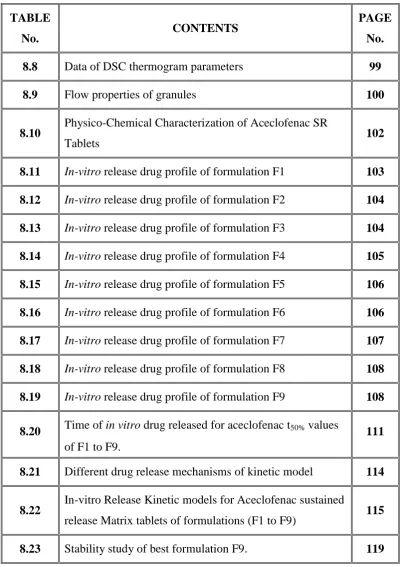
8.20 Time of in vitro drug releasedfor aceclofenac t50% values of F1 to F9.
111
8.21 Different drug release mechanisms of kinetic model 114
8.22 In-vitro Release Kinetic models for Aceclofenac sustained
release Matrix tablets of formulations (F1 to F9) 115
[image:10.595.129.531.69.637.2]FIGURE
No. CONTENTS
PAGE No.
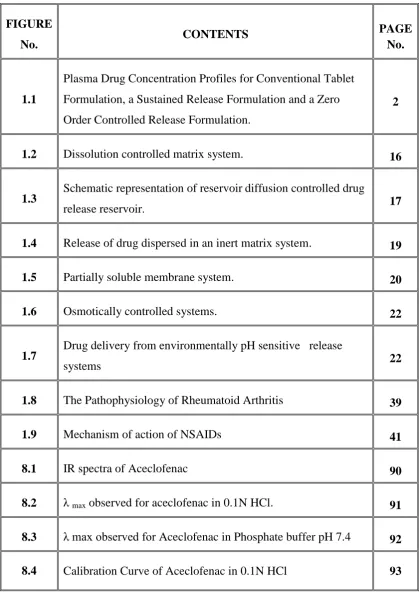
1.1
Plasma Drug Concentration Profiles for Conventional Tablet Formulation, a Sustained Release Formulation and a Zero Order Controlled Release Formulation.
2
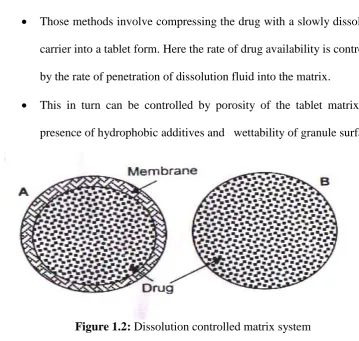
1.2 Dissolution controlled matrix system. 16
1.3 Schematic representation of reservoir diffusion controlled drug
release reservoir. 17
1.4 Release of drug dispersed in an inert matrix system. 19
1.5 Partially soluble membrane system. 20
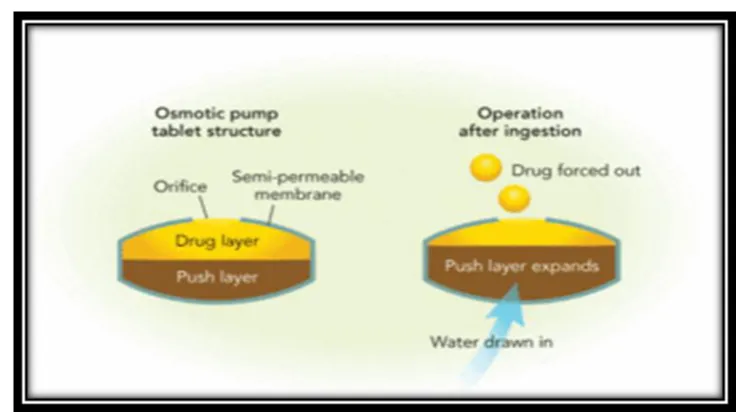
1.6 Osmotically controlled systems. 22
1.7 Drug delivery from environmentally pH sensitive release
systems 22
1.8 The Pathophysiology of Rheumatoid Arthritis 39
1.9 Mechanism of action of NSAIDs 41
8.1 IR spectra of Aceclofenac 90
8.2 λ max observed for aceclofenac in 0.1N HCl. 91
8.3 λ max observed for Aceclofenac in Phosphate buffer pH 7.4 92
FIGURE
No. CONTENTS
PAGE No.
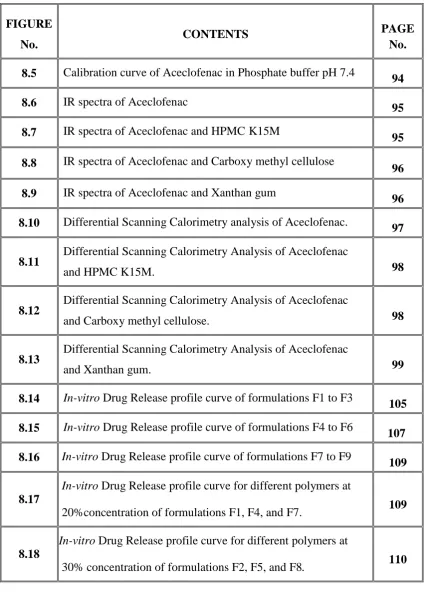
8.5 Calibration curve of Aceclofenac in Phosphate buffer pH 7.4
94
8.6 IR spectra of Aceclofenac
95
8.7 IR spectra of Aceclofenac and HPMC K15M
95
8.8 IR spectra of Aceclofenac and Carboxy methyl cellulose 96
8.9 IR spectra of Aceclofenac and Xanthan gum
96
8.10 Differential Scanning Calorimetry analysis of Aceclofenac.
97
8.11 Differential Scanning Calorimetry Analysis of Aceclofenac
and HPMC K15M. 98
8.12 Differential Scanning Calorimetry Analysis of Aceclofenac
and Carboxy methyl cellulose. 98
8.13 Differential Scanning Calorimetry Analysis of Aceclofenac
and Xanthan gum. 99
8.14 In-vitro Drug Release profile curve of formulations F1 to F3
105
8.15 In-vitro Drug Release profile curve of formulations F4 to F6
107
8.16 In-vitro Drug Release profile curve of formulations F7 to F9
109
8.17
In-vitro Drug Release profile curve for different polymers at
20%concentration of formulations F1, F4, and F7. 109
8.18
In-vitro Drug Release profile curve for different polymers at
FIGURE
No. CONTENTS
PAGE No.
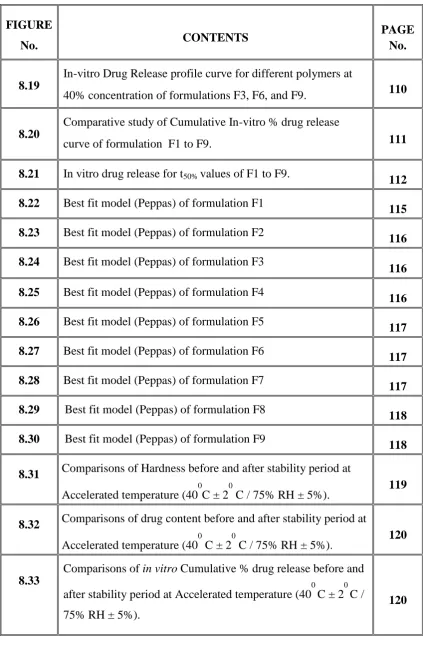
8.19
In-vitro Drug Release profile curve for different polymers at
40% concentration of formulations F3, F6, and F9. 110
8.20
Comparative study of Cumulative In-vitro % drug release
curve of formulation F1 to F9. 111
8.21 In vitro drug release for t50% values of F1 to F9. 112
8.22 Best fit model (Peppas) of formulation F1
115
8.23 Best fit model (Peppas) of formulation F2
116
8.24 Best fit model (Peppas) of formulation F3
116
8.25 Best fit model (Peppas) of formulation F4
116
8.26 Best fit model (Peppas) of formulation F5
117
8.27 Best fit model (Peppas) of formulation F6
117
8.28 Best fit model (Peppas) of formulation F7
117
8.29 Best fit model (Peppas) of formulation F8
118
8.30 Best fit model (Peppas) of formulation F9
118
8.31 Comparisons of Hardness before and after stability period at Accelerated temperature (40
0
C ± 2
0
C / 75% RH ± 5%). 119
8.32 Comparisons of drug content before and after stability period at
Accelerated temperature (400 C ± 20 C / 75% RH ± 5%). 120
8.33
Comparisons of in vitro Cumulative % drug release before and after stability period at Accelerated temperature (40
0
C ± 2
0
C / 75% RH ± 5%).
% - Percentage
%DE - Percentage dissolution efficiency
µ - Micron
µg/ml - Microgram per millilitre
0
C - Degree celsius
LAM - Lamivudine
Cm-1 - Centimeter inverse
Cmax - Peak plasma concentration
DNA - Deoxy ribonucleic acid
DSC - Differential scanning calorimetry
e.g. - Example
EC - Ethyl cellulose
edn - Edition
F - Formulation
F/C - Film coated
FTIR - Fourier transform infrared spectroscopy
g/ml - gram per millilitre
GIT - Gastro intestinal tract
HCl - Hydrochloric acid
HPC - Hydroxypropyl cellulose
HPMC - Hydroxypropyl methylcellulose
hrs - Hours
ICH - International conference on
harmonization
IP - Indian pharmacopoeia
Kg/cm2 - kilogram per centimeter square
LBD - Loose bulk density
MDT - Mean dissolution time
mg - milligram
ml - millilitre
ml/min - millilitre per minute
mm - millimeter
N - Normality
NaOH - Sodium hydroxide
NF - National formulary
nm - nanometer
º - Degree
pH - Negative logarithm of hydrogen ion
qs - Quantity sufficient
RH - Relative humidity
rpm - Revolution per minute
S.No. - Serial number
SD - Standard deviation
SR - Sustained release
t1/2 - Biological half life
TBD - Tapped bulk density
Tmax - Time of peak concentration
USP - United states pharmacopoeia
UV - Ultraviolet
w/w - weight per weight
1.INTRODUCTION
1.1. Oral drug delivery system: (Banker G.S and Rhodes C.T., 2009; Chein Y.W.,
2002)
An ideal drug delivery system should aid in the optimization of drug therapy by delivering an appropriate amount to the intended site and at a desired rate. Hence, the DDS should deliver the drug at a rate dictated by the needs of the body over the period of treatment. An oral drug delivery system providing a uniform drug delivery can only partly satisfy therapeutic and biopharmaceutical needs, as it doesn‟t take in to account the site specific absorption rates within the gastrointestinal tract (GIT). Therefore there is a need of developing drug delivery system that release the drug at the right time, at the specific site and with the desired rate.
1.2. Drawbacks associated with conventional dosage forms: (Brahmankar D.M.
and Jaiswal S.B., 2009; http://www.pharmainfo.net)
1. A drug with short biological half life which needs a close succession administration is required, so it may increase the missing of dosage form leads to Poor patient compliance.
2. The uncontrollable fluctuation of drug level may leads to either below effective range or over the effective range.
3. Plasma concentration verses time profile of dosage form and it‟s difficult to achieve the steady state active drug level.
Figure 1.1: Plasma drug concentration profiles for conventional tablet
formulation, a sustained release formulation and a zero order controlled release formulation.
1.3. Sustained release drug delivery system: (Banker G.S. and Rhodes C.T., 2009;
Shargel L. and Andrew B.C.Y., 2005; Aulton M.E., 2007; Ansel H.C., 2009;
Brahmankar D.M. and Jaiswal S.B., 2009)
The main destination of any drug delivery system is to furnish a contributing to quantity of a drug to a suitable region in the body and that the required drug concentration can be attained promptly and then being maintained. The drug delivery system should distribute a drug at a rate dictated by the require of the body for particular length of time. Regarding this existing points there are two important aspects to delivery system, said as, spatial placement and temporal delivery. Spatial placement connected to targeting a drug to particular organ, tissues, cells, or even sub cellular area; whereas temporal delivery system deals to controlling the rate of dosage form to the targeting region.
Sustained release tablets and capsules are mostly taken only once or twice
a day to attain the same required drug to produce the effect. Typically, the sustained release dosage form to furnish at once release the active component that give the what we are desired for cure of disease, followed by remaining quantity of drug should be release and maintained the therapeutic effect over a predetermined length time or prolonged period. The sustaining of drug plasma levels furnish by sustained release dose often times to eliminate the require for night dose administration, which suitable not only the patient but the care given as well.
The bulk of research can be focusing toward oral dosages that improve the temporal aspect of drug delivery. This approach is a continuously developing in the pharmaceutical industry for sustained release oral drug delivery system.
The sustained release system for oral use of administration are mostly solid and based on dissolution, diffusion or a combination of both, erosion mechanisms, in the power to directing the drug release. A delivery system containing hydrophilic and hydrophobic polymers and waxes are mixed with active component to furnish drug action for a prolonged length of time.
The concept of modified release dosage products was previously used to describe various types of oral extended release dosage forms, including sustained release, sustained action, prolonged action, slow release, long action and retarded release.
The USP/NF associated with several types of modified-release dosage forms, 1. Extended release dosage forms. (e.g. sustained release dosage forms, controlled release dosage forms)
The United States Pharmacopoeia has been in the term extended release and the British Pharmacopoeia has been the term slow release. United States Food and Drug Administration has been in the term prolonged release. However the review of literature indicates that widely used in terms today are sustained release and controlled release.
Modified release dosage forms: It is a dosage form are defined by the USP as those
whose drug release characteristics of time course or location are chosen to accomplish therapeutic or convenience objective not offered by conventional or immediate release form. Also this dosage form which is sufficiently controlled to provide periods of prolonged therapeutic action following each administration of a single dose.
Extended release dosage form: It is a dosage forms release drug slowly, so that plasma concentration is maintained at a therapeutic level for a period of time.
Delayed release dosage form: It is a dosage form which indicates that the drug is not
being released immediately following administration but at a later time, e.g. enteric coated tablets.
Prolonged release dosage form: It is a dosage form which indicates that the drug is
provided for absorption over a longer period of time than from a conventional dosage form.
1.3.1. Advantages of sustained release drug delivery system: (Banker G.S and
Rhodes C.T., 2009; Chein Y.W., 2002)
Some advantages are as follows
1. Reduction in dosing frequency.
2. Reduced fluctuation in circulating drug levels. 3. Increased patient convenience and compliance. 4. Avoidance of night time dosing.
5. More uniform effect.
6. Maximum utilization of drug.
7. Reduction in GI irritation and other side effects.
8. Reduction in health care cost through improved therapy. 9. Improve bioavailability of some drugs.
1.3.2. Disadvantages of sustained release drug delivery system: (Banker G.S. and
Rhodes C.T., 2009; Chein Y.W., 2002)
1. Decreased systemic availability in comparison to immediate release conventional dosage form. This may be due to
Incomplete release
Increased first-pass metabolism, increased instability Site specific absorption, pH dependant solubility, etc.
2. Poor invitro-in vivo correlation. 3. Possibility of dose dumping.
4. Retrival of drug is difficult in case of toxicity, poisoning, or hypersensitivity reactions.
1.3.3. Rationale of sustained release drug delivery system:
(http://www.pharmainfo.net; Chein Y.W., 2002)
The basic rationale for sustained drug delivery is to alter the pharmacokinetic and pharmacodynamics of pharmacologically active moieties by using novel drug delivery systems or by modifying the molecular structure and/or physiological parameters inherent in a selected route of administration. It is desirable that the duration of drug action become more to design properly. Rate controlled dosage form, and less, or not at all, a property of the drug molecules inherent kinetic properties.
As mentioned earlier, primary objectives of controlled drug delivery are to ensure safety and to improve efficiency of drugs as well as patient compliance. This achieved by better control of plasma drug levels and frequent dosing. For conventional dosage forms, only the dose and dosing interval can vary and, for each drug, there exists a therapeutic window of plasma concentration, below which therapeutic effect is insufficient, and above which toxic side effects are elicited. This is often defined as the ratio of median lethal dose (LD 50) to median effective dose (ED50).
1.3.4. Design of sustained release drug delivery system: (Jithan A., 2007; Ansel
H.C., 2009; Shargel L. and Andrew B.C.Y., 2005)
adsorbate formulation, or prodrug synthesis. The conversion of inactive form to active nature process is mostly attempted and investigated. The second method is used in the formulation development of sustained release system. This is popular method because it‟s inherent advantage. The advantage of this method in the design of dosage form is
independent. The final formulation form could be in a liquid suspension form, a capsule or a tablet.
Generally some important criteria could be considering in the formulation of a sustained release dosage form. Not all the drug ideal characteristic. Drugs which shown neither very slow or nor very fast rate of absorption and excretion. Drugs with very short half life that is less than 2 hours are poor candidates for sustained release because large quantities of drug required for such a formulation.
1.4. Drug properties relevant to sustained release formulation: (Chein Y.W.,
2002; http://www.pharmainfo.net)
The formulation of sustained release drug delivery systems, consider the some criteria such as the route of administration, type of drug delivery system, what disease to be treated, the patient, the duration of treatment and the characteristic of the drug those above mentioned factor should be considered. The pharmaceutical interest to research scientist for designing of the delivery system the following properties could be considered in the development of dosage form. These properties can be classified as follows.
A) Physicochemical properties B) Biological properties
These properties having the greater importance in the design of the drug in the delivery system and in the body. But there is no distinction between these two categories because the biological properties of a drug as like a function of its physicochemical properties. By definition, physicochemical properties of drug that can be determined from in vitro study and biological properties will be those that result from Pharmacokinetic studies such as absorption, distribution, metabolism and excretion of a drug and those resulting from pharmacological experimental study. A. Physicochemical factors influencing oral sustained-release dosage form
design:
a) Dose size:
Compounds that require large dosing size can sometimes be given in multiple amounts or formulated into liquid systems. Another consideration is the margin of safety involved in administration of large amount of a drug with a narrow therapeutic range.
b) Ionization, pka and aqueous solubility:
Most drugs are weak acids or bases. Since the unchanged form of a drug preferentially permeates across lipid membranes, it is important to note the relationship between the pka of the compound and the absorptive environment. Presenting the drug in an unchanged form is advantageous for drug permeation. Unfortunately, the situation is made more complex by the fact that the drug‟s aqueous
solubility will generally be decreased by conversion to unchanged form. Delivery systems that are dependent on diffusion or dissolution will likewise be dependent on the solubility of the drug in aqueous media. These dosage forms must function in an environment of changing pH, the stomach being acidic and the small intestine more neutral, the effect of pH on the release process must be defined. Compounds with very low solubility (<0.01mg/ml) are inherently sustained, since their release over the time course of a dosage form in the GI tract will be limited by dissolution of the drug. So it is obvious that the solubility of the compound will be poor choices for slightly soluble drugs, since the driving force for diffusion, which is the drug‟s concentration in
solution, will be low. c) Partition Coefficient:
coefficient of oil-soluble drugs becomes important in determining the effectiveness of membrane barrier penetration. Compounds which are lipophilic in nature having high partition coefficient are poorly aqueous soluble and it retain in the lipophilic tissue for the longer time. In case of compounds with very low partition coefficient, it is very difficult for them to penetrate the membrane, resulting in poor bioavailability. Furthermore, partitioning effects apply equally to diffusion through polymer membranes. The choice of diffusion-limiting membranes must largely depend on the partitioning characteristics of the drug.
d) Drug Stability:
Orally administered drugs can be subject to both acid-base hydrolysis and enzymatic degradation. Degradation will proceed at a reduced rate for drugs in solid state; therefore, this is the preferred composition of delivery for problem cases. For the dosage form that are unstable in stomach, systems that prolong delivery over entire course of transit in the GI tract are beneficial; this is also true for systems that delay release until the dosage form reaches the small intestine. Compounds that are unstable in small intestine may demonstrate decreased bioavailability when administered from a sustaining dosage form. This is because more drugs is delivered in the small intestine and, hence, is subject to degradation. Propentheline and probanthine are representative example of such drug.
e) Protein binding:
forces. If a drug molecule having hydrophobic in nature its can also increasing the binding capacity. Drugs binding to mucin it may increase absorption. e.g. quaternary ammonium compounds bound to mucin in the gastro intestinal tract.
B. Biological factors influencing oral sustained-release dosage form design:
a) Biological half life:
The usual goal of an oral SR product is to maintain therapeutic blood levels over an extended period of time. To achieve this, drug must enter the circulation at approximately the same rate at which it is eliminated. The elimination rate is quantitatively described by the half-life (t1/2). Each drug has its own characteristic
elimination rate, which is the sum of all elimination processes, including metabolism, urinary excretion and all over processes that permanently remove drug from the blood stream. Therapeutic compounds with short half-life are generally are excellent candidate for SR formulation, as this can reduce dosing frequency. In general, drugs with halflives shorter than 2 hours such as furosemide or levodopa are poor candidates for SR preparation. Compounds with long half-lives, more than 8 hours are also generally not used in sustaining form, since their effect is already sustained. Digoxin and phenytoin are the examples.
b) Absorption:
apparent absorption rate constant of 0.17-0.23h-1 to give 80-95% over this time period. Hence, it assumes that the absorption of the drug should occur at a relatively uniform rate over the entire length of small intestine. For many compounds this is not true. If a drug is absorbed by active transport or transport is limited to a specific region of intestine, SR preparation may be disadvantageous to absorption. One method to provide sustaining mechanisms of delivery for compounds try to maintain them within the stomach. This allows slow release of the drug, which then travels to the absorptive site. These methods have been developed as a consequence of the observation that co-administration results in sustaining effect. One such attempt is to formulate low density pellet or capsule. Another approach is that of bioadhesive materials.
c) Metabolism:
Drugs those are significantly metabolized before absorption, either in the lumen or the tissue of the intestine, can show decreased bioavailability from slower-releasing dosage form.
Hence criteria for the drug to be used for formulating Sustained-Release dosage form is,
Drug should have low half-life(<5 hrs) Drug should be freely soluble in water
Drug should have larger therapeutic window
Drug should be absorbed throughout the GIT.
on that is formulated in the SR dosage form. But during this the crystallization of the drug, that is taking place as the drug is entering in the systemic circulation, should be prevented and one should be cautious for the prevention of the same.
d) Distribution:
The distribution of active ingredient into body tissues and extra vascular spaces in the body is an important parameter for drug elimination kinetics model. Some parameters are using to give idea about distribution of drug. Apparent volume of distribution of active component is high it will influence the elimination of dosage form and not suitable for making sustained release tablet. The term apparent volume of distribution of a drug is mostly used to explain the distribution, including bound to the body system. The total apartment volume of distribution for a drug at steady state will be calculated by given equation.
Vdss = [(K12 + K21) / K21] VP
Where,
Vdss = Apparent volume of distribution at study state level
K12 = Drug from central to peripheral compartment
K21 = Drug from peripheral to central compartment
VP = Volume of central compartment
e) Side effects:
therapeutic effect if a drug below the level of minimum effective range. So the above problem we can solve by making sustained release preparation.
f) Margin of safety:
Therapeutic index of a drug is very important for either sustained or controlled release delivery system. Its value only desired the margin of safety. Therapeutic index value it has been longer means excellent for preparation of sustained release tablet. Narrow therapeutic index of some drug precise to release the active content in therapeutic safe and effective range. Some drug like cardiac glycosides that therapeutic index value is very small, so it‟s not used for sustained release delivery
system.
Therapeutic index = TD50 ∕ ED50
Where,
TD50 - Median toxic dose
ED50 - Median effective dose
1.5. Design and fabrication of oral systems: (Brahmankar D.M. and Jaiswal
S.B., 2009; Robinson J.R. and Lee V.H.L., 2009; Chein Y W., 2002)
The majority of oral controlled release systems rely on dissolution, diffusion or a combination of both mechanisms, to generate slow release of drugs into the gastrointestinal milieu. The following techniques are employed in the design and fabrication of oral sustained release dosage forms.
1. Dissolution controlled release
2. Diffusion controlled release Reservoir devices
Matrix devices
3. Diffusion and dissolution controlled systems 4. Ion-exchange resins
5. pH - independent formulations 6. Osmotically controlled release 7. Altered density formulations 1.5.1. Dissolution controlled Systems:
Drug with a slow dissolution rate will demonstrate sustaining properties, since the release of the drug will be limited by rate of dissolution. This being the case, SR preparations of drugs could be made by decreasing their dissolution rate. This includes preparing appropriate salts or derivatives, coating the drug with a slowly dissolving material, or incorporating it into a tablet with a slowly dissolving carrier.
The dissolution process at steady state, is described by Noyes-Whitney equation,
dc/dt = KDA(Cs-C) = D/h A(Cs-C)
Where,
dc/dt = Dissolution rate KD = Diffusion co-efficient
A = surface area of the dissolving solid Cs = Saturation solubility of the solid
Encapsulation dissolution control
These methods generally involve coating individual particles of drug
with a slow dissolving material. The coated particles can be directly compressed into tablets as in space tabs or placed in capsules as in spansule products.
Since the time required for dissolution of the coat is a function of
thickness and aqueous solubility, sustained action can be obtained by employing a narrow or a wide spectrum of coated particles of varying thickness respectively.
Matrix dissolution control
Those methods involve compressing the drug with a slowly dissolving
carrier into a tablet form. Here the rate of drug availability is controlled by the rate of penetration of dissolution fluid into the matrix.
This in turn can be controlled by porosity of the tablet matrix, the
[image:33.595.140.500.380.721.2]presence of hydrophobic additives and wettability of granule surface.
1.5.2. Diffusion controlled systems:
Basically diffusion process shows the movement of drug molecules from a
region of higher concentration to one of lower concentration. Diffusion systems are characterized by the release rate being dependent on its diffusion through an inert membrane barrier. Usually this barrier is an insoluble polymer.
Membrane reservoir diffusion controlled
The core of the drug is encapsulated within a water insoluble polymeric material. The drug will partition in to the membrane and diffuse in to the fluid surrounding the particle or tablet. Cellulose derivatives are commonly used in the reservoir types.
Ficks first law of diffusion describes the diffusion process J= -D dc/dx
Where,
D = diffusion coefficient in area/time
dc/ dx = change of concentration „c‟ with distance „x‟
Figure 1.3: Schematic representation of reservoir diffusion controlled drug release
Advantages:
Zero order delivery is possible; release rate varies with polymer type. Disadvantages:
1. Systems must be physically removed from implant sites. 2. Difficult to deliver high molecular weight compounds.
3. Increased cost per dosage unit, potential toxicity if system fails. Matrix diffusion controlled:
It this system a solid drug is dispersed in an insoluble matrix. The rate of drug release is controlled by the rate of diffusion of drug and not by the rate of solid dissolution. In this model, drug in the outside layer exposed to bath solution is dissolved first and then diffuses out of the matrix. The following equation describe the rate of release of drug dispersed in an inert matrix system have been derived by Higuchi,
dQ/dt =(DACS/2t)1/2
where
„A‟ is the total amount of the drug in the device,
„D‟ is the diffusion coefficient of the drug in the polymer, „Cs‟ is the solubility of the
Figure 1.4: Release of drug dispersed in an inert matrix system
Advantages:
Easier to produce than reservoir or encapsulated devices, can deliver high molecular weight compounds.
Disadvantages:
Cannot provide zero order release, removal of remaining matrix is necessary for implanted system.
1.5.3. Dissolution and diffusion - controlled release system:
Normally, therapeutic systems will never be dependent on dissolution only or diffusion only. In practice, the dominant mechanism for release will over shadow other processes enough to allow classification as either dissolution rate limited or diffusion controlled.
Partially soluble membrane system
coat. For example, a cellulose acetate and HPMC mixture is coated on to the drug particles.
GI fluids
Figure 1.5: Partially soluble membrane system
Matrix system:
Matrix system encapsulate the drug in a membrane coating, where dissolution of the drug in the fluid that penetrates in to the core and diffusion of the drug from the core across the polymer membrane makes for a diffusion and dissolution controlled system.
The drug is sparingly soluble in this case, so the release rate is slow and has significant influence on the diffusion of drug across the membrane.
Advantages:
Easier to produce than reservoir devices.
Can deliver high – molecular weight compounds. Removal from implant sites is not necessary.
Disadvantages:
Difficult to control kinetics owning to multiple process of release. Potential toxicity of degraded polymer.
Drug
1.5.4. Ion exchange systems:
These are salts of cationic or anionic exchange resins or insoluble complexes in which drug release results from exchange of bound drug ions that are normally present in GI fluids.
The use of ion exchange resins to prolong the effect of drugs is based on the principle that positively or negatively charged therapeutic molecules combined with appropriate resins yield insoluble poly salt resonates.
1.5.5. Osmotically controlled systems:
This device is fabricated as tablet that contains water soluble osmotically active drug, of that was blended with osmotically active diluents by coating the tablet with a cellulose triacetate barrier which functions as a semi permeable membrane. A laser is used to form a precision orifice in the barrier, through which the drug is released due to development of osmotic pressure difference across the membrane, when it is kept in water.
Advantages:
Zero order release rates are obtainable.
Preformulation is not required for different drugs.
Release of drug is independent of the environment of the system.
Disadvantages:
Figure 1.6: Osmotically controlled systems
1.5.6. pH independent formulations:
A buffered controlled release formulation is prepared by mixing a basic or acidic drug with or more buffering agents, granulating with appropriate pharmaceutical excipients and coating with GI fluid permeable film forming polymer. When GI fluid permeates through the membrane the buffering agent adjusts the fluid inside to suitable constant pH thereby rendering a constant rate of drug release.
[image:39.595.130.497.518.726.2]
1.5.7. Altered density formulations:
Several approaches have been developed to prolong the residence time of drug delivery system in the gastrointestinal tract.
High-density approach Low-density approach
1.6. Matrix tablets: (Vyas S.P.and Khar R.K., 2002; Aulton M.E., 2007; F.A.A. Adam. et. al., 2007; http://www.pharmainfo.net)
A matrix system consists of active and inactive ingredients, that are homogeneously dispersed and mixed in the dosage form. It is by far the most commonly used oral controlled release technology and the popularity of the matrix systems can be attributed to several factors which will be discussed in the later section. The release from matrix type formulations governed by Fick‟s first law of diffusion.
J = dQt/dt = - D dC/dx
J is flux, or rate of diffusion, while Q is the amount diffused per unit of time t, and D is diffusion coefficient.
1.6.1. Advantages of matrix system:
1.6.2. Limitations of the matrix systems:
As with any technology, matrix systems come with certain limitations. First, matrix systems lack flexibility in adjusting to constantly changing dosage levels as required by clinical study outcome. When new dosage strength is deemed necessary, more often than not a new formulation and thus additional resources are expected. Furthermore, for some products that require unique release profiles (dual release or delayed plus extended release), more complex matrix-based technologies such as layered tablets are required.
1.6.3. Types of matrix systems:
The matrix system can be divided into two categories depending on the types of retarding agent or polymeric materials.
(a) Hydrophobic matrix system:
proportional to the drug loading. In addition, hydrophobic matrix systems generally are not suitable for insoluble drug because the concentration gradient is too low to render adequate drug release. As such, depending on actual ingredient properties or formulation design, incomplete drug release within the gastrointestinal transit time is a potential risk and need to be delineated during the development. With the growing needs for optimization of therapy, matrix systems providing programmable rates of delivery become more important. Constant rate delivery always has been one of the primary targets of controlled release system especially for drug with narrow therapeutic index.
(b) Hydrophilic matrix system:
presence of water decreases the glassy-rubbery temperature (for HPMC from 184°C to below 37°C), giving rise to transformation of glassy polymer to rubbery phase (gel layer). The enhanced motility of the polymeric chain favours the transport of dissolved drug. Polymer relaxation phenomena determine the swelling or volume increase of the matrix. Depending on the polymer characteristics, the polymer amount in the rubbery phase, at the surface of the matrix, could reach the disentanglement concentration; the gel layer varies in thickness and the matrix dissolves or erodes. The concentration at which polymeric chains can be considered disentangled was demonstrated to correspond to an abrupt change in the rheological properties of the gel. This showed a relationship between rheological behaviour of HPMC gels and their erosion rate, conforming that the polymer-polymer and polymer-water interaction are responsible for the gel network structure and its sensitivity to erosion. In turn, they affect drug release rate in the case of poorly soluble drugs. Swelling controlled release systems are based upon these principles. Due to the viscoelastic properties of the polymer which are enhanced by the presence of cross-linked network, anomalous penetrant transport can be observed. This behaviour is bound by pure Fickian diffusion and case II transport. Therefore, transport can be reduced to three driving forces. The penetrant concentration gradient, polymer concentration gradient and osmotic force behavior are observed as a result of polymer network. Appropriate polymer can counterbalance normal Fickian diffusion by hindering the release of embedded drug, leading to an extended period of drug delivery, and possibly zero-order release.
interaction among water, polymer and drug or fillers is considered as the primary factor for release control) and the various formulation variables, such as polymer grade and type, drug to polymer ratios, drug solubility, drug and polymer particle sizes, compaction pressure and presence of additives or excipients in the final formulation. They concluded that, the release rate and mechanism of atenolol releases from hydrophobic and hydrophilic matrices are mainly controlled by the drug to polymer ratio. The results also showed that an increase in the concentration of fillers resulted in an increase in the release rate of the drug from matrices and hydrophilicity or hydrophobicity of the fillers had no significant effect on the release profile. Regarding the mechanism of release, the results showed that in most cases the drug release was controlled by both diffusion and erosion depending on the polymer type and concentration. On the other hand, incorporation of water soluble fillers like polyethylene glycol, lactose and surfactant into gel forming matrices can improve phenomenon of insufficient drug release, because these excipients can enhance the penetration of the solvent or water into the inner part of matrices, resulting in drug release from the matrices.
(c) Lipid matrix system:
(d) Biodegradable matrix system:
These types of polymer are biodegraded either by enzymatic or non enzymatic process. It contains the polymeric substance which is composed of monomeric linking to other functional group and gives unstable linkage in the backbone. Consist of the polymers which comprised of monomers linked to one another functional groups and have unstable linkage in the backbone. Finally the biodegraded material is excreted in the enzymatic process. Examples of naturally obtaining type polymers such as protein and polysaccharides; modified synthesized process of natural polymers; synthetic polymers like aliphatic poly ester and poly anhydride.
1.6.4. Polymers used in hydrophilic matrices: (F.A.A. Adam, et. al., 2007)
Hydrogel polymers were much investigated in literature on basis of drug release and release mechanism from hydrophilic matrix tablets as well as pellets. HPMC polymers achieve considerable attention due to their unique properties, and they can display good compression characteristics, including when directly compressed. They are nontoxic and can accommodate high level of drug loading, and also having adequate swelling properties that allows rapid formation of an external gel layer which retards or plays a major role in controlling drug release.
systemic toxicity which happens as a result of dose dumping. The release of diclofenac sodium from a mixture of HPMC, Carbopol 940, and lactose as water soluble fillers. The results showed that the combination of hydrogels retarded the drug better than single polymer. The principal advantage of HPMC matrix formulations is the drug release rates are generally independent of processing variables such as compaction pressure, drug particle size, increasing of initial granulation liquid and incorporation of lubricants.
The relationship between particle size, tensile strength and the viscosity grade of HPMC was complicated. At smaller particle size, an increase in the viscosity grade of HPMC resulted in a reduction in the tensile strength of its compacts. However, at the large particle size, the tensile strength of HPMC compacts decreased with an increase in viscosity grade. For HPMC K100M, there was an increase in tensile strength. The combination of HPMC and HPC at different ratios was investigated. Increasing the HPMC-HPC ratio increased both the particle size of granules and the tablet hardness. The drug release of HPMC matrix tablets was slightly influenced by type and concentration of diluents, but the viscosity grade of the polymer did not affect the release mechanism.
An increase in crushing strength of tablets made of Macrogol 6000 and HPMC, due to an increase in compression force during tableting stage and the dissolution of formulated tablet was significantly affected by increasing HPMC concentration.
followed non-Fickian diffusion, while the in vivo absorption and in vitro dissolution showed a linear relationship.
Other polymers used in hydrophilic matrix preparations include poly ethylene oxide, hydroxypropyl cellulose and hydroxyl ethyl cellulose.
Xanthan gum (XG) was widely used as a thickening agent in food industries, but recently introduced in pharmaceutical formulations It is a high molecular weight extracellular heteropolysaccharide, produced by fermentation with the gram-negative bacterium Xanthamonas campestris. XG shows excellent swelling properties and the swelling of the XG polymer matrix shows a square root of time dependence whereas drug release is almost time independent.
hydrogel. This hydrogel remains intact, and the drug continues to diffuse through the gel layer at a uniform rate.
It is well recognized that key formulation variables are matrix dimension and shape, polymer level and molecular weight, as well as drug loading and solubility. Other factors such as tablet hardness, type of inactive ingredients and processing normally play secondary roles. The choice of manufacturing process such as direct blending or granulation typically does not affect product performance significantly, although exception does exist. In general, processing and scale-up associating with hydrophilic matrices are more robust than other controlled release systems.
1.6.5. Drug release from matrix systems: (http://www.pharmainfo.net)
Drug in the outside layer exposed to the bathing solution is dissolved first and
then diffuses out of the matrix. This process continues with the interface between the
bathing solution and the solid drug moving toward the interior. It follows that for this
system to be diffusion controlled, the rate of dissolution of drug particles within the
matrix must be much faster than the diffusion rate of dissolved drug leaving the
matrix. Derivation of the mathematical model to describe this system involves the
following assumptions:
a) A pseudo-steady state is maintained during drug release,
b) The diameter of the drug particles is less than the average distance of drug
diffusion through the matrix,
c) The bathing solution provides sink conditions at all times.
The release behavior for the system can be mathematically described by the following
equation,
Where,
dM = Change in the amount of drug released per unit area
dh = Change in the thickness of the zone of matrix that has been depleted of drug
Co = Total amount of drug in a unit volume of matrix
Cs = Saturated concentration of the drug within the matrix.
Additionally, according to diffusion theory,
dM = (Dm.Cs)/h . dt...2
dM = Change in the amount of drug released per unit area
dh = Change in the thickness of the zone of matrix that has been depleted of drug
Co = Total amount of drug in a unit volume of matrix
Cs = Saturated concentration of the drug within the matrix.
By combining equation 1 and 2 and integrating
M = [Cs . Dm . (2 Co - Cs . t )]1/2 ……. 3
When the amount of drug is in excess of the saturation concentration, then
M = [Cs . Dm . Co . t]1/2 . ………4
Equation 3 and 4 indicates the amount of drug release to the square-root of time.
Therefore, if a system is predominantly diffusion controlled, then it is expected that a
plot of the drug release vs. square root of time will result in a straight line. Drug
release from a porous monolithic matrix involves the simultaneous penetration of
surrounding liquid, dissolution of drug and leaching out of the drug through tortuous
interstitial channels and pores. The volume and length of the openings must be
accounted for in the drug release from a porous or granular matrix,
Where, p = Porosity of the matrix
t = Tortuosity
Ca = solubility of the drug in the release medium
Ds = Diffusion coefficient in the release medium
T = Diffusional pathlength
For pseudo steady state, the equation can be written as,
M = [2 D . Ca . CO ( p / T ) t]1/2……….6
The total porosity of the matrix can be calculated with the following equation,
p = pa + Ca / ρ + Cex / ρex ..…….…. 7
Where,
p = Porosity
ρ = Drug density
pa = Porosity due to air pockets in the matrix
ρex = Density of the water soluble excipients
Cex = Concentration of water soluble excipients
For the purpose of data treatment, Equation 7 can be reduced to,
M = k . t1/2 ..………….. 8
Where k is a constant, so that the amount of drug released versus the square root of
time will be linear. If the release of drug from matrix is diffusion-controlled. In this
case, the release of drug from a homogeneous matrix system can be controlled by
varying the following parameters,
• Initial concentration of drug in the matrix
• Porosity
• Polymer system forming the matrix
• Solubility of the drug.
1.7. Methods used in tablet manufacturing: (Lieberman H.A. and Lachman L.,
1999; Ansel H.C., 2009)
A. Wet granulation B. Dry granulation C. Direct compression Granulation:
Generally the powders material cannot be punching directly into tablet form, because (a) the material should not have bonding a property to each other into compaction and (b) insufficient flow character from the hopper into die cavity. For this reason and this nature of material we can go for granulation methods.
The reason for granulation:
Become the pharmaceutical ingredient are free flowing
Increase the denseness of ingredient
We can formulate uniform granular size that does not existing apart
Produce better compression characteristic of drug Controlling the rate of drug release from the dosage form
Reduce dust in granulation technique The appearance of tablet can be achieved
A. Wet granulation:
using 6 to 12 sieve mesh, drying the shifted granules, sieving prepared granules with lubricant and glidant, mixing screened granules with lubricant and glidant, finally compressed into tablet form.
Advantages:
Powder material is converted into granular form by adding binding solution, the use of binder it‟s coating the each powder material to get a granules which having
better cohesiveness and compressibility for manufacturing of tablet.
If an active component it has been high label claim and also improper flow
characteristic can be prepared by wet granulation technique to acquire excellent flow of granules and its granular material having cohesiveness for punching.
Uniform distribution of active ingredient as well as uniform active content
quantity of prepared dosage form.
In many pharmaceutical ingredient can cause the dust and airborne pollute it
could be handling without producing this problem by granulation method.
In these methods prevent the agglomeration of ingredient in a homogeneous
powder mixture under processing, shifting and handling.
Controlled release dosage form can be developed by the manufacturing
scientist using better binding agent and polymer or solvent.
This procedure entrapment of air in the material can be reduced.
Disadvantages:
It needs a number of equipments in the production area.
There is a chances of pollute than the direct compression method.
In these method timing period is increase because moistening the material and
This method not suitable for sticky ingredient and hygroscopic substance.
B. Dry granulation:
In dry granulation size reduction of active ingredient and inactive ingredient,
mixing of milled material, directly compressed into tablet, further the prepared tablet is milled this process called slugging, sieving of slug material, finally mixing with lubricant and glidant and tablet punching.
Advantages:
In this method the material are highly heats sensitive and destroyed in
moisture condition so we can formulate by dry granulation method.
It needs less space for placing the equipment and processing step than other
methods.
The ingredient cost is smaller in extent.
Disadvantages:
For this method, either the active material or inactive material should have
binding properties and cohesive nature.
The ingredient must be in the nature of either crystalline or amorphous form.
C. Direct compression:
Size reduction of active component and inactive component, mixing of milled
ingredients, tablet compression. Advantages:
The exposing of active component to moisture and thermal can be prevented. These methods the cost of preparation can be minimized and reduce the labor
Tablet manufactured by this process very easy to disintegrating molecule from
the dosage form.
The equipment like granulators and dryers and solvent are not needed in
manufacturing of tablets by this method. Disadvantages:
The uniformity of color is difficult to achieve in manufacturing of tablets. In this process cost of materials is a great vertical extent.
In this method produce dust and air pollute during manufacturing process. Content uniformity is not maintained, because agglomeration and separation
of drug molecule it will occur in transferring from hopper into die cavity.
1.8. ARTHRITIS: (Tripathi K.D., 2003; Rang A.P., et al., 2001; Brunton L., et al.,
2008)
“Arthritis” literally means “inflamed joints”. Arthritis primarily affects the
joints; it also attacks muscles and connective tissues of the surrounding organs. Arthritic disease stems from injuries, defects in the immune system, wear and tear on the joints, infections or genetic predisposition.
A. Osteoarthritis:
replace damaged cartilage. If movement becomes painful and restricted, lessened use of the associated muscles will lead to their atrophy.
B. Rheumatoid arthritis:
Rheumatoid arthritis is traditionally considered a chronic, inflammatory autoimmune disorder that causes the immune system to attack the joints. It is a disabling and painful inflammatory condition, which can lead to substantial loss of mobility due to pain and joint destruction. Rheumatoid arthritis is a systemic disease, often affecting extra articular tissues throughout the body including the skin, blood vessels, heart, lungs and muscles.
The joint lining, called the synovium, becomes inflamed in cases of rheumatoid arthritis, leading to pain, stiffness, warmth, redness and swelling. These inflamed cells release an enzyme that may even digest cartilage and bone.
1.8.1 Biochemical mechanism:
The normal synovial lining of diarthodial joints is a delicate tissue layer up to three cells thick and a loosely arranged stroma with connective tissue, microvasculature and lymphatics. Inflammatory synovitis is the key pathological feature in rheumatoid arthritis. Its characteristics are synovial hyperplasia, inflammatory cell infiltration and vascularity. Initially edema and fibrin deposition predominate. Subsequently, there is synovial lining layer hyperplasia involving macrophage and fibroblast like synoviocytes. This hyperplasia is accompanied by infiltration of T cells, B cells, macrophages and plasma cells in the sublining layer.
Figure 1.8: The Pathophysiology of Rheumatoid Arthritis
1.8.2. Symptoms:
The exacerbation of the disease peaks at only certain times of the day and the cardinal symptoms of rheumatoid arthritis include:
Stiffness, swelling and pain of one or more joints of the body characteristically
severe in the morning, fatigue and weakness.
Stiffness following periods of immobility, which gradually improves with
movement.
Rheumatoid nodules (lumps of inflamed cells) under the skin usually found on
the bony part of the fore arm, ankle and fingers. Minor fever, anemia and weight loss.
1.8.3. Treatment:
Pharmacological treatment of rheumatoid arthritis can be divided into Disease modifying anti-rheumatic drugs
DMARDs have been found to produce durable remissions and delay or
halt disease progression. In particular they prevent bone and joint damage from occurring secondary to the uncontrolled inflammation.
1.8.4. Disease modifying anti-rheumatic drugs (DMARDs):
DMARDs can be further subdivided into Xenobiotic agents and biological agents. Xenobiotic agents are those DMARDs that do not occur naturally in the body, as opposed to biologicals.
Xenobiotics include,
Azathioprine, Cyclosporine, D-penicillamine, gold salts, Leflunomide, Minocycline,
Hydroxychloroquine, Methotrexate, and Sulfasalazine. Biological agents:
Tumor necrosis factor (tnf α) blockers - Etanercept (Enbrel), Infliximab (Remicade),
Interleukin-1 blockers - Anakinra Anti-B cell (CD20) antibody - Rituximab 1.8.5. Anti-inflammatory agents and analgesics:
Anti-inflammatory agents include,
A. Glucocorticoids:
Non steroidal anti-inflammatory drugs also act as analgesics. B. Non steroidal anti -inflammatory drugs:
NSAIDs are drugs with analgesic, antipyretic and anti inflammatory effects that reduce pain, fever and inflammation. The term "non steroidal" is used to distinguish these drugs from steroids, which (among a broad range of other effects) have a similar eiconoside depressing, anti inflammatory action.
Mechanism of action:
Most NSAIDs act as non selective inhibitors of the enzyme cyclooxygenase, inhibiting both the cyclooxygenase-1 (COX-1) and cyclooxygenase-2 (COX-2) isoenzymes.
Cyclooxygenase catalyzes the formation of prostaglandins and thromboxane from arachidonic acid (Derived from the cellular phospholipid bilayer by phospholipase A2).
1.8.6. Classification of NSAIDs:
A. Chemical classification:
Table 1.1: Classification of NSAIDs
B. Classification based on COX selectivity:
1. Non COX selective NSAIDS:
Aspirin, Indomethacin, Diclofenac, Piroxicam, Ibuprofen, Naproxen, Mefenamic acid.
2. Preferential COX-2 inhibitors:
Nimesulide, Meloxicam, Nabumetone, Aceclofenac 3. Highly selective COX-2 inhibitors:
1st generation : Celecoxib, Rofecoxib
2nd generation : Valdecoxib, Parecoxib, Etoricoxib, Lumiracoxib. S.No. Category Drug
1. Salicylates Aspirin
2. Indoles Indomethacin
3. Pyrazoles Phenyl butazone
4. Fenamate Mefenamic acid
5. Propionic acid Ibuprofen, Ketoprofen
6. Phenyl acetic acid Diclofenac, Aceclofenac, Flurbiprofen
7. Oxicam Piroxicam, Tenoxicam, Meloxicam
8. Sulphonanilide Nimesulide
9. Coxibs Celecoxib, Rofecoxib,Valdecoxib, Parecoxib
10 Alkanone Nabumetone
2. NEED AND OBJECTIVE
Aceclofenac is a non-steroidal anti-inflammatory, analgesic and antipyretic agent. It is a prodrug of Diclofenac, in the inflammatory cells it gets converted into diclofenac and 4-hydroxy diclofenac. Aceclofenac has the more COX-2 specificity than diclofenac, as it is active only in inflammatory cells it has less GI stress than diclofenac. It has short biological half-life (4 hours), and the usual oral dosage regimen is 100 mg taken 2 times a day.
The basic goal of therapy is to achieve a steady state blood or tissue level that is therapeutically effective and non-toxic for an extended period of time. Sustained release drug delivery systems, with an aim of improved patient compliance, better therapeutic efficacy, less side effects and reduced dosage regimen with less toxicity for treatment for many acute and chronic diseases.
Non–Steroidal Anti-Inflammatory Drugs (NSAIDs) are considered to be the first line drug in the symptomatic treatment of rheumatoid arthritis, osteoarthritis and ankylosing spondylitis. Aceclofenac is one of the emerging NSAIDs molecules for arthritis treatment
To minimize the frequent dosing
To prolong the pharmacological effect and
To improve patient compliance, a sustained release formulation of