Article
Systematic Approach to Arowana Gender
Identification Problem using Algorithm of Inventive
Problem Solving (ARIZ)
Trizit Benjaboonyazit
Faculty of Engineering, Thai-Nichi Institute of Technology, 1771/1 Pattanakarn Rd., Suanluang, Bangkok 10250, Thailand
E-mail: [email protected]
Abstract. This paper presents a systematic approach to arowana gender identification problem using algorithm of inventive problem solving (ARIZ). Arowana is a beautiful and expensive fish. Many farms try to improve their efficiency in breeding arowana, but the problem is that arowana is monomorphic, which makes it difficult to distinguish male from female just from their appearance. This causes difficulties in mating and selling of arowana. Many trial-and-error methods have been used with little success. The problem of arowana gender identification cannot be solved easily with the psychological methods such as brainstorming or trial and error, it needs a more logical and well-structured method of problem solving. In this paper, ARIZ is used to systematically analyze the problem and search for possibilities to identify the gender of arowana step by step, and finally, among 32 ideas generated, some potential solutions have been evaluated and compared with the commonly used methods with satisfactory results which demonstrate the effectiveness of ARIZ as a powerful innovative problem solving tool.
Keywords: TRIZ, ARIZ, innovation tools, creative thinking, idea generation, problem solving, systematic approach, arowana, gender identification.
ENGINEERING JOURNAL Volume 18 Issue 2
Received 18 June 2013 Accepted 1 October 2013 Published 18 April 2014
1.
Introduction
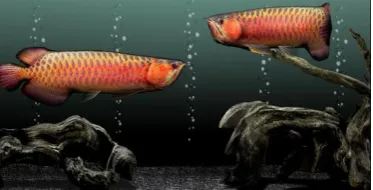
Arowana is an ancient fish living in freshwater. It is a carnivorous fish, eating other small fish and insects. Its mouth can open wide to swallow small fish and it can jump to catch insects above the water surface. It is popular as an aquarium ornamental fish. The elongate body is covered by large, heavy scales, with a mosaic pattern of canals. The dorsal and anal fins have soft rays and are long based, while the pectoral and ventral fins are small. Arowanas reach their maturity around the 4th year. A female arowana has a single ovary which contains around 20~30 large ova. A mature male arowana possesses a single thread-like testis [1]. Attempts have been made to identify the gender of arowana by exposing their sexual organs, but this may endanger their lives. Male arowanas use their mouth to incubate the fertilized eggs until they become fry. So it is believed that male arowanas have bigger mouth than female arowanas, and the size or volume of empty space in their mouth can be used to distinguish male from female arowanas. This method is widely used, but still it lacks accuracy [2]. Another method of PCR-based DNA testing has been suggested, but this method is costly and the sex-associated DNA marker does not work in some strains of arowana due to the complexity of chromosomes in fish, and further research is required [3].
The problem of arowana gender identification cannot be solved easily with the psychological methods such as brainstorming or trial and error, it needs a more logical and well-structured method of problem solving. ARIZ is known as a powerful innovative problem solving tool. This paper presents a systematic approach to arowana gender identification problem using algorithm of inventive problem solving (ARIZ), ARIZ is described and deployed to systematically analyze the problem and search for possibilities to identify the gender of arowana. All the ideas generated during the process of ARIZ will be reviewed and evaluated at the end to find a list of potential solutions with their secondary problems and suggestions for future development. Finally, high potential solutions will be proposed and compared with the commonly used methods.
Besides, this paper also aims to demonstrate TRIZ’s concept of resources which is the important part in ARIZ by introducing an analogy problem of identifying two identical black boxes each containing one of the two different electrical circuits, and also all the process of ARIZ will be studied to verify its effectiveness in idea generation using arowana gender identification problem as a case study.
2.
Description of the Methodology
ARIZ (Algorithm of Inventive Problem Solving) is a step-by-step method of analyzing a problem for the purpose of revealing, formulating, and resolving contradictions. ARIZ was developed by Genrikh Altshuller who is the founder of TRIZ. TRIZ (pronounced TREEZ) is the Russian acronym for the Theory of Inventive Problem Solving. It began in 1946 when the Russian scientist Genrikh Altshuller studied thousands of patents and noticed certain patterns. From these patterns he discovered that the evolution of a technical system is not a random process, but is governed by certain objective laws. One of Altshuller’s early findings was that inventive problems (i.e., problems for which no means of solution are known) involve at least one contradiction which can be resolved without compromising or trade-off by using the 40 inventive principles, principles of separation and 76 standard solutions [4].
ARIZ is an innovative tool containing 9 parts and totally 40 steps, it requires lots of time to learn and practice before one can understand how to use it. Examples have been introduced to explain the application of ARIZ in various engineering systems, but most of them did not cover all the process of ARIZ [5].
3.
Problem Description
4.
Learning from Success of Similar Cases
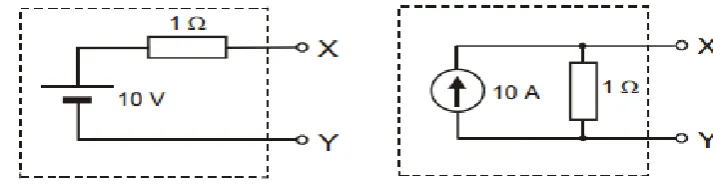
Similar monomorphic problems in other fields have been searched for to find out whether there are any inventive principles that could be applied, and luckily one was found in the problem of distinguishing two identical black boxes, each containing one of the two different electrical circuits [6] as in Fig. 1.
Fig. 1. Two identical black boxes, each containing one of the two different electrical circuits.
Electrical engineers are likely to be trapped within their psychological inertia by using their expertise in circuit analysis without success, since the two different electrical circuits in the black boxes are equivalent ones of the same circuit. They are called Thevenin and Norton equivalent circuits respectively.
No matter what value of element (such as resistor, R) is connected to the external terminal X-Y, The current and voltage at the terminal X-Y of both circuits will always be the same. Thus, we cannot distinguish them from each other with circuit analysis.
5.
TRIZ’s Concept of Resources
With TRIZ’s concept of resources, this problem is easily solved. TRIZ’s concept of resources suggests us to search for resources (substances, fields, spaces, times, information, etc) inside and around the system that might be useful for solving the problems [7].
[image:3.595.118.475.164.256.2]With nothing connected to the external terminal X-Y (open circuit), we can easily identify the difference of the two black boxes by detecting the thermal field and magnetic field emitted from inside the boxes using our hand and a compass as sensors. The box with current flowing through conductor inside will generate heat and magnetic field around the conductor as in Fig. 2.
Fig. 2. The box with current flowing inside will generate heat and magnetic field around the conductor.
Applying the TRIZ black boxes solutions to arowana gender identification problem, the ideas for possible solutions might be generated as follows: (see Fig. 3.)
[image:3.595.139.465.487.583.2]Idea 1: Detect difference in body temperature between male and female arowana. Idea 2: Detect and utilize magnetic field they might emit.
[image:3.595.195.406.672.749.2]These ideas are not final solutions. They leave the clues as secondary problem for us to investigate the possibilities. And besides these 2 ideas, are there any other resources and other possible solutions? This question leads us to the Algorithm of Inventive Problem Solving (ARIZ) [8].
6.
Problem Solving with ARIZ
Since TRIZ’s concept of resources is one of the important parts in the Algorithm of Inventive Problem Solving (ARIZ), the author tried to use ARIZ to systematically analyze the problem and search for other possibilities to identify the gender of arowana.
ARIZ was developed by Genrikh Altshuller, the founder of TRIZ (born Tashkent, Uzbek SSR, USSR, 15 October 1926; died Petrozavodsk, Russia, 24 September 1998) The last version of ARIZ is ARIZ-85C which contains 9 parts and totally 40 steps [9] as follows:
Part 1. Analyzing the Problem Part 2. Analyzing the Problem Model
Part 3. Formulating the Ideal Final Result and Physical Contradiction Part 4. Mobilizing and Utilizing Substance-Field Resources
Part 5. Applying the Knowledge Base Part 6. Changing or Substituting the Problem
Part 7. Analyzing the Method for Resolving the Physical Contradiction Part 8. Capitalizing on the Solution Concept
Part 9. Analyzing the Problem-Solving Process
The problem of arowana gender identification is analyzed systematically step by step using Algorithm of Inventive Problem Solving (ARIZ) as below to generate ideas at each step for possible solutions. All the ideas will be reviewed at the end to look into their possibility and suitability, some suitable ideas will be selected as potential solutions to be evaluated and compared with commonly used method.
6.1. Part 1: Analyzing the Problem
Step 1.1 Formulate the Mini-Problem
A biotechnological system for identifying the gender of arowana consists of male arowana, female arowana, a tank with freshwater, air bubbles, forage, exposing element and human eye as in Fig. 4.
Fig. 4. A system for identifying the gender of arowana.
Technical Contradictions (TC) are formulated as follows:
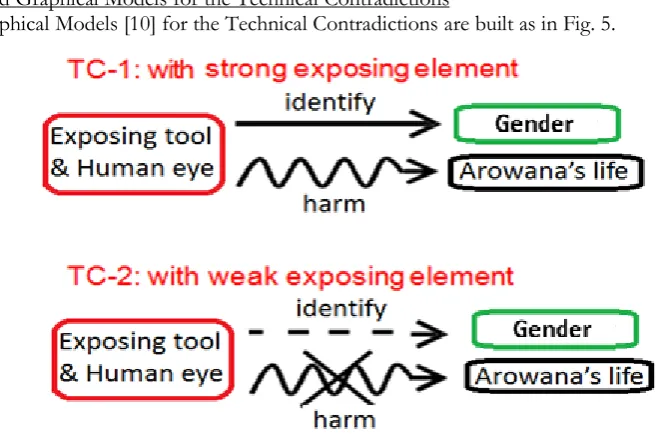
TC-1: If the arowana’s sexual organs are exposed with strong exposing element, it is easy to identify their gender, but this may endanger their lives.
TC-2: If the arowana’s sexual organs are exposed with weak exposing element, their lives are safe, but it is difficult to identify their gender.
Mini-problem: It is necessary, with minimum changes to the system, to identify the gender of arowana without harming their lives.
Note: In the wording above, the author has changed the specialized term, knife or cutter, to the general term,
exposing element, to avoid psychological inertia.
Step 1.2 Define the Conflicting Elements
[image:4.595.206.393.490.585.2]Tool: exposing element and human eye
Step 1.3 Build Graphical Models for the Technical Contradictions
The Graphical Models [10] for the Technical Contradictions are built as in Fig. 5.
Fig. 5. Graphical models for the technical contradictions.
The lines in the above graphical models represent the meanings as follows:
Step 1.4 Select a Graphical Model for Further Analysis
In the problem of identifying the gender of arowana, the main useful function is identifying the gender of arowana. Thus, we choose TC-1: in this case the arowana’s sexual organs are exposed with strong exposing element.
At this state, we might try to solve the problem of eliminating harmful effect by thinking of Standard solution 1.2.2 (modifying the tool) or Inventive principle Number 21 (Rushing through) to generate ideas. (See TRIZ 76 Standard solutions [11] and 40 Inventive principles [12])
Idea 3:Use something like laser surgery technique which is strong fast and precise. Remark: The cost of laser surgery is high and the safety of the fish cannot be guaranteed.
Thus, we try to look at the problem from another direction. Although in this problem, the main useful function is identifying the gender of arowana, but since the safety for arowana is given first priority, we select TC-2 as Graphical Model for further analysis. In this case the arowana’s sexual organs are exposed with weak exposing element, and then we try to solve the problem of improving useful function in the following steps.
Step 1.5 Intensify the Conflict
[image:5.595.123.457.111.332.2]In order not to compromise (trade off) useful function with harmful effect, we intensify the conflict by considering that instead of “weak exposing element”, it is replaced by an “absent exposing element” in TC-2 as in Fig. 6.
Step 1.6 Formulate the Problem Model
Find an X element that maintains the feature of the absent exposing element (i.e., does not harm arowana’s life) while providing easy way to identify the gender of arowana as in Fig. 7.
Fig. 7. Find an X element to improve useful function.
Step 1.7 Apply the System of Standard Solutions
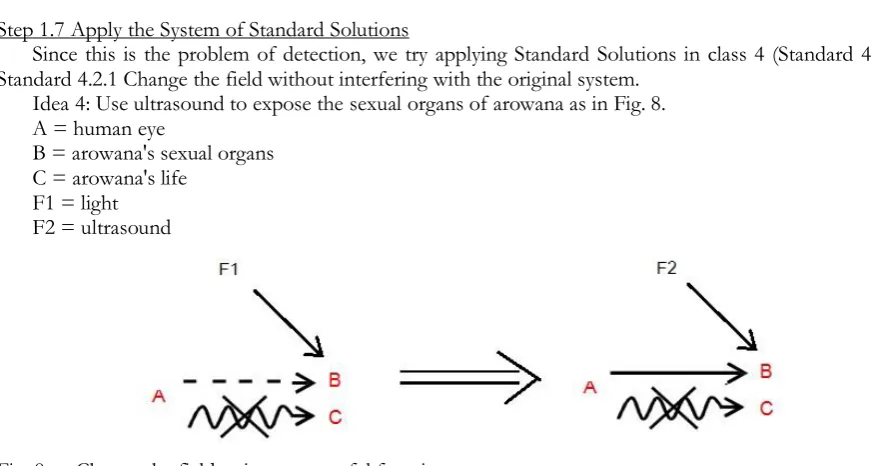
Since this is the problem of detection, we try applying Standard Solutions in class 4 (Standard 4.2.1.) Standard 4.2.1 Change the field without interfering with the original system.
Idea 4: Use ultrasound to expose the sexual organs of arowana as in Fig. 8. A = human eye
B = arowana's sexual organs C = arowana's life
F1 = light F2 = ultrasound
Fig. 8. Change the field to improve useful function.
Since human eye cannot see the sexual organs directly, an ultrasound image monitor (D) must be added and the Graphical Model will be modified as in Fig. 9.
Fig. 9. An ultrasound image monitor (D) is added.
[image:6.595.166.436.146.241.2] [image:6.595.70.506.259.492.2]Fig. 10. Ultrasound cannot penetrate through thick scale (E) of arowana.
6.2. Part 2: Analyzing the Problem Model
If the problem is easily solved within Part 1, there is no need to go further into Part 2.
Part 2 and other Parts that follow will deal with solving complex problem as in the following steps.
Step 2.1 Define the Operational Zone (OZ)
In the problem of identifying the gender of arowana, the Operational Zone is defined to be the place around the sexual organs of arowana.
Step 2.2 Define the Operational Time (OT)
In the problem of identifying the gender of arowana, the Operational Time is defined to be the period of time during which arowana's sexual organs are observed.
Step 2.3 Define the Substance and Field Resources
In the problem of identifying the gender of arowana, the absent exposing element is considered, and thus Substance-Field Resources (SFR) include only substances and fields in the analyzed system and the environment. In this case, besides the tank, freshwater, air bubbles, forage, and the fish itself, we can consider any substance or energy emitted from or absorbed by fish body as SFR.
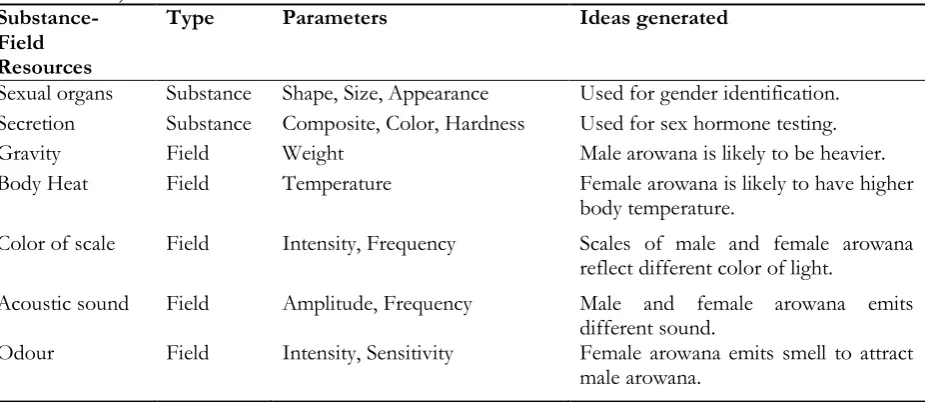
[image:7.595.222.370.84.210.2]At this state, we create a list of Substance-Field Resources with their parameters and try to generate ideas from these resources as the example in Table 1.
Table 1. Example of Substance-Field Resources (SFR) with its parameters and ideas generated (Idea 5-12).
Substance-Field Resources
Type Parameters Ideas generated
Sexual organs Substance Shape, Size, Appearance Used for gender identification. Secretion Substance Composite, Color, Hardness Used for sex hormone testing. Gravity Field Weight Male arowana is likely to be heavier. Body Heat Field Temperature Female arowana is likely to have higher
body temperature.
Color of scale Field Intensity, Frequency Scales of male and female arowana reflect different color of light.
Acoustic sound Field Amplitude, Frequency Male and female arowana emits different sound.
[image:7.595.70.535.524.725.2]Step 3.1 Identify the Formula for IFR-1
Ideal Final Result (IFR) is used to define the problem to be solved [13]. The Ideal Final Result by introducing the X element is defined as follows:
The X element does not complicate the system at all, does not create any harmful effects, improve the function of “identifying the gender of arowana” of exposing element during the observation period, while maintaining the ability of the tool “not to harm arowana’s life.”
Step 3.2 Intensify the Formula for IFR-1
We intensify the formula of IFR-1 by introducing an additional requirement that the X element comes from substance field resources. In this case, sexual organ is used with its parameters ‘appearance’.
Sexual organ does not complicate the system at all, does not create any harmful effects, improve the function of “identifying the gender of arowana” of exposing element during the observation period, while maintaining the ability of the tool “not to harm arowana’s life.”, and sexual organ comes from “substance-field resources”
Step 3.3 Formulate the Physical Contradiction for the Macro-Level
The Physical Contradiction [14] for the Macro-Level is formulated as follows:
Sexual organs (operational zone) should be exposed during observation period (operational time) to identify the gender of arowana, and should not be exposed after observation is finished, to protect their lives.
At this state if we cannot come up with any ideas, we go further into next step to look at the Physical Contradiction for the Micro-Level.
Step 3.4 Formulate the Physical Contradiction for the Micro-Level
The Physical Contradiction for the Micro-Level is formulated as follows:
Particular atoms should be there around sexual organs (operational zone) during observation period (operational time) to identify the gender of arowana, and should not be there after observation is finished, to protect their lives.
Step 3.5 Formulate the Ideal Final Result (IFR-2)
The Ideal Final Result (IFR-2) from the Physical Contradiction for the Micro-Level is formulated as follows:
The ordinary atoms around the sexual organs (operational zone) should, on their own, be transformed into particular atoms during observation period (operational time) to identify the gender of arowana, and after observation is finished, the particular atoms should, on their own, be transformed into ordinary atoms.
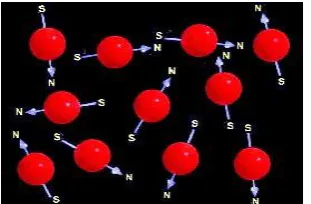
[image:8.595.222.378.586.688.2]In this case, the ordinary atoms can be regarded as a neutral atom with protons at the nuclei and electrons spinning around them. The spinning electrons create magnetic field in different directions as in Fig. 11.
Fig. 11. The spinning electrons around atoms create magnetic field in different directions.
Step 3.6 Consider Solving the New Problem Using the System of Standard Solutions Standard 2.4.7 and Standard 4.4.5. are used to generate ideas as follows:
Standard 4.4.5 Measure the effects of natural phenomena associated with magnetism such as the Curie point, hysteresis, quenching of superconductivity, the Hall Effect, etc.
Idea 13: Use Magnetic Resonance Imaging (MRI) to align the atoms around sexual organs and detect the resonance of particular nuclei as the example in Fig. 12.
Fig. 12. Looking inside the fish with MRI, Earthguide & Scripps Institution of Oceanography [15].
6.4. Part 4: Mobilizing and Utilizing Substance-Field Resources
If we are not satisfied with the ideas we have already generated, we might go further into Part 4 to look for other solutions. In this part, we try to find other solutions by mobilizing and utilizing Substance-Field Resources to generate more ideas as follows:
Step 4.1 Simulation with Smart Little People
Smart Little People technique is used to prevent psychological inertia by forcing people to imagine themselves as a small creatures looking at the problem from the dimension of micro-level [16].
The problem of arowana gender identification is simulated with Smart Little People as follows:
Smart Little People (SLP) of skin use both hands tied together and do not expose arowana's sexual organs as in Fig. 13.
Fig. 13. Smart Little People (SLP) of skin use both hands tied together
Smart Little People(SLP) of skin drop their hands, thus, make it easy to expose arowana's sexual organs as in Fig. 14.
Fig. 14. Smart Little People (SLP) of skin drop their hands
[image:9.595.204.392.140.252.2] [image:9.595.180.400.443.539.2] [image:9.595.181.391.609.701.2]probe might be inserted through the opening to detect the image of sexual organs)
Step 4.2 “Stepping Back” from the IFR
It is not always the case that a problem can be solved with a small expenditure of resources. Sometimes we must step back and consider introducing “foreign” substances and fields. This should be done only when absolutely necessary — that is, if available SFR cannot be applied.
In this case, instead of using only Substance-Field Resources inside the analyzed system and the environment, external resource is introduced into the system to work with internal resources in identifying the gender of arowana.
Step 4.3 Using a Mixture of Substance Resources
Secretion and excretion discharged from arowana may be considered as mixture of substance resources, and ideas are generated as follows:
Idea 15: Use secretion and excretion discharged from arowana for DNA testing
Remark : This is what is really done, but due to the high cost of DNA testing, it is not popular. Besides, there are still questions about its effectiveness due to the complexity in the chromosome of arowana.
Step 4.4 Using Empty Space
Empty Space is useful resource and can be used to generate ideas as follows:
Idea 16: Male arowana use their mouth to incubate the fertilized eggs until they become fry. So it is believed that male arowana have bigger mouth than female arowana. The size or volume of empty space in their mouth can be used to distinguish male from female arowana.
Remark : This method is widely used, but still it lacks accuracy and is considered unreliable.
Step 4.5 Using Derived Resources
Consider solving the problem using derived substance resources or a mixture of derived substance resources with empty space.
Idea 17: Feed arowana in the tank with forage which contains some substance that intensifies color difference between male and female. In this case, color is the derived optical field.
Idea 18: Insert sensor inside the rectum to analyze stool of arowana.
Step 4.6 Using an Electrical Field
Electrical Field is considered, and ideas are generated as follows:
Idea 19: Male and female arowana might react differently under electric field.
Idea 20: Male and female arowana might emit some extent of electric field like that of electric eel.
Step 4.7 Using a Field and Field-Sensitive Substance
Recently microchip are inserted into the body of arowana to distinguish each individual fish. In this case, thermal field and thermal sensor are considered to generate ideas as follows:
Idea 21: Microchip with built-in temperature sensor might be inserted into the body of the fish to monitor the temperature difference between male and female arowana.
6.5. Part 5: Applying the Knowledge Base
Step 5.1 Consider solving the physical problem by applying the System of Standard Solutions.
Since this is the problem of detection, we try applying Standard Solutions in class 4 (Standard 4.1.1) Standard 4.1.1 Instead of detecting or measuring, modify the system so that there is no longer a need for measurement.
Idea 22: Instead of trying to increase the productivity of arowana breeding by gender identification, change the breeding system to cloning system.
Remark: This seems to be a good idea, but cloned arowana are not preferred, besides it goes beyond the limit of minimum changes to the system which is the condition initially defined by mini-problem.
Problem with similar physical contradiction has been found in Sturgeons which have no external markers for sexing, and endoscopic observation of the sexual organs of sturgeons has been used to identify gender of this fish [17].
Idea 23: Use endoscopy technique to look inside the body to identify the gender of arowana.
Step 5.3 Consider resolving the Physical Contradiction by utilizing the Separation Principles.
Physical Contradiction in step 3.3: Sexual organs should be exposed during observation period to identify the gender of arowana, and should not be exposed after observation is finished, to protect their lives.
Use Separation Principle in time
Idea 24: Use CT Scan during the observation period (see example as in Fig. 15.)
Fig. 15. First CT scan made of eggs inside coelacanth [18].
Step 5.4 Consider resolving the Physical Contradiction by utilizing the library of natural effects and phenomena.
Idea 25: Use X-Ray effect to penetrate through the scale of arowana to expose the sexual organs. (see example as in Fig. 16.)
Fig. 16. X-Ray Fish Photo from the Smithsonian Institute.
Remark: Both CT scan and X-Ray seem practical, but the safety of the fish cannot be guaranteed.
6.6. Part 6: Changing or Substituting the Problem
If we are not satisfied with the ideas we have already generated, we might go further into Part 6 to change the problem.
There are 4 steps for selection in this part.
6.1 If the problem is solved, transfer the theoretical solution concept into a practical one.
6.2 If the problem is not solved, check to see whether the description in Step 1.1 represents a combination of several problems.
6.3 If the problem is still not solved, change the problem by selecting another Technical Contradiction in Step 1.4
6.4 If the problem is still not solved, return to Step 1.1 and reformulate the mini-problem with respect to the super-system.
In this case, Step 6.3 will be selected to change the problem.
[image:11.595.215.383.229.340.2] [image:11.595.212.398.435.521.2]Ray or CT Scan) could be good solutions, but since they are expensive resources introduced into the system from outside, they are not ideal ones. In order to move closer to ideal final result, we change the problem by selecting another Technical Contradiction as in Fig. 17, and try to eliminate the harmful function of cost by going through the process of ARIZ once again.
Fig. 17. New Technical Contradiction with new harmful function.
Step 5.1 Consider solving the physical problem by applying the System of Standard Solutions (again). Since this is the problem of eliminating the harmful function, we try applying Standard Solutions in class 1 (Standard 1.2.2)
Standard 1.2.2 Eliminating harmful interaction by introducing modified S1 and/or S2
Idea 26: The problem might be solved by introducing a third substance which is available or derived Substance-Field Resources (SFR) to replace the existing substances (exposing tool) as in Fig. 18.
Fig. 18. Eliminating the harmful function with Substance-Field Resources (SFR).
Step 5.2 Consider solving the problem by applying solution concepts to problems that have already been solved using ARIZ. (again)
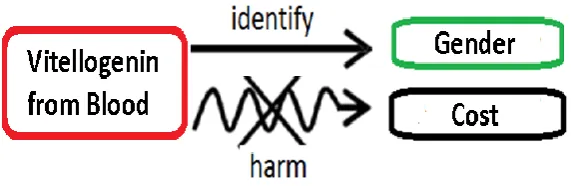
Problem with similar physical contradiction has been found in other fishes (Tuna, Arapaima) using plasma vitellogenin derived from blood to distinguish male from female fishes [19, 20].
In this case, plasma vitellogenin can be considered as Substance Field Resources.
Idea 27: Use plasma vitellogenin derived from blood to identify gender of arowana as in Fig. 19.
Fig. 19. Eliminating the harmful function with vitellogenin derived from blood.
6.7. Part 7: Analyzing the Method for Resolving the Physical Contradiction
[image:12.595.143.444.158.238.2] [image:12.595.137.453.350.442.2] [image:12.595.161.447.569.662.2]Step 7.1 Check the Concept of Solution.
It is possible to apply available or derived SFR instead of introducing the substance/field from outside the system.
Vitellogenin can be considered as self-controlling substances. It is high in female and low in male arowana.
Step 7.2 Preliminary estimate of the solution concept.
The solution concept does comply with all of the control questions as follows: The solution concept meets the main requirement of IFR-1.
Physical Contradiction (in step 6.3) is resolved by the solution concept.
The new system contains at least one easily-controlled element. Vitellogenin is self- controlled.
The solution concept found for a “single-cycle” problem model fit the real-life, “multi-cycle” situation.
Step 7.3 Check the novelty of the solution concept via a patent search.
There is no patent on arowana gender identification using plasma vitellogenin yet.
Step 7.4 What sub-problems might appear during development of the new technological system?
The sub-problems of plasma vitellogenin analyzing system to identify arowana gender for mating and selling will have to be solved.
6.8. Part 8: Capitalizing on the Solution Concept
The purpose of Part 8 is to maximize the utilization of resources unveiled by the solution concept that has been found.
Step 8.1 Define how the super-system that encompasses the changed system should be changed. Plasma vitellogenin analyzing system should be improved.
Step 8.2 Check whether the changed system or super-system can be applied in a new fashion. The changed system or super-system can be applied other ornamental fishes.
Step 8.3 Apply the solution concept for solving other problems. Apply the solution concept for solving other problems as follows: -Formulate a general Solution Principle
Gender identification in monomorphic animal using plasma vitellogenin -Consider direct application of the Solution Principle to other problems
Idea 28: Gender identification in monomorphic birds. -Consider applying the opposite Principle to other problems
Idea 29: Use plasma vitellogenin to increase female arowana.
-Create a morphological matrix that includes all possible modifications of the solution concept, and consider every combination produced by the matrix.
Idea 30: Combine fish body and thermal field by using Infrared Camera to detect fish body temperature pattern.
Idea 31: Combine fish body and optical field by using Night Vision Camera to detect the light pattern emitted from the body of fish at night.
-Consider the modifications to the Solution Principle that would result from changing the dimensions of the system or its main parts, imagining the result if the dimensions were to approach zero or stretch toward infinity.
Idea 32: Use electron microscope to look into the plasma vitellogenin protein inside the blood of arowana.
6.9. Part 9: Analyzing the Problem-Solving Process
Write down all, if any, deviations.
Step 5.2 Apply the solution concepts to non- standard problems that have already been solved using ARIZ.
In this case, the solution concept of problem with similar physical contradiction does not use ARIZ.
Step 9.2 Compare the solution concept you found to the information in the TRIZ knowledge base (Standard Solutions, Separation Principles, Effects and phenomena libraries, etc.). If the knowledge base does not include a principle that applies to your solution concept, document this principle so that it can be considered for inclusion in the next revisions of ARIZ.
Standard 1.2.2 Eliminating harmful interaction by introducing modified S1 and/or S2
In this case, new substance from available and derived SFR (S3) is used to replace exposing tools.
7.
Potential Solutions
Among 32 ideas generated during the process of ARIZ, some ideas are confirmed by subject matter experts (arowana breeders and biotechnologists) to have high potential to be used for solving the problem of arowana gender identification, and some ideas are interesting and deserve further study.
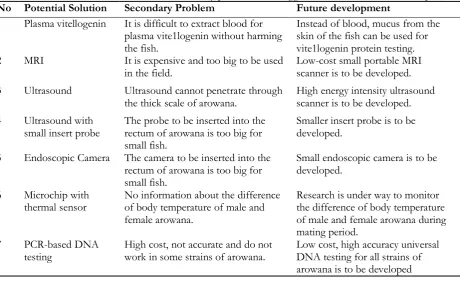
[image:14.595.72.536.352.637.2]The top 7 potential solutions are selected and proposed with their secondary problem and suggestions are made for their future development as in Table 2.
Table 2. Potential solutions with their secondary problems and suggestions for their future development.
No Potential Solution Secondary Problem Future development
1 Plasma vitellogenin It is difficult to extract blood for plasma vite1logenin without harming the fish.
Instead of blood, mucus from the skin of the fish can be used for vite1logenin protein testing. 2 MRI It is expensive and too big to be used
in the field. Low-cost small portable MRI scanner is to be developed. 3 Ultrasound Ultrasound cannot penetrate through
the thick scale of arowana. High energy intensity ultrasound scanner is to be developed. 4 Ultrasound with
small insert probe The probe to be inserted into the rectum of arowana is too big for small fish.
Smaller insert probe is to be developed.
5 Endoscopic Camera The camera to be inserted into the rectum of arowana is too big for small fish.
Small endoscopic camera is to be developed.
6 Microchip with
thermal sensor No information about the difference of body temperature of male and female arowana.
Research is under way to monitor the difference of body temperature of male and female arowana during mating period.
7 PCR-based DNA
testing High cost, not accurate and do not work in some strains of arowana. Low cost, high accuracy universal DNA testing for all strains of arowana is to be developed
8.
Concluding Remarks
testing and other sexual organs exposing devices (as listed in the above Table 2) is that they are to be used for mature arowana only. As for immature arowana, PCR-Based DNA testing is the only potential solution for gender identification unless there will be other low cost innovative methods to compete with it.
This paper has also demonstrated the powerfulness of ARIZ in idea generation for innovative problem solving. Compared with other psychological tools such as brainstorming, ARIZ has proved to be an effective logical tool that can generate a lot of high quality ideas covered all the possibilities for solving the problem innovatively within a short time and beyond the psychological inertia of each individual.
Finally, the author hopes that this work will contribute to the progress and further development of TRIZ in engineering and other fields in an appropriate way.
Acknowledgements
The author would like to express his grateful thanks to Shinsuke Kurosawa Sensei who has endlessly devoted to the promotion of TRIZ and has guided the author to challenge using ARIZ in this work with his great advices. The author would also like to extend his grateful thanks to Thai-Nichi Institute of Technology for their support, and The Siam Arowana Farm for their co-operation.
References
[1] M. Z. Suleiman, “Breeding Technique of Malaysian Golden Arowana, Scleropages formosus in Concrete tanks,” Aquaculture Asia, vol. 8, no. 3, pp. 5-7, 2003.
[2] N. Chansue, “Asian Arowana (Scleropages formosus) Sex Determination Using Different Methods,” in Academic Conference on Fisheries., Bangkok., Thailand, 2013, pp. 137-150.
[3] G. H. Yue, D. Ong, C. C. Wong, C. L. Lim, and L. Orban, “A strain-specific and a sex-associated STS marker for Asian arowana (Scleropages formosus, Osteoglossidae),” Aquaculture Research, vol. 34, no. 11, pp. 951-957, 2003.
[4] S. Kaplan, An Introduction to TRIZ, the Russian Theory of Inventive Problem Solving. Ideation International Inc., 1996
[5] G. Altshuller, B. Zlotin, A. Zusman, and V. Philatov “ARIZ,” in Tools of Classical TRIZ. Ideation International Inc., 1998, ch. 2, pp 20-68.
[6] A. C. Lettieri and T. Yoneyama. (2006). Su-Field: An Educational Example of Inventive Problem Solving in Electrical Engineering [Online]. Available: http://www.triz-journal.com/archives/2006/01/05.pdf [7] G. Cameron. “Substance-Field Resources,” in Trizics: Teach yourself TRIZ, how to invent, innovate and solve
"impossible" technical problems systematically. TRIZICS.COM, LLC., 2010, ch. 6, pp. 271-274.
[8] I. Bukhman. ARIZ-85C Algorithm for Inventive Problem Solving Structure, [Online]. Available: http://www.triz.com.tw/isak2/tutorial/+ARIZ85C_structure_example_WEB_02_22_2012.pdf [9] G. Altshuller. (1985). ARIZ-85C, translated and edited by Shinsuke Kuroswa. (2013) [Online].
Available: http://www.trizstudy.com/altshuller1985ariz85c.html [10] I. Belski. Improve your Thinking: Substance-Field Analysis. TRIZ4U., 2007
[11] J. Terninko, E. Domb, and J. Miller. (2000). The Seventy-six Standard Solutions, with Examples [Online]. Available: http://www.triz-journal.com/archives/2000/02/g/article7_02-2000.PDF
[12] A. Genrich. “40 Principles,” in TRIZ Keys to Technical Innovation. translated and edited by Lev Shulyak and Steven Rodman. Worchester, Mass.: Technical Innovation Center, 1997, ch. 2, pp. 25-65.
[13] E. Domb. (1998). Using the Ideal Final Result to Define the Problem to Be Solved [Online]. Available: http://www.bmgi.com/research/using-ideal-final-result-define-problem-be-solved
[14] N. V. Rubina. (1999). Methods of Solving Problems Topic 2. Both Cold and Hot (Physical Contradiction), English translation by Irina Dolina, Technical Editing by Toru Nakagawa, [Online]. Available:
http://www.osaka-gu.ac.jp/php/nakagawa/TRIZ/eTRIZ/electures/eRubinaCIDBook2-2/GuideBook2-2-2.html
[15] L. Frank. Looking inside the fishes with MRI [Online]. Available: http://earthguide.ucsd.edu/fishes/technology/technology.html
determinations in Russian sturgeon (Acipenser gueldenstaedtii) grown in aquaculture,” Aquaculture, vol. 270, pp. 158-166, May 2007.
[18] N. Okada. First CT scan made of eggs inside coelacanth [Online]. Available:
http://www.japantimes.co.jp/news/2009/03/20/national/first-ct-scan-made-of-eggs-inside-coelacanth
[19] F. Chu-Koo, A. Casanova Daza, C. Chavez Veintemilla, and J.-F. Renno, “Gender determination in the Paiche or Pirarucu (Arapaimagigas) using plasma vitellogenin, 17b-estradiol, and 11-ketotestosterone levels,” Fish Physiology & Biochemistry, vol. 35, no. 1, p. 125, Mar 2009.
![Fig. 12. Looking inside the fish with MRI, Earthguide & Scripps Institution of Oceanography [15]](https://thumb-us.123doks.com/thumbv2/123dok_us/8109797.236033/9.595.181.391.609.701/fig-looking-inside-fish-earthguide-scripps-institution-oceanography.webp)