UNIVERSITI TEKNIKAL MALAYSIA MELAKA
AUTOMATIC PLANT MANAGEMENT SYSTEM FOR
HORTICULTURE USING ANDROID
This report is submitted in accordance with the requirement of the Universiti Teknikal Malaysia Melaka (UTeM) for the Bachelor of Computer Engineering
Technology (Computer System) with Honours.
by
FATIN NASUHA BINTI MUHAMAD B071410458
950611115384
ii
DECLARATION
I hereby, declared this report entitled “Automatic Plant Monitoring System for Horticulture using Android” is the results of my own research except as cited in
references.
iii
APPROVAL
This report is submitted to the Faculty of Engineering Technology of UTeM as a partial fulfillment of the requirements for the degree of Bachelor of Computer Engineering Technology (Computer system) with Honours. The member of the supervisory is as follow:
iv
ABSTRAK
v
ABSTRACT
vi
DEDICATION
vii
ACKNOWLEDGEMENT
First and foremost, I am grateful to the God for the good health and well-being that were necessary to complete this project.
I would like to express my deepest appreciation to all those who provided me the possibility to complete this project. A special gratitude I give to my supervisor, En. Zulhasnizam Bin Hasan, whose contribution in stimulating suggestions and encouragement. Without his assistance and dedicated involvement in every step throughout the process, this project would have never been accomplished. I would like to thank you very much for your support and understanding throughout the journey to complete this project.
I wish to express my sincere thanks to all the lecturers, for all the guidance and knowledge that were given to me.
I place on record, my sincere thank you to all of my friends especially for Nur Farzana Binti Md Fisal for the continuous encouragement and support. I am also want to thank you to Nur Farah Aqilah Binti Yunos and Nur Amira Najiha Binti Ab Wahab for their helping hand and always give me support to complete my project.
viii
TABLE OF CONTENTS
ABSTRAK ... iv
ABSTRACT ... v
DEDICATION ... vi
ACKNOWLEDGEMENT ... vii
CHAPTER 1 ... 1
1.1 Background ... 1
1.2 Problem statement ... 2
1.3 Objectives ... 3
1.4 Scope of Project ... 4
1.5 Significance of study ... 5
1.6 Structure of report ... 5
CHAPTER 2 ... 7
2.1 Horticulture ... 7
2.2 Highland Plantation ... 9
2.3 Greenhouse ... 12
2.3.1 Pros and cons in building a Greenhouse ... 13
2.3.2 Categories of Greenhouse ... 14
2.4 Hardware Requirement ... 16
2.4.1 Raspberry Pi ... 16
2.4.1.2 Comparison between Raspberry Pi model ... 18
2.4.1.3 Raspberry Pi vs Intel Galileo vs Arduino Yun ... 19
2.4.2 Soil Moisture Sensor ... 20
2.4.3 Light Sensor ... 20
ix
2.4.5 Mist maker ... 22
2.4.6 Humidity sensor ... 22
2.4.7 Temperature sensor ... 23
2.4.8 Water Pump... 24
2.5 Software Requirement ... 24
2.5.1 Python language programming ... 24
2.5.2 PHP language programming ... 25
2.5.3 phpMyAdmin ... 25
2.5.4 App inventor for Android ... 25
2.5.5 MySQL ... 26
2.6 Related Research ... 26
CHAPTER 3 ... 31
3.1 Flowchart of the project ... 31
3.1.1 Flowchart for the flow of system ... 32
3.1.2 Flowchart for the temperature sensor ... 33
3.1.3 Flowchart for the humidity sensor ... 34
3.1.4 Flowchart for the light sensor... 35
3.1.5 Flowchart for the soil moisture sensor ... 36
3.1.6 Flowchart for software ... 37
3.2 Overall process flow of Automatic Plant Management System for Horticulture using Android ... 38
3.3 Block diagram for the project ... 39
3.3.1 Raspberry Pi 2 Model B ... 40
3.3.1.1 Python programming language ... 40
3.3.2 Strawberry ... 40
3.3.3 Temperature sensor ... 40
3.3.4 Humidity sensor ... 41
3.3.5 Light sensor ... 41
3.3.6 Soil moisture sensor ... 41
3.3.7 Peltier ... 41
3.3.8 Mist maker ... 42
3.3.9 Growing light ... 42
x
3.3.11 phpMyAdmin... 42
3.3.12 App inventor for Android ... 43
CHAPTER 4 ... 44
4.1 Hardware Simulation... 44
4.2 Software Simulation ... 46
4.2.1 Python file ... 46
4.2.2 PHP ... 47
4.2.3 MySQL database ... 47
4.2.4 Android ... 48
4.3 Performance and the functional of the project... 50
4.4 Analysis ... 52
4.5 Limitation... 54
4.6 Conclusion ... 55
CHAPTER 5 ... 56
5.1 Introduction ... 56
5.2 Conclusion ... 56
5.3 Future Work ... 57
APPENDIX A ... 60
APPENDIX B ... 61
APPENDIX C ... 70
APPENDIX D ... 72
APPENDIX E ... 74
APPENDIX F ... 77
APPENDIX G ... 78
xi
LIST OF TABLES
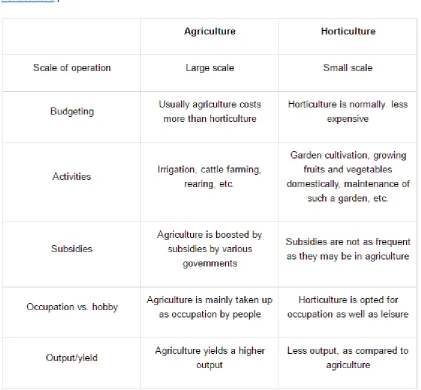
Table 2. 1: Agriculture vs Horticulture ... 8 Table 2. 2: Comparison on Generation of Raspberry Pi ... 18 Table 2. 3: Comparison between Raspberry Pi Type B, Arduino Yun, and Intel Galileo ... 19 Table 2. 4: Comparison between previous project and current project... 29
xii
LIST OF FIGURES
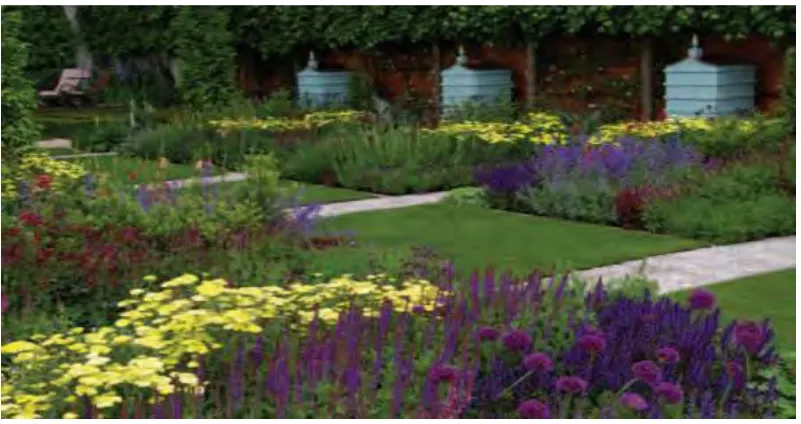
Figure 2. 1:backyard garden ... 9
Figure 2. 2: Average minimum and maximum temperature in Cameron Highland .. 10
Figure 2. 3: Average monthly hours of sunshine in Cameron Highland ... 10
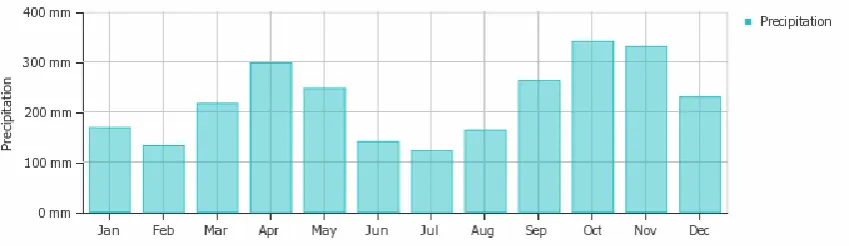
Figure 2. 4: Average rainfall precipitation in Cameron Highland ... 10
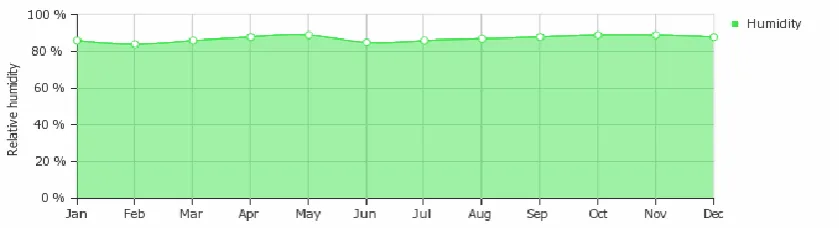
Figure 2. 5: Average humidity in Cameron Highland... 11
Figure 2. 6: Greenhouse in Cameron Highland ... 12
Figure 2. 7: How a greenhouse works ... 13
Figure 2. 8: Configuration of header for early and late model Pi computer ... 17
Figure 2. 9: Pin description ... 17
Figure 2. 10: Soil moisture sensor... 20
Figure 2. 11: Light sensor ... 21
Figure 2. 12: Example of Peltier Sensor ... 21
Figure 2. 13: Example of Mist Maker Sensor ... 22
Figure 2. 14: Example of Humidity Sensor ... 23
Figure 2. 15: Example of Temperature Sensor ... 23
Figure 2. 16: Example of water pump ... 24
Figure 2. 17: The design of project Automated Greenhouse Temperature and Soil Moisture Control ... 26
Figure 2. 18: LCD Interface with PIC Microcontroller ... 27
Figure 2. 19: Remote monitoring and control system for greenhouse ... 28
Figure 2. 20: SMS detail send to the user ... 28
Figure 3. 1: Flowchart of the system flow ... 32
xiii
Figure 3. 3: Flowchart of humidity sensor ... 34
Figure 3. 4: Flowchart of light sensor ... 35
Figure 3. 5: Flowchart of soil moisture sensor ... 36
Figure 3. 6 Flowchart for software ... 37
Figure 3. 7: Block diagram for project ... 39
Figure 4. 1: Prototype for Automatic Plant Monitoring System for Horticulture ... 44
Figure 4. 2: Prototype for Automatic Plant Monitoring System for Horticulture ... 45
Figure 4. 3: Database for table humidtemp ... 48
Figure 4. 4: Database for table action ... 48
Figure 4. 5: Horticulture_automatic application ... 49
Figure 4. 6: Automatic mode ... 49
Figure 4. 7: Manual mode ... 50
Figure 4. 8: Graph Temperature VS Time ... 52
Figure 4. 9: Graph for Humidity VS Time ... 53
Figure 4. 10: Graph for Water VS Time ... 53
Figure 4. 11: Output light on ... 54
1
CHAPTER 1
INTRODUCTION
This chapter consists of project background, problem statement, objectives, the scope of project and thesis outline that give a brief overview of automation system and scheduling management system for the high ground plant on the low ground using Android.
1.1 Background
Malaysia is located in the equatorial region which has a tropical rainforest climate. It is hot and humid throughout the year. Generally, the rainfall in Malaysia is 250 centimeters (98 in) and temperature of 27 °C (80.6 °F) a year (Abd Aziz, 2015). Furthermore, El Nino effect is exposed to Malaysia. It reduced rainfall in the dry season. Due to this weather, the high ground plant is difficult to grow on the low ground especially in Malaysia. The high ground plant needs an optimum temperature about 15 °C to 26 °C to live (Kubota and Kroggel, 2015). Malaysia rates in humidity is an average of 80% (Weather and Climate, 2016). The high ground plant needs 80 % of humidity so that it can grow healthily (Sulaiman and Ramachandran, 2014).
2 low. Some farmers used this greenhouse to grow high-value crops. Building a greenhouse is expensive. The farmers need to bear with the loss of profit when the crops damage due to climate changes. Hence, in order to overcome the problem automation system and scheduling management system are used in the greenhouse. By using this system, farmers can easily manage their greenhouse even though the weather is erratic. This project is mainly focused on a small-scale gardening so everyone can experience planting a high ground plant in their backyard.
The greenhouse is used to control the basic need for the growth of the plant such as temperature, humidity, light, and water. All of the basic need of the plant will be measured by using sensors. All the measured values will be controlled by Raspberry Pi and send to the server to be displayed on Android application. If the measured value is different from the requirement, the system will automatically trigger and take action to the plant. Plant need sufficient environmental element for them to yield a healthy and high-quality crop. The purpose of this project is to make an automatic system that is able in maintaining the growth of the Highland plantation in all condition.
1.2 Problem statement
3 day to grow (Strawberries, 2010). Too much exposure to the sun or heat will harm new plants and stunt their growth.
The demand for the high ground plant is high especially for strawberries because it is widely used in industry. The crop production for this plant is quite low because strawberry can live on high ground. In Malaysia, strawberry plantation majorly is done in Cameron Highland. Malaysia exports more strawberries from other countries due to its high demand. Because of that strawberry categorized as expensive fruit in Malaysia. In the era of technology, the majority of the people lives a busy lifestyle. Thus, they don’t have time to take care of their garden. With the aid of the system, they can take care of their garden automatically. Furthermore, even the small-scale gardener can experience the farming of high ground plant in the low ground.
1.3 Objectives
I. To study the suitable environmental element for the high ground plant that fit on the low ground environment.
II. To analyze the functionality of the system in order to monitor and maintain the growth of the high ground plant on the low ground.
III. To develop a system using Android application to monitor and create an appropriate environment for the high ground plant.
The first objective of this project is to study the suitable environmental element for the high ground plant that fit on the low ground environment. This is to decide the suitable environmental element for the high ground plant and it needs to be adjustable on the low ground environment.
4 analyze and monitor the temperature, light, humidity and watering schedule of the plant through the system.
For the third objective, an Android application is developed to monitor and create an appropriate environment for the high ground plant. The users are able to monitor and create the environment by using their own smartphone.
1.4 Scope of Project
The scope of this project is to monitor the high ground plant on low ground by using the Android platform. The horticulture plant that is being chosen to be monitor is strawberry. Studies show that strawberries can fight cancer and bad cholesterol that can lead to heart diseases. Furthermore, strawberry is a high demand crop due to widely used in industry.
This project is divided into two part that is hardware development and software development. In hardware development, Raspberry Pi will control all the sensors that will measure all the required values and send to the server. The software developed in this project is Android. From the server, all the measured values will display on the smartphone. Farmers can easily monitor their garden with just a single click.
5 1.5 Significance of study
In an equatorial region like Malaysia, its climate is hot and humid throughout the year. So, it is hard to grow a high ground plant in this climate. Furthermore, the high ground plant is high in demand in the market. This project is not only for big farmers. Small-scale farmers also can take part and grow the Highland plantation. The new system in the greenhouse can help ease the farmer with the automation system that requires less human power. In addition, raising the high ground plant in a hot climate area will attract more people in doing the home gardening. This system will improve the quality of the crop production as it is being monitored and managed automatically.
1.6 Structure of report
Chapter 1 explains about the strawberries that are a high ground plant that hardly grows on the low ground due to the difference in climate. In this chapter also discuss the greenhouse that is used to plant the horticulture plant. In addition, in this chapter also discussed problem statements, objectives, the scope of project and significance of the study.
Chapter 2 study on a literature review by comparing former project that is related to this project. In this part, research about the Highland plantation and greenhouse are conducted and the result of the research are presented. Compare and contrast through the research being done to make an affordable greenhouse project. Further to this, basic of raspberry pi, sensors, and Android are explained in this chapter.
6 In chapter 4 the results are analyzed from both hardware and software development. Results analysis are in the form of figure and discussion.
7
CHAPTER 2
LITERATURE REVIEW
In this chapter, it focusses on the literature review on theoretical ideas implement in this project. The information of the project is gathering in order to complete the whole project. There is some discussion of the related research about the previous project that is related to this project.
2.1 Horticulture
8 Table 2. 1: Agriculture vs Horticulture
(Source<( http://www.differencebetween.info/difference-between-agriculture-and-horticulture )
9 space. In addition, container growing saves water and time. Gardeners that live in the rural area can make a good income by doing the backyard plant garden and focus on wholesale plant sales around their district.
Figure 2. 1:backyard garden
(source< http://www.colinalexander.info/files/pdfs/horti2008.pdf)
2.2 Highland Plantation
10 Figure 2. 2: Average minimum and maximum temperature in Cameron Highland (source:
[image:23.595.116.541.310.437.2]https://weather-and-climate.com/average-monthly-Rainfall-Temperature-Sunshine,Cameron-Highlands,Malaysia<2016)
Figure 2. 3: Average monthly hours of sunshine in Cameron Highland (source:
https://weather-and-climate.com/average-monthly-Rainfall-Temperature-Sunshine,Cameron-Highlands,Malaysia <2016)
Figure 2. 4: Average rainfall precipitation in Cameron Highland
[image:23.595.116.541.531.654.2]11 Figure 2. 5: Average humidity in Cameron Highland
(source: https://weather-and-climate.com/average-monthly-Rainfall-Temperature-Sunshine,Cameron-Highlands,Malaysia <2016)
The plant that lives in Cameron Highland is considered rare and hard to see on the low ground in Malaysia. It contains plant that only can live in cold climate. Some of the examples for the cold climate plantation that can be found in Cameron Highlands are strawberries, persimmon, tea, roses, daisies, lavender, grapefruit, and vegetables. Tea plantation in Cameron Highland is one of the largest tea producers in Malaysia. Other than that. Cameron Highland is also the center of strawberry production in Malaysia. The temperature and humidity needed for the plant in the cold climate region and hot climate region are different. The temperature in Cameron Highland is an ideal temperature for the cultivation of strawberry. Strawberries are easy to grow if they meet their basic requirements. With the optimum temperature in Cameron Highland can lead to the development of strong roots and take up required nutrients for the strawberries to produce lots of flowers and fruits.