the choreography of
condom use:
how, not just if, young people use condoms
A report prepared for Brook by
The Centre for Sexual Health Research, University of Southampton
Funded by
The Big Lottery Fund
The choreography of condom use:
how, not just if, young people use condoms
Bethan Hatherall, Nicole Stone, Roger Ingham, Juliet McEachran
A report prepared for Brook by
The Centre for Sexual Health Research University of Southampton
Funded by
The Big Lottery Fund
Acknowledgements
We would like to thank all the young people who participated in this study, as well as the schools, colleges and universities for their support and cooperation. Our gratitude also goes to the teenage pregnancy coordinators, healthy schools coordinators, PSHE
advisors, sexual health workers and youth workers in each of the four study sites for their valuable support and assistance. Finally, we would like to thank the members of the project’s advisory group and the Big Lottery Fund for providing the funding for this project.
Research Team
Bethan Hatherall, Nicole Stone, Roger Ingham, Juliet McEachran
Researchers
Berekhet B. Berakhy, Beccy Bundock, Sam Ingham, Rachel Partridge, Helen Taylor, Nazarius M. Tumwesigye, Sarah Williams
Advisory Group
Jan Barlow (Brook) Jackie Boath (Brook) Val Buxton (Brook)
Gillian Elam (Health Protection Agency) Simon Forrest (Sex Education Forum, NCB) Deborah Jack (Brook)
Alison Hadley (Teenage Pregnancy Unit) Scott LaMontagne (Health Protection Agency) Anna Martinez (Sex Education Forum, NCB) Richard de Visser (Birkbeck/University of Sussex) Christine McGarrigle (Health Protection Agency)
Further copies of this report can be obtained from the Brook website (www.brook.org.uk) or the Centre for Sexual Health Research website (www.socstats.soton.ac.uk/cshr) or by contacting either Brook at [email protected] or the Centre at
Contents
1.0 Introduction... 1
2.0 Background... 3
3.0 Methodology... 9
4.0 Description of Samples... 16
4.1 Phase two: Survey questionnaires... 16
4.2 Phase three: Sexual encounter diaries... 20
4.3 Phase four: In-depth interviews ... 22
5.0 Findings... 23
5.1 Sources of Information and Knowledge of Sexual Health ... 23
5.1.1 Sources of information for young men and women... 23
5.1.2 Sources of information and sexual experience ... 25
5.1.3 Knowledge of sexual health and contraception ... 26
5.2 Young People’s Sexual Behaviour ... 29
5.2.1 Oral sex ... 32
5.2.2 Condom use for fellatio ... 36
5.2.3 Anal sex ... 40
5.2.4 Vaginal sex... 41
5.2.5 Condom use for vaginal sex... 46
5.2.6 Predictors of condom use for vaginal sex ... 48
5.2.7 Experiences of STIs and pregnancy... 52
5.3 Risk Perception of STIs and Pregnancy... 54
5.3.1 Concerns about STIs and HIV ... 54
5.3.2 Perceived risk of STIs... 56
5.3.3 Concerns about pregnancy... 64
5.3.4 Perceived risk of pregnancy... 65
5.4 Quality of Condom Use ... 72
5.4.1 Breakage ... 73
5.4.2 Slippage... 76
5.4.3 Predictors of condom breakage and slippage... 77
5.4.5 Timing of condom removal ... 83
5.4.6 Predictors of the timing of condom application and removal... 84
5.4.7 Other aspects of quality condom use ... 89
5.4.8 The implications of the findings for measuring condom use... 89
6.0 Conclusions and Policy Implications... 91
References... 97
Appendix 1: Model of factors affecting condom use... 102
Appendix 2: Sources of information for young men and women... 103
Appendix 3: Sources of information and sexual experience... 105
Appendix 4: Factors used in logistic regression analyses... 108
Appendix 5: Logistic regression (condom use)... 109
Appendix 6: Logistic regression (breakage/slippage)... 112
Tables
Table 1: Deprivation rankings of the sample and population by area ... 19 Table 2: Sexual orientation of survey respondents by sex (in percentages) ... 20 Table 3: Diary respondents by area ... 20 Table 4: Most important sources of information reported by young men and women on a)
sex and relationships, b) contraception, and c) STIs (aggregation of 1st, 2nd and 3rd
choices) ... 24 Table 5: Percentages of young men and women correctly responding to each statement 27 Table 6: Percentages of young men and women correctly responding to each statement
regarding modes of transmission of STIs ... 27 Table 7: Ever having experienced various sexual acts by sex (in percentages) ... 30 Table 8: Percentages of men having ever experienced oral, vaginal and/or anal sex (in no
particular order) by age... 31 Table 9: Percentages of women having ever experienced oral, vaginal and/or anal sex (in
no particular order) by age... 32 Table 10: Prevalence of oral sex amongst those who have never had vaginal intercourse
by sex (in percentages)... 33 Table 11: First sexual act experienced by young men and women who have ever had
either oral, vaginal sex or anal sex (in percentages) ... 33 Table 12: Number of lifetime fellatio partners among those who had ever experienced
fellatio by sex (in percentages) ... 35 Table 13: Number of lifetime experiences of fellatio among those who had ever
experienced fellatio by sex (in percentages)... 36 Table 14: Ever having used a condom for fellatio among those who reported ever having
given or received fellatio by sex (in percentages) ... 36 Table 15: Consistency of condom use for fellatio among those who reported having
experienced fellatio more than once by sex (in percentages) ... 36 Table 16: Main reason for using a condom for fellatio among those who reported ever
having used a condom for fellatio by sex (in percentages)... 38 Table 17: Most common reasons given for not using a condom for fellatio by male diary
participants who received oral sex and by female diary participants who gave oral
sex to a male partner (in percentages). Note: Multiple responses permitted. ... 39
Table 19: Number of lifetime vaginal sex partners among young men and women aged 16-17 years by area (in percentages) ... 41 Table 20: Lifetime number of vaginal sex partners among those who have ever had
vaginal sex by number of events of vaginal sex (in percentages)... 42 Table 21: Length of time since most recent vaginal intercourse among those who had
ever had vaginal intercourse by sex (in percentages) ... 42 Table 22: Most recent sexual partner type for those who reported ever having had vaginal intercourse by sex (in percentages)... 43 Table 23: Age difference with most recent sexual partner among those who had ever had
vaginal intercourse by sex (in percentages) ... 43 Table 24: Respondents’ alcohol consumption at most recent vaginal intercourse among
those who had ever had vaginal intercourse by sex (in percentages) ... 44 Table 25: Contraceptive method used at most recent vaginal intercourse by sex (in
percentages) ... 45 Table 26: Reasons for using a condom given by those who had used a condom for the
most recent occasion of vaginal intercourse by sex (in percentages) ... 47 Table 27: Most common reasons for not using a condom among young men and women
who did not use a condom for most recent vaginal sex but who were using another
form of contraception (in percentages) ... 48 Table 28: Most common reasons for not using a condom among young people who did
not use a condom for most recent vaginal sex and who were not using another form
of contraception ... 48 Table 29: Personal experiences of STIs and pregnancy by sex of respondent for i) all
survey respondents, ii) those who had experienced vaginal sex, and iii) those who had experienced oral and/or vaginal and/or anal sex (in percentages) ... 53 Table 30: Reasons for using a condom given for sexual encounters in which a condom
was applied late for vaginal sex (N=24). Note: Multiple responses permitted... 80
Table 31: The most common reasons for not using a condom for the entirety of vaginal
penetration for sexual encounters in which a condom was applied late (N=22). Note:
Figures
Figure 1: Ages of survey respondents (in years) ... 16 Figure 2: Box plot of social deprivation ranking of wards of residence of survey
respondents (based on postcode data) by area ... 18 Figure 3: Ages of diary participants (in years) ... 21 Figure 4: Reasons for using a condom for fellatio by sex (amongst those who reported
ever having used a condom for fellatio). Note: Multiple responses permitted... 37
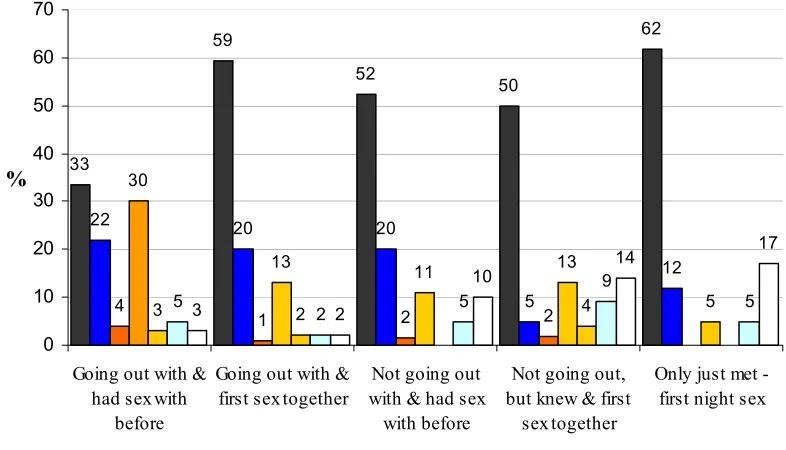
Figure 5: Contraceptive use at most recent vaginal intercourse by partner type ... 45 Figure 6: Mean perceived STI risk scores for various behaviours for all survey
respondents ... 60 Figure 7: Patterns of condom and contraceptive use for vaginal sex among diary
1.0 Introduction
Sexually transmitted infections (STIs) are a major public health problem in the UK. STI rates have risen steeply since the mid-1990s, with those for acute bacterial STIs, such as gonorrhoea and chlamydia, more than doubling since 1995 [1;2]. Among young people the rise has been particularly large. Between 1995 and 2003 amongst young men and women aged 16-19 years respectively, diagnoses of new episodes of gonorrhoea increased by 197 and 174 percent and new episodes of chlamydia increased by 409 and 252 percent. Likewise, cases of new episodes of genital warts, the most common viral STI, increased by 92 and 33 percent among men and women aged 16-19 years
respectively [3]. Complicating the situation is the fact that those who are infected often have few or no symptoms and, if left untreated, STIs can have long-term effects on health. These include pelvic inflammatory diseases and fertility problems and, in the case of the human papillomavirus (genital warts), cervical cancer [4].
The UK also has the highest rate of teenage pregnancies in Western Europe [5].
Every year around 95,000 women below the age of 20 become pregnant in England and Wales with around 40 percent of these young women choosing to terminate the
pregnancy [6].
In light of these trends, the UK Government has identified young people’s sexual health as a key area in which improvements should be targeted. For England, targets for improving the sexual health of young people have been presented in two key reports:
- In 1999 the Social Exclusion Unit published its report into Teenage Pregnancy
- In 2001 the Sexual Health and HIV Strategy was launched, directed towards, amongst other targets, a reduction in the prevalence of HIV and other sexually transmitted infections [4].
A central strategy in achieving these targets is an increase in the use of condoms by young people. Much research to date has centred around ways of increasing the
prevalence of condom use with studies focusing on whether a condom was used or not. However, despite the highly effective contraceptive and prophylactic properties of condoms, both prospective and serodiscordant studies suggest that, even when consistent condom use is reported, pregnancy and the transmission of STIs can still occur [7;8]. So, why is this?
To be effective against pregnancy and the transmission of many STIs a condom must be put on prior to any intimate skin contact and should remain intact and in place throughout the duration of a sexual act. Therefore, in order to deliver appropriate health promotion messages that will lead to an increase in effective condom use, we need to understand not
only inconsistent, but also incorrect, condom use practices during all potentially risky
sexual acts (i.e. condom use during oral, vaginal and anal sex, with or without ejaculation).
This report explores young people’s sources of information and their knowledge of sexual health, before going on to describe their sexual behaviour and contraceptive and condom use, including factors which predict their condom use. The report then examines young people’s risk perceptions of STIs and pregnancy before finally exploring how, not just if, condoms are used by young people in the UK.
2.0 Background
It is well documented that the condom is a reliable form of contraception and can provide an effective barrier to the transmission of HIV and other sexually transmitted infections (STIs) [8-11].
Vaginal sex and condom use
Although the UK has seen an increase in condom use at first vaginal intercourse among successively younger cohorts – 83 percent of 16-19 year olds participating in the second National Survey of Sexual Attitudes and Lifestyles reported use at first intercourse compared to 77 percent of 20-24 year olds and 57 percent of those aged 25-29 [12] – survey estimates suggest that approximately one quarter of sexually active young people aged 16-19 years have ‘never’ or only ‘rarely’ used condoms with their current partner [13]. Furthermore, findings published by Durex show that 19 percent of 16-17 year olds have had unprotected sex with a new sexual partner on at least one occasion [14].
To date, much research into young people’s condom use has focused on means of increasing the incidence and consistency of use during acts of vaginal intercourse. STIs can, however, be passed between partners through a variety of routes including secondary contact; for example, via hands or sex toys, intimate skin contact including
genital-to-genital contact, oral-genital-to-genital contact1, as well as via bodily fluids including blood, sperm,
vaginal secretions and pre-ejaculatory fluid [15-17]. Therefore, in order to maximise their
effectiveness against the transmission of STIs, condoms must be put on prior to any
intimate genital contact and most critically for oral-genital, anal-genital and genital-to-genital contact.
Oral sex and condom use
Oral transmission of both viral and non-viral STIs has been extensively reported [18;19] and it is widely recognised among experts that dental dams and condoms should be used during cunnilingus and fellatio to prevent the transmission of STIs [20;21].
The practice of oral sex is highly prevalent among young people, regardless of whether they have previously engaged in penetrative intercourse. For example, over 80 percent of sexually active university students in Australia claimed to have engaged in oral sex at least once [22], while a study examining precoital sexual activities in the USA found that over 50 percent of college students reported engaging in either cunnilingus or fellatio on at least one occasion prior to first penetrative sex [23].
Findings from the UK National Surveys of Sexual Attitudes and Lifestyles (Natsal) have also shown that the practice of oral sex is common in both heterosexual and homosexual partnerships. In Natsal 1990, 67 and 62 percent of men and women aged 16-44 years interviewed respectively reported engaging in cunnilingus in the previous 12 months, whilst 63 percent of men and 60 percent of women had experience of fellatio [24]. During Natsal 2000, 78 percent of men and 77 percent of women aged 16-44 years reported oral-genital contact with a partner of the opposite sex during the previous 12 months [25].
Literature on the use of condoms during acts of fellatio remains limited and centres mainly on the practice among high risk groups such as men who have sex with men [26] and commercial sex workers [27;28]. However, one study investigating the sexual practices of USA high-school ‘virgins’ found that nine percent had experience of fellatio with ejaculation, and 10 percent had engaged in heterosexual cunnilingus. Of those who had engaged in fellatio with ejaculation, 86 percent had never used a condom and a further eight percent used them sporadically [29]. The authors of this study concluded that the use of dental dams during cunnilingus was likely to be even less than the use of condoms. More recently, analyses from the third in-home wave of the National
Anal sex and condom use
The 1990 National Survey of Sexual Attitudes and Lifestyles found that nine percent of young men and ten percent of young women aged 16-21 years reported having ever had anal sex [24]. Similarly, the National Survey of Adolescent Males conducted in 1995 in the USA found that 11 percent of men aged 15-19 years had engaged in anal sex. Much of the research on condom use for anal sex has focussed on men who have sex with men [31]. However, a household probability sample of adults in California found that 60 percent of heterosexual respondents who reported having had anal sex at least once a month during the past year reported never using condoms for anal sex [32]. Amongst a sample of 300 young men attending a genito-urinary clinic in Sweden, 98 percent of whom were heterosexual, half had had anal sex. Of these, only 17 percent had always used a condom for anal sex [33].
Quality of condom use
A few studies have investigated sexual encounters in which a condom is used for vaginal intercourse, but in which the effectiveness of the condom is compromised through ‘incorrect’ use. During interviews with injecting drug users in London, Quirk and colleagues found that respondents who use condoms may at times be at risk of STIs or unwanted pregnancy through having ‘unsafe protected sex’ [16]. The study highlighted three forms of ‘unsafe protected sex’ that fail to minimise or eliminate the risk of
pregnancy and STI transmission during sexual encounters. These were a) condom failure, specifically breakage and slippage, b) condoms used for ejaculation only, and c) condoms used after limited unprotected penetration. Other possible condom use errors include continuing penetration after condom removal.
Condom breakage and slippage
months and, of all condoms used, 2.5 percent were reported to have broken [35]. A study conducted in the USA of college women who put condoms on their male partners found that 28 percent reported experiencing a condom breakage, slippage or both in the previous three months [39].
Timing of condom use
A cross-sectional survey on condom behaviour in the previous month among male students attending university in the USA found that, of the 270 condoms used, eight percent were put on after initial vaginal penetration, with a further three percent starting intercourse with a condom and then removing it and resuming intercourse [40].
Furthermore, a study of 158 male college students in the USA found 43 percent reported putting on a condom after starting penetrative sex (during the previous three months), with 15 percent reporting that they had removed a condom before ending sex [41]. Among female college students who had put condoms on their male partners, 51 percent reported applying a condom after starting sex and 15 percent reporting having removed a condom before ending sex, at least once during the previous three months [39]. A similar study, involving 260 male and female undergraduate students, found that 38 percent reported applying a condom after initial penetration and 14 percent removed a condom before sex was concluded, at some point during the previous three months [42].
Finally, a study of ineffective condom use amongst 779 young women in managed care aged between 18-24 years in the USA found that 44 percent had delayed applying a condom during the previous three months [45].
The findings of the American and Australian studies clearly show that the use of a binary ‘condom used or not’ variable to examine the effectiveness of condoms in protecting individuals from STIs (and possibly pregnancy) may lead to misleading or inexplicable results. If the late application or early removal of condoms is common among young people in the UK, then self-reported condom use will lead to underestimates of risk and condom efficacy.
A study by Shlay and colleagues found an association between condom errors and the prevalence of STIs. This cross-sectional study looked at condom errors among consistent condom users attending an STI clinic in the USA. The most common condom errors occurring at least once during the previous four months, as reported by women and heterosexual men, were found to be breakage (34 and 31 percent respectively), slippage (20 and 12 percent respectively) and penetration prior to condom application (13 and nine percent respectively), with a much lower rate of continued penetration after condom removal (five and three percent). For both men and women, rates of STIs were found to decline with increasing consistency and correctness of condom use [46].
In addition to there being a lack of research in the UK pertaining to precisely how young people use condoms, limited study has been made into young people’s knowledge of sexual health and perceived relative risks of pregnancy and STIs during vaginal
intercourse. The research of de Visser and colleagues and Quirk and colleagues suggests that there is a relationship between perceived risk and how a condom is used [16;43]. For example, de Visser and Smith found that 20 percent of condoms that were used for the sole purpose of contraception were applied late, compared to only seven percent that were used for both contraception and protection against STIs, and five percent that were
used only as protection against STIs [43]. Quirk et al. also found that in contrast to the
respondents who applied a condom for the purpose of ejaculation only tended to perceive risk primarily in terms of pregnancy and so were less likely to perceive unprotected penetration as unsafe [16].
3.0 Methodology
The objectives of the research were:
1. to explore young people’s knowledge and sources of information regarding the
transmission of sexually transmitted infections (STIs);
2. to assess the prevalence of condom use that fails to minimise or eliminate the risk of
STI transmission and pregnancy among young people;
3. to examine young people’s perceived risk of STI transmission and pregnancy;
4. to explore the relationship between young people’s perceived risk and how condoms
are used;
5. to identify the relationship and/or event specific-factors/processes which affect the
quality of condom use.
The research consisted of four phases involving both qualitative and quantitative components:
Phase One: Information collection
Three focus group discussions Recruitment of project advisors
Phase Two: Survey questionnaires
1373 survey questionnaires completed by young people in schools and colleges in four selected sites
Phase Three: Sexual encounter diaries
108 sexually active young people completed a total of 714 diaries
Phase Four: In-depth interviews
30 young people who completed phase three diaries took part in individual in-depth interviews
Phase One: Information collection
The aim of the first phase of the study was to collect information from young people on the issues and terminology relating to sexual behaviour and condom use, in order to inform the design of the study and the phase two survey questionnaire.
Three focus group discussions (one mixed sex, one single sex male, and one single sex female) were held with young people in Southampton, an area not included in phase two of the study. All the participants were aged 18-21 years and were students at the
University of Southampton.
The discussions explored issues relating to sexual behaviour, condom use and risk perceptions for sexually transmitted infections and pregnancy. A moderator and a note-taker were present and discussions were tape-recorded and later transcribed.
At the end of each of the discussions, participants were invited to continue their
involvement in the study as project advisors. Twelve participants expressed interest and
were consulted at various points during the study in order to ensure that the design of each stage was appropriate, relevant and acceptable to young people.
In addition, with the help of teenage pregnancy coordinators, sexual health workers and youth workers, young people from the four areas covered by the phase two survey were
recruited as on-site project advisors. These on-site project advisors assisted with the
piloting of research tools throughout the study and, in particular, the appropriateness and acceptability of the wording, format, content and methods of administration of the phase two survey questionnaire and phase three diary questionnaire.
Phase Two: Survey questionnaires
The purpose of the second phase of the research was to collect quantitative data from a large sample of young people in various parts of England, in order to assess the
Four areas were selected for inclusion in the study. In order to provide some variability, site selection was based on rates of first episode genital warts among 15-19 year old women [47] and rates of teenage conception [48], with two sites being high on these indicators and two being low. Genital warts, the most common STI diagnosed in genito-urinary medicine clinics in England and Wales, are symptomatic, so rates of diagnoses are less affected by awareness campaigns than is the case for often asymptomatic STIs such as gonorrhoea or chlamydia. The selected study sites were:
High Rates Low Rates
Wigan & Bolton Rotherham
Wiltshire Bromley
In each of these sites, a cluster sampling method was used to select survey respondents as simple random sampling was financially and logistically unfeasible. The clusters in this
case were educational establishments2. To ensure wide coverage, a minimum of five
different schools or colleges were sampled per study site.
A list of all higher educational establishments was compiled for each of the study sites and a letter was sent to each one informing them of the study. With the help of local teenage pregnancy coordinators, healthy schools coordinators and PSHE advisors,
twenty-eight of the educational establishments were invited to participate in the study. Of these, twenty-two agreed and six declined. In the twenty-two participating schools and colleges a total of 1373 young people aged 16-21 years completed the survey
questionnaire.
Whilst this method of sampling excludes those not currently in formal education, figures published by DfEE and OFSTED [49] indicate that 78 percent of young people aged 17
2 Whilst rates of conception and genital warts were obtained by health authority, educational establishments
and 60 percent aged 18 years are in full-time education or training3. Moreover, previous studies have shown an association between educational attainment and condom or
contraceptive use4. As this study focuses on how, not just if, condoms are used, obtaining
a slightly higher proportion of condom users than would be obtained through random sampling is advantageous.
The questionnaire design drew from and built upon questionnaires used for previous studies and included questions relating to background factors, such as age, ethnicity and relationship with parents during early adolescence, and questions on sources of advice and information relating to sex, contraception and STIs, knowledge and attitudes relating to contraception and sexual health, perceptions of risk of STIs and pregnancy,
communication and self-efficacy, intentions to use condoms, and information about past sexual experiences.
Respondents were also asked a series of questions about the last time they had vaginal intercourse. Information collected about this sexual event related to contraceptive and condom use, negotiation of condom use, timing of condom use, occurrence of condom breakage and slippage, reasons for condom use and non-use, and influences on whether and how a condom was used.
The data collected from the questionnaires were entered into and analysed using SPSS version 12.0.
Phase Three: Sexual encounter diaries
As each method of collecting data on sexual behaviour has its strengths and biases, this study has combined multiple methods in order to ascertain an accurate picture of young people’s sexual behaviour and condom use. In addition to the survey questionnaire, young people’s sexual behaviour was explored through the use of diary questionnaires.
3 Full-time education includes study in school and publicly funded institutions of further and higher
education. Training includes government supported and employer funded training.
4 The second National Survey of Sexual Attitudes and Lifestyles shows the odds of using contraception at
Each respondent who completed the phase two survey questionnaire was invited, by means of a detachable sheet, to take part in the completion of sexual encounter diaries – phase three of the study. Each diary was a short quantitative questionnaire, completed as soon as possible after a sexual encounter, defined as an encounter featuring oral and/or vaginal and/or anal sex. Because each diary was completed shortly after a sexual
encounter occurs, the diary method has the advantage of reducing retrospective bias (i.e. the problem of respondents having to think back to an encounter that may no longer be fresh in their memories).
Two hundred and ninety-seven respondents (22%) from phase two expressed interest in participating in the diary phase of the study. This sub-sample was similar to the sample of survey respondents as a whole in terms of age, ethnicity and levels of deprivation, but contained a higher proportion of females (66% vs. 53%) and a higher proportion of young people who had experienced oral and/or vaginal and/or anal sex (78% vs. 58%). Of those who expressed interest in the diary phase, 193 were selected based on the
criterion that they had had vaginal or oral sex within the past six months5. The selected
young people were contacted, mostly by letter, informing them of the next stage of the research and giving them the opportunity to opt out. Diary questionnaires were then sent to the 147 young people who had not requested withdrawal from the study and for whom valid addresses were available.
Each diary participant initially received five sexual encounter diaries and five freepost envelopes. Participants were requested to complete each diary as soon as possible after a sexual encounter and to return it using the freepost envelope. Once the first four diaries had been returned, participants were sent a further five diaries. Each participant
completed up to a maximum of ten diaries over a period of up to six months. The data from phases two and three (the survey and diaries) could be matched, as each
participant’s diary and survey questionnaires shared a unique code.
5 Experience of anal sex within the past six months was not included as a selection criterion, as information
Initially, sixty-one participants returned diary questionnaires. As this number was lower than predicted, additional young people were recruited in order to increase the sample size of diaries, and especially diaries featuring condom use. Students aged 18-21 years were recruited from the University of Southampton and Brunel University, an older age group (with a higher level of education) not very well represented in the original diary
sample6. Recruitment was via email and posters and the participation criterion was
having used a condom within the past month. An additional forty-seven participants were recruited in this way.
In total, 108 young people (24 male, 84 female) completed 714 diaries. The diaries were entered into SPSS version 12.0. Analysis was conducted using SPSS and MLwiN.
In addition, diary responses were manually coded and the respondents grouped into eight different categories according to their patterns of contraceptive and condom use for vaginal sex over the course of their diaries. The categories were used both in the analysis of the diary data and for the selection of participants for phase four, the final stage of the research study.
Phase Four: In-depth interviews
Thirty in-depth interviews were conducted with young men and women who took part in the diary stage of the study in order to explore issues which had arisen from the previous phases of the study in more depth, complementing the quantitative data with a qualitative component. Participants were selected for the interviews based on their patterns of contraceptive and condom use for vaginal sex over the course of their diaries. As the study focuses on condom use and the risk of both STIs and pregnancy, participants for these interviews were selected who, during their diaries, had used a condom on at least one occasion.
6 None of the four study sites had a university, and, although colleges were included in the sample, many of
The in-depth interviews explored risk perception, sexual histories, decision-making processes in relation to contraceptive and condom use, intentions to use condoms,
communication with sexual partners, timing of condom application and removal, condom breakage and condom slippage. The interviews were conducted by female interviewers and each interview, which lasted approximately an hour, was tape-recorded and later transcribed for thematic analysis.
4.0 Description of Samples
Findings presented from this study are based on the phase two survey questionnaire, the phase three diaries and the phase four in-depth interviews. The samples for each of these phases are described below.
4.1 Phase two: Survey questionnaires
In total, 1373 students aged 16-21 years completed a questionnaire about sexual
behaviour, contraception and condom use. Forty-four percent were male and 56 percent were female. The students were drawn from 21 different educational establishments in four different areas of England:
Area Number
Bolton & Wigan 243
Bromley 377 Rotherham 344 Wiltshire 409 Total 1373
Age
[image:25.595.98.379.554.730.2]The vast majority (97%) of survey respondents were aged 16-18 years. The median age for both male and female respondents was 16 years.
Figure 1: Ages of survey respondents (in years)
58
31
8
3 0
10 20 30 40 50 60 70
16 17 18 19-21
Social deprivation
Respondents were asked for their full postcodes. These were used to identify the census wards in which they live and the multiple deprivation scores assigned to those wards. The scores are derived from the Department of the Environment, Transport and the Regions IMD 2000 index, which allocates deprivation scores to wards based on income, housing, health deprivation and disability, education, skills and training, housing, and geographical access to services.
Of the 1373 respondents, 1157 provided a valid postcode that could be matched with a census ward and a deprivation score and ranking. All 8414 wards in England have been ranked by level of social deprivation, with the most deprived ward being given a rank of 1 and the least deprived ward a rank of 8414. Among the respondents in our sample these social deprivation rankings ranged from 51 to 8394. These have been grouped into five categories based on which fifth of the country’s 8414 ranked wards they fall. Those
falling into the bottom fifth (i.e. 1 to 1683) have been grouped as very high deprivation,
those falling into the next fifth (i.e. 1684 to 3366) are grouped as high deprivation, and so
on.
Significant variation was found in the distribution of respondents over the deprivation
groups in each of the four study sites (χ2= 622.849, df=12, p=0.000). This variation was
expected, as the four study sites were selected based on rates of teenage conceptions (and genital warts), and the strong association between social deprivation and teenage
conception rates is well established. The majority of respondents in Bolton & Wigan
(71%) and in Rotherham (70%) were living in wards with high or very high levels of
deprivation; by contrast, the majority of those in Wiltshire (73%) and Bromley (62%)
were living in wards with low or very low levels of deprivation. As shown by the size of
Figure 2: Box plot of social deprivation ranking of wards of residence of survey respondents (based on postcode data) by area
Rotherham Bolton & Wigan Wiltshire Bromley
Area
0 2,000 4,000 6,000 8,000
R
ank of Inde
x
of
Mult
iple De
pri
vat
ion
As respondents were recruited through educational establishments, it was expected that their deprivation rankings would be higher (i.e. less deprived) than if the population had been sampled randomly. For each area, the average (or mean) ranking was calculated and compared with the average rankings for each area as a whole using National Statistics data (see Table 1). Note that the National Statistics data separates Wiltshire into three districts and gives data for Swindon, Bolton and Wigan separately. Average rankings of deprivation were, as expected, slightly higher in our sample than in the overall population for Rotherham, Bolton and Wigan, but were slightly lower for Bromley.
Minimum rank Median rank Maximum rank
Table 1: Deprivation rankings of the sample and population by area (Rankings are out of 8414, with 1 being the most deprived)
Indices of deprivation, 20001 Sample
Area Mean deprivation rank2 Mean deprivation rank Range
Bromley 5982 5290 505-8394
Rotherham 1592 1998 94-6070
Bolton 2347
Wigan 1934 2542 51-6809
West Wilts 5241
North Wiltshire 6241
Salisbury 5380 Swindon 4750
5955 1770-8327
1
Data obtained from the “Indices of Deprivation for Districts in England” dataset, 2000, National Statistics (www.statistics.gov.uk)
2Population weighted average of the combined ranks for the wards in a district.
Ethnicity
In total, 90 percent of all survey respondents described themselves as White, two percent as Mixed, two percent as Black Afro-Caribbean and one percent as Black African. The ethnic diversity among respondents did vary by area, with Wiltshire having the highest proportion of white respondents (98%), followed by Bolton & Wigan (95%), Rotherham (93%) and Bromley (73%). Among the respondents in Bromley, higher proportions were Mixed (7%), Black Afro-Caribbean (6%) and Black African (4%) than in the other areas; the second largest ethnic group represented in Rotherham was Pakistani (3%).
Whilst 40 percent of white respondents lived in areas characterised by high or very high levels of social deprivation, a significantly higher proportion (68%) of those from other
ethnic groups did so (χ2= 32.261, df=2, p=0.000).
Sexual orientation
The vast majority of respondents (94%) defined themselves as heterosexual, whilst five percent of men and six percent of women defined themselves as either bisexual,
homosexual or were unsure of their sexual orientation7.
Table 2: Sexual orientation of survey respondents by sex8 (in percentages)
Male Female Total
Heterosexual 95.3 93.9 94.5
Bisexual 1.2 3.6 2.5
Homosexual 1.5 0.7 1.0
Unsure 2.0 1.9 1.9
Total (N) 100 (590) 100 (749) 100 (1339)
4.2 Phase three: Sexual encounter diaries
Of those who completed survey questionnaires, 108 went on to participate in the diary stage of the research study. Twenty-two percent of the diary participants were male and 78 percent were female. The lower ratio of male to female respondents is typical of other
similar research studies9.
Fifty-six percent of participants were drawn from the original four study sites, whilst the remaining 44 percent were recruited from the University of Southampton and Brunel University.
Table 3: Diary respondents by area
Area Number %
Bolton & Wigan 9 8.3
Bromley 22 20.4
Rotherham 10 9.3
Wiltshire 20 18.5
Brunel/Southampton Universities 47 43.5
Total 108 100
8 The second National Survey of Sexual Attitudes and Lifestyles [51], found that among 16-24 year olds,
4.3 percent of men and 9.1 percent of women reported having had a sexual experience with someone of the same sex, whilst 2.6 percent of men and 4.5 percent of women reported having had intercourse/genital contact with someone of the same sex. Whilst the age group is slightly broader, and the measure was sexual experience rather than self-defined sexual orientation, the proportions are fairly similar to those found in this study.
9 In a similar study by de Visser and Smith, 36 percent of diary respondents were male [43]. In a study by
Age
Because of the additional sample of participants recruited from the University of
Southampton and Brunel University, the age distribution of respondents was broader than for the phase two survey. Whilst still within the range of 16-21 years, 16-18 year olds accounted for just 59 percent of diary respondents, with the remaining 41 percent being aged 19-21 years.
Figure 3: Ages of diary participants (in years)
37
14
8 10
19
12
0 5 10 15 20 25 30 35 40
16 17 18 19 20 21
Age %
Social deprivation
Ninety of the 108 diary participants provided valid postcodes which could be matched with census wards and deprivation scores and rankings. Deprivation rankings ranged from 85 to 8387, out of a possible total of 8414. The average ranking for diary participants was 3890, slightly higher (and therefore less deprived) than the average ranking of the survey participants (3600).
Ethnicity
Sexual orientation
A slightly lower proportion of diary respondents (91%) than survey respondents (94%) described themselves as heterosexual. Six percent of diary respondents categorised themselves as bisexual, three percent as homosexual and one percent were unsure of their sexual orientation.
4.3 Phase four: In-depth interviews
Of the 30 young people who participated in individual in-depth interviews, 26 were female and four were male. The low number of male interviewees was a consequence of the much lower proportion of male than female survey respondents expressing interest,
and then participating, in the diary stage of the research10, resulting in the qualitative
component of this study presenting a predominantly female-oriented view of the dynamics of condom use.
Around half (n=16) the interviewees were students at either Brunel University or the University of Southampton, and the other half (n=14) were from the original study sites. Respondents were spread relatively evenly over the age range of 16-21 years, with eight 16 years olds, five 19 years olds, and four 17, 18, 20 and 21 years olds.
Twenty-two of the interviewees described themselves as White and the remaining eight as Mixed (n=3), Black Afro-Caribbean (n=1), Black African (n=1), Indian (n=1) or of another ethnic group (i.e. ‘Other’, n=2). Almost all described themselves as heterosexual, with just one being unsure of her sexual orientation.
10 Of the 24 men who participated in the diary stage of the research, 11 had not used a condom at all during
5.0 Findings
5.1 Sources of Information and Knowledge of Sexual Health
SUMMARY
Young people receive information on STIs from a range of sources, the most
important of which is school. Together with friends and parents or guardians, school is also an important source of information for young people on sex, relationships and contraception.
Whilst young people’s knowledge of sexual health and contraception is good in some
areas, other areas need attention. These include knowledge that most STIs can be cured, that chlamydia affects both men and women, and that emergency contraception can be taken up to 72 hours after unprotected vaginal intercourse.
There is some confusion as to how STIs can be transmitted. Almost a third of young
men and women thought that STIs can be transmitted by sharing a toilet, and a quarter of young men and women did not know that STIs can be transmitted via oral sex.
5.1.1 Sources of information for young men and women
In the phase two survey questionnaire, pupils were asked to name their most important sources of advice and information on a) sex and relationships, b) contraception, and c) sexually transmitted infections.
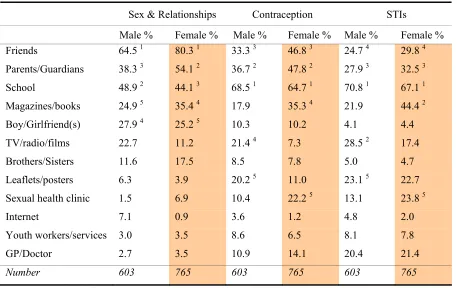
School was cited most commonly as the main source of information on both
contraception and STIs by both young men and women, whilst friends were reported most frequently as the main source of information on sex and relationships (for more details, see Table A2a, Appendix 2).
significance (χ2) of the differences between young men’s and women’s responses are
[image:33.595.82.539.217.505.2]presented in Tables A2b-d of Appendix 2.
Table 4: Most important sources of information reported by young men and women on a)
sex and relationships, b) contraception, and c) STIs (aggregation of 1st, 2nd and 3rd
choices)
Sex & Relationships Contraception STIs
Male % Female % Male % Female % Male % Female %
Friends 64.5 1 80.3 1 33.3 3 46.8 3 24.7 4 29.8 4
Parents/Guardians 38.3 3 54.1 2 36.7 2 47.8 2 27.9 3 32.5 3
School 48.9 2 44.1 3 68.5 1 64.7 1 70.8 1 67.1 1
Magazines/books 24.9 5 35.4 4 17.9 35.3 4 21.9 44.4 2
Boy/Girlfriend(s) 27.9 4 25.2 5 10.3 10.2 4.1 4.4
TV/radio/films 22.7 11.2 21.4 4 7.3 28.5 2 17.4
Brothers/Sisters 11.6 17.5 8.5 7.8 5.0 4.7
Leaflets/posters 6.3 3.9 20.2 5 11.0 23.1 5 22.7
Sexual health clinic 1.5 6.9 10.4 22.2 5 13.1 23.8 5
Internet 7.1 0.9 3.6 1.2 4.8 2.0
Youth workers/services 3.0 3.5 8.6 6.5 8.1 7.8
GP/Doctor 2.7 3.5 10.9 14.1 20.4 21.4
Number 603 765 603 765 603 765
Note: Superscripts indicate ranking
Friends, parents/guardians and school were consistently quoted among the top three most important sources of information for both men and women on sex and relationships and contraception. Other important sources on sex and relationships included
magazines/books and boyfriends or girlfriends, and on contraception included TV/radio/films and leaflets/posters for men and magazines/books and sexual health clinics for women.
Over two-thirds of both young men and women included school among their top three most important sources of information on STIs. Although friends and parents or
STIs included magazines and books (44% of women), TV, radio and films (29% of men) and leaflets and posters (23% of both men and women). Furthermore, sexual health services and GPs were also important, with almost a quarter of young women and just over a fifth of young men citing this source as one of their most important.
There were significant differences in the responses of men and women, with significantly more women than men citing friends, magazines and books, and sexual health or family planning clinics as among their most important sources of information on all three topics (sex and relationships, contraception and STIs). Likewise, significantly higher
proportions of men than women cited TV, radio and films and the internet as among their most important sources of information on all three topics. In regard to sources of
information on sex and relationships and contraception, women cited parents or guardians more often than did men, and the men cited leaflets and posters more often than did women.
5.1.2 Sources of information and sexual experience
The relative importance of various sources of information, such as boyfriends and girlfriends, is likely to differ for those who are and are not yet sexually experienced. Aggregations of the first, second and third most important sources of information on sex and relationships, contraception and STIs were analysed separately for those who reported having ever experienced oral, vaginal or anal sex and those who had not (see Appendix 3).
Whilst school was found to be an important source of information for both those who are and are not yet sexually experienced (i.e. had experienced oral, vaginal or anal sex), the proportion of men and women who are sexually experienced citing school was
significantly lower than that of their sexually inexperienced counterparts. This does not necessarily mean that school as a source of information becomes less important as young people become sexually experienced, just that other sources are viewed as being
indicate how important different sources are per se; rather, they indicate young people’s
perspectives on how important sources are relative to one another.
Significantly higher proportions of young men and women who had had oral, vaginal or anal sex, compared with those who had not, reported boyfriends and girlfriends as among their top three most important sources of information.
Sexual health services and professionals were also cited as among the top three most important sources by significantly more men and women who had had oral, vaginal or anal sex than those who had not, especially as sources of information on contraception and STIs.
Among those who were not sexually experienced, media sources such as TV, radio and films, leaflets and posters, and magazines and books were among the three most important sources of information on either sex and relationships, contraception or STIs for significantly larger proportions than among those who were sexually experienced.
5.1.3 Knowledge of sexual health and contraception
Table 5: Percentages of young men and women correctly responding to each statement
Male Female Total
Apart from HIV, most STIs can be cured True 57.4 63.8 61.0
Withdrawal is an effective method of preventing STIs False 88.0 89.4 88.1
A girl cannot get pregnant the first time she has sexual intercourse
False 96.5 97.9 97.3
A man can have an STI without any obvious symptoms True 83.7 88.2 86.2
A woman can have an STI without any obvious symptoms
True 82.7 88.7 86.1
Chlamydia is an STI that affects only women False 45.6 49.9 48.0
There are times of the month when a woman definitely cannot get pregnant
False 48.1 75.0 63.1
Emergency contraception only works if taken within 24 hours
False 30.8 58.3 46.2
No. of cases 601 763 1364
Respondents were also asked whether STIs can be transmitted through various behaviours. The table below shows the proportions of men and women answering correctly.
Table 6: Percentages of young men and women correctly responding to each statement
regarding modes of transmission of STIs
Male Female Total
Kissing (with tongues) No 75.9 78.4 77.3
Holding hands No 96.2 98.2 97.3
Sharing a toilet No 66.2 70.4 68.6
Vaginal intercourse with ejaculation Yes 97.5 97.6 97.6
Vaginal intercourse without ejaculation Yes 88.0 87.4 87.7
Touching each other's genitals Yes 33.4 39.2 36.6
Oral sex to a man Yes 70.0 79.9 75.6
Oral sex to a woman Yes 70.2 78.4 74.8
Anal sex Yes 81.0 78.6 79.7
[image:36.595.106.491.488.735.2]Almost a third of young men and women thought that STIs can be transmitted by sharing a toilet and a quarter did not know that STIs can be transmitted via oral sex. Whilst 98 percent knew that STIs can be transmitted via vaginal intercourse with ejaculation, a slightly lower proportion believed this to be the case in the absence of ejaculation.
Knowledge scores out of 17 were calculated for each respondent, based on the number of knowledge questions answered correctly. Mean knowledge scores were compared by sex, sexual experience, area, age and ethnicity. The mean score of women was significantly higher than that of men (p=0.000, t-test), with women scoring an average of 13.28 and men scoring an average of 12.19. This difference was obtained regardless of sexual experience. Sexually experienced young people (in other words, those who had experienced oral, vaginal or anal sex) had a higher mean score than those who were sexually inexperienced (13.28 vs. 11.99, p=0.000, t-test); of course, it is likely that those who are sexually experienced will have consequently learned more.
There was no difference in mean knowledge scores between social deprivation groups, or between respondents of different ages.
Whilst the mean knowledge scores for men in Rotherham, Bolton and Wigan, and Wiltshire were all similar (12.77, 12.50 and 12.35 respectively), that for Bromley was significantly lower (11.29, p=0.000, ANOVA). Likewise, the mean knowledge score for women in Bromley (12.66) was significantly lower than those for women in Rotherham, Bolton and Wigan, and Wiltshire (13.77, 13.49 and 13.31 respectively, p=0.000, ANOVA).
5.2 Young People’s Sexual Behaviour
SUMMARY
Oral sex
Almost three quarters of young people who had experienced at least one of the three
sexual acts (oral, vaginal and anal sex) report experience of oral sex before experiencing vaginal sex, viewing it as less serious, intimate and risky.
Condom use for fellatio is uncommon, with only around a fifth having ever used a
condom, and less than two percent using condoms consistently. Most young people have not heard of using dental dams for cunnilingus.
Reasons for condom use centre on the possibility of STI transmission and anxiety
about ejaculate and cleanliness. Reasons for not using condoms relate to fellatio feeling better without a condom, an association of condoms with prevention of pregnancy, and the perception of oral sex as not ‘proper’ sex.
Anal sex
Eight percent of survey respondents had had anal sex. The majority of these were
heterosexual.
Vaginal sex
Most young people who have had vaginal sex have used a condom at least once.
Overall, condoms are the most commonly used form of contraception at most recent occasion of vaginal sex across all partner types and was most common amongst those reporting on first sex with a partner with whom they were going out.
Lack of any contraception at all was most common amongst those who had had
vaginal sex with someone they had only just met or someone they knew but had not had sex with before and were not dating.
Young people’s tendency to use condoms primarily for contraception was reflected in
the fact that those using other forms of contraception were unlikely to simultaneously use condoms.
Young people were also less likely to have used a condom i) with a regular partner, ii)
if they felt condoms are difficult to use consistently with a well known partner, iii) if they had personally known someone with an STI, and iv) if they or their partner did not have a definite desire to use a condom.
Young people were more likely to have used a condom if i) a condom had been used
Whilst defining sexually active young people as those who have ever had vaginal sex may be useful when focussing on the risk of pregnancy, it is clearly inadequate when considering sexually transmitted infections (STIs). STIs can be transmitted via several routes, including genital touching, oral sex and anal sex. In this study, we have focussed primarily, though not exclusively, on those sexual acts which can be made safer through the use of a condom or dental dam. In other words, vaginal sex, oral sex and anal sex.
Out of the 1373 16-21 year olds who completed survey questionnaires, 42 percent of men
and a significantly higher 52 percent of women had ever had vaginal intercourse (χ2=
12.318, df=1, p=0.000). Significantly more women (55%) than men (45%) had also given
oral sex (χ2= 13.419, df=1, p=0.000). By contrast, similar proportions of men and women
reported ever having received oral sex (50% men, 52% women) and ever having had anal sex (7% men, 9% women).
Table 7: Ever having experienced various sexual acts by sex (in percentages)
Male (n) Female (n) Total (n)
Ever had vaginal intercourse 41.8 (240) 51.5 (384) 47.3 (624)
Ever given oral sex 44.6 (250) 54.9 (401) 50.5 (651)
Ever received oral sex 50.4 (287) 51.9 (374) 51.2 (661)
Ever had anal sex 7.4 (41) 9.3 (67) 8.5 (108)
As Tables 8 and 9 show, most young people have engaged in sexual activities other than vaginal sex in addition to, prior to, or instead, of vaginal sex. Among 16 year old men, 49 percent (or 48.7% in Table 8) had not engaged in any sexual act (i.e. oral, vaginal or anal sex), 15 percent (14.8%) had had oral and/or anal sex, but not vaginal sex, and whilst 36
percent had had vaginal sex, just two percent had only had vaginal sex – the remaining 34
Table 8: Percentages of men having ever experienced oral, vaginal and/or anal sex (in no particular order) by age
Sexual acts ever experienced Age (in years)
16 17 18-21
None 48.7 43.6 24.3
Received oral only 3.6 2.3 1.4
Given oral only 1.3 1.7 1.4
Given oral, received oral 8.6 7.0 5.7
Given oral, received oral, anal 1.0 1.2 1.4
Sexual
experiences with no vaginal sex
Other (without vaginal)11 0.3 0.0 0.0
Sub-total 14.8 12.2 9.9
Vaginal only 2.0 2.3 5.7
Given oral, vaginal 0.3 1.7 2.9
Received oral, vaginal 6.3 4.7 7.1
Given oral, received oral, vaginal 22.5 30.2 37.1
Given oral, received oral, vaginal, anal 5.0 4.7 12.9
Sexual experiences which include vaginal sex
Other (inc. vaginal)12 0.3 0.6 0.0
Sub-total 36.4 44.2 65.7
Total 100 100 100
No. of cases 302 172 70
The proportion of women having experienced vaginal sex was higher than that of men in every age group, with over half of 17 year olds having done so (59.5% in Table 9). As with men, most women who had experienced vaginal sex, had also experienced oral, and to a lesser extent anal sex, and around a tenth had experienced oral and/or anal sex without having ever experienced vaginal sex.
11Other includes anal sex only, anal sex and received oral sex, and anal sex and given oral sex (i.e.
combinations not already listed above)
Table 9: Percentages of women having ever experienced oral, vaginal and/or anal sex (in no particular order) by age
Sexual acts ever experienced Age (in years)
16 17 18-21
None 47.0 27.2 22.7
Given oral only 2.4 2.8 1.5
Received oral only 1.2 2.8 0.0
Given oral, received oral 5.2 7.4 6.1
Given oral, received oral, anal 0.0 0.0 0.0
Sexual
experiences with no vaginal sex
Other (without vaginal)13 0.2 0.5 0.0
Sub-total 9.0 13.5 7.6
Vaginal only 4.0 2.8 1.5
Given oral, vaginal 4.0 3.2 1.5
Received oral, vaginal 1.9 0.9 1.5
Given oral, received oral, vaginal 27.8 41.0 47.0
Given oral, received oral, vaginal, anal 6.2 10.6 16.7
Sexual experiences which include vaginal sex
Other (inc. vaginal)14 0.0 1.0 1.5
Sub-total 43.9 59.5 69.7
Total 100 100 100
No. of cases 421 217 66
5.2.1 Oral sex
Whilst unprotected oral sex is a much lower risk activity than unprotected vaginal or anal intercourse, there is still a possibility of STI transmission. Both viral and bacterial STIs can be transmitted via this route, including herpes, gonorrhoea and genital warts. Whilst oral sex is a far less efficient means of transmission than unprotected vaginal or anal sex, the Department of Health states in its review of the evidence of HIV transmission
associated with oral sex that, as a route of transmission, the relative importance of oral sex is likely to increase as other, higher risk sexual exposures are avoided [53].
13Other includes anal sex only, anal sex and received oral sex, and anal sex and given oral sex (i.e.
combinations not already listed above)
14Other includes combinations of vaginal sex, received oral sex, given oral sex and anal sex not already
Of all the young people who completed survey questionnaires, 45 percent of men and 55 percent of women had ever performed oral sex and 50 percent of men and 53 percent of women had ever received oral sex.
Oral sex is often experienced earlier than vaginal sex. Thirty-two percent of young men and 34 percent of young women reported that their first experience of fellatio was below the age of 16 years, whilst lower proportions of young men (23%) and women (28%) reported that their first experience of vaginal sex had been below the age of 16 years. Indeed, of those who had never had vaginal sex, 24 percent of men and 21 percent of women had given and/or received oral sex.
Table 10: Prevalence of oral sex amongst those who have never had vaginal intercourse by sex (in percentages)
Male Female Total
Ever given oral sex only 2.5 4.9 3.7
Ever received oral sex only 5.6 3.4 4.5
Ever given and received oral sex 15.8 12.6 14.1
No. of cases 322 350 674
Almost half the men (48%) who had ever experienced at least one of the four sexual acts (i.e. vaginal sex, anal sex, received oral sex or given oral sex) had first received oral sex and 24 percent had first given oral sex. Forty percent of women first gave oral sex and 31 percent first received oral sex. This means that almost three-quarters of men (72%) and women (71%) who had experienced at least one of the four sexual acts experienced oral sex, either given or received, before experiencing either vaginal sex or anal sex.
Table 11: First sexual act experienced by young men and women who have ever had
either oral, vaginal sex or anal sex (in percentages)
Male Female Total
Performed oral sex first 23.6 39.8 33.4
Received oral sex first 48.5 31.3 38.1
Vaginal sex first 25.7 27.7 27.0
Anal sex first 2.1 1.1 1.5
The phase four in-depth interviews found that young people have different perceptions of oral and vaginal sex and that these may explain why oral sex experiences often precede any experience of vaginal or anal sex. Oral sex was not regarded as ‘proper’ sex in terms of seriousness and intimacy and was not felt to attract the threats associated with vaginal sex. The young people interviewed spoke of a period of sexual experimentation which includes oral sex, occurring at a younger age than first vaginal sex.
“…People don’t know enough until they try things, I think they put the actual sex off until the last minute, sort of like to the end… yeah so I think again it’s just getting experience and learning what it’s all about and then saving the main thing ’til last I think.” (Female, 17 years)
“…You can sort of give each other pleasure as it were but there’s not the ‘having sex’ thing, and by that I mean like vaginal intercourse or something so you don’t have the worries of STIs and pregnancy and that sort of thing, that’s a bit more serious. That’s a bit more of an older thing.” (Female, 16 years)
“When someone asks you how many sexual partners you’ve had, I think you just go for the actual vaginal intercourse and sort of skip over the oral sex. ’Cause to me oral sex is the equivalent of sort of just mucking around, foreplay sort of thing.” (Male, 21 years)
“Sexual intercourse is just like totally different to the oral sex, it’s just, you don’t lose your virginity if you do that and I think it, I felt personally that oral sex was not as much of a big deal as, you know, having sex.” (Female, 18 years)
Cunnilingus
Cunnilingus, or oral sex to a woman, can be made safer in terms of STI risk through the use of a dental dam or latex square. Focus group discussions conducted with young people at the very beginning of the research project indicated that few young people had ever heard of dental dams. As a result, the survey and diaries focussed on condom use for fellatio (oral sex to a man) only. In-depth interviews conducted at the final stage of the study further confirmed that very few young people knew of any way of making
“It wouldn’t bother me particularly if she wanted to [use a condom for fellatio], but […] I couldn’t think of anything that I could use for her.” (Male, 17 years)
“…My friend is homosexual and he talks about when he goes to his, ’cause he goes to a lesbian/gay meeting and they hand out like the condoms and then these [dental] dam things for lesbian couples and I’ve never even heard anything like that. He said, ‘Oh no lesbians use it when they perform oral sex on each other’ and I was just like ‘I’ve never heard of that at all’, like a stretchy plastic thing……So I said like ‘Are heterosexual couples supposed to do that as well?’ and he said ‘Yeah, everyone’.” (Female, 21 years)
Fellatio
In the survey, detailed questions were asked about experiences of fellatio (i.e. oral sex to a man). Those who had ever received or performed fellatio reported having a wide range of numbers of partners so far over the course of their lifetimes, ranging from one to forty. However, just under half had only ever experienced fellatio with one partner (44% of both men and women).
Table 12: Number of lifetime fellatio partners among those who had ever experienced fellatio by sex (in percentages)
Male Female Total
1 43.8 43.9 43.9
2 18.2 22.6 20.8
3 12.4 12.7 12.6
4 7.3 7.6 7.5
No. of lifetime fellatio partners:
5+ 18.2 13.2 15.5
Total (N) 100 (274) 100 (394) 100 (668)
Of those who had experienced both vaginal sex and fellatio, a large proportion (45%) had had an equal number of lifetime partners for both, although this does not necessarily mean that they had vaginal sex with the same people with whom they experienced fellatio. Sizable proportions reported having had more fellatio partners than vaginal sex partners (32%) or more vaginal sex partners than fellatio partners (23%).
Table 13: Number of lifetime experiences of fellatio among those who had ever experienced fellatio by sex (in percentages)
Male Female Total
Once 14.2 10.7 12.2
2-10 times 44.5 43.6 44.0
Number of lifetime experiences of
fellatio More than 10 times 41.2 45.7 43.8
Total (N) 100 (274) 100 (392) 100 (666)
The sexual encounter diaries show that oral sex and vaginal sex often occur together, during the same sexual encounter, with 69 percent of diary encounters featuring both. However, a sixth of diary encounters (16%) featured oral sex only.
5.2.2 Condom use for fellatio
Of all those who had ever given or received fellatio, 17 percent of men and 23 percent of women reported having ever used a condom for fellatio.
Table 14: Ever having used a condom for fellatio among those who reported ever having
given or received fellatio by sex (in percentages)
Male Female Total
Yes 16.5 22.9 20.2
Ever used a
condom for fellatio No 83.5 77.1 79.8
Total (N) 100 (285) 100 (402) 100 (687)
Of those who had only ever given or received fellatio once (N=82), just 17 percent had used a condom. Of those who had experienced fellatio twice or more, less than two percent reported using a condom every single time.
Table 15: Consistency of condom use for fellatio among those who reported having
experienced fellatio more than once by sex (in percentages)
Male Female Total
Never 82.8 77.5 79.6
Inconsistently 15.6 21.1 18.9 Consistency of
condom use for
fellatio Always 1.6 1.4 1.5
The 139 respondents who had ever used a condom for fellatio were asked to state their reasons for using a condom. Six respondents did not give any reason. The most common
reasons given by men (N=42) were to avoid catching an STI and to be more hygienic,
whilst for women (N=92) condoms were most commonly used for the taste15 or to avoid
[image:46.595.119.494.262.507.2]the dilemma of whether to spit or swallow the ejaculate.
Figure 4: Reasons for using a condom for fellatio by sex (amongst those who reported
ever having used a condom for fellatio). Note: Multiple responses permitted
36 26 38 38 26 24 31 12 5 51 50 40 37 33 26 23 13 3
0 10 20 30 40 50 60
For the taste
To avoid the spit/swallow dilemma
To avoid catching an STI
To be more hygienic
To avoid making a mess
To avoid HIV/AIDS
For fun
To make oral sex last longer
Other
%
Male % Female %
As well as asking respondents to give their reasons for using a condom for fellatio, they
were also asked to give their one main reason (see Table 16). To avoid catching an STI
and for the taste were two of the main reasons cited by both men and women for using a
condom for fellatio, whilst for women avoiding the spit or swallow dilemma was also
very important. It is worth noting that just three out of the fifty-four respondents who gave the avoidance of STIs as a reason for using a condom for fellatio reported this to be their only reason.