Hybrid Iterative Multiuser Detection for Channel
Coded Space Division Multiple
Access OFDM Systems
Ming Jiang,
Student Member, IEEE
, Soo
n
Xin Ng,
Member, IEEE
, and Lajos Hanzo,
Fellow, IEEE
Abstract—Space division multiple access (SDMA) aided orthog-onal frequency division multiplexing (OFDM) systems assisted by efficient multiuser detection (MUD) techniques have recently at-tracted intensive research interests. The maximum likelihood de-tection (MLD) arrangement was found to attain the best perfor-mance, although this was achieved at the cost of a computational complexity, which increases exponentially both with the number of users and with the number of bits per symbol transmitted by higher order modulation schemes. By contrast, the minimum mean-square error (MMSE) SDMA-MUD exhibits a lower com-plexity at the cost of a performance loss. Forward error correction (FEC) schemes such as, for example, turbo trellis coded modu-lation (TTCM), may be efficiently combined with SDMA-OFDM systems for the sake of improving the achievable performance. Ge-netic algorithm (GA) based multiuser detection techniques have been shown to provide a good performance in MUD-aided code division multiple access (CDMA) systems. In this contribution, a GA-aided MMSE MUD is proposed for employment in a TTCM-assisted SDMA-OFDM system, which is capable of achieving a similar performance to that attained by its optimum MLD-aided counterpart at a significantly lower complexity, especially at high user loads. Moreover, when the proposed biasedQ-function based mutation (BQM) assisted iterative GA (IGA) MUD is employed, the GA-aided system’s performance can be further improved, for example, by reducing the bit error ratio (BER) measured at 3 dB by about five orders of magnitude in comparison to the TTCM-assisted MMSE-SDMA-OFDM benchmarker system, while still maintaining modest complexity.
Index Terms—Biased Q-function based mutation (BQM), genetic algorithm (GA), minimum mean-square error (MMSE), multiuser detection (MUD), orthogonal frequency division multi-plexing (OFDM), space division multiple access (SDMA), turbo trellis coded modulation (TTCM).
I. INTRODUCTION
S
PACE DIVISION multiple access (SDMA) based or-thogonal frequency division multiplexing (OFDM) [1] communication invoking multiuser detection (MUD) tech-niques has recently attracted intensive research interests. In SDMA multi-input–multi-output (MIMO) systems, the transmitted signals ofLsimultaneous uplink mobile users-each equipped with a single transmit antenna-are received by theManuscript received November 7, 2004; revised May 1, 2005. This work was supported in part by the Wireless Enablers 2.2 of the Core 3 Research Programme of the Virtual Centre of Excellence in Mobile and Personal Com-munications, Mobile VCE. The review of this paper was coordinated by Dr. M. Valenti.
The authors are with the School of Electrical and Computer Science, Uni-versity of Southampton, Southampton SO17 1BJ, U.K. (e-mail: mj02r@ecs. soton.ac.uk; [email protected]; [email protected]).
Digital Object Identifier 10.1109/TVT.2005.861187
P different receiver antennas of the base station (BS). At the BS, the individual user’s signals are separated with the aid of their unique, user-specific spatial signature constituted by their channel transfer functions or, equivalently, channel impulse responses (CIRs). A variety of MUD schemes, such as the least squares (LS) [1]–[3] and minimum mean-square error (MMSE) [1]–[5] detectors, or successive interference cancellation (SIC) [1]–[6], parallel interference cancellation (PIC) [1], [2], [6], [7] and maximum likelihood detection (MLD) [1], [2], [4], [5], [8] schemes may be invoked for the sake of separating the different users at the BS on a per-subcarrier basis. Among these schemes, the ML detection arrangement was found to give the best performance, although this was achieved at the cost of a dramatically increased computational complexity, especially in the context of a high number of users and higher order modulation schemes, such as 16QAM [6]. By contrast, MMSE combining exhibits the lowest complexity in this set of detectors, while suffering from a per-formance loss [1], [6]. Moreover, another branch of multiuser detection schemes referred to as sphere decoder (SD) [9]–[15] has also been proposed for multiuser systems, which is capable of achieving ML performance at a lower complexity. However, as far as we are concerned, most of the previously mentioned techniques were proposed for the systems where the number of users is less than or equal to the number of receivers.
Furthermore, the achievable performance can be significantly improved if forward error correction (FEC) schemes, such as, for example, turbo convolutional (TC) codes [16], are incorpo-rated into the SDMA system. Various coded modulation (CM) schemes such as, for example, trellis coded modulation (TCM) [16], [17]; turbo TCM (TTCM) [16], [18], bit-interleaved coded modulation (BICM) [16], [19]; and iteratively decoded BICM (BICM-ID) [16], [20] have also attracted intensive research interests, since they are capable of achieving a substantial coding gain without bandwidth expansion. It was demonstrated in [21] that TTCM generally provides the best performance in the family of CM schemes in the specific context of the SDMA-OFDM system investigated. Hence, in this paper, we will adopt TTCM as the FEC scheme for our SDMA-OFDM system.
Genetic algorithms (GAs) [22]–[26] have been applied to a number of problems, such as machine learning and modeling adaptive processes. Moreover, GA-based multiuser detection has been proposed by Juntti et al. [27] and Wanget al.[28], where the analysis was based on the additive white Gaussian noise (AWGN) channel in the absence of diversity techniques. The proposal by Erg¨unet al.[29] utilized GAs as the first stage of
a multistage multiuser detector, in order to provide good initial guesses for the subsequent stages. Its employment in Rayleigh fading channels was considered by Yen et al. in [30], [31], and [31], [32] in diverse scenarios, both with and without the aid of diversity techniques, respectively.
However, most of the GA-aided transceiver research previ-ously mentioned was conducted in the context of code division multiple access (CDMA) systems [31], [33]. Against this back-ground, the novel contribution of this paper is that we apply new GAs in the context of novel multiuser OFDM rather than CDMA systems. Specifically, we propose a novel GA and MMSE-MUD assisted TTCM-aided SDMA-OFDM system which is capable of maintaining near-optimum performance in so-called over-loaded systems, where the number of users is higher than the number of receiver antenna elements. Our simulation results show that the proposed GA assisted TTCM-SDMA-OFDM sys-tem is capable of achieving performance similar to that attained by its optimum but high-complexity maximum likelihood (ML) MUD assisted counterpart in overloaded scenarios, while im-posing a significantly lower computational complexity, espe-cially at high user loads. Furthermore, the performance of the proposed GA-aided system can be further improved if the pro-posed biasedQ-function based mutation (BQM) aided iterative GA (IGA) MUD is employed. We will show that the BQM-IGA aided system is capable of reducing the bit error ratio (BER) by up to five orders of magnitude in comparison to the TTCM-assisted MMSE-SDMA-OFDM benchmarker system. Moreover, the complexity of the proposed detection scheme is only moderately higher than that imposed by the linear MMSE MUD, and is substantially lower than that imposed by the opti-mum ML MUD.
The structure of this paper is as follows. The SDMA MIMO channel model is described in Section II-A and the overview of the GA-assisted TTCM-aided MMSE-SDMA-OFDM sys-tem is given in Section II-B, followed by the introduction of the basic principles of the concatenated MMSE-GA MUD of Section III. Specifically, a review of the MMSE MUD is pro-vided in Section III-A, the optimization metric of the GA MUD is derived in Section III-B, and Section III-C offers a detailed in-troduction to the concatenated MMSE-GA multiuser detection. In Section III-D, the novel BQM scheme is proposed, followed by the illustration of the IGA framework in Section III-E. Our simulation results are provided in Section IV, and the asso-ciated complexity issues are discussed in Section V. Finally, Section VI concludes our findings.
II. SYSTEMMODEL
[image:2.594.305.555.68.171.2]A. SDMA MIMO Channel Model
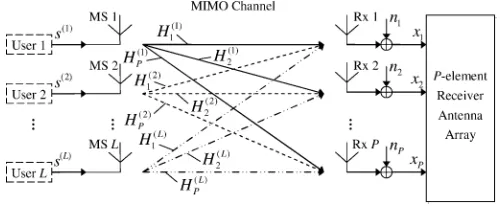
Fig. 1 shows an SDMA uplink MIMO channel model where each of theLsimultaneous mobile users employs a single trans-mit antenna, while the BSs receiver exploits P antennas. At the kth subcarrier of the nth OFDM symbol received by the
[image:2.594.376.548.334.394.2]P-element receiver antenna array, we have the received complex signal vectorx[n, k], which is constituted by the superposition of the independently faded signals associated with theLmobile users and contaminated by the additive white Gaussian noise
Fig. 1. Schematic of the SDMA uplink MIMO channel model [1], where each of theLmobile users is equipped with a single transmit antenna and the BSs receiver is assisted by aP-element antenna front end.
(AWGN), expressed as
x=Hs+n (1)
where the (P×1)-dimensional vector x, the (L×1) -dimensional vector s, and the(P×1)-dimensional vector n are the received, transmitted, and noise signals, respectively. Here we have omitted the indices[n, k]for each vector for the sake of notational convenience. Specifically, the vectorsx,s, andnare given by
x= (x1, x2, . . . , xP)T (2)
s=
s(1), s(2), . . . , s(L)
T
(3)
n= (n1, n2, . . . , nP)T. (4) The (P×L)-dimensional matrix H, which contains the frequency-domain channel transfer functions (FD-CHTF) of the
Lusers, is given by
H=
H(1),H(2), . . . ,H(L)
(5)
whereH(l)(l= 1, . . . , L)is the vector of the FD-CHTFs asso-ciated with the transmission paths from thelth user’s transmit antenna to each element of theP-element receiver antenna array, which is expressed as
H(l)=
H1(l), H2(l), . . . , HP(l)
T
, l={1, . . . , L}. (6) In (1)–(6), we assume that the complex signals(l)transmitted
by thelth user has zero-mean and a variance ofσ2
l. The AWGN signalnp also exhibits a zero-mean and a variance ofσ2n. The FD-CHTFsHp(l)of the different receivers or users are indepen-dent, stationary, complex Gaussian distributed processes with zero-mean and unit variance [1].
B. System Overview
Fig. 2. Schematic of the MMSE-GA-concatenated multiuser detected SDMA-OFDM uplink system.
forwarded to the OFDM-related inverse fast Fourier transform (IFFT) based modulator, which converts the frequency-domain signals to the time-domain modulated OFDM symbols. The OFDM symbols are then transmitted by the independent mobile stations (MSs) to the BS over the SDMA MIMO channel. Then, each element of the receiver antenna array shown at the bottom of Fig. 2 receives the superposition of the transmitted signals faded and contaminated by the channel and performs fast Fourier transform (FFT) based OFDM demodulation. The demodulated outputsxp(p= 1, . . . , P)seen in Fig. 2 are forwarded to the proposed concatenated MMSE-GA MUD for separating the dif-ferent user’s signals. The separated signalsˆs(l)(l= 1, . . . , L),
namely the estimated versions of the transmitted signals, are then independently decoded by the TTCM decoders of Fig. 2.
III. GENETICALALGORITHMASSISTEDMMSE MULTIUSERDETECTION
A. MMSE MUD
In the MMSE-based MUD, the estimates of the different user’s transmitted signals are generated with the aid of the lin-ear MMSE combiner. Specifically, the estimated signal vector
ˆ
s∈CL×1generated from the transmitted signalsof theL
simul-taneous users, as shown in Fig. 2, is obtained by linearly com-bining the signals received by theP different receiver antenna elements with the aid of the array weight matrix as follows [1]:
ˆsMMSE=WHMMSEx (7)
where the superscriptH denotes the Hermitian transpose, and WMMSE∈CP×L is the MMSE-based weight matrix given
by [1]
WMMSE=
HHH +σn2I−1H (8)
where I is the identity matrix, and σ2
n is the AWGN noise variance.
B. Optimization Metric for the GA MUD
The optimum ML MUD [1] uses an exhaustive search for find-ing the most likely transmitted signals. For a ML-detection as-sisted SDMA-OFDM system supportingLsimultaneous users, a total of2m L metric evaluations has to be invoked, wherem
denotes the number of bits per symbol (BPS) in order to detect theL-user symbol vectorˆsML that consists of the most likely
transmitted symbols of theLusers at a specific subcarrier, given by
ˆsML=arg
min ˇ
s∈MLx−Hˇs
2 2
(9)
where the (P×1)-dimensional received signal vectorx and the (P×L)-dimensional frequency-domain channel transfer function (FD-CHTF) matrixHare defined by (2) and (5), re-spectively. The set ML in (9), which is constituted by 2m L trial-vectors, is formulated as
ML
=
ˇ
s= (ˇs(1),sˇ(2), . . . ,ˇs(L))T ˇs(1),sˇ(2), . . . ,ˇs(L)∈ Mc (10)
whereMcdenotes the set containing the2m number of legiti-mate complex constellation points associated with the specific modulation scheme employed. The number of metric evalua-tions required for detecting the optimum vector increases expo-nentially with the number of usersL.
Furthermore, the optimum ML-based decision metric of (9) may also be used in the GA-based MUD for the sake of detect-ing the estimated transmitted symbol vectorˆsGA. In the context
of the SDMA-OFDM system employing P receiver antenna elements, the decision metric required for thepth receiver an-tenna, namely the antenna-specific objective function [31], can be derived from (9), yielding
Ωp(s) =|xp −Hps|2 (11) wherexpis the received symbol at the input of thepth receiver at a specific OFDM subcarrier, andHpis thepth row of the channel transfer function matrixH. Therefore, the decision rule for the optimum multiuser detector associated with thepth antenna is to choose the specificL-symbol vectors, which minimizes the metric given in (11). Thus, the estimated transmitted symbol vector of theLusers based on the knowledge of the received signal at the pth receiver antenna and a specific subcarrier is given by
ˆ
sGAp =arg{min
s [Ωp(s)]}. (12)
However, it follows from above derivation that we will have
Pmetrics in total for thePreceiver antennas. Since the channel impulse responses of each of the P antennas are statistically independent, theL-symbol vector that is considered optimum at antenna 1 may not be considered optimum at antenna 2, etc. In other words, this implies that a decision conflict is encountered, which may be expressed as
arg{min
where ∀i, j∈ {1, . . . , P}, i=j. This decision conflict, there-fore, leads to a so-called multiobjective optimization problem, since the optimization of the P metrics may result in more than one possible L-symbol solution. A similar decision con-flict resolution problem was studied in [34] in an attempt to reconcile the decision conflicts of multiple antennas resulting in a decision dilemma. In order to resolve this problem, we may adopt a similar approach and may amalgamate thePnumber of antenna-specificL-symbol metrics into a joint metric as follows:
Ω(s) =
P
p=1
Ωp(s). (14) Hence, the decision rule of the GA MUD is to find the specific estimated transmittedL-symbol vectorˆsGAthat minimizesΩ(s)
in (14) for every OFDM subcarrier considered.
C. Concatenated MMSE-GA MUD
The BER performance of the MMSE MUD is somewhat lim-ited, since it is the total mean-square estimation error imposed by the different simultaneous users that is minimized, rather than directly optimizing the BER performance. Therefore, the MMSE-SDMA-OFDM system’s BER performance may be po-tentially further improved with the aid of a concatenated GA-aided MUD, which is capable of exploiting the output provided by the MMSE MUD of Section III-A in its initial population. For the sake of brevity, we will portray the philosophy of the proposed system in simplified terms. However, readers who are unfamiliar with GAs can consult [23] for a detailed description on GA-based optimization.
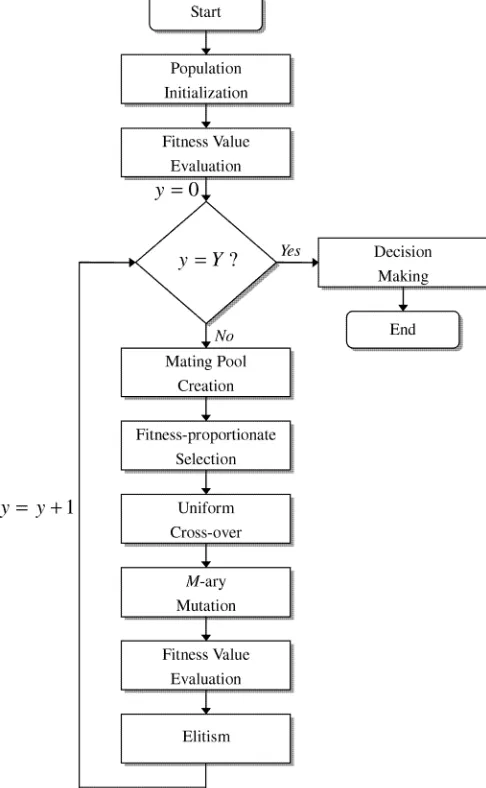
Fig. 3 shows a flowchart of the GA MUD employed in our multiuser SDMA-OFDM system.
1) Population Initialization: At the beginning of the GA-based search, an initialpopulationconsistingX number of so-calledindividualsis created. In order to speed up the GA’s search procedure, the first individual is created by making a hard decision at the output of the MMSE MUD of Section III-A. The otherX−1 individuals are then generated by mutating1the MMSE solution. Without loss of generality, an individual is represented by a sym-bol vector containingLcomplex symbols, each of which belongs to one of theL number of users at the specific subcarrier considered. Specifically, theith individual is expressed as
˜
s(iy)=
˜
si,(y1),s˜i,(y2), . . . ,s˜(i,Ly)
, i={1, . . . , X} (15) wheres˜(i,ly)denotes thelth(l= 1, . . . , L)geneof theith individual. If for example a 4QAM modem constellation is used, each gene˜s(i,ly)can be represented by one of the 4QAM constellation symbols, namely bys˜(i,ly)∈ Mc. The population consisting ofX number of individuals then forms the starting point of the optimization process, which is referred to as they= 0thgeneration.
2) Fitness Value Evaluation: The GA’s task is to find an individual, which is considered optimum or near-optimum
[image:4.594.308.551.72.466.2]1The mutation process will be detailed later in this section.
Fig. 3. Structure of the GA MUD used in the multiuser SDMA-OFDM system.
in terms of minimizing the joint metric of (14) in the context of aP-antenna SDMA-OFDM system. For each individual, an associatedobjective scorecan be derived by evaluating (14). The objective score is then converted to a correspondingfitnessvalue, which indicates the fitness of the specific individual. This fitness calculation is carried out in the “Fitness Value Evaluation” block of Fig. 3. 3) Mating Pool Creation: Based on the fitness values, T
number of individuals are selected for creating the so-called mating pool, following the principle of Pareto-Optimality[23], [31]. This strategy favors the so-called
non-dominatedindividuals and ignores the so-called dom-inated individuals [31]. Specifically, the uth L-symbol individual is considered to be dominated by thevth indi-vidual, if we have [35]
∀i∈ {1, . . . , P}: Ωi
˜
s(vy)
≤Ωi
˜s(uy)
∧∃j∈ {1, . . . , P}: Ωj
˜s(vy)
<Ωj
˜
s(uy)
where Ωp(·)is defined by (11). If an individual is not dominated in the sense of (16) by any other individuals in the population, then it is considered to be nondominated. All the nondominated individuals are then selected and placed in the mating pool, which will have a size of2< T ≤X[31].
4) Selection: In order to evolve the population through-out the consecutive generations, the individuals in the mating pool are then selected as parents for produc-ing offspring. The selection process is based on the so-called fitness-proportionate algorithm employed by the “fitness-proportionate selection” block of Fig. 3, which is widely used in the literature [36]. According to fitness-proportionate selection, each of theT number of individ-uals in the mating pool is assigned a selection probabil-ity proportionate to its fitness value, which is calculated as follows. First, the so-called windowing-mapping[28] technique is invoked in order to get the fitness valuefi(y)
associated with theith individual, which is given by
fi(y)= Ω(Ty)−Ω
˜
s(iy)
+c (17) where
Ω(Ty)= max
t∈{1,...,T}
Ω
˜
s(ty) (18)
is the maximum objective score2achieved by evaluating
the T number of individuals in the mating pool at the
yth generation, andcis a small positive constant, which is used for the sake of ensuring the positiveness offi(y). Then, the fitness-proportionate probability of selectionpi of theith individual can be formulated as
pi=
fi(y)
T j=1f
(y)
j
. (19) Therefore, the individuals having higher fitness values will be assigned higher selection probabilities, based on which
X/2pairs of parents are selected. Moreover, during the se-lection process, the so-calledincest prevention[37] tech-nique can be invoked, which requires that the two individu-als selected to form a pair of parents are different. This can effectively prevent the GA from premature convergence. 5) Crossover:For each pair of theX/2 selected parents, a
genetic operation referred to ascrossover[24] is invoked. The crossover operation is a process during which some of the genes of a parent are exchanged with those of the other parent, thus creating two offspring. In our proposed GA MUD, the well-knownuniform crossover[38] scheme corresponding to the “Uniform crossover” block of Fig. 3 is employed. For example, suppose each individ-ual has L= 6 genes. After two individuals are selected as parents from the mating pool, a binary crossover mask vector containing six randomly generated ones and zeros
2Note that the individual having the maximum objective score out of the pool
of theT candidates is considered as the worst solution in the context of the current mating pool, since the GA searches for the optimum solution which minimizes (14).
will be created. The genes are then exchanged between the selected pair of parents at positions associated with a one in the crossover mask, giving birth to two offspring. 6) Mutation:After the crossover operation is applied to each
pair of parents, X number of offspring are produced, which are then subject to the so-calledmutation[24] oper-ation, and some of the offspring’s genes may be changed. Specifically, any gene of an offspring may be mutated to another legitimate gene under the control of the specific mutation strategy employed. Furthermore, the activation of the mutation process is governed by the so-called mu-tation probabilitypm. Therefore, following the cross-over and mutation blocks illustrated in Fig. 3, the new popula-tion will be constituted byXnumber of mutated offspring. It is worth pointing out that the mutation operation is criti-cal to the success of the genetic evolution, since it ensures that sufficient diversity is maintained in the population, thus preventing the GA’s search from being trapped at lo-cal optima. This will be further discussed in Section III-D. 7) Elitism:While the crossover and mutation operations offer the opportunity of improving the average fitness of the population, they do not guarantee that each of the offspring is better than their parents in terms of their fitness values. In other words, the better individuals associated with the higher fitness values found in theyth generation may not be retained in the (y+ 1)th generation. For the sake of ensuring that the high-fitness individuals are not lost from generation to generation, the best individual of the parents population is copied into the new population, replacing the worst offspring. This technique is known aselitism[24], as illustrated in Fig. 3.
The genetic operation cycle mentioned previously forms the basis of the GA-aided optimization, yielding an offspring pop-ulation having an improved average fitness. This evolution con-tinues until the generation index reaches its maximum. Then, the operation of the GA is terminated and the highest fitness individual of the last population will be considered as the fi-nal solution, which is the specific length-Lsymbol vector that contains the detected transmitted symbols of theLusers at the specific OFDM subcarrier considered. If the population sizeX
and/or the number of generations Y are sufficiently high, the GA’s final solution approaches the optimum [31].
D. Improved Mutation Scheme
In the context of GA-based detection techniques, the effi-ciency of the mutation scheme employed is important for the success of the entire evolution procedure, since it provides a chance for the individuals of the current population to influ-ence the forthcoming ones, so that new areas of the total search space may be explored and thus the chance of finding the opti-mum solution increases [39]. In the context of the GA-assisted multiuser SDMA-OFDM system, when the number of usersL
system, since the GA may get trapped in local optima without appropriate assistance of the mutation scheme.
1) Conventional Uniform Mutation: According to the
M-ary mutation employed by the GA MUD, eachgenesˆ(l)(l= 1, . . . , L)of a length-LGA individualˆsin theX-element popu-lation is represented by a specific symbol inMc. In other words, thelth gene denotes thelth user’s estimated transmitted sym-bol at the subcarrier considered. During the genetic evolution, when a gene is subjected to mutation, it will be substituted by a different symbol inMcbased on a uniformmutation-induced
transition probabilityp(m tij)3, which quantifies the probability of
the ith legitimate symbol becoming thejth. For the sake of brevity, from now on we refer to this probability as the tran-sition probability. Furthermore, we shall refer to the mutation scheme employing uniformly distributedp(m tij)values asuniform mutation (UM), which is a widely used conventional mutation scheme known in the literature [24], and was also employed by the GAs invoked in [31].
According to UM, the original gene will mutate to all the other candidate symbols in Mc with a same transition probability. However, this fixed uniform transition probability fails to reflect the realistic channel conditions that the system is subjected to. When considering a specific received symbol the adjacent con-stellation symbols are more likely to be the transmitted symbol, than the more distant ones. Hence, it may be more reasonable to consider only the neighboring symbols as the potential mutation candidates, and assign a modified biased transition probability, which is dependent on both the distance from the original sym-bol and on the signal-to-noise ratio (SNR). In other words, the GA’s search space may be substantially reduced with the aid of a biased mutation, which pays less attention to the constellation points that are far from the received symbol. This is especially beneficial for the system employing high-throughput modula-tion schemes such as 16QAM, where the total search space is exponentially expanded as a function of the number of BPS compared to lower-throughput modems. In such a system, the UM-aided GA, which allows mutation to all legitimate symbols, may suffer from a slow convergence speed and might result in a high residual error floor, since a considerable portion of the GA’s searching power may be wasted on mutating to highly unlikely gene candidates. By contrast, the biased mutation guided GA is expected to achieve a better performance, since it searches for the optimum solution in a more efficient way, as it will be demonstrated in Section III-D2.
2) BiasedQ-Function Based Mutation (BQM): In this sec-tion, a novel mutation scheme will be presented which we call BQM. According to BQM, for an original gene to be mutated, an SNR-related biased transition probabilityp(m tij)will be assigned to each of the target candidate symbols inMc. The calculation of p(m tij)may be carried out with the aid of the widely known
3Note that the mutation probabilityp
mis different from the probabilityp(i j)m t
of mutating to a specific symbol inMc. The former denotes the probability of
[image:6.594.307.554.69.195.2]how likely it is that a gene will mutate, while the latter specifies how likely it is that a specific symbol inMcbecomes the mutated gene.
Fig. 4. Illustration of the 1-D transition probabilityp(i jm t)for 4QAM.
Q-function [40]
Q(x) =√1 2π
∞
x
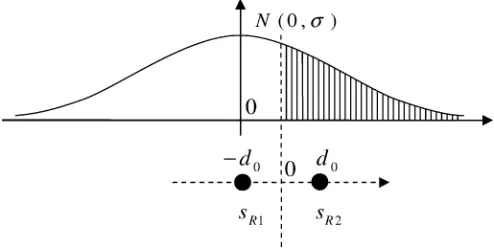
e−t2/2dt, x≥0. (20) For the sake of easy explanation, let us first consider a simple one-dimensional (1-D) scenario. In Fig. 4 we plotted the 1-D real component of the constellation symbolsˆs(il)in the context of the 4QAM modem constellation. The horizontal axis is then divided into two zones, each of which represents one specific 1-D constellation symbolsR i(i= 1, . . . ,2), as separated by the vertical dashed line of Fig. 4. IfsR1is the original gene to be
mutated, the Gaussian distributionN(0, σ)may be centered at the position ofsR1, whereσis the noise variance at a given
SNR level. In this specific example,sR2 is the only mutation
target, and the 1-D transition probability of mutating fromsR1
tosR2; i.e.,p(12)m t , is characterized by the shadow area shown in Fig. 4, which is given by
p(12)m t =Q
d0
σ
(21)
whered0is half of the distance between the neighboring
con-stellation symbols. Similarly, we have
p(21)m t =Q
d0
σ
. (22) We also have a certain probability for the original gene to remain unchanged, which can also be expressed in terms of the Gaussian distribution as
p(11)m t =p(22)m t = 1−Q
d0
σ
. (23)
The corresponding two-dimensional (2-D) symbol transition probabilityp(m tij)can be derived by combining the 1-D real and imaginary transition probabilities.4 For the specific 1-D-based
4QAM example of Fig. 4, we plot the corresponding 2-D con-stellation in Fig. 5. In Fig. 5, for instance, the 2-D transition probability of mutating from the constellation symbolsˆ(1l) to
ˆ
s(2l), namelyp(12)m t , can be calculated by multiplying the two
4Note that the 1-D transition probabilityp(i j)
m t is different from the transition
Fig. 5. Illustration of the 2-D transition probabilityp(i j)m t for 4QAM, which is the product of the relevant 1-D transition probabilities.sR i andsI i(i= 1,2)
denote the 1-D constellation symbols in the context of the real and imaginary components of the 4QAM constellation symbols, respectively.
relevant 1-D transition probabilities according to5
p(12)m t =p(11)m t ·p(12)m t =
1−Q
d0
σ
·Q
d0
σ
(24)
while the associated 2-D probability of remaining in the current state is
p(11)m t =p
(11)
m t ·p
(11)
m t =
1−Q
d0
σ
2
. (25)
However, when mutation takes place during the evolution, the mutating gene or constellation symbol should not be al-lowed to be mutated to itself. Hence, the effect of the probabil-ity of mutating a symbol to itself should be removed. This can be achieved by normalizing the 2-D transition probabilityp(m tij)
(i=j) with the aid of the original gene’s probability of re-maining unchanged, namely p(m tii), following the principles of conditional probability theory [41].
For higher throughput modems, for example for 16QAM and 64QAM, the same algorithm can be invoked for calculating the corresponding 1-D and 2-D transition probabilities. More-over, the proposed BQM scheme can be readily extended to
M-dimensional (MD) constellations, since the MD transition probability associated with a specific MD symbol can be read-ily derived upon multiplying theM number of corresponding 1-D transition probabilities.
3) Simplified BQM: Furthermore, the proposed BQM scheme can be effectively simplified, when only a subset of all the theoretically possible mutation target symbols are con-sidered. More precisely, for the original gene subjected to mu-tation, we may only consider its adjacent neighboring constel-lation symbols as mutation target candidates, since the original transmitted symbol is less unlikely to be corrupted to a relatively distant constellation symbol.
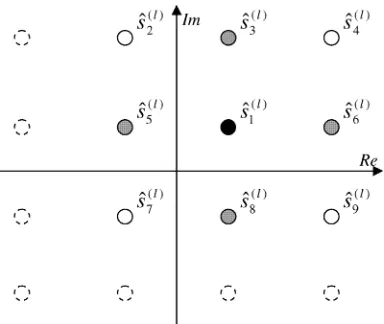
An example of the simplified BQM designed for 16QAM is provided in Fig. 6. As shown in Fig. 6, for example, we assume that sˆ(1l) is the original gene subjected to mutation,
5Note that the superscriptsiandj of the 2-D transition probabilityp(i j) m t
denote the 2-D constellation symbolsˆs(l)i andsˆ(l)j , while the underlined
[image:7.594.104.226.70.170.2]su-perscriptsi andj of the 1-D transition probabilityp(i j)m t represent the 1-D constellation symbolssR iandsR j, respectively.
Fig. 6. Example of the simplified BQM for 16QAM.
TABLE I
POSSIBLETRANSITIONPROBABILITYVALUES FOR THECNUM SCHEME
andsˆ(il)(i= 2, . . . ,9)represents the adjacent neighbors ofsˆ(1l), while the symbols represented by the dashed-line circles are ignored. Therefore, the GA’s entire search space is reduced. Moreover, the search space can be further reduced when we only consider the nearest neighbors ofsˆ(1l)as the legitimate mutation candidates, namely the symbolssˆ(il)(i= 3,5,6,8), which are shown in grey in Fig. 6. Each of these symbols is then assigned an equal 2-D transition probabilityp(1m tj)= 1/4(j= 3,5,6,8), while all other constellation symbols shown in white are ne-glected. Since the transition probability for each selected mu-tation candidate is set to be identical, the BQM scheme is sim-plified to a new scheme similar to UM which we refer to as theclosest-neighbor uniform mutation (CNUM)scheme. Note that in CNUM, the corresponding transition probability value is only dependent on the location of the original gene. For in-stance, if the original gene is located in one of the four corners of the constellation map plotted in Fig. 6, the relevant transi-tion probabilityp(m tij)becomes 1/2, since in this case only two nearest-neighbor symbols exist. The CNUM-related transition probability values of the different modems are summarized in Table I. Hence, by introducing the simplified BQM scheme or the CNUM arrangement, the computational complexity of BQM can be reduced.
E. Iterative GA MUD
Fig. 7. Structure of the MMSE-initialized iterative GA MUD used at the BS.
propose an MMSE-initialized iterative GA (IGA) MUD for mul-tiuser SDMA-OFDM systems.
The detailed structure of the IGA MUD is outlined in Fig. 7. Specifically, the received length-P symbol vectorxof (2) is first detected by the MMSE MUD, which outputs theL
MMSE-detected symbolssˆ(MMSEl) (l= 1, . . . , L)of theLusers and forwards them to L number of independent TTCM de-coders. The TTCM-decoded L-symbol vector, which is more reliable than the MMSE MUD’s output, is then fed into the concatenated GA MUD for assisting the creation of the initial population. Then the genetically enhanced output symbol vec-torˆsGA, which may be expected to become more reliable, will
be fed back to the TTCM decoders in order to further improve the signal’s quality, invoking a number of iterations. Following the last iteration, the final GA solution will be decoded by the TTCM decoders, and the hard-decision version of the estimated information bits of theLindependent users is forwarded to the output, which is only enabled at the final iteration by the switch seen in Fig. 7.
Therefore, two improvements have been achieved by the MMSE-IGA MUD. First, a more accurate initial knowledge of the transmitted signals, namely the output of the TTCM de-coders rather than that of the MMSE MUD, is supplied for the GA MUD. This reliable improvement, therefore, offers a better starting point for the GA’s search. Second, the iterative processing ensures that the detectedL-user symbol vector can be optimized in two dimensions. During every iteration, on one hand, eachL-symbol vector at a specified subcarrier slot is op-timized by the GA in the context of theuser domain. On the other hand, the entire TTCM-coded frame of each user is opti-mized by the TTCM decoder in the context of the TTCM-related
codeword domain, or more specifically thefrequency domain. Therefore, as the iterative processing continues, an information exchange takes place between the two domains, and thus an improved system performance may be expected.
IV. SIMULATIONRESULTS
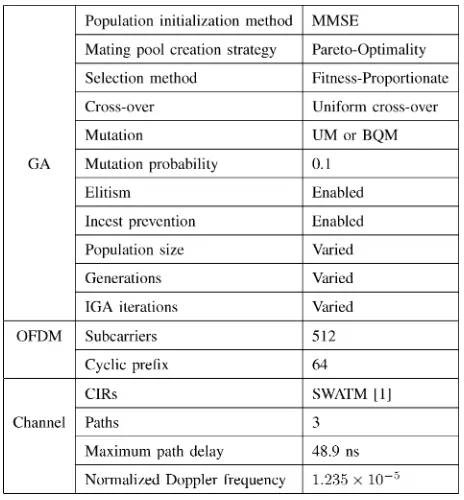
In this section, we characterize the performance of the pro-posed TTCM-assisted concatenated MMSE-GA multiuser de-tected SDMA-OFDM system. The channel was assumed to be “OFDM symbol-invariant,” implying that the taps of the im-pulse response were assumed to be constant for the duration of one OFDM symbol, but they were faded at the beginning of each OFDM symbol [1]. The simulation results were obtained over
TABLE II
VARIOUSTECHNIQUES ANDPARAMETERSUSED INOURSIMULATIONS
a channel characterized by the three-path short wireless asyn-chronous transfer mode (SWATM) CIR given in [1, p. 78]. The maximum path delay is 48.9 ns, while each of the paths experi-ences independent Rayleigh fading having the same normalized Doppler frequency of1.235×10−5. The OFDM modem em-ployedK= 512subcarriers and a cyclic prefix of 64 samples, which is longer than the maximum channel delay spread. If not explicitly stated, it was assumed that the channels’ trans-fer functions were perfectly known. For the iterative TTCM scheme [16] used, the code memoryν was fixed to three, the generator polynomial expressed in octal format was(13 6), and the codeword length and channel interleaver depth were fixed to 1024. For each of the various schemes evaluated, a similar number of overall TTCM decoding iterations was maintained so that the total TTCM-related complexity remained approxi-mately the same for all systems. Table II summarizes the various techniques and parameters used in our simulations.
A. BQM Versus UM
Fig. 8. BER versusEb/N0performance comparison of the TTCM-assisted
MMSE-GA-SDMA-OFDM or MMSE-IGA-SDMA-OFDM system using UM or BQM, while employing a 4QAM scheme for transmission over the SWATM channel, whereL= 6users are supported with the aid ofP=6receiver antenna elements, respectively. The GA-related system configuration are given in Table II.
their noniterative GA aided counterparts, since the initial GA population of the former systems were created based on the first-iteration outputs of the TTCM decoders, rather than on the less reliable MMSE MUD regardless, whether UM or BQM was employed. Secondly, the BQM-aided systems achieved a better performance than the UM-aided schemes, since BQM is more efficient in guiding the GA towards the optimum solu-tion, as seen in Fig. 8. Furthermore, the system employing the BQM-aided two-iteration IGA MUD was capable of achiev-ing a virtually indistachiev-inguishable performance from that of the optimum ML-aided system.
When a high-throughput modem such as, for example, 16QAM, is employed, BQM may significantly outperform UM, as evidenced in Fig. 9, where six users were supported.6 As seen in Fig. 9, even when the IGA was employed, the UM-aided scheme yielded a high residual error floor due to the less efficient mutation strategy. By contrast, BQM significantly improved the GA’s performance by lowering the error floor by about two orders of magnitude. Furthermore, when the number of IGA MUD iterations was increased, the performance of the BQM-aided system can be dramatically improved, while the UM-BQM-aided scheme still suffered from an error floor. This suggests that the BQM-aided scheme is capable of substantially benefitting from both a more meritorious initial GA population, and from a higher number of IGA MUD iterations. On one hand, the improved ini-tial population provides a good starting point for the GA, thus assisting the BQM, which in turn benefits the entire detection process, resulting in a substantial performance improvement. On the other hand, the iterative processing invoked by the IGA MUD further enhances the system’s performance with the aid
6Note that in this case the associated complexity of the ML-aided scheme
is as high as on the order ofO(2m L) =O(24·6) =O(16,777,216), which
[image:9.594.308.550.67.256.2]imposes an excessive complexity, and hence cannot be simulated.
Fig. 9. BER versusEb/N0performance comparison of the TTCM-assisted
MMSE-GA-SDMA-OFDM or MMSE-IGA-SDMA-OFDM system using UM or BQM, while employing a 16QAM scheme for transmission over the SWATM channel, whereL= 6users are supported with the aid ofL= 6receiver an-tenna elements, respectively. The GA-related system configuration are given in Table II.
Fig. 10. BER versusEb/N0performance comparison of the TTCM-assisted
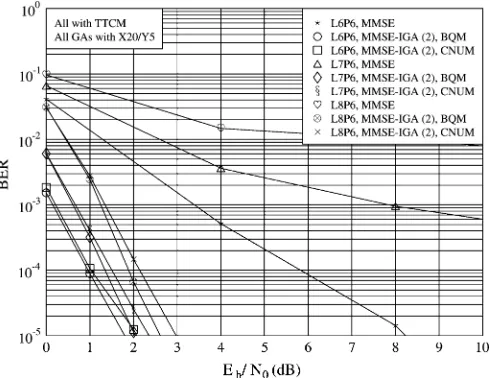
MMSE-IGA-SDMA-OFDM system using BQM, while employing a 4QAM scheme for transmission over the SWATM channel, whereL= 6,7,8users are supported with the aid ofP= 6receiver antenna elements, respectively. The GA-related system configuration are given in Table II.
of the 2-D optimization, as discussed in Section III-E, since the beneficial information exchange between the user domain and the frequency domain assists both the GA MUD and the TTCM decoder in eliminating more and more errors found in the received signal, as the iterative procedure continues.
B. Overloaded BQM-IGA
[image:9.594.303.552.333.520.2]Fig. 11. Iteration gain at the BER of10−5 versus number of IGA MUD
iterations performance of the TTCM-assisted MMSE-IGA-SDMA-OFDM sys-tem using BQM, while employing a 4QAM scheme for transmission over the SWATM channel, whereL= 6,7,8users are supported with the aid ofP= 6 receiver antenna elements, respectively. The GA-related system configuration are given in Table II.
number of receiver antenna elements, the linear MMSE MUD suffered from an insufficient degree of freedom for separating the different users, since the high number of users incurred excess multiuser interference (MUI). This results in a significant performance degradation in the context of the system using the MMSE MUD, when the number of users increased from six to eight, as observed in Fig. 10. However, in such cases, the system employing the proposed BQM-IGA MUD was still capable of maintaining a near-ML performance. For example, when we hadL= 8, the two-iteration based BQM-IGA MUD reduced the BER measured at 3 dB by four orders of magnitude in comparison to the MMSE-aided benchmarker system, as shown in Fig. 10. This result characterizes the robustness of the BQM-IGA MUD, which has successfully suppressed the high MUI experienced in overloaded scenarios.
Fig. 11 shows the iteration gain achieved by the BQM-IGA assisted TTCM-MMSE-SDMA-OFDM system employing 4QAM at the BER of10−5, while using different number of IGA MUD iterations. The iteration gain is defined here as theEb/N0
[image:10.594.309.554.68.257.2]difference of the systems employing different number of IGA MUD iterations measured at the BER of10−5in comparison to the baseline system employing a single IGA MUD iteration. It is found in Fig. 11 that when more users are supported, higher iteration gains may be obtained by iterative detection. For exam-ple, a gain of about 6 dB was attained by the eight-user system at the second IGA MUD iteration, while that attained by the six-user system was only about 0.5 dB. Furthermore, as the number of iterations was increased from two to six, the former scheme provided a further gain of about 1 dB, while no explicit gain was achieved by the latter arrangement, as shown in Fig. 11. It is also seen in Fig. 11 that most of the achievable iteration gain has been attained at the second IGA MUD iteration for all the schemes.
Fig. 12. BER versusEb/N0performance comparison of the TTCM-assisted
MMSE-IGA-SDMA-OFDM system using BQM or CNUM, while employing a 4QAM scheme for transmission over the SWATM channel, whereL= 6,7,8 users are supported with the aid ofP= 6receiver antenna elements, respec-tively. The GA-related system configuration are given in Table II.
C. BQM Versus CNUM
As discussed in Section III-D3, the BQM scheme may be simplified to the CNUM arrangement, which mutates to only one of the closest neighbors of the original gene, thus reducing the complexity of BQM. However, CNUM does not necessarily degrade the system’s performance dramatically. Fig. 12 provides a performance comparison of BQM and CNUM in the fully loaded and overloaded scenarios. As observed in Fig. 12, the BQM-IGA aided system achieved slightly better performance than its CNUM-IGA aided counterpart. This may suggest that in such scenarios the CNUM scheme may become an attractive alternative to the BQM scheme for the sake of further decreasing the complexity imposed.
D. Performance Under Imperfect Channel Estimation
As a further investigation, we provide the simulation results generated in the scenario where the channel state information (CSI) was assumed to be imperfect. The estimated CIRsˆhiwere generated by adding random Gaussian noise to the true CIR taps
hias
ˆ
hi[n] =hi[n] +
σ2
n
ε ni[n], i= 1, . . . ,L (26)
whereε is the effective noise factor,σ2
n is the noise variance at the specific SNR level,niis an AWGN sample having zero-mean and a variance of unity,Lis the number of CIR taps, and
[n]denotes thenth OFDM symbol. In the scenarios associated with imperfect CIRs,εwas set to 64, andLwas set to three for the three-path SWATM channel used. In this case, the effective noise power added to the true CIR taps during each OFDM symbol for the sake of simulating imperfect channel estimation wasσ2
n · L/ε=σn2×4.69%.
Fig. 13. BER versusEb/N0performance comparison of the TTCM-assisted
MMSE-IGA-SDMA-OFDM system using BQM, while employing a 4QAM scheme for transmission over the SWATM channel, whereL= 6,7,8users are supported with the aid ofP= 6receiver antenna elements, respectively. The GA-related system configuration is given in Table II.
assumptions both of perfect and imperfect CSI is provided in Fig. 13. As seen in Fig. 13, the proposed system was capable of attaining an acceptable performance even without accurate channel knowledge. Moreover, it was found that when imperfect channel estimation was assumed, the BQM-IGA aided system outperformed its ML-aided counterpart, especially in the sce-narios associated with higher user loads. This phenomenon may be explained as follows. When the CSI is imperfect, the ML-detected signal becomes less reliable than that ML-detected in the scenario benefitting from perfect CSI. The relatively unreliable output of the ML MUD may readily mislead the TTCM decoder due to error propagation, resulting in a performance degradation. However, the detrimental effects of imperfect CSI may be mit-igated by the proposed IGA MUD. More specifically, the IGA MUD optimizes the detected signal in two dimensions, namely in both the user domain as well as in the frequency domain, as discussed in Section III-E. The beneficial information exchange offered by the IGA MUD between the two domains may effec-tively assist the concatenated detection-decoding procedure in counteracting the detrimental effects of imperfect channel esti-mation. This results in better system performance in comparison to that achieved by the ML-aided system. Furthermore, when a higher number of users had to be supported, the ML-aided system using imperfect CSI suffered more from inaccurate mul-tiuser detection, while a more robust behavior was exhibited by the IGA-aided system, as shown in Fig. 13.
V. COMPLEXITYANALYSIS
Compared to the conventional UM scheme, BQM is ca-pable of significantly improving the GA’s performance, espe-cially in high-throughput or high-SNR scenarios, as discussed in Section IV-A. Furthermore, this performance improvement was achieved at the cost of a modest complexity increase and a modest memory requirement. At different SNR levels, for
each of the2m constellation symbols, a specific set containing
(2m−1)number of normalized 2-D transition probabilities has to be created. However, this only imposes a modest “once-for-all” calculation, since we can derive the associated transition probabilities with the aid of offline experiments for a number of typical SNR levels, where the calculated data can be stored in the base station’s memory, hence incurring no further com-putational complexity. Furthermore, by introducing the simpli-fied BQM scheme of Section III-D3, the associated complexity and memory cost may be dramatically reduced, especially for high-throughput modems such as 16QAM or 64QAM, since the number of mutation target candidates decreases, and thus fewer transition probability calculations are required. More-over, if the CNUM scheme is employed, the associated com-plexity can be further decreased since, in this case, there is no need to calculate the transition probabilities, which are already available in Table I. This may significantly reduce the associ-ated complexity and memory requirement, while still maintain-ing performance similar to that of the BQM scheme as seen in Fig. 12.
As suggested in Sections IV-A and IV-B, the performance of the IGA-aided system can be further improved when the num-ber of IGA MUD iterations or the GA’s parameters, such as the population size, are increased. These will result in a further increased complexity which, however, may still be significantly lower than that imposed by the ML-aided scheme. In Table III we compare the computational complexity imposed by the dif-ferent MUDs in terms of the number of complex additions and multiplications on a per user basis, where the number of re-ceiver antenna elements was fixed to P = 6, and an Eb/N0
value of 3 dB was assumed. At a specific user load, we al-ways selected the IGA-aided scheme for comparison, which achieved an almost indistinguishable performance compared to the corresponding ML-aided system. As shown in Table III, the complexity of the ML MUD is significantly higher than that of the MMSE MUD or the IGA MUD, especially in highly over-loaded scenarios. On the other hand, the IGA MUD reduced the BER by up to five orders of magnitude in comparison to the MMSE MUD at a moderate complexity. It is also worth pointing out that the IGA MUD’s complexity remained nearly identical at differentEb/N0 values according to our simulation results,
which are not included here due to space limitations.
VI. SUMMARY ANDDISCUSSION
TABLE III
COMPARISON OFMUD COMPLEXITY OFNUMBER OFCOMPLEXADDITIONS ANDMULTIPLICATIONSMEASURED ATEb/No= 3dBON APER
USERBASIS IN THE4QAM TTCM-SDMA-OFDM SYSTEM
in all scenarios considered, while maintaining a significantly lower computational complexity than that imposed by the ML-assisted system, especially when the number of users is high, as evidenced by Table III. Furthermore, the proposed BQM-IGA MUD is capable of achieving a near-optimum performance in the so-called over-loaded scenarios, where the number of users supported is higher than the number of receiver antenna ele-ments. In this case the classic linear MMSE MUD results in an excessive residual BER, since the grade of freedom becomes insufficiently high. Moreover, when the channel estimation is imperfect, the proposed scheme still provides a satisfactory performance.
The system parameters of the IGA framework, such as the number of TTCM iterations the number of IGA MUD iterations, and the GA-related parameter settings, are all readily config-urable, enabling us to strike an attractive tradeoff between the achievable performance and the complexity imposed. For spe-cific scenarios, the TTCM scheme used in the system can also be conveniently substituted by other FEC schemes—for example, the TC codes. Therefore, the facility provided by the proposed IGA MUD may make it relavent to applications in multimode terminals, where good performance, low complexity, and easy flexibility are all important criteria.
It is also worth pointing out that the proposed BQM-IGA MUD can be readily incorporated into multiuser CDMA sys-tems such as those of [31]. In this case, the initial detected signal supplied to the GA MUD for creating the first pop-ulation is provided by the bank of matched filters installed at the CDMA BS, rather than by the MMSE MUD. How-ever, the BQM scheme may remain unchanged. Our future re-search will consider various overloaded sphere decoding aided SDMA-OFDM systems.
REFERENCES
[1] L. Hanzo, M. M¨unster, B. J. Choi, and T. Keller,OFDM and MC-CDMA for Broadband Multi-User Communications, WLANs and Broadcasting. Piscataway, NJ: IEEE Press, New York: Wiley, 2003.
[2] S. Verdu, Multiuser Detection. Cambridge, U.K.: Cambridge Univ. Press, 1998.
[3] C. Z. W. H. Sweatman, J. S. Thompson, B. Mulgrew, and P. M. Grant, “A comparison of detection algorithms including BLAST for wireless com-munication using multiple antennas,” inProc. IEEE Int. Symp. Personal, Indoor and Mobile Radio Communications, vol. 1, London, U.K., Sep. 2000, pp. 698–703.
[4] P. Vandenameele, L. van Der Perre, M. Engels, B. Gyselinckx, and H. D. Man, “A novel class of uplink OFDM/SDMA algo-rithms: A statistical performance analysis,” in Proc. IEEE Vehic-ular Technology Conf., vol. 1, Amsterdam, The Netherlands, Sep. 1999, pp. 324–328.
[5] P. Vandenameele,Space Division Multiple Access for Wireless Local Area Networks. London, U.K.: Kluwer, 2001.
[6] M. M¨unster and L. Hanzo, “Co-channel interference cancellation tech-niques for antenna array assisted multiuser OFDM systems,” inProc. IEEE 3G’2000 Conf., vol. 1, London, U.K., Mar. 2000, pp. 256– 260.
[7] M. Sellathurai and S. Haykin, “A simplified diagonal BLAST architec-ture with iterative parallel-interference cancellation receivers,” inProc. IEEE Int. Conf. Communications, vol. 10, Helsinki, Finland, Jun. 2001, pp. 3067–3071.
[8] P. Vandenameele, L. van Der Perre, M. Engels, B. Gyselinckx, and H. D. Man, “A combined OFDM/SDMA approach,”IEEE J. Sel. Areas Commun., vol. 18, no. 11, pp. 2312–2321, Nov. 2000.
[9] U. Fincke and M. Pohst, “Improved method for calculating vector of short length in a lattice, including a complexity analysis,”Math. Comput., vol. 44, pp. 463–471, Apr. 1985.
[10] E. Viterbo and J. Boutros, “A universal lattice code decoder for fading channels,”IEEE Trans. Inf. Theory, vol. 45, no. 5, pp. 1639–1642, Jul. 1999.
[11] M. O. Damen, A. Chkeif, and J.-C. Belfiore, “Lattice code decoder for space-time codes,”IEEE Commun. Lett., vol. 4, no. 5, pp. 161–163, May 2000.
[12] B. M. Hochwald and S. Ten Brink, “Achieving near-capacity on a multiple-antenna channel,”IEEE Trans. Commun., vol. 51, no. 3, pp. 389–399, Mar. 2003.
[13] L. Brunel, “Multiuser detection techniques using maximum likelihood sphere decoding in multicarrier CDMA systems,”IEEE Trans. Wireless Commun., vol. 3, no. 3, pp. 949–957, May 2004.
[14] D. Pham, K. R. Pattipati, P. K. Willet, and J. Luo, “An improved com-plex sphere decoder for V-BLAST systems,”IEEE Signal Process. Lett., vol. 11, no. 9, pp. 748–751, Sep. 2004.
[15] T. Cui and C. Tellambura, “Approximate ML detection for MIMO systems using multistage sphere decoding,”IEEE Signal Process. Lett., vol. 12, no. 3, pp. 222–225, Mar. 2005.
[16] L. Hanzo, T. H. Liew, and B. L. Yeap,Turbo Coding, Turbo Equalisa-tion and Space-Time Coding for Transmission Over Fading Channels. Piscataway: NJ: IEEE Press, New York: Wiley, 2002.
[17] G. Ungerb¨oeck, “Channel coding with multilevel/phase signals,”IEEE Trans. Inf. Theory, vol. IT-28, no. 1, pp. 55–67, Jan. 1982.
[18] P. Robertson and T. W¨orz, “Bandwidth efficient turbo trellis-coded mod-ulation using punctured component codes,”IEEE J. Sel. Areas Commun., vol. 16, no. 2, pp. 206–218, Feb. 1998.
[19] E. Zehavi, “8-PSK trellis codes for a Rayleigh fading channel,”IEEE Trans. Commun., vol. 40, no. 5, pp. 873–883, May 1992.
[20] X. Li and J. A. Ritcey, “Bit-interleaved coded modulation with iterative decoding using soft feedback,”Electron. Lett., vol. 34, no. 10, pp. 942– 943, May 1998.
[21] M. Jiang, S. X. Ng, and L. Hanzo, “TCM, TTCM, BICM and BICM-ID as-sisted MMSE multi-user detected SDMA-OFDM using walsh-hadamard spreading,” inProc. IEEE Vehicular Technology Conf., Milan, Italy, 2004, pp. 1129–1133.
[22] J. Holland,Adaptation in Natural and Artificial Systems. Ann Arbor, MI: Univ. of Michigan Press, 1975.
[23] D. E. Goldberg,Genetic Algorithms in Search, Optimization, and Machine Learning. Reading, MA: Addison-Wesley, 1989.
[24] An Introduction to Genetic Algorithms. Cambridge, MA: MIT Press, 1996.
[25] M. Mitchell and D. Whitley, “A genetic algorithm tutorial,”Stat. Comput., vol. 4, no. 2, pp. 65–85, Jun. 1994.
[26] S. Forrest, “Genetic algorithms: Principles of natural selection ap-plied to computation,”Science, vol. 261, no. 5123, pp. 872–878, Aug. 1993.
[28] X. F. Wang, W.-S. Lu, and A. Antoniou, “A genetic-algorithm-based multiuser detector for multiple-access communications,” inProc. 1998 IEEE Int. Symp. Circuits and Systems, vol. 4, Monterey, CA, pp. 534– 537.
[29] C. Erg¨un and K. Hacioglu, “Multiuser detection using a genetic algorithm in CDMA communications systems,”IEEE Trans. Commun., vol. 48, no. 8, pp. 1374–1383, Aug. 2000.
[30] K. Yen and L. Hanzo, “Antenna-diversity-assisted genetic-algorithm-based multiuser detection schemes for synchronous CDMA sys-tems,” IEEE Trans. Commun., vol. 51, no. 3, pp. 366–370, Mar. 2003.
[31] L. Hanzo, L.-L. Yang, E.-L. Kuan, and K. Yen,Single- and Multi-Carrier DS-CDMA: Multi-User Detection, Space-Time Spreading, Synchronisa-tion and Standards: Piscataway, NJ: IEEE Press, New York: Wiley, 2003.
[32] K. Yen and L. Hanzo, “Genetic algorithm assisted joint multiuser symbol detection and fading channel estimation for synchronous CDMA sys-tems,”IEEE J. Sel. Areas Commun., vol. 19, no. 6, pp. 985–998, Jun. 2001.
[33] S. Abedi and R. Tafazolli, “Genetically modified multiuser detection for code division multiple access systems,”IEEE J. Sel. Areas Commun., vol. 20, no. 2, pp. 463–473, Feb. 2002.
[34] U. Fawer and B. Aazhang, “A multiuser receiver for code division multiple access communications over multipath channels,”IEEE Trans. Commun., vol. 43, no. 2–4, pp. 1556–1565, Feb./Apr. 1995.
[35] E. Zitzler and L. Thiele, “Multiobjective evolutionary algorithms: A com-parative case study and the strength pareto approach,”IEEE Trans. Evol. Comput., vol. 3, no. 4, pp. 257–271, Nov. 1999.
[36] B. L. Miller and D. E. Goldberg, “Genetic algorithms, selection schemes and the varying effects of noise,”Evol. Comput., vol. 4, no. 2, pp. 113–131, 1996.
[37] L. J. Eshelman and J. D. Schaffer, “Preventing premature convergence in genetic algorithms by preventing incest,” inProc. 4th Int. Conf. Genetic Algorithms, R. K. Belew and L. B. Booker, Eds., CA, 1991, pp. 115– 122.
[38] G. Syswerda, “Uniform crossover in genetic algorithms,” inProc. 3rd Int. Conf. Genetic Algorithms, J. D. Schaffer, Ed., CA, 1989, pp. 2–9. [39] A. E. Eiben, R. Hinterding, and Z. Michalewicz, “Parameter control in
evo-lutionary algorithms,”IEEE Trans. Evol. Comput., vol. 3, no. 2, pp. 124– 141, Jul. 1999.
[40] J. G. Proakis,Digital Communications, 4th ed. New York: McGraw-Hill, 2001.
[41] W. Ledermann, E. Lloyd inHandbook of Applicable Mathematics, Volume II: Probability.vol. 2, New York, Wiley, 1980.
Ming Jiang (S’04) received the B.Eng. and M.Eng. degrees in electronics engineering from the South China University of Technology (SCUT), Guangzhou, China, in 1999 and 2002, respectively. He is currently working toward the Ph.D. degree in the Communications Group, School of Electronics and Computer Science at the University of Southamp-ton, SouthampSouthamp-ton, U.K.
His research interests include heuristic and adap-tive optimization algorithms, joint multiuser de-tection, space-time coding, transceiver diversity, frequency-hopping, and MIMO OFDM/MC-CDMA systems.
SoonXin Ng(M’02) received the B. Eng. degree (First class) in electronics engineering and the Ph.D. degree in mobile communications from the Univer-sity of Southampton, Southampton, U.K., in 1999 and 2002, respectively.
Currently, he is continuing his research as a Postdoctoral Research Fellow at the University of Southampton. His research interests are mainly in adaptive coded modulation, channel coding, turbo coding, space-time coding, and joint source and chan-nel coding. He has published numerous papers and coauthored a book in this field.
Lajos Hanzo(F’02) received the Master degree in electronics in 1976 and the Ph.D. degree in telecom-munications in 1983. In 2004, he received the Doctor of Sciences degree from the University of Southamp-ton, SouthampSouthamp-ton, U.K.
During his 28-year career in telecommunications, he has held various research and academic posts in Hungary, Germany, and the U.K. Since 1986, he has been with the Department of Electronics and Com-puter Science, University of Southampton, where he holds the Chair in Telecommunications. He has coau-thored eleven John Wiley/IEEE Press books totalling about 9000 pages on mobile radio communications, published in excess of 500 research papers, or-ganized and chaired conference sessions, presented overview lectures, and has been awarded numerous distinctions. Currently, he is managing an academic re-search team, and working on a range of rere-search projects in the field of wireless multimedia communications sponsored by industry, the Engineering and Phys-ical Sciences Research Council (EPSRC) U.K., the European IST Programme, and the Mobile Virtual Centre of Excellence (VCE), U.K. He is an enthusiastic supporter of industrial and academic liaison, and he offers a range of industrial courses.