COMMISSION DECISION
C(2007) 1853 of 30/04/2007
on a Multi-annual Indicative Planning Document (MIPD) 2007-2009 for the former Yugoslav Republic of Macedonia
THE COMMISSION OF THE EUROPEAN COMMUNITIES, Having regard to the Treaty establishing the European Community,
Having regard to Council Regulation (EC) No 1085/2006 of 17 July 2006 establishing an Instrument for Pre-Accession Assistance (IPA)1, and in particular Article 14(2)(a) thereof, Whereas:
(1) Regulation (EC) No 1085/2006 creates a coherent framework for Community assistance for candidate countries and potential candidate countries. Article 6 (1) of that Regulation requires that the assistance shall be provided on the basis of multi-annual indicative planning documents established by country in close consultation with the national authorities.
(2) In accordance with Article 6 (3) of Regulation (EC) No 1085/2006 assistance for countries listed in Annex I to that Regulation shall be based on the European Partnerships and cover the priorities and overall strategy resulting from a regular analysis of the situation in the country and on which preparation for further integration into the European Union must concentrate.
(3) The former Yugoslav Republic of Macedonia is listed in Annex I to Regulation (EC) No 1085/2006.
(4) The Council adopted on 30 January 2006 the European Partnership with the former Yugoslav Republic of Macedonia2.
(5) This Decision is in accordance with the opinion of the IPA Committee set up under Article 14 of Regulation (EC) No 1085/2006,
1
OJ L 210, 31.7.2006, p.82 2
HAS DECIDED AS FOLLOWS:
Sole article
The Multi-annual Indicative Planning Document (MIPD) for the years 2007-2009 for the former Yugoslav Republic of Macedonia attached to the present Decision is hereby adopted. Done at Brussels, […]
For the Commission
[…]
EN
ANNEX
Multi-annual Indicative Planning Document (MIPD)
Preface
The main objective of the Instrument for Pre-Accession Assistance (IPA)1 is to help the country to face the challenges of European integration, to implement the reforms needed to fulfil EU requirements and progress in the Stabilisation and Association Process and to lay the foundations for fulfilling the Copenhagen criteria for EU membership.
The IPA instrument consists of five components (IPA-I) the Transition Assistance and Institution Building component2; (IPA-II) the Cross-Border Cooperation component which applies to border regions between beneficiaries from member states, candidate states and countries in pre-accession status; (IPA III, IV and V) the Regional3, Human Resources4 and Rural Development5 components which are planned for Candidate Countries.
The basic policy documents for setting down the priorities for programming of assistance under IPA are the European Partnership, the Enlargement Strategy Paper, which presents the Commission’s overall enlargement policy for the candidate and potential candidate countries, as well as the annual Progress Report on advances made on the road towards the EU, including implementation and enforcement of EU standards. IPA will allow flexibility in order to respond to possible new priorities identified in annual Progress Reports of the Commission.
This Multi-annual Indicative Planning Document (MIPD) is the strategic document for IPA. It is established for a three year rolling period, with annual reviews. It follows the Multi- annual Indicative Financial Framework (MIFF) which indicatively allocates funds per beneficiary and per component. It draws on the pre-established IPA components.
The priorities set out in the MIPD components will serve as a basis for the annual programming of EU funds in 2007, 2008 and 2009.
1 Council Regulation (EC) No 1085/2006 of 17 July 2006, Official Journal L210, page 82.
2 The Transition Assistance and Institution Building Component translates the priorities set out in the European Partnership in 3 sub-components: Political requirements where EC assistance will be used to support a stable, modern, democratic, multi-ethnic and open society based on the rule of law. Special impetus will be given to Public Administration and Judiciary Reform; Socio-economic requirements where EC assistance will be used in support of the development of the socio-economic environment; European standards where EC assistance will support and accompany the country in its European integration plan (legal approximation, administration needs and requirements for decentralised management of EU funds). 3 The Regional development Component supports policy development as well as preparation for the implementation and
management of the European Regional Development Fund and Cohesion Fund.
4 The Human Resources Development Component supports policy development and the preparation for the implementation and management of the European Social Fund.
Executive Summary
The overall objective of pre-accession assistance is to support the country's efforts to comply with the Copenhagen accession criteria. Thus, the country has to establish stable institutions guaranteeing democracy and the rule of law, it has to operate a functioning market economy and it must adopt and implement the acquis and show its ability to assume the obligations of EU membership. This also involves preparing for the implementation of the Community’s cohesion policy and rural development instruments by introducing strategic planning and management principles which guide the implementation of EU structural instruments.
Pre-accession assistance for the period 2007-2009 is thus concentrated on four strategic areas: 1. Support to Institution Building
2. Improve cross-border cooperation
3. Prepare for participation in the Community's cohesion and rural development policy 4. Prepare for decentralised management of EU funds
Building on past and ongoing financial assistance and drawing on the European Partnership's recommendations the MIPD identifies priorities for making the overall strategy operational.
Institution Building is the core activity of component I. Support will be given to improving governance and the observance of the rule of law as well as enhancing economic development and social cohesion. Furthermore, pre-accession assistance will support the country in adopting the acquis as well as with building institutional and administrative capacity to transpose, implement and enforce Community standards.
Assistance to Cross-border cooperation (CBC) under component II aims at fostering good relations between regions and countries and familiarising future member states with rules and procedures governing the European Territorial Cooperation objective under Structural Funds. The MIPD foresees continuing CBC with Greece and Bulgaria and developing bilateral CBC-programmes with the other neighbouring countries.
EU assistance shall help to prepare the beneficiary for participation in the Community's cohesion and rural development policy from the date of accession. This is to be done through IPA components III to V. Support under component III is concentrated on the transport and environment sectors.In the transport sector support is aimed at helping to complete corridors VIII and X. In the environment sector the priorities are targeted at introducing waste water collection and treatment systems meeting EU requirements. Component IV will support system actions and pilot projects in the area of employment, education and social inclusion. As for employment, initiatives shall contribute to further developing employment services, supporting employment strategy implementation and tackling the labour market situation of the most vulnerable. Activities related to education aim at modernising education and training systems and providing access to education for ethnic communities. In the field of social inclusion, assistance is aimed at fostering the integration of disadvantaged people and enhancing the participation of civil society. Component V sets out priorities for the sustainable development of rural areas and on the implementation of the acquis concerning the common agricultural policy and related policy areas, such as food safety, veterinary and phytosanitary matters. In particular, the envisaged activities aim at progressively upgrading the agricultural production and processing sector to Community standards and to improving employment and income opportunities in rural areas.
Section 1 – Assessment of strategic priorities and objectives
1.1 – Introduction
At the European Council of December 2005, the former Yugoslav Republic of Macedonia was granted "candidate country" status. This decision reflects the progress achieved so far by the country towards membership of the European Union. It constitutes a milestone on the path to accession, as well as a new challenge. However, turning a membership perspective into reality is a process which will take more time and significant efforts. The decision to open accession negotiations will be taken only once the country has reached a sufficient degree of compliance with the accession criteria.
Candidate status has an important implication for pre-accession assistance. As a candidate country, the former Yugoslav Republic of Macedonia will have in principle access to all five IPA components (subject to certain conditions). However, currently the implementation of pre-accession assistance is delegated by the European Commission to the European Agency for Reconstruction (EAR) in Skopje. Under IPA, the intention is that the European Commission will confer the management of the EU pre-accession funds on the national authorities once the relevant structures and systems are in place and all the conditions are met.
Although the basic source for setting down the priorities of EU assistance is the enlargement package, in particular the European Partnership, coherence of the MIPD with the beneficiary country's own needs and priorities has been ensured through consultations with the national authorities, who agreed on the present MIPD.
1.2 - Objectives of pre-accession assistance
In view of the candidate status, the overall objective of pre-accession assistance to the former Yugoslav Republic of Macedonia is to support the country's efforts to comply with the accession criteria. These comprise the political and economic criteria as well as the ability of the country to assume the obligations of EU membership. Part of the last involves preparing for the implementation of the Community’s cohesion policy by introducing into the national framework for economic and social development those strategic planning and management principles which guide the implementation of EU structural instruments.
In order to define strategies which effectively contribute to the achievement of the overall objective, the MIPD is based on the assessment of needs and challenges and on priorities identified in the Progress Report and the European Partnership, taking into account past and ongoing EU assistance as well as the beneficiary's National Plan for Adopting the Acquis. It is clear from these documents and the needs assessment, that although the country has achieved a high degree of macroeconomic stability and made significant efforts in improving the rule of law and to align the country’s legislation with the acquis, which resulted in granting candidate status to the country, still some major deficiencies exist in all of these areas.
and limited progress in land and property registration. Therefore, steps remain to improve the efficiency and accountability of the police and the public administration as a whole. The judiciary and the police reform will have to be fully implemented and will require sustained commitment. Corruption remains widespread, which negatively affects many aspects of economic, social and political life. Thus, the fight against corruption needs further strengthening. Pursuing the implementation of the Ohrid Agreement and the Stabilisation and Association Agreement are also key issues for progressing in the European integration process.
Significant efforts have been made to align the country’s legislation with the acquis, particularly in areas related to the internal market and trade. However, further efforts to align with the acquis have to be made. The country needs to intensify its efforts in particular as regards agriculture, competition, environment, justice, freedom and security. The telecommunications market has not yet been liberalised and intellectual property rights are not yet adequately protected. Furthermore, the country faces major difficulties in implementing and effectively enforcing the legislation.
Despite macroeconomic stability, the economy faces serious deficiencies in a number of areas which have to be addressed by EU assistance where appropriate The country’s endowment of transport infrastructure needs to be completed at the level of the major corridors, to facilitate external trade and movement of persons. Thus, upgrading the transport infrastructure is of vital importance for the country's economy. The environmental standards are low. As identified in the European Partnership, investments are particularly needed in waste water treatment systems. As regards the labour market, official data show low employment rates and high unemployment, in particular long-term and youth unemployment. Significant employment disparities exist, geographically and by ethnic origin. Thus labour market institutions must be strengthened to help tackling especially the weakest to be reintegrated into the labour market. Furthermore, insufficient investment has had a negative impact on the overall quality of education, and the participation rate in higher education is still relatively low, thus lowering the long-term growth prospects of the economy as a whole. Thus, investing in human capital is essential for the country to catch up with EU levels.
The agriculture sector is dominated by very small and highly fragmented family farms, engaged mainly in subsistence agriculture, while only a small surplus is marketed locally. Economies of scale are thus not exploited. The agricultural sector remains relatively problematic for several reasons, such as lack of irrigation, land fragmentation and lack of proper management systems in general.
As EU assistance will be implemented under the decentralised implementation system once the Commission has conferred its management to the national authorities, the country has started to install the relevant institutions and structures. Yet, this process is only beginning, and the national administration is not yet endowed with the necessary capacity to assume full responsibility for the decentralised management of EU funds.
To summarize, pre-accession assistance shall help the country, above all, to advance along the road to EU integration and support the country's efforts to comply with the Copenhagen criteria. Against this background pre-accession assistance shall help to overcome the deficiencies that have been identified. In doing so, assistance will focus on:
• supporting economic development and enhancing social cohesion; in particular by strengthening the business environment, especially as regards the SME sector and by supporting the implementation of national and regional development plans;
• adopting the acquis as well as administrative capacity-building for transposing, implementing and enforcing the acquis in line with the priorities identified in the European Partnership
• preparing the country for the implementation of the Community’s cohesion policy, in particular by focusing in the field of transport and environment as well as education, employment and social inclusion;
• preparing the country for the implementation of the Community’s rural development policy, in particular by focusing on investments in agricultural production to restructure and upgrade the sector to Community standards and on investments to develop and diversify economic activities in rural areas;
• capacity building of national administrations to assume full responsibility for the decentralised management of EU funds.
Furthermore, certain cross cutting issues, which are outlined in annex A, will have to be reflected in all activities programmed under IPA.
1.3 - Overview of past and ongoing pre-accession assistance 1.3.1 - Past and ongoing EU assistance: an overview
Over the past decade the EU has delivered substantial support to the former Yugoslav Republic of Macedonia through various programmes such as ECHO, Obnova, PHARE or the Emergency Response Programme. The EU also provided macro-financial assistance in the form of balance-of-payments support. In 2001, CARDS was launched to focus on political, institutional and economic transition. The total assistance of the EU to the country since 1992 amounts to more than 800 million euro.
The EU’s main institution for managing assistance in the region - the European Agency for Reconstruction (EAR) - has been efficient in delivering substantial amounts of assistance. Starting its operations in 2002, the EAR took over responsibility for the previous programmes and took forward the implementation of CARDS. The EU assistance portfolio managed by the Agency in the country amounts to some €326 million. By the end of 2006 more than 80% of this total had been contracted, and more than 70% disbursed.
After the crisis of 2001 EU assistance was directed mainly at rehabilitation and reconstruction of infrastructure as well as at police activities. The extensive support to the Police Reform has contributed significantly to the stabilisation process. A reform process was initiated, staff has been trained on both national and sub-national level, equipment and infrastructure has been provided. As the country’s political and economic stability grew in recent years, EU financial assistance responded by widening its focus to include institution-building in the key areas of the EU acquis communautaire. EU assistance has been delivered within four priority areas identified in the Country Strategy Paper 2002-2006: Democracy and the rule of law, Economic and social development, Justice and home affairs, and Environment and natural resources.
Table 1: CARDS allocations 2002–2006 to the former Yugoslav Republic of Macedonia (in euro mn)
Sector 2002 2003 2004 2005 2006 Total
Democracy and the rule of law 17 12 11.5 17 10.1 56.6
Economic & social development 11.5 11 15 8.6 13.1 59.2
Justice and home affairs 7 12.5 24 9.5 7.6 60.6
Environment and natural resources ~ 1 2 2 1.3 6.3
Other 6 7 6.5 7.9 7.9 35.3
Total allocation 41.5 43.5 59 45 40 229
Assistance in the area of democracy and the rule of law has resulted in sound implementation of the Ohrid Framework Agreement, which stipulates equitable representation of the country’s ethnic communities in the public administration and aims at transferring responsibilities to local self-government units. EU support to the public finance and harmonisation of the administrative structure with the acquis has improved the public accountability and its planning capacities. Support to the Civil Society has contributed to improved inter-ethnic relations and to a livelier NGO sector.
implementation. Furthermore, the phytosanitary inspectorate and the veterinary sector have been substantially upgraded, thus contributing to improved food safety standards and agricultural trade. Assistance in infrastructure projects has resulted in improved water supply and sewage systems as well as in upgraded road infrastructure and border crossings. Financial support has contributed to the development and implementation of employment action plans and improved vocational education and training systems. The Tempus programme has provided considerable support to the modernisation and the reform of the higher education system. Since 1997, Tempus has funded over 100 university cooperation projects in the areas of curriculum development, university management and structural reform.
In the field of justice and home affairs EU assistance contributed to strengthening the judiciary capacities and structures, e.g. via the establishment of the Judiciary Training Institute or support to the Public Prosecutor's Office. Pre-accession assistance resulted in an enhanced police reform process, improved policing capacities as well as increased border security. With CARDS support the national Asylum Seekers Centre has been constructed and migration legislation and procedures have been brought in line with EU standards.
EU assistance in the area of environment has resulted in further approximation of national legislation to EU standards and in the elaboration of a coherent environmental strategy aiming at sustainable development. Environmental investments also helped mitigating pollution stemming from old environmental problem areas and from industrial sites.
Building on the experience gained from programming and implementing EU funds in the country the following lessons have been learned:
• Implementation of assistance has required a level of flexibility commensurate the with administration standards in the country. In particular, challenges were faced during the implementation of assistance as regards absorption capacity, where national institutions were endowed with inadequate staff, both in terms of quality and quantity. Thus, absorption capacity must be taken into account when programming assistance and targeted support to improving the capacities of public administrations is needed.
• Limited budgetary resources to maintain material investments or to cover regular operational expenses and insufficient working space to accommodate staff and equipment represent bottlenecks to efficient implementation of pre-accession assistance. Therefore, programming on the one hand has to consider scarce budgetary resources and on the other hand, the country has to allocate sufficient resources to complement EU assistance.
• The national government experienced difficulties in fulfilling their commitments regarding staffing, budget availability or completion of legal approximation prior to project deployment. Increased ownership of EU assistance to the country is essential for the effective programme implementation. It is necessary taking into account the country's own needs (e.g. as outlined in respective national documents). However, co-financing requirements shall also contribute to increased ownership Political will and coherent decision-making on behalf of the beneficiary is essential in rectifying shortcomings and in ensuring sustainability in the implementation of pre-accession assistance. These issues have to be addressed during programme planning and implementation and have to be backed up by a regular dialogue between the relevant Commission services and the beneficiary. • Donor coordination is of great importance to avoid any overlap of assistance (as discussed
• Harmonisation of legal instruments across different sectors was not always an easy task. However, strong horizontal alignment (across sectors and stakeholders) could be achieved by improving the coordination efforts among the ministries and relevant departments.
Overall, sound vertical alignment of programme development (from design to implementation) with strong attention to the conditionalities for successful implementation of the programmes proved to decrease the risks related to the difficulties described above.
1.3.2 - Relevant IFI and bilateral assistance
IFI and bilateral financial assistance to the country is substantial. All major IFIs are present in the field, such as the World Bank as the country's largest creditor, the IMF with its multi-annual Stand-By Arrangement, the EIB, the EBRD etc. In addition, Member States as well as other countries (e.g. US, Norway, Switzerland) also provide significant financial support. Clearly, IFI and bilateral financial assistance has not only decisively contributed to stabilise and improve the political, economic and social situation in the country but has also complemented the EU association agenda, which is recognised by all members of the donor community.
With IFI and bilateral assistance being channelled into all possible areas (partly covered also by past EU assistance and the present MIPD) the biggest challenges to the programming of EU financial assistance was and is to avoid overlaps and to ensure that different but related activities are aligned. In the past it proved to be rather difficult to obtain a clear and comprehensive picture of all donors' activities in the country, despite close cooperation with the donor community. Nonetheless, coordination has improved with initiatives taken by the beneficiary and the large stakeholders, including the Commission and the EAR, to enhance the exchange of information. The past EU programmes were developed in close cooperation with the national authorities and other international agencies to ensure that the activities closely corresponded to the needs of the country. Together with the Secretariat for European Affairs, the Commission and the EAR have actively sought to streamline EU support through an intensive dialogue also with the EU member states and other multilateral and bilateral donors. Relevant information has been exchanged on both programming and operational level. This holds also true for the present MIPD which has been consulted with the IFIs and other bilateral donors. Furthermore, the European Commission together with the World Bank have set up a Joint Office for South East Europe to support their role as joint coordinators of international assistance for the reconstruction and development of the country.
Section 2 – Pre-accession assistance strategy for the period 2007-2009
2.1 Strategic Choices
In translating the objectives set out in Section 1.2 into specific priorities for assistance within the 3 year horizon of this document, a number of elements need be taken into consideration. These include, among others, sequencing, programme maturity, absorption capacity, the availability of funds and alternative sources of financing, and the synergies that may be developed with the activities of other donors. In many cases, these issues can only be assessed at the programming stage. Nevertheless some general strategic choices can already been identified in this document.
Based on the assessment of strategic needs and priorities set out in section 1 the pre-accession assistance strategy for the period 2007-2009 is concentrated on four areas of activity:
1. Support Institution Building 2. Improve cross-border cooperation
3. Prepare the beneficiary for participation in the Community's cohesion policy and rural development instruments
4. Prepare for decentralised management of EU funds
In the planning period 2007-2009 the major share of IPA assistance will be oriented towards
Institution Building, which is delivered through component I. The funds under this
component are quite substantial and allow supporting a wide range of activities. Nonetheless, the strategic choice is to concentrated around two areas of intervention, which are included in the priorities identified in the European Partnership: (i) implementation of sectoral reforms and (ii) adoption and implementation of the acquis.
(i) Assistance will be provided to consolidate the sectoral reforms (i.e. public administration reform, judicial reform, police reform, etc.) that have been adopted and to ensure their effective enforcement. The implementation of these reforms is also essential to improving the economic development in the country, which is hampered by cumbersome procedures, inefficient administration and corruption. Given the limited absorption capacity of the public administration in the country priority will be given to supporting the institutions that are directly concerned by the reforms. Other assistance and capacity building provided to the institutions involved in the implementation of components III, IV, and V will be covered under component I, providing it is acquis-related and reflects European Partnership priorities.
(ii) As regards the adoption and implementation of the acquis, and with a view to helping the country complying with the Copenhagen criteria, priority will be given to areas, where the harmonisation of the legislation is an obligation linked to the implementation of the Stabilisation and Association Agreement and where the volume of legislation to be harmonised is particularly large and where harmonisation requires costly investments that must be spread over many years.
pre-accession assistance is aimed at familiarising future member states with rules and procedures governing the European Territorial Cooperation objective under Structural Funds.
Through the IPA components III to V, EU assistance will help to prepare the beneficiary to take full ownership of the Community's cohesion policy and rural development instruments from the day of accession. Therefore, it is necessary to introduce into the national framework for economic and employment development the strategic planning and management principles that guide the implementation of EU structural instruments. Since the volume of funds available under these components for the period 2007-2009 is relatively small, it is essential to ensure a strong concentration in order to achieve some impact in the areas of intervention. For these reasons, and in view of other sources of funding available, in the period covered by the current MIPD, support under component III will be concentrated exclusively in the transport and environment sectors, and be delivered through a single operational programme. Support for a regional competitiveness programme under component III will be considered in a subsequent phase, in the light of the funding available, the management structures in place and the progress made in improving the business environment, particularly for SMEs. Component IV will support system actions and pilot projects in the areas of employment, education and social inclusion. And component V is aimed at, step by step, upgrading the agricultural production and processing sector to Community standards, and at improving employment and income opportunities in rural areas.
As a candidate country, the former Yugoslav Republic of Macedonia will have access to all five IPA components. The funds will be implemented under the decentralised implementation system once the Commission has conferred its management to the national authorities.6 The national administration must be endowed with the necessary structures as well as the management expertise and capacity to assume full responsibility for the decentralised management of IPA funds. Until then, components I and II will be implemented under centralised management, while for components III, IV and V implementation of operations and disbursement of funds may not start until decentralised management has been conferred by the Commission. Thus, assistance channelled through the various components shall help to establish these structures and to develop accountable administrations and institutions, with appropriate capacity, including internal controls and audits.
All these activities need to be closely coordinated in order to avoid overlapping; this holds especially true for measures related to decentralised management of EU funds or Institution Building in areas such as transport, environment, employment or education. Measures should rather be complementary, not only in relation to each of the components but also in relation to other donors’ activities. It is important to take into account funding from other donors in order to maximise the synergies among the various forms of assistance. With this in mind, close coordination among all actors, internally (Commission services) as well as externally (other donors and the beneficiary), has already been established through regular meetings and consultation.
Monitoring and evaluation arrangements will be established in line with provisions of the IPA Implementing Regulation.
2.2 Multi-annual planning by component
The following section will present component by component the pre-accession assistance strategy for the period 2007-2009, including also financial indications in percentages. As outlined in the Multi-Annual Indicative Financial Framework (MIFF), the nominal allocations for each component for the period 2007-2009 are:
Table 2: The former Yugoslav Republic of Macedonia: Multi-Annual Indicative Financial Framework*
Component 2007 2008 2009 Total
I – Institution Building 41.6 39.9 38.1 119.6
II – Cross-border cooperation 4.2 5.3 5.6 15.1
III – Regional Development 7.4 12.3 20.8 40.5
IV – Human Resources
Development 3.2 6.0 7.1 16.3
V – Rural Development 2.1 6.7 10.2 19
Total 58.5 70.2 81.8 210.5
Component I – Transition Assistance and Institution Building
1. Current situation
The European Partnership and the Commission's Opinion on the application of the former Yugoslav Republic of Macedonia for membership of the European Union, both issued in November 2005, underlined the substantial reforms that the country undertook after the crisis in 2001. The country has stable democratic institutions and has shown a strong commitment to the implementation of the Ohrid Framework Agreement and the Stabilisation and Association Agreement (SAA). There are no major problems in the area of respect for fundamental rights. Public services are gradually changing the way they provide services to the public, notably through decentralisation and the introduction of e-government services. The functioning of the police and judiciary are changing in order better to guarantee the rule of law. The country has made significant efforts to align its legislation with the acquis, particularly in areas related to the Internal Market. And last but not least, the economy has achieved a high degree of macroeconomic stability.
Nevertheless, many challenges in implementing the necessary political, institutional and economic reforms remain, such as:
• Implementing fully the SAA and the Ohrid Framework Agreement; • Further improving the functioning of the judicial system and the police; • Strengthening the rule of law and upgrading the fight against corruption;
• Pursuing vigorously the economic reforms and overcoming institutional weaknesses, in particular so as to attract investment by curbing administrative red tape and creating a level playing field for business;
• Improving the functioning of the public administration and its capacity to implement the community acquis.
2. Major areas of intervention and goals
Given the candidate status of the country, pre-accession assistance is aimed at supporting the country's efforts to comply with the Copenhagen Criteria. Component I's major task is to provide for the Institution Building needed to meet this objective. Against this background, financial assistance will support the following major areas of intervention:
1. Good governance and the rule of law 2. Economic development and social cohesion
3. Ability to assume the obligations of EU membership
4. Support to programming and participation in Community Programmes and Agencies
3. Main priorities and objectives
achievements realised under CARDS assistance, the main objectives of EU assistance through IPA in the major areas of intervention can be specified as follows:
3.1. – Good governance and the rule of law
In order further to improve the country’s alignment with the political criteria, and taking into account commitments made under the SAA, EU assistance will continue to help to advance
public administration reform by supporting the implementation of a comprehensive Public
Administration Reform strategy, which will streamline administrative procedures and improve the capacity of the public administration. Support will continue to the decentralisation process. In addition, it remains important to improve equitable representation in the public administration in line with the constitutional and legal provisions deriving from the Ohrid Framework Agreement. It is also imperative to continue to fight corruption at all levels of the administration. Furthermore, in order to follow the EU’s Public Internal Financial Control (PIFC) model, it is essential further to enhance financial management and financial control procedures and to establish appropriate monitoring and evaluation systems through coherent legislation and adequate institutional capacity.
In the field of justice and home affairs, EU assistance to the judiciary will help to complete the implementation of the Strategy and Action Plan on Judicial Reform, and possibly to further develop it, as well as to support further reform efforts and to improve the overall functioning of the judiciary. Specific elements of the Judicial Reform Strategy that may need further attention include efficiency of the court system, the Training Academy for judges and prosecutors, and the Administrative Court and the basic courts that have specialised departments for cases of organised and serious crime. Possible weaknesses of the new system of enforcement of civil judgements may also need to be addressed.
On police reform it will be necessary to support completing the implementation of the Action Plan for the Reform of the Police, to ensure consistency and continuity of approach, to consolidate progress already made and to maintain momentum. Support to the Police Reform process should directly address the three pillars of the National Police Reform Strategy: (1) support to the organisational and institutional reform of the police services, in line with the strategic recommendations of preceding advisory missions, the national strategies that have been adopted (Police Reform, Border Management) and the Action Plans deriving from them, (2) tactical level support to the development and functional consolidation of technical and management capacities, and (3) operational level support to the operational policing structures. In addition, significant further efforts are necessary in order to step up the fight against organised crime, including trafficking in arms and drugs.Continued efforts have to be undertaken to adopt and implement a strategic plan for the development of administrative structures and capacities for the management of migration and visa issues, as well as guidelines for processing asylum cases. IPA funds will also assist the country's efforts to complete the implementation of the Integrated Border Management Strategy and Action Plan.
3.2. - Economic development and social cohesion
Economic development and social cohesion are supported by pre-accession assistance through various channels. First, activities related to supporting the ability to assume the obligations of membership (see below) add essentially to enhanced development and cohesion by introducing European standards into national legislation and thus upgrading the framework for the functioning of the market economy. Second, the activities envisaged under components III -V have a direct impact on economic and social cohesion. Third, measures to improve legal certainty and the rule of law will improve the business environment and thus also contribute to more growth and jobs. Against this background, the following areas of assistance shall be seen as complementary action to the activities in the other sections of component I as well as those foreseen under components III, IV and V.
EU assistance will aim at strengthening the competitiveness of the economy and further improving the investment climate and business environment, in particular by supporting small businesses and the implementation of the European Charter for SMEs, improving administrative procedures and by completing the registration of all land and real estate as well as strengthening the cadastre. Furthermore, well-regulated and properly controlled and supervised financial markets (e.g. insurance and banking sectors, stock market, etc.) are essential to sustainable growth and a prerequisite for attracting domestic investment and FDI.
It is essential to help improve the administrative capacity, on both central and local levels, in the area of fiscal policy (e.g. tax collection, expenditure control, etc,) and it may be necessary to prepare for the IT interconnectivity to the EU tax systems.
In order to improve trade and the external economic situation of the country, it is necessary to help facilitate trade and to strengthen the country’s administrative capacities for formulating and implementing a comprehensive trade policy and to enhance the regulatory framework for trade and provision of services, focusing on priorities established by the WTO, the SAA and bilateral/regional trade agreements.
Financial support to capacity-building in the field of regional policy will facilitate the implementation of national and regional development plans.
3.3. - Ability to assume the obligations of membership
The focus of assistance in this area will be on the adoption of the acquis including building institutional and administrative capacity for transposing, implementing and enforcing the acquis according to the priorities identified in the European Partnership.
be paid to improving quality of financial services and addressing the issue of money
laundering.
The implementation of the EU framework for information society and media will require the administrative capacity of the regulatory authorities to be closely monitored and, where necessary, upgraded.
In the area of statistics substantial improvement is needed to enable the production of statistics of good quality and their dissemination. Areas of specific interest include national accounts statistics and the underlying basic statistics on national and regional level. The Introduction of European System of Accounts 1995 (ESA 95) standards is important in order to ensure that statistics are in accordance with EU requirements. In addition, attention may be given to further development of the statistical infrastructure.
Strong emphasis will be placed on measures and activities to address consumer and health protection, including through the implementation of international agreements in the field of public health. With regard to environmental protection, particular attention will be given to the strengthening of administrative capacities and to the incorporation of environmental protection requirements into other sectoral policies, e.g. through the development of environmental impact assessments, including compliance of agriculture and industry with key parts of the acquis in the environmental sector.
With regard to the customs union, it is necessary further to align the customs legislation and procedures with the acquis and to strengthen the customs administration in order to ensure its proper functioning. EU assistance may support appropriate measures which aim at establishing interconnectivity with the computerised systems of the EU.
Component I will also have to provide for Institution Building aspects of sectors covered by other components in order to complement activities within those components.
− In the area of transport and energy, support will be given to reorganising and strengthening the public administration and institutions in the transport and energy sector and to implementing the requirements of the Energy Community Treaty and the European Common Aviation Area Agreement and, where appropriate, support will be given to the participation of the country in the SEE-FABA initiative7
− As regards social policy, employment and education, the capacities in central and local state institutions need further strengthening. Special attention may also be given to the development of a national strategy on social inclusion, to actions related to the Joint Inclusion Memorandum (JIM), Joint Assessment Paper (JAP) and to the implementation of the national Roma strategy.
− In the field of agriculture and rural development the capacity of the administration to enforce the management mechanisms of the Common Agricultural Policy needs to be further upgraded. With regard to food safety, veterinary and phytosanitary policy, support will be given to the adoption of the acquis and to upgrading the laboratory sector, including inspectors and staff.
3.4. – Support to programming and participation in Community Programmes and Agencies
For the preparation of projects and tenders a special facility shall ensure smooth programming and the maintenance of high quality in delivering IPA funds. This facility may also be used in urgent and unforeseen cases where EU assistance is required.
The EU agreed in the Thessaloniki Agenda to open participation in Community Programmes to the Western Balkan countries, following the approach used in the past for candidate countries. The Commission proposed concrete steps in its Communication of 3 December 20038, underlining the need for a selective and gradual approach. As participation in Community programmes can entail sizeable expenditure for a partner country, IPA support may be used to prepare for participation and to co-finance the costs.
4. Expected results and time-frame
EU assistance will help to address the priorities within an appropriate period of time. However, given the number of priorities and their complexity, some of them may only be implemented in the medium or even in the long term. Nevertheless, it is expected that the country will make considerable progress within the scope of this MIPD to the extent that by the end of it:
9 the implementation of public administration reforms will have advanced significantly; 9 the SAA and the Ohrid Framework Agreement will have been fully implemented; 9 the Strategy on Civil Society as well as the Roma strategy are being implemented; 9 the functioning of the judicial system and the police will have substantially improved; 9 the investment climate and business environment will have further improved and will be
more conducive to FDI and local economic activity (in particular with regard to SMEs); 9 markets will have become more efficient and competitive as a result of closer compliance
with the EC acquis and EU best practice (e.g. market for electronic communications, energy market, financial services, general service activities, etc.);
9 the transposition of the Community acquis will have been largely completed in the area of the Internal Market, transport and energy, taxation and Customs Union and be well advanced in other major areas of EU legislation;
9 the functioning of the public administration and its capacity to implement the community acquis will have significantly improved, and the country will have started to establish a credible track record of implementation in key areas of the acquis.
The principal means for assessing the achievement of these expected results will be the annual Progress Reports.
5. Type of assistance to be provided
Support to Institution Building shall be implemented using a combination of contracting tools. Financial support will continue to be provided in principle through services, in particular
technical assistance, through either service contracts, grant agreements, twinning or a small-scale framework facility, as applicable. Where appropriate, this will be supplemented by supplies, works or other actions necessary for the provision of equipped operational facilities.
6. Financial indications
The following table presents the financial indications for each major area of intervention.
Table 3: Financial indications – Component I"Institution Building"
Good governance and the rule of law 25 % - 40 % Economic development and social cohesion 10 % - 25 % Ability to assume the obligations of membership 35 % - 50 %
Component II – Cross Border Co–operation
1. Current situation
In the past, the former Yugoslav Republic of Macedonia has benefited from Community assistance to participate in two cross–border cooperation (CBC) programmes: since late 1990s, with Greece in the context of the INTERREG II and III A programme (which became a "Neighbourhood Programme" in 2004–06) and since 2004 with Bulgaria in the context of the PHARE/CARDS Neighbourhood Programme. In addition, from 2004, the former Yugoslav Republic of Macedonia received CARDS support to participate in the INTERREG III B CADSES transnational programme.
Implementation of relevant projects has been severely hampered by the delays that accumulated in setting up the necessary joint management structures. The process of developing the call for proposals-guidelines for applicants and the filling of posts for the Joint Technical Secretariats proved to be extremely time-consuming. Therefore, only by the end of 2006 will the first projects enter their implementation phase. It is expected that CBC under IPA will benefit from the existing institutions in the case of the former Yugoslav Republic of Macedonia, Bulgaria and Greece. However, no CBC programmes have so far been implemented at borders with neighbouring Western Balkan countries
2. Programmes under IPA Cross–border Co–operation Component
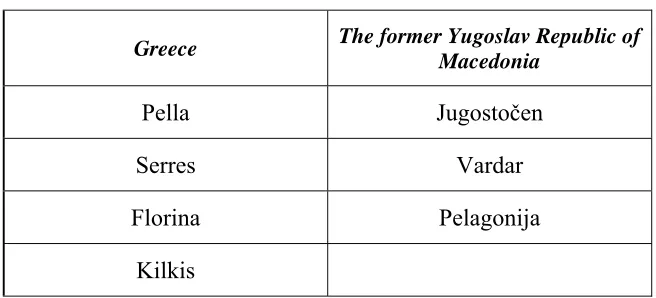
[image:22.595.105.433.497.646.2]It is foreseen to continue cross–border cooperation at borders with current and prospective Member States, i.e. the CBC programmes with Greece and Bulgaria. At "cruising speed" IPA CBC programmes will operate on both sides of the border on the basis of one set of rules, under a single management structure, for the purpose of financing genuinely joint projects for the common benefit of the two parties. Eligible regions (NUTS level III regions, or equivalent, along the border) are as follows:
Table 4: CBC with Greece
Greece The former Yugoslav Republic of
Macedonia
Pella Jugostočen
Serres Vardar
Florina Pelagonija
Kilkis
Tabel 5: CBC with Bulgaria
Bulgaria The former Yugoslav Republic of
Kyustendil Severoistočen
Blagoevgrad Istočen
Jugostočen
Component II will also support cross–border cooperation programmes to be initiated at all borders between the country and adjacent Western Balkan countries. The list of eligible areas, selected according to the IPA implementing rules, will be established in the relevant IPA CBC programmes. In addition, building on the experience gained in the context of the CADSES programme, component II funds are available to support, as appropriate, participation in the relevant Structural Funds transnational programmes (and, as appropriate, interregional programmes) where the country is eligible (e.g. "Europe South–East" transnational programme).
3. Major areas of intervention and goals.
Building on initial achievements under CBC activities supported in the period 2004-2006, the MIPD 2007–2009 will continue the support to regions and sectors targeted earlier, including the following:
CBC with Bulgaria
- Strengthening cooperation among local/ regional authorities, associations, NGOs and enterprises from neighbouring regions;
- Small infrastructure to improve potential for tourism or local/ regional transport and communication, including environmental aspects;
- People-to-people action;
- Technical Assistance/ Information dissemination
CBC with Greece
- Economic development of eligible border regions;
- Upgrading of tourism and transport infrastructure, as well as environmental improvements;
- People-to-people action;
- Technical Assistance/ Information dissemination
CBC with Neighbouring Western Balkan countries
- Environmental Protection (natural parks, lakes, rivers);
- Infrastructure (Border crossings, transport and environmental infrastructure); - Economic development of border areas;
- People to people action; - Technical Assistance
The cross-border programmes involving the former Yugoslav Republic of Macedonia are likely to cover the following main objectives, depending on the outcome of programme preparations and negotiations between the participating countries.
CBC with Bulgaria
- To improve and extend existing or create new links among local/ regional administrations, associations, NGOs or enterprises to enhance economic and social development of eligible border regions;
- To improve tourism and transport infrastructure with a view to increase the potential for the development of tourism as well as, in line with or apart from it, to contribute to the protection of the environment.
- To intensify contacts at local level among citizens from inside and outside the EU; - To help with programme implementation and to contribute to timely delivery of results.
CBC with Greece
- To reduce the gap in economic development between border regions and other parts of the country by creating additional job opportunities as a result of cooperation among economic actors;
- To enhance the tourism potential of the border region and to increase the number of foreign visitors, as well as to improve environmental standards;
- To intensify contacts at local and regional level among citizens inside and outside the EU; - To help with programme implementation and to contribute to timely delivery of results.
CBC with Neighbouring Western Balkan countries
- To continue or to start activities aiming at protecting defined areas against environmental threats and degradation;
- To achieve a secure and efficient border management by providing necessary upgrades of infrastructure;
- To improve local infrastructure in the environmental sector; - Enhancing competitiveness of local enterprises;
- Intensification of contacts among citizens from border areas.
5. Expected results and time frame
As the CBC programmes with Bulgaria and Greece are very similar in structure, due to comparable situations in the border area, the expected results can be summarized in the following way:
- Closer economic cooperation is expected to enhance the competitiveness of enterprises, create new business opportunities and to increase employment;
- Enhancing knowledge of neighbouring regions by contacts between their inhabitants and setting up social networks shall contribute to preventing tensions and to fostering mutual understanding;
CBC with Neighbouring Western Balkan countries
- Reduced level of water pollution and progress with reforestation;
- Less time-consuming border passing and acceleration of freight transport;
- Reduction of pollution by wastewater-treatment and better supply of fresh water; - Opportunities for economic growth and increase in employment;
- Operational Management structures established, to manage future programmes.
6. Forms of assistance to be provided
As regards CBC programmes, the identification of suitable joint projects to be financed should primarily take place through a competitive joint call for proposals agreed between participating countries. Pre–identification of projects with a genuine cross–border value by the CBC Joint Monitoring Committee is also possible. In the case of the transnational programmes of the European Regional Development Fund (ERDF), the participation of the country will follow the implementing rules of those programmes.
7. Financial indications
Within the component II funds, the following indicative amounts are earmarked for CBC with Member States, the neighbouring Western Balkan countries and for the possible participation of the country in the ERDF transnational/interregional programmes.
Table 6: Indicative financial allocation by country and year (in EUR million)
CBC programmes 2007 2008 2009 Total
with Bulgaria 0.7 1.3 1.3 3.3
with Greece 0.8 1.3 1.5 3.6
with neighbouring Western Balkans countries and ERDF
programmes 2.7 2.7 2.8 8.2
TOTAL 4.2 5.3 5.6 15.1
Table 7: Indicative financial allocation by major area of intervention
CBC-Programme Bulgaria Greece
Economic development 40% - 60% 30% - 50%
Tourism / Infrastructure 30% - 50% 20% - 40%
Building cross-border networks 10% - 20% 10% - 20%
Technical assistance Max. 10% Max. 10%
Components III and IV – “Chapeau” section
One of the key objectives of IPA assistance under components III and IV is to support candidate countries in policy development, as well as preparation for the implementation and management of the Community’s cohesion policy, in particular in their preparation for the European Regional Development Fund, the Cohesion Fund and the European Social Fund. In accordance with Article 158 of the Treaty, the EU structural instruments have as objective to strengthen economic and social cohesion by reducing regional disparities and the backwardness of the least developed regions. In this regard the approach to be followed in the programming of components III and IV must take account of the framework and guidelines for the EU Cohesion Policy for the period 2007-2013 as established in the “Community Strategic Guidelines on Cohesion”.
As the Guidelines point out, in pursuing economic development, two complementary sets of conditions need to be satisfied. The first is the existence of a suitable endowment of both basic infrastructure and a labour force with appropriate levels of skills and training. The second is that research and innovation should be accorded high priority and that information and communication technologies should be widely accessible. The volume of funds available under IPA for components III and IV is not sufficient to have by itself a significant, direct, macro-economic impact on national development indicators. It is essential therefore to ensure a strong concentration and synergies with other funding, in order to achieve some impact in the areas of intervention. However, even with a high degree of focus, the direct impact of the programme will be limited.
The resources under components III and IV should be utilised, first and foremost, to introduce into the national framework for economic and employment development the strategic planning and management principles guiding the implementation of EU structural instruments, also via a learning by doing process. Therefore, in the period covered by the current MIPD, support under component III will concentrate exclusively in the transport and environment sectors, delivered through a single operational programme. Support for a regional competitiveness programme will be considered in a subsequent phase, in light of the funding available, the capacity of the management structures and the general improvement of business environment, particularly for SMEs. Such future programme could also consider existing research and technological capacity and means to enhance the cooperation between the private sector and research and technology institutions. Support to improve capacity of regional actors and to improve business environment will be available also under component I. The principle of coherence between interventions under components III and IV will also be taken into consideration, both at strategic level (also in the context of the strategic coherence framework) and at the level of implementation of the two components.
Component III – Regional Development
1. Current Situation
Transport
The geographic location of the former Yugoslav Republic of Macedonia places it at the crossroads of South-eastern Europe, making it an important transit route for land traffic between Central Europe, the Aegean Sea, the Black Sea and the Adriatic Sea. This location contributed to the development of international traffic on two typical corridors which cross the country along two main axis: North-South (Corridor X) and East-West (corridor VIII), recognised as pan-European corridors, linking to the Trans European Transport Networks.
The total length of Corridor X within the territory of the former Yugoslav Republic of Macedonia is 172 km. The road corridor is motorway for the majority of its length, except for two stretches linking to the Greek border (33km) and to the Serbian border (7,3 km) which remain to be completed. The primary railway line is completed (215 km), electrified and equipped with all necessary security and communication systems.
The total length of Corridor VIII in the territory of the former Yugoslav Republic of Macedonia is 304 km. The road infrastructure is composed primarily of 108km of motorway and 178 km of highway. The existing railway line has a length of 339 km but is not connected with the railway network in the neighbouring countries of Albania and Bulgaria. The two missing connections are 86 km towards Bulgaria and 66 km towards Albania. Both countries have railway connections nearing the Macedonian borders.
The Ministry of Transport and Communications is the institution in charge of transport policy, but several other independent bodies and public institutions are in charge of various areas of the transport sector. The Fund for National and Regional Roads is in charge of road planning, construction, maintenance and financing. Its investment budget has increased significantly in real terms over recent years, funded mainly through loans, while the road maintenance budget remained constant in absolute terms and is "transferred" to Makedonijapat, a state company which is in charge of maintenance of the main roads, on direct contract with the Fund.
The rail system is operated by Macedonian Railways, a public sector enterprise which generates important deficits. The company is heavily indebted and if its management structures are not significantly reformed it will continue to generate significant operating losses which must be born by the government budget, at the expense of capital expenditures.
Environment
separate basins: the Aegean Basin (80% of the country), the Adriatic Basin and the Black Sea basin. The largest river, the Vardar, has a length of 301 km in the country's territory, crosses to Greece and flows to the Aegean Sea. The country has three large tectonic lakes (Ohrid, Prespa and Dojran) covering a total area of 666 km², located in border areas shared with Albania and Greece. In addition there is a large number of glacial lakes in high mountains and artificial lakes spread all over the country.
Industrial and agriculture facilities and urban centres are major sources of water pollution. The rate of wastewater treatment is extremely low; consequently surface-water and ground water pollution affects large parts of the country. The Vardar River which supplies 75% of the country's total water resources is heavily polluted by untreated industrial and urban waste water, affecting the country but also Greece and the Aegean Sea.
Approximately 70% of the urban population is connected to drinking water, 60% is served by sewage connections but only 6% is connected to the 3 existing water treatment plants serving agglomerations with a population above 10,000. The percentage of connection to the public water systems in the municipalities is between 82-100%. In rural areas the percentage is very low and it varies from 10-100%. Only 12 cities have specially built sewerage systems. The city of Skopje has built a special sewerage for waste and atmosphere waters. 60% of the households are connected to the public sewerage system, 21% have sceptical manholes. The rest households release their waste waters without any control.
Air pollution poses as a serious environmental problem, caused by industry (e.g. metallurgic and chemical industries, thermal power plants) and traffic. Half of the country's urban population is affected by poor air quality.
Solid waste also represents a serious environmental challenge. There are 55 municipal registered landfills out of which only Drisla (Skopje Region) is managed relatively in an appropriate way. Industrial solid waste usually is stored in industrial landfills together with the remaining waste from the processes or on communal landfills. The only waste incinerator currently in operation is not compliant with EU directives. There are two additional incinerators which are not in operation. Municipal solid waste management practices are inadequate and casual waste disposal sites lacking minimum environmental safety requirements are widespread. Improper disposal of industrial and hazardous waste constitute also a serious problem. There is high risk of contamination of ground water, surface water and soil, threatening human and animal health and biodiversity throughout the country, including in a number of protected areas.
The Ministry of Environment and Physical Planning is the Government department responsible for the development and implementation of environmental policy, as well as coordination with other departments having environmental responsibilities. The Government has recently adopted a package of legislation and strategies aiming to implement an environmentally sound development policy. This has contributed significantly to the approximation to EU standards. However, institutional and administrative capacity to implement and enforce laws, policies and strategies is limited, and need to be upgraded.
2.1 Transport
As a landlocked country, the former Yugoslav Republic of Macedonia depends heavily on reliable transport infrastructure linking to neighbouring countries, and through them to other economic centres of the world. Improving the country's connectivity is important therefore to its economic and social development, but also to promote effective regional exchanges and trade and a stronger integration in South East Europe.
The effective, efficient and safe movement of passengers and goods across international borders also depends on the level of interoperability between organisational and technical systems on both sides of the border. Delays due to incompatibility between procedures and systems can represent considerable financial, security and safety costs and represent serious obstacles to the development of regional and extra-regional exchanges. Investments in transport infrastructure serving international traffic should be accompanied therefore with measures to put in place management systems and norms which are in line with European standards, aiming to overcome border-crossing organisational and technical obstacles, in coordination with the neighbouring countries concerned.
The European Partnership sets out a number of short-term and medium-term priorities regarding transport policy. A number of these priorities concern legislation alignment and the adoption of the acquis. IPA support to the implementation of these priorities will be provided under component I. Other priorities however require infrastructure investments in the rail and road sectors, as well as in the reform of management structures, namely:
– Implementation of the Memorandum of Understanding on the Development of the South East Europe Core Regional Transport Network;
– In the rail sector, establish a regulatory body that is independent from the infrastructure manager and railway undertakings.
The MOU signed in June 2004 between the representatives of the countries and of the administrative entities of the Western Balkans and the Commission expressed a firm political intend to co-operate on the development of infrastructure on the South East Europe Core Regional Transport Network and to enhance policies which facilitate its development. That includes maintenance, reconstruction, rehabilitation, upgrading and new construction of main and ancillary infrastructure as well as its operation and use, with a view to fostering the most efficient and environmentally friendly transport modes on a regional scale.
The MOU also committed the participants to jointly develop and implement an annual and multi-annual rolling action plan, in order to provide a platform for a most efficient use of funds and know-how provided by public and private sources, and committed that task to the South East Europe Transport Observatory, (SEETO). The MOU also acknowledge the need to maximise the involvement of the private sector and international financial institutions in the development, operation and use of the Network, including their involvement in stakeholder's dialogue during the planning and implementation stages of project studies.
Having regard to the above framework, IPA assistance under component III will be targeted to the development and implementation of infrastructure investments which contribute to the completion and efficient and safe operation of corridors VIII and X forming an integrant part of the Network, with priority to those projects which are particularly relevant and pertinent to international exchanges and traffic in the longer term (forecast for 2020) and to strengthen integration and cohesion into neighbouring countries and with the EU.
2.2 Environment
The former Yugoslav Republic of Macedonia recognises that environment protection and nature conservation are fundamental constitutional values which everybody has the responsibility to protect and improve. The preservation of the country's rich natural resources, especially fresh water and biological and landscape diversity are regarded as important values for the sustainable development and preservation of the quality of life.
The European Partnership sets out the following short-term and medium-term priorities:
Short-term:
- improve the implementation of legislation and environmental monitoring;
- strengthen the Environmental Inspectorate and other enforcement bodies. Establish a credible enforcement record. Ensure that fines and other sanctions are effectively applied and have a dissuasive effect;
- strengthen administrative capacity at national and local levels and start the preparation of strategic plans, including financing strategies;
- develop an environmental investment strategy based on estimates of alignment costs.
Medium-term:
- integrate environmental protection requirements into other sectoral policies, in particular through the development of environmental impact assessments;
- increase investments in environmental infrastructure, in particular waste water collection and treatment, drinking water supply, tackling air pollution and waste management;
Financial and technical support to assist the country to implement the first five priorities may be provided partially through component I. Assistance under component III will be limited therefore to the implementation of some of the investments listed under the sixth priority, with particular emphasis to waste water treatment and waste management where the needs for public sector investments will be higher.
The second National Environmental Action Plan adopted in March 2006 provides the strategic framework for IPA assistance under this component. Furthermore, the EU CARDS regional funded project "Priority Environmental Investment Projects" provided useful analysis to support environmental infrastructure investment planning, including in the identification of key environmental priority projects, in particular regarding the waste water sector.