Rochester Institute of Technology
RIT Scholar Works
Theses
Thesis/Dissertation Collections
2005
New Readings
Gi Dong Lee
Follow this and additional works at:
http://scholarworks.rit.edu/theses
This Thesis is brought to you for free and open access by the Thesis/Dissertation Collections at RIT Scholar Works. It has been accepted for inclusion in Theses by an authorized administrator of RIT Scholar Works. For more information, please [email protected].
Recommended Citation
New Readings
By
Lee, Gi Dong
Submitted in partial fulfillment of the
Requirements for the Degree of
MASTER OF FINE ARTS
MFA Imaging Arts
COLLEGE OF IMAGING ARTS SCIENCES
ROCHESTER INSTITUTE OF TECHNOLOGY
ROCHESTER,
NEW YORK
September 2005
Therese Mulligan
Therese Mulligan, Ph.D.
Committee, Chair
Professor
Coordinator, MFA in Imaging Arts
School of Photographic Arts
&Sciences
William Osterman
William Osterman
Professor
School of Photographic Arts
&Sciences
Angela Kelly
Angela Kelly
Associate Professor
School of Photographic Arts
&Sciences
Date
Date
ThesislDissertation Author Permission Statement
Title of thesis or dissertation: ----~~~~-L~~~a+~---
!Yew
R-eo.G'l"""f<.
Name of author: Degree:
Program: College:
I understand that I must submit a print copy of my thesis or dissertation to the RIT Archives, per current RIT guidelines for the completion of my degree. I hereby grant to the Rochester Institute of Technology and its agents the non-exclusive license to archive and make accessible my thesis or dissertation in whole or in part in all forms of media in perpetuity. I retain all other ownership rights to the copyright of the thesis or dissertation. I also retain the right to use in future works (such as articles or books) all or part of this thesis or dissertation.
Print Reproduction Permission Granted:
I, Gi Dong Lee , hereby grant permission to the Rochester Institute
Technology to reproduce my print thesis or dissertation in whole or in part. Any reproduction will not be for commercial use or profit.
Signature of Author: ___ G~i =D....:0c..:.n.;..;g"'"-=L=e=e _______________________ Date: __________ _
Print Reproduction Permission Denied:
I, , hereby deny permission to the RIT Library of the Rochester Institute of Technology to reproduce my print thesis or dissertation in whole or in part.
Signature of Author: ____________________________________ Date: _ _ _ _ _
Inclusion in the RIT Digital Media Library Electronic Thesis & Dissertation (ETD) Archive
I, Gi Dong Lee ,additionally grant to the Rochester Institute of Technology Digital Media Library (RIT DML) the non-exclusive license to archive and provide electronic access to my thesis or dissertation in whole or in part in all forms of media in perpetuity.
I understand that my work, in addition to its bibliographic record and abstract, will be available to the world-wide community of scholars and researchers through the RIT DML. I retain all other ownership rights to the copyright of the thesis or dissertation. I also retain the right to use in future works (such as articles or books) all or part of this thesis or dissertation. I am aware that the Rochester Institute of Technology does not require registration of copyright for ETDs.
I hereby certify that, if appropriate, I have obtained and attached written permission statements from the owners of each third party copyrighted matter to be included in my thesis or dissertation. I certify that the version I submitted is the same as that approved by my committee.
New
ReadingsBY
GI DONG LEE
B.F.A.,Photography,Art Center CollegeofDesign, 2002 M.F.A., Photography,Rochester Institute ofTechnology, 2005
ABSTRACT
Thisthesisexploresthesearchforacreative processfor myphotographic studies
overthepasttwoyears atRochester InstituteofTechnology. Itexplainsthe thought
behindtheartworksuchaswhy Iaminterestedinthegenre of stilllife, inspiration,
process, andmyfutureartistic goals.
The subjectmatter ofmythesisexhibitionmotivated metoexploretheworldof
stilllife. Bypaintingonanobject,myimageryhas evolvedintoa newreadingthatledto
a newinterpretationofthe stilllifeboth physicallyand psychologically.Mythesis
imagesemphasize anewaesthetic experience notusuallyassociated with traditionalstill
lifephotography.
In mygraduatestudies,I havecometoknowthatIneedthefreedomtoexplore
ACKNOWLDGEMENTS
Iwouldliketo say"thankyou"
toThereseMulligan, Ph.D.,mythesis chair,
andcommitteemembers, Willie OstermanandAngelaKelly. Dr.Therese Mulligan
has introducedmetoa lotof significantideasabout art andshehasclarifiedforme
various challenges withinmywork.Willie Osterman haspushedme, challengedme
and confused meto arrive at good solutions.AngelaKelly's knowledge has directed
metomanynewideas. Iwishtoexpressmygratitudetomycommittee membersfor
theirsupport and advice. Ithas been invaluable.
Iwouldliketo recognizemygraduate colleagues whohaveshowedinterest
andgenerosityandhaveencouraged and advisedmywork. Finally, aheartfeltthank
youtomyparentsandfamilyfortheirsacrifice and emotional supportthroughoutmy
graduate studies.
Dedicated
To
Myparents(Ho-San LeeandYong-SoonKim) andmyfamily
Contents
1.1 Introduction 1
2.1 Whytheinterestinstilllife? 2
2.2 Whydoesthestilllifecontinuetobe
animportantgenre? 4
2.3 Inspiration 6
3.1 Mythesisexhibition 9
3.2 Graduateexperience 13
- Still Life I
Portraits
- Still Life II
Minimalism
4.1 Tabletop 23
-Lighting - Background
- Objects
- Color
- Digital Process foroutput
Conclusion 31
1.1 Introduction
Theprimarygoal ofmy thesisproject entitled"New
Reading,"
is basedontheidea
oftryingtomake a subjectof stilllifeusingvariousbooksthatIhavepaintedtocreate a
unique subject. Ihave been exploringtheart ofthestilllifeforthelast fiveyears. Still
lifecanbedefinedas a collection of one or moreinanimateobjectsthat arearrangedby
the artist, thephotographerorbycircumstance. Stillliferequires totalcontrol overevery
aspect ofthecomposition setting upthedisplaywith objects andlightinganddeciding
with exposurehowto take thephotograph.While somecompositionsmaybecomplex,
others canbesimple.In myexperience,bothapproaches canbe dynamic and effective.
Photographyis one ofthemosthistoricallyimportantmediumsin recognizingthe
senseofsight. Ithasexpandedthepossibilityofexpressing artisticintent. It hasalso
influencedotherfieldsofmedia,includingpaintingandinstallation.However,in
photography andart, thegenre ofthestilllifehasfacedchallenges.Today, thestilllife in
photographyis asubjectthatisbecomingmore neglected. Oneofthereasonsis thatstill
lifephotographyis also usedincommercial photography. Butin fineartphotography, the
stilllife doesnotonlyrepresentthecaptureofthetruelikenessbutalso incorporatesthe
personalityoftheindividual. Perhapswe canlookto developmentsinnewimaging
technologiestoraisethestatusofthestilllifein photography toa new placeinstilllife
images. Newdigital technologies,such assoftware, scannersandprinters,provide new
opportunitiestodevelop anew stilllife aesthetic,becausetheywould give credenceto
thestilllifetocreate theimageswithdigitalmanipulation andcorrectionsuch aslighting,
Thepurpose ofmy thesisistoanalyzetheimportantrepresentationof stilllife
photographyinconsiderationofits historicalbackground,my interestand creative
process, andtoday'sdigitalandprinting technologicalboom. Iwillillustratewhat
functionand valueis inmywork andhowit isrelatedtomyworkthroughstilllife
paintings andphotographs. Intechnologicaldevelopment, Iseektoresolvethenew
meaningof stilllifephotography,such asthedigitalprocessforoutput andhowto
maintain stilllifeas fineart,howtobalancerelationsbetweentheself andthe world,and
howtoattain asatisfactory understandingofstilllife.
In mystilllifework,Iwanttoexpressmy sensibilitytospace andfeeling.
Drawinguponthepaintings oftheearlytwentieth century,Ihavetried toreplicate
respects oftheenormous range oftheiraesthetic and philosophicalthought.Mywork
seekstoexpress abstract stilllife photographywithelements ofModernismand
Postmodernism. Isearchforthesubstanceofobjects and non-essentials are abandoned.
Givingvariousmeanings, I endeavortocreate worksinwhichform,shape andlineare
directandstrong, integratedwithharmoniouscolors.
2.1 Whymy interest in stilllife?
When Istartedlearningaboutstilllifephotography, Iwasalwayslookingtofind
myownway intheartworld.Iwantedto createa new orderbecauseI alwaysthought
thatmyphotographs weretooconventional. As Brian Walliswroteinhis essay "What's
wrongwiththispicture?"
"Modernismis exhausted; itsonce provocative or outrageous
products lieentombedintheculturalinstitutionstheyoncethreatenedand
offended."
1)
mypicturesandtheirestablishedmodernistic order.Since comingtostudyinAmerica,I
learnedalotabouthowtoseetheartworld,whatistheterritoryofart, andwhywe need
art.
Keeping
theseideasalwaysinmind,Ihaveattemptedtofind differentperspectives
onphotography
by
exploringthegenre ofstilllife,althoughtherearemanyinteresting
photographic subjectssuch aslandscapes,portraits, documentary,anddigital
photography. Ineededtodevelopnew strategic plansfor myapproachtostilllife
photography.
I aminterestedinstilllifephotography because itembodiestheborderline
betweenfactandfiction. Iknowmanyphotographers contendwith impliedveracity, so
theyare alwaysinventingother realities.Tome,straight photographdoesnotliterally
replicate a scene becausethereisatransition thatbreaks fromreality.Thestilllifegenre
isaneffectivetool:Itcanimplya real situation,whileopeningtheworldtoimaginary
possibilities. Importantly, it isanotherwaytocommunicatethemeaningsandfeelingthat
Iwanttoconvey.
Anotherinterestingaspectisthatstilllife photography isawonderful genreto
develop andhoneavision.Idonotneedtoleavethehouseortraveltoanydistantplace.
Icantakemytimewiththesubjectandmanipulatetheobjectsonthe tabletop.Everyday
objectshidetheirbeauty. Althoughwe seethemeveryday, werarely look closely or
examine everydayobjects in anycreative way.I begun my studyofstilllifeby
researchingtheworks ofmanypainters andphotographers PaulCezanne (1839-1906,
France), Vincent Van Gogh (1853-1890, Netherlands), Giorgio Morandi(1890-1964, Italy),and
photographers,Josef Sudek (1896-1976,Czech),Imogen Cunningham(1883-1976,America),
(1946-1989, America) Iwas also inspired
by
thepaintingsofPost-ImpressionismandExpressionism,which were artmovementsthatpavedthewayfortheavant-gardeinthe
twentiethcentury.Bystudyingthesemovements, Ihave learnedaboutabstraction, which
emphasizedfundamentaldesignprinciples such asproportion, color,positive/negative
space, shape andsymbolic/metaphorical meanings.Thestilllifeenabled me toreachfor
new
imaginary
expressionsinphotography.2.2Whydoes thestilllifecontinuetobeanimportantgenre?
Thegenreofstilllifeis animportanttopicnotonly inarthistorybutalsofor
photographyas awhole. Thestilllifeoffers auniquerepresentationalindexnotonlyof
artists'
interests andformalconcerns,butalsooftheir time. In anyera, the termstilllife
meansvirtuallythesamething:"thedepictionof objectsthatlackthe capacity for
self-governed
motion"
(Kahr, 1993,p.190).
Inthe 17thand 18th
centuries, thestilllife becamea specialist genre and an art
form in Northern Europeancountries,includingtheNetherlands. Stilllifepaintings most
often were aimedat a market ofwealthybuyers,particularlythosewhoprospered
through trade.The subjects forstilllifewere oftensimple andcommonplace suchas
flowers, fruit, books, foods, etc. These familiarthingswererendered symbolic. They
offeredmeaningtiedto morality, religion,andculture.Experiments have beenmadeto
extendtherangeofthegenre andtoseekmethods ofinvolvingtheviewer.
Fromthelate 19thcenturyto theearly 20th
century, artists, includingPaul
Spain),andGiorgio Morandi(1890-1964,
Italy), greatlyexperimented withtheestablished
pictorialforms ofthestilllife. Theyplayedwithaspectsofperspective andrealityto
constructa new pictorial view offamiliarobjects. Aview
whollyinstep withtheirday
andconcerns of pictorialcomposition,the twodimensionalpictorialsurface,meaning
and vision. Theywantedtoexpress abstract andmetaphysicalpictures. Photographers
such asManRay(1890-1976,America)andAndre Kertesz (1894-1985,Hungary)intheir turn
pushedbackthe
boundary
lines. Theyadaptedtheideasofcontemporaryartmovementstoexpress still life,technicallyandartistically workingwiththearrangementoflight,
exposure andtherange ofdarkroom skillstoalso addressideasoffact/fiction,
reality/illusion, andtwodimensional/threedimensionalpictorialdisplay.
Today,contemporary Postmodernartists challengethe fundamentalideasof
traditionalstilllifephotography.Theyquestionaspect ofbeauty,meaning, and pictorial
forms thathave informedtraditionalways ofrepresentingstilllife.Thus,the stilllife in
photography ischangedbecausePostmodern ideasrejectthe traditionalforthenew. As
theconceptof representationchanges, the truthfulnessandauthenticityaboutthe
representation ofstilllife photography changes as well.Inthis respect, therepresentation
of stilllifephotography begstheessentialquestion aboutthephotographicobject,which
is subjective, ambiguous, narrative,and arbitrary.
Exploringtheideasofstilllife inanhistoric aspect,Iamawarethatstilllife isan
evolving system ofrepresentationand meaning.I amstillstrugglingwiththis
transformation: whatisthenatureofreality? Studyingphotography andarthistory over
thepasttwo years,Ibegantoseethatitwastime tochangemyprevious mannerinwhich
2.3 Inspiration
"He repeatedlyworked onthesame subjects forlong periodsandconstantlyrepainted and revisedhispictures
displaying
hisownlackof satisfaction withhisart. PaulCezanne foundinstilllifetheperfect vehicle forhis
revolutionaryexplorations ingeometric spatial organization."2)
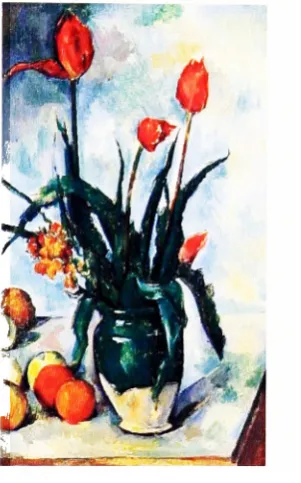
[image:13.493.102.253.283.525.2]www.arts-studio.com/cezanne.
Figurel,PaulCzannec. 1890-92, Figure2. Asketch,2000,6.9x10.8inches. 28.5xl6.5inch,NortonSimon Museum.
Pasadena,CA
Paul Cezannewasaninfluentialfigure inhelpingto determinemyideasabout
thestill life.I wasfascinatedbyhisparticular stylethatis concreteformscontainedin
space andlight. Theinspirationforme wasthatCezanne'sfocuswastocreate and
traditionalperspective.Cezanneemphasizedtherealityofthe twodimensionalpainted
surface,notthethreedimensional painted windowviewoftheworld.Istartedtoseethe
stilllife inadifferent
wayandIwould useCezanne'sre-interpretationof pictorial space
and surfacein creatingmyphotography.
Ihad sketchedthemost
interesting
subjecttomeintheNorton Simon Museum inPasadena,CA. Althoughthereweremany
interesting
genresinthe museum, suchasvariouskindsofRenaissancepaintings,various portraitsinan expressionisticstyle, and
landscapes and stilllifeinimpressionisticand modernisticstyles, myeyekept returning
toafloralstilllifebyCezanne. Atthattime,Ididn'tknowwhy.After seeingthework of
Cezanne Tulips inavase(figurel),Idrewit in mysketchbook(figure2). I foundmyself
attractedtoincorporatinghisaesthetic elementsofstilllife, andIwas also interested in
hisuniquetreatmentofspace, mass, value, textureandcolortocreateanillusion of a
constructed reality.Ialsolikedtheway light fellonobjects, creating somethingmore
solid anddurable. Therewasalsothepainting'stonality,whichresonates with
psychological feeling. Aftertravelingto themuseumandseeingthe painting,Ibeganto
seenewwaystoapproachmy photographybyemphasizing, stressingand exploring. I
foundouthowtomakethephotographythatIwant.
"Interview:whatdoyouthinkofabstract painting?
Answer: abstractpainting hasgiven us somevery
importantworks,ifwethink,forexample,justto
name one, ofPaul Klee...
.earlyCubism... Braque.... Picasso....
In myopinion,nothing is abstract.Infact,Idon't
think there'sanythingmore surrealor more abstract
Interviewwith GiorgioMorandiforthe
"VoiceofAmerica"recorded onthe25thApril 1957, from www, museomorandi.it
Anotherpainter whoimpactedmyworkis GiorgioMorandi. I wasdrawntouse
hismetaphysical idea
"nothing
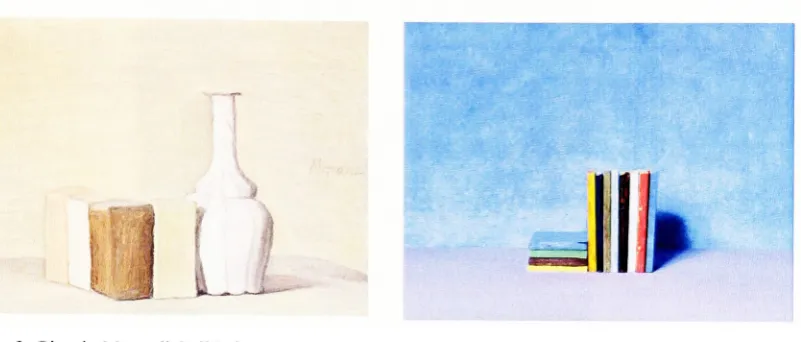
isabstract." [image:15.493.56.457.203.374.2]He isconsideredto beone ofthegreatest
Figure 3. Giorgio Morandi StillLife,c.1955,Gift
ofMr.andMrs.HarryLenartin honorofRusty andNancyPowell,1997.
Figure 4. Untitled,24x31.4inches,2004.
masters of still lifepainting. Tome, hispaintinghasa mystic and poeticfeelingtowards
thenature oftheobject. Hisconceptual ideastouchedmedeeply. I kepthisworkcloseto
my heart. Ilearnedpictorial skillfultechniquesfromCezanneandfromMorndi,howto
make morethoughtful,psychologicallyforms filledwith emotional nuance and purpose.
Morandiprobedtheinnatebeautyanddramaofthe simple stilllifeobject, whichhe
continuallyexploredthroughouthiscareer.Hispaintingsmodifytraditionalformand
subject matterby depictingobjectsatperfectrest ontheflatsurface. Ofatable,thevase
andblocksaretreatedmonochromaticallyto givetheappearance of sameness and
coherent unity. Thisisa conceptual dimensionthroughwhichMorandiinvestigatesthe
contoursoflineand space.
3.1 Mythesisexhibition
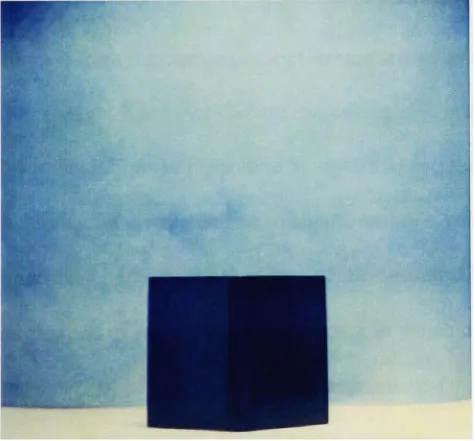
Figure 5. Untitled,40x34inches,2005
In mythesis work,I tookas subject ofthebook. Thissubject constitutes significant
meaning in myartistic work,representing both figurativeand abstract explorations. I
attempttovisualize and relate theworldaround me through thebook. Itis formethe
meanstoevoke emotionsinmy work. Priortocreating mythesisexhibition New
Readings, Ithoughtof whatdirectionI shouldtakeforthe show, what aesthetic
possibilities couldbeilluminated,and whatthework might suggest. Iwantedto express
theambiguity thatexistsinrealityandinphotographic representationbetweenthe
imaginary andthefactual. To createmy subject, Ipaintedonbooksthatwerefamiliarto
me. Iusedsubtle colors andilluminationtoproduce moods or sensations ofbeauty,
ambiguity, andtocreatetension. Asa modernisticaspect, Iemployedessential elements
ofcolor, shape, andformtodescribeminimal andformal display. Asa postmodern
aspect, Iattemptedtocreatetheatrical effectsina spectacle ofpresentationand
perception, as well as anambiguityof vision. Coloralsoemphasizes anillusionof
two-dimensionalspace thesurface ofthephotographicimage. Coloris a majorimpetusin
mywork.Itsets adistinctivetoneand supports
mypsychological intent for mywork.
Ichosetousebooks asmysubject matterbecausetheyarefilledwithgreat
meaning. Physically,theyare containers ofhuman knowledgeand wisdom.
Psychologically,theyconveyaspirations andenlightenment,thepossibilitiesofthe
written word. Thebook hassubtle elementstodemonstratemy capacity fordiscovering
immensecomplexitywithin self-imposedlimitationsofmypractice.The bookcanbe
definedas shapes, color,volume andtextureinvisualrepresentation. However, in my
work, thebooksuggests much more.Bypaintingonbooks, Ichangedtheiridentity. They
nolongerservetheirprimary functiontoberead.Thebookis anordinaryobjectthat
everybodyhas experiencewith,duetoitseducationaluse. Inschool,peoplehave badand
good memories ofbooks. Weusedthemonaneverydaybasis likelisteningtomusic. In
mywork,itwas importantto takea commonplace objectlikeabookand makeit
unfamiliarand extraordinary.Thebookbecamea significanttoolforme as a pictorial
metaphorofthebeauty ofthewrittenword containedbetweenthebook'scover. By
meditating on abook'sform andsurface, Iattemptedtocreate avisuallanguage of
calmness, guietude andcontemplation.Intheseimages, Isoughttounderstandthe
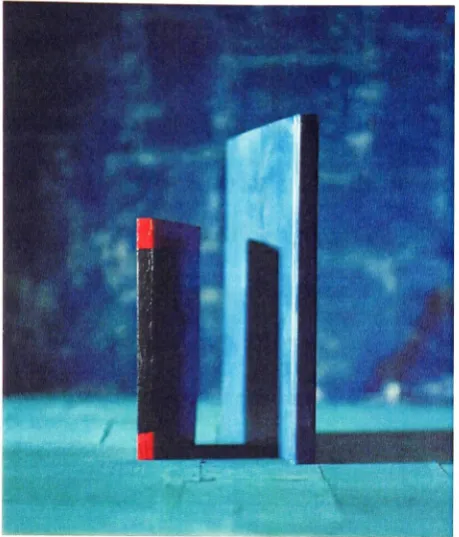
Figure6.Untitled,30x36.6 inches,2005
Figure7.Untitled,30x36.9inches,2005
[image:18.493.96.352.63.354.2] [image:18.493.42.410.384.674.2]physical nature ofthebookandthepsychological meaningsitmightconveywhenits
identity
andfunctionischanged.Creating
avisuallanguage in mywork,Ihavetriedtocreatebothphysical andpsychological symbolsina morethangeneralunderstandingof
whatthebookmeans.
Usingtheatricallighting,Icreated adarkmoodtoexpress an ominousenvironment.
Inthisenvironment, I also wantedtosuggesta surrealpresencewithmysteriousand
dreamlikeeffects.
Iuseddigital outputtorealizemy finalprintsbecause itcreated an"inkon
paper"
effect,asthatfoundintraditionalprintmaking.Thedevelopmentofdigitaltechnology
hasmadeitpossibleformetopushthelimitsofmyphotographic work Iprintedmy
images biggerthanlifesize.Withlargebigprints(40x36.4inches),Iwasableto
transform the subjectofmystilllife,further emphasizingthebook'schangedidentityand
function. Coloralsobecomesexaggerated. Incontrast, thesmallprint gives a sense of
intimacy,butcan alsoshowlittle detail ofthe artwork.I wantedtoexploitdetailthrough
size,as well astheinkon papersurface ofmywork, toa moreaesthetic effect.
Using4x5 and6x7 cameraformatstoheightenperception,perspectiveandtwo
dimensionalplane, Isought simple,abstract spatial arrangements.
Inaddition,I findmyself attractedtoincorporatingaestheticelements of stillnessin
mywork. "It'snothavingwhatyouwant, it's wantingwhat you've
got."
isaZen saying
thathasgreatly influencedme. Theseaesthetic elementsarerealizedinsignificant
compositions, balancingcolor,backgroundandlighting,thephysicalandthe
psychologicalin mythesiswork.
3.2 Graduate experience
Iwasinanairplane
leaving
myfamily
inPasadena, CA,inthesummerof2003,whenIthoughtof whatIneeded as an artist and whereIwantedtogo withmywork I
wasbothserious andfrightenedbythefuture. I oncetoldmywifethatgoingtoRIT
mightbeanopportunitytochangemylifeas animage-maker.Ihadbeen acommercial
photographer. However,IrealizedthatI needed morestudyinordertohone mybodyof
work,becausefirst, Ineededtoexplore new artisticterritories; secondly,photography
waschanging soquickly,themedium required moreknowledgeandexpertise;thirdly,I
had manyideas,butIdidn't knowhowtobringthem tofruition. Ineeded someoneto
point out whenIwaspursuingaworthyartisticpath.
Cravingformore studiesinartandphotography,Ithought thatRITwouldbethe
perfect placetodevelopmytalentsandtobecomefamiliarwith all aspectsof
photography.RIT students receiveindividualattention anddirection, andthus the school
wouldhelpme toproducetheprofessional resultsthatIwanted. Ihave learnedto
enhancemy imagination fromvariousprofessors,experiments, andbooks. That isthe
primary currencyoftheartist.Itwas goodformetocomeupwithideasthatopenedthe
worldtonewpossibilities.Ihave cometoknowthatIneedthefreedomto explore andto
riskfailure. AttendingRITwasthenextimportant stepto achievingmygoals.
Itookmanyclassesrelatedtomyworkincludingthephotographycore,history&
aestheticphotography, anddigitaloutput, etc. Iwasincreasinglyexcited aboutthenew
artworldI hadentered,andlearningthenewcommunicating skills soImightbetter
articulatemy ideas. Bymeeting excellentprofessors whoarebreakingnew artistic
ground, Iwas abletoexplore and
develop
mywork anditsmeaning.Anothersignificantlearning
experience wastheabilitytoimprovemyteachingskills,which includestheabilitytointegratenew methods andtechniques, althoughI haven'tyet startedteaching.
Iamchanging, growing,andstrugglingtorealizenewknowledge and
understanding inmyimage-making. Ioftenfeelacompulsiveneedto dophotography
because it istheonly way I knowto communicatemy ideasandmy worldview.
-Stilllife I
I continuedmy interest inthegenre ofthe stilllifetoexpress myself andto
practicemytalentsinphotography. ThisisasubjectIhave pursuedforthe last fiveyears.
Forme, thestill liferesonateswith similarcompositional challengesandexpressive
nuances orfound inabstractpaintings, includingthose ofPaul Cezanne,Wassily
[image:21.493.136.374.423.643.2]Kandinsky, SalvadorDali, and Giorgio Morandi.
Figure 8. Untitled 40x37.6inches,2003
Myfirstcreative processisto takeasingle, simple objectthatis familiarandto
makeitunfamiliaror newtotheimagination
by
placingitagainst a wallthatIhavepainted as abackground.I thenphotographthisstill
life,oftensearchingforthe
mysterious effects ofillusionorabstraction.
Striving
forsubstance, Iwork withbooks,and paintedbackdropsthathavesimplifiedformandlinesthataredirect,whilecomplementingharmonious colorsI
employ.Non-essential,decorativeelements are eliminatedforadirect, expressive
simplicityofthecomposition.
Itried tocreate still life imagesthatbridgethegapbetweenstrict realism and
complete abstraction.As farasIhaveexperienced,thestilllifeisakindof manner of
visualinterpretationthatspeaksnotonlyto thebeautifulbuttoreality intherenderings of
static objects.
-Portraits
Ireceivedinspiration fromthe contemporary GermanartistKatharinaFritsch,
whose workI saw attheAlbright-Knox ArtGalleryinBuffalo,NY,in anexhibition
calledBodily Space: New Obsessions in FigurativeSculpture.Usingskeleton and
sculpturesin herinstallations, shegives attentionto simpleoutlines, color, scale, and
spacecreatinga strangetensionbetweenthefamiliarandtheuncanny.Theseelements
playa roleinthe transformationofherobjects andthespaceinwhichtheyhave been
installed. Iwas veryimpressedbyherwork,andI became interestedin
incorporating
sculpturalelementsin my
developing
work,including theskeleton.As acomplementtomystill lifework, I beganto exploreportraiture andthe
importanceofsculpturalform, likethehuman figure. Mybasicconceptwastheideaof
howa portrait creates a personal narrative, basedontheselfinthis bodyofwork. I
wantedtoexplore andtrytoreinterpretthehuman figureintheuse ofaskeleton.
Mybasicconcept was todepict"portraits"
involvingvariousforms ofnarrative
strategies. AsinUntitled (figure9), 2004, theprimarysubject ofthe skeletonconjures up
subjective, metaphorical qualities. Itcanappear as ametaphor of obsessive personal
attitudes and a negative prospective.Itcan also express anambiguousrealitythatexists
betweenthe
imaginary
andfactual form. What is fact? What is fiction? Inthis approach,Ibecameobsessedwithmy subject andbeganto addressaspects ofmyself,includingfear,
responsibilityand self-conscious nature. Forthefirsttime, inthis work,Ifoundmyself
[image:23.493.22.492.397.515.2]reinterpreting andredefiningwhoI amandwhatIdo as aworkingartist.
Figure 9. Untitled. 1 lx 56.7inches,2004
Insupport ofmywork, Idrew inspiration from
Fritsch'
sinstallationsand art
historybooks, especiallythose thatillustratedsculpturalfigures fromtheMedievalArt.
Also, Iwasinterested infurtheringmyexploration ofPostmodernideassuch as
subjectivity, fragmentary,andthe arbitrary. These diverseelements ofthepast and
presenthelpedtoguidemywork, which employedbothcolor,blackandwhite,andthe
overallanxietythatappearsthroughout. Mycompositionsweretakenbothoutdoor and
indoor.
Using
the skeletontoincorporatemyselfinthe work, these"portraits"
deal with
anxietyandobsession. Atthe timeofthe seriesmaking,I wasstrugglingto knowwhat
myuniqueapproach inart wouldbe, whatdirection itwouldtake.Theseportraits
provided me withtheopportunityto bemore personalinmywork, toexploremy
frustrationwith
finding
an aestheticapproach, etc.I furtheredmy interestinportraiture in mynextbodyofworkinwhichI
abandonedtheskeletonforan actualhumanmodel. Imetmysubject on a streetinthe
cityofRochester. I looked foraperson whodisplayedan averagelookthatI could
manipulate andtransform,working withinastudiosetting thatallowed metodeviseand
controlthescene. I askedmymodeltodo poses,whichIhadcreatedin mymind.
i
if
*
f
i
FigurelO.Untitled,2005
Intheseries offivelargecolorphotographs(figure 10), Icreated a sequence offigurative
portraitsthatutilized certainformsof poseandnarrative strategies. I show ayoungadult
embracinghimself. When Itook these pictures,my subjectwasvery shyandfearful. He
didn'topenhismouthtospeak at all. It was asif hecouldn't adapttohissetting, tomeor
thecamera.Atthattime,I wondered whatmade himreactinthisway.I wantedtocreate
arelationshipwithmy subject,
usingcertainforms of ourinteraction inthestudioto
present a story.WhenI tookaphotographyworkshopclasswithProfessor,AngelaKelly
atRIT, shesuggestedthat theparts ofthehuman
body
andmakinggestures offormfromthe
body
couldbesymbolicinpolitical and culturalissues.Inthispoint ofview, creatingvariousforms ofthefigurerepresented a personalhistory,basedon anobsessionand
anxiety inmymind. Atthattime,Icouldn'tfindtheright solutionformyworkandIwas
struggling about whatIneededin mywork.Ispent alotoftimereadingvariousarticles,
relatedto the ideasofpostmodernism, insteadoftakingpictures,including hyperreality
ofJeanBaudrillard,theideasofFredricJameson,who usedbothpsychoanalysis and
Maxismtointerprethisproject,andphotography and postmodernism ofAbigail
Solomon-Godeau,toname afew.
Iwantedtoexpress an abstract portraitbasedon symbolic poses ofthebody.
When Ilookedathiseyesonthe street,he hada certainfearofsomething.Icould not
stopthinkingof whatIsaw inthatperson. Ididn'tspeak ofitimmediatelybutheldthat
presencetomy heart. And itcouldbemyanxieties anddesirethat transcendedintothe
images. Usingthe model,Iwantedtoexpressmy anxietyanddesirethroughhim inan
efforttoget atsomethingmorerealthan theaccuratedepictionof a subject. Isoughtto
collapsethebarriers between subject andobject, formandcontent, selfandother, the
viewer andthework.I inserted myownthinking,myowninterpretation,andmaking
associations. Thesubjectisnolonger himself but my interpretationof aform.
- Still life II
Influenced
by
GiorgioMorandi,knownforhissubtleand contemplativepaintings, Ireturnedtobooks asthesubject matterformythesisexhibition.Iwas
intrigued
by
Morandi 'spaintedrealities,which appearedfamiliarto that age,butwereuncannyand mysterious intheirintense deliberationof object and space. Ialsowantedto
workinthis manner, toachievepainterlyeffects, andtocombinerealism andabstraction
throughfactand symbol.
Mywork attemptstodepictstilllifesthatareillusionsofcolor onatwo
dimensionalsurface.Iaminterestednotonly inthearrangement ofbooksbutalsointhe
space createdbetweenthemand aroundthem.In thiswork,Iwantedtoexpressthe
ambiguousrealitythatexists somewhere betweentheimaginaryandfactual form. I
painted ontheobjectsthatwerefamiliarto me,especiallybooks,againchangingtheir
identityas objects ofthewrittenwordandtheirfunction intheworld.Color helps
emphasizeanillusionoftwo-dimensional spaceratherthanathree-dimensional,
perspectival view. Usingbrightand saturatedcolorsinapsychologicalwaynotonly
conveysillusion butemotion aswell. Here Iwanted tocreate playful compositions of
beauty. Spaceisalsoparticularlyimportant,with negativespacerepresentingabsence
andbooksrepresentingpresence.Myworkhasbeenconsideredbythosewhoseeitas
having atheatricalexpression.Perhaps, thisis because Iwas influencedbyavarietyof
diversemovies andthelightingsonEuropeanstilllifepaintingsof16 and 17 centuries.
In large colorprintings,I seektoknowtheinnerorigins ofthoughtand space and am
fascinatedbytheconceptthatallform isbornofthoughtandthatthoughtreturnsto
create newforms.
-Figurel1.Untiled,24x29.9inches, 2005.
Figuurel2.Untitled,24x29.4inches, 2005.
Figurel3.Untitled,24x29inches,
2005.
Iwantedtotrytoexplore newdirections invisualculture,paintingonthebooks
thatare suchapart ofvisual culture. Thisisanimportantaspect ofbooks,especially the
illustrated booksin mywork suchastheconversationbetweenpaintedbooksand painted
backdrops asa conversationbetweenwhatthebooks were and whattheyarenow,having
beenchangedforpictorial effect. PerhapswhatismoretheatricalisthatIworkasa
director,settingthe scene, locatingthe books,painting both booksandbackdrop.Asa
director,I havecompletecontrolfrom set-up, composition,andtothefinalpoint.
- Minimalism
Another influenceuponmythesisworkwastheartmovement ofMinimalism. I
wasparticularly intriguedwiththe treatmentofformin Minimalism. Byeliminating
decorationandembellishment,formwascreatedsimplyby emphasizingtheessential
formal aspects ofshape, silhouette,contourandcolor. Iresearchedworkby Minimal
artists, including Richard Serra(1939- ), Donald Judd (1928-1994),TonySmith(1912-1980),
Carl Andre
(1935-),andRobert Morris(1931- ).Throughtheir work,I sawhowthey
created
highly
refined objects and installationsthatraised questions abouttheessentialcharacterof objects intheworld,human perception offormandspace, and reception of
[image:28.493.28.477.146.621.2]anaudiencetoa newkindof object making.
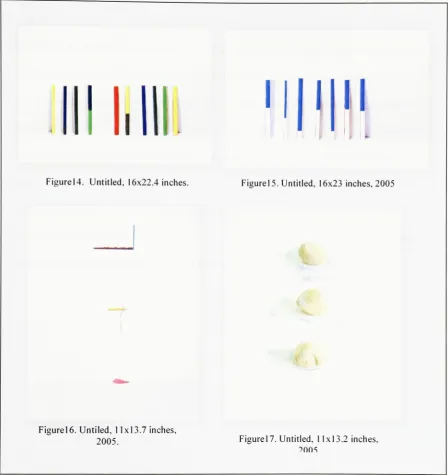
Figurel4. Untitled, 16x22.4 inches.
Figurel6. Untiled, 1 1x13.7inches,
2005.
1
1
1
1
I
Figurel5.Untitled, 16x23 inches,2005
Figurel7.Untitled, 1 1x13.2 inches. 900S
Kenneth Baker'sMinimalism, theartmovementisdefinedas:
"asa movementinthe 1950sandcontinuedthrough the
SixtiesandSeventies. Itis generallyatermusedto
describepaintings and sculpturethatthriveonsimplicity
inbothcontentandform.The aim ofMinimalismistoallow
theviewertoexperiencethework more intenselywithout
thedistractionsof complicatedcomposition, themeand so on". 4)
In figure 14 through 17, aspects ofMinimalismthatIadaptedwerethesimplicityofform
andcontent,noembellishmentand nodecoration,lightand color andreducingcomplex
meaningofthesubject. Openlightinggivespurityand calmnessto thephotographs
insteadof adarkmood. Infigure 14 and 15,1attemptedtodepictlines, shapes,bright
colors and shallowspaces,movement and rhythm ofthecolorplacement, twodimension
withgradation ofshadow, straightoneyelevelof view.Primarycolorsleadto the
objects.Infigure 16, there areverticalandhorizontal contrast,solidandthesoft powder
contrast; veryopentoallviewersandsimple withfine detail. In figure 17, thereare
dimensionalrocksfloating abovethebackgroundandusingtheblueand yellow powder
ontherocks andbackground,Icontemplatedinauniversal worldofZen.
4.1 Thetabletop
Figurel8,untitled, 30x36.5inches,2005
In my studio, thetabletopconstitutes a small world on whichtocreatemystilllife
scenes, basedonthereal andthe imaginary. Likestill lifeartistsbeforeme, mywork
reflects whatis in mymind and whatis intheworld. Thus, thereare twowaysinwhichI
workwith a still life: 1) toconstruct a scene inwhichrealityisreferredthrough the useof
familiarobjects, and2)to critiquethisworldlyreferentby interjectingthe
out-of-the-ordinary, theimaginary, suggestingtheunreal. Thetabletop settingofmy worknotonly
allows a great amountofcontrol,butalso enables metobemore versatile withmy
subject. Thetabletopcanbechangedintoanything, anytime,and anywaythatIwant.To
domy work moreefficiently,I haveatabletop setupinthebasementofmyapartment. I
gathermysubjectsfromaroundme-books, sometoys, figurines,sculptures, etc. simple
andfunctionedobjects thatwhenplaced onthetabletoptakeon a new aesthetic reality.
To emphasizethisnewrealityoridentityas aesthetic objectsinanewlydefinedaesthetic
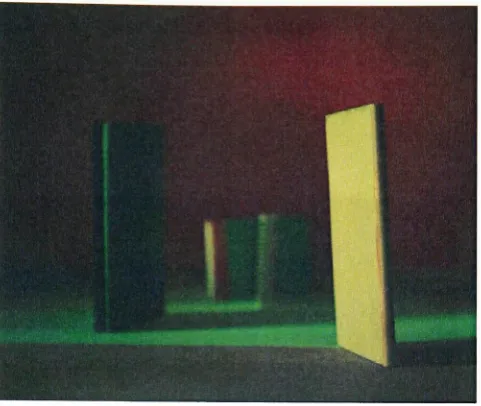
spaceofthetabletop, Ipaint ontheobjects. Infigure 18,1chosea greenish colortomake
anillusionofanonymity onthebackground andthebook'ssurface withlight, andthe
colorreflectingwith lightgives anunnaturalisticimage.
-Background
Figure 19, Untitled,30x37.5 inches,2005
In regardingstill lifeimages,itisapparentthebackground isanimportantand
integralpart ofthecompositional work. Workingin my studio,I spent alotoftime
preparingthebackgroundtostand as a great elementin supporting myuse oflight and
arrangements of objects.Itbecomesthebackdrop,thestage againstwhichmy objects
asserttheirpresence.I consideredthe color, thedepthoftone, andhowthelight interacts
withthebackgroundsurfacethatispainted.
Althoughtherearevariousmaterialsforthebackgroundsuch ascanvas, paper,
andfabrics, insome worksI choosetousethepagesfrom books I read and attachedthem
onboardsandwood, thenpaintedonthemusingpastel and oil colors. Thebackground
[image:31.493.126.370.203.399.2]for
building
thestill lifewas nextexaminedfromthecamerapositiontopreventglaring patchesor smallhot spots, which arereadilyseen intheground glass ofthe4x5"cameraor
focusing
screen ofthe6x7"camera.The camera was positioned at a straight onlevel, a
little abovethetabletoplevel
looking
downwards.The management ofthebackgroundlighting
isveryimportantintheunityofmy thesisimagesandthesimple part ofthebackground, for it isthemeansforadjustingthe toneandtextureforthe objectsinthe
still life.
-Lighting
Figure20, Untitled,30x36.8 inches,2005
Rendering illumination isaverycritical elementto supportthemainobjects of
my stilllife.Itrequires notonlyknowledgeofnatural andartificial light,butalso
patience! Tocreate effectivelight,I used areflecting boardto solvetheproblem ofbright
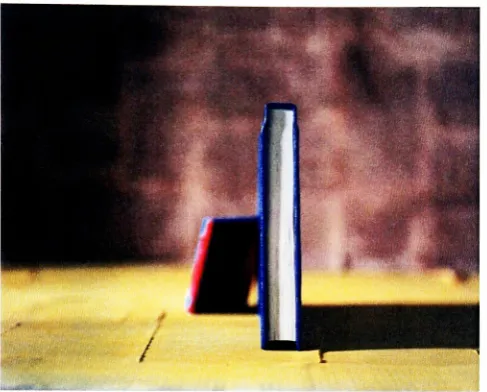
highlightsanddeepshadows. Thiscanbeseeninthework"Untitled21"inwhichlight is
natural. Shiftingthelightcan make avarietyof changesinthe appearance of objects such
[image:32.493.162.331.307.518.2]as contrasttoreveal atextural surface. Ithelpsalsotoenhancehowtheobjectshave been
painted andthuschanged.
Having
a shadow castbyalightsource presentsaspecificmood and
feeling
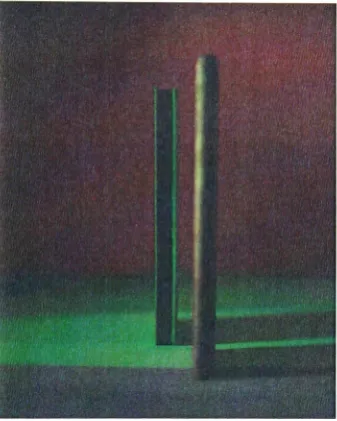
to theobject andthroughout theentire composition. Thegreenish colorinmyworkdeterminesthecontrast andthesense ofdepth. Thecolorwiththeplayof
lightcreated a spatial illusion separatingthebooks frombackground. Althoughthe
meaningofthegreen coloris comfortable, clean,andclam, I createdmuddy imageswith
lighttomakedreamlike.I shouldrefertohowlightcreatesnotonly moodbutalsocolor.
Themood ofmysterymadebythedarklightingandthe color contributesto thedream
feel. The saturationofcolor makesthe imagesrich anddrawsyoureyetoit. So watching
thelightingcarefully hasa greateffect onthewhole concept ofthephotograph.
- Objects
Figure21,Untitled,30x35.9inches,2005
Books chosenforthestilllife arrangement canbeusedto make a composition
that appealsto theeye orto tellastoryorto illustratetheme.In my useofbooks, I sought
[image:33.493.161.349.376.604.2]toreducetheirliteralnessandtransformthemintosymbolic ormetaphoricalobjects
through painting, light,andcompositionalarrangement. I alwaysthought ofhowtorelate
toonepaintedobjecttoanother.Then,to thebackground, lightbecametheunifying
factorthatinformedbothobject andbackground.Ialso make an effortto create akindof
tensionwithinthe
interplay
ofthebooksbytheatricallycreatingapainterlyeffect.Thishelpedto create a more symbolic stancein my
work, basedonpsychologicalemotions
andfeelings. Ihadspent alotoftimearrangingmycompositions as a major aspectofmy
professional output. Ilikeworking slowly,
building
myworktomakeasatisfyingcomposition oflightand object untilIfind a combinationthatelicits an emotional
response.
As Iworked onmythesisimages,conceptsdrawn from Eastern Asianart
informedmyminimalistic arrangements andtheuse oflightand color.Theseconcepts
includecreatinga meditativeemptyspace; eliminate almostmyreferenceto theoutside
worldbypainting myobjects. In mystill life,Iwantedtocreatesimple,directformsthat
causeda viewer(includingmyself) tostopandlook contemplativelyontheessential
building
blocksof naturaland artistic form. Inthis way,mywork enhancesaZen-likecharacter ofpersonalandintellectualexploration.
-Color
Color is apowerfultool thathas manyuses in mywork.It canbeused
psychologicallyto drawattention, createamood,andenhanceclarity inthework.
When IstartedtousecolorIdidn't knowmuch aboutitbecause I'veneverstudiedits
Figure22, Untitled,30x36.2 inches,2005.
attributes basedonqualityoflightandhumanperception. Before Iwasinterested instill
lifephotographyto learnmore aboutcolor,I mainlyworkedphotographingportraiture
andlandscape. Sotolearnmore aboutcolor,Istartedstudyingpaintings of allkinds in
museums, galleries, and avariety ofbooks. Itried torecognize and relatetheuse of
colorsinimagesI saw. I usuallylooked at paintings ofPostImpressionism,Abstract
Expressionism, PopArtandMinimalism.Concurrently, Iwasdecidinghow I would
choosethecolorsformy stilllifes, mypaintforthebooksandthe background. Irealized
thatchoosingtherightcolorisveryimportant, especially in how mypainted surface
wouldinteract.Inaddition, the selectionoflightsource, thelighttransitionalspaces
betweenmyobjects, andtheeffects oflightonlocalcolor andcastshadowbothinformed
andimpactedtheoverallcolorofmycompositions. ThevariouscolorsI usein mywork
tocreate illusionarevery significantinunderstandingmywork. Itcanberepresentedina
symbolic, ambiguous,perceptive,andvisionarymean. Contrastsofcolor and
lighting
[image:35.493.134.318.71.297.2]betweenbackgroundandforeground mayhelptoprojectobjects. Ialso used colorto
make aninteractionthroughouttheimage,tomake a connection withthebooks
-Digitalprocessforoutput
Incontemporaryculture,thedigitalrevolution wastriggeredbythe technological
developmentofthecomputer,informationandtelecommunicationindustry. The digital
broughtabout a widevarietyofchanges, especiallyin fineart photography.AndI,for
one, wasgreatlyinfluenced
by
howthenewdigitalpracticesinphotography.In mygraduate andthesis work,Iexploreddigital printingprocesses,likeEpson
andLambdaprinting.Ilookedtocombinetraditionalanalog/darkroomtechniquewith
newdigitalpractices,includingcomputersoftware,scanningand printing. Iwantedto
expandthecreativepotentialofthedigital intotherealm offineartphotography in my
work.Irealizedthatthedigitalprint allows a newkindofpictorialrepresentation,by
combining aspectsofthephotographicandthepost photographic.Experimentingwith
thedigitalprintbecameavital creativeforcenotonly in myworkbut inphotographic art
as a whole.Asanalternativeprocess,it introducesanewcreativity, anewtool to
photographerswhowishto explore, in mycase, newink-on-paperprinttechnology. To
achievethefinalprintsfor mythesis show,Iscannednegatives and positivesofmystill
lifesanduploadedthem to Photoshop. Ithenoutputtedmynewdigitalimagesto the
7600, 7900, and 10000 Epson inkjetprinters.I learned quicklyaboutcolor management
andresolutiontoobtainprintsequalin qualitytoprintsusinganalog, fineart,and
traditionalmethods.Intheinkjetprint, Ifoundtextures, detailand contrastthatsupported
mysubject matterinabetterway.Unlike ananalogprint, theinkon paper process of
Figure23, Untitled, 30x30.5inches,2005
inkjetprintingrenderedmypictures givingtextureof apainterlyfeelingmorethana
factualphotograph. Becauseofthis, mythesisworkexhibited anewkindof aesthetic
qualitytied to traditionalprintmaking. Ifoundthat thisapproachemphasizedtheabstract
character andindividualityofmy work.Itdidnotheightenthephotographic
"real,"
but
instead spoketo theartist's(my)interaction inthepicture andto thehandmadeprint. In
this way, Ibroughtmore ofmyselfintomy stilllifeprints.
Workingonmythesis show,IrealizedthatIneeded to findout a newmeaning
forphotographyasanartform ina newdigitalworld. In mystudies, Ilearnedthat the
digitalremediates the analog, itemphasizedimmediacy,thedesire forthe real, and
interactivity. It introducesanewpostphotographicera,inwhichthedigitalandanalog
arecombined, asinmy own work. Myuseddigitalprocessandprintingtechnologies
speaktothisnewphotographicfrontier,andto my interestincreatingfineart imagesthat
areaboutboththe traditional andnew inphotography. In my futurework,Iwishto
furtherexplorethedigital innext stageofphotography'shistory.
[image:37.493.149.357.62.274.2]Conclusion
In mygraduatestudy,Icastasidemypast artistic concerns andbeliefs becauseI
wantedtoachieve a newdirection in myphotographic art.Seeingvarious art and
photographicworlds,Ihave hada profound experience andhavetried tofollowmynew
path. Ihavemet various photographers andartists,and exploredtheirthoughts,feelings, experiences and passions. I reallywantedtoknowthe aesthetics ofmyown style sothatI
mightbeabetterartist.Everyday,Icreated stilllifesofmyownvision,blurredportraits
tounderstandtheelements ofPictorialism,and self portraitstocomprehendtheideasof
Postmodernism. Butwhatisnextforme?Idonotthinkmuch aboutit but Iwouldliketo
combine alltheelementsthatIhave learnedin mygraduatework, toachieve greater
artisticinsights. Ioftenthink thatart remains significanttohumanbeings andIam
attractedto theideathat now,anythingcanbeart.As Lyle Rexlerwrote, inOnlySkin
Deep: "Iam not sure photographs canteachusanythingwedonotalreadyknow,but
theycaninviteustoconnect andthatis howtheychangethe
world." 5)
Endnote
1. BrainWallis. "What wrongwith thisPicture?AnIntroduction",ArtAfter
Modernism: Rethinking Representation,New MuseumofContemporaryart
Boston: D. R. Godine, 1984,P.xii
2. http://www.arts-studio.com/cezanne.
3. http://www.museomorandi.it.Interview fortheVoiceofAmerica,
25th
April 1957.
4. Baker, Kenneth,Minimalism:Art Of Circumstance/ Kenneth Baker
1946-. New York:AbbevillePress, 1988,P.32. 5. LyleRexer,"0(ySkinDeep
"
ArtonPaper, March/April, 2004,P.63.
SELECTEDBIBLIOGRAPHY
Baker,
Kenneth,
Minimalism:ArtofCircumstance.New York:AbbevillePress, cl988.Benjamin, Walter. "The WorkofArtintheAgeofMechanical
Reproduction,"
Illuminations,
Trans. HarryZohn,Ed. Hannah Arendt. New York: Harcourt Brace andWorld, 1968.
Brian Wallis. "What'sWrongWith This Picture? AnIntroduction,"
from Art After
Modernism, 1984
GuseErnst-Gerhard, ed.,GiorgioMorandi :Paintings, Watercolours, Drawings,
Etchings;New York: Prestel, 1999.
Kahr,Madlyln Millner. DutchPaintinginSeventeen Century. New York :Icon
Editions, 1993.
LorenzEitner,"AnOutline of
19th
CenturyEuropeanPaintingfrom Davidthrough
Cezanne" 1987.
San Francisco MuseumofModernArt,"KatharinaFritch" 1996.
EdwardAiling,SusanneBieber,LownaBlazwick, Bice CurigerandJulianHeyen,
"KatharinaFritch,"TatePublishing,2001.
Skira, Pierre, Still Life: AHistory/Pierre Skira,
New York :Rizzoli, 1989.
The MuseumofMordern Art. Object ofDesire: The ModernStilllife.New York: The
MuseumofModernArt, 1997.
TheNature Of Still Life :From Manet To The Present Day. Milano :Electa, 2001.
TomasWeski, HeinzLiesbrock, "How You Look At Itphotographsof
20th
century".
New York: D.A.P/Distributed Art Publishers. 2000.