
Oral reading : the silent debate
426
0
0
Full text
(2) i STATEMENT OF ACCESS. I, the undersigned, the author of this thesis, understand that James Cook University will make it available for use within the University Library, and, via the Australian Digital Theses network for use elsewhere. I understand that, as an unpublished work, a thesis has significant protection under the Copyright Act and I do not wish to place any further restriction on access to this work.. ___________________ (signature). __________________ (date).
(3) ii ACKNOWLEDGEMENTS I sincerely thank Associate Professor Annette Patterson for her encouragement and guidance. I have appreciated her honest, constructive and reliable feedback and have found our conversations to be intellectually stimulating. I view her as a mentor, colleague and friend. A number of others have contributed to the production of this thesis. I am grateful to the students, parents, teachers and schools that provided me with the data. Finally I acknowledge the support of my family who have shown incredible patience and understanding throughout my candidature...
(4) Abstract. iii. ABSTRACT. This thesis investigates the relationship between the practice of reading out-loud and the teaching and learning of reading in the primary school. It argues that oral reading is a different practice from reading silently and that it contributes to the construction of a school reader in particular terms. Specifically it contributes to students' understanding of what it is to read and what it is to become a reader in school. The study adopts a sociocultural view of reading (Freebody & Luke, 1990). Many past studies of oral reading used psychological approaches that ignored the historical, social, communicative and interactive contexts of oral reading practices. This thesis investigates oral reading from the perspectives of students, teachers and the researcher', using three different types of data gathering procedures: questionnaires, interviews and observations. It describes oral reading practices in terms of the pedagogies they maintain, the activities they build and the identities they construct. The study found that many oral reading activities were not an effective means for either the teaching or assessment of reading. Rather, oral reading activities were characterised by limited explicit instruction, which served to maintain the controlled nature of schooling. The rules, procedures and interactions preceding, surrounding and subsuming the various activities served to construct students' views of themselves as readers and what it means to read in school in restricted terms. The thesis has implications for reading pedagogy in that it presents a case for the reconsideration of these practices when teaching learner readers in schools..
(5) iv TABLE OF CONTENTS. STATEMENT OF ACCESS..................................................................................i ACKNOWLEDGEMENTS .................................................................................ii ABSTRACT..........................................................................................................iii TABLE OF CONTENTS.................................................................................... iv LIST OF FIGURES ............................................................................................xix LIST OF TABLES...............................................................................................xxi LIST OF TRANSCRIPTS..................................................................................xxi STATEMENT OF SOURCES DECLARATION...........................................xxix STATEMENT OF SOURCES - ELECTRONIC COPY ................................xxix ETHICS DECLARATION..............................................................................xxxi CHAPTER ONE...................................................................................................1 An Introduction: Setting the scene...............................................................1 CHAPTER TWO..................................................................................................8 Reading: A look at the research....................................................................8 Reading: Research and practice ....................................................................9 Psychological Approaches.........................................................................9 Leading up to the Great Debate .........................................................10 Research .............................................................................................10 Pedagogy ...........................................................................................12 Beyond the Great Debate ....................................................................17 Research .............................................................................................17 Pedagogy ...........................................................................................23 Sociological Approaches ..........................................................................25 Theory ....................................................................................................25 Pedagogy ...............................................................................................28 Sociolinguistics...........................................................................................29 Research .................................................................................................29.
(6) v Pedagogy ...............................................................................................31 Sociocultural and Critical Approaches...................................................32 Theory ....................................................................................................33 Pedagogy ...............................................................................................35 CHAPTER 3 .......................................................................................................38 Oral Reading: What does the research tell us? .............................................38 The Oral versus Silent Debate: A brief historical encounter...................39 Research .........................................................................................................43 Oral Reading as Instruction.....................................................................43 Oral Reading as Assessment ...................................................................48 Oral Reading as Diagnosis.......................................................................53 Oral Reading as Entertainment...............................................................55 Oral Reading Practices..................................................................................57 Reading Groups ........................................................................................57 Paired Reading ..........................................................................................58 Round Robin Reading..............................................................................60 Comprehension ........................................................................................62 Oral and Written Cloze............................................................................63 Shared Reading .........................................................................................64 Reading Conference.................................................................................65 Guided Reading.........................................................................................66 Summary........................................................................................................67 CHAPTER 4 .......................................................................................................68 METHODOLOGY..........................................................................................68 Situating the Methodology of the Study...................................................68 Data Collection Methods .............................................................................72 Phase One - The Questionnaire...............................................................73.
(7) vi Teacher questionnaire..........................................................................75 Sample and administration of teacher questionnaires................76 Student questionnaire ..........................................................................77 Sample and administration of student questionnaires:...............78 Phase Two - The Interviews....................................................................80 Interviewing children...........................................................................84 Student Interviews................................................................................87 Sample ................................................................................................87 Administering the interviews .........................................................88 Teacher interviews................................................................................90 Sample ................................................................................................90 Administering the teacher interviews ...........................................90 Phase Three - Observation of Classroom Oral Reading Events........91 Sample ....................................................................................................95 Conducting the observations..............................................................96 Data Analysis.................................................................................................96 Phase 1- Identifying Themes...................................................................96 Questionnaires.......................................................................................96 Interviews ..............................................................................................98 Observations..........................................................................................98 Phase 2 - Mapping the Data.....................................................................99 CHAPTER 5 .....................................................................................................103 A Teacher Perspective: Teachers write....................................................103 The Questionnaires.....................................................................................104 Frequency ....................................................................................................104 Activities.......................................................................................................105.
(8) vii Becoming a School Reader: Pedagogical issues......................................105 Oral reading: Importance ......................................................................106 Oral reading: Stages and ages of importance.................................106 Early ages and stages .....................................................................107 Middle ages and stages ..................................................................108 Upper ages and stages ...................................................................109 Oral versus silent.............................................................................109 Threatening......................................................................................110 Oral reading: Important for all .....................................................110 Oral reading: Use ....................................................................................112 Oral reading as instruction ................................................................114 Skills ..................................................................................................114 Teaching strategies .........................................................................115 Dispositions......................................................................................116 Management....................................................................................116 Oral reading as assessment ...............................................................116 Oral reading as diagnosis...................................................................117 Oral reading as entertainment..........................................................118 Skills in Oral Reading..............................................................................118 Assessment ..............................................................................................120 Reading assessment methods...........................................................120 'Good' Readers.....................................................................................124 Oral reading characteristics ...........................................................124 Reading strategies...........................................................................125 Comprehension ..............................................................................126 Dispositions......................................................................................126.
(9) viii Pedagogical knowledge.........................................................................127 Summary......................................................................................................128 Comparing Data .........................................................................................129 Frequency ................................................................................................130 Activities...................................................................................................131 Becoming a School Reader: Pedagogical issues......................................134 Oral Reading: Importance .....................................................................134 Oral Reading: Use ...................................................................................135 Oral reading as instruction ................................................................136 Skills ..................................................................................................137 Teaching strategies .........................................................................138 Dispositions......................................................................................139 Management....................................................................................139 Oral reading as assessment ...............................................................140 Oral reading as diagnosis...................................................................141 Oral reading as entertainment..........................................................141 Skills in Oral Reading..............................................................................141 Reading Assessment Methods..............................................................144 'Good' readers......................................................................................146 Pedagogical Knowledge ........................................................................147 Summary......................................................................................................148 CHAPTER 6 .....................................................................................................152 A Teacher Perspective: Teachers speak...................................................152 Farrer Primary ............................................................................................152 Farrer Primary: Year 3...........................................................................153 Reading recount activity....................................................................156.
(10) ix Example 1.........................................................................................158 Example 2.........................................................................................158 Farrer Primary: Year 4/5.......................................................................158 Paired reading with teacher ..............................................................160 Farrer Primary: Year 7...........................................................................162 Novel-based reading scheme............................................................165 Reading the book............................................................................166 Writing the report...........................................................................167 Written activities .............................................................................168 Reading conference ........................................................................168 Oral book report.............................................................................170 Gunn Primary..............................................................................................170 Gunn Primary: Year 3 ............................................................................171 Reading groups...................................................................................173 Gunn Primary: Year 4/5........................................................................175 Whole class round robin reading .....................................................176 Gunn Primary: Year 7 ............................................................................178 Reading groups...................................................................................180 Summary......................................................................................................181 CHAPTER 7 .....................................................................................................184 A Student Perspective: Students write.....................................................184 Frequency ....................................................................................................185 Preferred Ways of Reading.......................................................................187 Reading Enjoyment................................................................................188 Reading Out-loud versus Reading Silently .........................................189 Reading silently...................................................................................189.
(11) x Reading ease....................................................................................190 Dispositions......................................................................................191 Quiet nature.....................................................................................192 Miscellaneous...................................................................................192 Reading out-loud ................................................................................192 Reading Activities ...................................................................................193 Oral Reading versus Silent Reading.........................................................194 Reading Out-loud....................................................................................194 Skills ......................................................................................................194 Dispositions..........................................................................................195 Miscellaneous.......................................................................................195 Reading Strategies ......................................................................................196 Describing Good Readers..........................................................................197 Readers: Students describe themselves...............................................197 'Good'Readers..........................................................................................199 Oral reading skills ...............................................................................200 Reading Assessment...................................................................................202 Summary......................................................................................................203 CHAPTER 8 .....................................................................................................205 Students Speak: Farrer Primary ...............................................................205 The Year 3 Data...........................................................................................205 The Students ............................................................................................205 Eliza.......................................................................................................205 Nick.......................................................................................................206 Leah.......................................................................................................206 Oral Reading Activities...........................................................................206.
(12) xi Reading recounts after recess and lunch.........................................207 Reading in small groups ....................................................................208 Home readers......................................................................................209 Paired reading with an adult.............................................................210 Reading with Miss S........................................................................210 Reading to parents..........................................................................210 Students' Perceptions of the Activities.................................................211 Oral reading versus silent reading ...................................................211 Assessment ..............................................................................................212 Teacher assessing students................................................................212 Students assessing themselves and others......................................213 Describing ‘good’ readers..................................................................213 Learning About Reading .......................................................................214 The Year 4/5 Data.......................................................................................215 The Students ............................................................................................215 Carla......................................................................................................216 Bryce .....................................................................................................216 Greg ......................................................................................................216 Ann........................................................................................................217 Oral Reading Activities...........................................................................217 Oral reading.........................................................................................217 Example 1.........................................................................................219 Example 2.........................................................................................219 Example 1.........................................................................................219 Example 2.........................................................................................219 Teacher reading to students..............................................................221.
(13) xii Students' Perceptions of the Activities.................................................222 Oral reading.........................................................................................222 Example 1.........................................................................................224 Example 2.........................................................................................224 Reading aloud versus reading silently.............................................227 Example 1.........................................................................................228 Example 2.........................................................................................228 Making changes ..................................................................................228 Example 1.........................................................................................228 Example 2.........................................................................................229 Example 3.........................................................................................229 Assessment ..............................................................................................229 Teacher assessing students................................................................230 Example 1.........................................................................................230 Example 2.........................................................................................230 Students assessing themselves and others......................................230 Describing 'good' readers ..................................................................231 Example 1.........................................................................................231 Example 2.........................................................................................232 Example 3.........................................................................................232 Example 4.........................................................................................232 Example 5.........................................................................................232 Example 1.........................................................................................233 Example 3.........................................................................................234 Example 4.........................................................................................234 Learning About Reading .......................................................................234.
(14) xiii The Year 7 Data...........................................................................................235 The Students ............................................................................................235 David.....................................................................................................235 Kate.......................................................................................................236 Harry ....................................................................................................236 Oral Reading Activities...........................................................................236 Novel-based reading scheme............................................................237 Students' Perceptions of the Activities.................................................239 Novel study .........................................................................................239 Reading aloud versus reading silently.............................................240 Making changes ..................................................................................240 Assessment ..............................................................................................241 Teacher assessing students................................................................241 Example 1.........................................................................................241 Example 2.........................................................................................242 Students assessing themselves and others......................................242 Describing 'good' readers ..................................................................243 Learning About Reading .......................................................................245 CHAPTER 9 .....................................................................................................246 Students Speak: Gunn Primary.................................................................246 The Year 3 Data...........................................................................................246 The Students ............................................................................................246 Lyn ........................................................................................................246 Dane......................................................................................................247 Rachel....................................................................................................247 Oral Reading Activities...........................................................................247.
(15) xiv Reading groups...................................................................................247 Example 1.........................................................................................248 Example 1.........................................................................................250 Example 2.........................................................................................250 Home readers......................................................................................251 Students' Perceptions of the Activities.................................................251 Example 1.........................................................................................251 Example 2.........................................................................................252 Oral reading versus silent reading ...................................................253 Assessment ..............................................................................................254 Teacher assessing students................................................................254 Students assessing themselves and others......................................255 Describing ‘good’ readers..................................................................256 Learning About Reading .......................................................................257 The Year 4/5 Data.......................................................................................258 The Students ............................................................................................258 Emma....................................................................................................258 Helen.....................................................................................................258 Sam........................................................................................................259 Oral Reading Activities...........................................................................259 Round robin reading..........................................................................259 Example 1.........................................................................................260 Example 2.........................................................................................261 Group reading.....................................................................................261 Students' Perceptions of the Activities.................................................263 Group reading.....................................................................................265.
(16) xv Reading aloud versus reading silently.............................................265 Making changes ..................................................................................266 Example 1.........................................................................................266 Example 2.........................................................................................266 Assessment ..............................................................................................267 Teacher assessing students................................................................267 Students assessing themselves and others......................................268 Describing 'good' readers ..................................................................269 Example 1.........................................................................................269 Example 2.........................................................................................269 Example 3.........................................................................................269 Learning About Reading .......................................................................270 The Year 7 Data...........................................................................................271 The Students ............................................................................................271 Haley.....................................................................................................271 Riana .....................................................................................................272 Sarah .....................................................................................................272 Oral Reading Activities...........................................................................272 Small group reading...........................................................................272 Students' Perceptions of the Activities.................................................276 Reading aloud versus reading silently.............................................278 Making changes ..................................................................................279 Assessment ..............................................................................................279 Teacher assessing students................................................................279 Students assessing themselves and others......................................280 Learning About Reading .......................................................................281.
(17) xvi Comparing the Data...................................................................................282 Year 3: Farrer and Gunn........................................................................282 Year 4/5 - Farrer and Gunn ..................................................................283 Year 7 - Farrer and Gunn.......................................................................284 CHAPTER 10 ...................................................................................................287 Looking on: A Researcher's perspective .................................................287 Farrer Primary ............................................................................................288 Year 3 - Reading recounts......................................................................288 Learning about reading .........................................................................293 Gunn Primary..............................................................................................293 Year 3 - Reading Groups........................................................................293 Paired reading activity with Miss T and Ben...................................294 Reading with Ms N, Amy, Lyn, Jen and Ben..................................298 Learning about reading .........................................................................300 Farrer Primary. ...........................................................................................301 Year 4/5: Paired reading with teacher.................................................301 Group 1: Reading to Mr W................................................................302 Group 2: Reading to Miss M..............................................................303 Group 3: Reading to Miss R...............................................................303 A paired reading activity: Mr W and Lucy......................................304 Learning about reading .........................................................................305 Gunn Primary..............................................................................................305 Year 4/5: Round Robin Reading ..........................................................305 Example 1.........................................................................................309 Example 2.........................................................................................310 Example 1 - Providing a summary...............................................310.
(18) xvii Example 2 - Making predictions ...................................................310 Example 3 - Making inferences.....................................................310 Example 4 - Making personal comment......................................311 Learning about reading .........................................................................312 Farrer Primary ............................................................................................313 Year 7 -Novel-based Reading Scheme.................................................313 Paired reading: Meg and Ms E..........................................................313 Learning about reading .........................................................................315 Gunn Primary..............................................................................................316 Year 7: Reading groups..........................................................................316 Small group oral reading: Mrs S's reading group..........................316 Character mapping: Ben, Mark and Alan .......................................322 Learning About Reading .......................................................................325 Summary......................................................................................................326 CHAPTER 11 ...................................................................................................328 A Discussion.................................................................................................328 Maintaining Worlds....................................................................................328 Building Activities .......................................................................................332 Constructing Identities...............................................................................342 Making Connections ..................................................................................349 Summary......................................................................................................350 CHAPTER 12 ...................................................................................................353 A Final Note.................................................................................................353 Implications..................................................................................................356 Limitations of the Study.............................................................................357 Future Research ..........................................................................................358.
(19) xviii BIBLIOGRAPHY..............................................................................................361 APPENDICES ..................................................................................................381 Reading with Mr W - Paired Reading Year 4/5 .................................391 Example of Transcription Notes...........................................................392.
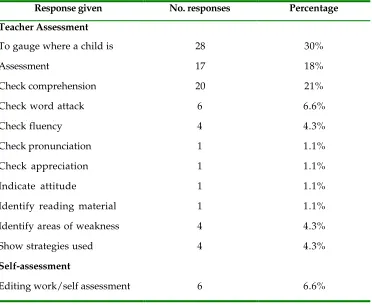
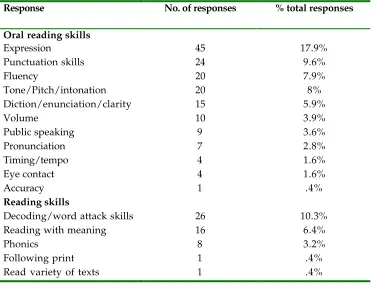
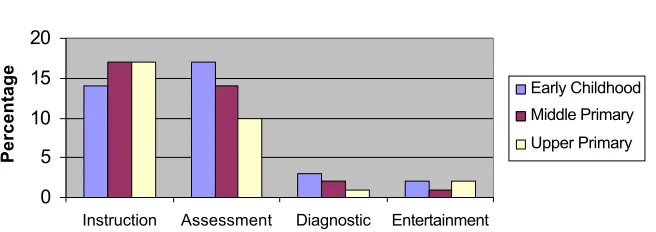
(20) xix LIST OF FIGURES Figure 1 - Importance of oral reading (N=69)........................................................107 Figure 2 - Early ages and stages (N=28)..................................................................108 Figure 3 - Oral reading. Important for all - (N=45)................................................110 Figure 4 - Benefits of oral reading (N = 222)...........................................................113 Figure 5 - Oral reading as instruction (N=107).......................................................114 Figure 6 - Important skill in oral reading - (N=221) ..............................................119 Figure 7 - Assessment methods - (N=270)..............................................................120 Figure 8 Characteristics of a 'good' reader - (N=318)............................................124 Figure 9 - Frequency of oral reading - (N=100) .....................................................130 Figure 10 - Frequently used oral reading activities - (N=100)..............................131 Figure 11 - Oral activities used frequently/sometimes - (N=100).......................132 Figure 12 - Oral reading activities used rarely/never - (N=100) .........................133 Figure 13 - Importance of oral reading - (EC = 38, MP = 31, UP = 31)................134 Figure 14 - Benefits of oral reading - (N=222) ........................................................135 Figure 15 - Oral reading as instruction - (N=107)...................................................136 Figure 16 - Skills (N = 42)...........................................................................................137 Figure 17 - Teaching strategies - (N=32)..................................................................138 Figure 18 - Dispositions - (N=29)..............................................................................139 Figure 19 - Benefits of oral reading - assessment - (N=93)...................................140 Figure 20 - Important skills to develop - (N=251)..................................................141 Figure 21 - Comparing important skills..................................................................143 Figure 22 - Comparing assessment methods -1 - (N=270)...................................144 Figure 23 - Comparing assessment methods -2.....................................................145 Figure 24 - Compare 'good' reader across primary school- (N=318) .................146 Figure 25 - Compare characteristics of 'good' reader............................................147.
(21) xx Figure 26 - Comparing pedagogical knowledge - (N=248)..................................148 Figure 27 - Frequency of oral reading.....................................................................186 Figure 28 - Frequency of reading activities - (N=122)...........................................186 Figure 29 - Student enjoyment of oral reading......................................................188 Figure 30 - Silent reading - (N=99) ...........................................................................190 Figure 31 - Reading ease - (N=39) ............................................................................190 Figure 32 - Reading activities - (N=122)...................................................................193 Figure 33 - Reading strategies - (N=178).................................................................196 Figure 34 - Readers describe themselves ................................................................198 Figure 35 - 'Good readers' (N=201) ..........................................................................199 Figure 36 - Oral reading skills - (N=76)....................................................................200 Figure 37 - Dispositions - (N=36)..............................................................................201 Figure 38 - Assessment methods - (N=137)............................................................202 Figure 39 - Year 3 - Group reading activity ............................................................298 Figure 40 - Round robin reading..............................................................................305 Figure 41 - Small group oral reading.......................................................................317.
(22) xxi LIST OF TABLES Table 1- Oral Reading across the Learning Areas - (N=100) ................................104 Table 2- Oral Reading Activities Used - (N=100)....................................................105 Table 3 Teachers rating of the importance of oral reading - (N = 100)...............106 Table 4 - Oral Reading as Instruction - Skills (N=42) .............................................115 Table 5 - Oral Reading as Instruction - teaching strategies. (N=32) ....................115 Table 6 - Oral Reading as Instruction - Dispositions - (N=29) ..............................116 Table 7 - Oral reading as assessment - (N=93)........................................................117 Table 8 - Oral reading as diagnosis - (N=13)...........................................................118 Table 9 - Oral reading as entertainment - (N=9) ....................................................118 Table 10 - Important skills to develop - (N=251)....................................................119 Table 11 - Reading assessment methods - (N=80) .................................................121 Table 12 - Reading strategies - (N=42).....................................................................122 Table 13 - Assessment methods - comprehension - (N=68).................................122 Table 14 - Recording strategies - (N=34) .................................................................123 Table 15 - Reading tests - (N=24)..............................................................................123 Table 16- Characteristics of a 'good' reader - (N=112)...........................................125 Table 17 - Reading strategies - (N=64).....................................................................125 Table 18 - Comprehension - (N=59).........................................................................126 Table 19 - Dispositions - (N=76)................................................................................126 Table 20 - Source of pedagogical knowledge - (N=248)........................................127 Table 21 - Reading Recount Year 3 Farrer Primary...............................................392. LIST OF TRANSCRIPTS.
(23) xxii Transcript 6. 1 - Fluency.............................................................................................153 Transcript 6. 2 - Improve confidence .......................................................................154 Transcript 6. 3 - Giving it a go...................................................................................154 Transcript 6. 4 - Using oral reading..........................................................................155 Transcript 6. 5 - Reading recounts............................................................................156 Transcript 6. 6 - Different roles .................................................................................157 Transcript 6. 7 - Benefits.............................................................................................157 Transcript 6. 8 - Mental records ................................................................................158 Transcript 6. 9 - Assessing reading...........................................................................159 Transcript 6. 10 - Describing 'good' readers............................................................159 Transcript 6. 11 - Reading levels ...............................................................................160 Transcript 6. 12 - Paired reading...............................................................................161 Transcript 6. 13 - Paired reading...............................................................................161 Transcript 6. 14 - Keeping records............................................................................161 Transcript 6. 15 - Enhancing comprehension..........................................................162 Transcript 6. 16 - Diagnostic tool ..............................................................................163 Transcript 6. 17 - Fluency...........................................................................................163 Transcript 6. 18 - Comprehending text....................................................................164 Transcript 6. 19 - Novel-based reading scheme .....................................................165 Transcript 6. 20 - Rules ...............................................................................................166 Transcript 6. 21 - Choice of reading material..........................................................167 Transcript 6. 22 - Book report ...................................................................................167 Transcript 6. 23 - Fun activities..................................................................................168 Transcript 6. 24 - Reading conference......................................................................169 Transcript 6. 25 - Assessing skills..............................................................................169 Transcript 6. 26 - Confidence.....................................................................................171.
(24) xxiii Transcript 6. 27 - Reducing stress .............................................................................171 Transcript 6. 28 - Describing 'good' readers............................................................172 Transcript 6. 29 - Responsibilities..............................................................................173 Transcript 6. 30 - Instructional benefits....................................................................174 Transcript 6. 31 - Assessment....................................................................................176 Transcript 6. 32 - Round robin reading....................................................................177 Transcript 6. 33 - Helping each other.......................................................................177 Transcript 6. 34 - Participation...................................................................................178 Transcript 6. 35 - Familiarity with the text ..............................................................178 Transcript 6. 36 - Developing skills...........................................................................179 Transcript 6. 37 - Work folder...................................................................................179 Transcript 6. 38 - Small group reading.....................................................................180 Transcript 6. 39 - Making inferences ........................................................................181. Transcript 8. 1 - "We don't do reading"....................................................................206 Transcript 8. 2 - "Miss D has a list of when you read"............................................207 Transcript 8. 3 - Listening...........................................................................................208 Transcript 8. 4 - "Speak up loud"...............................................................................208 Transcript 8. 5 - "We all had the same book" ..........................................................209 Transcript 8. 6 - "They have to sign".........................................................................209 Transcript 8. 7 - "She helps when we get stuck on words" ...................................210 Transcript 8. 8 - "Yeah we sound it out"...................................................................211 Transcript 8. 9 - "Looks at the chart on your reader" ............................................212 Transcript 8. 10 - "Some of them are and some of them aren't" ..........................213 Transcript 8. 11 - 'Good' readers ...............................................................................213.
(25) xxiv Transcript 8. 12 - "They go 'next please' after they've written down the comment".............................................................................................................218 Transcript 8. 13 - "Sometimes in a line sometimes they sit anywhere"...............218 Transcript 8. 14 - "That's the getting there group" .................................................219 Transcript 8. 15 - "She's in the professionals group now" .....................................219 Transcript 8. 16 - "Because we're here to learn"......................................................220 Transcript 8. 17 - "They're fixing your mistakes and slow you down" ...............221 Transcript 8. 18 - "When I was in the green group they were taking a long time" ...............................................................................................................................222 Transcript 8. 19 - "There's only one person to listen to"........................................222 Transcript 8. 20 - "I just read".....................................................................................223 Transcript 8. 21 - "You're allowed to make mistakes to yourself".......................223 Transcript 8. 22 - "Try again" .....................................................................................224 Transcript 8. 23 - "Just looking to see if they're behaving" ...................................225 Transcript 8. 24 - Listening is important..................................................................225 Transcript 8. 25 - Teachers' feedback........................................................................226 Transcript 8. 26 - Sounding out.................................................................................226 Transcript 8. 27 - Silent and oral reading.................................................................227 Transcript 8. 28 - Learning about reading...............................................................228 Transcript 8. 29 - Change...........................................................................................228 Transcript 8. 30 - Ability grouping ...........................................................................230 Transcript 8. 31 - Competing with your friends.....................................................231 Transcript 8. 32 - 'Good' readers ...............................................................................231 Transcript 8. 33 - My teacher thinks a 'good' reader is..........................................233 Transcript 8. 34 - Novel-based reading scheme .....................................................237 Transcript 8. 35 - Contract points .............................................................................237.
(26) xxv Transcript 8. 36 - Conferencing.................................................................................237 Transcript 8. 37 - Unknown words...........................................................................238 Transcript 8. 38 - Asking teachers questions...........................................................238 Transcript 8. 39 - Reading to yourself versus reading out-loud ..........................239 Transcript 8. 40 - "Like you know what they are. Sometimes you just can't say them".....................................................................................................................240 Transcript 8. 41 - Assessment....................................................................................241 Transcript 8. 42 - Accountability ...............................................................................242 Transcript 8. 43 - Feedback........................................................................................243 Transcript 8. 44 - Reading conferences ....................................................................243 Transcript 8. 45 - Feedback........................................................................................244 Transcript 8. 46 - 'Good' readers ...............................................................................244. Transcript 9. 1 - Reading groups...............................................................................248 Transcript 9. 2 - "Different types of level books"....................................................248 Transcript 9. 3 - "They help us find the answers" ...................................................249 Transcript 9. 4 - Sounding out...................................................................................249 Transcript 9. 5 - "Like first we start off in little picture books".............................250 Transcript 9. 6 - Managing others.............................................................................250 Transcript 9. 7 - Taking readers home.....................................................................251 Transcript 9. 8 - Oral versus silent reading..............................................................251 Transcript 9. 9 - "To help other people listen".........................................................252 Transcript 9. 10 - "Cause we muck up on some words"........................................252 Transcript 9. 11 - "She tells em to be quiet" .............................................................253 Transcript 9. 12 - Oral verus silent............................................................................253 Transcript 9. 13 - Unknown words...........................................................................254.
(27) xxvi Transcript 9. 14 - Assessing reading.........................................................................254 Transcript 9. 15- "I go to my room, shut the door and look through all my books"...................................................................................................................255 Transcript 9. 16 - "Because we have separate books" ............................................255 Transcript 9. 17 - "It's not the level" ..........................................................................256 Transcript 9. 18 - Round robin reading....................................................................259 Transcript 9. 19 - Listening.........................................................................................260 Transcript 9. 20 - Learning how to read ..................................................................260 Transcript 9. 21 - "I think they don't like reading at all" ........................................261 Transcript 9. 22 - Small group reading.....................................................................262 Transcript 9. 23 - Choosing books............................................................................263 Transcript 9. 24 - Oral versus silent ..........................................................................264 Transcript 9. 25 - "They um stutter a bit".................................................................264 Transcript 9. 26 - Unknown words...........................................................................264 Transcript 9. 27 - Sounding out.................................................................................265 Transcript 9. 28 - Change...........................................................................................266 Transcript 9. 29 - Assessing reading.........................................................................267 Transcript 9. 30 - Miscues...........................................................................................267 Transcript 9. 31 - 'Good' readers ...............................................................................269 Transcript 9. 32 - "Mr P actually looks at the person and not the door".............270 Transcript 9. 33 - Reading groups.............................................................................273 Transcript 9. 34 - Improving skills............................................................................275 Transcript 9. 35 - "They look at other peoples or ask em what to do"................275 Transcript 9. 36 - Choosing books............................................................................276 Transcript 9. 37 - Listening to others........................................................................277 Transcript 9. 38 - Unknown words...........................................................................278.
(28) xxvii Transcript 9. 39 - Assessing readers .........................................................................279 Transcript 9. 40 - 'Good' readers ...............................................................................280. Transcript 10. 1 - Recounting experiences...............................................................288 Transcript 10. 2 - Reading recounts..........................................................................289 Transcript 10. 3 - Reading recounts..........................................................................290 Transcript 10. 4 - Reading recounts..........................................................................290 Transcript 10. 5 - Reading recounts..........................................................................291 Transcript 10. 6 - Paired reading...............................................................................294 Transcript 10. 7 - Paired reading...............................................................................295 Transcript 10. 8 - Paired reading...............................................................................295 Transcript 10. 9 - Paired reading...............................................................................296 Transcript 10. 10 - Small group reading...................................................................298 Transcript 10. 11 - Paired reading.............................................................................304 Transcript 10. 12 - Paired reading.............................................................................304 Transcript 10. 13 - Round robin reading..................................................................307 Transcript 10. 14 - Round robin reading..................................................................308 Transcript 10. 15 - Round robin reading..................................................................309 Transcript 10. 16 - Round robin reading..................................................................309 Transcript 10. 17 - Round robin reading..................................................................310 Transcript 10. 18 - Round robin reading..................................................................311 Transcript 10. 19 - Paired reading.............................................................................314 Transcript 10. 20 - Paired reading.............................................................................314 Transcript 10. 21 - Small group reading...................................................................317 Transcript 10. 22 - Small group reading...................................................................319 Transcript 10. 23 - Small group reading...................................................................319.
(29) xxviii Transcript 10. 24 - Small group reading...................................................................320 Transcript 10. 25 - Small group reading...................................................................321 Transcript 10. 26 - Character mapping ....................................................................322 Transcript 10. 27 - Character mapping ....................................................................323 Transcript 10. 28 - Character mapping ....................................................................324.
(30) xxix STATEMENT OF SOURCES DECLARATION. I declare that this is my own work and has not been submitted in any form for another degree or diploma at any university or institution or tertiary education.. Information derived from the published or unpublished work of others as been acknowledged in the text and a list of references is given.. ___________________ (signature). __________________ (date). STATEMENT OF SOURCES - ELECTRONIC COPY.
(31) xxx. I, the undersigned, the author of this work, declare that the electronic copy of this thesis provided to the James Cook University Library is an accurate copy of the print thesis submitted, written within the limits of the technology available.. ___________________ (signature). __________________ (date).
(32) xxxi ETHICS DECLARATION. This research was conducted within the guidelines of the "National Health and Medical Research Council Statement on Human Experimentation and supplementary notes.". The research received ethical clearance from the James Cook University Ethics Review Committee (Human Ethics Sub-committee) Approval Number H883.. ___________________ (signature). __________________ (date).
(33) Introduction:. 1. CHAPTER ONE An Introduction: Setting the scene. Interest in this study stemmed from my previous work where nine middle primary children defined reading in school (Rennie, 1994). The data collected during my honours suggested that reading in school was something different from reading at home or out of school. Students defined school reading as accountable, constrained, oral and shared, boring, open to criticism and graded. The data also suggested that some of the practices used, particularly those of an oral and shared nature were questionable in terms of the negative effects they had on some learner readers. These findings fuelled my interest in this study, which presents empirical evidence that suggests that many oral reading practices in schools are not an effective means by which to teach learner readers. This argument strengthens when one theorises about reading in a social, cultural and historical sense (Baker, 1991; Bloome, 1985; Bloome & Talwalkar, 1997; Cairney, 2000; Freebody, Luke, & Gilbert, 1991; Gee, 2000; Green, Dixon, Lin, Floriani, & Bradley, 1992; Heap, 1991a, 1991b; Luke, 1995; McHoul, 1996). A preliminary review of the literature revealed that psychology and to a lesser extent ethnography, had characterised the nature of research conducted on oral reading to date. Studies investigated isolated aspects of oral reading such as reading rate, effects on comprehension, effectiveness of particular strategies or instructional routines such as readers' theatre and repeated readings, and patterns of student/teacher interactions within reading groups. There was little work on the historical significance of oral reading events, why it is used by teachers as a pedagogical tool, the incidence of oral reading instruction and its worth as an instructional tool. Further, researchers tended to ignore the social, communicative and interactive contexts of oral reading practices along with the distinct differences between oral and silent reading practices (Allington, 1984). This thesis conceptualises oral reading as a network.
(34) Introduction:. 2. of socially and historically constructed practices that have specific pedagogical effects and in doing so, it attempts to address many of these unanswered questions. The following two chapters present a review of the literature. Chapter Two focuses on reading research more generally and Chapter Three on research specific to oral reading. This resulted in a rather extensive literature review that drew on work undertaken from a wide range of theoretical perspectives. While the thesis is informed by social, cultural and historical theories of reading, (Baker, 1991; Bloome, 1985; Bloome & Talwalkar, 1997; Cairney, 2000; Freebody et al., 1991; Gee, 2000; J Green et al., 1992; Heap, 1991a, 1991b; Luke, 1995; McHoul, 1996), it was important to include research positioned by a different school of thought. Cognitive and behaviourist work continues to influence reading research and inform practice, although, this thesis argues that this is no longer the preferred paradigm in Australia. Although this thesis focuses on the practice of oral reading, I found it necessary to include both the research specific to oral reading and the research that focussed on reading more generally. The central question underpinning this thesis relates to how oral reading functions as part of learning to read in the primary school. To be adequately informed it was necessary for me to have knowledge about research specific to oral reading and knowledge about the various theoretical perspectives that inform reading pedagogy in schools. My previous work sought students' perceptions of reading in school. Whilst researchers have tended to dismiss children as "out of scope" particularly in large qualitative studies (Scott, 2000), I found talking with students provided a different perspective not often captured during reading research. In this study, I wanted to present a balanced view of oral reading in the classroom and so decided to explore the views of all those parties who had an interest in the practice. This study explored the students', teachers' and researchers' perspectives. Due to the scope and breadth of data needed, I used a number of different ethnographic data collection tools including questionnaires, interviews and classroom observations. Initially I surveyed 100 teachers across 24 different.
(35) Introduction:. 3. schools as a means to determine the extent and nature of the use of oral reading practices in classrooms. After this survey, data collection was concentrated in two different school sites. In depth teacher and student interviews, student surveys and classroom observations occurred in one early childhood, middle primary and upper primary classroom in each of the schools. This resulted in a very large and interesting set of data that had implications for the analysis. The analysis comprised two distinct phases. The first involved identification of themes and key issues by constant and comparative analysis of the data (Cairney, Ruge, Buchanan, Lowe, & Munsie, 1995; Cairney & Ruge, 1997). The second involved mapping the data using a framework developed by Gee and Green (1997). Within this framework four dimensions of social activity are identified- World building, Activity building, Identity building and Connection building. This framework facilitated the comparative analysis of the data. Mapping the oral reading events observed using this framework, allowed the comparison of the different perceptions and understandings of the various activities from the students', teachers' and researcher's perspectives and served to highlight any matches or mismatches between the data. Due to the large amount of data collected, I made the decision not to use close textual analysis and so this work lacks the depth of analysis characteristic of the Santa Barbara Group (Gee & Green, 1997; Green, Bradley, & Lichu, 1992; Rex & McEachen, 1999). However, this work is rich in the sense that it used a variety of different data collection methods to explore a number of different perspectives of the same event. Chapter Four reports on the methodology employed during this work. It situates the study and gives a detailed account of the data collection methods and analytical approach used. Chapters Five through to Chapter 10 analyse and discuss the data collected during the questionnaires, interviews and observations. Chapters Five and Six focus on the teachers' perspective and present data collected during the teacher questionnaires and interviews while Chapters Seven, Eight and Nine represent the students' perspectives and present data collected during the student questionnaires and interviews. Chapter Ten represents the researcher's.
(36) Introduction:. 4. perspective and presents data collected during my observations of classroom oral reading events. Chapters Five through to Chapter 10 provide the first phase of the analysis that involved the identification of themes and key issues by constant and comparative analysis of the data (Cairney et al., 1995; Cairney & Ruge, 1997). Chapter Five is titled "A Teacher Perspective: Teachers write". It presents data collected from 100 teacher questionnaires from a sample comprising 38 Preparatory to Year 3 teachers, thirty-one middle primary teachers and thirtyone upper primary teachers. The chapter reports on the frequency, nature and use of oral reading activities in the classroom. It also compares the data collected from early childhood, middle primary and upper primary teachers. This was an interesting exercise as the data suggest teachers tended to adopt a developmental position when discussing why, how and when students should engage in oral reading practices. The questionnaire data clearly showed that oral reading was a valued and frequent activity according to the teachers surveyed. Teachers claimed it was useful in the teaching and assessment of reading, and also developed confidence and fostered a love of reading. Both teachers and students frequently referred to such things as "confidence", "enjoyment" and "perseverance" throughout the questionnaires and interviews. I have collectively termed these 'dispositions' and question, whether oral reading practices do serve to develop or foster them. Chapter Six is titled "A Teacher Perspective: Teachers speak". It presents the data collected during the teacher interviews. I conducted interviews with six teachers across two school sites. The first school was an urban primary school called "Farrer" 1 and the second an urban primary school named "Gunn". I interviewed an early childhood, middle primary and upper primary teacher in each school. Teachers answered questions similar to those included in the questionnaire. They also spoke at length about specific oral reading practices used in their respective classrooms. Their responses did not differ greatly from those given by teachers during the questionnaires.. 1. The names given to schools are pseudonyms.
(37) Introduction:. 5. Chapter Seven is titled "A Student Perspective: Students write". It reports on the data collected from 122 student questionnaires. The sample comprised those students belonging to the classes where I interviewed teachers. Similar to the teacher questionnaires, students also answered questions relating to the frequency, nature and use of oral reading practices in their classrooms. In addition, they reported on the differences between oral and silent reading, their perceptions of themselves as readers, their preferred ways of reading and on what they thought constituted a 'good' reader in their teachers' eyes. There were some marked differences between the student and teacher responses. Students tended to under-represent the frequency of oral reading activities in the classroom compared to their teachers. Similar to their teachers, many students reported teachers using oral reading as a means to provide reading instruction and to assess reading. Students however, found it difficult to identify what was being taught, or assessed during oral reading activities. Many of the students surveyed did not identify oral reading as their preferred way of reading; they said it was more difficult than silent reading and that it often created anxiety for them. Chapter Eight is titled "Students speak: Farrer Primary" and reports on interviews conducted with ten students from the three classes where I administered student questionnaires. Similarly, Chapter Nine is titled "Students speak: Gunn Primary". It reports on interviews conducted with nine students from the classes where I administered student questionnaires in that school. In addition to speaking generally about reading in the classroom students spoke specifically about the various oral reading activities in which they participated in their respective classrooms. Similar to the questionnaires students reported that teachers used oral reading activities to teach and assess reading although they too found it difficult to articulate what was actually taught or assessed during these activities. The majority of students interviewed voiced a preference for reading silently. Many said the activity was stressful and the better readers reported the activity as frustrating particularly when listening to readers who struggled with the task. Students' descriptions of 'good' readers tended to mirror the areas.
Figure

+7




Related documents
The current study aimed to examine the direct effects of word recognition, oral reading fluency and listening comprehension on reading comprehension in a sample of second
Additional hypotheses included (a) increases for all students in the intervention on measures of oral reading fluency, reading comprehension, metacognitive awareness during
To what extent does the L2 initial oral reading fluency status impact L2 oral reading fluency growth for Spanish-speaking ELL students participating in the
This descriptive study sought greater understanding of how mClass: Reading 3D impacted students’ reading achievement in second grade; how teachers use data to drive
The seven students’ research foci fell within the broad parameters of this project and included reading assessment (Nehal 2013), beliefs and practices of reading teachers
Further, this paper argues that it is imperative for reading teachers (including content area teachers) to have operational knowledge on the different strategies in teaching
Four de�endent measures were obtained in Experiment 1: oral reading fluency (the rate of words read correctly per minute), errors per minute (the rate of errors made per
The purpose of this study is to examine the oral reading behavior and decoding strategies employed by young Chinese children; the role of metalinguistic awareness in reading
