ABSTRACT
Sheri Dial Herndon, AN ANALYSIS OF THE IMPACT OF mCLASS: READING 3D ON STUDENTS’ READING ACHIEVEMENT IN SECOND GRADE (Under the direction of Dr. William Grobe). Department of Educational Leadership, March 2015.
The purpose of this program evaluation was to research North Carolina’s adoption of mClass: Reading 3D to determine program effectiveness, how teachers use student data from the program to improve instructional practices, and the extent, if any, mClass: Reading 3D has impacted students’ reading achievement in second grade. Additionally, the researcher analyzed data to report if and how continuous and ongoing professional development associated with mClass: Reading 3D provided teachers with the necessary skills to effectively impact students’ reading achievement.
Data from this study will be used to inform the implementation process of mClass: Reading 3D that may have a positive impact on students’ reading achievement. A descriptive study using both qualitative and quantitative data was used to address the research questions.
Data were collected from teacher surveys, educational administrators,
transformational/instructional coaches, and student test scores to determine the impact of mClass: Reading 3D on student reading achievement in second grade. The findings for this study indicated that mClass: Reading 3D had a somewhat positive impact on students’ reading achievement in grades K-3. The K-3 teachers are using mClass: Reading 3D data to drive instruction. Although the findings of this study were somewhat positive, the data are not being utilized to the fullest potential to improve student reading achievement. The findings suggested there is a need for specific and ongoing professional development to improve the overall
AN ANALYSIS OF THE IMPACT OF mCLASS: READING 3D ON STUDENTS’ READING ACHIEVEMENT IN SECOND GRADE
A Dissertation Presented to
The Faculty of the School of Education East Carolina University
In Partial Fulfillment
of the Requirements for the Degree Doctor of Education in Educational Leadership
by
Sheri Dial Herndon March, 2015
© Copyright 2015 Sheri Dial Herndon
Chapters 1-3 were written in collaboration with my colleagues: Jill Hathaway and Darlene Cummings
AN ANALYSIS OF THE IMPACT OF mCLASS: READING 3D ON STUDENTS’ READING ACHIEVEMENT IN SECOND GRADE
by
Sheri Dial Herndon
APPROVED BY:
DIRECTOR OF DISSERTATION:
William Grobe, EdD COMMITTEE MEMBER:
William A. Rouse, EdD COMMITTEE MEMBER:
Jim McDowelle, EdD COMMITTEE MEMBER:
Zoe Locklear, EdD COMMITTEE MEMBER:
Linda Emanuel, EdD CHAIR OF THE DEPARTMENT OF EDUCATIONAL LEADERSHIP:
William A. Rouse, EdD DEAN OF THE GRADUATE SCHOOL:
DEDICATION
I would like to thank my husband, Chad Herndon, for his support and unconditional love throughout the dissertation process. I am grateful for my two children, Darien Alexis and Jalyn Montana, who have inspired me and helped me stay focused to make sure my family came first and working on a dissertation second. My parents, Allen and Yvonne Dial, and sister, Lisa Dial Hunt, were excited, supportive, and encouraging as I continued to further my education by working on a doctorate degree. My family has given me strength and direction to complete this process. Dr. Ruth Dial Woods, my aunt, was available to hear my thoughts and concerns
throughout the entire process. A special thank you is sent to my family for being by my side as I pursued this goal.
I thank God for giving me strength and motivation to complete this dissertation. Without Him, along with my family, this endeavor of intellectual and spiritual growth would not have been possible. The love of family, powered by God’s grace, is life’s greatest blessing and reward.
ACKNOWLEDGEMENTS
I would like to thank my colleagues and dear friends, Darlene B. Cummings and Jill Hathaway, who walked through every step of this process with me and never let me give up. I could not have accomplished this without you, and I will forever be grateful to you for your encouragement, support, and teamwork.
I would also like to acknowledge my deep gratitude for my dissertation chair, Dr.
William Grobe, along with my committee members: Dr. Art Rouse, Dr. Jim McDowell, Dr. Zoe Locklear, and Dr. Linda Emanuel. Thank you all for your guidance, encouragement, and
feedback during this exciting process. Your commitment to helping others reach their goals is an admirable quality and gift from above. I am appreciative of the opportunity to work with such outstanding professors and leaders.
A special thanks is given to this study’s editor, Richard Allen. Your timely feedback and edits helped me stay on track to complete the research study. Thank you for willingness to make changes, as needed, and your diligence throughout this process.
Much appreciation is extended to Dr. Johnny Hunt, Superintendent of the Public Schools of Robeson County. Without your cooperation, this study would not have been possible.
Lastly, to the many friends, colleagues, and teachers, who advised and supported my research and efforts over the years, a heart-felt “thank you” is respectfully given. Providing your expertise and knowledge to the completion of this study has been deeply valued.
TABLE OF CONTENTS Page TITLE ... i COPYRIGHT ... ii SIGNATURE ... iii DEDICATION ... iv ACKNOWLEDGEMENTS ... v
LIST OF TABLES ... xii
LIST OF FIGURES ... xiii
CHAPTER 1: INTRODUCTION ... 1
The Need for Study ... 1
Statement of the Problem ... 5
Purpose of the Study ... 5
Significance of the Study ... 6
Overview of Methodology ... 7
Definitions of Terms ... 8
Summary ... 14
CHAPTER 2: REVIEW OF LITERATURE ... 16
Why is Literacy Important? ... 17
The History of Reading Instruction ... 23
Reading Instructional Trends ... 27
Introduction to Basal Instruction ... 27
Whole Language ... 29
Basal Bashing... 30
Reading Wars ... 31
A Balanced Literacy ... 33
Federal Influences Shape Reading Initiatives ... 35
Brown v. Board Education ... 37
Civil Rights Laws ... 37
A Nation at Risk... 38
IDEA ... 39
Title I ... 39
How do schools qualify to receive Title I funds? ... 39
Why are Title I funds allocated exclusively to high poverty schools?... 40
Closing the Achievement Gap ... 40
The National Reading Panel ... 42
Phonemic awareness ... 43
Phonics ... 43
Fluency ... 43
Vocabulary ... 44
Text comprehension ... 44
No Child Left Behind (NCLB) ... 45
National Assessment of Educational Progress ... 47
Race to the Top ... 53
Career and College: Ready, Set, Go! ... 57
Read to Achieve Policy ... 58
Wireless Generation ... 61
Wireless Generation Changes to Amplify ... 62
History of DIBELS ... 63
DIBELS Next ... 65
DIBELS Research ... 66
mCLASS: Reading 3D ... 70
Nuts and Bolts of mClass: Reading 3D ... 71
Why mClass: Reading 3D? ... 74
Technology and Student Assessment... 75
Technology and Early Literacy Assessment ... 77
Technology and Formative Assessment ... 79
Technology and Implementation ... 80
Revolutionized Education ... 83
The Impact of Professional Development ... 83
Professional Development Reform ... 86
Leadership in Professional Development ... 87
Professional Development Models ... 89
Professional Learning Communities ... 90
Observation/Assessment ... 92
Involvement in Development/Improvement Process ... 92
Inquiry/Action Research ... 93
Individually Guided Activities ... 94
Mentoring ... 94
Five Critical Levels of Professional Development Evaluation ... 95
mClass: Reading 3D Professional Development ... 97
Professional Development Summary ... 102
Program Evaluation ... 104
Summary ... 105
CHAPTER 3: RESEARCH DESIGN/METHODOLOGY ... 110
Research Methodology ... 110 Statement of Problem ... 112 Research Questions ... 113 Research Design... 113 Selection Process ... 115 Participants ... 120
Teachers, Principals, and Transformational/Instructional Coaches ... 120
Students ... 120 Data Collection ... 120 Surveys ... 126 Interviews ... 129 Assessment Data ... 132 Data Analysis ... 133 Interpretive Analysis ... 134
Construct Validity ... 134
Confidentiality ... 135
Research Permission and Ethical Consideration ... 136
Compliance with Institutional Review Board ... 137
Conceptions/Assumptions of Chosen Methodology ... 137
Summary ... 138
CHAPTER 4: RESULTS AND RECOMMENDATIONS... 140
Data Overview ... 141
Qualitative Data—Teacher Survey ... 142
General Information Teacher Survey Questions ... 144
Survey Questions about Student Assessment ... 146
Survey Questions about Using Data to Drive Instruction ... 151
Summary ... 164
Teacher Responses to Open-Ended Survey Questions ... 166
Qualitative Data—Principal and Transformational/Instructional Coach Interview Questions………... 169
Summary ... 184
Data Triangulation ... 184
Quantitative Data—2012–2013 mClass: Reading 3D Second-Grade Assessment Results ... 185
Findings... 190
Program Effectiveness ... 191
Available Data ... 192
Professional Development ... 197
Instructional Coach ... 198
Conclusions ... 199
Practical Recommendations ... 211
Recommendations for Future Research ... 216
Summary ... 217
REFERENCES ... 220
APPENDIX A: THE ACHIEVEMENT GAP IN NORTH CAROLINA ... 254
APPENDIX B: MCLASS: READING 3D ALIGNMENT WITH K-3 COMMON CORE ELA STANDARDS ... 257
APPENDIX C: CONSENT FORM ... 262
APPENDIX D: SURVEY COVER LETTER ... 265
APPENDIX E: TEACHER SURVEY QUESTIONS ... 267
APPENDIX F: PRINCIPAL/TRANSFORMATIONAL COACH INTERVIEW QUESTIONS…… ... 272
APPENDIX G: INTERVIEW QUESTIONNAIRE COVER LETTER ... 274
APPENDIX H: TEACHER SURVEY RESPONSE RESULTS ... 276
APPENDIX I: PRINCIPAL AND TRANSFORMATIONAL/INSTRUCTIONAL COACH INTERVIEW QUESTION RESULTS ... 288
LIST OF TABLES
1. North Carolina’s Read to Achieve Facilitating Early Grade Reading
Proficiency Process ... 59
2. Alignment of DIBELS Next Measures with Basic Literacy Skills ... 67
3. Modifications and Benefits from DIBELS to DIBELS Next Measures ... 68
4. Racial Makeup of Robeson County ... 118
5. Robeson County Quick Facts ... 121
6. Participant Demographics ... 122
7. Forest Lane Elementary School 2012–2013 mClass: Reading 3D ... 123
8. Sycamore Elementary School 2012–2013 mClass: Reading 3D ... 124
9. Pine Brook Elementary School 2012–2013 mClass: Reading 3D ... 125
LIST OF FIGURES
1. Summary of NAEP results for North Carolina ... 50
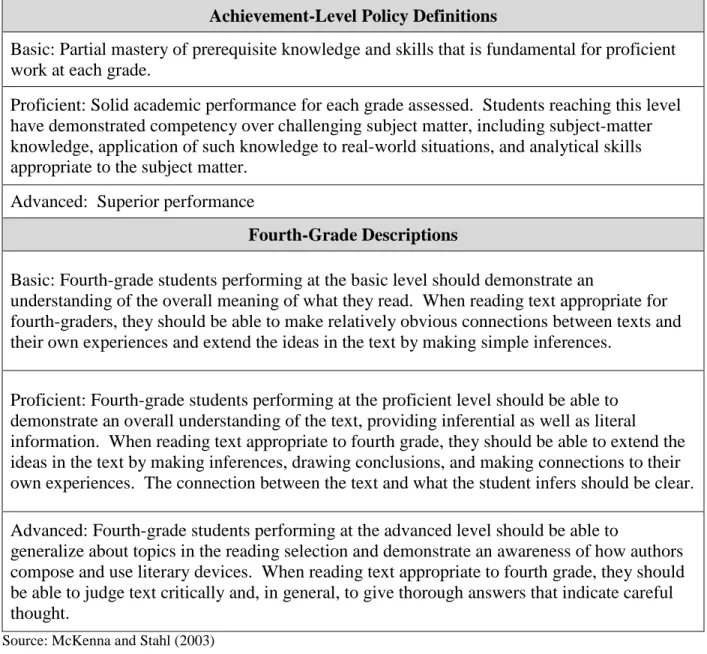
2. NAEP’s achievement-level policy definitions and fourth-grade descriptors ... 51
3. Achievement-level percentages and average score results ... 52
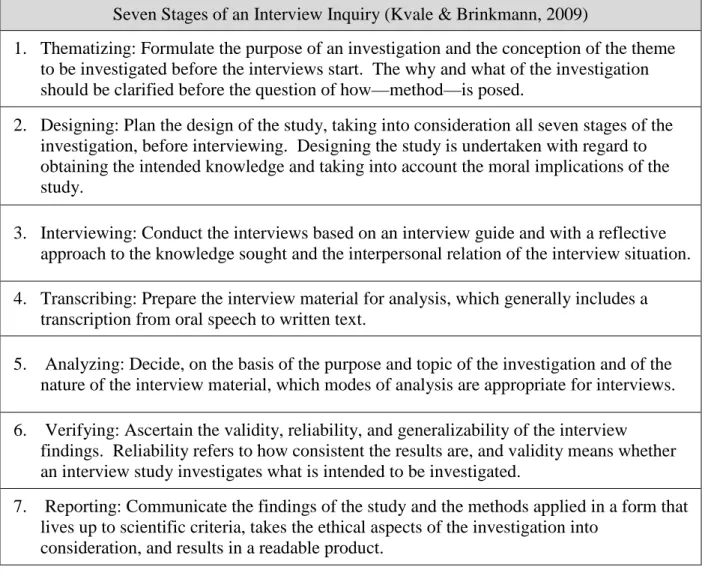
4. Seven stages of interview inquiry ... 131
5. Number of years responders have implemented the mClass: Reading 3D assessment ... 147
6. Respondents’ ratings of the effectiveness of mClass: Reading 3D on student achievement ... 149
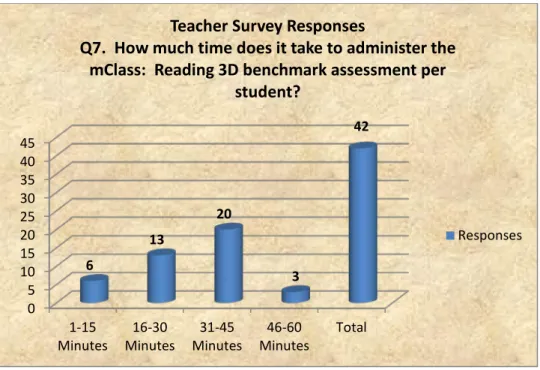
7. Respondents’ perceptions of the time it takes to administer the mClass: Reading 3D benchmark assessment per student ... 150
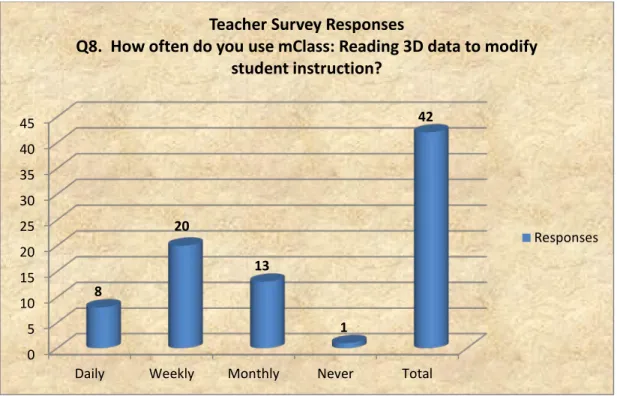
8. Frequency that respondents use mClass: Reading 3D data to modify student instruction ... 152
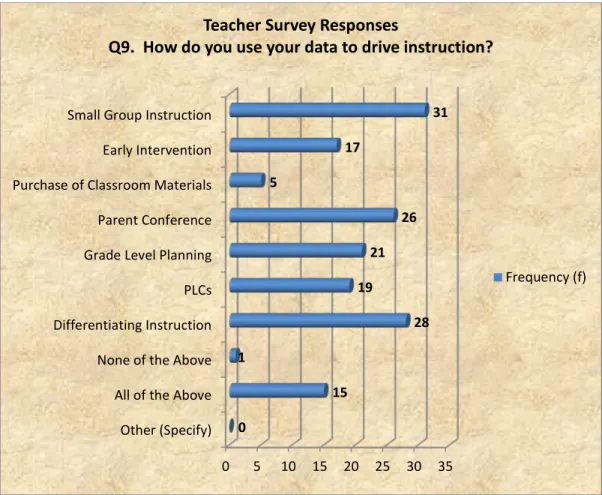
9. Methods by which respondents use data to drive instruction ... 154
10. Frequency with which respondents use progress monitoring data in setting student goals ... 156
11. Respondents’ ratings of the impact of assessment and data to drive instruction at their schools ... 158
12. Respondents’ overall satisfaction with the implementation of mClass: Reading 3D ... 159
13. Teacher survey responders rate their overall satisfaction as a favorable experience with technology ... 161
14. Resources respondents have used for support with mClass: Reading 3D ... 163
15. How respondents use the reports found on the Reporting and Analysis Suite ... 172
16. Respondents’ responses as to whether instructional practices have changed in grades K-3 since the implementation of mClass: Reading 3D ... 174
17. Respondents’ beliefs about the impact of mClass: Reading 3D on student achievement ... 176
18. Respondents’ beliefs about the challenges to the implementation of the
mClass: Reading 3D program ... 178 19. Concerns respondents have about the staff development for the
implementation of mClass: Reading 3D ... 179 20. Resources respondents have used for support with mClass: Reading 3D ... 181 21. Respondents’ preferences for the type of additional training and/or support
they feel would be beneficial in the future ... 183 22. 2012–2013 mClass: Reading 3D composite scores for second-grade students
at Forest Lane Elementary School ... 187 23. 2012–2013 mClass: Reading 3D composite scores for second-grade students
at Sycamore Lane Elementary School ... 188 24. 2012–2013 mClass: Reading 3D composite scores for second-grade students
CHAPTER 1: INTRODUCTION
The purpose of this study was to explore the relationship that exists between the history of reading, the impact of mClass: Reading 3D on student achievement in second grade, and the impact of quality professional development through a program evaluation. Data from this study will be used to improve the implementation process of mClass: Reading 3D that may have a direct impact on student achievement. This dissertation is a program evaluation of a state-mandated early reading assessment program implemented in K–3 classrooms in a rural public school system in North Carolina. Chapter 1 provides background information for implementing the mClass: Reading 3D Assessment Program in three selected public elementary schools in one school district. mCLASS: Reading3Dis a validated and research-based reading assessment which includes quick indicators of early skill development and deeper observations of student interaction with authentic text to diagnose readingcomprehension of students enrolled in grades K–5 (Amplify Education, 2014a). The assessment provides a comprehensive view of an
individual student’s reading development.
The Need for Study
Prior to the adoption of mClass: Reading 3D, K–2 teachers in the State of North Carolina assessed reading skills using a running record. A running record is a tool developed by New Zealand educator Marie Clay that assists teachers in identifying patterns in student reading behaviors and serves as a way to precisely observe, record, and carefully analyze reading behaviors (Tierney & Readence, 2005). These patterns allow a teacher to see the strategies a student uses to make meaning of individual words and texts as a whole. Running records, when paired with comprehension inquiry, can be used to identify an instructional reading level for individual students. While running records are a diagnostic tool, they can and should be used to inform instruction and help extend a reader’s use of strategies (Gunther, 2013). Clay (1993)
2
provided detailed information for using a running record to analyze strategies. Running records allow teachers to monitor student achievement as they use resulting data to make decisions about appropriate instructional support and materials (Tierney & Readence, 2005).
Prior to the state mandated implementation of the mClass: Reading 3D assessment, no diagnostic standardized assessment program was used to evaluate students’ reading achievement in grades K-2. The K-2 reading assessments that were being used throughout the state failed to meet the requirements of newly mandated state and federal initiatives such as Race to the Top and Read to Achieve. For example, goals and expectations of these K–2 assessments did not align with goals and expectations of the state-developed end-of-grade (EOG) reading test given to students in grade three to measure academic growth and proficiency levels. Further, the state did not include letter and sound identification in the 2005 North Carolina K-2 literacy assessment (North Carolina Department of Public Instruction [NCDPI], 2009). Since many schools and districts were including this component in locally developed assessments, letter and sound identification was a component added to the 2009 revised literacy assessment produced by the state as a strategy to improve reading skills (NCDPI, 2009). This component yielded
information for planning and classroom instruction.
Book and print awareness was primarily used as a kindergarten assessment in 2005 (NCDPI, 2009). The North Carolina K-2 assessment, which was revised in 2009, included a book with a matching script as a component of the assessment. This was to be used during the first two years of school to ensure assessed skills were aligned with the North Carolina Standard Course of Study (NCDPI, 2009). Phonemic awareness was originally designed for use in grades K-1. However, beginning in 2009, the state required the assessment in grades K–2.
3
The running record contained leveled books to be used for fluency assessment. To enhance oral retell, the North Carolina K–2 revised assessment included the same rubric
descriptors for fiction and nonfiction texts (NCDPI, 2009). Comparing a student’s assessment in grade three to his/her assessment in grade two was quite problematic. Many educators stated that running records and K–2 assessments allowed too much teacher subjectivity and judgment, unlike the Grade 3 EOG. Therefore, many times this subjectivity led to a huge discrepancy between the performance of a student enrolled in K–2 as compared to third grade. By the end of the 2009–2010 school year, only 59% of third-grade students taking the North Carolina End-of-Grade reading test scored at or above Level III proficiency (NCDPI, 2010b).
An assessment gap definitely exists in U.S. schools. Schools are struggling to enable students to attain the advanced literacy skills required for the 21st century American economy (Haskins, Murnane, Sawhill, & Snow, 2012). Ralph Smith, Executive Vice President of the Annie E. Casey Foundation stated, “We will never close the achievement gap, we will never solve our dropout crisis, we will never break the cycle of poverty that afflicts so many children if we don’t make sure that all our students learn to read” (as cited in Annie E. Casey Foundation, 2013b). Furthermore, to the detriment of the child, many times student reading deficiencies failed to be diagnosed until grade three. Essentially, 70% of students who reach age nine and who cannot read will remain illiterate (Shaywitz, 2005). Eamon (2002) found that households experiencing poverty provided a less cognitively stimulating environment, which is somewhat associated with lower achievement scores. Neuman and Celano (2001) reported that summer breaks for students from families with less income can mean less access to libraries, bookstores, camps, and literate experiences.
The gap between strong and struggling readers increases significantly as children progress through school, according to a study of 382 children by Canadian researchers.
4
The study found that as students progressed from kindergarten to grade three, those in the lower ranks of reading achievement were likely to remain there. Moreover, at each subsequent data collection point over a four-year period, the struggling readers fell further behind their grade-level reading peers. (Fiester, 2013, p. 4)
A real need exists to develop and build students’ reading capacity during the primary and elementary years in order to prepare students to meet the reading challenges posed by heavy content and extensive curriculum requirements at the secondary level. Therefore, kindergarten, first, second, and third-grade students shall be assessed with valid, reliable, formative, and diagnostic reading assessments made available to local school administrative units by the North Carolina State Board of Education (NC General Assembly, 2012).
Deficiency in reading achievement starts early and accelerates over the course of a student’s school experience (Keiser, 2011). Reading expectations increase as students leave elementary school and enter middle grades where they will face complex content-based informational texts. If teachers do not intervene and diagnose reading deficiencies early and appropriately, students who enter middle school as unsteady readers have a greater chance of becoming struggling readers (Sturtevant, 2003).
Since the passage of the No Child Left Behind Act in 2001, more and more states are implementing statewide assessments. This Act included a requirement that all children would be proficient in reading and mathematics by the 2013–2014 school year (U.S. Department of
Education, 2010c). Schools and districts were held accountable for students’ mastery of state academic content standards. The stakes were and still remain high since both federal and state legislation require tough sanctions for students, teachers, and school districts if they perform poorly on the new assessments. Federal mandates forced state and local education agencies to implement aggressive accountability measures to improve low test scores associated with reading deficiencies. For example, the North Carolina General Assembly’s Read to Achieve
5
program was enacted to ensure that every student reads at or above grade level by the end of third grade (NCDPI, 2012).
There was a need to research North Carolina’s adoption of mClass: Reading 3D to determine program effectiveness and its impact in the selected public school district. This study attempted to indicate the extent, if any, mClass: Reading 3D has impacted students’ reading achievement in second grade, and determine how teachers use student data from the program to identify instructional practices that may impact student achievement. Additionally, the
researcher analyzed collected data to report if and how continuous and ongoing professional development associated with mClass: Reading 3D provided teachers with the necessary skills to effectively impact students’ reading achievement.
Statement of the Problem
The decline in third-grade North Carolina End-of-Grade reading scores placed an increased emphasis on improving reading achievement of students in grades kindergarten through second. These diminishing student achievement scores, based on state standardized achievement tests, have resulted in a sense of urgency for public school districts in North
Carolina to implement a diagnostic reading assessment program to improve student performance (NC School Report Card, 2013). These concerns have led to the adoption of mClass: Reading 3D across the State of North Carolina to meet local and state mandates, as outlined in the Read to Achieve program (NCDPI, 2012).
Purpose of the Study
The purpose of this study was to explore the relationship that exists between the history of reading instruction, the impact of mClass: Reading 3D on student achievement in second grade, and the impact of quality professional development through a program evaluation. Data
6
from this study will be used to inform the implementation process of mClass: Reading 3D that may have a positive impact on students’ reading achievement. Specifically, the study addressed the following research question:
To what extent, if any, has mClass: Reading 3D impacted students’ reading achievement
in second grade?
Other questions related to this study included:
• To what extent, if any, do teachers use student data from the mClass: Reading 3D assessment to determine instructional practices that may impact students’ reading achievement?
• To what extent, if any, did continuous and ongoing professional development associated with mClass: Reading 3D provide teachers with the necessary skills to impact students’ reading achievement?
The use of student data to determine instructional practices and continuous and ongoing professional development associated with mClass: Reading 3D may have an impact on student reading achievement.
Significance of the Study
The importance of reading and becoming literate cannot be overstated (Snow, Burns, & Griffin, 1998). Learning to read is one of the most important abilities a student can acquire (Kirk, 1999; Reitzhammer, 1990). Students who do not learn to read as expected are less likely to complete high school (Morris, Shaw, & Perney, 1990; Reitzhammer, 1990; Shanahan & Barr, 1995). With increased expectations for accountability for student success (Bailey, 2002), schools are faced with finding alternative methods to improve student achievement. The study described here has the potential to add to the body of research regarding the use or effectiveness
7
of mClass: Reading 3D to improve student reading achievement in rural North Carolina public schools. Collected data were analyzed from surveys, interviews, and the mClass: Reading 3D results collected from beginning of year (BOY), middle of year (MOY), and end of year (EOY) reports from students in grade two during the 2012–2013 school year in the three selected elementary schools. This descriptive study sought greater understanding of how mClass: Reading 3D impacted students’ reading achievement in second grade; how teachers use data to drive instructional practices; and to what extent, if any, professional development provided teachers with the necessary skills to effectively impact students’ reading achievement. Results may help schools assess time and effort regarding the implementation of mClass: Reading 3D. Teachers and administrators have the opportunity to collaborate in the development of
continuous improvement processes that include the analysis of data to guide and transform instruction, inform ongoing professional development and support, and reduce the achievement gap (Amplify Insight, 2013).
Overview of Methodology
The method of inquiry was a program evaluation using descriptive statistics. Green and Carracelli (1997) indicated qualitative and quantitative data are used to gain a greater
understanding or picture of the construct of interest. According to Creswell (2009), the mixed method approach gives overall strength to a study, making this approach greater than either qualitative or quantitative research. Yin’s (2009) research stated that multiple data sources allow researchers to address more complicated research questions and collect a richer and stronger amount of evidence than can be provided in a study using one method. Quantitative data
includes closed-ended information that may be obtained from attitude, behavior, or performance instruments. Analysis consists of analyzing scores collected on instruments, checklists, or public
8
documents to answer research questions. On the other hand, a qualitative study consists of open-ended information the researcher gathers through interviews, observations, or gathering
documents or artifacts. Data are typically analyzed into themes or categories of information. This qualitative study closely examined how mClass: Reading 3D was implemented and how effective the implementation has been to guide instruction to improve student reading
achievement.
Definitions of Terms
This program evaluation used various terms to accurately describe the research. Terms defined here will be used throughout this dissertation.
Adult learning—“The process of adults gaining knowledge and expertise”
(Knowles, Holton, & Swanson, 2005, p. 174).
Assessment—Refers to the “specification and verification of problems for the purpose of
making different kinds of decisions” (Salvia & Ysseldyke, 1998, p. 22).
Average Daily Membership (ADM)—The sum of the number of days in membership for
all students in individual Local Education Agencies (LEAs), divided by the number of school days in the term (NCDPI, 2013a).
BOY (Beginning of Year)—Time of year mClass: Reading 3D assessment is administered
(PB Works, 2013). BOY assessments usually occur in September. BOY assessments are part of mClass: Reading 3D benchmark assessments.
Cut score—“The minimum score required for performance at each National Assessment
of Educational Progress (NAEP) achievement level. NAEP cut scores are determined through a standard-setting process that convenes a cross-section of educators and interested citizens from across the nation. The group determines what students should know and be able to do relative to
9
a body of content reflected in the framework. The National Assessment Governing Board then adopts a set of cut scores on the scale that defines the lower boundaries of Basic, Proficient, and Advanced” (National Center for Education Statistics [NCES], 2013b, “Cut score”).
Daze—A new measure in DIBELS Next used to measure the reasoning processes that
constitute comprehension and assess the student’s ability to construct meaning from text using word recognition skills, background information and prior knowledge, familiarity with linguistic properties such as syntax and morphology, and cause-and-effect reasoning skills. Daze serves as the standardized DIBELS version of maze procedures for specifically measuring reading
comprehension (Amplify Education, 2013a).
DIBELS—Dynamic Indicators of Basic Early Literacy Skills (DIBELS) are a set of
procedures and measures for assessing the acquisition of early literacy skills from kindergarten through sixth grade.
DIBELS Next—Provides two types of testing, benchmark assessment and progress
monitoring. Benchmark assessment, or screening, refers to testing all students three times per year for the purpose of identifying those who may be at risk for readingdifficulties. Once students are identified as at risk for reading difficulties, they can receive progress monitoring testing more frequently to ensure that the instruction they are receiving is helping them make progress (Dynamic Measurement Group, 2012).
DIBELS Oral Reading Fluency (DORF)—A standardized, individually administered test
of accuracy and fluency with connected text. The DIBELS ORF passages and procedures are based on Stan Deno and colleagues’ program of research and development of Curriculum-Based Measurement of Reading at the University of Minnesota (Shelton, Altwerger, & Jordan, 2009).
10
Early-grade reading—Refers to pre-kindergarten through the third grade, which can be
characterized as basic reading skills and perception; later reading is done for comprehension and other higher-level tasks (Chall, 1967).
EOY (End of Year)—Time of year mClass: Reading 3D assessment is administered (PB
Works, 2013). EOY assessments usually occur in May.
First Sound Fluency (FSF)—Standardized, individually administered test of phonological
awareness. The FSF measure assesses a student’s ability to segment one, two, or three syllable words into their individual phonemes fluently. The FSF measure has been found to be a good predictor of later reading achievement (Nelson, 2003).
Formative assessment—Use of observational or diagnostic measures to provide detailed
information about a student’s progress. Formative assessments provide teachers with frequent data regarding the growth and development of students. The purpose of this data is to allow teachers to plan appropriate differentiated small group instruction that will meet the needs of each student. Collecting data for formative types of assessment can be done in a variety of ways. According to Wang (2008), “formative assessments play an important role in both the traditional learning environment and the e-Learning environment” (p. 1249). Traditionally, this has been a paper-pencil type of data collection. However, Wireless Generation offers a way to collect this data electronically, which speeds up the delivery of that data analysis for each child. For this study, formative assessment, also called progress monitoring is defined as, “a probe used
between benchmarks to target specific content areas for remediation” (Reaves & Sullivan, 2010, p. 38).
11
Governance—The shared power of planning, administering, and implementing anaction;
incorporates components such as responsibility for developing, designing,evaluating, and handling academic matters (Diamond, 2002).
Initial Sound Fluency (ISF)—A standardized, individually administered measure of
phonological awareness that assesses a child’s ability to recognize and produce the initial sound in an orally presented word (Kaminski & Good, 1996, 1998). The ISF measure is a revision of the measure formerly called Onset Recognition Fluency (OnRF).
Large-scale standardized reading assessment—Refers to state or national assessments on
reading that are administered to all participants in the same conditions and manner (Wheeler & Haertel, 1993).
Letter Naming Fluency (LNF)—Standardized, individually administered test that
provides a measure of risk, based on research by Marston and Magnusson (1988). Students are presented with a page of upper- and lower-case letters arranged in a random order and are asked to name as many letters as they can. Students are told if they do not know a letter, they will be told the letter. The student is allowed 1 minute to produce as many letter names as he/she can, and the score is the number of letters named correctly in 1 minute.
Literacy—Literacyis hard to define and is constantly changing. It is a shifting target that
will continueto change over time. What it meant to be literate a few decades ago no longer holds true today. Past definitions used included learning to read and sounding out words from traditional texts (AACTE, 2008). For the purpose of this study, literacy will be used as abroader term. In order to be literate in the 21st century, students must be able to successfully collaborate and communicate through various types of media. Literacy teachers will be expected to change
12
with new technologies and be able to support a variety of resources in order to meet the needs of young aspiring readers (Clay, 2001a).
mCLASS®: Reading 3D—A key program to understand in this study. According to
amplify.com, mClass: Reading 3D is a validated, research-based assessment that combines quick indicators of early skill development and deeper observations of student interaction with
authentic text. Components include screening, diagnosing, and individualizing instruction for, and tracking all K–5 students at every stage of reading development in efforts to give a
comprehensive view of each student’s reading development (Wireless Generation, n.d.). Essentially, Reading 3D uses multiple formative assessments electronically in order to isolate skills and ensure mastery. Since these assessments are administered electronically, the analysis from the assessment data is available to the teacher instantaneously by accessing the data on a web server.
mClass: Reading 3D Benchmark Assessments—assessments that “are administered three
times a year” (Beginning of Year [BOY], Middle of Year [MOY], and End of Year [EOY]) “to identify students who require reading support and intervention, and to find a student’s
instructional reading level” (Amplify Education, 2014b, “Assessment Overview,” para. 1). All measures are used as benchmark assessments.
MOY (Middle of Year)—Time of year mClass: Reading 3D assessment is administered
(PB Works, 2013). MOY assessments usually occur in January.
NCLB—On January 8, 2002, President Bush signed into law the No Child Left Behind
Act (NCLB) of 2001. The Act is the most sweeping reform of the Elementary and Secondary Education Act (ESEA) since ESEA was enacted in 1965. It redefines the federal role in K–12 education and will help close the achievement gap between disadvantaged and minority students
13
and their peers. It is based on four basic principles: stronger accountability for results, increased flexibility and local control, expanded options for parents, and an emphasis on teaching methods that have been proven to work (NCDPI, 2013a).
Nonsense Word Fluency (NWF)—A standardized, individually administered test of the
alphabetic principle including letter-sound correspondence in which letters represent their most common sounds and of the ability to blend letters into words in which letters represent their most common sounds (Kaminski & Good, 1996).
Pedagogy—The art or method of teaching (Pedagogy, 2014).
Phoneme Segmentation Fluency (PSF)—A standardized, individually administered test
of phonological awareness (Kaminski & Good, 1996). The PSF measure assesses a student’s ability to segment three- and four-phoneme words into their individual phonemes fluently and has been found to be a good predictor of later reading achievement (Kaminski & Good, 1996).
Professional development—As defined by the National ProfessionalDevelopment
Council (2000), is “a lifelong collaborative learning process that nourishesthe growth of individuals, teams, and the school through a daily job embedded, learner-centered, focused approach” (DuFour, DuFour, Eaker, & Many, 2006, p. 217); the learning process that supports and fosters instructionally effective educators; on-the-job teacher training;interchangeable terms generally recognized by the educational community include “inservice,” “staff development,” “teacher training,” “teacher learning,” and “professional learning.”
Professional learning community (PLC)—A group of educators, both teachersand
administrators, who collaborate to share learning experiences with the intent ofimproving their instructional effectiveness for the benefit of students (Hord, 1997);sometimes referred to as Professional Learning Teams (PLTs).
14
Progress monitoring—The practice of testing students briefly, but frequently on the skill
areas in which they are receiving instruction, to ensure that they are making adequate progress (Dynamic Measurement Group, 2012).
Read to Achieve—Part of the Excellent Public Schools Act which became law in July of
2012 and applied to all schools at the beginning of the 2013–2014 school year. The purpose of the program is to ensure every child reads at or above grade level by third grade through early identification and services for reading difficulties, increased parental notification of academic need and progress, and grade promotion based partly on reading proficiency (NCDPI, 2012).
Self-efficacy—One’s judgment about his or her capability to complete a task; one’s
perception of his or her capacity or power to produce a desired effect (Bandura, 1993).
Technology—Generically defined as “tools created by human knowledge on how to
combine resources to produce desired products, to solve problems, fulfill needs, or satisfy wants” (AACTE, 2008, p. 5). However, in this case, the technology that is being used for the mClass: Reading 3D program is specific to Wireless Generation/Amplify specs. Resnick and Berger (2010) described this technology as a “platform that makes it easy for schools and teachers to manage the assessment process and that puts at teachers fingertips, the insights and actions that should follow from assessment data” (p. 3).
Train the Trainer—Professional development approach used by the State of North
Carolina and the district in which a person from an elementary school attended mClass: Reading 3D training and was expected to return to school and share what had been learned.
Summary
In summary, this chapter described the methodology used to guide this descriptive study. The need for this study has been attributed to the huge discrepancy that currently exists in
15
students’ reading performance between K–2 and grade 3. The statement of the problem addressed a decline in reading proficiency among third-grade students (NCDPI, 2010b) which led to the adoption of the mClass: Reading 3D program. The mClass: Reading 3D assessment identifies the needs of struggling readers to improve reading achievement. The purpose of this study explored the extent to which the mClass: Reading 3D program impacted students’ reading achievement in second grade, the extent teachers used student data to drive instruction, and the extent professional development impacted students’ reading achievement. The study was significant in that the researcher sought to develop a greater understanding of how mClass: Reading 3D has impacted students’ reading achievement as it related to time and effort invested in the program. The methodology was a program evaluation, using descriptive statistics, to closely examine how mClass: Reading 3D was implemented and its effectiveness to guide reading instruction. Selected terms were defined in Chapter 1 to describe the research. Results from this study can be generalized to other schools in the district.
Chapter 2 provides an extensive review of the literature. Chapter 3 provides a detailed explanation of the procedures and methodologies that were used in this research study. Chapter 4 offers an analysis and explanation of the resulting quantitative and qualitative data.
Additionally, Chapter 4 includes a discussion of the findings, conclusions, and recommendations of this study.
CHAPTER 2: REVIEW OF LITERATURE
Learning to read and write opens doors to progress and prosperity across a lifetime. (National Institute for Literacy, 2009)
The purpose of this study was to explore the relationship that exists between the history of reading, the impact of mClass: Reading 3D on student achievement in second grade, and the impact of quality professional development through a program evaluation. Data from this study can be used to improve the implementation process of mClass: Reading 3D that may have a direct positive impact on students’ reading achievement. Specifically, the data obtained from this study attempted to answer the following question:
To what extent, if any, has mClass: Reading 3D impacted students’ reading achievement
in second grade?
Other questions related to this study included:
• To what extent, if any, do teachers use student data from the mClass: Reading 3D assessment to determine instructional practices that may impact students’ reading achievement?
• To what extent, if any, did continuous and ongoing professional development associated with mClass: Reading 3D provide teachers with the necessary skills to impact students’ reading achievement?
The use of student data to determine instructional practices and continuous and ongoing professional development associated with mClass: Reading 3D may have an impact on student reading achievement.
This review of literature provides background information relative to mClass: Reading 3D. The history of reading was explored to include instructional trends, reading initiatives and policies, and the development of the mClass: Reading 3D assessment program. A description of
17
program components is provided. Research on technology is included to show how student assessment has evolved to meet the demands of 21st century learning. Additionally, an extensive review of professional development research is included to examine the extent to which teachers are equipped with necessary skills to positively impact students’ reading achievement.
Professional development models are outlined to provide a framework of variations relating to teacher training. The program evaluation attempted to provide a detailed analysis that may guide the selected school district and state for future recommendations on the implementation and impact of the mClass: Reading 3D assessment.
Why is Literacy Important?
What is literacy? The answer lies within the time frame one is referencing throughout history. Most people assume that literacy simply means being able to read and write. However, in today’s complicated and ever changing world, this definition is too simple to adequately define the true meaning of “literacy.”
The development of literacy occurs across the lifespan of the individual from “womb to tomb” (Alexander, 2006). Throughout history, the definition of literacy has taken on different meanings reflecting needs, issues, and concerns relative to the time period. For example, according to Barnhart and Steinmetz (1988), in 1878, Webster defined literate as “learned.” In the 1892 edition of Webster’s Dictionary of English Language, the term means “instructed in learning and science.” It is interesting to note that this definition does not mention the act of reading to which literacy was so strongly linked in its origin and is so strongly linked today. Boothe (2006), on the other hand, defined literacy as a “series of processes that can offer us a means, a pathway, to deeper more complex understandings and constructions of our own worlds” (p. 11). A new development in education is determining what “literacy” means in the 21st
18
century (Price, 2013). The definition provided by the Department of Education and Skills (DES) in the National Strategy to Improve Literacy and Numeracy Among Children and Young People 2011–2020 noted that “literacy includes the capacity to read, understand and critically appreciate various forms of communication including spoken language, printed text, broadcast media, and digital media” (DES, 2011, p. 8). Currently, Reading Connections (2013) defines literacy as “an individual’s ability to read, write, speak, compute and solve problems at levels of proficiency necessary to function on the job, in the family of the individuals, and in society” (para. 1). This definition appropriately applies to the varied contexts taking place in the educational world today. For example, there is functional literacy, cultural literacy, computer literacy,
mathematical literacy, scientific literacy, digital literacy, and global literacy. In each of these terms, the word literacy refers to a level of competence.
Literacy is one of the most important foundational skills for success in school and life. Literacy in the 21st century requires much more from a skilled reader than a generation ago. The long-term economic effects of not becoming a good reader and failing to graduate from high school are now more severe. The National Institute for Literacy (2009) reported that our nation’s farmers and mechanics have transformed into a different type of society with different needs. As the structure of jobs has changed, along with the economy, occupational and basic literacy skills have become more essential for advancement in the workforce (Kirsh, Braun, Yamamoto, & Sum, 2007). Today’s workforce must be literate to achieve economic, civic, and social success. Literacy has emerged as a key to success in 21st century America. People with higher literacy skills have higher salaries, higher employment rates, higher civic participation, lower public assistance rates, and lower crime rates than people with lower literacy skills (Fiedrich & Jellema,
19
2003; Kirsch, Braun, Yamamoto, & Sum, 2007; Ohio Literacy Resource Center, 2013; Osberg, 2001).
Literacy skills, a high school diploma, and a college degree were not as important as a generation ago because the economy of the United States was built on agriculture and
manufacturing. However, today’s economy is both knowledge-based and globally competitive. Changes are driven by technological advances and globalization (Kirsch et al., 2007). This new economy demands higher literacy skills and creates jobs that require advanced learning (Musen, 2010). Employers need workers who have mastered reading processes that allow them to locate information and use higher- level thinking strategies. Snow et al. (1998) suggested there was a rising demand for increased literacy to accompany the development of technology and increasing competitiveness in a global knowledge economy.
The NCES (2008) reported the following facts that greatly concern educators, politicians, parents, and employers on a local, state, national, and international level:
• On a national level, American adults (age 16+) function at the lowest literacy level. They are, at best, able to perform tasks involving brief, uncomplicated texts.
• One in seven U.S. adults can’t read this paper.
• Thirty percent of new job applicants fail basic literacy tests given by prospective employers. Sixty-five percent of these are denied employment because they lack the basic reading and/or math skills necessary for the job they sought.
• In North Carolina, more than one million (approximately 22%) adults experience reading and writing difficulties that seriously affect their daily lives and that of their families.
20
• Compared to the national average, low literacy is higher among adults in North Carolina.
• Eighty percent of the fast growing jobs in the U.S. require some post-secondary education.
• More than 40% of the U.S. workforce and more than 50% of high school graduates do not have basic skills for employment.
• Individuals with low literacy skills have a higher rate of hospitalization and increased incidents of medication and treatment errors than the general public.
• The health care industry estimates that $73 billion per year of necessary health care expense attributes to poor literacy.
• Research demonstrates that low literacy, poor health, and early death are linked.
• Children whose parents have low literacy skills are more likely to become adults with low literacy skills than children whose parents are good readers.
Throughout the K–12 school experience, children continue to build upon prior knowledge to develop grade level academic skills and knowledge. With each additional year, gains in reading are smaller and smaller (Francis, Shaywitz, Stuebing, Shaywitz, & Fletcher, 1996).
Francis et al. (1996) stated that students who fall behind in the early grades have a harder time catching up, making it particularly important to identify struggling students as early as possible. Reading improvements are easier to obtain in the early years but harder later on. In other words, there is greater potential for learning reading skills in the early grades. The potential for early rapid learning comes as no surprise to scholars of cognitive development. Typically, societies that provide formal schooling for children, implement it between ages five and seven. This is the
21
time that many children begin school and develop the ability to cooperate and to coordinate points of view with others (Musen, 2010).
Phonemic awareness is essential for learning to read, but it is not enough in and of itself. Phonemic awareness must be incorporated in instruction and practice in order for students to learn the relationship between letters and sounds (National Center to Improve the Tools of Educators, 1996). As students are taught the five components of reading, they build upon these skills to begin reading to learn. During this process, children learn to read
fluently by regularly reading new stories and rereading older stories. Children are taught to extend their experiences with words, language, and ideas in books by progressively reading more difficult texts (National Center to Improve the Tools of Educators, 1996).
If trends hold true, 6.6 million low-income children currently in the birth to 8 age group are at increased risk of failing to graduate from high school on time because they will not be able to meet the proficient reading level of the NAEP by the end of third grade (Annie E. Casey Foundation, 2013a).
Reading proficiently by the end of third grade is a crucial marker in a child’s educational development. Failure to read proficiently is linked to higher rates of school dropout, which suppresses individual earning potential as well as the nation’s competitiveness and general productivity (Annie E. Casey Foundation, 2013a). By third grade, students are expected to know the fundamentals of reading and be able to apply their reading skills across the curriculum. Students are no longer being taught how to read in third grade. Instead, teachers use written text to teach other material such as social studies, science, and mathematics. Shifting from “learning to read” to “reading to learn” is very difficult for students who have not mastered basic reading skills. As they progress in age, struggling readers find themselves exposed to more and more
22
complicated types of text. Simply stated, mastery of text gets more difficult for struggling readers. Of the fourth graders who took the NAEP reading test in 2009, 83% of children from low-income families and 85% of low-income students who attend high-poverty schools failed to reach the “proficient” level in reading (Annie E. Casey Foundation, 2013a).
Reading skills in third grade are highly predictive of future academic performance. Fletcher and Lyon (1998) discovered that 74% of third graders who read poorly are still struggling in ninth grade. They also found that high school graduation rates can be predicted based on third-grade reading scores. Therefore, one can conclude that early reading skills affect not only graduation rates, but also economic impacts for students and communities.
While children in elementary school recognize reading as important, their success hinges upon their enjoyment of reading, motivation to read, and confidence in their own aptitude. Unfortunately, competence beliefs tend to decrease between first and fourth grade as children become more aware and compare themselves to their peers (Wigfield et al., 1997).
In a longitudinal study of literacy development in first through fourth grade, it was found that poor readers do not often read outside of school because they do not enjoy reading and would rather do other things (Wigfield et al., 1997). When asked whether they would rather clean their room or read, only 5% of the good readers said they would rather clean. In contrast, 40% of the poor readers preferred to clean. Therefore, children who are reading at grade level or who see themselves as skilled readers are more likely to spend their time reading, which
reinforces and improves reading skills.
Furthermore, achievement, interest, and competence beliefs in reading are highly correlated to third grade student achievement. The students who enjoy reading the most and have confidence in their reading abilities are also the students who score the best on reading tests
23
(Rathbun, West, & Husken, 2004). This suggested that struggling readers in early grades might avoid reading due to lack of engagement and lack of confidence. With less reading practice and lack of motivation, low-performing readers fall further behind their classmates each year, leading to lower graduation and college-going rates.
Typically, statewide standardized testing begins in third grade because it is challenging to accurately and thoroughly test younger children. Very young children have short attention spans and typically express their knowledge through interactive ways rather than through pencil and paper activities. Younger children develop cognitively in uneven and episodic ways, and are highly influenced by environmental factors (Guddemi & Case, 2004). Therefore, testing needs to be administered carefully, frequently, and in short amounts of time. Based on these findings, third grade is commonly the grade of choice to begin exposing students to the rigor and demand of statewide standardized testing.
The History of Reading Instruction
The debate over the best way to teach a student to read has been ongoing for over 100 years. For many years, effective reading instruction has led to many heated debates. As history shows, reading instruction had a bumpy road that reflected many of the concerns and policies of the time period. For example, during the colonial period, educators argued about materials and methods for teaching reading, including who should be taught in America’s schoolhouses (Monaghan, 2005). Young women were kept at home stitching and cooking while wishing for more schooling opportunities. Also, in the early 19th century, reading instruction became a “lightning rod” as the Quaker North Carolina-born abolitionist, Levi Coffin, was chastised for teaching enslaved people to read during Sunday school (Landau, 2006).
24
In the 1830s, the McGuffey Eclectic Reader was published and subsequently widely used in American schools. The book’s religious and moralistic content paralleled the patriotic
enthusiasm for the new nation. While focusing on the alphabet and basic literacy, good citizenship was also inspired. The book was built as one text per grade level and included articulation guides for mispronounced words, introduction of vowel sounds, and much repetition (Dewitz, Leahy, Jones, & Sullivan, 2010). The McGuffey Eclectic Reader has been widely regarded as the predecessor of the modern-day basal. “Basal readers are collections of books in a series used for teaching reading” (About.com, 2014, “Definition,” para. 1). Despite the usefulness of the leveled text in one-room schoolhouses, Horace Mann, in his 1842 report to the Massachusetts Board of Education, expressed his disdain for the alphabetic-spelling approach
(Graves, Juel, Graves, & Dewitz, 2011).
According to one teacher’s experiences in education, the teaching of reading has changed over the past 50 years. A former elementary teacher, who began her educational career in fall 1955 in the selected county chosen for this study, explained her experience as a teacher during a personal interview. Mrs. Bee taught first grade for one year and had approximately 57 students; however, the next year, she moved to second grade. During those early years, teachers stressed attendance. However, many of Mrs. Bee’s students were farm children and were often absent from school in order to work in the tobacco or cotton fields during certain times of the school year.
Although Mrs. Bee taught all subject areas, only reading books were provided. Since schools were segregated at the beginning of her teaching career, Mrs. Bee indicated the reading books were probably received from White schools, even though she taught all Native American
25
children until schools were integrated. During the first year of integration, she had one White student, seven Black students, and the remaining children were Native American.
In her early years of teaching, a visitor to her classroom would see Mrs. Bee working with a group of students in a reading circle, using flash cards, flipcharts, and “Jerry and Alice” books. Later, “Dick and Jane” books were used during reading instruction. Words taught with flashcards and flipcharts were used in various classroom readings. Mrs. Bee remembered using the teacher’s manual, along with approximately 10 pre-primer books, which included different levels of books for each grade level. She taught sentences such as the following during reading instruction: “See Jerry run”; “Run, Jerry, run”; and “Jerry can run fast.”
Mrs. Bee recalled moving from sight word reading instruction to phonics. Teaching students how to read by focusing on phonics helped prepare students to read. Once they learned phonics, students were then grouped by ability so they could become better readers.
When asked if subjects were integrated, Mrs. Bee neither recalled the use of that term, nor did she recall an emphasis on helping students make connections to the real world. Whether teaching science or health, teachers were expected to teach in units where students were
encouraged to learn phrases and songs to go along with their lessons. For example, when
teaching students about healthy eating habits, Mrs. Bee recalled singing the following: “M stands for milk. You need to drink plenty. No tea or coffee until you are 20.”
Teachers had to be creative. Copy machines were not available; therefore, teachers used a hectograph. Limited technology was available in the classroom to assist with instruction.
When asked about students who read on a low reading level, Mrs. Bee stated,
They may not have been the top readers, but they could read. Teachers had slow readers and may have retained some, but we did not have seven or high numbers like that.
Teachers may have gotten “the first reader” to help speed lower level reading up a little in second grade. Also, the teachers would let their top students, at a certain time of the day,
26
work with students at a lower level. The top students became the teacher and listened to other child read. That was students helping students.
Beyond reading instruction, Mrs. Bee recalled administering some type of pretest and posttest. When asked where the tests came from, she stated that she guessed they came from the state. She recalled making a hand-made graph of student test scores from low to high. This information had to be submitted to the principal, but teachers did not do anything specifically with those scores.
The principal was the primary contact for curriculum and other educational issues. Later in her teaching career, Mrs. Bee remembered supervisors were hired to conduct classroom observations and make suggestions for improving instructional practices. Teachers were not evaluated based on their teaching performance during Mrs. Bee’s early years of teaching.
Professional development came later in Mrs. Bee’s educational career. She recalled attending music, language arts, science, and mathematics workshops outside the county. Mrs. Bee remembered attending a workshop at Appalachian State University on team teaching, which she implemented for nine years. Team teaching included learning centers focused on creative writing, phonics, and listening for students to learn sounds. High-achieving first-grade students wanted to do what second-grade students were doing, and second-grade students wanted to do what third-grade students were doing. As a result, they worked well together and challenged one another. This type of teaching capitalized on the strengths and weaknesses of the students and teachers alike.
Mrs. Bee stated that she hopes that what is now being done in education is for the best. Her students got their foundation in a “country school.” She stated that she is proud when she sees these children, some of whom have now become doctors, lawyers, and professors. Most of all, she knows she played a vital part in their lives.
27
Reading Instructional Trends Introduction to Basal Instruction
In the late 1880s, reading research began to shape curriculum development. Researchers in Germany discovered that it took less time to recognize a word than it did to recognize a series of unconnected letters (Dewitz et al., 2010). Instructional material publishers responded, and the alphabetic focus evolved into more of a word focus. In addition, research suggested that teachers needed to be more structured and systematic when teaching reading. This led to the development of manuals offering extensive instructions to guide teachers in their interactions with pupils. In the early 1900s, early reading series used the word “progressive” in their title to indicate the fact that the series was leveled and suitable for readers as they progressed. Hence, the basal was officially born (Dewitz et al., 2010).
The basal text was developed to introduce readers to strictly controlled vocabularies with pictures serving as clues. While some basal reading programs began to include components for comprehension, such as reading questions and vocabulary exploration, the mode of instruction and the content continued to follow a more behaviorist approach which emphasized repetition and capturing correct responses (Dewitz et al., 2010).
The Elson Reader, later known as Dick and Jane, was published by Scott, Foresman, and Company in the early 1940s. In many ways, this series was the quintessential example of the basal series with its repetitive use of “Look” and “Run, Run, Run.” The repetitive use of small, simple words was aimed at building a child’s decoding ability. The upper elementary basal text had more complicated fiction passages and less repetition. The instructional mode was teacher-directed with the teacher preparing students to read individual passages. Students were
28
instructed to read silently, and then answer follow-up questions that focused on decoding, skill building, and worksheets (Graves et al., 2011).
The Phonics Approach
Merriam Webster defined phonics as “a method of teaching people to read and pronounce words by learning the sounds of letters, letter groups, and syllables” (“Phonics,” 2013).
Interestingly, an early phonics proponent, Rudolph Flesch, author of the 1955 Why Johnny Can’t Read, criticized the basal as lacking a sufficient explicit phonics emphasis. He advocated for a
return to a phonics approach (early teaching of early correspondences of letters and sounds; as cited in Chall, 1967). Keiser (2011) reported this concern was addressed by Harvard researcher, Jeanne Chall, in her 1967 book, Learning to Read: The Great Debate. Her findings suggested that a focus on phonics, rather than a whole word approach, could indeed lead to more student success. The whole word approach does not focus on word recognition, but making sense of texts (Tierney & Readence, 2005). The basal publishers listened to these researchers and responded by increasing their emphasis on phonics. This bottom up approach established decoding as a primary objective and was later given the term phonics-based. The bottom up theory, described by Gough (1972), hypothesized that learning to read progresses from children learning parts of language, which are letters, to understanding whole texts (meaning; Reutzel & Cooter, 2005). As described by Marzano, with a bottom up approach, a reader begins with nothing, but keeps adding pieces until constructing a whole (Marzano & Paynter, 1994).
Now stressing phonics more than whole words, this bottom up approach became controversial in the 1970s in the context of the development of open classrooms and student-centered learning. The basal’s emphasis on controlled vocabulary, artificial segmentation of words, and white, middle-class families, was viewed as prescriptive and exclusive. In addition, a
29
concern was raised about the abundance of practice sheets related to sub-skills lacking any clear alignment with the actual skills required of a strong reader. Critics of strictly phonics-based instruction also pointed to the reality that more than half of English words serve as an exception rather than an example of phonetic rules. Concern was expressed about the overprogrammed and overscripted instructional model that the basal approach demanded from teachers (Graves et al., 2011). A call was issued for a more literature-based and whole language approach.
Whole Language
Early whole language advocate Ken Goodman wrote passionately about the need for a more constructivist, top down, and whole language approach to teaching reading which focused on individual students and their interests so that a teacher was tapping into a child’s innate motivation to learn to read rather than forcing memorization of word chunks and vowel sounds (Goodman, 2006). Goodman identified the role of the reader as making meaning from a text, not simply decoding a series of words or sounds. Ruddell (1992) provided a list of selected
principles for language and literacy acquisition which served to define the whole language perspective and guide the development of the instructional methodology. Instead of offering a prescription for practice, educators focused on whole language development for literacy learning environments based on the needs and experiences of students. Careful guidance was given to respond to each child’s needs (Tierney & Readence, 2005). This recognition was critical to the distinction between a phonics-based versus whole language curricular approach.
Advocates for a whole language view expressed concern that students needed access to authentic literature to spend time reading, not merely practicing reading’s subskills. The whole language approach embraced student choice, free reading time, and teachers reading aloud. Reed and Ward (1982) compared whole language to a decoding emphasis. Dahl and Freppon (1995)
30
and Dahl, Sharer, Grogan, and Lawson (1999) provided significant support for whole language teaching versus more phonics-based teaching. The necessity of students reading only in books with carefully controlled, decodable vocabulary was disavowed.
Basal Bashing
The early 1980s witnessed an increase in basal bashing (Keiser, 2011). Publishers again changed course and began to include in basal texts more quality, multicultural literature
reflective of all American school children. There was a loosening of the strictly controlled, leveled vocabulary and an integration of writing and other language arts processes (Keiser, 2011).
Concurrently, the skills-based and mastery-learning approaches were growing in
popularity and would exert an influence on the basal readiness series. Mastery learning stemmed from Benjamin Bloom in 1971. Basal reading publishers also helped develop mastery learning to align with their product (Fuchs, Fuchs, & Tindal, 1986). Bloom outlined a strategy, referred to as mastery learning, to describe an educational process in which students worked with a certain instructional limit of learning in a process of assessing and correcting until objectives were mastered (Guskey, 2010). Keiser (2011) indicated that the basal began to expand its reach into assessment materials by including numerous tools for assessing student progress. The criterion-referenced tests and worksheets assessing multiple reading skills could, in fact, assess more than 30 skills in one story unit (Dewitz et al., 2010). Criterion-referenced tests were tests tied to performance levels. Robert Glaser’s work in the 1960s led to an important movement in education as he initiated the idea of the criterion-referenced tests to be used to measure the mastery of instructional objectives, describing what students know and can do (University Times, 2012). This thinking fueled the idea that if a student’s reading progress could be