effectiveness and cost-effectiveness
.
White Rose Research Online URL for this paper:
http://eprints.whiterose.ac.uk/124705/
Version: Published Version
Article:
Bosanquet, Katharine, Adamson, Joy orcid.org/0000-0002-9860-0850, Atherton, Katie et
al. (32 more authors) (2017) CollAborative care for Screen-Positive EldeRs with major
depression (CASPER plus) : a multicentred randomised controlled trial of clinical
effectiveness and cost-effectiveness. Health technology assessment. pp. 1-252. ISSN
2046-4924
https://doi.org/10.3310/hta21670
[email protected] https://eprints.whiterose.ac.uk/
Reuse
Items deposited in White Rose Research Online are protected by copyright, with all rights reserved unless indicated otherwise. They may be downloaded and/or printed for private study, or other acts as permitted by national copyright laws. The publisher or other rights holders may allow further reproduction and re-use of the full text version. This is indicated by the licence information on the White Rose Research Online record for the item.
Takedown
If you consider content in White Rose Research Online to be in breach of UK law, please notify us by
VOLUME 21 ISSUE 67 NOVEMBER 2017 ISSN 1366-5278
CollAborative care for Screen-Positive EldeRs with
major depression (CASPER plus): a multicentred
randomised controlled trial of clinical effectiveness
and cost-effectiveness
Katharine Bosanquet, Joy Adamson, Katie Atherton, Della Bailey,
Catherine Baxter, Jules Beresford-Dent, Jacqueline Birtwistle,
Carolyn Chew-Graham, Emily Clare, Jaime Delgadillo, David Ekers,
Deborah Foster, Rhian Gabe, Samantha Gascoyne, Lesley Haley,
Jahnese Hamilton, Rebecca Hargate, Catherine Hewitt, John Holmes,
Ada Keding, Helen Lewis, Dean McMillan, Shaista Meer, Natasha Mitchell,
Sarah Nutbrown, Karen Overend, Steve Parrott, Jodi Pervin,
EldeRs with major depression (CASPER plus):
a multicentred randomised controlled
trial of clinical effectiveness and
cost-effectiveness
Katharine Bosanquet,
1
Joy Adamson,
1
Katie Atherton,
2
Della Bailey,
1
Catherine Baxter,
2
Jules Beresford-Dent,
2
Jacqueline Birtwistle,
3
Carolyn Chew-Graham,
4
Emily Clare,
5
Jaime Delgadillo,
1,6
David Ekers,
7,8
Deborah Foster,
1
Rhian Gabe,
1,9
Samantha Gascoyne,
1
Lesley Haley,
8
Jahnese Hamilton,
5
Rebecca Hargate,
2
Catherine Hewitt,
1
John Holmes,
3
Ada Keding,
1
Helen Lewis,
1
Dean McMillan,
1,9
Shaista Meer,
3
Natasha Mitchell,
1
Sarah Nutbrown,
1
Karen Overend,
1
Steve Parrott,
1
Jodi Pervin,
1
David A Richards,
10
Karen Spilsbury,
1
David Torgerson,
1
Gemma Traviss-Turner,
3
Dominic Trépel,
1
Rebecca Woodhouse
1
and Simon Gilbody
1,9
*
1
Department of Health Sciences, University of York, York, UK
2
Leeds and York Partnership NHS Foundation Trust, Leeds, UK
3
Leeds Institute of Health Sciences, University of Leeds, Leeds, UK
4
Research Institute, Primary Care and Health Sciences, Keele University,
Stoke-on-Trent, UK
5
Northumberland, Tyne and Wear NHS Foundation Trust, National Institute for
Health Research Clinical Research Network (Mental Health) North East and
North Cumbria, Newcastle upon Tyne, UK
6
Primary Care Mental Health Service, Leeds Community Healthcare NHS Trust,
Leeds, UK
7
Mental Health Research Group, Durham University, Durham, UK
8
Research and Development Department, Tees, Esk & Wear Valleys NHS
Foundation Trust, Middlesbrough, UK
9
Hull York Medical School, University of York, York, UK
10
University of Exeter Medical School, University of Exeter, Exeter, UK
Research grants (NIHR) from the HTA programme (COBRA; CADENCE), a personal award (Senior Investigator) and a Programme Development Grant (ESSENCE) and the European Science Foundation during the conduct of the study. He is also a member of NIHR funding panels, including the Fellowships and Senior Investigator panels. Karen Spilsbury is a member of the NIHR Health Services and Delivery Commissioning Board. Simon Gilbody is a member of the HTA Evidence Synthesis Board and HTA Efficient Study Designs Board.
Published November 2017
DOI: 10.3310/hta21670This report should be referenced as follows:
Bosanquet K, Adamson J, Atherton K, Bailey D, Baxter C, Beresford-Dent J,et al. CollAborative care for Screen-Positive EldeRs with major depression (CASPER plus): a multicentred randomised controlled trial of clinical effectiveness and cost-effectiveness.Health Technol Assess2017;21(67).
Health Technology Assessmentis indexed and abstracted inIndex Medicus/MEDLINE,Excerpta Medica/EMBASE,Science Citation Index Expanded(SciSearch®) andCurrent Contents®/
ISSN 1366-5278 (Print)
ISSN 2046-4924 (Online)
Impact factor: 4.236
Health Technology Assessmentis indexed in MEDLINE, CINAHL, EMBASE, The Cochrane Library and the Clarivate Analytics Science Citation Index.
This journal is a member of and subscribes to the principles of the Committee on Publication Ethics (COPE) (www.publicationethics.org/).
Editorial contact: [email protected]
The full HTA archive is freely available to view online at www.journalslibrary.nihr.ac.uk/hta. Print-on-demand copies can be purchased from the report pages of the NIHR Journals Library website: www.journalslibrary.nihr.ac.uk
Criteria for inclusion in theHealth Technology Assessmentjournal
Reports are published inHealth Technology Assessment(HTA) if (1) they have resulted from work for the HTA programme, and (2) they are of a sufficiently high scientific quality as assessed by the reviewers and editors.
Reviews inHealth Technology Assessmentare termed‘systematic’when the account of the search appraisal and synthesis methods (to minimise biases and random errors) would, in theory, permit the replication of the review by others.
HTA programme
The HTA programme, part of the National Institute for Health Research (NIHR), was set up in 1993. It produces high-quality research information on the effectiveness, costs and broader impact of health technologies for those who use, manage and provide care in the NHS.
‘Health technologies’are broadly defined as all interventions used to promote health, prevent and treat disease, and improve rehabilitation and long-term care.
The journal is indexed in NHS Evidence via its abstracts included in MEDLINE and its Technology Assessment Reports inform National Institute for Health and Care Excellence (NICE) guidance. HTA research is also an important source of evidence for National Screening Committee (NSC) policy decisions.
For more information about the HTA programme please visit the website: http://www.nets.nihr.ac.uk/programmes/hta
This report
The research reported in this issue of the journal was funded by the HTA programme as project number 10/57/43. The contractual start date was in September 2012. The draft report began editorial review in July 2016 and was accepted for publication in February 2017. The authors have been wholly responsible for all data collection, analysis and interpretation, and for writing up their work. The HTA editors and publisher have tried to ensure the accuracy of the authors’report and would like to thank the reviewers for their constructive comments on the draft document. However, they do not accept liability for damages or losses arising from material published in this report.
This report presents independent research funded by the National Institute for Health Research (NIHR). The views and opinions expressed by authors in this publication are those of the authors and do not necessarily reflect those of the NHS, the NIHR, NETSCC, the HTA programme or the Department of Health. If there are verbatim quotations included in this publication the views and opinions expressed by the
interviewees are those of the interviewees and do not necessarily reflect those of the authors, those of the NHS, the NIHR, NETSCC, the HTA programme or the Department of Health.
© Queen’s Printer and Controller of HMSO 2017. This work was produced by Bosanquetet al.under the terms of a commissioning contract issued by the Secretary of State for Health. This issue may be freely reproduced for the purposes of private research and study and extracts (or indeed, the full report) may be included in professional journals provided that suitable acknowledgement is made and the reproduction is not associated with any form of advertising. Applications for commercial reproduction should be addressed to: NIHR Journals Library, National Institute for Health Research, Evaluation, Trials and Studies Coordinating Centre, Alpha House, University of Southampton Science Park, Southampton SO16 7NS, UK.
Editor-in-Chief
NIHR Journals Library
Professor Tom Walley Director, NIHR Evaluation, Trials and Studies and Director of the EME Programme, UK
NIHR Journals Library Editors
Professor Hywel Williams Director, HTA Programme, UK and Foundation Professor and Co-Director of the Centre of Evidence-Based Dermatology, University of Nottingham, UK
Professor Ken Stein Chair of HTA and EME Editorial Board and Professor of Public Health, University of Exeter Medical School, UK
Professor Andrée Le May Chair of NIHR Journals Library Editorial Group (HS&DR, PGfAR, PHR journals)
Dr Martin Ashton-Key Consultant in Public Health Medicine/Consultant Advisor, NETSCC, UK
Professor Matthias Beck Chair in Public Sector Management and Subject Leader (Management Group), Queen’s University Management School, Queen’s University Belfast, UK
Dr Tessa Crilly Director, Crystal Blue Consulting Ltd, UK
Dr Eugenia Cronin Senior Scientific Advisor, Wessex Institute, UK
Dr Peter Davidson Director of the NIHR Dissemination Centre, University of Southampton, UK
Ms Tara Lamont Scientific Advisor, NETSCC, UK
Dr Catriona McDaid Senior Research Fellow, York Trials Unit, Department of Health Sciences, University of York, UK
Professor William McGuire Professor of Child Health, Hull York Medical School, University of York, UK
Professor Geoffrey Meads Professor of Wellbeing Research, University of Winchester, UK
Professor John Norrie Chair in Medical Statistics, University of Edinburgh, UK
Professor John Powell Consultant Clinical Adviser, National Institute for Health and Care Excellence (NICE), UK
Professor James Raftery Professor of Health Technology Assessment, Wessex Institute, Faculty of Medicine, University of Southampton, UK
Dr Rob Riemsma Reviews Manager, Kleijnen Systematic Reviews Ltd, UK
Professor Helen Roberts Professor of Child Health Research, UCL Institute of Child Health, UK
Professor Jonathan Ross Professor of Sexual Health and HIV, University Hospital Birmingham, UK
Professor Helen Snooks Professor of Health Services Research, Institute of Life Science, College of Medicine, Swansea University, UK
Professor Jim Thornton Professor of Obstetrics and Gynaecology, Faculty of Medicine and Health Sciences, University of Nottingham, UK
Professor Martin Underwood Director, Warwick Clinical Trials Unit, Warwick Medical School, University of Warwick, UK
Please visit the website for a list of members of the NIHR Journals Library Board: www.journalslibrary.nihr.ac.uk/about/editors
Abstract
CollAborative care for Screen-Positive EldeRs with major
depression (CASPER plus): a multicentred randomised
controlled trial of clinical effectiveness and cost-effectiveness
Katharine Bosanquet,
1Joy Adamson,
1Katie Atherton,
2Della Bailey,
1Catherine Baxter,
2Jules Beresford-Dent,
2Jacqueline Birtwistle,
3Carolyn Chew-Graham,
4Emily Clare,
5Jaime Delgadillo,
1,6David Ekers,
7,8Deborah Foster,
1Rhian Gabe,
1,9Samantha Gascoyne,
1Lesley Haley,
8Jahnese Hamilton,
5Rebecca Hargate,
2Catherine Hewitt,
1John Holmes,
3Ada Keding,
1Helen Lewis,
1Dean McMillan,
1,9Shaista Meer,
3Natasha Mitchell,
1Sarah Nutbrown,
1Karen Overend,
1Steve Parrott,
1Jodi Pervin,
1David A Richards,
10Karen Spilsbury,
1David Torgerson,
1Gemma Traviss-Turner,
3Dominic Trépel,
1Rebecca Woodhouse
1and Simon Gilbody
1,9*
1Department of Health Sciences, University of York, York, UK
2Leeds and York Partnership NHS Foundation Trust, Leeds, UK 3Leeds Institute of Health Sciences, University of Leeds, Leeds, UK
4Research Institute, Primary Care and Health Sciences, Keele University, Stoke-on-Trent, UK 5Northumberland, Tyne and Wear NHS Foundation Trust, National Institute for Health Research
Clinical Research Network (Mental Health) North East and North Cumbria, Newcastle upon Tyne, UK
6Primary Care Mental Health Service, Leeds Community Healthcare NHS Trust, Leeds, UK 7Mental Health Research Group, Durham University, Durham, UK
8Research and Development Department, Tees, Esk & Wear Valleys NHS Foundation Trust,
Middlesbrough, UK
9Hull York Medical School, University of York, York, UK
10University of Exeter Medical School, University of Exeter, Exeter, UK
*Corresponding author [email protected]
Background:Depression in older adults is common and is associated with poor quality of life, increased morbidity and early mortality, and increased health and social care use. Collaborative care, a low-intensity intervention for depression that is shown to be effective in working-age adults, has not yet been evaluated in older people with depression who are managed in UK primary care. The CollAborative care for Screen-Positive EldeRs (CASPER) plus trial fills the evidence gap identified by the most recent guidelines on depression management.
Design:A pragmatic, multicentred, two-arm, parallel, individually randomised controlled trial with embedded qualitative study. Participants were automatically randomised by computer, by the York Trials Unit Randomisation Service, on a 1 : 1 basis using simple unstratified randomisation after informed consent and baseline measures were collected. Blinding was not possible.
Setting:Sixty-nine general practices in the north of England.
Participants:A total of 485 participants aged≥65 years with major depressive disorder.
Interventions:A low-intensity intervention of collaborative care, including behavioural activation, delivered by a case manager for an average of six sessions over 7–8 weeks, alongside usual general practitioner (GP) care. The control arm received only usual GP care.
Main outcome measures:The primary outcome measure was Patient Health Questionnaire-9 items score at 4 months post randomisation. Secondary outcome measures included depression severity and caseness at 12 and 18 months, the EuroQol-5 Dimensions, Short Form questionnaire-12 items, Patient Health Questionnaire-15 items, Generalised Anxiety Disorder-7 items, Connor–Davidson Resilience Scale-2 items, a medication questionnaire, objective data and adverse events. Participants were followed up at 12 and 18 months.
Results:In total, 485 participants were randomised (collaborative care,n=249; usual care,n=236), with 390 participants (80%: collaborative care, 75%; usual care, 86%) followed up at 4 months, 358 participants (74%: collaborative care, 70%; usual care, 78%) followed up at 12 months and 344 participants (71%: collaborative care, 67%; usual care, 75%) followed up at 18 months. A total of 415 participants were included in primary analysis (collaborative care,n=198; usual care,n=217), which revealed a statistically significant effect in favour of collaborative care at the primary end point at 4 months [8.98 vs. 10.90 score points, mean difference 1.92 score points, 95% confidence interval (CI) 0.85 to 2.99 score points;p<0.001], equivalent to a standard effect size of 0.34. However, treatment differences were not maintained in the longer term (at 12 months: 0.19 score points, 95% CI–0.92 to 1.29 score points;p=0.741; at 18 months: <0.01 score points, 95% CI–1.12 to 1.12 score points;p=0.997). The study recorded details of all serious adverse events (SAEs), which consisted of‘unscheduled hospitalisation’,‘other medically important condition’ and‘death’. No SAEs were related to the intervention. Collaborative care showed a small but non-significant increase in quality-adjusted life-years (QALYs) over the 18-month period, with a higher cost. Overall, the mean cost per incremental QALY for collaborative care compared with usual care was £26,016; however, for participants attending six or more sessions, collaborative care appears to represent better value for money (£9876/QALY).
Limitations:Study limitations are identified at different stages: design (blinding unfeasible, potential contamination), process (relatively low overall consent rate, differential attrition/retention rates) and analysis (no baseline health-care resource cost or secondary/social care data).
Conclusion:Collaborative care was effective for older people with case-level depression across a range of outcomes in the short term though the reduction in depression severity was not maintained over the longer term of 12 or 18 months. Participants who received six or more sessions of collaborative care did benefit substantially more than those who received fewer treatment sessions but this difference was not statistically significant.
Future work recommendations:Recommendations for future research include investigating the longer-term effect of the intervention. Depression is a recurrent disorder and it would be useful to assess its impact on relapse and the prevention of future case-level depression.
Trial registration:Current Controlled Trials ISRCTN45842879.
Contents
List of tables xiii
List of figures xvii
List of abbreviations xix
Plain English summary xxi
Scientific summary xxiii
Chapter 1Introduction 1
Depression in older adults 1
Rationale for the CollAborative care for Screen-Positive EldeRs plus trial 1 Collaborative care: an organisational model of providing care 1
Limitations of previous trials 2
Chapter 2Research objectives 3
Chapter 3Methods 5
Trial design 5
Approvals obtained 5
Trial centres 5
Duration of follow-up 5
Participant eligibility 5
Sample size 5
Epidemiological cohort 6
Recruitment into the trial 6
Consenting participants 6
Baseline assessment 6
Randomisation 7
Ineligible participants 7
Trial interventions 7
Control group 7
Intervention group 7
Refinement of collaborative care/behavioural activation 8
Participant follow-up 9
Trial completion and exit 9
Withdrawals 9
Objective data 9
Suicide protocol 10
Patient and public involvement in research 10
Further studies 10
Clinical effectiveness 10
Primary outcome 10
Secondary outcomes 11
Mental health medication 12
Mortality data 12
Adverse events 12
Data collection schedule 12
Statistical assumptions 12
Statistical analysis 13
Secondary analyses 14
Economic analysis 14
Chapter 4Protocol changes 17
CollAborative care for Screen-Positive EldeRs plus trial 17
Recruitment methods 17
Direct referral 17
Targeted search 17
Follow-up 17
Eighteen-month follow-up questionnaire 17
Cohort 17
Inclusion/exclusion criteria 18
Recording of sessions 18
Telephone delivery 18
Chapter 5Clinical results 19
Recruitment and flow of participants through the trial 19
Recruitment and follow-up 19
Trial withdrawals 19
The intervention: collaborative care 19
Baseline characteristics 24
Primary outcome 27
Score distribution 27
Unadjusted summary statistics 32
Primary analysis 33
Secondary outcomes analyses 33
Adjusting for clustering by case manager 33
Adjusting for covariates predictive of Patient Health Questionnaire 9-items at 4 months 34
Adjusting for missingness 37
Summary of Patient Health Questionnaire-9 items analysis models 38
Binary Patient Health Questionnaire 9-items outcome 39
Secondary outcomes 39
Antidepressants 39
Generalised Anxiety Disorder-7 item scale psychological anxiety 43
Short Form questionnaire-12 items physical component summary score 44
Short Form questionnaire-12 items mental component summary score 45
EuroQol-5 Dimensions, 3 levels 46
Patient Health Questionnaire-15 items physical health problems 55
Connor–Davidson Resilience Scale-2 items resilience 55
Adverse events 56
Mortality 57
Summary of clinical effectiveness analysis 58
Chapter 6Health economics 61
Resource use and costs 61
Collaborative care: required resources and associated costs 61
Consequences for health care by trial arm 62
Health benefits 64
Health-state utility by time point 64
Quality-adjusted life-years 65
Cost-effectiveness and uncertainty 66
Sensitivity analysis 67
Sensitivity analysis: fidelity to intervention sessions and ex post adjustment of the
expected direct cost of collaborative care 67
Chapter 7Qualitative findings 73
Background 73
Aims 73
Methods 73
Ethics approvals 73
Design 74
Sampling 74
Data collection 74
Consent 74
Data analysis 75
Findings 75
Revealing hidden depression 75
Reducing the‘blind spots’ 77
An opportunity to talk 77
‘Moving on’from depression 78
Discussion 79
Strengths and weaknesses 79
Conclusions 80
Chapter 8Discussion 81
Trial-based estimate of the clinical effectiveness of collaborative care for
subthreshold depression 81
Summary of trial-based estimates of the cost-effectiveness of collaborative care 82 Summary of main findings from qualitative examination of acceptability and uptake of
collaborative care 82
Discussion of main findings 83
Limitations 84
Chapter 9Conclusions 87
Implications for health care 87
Recommendations for research 88
Acknowledgements 89
References 97
Appendix 1Regulatory approvals 103
Appendix 2CollAborative care for Screen-Positive EldeRs plus participant
invite letter 105
Appendix 3CollAborative care for Screen-Positive EldeRs plus participant
consent form 107
Appendix 5CollAborative care for Screen-Positive EldeRs plus participant
information sheet 111
Appendix 6CollAborative care for Screen-Positive EldeRs plus background
information sheet 117
Appendix 7CollAborative care for Screen-Positive EldeRs plus
baseline questionnaire 119
Appendix 8Exploring risk in research interviews assessment form 137
Appendix 9CollAborative care for Screen-Positive EldeRs plus 4-month follow-up
questionnaire 139
Appendix 10CollAborative care for Screen-Positive EldeRs plus 12-month follow-up
questionnaire 155
Appendix 11CollAborative care for Screen-Positive EldeRs plus 18-month follow-up
questionnaire 171
Appendix 12Zero-inflated negative binomial regression 187
Appendix 13CollAborative care for Screen-Positive EldeRs plus participant
interview consent form 189
Appendix 14CollAborative care for Screen-Positive EldeRs plus case manager/
supervisor interview consent form 191
Appendix 15CollAborative care for Screen-Positive EldeRs plus general
practitioner interview consent form 193
Appendix 16Qualitative case manager topic guide 195
Appendix 17Qualitative case manager topic guide 197
Appendix 18Qualitative general practitioner topic guide 199
Appendix 19Qualitative demographics tables 201
Appendix 20CollAborative care for Screen-Positive EldeRs plus protocol version
2.1 (original) 203
Appendix 21CollAborative care for Screen-Positive EldeRs plus protocol version
List of tables
TABLE 1 Symptoms of depression 7
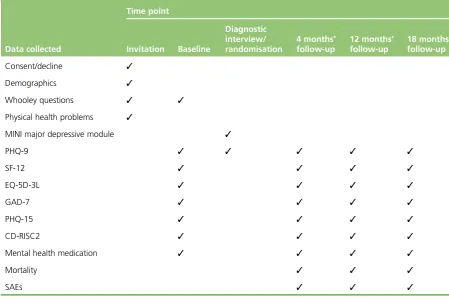
TABLE 2 Data collection schedule 13
TABLE 3 Participant withdrawal from follow-up or full withdrawal (by each time
point) 21
TABLE 4 Reasons for withdrawal from treatment 21
TABLE 5 Reasons for withdrawal from follow-up 22
TABLE 6 Reasons for full withdrawal 22
TABLE 7 Collaborative care received 23
TABLE 8 Average characteristics of collaborative care 23
TABLE 9 Reasons for not receiving any collaborative care 23
TABLE 10 Baseline characteristics (demographics and general health at consent) 24
TABLE 11 Baseline characteristics (outcomes at baseline) 25
TABLE 12 Baseline characteristics (outcomes at diagnostic interview/
randomisation) 27
TABLE 13 Unadjusted PHQ-9 descriptive statistics 32
TABLE 14 Group difference in mean PHQ-9 score: primary analysis 33
TABLE 15 Group difference in mean PHQ-9 score: adjusted for clustering by
case manager 34
TABLE 16 Predictors of PHQ-9 scores at 4 months, controlling for PHQ-9
at randomisation 35
TABLE 17 Group difference in mean PHQ-9 score: adjusted for predictors of
PHQ-9 score at 4 months 35
TABLE 18 Summary of PHQ-9 group differences from different analyses 36
TABLE 19 Predictors of non-response (missing PHQ-9 scores) at 4 months 37
TABLE 20 Group difference in mean PHQ-9 score: adjusted for predictors of
non-response 38
TABLE 21 Group difference in mean PHQ-9 score: using imputed data 38
TABLE 23 Group difference in proportions of moderate to severe PHQ-9 depression 41
TABLE 24 Number of patients being prescribed specific antidepressants 41
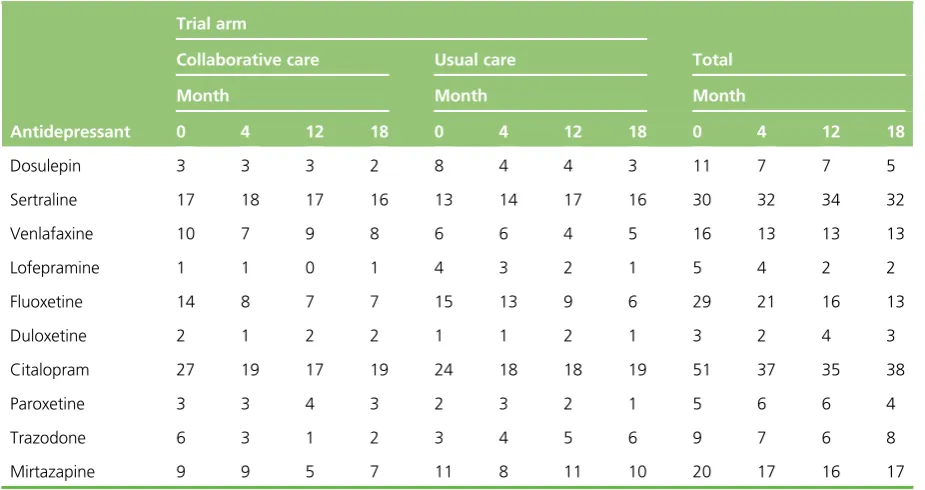
TABLE 25 Number of patients being prescribed any antidepressants 41
TABLE 26 Group difference in proportions of patients with prescribed antidepressants 43
TABLE 27 Unadjusted GAD-7 descriptive statistics 43
TABLE 28 Group difference in mean GAD-7 scores 44
TABLE 29 Unadjusted SF-12 PCS score descriptive statistics 45
TABLE 30 Group difference in mean SF-12 PCS score 46
TABLE 31 Unadjusted SF-12 MCS score descriptive statistics 46
TABLE 32 Group difference in mean SF-12 MCS scores 47
TABLE 33 EQ-5D-3L descriptive statistics 47
TABLE 34 Unadjusted PHQ-15 descriptive statistics 55
TABLE 35 Group difference in mean PHQ-15 56
TABLE 36 Unadjusted CD-RISC2 descriptive statistics 57
TABLE 37 Group difference in mean CD-RISC2 score 58
TABLE 38 Summary of SAEs 58
TABLE 39 Categories of SAEs 59
TABLE 40 Cause of death by trial arm 59
TABLE 41 Personnel costs required to provide collaborative care 62
TABLE 42 Summary of the health-care resource required to train and provide
collaborative care as an associated base-case cost of the programme 63
TABLE 43 Mean use of health-care resources observed in the collaborative care
and usual-care groups over 18 months 64
TABLE 44 Mean costs (£) associated with collaborative care and usual care over
18 months 64
TABLE 45 Unadjusted utility scores by trial arm and time 65
TABLE 46 Comparison of QALYs with and without the application of 3%
TABLE 47 Regression analysis controlling for trial arm, age and baseline
utility: QALYs 66
TABLE 48 Scores at baseline (PHQ-9, GAD-7 and SF-6D index) and subsequent
number of sessions 69
TABLE 49 Direct costs of collaborative care (ex post estimation using data from
PC-MIS,n=174) 70
TABLE 50 Seemingly unrelated regression of change in total cost and QALYs
explained by sessions of collaborative care controlling for age and baseline utility 71
TABLE 51 Regulatory approvals 103
TABLE 52 Zero-inflated negative binomial regression explaining the effect of
collaborative care vs. usual care on the incidence rate ratio of GP appointments 187
TABLE 53 Zero-inflated negative binomial regression explaining the effect of
collaborative care vs. usual care on the incidence rate ratio of GP home visits 187
TABLE 54 Zero-inflated negative binomial regression explaining the effect of collaborative care vs. usual care on the incidence rate ratio of GP telephone
consultations 187
TABLE 55 Zero-inflated negative binomial regression explaining the effect of
collaborative care vs. usual care on the incidence rate ratio of nurse appointments 188
TABLE 56 Zero-inflated negative binomial regression explaining the effect of collaborative care vs. usual care on the incidence rate ratio of nurse telephone
consultations 188
TABLE 57 Demographics of patient participants 201
TABLE 58 Demographics of case managers interviewed 201
List of figures
FIGURE 1 Consolidated Standards of Reporting Trials diagram 20
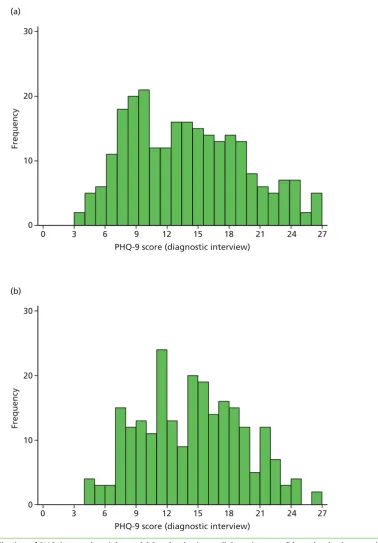
FIGURE 2 Distribution of PHQ-9 scores by trial arm 28
FIGURE 3 Unadjusted mean PHQ-9 scores (with 95% CIs) 32
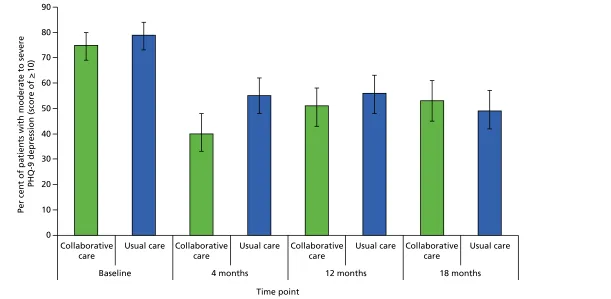
FIGURE 4 Unadjusted per cent of patients (with 95% CIs) with moderate to
severe depression 40
FIGURE 5 Unadjusted per cent of patients (with 95% CIs) who were
prescribed antidepressants 42
FIGURE 6 Unadjusted mean GAD-7 scores (with 95% CIs) 44
FIGURE 7 Unadjusted mean SF-12 PCS scores (with 95% CIs) 45
FIGURE 8 Unadjusted mean SF-12 MCS scores (with 95% CIs) 47
FIGURE 9 The EQ-5D-3L mobility dimension: per cent of patients in each
severity category 50
FIGURE 10 The EQ-5D-3L self-care dimension: per cent of patients in each
severity category 51
FIGURE 11 The EQ-5D-3L usual activities dimension: per cent of patients in each
severity category 52
FIGURE 12 The EQ-5D-3L pain/discomfort dimension: per cent of patients in each
severity category 53
FIGURE 13 The EQ-5D-3L anxiety/depression dimension: per cent of patients in
each severity category 54
FIGURE 14 Unadjusted mean PHQ-15 scores (with 95% CIs) 56
FIGURE 15 Unadjusted mean CD-RISC2 scores (with 95% CIs) 57
FIGURE 16 Plot of mean (95% CI) of SF-6D indexes over the trial period, by trial arm 65
FIGURE 17 Cost-effectiveness plane (controlling for baseline utility) 67
FIGURE 18 Confidence ellipse (controlling for baseline utility) 67
FIGURE 19 Cost-effectiveness acceptability curve (controlling for baseline utility)
for the cost per QALY analysis 68
FIGURE 21 Mean (95% CI) of SF-6D indexes over the trial period comparing the usual-care group with trial arms that received either five or fewer sessions of
collaborative care or more than six sessions of collaborative care 69
FIGURE 22 Cost-effectiveness acceptability curve (controlling for baseline utility)
using ex post estimate of the direct costs of collaborative care 70
FIGURE 23 (a) Confidence ellipses (comparing collaborative care with more or fewer than six sessions: session number≤5 vs.≥6) and (b) CEAC
List of abbreviations
CADET CollAborative DEpression Trial
CASPER CollAborative care for
Screen-Positive EldeRs with major depression
CD-RISC2 Connor–Davidson Resilience Scale-2 items
CEAC cost-effectiveness acceptability curve
CI confidence interval
CM case manager
CRN Clinical Research Network
EQ-5D-3L EuroQol-5 Dimensions, 3 levels
GAD-7 Generalised Anxiety Disorder-7 items
GP general practitioner
IAPT Improving Access to Psychological Therapies
ICC intracluster correlation coefficient
ICER incremental cost-effectiveness ratio
IMPACT Improving Mood-Promoting Access to Collaborative Treatment
MCS mental component summary
MINI Mini International Neuropsychiatric Interview
NICE National Institute for Health and Care Excellence
NIHR National Institute for Health Research
ONS Office for National Statistics
PC-MIS Patient Case-Management Information System
PCS physical component summary
PHQ-9 Patient Health Questionnaire-9 items
PHQ-15 Patient Health Questionnaire-15 items
PT participant
PTW withdrawn participant
PWP psychological well-being practitioner
QALY quality-adjusted life-year
RCT randomised controlled trial
REC Research Ethics Committee
SAE serious adverse event
SD standard deviation
SES socioeconomic status
SF-12 Short Form questionnaire-12 items
SF-6D Short Form questionnaire-6 Dimensions
Plain English summary
T
he ageing process increases the risk of depression in older people and, although depression is relatively common, it often goes unrecognised and untreated. Traditionally, feeling low was considered an inevitable part of growing old about which nothing could be done.The CollAborative care for Screen-Positive EldeRs with major depression (CASPER) plus trial aimed to see if collaborative care, a new type of care involving a case manager who co-ordinates different aspects of a participant’s care, could help to reduce depression severity. Case managers worked with participants for an average of six sessions over 7–8 weeks, mainly over the telephone. In order to test whether or not collaborative care worked, it was compared with usual general practitioner care. Each person taking part was given one type of care, which was decided by chance, similar to the roll of a dice, to make sure it was fair.
Scientific summary
Background
Depression is one of the most common reasons for consulting with a general practitioner (GP), and its associated personal and economic burden is considerable. Depression is often associated with long-term medical conditions but is commonly unrecognised or suboptimally treated. Older people are disproportionately affected by depression, which is associated with poor function and poor outcomes. Strategies to encourage the recognition and management of depression among older people and those with long-term conditions have been proposed. Guidance often encourages GPs to screen for depression, and evidence-supported treatments include the prescription of antidepressants and/or the provision of brief psychological treatments.
Collaborative care involves the provision of low-intensity psychosocial treatment by a case manager working in collaboration with the primary care team. Psychological interventions form part of care and are delivered over the telephone. Collaborative care has a strong evidence base among people with depression. The majority of trials have been conducted in the USA, although evidence from UK trials on the effectiveness of this approach is now accumulating. There are no large-scale trials that focus on older adults, who often have long-term physical health problems. In this trial, we adapted collaborative care for a population of older people whereby an evidence-supported treatment (including behavioural activation and medication management) was delivered by primary care psychological well-being practitioners over the telephone.
Objectives
The CollAborative care for Screen-Positive EldeRs with major depression (CASPER) plus trial was a randomised controlled trial (RCT) of usual GP care compared with the addition of collaborative care for the treatment of clinical depression in older adults. This included concurrent qualitative and economic evaluations. We first conducted an internal pilot trial, the objectives of which were to:
1. establish the clinical effectiveness of a low-intensity intervention of collaborative care for older adults with screen-positive major depression disorder.
2. examine the cost-effectiveness of a low-intensity intervention of collaborative care for older adults with screen-positive major depression disorder across a range of health and social care costs.
3. explore the views and experiences of the CASPER plus intervention within the collaborative care framework for the management of depression in older people from the perspectives of participants, case managers and GPs.
Method
Design
Setting
Participants were recruited from general practices in four centres in the north of England: (1) York centre (the core centre) covering the city of York, Harrogate, Hull and the surrounding areas; (2) Leeds centre and the surrounding area; (3) Durham centre and the surrounding area; and, (4) Newcastle upon Tyne centre, including Northumberland and North Tyneside.
Participants
Potential participants were identified by postal questionnaire and were eligible if they reported depressive symptoms (‘screened positive’) to the Whooley questions, and were then found to have major depressive disorder according to standardised diagnostic criteria using the Mini International Neuropsychiatric Interview. Respondents with less severe depression (‘subthreshold depression’) were offered the
opportunity to partake in a related Health Technology Assessment-funded trial (CASPER ISRCTN02202951) that is not reported in this monograph. We excluded people with known alcohol dependency, psychotic symptoms, recent evidence of suicidal risk or self-harm, significant cognitive impairment or other factors that would make an invitation to participate in the trial inappropriate, such as recent bereavement or terminal illness.
Interventions
Participants in the intervention group were allocated to receive a manualised low-intensity programme of collaborative care using behavioural activation, designed specifically for those aged≥65 years with depression. Collaborative care was delivered by a case manager [a primary care mental health worker/Improving Access to Psychological Therapies (IAPT) worker]. Participants received on average six sessions over 8–9 weeks, of which, on average, one was delivered face to face and five were delivered over the telephone. Collaborative care in the CASPER plus trial consisted of telephone support, medication management, symptom monitoring and active surveillance, facilitated by a computerised case management. The first session was delivered face to face and subsequent sessions via the telephone.
Participants in the control group were allocated to receive usual GP care; therefore, they received no care additional to the usual primary care management of subthreshold depression offered by their GP. Participants who were allocated to collaborative care received the intervention as well as usual GP care.
Main outcome measures
The primary outcome was self-reported symptoms of depression, assessed by the Patient Health Questionnaire-9 items (PHQ-9) at 4 months post randomisation and also at 12 months and 18 months. Secondary outcomes were, at 4, 12 and 18 months, a dichotomised measure of depression according to ‘caseness’(PHQ-9 score of≥10), anxiety [measured by the Generalised Anxiety Disorder-7 item (GAD-7) scale], somatoform complaints [measured by the Patient Health Questionnaire-15 items (PHQ-15)] and health-related quality of life [measured by the Short Form questionnaire-12 items (SF-12)]. We also measured resilience (using the Connor–Davidson Resilience Scale-2 items) and antidepressant use. The economic evaluation resource use was ascertained from administrative primary care records and health-state utility was measured using the Short Form questionnaire-6 Dimensions.
Results
A total of 485 patients (mean age 72 years) were recruited to the trial between May 2012 and August 2014, with 249 participants randomised to collaborative care and 236 to usual GP care. Of these, 390 participants (80%: collaborative care, 75%; usual care, 86%) were followed up at 4 months, 358 participants (74%: collaborative care, 70%; usual care, 78%) were followed up at 12 months and 344 participants
Clinical effectiveness
Adjusted PHQ-9 score means and group differences for the primary analysis model revealed significant differences between trial arms at the 4-month primary outcome in favour of collaborative care [1.92 score points; 95% confidence interval (CI) 0.85 to 2.99 score points;p<0.001]. This represented a standard effect size of 0.34. However, this difference in depression severity was not maintained at the long-term follow-up at 12 months (p=0.741) or 18 months (p=0.997). The results were robust to a number of sensitivity analyses, including adjustment for clustering at the level of the case manager. The proportion of participants with case-level depression at 4 months was reduced in the collaborative care group (odds ratio at 4 months 2.18, 95% CI 1.36 to 3.51;p=0.001), but there was no clear advantage for collaborative care at 12 months (odds ratio 1.40, 95% CI 0.72 to 2.72;p=0.319) or 18 months (odds ratio 0.72, 95% CI 0.31 to 1.71;p=0.461).
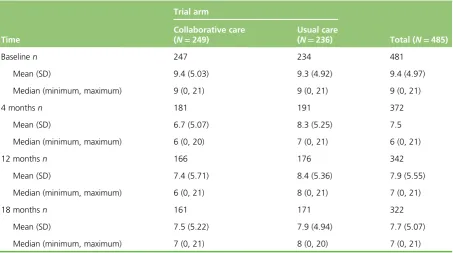
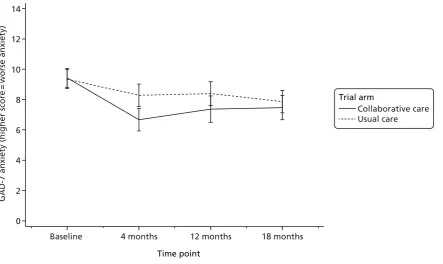
Between-group differences were observed in favour of collaborative care for a range of secondary outcomes including anxiety and somatoform complaints. Anxiety was measured using the GAD-7 and was reduced at 4 months (GAD-7 mean score difference 1.68, 95% CI 0.77 to 2.59;p<0.001) and at 12 months (mean score difference 1.09, 95% CI 0.14 to 2.03;p=0.024), but not at 18 months (p=0.511). Somatoform complaints as measured using the PHQ-15 were reduced at 4 months (PHQ-15 mean score difference 1.67, 95% CI 0.98 to 2.36;p<0.001) and 12 months (PHQ-15 mean score
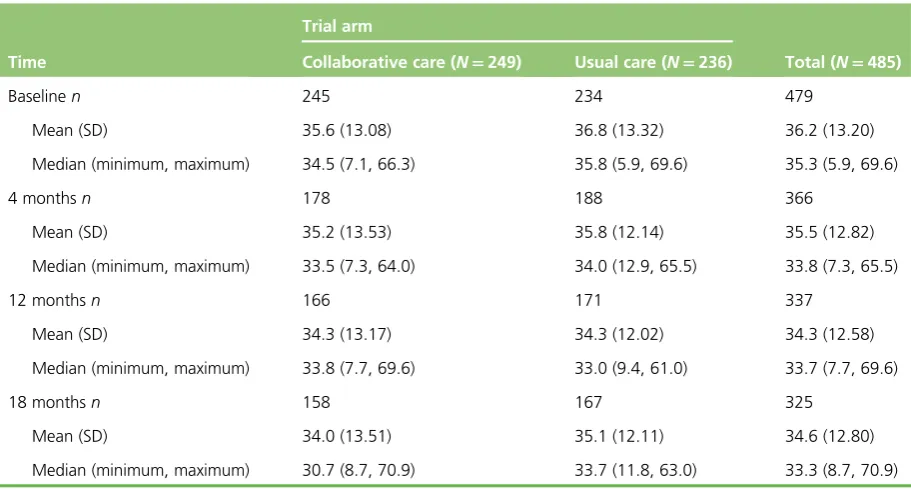
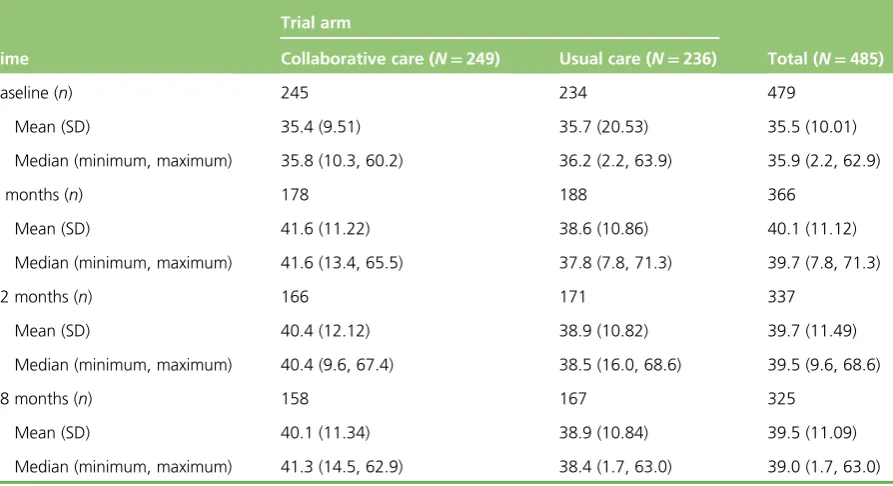
difference 1.19, 95% CI 0.47 to 1.90;p=0.001), but not at 18 months (p=0.423). Health-related quality of life was improved in mental domains at 4 months (SF-12 mental component summary score mean score difference 3.02, 95% CI–5.04 to–0.99;p=0.004) but not at 12 months (p=0.125) or 18 months (p=0.273), and there was no difference in physical domains (SF-12 physical component summary score p=0.583 at 4 months;p=0.769 at 12 months; andp=0.514 at 18 months).
Cost-effectiveness analysis
Providing collaborative care was estimated to cost an average of £495 per participant (accounting for costs of training case managers, their expected rate of patient contacts and a standardised agenda case manager). Analysis of routinely collected data collected during the delivery of collaborative care (i.e. as may be provided within a typical IAPT service) suggests the expected cost of collaborative care is £198 per patient and, therefore, lower than assumptions based on the treatment manual. The number of quality-adjusted life-years (QALYs) gained was higher among articipants who were allocated to collaborative care than in the control group (difference in adjusted QALY gains=0.019;p=0.338). In the base-case analysis, the incremental cost-effectiveness ratio for collaborative care was £26,010 per QALY. The probability that the incremental cost-effectiveness of collaborative care was <£20,000 per QALY was 39%, and the probability that it fell below the £30,000 per QALY willingness-to-pay threshold was 55%. When only participants who engaged with six or more sessions were included in the analysis, the cost per QALY estimate fell to £9876.
Qualitative evaluation
Conclusions
This is the first large-scale trial in the UK to test the clinical effectiveness and cost-effectiveness of using collaborative care to treat older people with depression. Collaborative care has been shown to be clinically effective at reducing depression severity in the short term, at 4-month follow-up, but benefits were not sustained at 12 or 18 months, so longer-term efficacy was not demonstrated. The effectiveness of collaborative care for older people with depression was greater for those people who had six or more treatment sessions. This intervention might be delivered as part of the IAPT services in the NHS at an acceptable ratio of benefits to cost–if it were highlighted that a minimum of six sessions were needed for it to be cost-effective.
Implications for health care
l Collaborative care was acceptable for the majority of older people with depression and could readily be delivered by low-intensity IAPT workers over the telephone, following a first face-to-face meeting.
l In this large-scale trial for older people with depression, collaborative care was clinically effective in improving the primary outcome of depression and across a range of secondary outcomes.
l The cost-effectiveness of collaborative care for depression has been robustly estimated within the CASPER plus trial and this could be viewed as cost-effective under conventional willingness-to-pay thresholds.
Recommendations for research
l A significant proportion of older people in the CASPER plus trial had a long-term health problem, and there were some improvements in quality of life across the trial population. Future adaptations and trials of collaborative care could focus on its use in populations with serious physical comorbidities and its impact on physical outcomes.
l More patients in the collaborative care arm discontinued treatment or dropped out of the trial. Further qualitative and quantitative work should explore the reasons for this, how to maximise the acceptability and effectiveness of collaborative care for this population and how to identify the most appropriate target population for the intervention.
l Depression is a recurrent disorder and it would be useful to judge longer-term impact on relapse and the prevention of future depression.
l This was a brief intervention and its benefits disappeared after 12 months. Future research should be conducted to establish how minimal interventions may be offered to ensure that early gains from treatment are sustained. Trials of 12-month top-up sessions for collaborative care (delivered by telephone) are needed.
Trial registration
This trial is registered as ISRCTN45842879.
Funding
Chapter 1
Introduction
Depression in older adults
Depression accounts for the greatest burden of disease among all mental health conditions, and is expected to become the second highest among all general health problems by 2020.1It is currently
estimated that in the UK around 10–20% of people aged≥65 years have depression.2Projected
demographic changes mean that population strategies to tackle depression will increasingly have to address the specific needs of older adults.3Depression often occurs alongside long-term physical health
conditions4and/or cognitive impairment and it is more prevalent among people who live alone in social
isolation. All these factors tend to disproportionately affect the older adult population. Among older adults, a clinical diagnosis of a major depressive disorder is the strongest predictor for impaired quality of life.5Indeed, beyond personal suffering and family disruption, depression worsens the outcomes of many
medical disorders and promotes disability.6In 2009, the National Institute for Health and Care Excellence
(NICE) published guidelines that acknowledged the coexistence of physical health problems and depression.7,8
Furthermore, it was recognised that the impairments in quality of life associated with depression are comparable to those of major physical illness.5
Rationale for the CollAborative care for Screen-Positive EldeRs plus trial
Depression in older people is relatively common.9The effects on the individual include poor quality of life,
increased morbidity and early mortality,10and increased health and social care use.11Depression is often
under-recognised and undertreated in primary care.12,13At present, the management of depression tends to
be limited to the prescription of antidepressants, with poor adherance an associated problem.12In particular,
older adults seem to be less likely than working-age adults to be offered psychological treatments.14,15So far,
the evidence for psychological interventions relates to higher-intensity models of care that cannot feasibly be delivered at scale in primary care. Collaborative care is a framework model for organising and delivering psychosocial interventions at scale.16It represents a brief, patient-centred, psychosocial package of care
delivered by a case manager who works to a defined protocol and co-ordinates the patient’s medication management with their general practitioner (GP). The case manager is supervised by a specialist who facilitates liaison across the primary care–secondary care interface.17In the USA, collaborative care has shown promising
trial results among older people;16however, the transferability of this model of service to the UK NHS cannot
be assumed. Consequently, the CollAborative care for Screen-Positive EldeRs with major depression (CASPER) plus trial will substantially enhance the randomised evidence base in the care of older people with depression and inform future service provision.
Collaborative care: an organisational model of providing care
The vast majority of depression in older adults is managed entirely in primary care without recourse to specialist mental health services.3,18Although a range of individual treatments have been shown to be effective in the
management of clinical depression in older adults, including antidepressants and psychosocial interventions,18
a repeated observation among those with depression has been the failure to integrate these effective elements of care into routine primary care services.19In addition, the implementation of any form of care will require a
strategy that is low intensity and can be offered within primary care.20
In recent years, an organisational model of care has been introduced called collaborative care.21
the role of non-medical specialists in primary care. Collaborative care is a model whereby the non-medical specialists, or case managers, form a close collaboration with the person with depression and others involved in their care. The case manager acts as a conduit for the passage of information between all individuals involved and supports the participant to enable effective discussion of important problems. Case managers provide information and help participants to access appropriate services, such as social care and voluntary sector services.
The ubiquity of depression in primary care settings, along with the poor integration and co-ordination of care, has led to the development of, and increased use of, this model of care. In a 2012 Cochrane review22of 79 randomised controlled trials (RCTs) (24,308 participants), clear and robust evidence of the
effectiveness of collaborative care was shown. It improved depression outcomes in both the short and medium term. Moreover, there was evidence to suggest that collaborative care can be cost-effective by reducing health-care utilisation and improving overall quality of life.23,24However, the greater proportion of
studies related to working-age adults. A relative lack of any evidence for older adults was identified, which led to calls for further research on collaborative care among that age group. One important exception was the evidence provided by the US Improving Mood-Promoting Access to Collaborative Treatment (IMPACT) study of the effectiveness of collaborative care for older adults.
The IMPACT study was conducted by Unützeret al.16for those aged>60 years with case-level clinical
depression. The main finding was that, at 12 months, depression severity was at least 50% improved from baseline in almost half the participants in the intervention group, but only one in five of those receiving usual care. In 2007, a UK feasibility trial9of collaborative care in older adults showed some positive results.
In recent years, the evidence base has expanded, although not with direct reference to older adults. The CollAborative DEpression Trial (CADET)11showed that collaborative care was effective at improving
depression outcomes in a UK primary care population, and the Collaborative Interventions for Circulation and Depression: study protocol for a cluster randomized controlled trial of collaborative care for depression in people with diabetes and/or coronary heart disease (COINCIDE) trial10showed a modest effect at reducing
depression and improving self-management of chronic disease.
In addition to the provision of collaborative care, the studies also provide information and support to enable participants to undertake brief psychological therapies, in this case behavioural activation. Behavioural activation for the CASPER plus trial was adapted from the behavioural activation intervention delivered in CADET.11Manualised psychological interventions, such as behavioural activation, may benefit individuals
experiencing depressive symptoms. It focuses on addressing the behavioural deficits common among those with depression by reintroducing positive reinforcement and reducing avoidance. Such interventions aim to manipulate the behavioural consequence of a trigger (environmental or cognitive) rather than directly interpret or restructure cognitions.25Behavioural activation is about helping patients to
‘act their way out’of depression rather than wait until they are ready to‘think their way out’. Helping people to identify and reintroduce valued activities that they have stopped doing, or to introduce ones they would like to take up, is an important component. The effectiveness of this psychological approach is now well demonstrated.26,27
Behavioural activation can be readily delivered by a trained case manager either over the telephone or face to face (for those who experience difficulty using or accessing telephone-based therapy).28
Limitations of previous trials
The major limitation of previous trials was an absence of a definitive UK trial of collaborative care in older adults with depression. The absence of UK trials of collaborative care was highlighted in 2009 guidance for depression issued by NICE, and the need for such trials was highlighted as a research priority.7We
Chapter 2
Research objectives
T
he research objectives of this trial were to:1. establish the clinical effectiveness of a collaborative care intervention for older people with screen-positive above-threshold (‘major depressive episode’) depression within a definitive RCT
2. examine the cost-effectiveness of a collaborative care intervention for older people with screen-positive above-threshold (‘major depressive episode’) depression across a range of health and social care costs within a definitive RCT.
Chapter 3
Methods
F
or CASPER plus, those patients identified at the screening phase as having above-threshold, case-level depression will be eligible to enter the CASPER plus substudy.Trial design
We conducted a pragmatic, multicentred, two-arm, parallel, open RCT. Participants with major depression were individually randomised (1 : 1) to receive either collaborative care in addition to usual GP care, or just usual GP care.
Approvals obtained
This study was approved by NHS Leeds East Research Ethics Committee (REC) on 28 September 2010 (REC reference number 10/H1306/61). Research management and governance approval was obtained for each trial centre thereafter (seeAppendix 1). This trial was assigned the International Standard Randomised Controlled Trial Number of ISRCTN45842879.
Trial centres
Four centres in the north of England were selected as trial sites: (1) York centre (the core study centre) covering the city of York, Harrogate, Hull and the surrounding areas; (2) Leeds centre and the surrounding area; (3) Durham centre and the surrounding area; and (4) Newcastle upon Tyne centre, including
Northumberland and North Tyneside. Each centre was responsible for co-ordinating the recruitment of participants into the study (trial and epidemiological cohort).
Duration of follow-up
All participants were followed up by questionnaire at 4, 12 and 18 months (seeChapter 4).
Participant eligibility
Inclusion criteria
People for whom both of the following criteria applied:
l aged≥65 years
l identified by GP practice as being able to take part in collaborative care.
Exclusion criteria
Potential participants were excluded if identified by primary care clinicians as meeting one of the following criteria:
l known alcohol dependency (as recorded on GP records)
l known to be experiencing psychotic symptoms (as recorded on GP records)
l any known comorbidity that would, in the GP’s opinion, make entry to the trial inadvisable (e.g. recent evidence of suicidal risk or self-harm, significant cognitive impairment)
l other factors that would make an invitation to participate in the trial inappropriate (e.g. recent bereavement, terminal malignancy).
Sample size
To detect a minimum standard effect size of 0.35 (aligning with the US IMPACT study16and our previous
CASPER trial29,30) with 80% power and a two-sided 5% significance level, 260 patients (130 per arm) would
Based upon an estimated intracluster correlation coefficient (ICC) of 0.02 and a case load size of 20, the design effect would be 1.38 {1+[(20–1) × 0.02]} and 360 patients (180 in each arm) would be required. Allowing for 20% loss to follow-up, the final sample size needed was 450 patients (225 per arm).
Epidemiological cohort
During the first year of the CASPER plus trial, an epidemiological cohort was assembled. This consisted of people who had consented to participate in the trial but who were not depressed. Through our broad inclusion criteria we successfully recruited a total of 4668 patients aged≥65 years into the CASPER cohort, from who we identified those with major depression who were eligible to participate in the CASPER plus trial. The reasons for this strategy were twofold: first, to recruit an adequate number of potential participants who would subsequently be identified as having depression, as we believed this would not always be recorded on GP records; and, second, to establish an epidemiological cohort of older adults who could be followed up and who would help inform the knowledge base around the health and well-being of older adults. This type of study design is termed a cohort multiple RCT.31
Recruitment into the trial
Recruitment of all participants into the trial took place through primary care. GP practices agreed to participate after a member of the study team had introduced it to them with written information, followed by a face-to-face visit to explain the study and what participation would involve. Patients were identified by a computer search and then invited to participate in the CASPER study by their general practice, which posted an invitation pack to all eligible patients. The packs comprised an invitation letter (seeAppendix 2) signed from the general practice, a consent form (seeAppendix 3), a decline form (seeAppendix 4), a participant information sheet (seeAppendix 5), a background information sheet (seeAppendix 6) and a prepaid return envelope addressed to the core study centre. No patient-identifiable data were available to the study teams until patients returned their consent form.
Consenting participants
During the consent stage, potential participants were asked to complete the Whooley questions,32
a two-item depression-screening/case-finding tool. These questions were asked at two different time points–on the background information sheet at invitation and in the baseline questionnaire–both times as self-reports. At the consent stage, participants were informed about the opportunity of participating in other related studies (e.g. qualitative studies) and were asked to indicate if they agreed to be approached in the future by ticking a box on the consent form. All participants who consented to take part in the CASPER study at this stage became part of the CASPER cohort. Participants did not become part of the CASPER plus trial until they had been subsequently assessed for suitability by completing a standardised diagnostic interview and randomisation.
Baseline assessment
On receipt of written consent from participants by the return of their consent form via post, baseline data were collected through a self-report questionnaire. All participants who returned completed consent forms to the core study centre were sent a baseline questionnaire (seeAppendix 7). Participants were asked to respond to the Whooley questions32for a second time and to provide self-report medication data.
They were also asked to complete a range of health surveys, which consisted of the Patient Health Questionnaire-9 items (PHQ-9)33–a measure of depression severity using a nine-item depression scale in
reference to how a respondent has been feeling over the past 2 weeks; the Short Form questionnaire-12 items (SF-12)34
–a measure of health-related quality of life to obtain health-state utility by estimating the Short Form questionnaire-6 Dimensions (SF-6D); the EuroQol-5 Dimensions, 3 levels (EQ-5D-3L)35
–a standardised measure of health-state utility, designed primarily for self-completion by respondents; the Generalised Anxiety Disorder-7 item (GAD-7)36scale
–a severity measure of generalised anxiety used to gauge the past 2 weeks; the Patient Health Questionnaire-15 items (PHQ-15)37
–a measure of somatic complaints using a 15-item scale in reference to the last month; and the Connor–Davidson Resilience Scale-2 items (CD-RISC2)38
Randomisation
Randomisation was carried out by the York Trials Unit Randomisation Service [www.yorkrand.com (accessed 23 June 2016)], accessed by a trained researcher from the study team. Participants were
automatically randomised by a computer on a 1 : 1 basis by simple unstratified randomisation to either the intervention group or control group, following the completion of a diagnostic interview. All diagnostic interviews were conducted over the telephone by a trained researcher from the study team. The major depressive episode module of the Mini International Neuropsychiatric Interview (MINI) was used to ascertain the presence or absence of core depressive symptoms.39The MINI shows good agreement with other
semistructured diagnostic interviews conducted to internationally recognised standards.40–42This allowed
potential recruits to be identified as having major depressive disorder (five or more symptoms), subthreshold depression (two to four symptoms) or no depression (one symptom) (Table 1).39,43,44All participants
diagnosed with major depressive disorder were randomised to either the intervention or the control arm.
Once participants had been randomised, they were sent a letter informing them of the outcome of their diagnostic interview. If their MINI outcome was major depression, they were informed of their group allocation, either collaborative care or usual care. The participant’s GP was also sent a letter informing them that the named patient was eligible to take part in the CASPER plus trial owing to the major depression outcome of their diagnostic interview. It also specified which arm of the trial they had been randomised to.
Ineligible participants
All participants whose outcome was not major depression (either non-depressed or subthreshold) were sent a letter informing them that they were ineligible for the CASPER plus trial but that they would remain in the CASPER epidemiological cohort and continue to be followed up via questionnaires. Their GPs were also informed of this. This process of following up non-trial participants was discontinued once the original CASPER trial completed (seeChapter 4).
Trial interventions
Control group
Participants in the control group were allocated to receive usual GP care. They received no care additional to the usual primary care management of major depression offered by their GP in line with NICE
depression guidance as implemented by their GP and local service provision.7,8
Intervention group
Participants in the intervention group were allocated to receive a low-intensity programme of collaborative care using behavioural activation, designed specifically for those aged≥65 years with major depression.
TABLE 1 Symptoms of depressiona
Key symptoms Other symptoms
Depressed mood Substantial changes in weight/appetite Loss of interest Change in sleep patterns
Change in energy levels
Movement slowing down or speeding up Feeling guilty or worthless
Unable to make decisions Thinking of death or suicide
Collaborative care was delivered by a case manager [a primary care mental health worker/Improving Access to Psychological Therapies (IAPT) worker] for an intended 8–10 weeks. This took place alongside participants’usual GP care. The defining feature of collaborative care is a collaboration of expertise to help support the participant. A case manager works alongside the participant, sharing any relevant information with the GP and a mental health specialist (psychiatrist or psychologist). The case manager is a cohesive link between the participant and other professionals involved in their care. For example, a case manager who deemed a participant’s depressive symptoms to have deteriorated would pass this information on to the participant’s GP, who would optimise the management of the patient’s condition.
Collaborative care in the CASPER plus trial consisted of telephone support, symptom monitoring and active surveillance, facilitated by a computerised Patient Case-Management Information System (PC-MIS) [www.york.ac.uk/healthsciences/pc-mis (accessed 23 June 2016)] and low-intensity psychosocial
management (behavioural activation). Participants randomised to the collaborative care intervention group were contacted by a case manager within 1 week of their randomisation to arrange their first collaborative care session. This was carried out face to face, usually at the participant’s home unless an alternative venue was preferred. After this initial meeting, subsequent sessions were carried out on a, more or less, weekly basis by telephone unless the participant had sensory impairments or preferred face-to-face visits. Case managers worked collaboratively with the participants, liaising with GPs and other health professionals involved in their care to discuss issues relating to participants’mental and physical health, both during routine updates and when any concerns were identified. This included liaising with GPs as necessary to consider reviews of medication, which could relate to depression but also to comorbid physical health problems. It also included discussing with GPs referrals to other services, such as health services (e.g. pain clinics) or engagement with social services. Case managers worked with the participants to identify problems and agree goals for the intervention. They also worked with participants to identify, and
subsequently provide, information about other services that may be useful, such as voluntary and statutory sector organisations and services.
Refinement of collaborative care/behavioural activation
The delivery of collaborative care and behavioural activation had been established in working-age adults for whom an appropriate training package and manual already existed.28However, these had not been
tailored for use with older adults diagnosed with major depression. Before the study began, necessary changes were made to both the training package and manual (detailed in this section) to account for differences that may exist in the older adult population.
Training occurred over 2 days and involved a combination of brief lectures and role-play. Topics covered were the collaborative care approach as applied to older adults, medication management in older adults, behaviour theory and behavioural activation as adapted for older adults.
Adaptations to language and content
Adaptations were made to the information gathered at the initial assessment. Older adults are more likely to experience long-term health problems and a reduced level of functioning, with their psychological status often closely linked to their physical functioning.45Additional questions regarding health conditions and
their impact were added to the standard assessment format. However, case managers were reminded to deliver a person-centred approach and not let preconceptions about the level of functioning of older adults influence their information gathering. Liaison with health professionals who were involved in treating the participant’s long-term health conditions was encouraged to promote a depth of understanding of these issues. Depression in older adults is associated with impaired social support;46therefore, additional
questions regarding social contacts and family were added. The risk assessment (seeAppendix 8) was also adapted to enquire about past passive and past active suicide ideation as well as current plans and preparations, as past suicidality is a risk factor for current suicidal behaviour.47