i
INVENTORY STORAGE WITH BARCODE (ISwB)
ZAHLIZAMRINA BINTI RAMLI
This report is submitted in partial fulfillment of requirement for the Bachelor Degree of Electronic Engineering (Computer Engineering)
Fakulti Kejuruteraan Elektronik Dan Kejuruteraan Komputer Universiti Teknikal Malaysia Melaka
ii
UNIVERSTI TEKNIKAL MALAYSIA MELAKA
FAKULTI KEJURUTERAAN ELEKTRONIK DAN KEJURUTERAAN KOMPUTER
BORANG PENGESAHAN STATUS LAPORAN
PROJEK SARJANA MUDA II
Tajuk Projek : INVENTORY STORAGE WITH BARCODE
Sesi
Pengajian : 2010/2011
Saya ZAHLIZAMRINA BINTI RAMLI
mengaku membenarkan Laporan Projek Sarjana Muda ini disimpan di Perpustakaan dengan syarat-syarat kegunaan seperti berikut:
1. Laporan adalah hakmilik Universiti Teknikal Malaysia Melaka.
2. Perpustakaan dibenarkan membuat salinan untuk tujuan pengajian sahaja.
3. Perpustakaan dibenarkan membuat salinan laporan ini sebagai bahan pertukaran antara institusi
pengajian tinggi.
4. Sila tandakan ( √ ) :
SULIT*
*(Mengandungi maklumat yang berdarjah keselamatan atau kepentingan Malaysia seperti yang termaktub di dalam AKTA RAHSIA RASMI 1972)
TERHAD** **(Mengandungi maklumat terhad yang telah ditentukan oleh
organisasi/badan di mana penyelidikan dijalankan)
TIDAK TERHAD
Disahkan oleh:
(TANDATANGAN PENULIS) (COP DAN TANDATANGAN PENYELIA)
Alamat Tetap: KG BATU BESAR MUKIM TELOI 08200 SIK
KEDAH DARUL AMAN Tarikh: 3rd MAY 2011
iii
“I hereby declare that this report is the result of my own work except for quotes as cited in the references.”
Signature :
Author : ZAHLIZAMRINA BINTI RAMLI
iv
“I hereby declare that I have read this report and in my opinion this report is
sufficient in terms of the scope and quality for the Bachelor Degree of Electronic
Engineering (Computer Engineering)”
Signature :
Supervisor’s Name : PUAN NORHIDAYAH BINTI MOHAMAD YATIM
v
A time to remember family and friends, too;
A time to reminisce, and say "Thank You."
For my beloved parents,
Ramli bin Ahmad &
Azizah binti Nawang
My brothers,
Mohd Fahmi & Mohd Faizal
My love is no ends.
Appreciation on your supervision,
Puan Norhidayah binti Mohamad Yatim
Your co-operation,
For my family,
Also for my friends
…
vi
ACKNOWLEDGEMENT
In preparing this project, I was in contact with many people, researchers,
academicians, and practitioners. They have contributed towards my understanding
and thoughts. In particular, I wish to express my sincere appreciation to my project
supervisor, Puan Norhidayah binti Mohamad Yatim, for encouragement, guidance,
critics and friendship. I am also very thankful to my parent, En.Ramli binti Ahmad
and Puan Azizah binti Nawang for his guidance, advices and motivation. Without
their continued support and interest, this project would not have been the same as
presented here.
I am also indebted to Univesiti Teknikal Malaysia Melaka (UTeM) for
providing me the facilities and information to successfully complete this project; not
only that, without this course provided by UTeM, I would not be able to gain this
valuable experience from this project.
My sincere appreciation also extends to all my colleagues and others who
have provided assistance at various occasions. Their views and tips are useful indeed.
Unfortunately, it is not possible to list all of them in this limited space. I am grateful
vii
ABSTRACT
Inventory control systems in IT Support and Services industry needs
systematic database management system. Inventory involved in this industry are
materials, machineries, spare parts, etc. This study is about to develop the inventory
system that can be applied in IT Support and Services industry. The objectives are to
identify the problems involved in the implementation of the current inventory system
at the spare parts store, to identify the needs of systematic inventory system at the
spare parts store and to develop the prototype of the inventory system that can be
implemented at the spare parts store. A case study has been focus in IT Supports and
Services for the prototype development. The prototype used MySQL database,
Visual Basic.NET and Bar Coding System. The prototype not only benefit to the
person who in-charged with the system, but also benefit to all staffs dealing with the
viii
ABSTRAK
Sistem kawalan inventori dalam industri Teknologi Maklumat dan
Perkhidmatan memerlukan sistem pengurusan pengkalan data yang sistematik.
Inventori yang terlibat dalam industry ini ialah bahan-bahan, mesin, alat ganti, dan
sebagainya. Kajian ini adalah tentang membina sistem inventori yang boleh
diaplikasikan dalam industri pembinaan. Objektifnya adalah untuk mengenal pasti
masalah yang terlibat dalam perlaksanaan sistem inventori yang sedia ada di stor alat
ganti, industri Teknologi Maklumat dan Perkhidmatan, untuk mengenal pasti
keperluan sistem inventori yang sistematik di stor alat ganti tersebut dan untuk
membina prototaip sistem inventori yang boleh dilaksanakan di stor alat ganti
tersebut. Kajian kes difokuskan pada industri Teknologi Maklumat dan
Perkhidmatan untuk pembangunan prototaip. Prototaip tersebut menggunakan
pengkalan data MySQL, Visual Basic.NET dan sistem barkod. Prototaip yang dibina
bukan sahaja berfaedah kepada orang yang ditugaskan terhadap sistem tersebut,
tetapi juga bermanfaat kepada semua staf yang berurusan dengan stor alat ganti
ix
TABLE OF CONTENTS
CHAPTER CONTENTS PAGES
PROJECT TITLE i
CONFIRMATION FORM ii
DECLARATION iii
SUPERVISION CONFIRMATION iv
DEDICATION v
ACKNOWLEDGEMENT vi
ABSTACT vii
ABSTRAK viii
TABLE OF CONTENTS ix
LIST OF TABLES xiii
LIST OF FIGURES xiv
LIST OF ABBREVIATION xv
1 INTRODUCTION
1.1 Background 1
1.2 Problem Statements 2
1.3 Aim and Objectives of Project 3
1.4 Scope of Projects 3
1.5 Current Scenario 4
1.6 Important of Research 5
1.7 Thesis Outline 6
2 LITERATURE REVIEW
2.1 Traditional File-Based Systems 7
2.2. The Concepts of the Entity-Relationship Model 12
2.3 Database Management System (DBMS) 19
2.4 Bar Coding 24
2.5 Bar Code Printers 30
x
2.7 Inventory System 30
2.8 Database Management Inventory System Prototype
Development: Visual Basic.NET
32
2.9 Database Management Inventory System Prototype
Development: MySQL
34
3 METHODOLOGY
3.1 Introduction 41
3.2 Iterative and Incremental Model 43
3.2.1 Initial Planning 44
3.2.2 Planning 44
3.2.3 Requirements 45
3.2.4 Analysis and Design 49
3.2.5 Implementation 53
3.2.6 Testing 53
3.2.7 Evaluation 53
3.2.8 Deployment 53
4 PROJECT REQUIREMENT
4.1 Introduction 54
4.2 Functional Requirement 54
4.3 Software requirement 55
4.3.1 Visual Basic.Net (VB.NET) 55
4.3.2 Why choose Visual Basic.Net (VB.NET) 55
4.3.3 Database MySQL 56
4.3.4 Barcode scanner: Argox AS8120 CCD 57
4.3.4 Barcode Label Printers: Code 39 59
4.4 Hardware requirement 60
xi
5 DESIGN
5.1 Introduction 62
5.2 Application Architecture Design 62
5.2.2 ISwB Flowchart 64
5.3 User Interface Design 68
5.3.1 Login 68
5.3.2 Main Menu 69
5.3.3 Information window 70
5.3.4 Transaction Form Window 71
5.3.5 Report Generate Form Window 73
5.3.6 Search Equipment Windows 74
5.3.7 Automatic Email Reminder 75
5.4 Database Design 76
6 ANALYSIS
6.1 Introduction 78
6.2 Current System 79
6.3 Inventory Storage with Barcode (ISwB) System 81
6.4 Conclusion 82
7 CONCLUSION AND RECOMMENDATIONS
7.1 Summary 84
7.2 Recommendations 85
7.3 Conclusion 85
REFERENCES 87
APPENDIX A 87
APPENDIX B 88
APPENDIX C 90
APPENDIX D 91
xii
APPENDIX F 96
APPENDIX G 101
APPENDIX H 106
APPENDIX I 107
APPENDIX J 111
APPENDIX K 112
APPENDIX L 116
APPENDIX M 118
APPENDIX N 119
xiii
LIST OF TABLES
NUMBER NO.
TITLE PAGES
1.1 Statistic of inventory system user 5
2.1 Comparison of MySQL with other database 35
2.2 Historical of database development 41
4.1 Specification of Argox AS8120 CCD 57
4.2 Specification of Hardware Requirement 60
5.1 Modules Description 65
6.1 Importance Level of Data Accuracy in a Database 81
6.2 Respondent’s Knowledge about Bar Code System 81
6.3 Needs of ISwB System at the Logistic Store 82
xiv
LIST OF FIGURES
FIGURE NO.
TITLE PAGES
2.1 File-Based Processing 8
2.2 Deriving ER Data Model Components 12
2.3 Entities 13
2.4 Attributes 14
2.5 An ER Diagram with a Composite Attribute —name 15
2.6 An ER Diagram with a Multi-Valued Attribute 15
2.7 An ER Diagram with a Derived Attribute —age 16
2.8 An ER Diagram with a Primary Key or Unique
Identifier Attribute
17
2.9 One-to-One Relationship 17
2.10 One-to-Many Relationship 18
2.11 Many-to-Many Relationship 18
2.12 DBMS Environment 20
2.13 Linear Symbology 27
2.14 2D Stacked Symbology 27
2.15 2D Matrix Symbology 27
2.16 Composite Symbology 28
2.17 Code 39 – Full ASCII 28
2.18 Application of Visual Basic 32
3.1 Research Methodology Chart 43
3.2 Iterative and incremental Model 44
4.1 Barcode 60
5.1 Application architecture with Admin Login 63
5.2 Application architecture with User Login 63
5.3 Login Flowchart 64
5.4 Main Menu Flowchart 65
5.5 Transaction Flowchart 66
xv
5.7 Pop-up Interface ISwB 68
5.8 Login Interface ISwB 69
5.9 Main Menu Interface ISwB 69
5.10 Information of ISwB 70
5.11 Cables Information 70
5.12 Supplier View and Edit Windows 71
5.13 Transaction Form Windows 72
5.14 Message Box 72
5.15 New Item Generate Barcode 73
5.16 Barcode Print Windows 73
5.17 Report Generate Windows 74
5.18 Computer Part Report in Microsoft Excel 74
5.19 Search Equipment Windows 75
5.20 Search Equipment Windows 75
5.21 Email Reminders to Admin 76
5.22 ISwB Database 76
5.23 Designer of ISwB Database 77
5.24 all_equipment table 77
5.25 all_equipment structure 77
6.2 Current Inventory System Problems at the Logistics
store IT Support and Services
80
xv
LIST OF ABBREVIATION
A
ASCII American Standard Code for Information Interchange
API Programming Interface
ANSI American National Standards Institute
C
COD10 Concise Oxford Dictionary
CD-ROM Compact Disc, read-only-memory
CPU Central Processing Unit
COBOL Common Business Oriented Language
CMMS
D
DBMS Database Management System
DDL Data Definition Language
DML Data Manipulation Language
DBA Database Administrator
xvi
E
ERD Entity-Relationship Diagram
G
GUI Graphic User Interface
I
ISwB Inventory Storage with Database
IT Information Technology
L
FIFO First-In, First-Out
LIFO Last-In, First-Out
LAMP Linux, Apache, MySQL, PHP
M
MySQL My Structured Query Language
N
NET Network Equipment Manufacturer
O
ODBC Open Database Connectivity
OCR Optical Character Reader
P
PHP Hypertext Preprocessor
xvii
R
RDMS Relational Database Management System
S
SQL Structured Query Language
SMTP System Mail Transport Protocol
U
UTeM Universiti Teknikal Malaysia Melaka
UPC Universal Product Code
URL Uniform Resource Locator
V
CHAPTER 1
INTRODUCTION
1.1 Background
According to Concise Oxford Dictionary (COD10) on CD-ROM Tenth
Edition, ‘data’ means ‘the quantities, characters, or symbols on which operations are performed by a computer’. Meanwhile, ‘database’ means ‘a structured set of data held in a computer’. Connolly and Begg [1] said that ‘database’ is ‘a shared
collection of logically related data (and a description of this data), designed to meet
the information needs of an organization’. They also said that ‘Database Management System (DBMS)’ means a software system that enables users to define, create, and maintain the database and provides controlled access to this database’.
According to Concise Oxford Dictionary (COD10) on CD-ROM Tenth Edition,
‘inventory’ means ‘a complete list of items such as goods in stock or the contents of a building’. Meanwhile, ‘system’ means ‘a complex whole; a set of things working
together as a mechanism or interconnecting network.
Inventory control systems require the frequent identification of things to the
computer. For instance, to record the movement of a pallet of material from one
2
moved, its origin and its destination. In large warehouses and distribution centers,
tens of thousands of identifications can be needed each day. Automatic identification
is faster than manual identification and keying. It also can save labour cost (Young
J.B.[4]).
Nowadays, bar coding is the most widely automatic identification technology
applied. Bar code technology is well developed, the equipment required to print and
read bar codes is inexpensive, and the resulting reliability and accuracy are extremely
high. A bar code is a series of light and dark printed bars. The pattern of the bars is
pre-established to represent alphabetic and numeric characters in any of a number of
standard schemes. When a laser beam is run across the bars at a constant velocity,
light is reflected from the bars and spaces in a series of pulses that can be
electronically detected and converted into the appropriate characters.
A Bar Code is just a different way of encoding numbers and letters by using a
combination of bars and spaces of varying widths. This is just another way of
entering data into a computer. A bar code does not contain descriptive data. It is a
reference number that a computer uses to look up an associated record that contains
descriptive data and other important information.
The next step up from clerk and cards system is computerization in a batch
environment. Batch inventory systems simply automate the clerical portion of the
inventory system. Material handlers still manually record the receipt and shipment of
material for central processing. But the written transactions are keyed and
electronically posted to records inside a computer. There is little or no change in data
gathering and material handling procedures.
Independent data collected usually keyed in by human actions which may
cause errors. It is important that the information be removed from the control of
humans to the extent possible to eliminate errors. Bar code error rates are very low,
and they make it impossible, for all practical purposes, to cheat. Bar coding,
therefore, is an effective way of gathering independent data.
1.2Problem Statement
In most businesses it is normal for several people to be involved in the keeping of
3
avoid disruption of that flow, most make an effort to keep track of the amounts of
each item on hand. In Small businesses with small amounts of inventory, it is often
sufficient for a human to Remember approximate inventory records. When the
human thinks that supplies may be getting low, he or she can walk to the stockroom
and check. As the amount of inventory increases and as the rate of material flow into
and out of stock increases, it becomes more and more difficult for a human to
remember even approximate inventory balances. Some form of recordkeeping is
needed to supplement the human mind.
Often the clerical job of doing the arithmetic and writing the results on cards is
separated from the material handling jobs of placing items on shelves, removing
them when they are needed, and performing occasional counts to verify the recorded
balance. In a typical manual system, material handlers move material into and out of
the warehouse and create written records (called transactions) as they work.
Periodically, the transactions are turned over to a clerk for posting to ledger cards.
When things go right, manual inventory records can be an efficient way for
businesses to assure that they have the materials they need. Unfortunately, this
method of keeping inventory records, simple as it may seem, is vulnerable to a long
list of possible problems (Young J.B.[4]).
The next step up from clerk and cards system is computerization in a batch
environment. Batch inventory systems simply automate the clerical portion of the
inventory system. Material handlers still manually record the receipt and shipment of
material for central processing. But the written transactions are keyed and
electronically posted to records inside a computer. There is little or no change in data
gathering and material handling procedures.
Independent data collected usually keyed in by human actions which may cause
errors. It is important that the information be removed from the control of humans to
the extent possible to eliminate errors. Bar code error rates are very low, and they
make it impossible, for all practical purposes, to cheat. Bar coding, therefore, is an
effective way of gathering independent data.
IT Support and Services usually have a lot of tool and spare part to support their
services internal and external over the area and the entire tender project. All these
4
monitor and also get tender from company for maintaining IT support and
networking. With the current situation at the spare parts store a lot of things, the
department needed the systematics management in inventory tool to increase their
efficiency in services and management. The problems facing with current inventory
system are data redundancy, difficult to update and maintain, inconsistent data, bad
security, difficult to impose constraints on various data file and difficult to backup.
1.3 Aim and Objectives of Project
The aim of this project is to develop the inventory system that can be applied
in IT industry.
The objectives of this study are:
i. to identify the problems involved in the implementation of the current
inventory system at logistic store in IT Support and Services,
ii. to identify the needs of systematic inventory system at logistic store in IT
Support and Services,
iii. to develop the prototype of the inventory system that can be implemented at
logistic store in IT Support and Services.
1.4 Scope of Project
This project scopes is to provide Inventory Storage with Barcode for the
logistic store at Computer sales and services. It involved study and research about
operating data in inventory and reporting system. The inventory system as a flow of
material and supplies which are capturing the code as an identification material,
validation, sorting, classifying material in the right part, retrieving and storing the
material which are in services status such as CPU and printer in database.
In part of reporting system, the data can be summarizing and calculation for
monthly report. Auto email can be used for sent the report and alert for early
detection of stock expiry, hit maximum / minimum / re-order to manager.
5
[image:23.595.116.459.130.366.2]1.5 Current Scenario
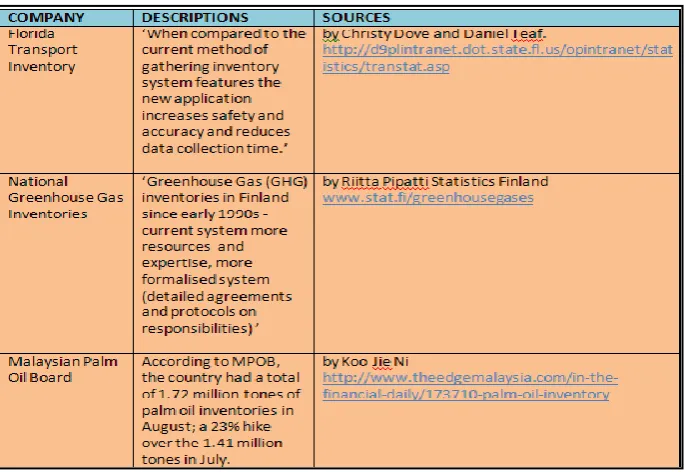
Table 1.1 Statistic of inventory system user
Figure above have shown the statistic of others company that applied
Inventory System in daily business. From sources above an example Florida
Transport Inventory company can increase safety, accuracy and reduces data
collection time by using inventory system. Then, for national Greenhouse Gas
Inventories also increase company performance in formalized system. Last example
of Malaysian Palm Oil Board SDN.BHD the company also increases their profit to
23% per month because their inventory well managed
1.6 Importance of Research
This research was made to prepare the Inventory Storage with Barcode for the
logistic store at IT Support and Services. This research could provide useful
inventory system as the outcome of the research for the spare parts store
1.7 Thesis Outline
This final year project report consist seven chapter to elaborate about ISwB
project which are starting with Introduction, Literature Review, Methodology,
6
Chapter I – Introduction discuss about background of the project, problem
statement and the purpose of developing this project. It also mentions the important
of this project.
Chapter II – Literature Review consist about the background study and
research before developing the ISwB. The content of the background studies such as
Traditional File-Based Systems, The Concepts of the Entity-Relationship Model,
Inventory System and Bar Coding
Chapter III – Methodology described about the methods or approaches used
in solving projects. Among the main content of this chapter are Initial Planning,
Planning, Requirements, Analysis and Design, Implementation, Testing, Evaluation
and Deployment.
Chapter IV – Project Requirement described about the methods that been
used in this project and the advantages of the requirement have been chosen. The
main requirements are VB.NET and MySQL Database.
Chapter V – Design described about designing the ISwB which are interface
is using VB.NET and database MySQL. The methods start design which is flowchart
of the ISwB and function of this system.
Chapter VI – Analysis consist the The analysis will describe about data
collected through the observation of using the ISwB and not using the ISwB, also
interview sessions.
Chapter VII – Conclusion consist the summary of the project and