Generation and Analysis of
Content for Physics-Based Video
Games
Matthew Stephenson
A thesis submitted for the degree of
Doctor of Philosophy
The Australian National University
Except where otherwise indicated, this thesis is my own original work.
A large percentage of this thesis is made up of the following research papers:
•
Chapter 2:
M. Stephenson, J. Renz,
Procedural Generation of Complex Stable Structures
for Angry Birds Levels
,
IEEE Computational Intelligence and Games Conference
2016 (IEEE-CIG’16)
, Santorini, Greece, September 2016, pp. 178-185.
•
Chapter 3:
M. Stephenson, J. Renz,
Procedural Generation of Levels for Angry Birds
Style Physics Games
,
The Twelfth Annual AAAI Conference on Artificial
Intelli-gence and Interactive Digital Entertainment (AIIDE’16)
, Burlingame, CA, October
2016, pp. 225-231.
•
Chapter 4:
M. Stephenson, J. Renz,
Generating Varied, Stable and Solvable Levels for
Angry Birds Style Physics Games
,
IEEE Computational Intelligence and Games
Conference 2017 (IEEE-CIG’17)
, New York, NY, August 2017, pp. 288-295.
•
Chapter 5:
M. Stephenson, J. Renz, X. Ge, L. Ferreira, J. Togelius, P. Zhang,
The 2017
AIBIRDS Level Generation Competition
,
IEEE Transactions on Games (TOG)
,
2018, pp. 1-10.
•
Chapter 6:
M. Stephenson, J. Renz, X. Ge, P. Zhang,
Generating Stable, Building Block
Structures from Sketches
,
Computer Games Workshop at IJCAI-ECAI’18
,
Stock-holm, Sweden, July 2018, pp. 1-10.
Revised version submitted to IEEE Transactions
on Games (TOG)
.
•
Chapter 7:
M. Stephenson, J. Renz,
Creating a Hyper-Agent for Solving Angry Birds
Lev-els
,
The Thirteenth Annual AAAI Conference on Artificial Intelligence and Interactive
Digital Entertainment (AIIDE’17)
, Snowbird, UT, October 2017, pp. 234-240.
•
Chapter 8:
M. Stephenson, J. Renz,
Deceptive Angry Birds: Towards Smarter
Game-Playing Agents
,
The Twelfth International Conference on the Foundations of
Dig-ital Games (FDG’18)
, Malmo, Sweden, August 2018, pp. 13:1-13:10, (honourable
mention).
•
Chapter 9:
M. Stephenson, J. Renz,
Agent-Based Adaptive Level Generation for Dynamic
on Artificial Intelligence and Interactive Digital Entertainment (AIIDE’17)
,
Snow-bird, UT, October 2017, pp. 241-247.
•
Chapter 11:
M. Stephenson, J. Renz, X. Ge,
The Computational Complexity of Angry
Birds
,
Artificial Intelligence Journal (AIJ), Under revision
, 2018, pp. 1-50.
We can only see a short distance ahead, but we can see plenty there that needs to be done.
Acknowledgments
•
I would first like to acknowledge and extend my deepest gratitude to my
pri-mary supervisor Jochen Renz, who has played an integral part in helping to
drive, motivate and develop my research skills further. Thank you for your
encouragement, dedication and patience over the last few years, for first
intro-ducing me to this field of research, and for all the assistance and expert advice
you have provided during my time with you. I would also like to thank to
my two associate supervisors and panel members Marcus Hutter and Patrik
Haslum, for their additional wisdom and suggestions during this period.
•
My thanks to the Australian National University for providing me with a PhD
scholarship, which has allowed me to conduct my research without any
finan-cial burden, as well as to the ANU Research School of Computer Science and
the College of Engineering and Computer Science, for providing me with the
facilities and resources to carry out my work.
•
During my time researching for this thesis I have had to opportunity to meet
and collaborate with many fantastic people. My thanks to all the other
searchers and institutions with whom I have conducted and published joint
re-search, Damien Anderson, Lucas Ferreira, Raluca Gaina, Ahmed Khalifa, Philip
Bontrager, Diego Perez-Liebana, Julian Togelius, Christoph Salge, Simon Lucas
and John Levine, as well as all the other conference attendants, students,
lec-turers or professors who have helped to inspire my love for this research field.
•
My deepest thanks to my fellow research colleagues and friends, Xiaoyu (Gary)
Ge, Peng Zhang and Hua Hua, for their advice and companionship; to my
parents Vicky and Peter, my siblings Paul and Louise, and all my extended
family who have supported me; and to my close friends over the last few years
Kavi, Kevin, Sherwin and Helena for the fun and laughter they have provided.
•
My final thanks to my partner Katrina, who has been an unlimited source of
Abstract
The development of artificial intelligence (AI) techniques that can assist with the
cre-ation and analysis of digital content is a broad and challenging task for researchers.
This topic has been most prevalent in the field of game AI research, where games are
used as a testbed for solving more complex real-world problems. One of the major
issues with prior AI-assisted content creation methods for games has been a lack
of direct comparability to real-world environments, particularly those with realistic
physical properties to consider. Creating content for such environments typically
re-quires physics-based reasoning, which imposes many additional complications and
restrictions that must be considered. Addressing and developing methods that can
deal with these physical constraints, even if they are only within simulated game
environments, is an important and challenging task for AI techniques that intend to
be used in real-world situations.
The research presented in this thesis describes several approaches to creating and
analysing levels for the physics-based puzzle game Angry Birds, which features a
realistic 2D environment. This research was multidisciplinary in nature and covers
a wide variety of different AI fields, leading to this thesis being presented as a
com-pilation of published work. The central part of this thesis consists of procedurally
generating levels for physics-based games similar to those in Angry Birds. This
pre-dominantly involves creating and placing stable structures made up of many smaller
blocks, as well as other level elements. Multiple approaches are presented,
includ-ing both fully autonomous and human-AI collaborative methodologies. In addition,
several analyses of Angry Birds levels were carried out using current state-of-the-art
agents. A hyper-agent was developed that uses machine learning to estimate the
performance of each agent in a portfolio for an unknown level, allowing it to select
the one most likely to succeed. Agent performance on levels that contain deceptive
or creative properties was also investigated, allowing determination of the current
strengths and weaknesses of different AI techniques. The observed variability in
performance across levels for different AI techniques led to the development of an
adaptive level generation system, allowing for the dynamic creation of increasingly
challenging levels over time based on agent performance analysis. An additional
study also investigated the theoretical complexity of Angry Birds levels from a
com-putational perspective.
Contents
Acknowledgments
vii
Abstract
ix
1
Introduction
1
1.1
Video Games . . . .
3
1.1.1
Agents . . . .
4
1.1.2
Procedural Content Generation . . . .
5
1.1.3
Competitions . . . .
8
1.2
Physics-Based Games . . . .
9
1.2.1
Relevance to Real-World Problems . . . 10
1.2.2
Angry Birds . . . 12
1.2.2.1
Agents . . . 15
1.2.2.2
Level Generation . . . 17
1.3
Thesis Outline . . . 18
1.3.1
Motivation . . . 18
1.3.2
Summary . . . 19
1.3.3
Research Paper Contributions . . . 20
2
Procedural Generation of Complex Stable Structures for Angry Birds Levels 25
2.1
Foreword . . . 25
2.2
Paper . . . 25
3
Procedural Generation of Levels for Angry Birds Style Physics Games
35
3.1
Foreword . . . 35
3.2
Paper . . . 35
4
Generating Varied, Stable and Solvable Levels for Angry Birds Style Physics
Games
43
4.1
Foreword . . . 43
4.2
Paper . . . 43
5
The 2017 AIBIRDS Level Generation Competition
53
5.1
Foreword . . . 53
6
Generating Stable, Building Block Structures from Sketches
65
6.1
Foreword . . . 65
6.2
Paper . . . 65
7
Creating a Hyper-Agent for Solving Angry Birds Levels
77
7.1
Foreword . . . 77
7.2
Paper . . . 77
8
Deceptive Angry Birds: Towards Smarter Game-Playing Agents
85
8.1
Foreword . . . 85
8.2
Paper . . . 85
9
Agent-Based Adaptive Level Generation for Dynamic Difficulty
Adjust-ment in Angry Birds
97
9.1
Foreword . . . 97
9.2
Paper . . . 97
10 The Computational Complexity of Angry Birds and Similar Physics-Simulation
Games
107
10.1 Foreword . . . 107
10.2 Paper . . . 107
11 The Computational Complexity of Angry Birds
115
11.1 Foreword . . . 115
11.2 Paper . . . 115
12 Conclusion
167
12.1 Future Work . . . 168
12.1.1 Advanced Content Creation . . . 168
12.1.2 Improved Performance Analysis . . . 169
Chapter
1
Introduction
Developing intelligent agents that can operate effectively within a physical
environ-ment has been a long-standing goal for the field of artificial intelligence (AI) research.
The creation of such an agent would have a huge impact on the regular lives of
hu-mans, greatly increasing the ability of robots to assist with simple everyday tasks.
Almost everything we do within the real world requires some form of physical
rea-soning and understanding on our part to accomplish. This includes actions as
mun-dane as picking up a book on our desk or walking down the street, to more complex
tasks such as driving a car. While performing some of these actions can seem
al-most trivial to us, they pose significant challenges to AI. In many of these situations
we do not know the specific physical properties of the objects involved or how
ex-actly they will react when we perform an action, yet we can still perform said action
successfully each time. We often complete these physical reasoning tasks without
even thinking about them, but they are vital for any agent that intends to work and
operate alongside us.
As an example, imagine the task of pouring yourself a glass of water from a jug.
While this may not seem like a difficult action, it involves reasoning about several
different physical systems. You must first pick up the jug with your hand, bring it
above the glass, and then carefully tilt the jug so that water gently pours out. Pour
too lightly and the water will likely run down the outside of the jug, too heavily
and the water may miss the glass completely. You must also be aware of when the
water will likely fill the glass and when to stop pouring, which is typically before the
glass appears full. Each of these individual elements must be carefully considered
by an intelligent agent in order to perform the task successfully. What makes this
even more challenging is that we likely do not know the exact weight of the jug, the
viscosity of the water, or the size of the cup, yet we can still perform this task without
any significant conscious effort on our part. Humans naturally have an intuitive
understanding of the physical world, a feature that was likely crucial to our survival
as a species. Intelligent agents however, lack the thousands of years of evolution that
we possess, or the vital early years of childhood where our understanding of the
world around us is primarily formed [Baillargeon, 2007].
experimented with in relative safety. Learning from our failures is a critical aspect
of human cognition, and using simulated environments gives this same
opportu-nity to agents as well. While these simulated environments are less complex than
the real world, the necessary physical and spatial reasoning techniques that agents
within them must exhibit are very similar to those needed for real-world tasks. One
such medium that provides us with suitable pre-existing environments and tasks
for agents to complete, is that of video games. In order to play these video games,
agents must often exhibit sophisticated reasoning and understanding of their
en-vironment. The closer these game environments are to real life, the more directly
applicable our agents become to real-world situations. While most video games that
are currently used for research purposes are relatively simple (think basic Atari and
arcade-style games), we believe there is a wealth of research potential in
physics-based games. Designing agents to successfully play such games requires physical
and spatial reasoning abilities that are very similar to those needed for completing
many real-world tasks. However, the performance of modern agents developed for
such games have failed to equal that of most human players. Understanding why
current AI techniques struggle with these games, as well as developing new
meth-ods that can analyse or evaluate the performance of different agents in physics-based
environments, will likely help to improve these agents’ abilities significantly in the
future.
Rather than focusing on the development of specific AI techniques for directly
improving agent performance, this thesis is centred around methods for creating
re-alistic and viable content for physics-based game environments, as well as analysing
how different agents perform on such content and environments. Not only do these
proposed techniques have many applications for improving the design and
devel-opment of physics-based video games, they can also be used to enhance the
per-formance of future agents. The motivations and applications of the presented work
will therefore be two-fold. The more obvious and immediate applications for each
method will be how it can be used to help improve the quality of physics-based
video games, with the intended goal of being played by humans. The second
overar-ching motivation will be about how these methods can be used, either individually
or combined together, to aid in the development of physical reasoning agents, both
for video games and also for the real world.
§
1
.
1
Video Games
3
reinforcement learning agents can get increasingly better by improving against the
generated levels, and the generator in turn creates increasingly challenging levels
based on the agent’s improved performance.
1.1
Video Games
The field of game AI research, or more specifically for this thesis the field of video
game AI research, can be defined simply as the study of any AI techniques that are
used by or applied to (video) games. This can either be to improve the games
them-selves or, as is more often the case in academia, because games can be beneficial
for developing new and innovative AI techniques. Video games provide researchers
with a wide range of complex problems that have not previously been investigated,
and allow us to evaluate our proposed methods in a safe and well-defined
environ-ment [Yannakakis and Togelius, 2018]. The challenges associated with playing,
creat-ing or analyscreat-ing content for these games often requires experimentation with many
different areas of AI, such as machine learning, planning, evolutionary algorithms,
tree search (especially Monte Carlo) [Browne et al., 2012], knowledge representation
and reasoning, general intelligence [Togelius and Yannakakis, 2016], fuzzy logic, etc.
Games also provide a great testbed case for trying out newly developed algorithms
before being used in real-world situations. The problems associated with certain
video games are also often very similar to those of many real-world problems, even
if the domains may on first appearance seem unrelated [Togelius, 2015]. As an
exam-ple, deep reinforcement learning has proven to be very successful at playing a variety
of arcade and console games, at a performance level equal to that of a human player,
based solely on using the screen’s pixels as input [Mnih et al., 2015, 2013]. This
tech-nique has since been applied to many other real-world applications and cutting-edge
technology, such as self-driving cars [Rao and Frtunikj, 2018; Xia et al., 2016].
From a computational complexity perspective, many games can often be proved
either NP-hard or PSPACE-complete, meaning that any algorithm designed for
solv-ing such a game could potentially take a very long time and/or require a very large
amount of memory [Aloupis et al., 2015; Demaine et al., 2018]. While the
compu-tational complexity of a game does not necessarily correlate to how well a heuristic
agent might perform on it, this nevertheless demonstrates that certain games are, at
least in theory, very difficult to solve.
Studios, 2011)), neuroevolutionary platoon training (
Supreme Commander 2
(Gas
Pow-ered Games, 2010)), as well as a large number of games using a wide variety of
proce-dural content generation techniques (
Minecraft
(Mojang, 2011),
Borderlands
(Gearbox
Software, 2009),
Spore
(Maxis, 2008) and
No Man’s Sky
(Hello Games, 2016) to name
just a few). While it still typically takes a while for newly developed game AI
tech-niques to transition from the academic research community to the mainstream video
game industry, they are often adopted and utilised much sooner within the
inde-pendent video game scene (indie games). The widespread popularity and critical
acclaim many of these games have received, suggests that integrating AI techniques
can have a substantial impact on the enjoyment and appeal of modern video games
when used effectively.
Further information on the history, motivations, benefits and applications of AI
research for video games can be found in the following books [Yannakakis and
To-gelius, 2018; Shaker et al., 2016b; ToTo-gelius, 2018].
1
.
1
.
1
Agents
The most common and historical use of AI for games research, and likely the first
thing that comes to mind when thinking about it, is for developing intelligent agents
that can play games in a similar manner to humans. This initially began with agents
that were designed to play classic board games such as Chess (Deep Blue)
[Camp-bell et al., 2002; Newborn and Newborn, 1997], Checkers (Chinook) [Schaeffer et al.,
1996; Samuel, 1959] or Backgammon (TD-Gammon) [Tesauro, 1995], before making
the logical step into video game AI. While agents can be used for many different
purposes in video games, such as creating balanced opponent strategies or realistic
behaving NPCs, the majority of academic research into developing game agents has
primarily focussed on simply creating the best performing and most efficient agent
possible (i.e. the agent is simply trying to win the game).
§
1
.
1
Video Games
5
players are currently the best performers at most modern games, it likely won’t be
long before agents can surpass their abilities [Grace et al., 2017].
While the enjoyment and interest that comes from creating agents to play games
that were traditionally designed to challenge humans might be considered rewarding
enough, these agents can often help us to achieve far more. The benefits of working
with and developing agents for video game environments/problems have already
been discussed, along with many possible applications. Most problems that we face
in the real world, where developing successful and reliable agents would prove
ex-tremely useful, can be replicated within a video game, many of which already exist.
The problem of a robot navigating hazardous locations is very similar to that of most
3D adventure games. The task of developing technology for autonomously driving
vehicles is almost identical to playing any modern racing game. Even video games
that may on the surface seem completely irrelevant to any real-world task, very rarely
are so [Togelius, 2015]. However, this is not to say that all games are equal in this
re-gard, as developing agents to play certain types of games can often be more beneficial
than others. The more sophisticated and realistic a game’s mechanics and design are,
then the more likely the AI techniques required to play it will be applicable and
help-ful to other real-world problems (developing an agent that can outperform humans
at StarCraft is clearly a bigger breakthrough than one that beats us at Tic-Tac-Toe).
Aside from the direct gameplay applications previously mentioned, developing
skilled agents for video games can also provide many other benefits. Professional
Chess was significantly affected by the development of chess playing programs,
which helped to identify flaws or strategies not previously considered [Newborn
and Newborn, 1997]. Allowing different agents to play against each other also
pro-vided players with millions of past example games, leading to new tools for game
analysis and personal improvement. The game of Go has recently undergone a
sim-ilar change with the successful development of AlphaGo [Silver et al., 2016], and it
seems likely that more complex video games are not far behind. Agents can also
help to playtest and find bugs in games before (or even after) they are released to
the general public. One well publicised example of this was a reinforcement learning
agent that was able to find a previously unknown glitch in the popular game
Q*bert
(Gottlieb, 1982), over 35 years after the game’s initial release [Chrab ˛
aszcz et al., 2018].
1
.
1
.
2
Procedural Content Generation
include almost all aspects of a game’s design (apart from NPC behaviour or the
game engine) [Togelius et al., 2011]. As video games become increasingly larger and
more graphically impressive, so too does the time and money required to develop
them [Iosup, 2011; Kelly and Mccabe, 2007]. PCG can provide a way to increase the
variety and replayability of a game significantly, without the need for millions of
dollars and years of development [Amato, 2017].
One of the earliest mainstream examples of PCG being used in a game was for the
video game
Rogue
(A.I. Design, 1980), a randomly generated dungeon exploration
game from which the sub-genre “roguelike” was born [Amato, 2017]. While the
initial benefit of PCG was mainly that it allowed games to be created with a limited
amount of memory, developing games in this way also allowed for a much greater
range of content than could ever be coded by hand [Dahlskog and Togelius, 2012].
While most games might change some small details each time they are played, such
as any game that uses random numbers to influence enemy behaviour or player stats,
PCG can be used to significantly influence almost all aspects of a game’s design
[Browne, 2014]. To develop a PCG system for a game, you need to create both the
individual modular components for the type of content in question, as well as the
method by which they will be combined and what factors will influence this process.
For example, if attempting to procedurally generate a level for a game, you need to
define both the objects that could exist within that level (which themselves could also
be procedurally generated), as well as a system for arranging these objects within the
available level space.
§
1
.
1
Video Games
7
to automatically create content that is indistinguishable from those designed by a
human.
PCG algorithms have previously be used for a wide variety of video game genres
to create and influence many different types of content. This includes individual
gameplay aspects such as levels [Smith et al., 2009; Dormans, 2010], dialogue [Kerr
and Szafron, 2009], weapons [Hastings et al., 2009], characters [Griffith, 2018],
vehi-cles [Liapis et al., 2011], rulesets [Smith and Mateas, 2010; Togelius and
Schmidhu-ber, 2008], terrain [Miller, 1986; Smelik et al., 2009], quests [Riedl et al., 2011; Jeong
et al., 2014], maps [Togelius et al., 2010b, 2013], etc., as well as features that are not
directly related to gameplay such as textures [Ebert et al., 2002; Perlin, 1985;
White-head, 2010], tension/suspense [Lopes et al., 2016; Cheong and Young, 2008] or even
music [Farnell, 2007; Edwards, 2011; Boenn et al., 2011]. In terms of the types of
games that PCG can be applied to there are very few exceptions, although
exam-ple genres where it has been successfully imexam-plemented before include platformers
[Mourato et al., 2011], racing [Cardamone et al., 2011a], role-playing [Valtchanov
and Brown, 2012], arcade [Cook and Colton, 2011], stealth [Xu et al., 2014],
first-person-shooter (FPS) [Cardamone et al., 2011b], roguelike [Stammer et al., 2015] and
real-time strategy [Lara-Cabrera et al., 2015]. One of the main game genres where
PCG has struggled the most with compared to human designers is that of puzzle
games [Alt et al., 2007], where the player needs to achieve some pre-defined goal for
a variety of different levels (some other types of games such as platformers might
also fit this definition). The best puzzles in games typically require the player to
exhibit some form of creative reasoning to solve them, an aspect that often cannot
be easily coded into an algorithm. Properties like difficulty or even solvability of
puzzles/levels are also very hard to estimate, something that agents have previously
been used to help measure [Berseth et al., 2014].
Procedural content generation has also found considerable success when
devel-oping serious games for non-entertainment purposes. This includes tasks such as
modelling natural organisms, plants and ecosystems [Prusinkiewicz and
Linden-mayer, 1996], mapping urban landscapes and road networks [Campos et al., 2015;
Chen et al., 2008], improving education and conflict resolution [Yannakakis et al.,
2010], training rescue services for disaster relief scenarios [Djordjevich et al., 2008],
and developing complex environments for simulated learning [Smelik et al., 2011,
2014]. This last point is especially relevant to many external problems, as the
con-straints and limitations of the game environment being used also play a significant
role in determining the feasibility of any generated content.
Developing PCG techniques might also allow us to better understand notions of
cre-ativity or design. By analysing an assortment of generated content and determining
which examples are perceived as good or bad and why this is, we can further our
own understanding of the problem space.
1
.
1
.
3
Competitions
One of the most common and effective ways to compare multiple AI techniques
for games is with competitions, which attempt to evaluate and rank the best
avail-able algorithms for many different problems. These competitions typically focus on
benchmarking agents for certain games against each other, but other areas of game
AI research, such as content generation, can also be compared this way.
One of the most popular video game series that has used competitions to promote
the creation of agents is that of
StarCraft
(Blizzard Entertainment, 1998) [Ontañón
et al., 2013; Kim et al., 2016; Weber et al., 2010; Tavares et al., 2016], as well as its
successor
StarCraft 2
(Blizzard Entertainment, 2010) [Siljebråt et al., 2018]. Both these
games are popular two-player, real-time strategy games and are currently believed
to be among some of the hardest games for agents to play (at the time of writing,
agents are not yet at a point in these games where they can outperform most humans)
[Certicky and Churchill, 2017]. The complexity of these games likely stems from the
need to control a large number of independent units with different abilities and
accomplish multiple objectives. As the game requires two opponents to face off
against each other on the same map, there is also a large degree of game theory,
creative reasoning and deception that is often required to win. While agents have
performed well at some aspects of the game, such as precise micromanagement of
several different units [Justesen and Risi, 2017; Shao et al., 2018], they struggle with
the higher-level strategy and planning elements compared to expert human players
[Farooq et al., 2016]. A handful of map generators have also been created to help
with agent development and evaluation [Togelius et al., 2010b; Uriarte and Ontañón,
2013].
im-§
1
.
2
Physics-Based Games
9
prove the performance of some recent reinforcement learning agents [Tsay et al.,
2011; Pandian, 2013; Lee et al., 2014]. Several other AI competitions which also
fo-cus around games have been run, including the Visual Doom (VizDoom) [Kempka
et al., 2016], Fighting Game AI [Lu et al., 2013], TORCS (racing game) [Loiacono
et al., 2010], Unreal Tournament [Hingston, 2010], and Geometry Friends
Coopera-tive Game AI [Prada et al., 2015] competitions, to name just a few.
Rather than developing AI techniques for specific games or genres, the general
video game AI (GVGAI) competition and research collective instead focuses on
de-veloping algorithms that can either play, or help to create, a large assortment of
unknown games, without having any prior information about how they function
or operate [Perez-Liebana et al., 2016a,b]. These games are each described using a
standardised video game description language (VGDL), allowing new games to be
created quickly and integrated easily. While most of the current games in the GVGAI
corpus are grid-based in their design, several games with continuous environments
have recently been added into its line-up of possibilities [Perez-Liebana et al., 2017].
These games feature a much larger state space than those traditionally used, making
the task of developing general agents or content generators even more challenging.
There are currently five different tracks available for the GVGAI competition, the
single and two-player planning tracks (with forward model), the level and rule
gen-eration tracks, and the single-player learning track (without forward model). The
planning tracks provide agents with access to the game’s internal forward model,
which allows it to see the outcome of any sequence of actions it may take in
ad-vance. This effectively makes the task of playing any game a planning problem, as
a model of the game is provided to the agent beforehand which allows it to search
for a solution before acting [Schaul, 2013]. A large variety of agents with different
approaches for solving these general games have been developed, all of which utilise
the forward model available [de Waard et al., 2016; Mendes et al., 2016; Nelson, 2016;
Pérez-Liébana et al., 2016; Sironi and Winands, 2016]. For the learning track, agents
are not given access to each game’s forward model. This makes the task much more
suited to a reinforcement learning approach, as agents must explore and learn about
the game’s rules and environment in real time whilst being uncertain of the result
of any action they may take (i.e. agents must learn by trial and error) [Kunanusont
et al., 2017; Torrado et al., 2018]. GVGAI level and rule generators created for their
respective tracks can also be helpful in the agent training process [Neufeld et al.,
2015; Khalifa et al., 2016; Togelius et al., 2012; Nielsen et al., 2015].
1.2
Physics-Based Games
Physics-based games can technically be defined as any game that uses a physics
sim-ulator to compute the behaviour or motion of certain objects [Renz and Ge, 2015].
Even some of the earliest video games ever created, such as
Pong
(Atari, 1972),
Break-out
(Atari, 1976) and
Tennis for Two
(William Higinbotham, 1958), used
While this means that many video games could be defined as physics-based, the
more common use of the term refers to games where realistic physical mechanics
play an important role in their design, and an understanding of said mechanics is
required to play the game effectively. Most elements within a physics-based game
typically possess defined physical properties, such as mass, friction, density, gravity,
location, rotation, etc. The suitable response to any action or movement can then be
determined based on simplified laws of physics, computed internally by the game’s
physics-simulator. The challenge of these games often comes from predicting the
outcome of our actions in advance and planning a sequence of actions that result in
us achieving our desired goal.
A large assortment of physics-based games are currently available to experiment
and test on [Renz and Ge, 2015], the majority of which are puzzle games. Solving
these physics-based games typically relies on the player’s ability to perform
phys-ical reasoning with imperfect information, an ability that all humans possess and
use within our everyday lives. This means that physics-based games are usually
more intuitive to play than other types of games, as the rules and mechanics can
often be learned quickly and easily, while still possessing a high degree of
com-plexity and challenge. As a result of this, such games can be aimed at both casual
and experienced gamers and are becoming far more commonplace within the video
game industry, particularly for mobile and touch screen devices [Juul, 2012].
Ad-vancements in physics-based games over the years have often resulted in
implement-ing increasimplement-ingly more sophisticated and realistic physics engines. Some examples
of popular physics-based games include,
Angry Birds
(Rovio Entertainment, 2009)
(which we will discuss in greater detail in section 1.2.2),
Cut the Rope
(ZeptoLab,
2010),
Where’s my Water
(Creature Feep, 2011),
The Incredible Machine
(Dynamix, 1993),
World of Goo
(2D Boy, 2008),
Crayon Physics
(Petri Purho, 2009), and many others.
Sev-eral physics-based games have also recently been added to the GVGAI game corpus
[Perez-Liebana et al., 2017].
Physics-based games often feature a substantially larger state and action space
compared to more traditional games, which compounded with the imperfect
envi-ronmental knowledge and complex physical simulation calculations, make playing
them a very difficult task for AI agents. This means that games which may
ini-tially appear to be simple and intuitive for us as human players, may in fact be very
hard for an agent to deal with. Generating levels or other content for physics-based
games is also subject to many of the same challenges faced by agents attempting to
play them. Much in the same way that agents need to predict the outcome of any
actions they perform, so must generators consider the feasibility of any content they
create.
1
.
2
.
1
Relevance to Real-World Problems
§
1
.
2
Physics-Based Games
11
this, often being able to predict the consequences of physical actions to a significant
depth. Any AI agent that intends to interact successfully within the physicality of the
real world must possess similar abilities, and consequently this area of research is of
critical importance to the advancement of both AI and robotics [Horvitz, 2008; Stone,
2003; Verschure and Althaus, 2003]. Within the real world, agents cannot guarantee
that all inputs will be accurate and must instead rely on approximations and
esti-mates. Neither can it be assumed that any action performed will be robustly linked
to a desired effect [Ge and Renz, 2013]. The complexity and unpredictability of the
real world makes such presumptions unreasonable, and instead necessitates a more
advanced form of artificial intelligence. Physics-based games provide a controlled
and parameterized environment for testing and evaluating many different solutions
to the problems of reasoning, planning and knowledge representation, all of which
are needed to predict an action’s outcome [Zhang and Renz, 2014]. The lack of
con-sequences within these games also provides us with the opportunity to learn from
our failures, without the risk of serious repercussions.
To sum this idea up in a single sentence: Games that utilise a physics-based
simulation naturally provide a more realistic environment compared to more
tradi-tional games, with the problems posed by solving these physics-based games often
being nearly identical to many real-world problems [Ge et al., 2016]. As an example,
imagine we are designing a robot for a warehouse, whose job it is to move stacks of
boxes from one area of the warehouse to another, and which can only carry a certain
number of boxes at a time. The robot must be able to complete this task, even with
imprecise or unknown information about the physical properties of these boxes. A
robot that might inadvertently knock over some boxes by accident or misjudge how
much support a specific box had would not be useful and could potentially be
dan-gerous. These considerations are very similar to those of some physics-based games,
where structures made of smaller objects need to be built or dismantled (think
Tricky
Towers
(WeirdBeard, 2016),
Angry Birds
(Rovio Entertainment, 2009),
Besiege
(Spider-ling Studios, 2015) or
Crush the Castle
(Armor Games, 2009)). While we have already
discussed why developing agents that can successfully play physics-based games at
a level equal to, or potentially better than, that of humans is beneficial to many
real-world tasks, we have not yet focussed on the benefits that developing AI techniques
for creating and analysing content for such games has in relation to real-world
envi-ronments and problems.
hand designed levels at best and are often highly focussed around player enjoyment
rather than variety of content for agent testing. As a result, using only levels that
are solely designed by humans is probably not the most efficient or unbiased way
of comparing agents. The obvious solution to these problems is to employ AI
tech-niques to aid in the creation of a large variety of digital content, that can then be
used both for evaluating multiple current agents to identify their limitations, as well
as assisting with training or improving the performance of future agent iterations.
This content must be varied in its design, covering a wide range of possible situations
that could occur, as well as being both realistic and feasible, in order to make up for
a whole lifetime of experience that humans possess.
Once we have a large assortment of content available for testing our agent(s),
we then need a suitable method to evaluate their performance and provide insight
into how they might be improved in the future. To accomplish this, we need to
distinguish which cases each agent performs well or poorly on and the likely factors
that resulted in this outcome. Using this information, we can then identify the root
causes of these issues and formulate measures to correct them. Returning again to
the stacking robot example, if we have an example agent that we want to test on this
problem then we must first generate a large variety of example box stacks. Each of
these stacks could contain any number of boxes, each of which could be any possible
size and collectively arranged in any possible shape (as long as the box stack is
initially stable). We can then evaluate our agent’s performance at moving each of
these box stacks across the warehouse, recording the average completion rate, how
long it took, etc., after which we can analyse the resulting data sets for meaningful
information. Perhaps the agent cannot deal with stacks above a certain size, or with
boxes that are packed too closely together.
While developing successful and efficient agents for the real world is the
even-tual goal of this line of research, creating and analysing content for physics-based
environments plays a hugely important role in this process. Without these
meth-ods and resources being available, it seems unlikely that agents will ever be able
to improve substantially to the point where their physical reasoning abilities equal
that of a human. Many of the ideas and techniques that are developed for creating
and analysing content in specific scenarios can also be generalised between different
situations, much in the same way that agent techniques can.
1
.
2
.
2
Angry Birds
[image:25.595.119.528.96.318.2]
(26)§
1
.
2
Physics-Based Games
13
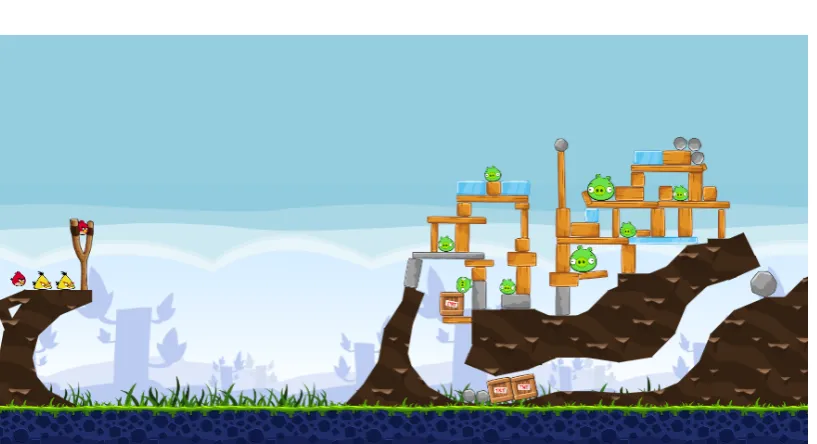
Figure 1.1: Screenshot of a level from the Angry Birds game.
software and resources surrounding it. As previously mentioned, this game is also
very popular and well known amongst the general population, making it easy to find
experiment participants who are already familiar with the game. The game’s design
and how levels are played is described as follows:
An example level from the Angry Birds game is shown in Figure 1.1. Each level of
this game gives the player a certain number of birds, which essentially corresponds
to the number of moves or actions that the player has, and tasks them with killing all
pigs within the level. Each of these birds can be one of several types, with each bird
type having different abilities and effects on certain objects. The player can fire these
birds in a pre-determined order using a slingshot that is located on the left side of
the level. The player can identify the fixed order that these birds will be fired from
the slingshot but cannot modify this ordering. Each bird is loaded into the slingshot
one at a time, and the player pulls the slingshot backwards using either a mouse or
touch screen interface (depending on the device being used to play the game). The
location that the slingshot is dragged back to, determines the release point (x, y) for
the bird that is loaded into it, which in turn determines the speed and angle with
which the bird is fired from the slingshot. This release point, along with a tap time
(t) for activating the bird’s special ability if it has one, means that each action the
player makes can be defined as a set of three values (x, y, t). While both the release
point and tap time values can, in theory, be any rational number (i.e. continuous),
they are in practise rounded to some arbitrary level of precision (although the action
space is still extremely large).
sizes), and TNT boxes. These objects all possess certain pre-defined physical
at-tributes (mass, location, rotation, friction, etc.) and behave in a semi-realistic way
when forces are applied to them. Pigs can be killed either by being hit with another
object such as a bird or block at a sufficient speed, falling off high ledges, or by being
caught within an explosion (such as that caused by TNT boxes). Rather than simply
being placed haphazardly around the level space, these objects are often arranged
into a structured pattern that increases the challenge and enjoyment of the level. For
example, blocks are typically placed on top of each other to form complex structures
that protect the pigs, preventing the player from simply targeting the pigs directly. In
order to solve certain levels, players often need to combine multiple objects together
into a chain reaction. For example, a player may fire a bird from the slingshot, which
then hits a round block, causing it to roll down a sloped section of terrain, which
then triggers a TNT box, with the resulting force of the explosion pushing a nearby
pig off a ledge, which then falls to the ground below, resulting in its death. Because
of the sheer number and variety of possible object arrangements within levels, the
state space of Angry Birds, much like its action space, is significantly larger than
most traditional video games.
If the player can successfully kill all the pigs within a level using their available
birds, then they have solved the level. Once a level is solved the player is awarded a
certain number of points based on the number of birds they have left, and the total
amount of damage dealt to other objects within the level. If the player uses up all
their available birds and there are still pigs left within the level, then they have failed
to solve the level and must retry again from the beginning. The problem of solving a
level therefore requires the player to plan out a sequence of bird shots and tap times
(actions) that results in all pigs being killed, while also attempting to score as many
points as possible (uses the fewest number of birds and causes the most damage).
All actions and their consequences within the level are simulated internally using
an underlying Box2D physics engine (box2d.org) based on Newtonian mechanics.
This simulation engine accurately mimics the behaviour of real-world physics,
re-sulting in the movement of objects within the game appearing very natural. As the
player is not privy to the exact physics parameters of the game’s objects, they will
only know the outcome of any action they make after it has been carried out. Player’s
must rely on their own visual and experience-based understanding of the game’s
physics, learned from previous attempts at the game and prior real-world
knowl-edge, to construct a rough conceptual idea of the desired outcome to their actions.
Solving these levels therefore requires a sophisticated understanding of physical and
spatial reasoning based on imperfect information.
§
1
.
2
Physics-Based Games
15
evaluation likely being one of the main reasons for poor agent performance.
1.2.2.1
Agents
Due to the significance that developing efficient and reliable agents for physics-based
environments has on the future of AI research, the task of developing agents that
can successfully outperform humans at Angry Birds is of considerable importance.
These agents are given the same input as humans (i.e. visual screenshots of the level)
and can perform exactly the same actions. Successfully creating such an agent
re-quires that a substantial number of problems are solved within the fields of machine
learning, computer vision, knowledge representation and reasoning, heuristic search,
planning, and reasoning under uncertainty [Renz et al., 2015]. These include but are
not limited to; detecting the location and category of objects, learning properties and
behaviours of unknown objects, predicting the outcome of any actions performed,
se-lecting appropriate actions for the given situation, and planning a suitable sequence
of actions. Contributions and improvements in any of these areas would likely help
to enhance the overall performance of agents, but the end goal of a truly
intelli-gent physical reasoning system can only be achieved by developing and combining
effective solutions to all these problems across multiple areas of AI.
Creating an Angry Birds agent that can learn to play unknown levels, as well as
or better than the best human players currently available, is by no means an easy
task to accomplish. In addition to the game’s environment having a near continuous
set of states and actions within which the agent must be able to act precisely and
efficiently, the input (i.e. screenshots) received by the agent is often subject to noise or
variations caused by inaccuracies in the computer vision algorithms being employed.
Whilst this by no means makes the input a bad source of information, it means that
parameters such as object sizes, locations, supporting blocks, connecting edges, etc.
are likely to be imprecise. This, coupled with a lack of understanding in terms of
how the game engine itself functions and operates, makes the task seem remarkably
difficult. Another complicating factor is that the exact outcome of an action is only
known after it has been carried out and cannot be perfectly replicated beforehand,
making the consequence of any action very difficult to predict [Renz et al., 2016].
no guarantee that the processing power required to test thousands of different shot
sequences for each level, or the potential errors caused by the inaccuracies in our
computer vision algorithms, would not render such an approach useless.
The Angry Birds AI (AIBIRDS) competition was first launched in 2012, as a means
to promote the research and creation of agents that can recognise, understand and
complete new Angry Birds levels as well as, or even better than, human players
[Renz, 2015]. So far this competition has attracted dozens of agents and hundreds
of participants from all over the world, with many different state-of-the-art AI
tech-niques being employed to try and solve this challenge. This includes techtech-niques
such as qualitative reasoning [Wał ˛ega et al., 2016], internal simulation analysis
[Pol-ceanu and Buche, 2013; Schiffer et al., 2016], logic programming [Calimeri et al.,
2016], heuristics [Dasgupta et al., 2016], Bayesian inferences [Tziortziotis et al., 2016;
Narayan-Chen et al., 2013], and structural analysis [Zhang and Renz, 2014].
How-ever, none of these agents have ever come close to being able to play unknown levels
better than humans (when averaged over multiple new levels).
During the competition, agents are required to play a set number of unknown
levels within a given time limit, attempting to score as many points as possible in
each level. The exact parameters of certain objects, as well as the current internal
state of the game, are not directly accessible. Instead, information about the level
is provided using a computer vision module which gives approximations of specific
object’s boundaries and location based on screenshots of the game screen. Agents are
required to solve these levels in real time, and can attempt levels in any order and
as many times as they like. Once the time limit has expired, the maximum scores
that an agent achieved for each solved level are summed up to give its final score.
Agents are then ranked based on this value and after several rounds of elimination a
winner is declared. The best agents from each year than face off with a select number
of human participants on a final set of levels. If we can reach a point where agents
can consistently score better than the best human players across a wide variety of
levels, then we can conclude that they have achieved our goal of super-human AI
performance at playing Angry Birds, the benefits and implications of which could
have a significant impact across the AI research community.
A recent expert survey on progress in AI from the Future of Humanity Institute
at Oxford University, found that creating an agent for solving Angry Birds levels was
the AI challenge that had the lowest expected number of years to solve [Grace et al.,
2017], ahead of other popular research games such as StarCraft. We believe that these
researchers have seriously overlooked the complications involved with creating such
an agent, perhaps being deceived by the game’s seemingly simple nature.
§
1
.
2
Physics-Based Games
17
need to be solved by AI systems that are intended to interact successfully with the
real world. The ability to accurately estimate the consequences of a physical action
and select a sequence of suitable actions accordingly, based solely on visual inputs
or other forms of perception, is essential for the future of ubiquitous AI and has
significant real-world relevance and application.
1.2.2.2
Level Generation
While research into developing AI agents for Angry Birds has been slowly
progress-ing for several years, one aspect that has so far been relatively overlooked in terms
of helping to improve their performance is that of automatically generating Angry
Birds levels. As previously discussed, creating content for agents to train or be
eval-uated on, as well as methods for analysing their performance on certain types of
levels in a meaningful way, is vital to the development and improvement of agents.
The current version of Angry Birds that is used for the AIBIRDS competition only
has 63 benchmark levels available to all participating teams, which is a significantly
limited amount of available content with which to train or analyse agents. While it
is possible for users to create their own levels by hand, the interface for doing so is
rather cumbersome, effectively requiring that each level be written out by hand in a
text editor. This makes it nearly impossible for any significant agent improvement or
analysis to occur without devoting a great deal of time to creating additional test
lev-els, and makes the application of any reinforcement learning techniques essentially
pointless (as such methods require a substantial amount of training data in order to
perform well).
While the ideal solution to this problem would be to simply create more levels
to train on, the time and resources needed to manually design the required number
of varied levels for any significant performance improvement would be far beyond
any reasonable limits. Instead we will turn to another branch of AI research, that of
procedural content generation. Using this approach, we can generate a huge number
of different Angry Birds levels in a very short period of time. While the variety and
usefulness of the generated levels for training and evaluating agents depends on how
sophisticated the generator is, and while this approach is unlikely to give the same
creativity and complexity as levels designed by humans, this approach is certainly
a far more practical method for creating additional content. These generators can
also be combined with agents to allow them to adapt over time, identifying and
focussing on the agent’s weaknesses and limitations. Instead of controlling the entire
level generation process, mixed-initiative generators could also be used to create
levels based off original human designs. This allows for more creative potential in
a generated level’s overall look, and provides a suitable balance between generation
efficiency and level variety [Campos et al., 2017].
game elements or improve simulation accuracy/speed). Instead we use a
Unity-based clone of the Angry Birds game developed by Lucas Ferreira [Ferreira and
Toledo, 2014] (dubbed ScienceBirds) which is open-source and available to download
from GitHub
1. While the Unity physics engine used by this clone differs slightly from
the Box2D implementation used by Angry Birds, this clone provides many of the
necessary elements to simulate our generated levels in a similar game environment.
Additional software also allows levels to be converted between the Angry Birds and
ScienceBirds description formats
2. Agents developed for the AIBIRDS competition
can also play both Angry Birds and ScienceBirds. While the differences between
the game engines can lead to slight variations in agent performance, the majority of
agents perform similarly well on both versions.
This idea of developing multiple level generation techniques for Angry Birds (as
well as other similar physics-based games), along with methods for analysing agent
performance across different levels to produce meaningful and useful results, forms
the main focus of the work presented in this thesis.
1.3
Thesis Outline
1
.
3
.
1
Motivation
While the benefits and applications of both procedural content generators and agents
with regard to improving the games themselves have been discussed in previous
sec-tions, the primary motivation that binds together all the research presented in this
thesis is the creation and analysis of content specifically for aiding the development
of new physical reasoning agents, with the game of Angry Birds being used as our
example environment. Even though agents developed for playing Angry Birds have
been slowly improving over recent years, their overall performance has not been
sig-nificantly increasing at the rate that might be expected. Rather than developing new
strategies and approaches for solving Angry Birds levels, the focus of this thesis is on
investigating why, after such a long period of time, agents are still struggling with
simple physics-based games like Angry Birds, and what can be done to improve
their performance in the future. While the difficulties and challenges that
physics-based games pose to agents have already been discussed, these provide little to no
information on how such issues can be overcome. While the creation of additional
evaluation or training levels is a suitable start, it is likely that analysing how agents
perform on different content will yield valuable insights into their current strengths
and weaknesses. Identifying specific limitations that certain agents have will
hope-fully allow us to address them better in the future, rather than simply observing that
our agents do not yet reach the performance standards of a human player. While the
methods and approaches presented in this thesis are specifically designed for and
applied to video game environments, it should be reiterated that they have a great
deal of relevance to many real-world problems.
1https://github.com/lucasnfe/Science-Birds