Aspects of School
Workforce Remodelling
Strategies used and Impact on
Workload and Standards
Research Report DCSF-RR153
Merryn Hutchings
1, Ken Seeds
2, Nick Coleman
2,
Carrie Harding
2, Ayo Mansaray
1, Uvanney Maylor
1,
Sarah Minty
1, and Emily Pickering
21
Institute for Policy Studies in Education,
London Metropolitan University
DCSF-RR153
Aspects of School Workforce Remodelling
Strategies used and Impact on Workload and Standards
Merryn Hutchings
1, Ken Seeds
2, Nick Coleman
2,
Carrie Harding
2, Ayo Mansaray
1, Uvanney Maylor
1,
Sarah Minty
1, and Emily Pickering
21
Institute for Policy Studies in Education,
London Metropolitan University
2
BMRB Social Research
The views expressed in this report are the authors’ and do not necessarily reflect those of the Department for Children, Schools and Families.
© London Metropolitan University 2009
ISBN 978 1 84775 520 9
Contents
Acknowledgments ... 1
Executive summary ... 2
1 Introduction ... 19
2 Literature review: policy and research background... 20
2.1 Introduction... 20
2.2 Policy: School workforce reform... 20
2.3 Workforce remodelling in schools ... 23
2.4 Evidence about the progress of remodelling ... 23
2.5 Impact on teachers’ workload... 29
2.6 Impact on standards... 31
2.7 Impact on support staff... 32
2.8 Key issues for the current research... 35
3 Research design ... 37
3.1 Aims and objectives ... 37
3.1.1 Aims ... 37
3.1.2 Objectives... 37
3.1.3 Changes to objectives as the research developed ... 38
3.2 Overview of research design... 39
3.3 The surveys... 39
3.3.1 Sample population and sampling frames... 39
3.3.2 Sample design ... 40
3.3.3 Sample size... 40
3.3.4 Support staff samples ... 41
3.3.5 Floating teacher samples ... 41
3.3.6 Administration of the survey... 41
3.3.7 Contacting schools... 41
3.3.8 Questionnaire ... 42
3.3.9 Questionnaire format and pilot ... 42
3.3.10 Main stage fieldwork ... 43
3.3.11 Coding, data editing and outputs ... 44
3.3.12 Weighting ... 44
3.3.13 Derived variables ... 44
3.3.14 Interpreting the survey findings ... 46
3.3.15 Data tables ... 46
3.4 The case studies ... 46
3.4.1 Sample design ... 46
3.5 Case study design... 48
3.5.1 Transcription and analysis ... 49
Contents
4 Overview of workforce remodelling ... 50
4.1 Introduction... 51
4.2 Over-arching issues ... 51
4.2.1 Understanding of remodelling ... 51
4.2.2 Complexity... 54
4.2.3 Overall trends ... 55
4.3 Primary schools... 55
4.3.1 Remodelling processes, change teams and consultants... 56
4.3.2 Implementation and consequences of remodelling agenda ... 57
4.3.3 Involvement of staff ... 59
4.4 Secondary schools ... 63
4.4.1 Remodelling processes, change teams and consultants... 63
4.4.2 Implementation and consequences of remodelling agenda ... 64
4.4.3 Involvement of staff ... 66
4.5 Special schools ... 70
4.5.1 Special school remodelling processes, change teams and consultants... 70
4.5.2 Implementation and consequences of remodelling agenda ... 70
4.5.3 Involvement of staff ... 72
5 Support staff in teaching and learning roles... 75
5.1 Introduction... 77
5.2 Primary schools... 77
5.2.1 Support for teaching and learning ... 78
5.2.2 Taking responsibility for whole classes... 89
5.2.3 Primary support staff views about taking whole classes... 100
5.2.4 Primary teachers’ views about support staff roles and status... 105
5.3 Secondary schools ... 107
5.3.1 Support for teaching and learning ... 107
5.3.2 Support staff taking responsibility for whole classes ... 116
5.3.3 Secondary support staff views about taking whole classes... 121
5.3.4 Secondary teachers’ views about support staff roles and status... 124
5.4 Special schools ... 126
5.4.1 Support for teaching and learning ... 126
5.4.2 Support staff taking responsibility for whole classes in special schools ... 133
5.4.3 Special school teachers’ views about support staff roles and status... 138
6 Senior administrative support staff roles ... 141
6.1 Introduction... 142
6.2 Primary ... 142
6.2.1 To what extent have more complex roles been transferred... 143
6.2.2 Main strategies used by schools ... 144
6.2.3 Career trajectories of senior administrative staff... 145
6.2.4 CPD and training... 146
6.3 Secondary ... 150
6.3.1 To what extent have more complex roles been transferred?... 150
6.3.2 Main strategies used by schools ... 152
6.3.3 Career trajectories... 152
6.3.4 CPD and Training... 154
6.3.5 Impact of remodelling of administrative roles... 155
6.4 Special schools ... 159
6.4.1 Transferring complex administrative and pastoral roles ... 159
7 Transfer of administrative tasks to support staff ... 161
7.1 Introduction... 162
7.2 Primary schools... 163
7.2.1 Transfer of routine tasks ... 163
7.2.2 Impact of transfer of administrative tasks in primary schools ... 170
7.3 Secondary schools ... 171
7.3.1 Transfer of routine tasks ... 171
7.3.2 Impact of transfer of tasks... 177
7.4 Special schools ... 179
7.4.1 Transfer of routine tasks ... 180
8 Planning, preparation and assessment time... 182
8.1 Introduction... 184
8.2 Primary schools... 185
8.2.1 Allocation and use of PPA time... 186
8.2.2 Activities during PPA time ... 191
8.2.3 Impact of teachers having PPA time ... 199
8.2.4 Arrangements for teaching classes during teachers’ PPA time... 206
8.2.5 Monitoring of PPA time ... 228
8.2.6 Overall impact of PPA arrangements... 229
8.3 Secondary schools ... 235
8.3.1 Allocation and use of PPA time... 235
8.3.2 Activities during PPA time ... 238
8.3.3 Impact of teachers having PPA time ... 243
8.3.4 Arrangements for teaching classes during teachers’ PPA time... 248
8.3.5 Monitoring of PPA time ... 250
8.3.6 Overall impact of PPA arrangements... 251
8.4 Special schools ... 253
8.4.1 Allocation and use of PPA time... 253
8.4.2 Activities during PPA time ... 255
8.4.3 Impact of teachers having PPA time ... 258
8.4.4 Arrangements for teaching classes during teachers’ PPA time... 261
8.4.5 Monitoring of PPA time ... 267
Contents
9 Cover for teacher absence ... 270
9.1 Introduction... 272
9.2 Primary Schools ... 275
9.2.1 Arrangements for cover in primary schools ... 276
9.2.2 Different groups that provide cover in primary schools... 283
9.2.3 Rationale for primary school cover arrangements ... 291
9.2.4 Class activities during primary school cover lessons... 294
9.2.5 Monitoring of primary school cover arrangements... 298
9.2.6 Impact of primary cover arrangements ... 299
9.3 Secondary schools ... 308
9.3.1 Arrangements for cover in secondary schools... 309
9.3.2 Different groups who provide cover in secondary schools ... 318
9.3.3 Rationale for cover arrangements in secondary schools... 330
9.3.4 Class activities during cover lessons in secondary schools ... 332
9.3.5 Monitoring of cover arrangements ... 339
9.3.6 Impact of cover arrangements in secondary schools ... 341
9.4 Special schools ... 349
9.4.1 Arrangements for cover in special schools ... 350
9.4.2 Different groups that provide cover in special schools ... 356
9.4.3 Rationale for special school cover arrangements ... 361
9.4.4 Class activities during cover lessons ... 363
9.4.5 Monitoring of cover arrangements ... 364
9.4.6 Impact of cover arrangements ... 365
10 Leadership and management time for teachers ... 370
10.1 Introduction... 371
10.2 Primary schools... 372
10.2.1 Allocation of leadership and management time ... 373
10.2.2 Arrangements for teaching classes... 380
10.2.3 Monitoring of arrangements ... 381
10.2.4 Impact of leadership and management time... 381
10.3 Secondary schools ... 386
10.3.1 Allocation of leadership and management time ... 386
10.3.2 Monitoring of arrangements ... 394
10.3.3 Impact of leadership and management time... 394
10.4 Special schools ... 398
10.4.1 Allocation of leadership and management time ... 398
10.4.2 Arrangements for teaching classes... 403
10.4.3 Monitoring of arrangements ... 403
10.4.4 Impact of leadership and management time... 403
11 Headteachers: dedicated headship time and leadership and management time . 406 11.1 Introduction... 407
11.2 Primary schools... 409
11.4 Special schools ... 416
12 Invigilation ... 418
12.1 Introduction... 419
12.2 Primary schools... 420
12.2.1 Invigilation arrangements ... 420
12.2.2 Rationale for arrangements... 423
12.2.3 Monitoring of arrangements ... 425
12.2.4 Impact of arrangements ... 426
12.3 Secondary schools ... 427
12.3.1 Invigilation arrangements ... 427
12.3.2 Rationale for arrangements... 432
12.3.3 Monitoring of arrangements ... 438
12.3.4 Impact of arrangements ... 438
12.4 Special schools ... 442
12.4.1 Invigilation arrangements ... 442
12.4.2 Rationale for arrangements... 444
12.4.3 Monitoring of arrangements ... 445
12.4.4 Impact of arrangements ... 446
13 Impact of remodelling... 447
13.1 Introduction... 449
13.2 The overall impact of workforce remodelling: interviewees’ perspectives ... 449
13.3 Introduction to quantitative analysis ... 451
13.4 Primary schools... 452
13.4.1 Monitoring of arrangements in primary schools ... 452
13.4.2 Perceived impact of school remodelling arrangements on standards in primary schools... 453
13.4.3 Impact on pupil behaviour in primary schools... 458
13.4.4 Impact on staff workload in primary schools ... 460
13.4.5 Impact on staff stress levels in primary schools... 464
13.4.6 Impact on staff sickness absence in primary schools ... 466
13.4.7 Impact on staff job satisfaction, responsibility and pay in primary schools... 467
13.5 Secondary schools ... 470
13.5.1 Monitoring of arrangements in secondary schools ... 470
13.5.2 Impact on standards in secondary schools... 471
13.5.3 Impact on pupil behaviour in secondary schools ... 476
13.5.4 Impact on staff workload in secondary schools ... 477
13.5.5 Impact on staff stress levels in secondary schools ... 480
13.5.6 Impact on staff sickness absence in secondary schools ... 482
13.5.7 Impact on staff job satisfaction, responsibility and pay in secondary schools ... 483
13.6 Special schools ... 485
13.6.1 Monitoring of arrangements in special schools... 485
13.6.2 Impact on standards in special schools ... 486
13.6.3 Impact on pupil behaviour in special schools... 488
Contents
13.6.5 Impact on staff stress levels in special schools ... 490
13.6.6 Impact on staff sickness absence in special schools... 490
13.6.7 Impact on staff job satisfaction, responsibility and pay in special schools ... 491
14 Remodelling balance sheet... 493
Summary... 493
14.1 Introduction... 495
14.2 Remodelling in primary, secondary and special schools... 495
14.2.1 Primary schools... 495
14.2.2 Secondary schools... 496
14.2.3 Special schools ... 496
14.3 Aspects of the remodelling agenda ... 496
14.3.1 Enhanced roles for classroom support staff... 497
14.3.2 Transfer of senior administrative roles from teachers to support staff... 498
14.3.3 Transfer of administrative tasks from teachers to support staff ... 499
14.3.4 PPA time ... 500
14.3.5 Cover for absence... 501
14.3.6 Leadership and management time (LMT)... 502
14.3.7 Dedicated headship time... 503
14.3.8 Invigilation ... 503
14.4 Specific contexts in which the remodelling process and its impact have been different ... 504
14.4.1 Level of disadvantage ... 504
14.4.2 Special schools ... 505
14.5 Raising Standards and Tackling Workload ... 505
14.5.1 Workload ... 505
14.5.2 Standards ... 506
14.6 References ... 509
Appendix A ... 516
List of tables
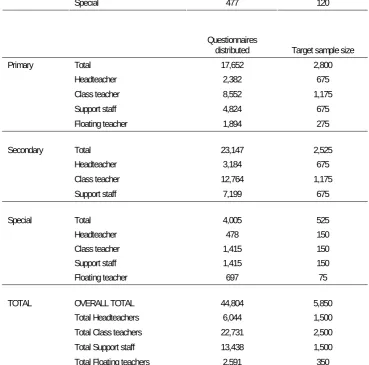
Table 3.1: Questionnaires sent out and target sample sizes ... 40
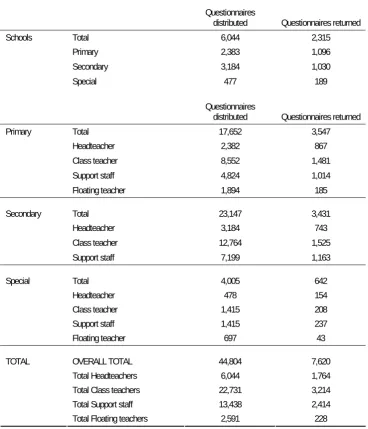
Table 3.2: Total number of returned questionnaires ... 43
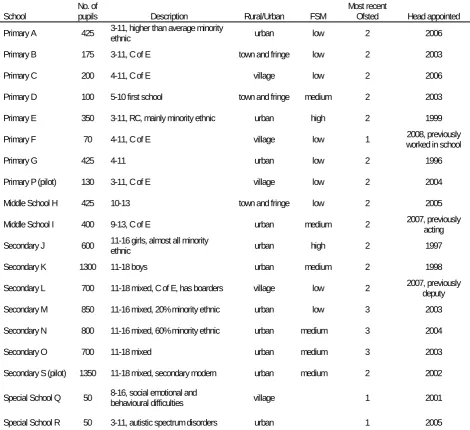
Table 3.3: The case study schools... 47
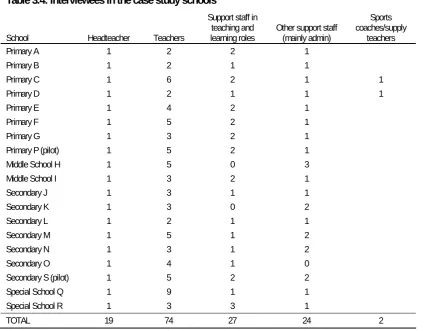
Table 3.4: Interviewees in the case study schools... 48
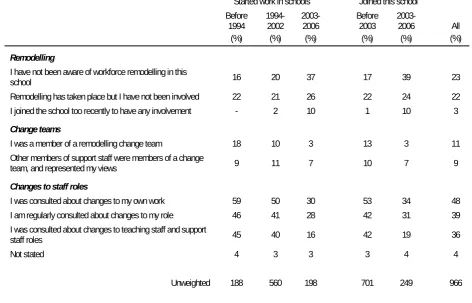
Table 4.1: Primary support staff: Involvement in the process of workforce remodelling in school (by time since started work in schools/in the school) ... 60
Table 4.2: Secondary support staff: Involvement in the process of workforce remodelling in school (by time since started work in schools/in the school) ... 68
Table 4.3: Special school support staff: Involvement in the process of workforce remodelling in school (by time since joined the school)... 74
Table 5.1: Primary headteachers: Total number of support staff employed in schools to work with pupils in teaching and learning situations... 79
Table 5.2: Primary support staff: Main role ... 80
Table 5.3 Primary support staff: HLTA status ... 80
Table 5.4: Primary support staff in teaching and learning roles interviewed in the case study schools ... 81
Table 5.5: Primary support staff in teaching and learning roles interviewed in the case study schools: Level of qualification ... 84
Table 5.6: Primary headteachers: Training and skills of support staff... 86
Table 5.7: Primary headteachers: Proportions of support staff leading learning and providing cover... 90
Table 5.8: Primary support staff: Percentages of all those who take responsibility for classes who have done so during a) unplanned absences and b) planned absences or regular timetabled periods away from the class... 91
Table 5.9: Primary support staff: Who devises the plans used by support staff... 93
Table 5.10: Primary support staff: Proportion of the weekly timetable allotted to planning or preparation... 94
Table 5.11: Primary support staff: Pay levels... 96
Table 5.12: Primary support staff: Pay levels by HLTA role and status ... 96
Table 5.13: Primary support staff: Agreement with statements about taking whole classes... 103
Table 5.14: Primary class teachers and floating teachers: Statements on role and status of support staff ... 106
Table 5.15: Secondary headteachers: Total number of support staff employed in schools to work with pupils in teaching and learning situations... 108
Table 5.16: Secondary support staff: Main role... 109
Table 5.17: Secondary support staff: HLTA status... 109
Table 5.18: Secondary support staff in teaching and learning roles interviewed in the case study schools ... 110
Table 5.19: Secondary support staff in teaching and learning roles interviewed in the case study schools: Level of qualification ... 112
Table 5.20: Secondary headteachers: Training and skills of support staff... 114
Table 5.21: Secondary headteachers: Proportions of support staff leading learning and providing cover... 116
Contents
Table 5.23: Secondary support staff: Pupil activities when support staff take whole classes on a timetabled basis
... 118
Table 5.24: Secondary support staff: Minimum and maximum number of pupils when support staff take whole classes on a timetabled basis ... 119
Table 5.25: Secondary support staff: Pay levels... 120
Table 5.26: Secondary support staff: Agreement with statements about taking whole classes ... 124
Table 5.27: Secondary teachers: Statements on role and status of support staff... 125
Table 5.28: Special school headteachers: Total number of support staff employed in schools to work with pupils in teaching and learning situations... 126
Table 5.29: Special school support staff: main role... 127
Table 5.30: Special school support staff: HLTA status... 128
Table 5.31: Special school support staff in teaching and learning roles interviewed in the case study schools . 128 Table 5.32: Special school support staff in teaching and learning roles interviewed in the case study schools: level of qualification... 130
Table 5.33: Special school headteachers: Training and skills of support staff... 131
Table 5.34: Special school headteachers: Proportions of support staff leading learning and providing cover.... 133
Table 5.35: Special school support staff: Percentages of all those who take responsibility for classes who have done unplanned absences and in planned absences or regular timetabled periods away from the class ... 134
Table 5.36: Special school support staff: Who devises the plans used by support staff ... 135
Table 5.37: Special school support staff: Pay levels... 136
Table 5.38: Special school class teachers: Statements on role and status of support staff... 139
Table 6.1: Primary Headteachers: Extent to which more complex administrative or pastoral roles have been transferred from teachers to support staff over the last few years ... 143
Table 6.2: Support staff in senior administrative and managerial roles interviewed in the case study primary schools... 144
Table 6.3: Primary headteachers: Strategies used in transferring more complex administrative or pastoral roles from teachers to support staff ... 145
Table 6.4: Secondary headteachers: Extent to which more complex administrative or pastoral roles have been transferred from teachers to support staff over the last few years ... 150
Table 6.5: Support staff in senior administrative and managerial roles interviewed in the case study secondary schools... 151
Table 6.6: Secondary headteachers: Strategies used in transferring more complex administrative or pastoral roles from teachers to support staff... 152
Table 6.7: Special school headteachers: Extent to which more complex administrative or pastoral roles have been transferred from teachers to support staff over the last few years ... 159
Table 6.8: Special school headteachers: Strategies used in transferring more complex administrative or pastoral roles from teachers to support staff... 160
Table 7.1: Primary class teachers and floating teachers: Agreement with statements about time spent on administrative tasks... 164
Table 7.2: Secondary teachers: Statements about time spent on administrative tasks ... 171
Table 7.3: Special school class teachers: Statements about time spent on administrative tasks ... 180
Table 8.1: Primary class teachers and floating teachers: Allocation and use of PPA time ... 186
Table 8.2: Primary class teachers and floating teachers: How PPA is arranged ... 189
Table 8.4: Primary headteachers: Allocation and use of PPA time (by teaching commitment)... 190
Table 8.5: Primary class teachers and floating teachers: Whether PPA time is organised to allow planning with other staff ... 192
Table 8.6: Primary class teachers and floating teachers: Where teachers work during PPA time... 194
Table 8.7: Primary class teachers and floating teachers: Tasks undertaken during PPA time ... 197
Table 8.8: Primary headteachers: How classes are taught while class teachers have PPA time ... 206
Table 8.9: Primary class teachers: How classes are normally taught while class teachers have PPA time ... 209
Table 8.10: Primary headteachers: How support staff are assessed... 210
Table 8.11: Primary headteachers and class teachers: Reasons for abandoning previous arrangements... 211
Table 8.12: Primary headteachers: Importance of factors in decisions about arrangements for teaching classes during PPA time ... 212
Table 8.13: Primary class teachers: Level of consultation and support over PPA arrangements ... 213
Table 8.14: Case study primary schools: Arrangements for PPA reported during the case studies (X) and as indicated by headteachers on the questionnaire (Y) ... 215
Table 8.15: Secondary teachers: Allocation and use of PPA time ... 236
Table 8.16: Secondary teachers: Whether PPA time is organised to allow planning with other staff... 238
Table 8.17: Secondary teachers: Where teachers work during PPA time... 239
Table 8.18: Secondary teachers: Tasks undertaken during PPA time... 241
Table 8.19: Secondary headteachers: Strategies used to enable teachers to have timetabled PPA time... 249
Table 8.20: Secondary teachers: Level of consultation and support over PPA arrangements ... 249
Table 8.21: Special school class teachers: Allocation and use of PPA time... 254
Table 8.22: Special school class teachers: Whether PPA time is organised to allow planning with other staff .. 256
Table 8.23: Special school class teachers: Where teachers work during PPA time ... 256
Table 8.24: Special school class teachers: Tasks undertaken during PPA time... 257
Table 8.25: Special school headteachers: How classes are taught while class teachers have PPA time ... 261
Table 8.26: Special school class teachers: How classes are normally taught while class teachers have PPA time ... 262
Table 8.27: Special school headteachers: How support staff are assessed ... 263
Table 8.28: Special school headteachers: Importance of factors in decisions about arrangements for teaching classes during PPA time ... 264
Table 8.29: Special school class teachers: Level of consultation and support over PPA arrangements ... 266
Table 9.1: Time spent on cover for absent colleagues: 2004-2009 ... 273
Table 9.2: Primary headteachers and primary class teachers: Immediate cover arrangements for unexpected absence... 277
Table 9.3: Primary floating teachers: Immediate cover arrangements for unexpected absence... 278
Table 9.4: Primary headteachers, primary class teachers and primary floating teachers: Cover groups used in immediate arrangements for unexpected absence ... 278
Table 9.5 Primary headteachers and primary class teachers: Regular cover arrangements for different types of absence... 280
Table 9.6: Primary headteachers, class teachers and floating teachers: Cover groups used for different types of absence... 281
Table 9.7: Primary floating teachers: Frequency of providing cover in different circumstances... 285
Contents
Table 9.9: Primary class teachers: Maximum consecutive period a member of support staff has been in charge of
a class during teacher absence (primary headteachers)/in charge of my class... 289
Table 9.10: Primary support staff: Types of classes provided cover for during unplanned teacher absence... 290
Table 9.11: Primary headteachers: Importance of factors in decisions about arrangements for cover... 291
Table 9.12:Primary support staff: Plans followed during unplanned teacher absence... 295
Table 9.13: Primary headteachers: Frequency of cover provided by different staff groups currently compared with before the introduction of workforce remodelling ... 300
Table 9.14: Primary floating teachers:Impacts of providing cover for absence... 304
Table 9.15: Secondary headteachers and secondary teachers: Immediate cover arrangements for unexpected absence... 310
Table 9.16:Secondary headteachers and teachers: Cover groups used in immediate arrangements for unexpected absence ... 311
Table 9.17:Secondary headteachers and secondary teachers:Regular cover arrangements for different types of absence... 313
Table 9.18: Secondary headteachers and teachers: Cover groups used for different types of absence ... 315
Table 9.19: Secondary headteachers and secondary teachers: Hours cover provided in the last term... 319
Table 9.20: Secondary headteachers: Strategies to reduce the amount of cover provided by headteachers and teachers ... 320
Table 9.21: Secondary headteachers: Circumstances in which classes are normally taught by a subject specialist ... 323
Table 9.22: Secondary headteachers: Training, skills and role of cover supervisors... 326
Table 9.23: Secondary support staff: Frequency of providing cover during unplanned teacher absence... 327
Table 9.24: Secondary support staff: Activities when not providing cover ... 328
Table 9.25: Secondary headteachers: Importance of factors in decisions about arrangements for cover... 331
Table 9.26:Secondary headteachers and secondary teachers: Arrangements for setting work during unplanned absence... 332
Table 9.27:Secondary support staff: Plans followed during unexpected teach absence ... 333
Table 9.28: Secondary headteachers: Frequency of cover provided by different staff groups, compared to before the introduction of workforce remodelling... 341
Table 9.29:Secondary teachers: How often teachers lose non-contact periods as a consequence of covering other teachers’ absence... 342
Table 9.30: Special school headteachers and special school class teachers: Immediate cover arrangements for unexpected absence ... 351
Table 9.31: Special school floating teachers: Immediate cover arrangements for unexpected absence... 352
Table 9.32: Special school headteachers, special class teachers: Cover groups used in immediate arrangements for unexpected absence... 352
Table 9.33: Special school headteachers and special school class teachers: Regular cover arrangements for different types of absence ... 353
Table 9.34: Special school headteachers and class teachers: Cover groups used for different types of absence ... 354
Table 9.35: Special school floating teachers: Frequency of providing cover in different circumstances... 357
Table 9.36: Special school support staff: Frequency of providing cover during unplanned teacher absence... 359
Table 9.37: Special school headteachers and special school class teachers: Maximum consecutive period a member of support staff has been in charge of a class during teacher absence ... 360
Table 9.39: Special school headteachers: Importance of factors in decisions about arrangements for cover .... 362
Table 9.40:Special support staff:Plans followed during unplanned teacher absence... 363
Table 9.41: Special headteachers: Frequency of cover provided by different staff groups currently compared with before the introduction of workforce remodelling ... 365
Table 9.42: Special school floating teachers: Impacts of providing cover for absence... 367
Table 10.1: Primary headteachers: Headteachers who said that teachers were timetabled to have regular leadership and management time... 374
Table 10.2: Primary class teachers: Whether have regular or irregular LMT by level of responsibility ... 375
Table 10.3: Primary headteachers: Responsibilities of teachers who do and do not have LMT ... 376
Table 10.4: Primary class teachers: Whether have regular or irregular LMT (by type of responsibility) ... 377
Table 10.5: Percentage of primary teachers with LMT who have specified responsibilities... 377
Table 10.6: Primary class and floating teachers: Hours of LMT allocated per week/ taken last term ... 379
Table 10.7: Primary headteachers: Barriers to offering more LMT (by school size) ... 380
Table 10.8: Primary headteachers: Agreement with impact of LMT on leadership and management work (by teachers with LMT, barriers to LMT, and whether monitors LMT)... 383
Table 10.9: Secondary headteachers: Headteachers who said that teachers were timetabled to have regular leadership and management time... 389
Table 10.10: Secondary teachers: Whether teachers have regular or irregular LMT by level of responsibility... 389
Table 10.11: Secondary headteachers: Responsibilities of teachers who do and do not have LMT ... 391
Table 10.12: Percentage of secondary teachers with different responsibilities who have LMT ... 391
Table 10.13: Percentage of secondary teachers with LMT who have specified responsibilities ... 392
Table 10.14: Secondary teachers: Hours of LMT allocated per week/ taken last term ... 392
Table 10.15: Special school headteachers: Headteachers who said teachers were timetabled to have regular leadership and management time... 399
Table 10.16: Special school class teachers: Whether have regular or irregular LMT (by level of responsibility) 400 Table 10.17: Special school headteachers: Responsibilities of teachers who do and do not have LMT ... 401
Table 10.18: Special school class teachers: Hours of LMT allocated per week/ taken last term ... 402
Table 11.1: Primary headteachers: Hours of DHT and LMT allocated per week ... 410
Table 11.2: Secondary headteachers: Hours of DHT and LMT allocated per week ... 414
Table 11.3: Special school headteachers: Hours of DHT and LMT allocated per week ... 416
Table 12.1: Primary headteachers: Who is present in room during National Key Stage 2 tests or other external examinations?... 420
Table 12.2: Primary class teachers: Who is present throughout when pupils taught take external tests or examinations?... 421
Table 12.3: Primary headteachers: Reasons why teachers or members of leadership team are present throughout to invigilate or support invigilators ... 423
Table 12.4: Primary class teachers: Who makes decisions about invigilation and factors taken into account.... 425
Table 12.5: Primary headteachers: How often teachers use gained time freed up (as a result of not invigilating) for other activities ... 426
Table 12.6: Secondary headteachers: Who is present in room throughout external examinations and national key stage tests?... 428
Contents
Table 12.8: Middle deemed secondary headteachers: Who is present in room during external examinations and national key stage tests?... 429 Table 12.9 Secondary teachers: In what circumstances present in exam room during external examinations or
national key stage tests?... 430 Table 12.10: Secondary headteachers: Reasons why teachers or members of leadership team are present
throughout to invigilate or support invigilators ... 432 Table 12.11: Secondary headteachers: What barriers limit the use of support or temporary staff recruited as
invigilators? ... 434 Table 12.12: Secondary headteachers: How often teachers use gained time freed up (as a result of not
invigilating) for other activities ... 438 Table 12.13: Middle deemed secondary headteachers: How often teachers use gained time freed up (as a result of not invigilating) for other activities ... 439 Table 12.14: Secondary teachers: How often use gained time freed up (as a result of not invigilating) for other
activities ... 440 Table 12.15: Special school headteachers: Who is present in room during National Key Stage 2 or 3 tests or
other external examinations? ... 442 Table 12.16: Special school class teachers: Who is present throughout when pupils taught take external tests or
examinations?... 443 Table 12.17: Special school headteachers: Reasons why teachers or members of leadership team are present
throughout to invigilate or support invigilators ... 444 Table 12.18: Special school class teachers: Who makes decisions about invigilation, and factors taken into
account... 445 Table 12.19: Special school headteachers: How often teachers use gained time freed up (as a result of not
invigilating) for other activities ... 446 Table 13.1: Primary headteachers: Whether monitors impacts of current arrangements for…... 452 Table 13.2: Primary headteachers: Types of information used in monitoring ... 453 Table 13.3: Primary headteachers: Perceived impact of remodelling arrangements in the school on standards454 Table 13.4: Primary headteachers: Overall ratings for perceived impact of school arrangements on standards 454 Table 13.5: Primary headteachers: Relationship between questionnaire responses and a) headteachers’
perceptions of the impact of their schools’ remodelling arrangements on standards, and b) actual change in attainment 2003-7... 456 Table 13.6: Primary class and floating teachers: Satisfaction with the impact remodelling has had on standards
... 457 Table 13.7: Primary class teachers: Satisfaction with remodelling in relation to standards (by satisfaction with
PPA and cover arrangements in relation to standards)... 458 Table 13.8: Primary headteachers: Satisfaction with impact of school remodelling strategies on pupil behaviour
... 459 Table 13.9: Primary headteachers: Overall satisfaction with impact of school remodelling strategies on pupil
behaviour ... 459 Table 13.10: Primary headteachers: Extent to which remodelling has increased or decreased workload for
different members of staff ... 460 Table 13.11: Primary support Staff: Extent to which workload has changed in the last five years... 463 Table 13.12: Primary headteachers: Extent to which remodelling has increased or decreased stress for different
members of staff ... 464 Table 13.13: Primary headteachers: Extent to which remodelling has increased or decreased sickness absence
Table 13.15: Secondary headteachers: Whether monitors impacts of current arrangements for…... 470
Table 13.16: Secondary headteachers: Types of information used in monitoring... 471
Table 13.17: Secondary headteachers: Perceived impact of remodelling arrangements in the school on standards ... 472
Table 13.18: Secondary headteachers: Overall ratings for perceived impact of school arrangements on standards ... 472
Table 13.19: Secondary headteachers: Relationship between questionnaire responses and a) headteachers’ perceptions of the impact of their schools’ remodelling arrangements on standards, and b) actual change in attainment 2003-7... 474
Table 13.20: Secondary teachers: Satisfaction with the impact remodelling has had on standards... 475
Table 13.21: Secondary teachers: Views and satisfaction with PPA time and cover for absence in relation to overall satisfaction with remodelling in terms of standards ... 476
Table 13.22: Secondary headteachers: Satisfaction with impact of school remodelling strategies on pupil behaviour ... 476
Table 13.23: Secondary headteachers: Extent to which remodelling has increased or decreased workload for different members of staff ... 477
Table 13.24: Secondary support staff: Extent to which workload has changed in the last five years... 479
Table 13.25: Secondary headteachers: Extent to which remodelling has increased or decreased stress for different members of staff ... 480
Table 13.26: Secondary headteachers: Extent to which remodelling has increased or decreased sickness absence for different members of staff... 482
Table 13.27: Secondary support staff: Extent to which role or job description has changed in the last five years ... 483
Table 13.28: Special school headteachers: Whether monitors impacts of current arrangements for…... 485
Table 13.29: Special school headteachers: Types of information used in monitoring... 485
Table 13.30: Special school headteachers: Perceived impact of remodelling arrangements in the school on standards ... 486
Table 13.31: Special school headteachers: Overall ratings for perceived impact of school arrangements on standards ... 486
Table 13.32: Special school class and floating teachers: Satisfaction with the impact remodelling has had on standards ... 487
Table 13.33: Special school headteachers: Satisfaction with impact of school remodelling strategies on pupil behaviour ... 488
Table 13.34: Special school headteachers: Extent to which remodelling has increased or decreased workload for different members of staff ... 489
Table 13.35: Special school support staff: Extent to which workload has changed in the last five years... 489
Table 13.36: Special school headteachers: Extent to which remodelling has increased or decreased stress for different members of staff ... 490
Table 13.37: Special school headteachers: Extent to which remodelling has increased or decreased sickness absence for different members of staff... 491
Table 13.38: Special school support staff: Extent to which role or job description has changed in the last five years ... 492
Table B8.1 Primary class teachers: Tasks undertaken during PPA time ... 517
Table B8.2 Secondary teachers: Tasks undertaken during PPA time ... 518
Contents
List of figures
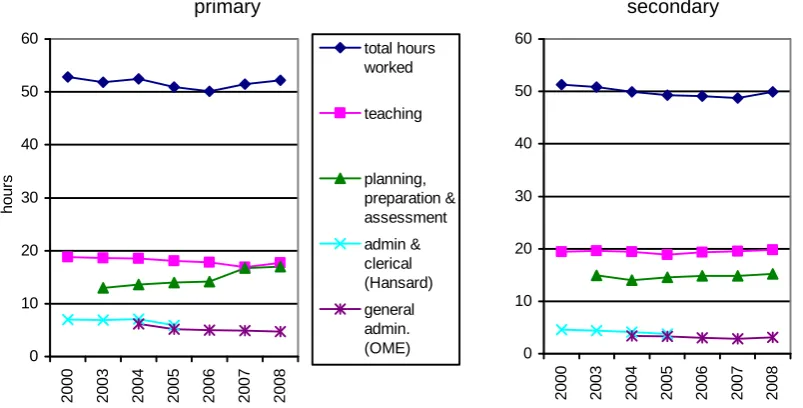
Figure 2.1: Average total hours worked by primary and secondary classroom teachers, 2000-2008, and hours
spent on specific categories of work ... 30
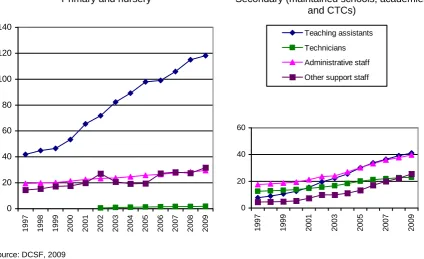
Figure 2.2: Full time equivalent (FTE) support staff (thousands), 1997 - 2009 ... 32
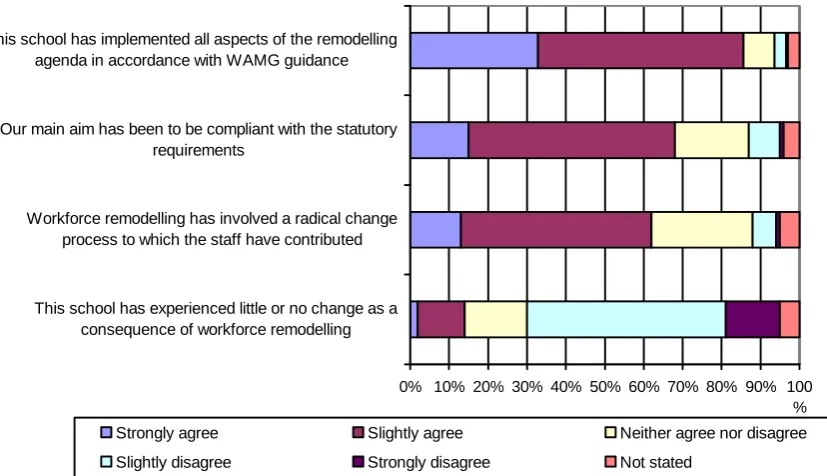
Figure 4.1: Primary headteachers: Agreement with statements on implementation and consequences of remodelling agenda ... 57
Figure 4.2: Secondary headteachers: Agreement with statements on implementation and consequences of remodelling agenda ... 64
Figure 4.3: Special school headteachers: Agreement with statements on implementation and consequences of remodelling agenda ... 71
Figure 5.1: Primary headteachers: Attitudes towards the skills of support staff... 88
Figure 5.2: Primary support staff: Agreement with statements about taking whole classes... 101
Figure 5.3: Headteachers: Attitudes towards the skills of support staff... 115
Figure 5.4: Secondary support staff: Agreement with statements about taking whole classes... 122
Figure 5.5: Special school headteachers: Attitudes towards the skills of support staff ... 132
Figure 5.6: Special school support staff: Agreement with statements about taking whole classes... 137
Figure 8.1: Primary headteachers: Impact of teachers having PPA time... 199
Figure 8.2: Primary class teachers: Impact of teachers having PPA time... 200
Figure 8.3: Primary headteachers: Satisfaction with impact of PPA arrangements ... 230
Figure 8.4: Primary class teachers: Satisfaction with impact of PPA arrangements ... 231
Figure 8.5: Primary class teachers: views about the outcomes of PPA arrangements ... 232
Figure 8.6: Secondary headteachers: Impact of teachers having PPA time ... 244
Figure 8.7: Secondary teachers: Impact of teachers having PPA time ... 244
Figure 8.8: Secondary headteachers: Satisfaction with impact of PPA arrangements ... 251
Figure 8.9: Secondary teachers: Satisfaction with impact of PPA arrangements ... 252
Figure 8.10: Special school headteachers: Impact of teachers having PPA time ... 258
Figure 8.11: Special school class teachers: Impact of teachers having PPA time... 259
Figure 8.12: Headteachers: Satisfaction with impact of PPA arrangements... 267
Figure 8.13: Class teachers: Satisfaction with impact of PPA arrangements... 268
Figure 8.14: Class teachers: views about the outcomes of PPA arrangements... 269
Figure 9.1: Primary class teachers: How often arrangements happen if a class teacher was absent for up to three days... 299
Figure 9.2:Primary class teachers and primary floating teachers: Outcomes in class when the class teacher is absent ... 301
Figure 9.3: Primary class teachers: Impact of short-term absence on pupils: teaching and learning continues as usual in the class, by proportion of pupils eligible for free school meals... 302
Figure 9.4: Primary class teachers: Impacts of class teacher absence and cover arrangements being put in place ... 303
Figure 9.5: Primary headteachers: Satisfaction with impact of current arrangements for cover for absence... 304
Figure 9.6: Primary class teachers: Satisfaction with impact of current arrangements for cover for absence .... 306
Figure 9.8: Secondary teachers: How often arrangements happen if a class teacher was absent for up to three days... 341
Figure 9.9: Secondary headteachers: Agreement with statements comparing current arrangements with those in place before workforce remodelling ... 343 Figure 9.10: Secondary teachers: Continuity and pupil behaviour during longer-term absence ... 344 Figure 9.11: Secondary headteachers: Satisfaction with impact of current arrangements for cover for absence
... 344 Figure 9.12: Secondary teachers: Satisfaction with impact of current arrangements for cover for absence... 345 Figure 9.13: Secondary teachers: Satisfaction with impact of current arrangements for cover for absence on
standards, by proportion of pupils eligible for free school meals... 345 Figure 9.14: Special school class teachers and floating teachers: How often arrangements happen if a class
teacher was absent for up to three days... 365 Figure 9.15: Special class teachers and special floating teachers: Outcomes in class when the class teacher is
absent ... 366 Figure 9.16: Special school class teachers: Impacts of class teacher absence and cover arrangements being put in place ... 367 Figure 9.17: Special school headteachers: Satisfaction with impact of current arrangements for cover for
absence ... 368 Figure 9.18: Special school class teachers: Satisfaction with impact of current arrangements for cover for
absence ... 368 Figure 10.1: Primary headteachers: Agreement with statements relating to the impact of the provision of regular
leadership and management time... 381 Figure 10.2: Primary class teachers: Agreement with statements relating to the impact of the provision of regular leadership and management time... 383 Figure 10.3: Primary floating teachers: Agreement with statements relating to the impact of the provision of
regular leadership and management time... 384 Figure 10.4: Secondary headteachers: Agreement with statements relating to the impact of the provision of
regular leadership and management time... 395 Figure 10.5: Secondary teachers: Agreement with statements relating to the impact of the provision of regular
leadership and management time... 396 Figure 10.6: Special school headteachers: Agreement with statements relating to the impact of the provision of
regular leadership and management time... 403 Figure 10.7: Special school class teachers: Agreement with statements relating to the impact of the provision of
Acknowledgments
Acknowledgments
The research team would like to acknowledge the work of Sarah Smart, formerly a member of staff at IPSE, who made a valuable contribution to this research in its early stages. We are also very grateful to Teresa Carbajo-Garcia, the project administrator in IPSE.
We would like to thank the steering group for their helpful comments and support, and particularly want to thank James Rushbrooke and Sarah Baker, Project Managers at the DCSF.
Executive summary
Introduction
The National Agreement, Raising Standards and Tackling Workload (2003)1, signed by the then DfES2 and its social partners3 in January 2003, had two aims: to raise
standards and reduce teacher workload. It outlined a series of changes to teachers’ contracts, which have subsequently been incorporated into the School Teachers Pay and Conditions Document (STPCD):
• September 2003: routine delegation of administrative and clerical tasks to support staff; new work-life balance clauses; and leadership and management time (LMT);
• September 2004: new limits on covering for absent teachers (38 hours a year);
• September 2005: guaranteed time for planning, preparation and assessment (PPA time); dedicated headship time (DHT); and new invigilation arrangements.
The National Agreement also included a review of support staff roles; and a concerted attack on unnecessary bureaucracy and paperwork.
Research aims
The research was designed to explore in detail the strategies schools used to
implement the key contractual changes: the introduction of guaranteed time for PPA; limits on the amount of cover that teachers may carry out for absent colleagues; the introduction of LMT; and the removal of the requirement to routinely invigilate external examinations. It also aimed to explore, to a lesser extent, other contractual changes which related to work/life balance; the transfer of administrative tasks to support staff; and the introduction of DHT. In each case, the aim was to explore the arrangements that schools had in place, and perceptions of their impact on standards and on teacher workload. It also focused on the impacts on those support staff most affected by the changes: teaching and learning support staff who regularly took responsibility for whole classes, and administrative staff who had taken on roles formerly carried out by
teachers.
1
The National Agreement was signed by the Association of Teachers and Lecturers (ATL), the
Department for Education and Skills (DfES), GMB, National Association of Headteachers (NAHT), National Association of Schoolmasters Union of Women Teachers (NASUWT), National Employers’ Organisation for School Teachers (NEOST), Professional Association of Teacher (PAT) (now known as Voice); Secondary Heads’ Association (SHA) (now known as the Association of School and College Leaders): Transport and General Workers’ Union (TGWU) (now known as Unite): UNISON;, and the Welsh Assembly Government (WAG). It is referred to throughout this report as National Agreement (2003)
2
The DfES (Department for Education and Skills) became the DCSF (Department for Children, Schools and Families) in June 2007.
3
Executive summary
Research design
The research involved:
i. National surveys of headteachers (achieved sample 1,764), teachers (achieved sample 3,214), and support staff (2,414) in primary, secondary and special schools. Questionnaires were returned by staff in 38 per cent of the schools approached, and by 29 per cent of the headteachers. The support staff questionnaire was distributed to those who ever took responsibility for whole classes, or, if there were no staff in this category, to other teaching and learning support staff.
ii. Qualitative case studies undertaken in nineteen schools selected from survey responses to illustrate a variety of practice; in each school, the headteacher, teachers, support staff who took responsibility for whole classes and administrative support staff were interviewed.
Overview of workforce remodelling
A number of issues run through the data, and should be taken into account in reading the report:
• Conflation of remodelling and other parallel changes taking place (such as restructuring of responsibility posts) meant that responses to general questions about remodelling and its impact may have been answered with other changes in mind.
• Schools generally used multiple strategies in relation to each aspect of
remodelling; thus it was difficult to assess which strategies were considered to have the greatest impacts on standards and workload.
• The categories used in guidance and policy documents, and therefore in the questionnaires used in this research, did not always appear clear-cut on the ground.
• Schools had developed a wide variety of job titles, particularly for support staff roles. These sometimes gave a false impression of the person’s actual role.
• Heads who had been appointed since remodelling were less likely to say it had been fully implemented or had had a positive impact.
• Heads were consistently more positive about what was happening in their schools than were teachers.
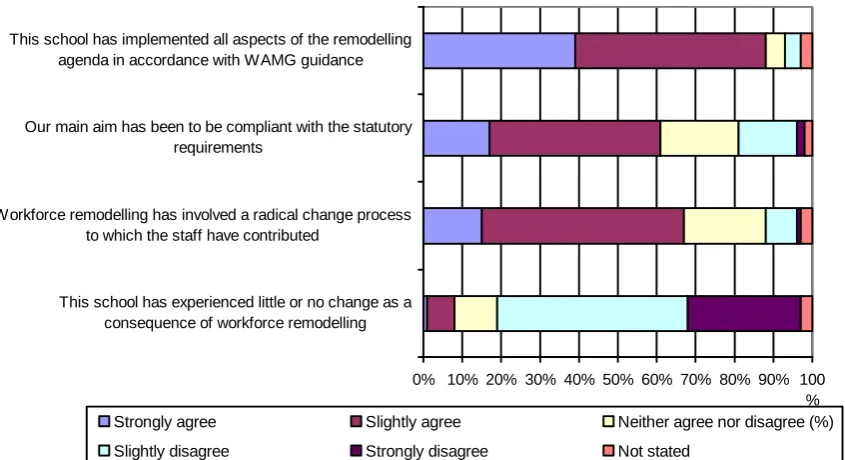
Most headteachers across all sectors agreed that their schools had implemented all aspects of the remodelling agenda in accordance with WAMG guidance, and the majority indicated that, when implementing the agenda, their main aim had been to be compliant with the statutory requirements.
Class (and floating) teachers across all the sectors were less likely than headteachers to report that remodelling had involved a whole school effort. The number of teachers who had joined their schools before 2006 and who agreed that they had been involved or consulted in the remodelling process ranged from a fifth (secondary) to a third (primary).
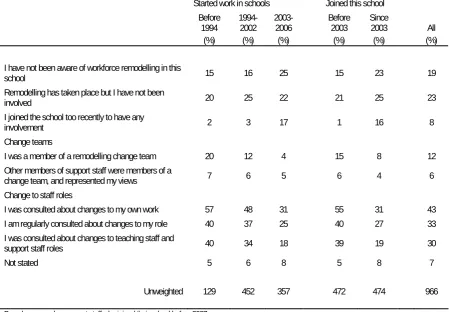
Support staff were also asked about the involvement they had in the process of
remodelling in their schools. Amongst primary support staff who had been in post since before 2006, around half said that were consulted about changes to their own work and two-fifths that they continue to be regularly consulted about changes to their role. Comparable figures observed amongst secondary support staff were slightly lower. Across all sectors, around one fifth reported that they had not been aware of remodelling in their school.
Support staff in teaching and learning roles
According to headteachers, the numbers of support staff employed in teaching and learning posts varied from one for every five pupils in special schools, to one for every 27 pupils in primary schools, and one for every 70 pupils in secondary schools. This research focused on those who sometimes took responsibility for whole classes; a large majority of headteachers indicated that this was less than one third of all the support staff in teaching and learning posts.
HLTA status, qualifications and training
Amongst primary support staff who ever took responsibility for whole classes, 33 per cent had higher level teaching assistant (HLTA) status, including 24 per cent who had posts as HLTAs. These numbers were slightly lower in special schools (30 per cent, 19 per cent) and secondary schools (24 per cent, 15 per cent).
Half the support staff who ever took responsibility for whole classes in secondary schools said that they were qualified to Level 44 or above, twice as many as in primary and special schools. A minority (between two and five per cent in the different sectors) said they had Qualified Teacher Status (QTS), and around one in three said they would be interested in gaining QTS (ranging from 22 per cent in primary schools to 39 per cent in secondary schools).
The majority of headteachers in all sectors reported that most or all of their support staff had taken advantage of the training available to them, while around half in each sector agreed that remodelling had contributed to improved standards because support staff skills had improved (no more than 16 per cent disagreed in any of the sectors). The case study data also indicated that heads provided significant support for training. In primary schools, this was most apparent in the way that they enabled support staff to access preparation for HLTA assessment. Many support staff and headteachers
demonstrated confusion about whether the preparation for HLTA assessment constitutes training, and whether the status is itself a qualification (which it is not).
4
Executive summary
Pay for support staff who ever took responsibility for whole classes
When asked about their pay, around one in three support staff who ever took
responsibility for whole classes said they were paid at a higher level than colleagues who never took whole classes. Of those in primary schools, one third reported that they were paid at a higher rate only for the hours they took whole classes; the proportions in secondary and special schools were lower (about one in seven). The case study data highlighted significant dissatisfaction amongst support staff in relation to pay and contractual arrangements. A number of interviewees expressed disappointment at the continued use of split and term-time only contracts by schools, and argued that the nature of their work was not reflected in their pay. A few felt exploited and undervalued, generally because they had to undertake significant amounts of unpaid overtime to carry out their assigned roles, and felt that this contribution was not recognised or rewarded. Interviews with heads and senior staff responsible for support staff performance review suggested that recent developments in roles and training had encouraged many individuals, particularly in primary schools, to have expectations about progression and pay that would be impossible to fulfil.
Taking responsibility for whole classes
In primary and special schools, the majority of those who ever took responsibility for whole classes did so both during unplanned teacher absences, and during planned absences or periods when the teacher was not timetabled to teach (such as teachers’ PPA time). In secondary schools, half of those who took classes did so only during unplanned absences (as cover supervisors).
The majority in all sectors agreed that they enjoyed being responsible for whole classes, and that this was a good use of their skills and experience. However, half those in secondary schools, and a third in primary and special schools, agreed that they needed more training and development, particularly in behaviour management (again this was most frequent in secondary schools). This was corroborated in the school case studies.
In all sectors, around two in five class teachers agreed that support staff had more rewarding roles as a result of remodelling, and that support staff now had a higher status in the school, while around half as many disagreed.
Across all sectors, support staff with HLTA posts tended to have more responsibility (e.g. for taking whole classes on a regular basis) and were more likely than other respondents to say their pay was greater than that of colleagues who were not taking whole classes. Those with HLTA posts and those with HLTA status but no post were also more positive than other support staff about taking whole classes; more confident in their skills; and more likely to feel that they had received sufficient training. In secondary schools, cover supervisors (who did not generally have HLTA status) were less confident in their skills, but nonetheless were more likely than other respondents to say they enjoyed taking whole classes, and saw this as a good use of their skills and experience. They tended to be more highly qualified than other support staff surveyed, and were more likely to be interested in gaining QTS.
Between a third and half of those who took whole classes had specific allocations of time for planning (more in secondary than in primary schools). Support staff
In a minority of schools, support staff, including cover supervisors, were deployed to teach whole classes for prolonged periods of time (several weeks in primary schools, or over a whole term or more in secondary schools). In secondary schools, those who did this generally taught lower sets. In general this was said to be because of the difficulty of recruiting appropriate temporary teachers.
Senior administrative support staff roles
In the survey, two in three secondary headteachers said that complex administrative or pastoral roles had been transferred from teachers to support staff in recent years, ‘to a large extent’ or ‘entirely’, while only four per cent said this had not happened at all. Primary and special schools were less likely to have transferred these roles: in each case, only one in three said that this had happened ‘to a large extent’ or ‘entirely’. In each sector, larger schools were more likely to have transferred the roles. In a third of schools across all sectors, some teachers with relevant expertise continued to carry out complex administrative roles.
Where these roles had been transferred to support staff, most headteachers said that either teachers had trained existing support staff, or that new support staff had been recruited; often teachers had continued to supervise support staff in such roles. Recruitment of new support staff was more common in secondary schools than in primary or special schools, and more common in larger schools in each sector. In a quarter of the secondary schools surveyed, one or more teachers had moved into support staff roles.
In the primary case study schools, administrative staff had generally been in the same school for many years, and their role had expanded, or they had taken on new
responsibilities (for example as business manager or finance officer). While some secondary interviewees had also developed their careers by progressing within one school, the majority had been recruited from other sectors and brought different skills and experience into the school.
The transfer of administration from teachers and headteachers had often resulted in an increased workload for existing administrative staff in the primary case study schools, which generally had only a small number of administrative roles/staff. In the secondary schools visited, the numbers of administrative support staff had risen, and more specialised and diverse roles had been created.
There was a clear sense of professionalism and enhanced status emerging amongst some of interviewees. In particular, business managers were supported by the CSBM and the larger qualifications framework in which it is embedded. Similarly, the work of bursars and finance officers was embedded in wider networks of support, mainly at the LA level, which were not readily available to other administrative support staff.
In some primary case study schools, there was evidence of senior leadership resisting the idea of support staff being involved in the leadership team, but in most secondary schools, the senior administrator was part of the team.
Executive summary
Transfer of administrative tasks to support staff
In all sectors, only around 25 per cent of class teachers agreed that they now spent less time on routine administration, while 40 per cent disagreed. Secondary teachers on the leadership scale were more likely than other teachers to agree.
The case study schools had implemented a range of measures to facilitate the transfer of routine administrative tasks from teachers to support staff. However, interviewees pointed out a number of reasons why some of the arrangements were not altogether effective including, for example, the hours support staff worked, and in primary schools, the fact that many of them had more work than they could effectively complete.
Only a few of the interviewees talked in terms of administrative tasks that did or did not need a teachers’ professional skills; the majority focused on a small number of
administrative tasks (including display and photocopying), and did not appear to have clearly understood the criteria for determining which tasks it was appropriate for teachers to undertake.
There was also evidence that, regardless of the administrative support mechanisms introduced, there were some teachers in all the case study schools who chose to do certain tasks. They argued, for example, that their classroom displays were an integral part of teaching and learning, or a source of professional self-esteem. Several of the teachers interviewed argued that they could not use the school arrangements for photocopying because they reviewed their lesson plans and resources after the previous lesson, and this was too late to hand in their photocopying.
A common theme running through the primary and secondary teacher accounts was that sometimes teachers undertook certain administrative tasks because they
considered it quicker to do them themselves than to explain to support staff what they required to be done.
In the case study schools, both primary and secondary school headteachers worried that it was not easy to distinguish between tasks that teachers should do and those that should be passed to support staff, particularly as some administrative-related tasks required input from both.
Special school teachers argued that some of the tasks listed were irrelevant in a special school context; they also said that the high level of team work meant that tasks were often done by the person who had the necessary skills, regardless of their role.
Planning, Preparation and Assessment (PPA) time
The research found that the introduction of PPA time has involved a different type of change in primary and secondary schools. In secondary schools, the main change was that some non-contact time now had to be designated as PPA time. In primary schools, the change was greater because previously, teachers rarely had non-contact time.
Allocation
did, they did not use if for PPA). In primary schools, floating teachers were less likely than class teachers to have PPA time.
In the case study schools where PPA time was not fully in place, this was generally because it was not identified on the timetable, though teachers had more than ten per cent non-contact time. Four per cent of secondary teachers reported that teachers in the school were regularly called on to provide absence cover during their PPA time, and a quarter that this had happened occasionally; however fewer headteachers made such reports (one per cent and 12 per cent respectively).
Activities conducted during PPA time
In the survey, around half the primary class teachers said that their PPA time was arranged so that they could plan with other staff at least some of the time, but this was lower in special and secondary schools (around one in three in each case). Primary case study interviewees were very positive about the benefits of working collaboratively during PPA time.
Survey respondents used a range of locations for work during PPA time, most
commonly ‘another’ workspace other than the classroom or staffroom. Around half the primary and special school class teachers, and a third of secondary teachers, said there was no suitable space in the school in which they could work without interruption during their PPA time. Many case study interviewees emphasised both lack of
appropriate space and lack of appropriate IT facilities.
All survey respondents said they did PPA tasks during at least some of their PPA time; primary class teachers were the most likely to say that they regularly did PPA tasks (81 per cent primary, 67 per cent secondary and 74 per cent special school). Primary teachers in schools with higher eligibility for free school meals (FSM) were less likely to do PPA tasks during their PPA time.
A majority of case study interviewees echoed these findings. Planning was most often undertaken by those in primary schools. In contrast, secondary teachers reported that the majority of their PPA time was spent on non-PPA tasks such as dealing with pupil behaviour, pastoral issues, and departmental tasks; those who were entitled to LMT tended not to distinguish their PPA time from LMT. A small number of case study teachers, particularly in secondary schools, argued that the time was theirs to use as they liked.
Impact of teachers having PPA time
About three-quarters of headteachers agreed that teachers having PPA time had impacted positively on teacher morale, planning and the effectiveness of lessons. Fewer teachers agreed with these statements – about half of primary and special school teachers and 40 per cent of secondary teachers. Across the different sectors, less experienced teachers and those without whole school responsibilities tended to be more positive than other teachers.
Executive summary
teachers and headteachers in all sectors said that having PPA time had impacted positively on workload and work life balance, interviewees in all phases claimed that this impact was lessened by various government and school initiatives which added to workload.
Arrangements for teaching classes during teachers’ PPA time
Survey responses and case studies showed that primary and special schools used a wide range of arrangements for teaching classes while teachers have PPA time; there was variety both across schools, and within each school. Moreover, arrangements had changed over time; one in three primary (and one in four special school) headteachers reported that they had changed since PPA time was first introduced. This made it very difficult to assess the impact on standards of any particular strategy.
In primary schools, classes were most frequently reported to be taught by members of support staff (reported by 55 per cent of teachers) and floating teachers (38 per cent). Other common arrangements included specialist coaches or instructors, specialist teachers, the headteacher, and supply teachers (all used by at least one in five
schools). Heads of schools that were large, urban, in London or had high levels of FSM were more likely to use teachers than support staff. Special school arrangements were very similar to those of primary schools.
The factors that were most frequently identified as being important in determining how classes should be taught were: wanting pupils to be taught by people with whom they were familiar; support staff skills and experience; and financial cost. The case study interviews highlighted the extent to which decisions about how classes should be taught were related to the availability and skills of specific individuals.
Monitoring of PPA time
The majority of headteachers (in all sectors) indicated in the survey that they monitored the impact of their arrangements for PPA time, although only a minority (between 20 per cent and 24 per cent) did so formally.
Overall impact of PPA arrangements
Over two-thirds of primary and special school headteachers and teachers were satisfied with the impact of their PPA arrangements on teachers’ workloads and on standards, though a higher proportion of headteachers than of teachers reported satisfaction. In secondary schools, just over half the headteachers were satisfied, and less than half the teachers. Fewer respondents were satisfied with the impact on pupil behaviour, and less than half the primary and secondary heads were satisfied with the cost of their arrangements.
Cover for absence
Arrangements for cover
cover, and in several schools this had been provided by the headteacher. While subject specialist teachers were not necessarily used in secondary schools, three-quarters of heads reported that their use was prioritised in exam classes.
Large primary schools, those in London and those with high FSM levels were more likely to use floating teachers for cover; these were often on the leadership scale. Similarly London and urban secondary schools were more likely to use internal
teachers. All these groups made less use of support staff for cover. Case study schools in London related their decision not to use support staff for cover to the need to raise standards in challenging schools.
Over a quarter of primary headteachers and ten per cent of secondary and special school headteachers reported that in the last term they had spent more than 13 hours a term providing cover (suggesting they may cover more than 38 hours in a year). Four per cent of secondary teachers reported that they had provided cover for more than 13 hours a term; more than half had covered less than five hours. The most commonly mentioned strategies to reduce the amount of cover undertaken by teachers and headteachers were greater use of supply teachers (primary) and greater use of support staff (secondary and special schools).
In relation to supply teachers, more than a third of primary and special schools, but only a fifth of secondary, reported that all those used were familiar with the school. Three per cent of primary and secondary schools and 18 per cent of special schools never used supply teachers. In the case study schools, familiar supply teachers were highly regarded, but many heads expressed concerns about the use of unfamiliar supply teachers.
Support staff were used for cover in over 80 per cent of schools in each sector; they were used regularly in 55 per cent of primary schools and two-thirds of secondary and special schools. In primary schools they tended to be used mainly for absences of a day or less. For absences over three days, they were regularly used in ten per cent of primary schools and 40 per cent of secondary and special schools. A few support staff in the case study schools reported covering for more than two weeks (primary) or for as much as term of regular lessons with a particular class (secondary).
In primary and special schools, support staff generally provided cover in the class in which they normally provided classroom support. In most secondary schools, cover supervisors provided cover across the school, and did so on a regular basis (two in five indicated that this was the majority of their working hours). A majority of secondary headteachers reported that cover supervisors had been trained on the job.
Rationale for cover arrangements
A majority of heads in all sectors identified familiarity as a key factor in cover decisions; three-quarters identified wanting pupils to be taught by someone familiar with the school procedures as very important. They also wanted pupils to be taught by
Executive summary
Class activities during cover lessons
In primary and special schools, classes were generally taught, using the teachers’ lesson or weekly plans as a basis. In more than nine out of ten secondary schools, the absent teacher set work for short term absences, emailing it in if the absence was unplanned; for longer term absences, the most common arrangement was for the head of department to set work. While in theory the cover supervisors’ role was to supervise, most reported that they sometimes did more than this; 30 per cent said that they regularly taught the class, delivering a complete lesson, and a further 27 per cent that they did so sometimes. When subject specialist teachers were used (whether internal or supply), they were expected to teach, but non-specialist teachers would generally supervise.
Monitoring of cover arrangements
Around three quarters of primary and special school headteachers, and a higher proportion of secondary headteachers said that they monitored the impact of their current arrangements for absence cover. One in three secondary headteachers said that they regularly monitored the extent to which different classes or pupils experienced cover lessons, with a further 52 per cent saying they sometimes did this.
Impact of cover arrangements
In comparison with the time before workforce remodelling was introduced,
headteachers reported an overall increase in the use of support staff and of teachers employed wholly or mainly for the purpose of providing cover. There was also an increase in the use of supply teachers, particularly in primary and special schools. Other teachers in the school (i.e. those not employed to provide cover) were used less.
A minority of teachers said they had often been asked to cover during their PPA time (primary, eight per cent; secondary, five per cent; and special, 12 per cent); a high number said this had happened occasionally. About one in five primary and special school teachers reported that their classes had missed out on regular classroom or group support because their regular support staff were deployed to cover elsewhere.
In relation to the impact on pupils, primary teachers were the most satisfied, with four out of five saying that teaching and learning often continued as usual. Seventy per cent of special school teachers gave this response, but only 42 per cent of secondary teachers. In all three sectors, less than half the headteachers said that pupil behaviour remained the same as if the regular teacher were present (44 per cent primary, 48 per cent special and 20 per cent secondary). Less than half the headteachers completing the survey agreed that in comparison with before remodelling, there was now greater continuity in teaching and learning, or that the negative impact of teacher absence on pupil behaviour or standards had improved.
Leadership and Management Time
Allocation of Leadership and Management Time (LMT)
The vast majority of headteachers across all school sectors said that some teachers in their school were timetabled to have regular LMT in addition to their PPA time. Six per cent of primary schools did not allocate any LMT; the majority of these were small schools. Headteachers of secondary schools who had indicated that they did not allocate LMT generally explained that the total teaching allocations reflected staff responsibilities, but that LMT was not timetabled to take place in specific periods.
Around two-fifths of teachers reported that they had some LMT across the three sectors. In primary and special schools, this was about half the number that said they had cross-school responsibilities (whether paid or unpaid); in secondary schools it was around two-thirds of that group.
Across all three sectors, about four out of five of those on the leadership scale said they had LMT, together with 60-70 per cent of those with Teaching and Learning Responsibility payments (TLRs), and 20 per cent of those with responsibilities but no TLR. Those on the leadership scale had the most hours of LMT, and were the most likely to have it on a regular t