Evaluating the Construct Validity of Implicit Association Tests using
Confirmatory Factor Analytic Models
Susan Ruth Chequer B.A. (Hons.), MPsych (Clin.)
Submitted in fulfilment of the requirements for the Degree of Doctor of Philosophy
School of Psychology University of Tasmania, Australia
i
Declaration
This thesis contains no material which has been accepted for a degree or diploma by the university or any other institution. To the best of my knowledge and belief, this thesis contains no material previously published or written by another person except where due acknowledgement is made, nor does it contain any material that infringes copyright. This thesis may be available for loan and limited copying in accordance with the Copyright Act, 1968.
ii
Statement of Ethical Conduct
The research associated with this thesis abides by the international and Australian codes on human and animal experimentation, the guidelines by the Australian
Government’s Office of the Gene Technology Regulator and the rulings of the Safety,
Ethics and Institutional Biosafety Committees of the University.
iii
Acknowledgements
I would like to acknowledge the guidance and encouragement of my primary supervisor Prof Rapson Gomez, particularly in the beginning years of my PhD. I would never have thought it possible to undertake such a technically orientated research project without your support. Secondly, I must sincerely thank Dr Michael Quinn my dear friend and colleague. There is no way I can repay your generosity, for you have given so much time and energy to supporting me in this endeavour. I wish to acknowledge the support of Dr Ben Schüz over the last 18 months, thank you for being the face of the Psychology Department and for stepping up when it was most needed. Further thanks go to my secondary supervisor Peter Ball, Prof Jenn Scott, and Dr Matthew Palmer for their support and/or feedback.
To my loving and long-suffering husband Nick, thank you for enduring this process and enabling me to fulfil this ambition. There is no way I could have done this without you. To my parents, thank you for all your support, encouragement and guidance. Your words have shaped who I am. To my dad and dear friends Emily, Thug and Kain, thank you for proofing portions of this thesis. Anna, massive thanks for your hundreds of supportive text messages and continual encouragement, it meant the world. Also Kat for your words of wisdom. Thanks to my running partners over the years who kept me (mostly) sane: Anna, Rhea, Jess, Tegan, Sandra,
iv
Abstract
The Implicit Association Test (IAT) is the most widely used method for assessing implicit bias and prejudice. By avoiding the need for introspection, the IAT is
suggested to be a more valid indicator of prejudice than explicit measures of attitudes (i.e. questionnaires). However, implicit attitudinal literature has demonstrated highly variable associations between IAT scores and various outcomes. Such
inconsistencies imply IAT scores may be significantly influenced by measurement error, which could thwart efforts to accurately estimate underlying attitudes. The aim of the present thesis was to examine the construct validity of the IAT using
Confirmatory Factor Analytic models (CFA) to account for the confounding influences of measurement error.
v
Study Two added to the findings of Study One by further accounting for method variance in the IAT data using the CTCM CFA-MTMM analytical approach. This study indicated that method variance accounts for a further third of the IAT scores, suggesting that an average IAT score is comprised of around 80% error variance (random error and method variance). Notwithstanding this, after accounting for measurement error, strong convergence was evident between the verbal and pictorial IAT formats and two of the four IATs were found to possess good construct validity. Such findings provided some optimism for the future development of
psychometrically robust implicit attitude techniques.
Study Three examined the application of IATs to assess implicit attitudes whilst using latent modelling techniques to account for the significant error component of the scores. Specialised CFA models were used to reveal anti-Arab/pro-European bias in the present sample, as well as determine the effect of certain participant
characteristics, such as age, on the IAT scores.
vi
Table of Contents
Introduction ... 1
Thesis Aims and Organisation ... 2
Introductory Chapters... 2
Empirical Chapters ... 4
General Discussion... 5
Chapter One – Implicit Attitudes: Conceptual and Procedural Issues ... 6
Introduction ... 6
Explicit Attitude Measures and Their Limitations ... 7
Conceptual Overview of Implicit Attitudes ... 10
Theoretical Models of Implicit Attitudinal Processes ... 11
Implicit Attitude Measurement Techniques ... 15
The Affective Priming Task (APT; Fazio et al., 1986) ... 17
The Implicit Association Test (IAT; Greenwald et al., 1998) ... 18
A Procedural Description of the Implicit Measurement Techniques ... 20
The Affective Priming Task ... 20
The Implicit Association Test ... 22
Advantages of Implicit over Explicit Attitude Measures in the Detection of Socially Unacceptable Attitudes ... 30
vii
Chapter Two – The Application of Implicit Attitude Measures to Contentious
Research Topics: A Critical Review ... 33
Introduction ... 33
Implicit Attitudinal Findings in the domain of Racial Prejudice ... 34
Findings from the Affective Priming Task ... 37
Findings from Implicit Association Tests ... 38
Implicit Attitudinal Findings relating to Substance Use ... 46
Findings from the Affective Priming Task ... 47
Findings from Implicit Association Tests ... 48
Implicit Attitudinal Findings in relation to Body Image ... 52
Findings from the Affective Priming Task ... 53
Findings from Implicit Association Tests ... 56
Summary of Implicit Attitudinal Findings across Research Domains ... 58
Concerns for the Use of Implicit Attitude Measures: Instability of Implicit Attitude Scores ... 59
Evidence of the Malleability of IAT Effect Scores ... 61
Concerns for the Stability of Implicit Attitude Scores ... 63
Chapter Summary and Conclusion ... 64
Chapter Three – A Critical Examination of the Potential for Error Variance in Implicit Attitudinal Measurement ... 66
Introduction ... 66
Error Variance in Implicit Attitudinal Research ... 68
Classical Test Theory ... 69
Sources of Error Variance for Implicit Attitude Assessment... 71
Past Psychometric Evidence for Implicit Attitude Measures ... 80
Construct Validity of Implicit Attitude Measures ... 81
viii
Past Psychometric Inadequacies in the Analysis of Implicit Data ... 87
Inaccurate Assumption of Random Error Distribution for Implicit Measures ... 88
The Structural Equation Modelling Approach to Addressing Error Variance in Implicit Attitude Measures ... 89
Confirmatory Factor Analysis ... 900
The Multitrait-Multimethod Approach (MTMM) ... 91
Chapter Summary and Conclusion ... 93
Chapter Four – Structural Equation Modelling: Applications for Construct Validation of Measurement Instruments ... 94
Introduction ... 94
Fundamental Structural Equation Modelling Processes ... 95
The Common Factor Model ... 96
The Process of Model Specification and Estimation in CFA ... 100
Applications for SEM Techniques in Reliability Estimation, Construct Validation and Substantive Hypothesis Testing ... 102
Application 1: Testing for Internal Construct Validity using Single-group CFA103 Application 2: Estimating Reliability using Composite Reliability and Average Variance Extracted ... 104
Application 3: Testing for Construct Validity using Single-group CFA ... 107
Application 4: Testing for Construct Validity using Higher-Order Factor Analysis ... 109
Application 5: Construct Validation of a Measuring Instrument using the Multitrait-Multimethod Approach ... 113
Application 6: Testing for Invariant Factorial and Latent Mean Structures using Multiple-groups CFA ... 120
Application 7: Testing for the Effects of Covariates on the Latent Factor Structure using MIMIC Models ... 124
ix
Chapter Five – Study One: Reliability Estimation and Construct Validation of
Implicit Attitude Measures using SEM Techniques ... 130
Introduction ... 130
Implicit Attitudinal Measures; A Unique Approach to Prejudice Assessment ... 131
Error Variance in Implicit Attitude Measures ... 132
Systematic Analysis of Random Error Variance using SEM... 134
Study One ... 135
Method ... 140
Participants ... 140
Apparatus ... 140
Procedure... 152
Data Extraction and Scoring ... 153
Statistical Analyses ... 158
Results ... 160
Exploratory Factor Analysis for the Modern Racism Scale... 160
Exploratory Factor Analysis for the Travel Destination Questionnaire... 161
Internal Consistency and Internal Convergent Validity Results for the Implicit Attitude Measures ... 166
Internal Construct Validity Results for the Implicit Attitude Measures ... 167
Convergent and Discriminant Validity Results for the IAT using Three-factor Single-group CFA ... 177
Convergent and Discriminant Validity Results for the IAT using Higher-Order CFA ... 181
Discussion ... 184
Internal Consistency and Internal Convergent Validity of Implicit Attitude Measures ... 185
Internal Construct Validity of the Implicit Attitude Measures ... 186
x
Convergent and Discriminant Validity of IATs using Higher-order CFA ... 188
Inconsistent Psychometric Findings for Implicit Attitudinal Measures ... 189
Chapter Summary and Conclusion ... 194
Chapter Six – Study Two: Examining the Construct Validity of Implicit Association Tests using CFA-MTMM ... 195
Introduction ... 195
Systematic Error Variance in Implicit Attitudinal Research ... 195
The Multitrait-Multimethod Approach to Estimating Systematic and Random Error Variance ... 200
Study Two ... 201
Method ... 203
Participants ... 203
Apparatus ... 203
Procedure... 204
Statistical Analysis ... 204
Results ... 204
Evidence of Method Effects in the IAT using CT-CM CFA-MTMM... 207
Convergent Validity between the VIAT and PIAT using CT-CM CFA-MTMM2077 Construct Validity Results for the IATs using CT-CM CFA-MTMM ... 207
Discussion ... 210
Evidence of Systematic and Random Error Effects in the IAT using CT-CM CFA-MTMM ... 211
Convergent Validity Evidence for the Verbal and Pictorial IAT Formats ... 212
Discrepant Construct Validity Evidence for the IAT using CFA-MTMM ... 213
xi
Chapter Seven – Study Three: Examining Covariates and the IAT Effect Score
using Multiple-group CFA and MIMIC models ... 216
Introduction ... 216
The Application of Implicit Association Tests to Prejudice Assessment ... 216
Assessing Measurement Invariance and Latent Mean Differences using Multiple-groups CFA ... 219
Assessing the Impact of Covariates on IAT Effect Scores using MIMIC Modelling ... 221
Study Three ... 223
Method ... 226
Participants ... 226
Apparatus ... 226
Procedure... 227
Statistical Analyses ... 227
Results ... 230
Multiple-groups CFA – Equivalency of Congruent and Incongruent Responses231 MIMIC Models – The Impact of Covariates on the IAT Effect Scores... 242
Discussion ... 247
Evidence of IAT Effects as Revealed by Multiple-groups CFA... 247
The Influence of Covariates on IAT Effect Scores via MIMIC Modelling ... 250
Evidence of Anti-Arab/Pro-European Bias in the Present Sample ... 254
Generalisability of the Present Findings ... 2577
Methodological Implications for the IAT Stemming from the Racial PIAT’s Unexpected Results ... 258
xii
Chapter Eight – General Discussion ... 261
Introduction ... 261
Summary of Results ... 262
Study One ... 265
Study Two ... 267
Study Three ... 268
Implications of the Current Research ... 270
Implications for the Valid Use of Implicit Attitude Measures ... 270
Future Use of Implicit Attitude Measures ... 275
Summary ... 282
Limitations of Current Research ... 283
Limitations of the CTCM CFA-MTMM Model ... 283
Advantages of Including Additional Implicit Attitude Measures ... 283
Advantages of Including Additional Explicit Attitude Measures ... 284
Representativeness of the Sample Population... 285
Limitations of IAT Stimuli ... 285
Limitations of the Explicit Travel Assessment ... 286
Directions for Future Research ... 287
Psychometric Validation of Implicit Attitude Measures ... 287
Application of SEM to Further Theoretical and Psychometric Investigation ... 287
Establishment of IAT Scoring Procedures that Account for Error Variance ... 290
Population-based Research: Cross-sectional and Cross-cultural Designs using the PIAT ... 290
Conclusion ... 291
References ... 293
xiii
List of Tables
Table 1.1. The Seven Procedural Steps of a Typical Implicit Association Test...25 Table 5.1. The Seven Procedural Steps of a Typical Implicit Association Test...145 Table 5.2. Mean Latency and Standard Deviations by Construct, Format and
Congruency...156 Table 5.3. Factor Loadings for the One-Factor Solution for the Modern Racism Scale………..160 Table 5.4. Factor Loadings for the Three-Factor EFA of the Travel Destination Questionnaire………161 Table 5.5. Means and Standard Deviations of TDQ Responses by Country and Group………163 Table 5.6. Mean and Standard Deviations for All Data Parcels for each Experimental Measure……….165 Table 5.7. Internal Consistency and Internal Convergent Validity of the IATs and APTs……….166 Table 5.8. Inter-indicator Correlations for the CFA Model of the Racial VIAT….167 Table 5.9. Inter-indicator Correlations for the CFA Model of the Racial PIAT.….169 Table 5.10. Inter-indicator Correlations for the CFA Model of the Country
VIAT………...170 Table 5.11. Inter-indicator Correlations for the CFA Model of the Country
xiv
Table 7.1. Tests of Measurement Invariance for Congruency for the Racial VIAT ………..……….232 Table 7.2. Tests of Latent Mean Differences for Congruent for the Racial VIAT..234 Table 7.3. Tests of Measurement Invariance for Congruency for the Racial PIAT ……….……….……….235 Table 7.4. Tests of Latent Mean Differences for Congruent for the Racial PIAT...236 Table 7.5. Tests of Measurement Invariance for Congruency for the Country VIAT ………..……….237 Table 7.6. Tests of Latent Mean Differences for Congruent for the Country VIAT ...……….………...238 Table 7.7. Tests of Measurement Invariance for Congruency for the Country PIAT ………...240 Table 7.8. Tests of Latent Mean Differences for Congruent for the Country PIAT ...………..……….241 Table 7.9. Average Scores by Covariates for Each of the Tasks…...……….….….242 Table 7.10. Inter-indicator Correlations for the Racial Attitude MIMIC Model….243 Table 7.11. Inter-indicator Correlations for the Country Attitude MIMIC
xv
List of Figures
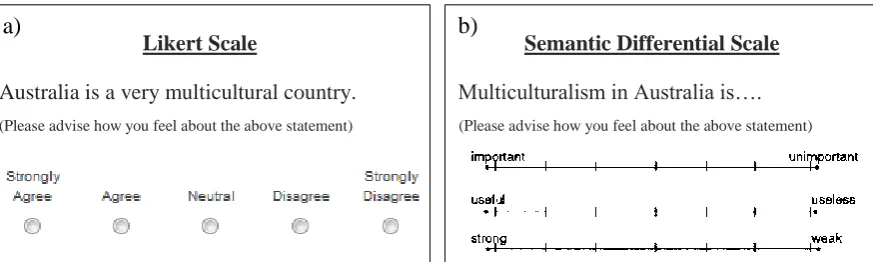
Figure 1.1. Example Likert and Semantic Differential scales for responding to
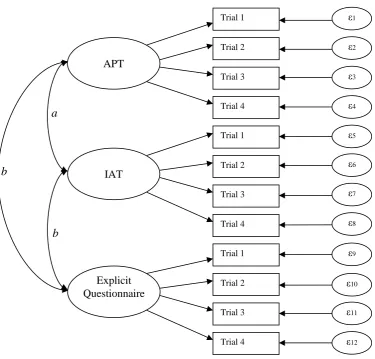
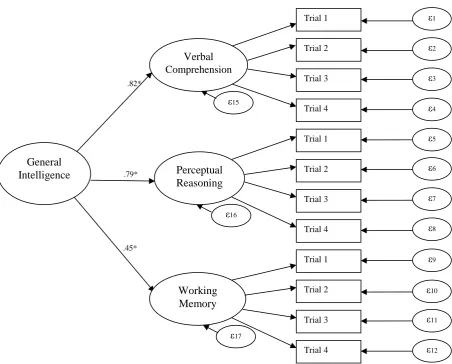
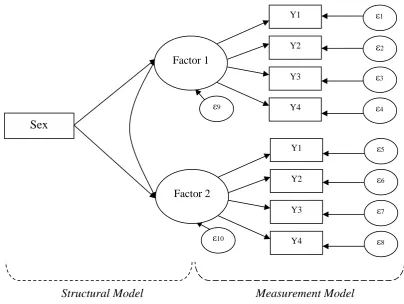
explicit attitudinal questionnaires. ... 8 Figure 1.2. Schematic representation of the APE cognitive model depicting the interplay of associative activation and propositional reasoning in implicit and explicit attitude development. ... 14 Figure 1.3. Exemplar presentation sequence for a standard APT. ... 21 Figure 1.4. Exemplar congruent and incongruent stimuli pairings. ... 24 Figure 1.5. Example presentation sequence for the attribute component of a VIAT. 26 Figure 4.1. Path diagram of a one-factor CFA model ……...……….98 Figure 4.2. Three-factor CFA model to assess the convergent and discriminant validity of implicit and explicit attitude measures ………....109 Figure 4.3. Example higher-order CFA model of general intelligence based on the verbal comprehension, perceptual reasoning and working memory sub-tests …….111 Figure 4.4. A CT-CM CFA-MTMM model depicting two traits (Race and Politics) and two methods (APT and IAT) ………..118 Figure 4.5. Multiple-groups CFA model assessing the IAT effect for Construct 1 ……….…..124 Figure 4.6. MIMIC model depicting a Sex covariate onto a two-factor
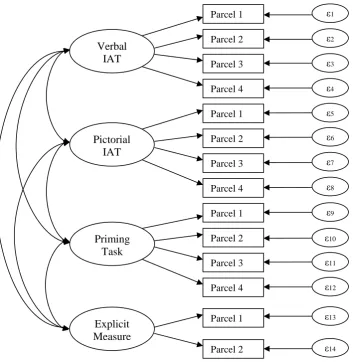
model……….127 Figure 5.1. CFA path model for assessing the internal construct validity of each of the implicit attitude measures ………...137 Figure 5.2. CFA path model specified to test the convergent and discriminant
validity of the implicit and explicit attitude measures for a single attitude
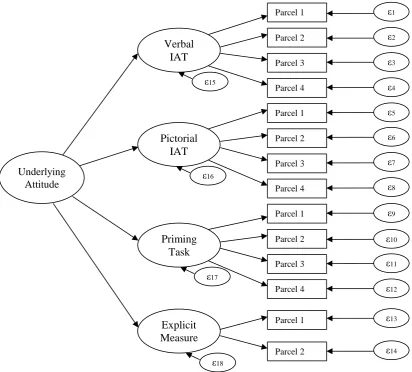
construct...138 Figure 5.3. Higher-order CFA model specified to provide further convergent and discriminant validity evidence for the implicit and explicit attitude measures …....139 Figure 5.4. Example presentation sequence for the attribute component of a
xvi
Figure 5.7. Exemplar Pictorial IAT category stimuli for the Racial PIAT ……...148
Figure 5.8. Exemplar Pictorial IAT category stimuli for the Country PIAT …...149
Figure 5.9. Presentation sequence for the Racial APT ……….150
Figure 5.10. CFA model of the Racial VIAT ………...…168
Figure 5.11. CFA model of the Racial PIAT ………....…169
Figure 5.12. CFA model of the Country VIAT ………....170
Figure 5.13. CFA model of the Country PIAT ………...…171
Figure 5.14. CFA model of the racial priming task ………...…173
Figure 5.15. CFA model of the country priming task ………..…174
Figure 5.16. CFA of reparcelled priming data ………...…176
Figure 5.17. CFA of tasks assessing the racial attitude construct ………...…178
Figure 5.18. CFA of tasks assessing the country attitude construct ……...…180
Figure 5.19. Higher-order CFA of the racial attitude construct ………...…182
Figure 5.20. Higher-order CFA of the county attitude construct ….……...…183
Figure 6.1. The specified path model for the CFA-MTMM analysis of the IATs ...202
Figure 6.2. CT-CM CFA-MTMM model depicting the data of four IATs that have been separated into trait, error and method components …...…206
Figure 6.3. Graphical representation of the percentage variance of average IAT effect scores attributable to trait, method and random error variance ……...…...…209
Figure 7.1. Conceptual model of the Multiple-groups CFA assessment for latent mean differences .………...…224
Figure 7.2. MIMIC model to evaluate the direct effects of Sex, Age and Travel Experience on the test scores ………...………….………...…225
Figure 7.3. MIMIC Model of the effects of Sex, Age and Travel Experience on the tasks measuring the racial attitude construct ………...…244
Figure 7.4. MIMIC Model of the effects of Sex, Age and Travel Experience on the tasks measuring the country attitude construct ………...…246
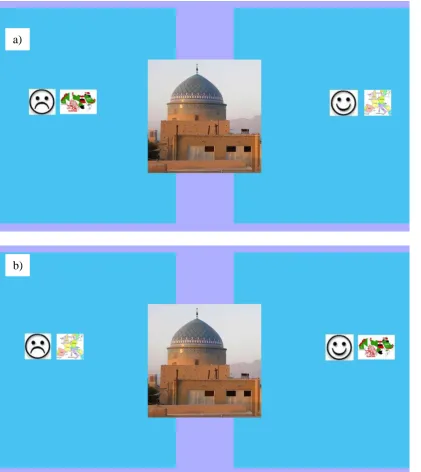
Figure 7.5. Examples of the Arab pictorial stimuli that may have led to confounded categorisation .……...………...…249
Figure 8.1. Estimated composition of random error variance and trait variance for the IAT and APT scores. ... 265
xvii
List of Equations
Equation 1.1. APT Scoring Formula ………..………22
Equation 3.1. Basic Classical Test Theory Model ………...…69
Equation 3.2. Extended Classical Test Theory Model …………...…70
Equation 4.1. Regression Functions of a One-factor CFA Model with Four Indicators ……… ………99
Equation 4.2. Regression Equation of a CFA Model.. ………...…99
Equation 4.3. Composite Reliability Formula ... ………...…106
Equation 4.4. Average Variance Extracted Formula ………...…106
Equation 5.1. IAT Effect Score Formula ... ………...…156
Equation 5.2. APT Scoring Formula ... ………...…157
Equation 5.3. Applied APT Scoring Formula ... ………...…157
Equation 5.4. Estimation Formula for Minimum Loadings in EFA . ...…159
xviii
List of Abbreviations
Attitude Measures
APT Affective Priming Task Computer-based priming task designed by Fazio et al.
(1986) to assess implicit attitudes
IAT Implicit Association Test Computer-based program designed by Greenwald et al.
(1998) to measure entrenched attitudes and stereotypes
PIAT Pictorial Implicit
Association Test
Fully pictorial version of the IAT that involves categorising only pictorial stimuli (Thomas et al., 2007)
VIAT Verbal Implicit
Association Test
Traditional verbal version of the IAT that involves categorising word stimuli
MRS Modern Racism Scale Race-related explicit attitude questionnaire consisting of
six items (McConahay et al., 1981)
TDQ Travel Destination
Questionnaire
Explicit attitude questionnaire relating to preference to travel to each of 18 countries
Statistical Methods
AVE Average Variance
Extracted
A method for determining an estimate of internal convergent validity
CFA Confirmatory Factor
Analysis
Latent modelling technique used for hypothesis-testing and construct validation (Jöreskog, 1969)
CFI Comparative Fit Index Non-centrality based fit index used to determine how well
the estimated model fits the data in Factor Analysis
CR Composite Reliability An estimate of internal consistency
CT-CM Freely Correlated Trait –
Freely Correlated Method Specification approach often applied within CFA-MTMM
EFA Exploratory Factor
Analysis
Latent modelling technique aimed at exploring the relationships between latent factors
MIMIC Multiple Indicator Multiple
Causes
Latent modelling technique whereby covariates are added to a standard CFA model to determine their effects on the latent factors
MLM Maximum Likelihood
Method A method used to estimate factors during a Factor Analysis
MTMM Multitrait-Multimethod
matrices
Latent modelling approach often applied with CFA to estimate method effects
RMSEA Root-mean-square Error of
Approximation
Non-centrality based fit index used to determine how well the estimated model fits the data in Factor Analysis
SEM Structural Equation
Modelling
A wide range of modelling methodologies designed to test hypotheses between observed and latent variables
SRMS Standardised Root Mean
Square Residual
Introduction
Psychologists have been seeking ways to indirectly infer thought processes since Freud first proposed that psychological processes could occur outside of conscious awareness (Freud, 1915 as cited in Riolo, 2010). The development of modern implicit methods of attitude assessment are claimed to provide a solution to this search by enabling deeply ingrained attitudinal biases to be inferred from differences in timed categorisation tasks. The most prominent of these implicit attitude measures are the Implicit Association Test (IAT; Greenwald, et al., 1998) and the Affective Priming Task (APT; Fazio, et al., 1986).
Implicit attitude measures have been shown to possess greater predictive validity for the assessment of socially contentious constructs than traditionally used explicit attitude measures, such as questionnaires (Greenwald, Poehlman, Uhlmann, & Banaji, 2009). Such findings have encouraged a sizeable movement towards implicit attitude research, whereby APTs and IATs have been employed in thousands of empirical studies over the last two decades1. Many of these studies promote implicit attitude measures as a useful means to glean insights into the unconscious biases that influence people’s behaviour. The IAT is frequently used to provide individualised assessment of personal implicit biases (see the Project Implicit website; Greenwald, Banaji, & Nosek, 2011) and some have even suggested the task be used as an employment screening tool to reduce the potential for discrimination within the workplace (Ayers, 2001, pp. 424-425). However, before a task can be used in this way it is first vital to establish the validity of such measurement instruments.
1
Inconsistencies in the implicit attitudinal literature, in conjunction with poor and highly variable psychometric support for the APT and IAT, have resulted in concerns that these tasks are heavily influenced by measurement error. Error variance can reduce the reliability of measurement instruments and provide an upper limit for construct validity estimates (Cunningham, Preacher, & Banaji, 2001). The aim of this thesis was to quantify the extent of error variance in implicit attitudinal scores, and to assess the reliability and validity of APTs and IATs using Confirmatory Factor Analysis (CFA) models. CFA uses latent variable models to separate error variance from trait variance (Byrne, 1998) and its use is novel for implicit attitudinal research.
Thesis Aims and Organisation
The overall aim of this thesis was to examine the construct validity of the APT and IAT using CFA techniques. This thesis is organised into eight chapters: four introductory chapters, three empirical chapters and a general discussion.
Introductory Chapters
Chapter Two demonstrates the potential utility of implicit attitude measures, by providing a critical review of APT and IAT findings across three contentious research domains, that of racial prejudice, substance use and body image. These constructs benefit from assessment by implicit attitude measures, because explicit attitude measures are susceptible to issues of self-presentation bias and manipulated responding. However, inconsistencies are noted amongst the implicit research that lead to concern for the robustness of implicit attitudinal scores.
Chapter Three discusses potential sources of error variance for implicit attitude measures, and the impacts such error would have on psychometric validation of these tasks. Error variance is explained within the framework of classical test theory. It is argued that traditional analytical approaches have been inadequate for assessing implicit attitudinal data. Rather, an approach that adequately addresses the issue of error variance is required, namely Structural Equation Modelling (SEM).
Chapter Four provides a detailed introduction to SEM analytical techniques, such as Confirmatory Factor Analysis (CFA). The common factor model is explained along with the process of model specification. A detailed description of seven applications for SEM in the assessment of the reliability and construct validity of measurement instruments is delivered. This includes an introduction to Single-group CFA,
Empirical Chapters
There are three empirical studies of this thesis which are presented in Chapters Five, Six and Seven. These three chapters investigate the seven aims of this study, which relate to specific assessments of the reliability and construct validity of the APT and IAT. The empirical studies employed the traditional verbal APT and verbal IAT (VIAT) that are reliant on word stimuli, as well as a pictorial type of IAT (PIAT) that only uses pictorial stimuli.
Chapter Five outlines Study One, which covers the first four aims of this research. In Study One, single-group CFA is the primary analytical approach applied in order to separate random error variance from trait variance for the implicit attitude scores. Using this approach, the reliability of the APTs and IATs are investigated using CR and AVE (Aim 1). The internal construct validity of these tasks is assessed using one-factor single-group CFA (Aim 2). Convergent and discriminant validity for the VIATs and PIATs are then evaluated using three-factor single-group CFA (Aim 3), as well as higher-order CFA (Aim 4). Together, Study One provides a thorough examination of the influence of random error variance on the implicit attitudinal scores, and delivers an estimate of the robustness and validity of the APT and IAT.
Chapter Seven outlines Study Three, which explores the potential use of SEM approaches to facilitate substantive enquiries for IATs. This study investigates whether it is possible to ascertain an IAT effect, indicating implicit racially-related biases, by assessing the equivalency of congruent and incongruent responses using Multiple-groups CFA (Aim 6). The influence of certain participant characteristics, namely sex, age and travel experience, on the IAT effect scores is explored using MIMIC modelling (Aim 7). Study Three demonstrates the use of latent modelling techniques to facilitate applied research using implicit attitude measures.
General Discussion
Lastly, Chapter Eight provides a general discussion regarding the implications of this research. The findings of the three studies are summarised and the overall
CHAPTER ONE
Implicit Attitudes: Conceptual and Procedural Issues
Introduction
Attitudes are favourable or unfavourable dispositions towards social objects such as people, places and policies (Stanley, Phelps, & Banaji, 2008). Attitudes enable efficient responses to simple sensory information, but also inform the more complex responses required when engaging with other individuals, groups, objects or events encountered throughout life (Stanley et al., 2008). Multiple underlying processes guide attitude development. The two main processes to attitude development are firstly a reflective and intentional explicit process, and secondly, an impulsive and automatic implicit process (Haeffel et al., 2007). Explicit processes differ from implicit processes by requiring conscious awareness and cognitive effort, whereas implicit processes occur spontaneously without any need for conscious effort or awareness. These distinct processes are well documented and can be evidenced from both behavioural data and psychophysiological data using MRI and EEG scanning equipment, with separate brain regions implicated for implicit and explicit attitude processing (Amodio, 2013; Cunningham, Johnson, Gattenby, Gore, & Banaji, 2003; Cunningham, Johnson, et al., 2004; Phelps et al., 2000; Stanley et al., 2008).
developed to access these implicit processes will then be introduced, namely the Affective Priming Task (APT; Fazio, Sanbonmatsu, Powell, & Kardes, 1986) and the Implicit Association Test (IAT; Greenwald, McGhee, & Schwartz, 1998). A
procedural description of these implicit attitude measures will clarify how each task operates and how an estimate of implicit attitudes is devised using these techniques. Implicitly measured attitudes will briefly be reviewed in relation to explicitly
measured attitudes. It will be shown that there can be substantial divergence in findings between implicit and explicit methods of attitude assessment, particularly when assessing socially sensitive constructs such as racial prejudice. In these instances, implicit attitude measures have exhibited greater predictive power than explicit measures on a wide range of behavioural, judgement and physiological outcomes. This chapter concludes that the key advantage of implicit attitude measurement techniques is in the detection of attitudes people may be unwilling to openly share.
Explicit Attitude Measures and Their Limitations
Explicit attitudes refer to consciously held evaluations of people, places and constructs (Nosek et al., 2006). Explicit views are knowingly endorsed and may be offered as opinions following a process of consideration and personal reflection. The field of attitudinal measurement has traditionally depended on explicit attitude measures such as self-report questionnaires to ascertain these considered opinions (Harrison, Mclaughlin, & Coalter, 1996). Explicit attitude measures require
commonly utilised five-point bipolar response format, though the scales may use greater or fewer points. Participants rate level of agreement with each statement on a scale that ranges, for instance, from Strongly Disagree through to Strongly Agree (see Figure 1.1a). The Semantic Differential technique differs in that it is used to assess feelings along a continuum. For instance, participants may mark on a
continuum ranging from Bad to Good how they feel about a particular question (see Figure 1.1b). While these explicit attitude measures are invaluable tools which have been used extensively for over 80 years, they suffer from several limitations
(Perugini & Banse, 2007).
Likert Scale Semantic Differential Scale
Australia is a very multicultural country. Multiculturalism in Australia is….
[image:27.595.114.551.332.463.2](Please advise how you feel about the above statement) (Please advise how you feel about the above statement)
Figure 1.1. Example Likert and Semantic Differential scales for responding to explicit attitudinal questionnaires.
The primary limitation of explicit attitude measures is that there is an inherent assumption that participants have the ability and motivation to report attitudes and beliefs truthfully. However such an assumption is not always correct (Greenwald & Banaji, 1995). Self-presentation strategies, whereby a participant’s true attitudes towards a topic are distorted to present more socially acceptable responses, are a commonly reported issue for explicit attitude measures. These self-presentation strategies are particularly prevalent when investigating contentious or sensitive constructs such as racial prejudice (Greenwald et al., 2002; Hofmann & Schmitt,
2008; Nosek et al., 2007; Schnabel, Asendorf, & Greenwald, 2008a; Spence, 2005). In order to overcome this potential bias, many attitudinal and personality scales contain inbuilt social desirability measures, often termed ‘lie scales’, which aim to assess the veracity of responses. Yet even with lie scales and other such validity checks, these instruments do not provide a way of determining a respondent’s true feelings or attitudes. Rather lie scales merely alert the researcher to the possibility that the participant may not have responded with an acceptable level of bias.
Conceptual Overview of Implicit Attitudes
The unintended impact of expectation on an individual’s perceptions, judgements, memory and behaviour was established in some of the very first empirically-based psychological experiments (e.g. Ebbinghaus, 1885; Stroop, 1935). Since those seminal studies, research has continued to reveal that attitudes, such as stereotyping and prejudice, can also occur automatically or outside of conscious awareness (Cunningham et al., 2001; Greenwald et al., 2009; Hofmann, Gawronski, Gschwendner, Le, & Schmitt, 2005; Jost et al., 2009).
Automatic attitudes are activated spontaneously like a reflex (Lane, Banaji, Nosek, & Greenwald, 2007). Automaticity is likely due to well organised semantic links within memory stores that have been developed and reinforced through personal
experiences (Neely, 1977). These automatic operations are defined as implicit processes, which differ fundamentally from explicit processes that are controllable, made with awareness and require intent and cognitive resources (Nosek, 2007). As such, explicit processes require cognitive effort, whereas implicit processes occur impulsively without exertion or awareness and the attitude bearer may be completely unaware of their presence. Theories of implicit bias assert that automatic processes impact people’s decisions and actions, a view which is divergent from the common perception that people are guided solely by their explicit beliefs and conscious intentions to act (Greenwald & Krieger, 2006).
2007; Nosek, 2007; Nosek & Smyth, 2007; Ranganath, Smith, & Nosek, 2008). Explicit attitudes are consciously endorsed and evident when individuals have
sufficient time to provide considered responses, such as when completing a survey or questionnaire. Explicit attitudes differ from implicit attitudes because the individual is aware of the evaluative process and is thus able to assign mental effort to the development of an attitudinal appraisal. Implicit attitudes, conversely, occur spontaneously, are generally triggered by cues within the environment, and happen without any contemplation by the attitude bearer (Fazio et al., 1986). An implicit attitude has been described as “an introspectively unidentified trace of past experiences which mediates favourable or unfavourable thought, feeling or action toward an object” (Greenwald & Banaji, 1995, p. 5). In other words, aspects of past experiences automatically influence how an individual evaluates their present world. The most useful theoretical framework to conceptualise these attitude types are the dual-process theories of cognitive functioning.
Theoretical Models of Implicit Attitudinal Processes
The most prominent theories of cognitive functioning advocate a dual-process understanding of attitudes (Bargh, Chaiken, Govender, & Pratto, 1992; Fazio et al., 1986; Wilson, Lindsey, & Schooler, 2000). These theories all share the assumption that information may be processed in two ways: either automatically using simple, low-effort, readily accessible decision rules; or alternatively through a conscious, active type of process, involving effortful scrutiny of relevant information
1992; Fazio et al., 1986; Gawronski & Bodenhausen, 2006; Wilson et al., 2000). As such, on perception of an object automatic activation of semantically connected neurons occurs in the brain (Neely, 1977). This activation pattern results in an implicit attitude that can influence further perceptions of the attitude object, the situation in which it was encountered and subsequent behaviour (Bargh et al., 1992; Fazio et al., 1986). Dual-process theories are thereby entirely consistent with the theoretical understanding of automatic implicit attitudes and more effortful explicit evaluations (Steinman, 2011).
Of the dual-process theories, the Dual-Attitude model (Wilson et al., 2000), the Motivation and Opportunity as Determinates model (MODE; Fazio et al., 1986) and the Associative-Propositional Evaluation model (APE; Gawronski & Bodenhausen, 2006) provide the most useful frameworks for understanding implicit and explicit attitudes. According to the Dual-Attitude model, people can simultaneously possess two different evaluations of the same attitudinal object: an automatically activated implicit attitude as well as a deliberate explicit evaluation that requires effortful processing to be retrieved from memory (Wilson et al., 2000). Using this approach, it is expected that people access their explicit evaluations only when they have the capacity and motivation to do so. As a result, implicit evaluation becomes the default attitude form. This theory is very similar to the MODE model which states that people will be guided by their explicit attitudes only when they have the motivation and the opportunity (such as the time or cognitive resources) to consider their views (Fazio et al., 1986). If either of these prerequisites is missing, then relatively
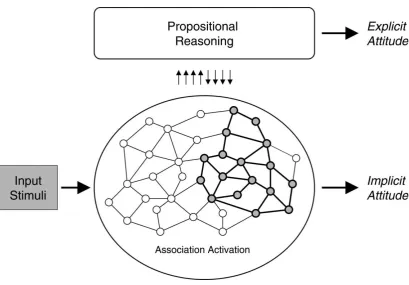
The Associative Processing Evaluation model (APE; Gawronski & Bodenhausen, 2006) builds on these earlier dual process theories by examining the underlying processes thought to impact implicit and explicit attitudes. According to this approach, an event/object activates a pattern of stored associations in the memory that produces an automatic affective response. This associative process provides the initial source of evaluation and an implicit attitude is the result (see Figure 1.2). The particular associative pattern activated in the brain (highlighted by the bold
connections in Figure 1.2) differs depending on the context in which the object was encountered. To transform an implicit attitude into an explicit evaluation,
propositional reasoning is applied. For instance, a negative affective reaction, such as distaste, may be transformed within the reflective system into the reasoned
proposition that “I dislike X” (Strack & Deutsch, 2004). This propositional reasoning process is a form of conscious appraisal that results in the development of an explicit attitude. During the propositional reasoning phase, the emerging attitude can be checked to ensure its consistency with already held values and with any other relevant information2. Following the propositional reasoning review process, the explicit attitude is formed.
2 Theories such as cognitive consistency (Festinger, 1957) are thus solely the domain of propositional
Figure 1.2. Schematic representation of the APE cognitive model depicting the interplay of associative activation and propositional reasoning in implicit and explicit attitude development (Gawronski & Bodenhausen, 2006, p. 697).
Dual-process theories provide a strong foundation for understanding the relationships between implicit and explicit attitudes. Yet the majority of implicit attitudinal
should be explicitly aware). Yet Greenwald in particular has strongly questioned the popular notion that research is only valuable to the extent that it advances theory, quoting Feyerabend (1975) who stated that “any attempts to specify bounds of scientific method would be misguided… (as they) would inevitably exclude methods that are valuable in the accumulation of scientific knowledge” (e.g. Greenwald, 2004, p. 275). Proving this point, findings from purely methods-based or atheoretical empirical studies (i.e. Greenwald, et al., 1998) have consequently been incorporated into theories, such as the APE model, to further facilitate understanding of implicit attitudinal processes. The next section presents an introduction to the implicit measurement techniques that spearheaded the investigation into implicit processes and helped guide theoretical conceptualisations of these functions.
Implicit Attitude Measurement Techniques
The first insight that sparked the development of modern implicit attitude measures came from Franciscus Donders during the middle of the 20th century. Donders developed an experiment in which participants were given a small electrical shock through an electrode placed on each foot. Participants indicated which foot had received the shock by pushing a button using their hand. Donders discovered participants reacted faster when the hand responded to stimulation of the foot of the same side (i.e. right hand and right foot) compared with when the opposite foot was shocked (i.e. right hand but left foot) (Donders, 1969). Based on this finding,
Implicit attitudinal measures specifically began to be developed in the 1980s to overcome the aforementioned limitations of explicit attitude measures and to explore the possibilities of subconscious influences on attitudes. Use of these implicit attitude measures enabled researchers to assess concepts without the participants’ awareness of the target of measurement (Greenwald & Banaji, 1995). This in turn prompted a rapid expansion of interest in implicit influences on social perceptions, judgements and action (Nosek, 2007). While the distinction between implicit and explicit attitudes was theoretically driven, in practice the difference is a methodological one (Stanley et al., 2008). Explicit techniques allow time for self-reflection and the provision of a considered response, whereas implicit techniques limit the opportunity for introspection or deliberation by relying on speeded categorisation tasks (Nosek, Greenwald, & Banaji, 2006). This emphasis on fast reaction times is the primary differentiating factor between implicit and explicit attitude techniques. Implicit attitude measures typically infer underlying mental processes from differences in response latencies for the categorisation of associated stimuli (Krause, Back, Egloff, & Schmukle, 2010). Whilst there are many different variations of implicit attitude measures currently available (see De Houwer & De Bruycker, 2007; Nosek &
The Affective Priming Task (APT; Fazio et al., 1986)
The Affective Priming Task (APT; Fazio et al., 1986) was the first of the reaction-time-based tasks devised to measure implicit prejudice and has played a pivotal role in stimulating research on the assessment of implicit attitudes and stereotypes
(Bargh, Chaiken, Raymond, & Hymes, 1996). The APT was designed by Fazio et al. (1986) who argued that a person’s strongest and most commonly accessed attitudes were capable of being automatically activated by the mere presence of an attitude object. Further, this activation was argued to occur regardless of whether an individual was aware of their opinions towards the attitude object or not and, once activated, these automatic attitudes could influence the person’s behaviour. The APT and other such priming procedures were created to measure the accessibility and strength of these automatic attitudes.
The Implicit Association Test (IAT; Greenwald et al., 1998)
Fazio et al.’s (1986) APT paved the way for the development of the Implicit Association Test (IAT; Greenwald et al., 1998); now the most widely used method for measuring implicit attitudes or biases (Jost et al., 2009). Following a similar logic to the APT, the IAT provides an estimate of the strength of association between concepts and attributes (Lane et al., 2007). However, rather than pairing each
category exemplar individually with an attribute exemplar, as is the case for the APT, the IAT uses a dual-categorisation format, whereby participants categorise attribute and category stimuli simultaneously. This enables the IAT to provide an assessment of entrenched attitudes and stereotypes in half as many trials as that required by the APT (Greenwald et al., 1998). At the time of the IAT’s inception, there was some evidence of implicit social cognition, but the tools available lacked the sensitivity to detect variability among populations. Greenwald et al. (1998) hoped developing the IAT would enable valid and reliable assessment of implicit attitudes and stereotypes.
Such limitation excluded numerous populations including very young children and the illiterate, which reduced the generalisability of implicit attitudinal findings. The development of a more inclusive implicit attitude measure creates greater possibility for examining attitudinal formation and development over the lifespan, which has the potential to greatly aid theoretical conceptualisation of implicit attitude development.
The Pictorial Implicit Association Test (PIAT; Thomas, et al., 2007)
Thomas, et al. (2007) overcame this previous verbal restriction by introducing a fully pictorial version of the IAT (the PIAT), which only uses pictorial stimuli for
categorisation. Pictorial stimuli require less effortful mental processing than word stimuli due to stronger semantic links between pictures and the meaning they represent (Carr, McCauly, Sperber, & Parmelee, 1982; Glaser & Glaser, 1989). Because of this, the use of pictorial stimuli in the PIAT enabled significantly more efficient categorisation of the stimuli (Thomas, 2008), resulting in faster, more automatic responses. This greater automaticity, a key indicator of implicit processing, is potentially indicative of a purer measure of implicit attitudes. Furthermore, by removing the requirement of verbal fluency demanded by the traditional verbal technique, use of the PIAT opens up the possibility for assessing implicit attitudes in previously untestable populations such as younger children. It also has potential for use in cross-cultural studies as it avoids issues such as translation, salience of terms and illiteracy.
A Procedural Description of the Implicit Measurement Techniques
Implicit attitudinal measures typically require speeded categorisation of affective stimuli that are presented on a computer screen. Participants are required to respond using one of only two designated response keys on a computer keyboard. The average length of time taken to complete this action is interpreted as an indicator of the ease with which the task was executed. Although there are many implicit attitudinal tasks now available, the priming technique (APT) and the Implicit Association Test (IAT) remain the most frequently used (Lane et al., 2007). The following explanation will illustrate how implicit attitudes are inferred from each of these reaction-based techniques in turn.
The Affective Priming Task
Figure 1.3. Exemplar presentation sequence for a standard APT.
The presentation of a prime is assumed to facilitate or hinder the speedy categorisation of the affective stimuli. Traditionally, the APT employs two
contrasting categories of prime stimuli, for instance Insects and Flowers. Exemplars from both these categories precede the Positive and Negative word stimuli during each of the hundreds of trials required by a standard APT. Average reaction times are calculated for each of the four possible experimental conditions to develop an overall indication of implicit attitudes towards these attitude objects, which in this case are Flowers and Insects. For instance, in a particular trial a participant may witness momentarily the word “cockroach” before being asked to categorise the word
To ascertain an estimate of implicit evaluation, the average time in milliseconds between stimuli presentation and response is calculated for each of the four possible prime/target pairings (Insect+Positive, Insect+Negative, Flower+Positive and Flower +Negative). These averages are then compared using the following formula:
Evaluation = (PY-PX) – (NY-NX) (1.1)
This index captures the degree to which attitude X relative to Y yields faster responses for Positive (P) than Negative (N) targets (Wittenbrink, 2007). Thus for this example, if X related to the Flowers category and Y to the Insects category, higher scores calculated by the above formula would ostensibly indicate that the Flowers elicited more positive implicit evaluations than the Insects did. This finding is typically reported as an implicit relative preference for Flowers over Insects.
The Implicit Association Test
White people. Generally, these concepts include one pair of “category” constructs (such as Flowers versus Insects) and one pair of “attribute” constructs (such as Pleasant versus Unpleasant). To assess the relative strength of associations between these pairs of concepts the IAT relies on a dual-categorisation format, which enables the IAT to provide a measure of implicit attitudes using half the number of trials required by the APT. This efficiency provides a considerable saving in terms of time and effort for the participant.
During an IAT participants are asked to rapidly classify individual stimuli
representative of either a category or an attribute into one of four distinct groupings using only two responses. Participants do not deliberate about their feelings as they would if using explicit attitudinal measures, rather they categorise the items as quickly as possible (Lane et al., 2007; Nosek, 2007). By way of example, in an IAT the word “daisy” may appear on the screen and the participant’s objective is to quickly identify that stimulus as a Flower rather than an Insect by pressing a
Congruent Pairings Incongruent Pairings
Figure 1.4. Exemplar congruent and incongruent stimuli pairings (for the Flower-Insect Pictorial IAT).
Standard IAT Procedure
A detailed description of the basic IAT procedure expands on the above example. In its original form, the IAT involves a pair of target concepts, such as Flowers and Insects, and a pair of attribute concepts, such as Pleasant and Unpleasant. There are four main components that comprise each IAT: Attribute-related stimuli
categorisation, Category-related stimuli categorisation, Congruent stimuli categorisation and Incongruent stimuli categorisation. These categorisation requirements, detailed below, comprise the seven standard steps of an IAT. Steps Three, Four, Six and Seven are the empirical steps that supply the data for analysis (see Table 1.1 for an overview).
Table 1.1
The Seven Procedural Steps of a Typical Implicit Association Test
Step 1 Learn Attribute Dimension
Unpleasant vs. Pleasant words
Step 2 Learn Category Dimension
Insect vs. Flower words
Step 3 Congruent Dual-Categorisation Task *
Unpleasant and Insect words vs. Pleasant and Flower words
Step 4 Congruent Dual-Categorisation Task *
Unpleasant and Insect words vs. Pleasant and Flower words
Step 5 Learn Transposed Category Responses
Flower vs. Insect words
Step 6 Incongruent Dual-Categorisation Task *
Unpleasant and Flower words vs. Pleasant and Insect words
Step 7 Incongruent Dual-Categorisation Task *
Unpleasant and Flower words vs. Pleasant and Insect words
* Data from these steps are used for data analytic procedures.
Attribute-related Stimuli Categorisation.
Figure 1.5. Example presentation sequence for the attribute component of a VIAT.
Category-related Stimuli Categorisation.
Step Two involves learning the category dimension and requires the similarly simple task of only categorising the category-related stimuli, such as Flower and Insect stimuli. Respondents categorise the stimuli representing Flowers and Insects using the same two keys employed for the attribute-related categorisation task.
Congruent Stimuli Categorisation.
that most participants will intuitively link flowers with pleasant associations and insects with unpleasant associations. Steps Three and Four are identical congruent stimuli categorisation tasks. This repetition allows for double the number of trials to be completed, whilst enabling participants a short reprieve in concentration between blocks in order to reduce fatigue.
Category-related Stimuli Categorisation.
Step Five involves learning to switch the spatial location of the categories in that the task from Step Two is repeated but in a transposed format. For example, if the appropriate response for Flower stimuli in Step Two had been the left hand key, respondents would now be required to use the right hand key, with the left hand key used to categorise the Insect stimuli. This step prepares participants for the new categorisation task that follows in Step Six.
Incongruent Stimuli Categorisation.
The presentation of congruent pairings in Steps Three and Four, followed by incongruent pairings for Steps Six and Seven is switched for every second participant, so that order effects are minimised for the sample. The difference in mean response times for the two block types (the original or congruent pairings versus the reversed or incongruent pairings) provides an indication as to the direction and extent of any evaluative associations attached to the target words. This difference is calculated using the means and standard deviations of the response times in Steps Three, Four, Six and Seven (see Table 1.1), by following the scoring procedures outlined by Greenwald et al. (2003).
The IAT Effect Score (D; Greenwald, Nosek, & Banaji, 2003).
The IAT’s scoring formula is, in effect, a variant of the standardised mean difference effect size measure Cohen’s d (Cohen, 1992), and it results in an individual IAT effect score for each participant referred to as a D score (Greenwald et al., 2003). The IAT effect score is the key outcome of the IAT and can be interpreted using the guidelines provided by Greenwald et al. (2003). They advise that an IAT effect score greater than .60 implies strong negative implicit prejudice (i.e. strong preference for the congruent over the incongruent combination), an effect score between .35-.60 demonstrates moderate negative prejudice, .15-.35 implies slight prejudice and scores lower than .15 indicate non-existent prejudice (Greenwald et al., 2003).
The Pictorial Implicit Association Test
The procedure outlined above for the original verbal IAT (or VIAT) is the format for all IATs, though there is some variation in the delivery of stimuli. Although
traditionally restricted to word stimuli, the introduction of the Pictorial Implicit Association Test (PIAT; Thomas et al., 2007) expanded the repertoire of stimuli usable with the IAT to include all forms of pictures (for example, see the pictorial category exemplars depicted in Figure 1.4). The methodology is exactly the same for the PIAT as the VIAT, but instead of categorising words the participants categorise pictorial representations of the attitude objects. For instance, Positive and Negative smiling icons (“smileys” or “emoticons”) replace the Positive and Negative affective stimuli, and pictures of Flowers and Insects replace the traditionally employed verbal stimuli. To provide further examples, pictures of people from different ethnic groups could replace the stereotypical name stimuli often used to ascertain implicit racial prejudices. Additionally, images of popularly branded food items could be used to assess implicit attitudes towards certain companies, or pictures of politicians’ faces might enable an estimate of implicit political preferences. Both the PIAT and the VIAT enable the assessment of countless different attitudinal constructs, but now there is also the flexibility of various visual formats.
This is not a requirement of the PIAT, but is an additional option which can be utilised depending on the capabilities of the participant group. Otherwise, all aspects of the VIAT and the PIAT have been designed to be equivalent.
Summary
Implicit attitude measures aim to infer underlying mental processes from differences in reaction times on dual-categorisation tasks. This emphasis on quick response times differs substantially from explicit methodology that allows time for reflection and consideration of the endorsed evaluations. These distinct procedural and theoretical processes, outlined in the present section, have resulted in discrepancies between an individual’s implicitly and explicitly measured attitudes, especially when exploring socially contentious issues.
Advantages of Implicit over Explicit Attitude Measures in the Detection
of Socially Unacceptable Attitudes
nature tend to produce lower implicit-explicit correlations than less socially sensitive constructs, where conscious editing of attitude expression is presumably reduced. These results imply that the strength of the correlation between implicit and explicit attitude measures of a similar attribute is dependent on the level of stigmatisation associated with that target attitude (Swanson et al., 2001). In accordance with this theory, assessment of socially sensitive attitudes such as racial prejudice have often resulted in considerable disparity between participants’ explicit and implicitly measured attitudes (e.g. Cunningham, Nezlek, et al., 2004; Greenwald et al., 1998; Hummert et al., 2002; Kawakami & Dovidio, 2001; Stanley et al., 2008).
Greenwald et al. (2009) highlighted this discrepancy when they conducted a
comprehensive meta-analysis of 122 studies that employed not only the IAT, but also an explicit questionnaire and an outcome measure of relevant observable behaviour. Overall they found the attitude measures reasonably predicted outcomes on a wide range of behavioural, judgment and physiological measures, such as quality of cross-cultural interactions, consumer choices, alcohol consumption, amygdala activation, and so forth. However, one third of the studies inspected in the meta-analysis specifically investigated intergroup discrimination. Of these, the predictive validity of the IATs significantly exceeded that of the self-report measures, whereas the explicit attitude measures demonstrated superior predictive validity for domains such as political preference and consumer attitudes (Greenwald et al., 2009). This implies implicit attitude measures are stronger tools for predicting behaviours in situations where social desirability factors may be at play, whereas explicit attitude measures may be more efficacious for predicting controlled behaviours where social
Perugini & Banse, 2007; Schnabel et al., 2008a; Spalding & Hardin, 1999). Several design and procedural aspects of implicit attitude measures enable a stronger
estimate and greater predictive power for discriminatory or prejudiced attitudes than traditional explicit techniques (Greenwald & Krieger, 2006; Greenwald et al., 2009). Because of this, one of the primary advantages of implicit attitude measures is the detection of socially sensitive views.
Chapter Summary and Conclusion
CHAPTER TWO
The Application of Implicit Attitude Measures to Contentious
Research Topics: A Critical Review
Introduction
The present chapter examines findings from implicit measurement techniques across three socially contentious research topics: racial prejudice, substance use and body image. These topics have proven prime candidates for implicit attitude assessment and together provide evidence for the functional and predictive utility of implicit measurement techniques. A review of relevant APT and IAT findings are presented in turn for each of the three research domains, demonstrating that implicit attitude techniques promote an advantage over explicit attitude measures for these socially contentious topics. However, the review also reveals some inconsistencies amongst the presented research that suggest implicit attitude scores can be influenced by confounding factors, such as priming effects and task stimuli. Such extraneous factors may act to reduce the reliability and validity of implicit attitude techniques. It is argued that although there is evidence for the functional and predictive utility of implicit attitudinal measures, these psychometric concerns need to be systematically investigated.
Implicit Attitudinal Findings in the domain of Racial Prejudice
Implicit techniques can often uncover controversial or socially sensitive attitudes that may remain undetected using explicit techniques. Disparity between explicitly
Racial prejudice refers to negative emotional reactions (or attitudes) toward a person or group due to race or religion (Amodio, 2013; Schweitzer, Perkoulidis, Krome, & Ludlow, 2005). Prejudice by definition involves differential treatment of one group over another (Rudman & Ashmore, 2007). As such, implicit attitude measures are well-suited to the assessment of racial prejudice because they deliver an indication of relative preference for one construct over another. Furthermore, many everyday situations involve only quick, superficial evaluations in which people are unlikely to deliberate, such as choosing whom to sit next to on a crowded bus. The speeded reaction times utilised by implicit attitude measures reduce the opportunity for deliberation, potentially producing an attitude assessment more attuned with these spontaneous decisions than would be obtained with considered reflection using explicit attitude measures. Thus the automaticity of implicit attitude measures is another advantage for the assessment of intergroup bias.
Many of the seminal studies in the field of implicit attitudes have investigated automatic racial evaluations. These key studies along with other supporting research are presented in the current section to highlight the validity and predictive utility of implicit attitude measures for the assessment of racial prejudice. How the APT and IAT can be adapted to assess inter-racial attitudes will be shown, along with what information these instruments provide and implications for the possession of
Changes in social norms throughout Western society commonly discourage outward expression of racial prejudice (Amodio, 2013; Devine, Plant, Amodio, Harmon-Jones, & Vance, 2002). Such a shift has been evident in a drastic reduction of prejudiced attitudes self-reported using explicit techniques (Islam & Jahjah, 2001; Schweitzer et al., 2005). However, it is difficult to determine whether decline in expressed prejudicial views is a reflection of true attitude change or merely an indication of pressure to not reveal such opinions. To avoid the possibility of appearing racially biased, participants may choose to apply self-presentation
Findings from the Affective Priming Task
In one of the earliest demonstrations of implicit intergroup bias, Fazio et al. (1995) applied their APT to assess systematic differences in reaction times as a function of race and valence. Participants were shown photographs of either White or Black faces before quickly categorising subsequent words as either positive or negative. The facial prime stimuli were described as distracters designed to make the task more challenging. Fazio et al. (1995) discovered that when White participants classified positively valenced words, their responses were faster when they had been exposed to White rather than Black faces. Yet when they classified negatively valenced words, their responses were faster after exposure to Black rather than White faces (Fazio et al., 1995). This pattern of findings has been widely interpreted as indicating the presence of implicit racial bias in favour of White people relative to Black people (Jost et al., 2009; Wittenbrink, Judd, & Park, 1997). Fazio et al. (1995) also found a level of relationship between priming task scores and spontaneous cross-cultural interactions. As part of the experiment, the participants interacted with an African American researcher who later rated this interaction for level of interest and
friendliness (unaware of the participants score on the APT). Participants’ responses on the Modern Racism Scale (an explicit questionnaire; McConahay et al., 1981) did not predict the quality of interaction with the research assistant, but their implicit APT scores did (Fazio et al., 1995). This revealed the implicit APT measure had greater predictive utility than the explicit questionnaire for the prediction of
participants would maintain eye contact with someone of different ethnicity (Dovidio et al., 2002). In both instances, the APT revealed greater relationship with the
behavioural racially-relevant outcome than the explicit questionnaire measure did (Dovidio et al., 2002). These studies demonstrate substantial advantage for the use of APTs in the assessment of racial prejudice.
Findings from Implicit Association Tests
Fazio et al.’s APT research paved the way for the Implicit Association Test (IAT; Greenwald et al., 1998). As described in Chapter One, the IAT is based on the assumption that highly associated categories will result in faster performance than less associated categories during a forced-choice dual-categorisation task. The first IAT experiments focused on racially-relevant expected group differences between Japanese American and Korean American participants using a Japanese/Korean IAT (Greenwald et al., 1998). Due to the history of military subjugation of Korea by Japan during the first half of the 20th century, this IAT was expected to reveal mutually opposed implicit attitudes. As expected, Japanese American participants responded significantly faster to Japan+Positive, Korea+Negative stimuli
combinations than for the transposed conditions, while the Korean American
participants responded in the opposite fashion. This finding supported the application of the IAT to the study of racial biases. Greenwald et al. (1998) then subjected White participants to a Black/White IAT in order to examine consciously disavowed
evaluative differences. This study revealed the now well-replicated finding of an implicit preference for White over Black people as illustrated by significantly faster responses to the congruent (i.e. White+Positive, Black+Negative) than the
(Cunningham, Nezlek, et al., 2004; Dasgupta et al., 2000; McConnell & Leibold, 2001; Nosek & Smyth, 2007; Rudman & Ashmore, 2007). Implicit preference for White over Black people has been well evidenced, even in children as young as six (Baron & Banaji, 2006) and four years of age (Cvencek, Greenwald, & Meltzoff, 2011). Such results imply implicit racial biases are ingrained at an early age and are thus an important area for further research.
Neurobiological research also supports the application of IATs to the assessment of racial prejudice. Employing EEG and fMRI brain imaging equipment, Phelps et al. (2000) revealed IAT effect scores were correlated with amygdala activation in White participants exposed to Black (rather than White) faces (see also Amodio, 2013; Cunningham et al., 2003; Cunningham, Johnson, et al., 2004). The part of the
amygdala that activated is affiliated with quick emotional responses to threat, such as fear (Amodio, 2013; Phelps et al., 2000). Evidence of a physical fear response on the viewing of Black rather than White faces for White participants during the