Abstract: The objective of this research is optimizing a process of recycling residues called olive cake (stones) for renewable energy use and Pomace for animal feed industry use. This study includes a drying and separation of solid residues from pulp and store final product for an expedition to recommended user. Drying will proceed continuously in parallel with the existing production process of olive oil. The existence of technical constraints relating to high humidity and economic limitations related to logistics and energy consumption in order to make the residues usable leads us to consider a study of an integrated economic process to respond to this issue. In the literature there are drying solutions to be able to recover the residues but the cost of this operation remains in most cases a constraint which limits the reuse of vegetable waters. Among the techniques there is a centrifugation, drying by gas dryers and drying by a fluidized bed. With the use of eco-design standard and TRIZ method as combined approach we solve this problem and present an economic system as solution to recover the residues of the olive oil "olive cake" in view of their reuse in the energy supply for the case of the pomace and in industry for pulp. The design include the drying of pomace and pulp before storage for shipment to the recommended uses. This separation will be carried out in continuous mode in parallel with the existing production process. In our thesis we introduce an innovation to solve a problem of drying residues by considering constraints of the cost and the technical feasibility of solution without neglecting the environmental aspect.
Index Terms: TRIZ, eco-design, COP, drying OC, eco-Innovation.
I. INTRODUCTION
In the literature, the main factor limiting the recourse to recovery and the drying cost of sludge generated by olive oil extraction processes. This fact contradicts environmental trends as well as those of sustainable development. The resolution of this constraint will allow the industrial sector concerned to take into consideration in the oil extraction process the upgrading of waste for energy and other applications.
Revised Manuscript Received on June 05, 2019
Abdellatif Lajdel, Laboratoire Contrôle et Caractérisation Mécanique des Matériaux et des Structures ENSEM, Université Hassan II Casablanca, MOROCCO.
M. Mazouzi , Laboratoire Contrôle et Caractérisation Mécanique des Matériaux et des Structures ENSEM, Université Hassan II Casablanca, MOROCCO.
M. Bakasse, UCD-FSJ-Laboratoire de Chimie Organique, Bioorganique et Environnement FSJ, Université Chouaib Doukkali El Jadida, MOROCCO.
M. Lajdel, Laboratoire Contrôle et Caractérisation Mécanique des Matériaux et des Structures ENSEM, Université Hassan II Casablanca, MOROCCO.
Drying is an essential element that drives the recovery of olive oil residues. In the literature several drying techniques are used in the field of research but their applications in the industrial field remain limited. Indeed centrifugal drying is limited by the speed of rotation and the cost of energy. Natural gas drying also consumes more energy and generates more pollution affecting the air. We will focus mainly on the study of an eco-design of a drying system of olive oil residues giving great importance to the environmental dimension and sustainable development, and we will consider the constraints drying costs, so that the use of this system gives in addition to the innovative aspect of the solution an economic importance. In general, residues come with a moisture content of around 50%; to be able to guarantee recycling it is necessary to lower this rate to reach values between 10 and 12%. In this context, we will focus on solving this problem by taking into consideration the economic cost parameter and the ecological aspect. To do this, resort to the theory of inventive problem solving known as TRIZ. Indeed this theory is implemented with these forty tools of innovations to orient themselves at the end of the exercise towards the optimal choice. When we want to reduce the cost of drying it obviously comes down to reducing the energy consumed by the projected solution.
II. INTRODUCTIONTOTRIZMETHOD The industrial design activity is a key issue for the development of the company and society. The problems of innovation, environmental issues and sustainable development impose new constraints on manufacturers. Integrating the concept of sustainable development into current product design approaches requires the adaptation and evolution of existing tools and methods as well as the creation of eco-innovation tools. In the literature, there are various tools such as TRIZ tools, the eco-compass, the Product Idea Tree Diagram (PIT), the Quality Function Deployment (QFD) method, the Mind Map idea cards, and so on. Many authors analyze, critique and adapt these tools in order to develop an innovative and environmental design approach, (Jones et al, 2001), (Chen et al, 2003). Other approaches such as Kobayashi's proposal are to integrate eco-innovation concerns early in the design process. They plan to modify approaches to analyzing need and defining problem models, to develop innovation support tools and to define eco-efficiency indicators that can be used as much as possible, for example in level of concept choice (Kobayashi, 2006).
III. TRIZPROCESSUSPRESENTATION In terms of the eco-innovative design process, Hsiang-Tang Chang and Jahau Lewis
Chen (Chang et al, 2004), propose an approach based on technical contradictions
Combine Eco-conception Standard and TRIZ Method
in Eco- Innovation Applied For Drying Olive Cake.
of the TRIZ theory, associated with axes of eco-efficiency. This approach stems from previous research (Chen et al, 2003), defining a relation between the technical parameters of the TRIZ theory and the eco-efficiency axes (Desimone et al, 1997).
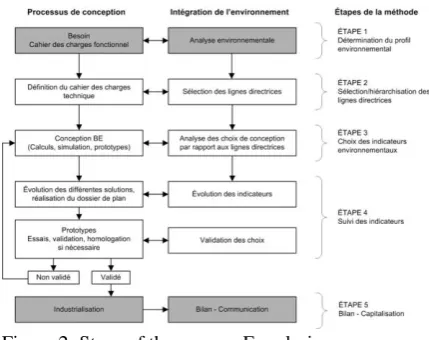
The eco-innovative design process proposed in Figure 1 (left-hand side) is divided into five stages:
1) Search for axes of eco-efficiency to improve. The choice of eco-efficiency elements depends on three scenarios. They explain that a design engineer can intuitively recognize, for a given product, the need to improve certain elements eco-efficiency. If not, he can classify the weight of each element eco-efficiency through the Analytical Hierarchy Process (AHP) (Saaty et al, 2000) or identify opportunities for product improvement through product life cycle analysis (LCA).
2) Research of technical parameters (Chen et al, 2003). By choosing an eco-efficiency axis, the choice of technical parameters is determined according to the weight of the eco-efficiency axis defined by the hierarchical analysis matrix (AHP).
3) Addition of necessary technical parameters according to the case study. These parameters are associated with the parameters chosen in the second step of the process, according to the contradiction defined by the designer 4) Resolution approach by contradictions:
a. If the problem studied defines a single contradiction, the resolution of the problem concerns only the principles of innovation associated with the contradiction.
b. If the studied problem defines several contradictions (parameters to improve and parameters not to degrade), the designer selects the principles of innovation according to their frequency of appearance for all the contradictions. The resolution of the problem is developed according to the principles of selected innovations.
5) Solution Ideas: At this stage of the process, it is a question of interpreting the principles of innovation related to the design problem studied.
[image:2.595.302.552.49.122.2]IV. RESULTS OF THE TRIZ MATRIX Table 1: Results of the TRIZ method
Parameters that improve Parameters that
degrease
Temperature (17)
Power (21)
Loss of substance (23)
Ease of use (33) Productivity 15-28-35 28-35-34 28-35-10-23 15-1-28
Innovation technics associated with combination
The combination of the previously identified contradictions using the contradiction resolution matrix in Table D.3 (Appendix D) gives the result of the resulting innovation techniques (Abdellatif LAJDEL el al. 2018). These results are summarized in Table 1.
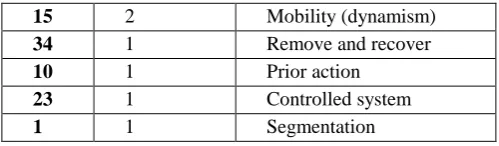
Table 2: Classification of innovation techniques
Tools
weight (frequency of appearance
Major innovation
technics choosen
28 4 Replacment of mechanical
system
35 3 Change /change parameters
15 2 Mobility (dynamism)
34 1 Remove and recover
10 1 Prior action
23 1 Controlled system
1 1 Segmentation
Choice of innovation techniques
In this case, innovation techniques 28, tools 35 and 15 are well suited to our field of study. Indeed the tool 28, replace the mechanical system by a sensory system or use fields (electrical, magnetic, electromagnetic, etc.), the tool 35 (Change or / and parameter change), includes the aspect: Modify the physical state of an object (eg in the form of gas, liquid or solid). While the tool 15 (Mobility), stipulates the following concept: Allow or design an optimization of the characteristics of the object, the external environment or the process or find optimal operating conditions.
Referring to this tools and in order to solve this issue we focus on this parameters:
•Temperature. •Loss of substance. •Power consumption. •Productivity.
Temperature parameter:
The question was why don’t dry with low level of temperature?
•Freezing. •Use Vacuum. Loss of substance:
We develop question of recovering all substances by: •Condensate vapor.
•Recover filtrate (liquid filtrate if using vacuum). Power:
Choose system that consume less power: •Solar.
•Vacuum. •Freezing. Productivity:
The system that give more productivity and offer continues process is required for this application.
Figure 1: Step of the eco-innovation process (Chang et
[image:2.595.42.294.550.606.2]V. METHODOLOGIE D’ECOCONCEPTION
The eco-design methodology is based on five steps, which are integrated into the design process [11] (NF E01-005):
Step 1: determination of the environmental profile of the product to be redesigned (reference product);
Step 2: selection / prioritization of guidelines; Step 3: choice of environmental indicators; Step 4: monitoring indicators;
Step 5: balance sheet - capitalization.
At each of these stages, an interaction between the design process and the integration of the environment has been specified as shown in the diagram of Figure 2.
[image:3.595.56.271.317.487.2]Given the self-learning aspect of the methodology, it is recommended to apply it initially to a product to be re-designed and then to extend it to the whole of the range and then to other product lines of the company relying each time on the balance sheet and capitalization achieved in step 5.
Figure 2: Steps of the process Eco-design.
1. Step 1: Environmental Profile of the Product
To specify the environmental profile of the product, we are provided with the questionnaire in Appendix A of the standard NF E01-005. The answers to the questions in this appendix lead us to the results shown schematically in Figure 3.
0 1 2 3 4 5
MP. F. U. FV-R. S. T. EMB
PROFILE
Mp. : Raw material.
F. : Fabrication manufacturing. U. : Utilization.
FV-R : End of life and recyclability. S. : Dangerous compound. T. : Transport (logistics) EMB : Packaging.
Figure 3: Environmental profile of the production (Mp , U and S have high score in product profile).
2. Step 2: Selection / prioritization of guidelines 2.1. Goal
For each of the environmental aspects resulting from Step 1, we have defined the relevant Guidelines for Environmental Improvement of the Product and prioritized in consideration of other technical, economic constraints related to the design project.
2.2.Operating mode
Using Appendix C, the relevant Guidelines (GLs) were selected based on the environmental profile obtained from our product.
Define the number of priority LDs (called LDPs) is mandatory for the eco-design specifications by respecting the ranking in descending order for each of the environmental aspects
a. Rating of guidelines and rationale.
[image:3.595.54.553.394.829.2]Before specifying these LDPs, we will first group in Table 3 all the guidelines with their notation. We recall that this notation was obtained from Appendix C of standard NF E01-005.
Table 3: Scoring standard guidelines.
Environmental aspect
Standard guidelines score
MP Use materials with less environmental impact: (for example : lower CO2 content).
36
MP Use renewable materials (Q3) 36
MP Use recyclable materials 36
MP Reduce in weight 36
MP Reduce in volume 36
U Improving the energy efficiency (consumption / yield) of the product - of the package to which the product belongs (Q9)
48
U Use less polluting energy sources (Q7)
48
U Decrease the quantities of consumables (Q11)
48
U Use less polluting
consumables (Q12)
36
U Reduce emissions (including noise) and quantities and quantities of waste generated by the product (Q12)
48
U Promote the correct use of the product
48
U Improve product durability and reliability (Q10-Q14)
S Facilitate a "safe" (less polluting) landfill of the product
36
b. List of priority guidelines / eco-design specifications
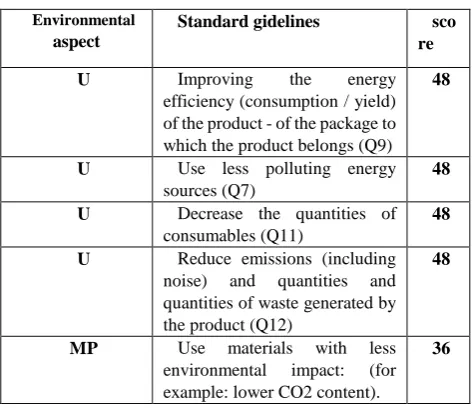
[image:4.595.41.278.217.421.2]From this notation, we defined the priority guidelines. They are grouped in Table 4.
Table 4: Choice of Priority Guidelines
Environmental aspect
Standard gidelines sco
re
U Improving the energy efficiency (consumption / yield) of the product - of the package to which the product belongs (Q9)
48
U Use less polluting energy sources (Q7)
48
U Decrease the quantities of consumables (Q11)
48
U Reduce emissions (including noise) and quantities and quantities of waste generated by the product (Q12)
48
MP Use materials with less environmental impact: (for example: lower CO2 content).
36
.Step 3: Choosing Environmental Indicators
2.1 Objective
Each Priority Line must be associated with a qualitative or quantitative indicator, called a "guideline indicator" (see Appendix C), which allows you to track in phase different possible scenarios. This indicator can itself be associated with an encrypted goal. Each of the relevant Environmental Aspects (EA) must also be represented by an indicator called "environmental aspect" (see Annex C), all of which form the environmental reference of the product, the objective being to preserve a multicriterion vision of the environmental quality of the product in its evolution in order to detect possible drifts including on "Minor" Environmental Aspects.
2.2 Operating procedure
For the choice of environmental indicators, we will follow the following procedure:
Define an indicator for each Priority Guideline (guideline indicator) as shown in Appendix C.
Define an "Environmental aspect indicator" for each of the aspects concerned. This indicator should be as representative as possible of the environmental impact the aspect concerned; it can be selected from the list of guideline indicators or constituted as a combination of these.
Not to retain, where appropriate, the "environmental aspect indicators" when the environmental aspects to which they relate are not significant (Environmental rating very low)
and on which the company has no action possible (Technical score = 0).
An "environmental aspect indicator" may be a combination of "guideline indicators". If there is only one Priority Guideline for the Environmental Aspect concerned, the corresponding indicator can be used if this is representative of the environmental impact of this aspect.
Define the tools needed to characterize the "guideline indicators" and "environmental aspect indicators".
Ensure that the tools associated with the "Guideline Indicators" and "Environmental Aspects" are developed and operational in the project.
Calculate the quantitative indicators as soon as possible. 3.3 Documents completed
[image:4.595.305.551.265.827.2]a. List of environmental aspects guidelines (U)
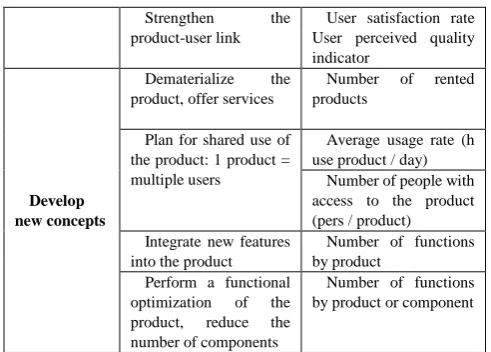
Table 5: Environmental aspects Use (U)
Strategies Standard guidelines Guideline indicators
Reduce the impact of product use
Improving the energy efficiency (consumption / yield) of the product - of the package to which the product belongs (Q9)
Energy consumption of the product
Energy yield of the product, pressure losses, etc.
Use less polluting energy sources (Q7)
Amount of greenhouse gases emitted during use Use of renewable energy: yes / no
Decrease the
quantities of
consumables (Q11)
Total mass of consumables (kg) per
product Yield
Consumable use Use less polluting
consumables (Q12)
Number, mass,% of pollutant consumables by product
Reduce emissions (including noise) and quantities of waste generated by the product (Q12)
Quantity,% of pollutant emissions generated over the life cycle of the product
Quantity,% of waste generated over the life cycle of the product Promote the correct
use of the product
% of good use of the product among users
Optimize the life of the product
Improve product durability and reliability (Q10-Q14)
Scheduled Product Life Effective Product Life
Facilitate product maintenance and repair (Q13)
Rate of products actually repaired Time
between two
maintenances Repair time
Repair and
maintenance costs per product life
Work on the modular structure of the product and its adaptability
Number,% by mass of interchangeable modules / product
Reduce product clutter Volume of the product
Think about the design of the product (promote the proper use of the product, avoid the effects of fashion)
C O 2 les s Less mass
design
Less energy consumption
Low Emission of CO2
Strengthen the product-user link
User satisfaction rate User perceived quality indicator
Develop new concepts
Dematerialize the product, offer services
Number of rented products
Plan for shared use of the product: 1 product = multiple users
Average usage rate (h use product / day)
Number of people with access to the product (pers / product) Integrate new features
into the product
Number of functions by product
Perform a functional optimization of the product, reduce the number of components
Number of functions by product or component
b. List of Environmental Aspects (MP) Guidelines
Table 6: Environmental aspects Raw material (MP)
Strategies Examples of
guidelines
Examples of guideline indicators
Select materials with lower environmental impact
Use materials with less environmental impact: (for example: lower CO2 content)
CO2 content (CO2 equivalent)
Use renewable materials (Q3)
Number mass
% of renewable materials Use recycled
materials (see supplier) (Q2)
Number
mass
% of recycled materials Use recyclable
materials
Number mass
% of recyclable materials Use materials
with lower energy content
Total energy content (MJ / product) or material (MJ / kg material)
[image:5.595.46.292.47.223.2]c. List of environmental aspect indicators
Table 7: Indicators of Environmental Aspects
Environmental aspects
Examples of Environmental Aspects Indicators
Use
Product energy consumption Product life
Mass of waste generated CO2 impact of the use phase Etc.
Raw materials
CO2 impact of product materials Energy content of the product materials Recycled content
etc.
VI. CONCLUSION
Based on the four design parameters not to be degraded (temperature, power, loss of substance, ease of use) and using the TRIZ theory, we were able to select the three principles of innovation which are tool 28, replacement of the mechanical system, tool 35, Change or / and modification of parameter, and tool 15, Mobility, the most favorable to guide our search for solution to our problem. The use of TRIZ method can be combined with others methods to improve efficiency of results. In this study we used combined TRIZ Method and Eco-design standard to address environmental and financial issues. We note that the vacuum drying concept provides more efficient energy saving than gas drying and represents a clean eco-technology. With drying by vacuum we avoid effluent that pollutes air; all chemical elements presents in olive cake are recovered on liquid and can be treated separately. (Abdellatif LAJDEL el al. 2017).
The process consisting in reducing the humidity of a high threshold of the order of 54% plus at least and on average at a threshold of less than 12% by an energy-saving and technically feasible system compared to the existing processes.
The subject of our innovation (research) concerns an innovative combination in order to make profitable and optimize the process of drying the residues which will be a source of energy and animal feed. It consists on a combination of drying by vacuum with option of drying by solar energy.
ACKNOWLEDGMENT
The authors would like to thank the Laboratory Laboratoire Contrôle et Caractérisation Mécanique des Matériaux et Structure de l’Ecole Nationale Supérieur d’Electricité et de Mécanique Casablanca, Professor Chouaf Abdelkarim, Professor of Mechanical department and Pr. M'hamed Chergui for all orientations during the study of the research in question as well The Moroccan Office of Industrial and Commercial Property (OMPIC), University Hassan II and University Chouaib Doukkali in Morocco.
REFERENCES
1. LAJDEL Abdellatif et MAZOUZI Mohamed
Productivity
Loss of substance
Power
Temperature
parameter
(2016); procédé intégré en continue de séchage et de séparation des résidus « oc » olive cake ; WO/2016/163866.
2. LAJDEL Abdellatif, Mohamed MAZOUZI, Mohammed LAJDEL & Pr. Mina Bakasse; Eco-Design Of Integrate System Of Drying And Separating Of Olive Residues In Olive Oil Industry; International Journal Of Research Science & Management; 10.5281/zenodo.804164 (2017).
3. Kyoto protocol (1997). To the united nation framework convention in claimant change, is an international agreement adopted in 1997 in kyoto, Japan.
4. Chang H-T., Chen JL., « The conflict-problem-solving CAD software integrating TRIZ into eco-innovation », Advances in Engineering Software, Vol. 35, 553–566 Elsevier, 2004. 5. Chen JL., Liu C-C., « An eco-innovative design approach
incorporating the TRIZ method without contradiction analysis », The Journal of Sustainable Product Design Vol. 1: 263– 272, 2001, Kluwer Academic Publishers. 2003
6. Desimone L.D., Popoff F., « Eco-efficiency: the business link to sustainable development », Cambridge, MA: Massachusetts Institute of Technology, 1997
7. Genrich Altshuller, Book: And Suddenly the Inventor Appeared: TRIZ, the Theory of Inventive Problem Solving 2nd Edition, 1996. 8. Saaty T.L., Vargas LG., « Models, methods, concepts and
applications of the analytic hierarchy process », Dordrecht: Kluwer Academic Publishers, 2000
9. Kobayashi H., 2006, “A systematic approach to eco-innovative product design based on life cycle planning”, Advanced Engineering Informatics, V, 20, Issue 2, April 2006, Engineering Informatics for Eco-Design. Volume 20 Issue 2, April, 2006 Pages 113-125 Elsevier Science Publishers, B. V. Amsterdam, The Netherlands, The Netherlands.
10. Jones E., Stanton, N.A., Harrison D., 2001, “Applying structured methods to Ecoinnovation. An evaluation of the Product Ideas Tree diagram”, Department of Design, Brunel University, Runnymede Campus, Egham, Surrey TW20 0JZ, UK Elsevier Science Ltd. 11. NF E01-005.
12. LAJDEL Abdellatif, Mohamed MAZOUZI, Mohammed LAJDEL & Pr. Mina Bakasse; Use of TRIZ method for innovation on new drying system of olive residues in olive oil industry. International Journal of Innovative Science, Engineering & Technology, Vol. 5 Issue 6, June 2018.
AUTHORPROFILE
Abdellatif LAJDEL PhD. Eng.
TRAINING: Certificates and Diplomas: March 2018: PMP Certification Renewal, Project Management Professional. (Training in project management + project management activity). Project Management Institute.
October 2009: Specialized Master in Project and Program Management. Skema Business School Ex-ESC of LILLE; accredited by EQUIS, AMBAs. Repository: PMBOK, PRINCE 2.Modules: Business Objects; Mgmt. Purchasing, Investment Choices, Mngt. programs, Mngt. teams, Audit projects, Mngt. IF… ; June 1997: Diploma of State Engineer in Mechanical Engineering. Option: Design and Mechanical Manufacturing. National School of Electricity and Mechanics (E.N.S.E.M.).
TRAINING: Doctoral Activities:
• 2014: PhD. Laboratory: preparation of a training session on the theme (Theory of chaos)
Session: (8 h). Preparation: (40h).
• 2014: Supervision of students for end of study project: (60h) • 2014: Supervision of students for internship: (60h) • 2014: training in bibliographic research. (16h)
• 2015: Training of students Professional License of Couaib Doukkali University as part of the INJAZ Al Maghreb program; UCD - EL JADIDA:
Theme: Entrepreneurship and project management: (16 sessions of 4 hours) (64h).
2017: Preparation and participation in the "6th World Congress on biofuels and bioenergy" congress, London.
2018: World Congress and Expo on Recycling; August 29 -30, 2018, Berlin, Germany.
2016: Preparation and participation in the COP 22, Marrakech.
Mina BAKASSE received her PhD’s from University of Nantes (France 1988) and from University of Chouaib Doukkali (Morocco 1997) in organic chemistry and environment. Mina Bakasse is actually full professor of chemistry at University Chouaib Doukkali, El Jadida. She has been an Invited professor by University of Paris for 4 years (1996-1999) for training and research activities. She was also invited for 6 months in Romania on 2007 and 2008 for a research program about Nanostructured systems for product design and functionality control for food safety. Her research activities include also: Analysis of pesticide residues on the environment, Pollution abatement of surface and ground waters by photo transformations, Modelling of removal (adsorption) of pollutants on mineral or bioorganic materials from aqueous effluents, valorisation of Moroccan clays for industrial composites, Preparation of activated carbon from olive-waste cakes, cores of Argan and cores of dates, Valorization of Phosphogyps).She is also a reviewer of many scientific indexed journals (Journal Hazardous Materials and water pollution, JOAM,...). She was member of the organizing committee of 20 International Conferences; she was also a co-chair of the international conference of ICTON on 2008, and of the International conference on advanced materials for photonics, sensing and energy conversion applications (AMPSECA) in 2012 at El Jadida, 2017 at Agadir. Up to now she has advised more than 40 PhD and Master Students and has published over 70 scientific papers in indexed journals in ISI and Scopus databases. Professor at Faculté des Sciences.
Mohammed LAJDEL Director of HR Government agency about 12 years, gave courses in scientific management disciplines at Ecole Nationale Supérieure d’Electricité et de Mécanique à l’université Hassan II – Casablanca as a temporary Professor after he obtains his diplomat of Enginneer at ENSEM 1996 – Université Hassan II and after that prepare and get Master of Business Administration (MBA) at Laval University 2001- CANADA. Active in Mechanical Department. He Is poursueing his PhD at - Laboratoire Contrôle et Caractérisation Mécanique des Matériaux et Structure de L’Ecole Nationale Supérieure d’Electricité et de Mécanique Casablanca. He participates in different publications as a member of the group of PhD student of Mechanical department.
Mohammed LAJDEL is experienced both in scientific management disciplines and Human Resources professionals.