Towards a Collective Layer in the Big Data Stack
Thilina Gunarathne
Department of Computer ScienceIndiana University, Bloomington [email protected]
Judy Qiu
Department of Computer Science Indiana University, Bloomington
Dennis Gannon
Microsoft Research,Redmond,WA [email protected]
Abstract—We generalize MapReduce, Iterative MapReduce and data intensive MPI run time as a layered Map-Collective architecture with Map-AllGather, Map-AllReduce, MapRe-duceMergeBroadcast and Map-ReduceScatter patterns as ini-tial focus. Map-collectives improve the performance and effi-ciency of the computations, while at the same time facilitating ease of use for the users. These collective primitives can be ap-plied to multiple runtimes and we propose building high per-formance robust implementations that cross cluster and cloud systems. Here we present results for two collectives shared be-tween Hadoop (where we term our extension H-Collectives) on clusters and the Twister4Azure Iterative MapReduce for the Azure Cloud. Our prototype implementations of Map-AllGather and Map-AllReduce primitives achieved up to 33% performance improvement for KMeans Clustering and up to 50% improvement with Multi-Dimensional Scaling, while im-proving the user friendliness as well. In some cases, use of Map-collectives virtually eliminated almost all the overheads of the computations.
Keywords: MapReduce, Twister, Collectives, Cloud, HPC, Performance, Kmeans, MDS
I. INTRODUCTION
During the last decade three largely industry-driven dis-ruptive trends have altered the landscape of scalable parallel computing, which has long been dominated by the HPC ap-plications. These disruptions are the emergence of data inten-sive computing (aka big data), the new emergence of com-modity cluster-based execution & storage frameworks such as MapReduce and the utility computing model introduced by Cloud computing environments. Oftentimes MapReduce is used to process the “Big Data” in cloud or cluster envi-ronments. Although these disruptions have advanced remark-ably, we argue that we can further benefit these technologies by generalizing MapReduce and integrating it with HPC technologies. This splits MapReduce into a Map and a Col-lective communication phase that generalizes the Reduce concept. We present a set of Map-Collective communications primitives that improve the efficiency and usability of large-scale parallel data intensive computations.
When performing distributed computations, data often needs to be shared and/or consolidated among the different nodes of the computations. Collective communication primi-tives effectively facilitate these data communications by providing operations that involve a group of nodes simulta-neously [1, 2]. Collective communication primitives are very popular in the HPC community and used heavily in the MPI type of HPC applications. There has been much research [1] to optimize the performance of these collective
communica-tion operacommunica-tions, as they have a significant impact on the per-formance of HPC applications.
Our work highlights several Map-Collective communica-tion primitives to support and optimize common computacommunica-tion and communication patterns in both MapReduce and iterative MapReduce computations. We present the applicability of Map-Collective operations to enhance (Iterative) MapReduce without sacrificing desirable MapReduce properties such as fault tolerance, scalability, familiar APIs and data model. The addition of collective communication operations enriches the MapReduce model by providing many performance and ease of use advantages. This includes providing efficient data communication operations optimized for particular execution environments and use cases, enabling programming models that fit naturally with application patterns, and allowing users to avoid overhead by skipping unnecessary steps of the exe-cution flow.
We present these patterns as high level constructs that can be adopted by any MapReduce or iterative MapReduce runtime. We also offer proof-of-concept implementations of the primitives on Hadoop and Twister4Azure and envision a future where all the MapReduce and iterative MapReduce runtimes support a common set of Map-Collective primitives. This paper focuses on mapping All-to-All communication type of collective communication operations, AllGather and AllReduce, to the MapReduce model as Map-AllGather and Map-AllReduce patterns. Map-AllGather gathers the outputs from all the map tasks and distributes the gathered data to all the workers after a combine operation. Map-AllReduce prim-itive combines the results of the Map Tasks based on a reduc-tion operareduc-tion and delivers the result to all the workers. We also present MapReduceMergeBroadcast as an important collective in all (iterative) MapReduce frameworks.
II. MAPREDUCE-MERGEBROADCAST (MR-MB) We introduce MapReduce-MergeBroadcast[3], called MR-MB from here onwards, as a generic programming mod-el to represent data-intensive iterative MapReduce applica-tions. Programming models of most of the current iterative MapReduce frameworks can be specified as MR-MB.
A. API
The MR-MB programming model extends the map and reduce functions of traditional MapReduce to include the loop variant delta values as an input parameter. MR-MB pro-vides the loop variant data (dynamicData), including broad-cast data, to the Map and Reduce tasks as a list of key-value pairs using this additional input parameter.
B. Merge Task
Merge[4] was defined as a new step to the MapReduce programming model to support iterative applications. It is a single task, or the convergence point, which executes after the Reduce step that can be used to perform summarization or aggregation of the results of a single MapReduce iteration. The Merge step can also serve as the “loop-test” that evalu-ates the loops condition in the iterative MapReduce pro-gramming model.
Merge Task receives all the Reduce outputs and the broadcast data for the current iteration as the inputs. With merge, the overall flow of the iterative MapReduce computa-tion and data flow would appear as follows:
Map →Combine→Shuffle→Sort→Reduce→Merge→Broadcast
Following is the programming API of the Merge task.
Merge(list_of <key,list_of<value>> reduceOutputs,
list_of <key,value> dynamicData)
C. Broadcast
The broadcast operation transmits the loop variant data to all the tasks in an iteration. In typical data-intensive iterative computations, the loop-variant data is orders of magnitude smaller than the loop-invariant data. Broadcast operation typically broadcasts the output data of the Merge tasks to the tasks of the next iteration. For MR-MB, this can also be thought of as executing at the beginning of the iterative MapReduce computation. This would make the model Broadcast-MapReduce-Merge, which is essentially similar to the MapReduce-Merge-Broadcast when iterations are present (e.g.: …MRn Mergen Broadcastn MRn+1 Merge n+1
...). Broadcast can be implemented efficiently based on the environment as well as the data sizes. Well-known algorithms for data broadcasting include flat-tree, minimum spanning tree (MST), pipeline and chaining[5]. It’s possible to share broadcast data between multiple Map and/or Reduce tasks executing on the same node.
D. Current iterative MapReduce Frameworks and MR-MB Twister4Azure[4] supports the MR-MB natively. In Twister, the combine step is part of the driver program and is executed after the MapReduce computation of every iteration. Twister is a MapReduce-Combine model, where the Combine step is similar to the Merge step. Twister[6] MapReduce computa-tions broadcast the loop variant data products at the begin-ning of each iteration, effectively making the model Broad-cast-MapReduce-Combine, which is semantically similar to the MR-MB. HaLoop[7] performs an additional MapReduce computation to do the fixed point evaluation for each itera-tion, effectively making this MapReduce computation equiv-alent to the Merge task. Data broadcast is achieved through a
MapReduce computation to join the loop variant and loop invariant data.
III. COLLECTIVE COMMUNICATIONS PRIMITIVES FOR ITERATIVE MAPREDUCE
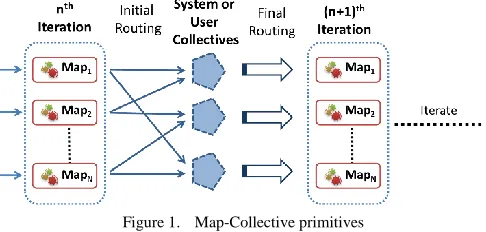
[image:2.612.314.557.338.454.2]While implementing iterative MapReduce applications using the MR-MB model, we started to notice several com-mon execution flow patterns across the different applications. Some of these applications had very trivial Reduce and Merge tasks while other applications needed extra effort to map to the MR-MB model owing to the execution patterns being slightly different than the iterative MapReduce pattern. In order to solve such issues, we introduce Map-Collective primitives to the iterative MapReduce programming model, inspired by the MPI collective communications primitives[2].
Figure 1. Map-Collective primitives
These primitives support higher-level communication pat-terns that occur frequently in data-intensive iterative applica-tions by substituting certain steps of the MR-MB computa-tion. As depicted in Figure 1, these Map-Collective primitives can be thought of as a Map phase followed by a series of framework-defined communication and computation opera-tions leading to the next iteration.
In this paper we propose two collective communication primitive implementations: AllGather and Map-AllReduce. You can also identify MR-MB as another collec-tive communication primicollec-tive as well.
A. Requirements
When designing Map-collective primitives for iterative MapReduce, we should make sure they fit with the MapRe-duce data model and the MapReMapRe-duce computational model, which support multiple Map task waves, large overheads, significant execution variations and inhomogeneous tasks. Also the primitives should retain scalability while keeping the programming model simple and easy to understand. These primitives should maintain the same type of frame-work-managed excellent fault tolerance supported by MapReduce.
Pattern Execution and communication flow Frameworks Sample applications MapReduce MapCombineShuffleSortReduce Hadoop, Twister, Twister4Azure WordCount, Grep, etc.
MapReduce-MergeBroadcast
MapCombineShuffleSortReduce
MergeBroadcast Twister, Haloop, Twister4Azure KMeansClustering, PageRank, Map-AllGather MapAllGather tionAllGather Combine Communica- H-Collectives, Twister4Azure MDS-BCCalc (matrix X matrix), Pagerank (matrix X vector)
MDS-B. Advantages
1) Performance improvement
Introduction of Map-Collective primitives provides 3 types of performance improvements to the iterative MapRe-duce applications. Map-Collectives can reMapRe-duce the overheads of the computations by skipping or overlapping certain steps (e.g. shuffle, reduce, merge) of the iterative MapReduce computational flow. Map-Collective patterns also fit more naturally with the application patterns, avoiding the need for unnecessary steps.
Another advantage is the ability for the frameworks to op-timize these operations transparently for the users, even al-lowing the possibility of different optimizations (poly-algorithm) for different use cases and environments. For ex-ample, a communication algorithm that’s best for smaller data sizes may not be the best for larger ones. In such cases, the Map-Collective operations can opt to have multiple algo-rithm implementations to be used for different data sizes.
These primitives also have the capability to make the ap-plications more efficient by overlapping communication with computation. Frameworks can start the execution of collec-tives as soon as the first results are produced from the Map tasks. For example, in the Map-AllGather primitive, present-ed in section 4, partial Map results are broadcastpresent-ed to all the nodes as soon as they become available. It is also possible to perform some of the computations in the data transfer layer, like the hierarchical reduction in Map-AllReduce primitive.
2) Ease of use
Map-Collective operations present patterns and APIs that fit more naturally with the real world applications. This sim-plifies the porting of new applications to the iterative MapReduce model. In addition, the developers can avoid manually implementing the logic of some of the operations, such as reduce and merge tasks, and can rely on optimized operations provided by the framework.
3) Scheduling with iterative primitives
In addition to providing synchronization between the iter-ations, Map-Collective primitives also give us the ability to propagate the scheduling information for the next iteration to the worker nodes along with the collective communication data. This allows the frameworks to synchronize and sched-ule the tasks of a new iteration or application with minimal overheads.
For example, as mentioned in section VI, Twister4Azure successfully employs this strategy to schedule new iterations with minimal overhead, while H-Collectives use this strategy to perform speculative scheduling of tasks.
C. Programming model
Map-Collective primitives can be specified as an outside configuration option without changing the MapReduce pro-gramming model. This permits the applications developed with Map-Collectives to be backward compatible with frameworks that don’t support them. This also makes it easy for developers who are already familiar with MapReduce programming to use Map-Collectives. For an example, a KMeans Clustering MapReduce implementation with Map, Reduce and Merge tasks can be used with Map-AllReduce or vice versa without doing any changes to the Map, Reduce or Merge function implementations.
D. Implementation considerations
Map-Collectives can be add-on improvements to MapRe-duce frameworks. The simplest implementation would be implementing the primitives using the current MapReduce API and communication model on the user level, then provid-ing the implementation as a library. This will achieve ease of use for the users by providing a unified programming model that better matches application patterns.
More optimized implementations can present these primi-tives as part of the MapReduce framework (or as a separate library) with the ability to optimize the data transfers based on environment and use case, using optimized group com-munication algorithms in the background.
IV. MAP-ALLGATHER COLLECTIVE
AllGather is an all-to-all collective communication opera-tion that gathers data from all the workers and distributes the gathered data right back to them[1]. AllGather pattern can be noticed in data-intensive iterative MapReduce applications where the “reduce” step is a simple aggregation operation that simply aligns the outputs of the Map Tasks together in order, followed by “merge” and broadcast steps that transmit the assembled output to all the workers. An example would be a Matix-vector multiplication, where each map task out-puts part of the resultant vector. In this computation we would use the Reduce and Merge tasks to assemble the vector together and then broadcast the assembled vector to workers. Data-intensive iterative applications that have the All-Gather pattern include MultiDimensionalScaling (matrix-matrix multiplication) [8] and Pagerank using inlinks (matrix-matrix (matrix-vector multiplication).
A. Model
We developed a Map-AllGather iterative MapReduce primitive similar to the MPI AllGather[1] collective commu-nication primitive to support applications in a more efficient manner.
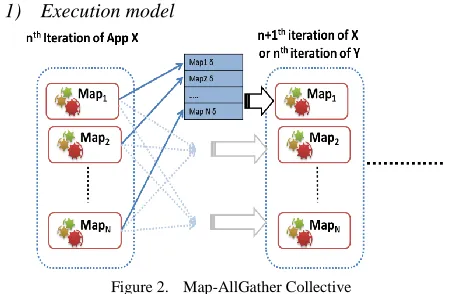
[image:3.612.320.548.474.621.2]1) Execution model
Figure 2. Map-AllGather Collective
Map-AllGather primitive broadcasts the Map Task out-puts to all computational nodes (all-to-all communication) of the computation, and then assembles them together in the recipient nodes as depicted in Figure 2. Each Map worker will deliver its result to all other workers of the computation once the Map task is completed.
com-bine phase. As shown here, this model substitutes the shuf-flesortreducemergebroadcast steps of the MR-MB with all-to-all broadcast and Allgather combine.
2) Data Model
For Map-AllGather, the map output key should be an in-teger specifying the location of the output value in the result-ant gathered data product. Map output values can be vectors, sets of vectors (partial matrix) or single values. Final output value of the Map-AllGather operation is an assembled array of Map output values in the order of their corresponding keys. The result of AllGather-Combine will be provided to the Map tasks of the next iteration as the loop variant data using the APIs and mechanisms suggested in Section 2.2.1.
The final assembly of AllGather data can be performed by implementing a custom combiner or using the default com-biner of AllGather-combine. Custom comcom-biner allows the user to specify a custom assembling function. In this case, the input to the assembling function is a list of Map outputs key-value pairs, ordered by the key. This assembling function gets executed in each worker node after all the data is received.
The default combiner should work for most of the use cases, as the combining of AllGather data is oftentimes a triv-ial process. The default combiner expect the Map outputs to be in <int, double[]> format. In a matrix example, the key would represent the row index of the output matrix and the value would contain the corresponding row vector. Map out-puts with duplicate keys (same key for multiple output val-ues) are not supported and therefore ignored.
Users can deploy their Mapper implementations as is with Map-AllGather primitive. They need to specify only the col-lective operation, after which the shuffle and reduce phases of MapReduce would be substituted by the Map-AllGather communication and computations.
3) Cost Model
Using an optimized implementation of AllGather, such as a bi-directional exchange-based implementation[1], we can estimate the cost of the AllGather component as follows us-ing the Hockney model[5, 9], where α is the latency and β is the transmission time per data item (1/bandwidth)), m is the number of map tasks and nv is the size of AllGather data.
𝑇𝐴𝑙𝑙𝐺𝑎𝑡ℎ𝑒𝑟= log(𝑚) 𝛼 +
𝑚 − 1 𝑚 𝑛𝑣𝛽
It’s also possible to further reduce this cost by performing local aggregation in the Map worker nodes. The variation of Map task completion times will also help to avoid network congestion in these implementations.
Map-Allgather substitutes the Map output processing (collect, spill, merge), Reduce task (shuffle, merge, execute, write), Merge task (shuffle, execute) and broadcast overheads with a less costly AllGather operation.
B. Fault tolerance
All-Gather partial data product transfers from Map to workers can fail due to communication mishaps and other breakdowns. When task level fault tolerance (typical MapRe-duce fault tolerance) is enabled, it’s possible for the workers to read the missing map output data from the persistent stor-age (e.g.HDFS) to successfully perform the All-Gather com-putation.
The fault tolerance and the speculative execution of MapReduce enable duplicate execution of tasks. Map-Allther can perform the duplicate data detection before the final as-sembly of the data at the recipient nodes to handle any dupli-cate executions.
C. Benefits
Use of the Map-AllGather in an iterative MapReduce computation eliminates the need for reduce, merge and broadcasting steps in that particular computation. Also the smaller-sized multiple broadcasts of Map-AllGather primi-tive originating from multiple servers of the cluster would be able to use the network more effectively than a single mono-lithic broadcast originating from a single server.
Oftentimes the Map task execution times are inhomoge-neous[10] in typical MapReduce computations. Implementa-tions of Map-AllGather primitive can start broadcasting the map task result values as soon as the first map task is com-pleted. This mechanism ensures that almost all the data is broadcasted by the time the last map task completes its exe-cution, resulting in overlap of computations with communica-tion. This benefit will be even more significant when we have multiple waves of map tasks.
In addition to improving the performance, this primitive also enhances usability, as it eliminates the overhead of im-plementing reduce and/or merge functions. Map-AllGather can be used to efficiently schedule the next iteration or the next application of the computational flow as well.
V. MAP-ALLREDUCE COLLECTIVE
AllReduce is a collective pattern which combines a set of values emitted by all the workers based on a given operation and makes the results available to all the workers[1]. This pattern can be seen in many iterative data mining and graph processing algorithms. Example data-intensive iterative ap-plications that have the Map-AllReduce pattern include KMeansClustering, Multi-dimensional Scaling StressCalc computation and PageRank using out links matrix.
A. Model
[image:4.612.314.568.546.665.2]We propose Map-AllReduce iterative MapReduce primi-tive, similar to the MPI AllReduce[1] collective communica-tion operacommunica-tion, to efficiently aggregate and reduce the results of the Map Tasks.
Figure 3. Map-AllReduce collective
1) Execution Model
shufflesortreducemergebroadcast steps of MR-MB with AllReduce communication in the communication layer. The AllReduce phase can be implemented efficiently using algorithms such as bidirectional exchange (BDE) [1] or hier-archical tree-based reduction.
Map-AllReduce allows the implementations to perform local aggregation on the worker nodes across multiple map tasks and to perform hierarchical reduction of the Map Task outputs while communicating them to all the workers.
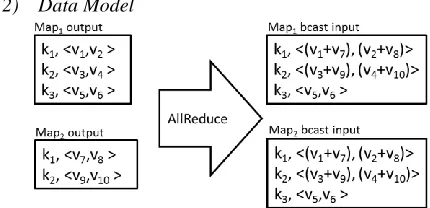
[image:5.612.62.277.169.273.2]2) Data Model
Figure 4. Example Map-AllReduce with Sum operation
For Map-AllReduce, the map output values should be vectors or single values of numbers. The values belonging to each distinct map output key are processed as a separate data reduction operation. Output of the Map-AllReduce operation is a list of key/value pairs where each key corresponds to a map output key and the value is the combined value of the map output values that were associated with that map output key. As shown in Figure 4, the number of records in the Map-AllReduce output is equal to the number of unique map out-put keys. For example, 10 distinct Map outout-put keys would result in 10 combined vectors or values. Map output value type should be a number.
In addition to the summation, any commutative and asso-ciative operation can be performed using this primitive. Ex-ample operations include sum, max, min, count, and product operations. Operations such as average can be performed by using the Sum operation together with an additional element (dimension) to count the number of data products. Due to the associative and commutative nature of the operations, Map-AllReduce has the ability to start combining the values as soon as the first map task completion. It also allows the Map-AllReduce implementations to use reduction trees or bidirec-tional exchanges to optimize the operation.
It is also possible to allow users to specify a post process function that executes after the AllReduce communication. This function can be used to perform a simple operation on the Map-AllReduce result or to check for the iteration termi-nation condition. It would be executed in each worker node after all the Map-AllReduce data has been received.
list<Key, IOpRedValue> postOpRedProcess(
list<Key, IOpRedValue> opRedResult);
3) Cost Model
An optimized implementation of Map-AllReduce, such as a bi-directional exchange-based implementation[1], will re-duce the cost of the AllRere-duce component to:
𝑇𝐴𝑙𝑙𝑅𝑒𝑑𝑢𝑐𝑒= log (𝑚) (𝛼 + 𝑛𝑣𝛽 + 𝑓(𝑛𝑣))
It’s also possible to further reduce this cost by performing local aggregation and reduction in the Map worker nodes, as the cost of AllReduce computation is small. Map-AllReduce
substitutes the Map output processing, Reduce task, Merge task and broadcast overheads.
Other efficient algorithms to implement AllReduce com-munication include flat-tree/linear, pipeline, binomial tree, binary tree, and k-chain trees[5].
B. Fault Tolerance
If the AllReduce communication step fails for some rea-son, it’s possible for the workers to read the map output data from the persistent storage to perform the All-Reduce compu-tation.
The fault tolerance model and the speculative execution model of MapReduce make it possible to have duplicate exe-cution of tasks. Duplicate exeexe-cutions can result in incorrect Map-AllReduce results due to the possibility of aggregating the output of the same task twice. The most trivial fault toler-ance model for Map-AllReduce would be a best-effort mech-anism, where Map-AllReduce would fall back to using the Map output results from the persistent storage (e.g. HDFS) in case duplicate results are detected. Duplicate detection can be done by maintaining a set of map IDs with each combined data product. It’s possible for the frameworks to implement richer fault tolerance mechanisms, such as identifying the duplicated values in localized areas of the reduction tree.
C. Benefits
Map-AllReduce reduces the work each user has to per-form in implementing Reduce and Merge tasks. It also re-moves the overhead of Reduce and Merge tasks from the computations and allows the framework to perform the com-bine operation in the communication layer itself.
Map-AllReduce semantics allow the implementations to optimize the computation by performing hierarchical reduc-tions, reducing the number and the size of intermediate data communications. Hierarchical reduction can be performed in as many levels as needed based on the size of the computa-tion and the scale of the environment. For example, first level in mappers, second level in the node and nth level in rack lev-el, etc. The mapper level would be similar to the “combine” operation of vanilla MapReduce. The local node aggregation can combine the values emitted by multiple mappers running in a single physical node. All-Reduce combine processing can be performed in real time when the data is received.
VI. IMPLEMENTATIONS
In this section we present two implementations of Map-Collectives on Hadoop MapReduce and Twister4Azure itera-tive MapReduce.
change the user application, making it possible to optimize these implementations in the future as future work.
It is not our objective to find the most optimal implemen-tations for each of the environments, especially for clouds where the most optimal implementation might end up being a moving target due to the rapidly evolving nature and the black box nature of cloud environments. This presents an interesting opportunity for cloud providers to develop opti-mized implementations of these primitives as cloud infra-structure services that can be utilized by the framework de-velopers.
A. H-Collectives : Map-Collectives for Apache Hadoop H-Collectives is a Map-Collectives implementation for Apache Hadoop that can be used as a drop in library with the Hadoop distributions. H-Collectives uses the Netty NIO li-brary, node-level data aggregations and caching to efficiently implement the collective communications and computations. Existing Hadoop Mapper implementations can be used with these primitives with only very minimal changes. These primitives work seamlessly with Hadoop dynamic scheduling of tasks, support for multiple map task waves and other de-sirable features of Hadoop, while supporting the typical Ha-doop fault tolerance and speculative executions as well.
A single Hadoop node may run several Map workers and many more map tasks belonging to a single computation. The H-Collectives implementation maintains a single node-level cache to store and serve the collective results to all the tasks executing in a worker node.
H-Collectives speculatively schedules the tasks for the next iteration and the tasks are waiting to start as soon as all the AllGather data is received, getting rid of most of the Ha-doop job startup/cleanup and task scheduling overheads. Speculative scheduling cannot be used easily with pure Ha-doop MapReduce as we need to add the loop variant data (only available after the previous iteration is finished) to the Hadoop DistributedCache before scheduling the job.
1) H-Collectives Map-AllGather
This implementation performs simple TCP-based best ef-fort broadcasts for each Map task output. Task output data are transmitted as soon as a task is completed, taking advantage of the inhomogeneous Map task completion times. Final ag-gregation of these data products are done at the destination nodes only once per node. If an AllGather data product is not received through the TCP broadcasts, then it will be fetched from the HDFS.
2) H-Collectives Map-AllReduce
H-Collectives Map-AllReduce use n'ary tree-based hier-archical reductions, where Map task level and node level reductions would be followed by broadcasting of the locally aggregated values to the other worker nodes. The final reduce combine operation is performed in each of the worker nodes and is done after all the Map tasks are completed and the data is transferred.
B. Map-Collectives for Twister4Azure iterative mapreduce Twister4Azure Map-Collectives are implemented using the Windows Communication Foundation (WCF)-based Az-ure TCP inter-role communication mechanism, while using the Azure table storage as a persistent backup.
Twister4Azure primitive implementations maintain a worker node-level cache to store and serve the primitive re-sult values to multiple Map workers and map tasks running on a single server. Twister4Azure utilizes the collectives to perform synchronization at the end of each iteration and also to aid in the decentralize scheduling of the tasks of the next iteration by using the collective operations to communicate the new iteration information to the workers.
1) Map-AllGather
Map-AllGather performs simple TCP-based broadcasts for each Map task output, which is an all-to-all linear imple-mentation. Workers start transmitting the data as soon as a task is completed. The final aggregation of the data is per-formed in the destination nodes and is done only once per node.
2) Map-AllReduce
Map-AllReduce uses a hierarchical processing approach where the results are first aggregated in the local node and then final assembly is performed in the destination nodes. The iteration check happens in the destination nodes and can be specified as a custom function or as a limit on the number of iterations.
VII. EVALUATION
In this section we evaluate and compare the performance of Map-Collectives with plain MapReduce using two real world applications, Multi-Dimensional-Scaling and K-means clustering. The performance results are presented by breaking down the total execution time in to the different phases of the MapReduce or the Map-Collectives computations. This pro-vides an idea of the performance model and propro-vides a better view of various overheads of MapReduce and the optimiza-tions provided by Map-Collectives to reduce some of those overheads.
In the following figures, ‘Scheduling’ is the per iteration (per MapReduce job) startup and task scheduling time. ‘Cleanup’ is the per iteration overhead from reduce task exe-cution completion to the iteration end. ‘Map overhead’ is the start and cleanup overhead for each map task. ‘Map variation’ is the overhead due to variation of data load, compute and map overhead times. ‘Comm+Red+Merge is the time for map to reduce data shuffle, reduce execution, merge and broad-cast. ‘Compute’ and ‘Data load’ times are calculated using the average compute only and data load times across all the tasks of the computation. The common components (data load, compute) are plotted at the bottom of the graphs to highlight variable components.
Hadoop and H-Collectives experiments were conducted in the FutureGrid Alamo cluster, which has Dual Intel Xeon X5550 (8 total cores) per node, 12 GB RAM per node and a 1Gbps network. Twister4Azure tests were performed in Win-dows Azure cloud, using Azure extra-large instances. Azure extra-large instances provide 8 compute cores and 14 GB RAM per instance.
majorization algorithm. The input for MDS is an N*N matrix of pairwise proximity values. The resultant lower dimension-al mapping in D dimensions, cdimension-alled the X vdimension-alues, is an N*D matrix.
Unweighted MDS results in two MapReduce jobs per it-eration, BCCalc and StressCalc. Each BCCalc Map task gen-erates a portion of the total X matrix. The reduce step of MDS BCCalc computation is an aggregation operation, which simply assembles the outputs of the Map tasks togeth-er in ordtogeth-er. This X value matrix is then broadcasted to be used by the StressCalc step of the current iterations, as well as by the BCCalc step of the next iteration. MDS performs relatively smaller amount of computations for a unit of input data. Hence MDS has larger data loading and memory over-head.Usage of the Map-AllGather primitive in MDS BCCalc computation eliminates the need for reduce, merge and broadcasting steps in that particular computation.
1) H-Collectives MDS Map-AllGather
Figure 5. MDS Hadoop using only the BC Calculation MapReduce job per iteration to highlight the overhead. 20 iterations, 51200 data points
We implemented the MDS for Hadoop using vanilla MapReduce and H-Collectives Map-AllGather primitive. Vanilla MapReduce implementation uses the Hadoop Dis-tributedCache to broadcast loop variant data to the Map tasks. Figure 5 shows the MDS strong scaling performance results highlighting the overhead of different phases on the computa-tion. We used only the BC Calculation step of the MDS in each iteration and skipped the stress calculation step to fur-ther highlight the AllGafur-ther component. This test case scales a 51200*51200 matrix into a 51200*3 matrix.
As we can notice in the figure 5, the H-Collectives im-plementation gets rid of the communication, reduce, merge, task scheduling and job cleanup overhead of the vanilla MapReduce computation. However, we notice a slight in-crease of Map task overhead and Map variation in the case H-Collectives Map-AllReduce-based implementation. We believe these increases are due to the rapid scheduling of Map tasks across successive iterations in H-Collectives, whereas in the case of vanilla MapReduce the map tasks of successive iterations have few seconds between the schedul-ing do perform housekeepschedul-ing tasks.
2) Twister4Azure MDS Map-AllGather
We implemented MDS for Twister4Azure using Map-AllGather primitive and MR-MB with optimized broadcast-ing. Twister4Azure optimized broadcast is an improvement over simple MR-MB as it uses an optimized tree-based algo-rithm to perform TCP broadcasts of in-memory data. Figure 6
shows the MDS (with both BCCalc and StressCalc steps) strong scaling performance results comparing the Map-AllGather based implementation with the MR-MB imple-mentation. The number of map tasks per computation is equal to the number of total cores of the computation. The Map-AllGather-based implementation improves the performance of Twister4Azure MDS by 13%-42% over MapReduce with optimized broadcast in the current test cases.
Figure 6. MDS application implemented using Twister4Azure. 20 iterations. 51200 data points (~5GB).
3) Detailed analysis of overhead
[image:7.612.344.514.156.267.2]This section presents a detailed analysis of overheads in the Hadoop MDS computation. Only the BCCalc MapRe-duce job is used. MDS computations use 51200 *51200 data points, 6 Iterations on 64 cores using 64 Map tasks per itera-tion. The total AllGather data size of this computation is 51200*3 data points. Average data load time is 10.61 seconds per map task. Average actual MDS BCCalc compute time is 1.5 seconds per map task.
Figure 7. Hadoop MapReduce MDS-BCCalc histogram
Figure 8. H-Collectives AllGather MDS-BCCalc histogram
[image:7.612.52.293.257.394.2] [image:7.612.314.558.384.588.2]In Figure 8, the striped section on each blue bar repre-sents the data loading time. As can be seen, the overheads between the iterations virtually disappear with the use of the Map-AllGather primitive.
4) Performance difference of Twister4Azure vs Hadoop Twister4Azure is already optimized for iterative MapRe-duce[4] and contains very low scheduling, data loading and data communication overheads compared to Hadoop. Hence the overhead reduction we achieve by using Map-collectives is comparatively. A major component of Hadoop MDS is due to the data loading, which Twister4Azure avoids by using data caching and cache aware scheduling.
B. K-means Clustering using Map-AllReduce
K-means Clustering[13] is often implemented using an it-erative refinement technique, where each iteration performs two main steps: the cluster assignment step and the centroids update step. In a typical MapReduce implementation, the assignment step is performed in the Map task and the update step in the Reduce task, while centroid data is broadcasted at the beginning or end of each iteration.
K-means Clustering centroid update step is an AllReduce computation. In this step all the values (data points assigned to a certain centroid) belonging to each key (centroid) are combined independently and the resultant key-value pairs (new centroids) are distributed to all the Map tasks of the next iteration. K-means Clustering has relatively smaller data loading and memory overhead vs. the number of computa-tions compared to the MDS application discussed above.
[image:8.612.312.556.257.570.2]1) H-Collectives KMeansClustering-AllReduce
Figure 9. Hadoop K-means Clustering comparison with H-Collectives Map-AllReduce Weak scaling. 500 Centroids,20 Dimensions. 10 iterations.
Figure 10. Hadoop MapReduce K-means Clustering & H-Collectives Map-AllReduce Strong scaling. 500 Centroids, 20 Dimensions,10 iterations.
We implemented the K-means Clustering application for Hadoop using the Map-AllReduce and plain MapReduce.
The MapReduce implementation uses in-map combiners to perform aggregation of the values to minimize the size of map-to-reduce intermediate data transfers.
Figure 9 illustrates the K-means Clustering weak scaling performance where we scaled the computation while keeping the workload per core constant. Figure 10 presents the K-means Clustering strong scaling performance where we scaled the computation while keeping the data size constant. Strong scaling test cases with smaller number of nodes use more map task waves optimizing the intermediate data com-munication, resulting in relatively smaller overhead for the computation
As we can see, the H-Collectives implementation gets rid of the communication, reduce, merge, task scheduling and job cleanup overhead of the vanilla MapReduce computation. A slight increase of Map task overhead and Map variation can be noticed in the case of Map-AllReduce based imple-mentation, similar to the behavior observed and explained in MDS section 7.a.1.
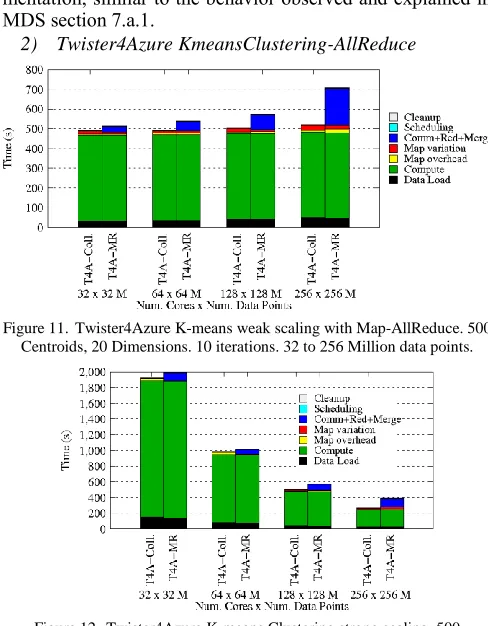
2) Twister4Azure KmeansClustering-AllReduce
Figure 11. Twister4Azure K-means weak scaling with Map-AllReduce. 500 Centroids, 20 Dimensions. 10 iterations. 32 to 256 Million data points.
Figure 12. Twister4Azure K-means Clustering strong scaling. 500 Centroids, 20 Dimensions, 10 iterations. 128Million data points.
[image:8.612.314.560.272.410.2] [image:8.612.55.294.384.526.2] [image:8.612.62.290.490.667.2]implementation gets rid of the communication, reduce and merge overheads of the MR-MB computation.
VIII. BACKGROUND AND RELATED WORKS
A. Collective Communication Primitives
Collective communication operations[2] facilitate opti-mized communication and coordination between groups of nodes of a distributed computation and are used heavily in the MPI type of HPC applications. These powerful operations make it much easier and efficient to perform complex data communications and coordination inside the distributed par-allel applications. Collective communication also implicitly provides some form of synchronization across the participat-ing tasks. There exist many different implementations of HPC collective communication primitives supporting numer-ous algorithms and topologies suited to different environ-ments and use cases. The best implementation for a given scenario depends on many factors, including message size, number of workers, topology of the system, the computation-al capabilities/capacity of the nodes, etc. Oftentimes collec-tive communication implementations follow a poly-algorithm approach to automatically select the best algorithm and to-pology for the given scenario.
Data redistribution communication primitives can be used to distribute and share data across the worker processors. Examples of these include broadcast, scatter, gather, and all-gather operations. Data consolidation communication primi-tives can be used to collect and consolidate data contributions from different workers. Examples of these include reduce, reduce-scatter and allreduce. We can further categorize col-lective communication primitives based on the communica-tion patterns as well, such as All-to-One (gather, reduce), One-to-All (broadcast, scatter), All-to-All (allgather, allre-duce, reduce-scatter) and Synchronization (barrier).
The MapReduce model supports the All-to-One opera-tions through the Reduce step. The broadcast operation of MR-MB model (section II) serves as an alternative to the One-to-All type operations. The MapReduce model contains a barrier between the Map and Reduce phases and the itera-tive MapReduce has a barrier between the iterations. The solutions presented in this paper focus on introducing All-to-All type collective communication operations to the MapRe-duce model.
We can implement All-to-All communications using pairs of existing All-to-One and One-to-All type operations present in the MR-MB model. For example, the AllGather operation can be implemented as Reduce-Merge followed by Broad-cast. However, these types of implementations would be inef-ficient and harder to use compared to dedicated optimized implementations of All-to-All operations.
B. MapReduce and Apache Hadoop
MapReduce, introduced by Google[14], consists of a pro-gramming model, storage architecture and an associated exe-cution framework for distributed processing of very large datasets. MapReduce frameworks take care of data partition-ing, task parallelization, task schedulpartition-ing, fault tolerance, in-termediate data communication, and many other aspects of these computations for the users. MapReduce provides an easy to use programming model allowing users to utilize the
distributed infrastructures to easily process large volumes of data.
MapReduce frameworks are typically not optimized for the best performance or parallel efficiency of small scale ap-plications. The main goals of MapReduce frameworks in-clude framework managed fault tolerance, ability to run on commodity hardware, ability to process very large amounts of data, and horizontal scalability of compute resources.
Apache Hadoop[15], together with Hadoop distributed parallel file system(HDFS) [16], provides a widely used open-source implementation of MapReduce. Hadoop sup-ports data locality-based scheduling and reduces the data transfer overheads by overlapping intermediate data commu-nication with computation. Hadoop performs duplicate exe-cutions of slower tasks and handles failures by rerunning the failed tasks using different workers. MapReduce frameworks like Hadoop trade off costs such as large startup overheads, task scheduling overhead and intermediate data persistence overhead for better scalability and reliability
C. Iterative MapReduce and Twister4Azure
Data-intensive iterative MapReduce computations are a subset of iterative computation, where individual iterations can be specified as MapReduce computations. Examples of applications that can be implemented using iterative MapRe-duce include PageRank, Multi-Dimensional Scaling[3, 17], K-means Clustering, Descendent query[7], LDA, and Col-laborative Filtering with ALS-WR.
These data-intensive iterative computations can be per-formed using traditional MapReduce frameworks like Ha-doop by manually scheduling the iterations from the job cli-ent driver, albeit in an un-optimized manner. However, there exist many possible optimizations and programming model improvements to improve the performance and usability of the iterative MapReduce programs. Such optimization oppor-tunities are highlighted by the development of many iterative MapReduce frameworks such as Twister[6], HaLoop[7], Twister4Azure[3], Daytona[18] and spark[19]. Optimizations exploited by these frameworks include caching of loop-invariant data, cache aware scheduling of tasks, iterative aware programming models, direct memory streaming of intermediate data, iteration-aware fault tolerance, caching of intermediate data (HaLoop reducer input cache), dynamic modifications to cached data (e.g. genetic algorithm), and caching of output data (in HaLoop).
Twister4Azure is a distributed decentralized iterative MapReduce runtime for Windows Azure Cloud that was de-veloped utilizing Azure cloud infrastructure services. Twist-er4Azure optimizes the iterative MapReduce computations by multi-level caching of loop invariant data, performing cache aware scheduling, optimizing intermediate data trans-fers, optimizing data broadcasts and many other optimiza-tions described in Gunarathne et al[3].
loop variant data are too large to fit in to the memory and introduce communication and scalability bottlenecks as well. Example of such a computation is PageRank. The Map-ReduceScatter primitive, modeled after MPI Map-ReduceScatter, is aimed to support such use cases in an optimize manner.
Map-ReduceScatter gets rid of the inefficiency of simple broadcast of all the data to all the workers. Another alterna-tive approach is to perform a join of loop invariant input data and loop variant data using an additional MapReduce step. However, this requires all the data to be transported over the network from Map tasks to Reduce tasks, making the compu-tation highly inefficient.
Map-ReduceScatter primitive is still a work in progress and we are planning on including more information about the Map-ReduceScatter in our future publications.
X. CONCLUSIONS
We introduced Map-Collectives, collective communica-tion operacommunica-tions for MapReduce inspired by MPI collectives, as a set of high level primitives that encapsulate some of the common iterative MapReduce application patterns. Map-Collectives improve the communication and computation performance of the applications by enabling highly optimized group communication across the workers, by getting rid of unnecessary/redundant steps and by enabling the frameworks to use poly-algorithm approach based on the use case. Map-Collectives also improve the usability of the Mapreduce frameworks by providing abstractions that closely resembles the natural application patterns and reduces implementation burden of the developers by providing optimized substitu-tions to certain steps of MapReduce model. We envision a future where many MapReduce and iterative MapReduce frameworks support a common set of portable Map-Collectives and consider this work as a step towards that.
In this paper, we defined AllGather and Map-AllReduce Map-Collectives and implemented Multi-Dimensional Scaling and K-means Clustering applications using these operations. We also presented the H-Collectives library for Hadoop, which is a drop-in Map-Collectives li-brary that can be used with existing MapReduce applications with only minimal modification. We also presented a Map-Collectives implementations for Twister4Azure iterative MapReduce framework as well. MDS and K-means applica-tions were used to evaluate the performance of Map-Collectives on Hadoop and on Twister4Azure depicting up to 33% and 50% speedups over the non-collectives implementa-tions by getting rid of the communication and coordination overheads.
ACKNOWLEDGMENT
We would like to thank colleagues and members of the Digi-tal Science Center at Indiana University for helpful discus-sions and contributions to the Twister4Azure and the present work. We gratefully acknowledge support from Microsoft for Azure Cloud Academic Resources Allocation, which were critical for our experiments. Thilina Gunarathne was support-ed by a fellowship sponsorsupport-ed by Persistent Systems.
REFERENCES
[1] E. Chan, M. Heimlich, A. Purkayastha et al., “Collective communication: theory, practice, and experience,” Concurrency and Computation: Practice and Experience, vol. 19, no. 13, pp. 1749-1783, 2007.
[2] "MPI Collective Communications," http://www.ncsa.illinois.edu/ UserInfo/Resources/Hardware/CommonDoc/MessPass/MPIColl.html. Retrieved Nov 2013.
[3] T. Gunarathne, B. Zhang, T.-L. Wu et al., “Portable Parallel Programming on Cloud and HPC: Scientific Applications of Twister4Azure,” Fourth IEEE International Conference on Utility and Cloud Computing (UCC), Melbourne, Australia, 2011.
[4] T. Gunarathne, B. Zhang, T.-L. Wu et al., “Scalable parallel computing on clouds using Twister4Azure iterative MapReduce,” Future Generation Computer Systems, vol. 29, no. 4, pp. 1035-1048, 6//, 2013.
[5] J. Pjesivac-Grbovic, T. Angskun, G. Bosilca et al., "Performance analysis of MPI collective operations." 19th IEEE International Parallel and Distributed Processing Symposium, April 2005.
[6] J.Ekanayake, H.Li, B.Zhang et al., “Twister: A Runtime for iterative MapReduce,” First International Workshop on MapReduce and its Applications of ACM HPDC 2010, Chicago, Illinois, June 2010.
[7] Y. Bu, B. Howe, M. Balazinska et al., “HaLoop: Efficient Iterative Data Processing on Large Clusters,”, 36th International Conference on Very Large Data Bases, Singapore, 2010.
[8] J. B. Kruskal, and M. Wish, Multidimensional Scaling: Sage Publications Inc., 1978.
[9] R. W. Hockney, “The communication challenge for MPP: Intel Paragon and Meiko CS-2,” Parallel Computing, vol. 20, no. 3, pp. 389-398, 3, 1994. [10] J. Ekanayake, T. Gunarathne, and J. Qiu, “Cloud Technologies for Bioinformatics Applications,” Parallel and Distributed Systems, IEEE Transactions on, vol. 22, no. 6, pp. 998-1011, 2011.
[11] S.-H. Bae, J. Y. Choi, J. Qiu et al., “Dimension reduction and visualization of large high-dimensional data via interpolation,”, 19th ACM International Symposium on High Performance Distributed Computing, Chicago, Illinois, 2010, .
[12] J. de Leeuw, “Convergence of the majorization method for multidimensional scaling,” Journal of Classification, vol. 5, pp. 163-180, 1988.
[13] S. Lloyd, “Least squares quantization in PCM,” Information Theory, IEEE Transactions on, vol. 28, no. 2, pp. 129-137, 1982.
[14] J. Dean, and S. Ghemawat, “MapReduce: simplified data processing on large clusters,” Commun. ACM, vol. 51, no. 1, pp. 107-113, 2008.
[15] Apache Hadoop, http://hadoop.apache.org/core/. Retrieved Nov.2013 [16] "Hadoop Distributed File System HDFS,"
http://hadoop.apache.org/hdfs/, Retrieved Nov 2013.
[17] Z. Bingjing, R. Yang, W. Tak-Lon et al., "Applying Twister to Scientific Applications." IEEE Second International Conference on Cloud Computing Technology and Science (CloudCom), Indianapolis, Dec. 2010
[18] Microsoft Daytona,
http://research.microsoft.com/en-us/projects/daytona/. Retrieved Feb 2012.