bulletin of the european atomic energy community
december 1965 vol. IV no. 4
M
■
■ I
■
D
Η
aa ι
■ ■ ■
■
mm m
■ I I
π π
G
π π
Π Γ Γ
■ ■
D Π
e υ rat
o m
Quarterly information Bulletin of the Euro
pean Atomic Energy Community (Euratom)
19654
Contents:
98 The British atomic programme
104 Nuclear slang and nuclear terminology
111 Euratom joint enterprises
116 How radiation causes cell death
122 Towards an ORGEL prototype
127 Euratom news:
First criticality of H A R M O N I E reactor; A glandular extract helps to cure radiation damage; Prestressed concrete vessels for water reactors ï An interexecutive for scientific research; Letters to the Editor.
Published and edited by:
Euratom, Dissemination of Information
Directorate, 5153 rue Belliard, Brussels 4.
Telephone: 13 40 90
For subscription rates please see overleaf.
The Euratom Commission or any persons
acting on its behalf disclaim all liability with
respect to the completeness of the
in-formation contained in this periodical as
well as to any damage which might result
from the use of information disclosed or of
equipment, methods or processes described
therein.
Any article published in this bulletin
may be reproduced in whole or in part
without restriction, provided that the
source is mentioned.
Picture credits:
page 2 of cover: U.K.A.E.A.;
pages 101-103: U.K.A.E.A.; page 111:
U.S.A.E.C.; page 112: Euratom JRC Ispra/
Ulrich Zimmermann; page 113: National
Film Board, Canada; page
114:
Alain
Perce-val, Paris; page115: Erich Bauer, Karlsruhe.
Cover
by Gaston Bogaert, Brussels.
Quarterly
Five editions:
English, German, French, Italian and Dutch
Subscriptions t o :
Agence et Messageries de la Presse (A.M.P.),
34, rue du Marais, Brussels 1, Belgium.
or:
H.M. Stationery Office, P.O. Box 569,
London S.E. 1, U.K.
or:
European Communities Information
Service, Suite 808, Farragut Building,
Washington 6, D.C., U.S.A.
Yearly subscription rates:
United Kingdom 18/-; United States $ 3.50;
Basic rate:
Europe: 125 Belgian Francs
Other countries: 175 Belgian Francs
Single copies:
United Kingdom 6/; United States $ 1 .
Quarterly Information Bulletin of the Euro-pean A t o m i c Energy C o m m u n i t y (Euratom)
1965-4
The Community's mission is t o create the conditions necessary f o r the speedy estab-lishment and g r o w t h of nuclear industries in the member States and thereby contrib-ute t o the raising of living standards and the development of exchanges w i t h other countries (Article 1 of the Treaty instituting the European A t o m i c Energy C o m m u n i t y ) .
aaioisotopes raaioiso t o p i radioisotopen s hip propulsion schiffs antrieb propulsion na vale propulsione nava le scheepsvoortstuwi ng biology biologie biologie biologia bio logie medicine medi zin médecine medicin a geneeskunde healt h protection gesundh eitsschutz protection sanitaire protezione s anitaria bescherming van de gezondheid automatic data proces sing automatische inf ormation information automatique informa zione automatica auto matische verwerking van gegevens insura nee yersicherungswes en assurances assicura zione verzekeringen economics Wirtschaft économie economia e c o n o m i e e d u c a t i o n and training ausbildu ng enseignement inse gnamento onderwijs en opleiding power reactors leistungsreak t o r e n réacteurs de pu issance reattori di po tenza energie reactor en nuclear fusion ke rnverschmelzung fusi
on nucléaire fusione nucleare kernversmei ting radioisotopes r adioisotope radioisot opes radioisotopi ra dioisotopen ship pr opulsion schiffsantrie b propulsion navale propulsione navale scheepsvoortstuwi ng biology biologie biolo gie biologia biologie
medicine medizin me decine medicina gene eskunde health pro tection gesundheitssc hutz protection sanit aire protezione sanita ria bescherming van de gezondheid auto matic data processing automatische informa t i o n information auto matique informazione automatica automatis che verwerking van g egevens insurance v ersicherungswesen as surances assicurazioni verzekeringen econ omics Wirtschaft èco nomie economia eco nomie education and training ausbildung enseignement ¡nsegn amento onderwijs en opleiding power reac tors leistungsreakto ren réacteurs de pu issance reattori di po tenza energie reactor en nuclear fusion ke rnverschmelzung fusi on nucléaire fusione nucleare kernversmei ting radioisotopes r adioisotope radioisot opes radioisotopi ra dioisotopen ship pr
I t is both an honour and a pleasure for us t o present in this issue of E u r a t o m Bulletin an a r t i c l e by Sir W i l l i a m Penney, C h a i r m a n of t h e
U n i t e d K i n g d o m A t o m i c Energy A u t h o r i t y .
A year ago exactly, w e launched a series of articles devoted t o t h e nuclear p r o g r a m m e s of t h e European A t o m i c Energy C o m m u n i t y ' s M e m b e r States. A l t h o u g h Sir W i l l i a m ' s a r t i c l e cannot strictly speaking be considered as p a r t of it, since t h e U n i t e d K i n g d o m is n o t a M e m -ber S t a t e of E u r a t o m , t h e r e can be no d o u b t t h a t in spirit it holds a place in this series.
T h e r e a r e t w o m a i n links b e t w e e n t h e U n i t e d K i n g d o m and the European C o m m u n i t y in t h e field of nuclear energy. O n e is afforded by t h e O . E . C D . D r a g o n project, in which both a r e m a j o r p a r t n e r s , and t h e o t h e r by an A g r e e -m e n t for c o - o p e r a t i o n , signed in 1959, covering a w i d e range of exchanges.
S o m e t h r e e years ago, negotiations over t h e U n i t e d K i n g d o m ' s e n t r y into t h e European A t o m i c Energy C o m m u n i t y w e r e under way and it was assumed by a l l t h a t t h e y w o u l d succeed. H o w e v e r , t h e failure early in 1963 of t h e negotiations over the U n i t e d King-dom's e n t r y into t h e C o m m o n M a r k e t , which had been proceeding a t t h e same t i m e , en-t a i l e d en-t h a en-t en-t h e E u r a en-t o m negoen-tiaen-tions had en-to be b r o k e n off.
Far f r o m w e a k e n i n g t h e links b e t w e e n t h e U n i t e d K i n g d o m and E u r a t o m , this event gave renewed significance to t h e 1959 A g r e e -m e n t and led to a gradual expansion of the areas of c o - o p e r a t i o n .
The A t o m i c Energy A u t h o r i t y A c t of 1954 recognised the need for a large and con-certed effort on t h e development of nuclear power for civil use. The A c t created the U.K.A.E.A. as a body financed by the Government and subject t o Ministerial d i r e c t i o n , but free of some of the day t o day restrictions on a Government D e p a r t m e n t . The A u t h o r i t y have therefore had consider-able freedom in choosing the d i r e c t i o n of much of t h e i r research and development w o r k on the civil side.
The A t o m i c Energy A u t h o r i t y have capital assets of some £250m. and the civil research and development programme employs nearly 3,000 graduate and professional engineers and scientists. The cost of this programme is about £50m. a year. Half of this is spent directly on the development of reactors for nuclear power production t o meet the requirements of the U.K. electricity generating programme and of e x p o r t markets. The rest is spent on more general research related t o this objective, on isotopes and on fusion research. The A u t h o r i t y is also continuing t o examine nuclear reactors of l o w e r power o u t p u t , including t h e i r use for nuclear marine propulsion, although the economic pros-pects of the present concepts of marine reactors are not good.
The A u t h o r i t y , in addition t o its research function, is a major production organisation in the fields of nuclear fuel fabrication and reprocessing, enriched uranium production and radioisotope preparation.
More recently, the Science and Technology Act 1965 has widened the powers of the A u t h o r i t y t o conduct research w o r k not in the nuclear field. The intention is t o w o r k for the exploitation of skills and hardware developed f o r o r closely associated w i t h nuclear matters. The first task given under this Act by the Minister is the development of desalination techniques, in conjunction w i t h British industry.
The Authority's organisation
The A t o m i c Energy A u t h o r i t y is constituted as a Board of some 15 Members, of w h o m about half have full-time executive posts. The organisation comprises several Groups responsible respectively for research, reac-tors, production, engineering and weapons. The following are the main sites at which our w o r k is carried o u t :
E U B U 4—15
The British atomic programme
SIR W I L L I A M PENNEY, Chairman, United Kingdom Atomic Energy Authority
Harwell (Research G r o u p ) : Founded in 1946, Harwell is responsible f o r research w o r k , largely concerned w i t h materials, t h e i r properties (particularly nuclear properties) and the effects on them of radiation. Its programme covers nuclear as well as theoretical physics, and physics of the solid state, nuclear chemistry, radiation chemis-t r y and irradiachemis-tion damage schemis-tudies, physical metallurgy and certain specialised lines of chemical engineering. H a r w e l l , of course, have a number of reactors and particle accelerators which are t h e essential tools of thei r w o r k .
Culham (Research G r o u p ) : A laboratory near Harwell and O x f o r d w h e r e we are carrying out research i n t o controlled thermonuclear reactions, plasma physics and the feasibility of using nuclear fusion of light isotopes as a source of industrial power in the longer t e r m . The w o r k at Culham is at present aimed at understanding and controlling the many instabilities which prevent magnetic fields f r o m confining extremely hot ions and electrons (i.e. plasma) for more than a relatively brief moment. Culham has also been concerned in aspects of the U.K. space programme including the first stages of a study of the solar corona and the chromosphere.
Aldermaston (Weapons G r o u p ) : The
Wea-pons G r o u p is, in the main, outside the subject of this article. H o w e v e r , Aldermas-t o n is also doing subsAldermas-tanAldermas-tial research and development w o r k in aid of t h e civil programme.
Risley (Production G r o u p ) : Risley in Lan-cashire is the Headquarters for o u r Produc-t i o n G r o u p which direcProduc-ts Produc-the operaProduc-tion of o u r factories:—at Springfields f o r the manufacture of nuclear fuel f o r t h e elec-t r i c i elec-t y power selec-taelec-tions; aelec-t Windscale the Chemical Separation Plant f o r the reprocessing of irradiated fuel f r o m the A u t h o r i -ty's power and research reactors, f r o m the U.K. nuclear power programme and f r o m various types of reactors in o t h e r countries; at Capenhurst where the gaseous diffusion plant for the e n r i c h m e n t of uranium is situated. The G r o u p also manages the t w o power-producing nuclear stations of Calder Hall and Chapekross. This G r o u p conducts large commercial operations w i t h sales of the o r d e r of £ 3 0 million a year, mainly of fuel elements f r o m Springfields but in-cluding the sale of electricity f r o m Calder Hall and Chapekross.
Also at Risley are the Headquarters of the Engineering G r o u p , responsible for the design and construction of our complicated and sophisticated plant and f o r some w o r k for other organisations, and of the Reactor
G r o u p , w h o are p r i m a r i l y responsible f o r the design and development of new types of p o w e r reactors. The Reactor G r o u p operates f o u r R. & D. laboratories (at
Windscale, Springfields, Risley and Culcheth
near Risley) and t w o sites w h e r e reactor e x p e r i m e n t s t a k e place—Winfrith in Dorset and Dounreay on the n o r t h coast of Scotland. More w i l l be said about reactor develop ment later in this a r t i c l e .
Amersham: The Radiochemical C e n t r e sells and d i s t r i b u t e s isotopes and n o w does considerable business of nearly £ 2 m . a year. O v e r half of Amersham's o u t p u t is ex p o r t e d : recently t h e C e n t r e has notably extended its range of labelled compounds.
H i g h e n e r g y physics
A n i m p o r t a n t element in t h e national facili ties f o r research in high energy elementary particle physics is the Rutherford High Energy Laboratory, one of t h e establishments of t h e newly formed Science Research C o u n c i l . Established on a site adjacent t o H a r w e l l i t is used mainly by scientists f r o m British U n i v e r s i t i e s .
W o r k at the Laboratory is centred on the use of t w o p r o t o n accelerators—a 7 GeV s y n c h r o t r o n , NIMROD, and a 50 MeV p r o t o n linear accelerator (P.L.A.).
U.K.A.E.A. establishments
Research Group
J Production Group
I Weapons Group
I Reactor Group Engineering Group Other establishments
C.E.G.B. and S.S.E.B. Nuclear power stations
O p e r a t i o n of the P.L.A. began in 1959 and 50 nuclear physicists n o w use the machine.
NIMROD has been in use f o r high energy physics since February, 1964 and about 120 physicists are involved in t h e e x p e r i m e n t a l p r o g r a m m e . The full range of techniques w h i c h are needed t o investigate t h e p r o p e r ties of fundamental particles is found in this Laboratory. Bubble chamber e x p e r i m e n t s have recently begun, using an 80 c e n t i m e t r e hydrogen chamber, on loan f r o m t h e Saclay Laboratory near Paris.
Eventually t h r e e large chambers (a 1.5 m e t r e hydrogen, a 1.4 m e t r e heavy l i q u i d and an 80 c e n t i m e t r e helium) w i l l be used w i t h NIMROD.
A f u r t h e r large high energy p r o j e c t in t h e U.K. is t h a t f o r a 4 GeV e l e c t r o n synchro t r o n , NINA, at Daresbury in C h e s h i r e , n o t far f r o m Risley.
T h e U . K . n u c l e a r p o w e r p r o g r a m m e
The e l e c t r i c i t y generating stations of t h e U.K.'s industrial nuclear p o w e r p r o g r a m m e are o w n e d and operated by t h e national e l e c t r i c i t y boards of the c o u n t r y and are built by B r i t i s h i n d u s t r y .
The relationship between t h e A u t h o r i t y and i n d u s t r y was defined in 1955 as one of close partnership. In o r d e r t o ensure the maxi mum practicable use of existing facilities, research and development w o u l d be t h e responsibility of t h e A u t h o r i t y , w h o w o u l d place contracts w i t h i n d u s t r y in suitable circumstances, w h i l e i n d u s t r y w o u l d be responsible, w i t h a p p r o p r i a t e s u p p o r t f r o m the A u t h o r i t y , f o r the commercial e x p l o i t a t i o n of t h e results of t h e A u t h o r i t y ' s nuclear research and development p r o g r a m m e . The A u t h o r i t y have encouraged t h e g r o w t h of a s t r o n g nuclear engineering i n d u s t r y
capable of p u t t i n g t h e results of t h e A u t h o r ity's research and development w o r k t o good use. The Generating Boards, the A u t h o r i t y and ¡ndustry w o r k in close association on the development and con s t r u c t i o n of p r o t o t y p e p o w e r reactors. The A u t h o r i t y also makes design studies, in collaboration w i t h ¡ndustry, on concepts of fullscale p o w e r stations, thus giving in d u s t r y an early o p p o r t u n i t y of applying the developing techniques t o the best economic advantage. The nuclear consortia of private industrial firms have as a result successfully collaborated w i t h t h e e l e c t r i c i t y generating boards in t h e U n i t e d Kingdom and w i t h the A u t h o r i t y in establishing the largest nation al nuclear p o w e r investment in the w o r l d . The f i r s t phase of t h e national nuclear p o w e r p r o g r a m m e consists of the construction and commissioning of 5,000 M W of nuclear p o w e r by 1969—all magnox stations, based on t h e design of the A u t h o r i t y ' s Calder Hall and Chapekross stations which were the p r o t o t y p e s . The programme consists of nine stations: H u n t e r s t o n in Scotland; t w o in N o r t h Wales and the remainder in the South of England. T h e r e are good reasons f o r this d i s t r i b u t i o n : coal stations are at t h e i r cheapest w h e n situated near the coal fields, and nuclear stations t h e r e f o r e are of most advantage in areas w h i c h are f u r t h e s t f r o m coalfields but near t o large load cen t r e s .
Table 1 shows the capital costs and t h e
design performance f o r each s t a t i o n .
You w i l l see t h a t as t h e p r o g r a m m e p r o
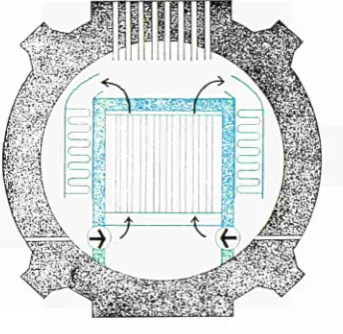
Figure 1: Vertical crosssection of an A . G . R .
[image:7.595.377.549.552.719.2]2315 P.S.I.A.
BOILER 105O°F. TURBO-GENERATOR
REHEATER 5 5 0 p.s.l.A.
1050°F. 629 P.S.I.A. 710°F.
&
FEED PUMP 3015 P.S.I.A. 325°F.O
i
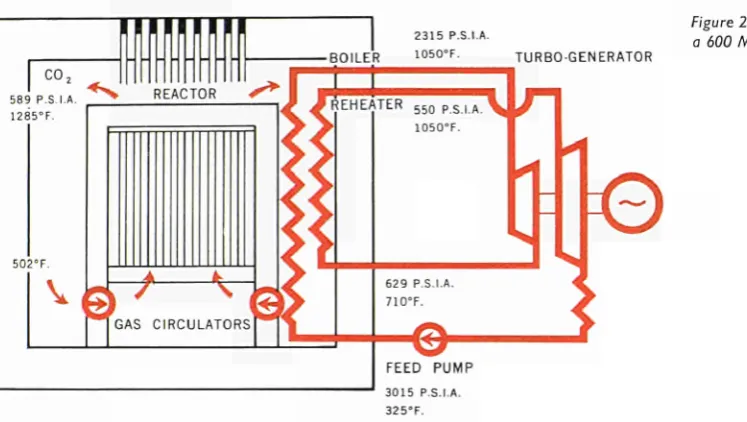
Figure 2: Temperature and steam conditions of a 600 MWe A . G . R . reactor
gressed there has been a very big increase in size of stations. Each of these stations has t w i n reactors. The first t w o at Bradwell and Berkeley have reactors of 150 M W o r less; the last at Wylfa consists of 2 590 M W reactors. The last column shows the fall ¡n capital costs per kW of the stations. These falls are in part due t o the effect of increases in size; and in part, as can be seen f r o m the costs of the middle group of stations, as the result of improvements in design. The 4 t h and 5th columns show improvements in performance, w i t h thermal efficiency rising f r o m around 2 4 % f o r Berkeley t o over 3 3 %
for O l d b u r y , and in fuel rating (which gives the electrical o u t p u t for each tonne of uran-ium) rising f r o m 0.6 M W e t o over 1.0 MWe per tonne of uranium.
Already five of these stations are on power and t w o more are now loading. The U.K. nuclearstations have already generated over 36,000 million units and by the end of this year t h e r e w i l l be over 3,000 M W e on power. The early stations, Bradwell and Berkeley, have now been on power f o r three years and the reactors have performed satisfactorily w i t h high availabilities; over the six months' period December t o May
[image:8.595.68.442.125.336.2]covering last w i n t e r these stations had load factors of over 9 0 % . The Scottish station H u n t e r s t o n came on power early in 1964 and appears t o be capable of generating at perhaps 2 5 % above its design o u t p u t . Magnox stations have also been constructed by British industry in Italy and Japan. W i t h the first 5,000 M W programme now well under way, the A u t h o r i t y ' s role in the magnox programme ¡s now l i m i t e d t o t h e manufacture and reprocessing of the fuel. Further improvements in the design and construction of the magnox reactor are now the task of the consortia.
Table 1: Civil magnox stations capital costs and performance data
(a) i.e. Total station cost including tender price, site costs and Generating Board engineering charges. (b) Under negotiation.
(c) Actual output is above 320 MWe.
Station
Berkeley
Bradwell
Hunterston
Hinkley Point
Trawsfynydd
Dungeness
Sizewell
Oldbury
Wylfa
reactor on power1962
1962
1964
1965
1965
1965
1965
1966
1968
Guaranteed output MWe275
300
300(c)
500
500
550
580
600
1180
efficiency%
24.4
28.2
28.3
26.4
29.4
32.9
30.5
33.6
31.5
rating MWth/teU2.4
2.3
2.3
2.55
2.9
2.8
2.96
2.85
3.2
pressure p.s.i.g.125
132
150
200
240
268
279
364
400
Capital cost £ / k W186
176
- ( b )
150
137
114
107
108
100
T h e r e a c t o r d e v e l o p m e n t p r o g r a m m e
The A u t h o r i t y ' s w o r k in the last few years has been concentrated on developing more advanced systems. Here again, the A u t h o r i t y w o r k closely w i t h the industrial consortia and w i t h the electricity generating boards. The main aim is t o reduce the capital costs.
A . G . R .
In this development w o r k the A u t h o r i t y first sought t o e x p l o i t f u r t h e r the potential of the gas-cooled graphite-moderated system, building on o u r experience of the magnox system. This led t o the develop-ment of the advanced gas-cooled reactor (A.G.R.). The A.G.R. has C 02 cooling and graphite m o d e r a t i o n . The fuel is slightly
enriched uranium o x i d e canned in stainless steel, as opposed t o the uranium metal rods canned in magnesium alloy of t h e magnox station. The A.G.R. p r o t o t y p e , built at the A u t h o r i t y ' s Windscale establishment, w e n t on p o w e r two-and-a-half years ago. Notable features of the A.G.R. system are high ther mal efficiency, on-load fuelling giving high availability and excellent safety characteris tics.
This p r o t o t y p e has w o r k e d well w i t h a high availability and electricity generation. It has averaged 8 5 % since i t w e n t on power excluding shut-downs f o r experimental purposes. The fuel has behaved excellently. Its task has been t o demonstrate on the actual reactor the technical soundness of the system.TheWindscale A.G.R. is also a valuable testbed for improved fuel elements devel oped t o achieve b e t t e r performance (e.g. higher gas temperatures) and l o w e r fabrication costs.
reactor systems of proved design (in practice
B.W.R. o r P.VV.R.) t o be judged on a com parable basis. They received seven t e n d e r s ; t h r e e f o r A.G.Rs, and f o u r f o r U.S. designs. The detailed and t h o r o u g h tender assess ments carried o u t by the C.E.G.B., w i t h the A u t h o r i t y ' s assistance on technical aspects, in the early part of this year showed that the A.G.R. tendered by A t o m i c Power Constructions L t d . had clear advantages both economically and technically over the o t h e r systems, and the contract has been awarded accordingly.
The details and costs of this station w e r e released by the C.E.G.B. in July, 1965 in a full and precise f o r m . The station w i l l have a 4 1 % efficiency. Assuming 20 year life, 7 5 % lifetime average load factor and 7 % % discount rate, C.E.G.B. assess the generating cost at 0.457d/u.s.o.This is some 1 0 % below t h e nearest competing water-moderated system.
a high load factor (above 7 5 % ) f o r many years.
[image:9.595.199.552.373.472.2]Figure 1 shows a diagram of a Dungeness ' B ' type of station w i t h the concrete pres sure vessel, w h i c h , among other features of the A.G.R., can refer t o the full-scale ex perience of the magnox stations. Amongst t h e advantages for this are the small size of t h e reactor leading t o less construction costs, and simplicity of construction w i t h l i t t l e requirement f o r special equipment. The attractive safety features of the D u n -geness 'B' station are also in part due t o the use of concrete pressure vessels. These in t u r n should open up a greater range of sites f o r f u t u r e A.G.R. stations. Dungeness ' B ' w i l l also have on-load refuelling w i t h high availability, w i l l meet standard conven tional steam conditions and w i l l use com pletely standard turbines and associated e q u i p m e n t .
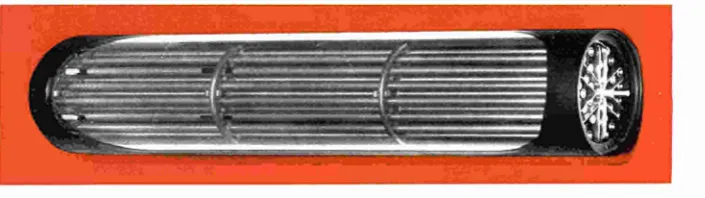
Figure 3: A cutaway model of a 36 pin A . G . R .
fuel assembly
O u r hopes f o r the A.G.R. w e r e confirmed in mid-1965 when the Central Electricity Generating Board placed an o r d e r for a 1200 M W power station of this design, comprising 2 600 M W reactors each linked t o a single standard 600 M W t u r b i n e , called the Dungeness ' B ' station. (Dungeness Ά ' is a magnox station—see Table 1). In 1964 the B r i t i s h G o v e r n m e n t announced in a W h i t e Paper t h a t , all t h e stations of the first 5000 M W power p r o g r a m m e having been o r d e r e d , t h e r e should be a second nuclear power programme of stations t o be commissioned in the period 1970-75. For planning purposes this was put at 5000 M W , w i t h the possibility of subsequent review. U n d e r the terms of the W h i t e Paper, the Central Electricity Generating Board in 1964 invited tenders for an A.G.R. station and indicated t h e i r readiness t o consider also tenders f r o m British industry for water
If less conservative assumptions are made, t h e A.G.R. generating costs are still f u r t h e r i m p r o v e d . W i t h a 30 year life and 7 5 % load factor they fall t o just over 0.41d/u.s.o. W i t h 30 year life and 8 5 % load factor, they become just under 0.38d/u.s.o. The C.E.G.B's tender assess ment also referred t o the particularly good development potential of the A.G.R. It was estimated that the reduction in total generating costs below those of Dungeness 'B' which might be achieved w i t h i n a five-year period is about 2 0 % .
Thus, w i t h the A.G.R., nuclear power in the U.K. is now established as cheaper than conventional methods of generation f o r stations operating at high load factors. In the U.K., w i t h o u r integrated generating systems, nuclear stations w i l l , even w i t h a large nuclear p r o g r a m m e , be able t o enjoy
N o w that the A.G.R. has proved itself for the power programme, the A u t h o r i t y w i l l be concerned in consultation and advice on the construction of the industrial power stations, and in continued development particularly of the fuel t o i m p r o v e both performance and economics.
S . G . H . W .
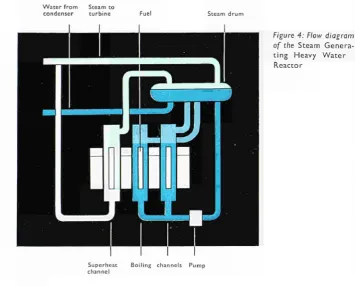
The S.G.H.W. is an advanced boiling water reactor of pressure tube construction (similar t o the Canadian Candu, except that the tubes are vertical, not unlike the U.S. pressure-vessel ß.VV.Rs) w i t h facilities for the development of nuclear superheat. The light water boiling or superheating takes place in the fuel channel pressure tubes. Moderation is effected partly by the heavy water in the tank surrounding the pressure tubes and partly by the light water coolant. The fuel is in the f o r m of long clusters of pins containing ceramic uranium dioxide pellets. The canning material is Zircaloy f o r the boiling channel fuel and stainless steel for the superheat fuel.
The S.G.H.W. fuel could be low-enrichment U 02, natural uranium dioxide o r metal o r natural uranium dioxide enriched w i t h plutonium. There are thus several possible routes t o select. The design also offers the promise of combining low enrichment requirements, l o w capital costs and low generating costs. These advantages are likely t o apply over a wide range of station outputs.
D r a g o n
A reactor system in which the A u t h o r i t y has a shared interest w i t h o t h e r Western European countries is the High Temperature Gas-cooled Reactor.
The 20 M W t h Dragon reactor became critical a year ago. A l t h o u g h built on British soil at the A u t h o r i t y ' s W i n f r i t h establishment,
Dragon is a European Nuclear Energy Agency project in which Britain is a partner w i t h the six Euratom countries and w i t h A u s t r i a , Denmark, N o r w a y , Sweden and Switzerland. The objective of the Dragon
Project is t o provide the participants w i t h information and experience t o enable this reactor concept t o be assessed for large competitive nuclear power plants.
This is a very advanced system and we do not yet know its exact economic prospects, but—as stated in the Project's sixth annual r e p o r t — i t is thought that the most appro-priate size for a Dragon-type power plant would be based on a 500-600 M W e reactor u n i t in a pre-stressed concrete pressure vessel. This system could well be the
Water from
[image:10.595.43.399.430.716.2]condenser Steam to turbine Fuel Steam drum
Figure 4: Flow diagram of the Steam Genera-t i n g Heavy W a Genera-t e r Reactor
Boiling channels Pump
culminating point of the development of gas-graphite reactors which has been pursu-ed w i t h such success in both Britain and Europe. It is still an open question how large a place we can see for the H.T.R. in the power programme of the U.K. When the Dragon reactor has operated at full power for a year o r so i t should be easier t o make forecasts of the future of the H.T.R.
Fast r e a c t o r
Finally I come t o the fast reactor on which the largest single part of o u r development effort is now concentrated. This promises t o be the most economic system because of the hope it offers f r o m the costs angle, and because of its breeding characteristics. The fast reactor is the best user of plutonium as a fuel. D u r i n g the 1970's increasing supplies of plutonium w i l l become available f r o m the magnox and A.G.R. stations of the U.K's electricity programmes. By using this as a fuel the fast reactor should help t o improve the economics of the whole British nuclear power programme. In the long run an even more I m p o r t a n t aspect of the fast reactor w i l l be its potentiality for breeding more plutonium than i t consumes. Ultimately this could enable us t o extract 30 or 50 times more energy f r o m uranium than would otherwise be possible, which should remove any fear of the g r o w t h of nuclear power being restricted by the economics of urani-um supplies. It is interesting t o note that w i t h such nuclear fuel conservation reasons ¡n mind several o t h e r leading industrial countries, e.g. the U.S.A., Russia, France and Germany are all w o r k i n g energetically on fast reactors.
The A u t h o r i t y have a g r o w i n g confidence that the fast reactor offers promise of lower power costs as well as much improved utilisation of natural uranium. O u r w o r k has convinced us that fast reactors can operate at substantially l o w e r fuel costs than any o t h e r system. The capital costs, by the t i m e that the Generating Boards are ready t o build commercial fast reactor stations, should be similar t o those of advanced thermal neutron stations built at the same p e r i o d .
O u r experimental 60 M W t h fast reactor at Dounreay has operated at full power for long periods since July 1963 and supplies electricity t o the g r i d . It is the first fast reactor t o have produced electricity for
Figure 6: The Fast Reactor Experiment, Dounreay, Caithness. The Fast Reactor Experiment at Dounreay attained its full power of 60 MWth in July 1963 and since then has been used primarily as an irradiation test facility for future fast reactors, though it is generating about 15 MW of electricity, some of which is fed to the grid.
Figure 5: Fuel element transfer flask in the upper loading facility of the O.E.CD. Dragon reactor, Winfrith, Dorset, England
public use and t o have operated at such high power levels. It is being used as a test facility and f o r the development of fuel. W e have now decided o n the main design features of a much larger p r o t o t y p e p o w e r producing reactor and the A u t h o r i t y hopes shortly t o submit proposals t o the G o v e r n -ment for the building of this p r o t o t y p e t o come on power around t h e end of the present decade. This is the next major step towards the installation of commercial fast-reactor p o w e r stations of 500 o r 1000 M W in the later 1970's.
C o n c l u s i o n
A large effort and large sums of money are being spent by the U n i t e d Kingdom in developing economical forms of nuclear power. Several o t h e r highly industrialised countries are also now planning t o increase
very sharply t h e i r construction programmes of nuclear power stations. Estimates suggest that t h e r e may be between 100,000 and 200,000 M W e installed nuclear power capa-city in the W e s t e r n W o r l d by 1980. In t h e U.K. t h e r e is much speculation on the f u t u r e rate of g r o w t h of e l e c t r i c i t y demand and on the t r e n d in nuclear power programmes by the t i m e that we have completed o u r s e c o n d national programme in 1975. I myself am convinced that the U.K. and o t h e r develop-ed countries w i l l rather rapidly increase the rate of building nuclear stations. The continuing w o r k I have described above w i l l prove of great benefit in helping t o meet f u t u r e needs f o r economic p o w e r . I am honoured that I should have been given the o p p o r t u n i t y t o describe o u r national effort in the nuclear field in Euratom's official b u l l e t i n . A l t h o u g h the U n i t e d K i n g -dom is not a member of Euratom, w e are partners in the Dragon Project and w e are
[image:11.595.23.270.136.466.2]The tower of Babel (15th century woodcut)
Is
\
ν
m
yj
lì
V '
* . *
sfcrV »
.
A
'M
Ik.' . > t )
E U B U 4—16
Nuclear slang
and nuclear terminology
H E I N R I C H K O W A L S K I , Head of the Terminology Bureau at Euratom, Brussels
From a lecture given to the International Con gress of Translators and Interpreters (CITI), held in Giirzenich Hall, Cologne
Of all t h e scientists and technologists w h o have ever walked t h e e a r t h , m o r e than 9 0 % are living in o u r o w n t i m e . A l l o v e r t h e w o r l d t h e y are assiduously e x t r a c t i n g new knowledge and describing new discoveries i n such an enormous range of different fields and on such a vast scale t h a t w e are justified in speaking of an " i n f o r m a t i o n e x p l o s i o n " . A l l these branches of science have t h e i r o w n peculiar vocabulary o r specialised j a r g o n .
The t i m e is long past, and probably f o r ever, w h e n t h e r e was a u n i f o r m physical o r technical, o r even a universally intelligible and generally recognised,scientific t e r m i n o l ogy. In the l a b o r a t o r y , on t h e t e s t r i g o r in a reactor no difficulties arise. The people engaged in these activities are all birds of a feather and if necessary, t h e y can even make themselves u n d e r s t o o d w i t h slang expres sions: e.g. 'a b i t m o r e j u i c e ! ' , 'up one notch !', 'back t o z e r o ! ' . It is only at t h e n e x t higher level that problems begin t o c r o p up, i.e. in t h e summarising of results and in t h e d r a f t i n g of r e p o r t s w i t h the object of passing on i n f o r m a t i o n , especially w h e n t h i s is intended f o r the u n i n i t i a t e d , w h o may be experts w o r k i n g in o t h e r fields. For this
purpose t h e r e is a need f o r a f i x e d t e r m i n o l ogy w i t h clearlydefined concepts and a carefully chosen n o m e n c l a t u r e , just as the Eskimos, f o r example, have a specific ice t e r m i n o l o g y w h i c h contains some 20 des ignations t o distinguish between t h e various kinds of ice.
F r o m Confucius t o H e r t z
The t e r m i n o l o g y p r o b l e m in the w i d e s t sense has been w i t h us since t i m e i m m e m o r i a l . W e need only t h i n k of t h e t o w e r of Babel o r of Confucius w h o , w h e n asked 2,400 years ago w h a t he w o u l d d o f i r s t of all if he had t o rule the c o u n t r y , r e p l i e d : " I should f i r s t i m p r o v e t h e use of language. If t h e language is n o t used c o r r e c t l y , t h e n that w h i c h is said f a u s t o reflect t h e speak er's meaning. A r t and m o r a l i t y cannot t h r i v e , justice is n o t done and t h e people do n o t k n o w w h i c h way t o t u r n . Let us t h e r e f o r e t o l e r a t e no a r b i t r a r i n e s s in w o r d s . "
In o u r labours in t h e field of t e r m i n o l o g y we are concerned p r i m a r i l y w i t h solving t h e problems of technical language in everyday practice and w i t h clearing a f r e q u e n t l y impenetrable linguistic jungle, in w h i c h l a b o r a t o r y slang is hopelessly entangled w i t h technical jargon,and legitimate scien t i f i c t e r m s w i t h t h e parlance of popular science. O u r object is t o help establish a technical t e r m i n o l o g y w h i c h ,
— is sufficiently c o r r e c t t o serve as a ¡ m e d i u m of c o m m u n i c a t i o n ; U
— w h e r e v e r possible assigns a particular designation t o a p a r t i c u l a r concept and vice v e r s a ;
— is practical and c l e a r — o r as W i l h e l m G r i m m said: "sensuous and e v o c a t i v e " ( o t h e r w i s e i t w i l l n o t s u r v i v e ) ; — and is so c o n s t i t u t e d t h a t i t does not
unduly offend t h e p u r i s t (a r e q u i r e m e n t w h i c h , as w e k n o w , is almost impossible t o f u l f i l ) .
H e i n r i c h H e r t z , t h e discoverer of the waves w h i c h are named after h i m , expounded t h e relationship between t h e research scientist and t h e outside w o r l d . In t h i s c o n n e c t i o n he speaks of i n n e r images, of basic notions t h a t w e build up f r o m e x t e r n a l objects and processes. O u r reasoning faculty sets t o w o r k on these ¡mages and w e may possibly d r a w inferences and even make " p r e d i c t i o n s " : w e need only t h i n k h o w L e v e r r i e r deduced t h e existence of t h e planet N e p t u ne o r Y u k a w a t h a t of mesons, o r Einstein the possibility of c o n v e r t i n g mass i n t o e n e r g y ; in each case t h e concept existed in the scientist's m i n d as a " d e d u c t i v e neces s i t y " before any p r o o f was ascertained. These i n n e r images and concepts, says
H e r t z , must t h e r e f o r e beso c o n s t i t u t e d t h a t the inescapable deductions t o w h i c h t h e y lead always reflect t h e inescapable physical consequences of e x t e r n a l phenomena. Thus t o i m p a r t i n f o r m a t i o n is t o evoke t h e r i g h t images and basic responses in t h e mind of t h e r e c i p i e n t . A n d h o w can t h i s be done if t h e i n f o r m a t i o n vehicle is defective? Language—in this case technical language— is, in t h e w o r d s of R. W . J u m p e l t , " t h e basis of all scientific t h o u g h t , even t h o u g h w e may be aware of i t m e r e l y as a means of c o m m u n i c a t i o n " .
^vvw^K
^ C o n s i d e r i n g t h e e x p o n e n t i a l increase in t h e n u m b e r of scientists and technologists, and in v i e w of the many specialised fields w i t h all t h e i r new and complicated research objectives, apparatus and t h e o r i e s , i t may be d o u b t e d w h e t h e r language is at all capable o f keeping pace w i t h t h i s sudden d e v e l o p m e n t .
E. W ü s t e r w r o t e : " T h e c o m p l e x i t y and f e r t i l i t y of scientific and technical t h i n k i n g is such t h a t unregulated natural selection is no longer adequate f o r t h e establishment of a u n i f o r m and efficient linguistic usage". For t h i s purpose a high degree of standard isation is necessary: language must be f r o z e n , as i t w e r e , in o r d e r t h a t w o r d s may not t a k e on d i f f e r e n t meanings f r o m one m o m e n t t o a n o t h e r and f r o m place t o place.
D a n g e r : l i n g u i s t i c c o n t a m i n a t i o n !
In f u t u r e , w h e n you hear somebody using such w o r d s as hot, black, fast o r bare, o r speaking of age, dollars and cents, ask h i m w h a t his profession is. If he is a nuclear engineer he w i l l mean by hot e i t h e r " e x c i t e d " (e.g. a hot atom) o r " r a d i o a c t i v e " (e.g. a h o t l a b o r a t o r y ) . T o him ζ black body could easily be w h i t e o r red, since by black he means opaque t o c e r t a i n radiations. A
fast, bare r e a c t o r usually has no v e l o c i t y at all, t h a t is t o say i t is s t a t i o n a r y , b u t t h e neutrons causing nuclear fission in its fission zone possess an e x t r e m e l y high energy, w h i c h in t h i s case is synonymous w i t h fast, and bare denotes t h a t i t is n o t s u r r o u n d e d by a reflector. The age of n e u t r o n s is given not in years b u t in units of surface: you may perhaps r e m e m b e r t h a t a l i g h t y e a r , t o o , is n o t w h a t i t seems, i.e. a u n i t of t i m e , but a measure of a s t r o n o m i c a l distance. Finally,
dollars and cents may, of c o u r s e , refer t o money but in t h i s c o n t e x t i t is m o r e l i k e l y t h a t r e a c t i v i t y is meant.
These t e r m s are not rare specimens of " c o n t a m i n a t e d l a b o r a t o r y s l a n g " ; they have become established in standard scientific language, appear in specialist l i t e r a t u r e and are used b o t h in research centres and at conferences. In t h i s case, m o r e o v e r , t h e s i t u a t i o n is comparatively harmless because w e are s t i l l e n t i r e l y w i t h i n the sector of nuclear t e c h n o l o g y . It d e t e r i o r a t e s w h e n a n u m b e r of scientific and technical disciplines are involved and becomes really c o m p l e x w h e n , in a d d i t i o n , t h e subject m a t t e r is in several languages, and has t o be translated
o r i n t e r p r e t e d . It is a case of t h e d e v i l take t h e h i n d m o s t , and this is t h e e x t r e m e l y challenging t e r m i n o l o g i c a l s i t u a t i o n w h i c h prevails, f o r example, in t h e Linguistic D i v i s i o n at E u r a t o m , w h i c h every year has t o translate some 50,000 pages of mainly scientific and technical t e x t s f r o m t h e e n t i r e range of developments connected w i t h nuclear energy—a field t h e scope of w h i c h is barely h i n t e d at by t h e subjects dealt w i t h in Euratom Bulletin.
F u r t h e r m o r e , t h e translations must n o t only be accurate and readable but must also smack of a u t h e n t i c i t y . T o t h e t e r m i n o l o g i c a l difficulties and ambiguities o f one's o w n native tongue w h i c h I have already o u t l i n e d , are n o w added those of o t h e r languages. M o r e o v e r , scientists of d i f f e r e n t c o u n t r i e s often look at t h e same p r o b l e m f r o m t o t a l l y d i f f e r e n t points of v i e w , so a t r a n s l a t i o n in t h e t r u e sense is impossible.
O n t h e b o i l i n g o f w a t e r
Let me give a seemingly simple e x a m p l e —
formed which considerably reduces the f u r t h e r transfer of heat. This phenomenon is known as the "spheroidal s t a t e " (Ger-man: Leidenfrost'sches Phänomen; French:
caléf'action).
Incidentally, in the Middle Ages some of the unfortunate women w h o were made t o walk over redhot coals in trials for w i t c h -craft were saved f r o m burning t h e i r feet severely by this vapour f i l m . From the present-day standpoint this gruesome test was based on false premises insofar as it could tell us more about the relationship between the perspiration rate and com-bustion t e m p e r a t u r e of human feet than about the necromantic proclivities of the ladies concerned.
In the hot zone of a water-cooled reactor this phenomenon can be dangerous. The great quantities of heat evolved as a result of nuclear fission processes in t h e atomic fuel must be evacuated f r o m t h e fuel-ele-ment walls. However, the u n t i m e l y forma-t i o n of such a vapour film aforma-t cerforma-tain poinforma-ts causes an accumulation of heat and t h e wall becomes so severely overheated locally that destruction of the heating surface may occur; this is k n o w n as burn-out ( G e r m a n :
Durchbrennen; French: brûlage).
As is so often the case, these c o n d i t i o n s can best be illustrated by means of a graph, the so-called Nukiyama curve. But i t is also necessary t o describe them in words—and here is w h e r e the t r o u b l e starts: in Ger-many the basis is usually taken as thethermal load on the heating surface (Wärmebelastung der Heizfläche), whereas in France i t is the
vapour film effect,and in Britain and the U.S.A. the theoretical boiling curve; consequently, one and the same q u a n t i t y , namely the thermal flux at w h i c h burn-out occurs is t e r m e d respectively kritische Heizflächen-belastung, flux de caléfaction and DNB-flux, in which connection i t is also necessary t o k n o w that DN8 stands for departure from nucleate boiling, that is t o say the transition f r o m bubble- t o film-boiling.
There are about a dozen more confusing terms for t h i s ; they are all the more confusing because they are frequently used indiscriminately t o denote both the phenom-enon itself and the physical value, as is the case, f o r example, w i t h radioactivity: s t r i c t l y speaking, radioactivity refers only t o the phenomenon, w h i l e the c o r r e c t t e r m for the corresponding physical value is
activity.
T h e jungle of nuclear t e r m i n o l o g y
In such cases, as in a thousand and one others, even good technical dictionaries are of no help; the only solution is t o compare appropriate technical publications in the original languages. A useful indication w i l l then often be obtained f r o m the physical units ¡n w h i c h the quantity is expressed, i.e. what appears in square brackets after a figure. A n example of this is the w o r d " p o w e r " w i t h its various meanings of force, energy, o u t p u t , etc.; frequently the c o r r e c t meaning can only be ascertained f r o m the units quoted.
The energy released per u n i t of mass by nuclear fuel is called burn-up in English and
Abbrand in G e r m a n . The French exasperated us f o r some t i m e w i t h such expressions as
taux d'irradiation, taux d'épuisement, com-bustion massique, durée d'irradiation and
niveau d'intégrité u n t i l It t u r n e d out that all these terms referred t o the n u m b e r of megawatt-days per tonne, i.e. they always meant " b u r n - u p " .
Nuclear engineers are fond of using e l l i p t i -cal forms on the pattern of " l o n g h a i r e d d o g o w n e r s " , especially ¡n reactor designa-tions—a practice of American o r i g i n . Thus
besides the previously mentioned fast
reactor—or, more c o r r e c t l y , fast-neutron reactor—we have the thermal breeder w h i c h operates w i t h thermal neutrons and p r o -duces, o r " b r e e d s " more fuel than i t con-sumes (although i t is by no means an exam-ple of perpetual m o t i o n ! ) , t h e enriched converter reactor in w h i c h enriched fuel is present, and so o n . One can t h e r e f o r e
sympathise w i t h the i n t e r p r e t e r w h o , t o the astonishment of the assembled e x p e r t s , spoke of a tail reactor (Schwanzreaktor). In p o i n t of fact the t e r m that had been used was n o t , as he t h o u g h t , réacteur à queue but
réacteur aqueux, that is t o say a reactor in w h i c h the fuel takes the f o r m of an aqueous s o l u t i o n .
In some languages use is often made of metaphorical designations w h i c h have t o be paraphrased, since a literal translation would sound e i t h e r unduly m o r b i d o r somewhat comical : t o quote some examples f r o m English, mortuary facilities are equip-ment for the handling of radioactive waste, a
coffin is a transport container, and a burial ground o r graveyard is a storage site.
The English t e r m "rabbit" which denotes a small pneumatically o r hydraulically p r o p e l -led container used in a reactor, becomes
furet (i.e. f e r r e t ) in French and Rohrpostbüch-se (one of the gadgets used in d e p a r t m e n t stores w h i c h push money about t h r o u g h tubes) in German. The apparatus k n o w n as " c u t i e p i e " , which was thus christened by its American inventor in honour of his wife, w h o m he used t o call by that name, can unfortunately not receive such an affection-ate designation in o t h e r languages; t h e translator w i l l have t o keep his feet t o t h e ground and render the equivalent of " p o r t a b l e radiation m o n i t o r " .
Even such apparently innocuous words as
"fissionable" and "fissile" must be treated w i t h caution, since, s t r i c t l y speaking, t h e f o r m e r means capable of undergoing fission in the general nuclear sense, whereas the latter refers t o material in w h i c h fission can be produced by thermal n e u t r o n s ; in German these t e r m s are p r o p e r l y rendered by spaltbar and thermisch spaltbar res-pectively.
French, t o o , gives us many a hard nut t o crack: f o r instance, it is not always easy t o ascertain w h e t h e r by "diffusion" a French-man means diffusion o r scatter o r propaga-tion.
For a t i m e we w e r e puzzled by the expres-sion "les zones périphériques dégavées d'un réacteur", and i t was only by wading t h r o u g h the proceedings of the Geneva Conference that we found the answer t o the r i d d l e . A t first sight " g a v e r " and "gavage" w i l l no doubt suggest t o you—as i t did t o us—the practice of c r a m m i n g , or forced feeding, e.g. of geese; here, however, it means in the peripheral zones of a reactor core the fuel is less t i g h t l y " c r a m m e d " I.e. less highly
[image:14.595.242.398.524.705.2]enriched than in t h e central zone. The t e r m "vache à radioéléments" refers n o t t o a c o w t h a t yields radioelements instead of m i l k , but t o a socalled " m i l k i n g " system consisting of a column w i t h a tap at t h e b o t t o m f o r d r a w i n g off radionuclides; and in this connection i t w o u l d be wise t o take a closer look at t h e confusion f r e q u e n t l y encountered in t h e use of t h e w o r d s
element, isotope and nuclide.
N o m e n est o m e n
T o conclude t h i s chapter of examples I should l i k e t o m e n t i o n a n o t u n i n t e r e s t i n g t r e n d t h a t is discernible in some countries as regards t h e naming of nuclear installa t i o n s . A b b r e v i a t e d names which may seem q u i t e a r b i t r a r y v e r y often have a logic of t h e i r o w n and convey more i n f o r m a t i o n than w o u l d appear at f i r s t sight, and i t can doubtless be assumed t h a t , l i k e so many o t h e r apparently fantastic designations, t h e y are based o n mnemonic principles. For instance, t h e r e is a sodiumcooled fast reactor in France called RAPSODIE, t h e name being f o r m e d f r o m t h e f i r s t few letters of " r a p i d e " and "sodium" respectively. In t h e same way a breeder mockup at Cadarache w h i c h is a f u r t h e r development of this t y p e is k n o w n as MASURCA, t h e l e t t e r s in this case standing f o r " m a q u e t t e surrégénéra t r i c e Cadarache" and t h e next stage of d e v e l o p m e n t — w h i c h is being carried o u t on a basis of harmonious European collaboration — i s called the HARMONIE p r o j e c t , because in G r e e k m y t h o l o g y H a r m o n i a was Europa's sisterinlaw.
A z e r o p o w e r reactor designed by t h e A r g o n n e Laboratories in the U.S.A., i.e. t h e A r g o n n e Naught Power Reactor, was dubbed ARGONAUT. T h e r e are also o t h e r members of this reactor family in B r i t a i n ; like t h e Argonauts of o l d , these have crossed t h e sea and consequently bear such names as JASON. To give a f u r t h e r example,
JANUS is, of course, a reactor w i t h t w o faces, o r , m o r e accurately, t w o e x p e r i m e n t a t i o n surfaces, one f o r low and one f o r highflux i r r a d i a t i o n s . A n d if I n o w tell you that KIWI is a reactor w h i c h was designed f o r space research but w h i c h — l i k e t h e N e w Zealand b i r d after w h i c h i t was named — i s s t i l l incapable of f l i g h t , you w i l l easily guess the characteristics of the GODIVA
reactor. You need only p i c t u r e Lady Godiva on her legendary r i d e t h r o u g h t h e s t r e e t s of
A technician of the H A R M O N IE reactor staff..
C o v e n t r y t o conclude t h a t t h e reactor is bare and fast!
S t a n d a r d i s a t i o n—o r else
Whereas in o t h e r fields t h e r e is already a high degree of t e r m i n o l o g i c a l s t a b i l i t y , in nuclear science t h e r e is s t i l l a need f o r vigorous p r u n i n g of t h e f e r t i l e but f r e q u e n t ly overabundant linguistic o u t g r o w t h in o r d e r t o prevent u n c o n t r o l l e d p r o l i f e r a t i o n of t e r m i n o l o g y in o u r o w n language and a Babylonian confusion of tongues among translators and i n t e r p r e t e r s .
Standardisation must be carried o u t w h e r ever possi ble and any t e r m t h a t is ambiguous o r superfluous must be eradicated, even t h o u g h this may mean t h a t many w o r d s w i l l become ossified i n t o formulae and many concepts be represented purely by symbols, e.g. αparticle, vfactor, kcapture. This task is being tackled at a national level by t h e T e r m i n o l o g y C o m m i t t e e s of the official standardisation bodies, whose p u b l i cations—although f o r t h e most part u n i lingual—are c e r t a i n l y t h e most reliable documents available. U n f o r t u n a t e l y , the w o r k of t e r m i n o l o g y standardisation p r o gresses comparatively slowly. This is due on the one hand t o i n h e r e n t difficulties of
f o r m u l a t i o n and on t h e o t h e r hand t o the fact t h a t f o r some t i m e now steps have been t a k e n , chiefly t h r o u g h the International Standardisation Organisation (ISO), t o achieve international u n i f o r m i t y of t e r m i n o logy, and t h i s , of course, entails f u r t h e r delay.
In this standardisation w o r k the accent f o r the most part is n o t so much on p u r i s t a c t i v i t y o r the coining of the new w o r d s — although this t o o is done—as on t h e d e f i n i t i o n of w o r d s and expressions in c u r r e n t usage. A n d this is w h e r e opinions f r e q u e n t l y differ on opposite sides of the A t l a n t i c ; f o r what is c u r r e n t usage on one side may sound like hideous laboratory slang on the o t h e r . H o w e v e r , t h e discoverer of a new star o r a new chemical element has always been privileged t o christen his o w n discovery, and since—in the past at any r a t e — m o s t of t h e inventions and developments in nuclear technology w e r e of transatlantic o r i g i n , we in the O l d W o r l d must in many cases give way and, w h e t h e r we like i t o r n o t , a l l o w t h e nuclear inventors t o give thei r " b a b i e s " w h a t e v e r names they choose.
T h e E u r a t o m Glossary ¡n t h e m a k i n g
arrive at a well-defined nuclear terminology, i.e. at an adequate measure of correspond-ence between the technical vocabularies of the various languages; indeed, as long ago as 1957 the Euratom Treaty expressly stated that one of the tasks of the Community's Joint Nuclear Research Centre should be t o
" . . . ensure the establishment of uniform nuclear t e r m i n o l o g y . . . "
Consequently i t is only natural that at Euratom the terminologist has been w o r k -ing side by side w i t h the translator and the i n t e r p r e t e r f r o m the very outset. Since the Terminology Bureau is attached t o the Linguistic Division it must also be equipped t o answer queries f r o m our own translation sections o r f r o m other sources both inside and outside Euratom.
To this end we have compiled a central card-index and built up a specialised library adapted t o our specific requirements, in addition t o which we have established, either directly o r via terminology cor-respondents, contacts w i t h research centres and o t h e r useful sources of terminology. As far as our terminology w o r k in the strict sense is concerned, I must say at once that there is, of course, no question of setting up in competition w i t h the existing standard-isation bodies: in the first place we should not have enough staff t o d o s o , and secondly this would entail the risk of overlapping and duplication of effort. W h a t we can do—and are doing—is, wherever possible, t o co-operate actively w i t h the existing national and international standardisation organisa-tions, t o submit proposals and express wishes—and t o take what steps we can t o ensure that the standardised designations are in fact used. Moreover, we consider it a success ¡f ¡n a given case we have managed t o persuade the standardisation a u t h o r i t y of this or that country that certain concepts should be dealt w i t h as a matter of p r i o r i t y . First and foremost, therefore, we collect what has been defined in one, o r occasional-ly t w o languages by the various standardisa-tion authorities w o r k i n g in the fields of particular concern to us, set these defini-tions side by side in the languages in which we are p r i m a r i l y interested, and see t o it that the gaps are filled.
Secondly—and I have already mentioned the inevitable time-lag in the standardisation process—we also endeavour t o fix p r o v i -sional nomenclature for concepts f o r which no official terminology has yet been established, and for this purpose we
I n f o r m a t i o n sources
- w ^ * onal and interna- ^ ^B =* * J Technical and
scienti-standards bu- Specialist publications fie linguistic services
Euratom Glossary w i t h several thousand concepts and definitions (in book form)
naturally rely mainly o n o r i g i n a l publica tions in t h e languages concerned.
In t h i s connection the cardindexes c o m piled by individual t r a n s l a t o r s are a n o t h e r valuable a i d , since in o r d e r t o keep abreast of developments t h e translators read numerous technical j o u r n a l s a n d — a c c o r d i n g t o t h e i r temperament—evaluate the in f o r m a t i o n they contain.
The results obtained are filed in the previously m e n t i o n e d central cardindex.
From t i m e t o t i m e w e also compile smaller technical glossaries on various subjects, f o r instance on t h e use of radioisotopes, o r on nuclear ship p r o p u l s i o n , o r on t h e basic standards f o r radiological p r o t e c t i o n . A Terminology Bureau Bulletin, w h i c h at present contains some 25 pages, is issued m o n t h l y and serves f o r t h e i n f o r m a t i o n of t h e translators and o t h e r circles interested in o u r activities, besides p r o v i d i n g a s o r t of f o r u m f o r discussion.
T h e E u r a t o m Glossary
As a l o n g t e r m o b j e c t i v e we have under taken the c o m p i l a t i o n of a fivelanguage technical d i c t i o n a r y e n t i t l e d "The Euratom Glossary". W e are q u i t e aware of the fact t h a t t h i s w i l l be a p p r o x i m a t e l y t h e 5507th technical d i c t i o n a r y t o have appeared since t h e t u r n of t h e c e n t u r y , but R. W . Jumpelt's complaint about the inadequate cataloguing of technical language t o date is valid in o u r field t o o , and w e t h e r e f o r e believe t h a t t h i s project is j u s t i f i e d , t h e m o r e so in v i e w of o u r o w n particular needs and t h e task e n t r u s t e d t o us.
In addition t o t h e f o u r official C o m m u n i t y languages t h e Euratom Glossary also covers English, which in many cases is t h e w o r k i n g language and ultima ratio of scientists and technicians. The Glossary is issued in loose leaf f o r m in separate unbound instalments o f f o r m a t D I N A 4 . The first t w o of these have so far appeared; they c o n t a i n about 3.000 t e r m s and 400 d e f i n i t i o n s f r o m nuclear technology, nuclear physics and related subjects. For each t e r m we have given w h a t seemed t o us t h e most reliable source, i.e., w h e r e v e r possible, publications by stan dardisation bodies o r a p p r o p r i a t e technical l i t e r a t u r e . T e r m s w h i c h are defined in t h e reference c i t e d are indicated by a cross; useful definitions which are less easily accessible are quoted in f u l l — i f possible, in all five languages—in t h e definition section of t h e Glossary, and t h e relevant t e r m is t h e n identified by an asterisk in t h e actual
dictionary section.
Lexicographical projects are n o t o r i o u s l y t i m e c o n s u m i n g and attended by an exces sive a m o u n t of d r u d g e r y . T h i n k of t h e alphabetical i n d e x i n g alone! T o cover 1,000 compound t e r m s in five languages, at least 10,00015,000 entries are necessary. F o r t u nately, we are aided by a device w h i c h some people call an " e l e c t r o n i c b r a i n " and others a "mechanical m o r o n w i t h special g i f t s " . The vocabulary is recorded on punch cards and t r a n s f e r r e d t o t h e magnetic tapes of an IBM 1401 c o m p u t e r , w h i c h then sorts t h e material and p r i n t s t h e fivelanguage main section and t h e five alphabetical
indexes. The c o m p u t e r p r o g r a m m e was d r a w n up in accordance w i t h o u r r e q u i r e ments by the Scientific Data Processing C e n t r e (CETIS) of the Euratom Joint Nuclear Research C e n t r e at Ispra.
The continuously numbered main section of the Glossary remains unchanged—except insofar as e r r o r s may necessitate the replacement of individual pages—and is supplemented f r o m issue t o issue. W i t h each new issue—and this is an i m p o r t a n t p o i n t — the machine t u r n s o u t five e n t i r e l y new, consolidated indexes which supersede t h e previous ones.
It w i l l be several years before the Euratom Glossary assumes its final f o r m ; in the m e a n t i m e , however, thanks t o t h e proce d u r e adopted, the translators of the t h r e e European C o m m u n i t i e s can b e n e f i t f r o m the various instalments compiled and f r o m the alphabetical indexes, as and when they appear.
Since the n u m b e r p r i n t e d is v e r y small, only a few copies can at present be made available t o outside parties, and these are confined t o establishments w h i c h collab orate w i t h the Euratom T e r m i n o l o g y Bureau, f o r example on an i n f o r m a t i o n exchange basis.
Later o n , when this Glossary has attained a certain size, i t is planned t o publish it under t h e Euratom i m p r i n t , and we hope that we shall t h e r e b y have made a modest c o n t r i b u t i o n t o the harmonisation of nuclear t e r m i n o l o g y in five languages and t o t h e facilitation of its use, and thus t o have fulfilled o u r obligation under A r t i c l e 8 of the T r e a t y of Rome.
T C R E AO ESSICNE
REATTORE AD ACQUA IN PRESSIONE A CICLO INDIRETTO 1250 REATTORE AC ACQUA IN PRESSIONE E A CIRCOLAZIONE FORZATA 1255 REATTORE AO ACQUA LEGGERA BOLLENTE
1249 REATTORE AC ACQUA NATURALE IN PRESSIONE 1245 REATTORE AD ACQUA PESANTE
I 1254 REATTORE AC ACCUA PESANTE EELLENTE 1254 tREATTORE A0 ACCUA PESANTE IN EBOLLIZIONE 1248 «REATTORE AO ACQUA PESANTE IN PRESSIONE
14C0 REATTORE AO ALTA T E M P . HCCERATO A GRAFITE E RAFFR. AD ELIO 1398 «REATTORE AO ALTA TCCPEPATLRA
1191 .REATTORE AD ALTC FLUSSO 1338 REATTORE AD E L E R E W I SFERICI
R E AC TE UÀ Τ Γ Ί N S TRUC Τ ION REACTEUR OIDACTICUE REATTORE DICATTICC ONCEAWIJSReACTCR
Ζ
Lia LOW FLUX REACTOR MEDERFUJSSREAKTCR HEACTEIR A (JAS FLUX REACTELR Λ BAS ELL* CE NtUTRClSS
♦REATTORE Δ BASSO FLUSSC LAGEFLUXREACTCR L i . " FLUX RESEARCH nüACtCR NltDERfLCSSFCRSCtLNGSREAKTCR REACTEUR DE RECHCRCHE A DAS FLU* REATTCRE D I RICERCA A HASSC r|.L5SC
" j^CNCERZCEKREACrOR •PElflhERKREACTCR REACT REACT REACT REACT REACT REACT REACT REACT REACT REACT REACT REACT REACT
ISM 63 FMC b2
ISN t.3
NEK 6 2 1
IS"· " FN* 62 6 ISN bi
E i n Re.Trttort i n dem f ü r S t r e u u n g s - o d e r a n d e r e Zwecke
aar, N e u t r o n c n n p e k t r u m d u r c h V a r i i e r e n von. E i p e n n c h n f t e n o d e r Menge d e s M o d e r a t o r n i n g e e i g n e t e r / / e i s e e i n g e s t e l l t w e r d e n k a n n .
r é a c t e u r à d é v i a t i o n s p e c t r a l e I ¡ï! R é a c t e u r d a n e l e q u e l , p o u r en a s n u r e r l e c o n t r ô l e ou d a n s d ' a u t r e s b u t n , l e s p e c t r e don n e u t r o n s p e u t ê t r e a j u s t é en m o d i f i a n t l o s p r o p r i e t e n ou l a q u a n t i t é de
n i t r i , l o r i e n d o l e I r e a t t o r e a d e v i a z i o n e ; ; p c t t r n l c
R e a t t o r e n e l q u a l e , p e r f i n i d i c o n t r o l l o s p e t t r o n e u t r o n i c o può e n c e r e m o d i f i c a t o p r o p r i e t à o l a q u a n t i t à d e l m o d e r a t o r e .
lì Re a c t o r met π p e c t r u invera c h u i v i n g
Een r e a c t o r w a a r i n v o o r de r e g e l i n g of v o o r r i n d e r e d o e l e i n d e n h e t n e u t r o n e n s p e c t r u m k a n w o r d e n pjewi.jzi d o o r v a r i a t i e van de e i g e n s c h a p p e n of de h o e v e e l h e i d
* I
• ■
ι.