EUROPEAN COAL AND STEEL COMMUNITY EUROPEAN ECONOMIC COMMUNITY EUROPEAN ATOMIC ENERGY COMMUNITY
.
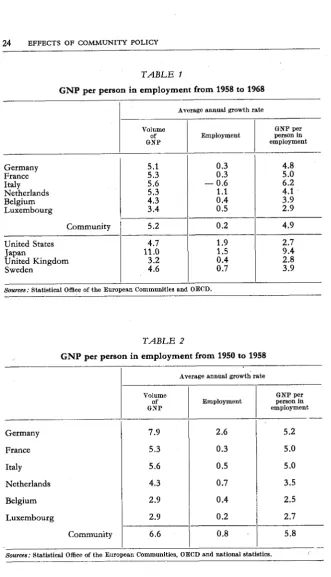
coMMlssloNTh i.rd
GENERAL
REPORT
on
the
:
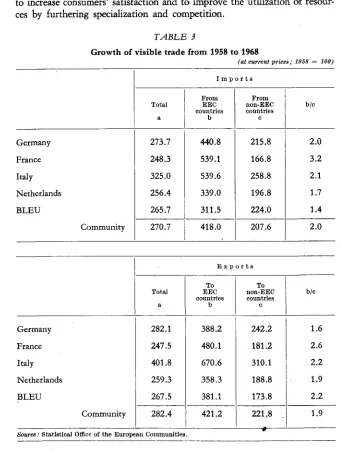
Activities of
the
Communities
1969
BRUSSELS
.
LUXEMBOURGThe President and the Members
of the Commission of the. European Communities to the
President
of
the Eurooean ParliamentMr. President,
$7e have the honour
to
submit the Third General Report on the Activ-idesof
the Communities, which the Commissionis
requiredto
publish in pursuance of Article 18 of the Trcaty establishing a single Council anda single Commission
of
the European Communities.In
accordancewith
Article 1,22 of. the Treaty establishing the European Economic Community, the Commission also preparesa
Reporton
theSocial Situation
in
the Community as an annexto
the General Report. This documentwill
be subrnitted to you in the neat future.Please accept, Mr. President, the expression of our high consideration.
Brusse,ls. 10 Februarv 1970
Jean Rnv
President
Sicco
L.
MeNssolr Lionello LBvr Sexnnr FritzHrllvrc
Raymond BannrVice-Presidents
Albert Coppf
Hans voN oen GnonnEN
Emanuel SesssN Henri RocnEREAU
Guido CoronNe
rr
Per,reNo Victor BopsoNEdoardo MentrNo Wilhelm
Hlprnreup
SUI\fMARY OF CONTENTS
Jntroduction
11Chaotet
^
l-Communitv policv and its effects on the economy of eachMember Stit6 and-of the Community 1. Community policy
2. The effects of Community policy
Chapter ll-Establishment and functioning of the common
market
43 2326 29
1.
2.
3.
4.
5.
6.
Free movement of goods Competition policy Taxation policy
Right of establishment, freedom to supply, setv-ices and
approxima-tion of legislation on ptofessions, trades and crafts
Approximation of legislation and the creation of European law by conventlons
The common matket, ttade and the consumet
43 s8
76
84
9T
105
Chapter Ill-General economic policy I IJ
1. Interpenetration of
matkets
1132. The current situation and short-term economic policy
.
1173, Monetary, financial and budget policy
.
1264. Medium-term economic policy
.
L37SUMMARY OF CONTENTS
Chapter IV-Towards economic union
l.Commonagriculruralpolicy
.,..
1472. Indusrial structure policy
.
1903. Scientific, technical and nuclear research policy
.
2064. Energy
policy
2445. Transport
policy
2576. Regional
policy
2777. Social
policy.
2888. Budgetaty and financial
problems
320Chapter V-External relations .
1. The enlargement of the
Community
3332. The association of European countries with the
Community
3393. Relations with the Mediterranean
cdtrntries
3454. The Associated African States and Madagascar, and the associated overseas countries and
territories
3485. Association agreements with countries comparable with the
AASM
3666. Trade relations with non-member countries and the common
com-mercial
policy
3687. Relations with developing
countries
3968, Co-operation in the nuclear
sector
4069. The Community and international
organizations
40810. The Communities' diplomatic
relations
412747
333
Chapter Vl-Institutions and organs of the Coinmunities 1, The European Padiament
2. The Council
3. The Court of Justice
. .
.4, The organs of the Communities
5. The Commission
4r3
Chaoter Vll-Communitv law
1. The machinery of the Community legal system
2. Interpretation and application of substantive
*f.,
of'C"r"-""rr,
451
452
462
law
Annex-Documents on the Summit Conference. 481
491
,rl,
,INTRODUCTION
The year 1969 ended better than
it
stated.
On 7
Janazry1970
the
Community
moved
into its
final stage.
Impotant
political
decisions were takenwith
regardto
the completion andstrengthening
of
the Community
andto its
enlargement.
H"p-pily,
the
atmospherein
which
thb Community
is
embarking on the new phaseof its
existenceis
far
mote
serene.It
is,
however,
important
to
prefacethe
analysisof
theultimate politiqal
resultsby
a
brief
review
of
the
developmentsthat
marked the year, andto
bring out
the
action takenby
theCommission and the other
institutions
of
the Communityduring
this
evendul period.*
**
At
the beginningof
1969 theiolitical
disagreements between Member Statesover
vital
problemsdid not
^ppear
to
bedimin-ishing.
The
economic
and
monetary
ttendi-
apparentin
thevadous
countdeswere
still
widely
divetgent.
Discussions onthe
enlargement and strbngtheningof
the Community
temainedas
difficult
as
ever. The
Padiamentswete grov/ing
impatientwith
this lack
of
visible
progress.
Leading ptotagonistsof
the European causewere beginning
to
feel
discouragedand
pessi-mistic.
Thete was open
talk
of
ctisis,
paralysisand
even the possibledisintegtation
of
the
Communities.Faced
with
this
situation,
the
Commission decided to
concentrate
its
actionin
two
main
directions.Firstly,
it
spatedno
effiot
to
carry
construction
of
the12 INTRoDUCTIoN
proposals
in
all
fields
of
economicunion,
convinced asit
was that the difficultiesof
the moment were ephemeral.Secondly,
it
opposed
any
extension
of
the
transitionalperiod,
seekingthereby
to
prevent
petsistenceof
the
political
malaise
in
the
Communiry and
to
ensurethat the
Council
and the Member Stateswould
at the endof
the year haveto
take allthe
decisionsinvolved
in
the
changeoverto
the
final
stage.In
spiteof
unforeseen difficultieswhich
arosein
the courseof
the year,the
outcome cottespondsin
large measurewith
the hopeswhich
inspiredthe
Commission.I-The
carrent actiaities of theConnanitl
As
usual,
this
report
covers,
grouped
by
subject,
the Commission's activities and the movesit
has madein
the vat'iousfields,
the main Opinions
issuedby
the
European
Parliamentand the Economic and Social Committee, and the discussions and decisions
in
the Council;it
would
be impossibleto
referto
themall
herewithout
ovetburdeningthis inttoductory
chapter.The
policies already embarkedon
andthe
executive tasksincumbent
on the
Commission have been pursuedin
the
eco-nomic, monetary and fiscal spheres,
in
the
socialfield,
in
that
of
regional
policy,
in
the
industrial,
technological
and
energy sectors,in
nuclearand
genetal research,in
the
realmsof
com-petition, the internal
market, agricuiture andtransport,
and alsoin
the
spheresof
external
telations,
commercial
policy
and development aid.Particular stress
must
belaid on
the fresh
stepstaken
bythe
Commissionrn
1,969. The
yeat beganwith
the forwarding
to
the
Councilin
early Februatyof
proposalsto
co-ordinate theMembet
States' economic policies andreinforce
their
monetaryINTRODUCTION 13
the time,
has gradually gained supPortfrom
Centtal Banks andGovetnments
in
the Member
States, andthe
essentialpoints
in
the plan have just been adopted.
The
Commission hasput
beforethe Council
andthe
Pat-liament thedraft for afx-reaching
rcorganization of the European SocialFund
which would
transform
it
ftom
a
mere accounting mechanisminto
a powetful
insttument
of
socialand
economicpolicy
and soptovide
the Community as a wholewith
aninstru-menr
which
has alteadyptoved its worth
in
the
more limited
setting
of
the
Trcatyof
Patis.The
Commission has prepared afirst ovetall
progtammeof
regional
measuresat
Community level,
the
aim being
to
moveou1
of
the
stageof
generalot
sector-by-sectot studiesand
getdown
to
pncircal
aciion,
which
is
awaitedwith
impatiencein
all
regionsof
the
Community.It
has
submitted ptoposals
regatding
^
progr^mme
fot
Eutatom,
basedon a
Community
policy
for
scientific researchand development
of
the nucleat industry.Ir
hasput
before the Council ftesh ptoposals on agticultute, seeking inpaticular
to improve the present market organizations,to
achleve^bettercontrol
bf
the
markets and ensurethe
gtadualelimination
of
surplus stocks atthe
sametime
as actionis
takenon
the planto
teform
agriculture.In
the field
of
external relations,
the
Commission
has completed associationnegotiitiofls
with
Tunisia and
Motocco, resuined Community negotiationswith
Spain, Istael andYugosla-via
and
the talks
with
Austtra,
and embarkedon
exploratory talkswith
theUAR. It
has also beenauthoized
to
openexpior-atory
talkswith Japan.
Likewiseit
has resumedits
discussionswith
the Councilon
teiations between the Community andLatin
Amedca.
t4 INTRODUCTION
over
its
earlier Opinions
and
sent
the
Council,
at
the end of
September,
a new
detailedOpinion
on
the whole problem of
enlarging and deepening
the
Community and
of
reinforcing
itsinstitutions;
the Opinion
also
dealsvrith
the problem
of
the procedureto
be
follo'iired
in
negotiations
with
the
candidate countries.,(
**
In
sevetal spheres decisions have already been reached asa result
of
the
work
doneby the
Council,
assistedby the
Per-manent Representatives
Committee.
The
Patliamenthas gre^iy
helped
the other institutions
with
its
well-infoimed
opinions,vigilant
supervision
and
justified
impatience.
Its
political
dynamism throughout'1,969 has dispelled
any temptation
to
be discouragedby
difficulties
and
has helped
the
Commission maintainthe
rhythm
of
work
andthe
spirit
of
initiative
in
the Community.In
the
sphereof
developmentaid,
for
instance,a
joint
efliort by the Padiament, Council and Commission made
it
possibleto
negotiate anew
Association Conventionwith
the
Associated States and Madagascati'it was signed at Yaounddin
July.
Like-wise a new Agreement
with
the
EastAfrican
States was signed at Arushain
September.On
the
basisof
Commission proposals,the Council
has adopted several regulationsthat
are essential for. thefunctioning
of
the common commercialpolicy
from 1
January 1.970, andhasfound
transitional
solutionq as "Community" as
possible
in
chatactet,
for
commetcialpolicy
towards the Eastbloc
countdes.On two
occasionsthe Community
was facedwith
seriousmonetary
difficulties.
In
August
1969the
French Government decidedto
devalue itscurency.
Sttict
applicationof
the existing ruleswould
haveinvolved
for
France a corresponding incteasein
the farm ptices coveted by thematket
organizaions andwould
have deprived the French economy of a good part
of
the advantagesINTRODUCTION 15
encouragement
to
increaseagricultural ptoduction
at a
timewhen the
Community
was
aheadygrappling
with
the
seriousptoblem
of
sutpluseswas evidently inadvisable.
Exceptionalmeasures,
thetefore,
had
to
be
taken
in
conjunction
with
the Council.Hatdly
had these measures beenput
into
effect whenit
wasnecessary
to
copewith
fluctuationsin
the valueof
thematk
andits
subsequentrevaluation. This time the
incomesof
Getman farmers were threatened, and the Community hadto
help supportthem.
The
Community's institutions tose
to
the
occasion, but this unforeseen expansionof
thework-load ptoved
to
be a heavy burdenon their
end-of-yeat schedule and is the main reasonwhy
certain
important
decisions hadto
be postponeduntil
the
earlymonths
of
1970.
Conversely,
the
difficulties
in
which
theCommunity
found itself
becauseof
these monetary.fluctuationscontributed
in
no
small
measureto
the
conviction'among
theMembet States that urgent action must be taken
to
pteventtheit
repetition and
to
stePup
decisively
the
degtee
of
monetarysolidadty
in
the
Community.II-The
end of tbe trausitional periodIn
the spting
of
1969.the
Comryrissionhad
to
consider whetherit
should ptopose an extensionto
the ttansitional petiod underthe
termsof Article
8of
the
EEC
TreatyThere
'tsasno lack
of
argumentsin
favour
of
extension.It
was clear that someof
the thingswhich
the Tteaty requiredto
be done
during
the ttansitionalpetiod,
such asthe
adjustmentof
monopoliesof
a commercial natute and adoptionof
the directives on freedomof
establishmeflt,would
not
in
fact be accomplishedby
the
endof
the
year.
Moteover,
there waslittle
time
left in
which
to
take the essentialpolitical
decisionsimplied
by
the endof
the
ttansitionalperiod,
andit
wasdoubtful whethet
it
would
be
possibleto
settle mattets
in
the rather
heavy
atmospheteL6
INTRoDUCTIoNThe
Commission,
after weighing
the
pros and
cons,decided against
extending
the
transitional
pedod.
It
recalledthat the
Community's
last
crisis,
which
had
adsenin
7963in
citcumstances
not
unlike
those
of
7967169,had
been tesolved by a set of decisions under which the internal and external poiiciesof
the
Community
had
been
advanced simultaneouslyand in
patallel.
The
Commissionfelt
that the
same approach should be adopted thistime;
that there wasno point
in trying to
decide which'ilzas the mostimportant
or which
should be
tackledfirst
of
the
problemsthat
cameto
be
discussedunder
the
headsof
completion, strengthening
and
enlatgementof
the
Community;and
that
it
would
be impossibleto
reach unanimous agreementexcept
by
dealingwith all
three aspects at the sametime.
It
also considetedthat
nothing
was morelikely
to
ensure success thanthe
existenceof
a deadline-the
end
of
the year-fixed by
theTrcaty;
if
the
deadlinewere
to
be met, an
exceptional effortwould
be requiredof all
the institutions.Events bore
out
theseexpectations.
The Communityinsti-tutions also
did
what was expectedof
them.
\fork
was steppedup
in all
theinstitutions
from
Juneonwards.
The
Commission sparedno
effortto
ensure thatits
main proposalswould
be readyin mid-July.
The
Council met more and moreftequently.
ThePadiament sat
in
extraordinary session on a numberof
occasions. The lastmonth
of
the year witnessed more meetingsby
day andnight
than
the
Community had ever before
known
in
a
com-patable stretch
of
time.These
concentrated
effots
were
finally
rewarded.
A
decision
of
fundamental importance was reachedon the
appli-cationof Article
201,of
the
EEC
Trcaty
andthe
creationof
the Community'sown
fesources;the
relevantprovisions
take effect gradually over a period beginningon
1 January 1971. and endingon
L
January1975.
At
the
sametime
thebudget
contributionsto
be madeby the
severalMember
States were.reviewedso
asto
correct
certainglaring
inequalitiesthat
were developing andto
ensurethat
financial burdens were
allocatedin
a
way
that cotrespondedmore
closelywith
criteria
basedon
the
nationalINTRODUCTION 17
.
Th.
provisionsto
belaid
downin
the new financialregula-tions
for
the
common agricultural
poiicy
covering
the
intirim
period-of 7970 and the definitive pedod starting on 1 January 1971 wete discussed
in
detail and finalized.As
for
the
strengthening
of
the
European
Padiament'sbudgetary powers,
which
canbe
expectedto
go
together
with
the
creationof
own
resources,it
'was decidedthat,
beginningwith
the
preparationof
the
Communities' budgetfor
1975, theEuropean Parliament
should have
the
last
word
on
budgetmattefs.
Most
of
these questions were settled at the December 1969sessions.
A
numbetof
problems, however, couldnot
bewholly
resolved simply
for
lack
of
time.
These were thereforetefered
to
the Council's sessions at the beginningof
7970, andit
wasnot
until
after
the
sessionof
5-7
Fe6ruary-1970that
the
decisions teacheddudng the "matathon" at the
end
of
December weredefinitively
enacted.The unanimous feeling
in
the Council and the Commissionwhen
the
meetingbroke up
eatly
in
the moming
of
tr{onday,22
December,was
that the
main
points
had
been clearedrp,
that z great step forward had been made and that the Community's
last ctisis
had been overcome.III-Conference of Heads of State or Gouernment
A
conferenceof
Headsof
Stateor
Government was heldin
The
Hague
on 1
and
2
Decemberat the
suggestionof
theFrench Government and
on
the invitation
of
the
NethedandsGovernment.
The
Commission wasinvited to
takepatt.in
thework of this
conferenceThe tesults
of
this
meeting have beenof
very
greatimpor-tance.
Since the conference wasnot
aTrcatyinstitution
and since18
rNTRoDUcrIoNthe CouncIl,
carewas taken
not
to
trespasson
the powets
and responsibilitiesof
the Communityinstitutions;
but
clear, forceful pronouncementswete
madeon
anumbet
of
the
ry io:
P-oliticalirrn.,
confronting
the Community.
The
vety
detailed
com-muniqud,with
a preamble as significant as the resolutions them-selves,will
not
bi
summatizedhete.
But
two
key
declatationswhich
will
undoubtedly influencefuture
action by thoseholding
authority
within
the Community should, ltowevet, be singledout
from'among
many
significant Passages.The first is the
unan-imous deciaiation
by
the six Governmentsof
their
willingnessto
maintain the.
gtadual
advancetowards a
g-enuine economic and monetafy uruon andthe
close alignmentof
social policieswhich
this
entails.
The
secondis
their
willingness
to
resumetheit
endeavours
to
enlarge the Community.The
Commissiontegtetted
that the
conferencedid
not
achieve
more
on the political
and institutional
ftont, but
wel-comedthe
decisionswhich
wete
taken.
After
several yearsof
hesitation
and
disagreement, these decisionsptovide
proof of
the
Governments'
refound
and
dramatically reaffirmed
will-ingness
to
pfess aheadwith
freshpolitical vigour to
complete the coirsttuctionof
the
Communityboth
vrithin
its
presentftontiers
and beyond.
It
has even been possibieto
talk
of
a"Hague
spirit".
Thiswas
neithet
inaccutatenor
exaggerated.
The first refection of
this spirit
wasfelt that
same weekwhen
the
Council
discussedthe
futute
of
Euratom andits Joint
Research Centrein
afriendly
and consttuctive atmosphere.
IY-Tasks for
tbe futareWith
the
twelve-year
transitional period
over
and
the EuropeanEconomic Community
at the
statt
of
the'final
stage'INTRODUCTION 79
The
considerable progress madein
twenty
years-9
May 1970will
be the twefltieth
anniversaryof
Robert
Schuman'sdeclaration-towards
what
Schumancalled
the
Fedetation
of
Europe
is
a sourceof
legitimatesatisfaction. The
taskof
gtad-ually
uniting
andintegrating the
Eutopean continent,of
gather-ing
into
onefold
theold
nations which had solong
been divided,of
cteating
a
customsunion
and common
policies,and-more
important
still-of
fostedng
a
common senseof
purposein
anarea
long
disunited, was an ambitious undertaking; those respon-siblefor
thework
of building
Europe cannotbut
be^ware
of
the distancewhich
has been coveted.Perhaps
the most
striking
fearureof
the last
two
decadesis
the wayin
which
they have shownthat
the forcesuniting
out
six
countries
arefat
stronger
than
those
dividing
them.
Thesuccessive
political
criseswhich
have
shakenthe
Community sttucture have never once endangered the undertaking itself, and Europeansin
the
Community are
still
convincedtoday
of
the needto
completethe
work
they
put
in
handtwenty
years ago.It
is even more useful and stimulating toturn
totomorfow's
tasks.
First on
thelist
comes economicunion.
Though
in
essen-tial
matters the Communityis no
longerfalling
behind the time-tables setout
in
the
Treaties,it
is
cetainly falling
short
of
whatis
required
to
meet
present-dayneeds.
It
succeededin
for-mulating.
its
common
agricultural
policy
within the
specifiedtime-limits,
but
major issues arestill
outstandingin
that
field.Though
on
the other
hand
the
Community
haslaid
thefoundations
of
anindustrial
policy,
it
hasnot
yet
produced its ansiil/erto
the
major changes aIrcadytaking
place.The
eventsof
7969 focused attentionon
the lack
of
cohe-rencein
the
economicpolicies
of
the
Member
Statesand
the20 INTRoDUCTIoN
clear
^t
The
Haguethat rapid
Progressin
this field is
absolutelyessential
ifthe
results achieved so far arenot to
be placedin
ieop-ardy.
The
Community institutions,
which
were
adequateat
theoutset, are
now too
weak andlimited
to
dealwith
today's taskof
completingthe Community
and managingits
affairsin
mote and more compiexfields.
The
Commission,from
its
day-to-day expetienceof
their limitations,
has tepeatedlydtawn
attentionto
this
point. It
is
even more justifiedin
raising this issuenow
thatthe Community
is
turning
once again
to
the ptoblem
of
itsenlargement.
The
Community institutions, and
the
Council
in
patiCular,
will
find that
theywill
very
soon haveto
examine theionditions
undet which they opetate and take the necessary stePs.They
will
also haveto
decidehow
reptesentativesof
the various walksof life
can bebrought
to
shatein
the
taskof
elaborating and implementingthe
common policies.The
enlargementof
the Community,
first
mootedin
1'967and
tempotatily
shelvedin
1963 and 1967, has once again becomea
topictl
question. The
Commission
has twice
exptessed afavourable
opinion
on
the
teopening
of
negotiations
and
hasindicated
in
btoad outline the conditionsto
be fulfi.lledif
enlarge-ment
is not
to
weakenthe Community.
Everything
points
to
a reopening
of
negotiationsin
1'970. The
Commission doesnot
undeiestimate
the
difficulties
ot
dangetsof
these negotiations,but
it
does believethe time
has cometo
relaunchthis
venture,in
pursuit
of
which
it
will
spareno
effort.Finally,
becauseof
the
stature and strengthit
has attained,the
Community must make a genetalteview
of
its
teiationswith
the other continents.
It
attaches greatimpottance
to
develop-ment aid andis
rightly
proud
of
the
sustainedeffot
it
has madeon
the African
continent and
in
Madagascat.
But
it
can
nolonger
delaythe review
of
its
relationswith
othet
parts
of
thewodd,
especiallyLatin
Amedca
and Asia, which
look
to
theCommunlty
fot
sympathy andhelp.
Sincethe Community
andINTRODUCTION 21
f9.
a-h-. developmentof
the wodd
economy,
the
Community shouldstive in
collaborationwith
theUnited
Statesto
overcomethe unduly
numerousdifficulties and
conficts
of
interestwhich
have accumulated
in
thissphete.
Convinced asit
is that peaceful coexistenceis
good
not
only
in
political
life
but
also in economiclife,
the
Community should again pledgeitself
to
ry
to
organize coexistenceand
co-operationwith
Eastern Europe, and
above allwith
the USSR.All
this
leadsus
to
political
union.
The
Community
is akeadypolitical
in
essence andin
the veryfotm
of its institutions.But
it
is
destinedto
become even morepolitical,
to
increase the porversof
its
institutions,
to
align the
policies
of
its
Member States and towork out
step by step a foreign policy at Communitylevel.
At
the
endof
the transitional petiod,
on the
thresholdof
a new decade, the peopleof
the Community
candtaw on
thez^l*
CHAPTER
I
COMMUNITY POLICY
AND
ITS
EFFECTSON THE
ECONOMY OF EACH MEMBER STATE AND OF THE COMMUNITY1.
The Commission has undertaken to submit to the Padi,ament a reporton
the consequencesof
Community polrcy sinceits
inceptionfor
the cconomy of the Member States and of tl-re Community as awhole.
Thischapter can be seen as an initial cwntribution
to
the subject, there being two reasons for its qb',"ious limitations:(a)
first, the lackof
sufficient groundwork:for
exanaple, t}re study on the Community's competitive capactty that has been undertaken bya
panelof
experts under the Chairm,anshipof M. Uri is
nor yerfinished and therefore could not be used;
(b)
second, di,fficulties of method: the economiesin
the Community areinfluenced by numerous factors, and rhe role played by Community policies is ha'rd to single out, let alone to measure, so trying to trace
cause and effect runs into enormous d,iffi,culties.
It
is in the light of these remarks that the ideas set our below must be approached. The Commission intendsto
develop them further at alater
date-for
instance,in
conjunctio'n llrith future Gener,al Reports andtlre repots
of
the
Medium-term Economic Policy Commi,tteeon
theimplementatrion
of
the poliry programmes.2.
In
order to gain an idea of the overal,l trend of the economy of eachlvlember State and of the community in the last twelve years,
it
is usefulto
]ookat
certain key indicators. These in&cators compare favowabtrywith
thosein
the leading industrialized non-member counrries. Table 1shows the growth of GNP pef, person in employment-an indicator which gives a good idea
of
the general trendof
productivity and the standard of living-together with ch,anges in the components used in calculating it.24 EFFECTS OF COMMUNITY POLICY
TABLE I
GNP per person in employment ftom 1958 to 1968
Average annual growth rate
0.3 0.3
-
0.61.r0.4 0.5 Germany France Italy Netherlands Belgium Luxembourg
United States
Japan
United Kingdom
Sweden
GNP per person in employment Community 5.2 5.1 5.3 5.6 4.3 3.4 4.7 11.0 3.2 4.6 7.9 1.5 0.4 0.7 4.8 5.0 6.2 4.1 3.9 2.9 2.7 9.4 2.8 3.9 4.9
Sourcar.' St&tlstical Ofrce of the Europea,tr Communities and OECD.
TABLE 2
GNP per person in employment from 1950 to 1958
Average annual gowth rate
Getmany Ftance Italy Nethedands Belgium Luxembourg 7.9 5.3 5.6 4.3 2.9 2.9 6.6 2.6 0.3 0.5 0.7 0.4 0.2 5.2 5.0 5.0 3.5 2.5 2.7 Community 0.8
Sorrcrs.'Stetistical OI[ce of the European Communities, OECD and mtional ststistics.
[image:18.409.58.390.28.606.2] [image:18.409.51.384.44.326.2]\
EFFECTS OF COMMUNITY POLICY 25
3.
It
can likewise be shown thatin
the member counrries of theCom-munity the growth
o{
production per personin
employment since 1958compares favourably
with
that
of
the
preceding period despite the disappeamnceof
the exceptional growth factors which werea
feature ot the immediate postv/af, period (Table 2).4.
The question must be asked, however, whether economic per{ormancesince 1958
is
a direct consequenceof
"C,ommunity policy"or
phether, on the contrary,it
is duelatler
to the presence of dynamic factors inherentin
tJre qlember countries themselves, which would have come into play in any case. Community pollcy is here taken to mean the body of rneasurrswhich have bern adopted in implementation of the Treaty crf Rome, either directly
by
the
Community authoritiesor
by
the
national aui:horities {ollowing Community decisions. So far these measures have dedt rnainly with the free movement of goods, persons, services and capitnl; they alsocover certain co-ordinated policies irn'plemented by the Member Statbs in
accordance widr the airns set out in the Treaties. As a result of the inter-penetration
of
the markets, thereis
scarcoly any aspecfof
the economyin
the member countries which has not been influencedto
some degreeby Community policy as here def,ined.
In
order to ttr'row light on the nature and extentof
this influence, there would haveto
be some wayof
establishing how the economiesv ould have dweloped had there been
no
Community. Novr this canscarcely be done except on the basis of inevitab'ly atbitrary acsumptions. So another appoach must
be
contemplated. Thi,s means first"of
all tooking nto tlre actual content of Community policy and at the same dmepicking out those components of domestic policies which are there because
the Member States are united
in
a Community, and then trying toEFFECTS OF COMMUNITY POLICY
L. Community PolicY
Most action undertaken within the framework of Community policies
so far has been aimed at establishin
g a
large internalmarket.
But thisapproach has had cqllsequences affecting the adaptation of domestic policy
aims and instruments.
ESTABLISHMENT OF A LARGE INTERNAL MARKET
5.
Sofar
the establishmer,-tof
a
Tatge cornpetitive marketwith
the characteristics of an internal or domestic market has been the central pivot of Community action. This aim is justified by the benefitsin
terms of productivity, efficienry and economies of scale o,btained from having sucha market.
oEcD
srudies on the problemof
technological gaps have alsofr:lly confirmed the essential role played by the size
of
the marketin
the differences between Europe's performance and thatof
tftre United States.The creaeiron of a common market is gradually gvins a large number
c,f producers the opportunrity
of
increaspg their efficiencyby
producing on a larger scale andby
adapting their production unitsto
the bigger market. To the extent that the most dynamic entrepreneurs succeed intakbg
aAvantageof
these oppoftunitiesfot
certun lines, 'thus producingmore cheaply, their di,rect competitors on the markets
in
these products findit
necessary to adapt in theirtun.
The additional productivity gainsachieved in certain irndustries as a result of having a larget internal market on which
to
operate tends to be reflectedln
factot incom'e; thrrcugh the [.artor matkets, they provide greater incentive to seek out and make fuiluse of o,pportunities to raise productivity'in other industries.
In
orderto
attain the desired objective o,f an integrated marhet for the Member States, the line of action adopted was to do away first of all with ,the obstacles to the free movement of goods and production factorsbetween
thern. At
the same time, considerable changesof
policy havebeen necessa,ry
in
most fields so that thre,markets may be integrated i.ncircumstances
that
,vould
facilitate achievementof
the
sought-afterstructufal effects. As a whole, most other action in the Community frame-work may be said to be directed towards ensu.ring that the big market is
EFFBCTS OF COMMUNITY POLICY
The introducdon of common rules on competition, for instanse, was
designed primarily to frrlfil thirs requirement.
In
social m@rtersit
has been necessaryto
arrange for continuity of socizrl socurity benefi,ts for workers m,oving from one partof
tlre Communi,tyto
a.nothor. The adjustments madeor
being madero
tzlxpoliry
at
Community level are aimed atimproving the circulation
of
goods and sarvices andof
capitat.In
industries where goveflrrnent intervention 'il/as particularlyex-tensive before the Community was estrhlished, sinnply opening domestic
nr,arkets to products and services from other Member Slates 'qras'not rea,lly
feasible,
for
this woutrd have madeit
difficultto
achieve the social andeconomic aims o,f domestic policies. In such industries certain
Commu,ni,ty-wide agreements on policy aims and instruments were a prerequisite for the integration
of
markets. Progress mad,e has varied gready acaolding to the sector:it
has been particulanly markedin
agriculture and may be regaded as encouragingin
ransport, for example, butit
has proved very difficultin
fieldsin
which the State plays a dorninant role eirher as amonq>oliist
or
as purchaser, particularlyin
the advanced technologyin-dustries.
ADAPTATION OF POLICY AIMS AND INSTRUMENTS
6.
The Community authorities and thoseof
the Member States haveof coulse realiz.ed that the establishment.
of
a large intema,l market doesnot concern business firms only but that in certain ci'rcumstances and within certain
limits
it
also
provides opportuniriesas
regards econornicpolirymaking. The enlarged market has faced them with the need to take joint or concertd decisions
in
fields outside the actua,l integration of the markeis.More often than not, the difficulty
of
reachingjoint or
concerted decisions has induced the Member States to try individuallyto
aAapt thetr policiesto
the constrraints resu,lting from the increased interdependence of the markets; they have endeavoured to rnake a better selection o{ theinstruments used
to
inaplement their policiesin
orderto
avoid points of incompatibility orconflict.
In
oertain fields, horvever, moves have beenmade towards ensuring as far as fossible the mutual support that is
neces-sary
if
domestic policies areto
maintain theirefficary.
This has beenEFFECTS OF COMMUNITY POLICY
steps to be taken
to
achieve these aims; one example is the ado'ption of the guidelines for the first medium-term economic policy programme., Such concerted action
is
directed towards utilizationof
theoppo'r-tunitied provided by a larger market
with
a viewto
achieving objectives which would have been unattainablein
the
former stateof
relationsbetween the Member States. The most obvious example
is
thatof
theKennedy Round. This, however, u/as concerned with a traditional sphere
of
negdtiations. The concerted action which has been taking shape in other fields, whether on the more general aspects of economicpolicy-in
particular short-term and monetary policy----oron
policies concerning specific industries, isin
fact go'ing further,fot
more ambitio'us and more original aims are being conceived and defined. And the problemof
thereal effectiveness of concerted action is becoming increasingrly crystallized' There are appreciable differences
to
be overcome between the economicstructures
of
the Member States and between the priorities they accordthe various economic policy targets, and-hewever
firm
the resolve to alrcr certain policies-the time required may be considerable.In
a
modern econorny the networkof
interdependent relationa isexttemely complex. The system can be modified only naargin'ally from one year to the next: i{ certain aspects of economic poliry are to be changed
rnore substantially, others must be changed less so.
Be that as
it
may, whatever the paceat
'which po,licy has beendeveloping the establishment
of
the common market has brought about a veritable rwolutionin
the conditionsof
trade and competition. Thi6 revolution,for
allits
advantages, has nevertheless made the position of certain industries or regions more difficult, and quite a considerab,le shareof the opportunities for action by the governments has been used to ease
the changeovers and make the constraints socially and politically bearable'
In
these circumstances, the adaptation o{ policies to the newdimen-sion
of
the market has often been less than should have been possible.The future
will
tell usif
the experience of certain setbacks, together"with a nurnberof
spectacular achievemenrts on the parto{
the leadingnon-member countries, particurlatly
in
the fieldof
advanced technology,will
create a real awareness
of
the disadvantagesof
tackling cettain points o'fEFFECTS OF COMMUNITY POLICY
2.
The effectsof
Community policy7.
Since the dorninant themeof
Community policy has been marketintegration, the first point to look ,into is what are the possible effects of such integration.
There
is
certainlya
linL
between the gradua,l integrationof
themarkets and overall performance
in
termsof
totalgrowth.
But the keyindicators do not reveal the nature of this
Link.
They do not shour us by what processes these results have beeen obtained. Nor do they makeit
possible fo assess whether what has been achieved abeady represents the bulk of what may be expected or whet-her, on the contrary, the structural
changes that Community
p"li"y
airns at bringing about are being effected progressively and are only beginning to ploduce an irnpact. The ind,icatorsare not capable of showing whether the structural changes are being made
in
conformitywith
the objectives pursuedby
societyin
the Communitycountries or are helping to resolve the problems with which these countries
are faced-reducing disparities between regions and irnproving industrial structures
in
the
regions, ensuringa
rnore satisfactory distribution of income, i'mproving the pattern of consumption and, in sum, enhancing the quality of life.It
is doubtless to questions like these thatit
wou,ld have beendesir-able to give precise answers as regards the influence of Co,mmunity
poli-cies.
It
seems, however, too early to develop these points. at this stage.The reasons given at
the'
eginningof
this chapter show clearly ihat the contribution of Community policies to the attainrment of the aims in viewcan be assessed only in the light of a cornplex analysis.
It
would be rash,fot
instance,to
put forwald any hypothesis regarding the commo,nmar-ket's impact on the disparities between regions. Within countries they have persisted as
a
generalrule-and
sometimeswen
become more serious.It
must be said, howwer, that the disparities between one countryand another have lessened somewhat, particularly in favour of the
Nether-lands and Italy.
It
would seem bestto
confine thisfirst
analysis to indicators thatwill
bring out some of the effects of Community policies on structures inthe member co,untries. The items discussed here concern the
tend
of international trade,the
patternof
production and employment, andchanges
in
the structureof
business
ms.
The impactof
the commonmarket on distribtrtion and consumers is discussed at length in Chapter
II
30 EFFECTS OF COMMUNITY POLICY
THE GRO'i7'TH OF VISIBLE TRADE
8.
International trade has a,lways enjoyed pride of placein
the analysisof the effects of policies to integrate economies because
its
growth helps to increase consumers' satisfaction and to improve the utilization ofresour-ces by furthering spoc'ialization and competition. TABLE
'
Growth of visible trade from 1958 to 1968
(at currcnt Prtues ; 1958 : 100 )
Imports Total a X'rom DEC countries b 4,+0.8 539.t 539.6 339.0 311.5 From non-EEC countries 215.8 166.8 258.8 196.8 224.0 Gerrnany France Italy Netherlands BLEU 273.7 248.3 325.0 256.4 265.7 270.7 2.0 3.2 2.7 1.7 7.4 Community 418.0 207.6 2.0
Exports Total a To DEC countries o To non-DEC countries c Germany France Italy Nethedands BLEU Community 282.1 247.5 401.8 259.3 267.5 388,2 480.1 670.6 358.3 38r.1 242.2 t87.2 310.1 188.8 r73.8 r.6 2.6 2.2 1.9 2.2 282.4
Srurce i Statlsticel O1ffce of the Euopean Oornmunitles.
[image:24.410.44.385.150.602.2]EFFECTS OF COMMUNITY POLICY 31
The formation
of
the cornmon market has been accornpanied by a\rery rapid growth of visible trade between the countries making up the Community (Table 3).
Generally speaking,
this
hasnot
beento
the detrimentof
trade with the restof
the world;in
proportionto
the C-ommunity's domestic product, irnports from non-member countries arestill
of
the same order of rnagnitude.It
is very likely that these developments are a direct result ofCom-munity
policy.
Some liberalization of trade would presumably have taken place evenif
there had been no common market.It
is difficult, howwer, to imagine that the member countries would have beenin
a position to remove so manyof
the obstaclesto
trade between them andto
enjoy aco,rnparable growth
of
trade without havingthe
guaranteeof
durable reciprocity provided by the Treaty of Rome.THE STRUCTURE OF PRODUCTION AND EMPLOYMENT
9.
Developmentsin
thd patternof
production and employment differ considerably accordingto
whether they are seen from the angleof
the leading sectorsof
activity contributingto
gross domestic production( agriculture,
*iniog
and quarrying, ,manufacturing)
or
from thatof
thevarious manufacturing industries.
. ( 1
)
To
take the main subdivisionsof
gross domestic production, thegrowth rates of the different sectors rank
in
an ot'der which differs verylittle
whether one compares the Community countries amongthemselves or vrith non-member countries such as the United States,
the United Kingdom, Canada and Sweden (Table 4).
There are, however, some exceptions
in
special glss5-fs1 example,in
building and construction andin
transport and communications.They derive principally fro,m factors such as the level of development, demographic situation and stock of capita,l (dwellings, infrastructure, industrial equipment), factors on which the common market has not had a decisive influence.
Behind this relative stability of production structures by main strtor there are far more appreciable differences between trends as regards
EFFECTS OF COMMUNITY POLICY
United States (average annual growth rate
from
L958to
1967: EEC 0.3Vo,IJSA 27o).
As regards the ceation of jobs, howanet, the diJference is far less marked, since the Community has had to offseta
bigger reductionin
the
numberof
jobsin
the primaty sector(Table 5 ).
The cornmon market has probably not had a direct influence on the overall level
of
employment, exc€ptof
coursein
Italy.
Howwer, by stimulating the expansion of non-agricrultual sectors,it
does seemto
have helpedto
bring the distributionof
nnanpower among thes3ctors more into line with the requirements of dynamic gnwt}r, and
especially with the prospects
for
demand.(2)
From the standpointof
the various manufacturing industries, thedifferences
in
production trends between on€ country and anotherare distinctly more rnarked.
\fiithin
the Community they reflect in the main two kinds of development ( Table 6 ):':
First, an endeavour to make up leeway ( which is reflected in'
a high gfowth ratein
industies whose sharein
manufacturing^t
the outset was belour the Community avemge), asin
metal.'
manufacture and,to
a lesser extent, metal prodrrctsin
Italy and the Netherlands, andin
chemicalsin
Germany.'Second, specialization (which is reflected in a high growth rate in industries with a major share
in
the manufacturing sector),.
asin
textilesin
Italy
and Belgium, andin
wood, paper andrelated industries
in
the Netherlands and Belgium.The
first of
thesetwo
developmentsis
connected only indirectly with the establishment of the corlmon market.It
reflects the rapid ii.rdustialization that has been taking placein
Italy and the Nether-lands (see the overal,l grovrth rates), butit
is not unconnected urith the setting upof
the cu$toms union.Increased specialization
is
a rnore direct reflectionof
the improve-r;rent in the international division of labour that was exp€cted of thecommon market.
These are only the initia,l results, which the Commission hopes to be
able
to
examinein
greater depth and detail, particularly alongsidethe studies on foreign
trade.
However, they already suggest---€venat this still very generarl
level-the
extentof
the changes that haveoccurred
in
the last ten years and the differencein
these changesEFFECTS OF COMMUNITY POLICY 33
eq1qe1 q\4
os$$d9md N gqqqgqoqqc: N€Q$$6603 doJ@+r6@o @4$3i6$NN N+@66ts66i @assag$Ni
n\\
NHN o30$@F N666006J@ @@€6$64NOoq ,.: q
6@N66 NOiO6@
€
o
E Co x i:d
^ a*
.E -d-a
E .=i
=
tt-E P6J
x:n - d?
eE6 E-t
A X.=
? s?3
.9 6h
E
:.i
aFd
3 E>,
x<o 6^ q9..:6lc?9q61 6660@NO6i NNOd i6iHN<Ni@ 406636N6i nq9q{qq\\ 66$O€@N6N @iQN 60Nn$6@N N6Na<€e6d iSdd6Nog N3OOts@@Ni 6NOi i NS@9NN6$ NN@O@@ONi @ioi N606@@N@O r€6t$6+oo @i6 orNS@6<N NFOON6tsNQ 6iQid qqnq-qa?q\ @666N33Ni \q\\q99 i@Nets60@i 6HQN 6ooilo ;N<; ;rd
O@3N€ do60@@ 3@6i NOOOr€ *io 1--d ^ @ id vk !9V i:i..
5
i
e;
d [i
aE
's A o.f ,\ X P Y
ts:5hb va
@ ^d
F
ee
vd a ! O 4 ^ -.4 a=::\
.94:'E'i
b;.r;g
r
ui?:a!t3-.=
t=.iFz
F:
r
".=J*aFdd 4r. la5:i
$.H.S;;Eg.q
o* ! a
E
F
: rF g
E.itCbmF9a:;
!':ZZ.EFe:iEH
!FEHEE€5ti:E
rrl > - (5 Pq Fr A; < E
EFFECTS OF COMMUNITY POLICY qlqd?qci?6161 @o3mN6Ndo 6N$ONO@i @*€o@$oilH NNNQi 6@66@$$66 6iOeo66 NOSNN6iS NO@@Noo6a Niooi q N6dO6N@O Nidoooo6 6lqci9?qqoq 6ir@F606N Ni@o ooSi@i@o 606N340@i = ots663N6N@ idiiHoo<i o@ioia@@ ooo$€NQ6i Niooi $oo@N@e6l @oo€roooi Nii60 3$@€N@NO6 ioNNeooN@ @oo60ts60 $or6N+Q@N Ni60 qn\1\\ogoqvl oNdo6QoSi N@@@r6@@ iiiNON
gq I 6? q \ qq oio$s@8oi d*** N@o6@@N€ @o@+6NOdd HiOQi I t^
Et-
FI (nld I 'tu,1 tr
q9qq4clgqn 6OiiOdN+N NNON6i6*@ Nd6NQiiO$ oo@636636 N6lNdFOe66 qlqcjcl\cj6!c NiQiOOQ$6
;T;
pal I I he z,-I UI I r H ^ @ n H d \cy o. tI\ q -9
:.=s!
NF.,-J * !s
H;t2
r\ F P V
rtr!M
14 o*
vt d q ! o J ^ O E (, F.
3t
.9^a:
"€
3r
po F3 v>a q-, -;bi3=;;.E.e?
fro
d i -A.'
E.9.9
&
e" i
-n .=
qiE ?
$€
iis
iE
Ep
EE
EFFECTS OF COMMUNITY POLICY
$looc\cono\+o
\g \C \O o.r tf rf) l'- 61 c\t
FH(.)
HHi(Of'-O\HOc) t!\onHn(.)*o\(.)
(\dHGl
("'!
c! q g q oq q \ \ lq
co ? rr) F- @ rr) ro co \o l\o
F-rr)NO\l'-o\\O\irf)
rn rn @ \o (.) l.- o\ o\ rt
O\ t'- O\ \t l- i \O N N |u1 e! N (O 6 0o O\ rf| r.) 6 lu1
.{,\o\orfl.qoaqN r.)6tco*o\o.+F-i cqN@rr)rr,@\o$ rnrnr)cl\$lrOO\\O HF6 (.r.+*ro6\o\oo\ $co.+roo\\orn\o
9q-19c!q\q
rOr+.O@@F-OF-l I6l-8l
gld
I + @-1oi-1n9qqqul
F-@\OO\O\\O\Ol'-s Hi(\"1 qnaclc.!9-.:
\O \O t'- O\ \O + \O H a.)
giao 1--\o @ rr1 .! q d F a (,) q ooU H i{(J.,
*lci!
s,tru
6i O Glo v!q! !i
ae
.,O
ta t. r; .' F u d oh0 !d ,:'Fd6
[t -3EE
fl
E€*
3
qB
5 AP.F F,.
o?.x-,Fu.3
-otua.gE-7
,:qo.^==tY
E - $ 8.{ I i e
E36 EFFECTS OF COMMUNITY POLICY
,
ADJUSTMENT OF CORPORATE STRUCTURESTO THE NE\T SCALE OF THE MARKET
L0.
The structural adjustment of the business secto'r fo the new, larger' soale rnarketis far
from complete.It
is
probable that the growth of visible trade registered between Community countries'in
part
sirnplyrefleots more efficient util'ization
of
production units originally designedto
match the scaleof
the dornestic m,arkets. The reasonsfor
this aremanifold.
The main reason seems to be that the investmerlt required is very
considerable
in
relationto
the sourcesof
finance availableto
firms, andthat firms belonging
to
industriesin
which the most progress could bemade ale not necessarily those which are best placed to call on the capu.tal
market. This is paticularrly true
of
medium-sized firms which used to operate solely o,n the domestic market;if
they have no link with industrial or financial groups which could help them, adaptation of their productironunits
to
the
bigger market canonly be
gradual.
The
difficultiesencountered in carrying out such changes by n'umero'us firms which were
competitive on their domesti,c market in the circumstances ruling formedy are such a,s
to
attract fi,rms from o'ther member or non-membe,r co'untrie$with expedence o,f the same lines of production and rnore money behind
them.
As Tables
7
to
9
show, the nurnbetof
transnational take-overs,rnergers
or
acquisitionsof
holdings effected andof
transnationalsu,b-sidiades established
in
the EEC betvreen 1962 and 1968 is a large one.l For lackof
comparable figu.res for'earlier years,it
is
difficultto
decideexactly how
far
thisis
an e{fectof
ttre establishmento{
the colnmon markert; that there is a cause-and-effect relation seems clear, however, in vievr of the increasing numberof
such operations since the beginning of the period under review.Of
s'uch o,perations carriedout
in
eachof
the EEC iountries by foreign firms, there is a large majoity involving firms from o'r.rtside theCommunity.
t Tl*{tSl-*
given in these tables must be interpreted with caution. This is not acomplEte reglster of all such operations but a fully representative sample preparid
by the Cofrmission's staff by keeping a systematic count
of
thd operationsff""'::1i1ffi:ff'fit::t,l::i|i..
..,o,.
rrontiers has been k.p, ,"p","..r,o*
EFFECTS OF COMMUNITY POLICY 37
@
E{:
Ait
gE-uEE Fi :o 5E N66iOOS N@6@600 iiiNN d ga ri@66@N ili@NO@@ ii*iNir H
$sgE:€e'
o o:
-}:E F
.:9ts
*
a q, a
E?
t: o'd ni: NXo k= TIJOV*l cG
\ t.9
Fr=(d (!H lu I ! a N@@r@$@ €o<@$Ni diNNN NO$36SO iiiN6 F 5E :e 3EE.ES c c
;E!EI
>tr x
'sgEi
d F J H i$<6940$!eE:€:'
EEEg ESgE i60000i ii3 N6+A@N@ 66NO600 660ioiN Hdiin orNSs$3 mNiN@+si i i.i i
6 N @ 6 @'O *
38 BFFaCTS oF CoMMUNITY PoLIcY
I
I
rrror,EI
EI
; I
clnNdl il---
-l
css I rCEtr q .r',! aEF
rrx od oa*b,\ c,'d E6 OQ o 14 SNNH@Nlo 660@d@to NtsHN€$lO Hls a@$6€N i$iso o{6@o6ls @@o30@to :^*iidl: $NNF$Flo N66$NOt@ 6Flo
- Cffi rc
6@<iFGli NFl6
-^-mT--^
6NN6@$lN F16 iNts$i@lg 6€6€dit6 6Hiil@ @9iNS{ ioNNo€ Ni 6@@NON i6i604 i NOS6@{ 9<N{O6 @i 6itsi9i S@NN@ N $o@$d6lo :6iN66l@ Hld 6ooro6l6 @$ss@@to Nil€ NNs+gol@ tsoN6@@l$ Fli sN66@6lN o6NNNNIS 66FsF@lnR-^oo$ls
i63@NtslN iBt6 o@N$o@l-^16ffi
'16 tsFO6iN ooaH6N A2g€ d
\=,
I5.-Htr i Utr tr
sF8 <az
=cgEsE
gtE$tg
H
I
cr'rrNI
cuo--T--r*
_t_
g
I
cxrN-l_
I
cuei@6oo6lo E4HN66l6 i16
EFFECTS OF COMMUNITY POLICY 39 oN6Ni@ @otsrNo o6HiN< H oo@60i NiNios 66i$N ts
i- k B
EE:::E
5E'u
g5
ES
sE
i F€ Y . F >
E Ei x
8i!:
ESsE: E dE
3 9E g
}=EF
ggg"
L. ! i > !!
842 e. E& a 6.8 EE.i€Ee
9
;sg!€EEs
H Eg:
*;g,
frssE:
E sE*ETF .:pE* !! a@ts@HN 6i6€O6 6d6H o60F@o Ne6306 FT @€a6$@ a604BN SNNi 3 6r@N@d <6i NO@dN3 Ni E d 3
eP
E8: r rE
=ci.i.=
r
E
ix
i.E
EOEE;;E $tse6N@ io@€tsts @NNi 30N@@+ Ndii 3@+r6N i@Ni€N H4Nd@F Nd I a 6o 9: 9.H oF GHO i4l ! "\o ! .; dot
v : oo,\h'-F
EFFECTS OF COMMUNITY POLICY
The percentage
of
firms from non-member countries taking part in these operatiorrsjs
an i,ndicatiorr bothof
the opportunities offeredby
alarge unified market and o,f the fact that the firms already located there have not always been able to take sufficient advantage of.
it.
There is noreason to believe that afr, the o,pportunities offered by the common market have already been exhausted;
it
is
morelikely that
firmsfrom
other countries have come in only in cases where the delays in adaptation wete most outstanding. There should, therefote,still
be considerable progt€ss to be made in numero'r.rs industries.This necessanly very general conclusion is conJirmed by the results of studies made of individual industries such as textiles and shipbuilding, which are discussed
in
this and certain earlier reports.CONCLUSIONS
iL.
There is no aspect of the Community's economy vrhere developmentshave not been affated by Community policy.
The content
of
this policyis
complex, and the irnrportanceof
the individual componerrts has variedwith
time.
It
is safeto
say, ho,wever,that up to the present
it
has consisted above all in integrating the majority of product markets ,andin
,m,aking a startwitl
integrationof
the factormarkets.
All
in all, integration has had a dynamic effect on the economy, but the ensuing pro,blenrs arc far from being resolved.The
changein
market size has speededup
develo,pments, thusrendering lnore acute the problem
of
the ageing of certain industries andthe backwardness o,f certain regions.
At
th,e same timeit
hasle{t
the Member States less room for independentaction.
And integration aloneis not enough
to
reduce the ga,pin
certain fields, especi,ally research andi,nnovation, between the Community countries and the leading non-member countries.
It
is
clearthat
there has beena
,substantial timerlag betweenintegration of the markets and adaptation od economlc and social policies to the new situation thus created. Freedom of movement within the Com-munity is a natural corollary to a long series of pas.t efforts and practjces
EFFECTS OF COMMUNITY POLICY 41
otler hand, was an entirely riew prob,lern: the Member States had no past
experience