...
'
.... ......
)(
><
·~
I ' ...
'J
Environment and Quality of Life
1987
Programme Progress Report
Environmental Protection
~
Commission of the European CommunitiesDirectorate-General for Science Research and Development Joint Research Centre, lspra Establishment
Environment and Quality of Life
1987
Programme Progress Report
Environmental Protection
Commission of the European Communities
Directorate-General for Science Research and Development Joint Research Centre, lspra Establishment
Published by the
COMMISSION OF THE EUROPEAN COMMUNITIES Directorate-General
Telecommunications, Information Industries and Innovation Batiment Jean Monnet
LUXEMBOURG
LEGAL NOTICE
Neither the Commission of the European Communities nor any person acting on behalf of the Commission is responsible for the use which might be made of the following information.
Cataloguing data can be found at the end of this publication.
Luxembourg: Office for Official Publications of the European Communities, 1988
© ECSC- EEC- EAEC, Brussels-Luxembourg, 1988
CONTENTS
Introduction . . . .. . . .. .. . . .. . . .. . . . .. . . . .. . . .. . . .. . . ... . . . ... . . .. . . ... .. . 3
Summary of Main Results . . .
5
Research Areas:
1. Environmental Chemicals:
1.1 ECDIN ...
7
1.2 Indoor Pollution . . . 1 0
1.3 Trace Metal Exposure and Health Effects . . . 21
1.4 Environmental Pathways . . . 26
2. Atmospheric Pollution:
2.1 Air Quality ... 39
2.2 Central Laboratory for Air Pollution (CLAP) . . . 45
2.3 EMEP Monitoring Station ... 55
2.4 Mass Balance and Transport of Pollutants ... 58
2.5 lspra Mark 13A Process for Flue Gas Desulphurisation . . . 63
3. Water Quality:
3.1 Flow Cytometry ... 71
3.2 Pathways of Trace Metals in a Freshwater Ecosystem
-Concepts and Methods . . . 84
INTRODUCTION
Since 1973 Environmental Protection is one of the major tasks of the European Communities.
More recently, the Single European- Act, adopted in February 1986 by the Conference of the Representatives of the Govern-ments of the EC Member States, stresses the action by the Com-munity relating to the Environment with the following objectives:
- to preserve, protect and improve the quality of the environ-ment;
- to contribute towards protecting human health;
- to ensure a prudent and rational utilization of natural resources.
The execution of the EC environmental policy is relying on legislative and regulatory actions and on scientific information from· its environmental research programmes executed as shared-cost/concerted actions as weel as (direct research) in the Commission's own Joint Research Centre (JRC). The principal scope of the JRC "Environmental Protection" pro-gramme is to provide, together with the JRC propro-grammes «Ap-plication of Remote Sensing Techniques» and «Industrial Risk» and the related Indirect and Concerted Action Programmes, scientific support to the Community's Programme of Action on Environment (1987-1992).
4th ENVIRONMENTAL
ACTION PROGRAMME
The table displays an overview of the major links of the Action Programme managed by DG XI (Directorate-General for the En-vironment, Consumer Protection and Nuclear Safety) at Brussels with the programmes of the Research Action Programme (RAP) Environment.
For the definition of the programme content besides available skills and competences the following JRC specific tasks were considered:
to act as a co-ordinator for certain environmental issues likely to have short term impact for the regulation work of the Com-mission (e.g., «acid deposition»);
- to pursue medium and long term studies in order to inform the Commission and Member States on environmental trends and to maintain the role of JRC within the European en-vironmental research;
- to provide scientific support to other Commission services in implementing Council Directives (e.g., EINECS, Central Laboratory for Air Pollution).
This report, which is the sixth and last progress report of the four years 1984-87 programme, essen~ially covers the main results of the year ·1987, with more emphasis on activities which ·already have come to a-certain conclusion. For the reader in hurry a summary of results of the year 1987 is given at the begin-ning of this report.
ENVIRONMENTAL PROTECTION
RESEARCH PROGRAMMES
(REGULA TORY ACTION)
DG XI (1987.-1992)
(SHARED COST
&
CONC.
ACTION)
DG XII/E (1986-1990)
(DIRECT ACTION)
DG XII/JRC (1984-1987)
(1987 revision)
ATMOSPHERIC POLLUTION
FRESH & SEA WATER
CHEMICALS
Biotechnology
Noise
Soil Protection
WASTE MANAGEMENT
HEALTH EFFECTS OF POLL ..
ECOLOGICAL EFFECTS OF POLL.
ASSESSMENT OF CHEMICAtS
AIR QUALITY
WATER QUALITY
Soil Quality
No1se Research
Ecosystem Research
WASTE RESEARCH
Reductl.on of Pollution
Scientific Bases for Env. Legislat. & Management
ENV. CHEMICALS
ECDIN
Indoor Air Pollution
Trace Metal & Health Effects E11vir. Impact Assessment
ATMOSPH. POLL. (acid deposition)
Air Quality
Central Lab. Air Pollut1on Poll. Mass Balance & Transport lspra MARK 13A
WATER QUALITY
Trace Metals Pathways & Ecolog. Eff.
CHEtviiCAL WASTE
SUMMARY OF MAIN RESULTS
1. ENVIRONMENTAL CHEMICALS
The operation of the ECDIN (Environmental Chemical Data In-formation Network) data bank has been continued although only limited funds were available for extending data coverage and data updating. The number of users was still slightly increasing due to an increasing interest from USA, Japan and Australia. The B.I.G. data base (Belgian Fire Brigade Information Centre on Dangerous Substances) has been incorporated to ECDIN to make available detailed information on first measures in case of road accidents involving chemical substances.
The support to other Commission services by supplying infor-mation, consultancy and technical assistance within the ECDIN project has continued. Examples of supporting activities are the improvement of the hazardous substances list for DG Ill, biological monitoring and professional exposure for DG V, en-vironmental impact and disposal of toxic substances and the implementation of the on-line display programme for EINECS (European Inventory of Existing Chemical Substances) for DG XI and finally the translation of chemical names of the Customs list for DG XX I.
The cost concerted action «Indoor Air Quality and its Impact on Man», led by JRC has established its initial working pro-gramme: preparation of guidelines for formaldehyde emissions, investigation of problem buildings and measurements of indoor pollutant levels. The experimental activities of JRC were presented at three international fairs and at these occasions the carbonyl compound content in active and passive cigarette smoke was demonstrated.
A number of mutagenic species have been detected in the smoke of more than 40 different cigarette brands and it has been demonstrated that more than 90% of the total pollutant mass is contained in passive smoke.
On request of the European Parliament, indoor air quality has been assessed during three measurement campaigns in the Parliament buildings at Strasbourg, Brussels and Luxembourg.
Within the activity on «Exposure and Health Effects of Trace Metals» further results have been obtained on the in-vitro distribu-tion of different trace metals in human blood and on the dose-effect relationships of inorganic arsenic compounds in cell cultures.
Systematic work on the determination of trace metals in lung tissues, blood and urine of the general population continued 1n order to establish baseline reference values. Neutron activa-tion analysis continued to be applied for the study of clinical case reports and the diagnosis of the trace metals induced lung diseases.
In the frame of the activity on «environmental pathways» work for the characterization of soil and soil-pollutant interaction was started.
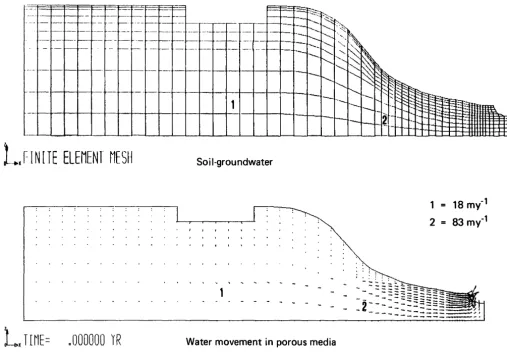
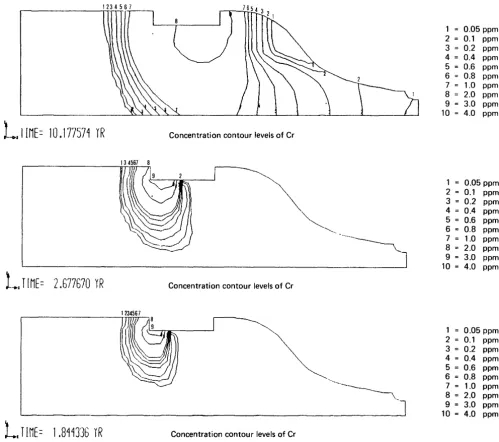
Series of experiments with soils sampled at the lspra site and Interacting with different trace metal species have demonstrated the unique possibilities of the radio tracer methods. A finite ele-ment model was applied to the trace metal mobilization in ground-water from a coal fly ash repository. One result is that the arsenic concentration in ground-water 20 m beneath the repository will persist for 60 years above the maximum permissi-ble concentration level, as defined in EC 80/778 directive on drinking water quality (50 ~-tg/1).
2. ATMOSPHERIC POLLUTION (ACID DEPOSITION) The role of naturally emitted substances, like terpenes and pinenes in chemical and photochemical transformation pro-cesses of air poll~tants to acidic compounds was further in-vestigated. The reaction of ,B-pinene with 03 in presence of S02
leads to sulphur containing particulate matter, from which at least 75% are sulphate. This finding is similar for dark and sunlight irradiated conditions. In similar experiments with natural terpene mixtures a rapid oxidation of sulphur dioxide to sulphate was found.
To contribute to the understanding of the role that N03 radicals play in the night-time chemistry of atmospheric pollutants, reac-tions between N03 radicals and unsaturated organic hydrocar-bons of biological origine have been studied using FT-IR and GC-MS techniques. Under laboratory conditions main products are nitrate, pernitrate and carbonyl functional groups.
Normal air quality levels and severe pollution episodes were monitored around the city of Varese during the winter period with out mobile laboratory for remote sensing of air pollutants. As main pollution sources sulphur containing fuel for domestic heating and dense traffic were identified.
On request of the Greek Ministry for the Environment, in September the same mobile unit performed extended air pollu-tion measurements in Greece (Athens and Thessaloniki). Especially high values of S02 were observed. Data evaluation
will continue as soon as meteorological parameters will be available.
A new dual-trap tracer analyser with a detection limit of 0.01 ppt for perfluorcarbons was purchased and tested. The mobile laboratory for «in-field» release, sampling and analysis of at-mospheric tracer is now assembled and ready for field cam-paigns.·
A 3D-Doppler acoustic radar (SODAR), capable to determine vertical wind vector profiles, has been purchased and works now at the lspra site on a continuous routine basis. Another' meteorological instrument, a 3 D sonic thermo-/anemometer coupled with a fast response N02 analyser has been
suc-cessfully tested in a joint exercise with the Fraunhofer Institute for Atmospheric Research near Reisting (Bavaria) for dry deposi-tion measurements.
The JRC contribution to the COST concerted action 611 «Physicochemical behaviour of atmospheric pollutants» has con-tinued and JRC scientists have been deeply involved in the definition phase of the EUREKA environmental project EUROTRAC.
The Central Laboratory for Air Pollution, set up for the implemen-tation of the EC 80/779 directive on limits and guidelines for S02 and suspended particulates, continued its mission on
behalf of DG XI with the check of station instruments in Italy and Greece. Examples for inefficient sampling lines, giving rise to completely false measurements were encountered and underline the need for calibration exercises on routine measur-ing stations. The JRC-EMEP station was run continuously at the lspra site and the data were made available in the frame of the programme on the Evaluation and Monitoring of European Pollu-tion.
The construction of the pilot plant for the ISPRA MARK 13A desulphurisation process at the SARAS refinery, Sarroch
dinia) has been continued and the plant operation will start in the second half of 1988.
Laboratory work for extending the ISPRA MARK 13A process for flue gas desulphurisation to a combined desulphurisa-tion/denoxing process continued. Electrolytic reduction of nitrous oxide via an iron-EDTA complex gave promising results. Preliminary experiments showed a reduction of the nitrous ox-ide at the cathodic comportment of the electrolytical cell and a significant formation of ammonia. At the same time, in the anodic comportment of the same cell, bromine, to be used for oxidising sulphur dioxide to sulphuric acid could be regenerated from the hydrobromic acid formed in the actual ISPRA MARK 13A process.
3. WATER QUALITY
In enclosure experiments on Lake Comabbio, a shallow water body with periodical mass-mortality of fish during the critical stratification period, the amelioration of physical, chemical and biological parameters by artificial oxygenation was followed. For testing the ecotoxicity of nickel at low concentrations (50 J.tg/1) the mortality and reproduction rate of Daphnia Magna pro-ved to be a valuable bioindicator.
A further assessment of the flow cytometric method developed at lspra showed that it is possible to identify algal classes by photopigment autofluorescence and to quantify number and size of cells within populations which would allow to assess water quality in a objective and comparable way. For the modellistic prediction of the recovery of Lake Orta, a highly polluted water body, a systematic inventory of trace metals (Cu , Cd, Pb, Cr, Ni, Zn) in dissolved, particulate and sedimented phase was per-formed.
4. CHEMICAL WASTE
To study the fate and environmental pathways of highly toxic compounds contained in chemical waste specific analytical pro-cedures for extraction and analysis of polyhalogenated aromatic compounds from environmental samples were developed. These methods were further verified by use of 14C radio-labelled dioxines and polychlorinated biphenyls.
Risk assessment procedures for human exposure to these com-pounds which may be contained in soot, incinerator fly ash, polluted soils and industrial wastes were established by assign-ing toxicity equivalent factors to each compound and consider-ing source-composition and bio-availability as well.
The Chemical Emergency Management (ChEM) decision sup-port system has been further developed. The first module is now operating and capable to identify the levels of threat related to the most common types of accidents involving PCBs. Support to DG XI for the modification of EC directives on chemical waste, on updating of the toxic substances list and particularly on the EC directive on PCBs has continued.
RESEARCH AREAS
1 . Environmental Chemicals
In drafting directives and laws for the protection of human health and the natural environment the Commission and national authorities need validated scientific information on environmental chemicals (e.g. production and use patterns, toxicity, concen-tration in environmental matrices, biodegradibility, etc.). The importance of ~<acceptable» data is further underlined by the fact that the economic consequences of setting environmen-tal standards for certain pollutants (e.g. Cd in reclaimed soils, Pb in gasoline) or banning certain products (use of carbonyl compounds or asbestos in residential dwellings) may be impor-tant. Having this general objective in mind, JRC regrouped the data bank ECDIN activities on Indoor Air Pollution, «Exposure and Health Effects of Trace Metals and, Environmental Pathways» under the common heading Environmental Chemicals.
1.1 ECDIN
(Environmental Chemical Data Information Network)
Introduction
The ECDIN project is concerned with the development of a data bank for «Environmental Chemicals», that is chemicals that ac-tually or potentially may affect man and/or the environment as a consequence of their manufacture, transport, use and disposal. Since 1980 the collected data had been loaded into a data base designed to utilize the ADABAS data base manage-ment system.
An important part of the data collection and some of the soft-ware development was funded by the E. C. Indirect Action En-vironmental Research Programme.
The principal medium term objectives are the following:
- To make ECDIN progressively operational, giving priority to the needs of the Commission services in selecting chemicals to be covered and data fields to be implemented.
- To make this service easily accessible to public and private users via the international informatics networks.
- To build up within the Member States a network of ECDIN partners for continuous input and updating of data.
- To carry out research, essentially on ranking of chemical substances, structure/activity relationships, and evaluation of chemicals.
To achieve these objectives, it will be necessary to perform the following tasks:
- Continued data collection and regular updating where n.ecessary.
- Further development of the ECDIN system in order to scope with the users' needs, mainly in terms of retrieval language.
- Follow-up of technical progress in the field of retrieval languages and user's interface systems.
- Continuous contacts with people in research and manage-ment of the environmanage-mental protection domain, in order to quickly adapt the system to the evolution in that field.
- Continuous contacts with the relevant Commission services in order to follow the Commission's priorities and to store the information referring to the EEC directives.
- Critical data evaluation, at least in the more crucial fields.
RESULTS
1. The Public Available ECDIN
In the reporting period the public access to ECDIN has con-tinued, through the external host, Oatacentralen IS (Copenhagen).
The number of subscriptors is still slowly increasing, but the cumulative access time is stagnating (see fig. 1 ).
These evidences are only apparently contradictory: in fact the overall interest for an information tool such as ECDIN is increas-ing worldwide, but the limited amount of funds available for up-dating makes the system less interesting for «old» users. They have already extracted the relevant information of their interest, but find very few «new data» on the same subject. Another time limiting factor could be the increased skill of users, allowing them to get the same information by a shorter search. So it is not sur-prising that the most active users are now coming from Japan and Australia, recently better linked with the marketing host. One important new acquisition has been the incorporation of the Brandweer lnformatiecentrum Gevarlijkestoffen (B.I.G.) data base into ECDIN as a new Data Category.
This data category stores all relevant information with regard to first aid in case of road accidents during transport of chemical substances.
The data bank B.I.G. has been developed by the Ministry of Internal Affairs of Belgium, the University of Leuven, and the fire station of the city of Geel (Belgium)
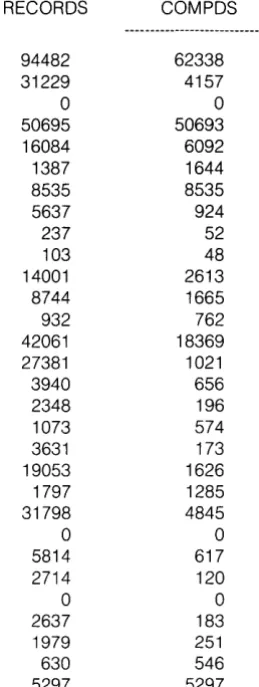
Originally B.I.G. was implemented in 4 languages (Deutsch, French, English, German), and has been translated to Spanish, Italian, Portughese and Danish on behalf of J.R.C. lspra. The data contained in the data bank give detailed information to firemen who are involved in clearing accidents with chemical substances, in a clear and readily understandable language. Figure 2 represents the first page of the data display with language selection menu and overview of the different data files. Other files have been in the meantime readjusted, improved and (or) updated, but the total size of these improvements has not been sufficient to maintain the excellent level previously reached by ECDIN. The fig. 3 gives the situation of the loaded records at the end of 1987.
TS004
1000
800-
sao-
400-
200-•
*
Total number of ECDIN users • Connect minutes per month/5•
•
•
•
••• •
**'***
• •
• • •
***
:t**d**:*** *
•
• ***:*****-:********
• • • •
-:::**•
•
•
•• •
or----r----r---~~---.----~--~----~
I I I I 1 I IApr. 83 Oct. 83 May 84 Nov. 84 Jun. 85 Jan. 84 Jul. 86 Feb. 87
Date
Fig. 1. ECDIN use statistics
. THIS FILE IS MADE AND MAINTAINED BY:
BRANDWEERINFORMATIECENTRUM VOOR GEVAARLIJKE STOFFEN TECHNISCHE SCHOOLSTRAAT, 43 A
B-2440 GEEL (BELGIUM)
FOR THE COMMISSION OF THE EUROPEAN COMMUNITIES
INSPITE OF ALL THE CARE THAT HAS BEEN SPENT ON THE COMPOSITION OF THIS TEXT, NEITHER THE COMPOSERS NOR THE COMMISSION. OF THE EUROPEAN COMMUNITIES CAN ASSUME ANY RESPONSIBILITY FOR EVENTUAL DAMAGE THAT MIGHT RESULTS FROM ANY MISTAKE THAT MIGHT FIGURE ON THIS REALISATION.
?
?
NL - NEDERLANDS F - FRANCAIS
I - ITALIANO E - ESPANOL S - DEUTSCH
GB- ENGLISH
P - PORTUGUES OK- DANSK
Select Language = = = = = = =
>
* * * * Available Data * * * *
?
A Type of Hazard
B Emergency Action - Methodes C Personal Protection
D Properties - Appearance E First Aid - Symptoms F First Aid - Measures G General Precautions H Remarks
I Literature
Select details required (CR =all) =
>
Fig. 2. The HAZARDS INFORMATION data Category
*** E CD IN ***LOAD STATUS STATISTICS*** 01/12/87 ***
FILE
1 Chemical Synonyms ... . 2 Physicochemical Properties ... . 3 Transport and Handling ... . 4 Chemical Structure Diagram ... . 5 Chemical Producers ... . 6 Chemical Processes ... .. 7 Uses ... . 8 Production and Consumption Statistics ... . 9 Export Statistics ... . 10 Import Statistics ... . 11 Occupational Health and Safety ... . 12 Occupational Exposure Limits ... . 13 Directive 67/548/EEC ... . 14 Classical Toxicity ... . 15 Aquatic Toxicity ... . 16 Mutagenicity ... . 17 Carcinogenicity ... .. 18 Odour and Taste Threshold Limits ... .. 19 Effects on Soil Microorganisms ... . 20 Concentration in Environmental Matrices (Cost 64b) ... . 21 Analytical Methods ... .. 22 Legislation ... . 23 Teratogenicity ... . 24 Concentration in Human Media ... .. 25 Concentration in Animal Media ... . 26 Metabolism in the Aquatic Environment ... . 27 Metabolism in Soil ... . 28 Bioaccumulation in the Aquatic Environment ... . 29 IRPTG WASTE ... . 30 BIG ... .
Fig. 3
8
RECORDS
94482 31229
0
50695 16084 1387 8535 5637 237 103 14001
8744 932 42061 27381 3940 2348 1073 3631 19053
1797 31798
0
5814 2714
0
2637 1979 630 5297
COMPOS
62338 4157
0
50693 6092 1644 8535 924 52 48 2613 1665 762 18369 1021
656 196 574 173 1626 1285 4845
0
617 120
0
[image:10.588.421.551.453.797.2]2. Development of ECDIN
During 1987 work started on the development of a new user-interface for the ECDIN-databank.
This ECDIN-ACCESS project, is funded by the INSIS pro-gramme of DG-XIII with the scope to improve the electronic com-munication between the institutions of the European Community and extending this communication to the member state ad-ministrations, and to facilitate the access to data collections under the responsibility of EC institutions. At the beginning of the year a contract was granted to a consortium consisting of two Danish and one Italian company to carry out a feasibility study.
The study reccommends an interface consisting of an user front--end implemented on an intelligent terminal, the Common Com-mand Language (CCL) possibly extended with some functions to facilitate the interrogation and display of retrieval data, and a CCL-ADABAS module. The user front-end will comprise help . modules, which allow the user to formulate current CCL
com-mands without any knowledge of the database structure. The information contained in ECDIN is used more and more by other Commission Services for other research and evalua-tion activities, like evaluaevalua-tion of Chemical Risk, Structure Activities Relationships, searches for specific toxicological and analytical problems.
3. Support to other Commission Services
EINECS. The inventory of existing chemicals was definitively established at the end of 1986; a provisional issue of the English version has been printed and distributed at the start of the repor-ting period.
In 1987 the overall list has been made available on-line, through the main lspra computer, to the authorized services of the Com-mission and of the Member States.
Data Concerning the compounds in EINECS, the European In-ventory of Existing Chemical Substances, have been loaded into the data bank and have been made available through the ECDIN display programme as a new file A(C): Identifiers. This version of the Display Programme has since the summer been available on the computer in lspra for the Commission Services and for the competent authorities of the member states. A reorganisation of the synonym file has been carried out dur-ing autumn 1987.
The complete file of synonyms maintained by the Custom Union Service is now accessible through the new ECDIN Display System.
In addition to the work for EINECS, ECDIN provided a con-tinuous support to several Commission services, by supplying information, consultancy and technical assistance.
For DG Ill assistance for the improvement of the hazardous substances list was given.
Table I. PC - Estimation (Chemest) - Alkylchlorides
Compound Form. Mw M.p. B.p.
(oC)
Chloromethane CH3CI 50.5 -98 -24 Chloroethane C2H5CI 64.5 -138.7 13.1
1-Chloropropane C3H7CI 78.5 -122.8 46.8 1-Chlorobutane C4HgCI 92.6 -123 74.8 1-Chloropentane C5H11 CI 106.6 -99 102.8 1-Chlorohexane C5H 13CI 120.6 -83 132 1-Chloroheptane C7H15CI 134.6 -69.5 159 1-Chlorooctane CsH1yCI 148.7 -57.8 182 1-Chlorononane CgH1gCI 162.7 -39.4 203.4
For DG V work on the biological monitoring of adverse effects for professional exposure to chemicals continued. DG XI relied on assistance in several actions concerning chemical impact and disposal of toxic/substances) and DG XXI in translating chemical names of the Customs list.
Evaluation of Chemicals
The availability of reliable physico-chemical and biological/tox-icological data is one of the limiting factors in the overall risk assessment of chemicals. In many cases, such data are often sparse or lacking entirely.
To some extent, this difficulty may be overcome by introducing estimation or calculation methods which allow to derive essen-tial physico-chemical data from some basic properties or from structural correlations.
To this end, a project has been started in collaboration with GSF, Munchen, Neuherberg (project group Environmental Hazard Potential of Chemicals) to assess the potential use of such estimation methods and implement their practical application. In a first step, an available calculation programme («Chemest») has been transcribed to be compatible with the ECDIN host computer in view of a future application to increase the physico-chemical data base.
In a second phase, estimated vapour pressure and water solubility data have been derived for selected groups of chemicals and compared to available experimental data. An example is given in Table I, where the estimated parameters are confronted with the (few) available experimental figures for the monochloralkanes. It appears, that in the most cases, satisfactory agreement can be obtained between experimen-tal and calculated results with a slight bias towards overestima-tion of calculated values. In case, where different estimaoverestima-tion methos are available, variations are rather insignificant (methods 1 and 2 for vapour pressure estimation).
At this stage, it is evident that at least for the extrapolation of results from the first members of a homologue series of chemicals of less complex structure to members of higher Mw the estimation methods can be quite useful.
For 1988, it is planned to extent these studies systematically to chemical series of more complex structure and to add other important parameters (for instance octanol/water partition coef-ficient).
REFERENCES
0. NORAGER, M. BONI, W. PENNING, R. ROI
New Development in the ECDIN Databank, 1Oth International On-Line Meeting,Learned Information (Europe) Ltd., 24 December 1986, London (UK).
Vapour Pressure (Torr) (25 °C) Water Solub. (g/1) (20°) (experim.) Meth. 1 Meth. 2
experim. estimated (estim.) (estim.)
4.8-5.0 atm. 5.3 atm 9 (60) 1000 1150 5.74 7.6(1) 9.5(2)
280 346 343 2.7 2.5
80/110 119 116 0.6 0.79
32 29 0.25
12 10 0.079
3.6 3 0.025
1.3 1.1 0.008
0.0025
Commission of the European Communities:
Biological Indicators for the assessment of human exposure to industrial chemicals: Arsenic, Cobalt, Vanadium, Endrin, Aldrin and Dieldrin.
Edited by L. Alessio, A. Berlin, M. Bani,
R.
Roi for the CEC as EUR Report 1987 (EUR 11135 en).Commission of the European Communities and International Commission on Occupational Health.
Proceedings of the «1st International Workshop on Data Banks in Occupational Health».
Edited by L. Parmeggiani, R. Roi as EUR rep. n. 11022EN, 1987.
1.2 INDOOR POLLUTION
INTRODUCTION
Since the early 70's increasing evidence has become available that indoor air in residential and other non-industrial closed en-vironments (in addition to diet, drinking water, outdoor and in-dustrial workplace air) makes a major contribution to population exposure to a wide range of environmental chemicals. Such evidence includes health and comfort complaints due to indoor air pollution (lAP), the detection of major indoor sources of air pollutants and of indoor concentrations of a wide range of air pollutants which are higher and sometimes considerably higher than the corresponding outdoor concentrations. In particular, volatile organic compounds (VOC) occur indoors consistently at higher concentrations than outdoors /1, 2, 3, 4/ and it has been shown that population exposure to this class of chemicals to which belong many irritating, toxic and cancerogenic com-pounds is predominantly due to indoor air exposure /3/. This activity aims at enlarging knowledge about air quality in closed environments with the scope to assess its relevance for human health and comfort. In particular, environments with high population residence times (e.g. residential dwellings, schools, office buildings) or presumably high air pollution levels (e.g. new buildings) are taken in consideration.
Pollution by VOC is at the centre of interest in view of the:
- high concentration levels found indoors compareq to outdoors,
-high complexity of this type of pollution requiring a widespread effort of assessment,
-potentially important health relevance,
- experience in the field of environmental organic analysis ex-isting at the JRC.
The complexity of lAP (Indoor Air Pollution) and the scarcity of dedicated research capacities calls for collaboration of Euro-pean laboratories working in this field.
An essential part of the effort of the JRC therefore is dedicated to the management and scientific coordination of the Concerted Action «Indoor Air Quality and Its Impact on Man».
The final goal of this action is to contribute to
- humf!.n total exposure assessment,
- a scientific basis for the establishment of indoor air quality criteria, and
-a control of indoor pollution sources affecting human health and comfort.
ACHIEVEMENTS AND RESULTS
1. Concerted Action «Indoor Air Quality & Its Impact on Man» The most important event for the indoor activity was the com-mencement of the Concerted Action. In two Concertation Com-mittee meetings organized in March and November at lspra an initial working programme has been prepared. Three Working Groups have been established:
10
-Working Group 1 is going to prepare a guideline for problem building investigations with special reference to the question how to identify and to approach buildings affected by the «Sick Building Syndrome» (SBS); a preliminary draft has been pro-duced in 1987;
-Working Group 2 will prepare strategies/guidelines for indoor measurements;
-Working Group 3 is charged to prepare a guideline for for-maldehyde emission measurements, which has been drafted in 1987.
In order to assist Commission Services in evaluating the oppor-tunity of regulatory action in the field of indoor air quality it was further decided to prepare three summary reports on existing knowledge in the field of exposure to and health effects of in-door radon, formaldehyde and N02 in Community countries. Preliminary drafts of these reports have been discussed dur-ing the second Concertation Committee meetdur-ing.
In August «Indoor Air '87», the fourth International Conference on Indoor Air Quality and Climate was held in Berlin under the auspices of the CEC represented by the JRC. Bernd Seifert, the chairman of the Concertation Committee was the president of the conference and many members of the Concertation Com-mittee including JRC staff were involved in the organization of this most important scientific event in the indoor air field in 1987, to which the JRC contributed also three scientific communica-tions /5, 6, 7/.
2. Indoor Air Quality Measurements in Buildings of the Euro-pean Parliament
A) EXPERIMENTAL PROCEDURES
Temperature and humidity were determined by a dry and wet thermometer psychrometer.
Air exchange rate was determined by sulphur hexafluoride (SF6) dilution: a small quantity of the gas ( -1 cm3 each 50m3 of room volume) was released in the room and, after a delay for mixing, air samples were collected and SF6 measured by a portable gas-chromatograph. The tracer gas is completely in-ert. The results are reported in terms of numbers of room volumes changed each hour.
Respirable particulate material. The concentration of the suspended particles with diameter smaller than 4 t-tm was measured by a nephelometer (light scattering) type instrument GCA model RAM-1.
Formaldehyde, heavier aldehydes and Ketones. The pro-cedure used consists in sampling about 30 I of air thorugh a reagent solution (dinitrophenyl-hydrazine in acetonitrile), of which an aliquot is carried to the laboratory. Here the separation of the reacted compounds (hydrazones) is performed by liquid chromatography and the different compounds detected by an ultra-violet scanning photometer. ·
Volatile organic compounds (VOC). The compounds with boil-ing points rangboil-ing from n-hexane to about the alkanes with 13 carbon atoms are trapped in a sampling column containing an adsorbent, either a synthetic porous polymer (Tenax) or graphytized carbon black (Carbotrap).
The sampling columns are carried to the laboratory. Here they are thermally desorbed cryogenically preconcentrated and in-jected into a gas-chromatograph where they are separated us-ing capillary columns and detected by flame ionization (GC-FID analysis) or mass spectrometry (GC-MS analysis).
in-strument is useful as an indication of situations of elevated pollu-tion, where duplicate samples are taken in order to carry out GC-FID as well as GC-MS analyses.
The «total
>
C6» reported in T abies II and IV refers to the sum of the detector responses to all compounds recorded during GC-FID analysis, converted into mass (mg) using the mean in-trument response factor for the hydrocarbons present in a calibration mixture.A more detailed description of these procedures may be found elsewhere /8/.
B) RESULTS
The results of all the measurements performed on the site and in the laboratory are presented in Tables 1-11 and III-IV respec-tively for Brussels and Luxembourg. Formaldehyde,
acetaldehyde, benzaldehyde and acetone are reported separately from the VOC (though they are also volatile organic compounds) because they have been measured through a dif-ferent technique. Under the heading VOC are reported the three most abundant single compounds and the «total
<
C6» con-centration, obtained as explained above.C) COMMENTS
Temperature and humidity. As already observed at Strasbourg in 1986 (see PPR 1986), some rooms had temperatures bet-ween 24 and 25°C and one even in excess of 25°C. The temperature observed in room n. 212 of the new building (De Gasperi or BAK) in Luxembourg was presumably elevated (26.8°C), because the air conditioning system was not operating and the sun entered through a wide window. The observed range for the relative humidity is 39-57%.
TABLE I. Physical parameters in the buildings in Brussels
Volume air change respirable Temperature Relative Building and Room (m3) rate (h-1) part1culate Humidity
matter (mg/m3) (o() (%)
BElliARD
63 50 1.05 0.13 22.4 47
travel agency 100 1.44 036 22.4 45 telephone exchange 120 0.84 0 12 21.6 50
201 75 0.68 0 22 23.3 48
256 70 1.60 0.010 21.6 39
341 110 0.35 0 016 20.2 44
378 60 0.94 0.010 23.2 45
436 105 0.86 0.025 20.4 51
472 50 1.72 0.017 22.4 40
736 62 0.64 0.018 22.6 48
766 (f1hng room) 200 0.76 0.018 24.0 43 801 + 817 190 0.77 0.025 21.4 49
810 38 0.45 0.020 22.8 48
meeting room No. 52* 1000 0.39 0.020 23.0 42 NL interpreter cabin* 20 0.74 0.080 24.0 43 meeting room No. 61 * 830 1.39 0.020 23.4 39 F interpreter cabin* 20 1.52 0.020 25.0 44
REMORQUER
105 30 030 0.050 22.2 54
ARDENNES
307 50 4.67 0.040 19.6 51
717 100 3.40 0.35 20.8 49
EASTMAN
printing workshop 360 1.09 0 080 22.6 55
..
.. ..
..
120 0.78 0.1724.6 54
306 70 0.79 0.050 22.0 57
REMARD
612 90 1.20 0 028 20.6 56
OUTDOORS
BEL roof- 13 Oct - 0 020 14.4 70
..
..
14 Oct - 0 01514.8 86
*
=
forced ventilation not 1n operat1onTABLE II. Chemical parameters in the buildings in Brussels
VOC (mg/m3)
formal- acetal-
benzal-acetone Building and room main 2nd main 3rd main de hyde de hyde de hyde
total >C6 compound a) compoundal compound a) (mg/m3) (mg/m3} (mg/m3)
(mg/m3)
BEL LIARD
63 0.18
travel agency 0 35 telephone exchange 0 21
201 0 25
256 0 25
341 0.30
378 0.016
436 0.18
472 0.16
736 0.30
766 (filing room) s 801 + 817 0 081
810 0.047
meeting room No 52 + 0 20 NL interpreter cab1n + · 022 meeting room No. 61 + 0 87 F mterpreter cabin + 0 51
REMORQUER
105 2.04
ARDENNES
307 0.087
717 0.10
EASTMAN
printing workshop 139
" " " " 133
306 2 51
REMARD
612 0.42
OUTDOORS
BEL roof- 13 Oct. 0.11 BEL roof - 14 Oct 0.90
B
=
below 0.01 mg/m3a) for abbreviations see Table 5
TEC 0.022 TOL 0.019 2MP 0.038 TOL 0.027 TOL 0 027 B TOL 0.019 B TOL 0.017 B U-2 0.028 TOL 0.028 ACA 0 028 HEA 0.019 ACA 0 029 HEA 0.014 TOL0.010 B TOL 0.013 U-2 0.011
s s
U-3 0.011 B
B B
TOL 0 030 ACA 0 020 U-10039 TOL 0 032 TCE 0.64 TEC 0 17 U-2 0 12 2MP 0 059
HEX 1.73 TOL 0 089
B B
TOL0016 TEC 0.010
TEC 56.7 HEP 16.0
* *
TEC 1 25 1TC 0 21
TOL 0.11 XYL 0 020
TOL 0.011 XYL 0.007 HEX 0.76 MCP 0.015
b
=
below detection limit s=
sample lostAir change rate. The values observed for this parameter range between 0.30 and 6.46 h -1 and their distribution is presented in Fig. 1 a. Since some values are lower than 0.5 h-1, which is usually considered a minimum value, also the number of cubic meters per hour available to each room (obtained by multiply-ing the air change rate by the room volume) has been deter-mined. The distribution obtained for this parameter is represented in Fig. 1 b. Three rooms show values below 25 m3fh, which in some countries is considered the minimum fresh air requirement for one person /9/. One of the three rooms is an interpreter cabin in the Belliard building, where the air con-ditioning system was not working when the survey was made and presumably has a much higher air change rate when the system is working. The two other rooms (Belliard 810, Remor-quer 1 05) deserve further attention.
12
B 0 030 0.007 b 0.007 U-2 0.020 0.071 0 035 b 0.019 B 0.062 0.019 b 0.012 B 0 078 0 016 b 0 013 B 0 029 0 009 b 0 005 2MP 0.014 0.043 0.008 b 0.006 TOL0.010 0 021 0 015 b 0.005 TOL0011 0.050 0.004 b 0.007 B 0 028 0.002 b 0.005
B s s s s
s 0.066 0 004 b 0.005 B 0 021 0.004 b 0.005 B 0.021 0 004 b 0.005 HEX 0.010 0 005 0 003 b 0.004 PIN0012 0 46 0 16 b 0.033 TOL 0 022 s s s s TOL 0 049 0 32 0 011 b 0.006
B s s s s
B 0.024 0.010 b 0.003 B 0.055 0.022 b 0.007
MCH 9.8 0 053 0.013 b 0.008
* s s s
HEP 0 21 0 056 0.013 b 0 012
BEN 0 016 0 057 0.009 b 0 018
TEC 0.007 0.009 Q.019 b 0.008 3MP 0.012 0.003 0.005 b b
*
=
compos1t1on very Similar to that observed 1n the sample above.+
=
forced ventilation not 1n operationRespirable particles. Most values observed for this parameter are very low, i.e. below 0.050 mgfm3; higher values are found in rooms of smokers and in the printing workshop in the Eastman building. For comparison, particle concentrations observed in outdoor air with the same instrument are as high as 0.20 mgfm3.
Formaldehyde, heavier aldehydes and ketones. The distribu-tion of the formaldehyde concentradistribu-tions observed is represented in Fig. 2. The two highest values have been detected in the already mentioned interpreter cabins where forced ventilation was temporarily switched off.
TABLE Ill. Physical parameters in the buildings in Luxembourg
Volume air change Building and Room
(mJ) rate (h 1)
TOUR
014 (audio vtsual) 70 2.76
med exam room 70 2.47
221 40 4.77
235 40 3.17
726 30 5.18
2128 70 2.91
2134 70 3.80
SCHUMAN
126 (print w seer) 100 1.67
342 40 0.68
388 55 0.48
3113 40 0.71
3121 40 0.82
meeting room No.601 900 6.46
meeting room No.603 250 1.59
NEW HEMICYCLE
Office (print. w. -5) 45 1.13
357 60 0.70
340 60 1.02
SENNINGERBERG
18 40 0.73
DE GASPERI (BAK)
212 50 0.57
OUTDOORS
parking centre
europeen
.. ..
..
- 16 Oct..
"..
- 17 Oct..
..
..
- 190ct-enough all these rooms are in the Schuman building. The only room in the same building where formaldehyde shows a much lower concentration had a lower temperature and a much higher ventilation rate. This finding suggests that particle board emis-sion is the source of the elevated formaldehyde concentrations (the emission of formaldehyde depends strongly on temperature).
Apart from the interpreter cabin, the highest concentration of acetaldehyde is observed in the room with the highest particle concentration (travel agency, Belliard); both pollutants are caus-ed by cigarette smoking and their parallel behaviour is a good confirmation of their common origin. There are no guideline values for acetaldehyde in indoor air; the limits fixed for profes-sionally exposed people are a hundredfold higher than the cor-responding values for formaldehyde.
Consequently the concentrations of acetaldehyde observed in this survey are presumably not critical by themselves. En-vironmental tobacco smoke, however, of which they are an in-dicator, is considered a human carcinogen.
Benzaldehyde which has been detected in all but one building in Luxembourg (but not in Brussels) deserves a special com-ment due to an abnormal sampling effect. Air samples pass through two impinger bottles in series. ldially compounds to be
respirable
Temperature Relative particulate Humidity matter (mg/m l) (o() (%)
0.010 23.8 43
0.034 23.0 48
0.008 22.0 50
0.010 23.0 52
0.037 25.4 47
23.4 48
23.8 46
0.020 24.2 43
0.020 23.0 48
0.018 23.0 52
0.035 23.4 48
0.035 23.4 52
0.026 18.6 58
0.015 23.2 52
0.018 23.4 39
0.026 22.0 47
0.025 24.6 39
0.070 24.0 43
0 080 26.8 41
0.018 12.0 82
0.033 15.0 76
0.050 15.8 54
analysed are completely or nearly completed trapped in the first bottle and the second bottle serves only as a control for poten-tial losses from the first bottle. Benzaldehyde, however, was prevalently or even only detected in the second impinger bot-tle. We have tested several hypotheses for this abnormal behaviour but have not yet found an explanation. As a conse-quence it is not possible to calculate air concentrations of ben-zaldehyde, even though GC-MS measurements of VOC indicate, that the compound, which is used as flavouring agent in clean-ing products, was present. It can, however, be concluded from these last measurements, that concentrations were considerably lower than the threshold limit for workplace air of 20 mgfm3 in Italy (no value is defined in other Community countries). Acetone, widely used as a solvent, presents the highest value (0.127 mgfm3) in room n. 212 of the new building in Luxem-bourg, where works were still under way, like fixing moquette by means of glues. All other values are below 0.050 mg/m3, · which may be compared with the legal limit of 1000 mg/m3 for professional exposure.
Volatile organic compounds. In 15 rooms duplicate samples have been collected for analysis by both, GC-FID and GC-MS (see section «Experimental Procedures»). All other samples were
TABLE IV. Chemical parameters in the buildings in Luxembourg
Building and room
total >C6
TOUR
014 (audio visual) 0.11
med exam room 0.11
221 0.11
235 0.11
726 0.32
2128 0.22
2134 0.24
SCHUMAN
- 126 (off1ce prmt1ng work) 0 86
342 0.41
388 0.57
3113 0.82
3121 0.38
meeting room No.601 s
meetmg room No.603 0 63
NEW HEMICYCLE
Office (print. work. -5) 2.63
357 0 33
340 0.18
SENNINGERBERG
18 0.013
DE GASPERI {BAK)
212 0 35
OUTDOORS
parking centre
europeen
" " -160ct 0.12
" " -17 Oct 0 052
" " -190ct 0.050
8
=
below 0.01 mg/m3a) for abbreviations see Table 5
VOC(mg/m3)
main 2nd main compound a) compound a)
BEN 0.016 B
TOL 0.022 2PR 0.020
ACA0.013 B
TOL 0 012 B
TOL 0 035 U-4 0.033
2PF 0.070 1TC 0.041
2PF 0.12 1TC0.015
BUT 0.57 OCT 0 024
TEC 0 086 HEP 0.019
TEC0012 HEP 0.025
TEC0.16 2MX 0 076
TEC 0 099 HEP0.015
s s
TEC 0 25 TCE 0 24
TCE 0.61 TEC 0.75
TEC0061 XYL 0.011
TEC 0.060 B
B B
TOL0.016 PED0.013
TEC 0 014 TOL 0.006
TOL 0 004 B
TOL 0 004 XYL 0.002
b
=
below detection limit s=
sample lostanalyzed by only one of these techniques. Results are reported in Tables II and IV, respectively for Brussels and Luxembourg, in terms of «total
>
C6» (see Experimental Procedures) and of the three most abundand compounds, whenever their concen-tration exceeded 0.01 mgfm3.The «total» data compare well with the values reported in the literature for indoor air with, however, two exceptions, namely the two halls of the printing workshop in the Eastman building in Brussels. The high vapour concentration present in these spaces influences probably the air of the whole building, as may be understood from the concentration and the composition observed in the only other room (n. 306) of this building includ-ed in the survey. Results qualitatively similar to those of room n. 306 are also observed in the office of the printing workshop in the New Hemicycle in Luxembourg.
24 individual compounds (mostly solvents) have been detected at a concentration greater than 0.01 mgfm3, among which four compounds the identity of which could nor or not completely be established. Their concentrations have been derived using the mean instrument response factor for hydrocarbons and can
14
formal- acetal-
benzal-acetone
3rd main
de hyde de hyde de hyde
(mg/m3) (mg/m3) (mg/m3) (mg/m3)
compounda)
B 0.021 0.006 + 0 006
B 0.021 0.010 + 0.014
B 0 011 0 003 b 0.005
B 0 034 0 008 b 0.011
PIN 0 026 0 031 0 014 + 0.022
TOL 0.011 0 028 0.009 + 0.008
TOL 0 010 0.018 0.005 + 0.005
HEP 0 020 0 138 0.010 + 0.019
TOL0.015 0.111 0.019 + 0.021
TOL 0.017 0 126 0 023 + 0.032
1TC 0.067 0.123 0.021 + 0.039
B 0 132 0.025 + 0.043
s 0.035 0.007 + 0.005 MCH 0.027 0.101 0.013 + 0.010
HEP 0 093 0 051 0.009 b 0 018
B 0 063 0 014 b 0 022
B 0 085 0 016 b 0.025
B 0.049 0.022 + 0.031
TED 0.011 0.063 0.022 + 0.127
HEX 0 005 0.003 0.002 b 0.001
8 0.010 0.006 + 0.002
ETB 0.002 0.008 0 008 + 0.002
+ = detected, but not quanitfiable (see the text)
be underestimated if the compounds contain hetero-atoms (like oxygen, nitrogen or sulfur).
ACA BEN BUT DOt)
ETB
HEA
HEX
HEP MCH MCP 3MP 2MX 3MX 2MP r'\r\T
PED
PIN
2PF 2PR lTC TCE TEC TED XYL
u-1
u-z u-3 u-4
Table V ldentification of the compounds reported in tables ll and lV half of the reported values, namely toluene, trichloroethene and tetrachloroethene. The WHO guideline concentrations
are
1mgim3 for trichloroethene, 5 mg/m3 for tetrachloroethene and 7.5 mg/m3 for toluene. The highest concentrations observed are 0.64 and 0.61 mg/m3 for trichloroethene (640/o and 610/o
of the guideline value); 1 .25 mg/m3 for tetrachloroethen e (250/o
of
the
guideline);
0.11
mg/m3
for
toluene
(1.50/oof
the guideline). The rooms where these higher concentrations oc-cur are respectively: the Belliard meeting room n. 61 (where the air conditioning system was not working); the office attached to the printing workshop in the New Hemicycle; room n. 306 (Eastman), already mentioned above; room n. 162 (Remaro, new building in which finishing works were stillin
progress).As the
WHO
guideline valuesrefer
to
24
hour
exposure, whereas the employees will in general be exposed for only Bhours/day,
the
maximum concentrations observedcan
be regardedas
acceptable,but
it
mustbe
bornein
mind that relatively large fluctuations may occur from day to day, depen-ding on the environmental conditions (wheather, air condition-ing, opening or closing of the doors, etc.) and dueto
human activities inside the building. The latter aspect is particularlyim-portant in the case of the buildings (Eastman, New Hemicycle) where the printing workshop may influence the air of the whole building.
D)
CONCLUSTONSThe air change rate in room n. 810, Belliard building, and n. 105,
Remorquer building, should be controlled, also in relation to the number of occupants.
The Schuman building shows formaldehyde levels slightly above the guideline concentration recently issued by the WHO for
in-door air; this guideline however refers
to 24
hour exposure. The printing workshop in the Eastman building, though con-sidered as an industrial work-place, presents pretty high con-centrations of VOC: these could become critical in comparison with legal limits under conditions different from those realized51-
76- 101-126-75
100125
150
151 +Concentration
( U9l.r1Fig. 2.
Distribution
of
the formaldehyde concentrations observed.acetic acid oenzene 1-butanol n-dodecane ethylbenzene hexanal n-hexane n-heptane
methylcyclohexane methylcyclopentane 3-methylpentane 2-methylhexane 3-methylhexane 2-methyl-1 -propanol n-oclane
n-pentadecane
cY-pinene
2-propyl-furane 2-propanol
1 . 1 . 1 -trichloroethane
trichloroethene tetrachlorethene n-tetradecane
1.3-xylene
+
1.4-xylene unknown alcohol unknown alcohol unknown compound* unknown compoundmost likely one of the following three.
1 -butanol, 2-propylfurane, cyclohexane
Air Flow Rate
201 +
(m:/h)
0- 0 6- I l- I 6- 2 1- 26- 3 1- 3.6- 4 1- 4.6- 5.1- 5.6_ 6.1_
05 10 1s 20 2.5 30 35 40 45 5.0 55 6.0 6.5
Air Change Rate (h-')
Fig.
l.
Distribution
of
the air change rate andof
theair
flow
rate.0- 26- 5r- 76- l0l- 126- 151-
176-25 50 75 100 125 150 175 200
0-
26-25
50No. of Cases
of cases |,lffil
at the moment of sampling for this survey. Moreover there are indications that vapours diffuse outside of the workshop and may pollute the air of other rooms in the building.
3. Participation in Exhibitions
The JRC presented its indoor activity at three exhibitions, in Milan (April1987), Ghent(May 1987) and Madrid (September 1987). As an example of environmental analysis the determination of carbonyl compounds in mainstream and sidestream cigarette smoke was demonstrated with the scope to sensibilize visitors for the problem of indoor air quality. As a spin off of the demonstrations a systematic investigation of carbonyl com-pounds in cigarette smoke has been performed. Results of this activity, which was partially performed during the exibitions and partially in the laboratory, are presented in a separate topical report (see following pages).
REFERENCES
/1/ L. LEBRET, H.J. VAN DE WIEL, H.P. BOS, D. NOIJ and J.S.M. BOLEIJ,
Volatile organic compounds in Dutch homes. Environment Int. 12, 323-332 (1986).
121 M. DE BORTOLI, H. KNOEPPEL, E. PECCHIO, A. PEIL, L. ROGORA, H. SCHAUENBURG, H. SCHLITT and H. VISSERS
Concentrations of selected organic pollutants in indoor and outdoor air in Northern Italy. Environment Int. 12, 343-350 (1986).
/3/
L.
WALLACEThe Total Exposure Assessment Methodology (TEAM) Study: Summary and Analysis, Vol. I, ORO, U.S. EPA, Washington DC 20460 (1987).
141 C. KRAUSE, W. MAILAHN, R. NAGEL, C. SCHULZ, B. SEIFERT and D. ULLRICH
Occurrence of volatile organic compounds in the Federal Republic of Germany. IN: INDOOR AIR '87 (B. SEIFERT et al. eds.) Vol. 1, Institute for Water, Soil and Air Hygiene, p. 102-106 (1987).
!51 H. KNOPPEL and H. SCHAUENBURG
Screening of Household Products for the Emission of Volatile Organic Compounds. IN: INDOOR AIR '87 (B. SEIFERT et al., eds), Vol. 1, Institute for Water, Soil and Air Hygiene, p. 27-31 (1987).
/6/ M. DE BORTOLI, H. KNOPPEL, E. PECCHIO and H. VISSERS
Performance of a Thermally Desorbable Diffusion Sampler for Personal and Indoor Air Monitoring. IN: INDOOR AIR '87 (B. SEIFERT et al., eds.) Vol. 1, lnstitut for Water, Soil and Air Hygiene, p. 139-143 (1987).
171 M. OEHME and H. KNOPPEL
Analysis of Low Volatile (
>
C 15) and Particle Bound Indoor Pollutants: Assessment of a Sensitive Method and First Results. IN: INDOOR AIR '87 (B. SEIFERT et al., eds.) Vol. 1, Institute for Water, Soil and Air Hygiene, p. 210-214 (1987)./81 M. DE BORTOLI, H. KNOPPEL, E. PECCHIO, A. PEIL,
L.
ROGORA, H. SCHAUENBURG, H. SCHLITT and H. VISSERS.Measurements of indoor air quality and comparison with ambient air», report n. EUR 9656, CEC 1985.
/9/ International Energy Agency: «Energy conservation in buildings and community systems programme» Annex IX: Minimum ventilation rates, Final Report, August 1983.
/1 0/ World Health Organization, Regional Office for Europe, «Air Quality guidelines», WHO Copenhagen 1987.
16
Carbonyl Compounds in Mainstream and
Environmental Cigarette Smoke
Topical Report by H. Schlitt and H. Knoppel
INTRODUCTION
Carbonyl compounds, i.e. aldehydes and ketones, are an im-portant class of indoor pollutants. Most attention has been focus-ed on formaldehyde due to the high concentrations often found in indoor environments, its strong irritation potential and its suspected carcinogenicity. However, many other aldehydes and ketones have been detected in indoor air /1, 2/.
Several aldehydes and ketones have also been detected in mainstream cigarette smoke together with many other volatile organic compounds (VOC) using Tenax trapping and gas chromatographic-mass spectrometric detection /4/.
Due to the extremely complex pattern of VOC contained in cigarette smoke, however, the identification and quantitative analysis of single compounds by this technique is difficult and minor constituents may easily be overlooked.
In view of the important role of cigarette smoke as an indoor pollution source on one side and on the other side of the strong irritation potential of many carbonyl compounds as well as the mutagenic properties of several of them /3/ we have applied a specific analytical method to the selective detection of car-bonyl compounds in mainstream (MS) and sidestream (SS) or environmental cigarette smoke.
The study consists of two parts. In part A carbonyl compounds in MS smoke of 34 cigarette brands available on the Italian market have been determined. For one «strong» cigarette (without filter) and one «light» cigarette (with filter) the delivery of carbonyl compounds as a function of the number of puffs has been measured. In addition the reproducibility of the emis-sion measurements in MS and SS smoke has been determin-ed, analyzing 5 cigarettes of the «light» brand under the same experimental conditions.
In part B carbonyl compounds in MS smoke have been com-pared with those in SS (or environmental) smoke of the above mentioned «Strong» and «light» cigarettes in terms of absolute amounts of average concentrations. The latter are also com-pared with available MAWC's (maximum admitted workplace concentrations). In addition the influence of the air velocity on these quantities has been determined.
EXPERIMENTAL
Cigarettes were tested using the experimental set-up shown in Fig. 1.
For the analysis of MS smoke cigarettes were lighted and at-tached to sampling train A. The personal pump D (Du Pont, type Alpha 1) was adjusted to a constant flow rate of 500 ml!min. In the open position of electrovalve F only a negligible amount of air was drawn through the cigarette. The valve was closed for two seconds per minute yielding a cigarette puff of 16.7 mL (compared to 35 mL of a standard puff /5/). Cigaret-tes without filter were smoked up to a remaining length of about 8 mm, filter cigarettes up to about 2 mm (in addition to the filter length), yielding 1 0 ± 2 puffs/cigarette. The cigarette smoke passed through the impinger bottles C, where carbonyl com-pounds were absorbed and reacted. The trap E contained water and served to protect pump D from acetonitrile evaporating from the impinger bottles C (see below).
For the analysis of both, mainstream and sidestream smoke, the cigarette was inserted i11to the PlexiglasR tube J (14 em diameter).
Fig. 1. Experimental set-up for the determination of carbonyl
com-pounds in mainstream (MS) and sidestream (SS/ cigarette smoke. A=sampling train for MS smoke. B=sampling train
for
SS smoke.C:impinger
bottles containing DNPH inacetonitrile; D = constant flow personal pumps; E = water traps
preventing acetonitrile from entering the personal pumps;
F = bypass
valve;
G =bellows pump;
H =flow
meter;J = plexiglas tube
below). An aliquot of the diluted SS smoke was drawn through sample train B with a flow rate of 500 mL/min during the entire smokrng period. The distance between the crgarette and the samplrng posrtion of SS smoke was 50 cm.
Carbonyl compounds in MS and SS smoke were determrned
through
their
reactionwith
dinitrophenylhydrazine (DNPH) following the method of LIPARI et al.l6l.
fhe
impinger bottles C contarned each 15 mL of a solution of 1 mg DNPH in 1 mLof
purrfred acetonrtnle lnsteadof
1 N
HCLO4as used
by LIPARI et al. 250 pL of 10 N H3PO4 were added to each imp-rnger bottle The second impinger bottle served as breakthrough control and contarned in none of the experiments more than5olo of the detected carbonyl compounds. After sampling the remarning volume was determined and 10 pL injected on top
of two
(rnitrally one) HPLC columns rn series (2x Supelcosil RP 18, 25x0.48 cm, Supelco lnc., Bellefonte, PA). Hydrazones, the reactron products of DNPH with carbonyl compounds, were eluted usinga
water/acetonrtrile gradientsta(ing with
500/oCH3CN and increasrng to 900/o CH3CN in 40 min. A scanning UV detector (Hewlett Packard, model 10404) was used for the detectron and identification of the hydrazones. Known amounts of hydrazones of all identified carbonyl compounds have been produced reactrng pure carbonylcompounds with DNPH. They were used as standards for quantitative analyses and to establish
a
lrbraryof
UV
spectra.
Frgure2
showsa
typtcal
HPLC chromatogram of carbonyl compounds (resp therr hydrazones) rn srdestream ctqarette smoke8C
E
HPLC chromatogramme of the carbonyl compounds (resp. their
hydrazones) typically present
in
tabacco smoke. Column: 2 x 250 mm x 4.6 mm, 51tm Supelcosil LC 1 B columns; mobilephase: gradient from 500/o acetonitrile
in
waterto
820/0acetonitrile in 40 min.; flow: 1.0 ml/min.
A = unt€dct€d DNPH, B =formaldehyde, C = acetaldehyde,
D =f
urfural,
E = aCrOlein, F =acetone,
Q =prOpanal,H = crotonaldehyde (2-butenal), I = methyl-vinyl-ketone, J = butanone, K=benzaldehyde, L= 3-methyl-butanal, M =
n-pentanal, N = methylglyoxal, O = betanedione.
RESULTS
AND
DISCUSSIONA.
Carbonyl compoundsin
mainstream cigarette smokeMarnstream cigarette smoke of 34 different cigarette brands (9
italian and
25
international, 1O without and 24 with frlter) has been analysedfor
rts carbonyl compound content. Table I reports the quantities of 13 carbonyl compounds and their total amount tn pglctgarette. Acetaldehyde rs by far the most abun-dant single constituent contributing57
+150/o to the total. Wrthone exception (cigarette F) acetone is the second abundant con-stituent followed by butanone and propanal with rather similar abundances. However, whereas butanone has been detected
in the MS smoke of all cigarettes propanal has not been detected
rn four of them (8, P, O,
Z)
The next abundant compounds rsacrolein, detected in the MS smoke of all but one (DD)cigarette.
In these experiments acrolein could not be separated from fur-fural, which contributes about 200/o
to the
reported acrolern values. Acrolein is one of the strongest known irritants (seesec-tion B).
Other
fairly
frequently detected compounds
are crotonaldehyde, methyl vinyl-ketone, 3-methyl-butanal andn-pentanal.
Formaldehyde is only a minor constituent of MS cigarette smoke and could not be detected at all in the MS smoke of 10 cigaret-tes. Other occasionally detected minor constituents are butane-dione ( : dimethyl-glyoxal), methyl-glyoxal and benzaldehyde
In order to assess the amount of carbonyl compounds inhaled by a smoker of a "light" filter cigarette (brand EE) and a "strong"
crgarette without filter (H) as a function of the puff number, after each second puff and after each of the two last puffs 10 pL of
the trapping solution in the first impinger bottle of sampling train A were injected onto the HPLC column and analyzed for their carbonyl compound content. The logarithms of the sum of the detector counts of all carbonyl compounds are plotted in Fig. 3
against the puff number for the "light" resp. the (strong> cigarette together with the calculated linear correlation lines. ln addition the correlatron coefficients r are given.
The results show that the cumulative amount of carbonyl com-pounds
in
mainstream cigarette smoke increases nearlyex-ponentially with the puff number. lt results in particular that the last two puffs contain about the same amount as all preceding ones.
The variatron of the emission between ogarettes of the same brand is shown in Table ll. The table reports the results of the analyses of the carbonyl compounds contained in MS and SS
smoke