84 Arab World English Journal (AWEJ) Special Issue on CALL Number 4. July 2018 Pp. 84-108 DOI: https://dx.doi.org/10.24093/awej/call4.7
Considerations for the Development of Computer-Assisted Language Learning (CALL) Teacher Training Course: A Practical Experience from a Call Course Development in Indonesia
Mokhamad Syaifudin Faculty of Education
UINSA Surabaya, East Java, Indonesia
Henriette van Rensburg Faculty of Business, Education and Law
The University of Southern Queensland, Toowoomba, Queensland, Australia
Abstract
The need for technology training for teachers will keep on growing in line with the development of technology itself. Although technology nowadays is more and more user friendly and may need no specific training on how to use it, teachers need to possess the knowledge that underpins the idea of using it for teaching and learning process. Teachers need to have solid pedagogical knowledge on how to use the technology to deliver contents to their students. Therefore, a technology-training course for teachers is always necessary. This paper presents the partial results of a design based study/research (DBR) on the development of online technology training for teachers with focus on CALL in Indonesia. Questions regarding factors affecting online CALL course and ways to improve the course in terms of training materials, activities, as well as the administration of the training are addressed in the study. Based on the study, some considerations on how to design such technology-training course are proposed. The considerations are ranging from aspects associated with technology competence for teacher standards, constructivism in online learning, adult learning theory, online instructional models, the technology, pedagogy and content knowledge (TPACK) framework and open educational resources (OER). Information regarding those aspects will be useful to assist other CALL teacher training course developers later to inform their decision in the development of the course which is based on a good theoretical understanding as well as highly practical in learning activities
Keywords: OER, online CALL course development, online teacher-training, TPACK
Cite as: Syaifudin, M., & van Rensburg, H. (2018). Considerations for the Development of Computer-Assisted Language Learning (CALL) Teacher Training Course: A Practical
Experience from a Call Course Development in Indonesia. Arab World English Journal (AWEJ) Special Issue on CALL (4) DOI: https://dx.doi.org/10.24093/awej/call4.7
Arab World English Journal
www.awej.org
ISSN: 2229-9327
85
Introduction
Reviewing literature on CALL teacher education, there are a few interesting facts that need to be well observed. Hubbard and Levy (2006) state that CALL teacher education is in demand and will always be in demand to accompany teachers to keep up with technology. Much effort has been made to provide teacher education in CALL whether formally in the form of degree programs in CALL or CALL-related courses (e.g.Partridge, 2006; Slaouti & Motteram, 2006; Son, 2009), or even informally such as through learning communities (e.g.Hanson-Smith, 2006; Stockwell, 2009). However, unfortunately, there are still no teacher-focused technology standards that guide such CALL teacher education, especially ones which are related to language teaching (Hubbard, 2008). In response to that, the TESOL consortium has made some proposals with regards to TESOL technology standards (Hubbard & Kessler, 2008). CALL teacher education should then be developed through adapting such standards. In addition, in developing CALL teacher education, Curwood (2011) recommends that teachers should be allowed to directly experience digital learning in context so that the education process can run effective. The CALL teacher education should be hands on and make use of current and up-to-date-technology usable in language teaching and learning.
In the case of Higher Education in Indonesia, responsible for training teachers, not many universities have provided courses dedicated to the training of CALL practice in the classroom. This is so unfortunate and very contradictory to the government regulation requiring teachers to integrate technology in their classroom activities. Therefore, it is such an urgent call for teacher training providers to offer CALL course to meet such government expectation. In order to meet the expectation, a design-based research (DBR) was conducted. The DBR conducted adopted reeve’s (2006) model that proposes 4 phases of an iterative process.
However, the paper is not going to discuss the whole process of the DBR research, yet it will only be discussing a practical aspect of developing the online CALL teacher training course in an Indonesia higher education context. The aspect is related to the considerations taken in designing the CALL course syllabus.
Literature Review
Hubbard (2008) argues that although the future of CALL depends on the future of language teacher education, CALL teacher education is still lacking. Kessler (2006) observes that the number of institutions requiring CALL teacher training is increasing, but not many teacher education programs address this issue of shortage in CALL teacher education. In line with that, the OECD (2009) reports that in general there is a serious shortage of capacity building in terms of Information and Communication Technology (ICT) use for instruction, especially in the countries that fall under the organization for economic cooperation and development (OECD). Adding to this phenomenon, Hubbard and Levy (2006) mention that many teachers are not able to find formal courses to help them learn more about CALL. As a result, more and more teachers self-educate themselves to be CALL specialists.
Arab World English Journal
www.awej.org
ISSN: 2229-9327
86
to provide such training. Inertia is one of them. Those institutions have felt that they have been successful teacher education providers (TEP) and therefore are reluctant to make further efforts to achieve more success. This phenomenon is worsened by the fact that many TEPs do not have enough resources for delivering CALL courses, such as insufficient infrastructure, lack of CALL-capable faculty and experienced CALL educators. Thus, they are lacking a CALL teaching methodology. Moreover, the absence of sufficient ICT competence for teacher standards makes the TEPs not attempt to help their student teachers to achieve them.
In language teacher education, many attempts have been made to offer technology training for teachers (Hoven, 2007; Kessler, 2006; McNeil, 2013; Stockwell, 2009). However, since the demands for technology competent language teachers is still high (Hubbard, 2008), and TEPs cannot sufficiently meet the demand at the same time, TEPs and individual teachers everywhere around the globe should keep innovating in order to meet the demand. Addressing the high need for technology training for teachers, Stockwell (2009) says that technology training for language teachers is inevitable. Leaving them without sufficient technology training will put them in very daunting situation. Although they may learn the technology themselves, that condition would just make them feel unpleasant and may only focus on learning technology rather than exploring how to use the technology for education. At the same time, with the exponential growth of ICT use in education and ICT use by students, Kessler (2006) notices that it is a common knowledge that ICT training for teachers in the TEPs is often left behind in terms of appropriate technology. The technology used for teacher training in the TEPs is often no longer relevant with the technology used at schools when the student teachers begin to teach later. All in all, addressing the above issues to prepare teachers, both pre-service and in-service, to be ready for infusing technology in their instruction is urgent (Healey et al., 2008; Hubbard, 2008; Kessler, 2006).
Development of CALL Teacher Courses
Reviewing literature on CALL teacher education, there are a few interesting facts that need to be well observed. Hubbard and Levy (2006) state that CALL teacher training is in demand and will always be in demand to accompany teachers to keep up with technology. Much effort has been made to provide teacher education in CALL whether formally in the form of degree programs in CALL or CALL-related courses (e.g.Partridge, 2006; Slaouti & Motteram, 2006; Son, 2009), or even informally such as through learning communities (e.g.Hanson-Smith, 2006; Stockwell, 2009). However, unfortunately, there are still no teacher-focused technology standards that guide such CALL teacher education, especially ones which are related to language teaching (Hubbard, 2008). In response to that, the TESOL consortium have made some proposals with regards to TESOL technology standards (Hubbard & Kessler, 2008). CALL teacher education should then be developed through adapting such standards. In developing CALL teacher education, it is also important to consider Curwood’s (2011) recommendation that to make the technology-focused teacher professional development effective, teachers should be allowed to directly experience digital learning in context. The CALL teacher education should be hands on and make use of current and up-to-date-technology usable in language teaching and learning.
Arab World English Journal
www.awej.org
ISSN: 2229-9327
87
technology competence standards for teachers will be reviewed. Then, to learn about developing the CALL teacher education procedure, an approach will be developed through reviewing literature on constructivism in online learning, adult learning theory, online instructional models, online instructional design principles, the technological, pedagogical, content knowledge (TPACK), and open educational resources (OER).
Technology competence for teacher standards
Few studies suggesting and directing CALL course development have been conducted (Hanson-Smith, 2006; Hubbard & Kessler, 2008; Kessler, 2006; Slaouti & Motteram, 2006; Son, 2004). In developing a CALL course, Hubbard (2008) recommends that the existence of technology for teacher standards are important in order to appropriately direct CALL teacher education. Consequently, if the standards are not yet available, development of the standards or adaptation from relevant standards should be done. Regarding the development of the standards, Hubbard (2008) suggests that there are at least two approaches to do so. The first is by directly adopting language teaching standards and incorporate technology into them. The second is by adopting technology standards and adjust them to fit language teaching requirements. Samples of specifically developed and ready-to-use standards, intended for guiding teacher education in CALL, can be seen in Hubbard and Kessler (2008) and Healey et al. (2008).
Besides the available technology standards for language teachers (e.g. Hubbard & Kessler, 2008; Healey et al., 2008), in developing a CALL teacher course, it is also necessary to take into account relevant and specific socio-political backgrounds of the target students and institutions, because of the contextualization purpose that is seen as a potential facilitating factor in a course (Anderson, 2008), which in this case is a CALL course. Standards that might be referred to when developing a CALL course can be various. There are standards that may be associated with language and technology, while others may be associated with local government teacher education policies, local teacher education curriculum, and local institutional educational delivery standards. During the development of CALL course in this study few standards that are referred to are listed below. Starting with the Government of Indonesia (GoI)-issued standards; the Indonesian ICT competence for teacher standards (IICFT) (Purwanto, Bodrogini, Sumarwanto, Chaeruman, & Butcher, 2012), and Indonesian National Qualification Framework (INQF), which later will be used as the main reference when developing an Indonesia-specific CALL teacher course, which are then compared with other standards such as (1) SEAMEO Competency Framework for South East Asia (SEA) teachers of the 21st century (Widiani et al., 2010) (2) UNESCO ICT Competence for Teachers (ICTCFT) (UNESCO, 2015) (3) ISTE Standards for Teachers (ISTE, 2008) (4) Framework for 21st Century Learning (P21) (P21, 2011) (5) International Computer Driving License standards (ICDL) (http://www.icdlasia.org/) (6) TESOL’s New Technology Standards Framework (TTSF) (Hubbard & Kessler, 2008) and (7) TESOL Technology Standard Frameworks (Healey et al., 2008)
Arab World English Journal
www.awej.org
ISSN: 2229-9327
88
as suggested across those standards. Other things that should also be considered during the selection of standards are what knowledge on technology that teachers should know and the pedagogy.
ITEA (2003) highlights that in order to be able to educate students to use technology, teachers should firstly know the technology. Consequently, it is necessary to adapt standards associated with technology knowledge and skills. However, as suggested by (Compton, 2009; Hubbard, 2008; Kessler, 2006), technology is just part of pedagogy. Therefore, teaching pedagogy to student teachers should remain the priority over teaching technology itself (Healey et al., 2008). As a result, selecting pedagogically relevant standards should be prioritized as well. Last but not least, it is important to accommodate standards associated with the essential skills for success in today’s world such as communicating skills, collaborating skills, critical thinking, and problem solving (P21, 2011).
Selecting one standard out of the above-mentioned standards to adopt in a CALL teacher course is probably a good start. However, as Healey et al. (2008) advice, specific technology standards for developing CALL teacher education should not limit the expectations of a teacher education program. Adopting only one standard is implementing just such a limit because one standard is unlikely to be able to accommodate various expectations and address various limitations that CALL teacher education programs might have. Alternatively, selecting various relevant standards to adapt and to tailor new CALL teacher standards should be done to ensure many expectations of the CALL teacher programs can be accommodated. Midoro (2013) asserts that adaptation to meet local expectations of the teacher education program is unavoidable.
Constructivism in online learning
Constructivism is a theory about how humans construct their own knowledge during the process of learning. It examines ways in which humans make meaning of what they experience as part of their learning process (Bryceson, 2007). The theory is based on Piaget’s theory of cognitive development (Kaufman, 2004; Powell & Kalina, 2009). According to Piaget’s theory, human beings cannot be forced to understand information and then directly use it. Instead, human beings need to process and to construct knowledge through experiencing it and reflecting on it (Piaget, 1953). Although this theory is not pedagogy-specific, it seems that it has influenced many education reform movements so far ("Constructivism," 2014). Powell and Kalina (2009) note that there are two major types of constructivism in the classroom environment: cognitive or individual constructivism, and social constructivism. While the former is based on Piaget’s theory, the latter is based on Vygotsky’s.
Arab World English Journal
www.awej.org
ISSN: 2229-9327
89
In the online learning environment, the process of either individual or social constructivism are very much enhanced by the availability of various online tools. Search engines for example, enable students to easily search for relevant information and confirm their understanding towards that information in a breeze. Thus, the process of assimilation and accommodation, as suggested in the individual constructivist paradigm, can be shorter. Through social communication tools such as social media, discussion boards, mailing lists, and LMSs, the idea of social constructivism is well supported because through such media students can easily interact virtually to share knowledge and assist one another. Bryceson (2007) confirms that the utilization of learning managements systems (LMSs) in online learning is one of successful socialization mechanisms that assist students’ learning. Similarly, Carwile (2007) points out that through the medium of the LMS, deeper reflection leading to deeper understanding is facilitated. Deeper understanding is possible because in a shared online space such as in an LMS, students learn together in a virtual crowd where they can share various interpretations and perspectives with their online peers. Thus, eventually by getting involved in such virtual discussions, they are exposed to ample choices of interpretation and perspectives to select and to help them further process the knowledge within themselves. This is thus when the socially-assisted process of assimilation and accommodation of new information within the students happens.
Adult learning theory
Fidishun (2000) acknowledges that Malcolm Knowles’ theory of andragogy provides an effective methodology for adult learning. He recommends that it be integrated in the design of technology-based adult learning, which will not only facilitate adult learners’ needs to use technology but also fulfil their requirements as an adult. In a CALL teacher education program where the participants are normally adult learners, the idea is believed to be essential. As adult learners, teachers are very likely to have had years of experiences in education whether as students or as teachers. Accordingly, they have already had experiences, knowledge, motivation, and goals that may direct them to decide what to do in their learning.
Arab World English Journal
www.awej.org
ISSN: 2229-9327
90
Online instructional models
Many have argued that shifting to online instruction does not mean simply copying face- to-face teaching materials to an online learning management system (Ko & Rossen, 2010). There is a lot more to be done such as preparing strategies to accommodate students’ online learning preferences, choosing the right instructional model and strategies, and selecting suitable resources available and needed for online instruction. According to Anderson and Elloumi (2008) they are very important and have great influence on the effectiveness of students’ online learning. In addition, Salmon (2013) recommends that to go through the process of online instruction successfully and happily, students need to be well-prepared and supported through a structured developmental process. Once the students feel happy and achieve success, teachers and other stake holders will also gain satisfaction because their efforts are paying off. As a result, they will be motivated to keep on performing well in the online environment (Bolliger & Wasilik, 2009). Below are three distinct models of online teaching and learning that direct the online instruction and offer a structured developmental process through structured scaffolding to support students’ online learning. The models are developed in various different context but they are all aimed at helping learners to learn online.
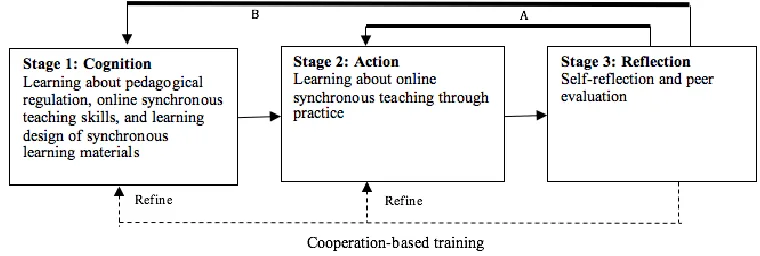
[image:7.612.111.491.562.690.2]The first model is proposed by Lan, Chang, and Chen (2012). The model is developed to deliver synchronous online instruction to train teachers to have better ICT capacity to teach foreign languages online and synchronously. In this three stage model, they propose three different elements to focus on during each stage: cognition, action, and reflection (see Figure 1). In the cognition stage, which is the first stage, students learn the technology that can be used for synchronous online instruction. During this stage they also learn pedagogical theories to inform them what to do during the teaching practice they will have to do in the next stage. Subsequently, students directly implement what they learn during the first stage through an online peer teaching practice in the second stage, which is called the action stage. During the action stage their teaching practices are recorded. This record is later used for self-reflection and peer reflection in the third stage, the reflection stage. This model is reported to benefit students much in their experience of directly implementing theories into practice. Because of that experience, students become aware of the gap between knowledge and reality and the gap between planning and action. The students taught using the model are also reported to have made sound and gradual progress in their ability to design online synchronous teaching activities.
Arab World English Journal
www.awej.org
ISSN: 2229-9327
91
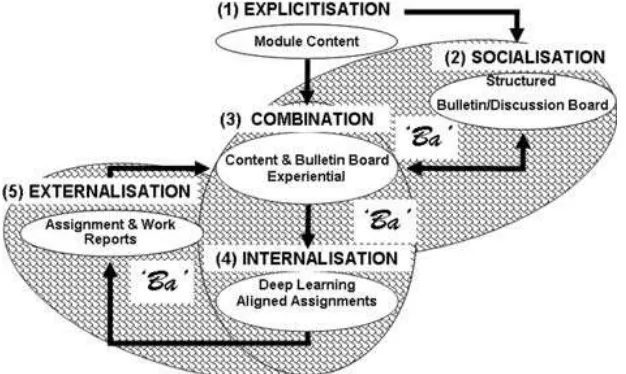
The second model is the explicitisation, socialisation, combination, internalisation and externalisation (ESCIE). The designer claims that the acronym is similar in sound as the word ESKY in Australian English, which refers to an icebox that is usually used to carry things for socialization purposes such as drinks. The model is developed based on Vygotsky’s social constructivism and the knowledge creation model of Nonaka and Konno (1998). Nonaka and Konno call their four stage model SECI. According to them the model describes “how tacit knowledge through a process of Socialisation, is Externalised (becomes explicit), with the explicit knowledge then being Combined via communication and diffusion processes across peers or a group, to be finally Internalised by group members as learning”. The SECI process is said to happen in a ‘Ba’, an imaginary and conceptual place of where and how the knowledge is created (Bryceson, 2007). Following the two theories, he then proposes the following model of online learning (see Figure 2).
[image:8.612.156.469.267.454.2]According to Bryceson (2007), the knowledge creation process happens once the students visit the learning website consisting of the learning content modules (explicitisation stage). After that, students go through the socialisation stage where they do the online discussion to share and construct knowledge together with their peers. It is in this stage where their tacit knowledge is made explicit as a result of online exchanges with their peers. At the same time, students also enter the combination stage, where they combine knowledge gathered from online discussions with knowledge they obtain from reading the content modules. To internalize the newly obtained knowledge they then do the assignments set by their teachers. At the final stage they are to produce a written output as part of the process of externalization of the newly internalized knowledge.
Arab World English Journal
www.awej.org
ISSN: 2229-9327
92
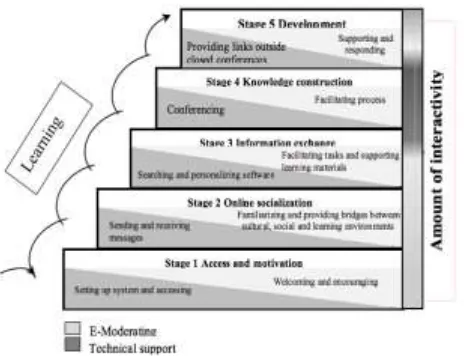
The third online instruction model is proposed by Salmon (2013). Her idea of the five-stage model is to provide scaffolding to individual development. Providing such scaffolding is believed to be one way of moving from direct instruction to a constructivist teaching approach. Figure 3 depicts her model. The model consists of five stages. Stage 1 is dedicated to making sure that students have the ability to access and use an online system such as WebCT or
Blackboard virtual learning environment. This ability is an essential prerequisite for the success of an online learning program. At this stage tutors motivate students to acquire social and emotional capacities in an online environment by providing a brief overview about the course and help them to feel comfortable with the system used. At stage 2, students are encouraged to establish initial interactions with others to familiarize them with online tools for communication and with the online environment. Next, at stage 3 participants are encouraged to exchange information relevant to the particular topics, and in the meantime tutors help students with ways of finding answers on the Internet to the given tasks or issues that they may encounter during the course. At this stage tutors also provide feedback on students’ activities and introduce
assessment. After that, at stage 4 students are grouped to do online discussions and work
collaboratively, while tutors facilitate the process of the online collaborative work. At this stage, students are motivated to be authors of information instead of only receivers of information. Finally, at stage 5 tutors guide students to explore more benefits of the available online learning system to achieve their personal goals, and to reflect on the process they have been through to realize what they have achieved during the program.
Online instruction design principles
[image:9.612.109.341.112.290.2]Designing online instruction needs to be based on solid theoretical foundation. Many studies suggest such theoretical foundations for designing online instructions and these are summarized below.
Arab World English Journal
www.awej.org
ISSN: 2229-9327
93
Table 1 The Principles for Developing OCTT: Draft 1
No Principles Operationalization Authors
1 Reliable and Accessible Support
Engagement by students and teachers should be maintained throughout the course.
Bailey and Card (2009)
Engagement is important to provide continuous, accessible and timely support and assistance required by students
Anderson (2004), Elias (2011), Gunn, 2011, Jung (2005b)
Use various available CMCs which are preferred by online learners nowadays
Lan et. Al (2012)
Cognitive, social and teaching presence is necessary in online discussion during online learning. Ensure a secure feeling of getting easy access to support
Pelz (2010) and Herrington (2006)
2 Involving collaboration components
Collaborative work is recommended for online learners
Bailey and Card (2009), Elias (2011), Gaytan and McEwen (2007), Pelz, (2010), and Son (2014) Interaction underpins effective online
instructions
Pelz (2010)
Collaborative work promotes not only active learning but also higher order thinking skills
Bailey and Card (2009) and
Yan (2009)
3 Continuous and constructive feedback
Continuous feedback contributes much to the students’ success in learning.
Bailey and Card (2009)
Constructive timely feedback for online learners is not only preferred but also mentioned as one of the advantages of online learning
Gaytan and McEwen (2007)
Feedback is a critical success component in online learning and should be accessible anytime and anywhere by students
Bailey and Card (2009), Gaytan and McEwen (2007), and Gunn (2010)
4 Contextual teaching and learning
Education processes should be aimed at helping students to make meaning of what they are learning by connecting it to the context of their daily lives
Johnson (2002)
Students should see the connection between what they learn and what they may experience in the real world
Hudson and Whisler, (2008) and Shamsid-Deen and Smith (2006) The clearer the connection between
what students learn and what they need
Arab World English Journal
www.awej.org
ISSN: 2229-9327
94
No Principles Operationalization Authors
in the real world, the more likely that students are motivated to keep learning.
5 Timeliness in providing feedback and support
Timely feedback is one of the strategies to improve online assessment
Gaytan and McEwen (2007)
Timely feedback gives students much opportunity to benefit from the online courses
Bailey and Card (2009)
Timely feedback is an important design principle determining the success of online learning
Gunn (2010)
Timely support by empowering staff is necessary in ICT-rich training
Jung (2005b)
6 Using reliable technology and assisting the mastery of sufficient technological skills and knowledge
Technology often becomes an issue in online instruction if it is not reliable
Keengwe and Kidd (2010) Muilenberg and Berge (2005), and Sun et al. (2008)
Students often find learning online frustrating and demotivating if the materials are difficult to access or the technology being used is not easy to master
Anderson (2008)
Prior training is necessary to equip teachers and students with sufficient technological knowledge and skills
Bhati et al., (2010), Ko and Rossen (2010), and Sun et al. (2008)
The Technological, Pedagogical, Content Knowledge (TPACK)
In a technology rich teaching and learning environment, to engage learners, teachers should be competent in technology, pedagogy, and content knowledge (Lan et al., 2012). In line with this, Koehler and Mishra (2009, p. 60) state that “the interaction of technology, pedagogy, and content both theoretically and in practice produces knowledge needed to successfully integrate technology use into teaching”. Mishra and Koehler (2006) developed a framework to help understand the complexity of knowledge and skills that have to be mastered by teachers in order to effectively integrate technology in teaching. The framework was developed based on Shulman’s idea of pedagogical content knowledge. He refers to such knowledge as the integration of teachers’ content knowledge and pedagogical knowledge. He argues that the knowledge is significant in the teachers’ performance in teaching (Mishra & Koehler, 2006; Shulman, 1986). By adding the component of technology knowledge to Shulman’s idea, Mishra and Koehler (2006) proposed the concept of technological, pedagogical, content knowledge (TPACK).
Arab World English Journal
www.awej.org
ISSN: 2229-9327
95
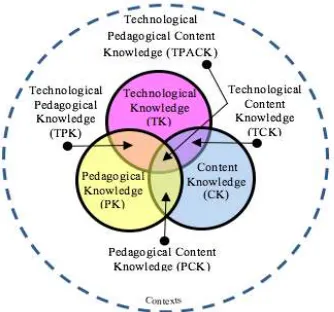
Divaharan (2011) clarify that there are two main groups of knowledge in TPACK. The first group comprises of TK, CK, and PK. TK is the teacher’s knowledge of technology /tools that they can use for teaching or learning. CK is teacher’s knowledge about the subject matter to be taught or learned. PK is the knowledge that should be possessed by teachers in order to be able to teach. The second group of knowledge is derived from the interactions of the three bodies of knowledge: technology, pedagogy, and content. Thus, the interactions form the TCK, PCK, TPK, and TPACK is shown as the intersection of the three knowledge in Figure 4.
The definition of PCK, TCK, and TPK are often found to be significantly different within literature discussing TPACK (Cox & Graham, 2009). However, there are actually similarities among the definitions that allows them to be defined as follows. PCK is often referred to as knowledge about the content to teach and how to teach that content to students. TCK is knowledge that enables teachers to appropriately select and use technology to communicate particular content. TPK is knowledge about how particular technologies can be used to influence teaching and learning. TPACK is complex knowledge that is a combination of the above-mentioned 7 components of teachers’ knowledge. It is the basis of effective technology-assisted teaching requiring teachers to have good understanding of pedagogy, content, and technology. However, it is not only knowledge about each of those components individually but rather it is knowledge about how the combination of the components can be used together to facilitate students to learn effectively (Cox & Graham, 2009; Harris & Hofer, 2009; Koehler & Mishra, 2009; Mishra & Koehler, 2006).
[image:12.612.217.384.223.379.2]So far, there have been a growing number of studies on the TPACK framework. Some embrace it as a potential model for directing or evaluating the implementation of technology in education (e.g. Harris & Hofer, 2009; Koh & Divaharan, 2011; McGrath, Karabas, & Willis, 2011; Schmidt et al., 2009), while some others criticize the framework and even suggest the need for improvement of the framework (e.g. Archambault & Barnett, 2010; Graham, 2011; Voogt, Fisser, Pareja Roblin, Tondeur, & van Braak, 2013). Despite the critics, the TPACK framework has been gaining much attention of educational technology researchers and have been perceived positively by many of them as guidance for the integration of technology in education. It has also been used
Arab World English Journal
www.awej.org
ISSN: 2229-9327
96
as framework for developing teacher education courses on ICT in education. Many have reported that the framework has been positively useful for ICT course development purposes (e.g. Chai, Koh, & Tsai, 2010; Koh & Divaharan, 2011; Maor, 2013; McGrath et al., 2011). Therefore, it is not surprising that many teacher education programs have been redesigned based on the framework (Chai et al., 2010). Thus, developing another teacher course on ICT in education based on TPACK is worth doing. Whatever outcomes result from the study later, can be a contribution to enrich the literature on the study of the TPACK framework and ICT education for teachers.
Open educational resources (OER)
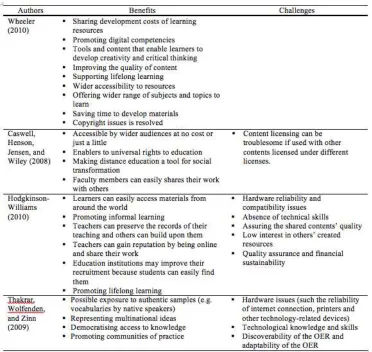
[image:13.612.67.439.314.666.2]Nowadays the practice of re-using online educational content for teaching and learning is ubiquitous (White, Manton, & Warren, 2011). This type of online content is often referred to as open educational resources (OER), which are recognized by many as resources that are given open licenses and thus give the end users such as educators, students, and self-directed learners rights to use and re-use them for teaching, learning, and research (Atkins, Brown, & Hammond, 2007; Friesen, 2013; OECD, 2007). Table 2 summarizes the benefits and challenges of OER.
Arab World English Journal
www.awej.org
ISSN: 2229-9327
97
Research Methodology
Several studies (e.g. Amiel & Reeves, 2008; Hramiak, 2010; Reeves, 2006; Wang & Hannafin, 2005) assert that DBR is suitable for the inquiry into best practice or the improvement of practice in educational technology or technology-enhanced learning environments. The choice of this method is due to its characteristics, which are problem based, interventionist, process oriented, contextual practical and theory oriented (van den Akker, Gravemeijer, McKenney, & Nieveen, 2006).
The study is underpinned by Reeves’ (2006) DBR model (see Figure 5).
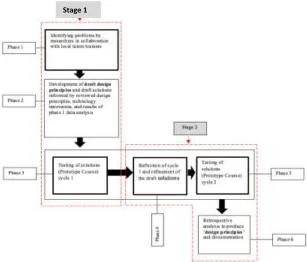
Following the model, the step-by-step process of the study is described diagrammatically in more detail in Figure 6:
[image:14.612.72.483.210.318.2]Results from the CALL course development during the stage one of the study are presented below. Figure 6 The study phases based on Reeve's model
[image:14.612.99.406.376.638.2]Stage 1
Arab World English Journal
www.awej.org
ISSN: 2229-9327
98
Results and Discussion
CALL course was offered on the research site. Yet there were no online sessions where students can directly experience the current online technology trend available for classroom instruction. The CALL course offered was mostly discussing various CALL related articles and with very limited practical activities during the course. Below is a brief overview about the existing CALL course offered.
Course Content and Activities
Reviewing the existing CALL course syllabus, it was identified that the aims of CALL 1 course were to guide students to understand the potential of CALL as well as to practice and evaluate CALL software and courseware. The materials presented were to help students achieve three basic competencies: understanding what CALL is and its development history; practicing the use of CALL-associated software which was categorized in the syllabus into three types - generic software, dedicated software, authoring software; and evaluating CALL courseware. Then, the CALL 2 syllabus was aimed at developing students’ understanding and ability in using online tools for language teaching and learning. To achieve these aims, students were guided to master three basic competencies associated with the aims: knowing the functions of the various available online tools for language teaching and learning; being skilful in searching for EFL teaching materials online and in integrating them in language teaching; and understanding the concept of computer mediated communication (CMC). The last basic competence was aimed at equipping students with tools necessary for online collaboration.
Based on the CALL syllabi reviewed, it was seen that the activities of student teachers in each of the CALL courses were various. The activities included observing presentations by the instructors and the students, doing group work, experiencing hands on practices, and attending tutorials. Both students and the instructors conducted all these activities face-to-face. However, certainly not all those activities were covered in every meeting. There were variations of activities in each meeting to keep students and instructors motivated in the allocated time. The time for each meeting was allocated for 2 x 45 minutes, while there were about 12 meetings minimum and 16 meetings maximum within one semester.
Yet there were few questions regarding the design of the course; How would the course be improved in alignment with the current government policy direction on the technology use for classroom instruction? And how would the content be balanced in terms of pedagogy, content and technology knowledge? And what principles that might be adapted in order to develop such online CALL course?
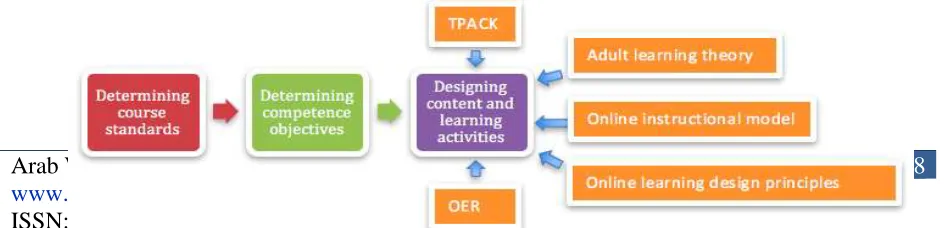
[image:15.612.72.544.641.755.2]To address such questions then a course syllabus was designed based on few aspects as discussed on the literature review above. The course syllabus design process is diagrammatically described in Figure 7:
Arab World English Journal
www.awej.org
ISSN: 2229-9327
99
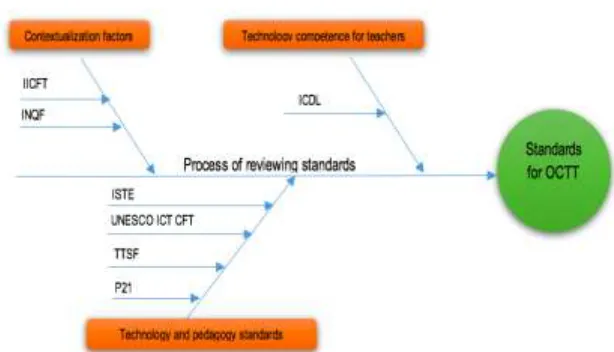
The syllabus design was initially begun by determining the standards to be aimed to. The course standards, then, were determined by considering few aspects as previously mentioned. Figure 8 below depicts the relation between each aspect with the selected standards for the online CALL teacher training course.
In selecting the standards, there were three conditions taken into consideration (See Figure 8): first, the contextualization factors (Midoro, 2013, Anderson, 2008), second, the technology competence standards for teachers (ITEA, 2003), and third, the technology and pedagogy standards (Compton, 2009; Hubbard, 2008; Kessler, 2006). For contextualization purposes, the following standards were reviewed: Indonesia ICT Competence for Teachers standards (IICFT) and the Indonesian National Qualification Framework (INQF). Regarding what technology competence should be achieved by students during the OCTT, the standards reviewed were the International Computer Driving License standards (ICDL) with reference to technology and pedagogy, the standards reviewed were UNESCO ICT Competence for Teachers (ICTCFT) TESOL Technology Standard Frameworks (TTSF), International Society for Technology in Education (ISTE) Standards for Teacher (ISTE, 2008), and the Framework for 21st Century Learning (P21) (P21, 2011).
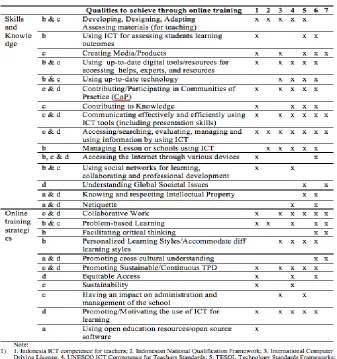
[image:16.612.183.490.266.442.2]The standards were compared and similar qualities and competencies were identified to then formulate the competence objectives later during the syllabus development. Similar qualities may not have appeared in every standard reviewed but those appearing in two or more standards
Arab World English Journal
www.awej.org
ISSN: 2229-9327
100
[image:17.612.67.404.130.489.2]were considered to be necessary for consideration in the online CALL syllabus development. Table 2 maps the qualities derived from each of the above-mentioned standards.
Table 2 Qualities and Competences Derived from Various Standards
Once the standards were determined (See Table 2), the next step was to state the competence objectives and determine what content and activities were to be assigned during the OCTT. The content chosen and activities chosen should later lead to the achievement of the stated competence objectives. Further, to obtain the optimum benefit of the interaction between technology and pedagogy, there should be balance between the technology and pedagogy in the learning context. The course content and activities, therefore, were also mapped based on the TPACK framework.
Arab World English Journal
www.awej.org
ISSN: 2229-9327
101
learners with the online environment, facilitating online socialization among online learners, motivating extensive exchange of information during the online learning, and eventually encouraging students to contribute to knowledge by utilizing what they have learned.
Such features facilitate online learners to always interact with others and thus feel safe in a collaborative environment. The feeling of always being in a society that most online learners demand can still be met through implementing this model. This Salmon’s (2013) model was designed to gradually prepare students to become ready for continuous and professional self-development, which is one of the ultimate goals of the designed CALL course. Using the model, the online instructors were also made aware of their roles regarding what type of support they should provide in each stage and how much interactivity they should maintain to make sure that learning occurs amongst students. This model was also perceived as facilitating the socially constructed learning process to happen among the online students due to the possibility of intensive collaborative work that was very much encouraged at each level of the model. Last but not least, another important aspect to consider during the online CALL course syllabus development was the adult learning principles. All students in the OCTT were adult learners, and adopting these principles helped inform what and how adults actually learn. Therefore, taking the principles into consideration helped to make sure that the acceptance of the OCTT by the students was good.
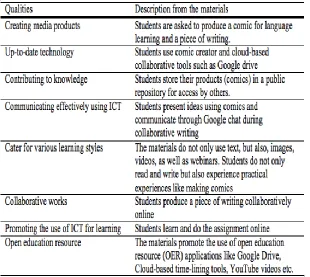
[image:18.612.72.382.424.701.2]Below are some examples of how the discussed theories are implemented in the designed CALL course syllabus such as how the standards are accommodated (see Table 3) and How the adult earning theory was implemented during the stage one of the DBR research (see Table 4)
Arab World English Journal
www.awej.org
ISSN: 2229-9327
[image:19.612.73.360.127.400.2]102
Table 4 Realization of Adults Leaning’ Theory in the Implementation of the OCTT
The online learning design principles as previously reviewed was also carefully adhered to during the implementation of the CALL course and realized in the forms of materials presented or learning and teaching activities (see Table 5)
[image:19.612.73.415.472.731.2]Arab World English Journal
www.awej.org
ISSN: 2229-9327
103 Learning Materials
The learning Materials are for the CALL course are carefully selected from the widely available OER on the internet. The selection is certainly adhering to the standards, principles, and theories as previously discussed. An example of the OER selected for the teaching and learning activities of CALL is the learning management system (LMS), SCHOOLOGY (http://www.schoology.com). The LMS chosen is the one which is hosted and is freely available for reliable access through personal computer and mobile devices by students, teacher, and parents.
Conclusion
Teacher training with focus on CALL is always in demand in line with the rapid development of technology. Careful design and preparation of a quality CALL course is, therefore, necessary. All the ideas presented in the paper would certainly be suitable fit for such a CALL course design although the ideas need to be explored much to better them especially to be used in other context. However, these results from our CALL course development project would certainly be a good starting point for those interested in the CALL course development.
About the Authors:
Mokhamad Syaifudin is a senior lecturer and teacher trainer in the Department of English Language Teacher Education of UIN Sunan Ampel University (Indonesia). His interest is in the CALL area and technology integration in the classroom instruction. Currently, he also serves as a coordinating board of the Indonesian Association of English Teaching in Indonesia (TEFLIN). [ORCID ID: 0000-0002-7066-6882]
Henriette van Rensburg is an Associate Professor (Special Education) in the Faculty of
Business, Education, Law and Arts, at the Toowoomba campus of the University of Southern Queensland, Australia. Her publications are mostly in the CALL area.
[ORCID ID: 0000-0002-1685-9237]
References
Amiel, T., & Reeves, T. C. (2008). Design-based research and educational technology: Rethinking technology and the research agenda. Educational Technology & Society, 11(4), 29-40.
Anderson, A. (2008). Seven major challenges for e-learning in developing countries: Case study eBIT, Sri Lanka. International journal of education and development using ICT, 4(3), 45-62.
Anderson, T., & Elloumi, F. (2008). The theory and practice of online learning. Athabasca: Athabasca University Press.
Arab World English Journal
www.awej.org
ISSN: 2229-9327
104
Atkins, D. E., Brown, J. S., & Hammond, A. L. (2007). A review of the open educational resources (OER) movement: Achievements, challenges, and new opportunities: Creative common.
Bailey, C. J., & Card, K. A. (2009). Effective pedagogical practices for online teaching:
Perception of experienced instructors. The Internet and Higher Education, 12(3-4), 152-155.
Bhati, N., Mercer, S., Rankin, K., & Thomas, B. (2010). Barriers and facilitators to the adoption of tools for online pedagogy. International Journal of Pedagogies and Learning, 5(3), 5-19.
Bolliger, D., & Wasilik, O. (2009). Factors influencing faculty satisfaction with online teaching and learning in higher education. Distance Education, 30(1), 103-116.
Bryceson, K. (2007). The online learning environment: A new model using social constructivism and the concept of ‘Ba’ as a theoretical framework. Learning Environments Research, 10(3), 189-206. doi:10.1007/s10984-007-9028-x
Carwile, J. (2007). A constructivist approach to online teaching and learning. Inquiry, 12(1), 68-73.
Cercone, K. (2008). Characteristics of adult learners with implications for online learning design. AACE journal, 16(2), 137-159.
Chai, C. S., Koh, J. H. L., & Tsai, C.-C. (2010). Facilitating Preservice Teachers' Development of Technological, Pedagogical, and Content Knowledge (TPACK). Educational
Technology & Society, 13(4), 63-73.
Compton, L. K. (2009). Preparing language teachers to teach language online: A look at skills, roles, and responsibilities. Computer Assisted Language Learning, 22(1), 73-99. Cox, S., & Graham, C. (2009). An elaborated model of the TPACK framework. Paper presented
at the Society for Information Technology & Teacher Education International Conference.
Constructivism. (2014). Retrieved from
http://sydney.edu.au/education_social_work/learning_teaching/ict/theory/constructivism. shtml
Curwood, J. S. (2011). Teachers as learners: What makes technology-focused professional development effective? English in Australia, 46(3), 68.
Elias, T. (2011). Universal instructional design principles for mobile learning. The International Review of Research in Open and Distributed Learning, 12(2).
Fidishun, D. (2000). Andragogy and technology: Integrating adult learning theory as we teach with technology. Paper presented at the Proceedings of the 2000 Mid-South Instructional Technology Conference, Murfreesboro, Tennessee.
Friesen, N. (2013). Realising the open in open educational resources: Practical concerns and solutions. In R. McGreal, W. Kinuthia, & S. Marshall (Eds.), Open educational
resources: Innovation, research and practice (pp. 79-90). Vancouver: Commonwealth of Learning.
Gaytan, J., & McEwen, B. C. (2007). Effective Online Instructional and Assessment Strategies. American Journal of Distance Education, 21(3), 117-132.
doi:10.1080/08923640701341653
Arab World English Journal
www.awej.org
ISSN: 2229-9327
105
Gunn, C. (2011). Sustainability factors for e-learning initiatives. Research in Learning Technology, 18(2). doi:10.3402/rlt.v18i2.10755
Hanson-Smith, E. (2006). Communities of practice for pre-and in-service teacher education. In P. Hubbard & M. Levy (Eds.), Teacher education in CALL (pp. 301-315). Philadelphia: John Benjamins Publishing.
Harris, J., & Hofer, M. (2009). Instructional planning activity types as vehicles for curriculum-based TPACK development. Paper presented at the Society for Information Technology & Teacher Education International Conference.
Healey, D., Hegelheimer, V., Hubbard, P., Ioannou, S., Kessler, G., & Ware, P. (2008). TESOL technology standards framework. Alexandria, VA: TESOL, Inc.
Hoven, D. L. (2007). The affordances of technology for student teachers to shape their teacher education experience. In M. A. Kassen, R. Z. Lavine, K. Murphy-Judy, & M. Peter (Eds.), Preparing and Developing Technology-proficient L2 Teachers: CALICO. Hramiak, A. (2010). Online learning community development with teachers as a means of
enhancing initial teacher training. Technology, Pedagogy & Education, 19(1), 47-62. Hubbard, P. (2008). CALL and the future of language teacher education. CALICO journal,
25(2), 175-188.
Hubbard, P., & Kessler, G. (2008). Help shape TESOL's new technology standards. Paper presented at the WorldCALL, Fukuoka, Japan.
Hubbard, P., & Levy, M. (2006). Teacher education in CALL (Vol. 14): John Benjamins Publishing.
Hudson, C. C., & Whisler, V. R. (2008). Contextual teaching and learning for practitioners Journal of Systemics, Cybernetics, and Informatics, 6(6), 54-58.
ISTE. (2008). ISTE national educational technology standadrs (NETS) and performance indicators for teachers. Retrieved from
http://www.iste.org/docs/pdfs/nets_for_teachers_2000.pdf?sfvrsn=2 ITEA. (2003). Advancing excellence in technological literacy. Reston, VA: ITEA.
Johnson, E. B. (2002). Contextual teaching and learning : what it is and why it's here to stay. Thousand Oaks, CF: Corwin Press.
Jung, I. (2005). ICT-Pedagogy Integration in Teacher Training: Application Cases Worldwide. Educational Technology & Society, 8(2), 94-101.
Kaufman, D. (2004). Constructivist issues in language learning and teaching. Annual Review of Applied Linguistics, 24, 303-319. doi:doi:10.1017/S0267190504000121
Keengwe, J., & Kidd, T. T. (2010). Towards best practices in online learning and teaching in higher education. Journal of Online Learning and Teaching, 6(2), 533-541.
Kessler, G. (2006). Assessing CALL teacher training: What are we doing and what could we do better. Teacher education in CALL, 23-42.
Knowles, M., Holton, E., & Swanson, R. (2005). The adult learner: Sixth Edition. Burlington, MA: Elsevier, Inc.
Ko, S., & Rossen, S. (2010). Teaching online : a practical guide (3rd ed. ed.). New York: Taylor and Francis.
Arab World English Journal
www.awej.org
ISSN: 2229-9327
106
Koh, J. H., & Divaharan, S. (2011). Developing pre-service teachers' technology integration expertise through the TPACK-developing instructional model. Journal of Educational Computing Research, 44(1), 35-58.
Lan, Y., Chang, K., & Chen, N. (2012). CoCAR: An online synchronous training model for empowering ict capacity of teachers of chinese as a foreign language. Australasian Journal of Educational Technology, 28(6), 1020-1038.
Lieb, S. (1991). Principles of adult learning. Phoenix, AZ: Vision-South Mountain Community College.
Maor, D. (2013). Does the use of the TPACK model enhance digital pedagogies: We don’t understand the present so how can we imagine the future? Paper presented at the 30th ASCILITE Conference, Sydney.
McGrath, J., Karabas, G., & Willis, J. (2011). From TPACK concept to TPACK practice: An analysis of the suitability and usefulness of the concept as a guide in the real world of teacher development. International Journal of Technology in Teaching and Learning, 7(1), 1-23.
McNeil, L. (2013). Exploring the relationship between situated activity and CALL learning in teacher education. ReCALL, 25(2), 215-232.
Midoro, V. (2013). Guidelines on adaptation of the UNESCO ICT competency framework for teachers. Moscow: UNESCO Institute for ITE.
Mishra, P., & Koehler, M. (2006). Technological pedagogical content knowledge: A framework for teacher knowledge. The Teachers College Record, 108(6), 1017-1054.
Motteram, G. (2014). Re-aligning research into teacher education for CALL and bringing it into the mainstream. Language Teaching, 47(3), 319-331. doi:10.1017/S0261444811000632 Muilenberg, L., & Berge, Z. (2005). Student barriers to online learning: A factor analytic study.
Distance Education, 26(1), 29-48.
Nonaka, I., & Konno, N. (1998). The concept of “ba”: Building a foundation for knowledge creation. California management review, 40(3), 40-54.
OECD. (2007). Giving knowledge for free: The emergence of open educational resources. Paris: OECD Publishing.
OECD. (2009). Creating effective teaching and learning environments: First result from TALIS. Retrieved from Paris, France: http://www.oecd.org/education/school/43023606.pdf P21. (2011). P21 Framework defintions. Retrieved from
http://www.p21.org/storage/documents/P21_Framework_Definitions.pdf
Park, J. H., & Choi, H. J. (2009). Factors influencing adult learners' decision to drop out or persist in online learning. Educational Technology & Society, 12(4), 207-217.
Partridge, J. (2006). Matching Language and IT skills: the life-cycle of an MA Programme. In P. Hubbard & M. Levy (Eds.), Teacher education and CALL (pp. 63-79). Philadelphia: John Benjamins Publishing.
Pelz, B. (2010). (My) Three Principles of Effective Online Pedagogy. Journal of Asynchronous Learning Networks, 14(1), 103-116.
Piaget, J. (1953). The origins of intelligence in children. New York: International Univeristies Press, Inc.
Arab World English Journal
www.awej.org
ISSN: 2229-9327
107
Purwanto, Bodrogini, P. W., Sumarwanto, D., Chaeruman, U., & Butcher, N. (2012). Kerangka kerja kompetensi TIK untuk guru: Naskah Akademik [Draft]. Retrieved from
https://engage.intel.com/docs/DOC-30990
Reeves, T. C. (2006). Design research from a technology perspective. In J. Van den Akker, K. Gravemeijer, S. McKenney, & N. Nieveen (Eds.), Educational design research (pp. 52-66). New York: Routledge.
Salmon, G. (2013). E-Tivities (2nd Edition). Florence, KY, USA: Routledge.
Schmidt, D. A., Baran, E., Thompson, A. D., Mishra, P., Koehler, M. J., & Shin, T. S. (2009). Technological Pedagogical Content Knowledge (TPACK) The Development and
Validation of an Assessment Instrument for Preservice Teachers. Journal of Research on Technology in Education, 42(2), 123-149.
Shamsid-Deen, I., & Smith, B. P. (2006). Contextual teaching and learning practices in the family and consumer sciences curriculum. Journal of Family and Consumer Sciences Education, 24(1), 14-26.
Shulman, L. S. (1986). Those who understand: Knowledge growth in teaching. Educational Researcher, 4-14.
Slaouti, D., & Motteram, G. (2006). Reconstructing practice: Language teacher education and ICT. In P. Hubbard & M. Levy (Eds.), Teacher education in CALL (pp. 81-97). Philadelphia: John Benjamins Publishing Company.
Son, J.-B. (2009). Using web-based portfolios in CALL teacher education. In J.-B. Son (Ed.), Internet-based language learning: Pedagogies and technologies (pp. 107-118). Raleigh, NC: Lulu.
Son, J.-B. (2014). Moving beyond basics: from CALL coursework to classroom practice and professional development. In J.-B. Son (Ed.), Computer-assited language learning: Learners, teachers and tools. Newcastle, UK: Cambridge Scholar Publishing. Stockwell, G. (2009). Teacher education in CALL: teaching teachers to educate themselves.
International Journal of Innovation in Language Learning and Teaching, 3(1), 99-112. Sun, P. C., Tsai, R. J., Finger, G., Chen, Y. Y., & Yeh, D. (2008). What drives a successful
e-Learning? An empirical investigation of the critical factors influencing learner satisfaction. Computers & Education, 50(4), 1183-1202.
UNESCO. (2015). UNESCO ICT Competency framework for teachers. Retrieved from http://www.unesco.org/new/en/unesco/themes/icts/teacher-education/unesco-ict-competency-framework-for-teachers/
van den Akker, J., Gravemeijer, K., McKenney, S., & Nieveen, N. (2006). Introducing educational design research. Educational design research, 3-7.
Voogt, J., Fisser, P., Pareja Roblin, N., Tondeur, J., & van Braak, J. (2013). Technological pedagogical content knowledge: A review of the literature. Journal of Computer Assisted Learning, 29(2), 109-121.
Wang, F., & Hannafin, M. J. (2005). Design-based research and technology-enhanced learning environments. Educational Technology Research and Development, 53(4), 5-23. doi:Doi 10.1007/Bf02504682
White, D., Manton, M., & Warren, N. (2011). Open educational resources (OER): The value of reuse in higher education. Oxford: Creative Commons.
Arab World English Journal
www.awej.org
ISSN: 2229-9327
108
Yan, H. (2009). Teacher training in China and a practical model: e‐Training Community (eTC). Campus-Wide Information Systems, 26(2), 114-121.