Ymchwil gymdeithasol Social research
Number: 18/2012
Evaluation of the Caring Dads
Cymru Programme
Evaluation of the Caring Dads Cymru Programme
KM Research and Consultancy Ltd
Katie McCracken, Director, KM RC
Dr Toity Deave, Health & Life Sciences,
University of the West of England, Bristol
Views expressed in this report are those of the researcher and not necessarily
those of the Welsh Government
For further information please contact:
Robert Willis
Social Research Division
Welsh Government
Merthyr Tydfil Office
Rhyd-y-car
Merthyr Tydfil
CF48 1UZ
Tel: 0300 0628138
Email: [email protected]
Welsh Government Social Research, 2012
ISBN 978 0 7504 7245 6
Table of contents
1.0 Executive Summary
2.0 Introduction
3.0 International Symposium on Caring Dads practice
4.0
Methods
5.0 Theories of change: Can it work?
6.0 Does it work? What are the outcomes?
7.0 Time one; findings
8.0 Time two; mid intervention interviews
9.0 Time three; post intervention findings
10.0 Interviews with women affected by Caring Dads
11.0 Perspectives of other professionals involved in
the lives of CD clients.
12.0 Standardised tests at time three
13.0 Summary
14.0 Conclusions and Recommendations
References
Appendix A: Control group research design options
Appendix B:
Caring Dads and women’s Safety
Appendix C;
Findings of a rapid review of the literature.
Appendix D:
International Symposium on Caring Dads
Practice
Glossary of acronyms
CDC
Caring Dads Cymru
Discrepancy
Used to describe clients’ comprehension of their
own actions and behaviour compared to the
actions and behaviours they identify as positive.
CAFCASS
Cymru
Children and Family Court Advisory and Support
Service Cymru
PDS
Paulhus Deception Scale – a standardised
measure used in the research to assess whether
responses given were ‘socially desirable’ or
‘genuine’.
TMQ
Treatment Motivation Questionnaire – a
standardised measure often used in research to
assess clients’ motivation for attending treatment.
NSPCC
National Society for the Prevention of Cruelty to
Children
CBI Controlling
Behaviours Inventory – used to
assess behaviours associated with domestic
abuse perpetrators
PSI
Parenting Stress Index – a standardised measure
used to assess the stress levels present in the
child-parent relationship
RISC
Risk Interview Schedule for Child Maltreatment –
a semi-structured interview script used for
1 Executive
Summary
What is Caring Dads?
Caring Dads Cymru (CDC) is a group work voluntary programme for men who
are at risk of committing domestic violence and therefore, at risk of causing
harm to their children. The Caring Dads programme originated in Canada but
the programme content and theory was adapted and applied in Wales. CDC
was delivered by the NSPCC and included group ‘facilitators’, who delivered
the group work, central coordination and management and partner Support
Workers who worked with clients’ partners or ex partners to ensure their
safety and wellbeing. A central theory behind CDC is that men will be more
motivated to engage in an intervention to address their abusive behaviour if
the focus is ostensibly on their relationship with their children.
The CDC programme was first initiated in 2006 and funded by the Welsh
Government. The programme was run by NSPCC Cymru.
The Evaluation of Caring Dads Cymru
The aim of the evaluation, which spanned two years of the Programme, was
to establish the effectiveness of the programme in changing men’s abusive
attitudes and behaviours thus preventing them from doing harm to children
and children’s mothers.
Methods
The evaluation included the following methods:
o Interviews with Caring Dads facilitators and clients
o Interviews with partners or ex partners of Caring Dads clients, not
necessarily connected to the client research participants
o Standardised psychological measures given by CDC clients at the
beginning and end of the programme
o Interviews with staff who had referred men to CDC
o A research and practitioner symposium to explore the purpose of
Caring Dads and make recommendations for accreditation of the
Key findings:
• All the men who had been through the CDC Programme and took part
in the research demonstrated improvements in their aggressive
responses to the people they interact with in general, including, but not always, women. However;
• A number of men who participated in the research (which is itself a small sample) did not appear to accept responsibility for their own behaviour or aggression towards women
• The main mechanism of change for the programme, as reported by the
men respondents and corroborated by facilitators and external
professionals, was that the men were able to identify the impact that
their behaviour has on their children.
• In some cases, agencies that had referred clients to the CDC
programme ceased to be involved in the monitoring of risk that the
client represented to his family. Although NSPCC staff were able to
adequately manage risks, chiefly through the work of the Partner
Support Worker, these risks would be better managed with the
continued involvement of referring agencies.
• CDC clients felt that the awareness of the impact of their behavior on their children was the most important driver in the changes they
experienced as a result of the CDC programme.
• CDC facilitators generally corroborated client respondents’ accounts of the changes they had experienced.
• It was felt by CDC facilitators that the notion of child- and parent-centred approaches to parenting was an important consideration for
the clients in bringing about a new understanding of their behaviour.
• Positive effects of the CDC programme were generally noted by all but one ex/ partner respondent in terms of control of aggression but not
necessarily in accepting responsibility for past aggression.
• A common and strongly expressed view of the ex/partner respondents was that it was important for them that the CDC programme allowed
men to accept the violence and aggression and take responsibility for
Recommendations
1.1
1.2
1.3
1.4
1.5
1.6
Caring Dads should continue to be developed, learning from the
evaluation and from other existing research about the effectiveness of
domestic abuse perpetrator programmes.
Caring Dads should continue to seek the support from other
professionals involved in client’s lives so that risks can be monitored
more effectively and structures and procedures should be put in place to
formalise inter-agency roles and responsibilities.
Referral procedures should be more explicit about the amount of
information that should be shared at the outset – there was some
confusion about which agency would be checking men’s records.
Where it is not possible to continue to engage statutory agencies in
monitoring men’s risks and progress, the programme may consider
involving other agencies such as voluntary sector staff working with the
men.
CDC clients should be more frequently and individually assessed and
monitored to establish their motivation for treatment and to account for
any changes in attitude or behaviour, particularly if their ex or current
partner is not receiving support from the Partner Support worker.
Effort should be focussed on improving retention as the group work
element of the Caring Dads programme was felt to be successful: this
2 Introduction
2.1
KM Research and Consultancy Ltd and the University of the West of
England, Bristol, were commissioned by the Welsh Government to
conduct an independent evaluation the Caring Dads Cymru programme
(CDC). The CDC programme was first initiated in 2006 and funded by
the Welsh Government. The programme was run by NSPCC1 Cymru.
The aim of the evaluation was to establish the effectiveness of Caring
Dads in changing men’s abusive attitudes and behaviours and
preventing them from harming their children and partners.
2.2 The aims of the evaluation were to conduct an evaluation of the Caring
Dads Cymru pilot project to determine:
The effectiveness of the projects and programme in:
• Changing knowledge, attitudes, beliefs and behaviour of participants and promoting an understanding of the impact of their behaviour on
partners and child/ren.
• Improving interactions with partners
• Improving outcomes for children.
• Meeting the needs of the judiciary wishing to make a Contact Activity
Direction or attach a Contact Activity Condition to a Contact Order that
would seek to address a person’s violent behaviour in order to
establish, maintain or improve contact with their children.
How the programme is implemented with regard to:
• Recruitment, attendance and drop out rate of participants
• The theory of change and fidelity of implementation by facilitators.
• Suitability of the programme material.
• Accreditation
• Waiting periods – for the commencement of new programmes
To make recommendations for more effective implementation of the
programme (if appropriate).
1
National Society for the Prevention of Cruelty to Children
2.3 The evaluation was commissioned to take account of two years of the full
CDC programme. In this report we describe the methods used to evaluate
CDC, present the findings, and discuss these findings and their limitations in
the light of the current literature.
Background: What is Caring Dads?
2.4 Caring Dads Cymru (CDC) is a group work voluntary programme for men
who are at risk of committing domestic violence and therefore, at risk of
causing harm to their children. The programme originates from Canada where
a 17 week programme was developed, based, broadly, on Cognitive
Behavioural Therapy and motivational models of intervention. A central theory
behind the Canadian Caring Dads Programme is that men will be more
motivated to engage in an intervention to address their abusive behaviour if
the focus is ostensibly on their relationship with their children. Up to half of
participants in the Canadian Caring Dads programme were referred for child
abuse or exposure of the child to harm through abuse of their mother. About a
quarter of the men were referred as child abusers, not having abused their
partners as well. When it began in Canada, Caring Dads addressed the
promotion of men’s accountability for violence in the early stages of the
programme but following evaluations the motivational aspects of the
programme are now addressed first. Although there is still a relatively high
drop-out rate in the Canadian model, this revised approach is regarded as
more effective in keeping men in the programme and promoting the
necessary change2.
2.5 The Caring Dads Cymru model is based largely on the Canadian
experience with the following exceptions:
- the programme is up to 22 weeks long not 17
- the language used in some course materials is altered to reflect the local client group
- the programme works only with men known to have perpetrated
domestic abuse against their partners. None of the men have
2Personal communication with Katreena Scott, the Canadian programme developer,
7.10.2008
disclosed abusing their children prior to or as a condition of entry
(such disclosure can and does occur during the programme).
- Caring Dads Cymru is delivered by the NSPCC in partnership with
other agencies including Probation and Social Services
Programme rationale
2.2
2.3
2.4
Domestic violence accounts for almost a quarter of all recorded violent
crime in the UK. Two women a week are murdered by a partner or
ex-partner. Every year, on average, in England and Wales,120 women and
30 men are killed by a current or former partner (Edwina Hart, Welsh
Government, 2004). Fathers are frequently perpetrators of violence in
families and the exposure of children to violence against their mother is,
itself, a form of child abuse (Scott, 2006). Such violence not only has
direct consequences for the child and the man’s ability to father, but also
hampers the mother’s parenting capacity (Peled, 1998, 2000).
Additionally, the co-occurrence of child abuse and neglect and domestic
violence is well documented (Widom & White, 1997; Widom, 1989).
Most children are aware of the abuse of their parent with up to 86 per
cent either in the same or adjoining rooms during an incident of domestic
violence (York, 2006). Witnessing incidents of domestic violence causes
fear and distress in children, and this is reflected in it’s incorporation into
the definition of harm in the Children Act 1989. Children may often
continue to witness post-separation violence during child contact visits
(York, 2006).
Risk factors for child abuse and neglect, include parental depression,
maternal alcohol consumption, and history of family violence.
Additionally, low income is significantly related to violence toward
children in single-parent families (Berger, 2005). Abusive or neglectful
parenting also leads to future increased risk of abuse perpetration, by
the child when they grow up. Parental rejection in childhood is the only
factor associated with abuse by adults (Taft et al., 2008).
The primary objective of Caring Dads Cymru is to stop fathers
perpetrating abuse against their partners and harming their children.
Closely linked to this is a key objective of breaking the ‘cycle of abuse’
whereby poor and risky parenting behaviour is replicated down the
generations.
3 International
Symposium
on Caring Dads practice –
research on outcomes, theories of change and standards
3.1
3.2
It was a requirement of the research brief to investigate the feasibility
and make recommendations for accreditation of the Caring Dads
programme. As part of this, the research team made links with
researchers and practitioners who have worked on Caring Dads
programmes internationally. Together with colleagues from Kingston
University, the Thames Valley Caring Dads project, and Katreena Scott -
one of the original Caring Dads programme developers-a symposium of
Caring Dads practitioners and researchers was held in March 2010.
The objectives of the symposium were as follows:
- to identify the current research activity that focuses on Caring Dads
- to agree on the most appropriate outcome measures
- to describe the main theories of change behind the Caring Dads
methodology
- to categorise the minimum standards for service practitioners in terms of referrals, risk assessment, monitoring, working with
children and wives/partners
- to ascertain a process for accreditation
(See Appendix D for symposium findings)
4 Methods
Rationale
4.1
4.2
4.3
Caring Dads is an intervention aimed at addressing the complex range of
reasons driving men to be abusive or neglectful of their children through
exposing their mother to domestic violence. Thus, it is a complex
intervention working at addressing both men’s relationships with their
children and their partners or ex partners and the complexity of
motivations and self-perceptions that men have as fathers, husbands and
partners. Any changes that occur to men undergoing the intervention will
be varied in magnitude as well as in nature. Due to this complexity we
have applied a theory based approach to understanding the outcomes
and how these have come about. This is not however a simple X leads to
Y model because the approach seeks to take account of the complexity
of other influences that may also contribute to change alongside the
‘intervention’. The theory based model seeks to establish the likely
outcomes of the project by tracking the inputs to the project
(assessments, facilitated sessions, course materials) to outcomes
experienced (established through qualitative and quantitative data). In
this way, we have sought to develop a ‘plausible explanation’ of the
impacts and outcomes experienced and how these relate to the activities
of the project. A limitation of the study is that it was not possible to
include a comparison group so any changes observed in the clients
cannot be attributed with certainty to the project.
Methodology
The evaluation was conducted over two years of the Caring Dads
programme: September 2008 to July 2009 and September 2009 to July
2010. Data was collected from two separate groups of Caring Dads
clients for each separate year of the course.
The evaluation was conducted using the following methods:
- a literature review of the underlying relevant risk factors and theories of change for men engaged in similar programmes
- interviews with programme facilitators (n=13 over two years), at two points for each of the two years to refine the main theories of
change or to assess any changes in the theories of change.
- in depth interviews with external strategic stakeholders-CAFCASS
Cymru, probation and social services, to establish how CDC may
impact on their work (n=3)
- administering three standardised tests on CDC clients pre and post intervention (n=6 PSI, PDS and TMQ3 scores, n=16 for CBI scores
for both data collection points)
- in-depth narrative interviews with CDC clients at three points during the 22 week intervention, each year (n=25)4
- In depth interviews with former clients of the Caring Dads pilot project (n=6).
- In depth interviews with women who are, or have been, partners of
the men who have been involved with the programme (n=5).
- Interviews with other professionals involved in the lives of CDC clients (n=5)
- Discussions with the delivery agency for Caring Dads, the NSPCC,
to share emerging findings and help to shape practice as the
programme developed.
4.4
4.5
In this report we sought to answer 3 key questions:
- Can it Work? – what are the intended outcomes?
- Does it work? – are the outcomes achieved and what is the
impact?
- How does it work? – how are these outcomes delivered?
Research challenge
It was hoped at the outset of the research that an assessment of impacts
would be achieved by a quasi experimental design. This would have
been based on the Maryland Scientific Methods Scale of ‘3’ meaning
3
The TMQ is used to assess individual motivation to engage in treatment primarily amongst clients with addictions. The TMQ was amended to assess motivation to engage in the Caring Dads project but was not validated for use amongst this population due to time limitations.
4
At time 1
that the ‘intervention group’, i.e. those going through the Caring Dads
programme, would be compared to a group of similar individuals who
had not received the programme but were matched on a number of
characteristics thought to be important to the analysis – in this case,
offending history, age, marital status, and number and age of children.
However, it was not possible to find an external control group that was
willing to take part in the research. The research methods that were
considered and the reasons for decisions made, are summarised in
Table 1 in Appendix A.
The chosen approach
4.6
4.7
4.8
We developed a mixed methods research design using a theory-based
approach to the analysis. The impact assessment element of this
evaluation is based on qualitative and quantitative data gained from
Caring Dads clients, women who had been in contact with Partner
Support Workers, Caring Dads staff and agencies who had referred
clients to Caring Dads.
This approach is based on the assumption that, if the programme was
having a positive effect, positive changes would be seen over the course
of the programme. All interviews, including those with CDC clients,
women contacted by the Partner Support Worker and other stakeholders
of CDC, were recorded and transcribed. Transcripts of interviews were
coded and analysed using qualitative data analysis software (Weft
QDA).
An analysis of standardised measures taken from the men was carried
out, comparing time one with time two scores, from both years’ client
groups, thus introducing a multiple baseline comparison. A limitation with
this approach is that changes in both groups cannot be compared over
the same timeline.
5
Theories of change: Can it work?
5.1
5.2
5.3
This question was addressed through a literature review5 and interviews
with key stakeholders including facilitators and strategic stakeholders.
The report of the Literature review is included at Appendix C
Interviews with stakeholders
In-depth, face-to-face interviews, with facilitators were conducted at the
beginning of each year of the Caring Dads Cymru evaluation. Interviews
with CDC stakeholders were conducted at the beginning of year one of
the programme evaluation. Interviews included:
- Caring Dads Facilitators (n=13)
- Welsh Government policy representatives (n=1)
- Local Probation services representatives (n=3)
- NOMS strategic officials (n=1)
- CAFCASS Cymru representatives (n=2)
- Canadian Caring Dads programme founder (n=1)
The purpose of these interviews was to establish the main desired
outcomes for the programme. This included from both a ‘community’
perspective- how the programme was intended to fit with the wide range
of community responses to domestic abuse, as well as from an
individual perspective-how it was supposed to make changes for those
on the programme. It was important to understand these different
perspectives in order to inform the choice of outcome measures against
which the programme could be evaluated. Our interest was not just in
outcomes for the individuals concerned, but in the wider impact and fit
with the Co-ordinated Joint Agency Response6 to domestic abuse
(Welsh Government, 2010).
5
The review was done using principles of systematic review methodology (CRD, 2001)
6 The Coordinated Joint Agency Response to domestic abuse is supported in the Welsh GovernmentWelsh
GovernmentWelsh GovernmentWelsh GovernmentWelsh Government’s 2005 Domestic Abuse Strategy and subsequent implementation plans. The Coordinated Joint Agency Response (CJAR) refers to a holistic approach including victim services, perpetrator accountability and educational preventative work. Central to CJAR is partnership working between the relevant agencies.
What are the main objectives of the Caring Dads Programme?
5.4 There are four central goals within the Caring Dads programme which
are set out in the documentation for CD facilitators. These derive from
the Canadian CD manual. Broadly, the goals are as follows:
- Goal 1: To develop sufficient trust and motivation to engage men in the process of examining their fathering
- Goal 2: To increase men's awareness of child-centred fathering
- Goal 3: To increase men's awareness of, and responsibility for, abusive and neglectful fathering behaviours and their impact on children
- Goal 4: To consolidate learning, begin to rebuild trust, and plan for the future
Source: Caring Dads Cymru programme documentation.
5.5 Programme facilitators revealed considerable uniformity in their
understanding of the main programme goals of CDC. These objectives
are linked and support each other. The dominant objective(s) were
expressed as a journey, from moving men towards ‘child centred
parenting’ away from ‘parent centred’, thus limiting the negative impact
their behaviour has on children. Examples of that negative behaviour
include losing their temper with children’s mothers in front of the children
or calling mothers bad names in front of the children. This journey is
about getting men to realise the impact their behaviour has on their
children so that they will consider this before they react to difficulties in
their relationships with their partners or ex partners.
But to me, it is primarily about a child focus... and not being parent focused but being child focused. That’s how I would see it. (Caring Dads facilitator time 1, year 1)
The recognition that the impact of their controlling behaviours have on their children and this can lead to dysfunctional mechanisms – I would like to see men more aware that ... children living in family conflict... of the fuller extent of the impact of this. I would like men to be looking at relationships in the wider context so they are more stable for their family units. . (Caring Dads facilitator time 1, year 2)
5.6
5.7
There was little difference in how the programme objectives were
articulated by facilitators between year one and year two. However, in
the year two group, compared to the year one group, where contact was
already established, a larger proportion of CDC clients were attempting
to gain contact with their children and were engaged in court processes
to do this. This shaped the facilitators’ objectives in working with the
group and their recognition of the challenges they faced. In the second
year, at time one, facilitators discussed clients’ anger, which was
directed at ex partners around contact issues. To work on this anger
became an objective for facilitators in working with the men.
It’s a big sticking point that the men get angry with their partners. They feel that ‘oh, they call all the shots’, and they relate to each other in the group around this negative feeling which is how they bond. But we have to move them beyond this to see that that’s not going to work. (Caring Dads facilitator, time 1 year 2).
This time around they all want more contact with their children and that is the purpose why they are on the course (Caring Dads facilitator time 1 year 2)
The men in the middle of going to court, or child protection register procedures, they have trouble engaging in the group, because they are angry. (Caring Dads facilitator time 1 year 2)
Getting men to be more responsible for their own behaviour, regardless
of their views of their partners’ behaviour, was an explicit goal at the
start of year two, because this was a particular challenge for the group.
Although the anger towards ex-partners is the same ‘sticking point’ for
men across both years, addressing the anger was approached through
developing awareness of the impact on children and introducing the
child’s perspective. This was a key message for both years of the Caring
Dads programme.
We get them to start thinking about not having separate parenting and the impact of this on their children (Caring Dads facilitator time 1 year 2)
5.8
5.9
5.10
The course content followed the same order in year two as in the first
year. This recognises the need to approach men’s responsibility for their
abusive behaviour towards their ex-partners in an incremental way.
It’s the same process [as last year] we start sort of softly softly. Around child-centred fathering and then go on to child continuum and
developing a sense of discrepancy around what is good parenting behaviour and what needs to change. (Caring Dads facilitator time 1 year 2)
An explicit goal of the Caring Dads programme, identified by the
originators, is a development of the client’s discrepancy7 in thinking
about his own fathering. The Caring Dads manual sets this out as a goal
as follows:
…to develop discrepancies between men’s current fathering and healthier ways of relating to their children. (Caring Dads Manual, Scott et al, 2006)
This journey would occur, according to programme facilitators, in
conjunction with increased self-awareness and ability to critically assess
their behaviour. This was, in large part, through awareness of their own
experiences of childhood and how they themselves were fathered.
We want them to start developing some discrepancy really. We want them to start to move to a more child focused style of parenting. (Caring Dads facilitator, time 1, year 1)
7
This term is used to describe clients’ comprehension of their own actions and behaviour compared to the actions and behaviours they identify as positive.
…the first couple of goals you are looking at just getting them into the programme…you are looking at motivation in goal three, and looking at developing discrepancy (Caring Dads facilitator, time 1, year 1).
5.11
5.12
5.13
The goal of reducing the risk of abuse for children and women is
implicitly recognised as the overall objective of the programme.
[the goal is] a safer environment: safety is the highest marker throughout (Caring Dads facilitator, time 1. year 2)
Research would suggest that children are damaged by hearing
domestic abuse. By hearing verbal arguments. [Parents] are supposed to care for you and not shout at each other and hit each other. (Caring Dads facilitator, time 1, year 2).
I’m quite keen to bring out in the group the more subtle controlling behaviours in men [as well as more explicit behaviours] because these are more likely to be entrenched. (Caring Dads facilitator, time 1, year 2).
Although some different challenges existed between the year one and
year two groups of men, the programme was used flexibly to address
these using the same mechanisms – such as developing discrepancy,
focussing on child-centred perspectives – to address the men’s’
problems.
Programme objectives for other stakeholders
For external stakeholders, such as the Welsh Government which has
funded the programme and Probation services, reduction in offending
amongst the domestic violence perpetrators is, or should be, a key aim
of the CDC programme. In fact, the initial purpose of funding the Caring
Dads programme was to pilot an intervention aimed primarily at reducing
domestic violence.
It is about reducing offending and re-offending and part of our overall response to domestic violence (senior strategic lead, Welsh
Government)
5.14
5.15
5.16
CAFCASS Cymru identify the CDC programme as a potential means of
supporting fathers who are disputing contact entitlements and to address
some of the behaviours that may make it difficult for the courts to grant
contact. For example, one CAFCASS Cymru employee working with a
Caring Dads client, operates a Family Disputes Resolutions Model that
encourages mediation between parents in conflict. Within this
framework, the worker recommended the father attend Caring Dads in
order to establish a means for ‘safe contact’ with the couple’s children.
Speaking more generally, a senior strategic lead for CAFCASS Cymru
identified Caring Dads as one option within a range needed by the
courts to develop safe contact arrangements between families.
However, using behavioural programmes, such as Caring Dads, is a
new direction for CAFCASS and there is some uncertainty about its long
term viability as a referral option for services, depending on whether its
success can be ‘proved’.
It should be noted here that the Canadian pioneers of the programme
are cautious about using evaluations such as this to claim to
demonstrate the efficacy of CDC in the sense of its effectiveness in
ending men’s abusive behaviour in any absolute sense. This is because
CDC is part of a system and the behaviour of all agencies and
responses taken together influence whether men cease to be violent.
Thus, for example, the extent to which the man is motivated to attend
and to really work at changing through the course of the programme is
affected by the messages he gets from probation officers, social workers
and others with whom he has contact. Of particular concern are those
men who drop out of the programme and the response of involved
professionals in (not) following him up and telling him he must attend.
This professional effort to try and ensure a man attends can have a
positive impact even if he is not court mandated to do so. It is critical
that the whole system takes responsibility for protection of children and
women. CDC’s contribution is its ability to bring about attitudinal change
in the men, that contributes to ending their. If it is successful, it is the
system that changes men not simply the programme.8
Mechanisms of change
5.17
5.18
In interviews with Caring Dads facilitators, specific processes by which
the programme objectives could be achieved, were explored.
Respondents were asked for their accounts of the theories of change of
why fathers abuse women and how interventions can work to effectively
stop this. In both years of the evaluation the central argument was that
men who are at risk of abusing their partners and children are more
likely to engage in an intervention which is based, ostensibly, on
improving father-child interaction rather than on addressing domestic
violence and abuse towards their wives and partners/ex partners.
Caring Dads was about supporting the men and not trying to trip them up, that it was ok to give them the answers/information and then help them to see why it is right, rather than ask them for the answers. (Caring Dads facilitator, time 1, year 1)
The first couple of goals you are looking at just getting them into the programme...It is quite gentle;… then goal three is trying to look at that abusive behaviour …and looking at how they are behaving and so we are trying to keep them engaged until we get them to goal three. (Caring Dads facilitator, time 1, year 1)
We don’t think about the ‘victims’ perspective too early (Caring Dads facilitator, time 1, year 2)
This is expressed in the Caring Dads manual written by the original
programme developers. The rationale for addressing domestic violence
and abuse and promoting accountability later on in the intervention is
8
Personal communication with Katreena Scott,.2008
that men will be less resistant, if they have built up trust with the
facilitators, and begun to see the benefits of changing the way they think
about their behaviour initially (Scott et al, 2006).
5.19
5.20
5.21
5.22
The programme approach and style of facilitators’ interactions with
clients is non-judgemental:
it’s about moving away from shame towards guilt where they can move on constructively (Caring Dads facilitator).
Compared to year one, in year two there was a greater emphasis
amongst the facilitators, to confront the men’s narratives about their
abusiveness more openly, as it came up in discussion from the outset of
the programme, even if this was not the stated content of that particular
session.
What we’ve agreed as a team is that you can’t white wash [domestic abuse]. Our team are encouraged to ask probing questions and make sure they really describe the detail of what happened in the incidents. They can’t say it’s just an argument. This is quite different from year one (Facilitator, time 1 year 2)
The current dominant approach for working with men who have been
abusive towards women, from which the year one Caring Dads was
more at odds than in year two, is to address their accountability for the
abuse from the outset to reduce denial and prevent minimisation of the
abuse (Shepard and Pence, 1999). This is a controversy that Caring
Dads programme developers and facilitators at CDC have been aware
of (see Appendix B).
Facilitator responses to the issue of whether Caring Dads adequately
addresses the risk of violence towards women were mixed in year one,
at time one. At this point most facilitator respondents felt that by dealing
first with men’s underlying problems connected with the difficulties some
had encountered during their childhood, for example (it was reported
that two clients had experienced or witnessed domestic violence and
abuse as children), men would also be better equipped to deal with
anger and hostility towards women. However, there were concerns
reported by some facilitators of the year one programme, that the work
on domestic abuse was not thorough or direct enough.
I don’t like the soft approach because the men don’t realise until quite late on in the programme that they are on a perpetrator programme. (CDC facilitator)
Interviewer: What was missing on the domestic violence angle? Respondent: I think it was rushed. (CDC facilitator)
5.23
5.24
5.25
The more direct approach towards addressing abuse of women in year
two is partly a result of the expertise and background of facilitators in
year two which included staff trained in working with domestic abuse
victims, as well as the greater level of violence in men’s histories for the
second group. This does not mean that the content or objectives of the
programme changed significantly between the years.
For facilitator respondents across year one and year two, the
programme’s success was seen in terms of the attitudinal changes and
self awareness that clients develop.
At the level of individual client’s motivations for change, programme
facilitators identified these as centring on the men’s feelings and hopes
about being a father. Client’s motivations for attending include:
- Not wishing to be like their own fathers
- Wanting a better relationship with their children
- Wanting more contact with their children
- In year two, more than year one – to obtain contact with children and;
- When contact occurs to be prepared for this and to be able to relate better to their children
- They want to get back together with their partner/wife
- They are shocked at the perpetrator label
- In order to comply with social services and/or court (more so for year 2)
5.26
5.27
5.28
5.29
5.30
The processes involved in CDC have been identified through interviews
with facilitators and external stakeholders such as referring agencies.
Interviews were transcribed and coded using Weft QDA. Responses
were triangulated through interviews with multiple respondents.
Referral
Referral is made to CDC on a voluntary basis, rather than court
mandated but typically referral is made through another agency, such as
Social Services, Probation or CAFCASS Cymru. However, in cases of
referrals by CAFCASS Cymru, there is a element of compulsion to
attend, as contact with children may be dependent on this. It is possible
for a client to self-refer and this has happened twice in year one and
three times in year two. In most cases, agencies identify clients who may
be suitable for referral, and encourage the clients to attend
assessments. The man’s attendance, in response to the referral, is not
mandatory but it may form part of a Contact Activity Direction ordered by
the family court. This means that contact with a child is dependent on
their father attending the course.
Agencies are made aware of the CDC programme through
awareness-raising efforts of the Caring Dads co-ordinators and facilitators, often
relying on personal contacts within other agencies and NSPCC
networks. Agencies are reported by facilitators to have various levels of
engagement and interest in the programme, and referrals have tended
to be from Probation, CAFCASS and Social Services. However, in later
stages of CDC in year one, CDC staff reported that ‘defence’ lawyers
are making enquiries about the programme.
The referral process involves the referring agency completing a short
one-page form and an ‘assessment’ appointment being made with a
Caring Dads member of staff.
Assessments are undertaken by the Caring Dads facilitators once a
referral is made and lasts between one and a half and two hours. The
assessment is aided by a nine page assessment form which explores
the men’s recollections of the violence and abuse they have perpetrated,
their attitude towards their children and their motivation for attending the
assessment. At the beginning of the form, written in capital letters for the
assessor to see is: ‘WE CANNOT WORK WITH MEN WHO HAVE NO
ACKNOWLEDGMENT OF THEIR ABUSIVE BEHAVIOUR’. However,
facilitators are aware that responsibility for the abuse, although needing
to be present to some degree, is likely to be minimised.
…we ask them to acknowledge that they have been domestically abusive. On a very basic level. You need to acknowledge that this behaviour has taken place. And a lot of them will minimise. (Caring Dads facilitator, year 1)
5.31
5.32
The assessment process was changed slightly in year two to explore the
history of violence with men in more depth.
So if they are talking about particular relationships or particular incidents we will stay on that and be gently probing and be explicit about the questions... we’re quite up front about ‘how did it manifest itself?’ and ‘what was their thinking behind it?. (Caring Dads facilitator, year 2)
In year two, there was more emphasis on having multiple agencies
attend the assessment process, than in the first year. This was said by
one respondent to improve the accuracy of the information that men
were giving.
[the social worker was present], so if the man was saying ‘that’s not a problem’, the social worker would recall something that had happened, which would open the floodgates... So he knew not to minimise his behaviour which helped the process along. (Caring Dads facilitator, year 2)
5.33
5.34
In year one, staff attempted to get social services to attend assessment
sessions where relevant. The purpose of this is to show the client that
there is ‘buy-in’ and communication between the Caring Dads staff and
social services. However, facilitators reported that it was difficult to
arrange social services staff to be present and had failed to do so for at
least two assessment interviews. Facilitators reported that the presence
of social services at the interview improved the chances of that client
attending the programme.
Anecdotally, around 50% of the men who are referred do not attend their
assessment and of those who do attend around half again will eventually
attend the group. This also takes account of, around, 20-25% who are
unsuitable, for reasons such as ‘being on detox’ for drugs or alcohol or
being ‘too sex oriented’ (CDC facilitator, year 1). Other exclusion criteria
are if the men have mental health problems or are averse to working in
groups. Another key reason for refusing to accept a man on the CDC
course is if they do not accept there has been domestic abuse within the
family. Assessors will have received information from referring agencies
about their history of perpetrating abuse, including police or probation
records , which with other ‘soft’ information from referring agencies, is
used to verify the men’s accounts.
What we would call soft information I suppose. There are no convictions but there is a number of people saying the same thing. (Caring Dads facilitator)
A lot of them will minimise their behaviours. And we have read the probation files or the police reports and we know that very serious incidents have happened that are minimised. And some of the men here will minimise, but then, I hope, our aim is that they will re-examine those behaviours really. (Caring Dads facilitator)
We know from what someone has said to us that actually there were more times that the abuse happened despite how they describe it in the sessions. (Caring Dads facilitator)
5.35
5.36
5.37
What emerged from interviews with facilitators is the importance of
ensuring that referring agencies are engaged throughout the referral
process since they are a key source of information. In one case, a man
had been referred and accepted onto the programme but following
subsequent conversations with the referring agency, it was discovered
that a great deal of critical information was absent on the original referral
form. This client had to be reassessed. This happened because
agencies were nervous about their right to share information, particularly
where the information was based on allegations and not proven history.
In another case, a man had been assessed but did not disclose very
much about his history of abusiveness. He was not accepted onto the
programme but some time later his solicitor re-contacted NSPCC to say
that consent had been given to reveal his 10 year offending history, by
which point it was too late for him to begin the course. This makes a
case for improving information-sharing agreements with the referring
agent, so that it is clear from the outset what may be shared, including
client consent for sharing information,.
Some facilitators called for the referral forms to include more detailed
information about the client’s history of sexual and physical abuse and
other violent behaviour. They also wanted a minimum of two weeks to
conduct background checks and gather information before an
assessment took place. This would mean making the cut off point after
which referrals to the programme can be made, earlier in the year.
At the end of the assessment form, assessors are instructed to do the
following:
- Complete assessment if appropriate
- Write up assessment
- Complete Confirmed Work Plan
- Send standard letter to man (acceptance)
- Send standard letter to partner
- Send standard letter to SSD (if self-referral)
- Send assessment in report format to referrer
- (source: Caring Dads Cymru Assessment Form)
Risk management
5.38
5.39
5.40
5.41
Risks are articulated within the Caring Dads programme in terms of risk
of abuse and specific measures contained within the intake assessment
forms which are completed with the client once they ‘sign up’ to the
programme. These forms include the ‘Parenting Scale’ and the
‘Controlling Behaviours Inventory’. The latter is also completed by the
client’s ex/partner/wife, if they are in contact with the Caring Dads
project. The assessment forms measure elements of stress in parenting
felt by the client and frequency of abusive behaviours towards their
ex/partner/wife. However, these measures are not taken again until the
client has finished their programme and so are not used to constantly
monitor risks throughout the 22 week programme.
CDC staff remain in contact with other professionals working with the
clients to ensure that risks to the client and his family are monitored.
However, this information seems to flow one way only – from Caring
Dads, rather than necessarily in both directions.
As the CDC programme is delivered by the NSPCC there is an explicit
commitment to protect the welfare of children and therefore, should any
child protection issues arise, there are clear procedures and trained staff
in place. In year one, some CDC facilitators were seconded from other
agencies such as Health Visiting, Social Services (statutory) or
Probation.
Well there are three facilitators: [one] is a senior practitioner within Child Protection, I am a social worker so I have got a duty to disclose and [the other is a probation officer] …so [if we have a client from their area] we would contact their appropriate people really. (Caring Dads facilitator)
The intention behind multi-agency teams of facilitators was to help
improve information flow between agencies. However, some facilitators
felt that this structure had not proved as successful as intended and
information sharing was still restricted to the provision of end of
programme reports to social services or the courts.
5.42
5.43
5.44
This is not to say that Caring Dads facilitators would not know if an
adverse incident occurred, such as an arrest or incident where Social
Services were involved. However, the processes for ensuring that any
such information is systematically passed on were not clear. This is due to the limited continued involvement from, particularly, Social Services,
who may close a case, once a client is referred to Caring Dads.
There needs to be a triangle of man, caring dads and referrer. But sometimes the case is closed. It’s not the fault of the practitioner (Caring Dads facilitator, year 1).
An important element of CDC risk management strategy is the
involvement of a Partner Support Worker who manages the risks men
present towards either their ex/partners or children. . A criterion for
accepting men onto the programme is that they accept their
ex/partner/wife will be contacted by a member of the Caring Dads team.
This process is described in more detail below. One of the purposes of
the partner support element is to verify the information that is coming
from the men on the programme, so that the CDC team has a complete
picture of the men’s progress. In one example, a man had provided his
own history of abuse. When this was later compared with the account
given his ex- partner through the Partner Support worker, the extent of
his minimising the violence was apparent.
That was quite interesting to see the different perspectives at the end of the continuum (Caring Dads facilitator, year 2)
However, the majority of women did not agree to be part of this process
and, in the absence of their input, a valuable means of verifying men’s
apparent progress was lost.
Partner Support Workers
5.45
5.46
5.47
5.48
The Caring Dads programme is developed with a Partner Support (PS)
worker as part of the team. The role of the PS worker is to ensure that
the women who are involved or affected by the CDC client are given
feedback about the men’s progress. It is also to ensure that the women
are not experiencing any increase in risk from the work of the
programme. The need for this is set out in the Caring Dads manual,
which describes potential unintended negative consequences for
women. An example, is of a man using what he has learnt in the session
to berate his partner for her parenting style. Partners are contacted at
the beginning stages of the CDC programme to ask if they wish to
receive partner support. Where a woman has refused, the PS worker
may try to contact her again through the 22 week period to give her
another opportunity to work with the PS worker. The partner is also
asked at the very beginning of the programme to complete the
Controlling Behaviour Inventory (partner version). This asks the same
questions as the ‘service user’ version but from the partner perspective.
The purpose of this is to verify the behaviours that the man describes in
his responses and to detect any minimisation.
The Partner Support worker is a different member of staff to the
facilitators. The PS worker will, however, have close communication with
CDC facilitators and will feed back any incidents of concern to the
facilitators. This means that the programme material can build on these
experiences, without breaching confidence.
Likewise, the facilitators will share any concerns they may have following
conversations with men in the Caring Dads sessions with PS workers.
…if there have been some difficult issues addressed in the group and the staff are in any way concerned about ramifications when the man returns home, they will telephone the partner to let her know. This process is outlined during the assessment process (Caring Dads facilitator).
This was the same in both years of the evaluated programme.
Strategic fit
5.49
6.1
6.2
Given that Caring Dads operates in a potentially controversial area of
policy, the need for building partnership and trust with other
organisations and forums is highlighted by Katreena Scott and
colleagues (Scott et al, 2006). Links between Caring Dads and Women’s
Aid exist. For example in one of the North Wales areas, the programme
is discussed as a standing item at local Domestic Violence Forum board
meetings.. The Caring Dads programme was funded from Welsh
Government money to meet a key strategic priority within the national
Domestic Violence strategy. Other strategic Wales-wide initiatives and
priorities to which Caring Dads adds value, include intensive parenting
support and the need to fund ‘early preventative work before domestic violence escalates to become a criminal justice matter’ (Senior Strategic Stakeholder, Welsh Government).
6 Does it work? What are the outcomes for Caring Dads
participants and their families?
Participants
Three Caring Dads groups were piloted using Welsh Government
funding and the evaluation covered the two latter years of this. Eleven
men originally consented to take part in the evaluation in year one: five
in Cardiff, two in Conwy and four in Wrexham. In year two, 23 clients
were originally accepted onto the programme: 13 in Cardiff; five in
Wrexham and five in Conwy. Standardised tests were completed with
11 men at the outset at time one year one and 15 in year two. For both
year one and year two groups, in-depth interviews were conducted with
11 men at time one, however, one man later withdrew his consent and
was removed from the sample. In year two, 14 in depth interviews were
conducted with men at time one.
In year one, at time two, (mid-way through the programme), two men
had dropped out of the research-one had left the programme and
another had a serious illness. By time three (end of the programme), a
further two men had dropped out of the evaluation, (one had left the
programme due to work commitments). The final sample, completing all
data collection points was six for year one. Standardised tests were
completed with six men in time three (giving six complete sets of
measures).
6.3 In year two, mid-point interviews were conducted with six men; two men
had dropped out of the programme and a further seven men were
un-contactable at time two. At time three (end of programme) ten men had
been interviewed. At time three, standardised tests were completed by
three men only (giving three complete sets of measures). Other men
[image:33.595.109.416.372.478.2]failed to complete or respond in time.
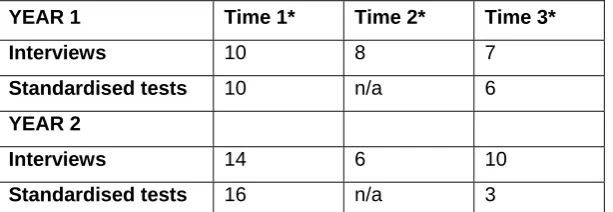
Table 2: Numbers of men who completed data collection at each time point (N=11)
YEAR 1 Time 1* Time 2* Time 3*
Interviews 10 8 7
Standardised tests 10 n/a 6
YEAR 2
Interviews 14 6 10
Standardised tests 16 n/a 3
* Time 1: towards beginning of programme; Time 2: mid-way through the programme; Time 3: end of the programme
6.4
6.5
6.6
Of all research participants, the mean average age was 37 years old in
year one group (time one) and 34.5 years in year 2 group. .
Of the men completing all data sets in year one, two men were
unemployed, of the four who were in employment, one was in a manual
or unskilled profession, one was in an office clerical role, one managerial
and the other in a statutory service role. All but one respondent were
living apart from their ex/wife/partner or children. Two respondents were
in new relationships and had contact with the other woman’s children.
Of the men taking part in interviews in year two, at time one, three were
unemployed. Four were employed in skilled manual work, one was
employed in professional work, one employed in ‘other’ work but for the
remaining five, the work status was unknown..
6.7 In year two, a large proportion of the men had no contact with the
children for whom they had been referred into the programme. In some
cases, the men had no contact with any children on an intimate basis.
This made it difficult for the men to compete the Parenting Stress Index,
one of the standardised measures used. For this reason, and due to low
response rates for standardised measures, we have not included data
from these in the analysis of quantitative data for the research
participants in the second year. Instead, we conducted a separate
analysis of Controlling Behaviours Inventory scores of the two years of
client groups.
7 Time one findings of interviews and measures with CDC
clients and staff
7.1
7.2
CDC clients were interviewed at a point when they had just begun the
programme. We were unable to collect data from research participants
before the programme had begun. At time one, men’s own perceptions
of why they were attending Caring Dads how they thought they would
benefit from it, their recollections and understanding of their own abusive
behaviour and their thoughts and feelings towards their families and
children, were explored. Interviews were initially based on the Risk
Interview Schedule for Child Maltreatment (RISC)9. This schedule
focuses on a specific child that the respondent has a relationship with
and probes into their feelings and behaviours around that child.
However, as many of the men did not have relationships with the
children for whom they were referred to Caring Dads, this schedule was
amended. In any case, the interviews were open ended and narrative in
approach. Interviewers prompted in particular around men’s histories of
abuse and violence; their perception of the relationships and their
expectations and perceptions of the Caring Dads programme, including
why they had been referred.
Offending history – men’s self reports
Most respondents felt uneasy discussing the events that led them to
being referred and they had diverse accounts about their behaviour at
time one across both years of the evaluation. In year one, three of the 10
respondents recounted physical violence with their current or
ex-partners/wives. All of these men reported their own reasons for this
violence which, in one case, occurred more than once and with more
than one woman.
9A Caring Dads programme tool: www.caringdadsprogram.com/agency/sampleforms/RISC.doc
I'd just like to be able to erm ... just ... just to be able to stay calm and not to have err ... to be able to have a good relationship with my children, you know
[She went to hit me and I hit her back] . "I know it is wrong but it was instinctive".
7.3
7.4
7.5
In year two, at time one, all men referred to the violence in their
relationships
I’ve always bottled things up…exploded that day…got 3 years…2 years on probation for that. I was in a rage..made threats..aimed at my wife..I never actually hit her. (CDC Client, time 1 year 2)
…..it’s been a nightmare…I was going to try and talk, sort things out…ended up kicking in the door..and being abusive..and they put a restraining order on me. (CDC Client, time 1 year 2)
I was violent with her, she was violent with me. I got done for hitting her in the nose, which I admitted to, so I was a bit mad at the time cos I didn’t want to be like that, (CDC Client, time 1 year 2)
There were similar levels of minimisation in the accounts from both year
one clients and year two. Frequently, explanations of the violence were
quickly followed with a context and justification:
No, there were all sorts of problems there. Culminating at the end with me slapping my partner across the face, which I’m embarrassed about. It was an end product of a very horrible situation... I felt she was jeopardising the children’s family home...It ended in an outburst, which my eldest son saw. (CDC client year 1, time 1)
In disclosing the violence, many respondents appeared to be expressing
shame. This may account for the minimisation and deflection of blame
in their descriptions of the incidents. In two cases at time one,
respondents went on to explain their sense of regret, fear, and
confusion, for the impact this violence may have had on his children.
I feel confused.. I've done wrong ...but I don't understand how it's affected the children and this is what I want to learn. (CDC client year 1, time 1)
I saw red and slapped her across the face, which I feel dreadful about. And more dreadful for my son seeing it. (CDC client year 1, time 1)
7.6
7.7
7.8
7.9
In year one, seven of the ten respondents stated that they had been
referred to Caring Dads due to verbal aggression rather than violence of
a physical nature. This was unlike year two where all respondents
reported physical violence.
In many cases, respondents in both years at time one expressed the
view that their problems with the family and with anger was the
responsibility of their ex-partners. This was the source of some anger
towards the professionals who had referred them.
For example, one client reported that Caring Dads was only available to
him, which is why he was the one on the programme and not his ex-partner. Another man considered that he was not an angry person just
‘bitter’ towards his ex-partner. Another client explained that he was
angry within himself and ‘sees red about once a week’ but that he had never hurt anyone other than himself. In year two, a client felt that
agencies didn’t believe his account of the violence and believed, instead,
his partner’s.
One respondent, in year one, time one, did not regard himself as having
been abusive at all, either to his ex-wife or children and was only there
to show his referring agency that he was a responsible father who
deserved regular access to his children. He maintained this view
continuously throughout our interviews. Significantly, his referring
agency worker told us that he did have a considerable problem with
anger and had been frequently verbally aggressive to his ex-wife and in
the presence of their children.
7.10
7.11
7.12
7.13
Anecdotal evidence from facilitators in year two suggests that that
particular client group had histories of more serious violence than those
men in year one. Although a higher proportion of the respondents in year
two admitted physical violence, in interviews with researchers, they did
not particularly report more serious levels of violence at time one,
compared to the same time for the previous year.
.
Men’s attitudes towards parenting
In this section, most of the data come from interviews with men at time
one in year one. This is because, in year two, many respondents had not
had access to their children for a long time, in many cases, since their
children were born. It was therefore difficult to discuss their perceptions
of themselves as parents.
We explored with the clients’, their views of themselves, as parents, at
time one. This presented interesting findings in that six out of the ten
respondents in year one described themselves as fathers in a positive
way. For those who had positive images of themselves as fathers, the
anger or violence which they described previously did not appear to
have much bearing on the men’s perceptions of themselves as fathers.
Men characterised themselves and their relationship with their children
in the following ways at time one:
"I am good at being there for him." (CDC client, year 1 time 1)
‘I’m a good Dad, very hands on’ (CDC client, year 2 time 1)
‘My kid misses me and wants to live with me’. (CDC client, year 1 time 1)
‘I’d do anything for them’. (CDC client, year 2 time 1)
7.14
7.15
7.16
Most of the positive self description was in response to the question,
‘how would your children see you as a father?’ These descriptions often
highlighted the activities and practical support the men felt they offered,
rather than emotional, support thus, ‘being there for them’, or being, ‘hands on’, or a, ‘fun dad’, were typical responses. It is interesting that, even in light of the discussion of the violence and anger described, the
men did not explore any deficits in their parenting at this point.
The men had reasonably positive self-images as fathers but this did not
necessarily preclude a degree of self-exploration and concern about
their parenting, later on in these stage one interviews. Whilst they denied
having a problem with violence or misuse of anger, they were willing to
explore ways in which they could learn more about being a good father
and how to listen to their children. This could be explained by the fact
that the men had already undertaken a few sessions by the time of the
interviews, and some of the concepts that Caring Dads puts forward,
such as being ‘child-centred’, may already have had an impact on the
clients.
Well things have already changed in the way that I don't fly off the handle now, I am better at shrugging things off. (CDC client, year 1 time 1)
I hope (what) I will learn to do is not to retaliate when my partner picks a fight. I'll let it go, hopefully (CDC client, year 2 time 1)
[I want to] see if I can more closely understand what I did. (CDC client, year 1 time 1)
I was too strict with my girls. I see that now. (CDC client, year 2 time 1)
In two cases, men with older children (aged over 7) reported specific
difficulties in their relationships with the children; in one case, the father
experienced difficulties bonding with a step-child and in the other, his
post adolescent children had severed ties with him. The men’s
attendance at the programme was driven by a desire to improve the
relationship with the child, where there was contact, and in the case
where there was no longer interaction, the man wanted to reflect on his
parenting more generally, having a number of younger children that he
was in contact with.
7.17
7.18
7.19
In year two, the men we interviewed seemed to be highly motivated to
gain contact with their children. In a majority of cases, respondents were
undergoing a legal procedure to try to gain contact or custody. In most
situations, this involved a process in the family court to gain access
rights which were being opposed by the children’s mothers. As in year
one, most of the year two men who were referred by the family court
service had a strong drive to secure better access to their children. This
was the main motivation for their continued attendance at Caring Dads.
Parent/child-centred behaviour and attitude
We analysed responses for, what is termed within the Caring Dads
literature, ‘parent/child-centred’ behaviours or attitudes. This relates to
the basic theory of change behind the Caring Dads programme: