HEALTH AND SOCIAL CARE
research
social
A Process Evaluation of the Implementation
of ASSIST in Scotland
Final Report
March 2017
Fiona Dobbie, Richard Purves, Jennifer McKell, Linda Bauld – University
of Stirling
Nadine Dougall – Edinburgh Napier University
James White – Cardiff University
Rona Campbell – University of Bristol
Amanda Amos – University of Edinburgh
Laurence Moore – University of Glasgow
Please cite as:
Acknowledgements
The study would not have been possible without the contributions of a range of colleagues, across several organisations.
We are particularly grateful to the schools who agreed to take part in the evaluation, especially the school leads in each participating area. In addition we would also like to thank:
School staff, students and trainers who participated in fieldwork;
Site leads, co-ordinators and DECIPHer-IMPACT Ltd staff for their endless enthusiasm and support to conduct the evaluation, especially the cost analysis component;
The Research Advisory Group for their advice and support;
Local Authority Research and Development leads who helped us secure research permissions to work in schools;
Our Scottish Government and Chief Scientist‟s Office (CSO) Project Managers (Fiona MacDonald, James Niven, Siobhan MacKay and Diane Brockie) for their support and assistance;
Contents
Executive Summary ... i
ASSIST in Scotland ... i
Aim and Research Design ...ii
Key Findings ...ii
Chapter 1: Introduction and Background ... 1
1.1 Policy Context ... 1
1.2 ASSIST ... 2
1.3 ASSIST in Scotland ... 3
Chapter 2: Design and Methods ... 5
2.1 Aim and Scope of the Evaluation ... 5
2.2 Research Design ... 5
2.3 Sample ... 6
2.4 Participant Information ... 9
2.5 Ethics and Informed Consent ... 9
2.6 Analysis and Reporting Style ... 9
2.6.1 Qualitative analysis ... 10
2.6.2 Quantiative analysis ... 10
Chapter 3: Preparing for Delivery ... 11
3.1 Preparatory Work and Delivery Models in Pilot Sites ... 11
3.1.1 Identifying and Engaging with Key Partners ... 11
3.1.2 Delivery Models in each NHS Board ... 12
3.1.3 School Selection ... 14
3.2 Schools‟ Starting Point ... 14
3.2.1 School Perceptions of ASSIST ... 15
3.3 Trainer Perspectives on Preparing for Delivery in Schools ... 15
3.3.1 Feedback on „Train the Trainer‟ Training ... 16
3.3.2 Understanding of ASSIST ... 17
3.3.3 Trainer Perspectives of their Role within the ASSIST Programme .... 18
3.3.4 Levels of Confidence Prior to Delivery ... 19
3.3.5 Sources of Support and Working with Other Trainers ... 20
Chapter 4: Delivery of ASSIST ... 22
4.1 Peer Nomination ... 22
4.1.1 Peer Nomination Theoretical Approach ... 22
4.1.2 Peer Nomination Practical Application ... 24
4.1.4 Fidelity of Peer Nomination ... 26
4.2 Peer Recruitment ... 27
4.2.1 Fidelity of Peer Recruitment ... 28
4.3 Peer Supporter Training ... 29
4.3.1 Style of Training ... 30
4.3.2 Content of Training ... 31
4.3.3 Relationship with the Trainers ... 32
4.3.4 Confidence Building and Communication Skills ... 32
4.3.5 Choice of School Chaperone and Behaviour Management ... 33
4.3.6 Fidelity of Peer Supporter Training ... 34
4.4 Follow-up Meetings and Diaries ... 35
4.4.1 Diaries ... 37
4.4.2 Fidelity of Follow-up Meetings and Diaries ... 38
4.5 Initiating Conversations Following Training ... 39
4.6 School Contribution to ASSIST ... 41
4.7 Scheduling of ASSIST ... 42
4.8 School Year of Delivery ... 42
4.9 Behaviour Management ... 43
4.10 Delivery Costs ... 45
Chapter 5: Post-delivery of ASSIST ... 46
5.1 Message Diffusion and Impact ... 46
5.2 Benefits of being a Peer Supporter ... 48
5.3 Trainer Reflections on Implementation... 49
5.4 Future Application of ASSIST Model ... 50
5.4.1 Strategic Perspective ... 50
5.4.3 Operational Perspective ... 51
Chapter 6: Discussion and Conclusions ... 53
6.1 Discussion ... 53
6.2 Conclusion ... 58
References ... 60
List of Tables
Table 1: Essential elements of ASSIST ... 2
Table 2: Summary of research design ... 6
Table 3: School survey sample information ... 8
Table 4: Survey respondents... 9
List of Figures Figure 1: SALSUS regular smoking prevalence trend data 1982 - 2015 ... 1
Figure 2: Site 1 delivery model ... 12
Figure 3: Site 2 delivery model ... 13
i
Executive Summary
This report presents findings from a process evaluation of the ASSIST (A Stop Smoking in Schools Trial) pilot in Scotland. ASSIST is a licensed peer-led, school-based smoking prevention programme that encourages the dissemination of non-smoking norms by training S1 (aged 12 to 13 years) and S2 (aged 13 to 14 years) students to work as peer supporters. Peer supporters are trained to have informal conversations with other students about the risks of smoking and the benefits of not smoking. The programme consists of seven training and feedback sessions with the peer supporters (peer nomination, peer recruitment meeting, peer supporter training and four follow-up sessions - where peer supporters meet with trainers and receive ongoing support), delivered over a 14-week cycle by trainers from outside the school who have attended a three-day course to enable them to deliver the programme.
ASSIST was previously evaluated through a large cluster randomised trial of 59 schools in South Wales and Avon, England with results published in the Lancet in 2008. Findings from this trial showed that ASSIST was effective and cost-effective at reducing smoking prevalence in young people. In 2010 ASSIST became a licensed programme and DECIPHer-IMPACT1 Ltd was established to provide training, materials, support and quality assurance to maintain effective delivery.
ASSIST in Scotland
In 2013 the Scottish Government made a commitment to undertake a pilot of ASSIST in its national Tobacco Control Strategy.2 One of the key differences between the delivery of ASSIST in Scotland compared with England and Wales is the age difference in school years. In England and Wales ASSIST is delivered to Year 8 students which is equivalent to S2 in Scottish schools. However, the age composition of year groups varies from England. At the end of year 8 students are aged between 12-13, whereas S2 students are aged 13-14. This is important because the slightly older age range may result in students being less receptive to the programme. The agreed approach in Scotland was to pilot in both S1 and S2 but to target S1 in the third term or second half of the school year.
The ASSIST programme was delivered in three NHS Boards across Scotland: Greater Glasgow and Clyde; Lothian; and Tayside. All three areas followed the licensed DECIPHer-IMPACT programme but their delivery models, in terms of project management, staffing and number of schools they worked with, varied. Across all sites delivery staff had a mix of professional backgrounds and came from the NHS, Local Authority and Third Sector. Some were employed as youth workers but did not have a background in smoking prevention or cessation, while others had tobacco control experience but had not previously worked with young people.
1
A not for profit organisation http://www.decipher-impact.com
2
ii
Aim and Research Design
The overall aim of the study was to evaluate the process of implementing ASSIST in Scotland. A series of research questions were developed and are included in the key findings section below.
In light of existing evidence demonstrating the effectiveness of ASSIST, this study focused on the acceptability and implementation of ASSIST to inform any potential future adoption in other areas of Scotland. The research design involved mixed methods, consisting of three elements: 1) evaluating the implementation planning process; 2) evaluating delivery in schools; and 3) assessment of costs. A range of stakeholders (school staff, trainers and students, n=101) were consulted via in-depth interviews, paired interviews, mini focus groups and observation along with a before and after survey to gather data from students (n=2130, at follow-up). To maximise available resources a two-tier design was used. Tier one included
consultation with school leads and a pre and post student survey in 20 schools. Tier two involved six case study schools (two in each area, selected from the 20 tier one schools) where qualitative methods were used to observe peer supporter training and follow-up sessions and consult with peer supporters and other students.
Key Findings
Findings are summarised for each research question in the study, with recommendations in italics.
1. What are the barriers and facilitators to the implementation of ASSIST in Scotland?
Barriers and facilitators in this study were categorised as operating at the macro (strategic) and micro (operational) levels. At the macro level they were: partnership working; budget; and culture. These varied between schools but partnerships in particular were key, and findings from the evaluation suggest that future delivery of ASSIST in new areas should ensure enough time is set aside to build relationships with key stakeholders (such as school leads, NHS and Local Authority staff) in advance of programme delivery, if these relationship do not already exist.
At the micro level, barriers and facilitators were: trainers; delivery mode (peer nomination, training and follow-up); and behaviour management. Due to the different delivery models across the pilot sites, some trainers had a delivery role only, while others were responsible for both coordination and delivery. The
combined role was particularly challenging. Feedback from trainers on their three day training to deliver ASSIST was extremely positive. However, potential
suggestions for improvement included more time in the training on how to organise the follow-up sessions.
iii
Peer nomination was only delivered under exam conditions in one of the six case study schools, resulting in discussion between students which could have
influenced whom they nominated. This may be a difficult element of the programme for all schools to engage with, but should be attempted.
Trainers faced some challenges delivering follow-up sessions in school (e.g. obtaining access to classrooms) and many peer supporters did not complete the requested diary of their conversations with others about smoking. Peer supporter comment suggested that the content as well as the number of follow-ups could be modified. Fewer follow-ups should be considered in future and diaries, if included, may not need to be paper-based.
2. What refinements are required to implement the ASSIST programme in Scotland?
Overall, we found that very few changes were required to implement ASSIST in Scotland. In terms of trying to deliver in either S1 or S2, there were advantages and disadvantages to both. School leads who were interviewed tended to focus on the reasons why one year was chosen over the other – not how this decision may have influenced delivery of the programme. Student feedback, however, suggested that friendship groups may have been more established in S2 than S1. Therefore, in light of student feedback, if ASSIST is delivered in S1, this should ideally be in the second half of the school year when friendships are more established.
3. Were essential elements of the ASSIST model maintained during pilot implementation in Scotland?
Overall, delivery appears to have been with a high degree of fidelity to the licensed programme. For example, the manual states that the list of students nominated to become peer supporters should be 18% of the school year to ensure adequate coverage. All case study schools delivered the four follow-up sessions, but
observational fieldwork highlighted that diaries were not consistently checked in two of the six case study schools.
4. How acceptable is the programme from a stakeholder perspective (strategic leads, trainers, students and school staff)?
Stakeholder feedback suggests that delivery of ASSIST in schools in Scotland was acceptable with the (unavoidable) minor disturbance to school timetable
iv
peer message diffusion was more appealing than having an adult speak to them about smoking. They appeared to favour the two training sessions more than the follow-ups sessions which is not surprising given the delivery context (i.e. the former was delivered out of school and the latter in school)
5. What changes in smoking-related knowledge, attitudes and behaviour are observed amongst students in the ASSIST Scotland pilot schools?
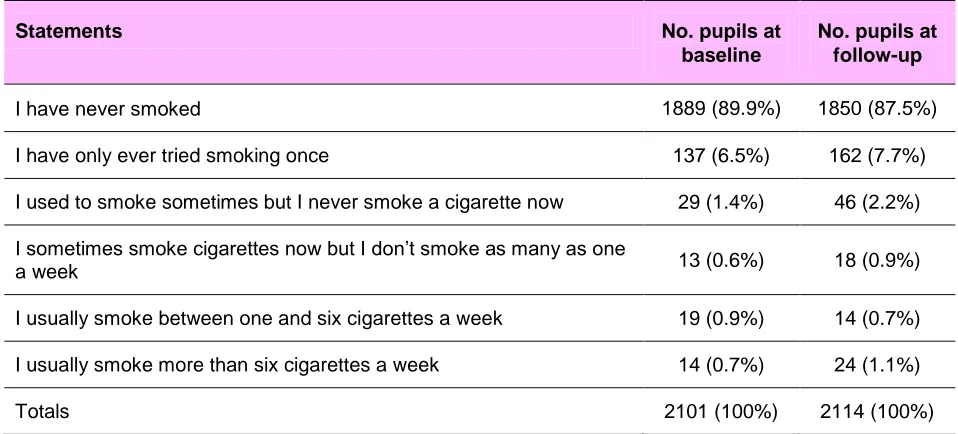
This process evaluation was designed to look at acceptability and fidelity, not intervention effectiveness. However, from the data we have, it is clear that there is uncertainty regarding the extent of message diffusion between peer supporters and peers in their school year and any impact this may have on smoking in adolescence prevalence. Findings from the student survey showed no significant change in self-reported smoking prevalence with 1.6% of pupils (n=33) reporting that they smoked one or more cigarettes per week increasing slightly to 1.8% (n=38) at follow-up. In addition, recall of any relevant conversations about smoking with a peer supporter was fewer than one in ten (9%). However, opportunities to have informal conversations about smoking with peers may now be limited due to the ongoing decline in adolescent smoking since ASSIST was first developed. It is also worth noting that some peer supporters felt apprehensive or awkward initiating conversations about smoking with their peers for fear of being judged or ridiculed, and this also may have contributed to the low recall of any conversations relevant to ASSIST.
Data collected from the original ASSIST trial is now 13 years old. Our findings on the number of relevant conversations (in particular) do raise questions about any appropriate assessment of ASSIST in the future. A relevant future step would be an implementation trial (a Phase IV study) of ASSIST, using a similar methodology to the original RCT, to assess current effectiveness in the context of lowering smoking prevalence in the target age group.
However, feedback from participants was overwhelmingly positive regarding the benefits of taking part in ASSIST for peer supporters, commenting on the personal skills they have gained and the potential for the school and wider communities to benefit. Recognition of the wider benefits of peer supporter training should be included in discussions around the future of the ASSIST programme in Scotland.
v
6. What are the delivery costs of the programme?
The average cost to deliver one cycle of ASSIST in one school ranged from £8,939 £11,357. Between August 2014 – June 2017, 72 cycles of ASSIST were delivered or confirmed for delivery in 2017 and included in the cost analysis. The actual total delivery cost for all three sites was £674,360 of which 20% (£136,800) was for the license fee. This equates to a cost per cycle of £9366.
7. What lessons can be learned to assist future roll out across Scotland?
There are five considerations for any future delivery of ASSIST in Scotland, and a sixth relating to future research.
First, if a relationship between programme deliverers of ASSIST and the school is not already established, time should be included to invest in this before delivery. This will help with the programme but also add important context in terms of what smoking prevention provision the school already has in place. If delivery is in partnership with NHS Boards, Local Authorities and the third sector, time needs to be built into the delivery timetable to establish these relationships and understand the level of resource required from each partner.
Second, identifying trainers depends on available resources and they are likely to have a variety of professional backgrounds. Using this experience to pair up trainers with different backgrounds (e.g. one with youth work experience and one with smoking cessation) and developing opportunities to share practice and experience across sites may aid delivery and increase confidence.
Third, if the school timetable permits delivery of ASSIST to S1, students should be targeted during the third term, as this will maximise message diffusion via
established friendship groups. Few problems were observed with delivery in S2, so this continues to be viable.
Fourth, consideration should be given to how trainers can be offered further support (e.g. further training, better use of teaching staff who chaperone students) to
manage student behaviour if they feel this is required.
Fifth, in terms of the manual and intervention delivery, DECIPHer-IMPACT may want to consider: 1) whether a paper diary is still the best medium for students to record their conversations; 2) if four follow-ups are still productive; 3) how to include content on e-cigarettes in the programme, as appropriate (in particular, making clear that they are far less harmful than tobacco but are not products for teenagers that have never smoked, and informing teenagers of age of sale laws).
vi
8. Is there the scope to expand the model to look at other risk taking behaviours in Scottish schools in the future, e.g. drugs, alcohol?
1
Chapter 1: Introduction and Background
This report presents findings from a process evaluation of the delivery of ASSIST (A Stop Smoking in Schools Trial) in three pilot areas across Scotland. This first chapter describes the policy context in which ASSIST was delivered, as well as a brief history of the ASSIST programme and the delivery models used in each of the three pilot sites. Research aims, objectives, method, sample, ethics/research
permissions and the analytical approach adopted are the focus of Chapter 2.
Results are presented in Chapters 3-5 with discussion and conclusions the focus of Chapter 6.
1.1 Policy Context
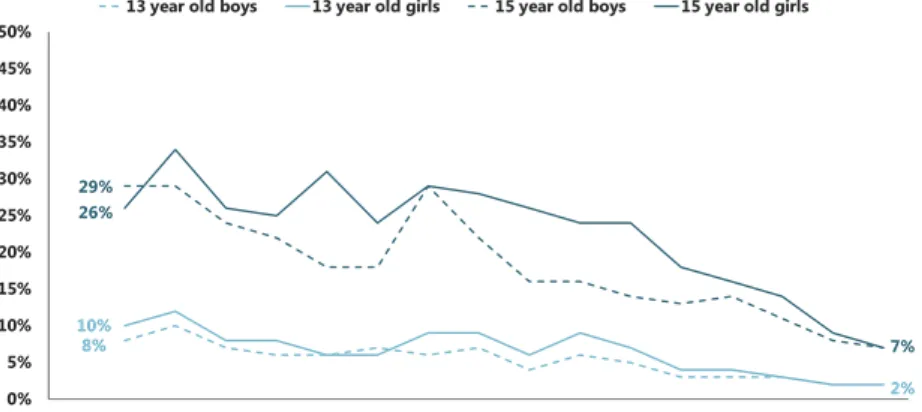
[image:13.595.59.520.358.564.2]Smoking rates in Scottish adolescents have declined in recent years (Figure 1), particularly in the 15 year old cohort, with 30% of boys and girls smoking regularly (defined as smoking at least one cigarette per week) in 1996 compared to just 7% in 2015.
Figure 1: SALSUS regular smoking prevalence trend data 1982 - 20153
However, it is estimated that between 2010 and 2011 a total of 207,000 young people aged 11-15 started smoking in the UK. The estimated number of children who start to smoke daily in the UK is: 463 in England, 55 in Scotland, 30 in Wales and 19 in Northern Ireland (Hopkinson et al 2014). This will have a significant impact on future health and life expectancy. Young people can become rapidly addicted to cigarettes and up to 2011 it was estimated that most young smokers in the UK were tobacco dependent before they leave school; nearly 40% before the age of 16 (Dunstan and Robinson 2012).
3
2
Age is an important factor in adolescent smoking with existing evidence highlighting the relationship between smoking prevalence and age of initiation. For example, smokers who start at an early age tend to smoke more cigarettes per day in adulthood, smoke for longer, are less likely to quit and are more likely to die from smoking-attributable causes. (Flay et al 1998; Leventhal and Cleary 1980; Mowery et al 2004).
For these reasons, preventing smoking uptake, particularly amongst young people, remains a public health priority.
1.2 ASSIST
ASSIST is a peer-led, school-based smoking prevention programme that
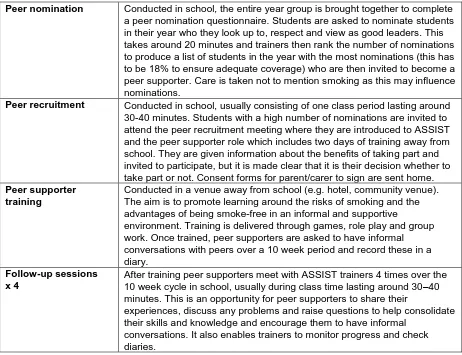
[image:14.595.57.519.383.738.2]encourages the dissemination of non-smoking norms by training S1 (aged 12 to 13 years) and S2 (aged 13 to 14 years) students to work as peer supporters. Peer supporters are trained to have informal conversations with other students about the risks of smoking and the benefits of being smoke-free (Audrey et al 2004). The programme consists of seven sessions, delivered over a 14 week cycle by external trainers (who have to attend a three day training course to deliver the programme, discussed further in 4.2.1). Table 1 summarises the key elements of ASSIST.
Table 1: Essential elements of ASSIST
Peer nomination Conducted in school, the entire year group is brought together to complete a peer nomination questionnaire. Students are asked to nominate students in their year who they look up to, respect and view as good leaders. This takes around 20 minutes and trainers then rank the number of nominations to produce a list of students in the year with the most nominations (this has to be 18% to ensure adequate coverage) who are then invited to become a peer supporter. Care is taken not to mention smoking as this may influence nominations.
Peer recruitment Conducted in school, usually consisting of one class period lasting around 30-40 minutes. Students with a high number of nominations are invited to attend the peer recruitment meeting where they are introduced to ASSIST and the peer supporter role which includes two days of training away from school. They are given information about the benefits of taking part and invited to participate, but it is made clear that it is their decision whether to take part or not. Consent forms for parent/carer to sign are sent home.
Peer supporter training
Conducted in a venue away from school (e.g. hotel, community venue). The aim is to promote learning around the risks of smoking and the advantages of being smoke-free in an informal and supportive
environment. Training is delivered through games, role play and group work. Once trained, peer supporters are asked to have informal conversations with peers over a 10 week period and record these in a diary.
Follow-up sessions x 4
After training peer supporters meet with ASSIST trainers 4 times over the 10 week cycle in school, usually during class time lasting around 30–40 minutes. This is an opportunity for peer supporters to share their
experiences, discuss any problems and raise questions to help consolidate their skills and knowledge and encourage them to have informal
3
The ASSIST model is different to previous school-based prevention programmes which systematic reviews have shown to be largely ineffective (Thomas Roger et al 2013). ASSIST was previously evaluated via a large cluster randomised trial of 59 schools in South Wales and Avon, England. Results from this trial showed that ASSIST was effective and cost effective at reducing smoking prevalence in young people (Campbell et al 2008), (Hollingworth et al 2012). This led to the wider roll out of ASSIST in parts of England and Wales and pilot expansions of the ASSIST
programme to include healthy eating and physical activity (AHEAD) (Bell et al 2014). With current research underway looking at physical activity in young women (PLAN A) (Sebire et al 2016), drug prevention (ASSIST + FRANK) and sexual health (STASH4). In a 2013 systematic review of policies and interventions to reduce socio-economic inequalities in adolescent smoking, ASSIST was identified as having a positive equity impact and reduced smoking inequalities in school children (Amos et al 2013).
In 2010, ASSIST became a licensed programme and a not-for-profit company, DECIPHer-IMPACT, was established to provide training, a detailed manual, ongoing support and quality assurance to maintain effective delivery of the
programme.5 An annual conference is held for trainers and interested parties (e.g. commissioners, researchers).
Until recently ASSIST had not been delivered in Scottish schools. This changed in 2013 when the Scottish Government pledged its commitment to smoking
prevention in „Creating a Tobacco Free Generation‟ (the national tobacco control strategy published in March 2013) which stated that:
“We will undertake a pilot of ASSIST, which will consider its suitability for
Scotland and potential for further adaptation to other risk taking behaviour.” (The Scottish Government 2013)
1.3 ASSIST in Scotland
In English and Welsh schools ASSIST is delivered to Year 8 students which is equivalent to S2 in Scottish schools. However the age composition is different. At the end of year 8 students are aged between 12-13, whereas S2 students are aged 13-14. This is important because the slightly older age range may result in students being less receptive to the programme. This presented three delivery options for Scotland. The first was to deliver to S1 students only. The advantage of this approach was that students would have been more comparable in terms of age (12-13), but as these students would just have started secondary school they may not have the established friendship groups which are an essential component of the ASSIST programme. The second delivery option was to target S2 students only who would have formed friendship groups, but who would be slightly older and the third option was to pilot in both S1 and S2 but target S1 in the third term or second half of the school year. This latter option was the agreed approach because it
4
http://www.nets.nihr.ac.uk/__data/assets/pdf_file/0007/163195/PRO-14-182-14.pdf [last accessed 31.1.17]
5
4
5
Chapter 2: Design and Methods
This chapter outlines the research aim, research questions, design, sample and analytical approach.
2.1 Aim and Scope of the Evaluation
In light of the existing evidence base (discussed in Section 1.2) this is a process (not an outcome) evaluation to examine the acceptability and implementation of ASSIST to inform potential roll out to other areas of Scotland. The 30-month
evaluation was funded by the Chief Scientist‟s Office and the Scottish Government and commenced in August 2014. The overall aim of the evaluation was to assess implementation across the three pilot areas specifically looking at fidelity and acceptability and drawing out learning that could assist future implementation in other areas. Data were also collected from students regarding their smoking status, but these were not primary outcome measures for this process evaluation.
The study had the following research questions:
1. What are the barriers and facilitators to implementation in Scotland?
2. What refinements are required to implement the ASSIST programme in Scotland?
3. Are essential elements of the ASSIST model maintained during pilot implementation in Scotland?
4. How acceptable is the programme from a stakeholder perspective (for strategic leads, trainers, students and school staff)?
5. What changes in smoking-related knowledge, attitudes and behaviour are observed amongst students in the ASSIST Scotland pilot schools?
6. What are the delivery costs of the programme?
7. What lessons can be learned to inform any future roll out of ASSIST across Scotland?
8. Is there scope to expand the model and look at other risk taking behaviours in Scottish schools in the future, e.g. drugs, alcohol?
2.2 Research Design
6
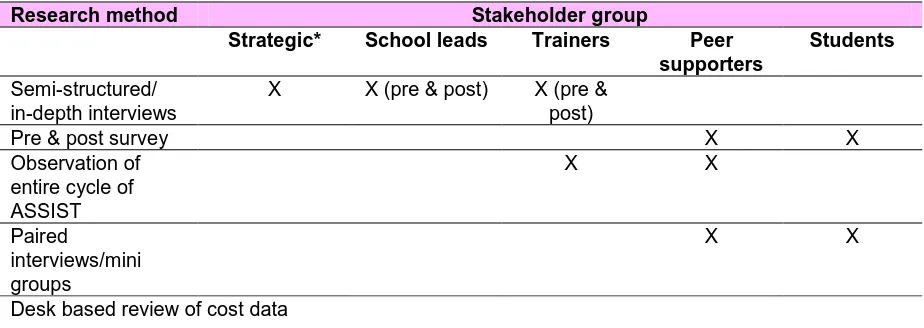
leads and a pre and post student survey in 20 schools from the three NHS Boards who took part in the pilot (Greater Glasgow and Clyde; Lothian; and Tayside). Tier two identified six case study schools (two from each pilot site, selected from the 20 tier one schools) where a researcher observed the entire cycle of ASSIST delivery, examining intervention fidelity and consulting with peer supporters and other students, via mini group discussion. Research methods to assess each element are summarised in Table 2. Where possible the student survey was
[image:18.595.57.519.284.448.2]administered by the research team via a special assembly for the whole year group. In two schools this was not possible and teaching staff administered the survey during class time (staff were invited to a face-to-face survey briefing by a member of the research team prior to delivery). The baseline survey was piloted before roll out and additional questions for the follow-up survey were tested with a group of S2 students.
Table 2: Summary of research design
Research method Stakeholder group
Strategic* School leads Trainers Peer supporters
Students
Semi-structured/ in-depth interviews
X X (pre & post) X (pre & post)
Pre & post survey X X Observation of
entire cycle of ASSIST
X X
Paired
interviews/mini groups
X X
Desk based review of cost data
*Scottish Government, DECIPHer-ASSIST, NHS Boards, Education, Site Co-ordinators
2.3 Sample
The school sample was selected using non-probability sampling techniques. Our aim was to examine the acceptability and fidelity of intervention delivery, not
effectiveness, thus a random (probability) sample was not required. In addition, the delivery model for ASSIST was phased over three school years which meant that there was uncertainty around the exact number of schools taking part and when they would receive ASSIST which could result in an incomplete sampling frame. In light of this, and in consultation with the Research Advisory Group, the following quota sampling criteria were agreed:
1. A minimum of five schools from each NHS Board
2. A maximum of five schools will be in a rural area
3. A maximum of five schools will be in less deprived areas
7
5. A minimum of eight schools will have ASSIST delivered to S1 students
6. A minimum of eight schools will have ASSIST delivered to S2 students
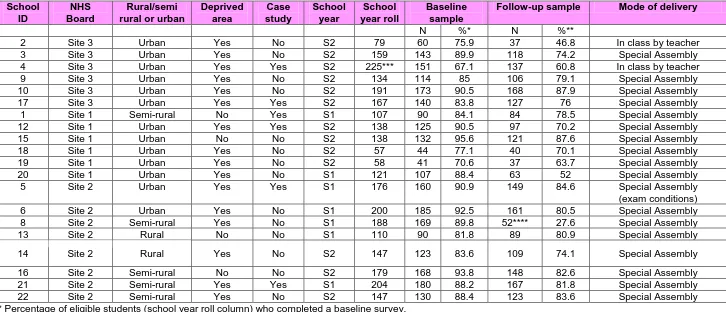
This means that findings from the student survey are not directly comparable to the wider school population. Table 3 presents an overview of the 20 schools that
participated and how they compared with sample criteria described above. All
sample criteria, except one (a minimum of eight schools will have ASSIST delivered to S1 students - seven instead of eight) were met. There are two reasons this
criterion was not met. First, all Glasgow schools were working with S2 students only and second, two Lothian schools previously identified as working with S1 students were changed to S2 (in one school the Head Teacher requested this change and in the other the S1 school roll was too small to be included). Scottish Government provided the Scottish Index of Multiple Deprivation (SIMD)6 data which showed S1 and S2 pupil distribution by their home postcode. This was used to identify schools with a larger proportion of pupils from more deprived areas. Categorisation of
urban/semi-rural/rural areas was based on fieldwork observations of the school and surrounding area.
6
8 Table 3: School survey sample information
School ID
NHS Board
Rural/semi rural or urban
Deprived area
Case study
School year
School year roll
Baseline sample
Follow-up sample Mode of delivery
N %* N %**
2 Site 3 Urban Yes No S2 79 60 75.9 37 46.8 In class by teacher 3 Site 3 Urban Yes No S2 159 143 89.9 118 74.2 Special Assembly 4 Site 3 Urban Yes Yes S2 225*** 151 67.1 137 60.8 In class by teacher 9 Site 3 Urban Yes No S2 134 114 85 106 79.1 Special Assembly 10 Site 3 Urban Yes No S2 191 173 90.5 168 87.9 Special Assembly 17 Site 3 Urban Yes Yes S2 167 140 83.8 127 76 Special Assembly 1 Site 1 Semi-rural No Yes S1 107 90 84.1 84 78.5 Special Assembly 12 Site 1 Urban Yes Yes S2 138 125 90.5 97 70.2 Special Assembly 15 Site 1 Urban No No S2 138 132 95.6 121 87.6 Special Assembly 18 Site 1 Urban Yes No S2 57 44 77.1 40 70.1 Special Assembly 19 Site 1 Urban Yes No S2 58 41 70.6 37 63.7 Special Assembly 20 Site 1 Urban Yes No S1 121 107 88.4 63 52 Special Assembly 5 Site 2 Urban Yes Yes S1 176 160 90.9 149 84.6 Special Assembly (exam conditions) 6 Site 2 Urban Yes No S1 200 185 92.5 161 80.5 Special Assembly 8 Site 2 Semi-rural Yes No S1 188 169 89.8 52**** 27.6 Special Assembly 13 Site 2 Rural No No S1 110 90 81.8 89 80.9 Special Assembly 14 Site 2 Rural Yes No S2 147 123 83.6 109 74.1 Special Assembly 16 Site 2 Semi-rural No No S2 179 168 93.8 148 82.6 Special Assembly 21 Site 2 Semi-rural Yes Yes S1 204 180 88.2 167 81.8 Special Assembly 22 Site 2 Semi-rural Yes No S2 147 130 88.4 123 83.6 Special Assembly * Percentage of eligible students (school year roll column) who completed a baseline survey.
** Percentage of eligible students (school year roll column) who completed a follow-up survey.
2.4 Participant Information
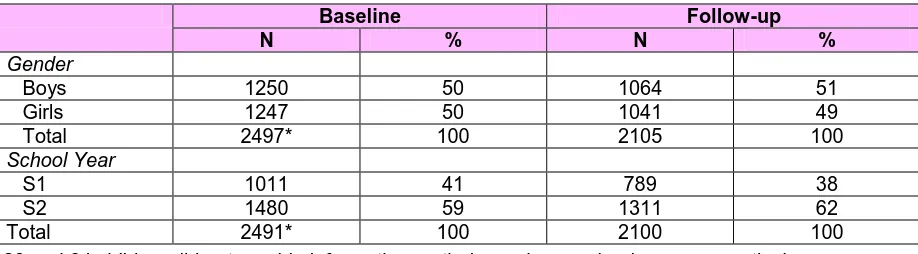
Across 20 schools, at baseline the number of students eligible to participate in the baseline survey was 2925, of which 2491 completed a questionnaire. At follow-up the number of eligible students was 2491, of which 2130 took part representing 15.6% lost to follow-up. As illustrated in Table 4 there was fairly even
[image:21.595.59.518.204.331.2]representation by gender and class at baseline, but fewer S1 students at follow-up (as noted in Table 3 school 8 had a very low response rate at follow-up).
Table 4: Survey respondents
Baseline Follow-up
N % N %
Gender
Boys 1250 50 1064 51 Girls 1247 50 1041 49 Total 2497* 100 2105 100
School Year
S1 1011 41 789 38 S2 1480 59 1311 62 Total 2491* 100 2100 100 *28 and 34 children did not provide information on their gender or school year, respectively
In addition to the quantitative sample, the following qualitative data were collected:
41 interviews with 24 members of school staff (all bar one were face-to-face and included deputy head teachers, principal teachers, subject teachers, pupil care and support teachers);
31 trainers who participated in a baseline interview or focus group; 29 students who took part in six mini group discussions;
15 stakeholder interviews with 17 participants (face to face and telephone) who held a strategic, planning, commissioning, delivery or policy role; Structured observation of the delivery of an entire cycle of ASSIST in six
schools.
2.5 Ethics and Informed Consent
The study was approved by the University of Stirling Ethics Committee on the 4th September 2014. To conduct research in schools we also had to apply for
permission from each Local Authority (eight in total). Once this was granted, we were able to approach the schools directly to invite them to participate in the study. Informed consent was obtained from school leads and trainers. Parents were given written information about the study and an opportunity for their child to opt out of the research. Student consent was also obtained.
2.6 Analysis and Reporting Style
10
in the results section (summary tables presented in the appendix which the reader can refer to).
2.6.1 Qualitative analysis
Analysis of qualitative interviews and mini group discussions was conducted using a structured thematic approach based on systematic coding of verbatim transcripts which was organised and managed via QSR Nvivo 11. Coding frames for each of the stakeholder groups were jointly developed, piloted and amended by members of the research team prior to full coding of relevant transcripts. Key themes arising from coded data for each stakeholder group were identified and reported alongside those of other groups highlighting both similarities and differences.
Case study observations were recorded using a structured observation form which recorded all four stages of ASSIST delivery (peer nomination, peer recruitment meeting, training days and follow-up sessions). Data from the completed
observation forms were entered into a MSWord template which was populated with details from each stage of delivery. This enabled assessment of key measures of fidelity and also contributed to the thematic analysis (e.g. observation date
regarding behaviour management). The template was piloted and refined by two researchers before being populated.
2.6.2 Quantitative analysis
Student survey data were entered into MSExcel. The Excel data were checked for data quality and consistency before being „locked‟ for analysis. This locked dataset was archived as the denoted version used for this analysis, and then imported into Stata V14. The data structure contained three possible units of analysis, the
Chapter 3: Preparing for Delivery
The focus of this chapter is to examine the key considerations required in preparation of ASSIST delivery in schools. Drawing first on interviews from site leads and key stakeholders it will reflect on the preparatory „behind the scenes‟ work required before actual delivery in school. Then, for additional context it will describe where schools were starting from in terms of current provision for smoking prevention. Finally it will outline the experience of trainers, specifically their
feedback on the training and their perceptions of their readiness to deliver ASSIST in schools.
3.1 Preparatory Work and Delivery Models in Pilot Sites
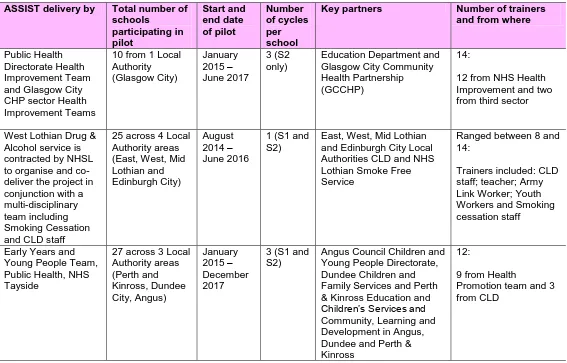
Delivery of ASSIST required time and careful planning, working in partnership with school staff and other key partners (appended in Table A1). Site co-ordinators and key stakeholders were asked to reflect on this process and highlight three areas for discussion: identifying and engaging with key partners; delivery model; and
identifying schools.
3.1.1 Identifying and Engaging with Key Partners
Identifying and engaging with partners was an important first step in delivery, with stakeholders commenting that a key learning point was to allow enough time at the planning stage to create these partnerships and obtain buy-in. This was especially true for Site 1 and 2 where engagement was necessary with seven Local
Authorities. Reduced funding meant job roles and the remit of Local Authority staff had changed, resulting in additional time to identify the correct person to approve the resources needed, or secure any in-kind contribution. Key to facilitating these discussions was the existing evidence-base regarding ASSIST‟s effectiveness which helped secure buy-in from partners.
“I think the evidence, the initial evidence; we had been running tobacco
programmes in [Site 3] for young people for a very long time….The problem had always been how to evidence that those programmes were effective…..So it [ASSIST] was something that was clearly evidence based, we wouldn‟t have to do the research to work that out.” (Stakeholder 11)
Having existing relationships and previous positive experience of working with partners was clearly advantageous to engagement with ASSIST. All three pilot sites had this, some stronger than others, but this foundation was clearly beneficial and more productive than tendering to a sub-contractor (as is the more common model in England and Wales).
12
Finally, partners helped deliver ASSIST by offering in-kind resources – e.g. staff to deliver ASSIST, liaise with schools and encourage their participation, school staff time to help plan delivery and chaperone peer supporters, classrooms for follow-up.
3.1.2 Delivery Models in each NHS Board
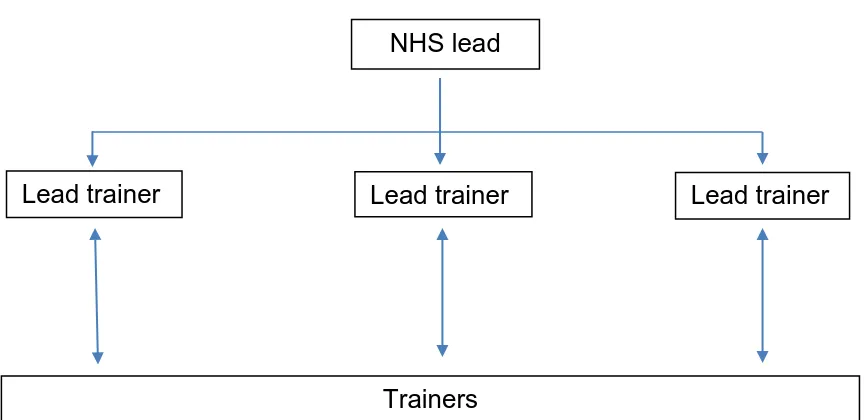
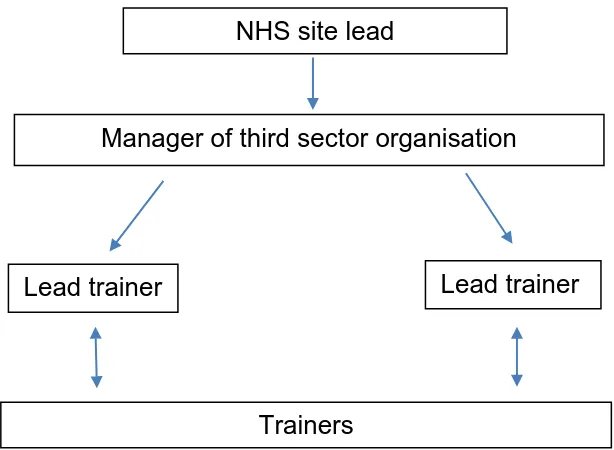
[image:24.595.62.496.282.492.2]The ASSIST pilot programme was delivered in three NHS Boards across Scotland: Greater Glasgow and Clyde; Lothian; and Tayside. All three areas followed the licensed DECIPHer-IMPACT programme but their delivery models in terms of project management, staffing and number of schools they worked with varied across pilot area. A summary of the delivery model in each area is presented in Figures 2, 3 and 4. Further detail on: funding source; key partners; number of schools who participated‟ pilot start and end dates; and number of trainers can be found in Table A1, appended.
Figure 2: Site 1 delivery model
An „in-house‟ model operated in Site 1 with a pool of NHS and seconded
Community Learning and Development (CLD) staff delivering ASSIST as their sole remit (except the NHS lead). The delivery model was one of devolved responsibility with the NHS lead appointing three lead trainers who were responsible for securing schools, planning delivery, and liaising with trainers in a specific geographic area. They also worked as trainers and cross-covered other areas to offer support when necessary.
NHS lead
Lead trainer Lead trainer
Figure 3: Site 2 delivery model
A partnership model was used in Site 2, with delivery subcontracted to a third sector organisation (TSO). The NHS lead took responsibility for securing school participation and sourcing trainers, with the TSO then following up to arrange delivery dates, co-ordinate trainers and manage all aspects of delivery. All staff involved in delivery of ASSIST had other responsibilities in addition to their ASSIST role.
Figure 4: Site 3 delivery model
Site 3 operated a flat structure where the site lead along with another member of staff took responsibility for all set-up and delivery tasks (securing participation from schools, organising the delivery timetable and associated tasks - booking in trainer and the materials required for delivery). Trainers were NHS staff who worked across the three Community Health Partnership sectors, which meant that site co-ordinators had to liaise with each sector to secure participation from staff – this made planning delivery more time consuming (especially if schools had to change delivery dates with short notice) than the other two delivery models. Like Site 2, Site 3 staff had other responsibilities in addition to their role in ASSIST.
Model 1 is similar to how ASSIST was previously delivered in England and Wales (the current approach is to outsource to a third party). Stakeholders commented
Site co-ordinators (NHS site lead & Health Improvement Office)
Trainers NHS site lead
Manager of third sector organisation
Lead trainer
Trainers
[image:25.595.126.442.482.585.2]14
that the Site 1 model worked particularly well. However, this approach was only possible because this NHS Board purposely moved resources from cessation to prevention programmes. The more complex approach to securing trainers in Sites 2 and 3 meant that the site co-ordinations and lead trainers had to manage staff that may not have worked with young people before and who had other responsibilities in addition to ASSIST. This required extra time to build relationships, contact staff to confirm training sessions, and accommodate timetable changes when they arose. Time that was not required in Site 1.
3.1.3 School Selection
School selection varied across sites (as illustrated in Table 3). In Site 3, to address sustainability concerns, the decision was made to target 10 schools who were all eligible to receive three cycles of ASSIST. In contrast, Site 1 had the resource to offer ASSIST to all the schools in their NHS Board, and used SIMD data to identify the schools most in need (i.e. those in deprived areas, with higher smoking rates) of ASSIST and tried to target them first. Site 2 targeted schools with higher smoking rates, but also took into account other factors that may impact delivery i.e. change in the senior management team. That said, all sites indicated a degree of
pragmatism and were keen to work with schools who showed an interest and enthusiasm, especially when they first started to deliver the programme.
3.2
Schools’ Starting Point
In order to assess delivery of a smoking prevention programme such as ASSIST, it is important to understand where the school was starting from in terms of smoking prevention coverage in the existing curriculum. Answers to these questions may influence why the school decided to take part and add important context to understanding delivery.
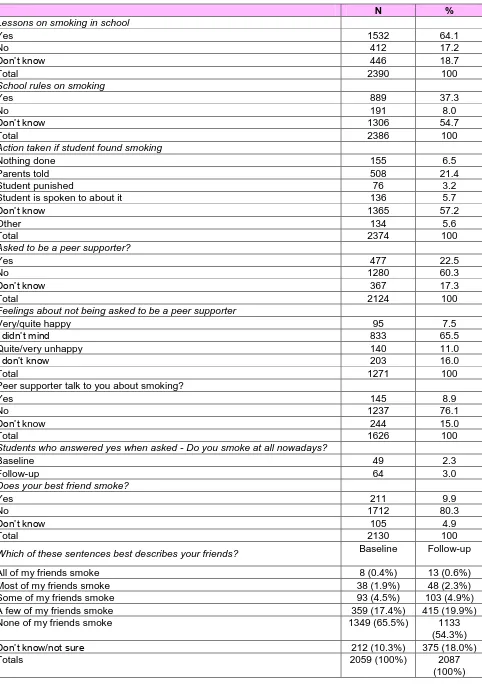
Across the 2491 respondents at baseline, findings from the pre-intervention student survey suggested a reasonable awareness of their schools‟ smoking policy and any lessons on smoking harm/prevention, with two thirds (64%, n=1532) recalling being taught lessons on smoking prevention7. However, half (55%, n= 1306) did not know if their school had any rules on smoking, and 57% (n=1365) did not know what action would be taken if they were caught smoking.
Schools participating in the evaluation appeared to either adhere to the standard Local Authority policy or did not have their own school specific smoking policy - with some commenting that they did not know if their school had a policy or not. The exception was school 12 who had included their own smoking policy in the school handbook (i.e. „no smoking on school grounds, any student found with cigarettes will have them confiscated‟). The general point was also made that the number of students smoking these days is very low, with a perception in some schools that smoking is not much of an issue anymore – “I could probably tell you children that smoke.” (School lead 20, follow-up interview)
7
Existing education on smoking was generally delivered in social education or personal, social and health education (PSHE), but the school year varied. For
example, in some schools it was delivered across all years whereas in others it was targeted at younger students (S1/S2). National „no smoking day‟ was an important feature of the school calendar at the time of the study, with a number of schools involved in different activities, often in partnership with local organisations.
3.2.1 School Perceptions of ASSIST
School leads demonstrated a good understanding of the ASSIST model, grasping the key components e.g. a focus on smoking prevention using a peer education approach with a „non-preachy‟ approach to message diffusion. One school lead interviewee raised a salient point when they commented that they were not sure if ASSIST would include anything about vaping (electronic cigarettes).
There was also a great deal of support for the programme. Delivery by external trainers (i.e. not school staff) and the two training days delivered away from school, were viewed as particularly important because it showed the young people how valued they were. Even in schools who commented that smoking was not „a huge issue‟ they still felt the programme was worthwhile because „young people will experiment with cigarettes.‟ Comment was also made regarding the existing
evidence base which showed the effectiveness of ASSIST. Again this emphasised the importance of setting aside time to engage with schools to build up a
relationship. However, there was also speculation regarding how effective message diffusion would actually be (i.e. will peer supporters have conversations?).
There were a number of reasons school leads gave when asked why their school decided to take part in ASSIST. First, was the opportunity to receive an additional (evidence-based) resource which required minimal school input to protect young people from smoking harm. Second, signing up to ASSIST seemed to have
developed as a result of long-standing relationships with NHS health improvement teams and a specific or general willingness to help them or take part in the pilot to help future delivery. Third, was a specific interest in the peer education element of ASSIST either because they had seen the benefit of this approach previously or wished to pursue it more fully in the future. One school lead said that in addition to the possible impact of the programme, ASSIST would help them meet requirements of national policy - partnership working set out in the National Curriculum for
Excellence, for example. Finally, one interviewee was not aware of why their school had decided to participate but had simply „been asked (told)‟ to lead on this by a senior member of staff.
3.3 Trainer Perspectives on Preparing for Delivery in Schools
One essential element in preparation for delivery was training of trainers. Baseline interviews with trainers explored this in detail, as well as their perceived role,
16
3.3.1 Feedback on ‘Train the Trainer’ Training
ASSIST trainers took part in three days of “train the trainer” training delivered by DECIPHer-IMPACT (funded as part of the licence fee). Overall, trainers were very positive about the training and particularly liked the interactive and energising nature of delivery, leading many to describe it as „fun‟, „enjoyable‟ and the „best training they had done.‟ A stakeholder comment was similar - one participant
commented that their colleagues (who had attended the training) were struck by the quality of the training programme, and about how well thought out it is and
delivered.
Training content gave participants multiple opportunities to obtain first-hand
experience of delivering training activities and observe the different approaches of fellow participants, which was viewed positively.
“I liked the fact that it was more interactive than sitting being talked to. And it was giving us the chance to practice and to go through which was, certainly for me it was more helpful and more memorable because I can think back to oh that activity was very, so and so did that or I did that and it‟s making it more memorable for me.” (Trainer, Site 1)
Additionally, trainers mentioned benefiting from being asked to act as prospective audience members (i.e. young people) and therefore gaining differing perspectives on delivery.
“Because you are the peer supporters and basically somebody is delivering this to you and you start to get the feelings of what sounds good, what feels good for me, what doesn‟t feel good, and that is important to get that feeling because the audience is all important and if you are not getting it right for them then you know you miss the target.” (Trainer, Site 2)
These aspects were perceived as very useful in preparing to deliver ASSIST as were the opportunities training provided for trainers to get to know one another, particularly those with whom individuals would be working closest.
“Probably one of the key things – as well as learning the whole thing – but one of the key things that I think comes out of that is the fact that you get to know
everybody else so well, whereas, I don‟t know, maybe if it was structured differently and it wasn‟t as long a time, you wouldn‟t feel as comfortable.” (Trainer, Site 3)
The three day duration of the training, though daunting for participants beforehand, was thought to have been necessary and appropriate. Venues and catering for training events were also positively received with one participant remarking on how such detail had made them „feel special‟ and was thought to be beneficial for
“… also we were made to feel special, but I think that was psychological out of what they were meant to do, so that you were feeling, so you got a lovely lunch each day you know and we were all talking about the lunch, so we need to
actually incorporate that into what we are supplying to young people so that they feel special and they want to engage with the programme.” (Trainer, Site 3)
One possible improvement mentioned, however, was for more attention and/or time to be given to the follow–up sessions within schools. One participant commented that follow-ups were discussed at the very end of the course when they were more likely to be tired and lacking in energy.
“I remember at the end of Day 3, sitting in the group to do the follow-up…..I remember sitting there and I know I wasn‟t the only one an‟ I was, like, „I‟m really sorry but I am knackered. I am not taking this in. I‟m reading it but I‟m reading the same sentence twice. I‟m just not taking this in.‟…..So, I don‟t know whether – I mean, another half day‟s probably not practical – but maybe there needs to be, maybe the follow-up needs to come earlier on Day 3 or more time given to it, or something different done around it.” (Trainer, Site 3)
Additionally an important suggestion came from participants not working in tobacco control/health promotion, that the training course could involve more information on smoking and tobacco. However, they also acknowledged that the presence of others with such knowledge positively off-set this challenge.
“For me I mean I have no knowledge or background knowledge of smoking and prevention stuff like that so I was a bit kind of flapped about kind of not having that. But I think what we quickly picked up on, day one is more about the
information that they require whereas day two is more about the skills that they require. So I felt more confident about the delivery of day two, that I could you know get involved with that. Whilst also being involved in the day one smoking part but that‟s not my strong point. Whereas that is [other trainer‟s] strong point, is the smoking knowledge.” (Trainer, Site 2)
3.3.2 Understanding of ASSIST
In general trainers demonstrated a good understanding of the ASSIST model and were able to pick out key aspects which they felt were most important for explaining the programme to others. The characteristic of ASSIST most commonly mentioned was the peer nomination element, which was viewed positively.
“I think the good thing is that you are going to get a really good mix of young people no matter what school you go to because teachers haven‟t picked them, so they might not be the most academic, they might not be the best behaved but it‟s still something for them to take ownership of and work with.” (Trainer, Site 3)
18
“I mean if I was to encapsulate it in one word it would be to empower these children, to actually give them that power to be able to just confidently go forward, so we give them knowledge, we give them skills, you know, we are teaching them context and things, so in some ways we are empowering them..… They are walking in and saying „hey I am confident about this, I can talk about this. I am going to be able to slip these suggestions into conversation, constantly and without batting an eye because I know this, I am trained in this and I can do this‟.” (Trainer, Site 1)
Trainers‟ understanding of the ASSIST programme generally took into account the importance of fidelity to the model. Trainers understood that to ensure the
effectiveness of ASSIST they had to adhere closely to what they had learnt in their training though some felt there were opportunities for flexibility.
“I think yes the prescriptive thing is great but sometimes there may be
opportunities for us just to adapt slightly. But it‟s about making sure that the main part is as it should be.” (Trainer, Site 1)
For some, the importance of adhering to the established model of delivery seemed to reinforce their appreciation for the effectiveness of the approach and represented an exciting prospect.
“For me I was quite excited actually because I‟ve worked in tobacco for quite a while and I think especially in schools we have not really came across anything that is evidence based and that actually works and that you actually have a thing, like a script, not a script, but it‟s all written out for you, we‟ve never came across that before with tobacco it‟s always been a wee bit woolly and maybe trying things, you know different areas try different things in schools but actually to have something that is evidence based to take it into the school I think that is quite exciting to be involved in it and because it‟s new and it‟s been piloted I think it‟s a good opportunity.” (Trainer, Site 2)
3.3.3 Trainer Perspectives of their Role within the ASSIST Programme
Delivery models varied across sites with some trainers having a delivery role only, whereas others had a remit for both coordination and delivery (see Figures 2, 3, 4). As might be expected, given these differences, there was also variation in
expectations of how much time the implementation of ASSIST would involve, but there was agreement that delivery would become quicker as they worked with more schools.
“I think, initially, it‟ll take up more time than probably I would, you know, envisage because, just to you get familiar, and I think it‟s like anything – once you start delivering it, you become more comfortable and, you know, your knowledge of the pack becomes better.” (Trainer, Site 3)
“I‟m hoping it‟s not too much because nobody will do my substantive role while I‟m not there - not that I think it will deflect me from the programme - but I don‟t know how I‟m going to juggle it yet, to be honest with you. I haven‟t had a look at the form, for the timings etc, so that is a bit of a concern for me, to be honest.” (Trainer, Site 3)
3.3.4 Levels of Confidence Prior to Delivery
Trainers‟ levels of confidence prior to delivery of ASSIST in schools were generally high, mainly reflecting satisfaction with the training they had received on the
programme. For those who expressed low confidence levels in the baseline interviews this appeared to simply be a reflection of the fact that they had not yet delivered the programme.
“… basically there is a lot of things that no matter how much preparation that we do as a team there is always going to be that little unknown and in some ways it‟s that little unknown. And it‟s not that I am not confident to deal with it, but there is just a little unknown…” (Trainer, Site 2)
Trainers felt that once they had had this experience and were familiar with what they were doing their confidence would increase. However, there were two other concerns that also influenced confidence to deliver ASSIST. First, was the lapse in time (often involving several months) between receipt of training and expected delivery and the possible impact on their training capability. Though all felt this issue would be resolved by re-familiarising themselves with programme materials prior to delivery. Second, feelings of frustration and being under-prepared were reported by some trainers who were unclear of delivery details (e.g. training delivery dates).
Experience of working with children or young people or having a background in/knowledge of tobacco control/health promotion were important factors that affected confidence. Those that had little or no experience of working with children or young people worried about how they would respond in challenging situations. These are important issues related to behaviour management discussed more fully in Section 4.9.
“…. we know that we are going to go along and we are going to participate, but how do you know that your young people will, so it does, because after my other week when I had a group, like I did the sort of world café thing and some of the groups were lovely and then this, you get a wee group that just doesn‟t want to even communicate with you, so how do you know that that is not going to happen?” (Trainer, Site 3)
20
“Maybe where I do require support is because my background isn‟t in I suppose health promotion and relating to smoking…. For me I would find it quite
challenging if a young person were to say oh right so you said there is these amount of chemicals in cigarettes what are they called, you know, if there was a specific question that I maybe didn‟t have the knowledge of…” (Trainer, Site 3)
However, despite these concerns, participants felt that support from trainer colleagues with knowledge and skills in the areas where they felt weakest would make up for shortcomings.
3.3.5 Sources of Support and Working with Other Trainers
Trainers identified a number of sources of support for ASSIST delivery. This included calling on the site co-ordinator or their own line manager (if not the same person). Others contacted the DECIPHer-IMPACT team directly and reflected on this support very positively. Another important source of support were the schools themselves, especially where good links were already established (i.e. where trainers had worked with them in the past).
“….a lot of support from the schools as well because….it is about relationship building with the schools…..because we‟ve always had support from the schools in all the bits of work that we‟ve done…..without them we wouldn‟t have any work because they don‟t have to let us in basically and you know if the schools say „no we don‟t want you‟ there is nothing we can do. So they are our most valuable source of support, depending on who you get.” (Trainer, Site 1)
Most commonly trainers perceived that, if necessary, they would call on the support of other trainers working alongside them in the same area. As highlighted in the previous section, this fellowship between trainers was considered important in responding to specific issues where individual trainers may lack confidence but it also seemed to be important more generally perhaps due to a sense of a shared experience.
“I think the core support is coming from each other, because they are all, it is all very new and we will all experience it at the same kind of time that we are able to turn to each other and utilise certain skills that certain people have got, and do it that way” (Trainer, Site 1)
In one particular site, co-ordinators were highly aware of the potential for support amongst trainers as indicated by the set-up of an online forum and meetings held in preparation for the „train the trainers‟ course and prior to first delivery.
“… and we won‟t ever work together… It is a shame in the sense that we kind of know how each other works to a certain extent, even though our jobs are
22
Chapter 4: Delivery of ASSIST
The aim of this chapter is to discuss the different elements of ASSIST delivery (peer nomination, recruitment meeting, peer supporter training and follow-up
sessions) with a specific focus on fidelity. This section will also discuss six elements related to delivery – initiating conversation, school contribution to delivery,
scheduling ASSIST, school year of delivery, behaviour management, and will finish with a review of costs associated with delivery.
4.1 Peer Nomination
Feedback on peer nomination has been summarised into four main themes:
reflection on the theory behind the peer nomination process; practical application of peer nomination; nominated students; and delivery fidelity.
4.1.1 Peer Nomination Theoretical Approach
In general, school leads appeared supportive of the peer nomination approach. On one hand, there were schools who put their faith in the existing evidence base and supported all students nominated to be peer supporters. These school leads
believed that the best outcome would be for students with challenging behaviour to be nominated because some of them can be important influencers of their peers. However, there were other school leads who had concerns about the suitability of some students to take part, mainly due to immature behaviour and mixing of students who do not usually spend time together. For example, in one school the school lead had a particular concern over mixing „street kids‟ and „quieter kids‟, but was pleasantly surprised to see that they did engage and there was an
improvement in their behaviour.
There were also some schools who wanted to maintain a degree of control over who took part in the peer supporter training. For example, if nominated students were perceived to be disruptive they would not be allowed to go, or were told they could go but were warned that they would be pulled from the programme if they caused any trouble or their behaviour reflected poorly on the school
“Then I saw the list an‟ I just thought, „Oh God, no, not on your life.‟….There was about three – two or three – we had to withdraw cos there was absolutely no way on earth.” (School lead 9, baseline interview)
“Nope I think that‟s rubbish…. because that young person will have no
knowledge what they are nominating that person for. So that‟s more personal in my opinion what they are saying.” (Trainer, Site 2)
However, there was also the view (from trainers) that some students had nominated other students for „a joke.‟
Finally, there was a belief that it would be the most popular students who would be selected or the ones who usually put themselves forward for things like the school show. This caused some concern that peer nomination may exclude more
disadvantaged pupils.
“I don‟t see a lot of young people that are, that look to me that they are from a deprived background, so who is influencing them because I don‟t think, my feeling is that these ones we are training wouldn‟t have smoked anyway, maybe one or two of them…a lot of them that come along to me are high achieving young people, they are very good at drama, well you‟ll have seen them yourself, a lot of them are very confident.” (Trainer, site 3)
However, as this school lead comment shows there were examples of student diversity, which is the aim of peer nomination.
“Q: And what was your initial impression when you saw the students that had been nominated?”
“Some of them were, some of them were who I would have expected but some of them were quite different so I think it was a real mix… I expected it to be the same folk all the time, the normal kids that would do it, and some of them were obviously, but some of them were quite different from that, so that was really good.” (School lead 8, follow-up)
Trainers were clear that school staff should not interfere in the delivery of ASSIST. There was a recognition that schools may attempt to intervene in the nomination of students they may deem unsuitable for participation, yet trainers at baseline
seemed largely unconcerned about responding to and resolving such challenges in line with the ASSIST model.
“We‟ve got to be quite forceful about that……We can‟t add extra people in so, again, but … just be really clear that they can‟t – and it is, it‟s interfering in the process. They can‟t interfere in the process.” (Trainer, Site 3)
At trainer follow-up it became clear that in instances of school intervention in peer nomination, trainers were willing to challenge schools though not necessarily to reject attempts to remove certain students from the programme.
24 4.1.2 Peer Nomination Practical Application
A range of comments were received from school leads regarding the practical application of peer nomination (i.e. delivery in a school setting). For example, concern was expressed at baseline interview that there may not be enough
students nominated or there would be gaming i.e. „I‟ll nominate you if you nominate me.‟ The former was not an issue with the school lead noting their surprise (during follow-up interview) at how easy peer nomination was and that the critical mass of 18% (discussed in Table 1) was achieved. As most peer nominations were not conducted under exam conditions, researcher observations recorded several instances of students conferring with each other. Thus there is a possibility that gaming may have occurred. For example, students who did not understand what they were being asked to do tended to nominate their friends in the hope that they would be nominated by them:
“I thought it was for classes.” “That‟s why I put all my friends down so I would be in their classes.” (Peer Supporter, school 1)
“It was good but, like, you didn‟t know what this was for so I just wrote all my friends down an‟ I should of wrote down other people.” (Student, school 17)
Other views centred on the mode of delivery i.e. a special assembly, with students sitting next to their friends, which may have influenced who they nominated.
Trainers noted that during the scoring process following peer nomination tended to highlight friendship groups.
“…when we are doing the cleaning [scoring] process, you can tell whose group of friends have been sitting with each other when they‟re doing it. You get so many with the same names and then suddenly it‟s the next lot and its different names but then they appear. You can tell who‟s been sitting together cos they are sitting nominating each other.” (Trainer, Site 2)
Linked to this was discussion around the school year being so large that students often became disengaged and did not pay attention during a special assembly. In light of this it is perhaps not surprising that one school lead questioned whether peer nomination would have been different had they approached it on a class by class basis. Stakeholders commented that delivery of peer nomination via special assembly was „not ideal‟ and trainers noted that exam conditions were preferable but that this could be overly burdensome for schools to arrange.
“Very rarely have we managed to have them at individual desks and that‟s just practicalities within schools, they don‟t have the time and the feasibility to set-up the assembly halls like that. There‟s been one or two but that‟s quite, like near exam time because it‟s been like that anyway.” (Trainer, Site 1)
students would have more anonymity. This may also make score tallying to identify the list of peer supporters easier for the trainers.
School leads also commented that some of the students found it difficult to answer some of the questions – who they admired, for example. Student feedback
supported this view, with reports of students finding some of the questions “really hard” to answer. Follow-up interviews with trainers also highlighted that some students struggled to understand the language used in questionnaires.
“And I think some of the questions in the peer nomination are maybe a bit difficult for them to understand. Is there one to do with respect? There‟s two of them that seemed quite similar. And so I think the young people get a bit confused by that.” (Trainer, Site 1)
4.1.3 Nominated Students
Just over one fifth (22.5% n=477) of students said they were asked to be a peer supporter, which is slightly higher than the fidelity measurement of 18%
recommended in the original effectiveness trial of ASSIST. This is most likely a reflection of tied scores where one or more students had the same score – rather than exclude some, they were all put forward.
Both school leads and students expressed an element of surprise regarding those nominated to be peer supporters. Student opinion from mini group discussion was split in terms of how representative peer supporters were of their year group. On the one hand, was a view that those who were nominated did represent their year group because of the various friendship groups. However, there were also those who felt that some groups of students had been left out, resulting in an under-represented section of the year group. Results from the student survey revealed that 16% (n=317) felt that students chosen to be peer supporters were not the best ones to speak about smoking. This view became more apparent once the purpose of the peer nomination was explained during the focus group discussion. There was also a belief that some students did not „deserve‟ to be nominated because their motivation to take part was perceived to be getting out of classes, with other more deserving students being left out who would have worked harder.
Additionally, drawing on observation notes from a peer recruitment meeting, a school lead noted their surprise to trainers that none of the students selected to be peer supporters came from an ethnic minority background despite students from this demographic making up approximately ten per cent of the year group.
26