
An investigation into the use and effectiveness of post-exercise recovery protocols for team sport
247
0
0
Full text
(2) An Investigation into the use and Effectiveness of Post-Exercise Recovery Protocols for Team Sport. Fiona Alyce Crowther (formerly Pringle). BSpExSc(Hons). Thesis submitted in fulfilment of the requirements for the degree of Doctor of Philosophy. Sport and Exercise Science. College of Healthcare Sciences. James Cook University. August 2017.
(3) Statement of Access I, the undersigned author of this work, understand that James Cook University will make this thesis available for use within the University library and via the Australian Digital Thesis Network for use elsewhere. I understand that as an unpublished work, a thesis has significant copyright protection under the Copyright Act.. 25/08/2017 ___________________. _______________. Fiona Crowther. Date. i.
(4) Statement of Sources I declare that this thesis is my own work and has not been submitted in any form for another degree or diploma at any university or other institution of tertiary education. I declare that I have stated clearly and fully in the thesis the extent of any collaboration with others. To the best of my knowledge and belief, the thesis contains no material previously published by any other person except where due acknowledgement has been made. Every reasonable effort has been made to gain permission and acknowledge the owners of copyright material. I would be pleased to hear from any copyright owner who has been omitted or incorrectly acknowledged.. 25/08/2017 ___________________. _______________. Fiona Crowther. Date. ii.
(5) Ethics Declaration The proposed research studies received human research ethics approval from JCU Human Research Ethics Committee, Approvals H5248, H5415 and H5969.. 25/08/2017 ___________________. _______________. Fiona Crowther. Date. iii.
(6) Acknowledgments I would firstly like to acknowledge my principle supervisor Associate Professor Rebecca Sealey for all of the effort and time you have invested into assisting me with my PhD. Thank you for responding to my queries at all times of the day and on the weekends; I could not have finished my PhD without your continued support and assistance. Thank you also to my other supervisors Dr. Melissa Crowe, Professor Andrew Edwards and Dr. Shona Halson for your invaluable assistance with my PhD completion and reading and editing many drafts. I would also like to acknowledge all of my participants; this PhD could not be finished without your efforts. Thank you so much for giving of your time and energy. Thank you to my assistants that helped me with the data collection phases of my PhD, often in the early hours of the morning. A special thank you to Catherine DeHollander for all of your continual assistance and effort with the data collection. Thank you to Dr Theophilus Emeto for your assistance with the statistics of my PhD, I really do appreciate your assistance and the patience you showed when assisting me. Thank you to my family for supporting me all the way through this journey, thank you for encouraging me when I felt like giving up. Last but certainly not least thank you to my wonderful husband Ben, I cannot express my thanks enough to you for encouraging me, supporting me and assisting me with this PhD. Without your support I could not have achieved this dream of mine.. iv.
(7) Statement on the Contributions of Others I recognise the financial and infrastructural contribution of James Cook University through providing me with a work station, access to resources, equipment for data collection and assisting with the funding of data collection and attending conferences. Below is an account of other’s contribution to the completion of this thesis. Nature of Assistance Intellectual Support. Contribution Proposal writing. Names, titles and affiliations of co-contributors Associate Professor Rebecca Sealey (JCU) Dr. Melissa Crowe (JCU) Professor Andrew Edwards (University of St Mark and St John). Data analysis. Associate Professor Rebecca Sealey (JCU) Dr. Melissa Crowe (JCU) Dr. Shona Halson (Australian Institute of Sport) Professor Andrew Edwards (University of St Mark and St John). Data input. Benjamin Crowther Keegan Chatburn (JCU) Madeleine Pasqualie (JCU). Statistical analyses. Associate Professor Rebecca Sealey (JCU) Dr. Melissa Crowe (JCU) Dr. Theophilus Emeto (JCU) Gary Williams (JCU) Associate Professor Kerrianne Watts (JCU). Graphic and figure. Professor Andrew Edwards (University of St Mark and St John). design. Associate Professor Rebecca Sealey (JCU) Dr. Melissa Crowe (JCU) Dr. Shona Halson (Australian Institute of Sport) Professor Andrew Edwards (University of St Mark and St John). Editorial assistance. Benjamin Crowther Associate Professor Rebecca Sealey (JCU) Dr. Melissa Crowe (JCU). v.
(8) Dr. Shona Halson (Australian Institute of Sport) Professor Andrew Edwards (University of St Mark and St John) Financial support. Data collection. Data collection. Associate Professor Rebecca Sealey (JCU). funds. Dr. Melissa Crowe (JCU). Research assistants. Jessica Champion (JCU). (predominantly. Luke Adams (JCU). JCU students. Rodrigo Brito (JCU). undertaking. Naomi Fines (JCU). supervised. Kerri Henderson (JCU). placement hours). Jordan Young (JCU) Jennifer Simmons (JCU) Rachel Warcon (JCU) Radostina Chalakova (JCU) Nakita Hollingsworth (JCU) Hailee Frost (JCU) Lance Imo (JCU) Mary Malan (JCU) Sonja Martin (JCU) Leesa Pearce (JCU) Kaitlin Talbot (JCU) Tacita Thorogood (JCU) Stacie Quirke (JCU) Madeline Hill (JCU) Katelyn Lawlor (JCU) Ho Yat Kam (JCU) Anthony Cutts (JCU) Keegan Chatburn (JCU) Madeleine Pasqualie (JCU) Benjamin Crowther Melissa Pringle (JCU) Jenny Skinner Teneale McGuckin (JCU). vi.
(9) Associate Professor Rebecca Sealey (JCU) Alex Bennett Bethwyn McIldowie (JCU) Emma Crowther Zainab Djawas-Armstrong (JCU) Harrison Sloan (JCU) Assistant research conductor. vii. Catherine DeHollander (JCU).
(10) Abstract A variety of post-exercise recovery strategies are used by team sport athletes. However, little research has investigated the use of recovery strategies by team sport athletes across a range of competition levels. Furthermore, equivocal evidence exists to support the use of one recovery strategy over another. The aim of this thesis was therefore to investigate recovery usage by team sport athletes across a range of competition levels in various sports, and the effects of differing recovery strategies after single and multiple bouts of simulated team sport match-play exercise. A systematic review of the literature revealed CWI, CWT and ACT produced mostly equivocal effects in comparison to CONT for performance and perceptual recovery. Cold water immersion and CWT also improved performance and perceptual recovery in a number of instances, CWI also decreased performance in a small number of instances. No differences were indicated between ACT and CONT for performance recovery and mostly for perceptual recovery, with a small number of decreases after ACT in comparison to CONT for perceptual recovery. Current evidence was therefore not conclusive on the effectiveness of these recovery strategies. Three original studies are subsequently presented in this thesis that aim to address the current unclear evidence on recovery strategies. The aim of the first study (Chapter 3) was to identify via survey which recovery strategies are currently used by Australian male and female team sport athletes of varying competition levels. Three hundred and thirty-one athletes were surveyed across fourteen team sports and five levels of competition; 57% of whom reported utilising one or more recovery strategies. All international athletes reported using massage for recovery. Athletes of all other. viii.
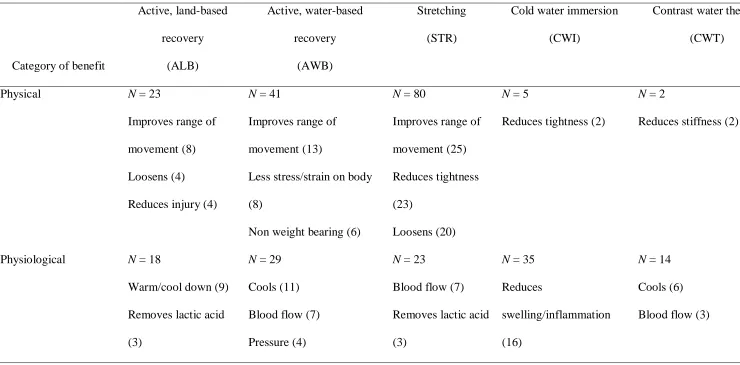
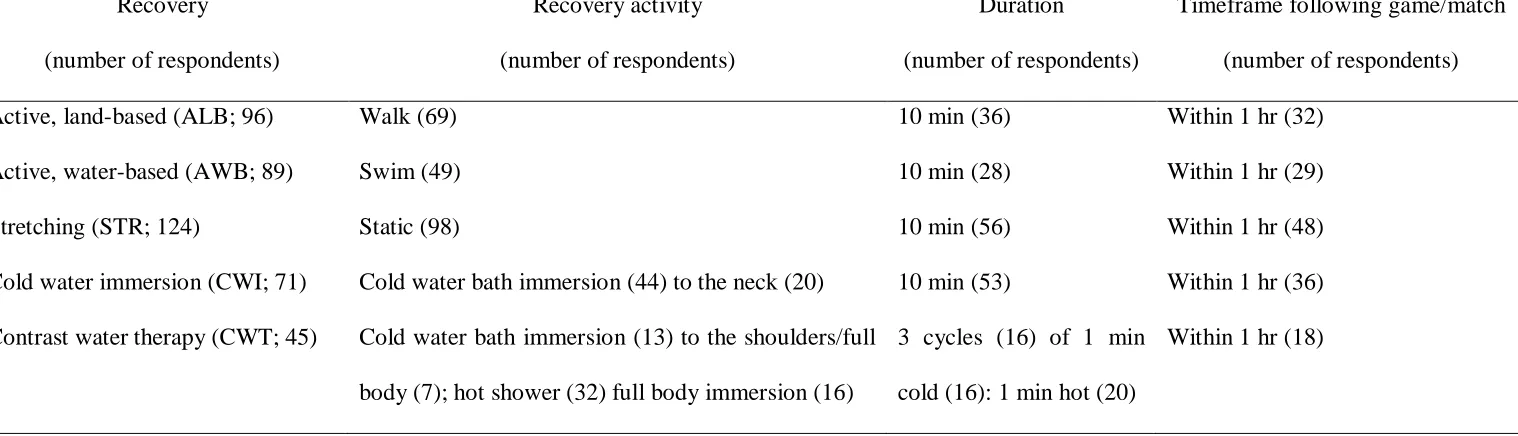
(11) competition levels utilised stretching (STR) the most (98% national, 79% state, 87% regional and 77% local athletes). Water immersion strategies were most often used by national and international athletes. Stretching was self-rated the most effective recovery strategy (4.4/5; where 5 = very effective) with active, land-based (ALB) considered the least effective by its users (3.6/5). Laziness and time constraints were the main selfreported reasons provided by those who did not undertake a specific recovery strategy. Water immersion strategies were considered effective or ineffective largely due to psychological reasons. In contrast STR and ALB were considered to be effective or ineffective mainly due to physical reasons. Results from Chapter 3 indicate that the perceptions of athletes on recovery strategy effectiveness did not always align with scientific evidence. The availability of particular recovery strategies may also affect recovery strategy selection. It is recommended that athletes and coaching staff are provided with up-to-date information on the effects of different recovery strategies to ensure informed decisions are made regarding recovery strategy selection. The aim of the second study (Chapter 4), a randomised controlled trial (RCT; N = 34), was to compare the effectiveness of CWI, CWT, ACT, a combination of cold water immersion and active recovery (COMB) and a control (CONT) condition after a single bout of simulated team-game circuit exercise (55 min). Performance and perceptual recovery indices were assessed over a 48 hr time period. Results suggest that CWI and COMB produced detrimental jump power performance at 1 hr compared to CONT and ACT, and thus should not be selected for short term recovery. It is likely that 1 hr was not sufficient time for muscles to rewarm after CWI and COMB resulting in decreased jump performance at this time. Findings also suggest CWT should be elected for short-term perceptual recovery after a team sport game. The heat component. ix.
(12) of CWT may have contributed to feelings of relaxation and accordingly enhanced perceptions of recovery. No between recovery differences were found at 24 and 48 hr post the simulated team-game circuit exercise. The aim of the third study (Chapter 5; N = 14) was to examine the use of CWI, CWT, ACT, COMB and CONT recovery across repeated small-sided games simulating acute tournament match-play (three 15 min efforts, 3 hr apart, with recovery after bouts 1 and 2) upon performance, perceptual and physiological indices of recovery over an 8 hr time period. Results indicated that CWT was superior to ACT for performance, and COMB was superior to ACT and CONT for perceptual recovery during the simulated tournament day. The ACT recovery was detrimental to performance and perceptual recovery and thus a similar ACT recovery protocol should not be elected for use in a team sport multiple-game tournament day. The mechanisms most likely associated with the beneficial CWT findings compared to ACT include a combination of the negative effects of ACT such as no rest and increased energy consumption and the positive effects of CWT such as the alternation between vasoconstriction and vasodilation. During a COMB recovery the actions of hydrostatic pressure and leg movement may assist with blood flow and enhanced perceptions of recovery. The ACT recovery is most likely detrimental during a tournament day due to the extra metres covered, adding to the experienced soreness and fatigue. The results of the RCTs question the high anecdotal use of CWI by national and international athletes as reported in the survey, with CWI found to have no positive effect upon performance or perception after a single bout of a simulated team sport or during a simulated tournament day.. x.
(13) In conclusion, the current research has highlighted the need for athlete and coach education on the effects of recovery strategies, noting the limitations associated with the inconclusive nature of evidence regarding the use of specific recovery strategies. Contrast water therapy is recommended to be used for short term perceptual recovery after a single team sport event. A COMB recovery should be elected for superior perceptual recovery over a team sport tournament day. The research presented in this thesis has significantly contributed to post-exercise recovery research by providing an overview of recovery strategy use by Australian-based team sport athletes and by providing evidence-based recommendations from trials that compare the effectiveness of various recovery strategies used by team sport athletes. These findings provide athletes and coaches with up-to-date information to assist with informed decision making about their recovery choices in particular sports and contexts. Recommendations for future research have also been identified, including investigation into whether performance or perceptual recovery is more important and whether individualised recovery is required for optimum team performance.. xi.
(14) Research Outputs Crowther, F., Sealey, R., Crowe, M., Edwards, A., & Halson, S. (2017). Team sport athletes' perceptions and use of recovery strategies: a mixed-methods survey study. BMC Sports Science, Medicine and Rehabilitation, 9(6). doi:10.1186/s13102-017-0071-3 Crowther, F., Sealey, R., Crowe, M., Edwards, A., & Halson, S. Effects of various recovery strategies on repeated bouts of simulated intermittent activity. Manuscript revised based on reviewer feedback and ready to be resent to reviewers. Crowther, F., Sealey, R., Crowe, M., Edwards, A., & Halson, S. Influence of recovery strategies upon performance and perceptions following fatiguing exercise: a randomized controlled trial. Manuscript under review. Peer-reviewed Conferences Crowther, F., Sealey, R., Crowe, M., Edwards, A., & Halson, S. (2014). Recovery techniques used by professional rugby league players. Exercise and Sports Science Australia Conference. Adelaide, Australia (Apr 2014). Pringle, F., Sealey, R., Edwards, A., & Crowe, M. (2013). A comparison of water immersion techniques and active recovery in promoting physical and perceptual recovery post-exercise: A systematic review. Science of Sport, Exercise and Physical Activity in the Tropics Conference. Cairns, Australia (Nov 2013).. xii.
(15) Table of Contents Statement of Sources..................................................................................................... ii Ethics Declaration ........................................................................................................ iii Acknowledgments ....................................................................................................... iv Statement on the Contributions of Others ...................................................................... v Abstract ..................................................................................................................... viii Research Outputs ........................................................................................................ xii List of Tables ............................................................................................................ xvii List of Figures ............................................................................................................ xix Glossary Terms of Key Recovery Strategies .............................................................. xxi Abbreviations and Units of Measurement .................................................................. xxii Chapter 1 ...................................................................................................................... 1 Introduction .................................................................................................................. 1 1.1 Background ......................................................................................................... 1 1.2 Cold Water Immersion......................................................................................... 6 1.3 Contrast Water Therapy ....................................................................................... 8 1.4 Active Recovery .................................................................................................. 9 1.5 Combined Recovery .......................................................................................... 10 1.7 The Metabolic Demands of Single and Repeated Team Sport Game Play .......... 11 1.8 Statement of the Problem ................................................................................... 15 1.9 Aims and Hypotheses ........................................................................................ 15 1.10 Thesis Format .................................................................................................. 16 1.11 Scope of the Thesis .......................................................................................... 17 1.12 Significance of this Study ................................................................................ 18 Chapter 2 .................................................................................................................... 20 A Systematic Review of the Effects of Cold Water Immersion, Contrast Water Therapy and Active Recovery on Performance and Perceptual Recovery .................................. 20 2.1 Abstract ............................................................................................................. 20 2.2 Introduction ....................................................................................................... 21 2.2.1 Active recovery. .......................................................................................... 22 2.2.2 Cold water immersion. ................................................................................ 23 2.2.3 Contrast water therapy. ................................................................................ 24 2.4 Methods............................................................................................................. 26. xiii.
(16) 2.3.1 Eligibility criteria and study selection. ......................................................... 26 2.3.2 Methodological quality assessment.............................................................. 28 2.3.3 Included article review. ............................................................................... 28 2.4 Results ............................................................................................................... 29 2.4.1 Methodological quality assessment.............................................................. 29 2.4.2 Study and population characteristics. ........................................................... 29 2.4.3 Characteristics of the fatigue inducing protocols. ......................................... 46 2.4.4 Characteristics of the control condition. ....................................................... 46 2.4.5 Characteristics of cold water immersion. ..................................................... 46 2.4.6 Characteristics of contrast water therapy. .................................................... 47 2.4.7 Characteristics of active recovery. ............................................................... 47 2.4.8 Cold water immersion effects on performance. ............................................ 48 2.4.8.1 Effects on anaerobic performance. ........................................................ 48 2.4.8.2 Effects on endurance. ............................................................................ 49 2.4.8.3 Effects on time to failure/exhaustion. .................................................... 49 2.4.9 Cold water immersion effects on perceptions............................................... 49 2.4.9.1 Effects on muscle soreness. ................................................................... 49 2.4.9.2 Effects on rating of perceived exertion (RPE). ...................................... 49 2.4.9.3 Effects on other perception measures. ................................................... 49 2.4.10 Contrast water therapy effects on performance. ......................................... 50 2.4.10.1 Effects on anaerobic performance. ...................................................... 50 2.4.10.2 Effects on time to failure. .................................................................... 51 2.4.11 Contrast water therapy effects on perceptions. ........................................... 51 2.4.11.1 Effects on muscle soreness. ................................................................. 51 2.4.11.2 Effects on RPE.................................................................................... 51 2.4.11.3 Effects on other perception measures. ................................................. 51 2.4.12 Active recovery effects on performance. .................................................... 52 2.4.13 Active recovery effects on perceptions. ..................................................... 52 2.5 Discussion ......................................................................................................... 52 2.5.1 Recovery effects on performance. ............................................................... 53 2.5.2 Recovery effects on perceptions. ................................................................. 55 2.6 Conclusion ........................................................................................................ 57 Chapter 3 .................................................................................................................... 59 Team Sport Athletes’ Understanding of Recovery Strategies ....................................... 59 xiv.
(17) 3.1 Abstract ............................................................................................................. 59 3.2 Introduction ....................................................................................................... 60 3.3 Methods............................................................................................................. 61 3.3.1 Statistical analyses ...................................................................................... 66 3.4 Results ............................................................................................................... 66 3.5 Discussion ......................................................................................................... 79 3.6 Conclusion ........................................................................................................ 83 Chapter 4 .................................................................................................................... 85 Influence of Recovery Strategies on Performance and Perceptions Following a Single Simulated Team-game Fatiguing Exercise .................................................................. 85 4.1 Abstract ............................................................................................................. 85 4.2 Introduction ....................................................................................................... 86 4.3 Methods............................................................................................................. 88 4.3.1 Statistical analyses ...................................................................................... 94 4.4 Results ............................................................................................................... 94 4.5 Discussion ....................................................................................................... 101 4.6 Conclusion ...................................................................................................... 107 Chapter 5 .................................................................................................................. 109 Effects of Various Recovery Strategies on Repeated Simulated Small-sided ............. 109 Team Sport Demands ................................................................................................ 109 5.1 Abstract ........................................................................................................... 109 5.2 Introduction ..................................................................................................... 110 5.3 Methods........................................................................................................... 112 5.3.1 Statistical analyses .................................................................................... 122 5.4 Results ............................................................................................................. 123 5.5 Discussion ....................................................................................................... 136 5.6 Conclusion ...................................................................................................... 140 Chapter 6 .................................................................................................................. 141 General Discussion ................................................................................................... 141 6.1 Summary of Contrast Water Therapy Findings ................................................ 141 6.2 Summary of Cold Water Immersion Findings .................................................. 142 6.3 Summary of Active Recovery Findings............................................................ 144 6.4 Summary of Overall Findings .......................................................................... 144 6.5 Recommended Sport Applications ................................................................... 146 xv.
(18) 6.6 Strengths and Limitations ................................................................................ 150 6.7 Future Research ............................................................................................... 151 6.8 Conclusion ...................................................................................................... 152 References ................................................................................................................ 154 Appendices ............................................................................................................... 175 Appendix A: Chapter 2 Systematic Review Results Tables .......................................... Appendix B: Ethics Approval - Team Sport Athletes’ Understanding of Recovery Strategies ..................................................................................................................... Appendix C: Chapter 3 Survey .................................................................................... Appendix D: Ethics Approval - Influence of Recovery Strategies on Performance and Perceptions Following a Single Simulated Team-game Fatiguing Exercise .................. Appendix E: Chapter 4 and 5 DALDA Questionnaire .................................................. Appendix F: Chapter 4 and 5 Ratings of Perceived Exertion and Total Quality Recovery Scale ........................................................................................................................... Appendix G: Chapter 4 and 5 Soreness Scale .............................................................. Appendix H: Ethics Approval - Effects of Various Recovery Strategies on Repeated Simulated Small-sided Team Sport Demands .............................................................. Appendix I: Chapter 5 Karolinska Sleepiness Scale ..................................................... Appendix J: Chapter 5 Sleep Quality Scale ................................................................... xvi.
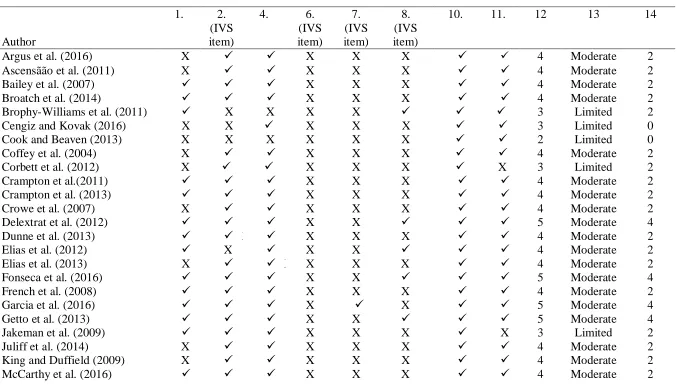
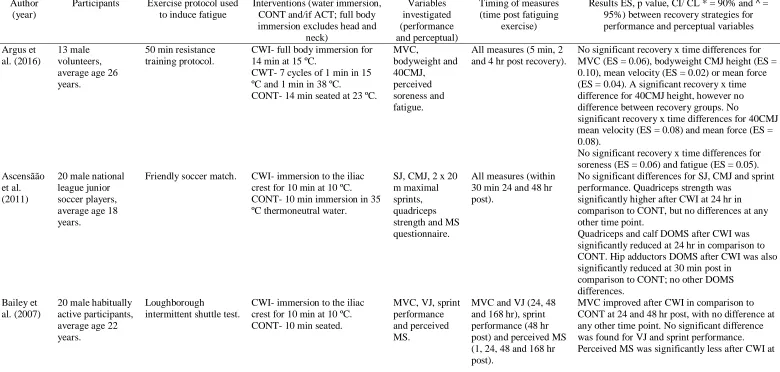
(19) List of Tables Table 2.1 PEDro quantitative methodological quality scores (adapted from Hing et al., 2008) for the 37 articles included in the systematic review............................................31 Table 2.2 Performance and perceptual variables assessed in the included systematic review articles..................................................................................................................33 Table 2.3 Study characteristics and outcomes of the articles included in the systematic review (n = 37)................................................................................................................34 Table 3.1 Mean (SD) participant (users of the recovery strategy) ratings (1-5) of the importance of different reasons why specific recovery strategies are used; 1 = not important reason; 3 = neither important nor unimportant reason; 5 = very important reason..............................................................................................................................73 Table 3.2 Number of total responses and the popular response themes from free text answers for the perceived effectiveness of five recovery strategies................................75 Table 3.3 Most popular post-game/match recovery session details (as assessed by statistical mode)...............................................................................................................78 Table 4.1 Participant minimum detectable change results.............................................96 Table 4.2 Sit and reach flexibility and total sprint time assessed at baseline and 1 hr, 24 hr and 48 hr after fatiguing exercise for each of the different recovery strategies.........97 Table 4.3 Countermovement jump relative best power (W/kg) assessed at baseline and 1 hr, 24 hr and 48 hr after fatiguing exercise for each of the different recovery strategies..........................................................................................................................99. xvii.
(20) Table 4.4 Total quality recovery assessed at baseline and 1 hr, 24 hr and 48 hr after fatiguing exercise for each of the different recovery strategies....................................100 Table 4.5 Muscle soreness assessed at baseline and 1 hr, 24 hr and 48 hr after fatiguing exercise for each of the different recovery strategies....................................................101 Table 5.1 Participant minimum detectable change results...........................................125 Table 5.2 Total repeated sprint time assessed at baseline, 5 min after and 75 min after (excluding bout 3) three bouts of simulated intermittent activity for each of the different recovery strategies.........................................................................................................127 Table 5.3 Relative average and best CMJ power assessed at baseline, 5 min after and 75 min after (excluding bout 3) three bouts of simulated intermittent activity for each of the different recovery strategies....................................................................................129 Table 5.4 Total quality recovery assessed at baseline, 5 min after and 75 min after (excluding bout 3) three bouts of simulated intermittent activity for each of the different recovery strategies.........................................................................................................130 Table 5.5 Muscle soreness assessed at baseline, 5 min after and 75 min after (excluding bout 3) three bouts of simulated intermittent activity for each of the different recovery strategies........................................................................................................................132 Table 6.1 Recovery strategy recommendations for performance recovery...................148 Table 6.2 Recovery strategy recommendations for perceptual recovery......................149. xviii.
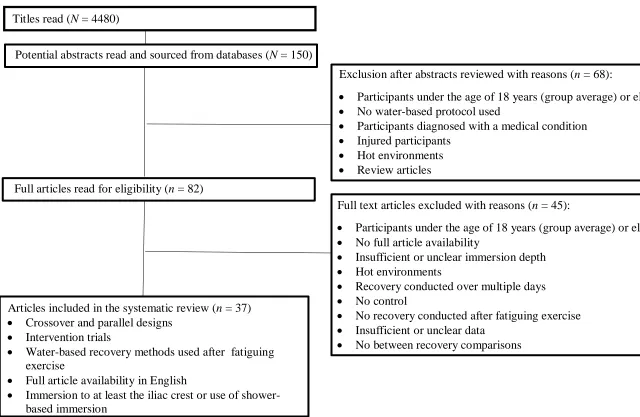
(21) List of Figures Figure 2.1. Flow diagram of the inclusion and exclusion process for selecting articles to be included in the systematic review...............................................................................27 Figure 3.1. Major sport and level of competition of survey participants........................63 Figure 3.2. Recovery strategies undertaken by team sport athletes competing in local, regional, state, national and international competition....................................................68 Figure 3.3. Active-land based recovery usage by different levels of competition athletes.............................................................................................................................69 Figure 3.4. Active-water based recovery usage by different levels of competition athletes.............................................................................................................................69 Figure 3.5. Cold water immersion recovery usage by different levels of competition athletes.............................................................................................................................70 Figure 3.6. Contrast water therapy recovery usage by different levels of competition athletes.............................................................................................................................70 Figure 4.1. Diagram of the simulated team-game fatiguing circuit adapted from Singh and colleagues (2010) and Bishop and colleagues (2001)..............................................92 Figure 4.2. A comparison of countermovement jump relative average power (SD) of all recovery strategies across all time points........................................................................98 Figure 5.1. Schematic diagram of the variables and timings of the testing day...........116. xix.
(22) Figure 5.2. Movement patterns per circuit (adapted from Suarez-Arrones et al., 2012)..............................................................................................................................120 Figure 5.3. Mid-calf girth measured at baseline, immediately after and 75 min after three bouts (not bout 3) of fatiguing exercise for each of the different recovery strategies........................................................................................................................133 Figure 5.4. Blood lactate concentration measured at B2pre4, B2post4 and B2post4recovery for each of the different recovery strategies......................................134. xx.
(23) Glossary Terms of Key Recovery Strategies Term Active recovery. Definition A recovery that involves low-intensity movement of the body, e.g. walking, jogging.. Cold water immersion. Immersion in cold water.. Combined recovery. A combination of cold water immersion and active recovery.. Contrast water therapy. Alternation between immersion in cold water and hot water.. Control recovery. Passive recovery, e.g. seated rest.. xxi.
(24) Abbreviations and Units of Measurement Abbreviation. Full term. ACT. Active recovery. ALB. Active, land-based recovery. ASIS. Anterior superior iliac spine. ATP. Adenosine triphosphate. AWB. Active, water-based recovery. bpm. Beats per minute. CI. Confidence interval. CMJ. Countermovement jump. COMB. Combined recovery. CONT. Control recovery. CWI. Cold water immersion. CWT. Contrast water therapy. DALDA. Daily analysis of life demands for athletes. DOMS. Delayed onset muscle soreness. EMG. Electromyography. hr. Hour. HWI. Hot water immersion. IVS. Internal validity scale. kg. Kilogram. kJ. Kilojoule. m. Metre. max. Maximum. xxii.
(25) MDC. Minimum detectable change. min. Minute. mmol/L. Millimole per litre. Predicted. Predicted maximal oxygen consumption calculated from the multi-stage. V̇O2 max. fitness test (Section 4.3) or the yo-yo intermittent recovery test (Section 5.3).. r. Correlation value. RCT. Randomised controlled trial. RPE. Rating of perceived exertion. RPErec. Rating of perceived exertion recovery. SD. Standard deviation. sec. Second. SJ. Squat jump. STR. Stretching. TQR. Total quality recovery. W. Watts. xxiii.
(26) Chapter 1 Introduction 1.1 Background A structured, post-exercise recovery routine may be undertaken by athletes for a number of reasons, including reducing the risk of injury and fatigue, and to increase the ability to perform at one’s best in their next game/training session (Barnett, 2006; Hing, White, Bouaaphone, & Lee, 2008). Without adequate recovery, delayed onset muscle soreness (DOMS) may occur, which could induce a number of symptoms such as muscle tenderness, debilitating pain and a reduction in joint range of motion (Cheung, Hume, & Maxwell, 2003), all of which may contribute to subsequent, decreased performance. Although recovery strategies have played an integral role in post-exercise routines for many years particularly following competitive sport, the effectiveness of different recovery strategies is difficult to assess and define. Various physical, perceptual and physiological variables have thus far been used as indicators to test the extent of recovery strategy effectiveness, such as a treadmill run to exhaustion, rating of perceived exertion recovery, blood lactate, (Coffey, Leveritt, & Gill, 2004) countermovement jump (CMJ), repeated sprint ability, overall fatigue, leg soreness, (Delextrat, Calleja-González, Hippocrate, & Clarke, 2012), 20 m sprint, vertical jump and perceived soreness (Getto & Golden, 2013). Of these variables, no clear empirical evidence exists as to which variables are considered the most important indicators of recovery for athletes and coaches across a range of sports and competition levels. This is likely to vary depending on the type of activity undertaken (type of sport, duration, intensity etc), the context of the activity (repeated, single) and individual attributional style.. 1.
(27) Although it is generally accepted that athletes undertake different types of postexercise recovery strategies, both in response to the same task and also across different activities, to the authors’ knowledge there is currently no comparative research available to describe which recovery strategies are used by Australian athletes across a range of team sports and competition levels. It is also unclear why athletes undertake recovery strategies and believe they are effective or ineffective. For many years, recovery strategies have been recommended in sports trainer course manuals (e.g. Sports Medicine Australia, 2007) and have been encouraged by mainstream media (Christian, n.d.) to be part of post-exercise routines. A variety of recovery strategies are utilised by athletes, some of which include: cold water immersion (CWI), contrast water therapy (CWT), active recovery (ACT), stretching (STR), massage, compression garments, electrostimulation, cryotherapy, pool recovery, sleep, nutrition, fluid replacement, ice application, heat application, gel application, progressive muscle relaxation, prayer, music, reflexology, acupuncture, supplements and medications (Halson, 2013; Simjanovic, Hooper, Leveritt, Kellmann, & Ryne, 2009; Venter, Potgieter, & Barnard, 2010). During the 1960’s scientific investigation into recovery strategies began with research published on the effectiveness of post-exercise STR (Devries, 1961) and the effects of ACT on lactate removal and oxygen debt (Gisolfi, Robinson, & Turrell, 1966). These studies reported early evidence of the effectiveness of these recovery strategies which have continued to be investigated in recent times (Bielik, 2010; Monedero & Donne, 2000; Watts, Daggett, Gallagher, & Wilkins, 2000; Wiltshire et al., 2010). Massage, CWI, CWT and a combination of active and cold water immersion (COMB) post-exercise recovery research began appearing in the 1990s (Cafarelli, Sim, Carolan, & Liebesman, 1990; Eston & Peters, 1999; Hudson, Loy, Vincent, & Yaspelkis III, 1999; Kuligowski, Lephart, Giannantonio, & Blanc, 1998; Martin, Zoeller, Robertson, & Lephart, 1998); and continues today (Coffey et al., 2004; Crampton, Egaña, 2.
(28) Donne, & Warmington, 2014; Farr, Nottle, Nosaka, & Sacco, 2002; Getto & Golden, 2013; Gill, Beaven, & Cook, 2006; Juliff et al., 2014; Versey, Halson, & Dawson, 2011; White, Rhind, & Wells, 2014) with contrasting effectiveness noted. The use of compression garments (Duffield, et al., 2008; Jakeman, Byrne, & Eston, 2010; Kraemer et al., 2010), electrostimulation (Lattier, Millet, Martin, Martin, & 2004; Malone, Coughlan, Crowe, Gissane, & Caulfied, 2012; Vanderthommen, Makrof, & Demoulin, 2010) and cryotherapy (Costello, Algar, & Donnelly, 2012; Hausswirth et al., 2011) as post-exercise recovery strategies have also been investigated in recent years with contrasting results, as athletes and support staff search for novel, alternative, superior recovery strategies that may provide a competitive edge. In addition to ongoing experimental research on the various recovery strategies, numerous reviews have been published in an effort to compare, contrast and synthesise the available evidence (Barnett, 2006; Howatson & van Someren, 2008; Kovacs & Baker, 2014; Nédélec et al., 2013; Torres, Ribeiro, Duarte, & Cabri, 2012). These reviews show conflicting findings that are often dependant on the recovery strategy protocol, the type and intensity of the fatiguing stimulus and the recovery outcome variables used in the experiment. Reviews focussed on stretching and massage have resulted in varying conclusions. While Barnett (2006) and Nédélec and colleagues (2013) reported no effect upon postrecovery performance and perceptual responses; other reviews have deduced that both stretching and massage improved perceptions of muscle soreness (Howatson and van Someren, 2008; Torres at el., 2012). A number of systematic reviews have investigated massage and found it to produce inconclusive results, thus more research has been recommended to confirm whether it is an effective recovery strategy or not (Best, Hunter, Wilcox, & Haq, 2008; Ernst, 1998; Hemmings, 2001). Kovacs and Baker (2014) found compression garments to assist in tennis performance, while in contrast Nédélec and 3.
(29) colleagues (2013) identified no benefit for soccer recovery. All reviews on electromyostimulation (Barnett, 2006; Kovacs & Baker, 2014; Nédélec et al., 2013; Howatson and van Someren, 2008) and non-steroidal anti-inflammatory drugs (Barnett, 2006) concluded that no benefit to recovery was evident. Maintaining good hydration, diet and sleep patterns however, have all been shown to be of benefit to recovery (Kovacs & Baker, 2014; Nédélec et al., 2013). Recovery strategies such as achieving quality sleep, good hydration and wellbalanced food consumption may be considered by some athletes to be a normal daily process that follows competition and/or training, and not as a deliberate recovery strategy. Nevertheless, they are important aspects of post-exercise behavior that should not be neglected in the study of recovery. In contrast, dedicated post-exercise interventions such as water immersion recovery strategies and ACT are recovery choices undertaken with the specific purpose of recovery, and are strategies that can be undertaken as a team and hence will be investigated further in this thesis. 1.2 Physiological Response to Exercise The body responds to intense exercise in a number of different ways. Firstly, adenosine triphosphate (ATP) synthesis and oxygen consumption are increased in order to support greater metabolic work (Powers & Howley, 2004). If exercise is prolonged and intense, there will also be an increase in heart rate to supply necessary oxygen to working muscles and elevated hydrogen ion concentration due to carbon dioxide and lactate formation, causing a decrease in blood pH (McArdle, Katch & Katch, 2010). Acidosis which is an increase in hydrogen concentration (decreased pH) is associated with sensations of pain and discomfort emanating from active muscles (McArdle, et al., 2010), causing a reduction in performance. As the body requires more ATP, an accumulation of inorganic phosphate from creatine phosphate and ATP breakdown may hinder the release of calcium from the 4.
(30) sarcoplasmic reticulum and potentially the release of inorganic phosphate from myosin during the power stroke of the cross bridge cycle, causing decreased muscle activation (Marieb & Hoehn, 2013). Athletes may also feel a reduction in the desire to continue exercise, which may be due to central fatigue. Central fatigue is a type of fatigue that is associated with alterations of the central nervous system (CNS) which may impact upon sensation of effort, mood and tolerance to discomfort and pain (Meeusen, Watson, Hasegawa, Roelands, & Piacentini, 2006). The exact cause of central fatigue is still highly debated (Meeusen et al., 2006; Edwards & Polman, 2012). Peripheral fatigue may also be experienced; which is fatigue occurring in the muscles (Edwards & Polman, 2012). This type of fatigue is caused by events that occur independently of the CNS, such as disturbances to excitation-contraction coupling, neuromuscular transmission and sarcolemma excitability (Meeusen et al., 2006). Meeusen and colleagues (2006) state that fatigue is a complex interaction between both peripheral and central factors that mutually influence each other. The following processes must take place after fatiguing exercise for normal muscle function to be restored; oxygen in myoglobin must be restored, accumulated lactate needs to be reconverted to pyruvic acid, the replenishment of glycogen stores and the resynthesis of ATP and creatine phosphate stores (Marieb & Hohen, 2013). For the body to undertake these restorative process, excess oxygen must be taken in via a process called excess postexercise oxygen consumption (Marieb & Hohen, 2013; Martini, 2005). It is important that a postexercise recovery is able to restore normal muscle function as discussed. The following is a brief summary of major research findings and associated physiological and perceptual mechanisms for CWI, CWT, ACT and COMB recovery. 5.
(31) strategies. A detailed critical appraisal and discussion of the literature is presented in Chapter 2. 1.3 Cold Water Immersion Cold water immersion elicits physiological changes within the body, caused by the effects of hydrostatic pressure and the cold temperature of the water. Hydrostatic pressure is the compressive force that acts upon the body when immersed (Wilcock, Cronin, & Hing, 2006) due to the weight of the water. The external hydrostatic pressure due to water causes the gases and liquids within the body to become compressed and to move to areas of lower pressure (Wilcock et al., 2006). This allows fluids from the intracellular spaces to move to the blood and facilitates venous return (Kaczmarek, Mucha, & Jarawka, 2013), increases cardiac output and reduces peripheral resistance (Wilcock et al., 2006). Exercise can cause localised oedema due to tissue damage in working muscles. Oedema may result in the activation of pain receptors (Kaczmarek et al., 2013), thus eliciting post-exercise soreness or tenderness in the muscles stressed by exercise. It is plausible that hydrostatic pressure could reduce oedema via a pressure gradient-induced reduction in inflammatory cell influx into fatigued or damaged muscle (Wilcock et al., 2006). A reduction to oedema could therefore better sustain normal blood flow and may result in enhanced nutrient delivery for muscle recovery, while less swelling would also decrease limb pain, which in turn would enhance the perception of recovery (Wilcock et al., 2006) and potentially performance. Exposure of the body to cold water when immersed redirects blood from the periphery to the core to maintain core body temperature via peripheral vasoconstriction (Wilcock et al., 2006). Peripheral vasoconstriction increases venous return, stroke volume, and cardiac output (White & Wells, 2013). Vasoconstriction also reduces oedema (Wilcock et. 6.
(32) al., 2006). It is assumed that the peripheral vasoconstriction decreases fluid diffusion and therefore combines with the effect of hydrostatic pressure to further reduce muscle inflammation and reduce pain perception. If the body is immersed in water that is cold enough and for a sufficient time to induce tissue cooling, reduced pain (analgesia) may also occur as a result of a reduction in the neurotransmitter rate due to a decrease in the production of acetylcholine (Kaczmarek et al., 2013). The analgesic effect may allow for mobility with reduced pain (White & Wells, 2013). While CWI therefore could enhance performance recovery via a combination of physiological changes within the body, it should be noted that an increase in metabolism (Wilcock et al., 2006) and oxygen consumption (Ishan, Watson, & Abbiss, 2016) may occur as a protective effect to maintain core temperature if shivering commences. This would result in greater energy expenditure and perhaps production of waste products that could be counterproductive for post-exercise performance (Wilcock et al., 2006). The characteristics of a CWI strategy (temperature, immersion depth, duration and frequency) should therefore be carefully considered to optimise recovery. Numerous studies have investigated the effects of CWI upon performance, perceptual and physiological recovery. Cold water immersion has been identified to improve postrecovery performance (Kaczmarek, et al., 2013; Kovacs & Baker, 2014; Nédélec et al., 2013; Poppendieck, Faude, Wegmann, & Meyer, 2013), or to have no effect upon performance recovery (Cook & Beaven, 2013; Versey, Halson, & Dawson, 2013) and to detrimentally effect performance recovery (Crowe, O’Connor, & Rudd, 2007). Cold water immersion has also been shown to improve perceptual recovery (Diong & Kamper, 2013; Hohenauer, Taeymans, Baeyens, Clarys, & Clijsen, 2015; Leeder, Gissane, van Someren, Gregson, & Howatson, 2012; Machado et al., 2015), and in contrast to have no effect upon this variable (Crowe et al., 2007; Parouty et al., 2010). Cold water immersion has also been shown to. 7.
(33) improve the acute inflammatory process from muscle damage (Nédélec et al., 2013), and not improve blood lactate accumulation (Dunne, Crampton, & Egaña, 2013; Parouty et al., 2010; Pointon & Duffield, 2012). Methodological details and the results of studies that investigate CWI are critically appraised and compared in detail in Chapter 2. 1.4 Contrast Water Therapy Contrast water therapy impacts upon the body in different ways, due to the physiological effects of hydrostatic pressure, cold and hot temperatures of the water immersion. The effects of hydrostatic pressure and the cold temperature have already been discussed in Section 1.2. The hot component of CWT has the opposing temperature-based effect of CWI in regards to exposure to hot water which increases vasodilation, which in turn increases circulation (Cochrane, 2004) and the supply of oxygen to the muscles (Vaile, Gill, & Blazevich, 2007), which as discussed earlier is a vital component of recovery. The transitions from CWI (vasoconstriction) to hot water (vasodilation) may also cause movement of blood flow in the muscles, leading to attenuation of the immune response and reduce myocellular damage (Vaile et al., 2007). By stimulating circulation, CWT may also cause movement of blood from the extremities due to a decrease in skin temperature and up-regulated sympathetic activity when alternating from hot to cold (Vaile, et al., 2007). The physiological effects that CWT have upon the body may not only affect performance recovery but also perceptual recovery. This is likely due to the hot water component, as passive immersion in warm water has often been reported to have a relaxing, therapeutic effect upon the body (Kovacs & Baker, 2014). According to the gate control theory, warm water stimulates the thermoreceptors which could close the ‘pain gate’ and decrease pain perception (Lane & Latham, 2009). Thermal sensation transmission is faster than pain impulses, thus reducing perceived pain (Lane & Latham, 2009). 8.
(34) A number of systematic reviews have investigated the effect of CWT (Barnett, 2006; Bieuzen, Bleakley, & Costello, 2013; Cochrane, 2004; Hing et al., 2008). Contrast water therapy was reported to improve performance recovery (Bieuzen et al., 2013; Coffey et al., 2004; Crampton, Donne, Warmington, & Egaña, et al., 2013), while in contrast, others report no effect upon performance recovery (Barnett, 2006; Versey et al., 2013; Juliff et al., 2014). Perceptual recovery was found to be improved after CWT (Juliff et al., 2014; King & Duffield, 2009) and also to be unaffected by CWT (Coffey et al., 2004; Juliff et al., 2014; Vaile et al., 2007). Physiological recovery as indicated by lactate post-exercise (Coffey et al., 2004) and thigh volume were found to be decreased after the use of CWT in comparison to a control condition (Vaile et al., 2007). Methodological details and the results of studies that investigate CWT are critically appraised and compared in detail in Chapter 2. 1.5 Active Recovery Active recovery involves post-exercise low intensity exercise as a ‘winding down’ mechanism employed by athletes that was initially thought to be effective in reducing postexercise blood lactate accumulation, due to quicker lactate distribution to the liver for oxidation or reconversion to glycogen, and increased heart and skeletal muscle lactate utilisation (Gisolfi et al., 1966). Active recovery has also been found to sustain post-exercise blood flow (Gill et al., 2006), at a time when passive recovery processes promote reductions in circulatory parameters. Active recovery is usually a weight bearing recovery which may cause more fatigue and decrease recovery perceptions compared to a passive, seated recovery. Furthermore, this in-motion recovery technique may not give athletes the feeling of ‘recovery’ they are seeking post-exercise. Of concern is that ACT has been found to reduce glycogen resynthesis, likely due to the reliance on these glycogen stores as energy to complete the recovery (Choi, Cole, Goodpaster, Fink, & Costill 1994). Further, it has been suggested that ACT may require additional energy stores (Cochrane, 2004). 9.
(35) Active recovery has been found to improve post-recovery performance (Bielik, 2010; Bogdanis et al., 1996), have no effect upon performance recovery (Barnett, 2006; Nédélec et al., 2013; Stacey, Gibala, Martin Ginis, & Timmons, 2010), and also to inhibit performance recovery (Crampton et al., 2013). Similarly, perceptual recovery has been shown to be improved after ACT (Draper, Bird, Coleman, & Hodgson, 2006), be unaffected by ACT (Crampton et al., 2013), and inhibited after ACT (King & Duffield, 2009). Physiological recovery as measured by lactate was also decreased after ACT (Hudson et al., 1999; Martin et al., 1999) and unaffected by ACT (Stacey et al., 2010). The differences in the effectiveness of ACT may also relate to the duration and intensity of the ACT recovery and the context in which it is used. An ACT recovery of longer duration and higher intensity will potentially use more energy stores and place more stress on the body than a shorter duration and lower intensity ACT recovery. A lengthy ACT could be detrimental if used between events with little recovery time. Methodological details and the results of studies that investigate ACT recovery are critically appraised and compared in detail in Chapter 2. 1.6 Combined Recovery A COMB recovery combines CWI and ACT, thus a variety of physiological processes are likely to occur. To the authors’ knowledge there is currently no conclusive information on the physiological mechanisms of a COMB recovery. However, it is likely to encompass the effects previously discussed for CWI and ACT. As previously discussed hydrostatic pressure increases cardiac output and reduces peripheral resistance. Cold water may also induce peripheral vasoconstriction, which increases venous return, stroke volume, and cardiac output as well as reducing the potential for oedema. Cold water immersion may also assist with perceptions of recovery due to the induced analgesia. The ACT recovery component may also assist with blood lactate removal post exercise due to the increased blood flow to the muscles. All of these processes may work together to provide a recovery that combines the effects of a 10.
(36) water immersion and ACT recovery without the strain placed on the body as in a traditional ACT recovery. It has also been suggested in a COMB recovery that hydrostatic pressure may induce an oscillating shift in blood volume due to the movement of the lower limb during COMB (Hudson et al., 1999). As COMB recovery is relatively new compared to the other recovery strategies discussed above there is limited research available. A combined recovery has been reported to have no effect upon performance recovery (Cortis, Tessitore, Artibale, Meeusen, & Capranica, 2010; Getto & Golden, 2013; Crampton et al., 2014). The combined recovery has also been shown to improve perceptual recovery (Hudson et al., 1999; Kinugasa & Kilding, 2009) and physiologically to be effective at removing blood lactate post-exercise (Ferreira, Da Silva Carvalh, Barroso, Szmuchrowski & Śledziewski, 2011; Hudson et al., 1999). As initial research findings are inconclusive, further research is required to determine the efficacy of the COMB recovery strategy. In summary, equivocal research evidence exists for the effectiveness of each of the above discussed recovery strategies for performance and perceptual recovery, thus further research is required to clarify their effectiveness. 1.7 The Metabolic Demands of Single and Repeated Team Sport Game Play Many team sport athletes play one competition game a week, while some popular team sports have now also introduced high-intensity condensed competition play, such as rugby sevens (rugby union), rugby league nines (rugby league) and Twenty20 (cricket) tournaments. Both traditional rugby union (one game each week) and rugby sevens (condensed competition game play) schedules impose different types of demands upon the athlete. An analysis of the demands of an elite out-of-season rugby union game (80 min) has shown that rugby union players spend 1% of the time at 0-60% of max HR, 3% at 60-70% of max HR, 15% at 70-80% of max HR, 35% at 80-90% of max HR, 36% at 90-95% of max HR and 10% at 95-100% of max HR (Cunniffe, Proctor, Baker, & Davies, 2009). In the same 11.
(37) game players covered 6953 m, expended on average 7.5 MJ of energy and had 118 impacts (total of heavy 7-8 g, very heavy 8-10 g and severe impacts >10 g; average values were calculated from a forward and back position data; Cunniffe et al., 2009). The estimated oxygen consumption throughout a rugby union game was found to be 45.5 ml/kg/min and the average percentage of VO2 max was 84% (Cunniffe et al., 2009). Relative peak concentric power and jump height have been found to still be reduced 12 and 36 hr after a professional rugby union game (West et al., 2014b), indicating that subsequent performance is impacted upon by prior game fatigue. During a rugby sevens competitive club-level game approximately 1% of the game was spent at 0-60% of max HR, 2 % at 61-70% of max HR, 14% at 71-80% of max HR, 46% at 81-90% of HR, 28% at 91-95% of max HR and 10% at 96-100% of max HR (SuarezArrones, Nunez, Portillo, & Mendez-Villanueva, 2012). Players covered a distance of approximately 1580 m in the 14 min game and had 22 impacts (total of heavy, very heavy and severe impacts as classified earlier; data was calculated from a number of different positions; Suarez-Arrones et al., 2012). Jump height remained reduced at 12 and 60 hr after the last game of the tournament (5 games) for elite rugby sevens players, creatine kinase levels also remained raised throughout the tournament (West et al., 2014a). Unfortunately, research evidence has not yet identified oxygen consumption, average VO2 max and total energy expenditure in response to a rugby sevens game or a tournament. The number of games in a rugby sevens tournament and the timing of games vary around the world with most competitions consisting of teams playing 5 to 9 games over 2-3 days. If all games in the tournament were played at the same intensity and tactics as the game that was analysed above approximately 7900 m -14, 220 m would be covered and 110-198 contacts made by a rugby sevens athlete in a tournament (36-60 hours approximately; 5-9 games over 2-3 days). In comparison to a tradition rugby union game, it would take rugby sevens athletes five 12.
(38) condensed games to cover the same amount of distance covered in a traditional game and six condensed games to reach the same number of impacts. Rugby union facilitates seven, and rugby sevens five substitutions during a game. Upon comparison of these different types of game play of rugby union (a typical rugby union game and a 2-3 day rugby sevens tournament; including 5-9 games), players have been found to spend a similar amount of time in each HR zone (Suarez-Arrones et al., 2012; Cunniffe et al., 2009). One of the major differences between these game types is the distance covered of 6983 m and 118 contacts in a rugby union game and up to 14, 220 m covered in a rugby sevens tournament and up to 198 contacts. These differences are due to the substantial difference of one 80 min game and 75-135 min cumulated time in a rugby sevens tournament (5-9 shorter games over 2-3 days). Based on the available load data, once rugby sevens players have competed in 6 games within a tournament weekend they will have exceeded the physical load associated with a traditional game. Perhaps the most important difference between the two types of competitions is the recovery time. A rugby sevens tournament requires players to be able to play games back to back in a short period of time (games approximately 3 hr apart during a tournament day over 2-3 days). Whereas after a rugby union game, players are not normally required to play another game for a number of days and will normally commence a training session the following day. This may have implications for recovery when the number of impacts is considered. If an athlete competes at the higher end of the scheduled rugby sevens games in a tournament, the higher number of impacts compared to the 80 min game would likely contribute to greater muscle damage, bruising, oedema and fatigue experienced by players and therefore reduced physical performance in each consecutive game over the tournament days.. 13.
(39) Due to the intensity and nature of rugby union and that jump variables were still decreased 12 hr and 36 hr (traditional) and 12 hr and 60 hr (rugby sevens) after performance it is vital that an effective recovery strategy be utilized by players. Due to the high number of impacts in both a traditional rugby union format and rugby sevens, CWI recovery strategies may be beneficial to help reduce oedema and enhance subsequent game play and training. In contrast, an ACT recovery after each game in a rugby sevens tournament may utilize energy stores, whereas after a single rugby union game it may still be an effective recovery option. Perceptual recovery is of high importance for all athletes, especially those that play rugby sevens with limited time between games. A water immersion recovery may assist with this perceptual recovery, specifically by inducing analgesia. A non-weight bearing recovery such as water immersion may also assist with the reduction of fatigue experienced by players. In contrast, an ACT recovery after each game in a rugby sevens tournament may induce feelings of fatigue in players, whereas after a single rugby union game it may still be an effective recovery option. In summary there are potential differences between the demands of a single rugby union game and a rugby sevens competition, depending on the number of games played in the rugby sevens competition. The difference in the time available to recover is the key difference. The rugby sevens athlete plays numerous games in a short time span and therefore require rapid recovery, whereas the traditional rugby union game athlete will play one game per week and therefore may have a schedule that allows for a more gradual (e.g. 24 hr) recovery. Thus it is imperative that the use of recovery strategies during these two types of competition are analysed separately.. 14.
(40) 1.8 Statement of the Problem Although anecdotally many athletes undertake post-exercise recovery, to the authors’ knowledge there is currently no published research available about the use of recovery strategies by Australian athletes. Thus further investigation into the use of recovery strategies by Australian athletes is warranted. The contrasting results of recovery strategies also show that more research is needed to compare CWI, CWT, ACT, COMB and CONT. Furthermore, while water immersion strategies are anecdotally viewed by athletes and coaches to be more frequently used and more effective than ACT, there is little research that compares the water immersion strategies to ACT and CONT to identify the superior recovery strategy for performance and perceptual recovery after a single bout of fatiguing exercise and during and after repeated shorter bouts of exercise. As summarised earlier, differing performance and perceptual outcomes have resulted from CWI, CWT, COMB and ACT use post-exercise with no conclusive evidence to suggest the use of one recovery strategy over another. 1.9 Aims and Hypotheses This thesis will investigate the effectiveness and athlete use of post-exercise recovery strategies. The research presented in this thesis seeks to firstly critically review and analyse studies that investigate water immersion compared to the effect of active recovery, and no recovery. Secondly, it will identify the use of various recovery strategies and reasons for use or disuse by male and female team sport athletes of varying competition levels within Australia. Thirdly, this thesis aims to investigate the effectiveness of CWI, CWT, ACT, COMB and CONT after a single bout of fatiguing exercise with respect to performance and perceptual recovery indices over a 48 hr period. Fourthly, the use of CWI, CWT, ACT, COMB and CONT during a simulated repeated games setting upon performance, perceptual. 15.
(41) and physiological indices of recovery over an 8 hr period will be examined. This thesis seeks to identify how and why recovery is used in Australia and if there is a superior recovery method for performance and perceptual recovery indices after a single bout of fatiguing exercise and throughout a repeated exercise setting. This thesis will test the following five hypotheses: 1. The majority of athletes will self-report the use of one or more recovery strategies following games/training. 2. Stretching will be the most popular choice (i.e. most often used) reported in the survey by all levels of athlete, due to the convenience of this recovery strategy and its availability to be used in a team situation. 3. Cold water immersion and CWT will be considered the most effective recovery strategies by surveyed athletes, due to the high anecdotal use of these recovery strategies by elite athletes. 4. Water immersion strategies and ACT will be superior to CONT for performance and perceptual indices of recovery after a single bout of fatiguing exercise, based on current available evidence. 5. Water immersion strategies will be superior to ACT and CONT for performance and perceptual indices of recovery during a repeated game tournament setting, based on current available evidence. 1.10 Thesis Format This thesis comprises the following six chapters: an introduction, systematic review, three research projects and discussion with conclusions. The systematic review (Chapter 2) will analyse and synthesise research outcomes in the area of water immersion and ACT strategies upon performance and perceptual recovery following a single bout of fatiguing 16.
(42) exercise and during a day of repeated exercise. The three research project chapters designed on the basis of the systematic review outcomes will then address the aims and hypotheses of the thesis. These chapters (3-5) are presented for publication and thus common themes occur throughout the introduction and discussion of these chapters. Specifically, Chapter 3 will investigate the use and perceptions of recovery in Australian team sport athletes. The fourth Chapter will investigate the effect of CWI, CWT, ACT, COMB and CONT after a single bout of fatiguing exercise on performance, flexibility and perceptual recovery over a 48 hr time period. Chapter 5 will investigate the effect of CWI, CWT, ACT, COMB and CONT during a simulated repeated game tournament setting upon performance, perceptual, flexibility and physiological recovery. These individual research projects will be synthesised in a discussion that combines, compares and contrasts all of the thesis findings and will conclude with practical applications from the research, limitations of the research, and recommendations for future research. 1.11 Scope of the Thesis The protocols used in this thesis are based on published research. Although a large number of variables have been utilised to investigate recovery effectiveness, the scope and associated limitations need to be considered when reviewing the findings of this thesis. The research conducted in this thesis is mainly based on a northern Australian sample, and the RCTs (Chapters 4 and 5) use simulated team sport fatiguing exercise in lieu of actual sports competition to assist with research design controls. The systematic review conclusions are limited due to the large variety of fatiguing exercises, recovery protocols, testing variables, time points and statistical analyses of the included articles. Chapter 3 is based on the assumption that participants’ responses are accurate and are not influenced by other athletes who were completing the survey at the same time. There is also potential that participants misinterpreted information, however checkbox and free-text response comparisons were 17.
(43) performed to confirm response consistency. While five competition levels were represented in the survey sampling, most athletes were based in northern Queensland and therefore results are indicative of that region, and may not represent the whole of the country despite all included sports being contested broadly throughout Australia. Chapter 4 investigated selected performance and perceptual outcomes that have been used in prior research, but no physiological outcomes were investigated. Chapter 5 included the variables that were investigated in Chapter 4, with blood lactate samples also taken at a restricted number of time points. The testing of variables in Chapter 5 took place across repeated bouts of simulated rugby sevens bouts, not at a rugby sevens event in order to control the protocols; therefore outcomes are indicative of tournament play. While the survey research included females, both Chapters 4 and 5 included assessment of male participants only and therefore may not represent female athlete physical, physiological and perceptual recovery responses. 1.12 Significance of this Study This thesis critically analyses research that investigates water immersion strategies and ACT recovery strategies upon performance and perceptual outcomes, to identify if one of the anecdotally used recovery strategies is superior for performance and perceptual recovery. It is the first study to capture the team sport athlete perspectives from multiple competition levels of when, why or why not, how and which recovery strategies are undertaken after competition and training in Australia. It also provides insight into whether athletes understand the mechanisms of the recovery strategies they routinely undertake. This thesis will report recommendations from unique RCT research that compares and contrasts a number of popular recovery strategies (CWI, CWT, ACT, COMB and CONT) to identify which recovery should be used following team sport fatiguing exercise over a 48 hr period as well as during a repeated small-sided game setting such as a tournament day. This thesis will. 18.
(44) provide high quality research findings to assist team sport athletes and coaches to make more informed decisions regarding recovery use post-game and during a tournament day.. 19.
(45) Chapter 2 A Systematic Review of the Effects of Cold Water Immersion, Contrast Water Therapy and Active Recovery on Performance and Perceptual Recovery 2.1 Abstract A range of strategies are commonly used to achieve fast recovery from exercise, yet there is very little systematic and comparative evidence to support the effectiveness of one recovery strategy over another. Literature searches were conducted using eleven electronic databases. Journal articles published between 1960 and 2017 were assessed for inclusion. Performance and perceptual results of CWI, CWT, ACT and CONT were analysed at all time points during and post recovery. Methodological quality of the included articles was assessed using the PEDro scale. Thirty-seven articles were included in the systematic review. The articles were of limited or moderate methodological quality. Mostly, CWI, CWT, ACT and CONT were found to be no different to CONT for performance and perceptual recovery. Contrast water therapy was found to be superior to CONT more often than CWI and ACT for performance. For perceptual recovery CWI and CWT improved perceptual recovery in comparison to CONT at 27% of time points, with no decreases in comparison to CONT. Active recovery did not improve perceptual recovery in comparison to CONT at any time point, with mostly no difference between the two indicated. There is currently little clear evidence to suggest the use of one recovery over another for performance and perceptual recovery after exercise. However, this systematic review shows based upon limited-moderate quality research that CWT is superior to CONT or just as effective and is not detrimental to performance and perceptual recovery. It is recommended. 20.
(46) that further high quality research be undertaken that compares the four recovery strategies to clarify their effectiveness upon performance and perceptual recovery. 2.2 Introduction Many team sport athletes play one competition game a week, while some popular sports have now also introduced high-intensity condensed competition play, such as Rugby sevens (rugby union), Auckland nines (rugby league) and Twenty20 (cricket) tournaments. Rugby sevens includes 5-9 shortened rugby union games (2 x 7 min halves) over 2-3 days, Auckland nines includes 3-6 games (2 x 9 min halves) over 2 days and Twenty20 cricket is a single event which takes up to 3 hr. Both the traditional and condensed format competitions require recovery between games for players to perform at their best; however very limited research has investigated the effects of recovery strategies during these types of game play, particularly in the case of repeated games. Research is predominantly focused upon the effect of a single bout of recovery after fatiguing exercise (Coffey et al., 2004; Crampton, Donne, Egaña, & Warmington, 2011; Crampton et al., 2013). If a recovery strategy is not undertaken or a suboptimal recovery strategy is undertaken, athletes could be more susceptible to injury and fatigue, and less likely to be able to perform at their best (Barnett, 2006; Hing et al., 2008). Muscle swelling (oedema) and DOMS may also occur without effective recovery (Zainuddin, Newton, Sacco, & Nosaka, 2005). Delayed onset muscle soreness induces a number of symptoms such as muscle tenderness, debilitating pain and a reduction in joint range of motion (Cheung et al., 2003). Delayed onset muscle soreness may occur due to microscopic tears in the muscle fibers or connective tissues, which results in limb swelling, cellular degradation and an inflammatory response causing pain in the 24-48 hr following strenuous exercise (Powers & Howley, 2004).. 21.
Figure

+7




Related documents
Market Share Measures Booked ACV Annual Contract Value Booked MRR Monthly Recurring Revenue New Logos Booked SLF Software License Fees In-year Revenue Measures Booked
Based on the literature review, we tested for the effects of birth order (first or second born), zygosity (MZ or DZ), sex (boys or girls), GA, birth weight, mother ’ s and father ’
Upon completion of the Adjacent Shores: Hughen/Starkweather project, the Project Manager / Guest Curator will have overseen the successful design, curation and implementation of a
Figure 1a shows a general diagram of the scenario and the new approach proposed in our work, where an interconnected traffic lights control ( TLC ) network adapts their
CD: Castleman disease; EBER: EBV-encoded small RNA; EBV: Epstein Barr virus; HHV-8: Human herpesvirus-8; HIV: Human immunodeficiency virus; HVCD: Hyaline vascular Castleman
While almost all respondents and interviewees readily acknowledged the importance and value of complaints and complaint management as a key component of good customer
Suppression of growth, elevation in the levels of cortisol and decrease in profile of T4 in HD cohorts of both species was due to stress induced by high stocking
Even though these pieces of equipment allow forensic surveyors to survey a large area faster than they were able to do before the equipment was available, Oregon State Police
