HUMAN SECURITY AND DEVELOPMENT:
THE CASE OF CAMBODIA
Peter T Quinn
A Thesis submitted for the degree of Doctor of Philosophy of
The Australian National University
Faculty of Asian Studies
Declaration
Except where otherwise acknowledged in the text and footnotes, this thesis represents the author’s original research.
P
REFACE ANDA
CKNOWLEDGEMENTSHow I came to focus on these questions has much to do with my past experiences in the Australian Public Service in defence related departments; as a volunteer in the Highlands of Papua New Guinea and later in the United Nations Development Programme office in Laos; and as a research officer with the former Australian Council for Overseas Aid (ACFOA).1 Entering the Australian public service in the nineteen sixties with the Vietnam war and conscription high on the agenda, I was soon aware of an uneasy personal political tension between a war effort and the humanitarian consequences. It seemed that there was a close link between the achievement of security for some states and the vulnerability of people in the Third World, or the underdeveloped countries or developing countries depending on the decade and the perspective of the commentator. Security was even then not just about military confrontation and balance of power relations between states, but also about human rights and development which were promoted by the economic and social machinery of the United Nations as its contribution to the United Nations security function.
After four successive United Nations ‘development decades’ from the 1960s, macroeconomic indicators show that economic growth has been achieved by many developing countries and that many people are better off in absolute terms with national per capita figures suggesting improvements in income, health, education and other indicators. A study of more local details, however, discloses a different story of poverty, disease, illiteracy and violence, afflicting more people now than ever before. Rather than wars between states, we find, too, that people may be at greater risk of violence from their own governments or rebel groups, and that the incidence of civil war is widespread. The incidence of failed or failing states has also increased and, in a climate of fear of international terrorism, these are seen as a threat to the security and economic wellbeing of wealthy nations.2
1 ACFOA was then a coordinating body of about 30 NGOs engaged in overseas aid and
development. It is now the Australian Council for International Development (ACFID), performs the same coordination function and has about 80 members.
2 A failed state is basically one whose government ceases to exert effective control over its
It was Barry Buzan’s People, States and Fear, which I discovered while completing a Masters degree in defence studies at the Australian Defence Force Academy, that motivated an academic interest in the issues of security and the place of the individual.3 I also discovered Ken Booth’s 1991 paper “Security and Emancipation” which inspired me to further pursue the idea that security is about individuals and groups and not only about states and an international balance of power.4 It opened the way for a view that in addition to the state, civil society organizations and social movements could also be key actors in creating security. In this context, the political, social and economic advancement of people according to their own aspirations – what might be called indigenous development – appeared to be crucial. How the international community engaged in that development process would, it seemed, also be relevant to the basic human security of individuals and groups. What I found to be unsatisfactory about the debate on human security that followed release of the UNDP Report in 1994, however, was that it was being undertaken at a theoretical level and largely in the context of established state-based theory. This meant that the debate had more to do with definitions and whether human security could be squeezed into existing theory and practice, rather than what human security might mean for individuals and groups themselves. It also meant that human security was envisioned mainly in terms of conflict and violence rather than in a broader sense embracing livelihood, welfare and human dignity. This thesis is, therefore, an exploration of the broad approach to human security and how it might contribute to changing the way states interact in the pursuit of their own and global security. It examines the case of Cambodia whose people have suffered many forms of insecurity through war and violence in the 1970s and into the 1990s and who continue to suffer from poverty and deprivation. My approach has been to try to focus security attention on the actual conditions experienced by individuals and groups, using Cambodia as a case study, to identify the causes and to propose solutions. The research was initiated with a very open mind as to where it might
Foreign Policy have together produced an Failed State Index. The Fund for Peace and Foreign Policy Magazine, "The Failed States Index 2007," Foreign Policy 161, July/August (2007). See also Susan E Rice and Stewart Patrick, "Index of State Weakness in the Developing World," (Washington: The Brookings Institution, 2008).
3 Barry Buzan, People States and Fear: An Agenda for International Security Studies in the
Post-Cold War Era, Second Edition ed. (New York: Harvester Wheatsheaf, 1991).
4 Ken Booth, "Security and Emancipation," Review of International Studies 17, no. 4 (1991):
lead, though there were two fundamental assumptions, first, that human security must embrace both individual safety and livelihood, and secondly, that human security is an essential element in international security.
First and foremost I thank Rapin Quinn for encouraging me to take up the PhD challenge and for bearing with me over the years and in the difficult final stages. My thanks go also to Associate Professor Aat Vervoorn who took on the task of chair of my supervisory panel. His calm but firm and responsive presence has been reassuring throughout. Advisers Dr Craig Reynolds and Dr Hazel Lang offered valuable insights in the early stage of the thesis programme. Dr Bina D’Costa accepted an advisory role in mid-2006 when Hazel moved to Sydney. Bina provided great encouragement and critical comment as my work progressed.
But in a work of this nature, the best advice and guidance can flounder on a seemingly unreceptive subject. As much as I welcomed and appreciate comment and critique, and despite my best efforts, my ability to act on it has not, it seems, always been evident. My tendency to persevere, rather than stubbornness, means that in the end the thesis is definitely all mine.
There are many others who deserve my thanks. In Cambodia I was welcomed by villagers wherever I went and I owe them all a debt of gratitude. Theirs is not always a secure and easy life, in part because they are not well served by their government. They are the reason for this thesis. I would have been lost, too, without the excellent interpreting services of Chan who was by my side through all the village visits and interviews.
My thanks go also to the staff of the local Cambodian NGOs in Battambang – Krom Akphiwat Phum, Village Support Group and Aphiwat [sic.] Srey in particular – who assisted with access to villages and who provided many insights into rural conditions. In Phnom Penh, the staff of the Cambodian Development Resources Institute (CDRI) were particularly helpful and I benefited from access to the CDRI library and resources. Thanks also to Tim Conway of the World Bank in Phnom Penh who provided access to much useful material.
A
BSTRACTHuman security was promoted in 1994 by the UNDP as a concept embracing not only freedom from war and violence (or personal security), but also embracing individual’s basic needs for (and rights to) economic security, food security, health security, environmental security, community security and political security.1 Following this formulation, the concept has been subject to considerable scrutiny particularly in the context of state centric security studies. Extending the concept of security beyond the state to the individual appeared problematic, especially as the mechanisms designed to maintain and restore world peace are state based. However, the post-cold war environment has required a renewed interest in conflict resolution and in this context, human security as personal security has achieved political and analytical acceptance, particularly in the UN sponsored Human Security Report. What then of the second dimension of human security as freedom from want expressed by the UNDP in terms of basic needs and rights?
Debate on this aspect of the UNDP definition foundered on several fronts. As well as being outside the traditional security framework, many argued that it was too broad to be analytically useful; others that it added nothing to human rights and human development which appeared to address precisely the same issues. Thus, while the concept of human security has found acceptance by those advocating with humanitarian approaches to conflict resolution and prevention, few have addressed the actual relationship, if any, between human security and development at the local level where people are most vulnerable to insecurity and where human security or its absence is most felt.
This thesis addresses this gap through a study of human security in Cambodia, where people have experienced, at different times, the full range of human insecurities detailed by the UNDP. It shows that the human insecurity of Cambodians has been in large part a consequence of the security policies and military engagements of external powers. Human security and international relations are inextricably linked. Cambodia’s post-conflict reconstruction, rehabilitation and development strategies
T
ABLE OFC
ONTENTSPreface and Acknowledgements... iii
Abstract ...vii
List of Illustrations ...xii
Explanatory Notes ...xiii
List of Abbreviations ... xiv
Chapter 1 Introduction – Aims and Arguments ...1
Human Security...2
Objective of the thesis and research question ...4
Research methodology...5
Field methodology ...8
Why Cambodia as the case study?...10
Cambodia – today ...12
Outline of the thesis argument ...14
Thesis structure ...17
Chapter 2 Human Security – Conceptual Framework...20
Human security – the concept...22
“East – West” approaches to human security ...25
Definitions of human security...28
Human security in traditional security theory – state vs. individual...35
Human security and the econometric analyses of conflict...40
How is human security achieved?...46
Human security, human rights and human development – the relationship ...51
Human security in practice...53
Conclusion...58
Chapter 3 Human Security and International Engagement - The Case of Cambodia...61
Cambodia – conflict, devastation and reconstruction 1960-2004...63
War and the Khmer Rouge victory – 1970 to 1975 ...63
The Pol Pot regime 1975-9 ...65
Vietnamese intervention and civil war – 1979-1991 ...66
International intervention from 1992 ...67
Human insecurity - civil war, refugees and the international role 1970-1991...67
Internationally sponsored civil war...67
Refugees, international humanitarian response and human insecurity ...72
Human insecurity in the camps...75
Human insecurity inside Cambodia ...76
Peace process ...79
Summary – human insecurity as the failure of international security practice..83
State building – Communist government and administration – 1979-91 ...86
The new communist state structure...86
National governance arrangements...89
Governance institutions...91
State building – democracy and international development assistance
from 1992...95
UNTAC process and human security...95
International identification of development needs...98
National policies to rehabilitate and develop Cambodia...100
Government Rectangular Strategy ...102
Decentralisation...104
Conclusion...107
Chapter 4 Human Insecurities in Rural Cambodia...110
General situation in Battambang in 2005...112
Problems of access to resources, services and rights. ...116
Land distribution and landlessness...118
Contested fish resources...123
Water shortages and limited market access ...128
Push migration to access survival income ...130
Access to services ...133
Access to resources and governance...137
Participation in governance...138
Associations and civil society ...139
Governance ...145
Freedom, peace and safety ...151
Conclusion...153
Chapter 5 Governance and Human Security ...154
Governance ...155
Cambodia in an international – national – local governance framework...162
Governance and its links to Cambodian culture and history...167
State building ...167
State building during the French colonial period...172
Nation building...175
Participation and distribution ...178
Commune council line department interface – ‘participation’ and ‘empowerment’? ...180
Commune councils...180
District Integration Workshop...184
Political ...187
Line departments and governance...189
Conclusion...191
Chapter 6 Conclusion ...194
Is a broad definition of human security practicable? ...195
How have international security and development practices influenced human security in Cambodia...196
What new approaches to international security practice – including international development assistance – need to be implemented to improve human security...199
Global security and global governance...199
Global security and human security...201
Development and human security...203
Human security – the link between global security and development...204
Achieving security ...205
Appendix A Cambodian State Formation ...208
Appendix B Fieldwork Itinerary...216
Appendix C Cambodian Administrative Arrangements ...217
L
IST OFI
LLUSTRATIONSFIGURES
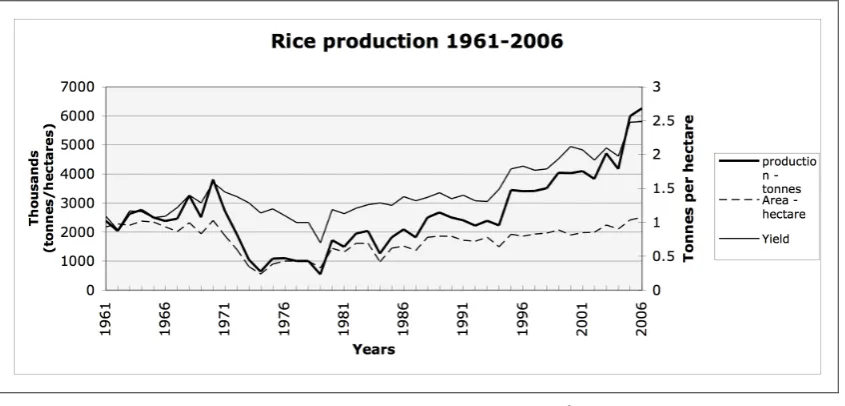
Figure 3-1 Rice production in Cambodia 1961-2004...63
Figure 4-1 Cambodia – rice production per capita...117
Figure 4-2 Cambodia – hectares of rice land per capita...117
Figure 4-3 Rice yield – Battambang province 2003 ...118
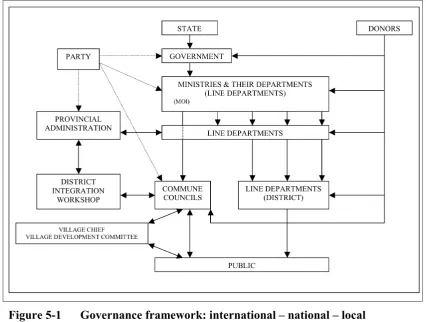
Figure 5-1 Governance framework: international – national – local ...164
Figure 5-2 Patronage and the administration of taxes and fines before 1891...171
Figure 5-3 Commune Development Plan (CDP) Preparation...181
Figure 5-4 District Integration Workshop process...185
Figure 6-1 Global security, global governance and human security...201
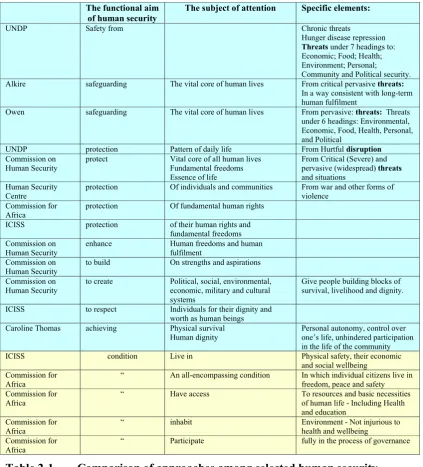
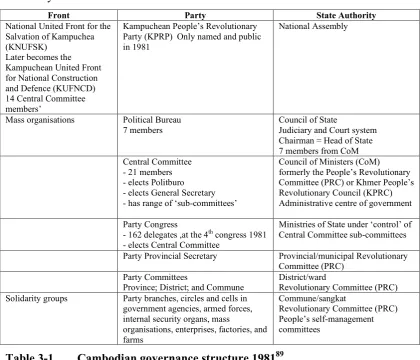
TABLES Table 2-1 Comparison of approaches among selected human security definitions.31 Table 3-1 Cambodian governance structure 1981 ...90
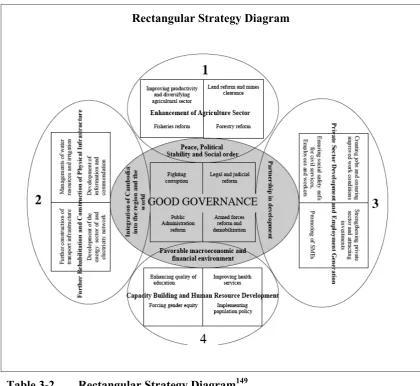
Table 3-2 Rectangular Strategy Diagram ...104
Table 3-3 Commune council election results 2002 and 2007...107
Table 4-1 Proportion of thatch houses in four Cambodian communes ...115
Table 4-2 Mobility across all villages in MOPS study 2004/5...115
MAPS Map 4-1 Tonle Sap Lake: showing extent of annual flood and location of Battambang and Sangke River ...123
E
XPLANATORYN
OTESFor simplicity, throughout the thesis I have referred to the political entity from the formation of the Angkorian Kingdom to the present as Cambodia. I have not referred to the country as Kampuchea other than as used in formal titles such as “Democratic Kampuchea” and “People’s Republic of Kampuchea” or in official documents of the period.
I have also chosen not to use Khmer words unless they add clarification to the English translation or have special meaning.
Footnotes reference and Bibliography have been compiled using Endnote style “Chicago 15th A”.
United Nations General Assembly and Security Council Resolutions are identified in the UN Documentation Centre system by number and topic. Since Cambodia is the topic for all Resolutions referred to in the thesis, and as there are no titles to the resolutions, they are referenced by Resolution number in footnotes (e. g. S/PV.2114, 23 February 1979; A/RES/34/22 of 14 Nov 1979) but not included in the Bibliography. UN Resolutions may be accessed at www.un.org/documents.
L
IST OFA
BBREVIATIONSACFOA Australian Council for Overseas Aid
ADB Asian Development Bank
ANU Australian National University APEC Asia Pacific Economic Cooperation ASEAN Association of Southeast Asian Nations
CARERE I Cambodia Area Resettlement and Reintegration CARERE II Cambodia Area Rehabilitation and Regeneration
CCP Cambodian Communist Party
CDRI Cambodia Development Resource Institute CGDK Coalition Government of Democratic Kampuchea
CoM Council of Ministers
CPP Cambodian People’s Party
DFID UK Department for International Development ECOSOC UN Economic and Social Council
FACT Fisheries Action Coalition Team FAO Food and Agricultural Organisation
Funcinpec Front for an Independent, Neutral, Peaceful and Cooperative Cambodia
GDP Gross Domestic Product
ICISS International Commission on Intervention and State Sovereignty ICORC International Committee for the Reconstruction of Cambodia ICRC International Committee of the Red Cross
IMF International Monetary Fund
IPRSP Interim Poverty Reduction Strategy Paper IR International Relations
K-5 A PRK government programme for conscripting civilians to construct defensive barriers along the Thai border.
KAWP Krom Akphiwat Phum
KNUFSK National United Front for the Salvation of Kampuchea KPNLF Khmer People’s National Liberation Front
KPRA Khmer People’s Revolutionary Army KPRC (or PRC) Khmer People’s Revolutionary Council KPRP Kampuchean People’s Revolutionary Party
KUFNCD Kampuchean United Front for National Construction and Defence
MDG Millennium Development Goals
MOPS Moving Out of Poverty Study
NGO Non-Government Organisation
NPRS National Poverty Reduction Strategy
OECD Organisation for Economic Cooperation and Development P-5 The Five Permanent Members of the United Nations Security
PDK Party of Democratic Kampuchea
PNGC Provisional National Government of Cambodia PRC People’s Revolutionary Committee
PRK People’s Republic of Kampuchea SARS Severe Acute Respiratory Syndrome SEDP Socio-Economic Development Plan
Seila Programme to support decentralisation in Cambodia
SNC Supreme National Council
SOC State of Cambodia
SRI System of Rice Intensification
UK United Kingdom
UN United Nations
UNAMIC United Nations Advance Mission in Cambodia UNBRO United Nations Border Relief Operation
UNCDF United Nations Capital Development Fund UNDP United Nations Development Programme
UNHCR Office of the United Nations High Commissioner for Refugees UNICEF United Nations Children’s Fund
UNTAC United Nations Transitional Authority in Cambodia UNSC United Nations Security Council
US United States of America
USAID United States Agency for International Development USSR Union of Soviet Socialist Republics
VSG Village Support Group
WFP World Food Programme
WHO World Health Organisation
C
HAPTER1
I
NTRODUCTION– A
IMS ANDA
RGUMENTSBy the early 1990s in the immediate post-Cold War period, there was great optimism that a new world order of cooperation between the great powers would bring peace and prosperity to the world. A major symbol of the new order was the reunification of Germany. The UN Security Council, freed of the Cold War confrontation, had approved military intervention against Iraq to repel aggression and Operation Restore Hope to create a secure environment for the delivery of humanitarian aid in Somalia. The Security Council had also given its blessing to a peace settlement in Cambodia which included a new democratic constitution, free market economy and a promise of international cooperation for reconstruction and development. However, the early hope for a new order faded as the US led intervention in Somalia soured and ended in withdrawal, and as the UN failed to respond early to state-sponsored violence in Rwanda and the crisis in Bosnia.
A decade later, such intra-state conflict and violence had increased, particularly in Africa, where many people have been victims of their own states rather than being protected by them. Much of this violence against citizens occurred in a context of poverty and ethnic division, and in the absence of basic political and human rights. Recognising these as both security and humanitarian concerns, the international community has been increasingly engaged in conflict resolution initiatives, peacebuilding and conflict development activities in many countries. The post-Cold War security environment has thus seen a close and deepening association of individual and state security and an intertwining of international and state responsibilities for human security.
poverty, hunger, disease, violence and environmental degradation) and political and cultural rights (freedom to exercise basis human rights and freedoms and cultural identity). Human security, it argued, corresponded to the right of individual to “freedom from want and freedom from fear.”1
This thesis is about human security. The concept developed by the UNDP seemed to me to be straightforward enough in that individuals and groups ought to have some measure of expectation that they can in the present and continue in the future to live in peace and safety, have a reasonable standard of living and opportunity for themselves and their children, and receive protection within their given societies. Further investigation of human security, however, soon revealed that not all share my conviction. Human security has, instead, proved to be far from straightforward.
Human Security
The UNDP approach to defining human security immediately suggested a bifurcation of the concept into freedom from fear which could be interpreted as freedom from war, conflict and violence; and freedom from want which embraced a wide range of livelihood issues. Indeed, as we shall see in the next chapter, Canadian and Japanese governments soon supported separate approaches which prioritised freedom from fear and freedom from want aspects respectively. The Canadian approach has been consolidated in its support for an annual Human Security Report which adopts a narrow definition of human security as freedom from war and other forms of violence. On the other hand, the Japanese supported Commission on Human Security followed the UNDP lead by proposing a broad definition of human security. It also prioritised the development aspects of human security.
The first major issue to confront in a study of human security is how it is to be defined—is it, for example, only about exposure to war, conflict and violence, or, as I will argue in the next chapter, does it embrace other humanitarian and welfare concerns as well? Broad definitions of human security such as that of the UNDP, have been challenged by a number of authors who support only those limited to
1 United Nations, "Universal declaration of Human Rights," (New York: United Nations,
conflict and violence. Some limit the definition for ‘pragmatic’ reasons based on an argument that the nature of development indicators, which might be used to measure aspects of freedom from want, cannot be defined or quantified in terms of vulnerability, level of threat, severity or other security based criteria.2 A narrow, freedom from fear approach is, in this view, considered to be more practical. Proponents depend largely on econometric studies of the incidence and causes of conflict and violence to argue their case. The main problem with their method, however, is not only that the issue of quantification can be disputed, but that it also demands a more rigid definition of the concept of security in the human security context than is applied in security studies generally. Other arguments are also made against the broad definition on the grounds that it risks being so wide as to include anything as a human security issue and is thus unworkable. It is argued, too, that freedom from want is adequately dealt with by existing human rights and human development strategies making a broad concept of human security unnecessary. It is true that many of the issues embraced by the broad definition of human security are similar to those addressed within the human rights and human development frameworks. However, while all three approaches focus attention on the welfare of the individual, human rights and human development are essentially methods which can be applied to achieving human security and, thus, also contributing to state and global security. Human rights have become a major advocacy and diplomatic tool used by states and civil society organizations to pressure other states to protect their citizens. Human development includes a range of processes promoted by international development agencies and donors to improve the capacity and welfare of individuals in a way that they believe will contribute to national development and security. To date, these methods have not achieved their desired outcomes despite massive aid and development efforts worldwide. In other words, they have failed to provide human security and a new approach is required to help understand the causes of persistent human insecurity and what can be done about it.
2 See for example Andrew Mack, "Report on the Feasibility of Creating an Annual Human
Objective of the thesis and research question
This thesis explores the possibility of using a human security approach to identify human insecurities in a particular situation, to uncover their causes and to propose new policies and strategies for their alleviation. My main concern is to make a contribution to improving the human security of people subject to conflict, violence, poverty and other deprivations.
With Cambodia as a case study, the objective of the thesis is to demonstrate that it is important to retain the broad definition of human security and that a human security approach to the study of local conditions can provide a valuable contribution to improving international security and development policies and practices. Further, the thesis aims to show that human security is a function of society and culture as well as of government and the institutions of state which impact on people’s daily lives. It thus reflects a dynamic condition which is also affected by such wider influences as globalisation and international governance processes which impact either directly, or through the state, on local human security conditions.3 The purpose is to explore the practical aspects of human insecurity and its causes, with a view to proposing new approaches to security and development problems. I will leave to others the task of reformulating or rearranging state based international relations and security theories to accommodate human security.
The research question for the thesis, therefore, is how a human security approach can contribute to human welfare through a reassessment of the impact of international security and international development practices at the grass-roots level. To answer this question, several supplementary questions need to be answered before exploring the application of the concept of human security to the situation in Cambodia from the 1970s to the present. First, is a broad definition of human security practicable? Secondly, how have international security and development processes impacted on human security? Finally, what can the findings from Cambodia contribute to giving a human security focus to what I call international security practice, which includes the way that states use balance of power strategies (economic and military);
3 I use the word governance here and in subsequent chapters in its very general sense as a
collective security institutions such as the UN Security Council; UN humanitarian organizations and international development assistance, to pursue their national and global security interests?
Research methodology
Human security research has been largely concerned with its place in international relations and security theory, definitional issues and conflict situations. As we shall see in the next chapter, authors have made various assertions that human security might be guaranteed by the state, civil society, governance or development. For others, it is the rule of law or democratisation which is the key. These claims have a strong ideological content and are based on top-down analyses from a broad international perspective in which human rights, democracy, the rule of law, the role of civil society and free markets are all seized upon as universal ideals which will guarantee human security. Such ideals also underpin conflict resolution and peacebuilding activities. It is assumed more broadly, too, that globalisation of these “universal” ideals and practices will bring human security in a new form of “trickle down” as states reform their institutions and adopt public policies in accordance with the universal best practice forms promoted by development institutions. What is lacking, however, is research which investigates the actual relationship, if any, between human security and international security practice, development, civil society, rule of law and governance at the local level where people are most vulnerable to insecurity and where human security or its absence is most felt.
formulated in the early 1990s, can be used to reassess the conditions in which people found themselves in earlier periods in Cambodia.
Thus, the research methodology is multi-disciplinary. The main body of critical literature on human security has been produced by international relations and political science scholars and is primarily concerned with the question of definition (as discussed above) and with how human security, which prioritises the individual, can be reconciled with state centric theories of security. They have also presented arguments as to how human security might be achieved by democratisation, development, civil society, the rule of law and other means. While it is not my intention to argue that state security is dependent on human security or vice versa, the next chapter examines issues raised in the literature to illustrate that, although such studies are often highly sceptical of human security, nevertheless it is a concept already established and slowly finding a place in international relations theory.4 The arguments for the achievement of human security by democratisation, development, civil society, the rule of law and other means are not well supported by econometric analyses of civil conflicts. The econometric studies set out to determine the factors which contribute to outbreaks of conflict and violence and their results have been used in particular by proponents of the narrow freedom-from-fear approach.5 However, these statistical analyses provide no firm conclusions as to the causes of outbreaks of civil war and violence. They also tell us nothing of the actual condition of individuals and groups who choose a path of violence. Nor do they positively conclude that increasing democracy, human rights, rule of law, governance, level of development or other factors are in themselves sufficient to prevent such outbreaks. Nevertheless, they do conclude that low-income levels, low growth and dependence on natural resources place a country at risk of falling into civil war.6 In other words, these factors create the situation of insecurity which
4 Pauline Kerr, "The Evolving Dialectic Between State-Centric and Human-Centric Security,"
(Department of International Relations, Australian National University: 2003).
5 The Human Security Report edited by Andrew Mack is a key example of this approach. See
Mack, "Report on the Feasibility of Creating an Annual Human Security Report," 2.
6 See for example Paul Collier, "Development and Conflict," (Centre for the Study of African
precedes an actual descent into conflict. Hence, the econometric studies do not exclude the broad concept of human security but rather give it substance.
Very few studies have attempted to look at human security at the local level. It has been mainly used in political advocacy in relation to refugees and issues such as the elimination of landmines and the use of child soldiers, and the treatment of civilians in conflict, and there are networks of human security advocates. Apart from several investigations of development projects in Africa which draw attention to international governance and human security, there are a number of anthropological studies which addressed human security mainly in terms of personal identity and social and cultural association, and their relation to aspects of local governance.7 Overall, the main contribution from these sources has been to support a view that human security can be part of security theory and that the broad concept can be used to analyse local situations. Thus, the methodology used in this thesis does not develop from a single body of theory and analysis. Instead it takes an empirical approach to the study of the situation of people in several communes in Battambang province where fieldwork was undertaken in November—December 2004 and March—May 2005. The findings from the fieldwork have been confirmed and generalised using a range of NGO, consultant and official organization development studies on Cambodia.
Secondary documentary sources have been used for my analysis of Cambodia’s past state formation, the war-time experience of its people, the country’s administrative restructuring following Vietnam’s intervention and, later, international development programmes. The research has drawn extensively on historical and political economy studies, as well as the few anthropological works on Cambodia, to provide an understanding of Cambodian history, society and culture and the various administrative arrangements which have been applied in Cambodia at various times. This is essential to our understanding of its contemporary governance. Since the fieldwork focused my research attention on governance and society, social science literature has been used to provide a framework for the analysis of these aspects in rural Cambodia. It has also provided the basis for my argument that not only do
7 See Caroline Thomas and Peter Wilkin, eds., Globalization, Human Security, and the
states and individuals have responsibilities for human security, but that this extends also to international governance institutions (such as the World Bank and WTO) as part of a broader international security objective.
Field methodology
To hear the first hand views of the rural people on what constitute threats to human security or what conditions represent a situation of human insecurity, I organised with a Cambodian NGO working in Battambang to visit the province where I could take up this research with individuals and groups in rural communes. Many issues emerge in the formulation of a research programme and approach. Before I left Australia there was the question of an ethics clearance which was granted by the ANU ethics committee on 20 January 2005. As part of the process, it was established that an informal interview method would be used rather than a formal questionnaire. This was considered to be important so that the views of literate and non-literate villagers could be heard. It also provided an opportunity to clarify views which appeared to reflect attitudes acquired from the NGOs, consultants and officials who had been regular visitors to many of the communes and villages in the region over the past decade. They had used techniques such as rapid rural appraisal approaches, questionnaires and interviews which suggested that many people would be “questionnaire-aware.”8 I went to Cambodia with an expectation that human security would be primarily concerned with social movement and civil society organisations. What I found was that these were extremely undeveloped and that at the local level the emerging operation of elected Commune Councils and their interaction with villagers were central to the study of human security. These Councils had responsibilities relating to local development initiatives and for people’s general safety and welfare. The field research also pointed to the poor performance of central government departments in service delivery to rural Cambodians. Therefore, in the field my focus shifted to governance to understand how individuals and groups balance their economic, social and political relations with the communes councils and with the central government departments providing health, education, agricultural, judicial and other services. Informed by my previous public sector experience, my fieldwork raised many questions relating to local
8 John Holloway, Chom Sok, et. al., "Process Audit of Commune/Sangkat Fund Projects
governance and in particular the “good governance” reforms promoted by the international development institutions.9 It also linked human security at the local level back to functions of international development assistance institutions.
Working in rural Cambodia presented me with several important limitations. First, I am not a fluent Khmer speaker and therefore was dependent on a translator for all work with villagers. Secondly, the language of democracy, electoral politics and development has introduced many foreign concepts into Cambodian society and the need to manufacture Khmer terminology to express their meanings. It is not necessarily the case that the new terminology conveys a universal understanding of the concepts, especially if used in a written questionnaire. Unstructured interviews therefore represented a better approach on the one hand, but on the other depended on the ability and willingness of the translator to represent exactly what was being said by an interviewee. My translator was very experienced. He was an English teacher who had worked for UNTAC personnel and for a number of research groups since then, and was well qualified to assist me. To confirm my interpretations, I cross-referenced the information and ideas presented by villagers, village and commune leaders and NGO representatives, with written material as well as discussions in English with local officials and NGO workers.
The first major rethink of my approach was when it became clear that just as with concepts like human rights and food security in the past, there was no equivalent in Khmer to that of human security. There was a mix of terms with related meanings: an informant explained that santesok referred to peace and being happy and would be used at the local level; santepeap on the other hand referred to a higher national level and meant there was no more fighting, one could travel without fear of bullets. Safety was another concept, sawatapeap, which was about safety from harm caused by such things as flood and fire and “by our own carelessness.” Security in terms of concern about tomorrow’s food, a poor harvest, employment and income or, at the higher level, development and the future of the nation, was more akin to worry,
bprooay. Other terms mentioned were to be frightened or scared of the future, which
9 In this thesis, a reference to “good governance” is a reference to the specific programme of
NGOs might refer to as “vulnerable.”10 Therefore, the approach taken was to seek people’s general comments about issues that concerned them in any of these categories. This could be justified by the fact that whether referred to as a worry, a safety concern or a breach of peace, an issue could potentially fall within the framework of the broad human security definition. In a sense I was conceding that human security could be a catch bag of everything, as had been claimed by some critics. In fact, Thakur takes a very similar view of human security as discussed in the next chapter.11 The main problem then was to establish the significance of an issue, whether it was being managed locally or whether it might become a more significant human security matter for the people concerned.
The basic question for my field work was what sort of economic, social and political issues confronted villagers on a day-to-day basis and how the elected commune councils contributed to meeting the local development needs of villagers in accordance with national objectives, and to ensuring a safe and secure future for all. Findings from the fieldwork were, as far as possible, validated by reference to the many local and national development studies available in Cambodia, particularly those concerning the region visited.12
Why Cambodia as the case study?
Cambodia presents an important case study for human security for four main reasons. First, it was subject to war and violence for thirty years from the 1960s. During this time there was internal political factionalism and armed revolt; clandestine US bombing as a “sideshow” to the Vietnam war before becoming openly engaged in that war; a period of revolutionary abuse under the leadership of Pol Pot; and, finally, a period of internationally sustained civil war prior to an internationally brokered peace settlement. Throughout this time, human security for
10 Discussions with my interpreter and staff of Krom Akphiwat Phum (KAWP), a local
Cambodian NGO.
11 Ramesh Thakur, "From National to Human Security," in Asia-Pacific Security: The
Economics-Politics Nexus, ed. Stuart Harris and Andrew Mack (Sydney: Allen & Unwin, 1997).
12 Although Battambang Province has experienced periods of Thai rule and its involvement in
most Cambodians was compromised in different ways depending on their particular circumstances. Cambodia thus provides a rich and well-rounded example of the different factors, at the local, national and international level, which impinged on human security at different times and in a variety of circumstances. The experience of Cambodia demonstrates that human security is closely related to international security practice in the way in which the permanent members of the Security Council in particular used the mechanisms of power and diplomacy to sideline the Security Council and, to some extent also, UN humanitarian organizations, to pursue their national security interests in Cambodia.
Secondly, Cambodia was the subject, eventually, of a peace deal which saw the United Nations assume effective sovereignty while elections were held and a constitution agreed by the newly formed Cambodian government. This process was made possible by the end of the Cold War which meant that the ideological posturing and confrontation between the great powers, that had sustained the Cambodian conflict as a proxy war, was no longer necessary. The change also made it possible for the focus of international security practice to shift from war to peace and finally to the future stability of Cambodia and the welfare of Cambodians. As well as imposing a democratic constitution and free market economy, the international peace agreement included provisions for a ceasefire, repatriation of refugees, rehabilitation and reconstruction of the country, and for ensuring Cambodia’s ongoing development. Thus, global, regional, national and human security objectives were all part of the peace agreement.
Thirdly, despite the agreement, sporadic civil war and political instability continued for a number of years and, while conditions for the people generally improved, the promise of human rights, human development and political freedom have languished. It appears that human security was not guaranteed by the peace settlement, elections and a democratic form of government.
Finally, Cambodian governments since 1993 have accepted and incorporated in their development policies the internationally promoted norms of human rights, human development and poverty reduction strategies. Cambodia has also embraced “good governance” as a centrepiece of its development strategy.13 Hence, Cambodia
13 See Royal Government of Cambodia, "Address by Samdech Hun Sen, Prime Minister of the
provides a unique case for analysing the outcome of development in rural areas in terms of the broad definition of human security and to demonstrate the contribution a human security approach can make to development policies and practices.
Cambodia – Today
Cambodia’s population in 2006 was around 14 million, some 85 per cent of whom live in rural areas. It is estimated that between 1.5 to 2 million Cambodians died between 1975 and 1978 during the Pol Pot period due to purges, disease and starvation. A post war “baby boom” since 1979, when the population was estimated at about 6.5 million, has also produced a generation which requires a rapid expansion of education and health services and employment opportunities.14
Despite a massive influx of aid since 1993 and an average annual growth rate of 7 per cent, Cambodia ranked 129th on the UN Human Development Index in 2006. Illiteracy is above 25 per cent and 33 per cent of the population is undernourished. Life expectancy is just 56 years compared to 70 years in neighbouring Vietnam and Thailand. Only 30 per cent of births have a skilled professional present. Infant mortality is high and some 45 per cent of children under 5 years of age are underweight and under height (compared to Vietnam and Thailand at 28 per cent and 19 per cent respectively). Fifty nine percent of Cambodians do not have available clean water sources and a mere seventeen per cent have access to improved sanitation. Education achievements are also poor in terms of retention and quality of services.
National economic growth has not performed well in terms of improved standards of living and a reduction in poverty. Growing inequality is a significant factor in
and Efficiency" delivered at the First Cabinet Meeting of the Third Legislature of the National Assembly at the Office of Council of Ministers," (Phnom Penh: Royal Government of Cambodia, 2004).
14 Over 50 per cent of the population in 2004 was 19 years or younger. See Royal Government
explaining the weak poverty reduction achievement in Cambodia.15 Poverty is consistently high with 35 per cent of the population below the poverty line.16
The majority of the population is engaged in agriculture on household plots. Rice is the staple for most Cambodians and the country claims domestic food security at a national level. Cambodia is not naturally suited to rice production and has a basically subsistence agriculture based on poor soils, traditional methods and equipment, variable climate and flooding patterns, and low yields.17 There is only limited agricultural infrastructure development.18 Industry has also been neglected and it is estimated more than 0.5 million young people will migrate, over four years, to the cities where there are no formal jobs for them. Cambodia could then have up to one million unemployed or underemployed.19
Hun Sen and the CPP have dominated government since 1993. The government has demonstrated poor policy formulation and implementation. There is little public debate and civil society contribution is limited. Human rights, freedom of speech and of the press have been seriously curtailed during the CPP reign, and corruption in government and the public sector is rife with public institutions being hotbeds of
15 See World Bank, "World Development Report: Equity and Development," (Washington:
World Bank, 2006) and World Bank, "Sharing Growth: Equity and Development in Cambodia," (East Asia and the Pacific Region, World Bank, 2007).
16 ADB, "Participatory Poverty Assessment in Cambodia," (ADB, 2001). The poverty line
equivalent is calculated at less than US$0.45 a day—80 per cent of which is to meet food needs (2,100 calories per day) and 20 per cent to meet other essential needs such as clothing, health and shelter. The ADB Assessment discusses a number of other poverty studies and the various poverty measures in use. For an explanation of the US$1 per day poverty measure see also World Bank, “Frequently Asked Questions About Poverty in Cambodia” at http://web.worldbank.org/WBSITE/EXTERNAL/COUNTRIES/EASTASIAPACIFICEXT/ CAMBODIAEXTN/0,,contentMDK:20720197~pagePK:141137~piPK:141127~theSitePK:2 93856,00.html, accessed on 19 September 2007.
17 Jean Delvert, Le Paysan Cambodgien (Paris: L'Harmattan, 1961; reprint, 1994). This is a
comprehensive study of Cambodian agriculture. See also Don Puckridge, The Burning of the Rice: A Cambodian Success Story (Hartwell: Sid Harta Publishers, 2004) which tells the story of an Australia–IRRI aid project in Cambodia which was initiated in 1985.
18 The main schemes were developed during the French colonial period. The Mekong River
Development Scheme sponsored by the then Economic Commission for Asia and the Far East (ECAFE) in the 1960s was abandoned due to the war with only one stage completed, irrigating 5,000 ha. The Pol Pot regime instigated irrigation schemes across the country with generally poor results. See Chann Sinath, "Investment in Land and Water in Cambodia," in Investment in Land and Water, Proceedings of the Regional Consultations, Bangkok, 3-5 October 2001 (Bangkok: FAO Regional Office for Asia and the Pacific, RAR Publication 2002/9, 2002), 165, 71.
SIDA noted the poor status of irrigation and compared Cambodia’s 7 per cent of irrigated land to Vietnam’s and Thailand’s 45 per cent and 31 per cent respectively. See Susanna Lundström and Per Ronnås, "Employment and Growth in Cambodia: An Integrated Economic Analysis," (Stockholm: SIDA, 2006), 29.
19 Economic Institute of Cambodia, Cambodia: Economic Watch, April 2005 (Phnom Penh:
political patronage and rent seeking. In this authoritarian environment, influential and powerful persons are able to undertake illegal activities such as land seizures with impunity. The rule of law is severely compromised.
Overall, therefore, Cambodia provides a context for studying human security at the local level through periods of conflict, conflict resolution, peace building and development. The experience of Cambodia suggests that human security as freedom from fear and as freedom from want are basically inseparable, though one may predominate at any time and place. It demonstrates that long after the elections in 1993 and the departure of UN troops, human insecurity is a daily issue for many Cambodians. There remains a threat not only of livelihood insecurities, but also of a return to political violence. As Thailand has shown, military engagement in politics in the region is not a thing of the past. Also, conflict resolution and post-conflict development are major contemporary international security issues. Iraq, Afghanistan and East Timor, as well as Somalia, Sudan, Liberia, Rwanda and many other counties, face the difficult transition from conflict resolution to development. Studying the Cambodian experience from a human security perspective may provide useful lessons for policy makers to apply in other similar situations.
Outline of the thesis argument
There are four main arguments to the thesis. First, that human security is directly related to international security and development policies and practices; secondly, that a broad definition of human security is essential to understanding the security situation of people in times of war and peace; thirdly, that human security is best understood in the local context; and finally, that a broad definition of human security provides a sound basis for applying a human security approach to reassessing international security and development policies and practices of states and international institutions. These are expanded below.
in the conflict from 1970 to 1975.20 The human security of Cambodians was further affected by great power and regional support for various Cambodian political factions to maintain a civil war in Cambodia following the Vietnamese intervention in 1978 until the signing of the peace agreement in 1991. At the same time, states also placed their security interests above the welfare of people by actively obstructing the efforts of UN and other humanitarian agencies to assist refugees and other victims of war. In this context the human security of Cambodians could not be separated from international security practice. International security considerations will also be shown to underpin the massive programme of international development assistance which followed the peace settlement. The first argument arising from the post-UNTAC development processes in Cambodia is that from a broad human security perspective, rural people face many insecurities which are not adequately addressed by government or international development policies and practices. Secondly, that a broad definition of human security is necessary to understand the individual situations in times of war and peace is confirmed by the experience of Cambodians in refugee camps and inside Cambodia during the conflict, as well as by the post-conflict experience. What is demonstrated by the experience of Cambodia is that human security issues such as food security, health, environmental, social and political security exist in both war and post-war situations. Accordingly, there is a continuum of human insecurity issues ranging from the ongoing, if diminishing, conflict and violence as well as basic economic and political insecurities.
Thirdly, since human security concerns the actual living conditions of individuals and groups, it is best understood in the local context. It is in the village and commune (or refugee camp) where people are bound by custom and society, come into direct contact with government institutions and political parties, and where they derive income for themselves and their families. What the research shows is that human security conditions at the local rural level in Cambodia are influenced by a multiplicity of factors including, in particular, institutions of governance. It will be shown that Cambodian society has long tended towards an authoritarian systems of governance under various regimes (predatory states) and that the current system of commune councils does not function democratically as intended by the international
20 William Shawcross, Sideshow: Kissinger, Nixon, and the Destruction of Cambodia (New
donor community. Instead it reflects much of the social structures of power from earlier times—especially the tendency to hierarchy and authoritarianism. Consequently, the human security of villagers has a great deal to do with how institutions work at the local level and the power relations inherent in them. It is also influenced by power relations in the society at large which has its own system of relationships. These are not necessarily ones of individual freedom, adherence to a rule of law and an acceptance of majority representative government.
It will be shown that there are many social practices, including patron client relations, which may function to provide support and security to villagers. These relationships are not eliminated by new democratic institutions but may be used by the powerful to extend their patronage networks into the commune councils and government organisations. For the population at large this creates the dilemma of how to relate to the institutions and to those who manage them. Are the institutions legitimate? Can the officials be trusted? What benefits do they provide? At the same time international donors tend to classify patronage as corrupt and, ignoring the potential benefits, withhold support for government institutions thereby neglecting to address the more significant issues of how to achieve legitimacy, trust and effective service delivery.
dismally to show such leadership. At the same time the international community has been unable to influence the commitment of the political leadership despite its fundamental importance to human rights and human development and, ultimately, to human security. The attempt to influence change through a technical approach to “good governance” has failed because it does not facilitate social interaction and social change.
Finally, the operation of the UN Security Council and of international development institutions is considered from the perspective of human security. These institutions are essentially state-centric in their approach to global security. Although development has been variously promoted in terms of basic needs, human rights and human development, “good governance” and structural adjustment, participation and empowerment, it has also been closely aligned with donor states’ concerns for their own security. Aid has been used by donors to promote the stability of neighbouring countries and other areas of strategic interest. Despite there being an assumption that security is linked to people’s welfare, the concept of human security which makes a direct link has not been widely adopted. The thesis concludes that a human security approach, by emphasising a total security framework from human security through state security to global security, can effectively unite the UN Security Council and international development assistance institutions in a common objective.
We have heard repeatedly over the years that it is not in Australia’s national interest to have instability and the threat of failed states in its region. Human rights and human development, democratisation and “good governance” are tools in the overall security agenda of not only the developed countries but, since the end of the Cold War, the UN and so called international community generally.
Thesis structure
which may, to various extents, be associated with human security (e.g. as the absence of war and violence). They include democracy, development, governance, globalisation, rule of law and economic growth, all of which are also part of international poverty reduction and human development strategies. Therefore the chosen approach to human security is one that embraces governance and the scope for the political involvement of individuals. The chapter concludes that the broader, if less manageable, concept has been largely ignored in explorations of human security. As well as identifying this significant gap in the research in regard to the local conditions which impact on people’s human security at the grass-roots level, the chapter sets the context for the thesis case study.
Chapter 3 serves a dual purpose. First, by way of Appendix A, it provides a brief background to Cambodia’s political and administrative history to inform the reader of the societal context in which the more recent changes have been introduced. Secondly, it details the impact on the human security of rural Cambodians caused by both domestic politics and international security practice arising from the Vietnam war, the period of Khmer Rouge rule and the following period of internationally sponsored civil war in Cambodia. It also outlines the state re-building following Vietnam’s intervention in Cambodia in 1978, the role of UN Humanitarian agencies in assisting Cambodian refugees at the Thai border and, following a peace settlement, the role of international development institutions in promoting a decentralised development strategy for Cambodia.
C
HAPTER2
H
UMANS
ECURITY– C
ONCEPTUALF
RAMEWORKWhereas disregard and contempt for human rights have resulted in barbarous acts which have outraged the conscience of mankind, and the advent of a world in which human beings shall enjoy freedom of speech and belief and freedom from fear and want has been proclaimed as the highest aspiration of the common people.1
People who are trying to survive … do not choose between addressing ‘violent threats’ or ‘poverty threats’. They address both. Human security should do likewise.2
This chapter outlines the projection of the idea of human security onto the international stage by the UNDP in 1994, and the debates that it engendered. First in terms of definitional problems and, secondly, in terms of human security’s challenge to the mainstream academic disciplines which traditionally claim international relations and security as their specialist domains and the state as the basic unit in their theoretical formulations. The main thrust of the chapter is that it is important to adopt a broad definition of human security and that the primary concern is for the condition of people in terms of their local social and political realities.
The risk, otherwise, is that human security becomes little more than what Duffield calls an aid-related technique of global security, or Mary Kaldor represents as a particular form of military-civilian intervention in situations of civil conflict or natural disaster.3 These sorts of approach are about how human security is “done” by international aid and by international military intervention. They do not challenge the state-based security theories but rather work within them to analyse how dominant states are pursuing their own security by co-opting humanitarian concerns and development processes. This thesis therefore turns attention to the problem of how to refocus human security on the individual.
1 Preamble to United Nations, "Universal declaration of Human Rights." Available at
http://www.unhchr.ch/udhr/index.htm.
2 Sabina Alkire, "Conceptual Framework for Human Security (Working Definition and
Executive Summary)," (Working Paper prepared for the Commission on Human Security: 2002), 5.
3 See Mark Duffield, "Human Security: Linking Development and Security in an Age of
Although econometric analyses of the occurrence and causes of civil war and violence have formed the basis for a narrow, conflict related approach to human security (defined as the absence of civil war and other forms of physical violence) they have also emphasised the role of development in conflict resolution and prevention.4 In fact, the econometric analyses support the extension of the human security concept beyond conflict and physical violence to embrace security in terms of everyday existence – food, shelter, justice, income, social and political freedom and liberty – which are the aims, if not the achievements, of development. Further support for this position comes from a range of new studies on human security which extend the use of the concept into a wider context of anthropological research.5 Inevitably, a discussion of human security brings into play questions of its relationship with human rights and human development. The relationship is, in fact, treated in a variety of ways in the literature. On the one hand, it is said that you can not have one without the other, while on the contrary there is a view that human rights are what counts, and that these embrace human development. In this view, human security is largely irrelevant as it is considered to add little if anything to the comprehensive range of rights existing in international law and UN covenants.6 The position here is that a concept of human security provides a unique space in which human rights and human development may be brought together in practice to achieve their common goals of protecting individuals from their own states and from the deprivation of basic needs. Hence human security is an overarching concept that combines people’s own search for security within their own cultures and societies with a process of adjustment and change to the external influences of rights and development processes. Human security concerns everyday life and politics and the outcomes of the external impositions discussed by Duffield and Kaldor referred to above may not be as intended.
4 See Andrew Mack, "Report on the Feasibility of Creating an Annual Human Security
Report." and Human Security Centre, Human Security Report: War and Peace in the 21st Century. Aid and development policy is also an important aspect of their work. See in particular Paul Collier, "Aid, Policy and Growth in Post-Conflict Countries," (Conflict Prevention and Reconstruction Unit, World Bank, 2002); Collier, "Development and Conflict."; and Collier et al., Breaking the Conflict Trap.
5 See Alexandra Kent, "Reconfiguring Security: Buddhism and Moral Legitimacy in
Cambodia," Security Dialogue 37, no. 3 (2006).
6 See the Office of the United Nations High Commissioner for Human Rights for the full