Improving Productivity through Alliance Implementation
between Contractors
M. Sc. in Technology.
H. Heikura
, Fira Palvelut Oy, Vantaa
Prof.
A. Kiviniemi
, University of Liverpool, Liverpool
M. Sc. in Technology.
O. Alhava,
CTO
,
Fira Oy, Vantaa
Abstract
The main purpose of this research was to analyze the adaptability of alliance model in unusual environments involving small project size, renovation instead of new construction, and implementing an alliance model between a main contractor and four subcontractors. The implementation was observed from the perspective of improving productivity.
Both adaptability and implementation were based on three cornerstones: commercial framework, organization and production systems. The need to develop the alliance model in an unusual environment was discovered after identifying current contracting gaps and potential solutions in a previous literature study, as well as employing the results of a Master of Science thesis focusing on “the adaptability of alliance model in plumbing renovation projects”. The empirical research was based on two alliance projects managed by Fira
Palvelut.
Alliance was found to be well adapted for all three cornerstones, and it can be implemented in tested environment, although this research cannot present hard facts about the improvement of productivity. However, the conclusion of this research points out that the key factor in improving productivity is creating a team culture, which has been developing successfully in these projects compared to the current traditional subcontracting culture.
1 Introduction and observed problem
The main challenge within construction industry is productivity, which has remained lower than in the other industries. Furthermore, several studies have pointed to the same conclusion: poor productivity is a major problem analyzed from both international and national viewpoints [1, 2 (p. 245)]. However, Loosemore [2] has criticized that although over four hundred references have been produced when analyzing productivity and advanced understanding of the subject, the literature almost entirely presents a main contractor’s perspective only. Considering that the recent culture of contracting is based strongly on subcontractors, it is critical to solve the linkage between subcontractors and productivity. Few researches, observed from the perspective of subcontractors pointed out two main reasons for poor productivity as a consequence of the recent way of subcontracting: 1) project based production, and 2) subcontracting with one-to-one contracts.
According to Merikallio and Haapasalo [3] project-based production justifies dealing every single project as unique, and not repeatable. Therefore, instead of developing the longevity of relationships of partners, subcontractors are selected to one project independently. As a result every project managed by the main contractor includes a group of randomly chosen subcontractors. Focused on short term profits via selection based on the lowest bid, the traditional subcontracting model seems efficient. However, observing long term impacts the current model does not enable a stable organization when the next project is started over again, tendering subcontractors without dependency of others [4, 5, 6].
Several researches [3, 5, 8, 9] point out that the second main reason for poor productivity is subcontracting by numerous one-on-one contracts. In the current culture of fragmented subcontracts a large amount of subcontractors is needed to cover the whole project. Considering the fact that every subcontract is tendered separately, we can metaphorically summarize that in the big picture the project is built by subcontractors in separate silos. In this context the term silo means that every subcontract is formed between one subcontractor and the main contractor. There is no straight linkage between subcontractors blocking the immediate interaction between participants. As a consequence of the silos the organization of contractors is hierarchic and vertical. The structure of contracts forces each subcontractor to focus on their own narrow content, trying to operate primarily on a best-for-me principle instead of being an integral part of the team, and building the project together. As a result, nowadays a main contractor buys separated work input from the subcontractors but the responsibility to integrate different work inputs remains completely with the main contractor.
2 Proposed solution
This research proposes to increase the interaction of subcontractors as much as possible to improve productivity. Abandoning project-based selection of subcontractors and focusing over project boundaries will strive for a more stable organization, capture know-how and knowledge gained in one project, and transfer it to the next one. Furthermore, instead of subcontractors being strictly tendered by lowest bid criterion, participants must be gathered by references. The stableness of the organization boosts interaction among participants and more intense relationships, which then encourage operating as a team. By creating a team culture the vertical organization and the silos of subcontracts are demolished. Besides, a stable and equal team with a common goal gives participants a reason optimize the whole which reduces the waste in the project and leads to improved productivity through solid cooperation. Observing a relational way of contracting this research focuses on implementing the alliance model between contractors in an unusual environment.
3 Points of Departure
contracting model needs the balance of these three “cornerstones” - 1) commercial framework, 2) organization, and 3) production systems (Figure 1) - to be able to work. If the purpose is to change production systems a commercial framework and organization must assist and steer people towards the principles of wanted production systems. Most people do not like changes so the new way of contracting needs fascinating tools and processes to arouse interest in participants.
Figure 1: Three cornerstones (adapted from Aapaoja and Haapasalo, 2011)
Our solution for meeting the gaps of the current state of contracting and the proposed solution to increase interaction even over project boundaries is to implement the alliance model using two different viewpoints: the view of a project and the view of continuity of projects. Both angles are analyzed through the three cornerstones of alliance: commercial framework, organization and production systems.
In addition to the holistic need of change, the gap found in meeting the needs of a relational contract model is that there is no existing solution for integrated projects in the observed environment. Firstly, instead of projects worth hundreds of millions this research focuses on small projects of 1,5 – 6 million Euros. Secondly, the projects in this context are not new constructions but renovations. The projects analyzed are pipeline renovation projects in apartment buildings in Finland, i.e. projects where the water and sewer systems are refurbished. Thirdly, the alliance model researched does not include stakeholders or engineers because of the fragmented and diverse organization of stakeholders in apartment buildings. Therefore, the alliance model is created between the main contractor and four main subcontractors.
4 Research question and methods
Considering the environment of implementation the research questions are: 1) Was the implementation of the alliance model the right hypothesis?
2) How has the implementation of alliance proceeded from the perspective of productivity?
These two different main questions required two different research methods in this study. Analyzing the hypothesis of alliance model in an unusual environment was part of the first author's Master of Science thesis in November 2014 for Fira Palvelut. This M.Sc. thesis was executed as an interview research, and its goal was to analyze the adaptability of the alliance model both from the viewpoint of one project and over project levels from the production line viewpoint. To answer that research question the M.Sc. thesis explored the current functionality of contracting from both the main contractor’s and the subcontractors’ perspectives using ten qualitative theme interviews. Therefore, adaptability was analyzed using two sub research questions:
1) Which were the main problems of usual contracting at this specific environment? 2) Did the alliance model manage to answer problems in present contracting?
Interviews for the M. Sc. thesis were executed in the summer 2014. At that point the alliance implementation was just starting. To be able to assess the implementation of the alliance model the second part of this research focuses on discoveries from September 2014 until present day. The observations presented in this paper are based mostly on empirical findings by the first author of this research in his role as the project manager of alliance business at Fira Palvelut. In addition to know-how, there is plenty of hard data collected from monthly alliance reports. The aim of these data is to contribute to the results of alliance contracting correlating with the development of productivity.
5 Theoretical foundation
According Sundström et al. [6] and Gadde and Dubois [7] the solution is long-term cooperation approaching partnering principles. Operating in projects spanning over a long time with same parties, the companies begin to familiarize with each other, finally knowing each other’s strengths and weaknesses even on the level of employees. Traditionally focused on optimizing their own narrow silo, cooperation is seen to gain common benefits over boundaries of contracts. In addition, Manninen [10] has ended up with the same result by researching waste profile in Finnish construction. Manninen pointed out five most usual types of wastes which were 1) communication and documentation, 2) producing wrong product or service, 3) mistakes, 4) unutilized potential of workers, and 5) expendable moving. As a result Manninen suggested increased interaction between contractors and commitment of workers to reduce the waste. However, according to Siitonen [5], Merikallio and Haapasalo [3], and Gadde and Dubois [7] the current model of contracts must also be changed. One-on-one contracts forces subcontractors to focus on their own narrow silos despite of other subcontractors, and as a result confrontations between participants increase. In addition to project based thinking, current contracts do not systematically encourage cooperation and sharing pain or gain is not common.
To meet that requirement of changing contracts Siitonen [5], for example, has studied the change of the traditional transactional form of contract to process oriented relational contracting. The major difference is that traditionally the contract defines the exact content of contract with responsibilities. Once a subcontractor is surrounded by strict boundaries, the silo has been created. However, in a relational way of thinking the contract is used to control relationships between participants, aiming them towards a common goal together. Instead of building up silos and sub-optimizing the project parts, relational contracting focuses on optimizing the whole project with shared risks and profit management.
The three most common relational forms of contract can be presented as project partnering, integrated project delivery (IPD), and project alliance. However, focusing on the most relational way, only project alliance is introduced (Siitonen [5], Aapaoja & Haapasalo [9]). In this context the term alliance is a synonym for project alliance. Project alliance is a holistic integration, in which intense interaction is assured by the structure of contract. Referring to Lahdenperä [11], project alliance can be subscribed primary via constructional and co-operative features. Constructional attributes are undisputed considering as follows:
Common contract. In spite of amount of participants, there is only one alliance contract
Common organization. Parties of alliance form one organization which makes decisions
together. Every party is represented in the common organization. There are three levels of management systems in an alliance; Alliance Leadership Team, Alliance Manager, and Alliance Management Team and rules for management.
Shared risk management. Risks and profits are shared in an alliance. For example,
profits of the project are shared based on the management of the whole project, not how one participant has succeeded.
Additionally, co-operative features complete relational management of a project alliance. There are plenty of different attributions which are adapted by each project’s statistics, such as: no blame culture, open accountancy, encouraging innovating or mentality of “together we win or lose”. However, in general all these co-operative features can be summarized as
follows (Lahdenperä [11]):
Reliance. Common organization, open accountancy and shared risk management
requires genuine reliance between alliance partners.
Commitment. The goals applied to alliance must be common. Intense interaction needs
the commitment of every participant.
Cooperation. Functionality of cooperation is assumption of reliance and commitment. Via
a common contract, organization and goals, the alliance gathers participants under the same umbrella.
Furthermore, a strong linkage can be seen between the principles of project alliance and Lean ideology (Siitonen [5]). Both aim for the best possible result, highlighting intense cooperation of supply chain, continuous improvement, and custom orientation by the principle of value for money. From a productivity viewpoint, combining Lean methods like Transformation-Flow-Value Theory of Production or Last Planner System with constructional
features of alliance, the production can be successful and reach more value added activities by balancing the flow of work and creating a continuous flow of work. In other words, reducing waste and exceeding the expectations of customers [9 (pp. 37-38),12 (pp. 28-31)])
by the mentality of best for project. Furthermore, increased interaction allows better utilization of the skills of individuals in the team and as a result innovative solutions can be found which could not be invented by working the traditional way.
6 Implementing the alliance model
Implementation was divided into two sectors in this research. To change the current contracting model it was crucial to identify the challenges of the current procedure in the observed environment. The environment included one main contractor and four subcontractors. Fira Palvelut operated as the main contractor and subcontractors were chosen by substance as:
demolition subcontractor
HPAC subcontractor (heating, plumbing and air-conditioning)
electricity subcontractor
tiling subcontractor
These subcontractors cover over 50 percent of total costs of an average pipeline renovation project in this context. Furthermore, those subcontractors take part in every project and the content of the subcontract stays almost constant, so it is necessary to resolve the challenges of current contracting by including these subcontractors.
Empirical research was executed as qualitative theme interviews. Following the steps of the theme interview process, interviews were segmented by the status of interviewees. Complete analysis of the adaptability of the alliance model included 10 interviews. Interviewees were chosen from different levels of organizations and included overall six subcontractors in five different projects. In addition to identifying problems of current contracting, in total eight interviews were done with the first participants in the alliance model. However, at the point of the interviews there was no concrete implementation and they had no experience of alliance.
alliance contract was from Australia although the principles were adapted to this unusual environment, however sustaining undisputed features of alliance.
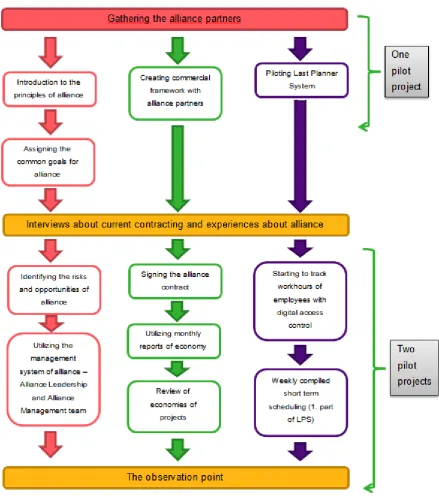
Figure 2: Timeline of alliance implementation
forming a continuous line. To meet this requirement the employees of the current alliance projects are transferred to the next large pipeline renovation, which enables the continuity of production as planned.
The highlights of implementation have been the utilization of the alliance management system, including organizing Alliance Leadership Team, Alliance Manager and Alliance Management Team. Via Leadership Team risks and opportunities of the alliance were identified, common goals decided, and monthly organized meetings started. Regular policy of the Alliance Leadership meetings and experiences of the Last Planner System from the first pilot project have worked a basis for utilizing Alliance Management Team. As a result weekly meetings are begun, dealing operational tasks of the projects, for example scheduling on weekly level with principles of the Last Planner.
7 Discussion of results
Was the implementation of the alliance model the right hypothesis?
The results related to the need for change in current contracting were solid when analyzed from perspectives of: environment, roles between contractors, “game rules”, interaction between participants, and the need for improvement. The challenges of current contracting were proven to be the same as listed in the theoretical observation: for example, a hierarchical organization fragmented subcontracting, strict contract boundaries, bad leadership of a main contractor and discontinuity as a consequence of project based production [12, pp. 39-64]. Although interviews focused on national environment, a strong linkage was found between other researches from other countries. According to Loosemore [2], analyzing the development of productivity from a subcontractor’s viewpoint in Australia, the main reason for improved productivity was the quality of interaction between participants. There was a clear dependency - good project organization can strongly impact the effectiveness of a project.
of alliance was found as a great environment for development. Adding continuity in immediate interaction created by a project alliance, there is a great chance to create a stable team culture [12, pp. 65-72].
How has the implementation of alliance proceeded from the perspective of productivity?
Organization
Normally a main contractor independently compiles the scheme of a project from the shattered bids from subcontractors. Instead of a separated and one-on-one bidding process between a main contractor and subcontractors, one of the current pilot projects included a common bid meeting with alliance partners. At this meeting the content of the project was reviewed with the subcontractors. There were numerous indistinct details and overlaps found which were eliminated immediately. At the time of the meeting it was estimated to provide 0.5-2 percent savings of the total costs of the project.
Utilizing the management of alliance has lowered the traditional vertical structure of contracting. Because of the Alliance Leadership Team, subcontractors are equal with the main contractor, and regular monthly meetings of the Leadership Team have improved taking common responsibility of the project. Meetings processing economies and scheduling among other things have increased awareness of the project situation, and as a consequence the response time to problems has become shorter. The biggest improvement has been that the atmosphere of projects has changed to more open and interaction between Leadership participants has increased.
worked on the site during the project. Equalizing the project sizes, the results of alliance projects are roughly 120 persons. Because of a common organization the execution stage of a project can be created by balancing production from the perspectives of both the main contractor and subcontractors. Still, the findings from the interviews and Leadership meetings indicate that the turnover of employees is still too high to sustain a stable organization.
Commercial framework
Although the alliance commercial framework was created “from scratch”, the functionality of the contract has reported to be successful. The contract includes the goals defined together, procedures of alliance, principles of alliance, and commercial model with percentage shares of pain and gain for each partner. It is notable that a commercial framework does not involve key result areas; the only measurement of pain and gain is the success of economics overall. Still, economies reported monthly have increased the interest in actualized costs. Otherwise, openness and modifiability have been pointed as positive features. The content of subcontracts have varied during projects but these modifications can be made by the unanimous decision of an Alliance Leadership Team only. Furthermore, problems have been resolved by communicating instead of backing up what the contract says as traditionally.
Even if no revolutionary change of total costs has appeared at this point, the greatest change has been the open book principle. Open book accounting has made things normally hidden visible, for example, pointing out a strong linkage between the economic forecast of subcontractor and the fluency of work. In one project a subcontractor’s tasks have been completed by two electricians and the forecast is providing over 40,000 Euros savings in a subcontract worth 232,000 Euros, when at the same time on another project five electricians are needed and no savings are possible in a subcontract worth 186,000 Euros. Open book accounting and common economies have given a reason for the Leadership Team to analyze the reasons for variation.
Alliance based production systems
outputs in order to increase monitoring and understanding of actualized inputs scheduled to complete different tasks. At the same time a control system enables the analysis of the turnover of employees during the project. Secondly, subcontractors have seen Last Planner System as a tool of common decision making. However, in spite of regular scheduling and utilizing Plan Percent Complete (PPC) no major success in better forecasting has been reported. The percentages of PPC have varied from 25 to 70 percent within one week scenarios. Still, Alliance Managers have reported better commitment and flexibility in coordinating the projects because of weekly organized Management Team meetings with schedule as the agenda.
8 Conclusions
Both theoretical and empirical findings point out that there is a strong linkage between interactions of participants and improvement of productivity, and two conclusions can be made as the result of this research. Firstly, comparing the principles a project alliance offers and the need for change in current contracting, it can be claimed that the implementation of the alliance model meets the gap. As a holistic relational model of contracting, an alliance implemented between contractors confirms that alliance offers a great environment to develop team culture needed to sustain a stable organization with common goals and commercial framework.
sustaining a team there is pull for production systems to continuously develop the functionality of the team. As a conclusion, the will to work together should be the aim of contracting, which is in consensus with Syer and Connolly [13] claiming that “people form teams and work together because together they have the potential to create something they
cannot create alone. By maximizing the relationships between team members, team
maximizes their performance.”
9 Bibliography
[1] Pekuri, A. 2013. Lean production philosophy, methods and tools in construction industry. Common report: University of Oulu and LCI-FIN1, p. 3.
[2] Loosemore, M. 2014. Improving construction productivity: a subcontractor’s perspective. University of New South Wales, Australia. Faculty of the Built Environment.
Engineering, Construction and Architectural Management Vol. 21 No 3. 16 pp. [3] Merikallio, L. and Haapasalo, H. 2009. Strategist development points of project
management system in construction industry. Common report: Finnish Construction
Industries RT and LCI-FIN. 43 pp.
[4] Bertelsen, S. and Koskela, L. 2004. Construction Beyond Lean: A New Understanding of Construction Management. Elsinore, Denmark. Proceedings for the 12th Annual
Conference of the International Group for Lean Construction. 11 pp.
[5] Siitonen, A. 2013. Relational project delivery arrangements. Master of Science Thesis. Tampere University of technology, Department of construction production and economics. 97 pp.
[6] Sundström, K., Kallionpää, E., Teriö, O. Tolonen, T. and Väisälä, P. 2008. Management of materials and deliveries flow at construction site. Tampere University of Technology,
Department of Construction Production and Economics. 62 pp.
[7] Gadde, L. and Dubois, A. 2010. Partnering in the construction industry - problems and opportunities. Gothenburg, Sweden. Department of Technology Management and
Economics, Chalmers University of Technology. pp. 256-258.
[8] Smith, R., Mossman, A. and Emmitt, S. 2011. Lean and Integrated Project Delivery. Lean Construction Journal 2011 pp 01-16. 16 pp.
[9] Aapaoja, A. Haapasalo, H. 2011. Increasing value creation through project alliance and integrated project delivery. University of Oulu. Research report 8/2011, Department of
[10] Manninen, S. 2012. Prioritisation and elimination of waste in the construction industry. Master of Science Thesis. University of Oulu, Department of Industrial Engineering and Management. 60 pp.
[11] Lahdenperä, P. 2009. Project alliance. The competitive single target-cost approach. Espoo, VTT Research Notes 2471. pp. 13 - 14.
[12] Heikura, H. 2014. The adaptability of the alliance model in plumbing renovation projects. Master of Science Thesis. Tampere University of Technology, Department of
Construction Management and Economics. 81 pp.
[13] Syer and Connolly in Morwood, R. Scott, D. Pitcher, I. 2008. Alliance – a participant’s guide. Real life experiences for constructors, designers, facilitators and clients.