THESES SIS/LIBRARY TELEPHONE: +61 2 6125 4631
R.G. MENZIES LIBRARY BUILDING NO:2 FACSIMILE: +61 2 6125 4063
THE AUSTRALIAN NATIONAL UNIVERSITY EMAIL: [email protected] CANBERRA ACT 0200 AUSTRALIA
USE OF THESES
This copy is supplied for purposes
of private study and research only.
Passages from the thesis may not be
copied or closely paraphrased without the
·· CONTINUITY OF CARE
AND GENERAL PRACTICE
UTILISATION IN AUSTRALIA
BRONWYN MARIE VEALE
MB BS (Adelaide) FRACGP
A thesis submitted for the degree of
Doctor of Philosophy
of the Australian National University.
Declaration
Except where otherwise indicated, this thesis is the result of my own work
carried out while I was a PhD student at the National Centre for
Epidemiology and Population Health (NCEPH) at the Australian National
University in Canberra.
J6~~uv~ Bronwyn Marie Veale
National Centre for Epidemiology and Population Health
Australian National University
Canberra
February 1996
Acknowledgments
Firstly I express my thanks to Professor Bob Douglas, Associate Professor
Deborah Saltman and Dr Yoland Wadsworth. Together they have
encouraged and challenged me, introduced me to the ways of academe and taught me a great deal about multidisciplinary team work. I am indebted to
them and thank them sincere! y.
I have also been assisted immeasurably by Doctors Dorothy Broom and
David Legge. Their support, advice and friendship helped me complete this
daunting task.
Thanks to Dr John Deeble who gave helpful advice for the population
survey A doctor of one's own. Thanks also to Robyn Attewell and Joan
Lonergan for their statistical advice and support and to Suzanne Lister who
was a mainstay during the transcription task.
Many thanks too, to the staff and my fellow students at NCEPH, particularly
Jenny Braid, Liz Chalker, Kaye Devlin, Anne Kavanagh, Janis Shaw, Adele
Stevens, Roslyn Woodward, and my room mate and fellow traveller, David
Crawford.
I acknowledge the financial support of the ANU through a medical
scholarship. Grants from the Commonwealth Government's General
. Practice Evaluation Program and from the Family Medical Care, Education
and Research Fund of the Royal Australian College of General Practitioners
provided financial assistance for this project.
I continued to work in general practice throughout my candidature. I
would like to thank my colleagues at Belconnen Health Centre, the Central
Clinic at Queanbeyan and in the family practice at Glenelg for their support
and understanding. I also appreciated discussions with members of the
General Practice Technical Advisory Group at NCEPH - special thanks to
Carmel Martin, Lin Arias, Peter Harris, Steve Buetow, and Chris Peterson.
In April 1995 I joined the staff of the Department of Public Health at the
Flinders University of South Australia. Thanks to Associate Professors Fran
Baum and Neil Piller, Dr Michael Crotty and John Palmer and Colin
MacDougall for their understanding and support while I was writing.
Especially, I would like to thank my parents, Rosemary and Bob Hill-Ling,
and parents-in-law, Ann and John Veale, for their practical help,
encouragement and certitude throughout my candidature.
Finally I would like to record my appreciation of my immediate family's
support. My children, Michael, Alexandra and Jonathon, have all given me
many notes and drawings, hugs and words of encouragement to help
complete this task. Most importantly, I thank my husband Antony who
fanned my early enthusiasm for the project, maintained his sense of
humour and nurtured mine, and sustained me throughout. He also made
countless editorial suggestions on successive drafts with his ever-ready
green pen.
I am delighted to submit this thesis for examination on leap year day, 1996.
Abstract
This thesis explores the notion of continuity of care and its relevance to
quality of care in Australian general practice from both the consumer and general practitioner (GP) perspectives. It reports six studies that examine satisfaction with general practice care and the links between quality of care, consumer dissatisfaction and consumers' decisions about choice of general practitioner. From these findings and a prospective study of consumers' use of GP services, a typology of general practice utilisation is developed.
The first study was a descriptive epidemiological survey which asked 555 Canberra residents about their use of health services. Twenty-three percent of respondents saw two or more GPs in the preceding year. Multivariate modelling showed that the likelihood of an individual seeing several GPs increased with the number of visits, poorer levels of satisfaction with the last general practitioner visit, for the age group 20-29 years, for women, and for those respondents with tertiary qualifications, and decreased for respondents who mentioned communication as the basis for their satisfaction with GP visits.
The second study was a national survey (n= 1,201) to estimate the
proportion of respondents who identified with and consulted their 'usual' GP. On their last GP visit, 83% of respondents recorded seeing their 'usual doctor', and a further 4% saw a doctor in their 'usual practice'.
In the third study I interviewed GPs (n= 35) and consumers (n= 35) to
explore the reasons why some consumers see several GPs annually. Both groups distinguished seeing various doctors from changing doctors. Further they drew a distinction between changing doctors due to circumstances such as moving residence, and changing because of dissatisfaction.
The fourth study asked consumers about their choice of doctor prior to a consultation (n=802). Fifty-five percent of patients were seeing their usual doctor and an additional 29% were attending a doctor in their usual practice. Random effects logistic regression modelling showed that doctor-patient relationship issues and technical skill were associated with respondents consulting their usual GP or practice while access issues were associated with respondents seeing two or more GPs.
In the fifth study I interviewed GPs (n= 24) and consumers (n= 24) in detail about their experience of general practice care. Consumers' most frequent reasons for changing doctors were moving residence, or following difficulties with access to the doctor, cost of the consultation, or availability of the GP. Problems with communication or feeling that the GP lacked relevant expertise were strongly associated with consumer dissatisfaction and subsequent decisions to change GPs.
In the sixth study consumers (n= 68) kept a health diary to record details about their general practice visits and I interviewed them monthly to explore, prospectively, their actual choice of GP. I depicted each participant's consultations along a timeline to produce a 'trajectory' of general practice use. The trajectories were grouped into patterns that formed the basis of a
'
typology of general practice utilisation comprising four approaches to general practice care. These are visits to one GP, visits to one practice, visits to a variety of GPs in different practices, and visit-by-visit use (where decisions about whom to consult are made when the need for a visit becomes apparent). Some consumers changed their type of utilisation with the advent of illness or when their life circumstances altered.
I convened two reference groups; one consumer group (n= 12) and another of GPs (n= 12). Each reference group met with me on five occasions during 1993-1994 to examine the research findings, develop collaborative interpretations, and identify differences in their perspectives on quality of general practice care.
The sequence of six studies showed that 'continuity' is best understood, not as an entity provided by doctors, but rather as an interaction over time, constructed jointly by consumers and their GPs. The majority of consumers preferred, and by and large achieved, constructed continuity with one GP, at least for periods of time. Continuity was also possible when consumers visited one practice and had visits to a variety of GPs. The essential pre-conditions for continuity of care were ready access, GP competence, good communication, and a mechanism for bridging one consultation to the next. The benefits of constructed continuity were coordination, familiarity and openness in the therapeutic relationship, and review of progress; together these form a framework for high quality care in general practice.
Definitions and Abbreviations
ABS
ACT
AGB Australia
AMA AMTS BP BPP CD-ROM CHF CCX:: CON CVA DRS FC FOC FRAC FRACGP Gini GP
Australian Bureau of Statistics.
Australian Capital Territory.
Market research company.
Australian Medical Association
Australian morbidity and treatment (general practice)
survey (Bridges-Webb, Britt et al. 1992).
Blood pressure
Better Practice Program.
Compact disc-read only memory: information storage
Consumers' Health Forum of
Australia.-Index of continuity of care (Bice and Boxerman 1977). COC = Li=l to S (ni2 -n)
I
n (n-1), where n = total number of visits; ni = number of visits to provideri;S = number of unreferred providers;
L
= the sum of calculated values.The CON index (Shortell 1976) measures
concentration for an illness episode.
Cerebrovascular accident.
Doctors' Reform Society
Family care measure (Murata 1993).
Based on individual measures for family members.
Fraction of care continuity (Eriksson & Mattsson 1983).
FOC = n(provider of interest)/n, where n= number of
visits.
Fraction of visits to provideri (Smedby, Smedby et al.
1984; Smedby, Eklund et al. 1986).
FRAC = (1-HH) where HH is the Herfindahl Index.
Fellowship of the Royal Australian College of General Practitioners.
The Gini index (Shortell 1976) measures concentration
for an illness episode and takes account of the
distribution of the remaining sources of care (ie the
number of different providers).
General practitioner.
HH HIC HRT ICPC k LICON MCI ME MMCI MPF NCEPH NES background NGO NSW NT OCP Pap smear PHIAC PR PSQ Qld RAC GP RARA
Herfindahl Index
(HH= Li=l pi2, where Pi is the fraction of visits to
provideri during the measurement period).
Health Insurance Commission.
Hormone replacement therapy.
International Classification of Primary Care
Known provider continuity (Eriksson & Mattsson
1983). k equals one if the provider of the visit was also
seen at some visit in the continuity defining period,
and zero otherwise.
Likelihood of continuity being present (Steinwachs 1979).
Modified continuity index (Godkin and Rice 1984).
MCI= 1- (S/(n+0.1), where n =total number of visits;
S = total number of different providers seen.
Myalgic encephalitis, also known as chronic fatigue
syndrome.
Modified, modified continuity index (Magill & Senf
1987). MMCI = 1- (n of providers)/{n of visits+ 0.1})/ 1- (1/{n of visits+ 0.1}).
Medical Provider File, formerly called the Central Register of Medical Practitioners (CROMP).
National Centre for Epidemiology and Population
Health.
Non-English speaking background.
Non-government organisation
New South Wales.
Northern Territory
Oral contraceptive pill.
Papanicolaou smear - cervical cytology test to screen
for asymptomatic cervical cell abnormality.
Private Health Insurance Administration Council.
Per rectum.
Patient Satisfaction Questionnaire (Ware et al. 1983).
Queensland
Royal Australian College of General Practitioners.
Rural and Remote Areas classification.
RCGP s SA SACHRU SAHC SEC ON SES SPSS Tas
TPI pensioner
u UK UPC URTI USA Vic VR WA WHO
Royal College of General Practitioners (United
Kingdom).
Sequential continuity (Eriksson and Mattsson 1983).
s is equal to one if the provider of the visit was also seen at the preceding visit in the continuity defining
period, and zero otherwise.
South Australia.
South Australian Community Health Research Unit.
South Australian Health Commission.
Average sequential visit continuity (Steinwachs 1979). SECON = Li=l to n-1 (pi /(n-1), where pi= ith pair of
visits.
Socioeconomic status or advantage. '
Statistical Package for Social Sciences
Tasmania
Repatriation totally and permanently incapacitated
pensioner.
Visit-based usual provider continuity (Eriksson and
Mattsson 1983). u is one if the provider of the visit
was the usual provider according to an a priori
definition, and zero otherwise.
United Kingdom.
Usual Provider Continuity (Breslau and Reeb 1975).
UPC = n(usual provider)/n, where n= the number of
visits.
Upper respiratory tract infection.
United States of America.
Victoria
Vocational registration. This qualification ensures
training for general practice, establishes criteria for
registration, and requires ongoing participation m quality assurance programs (Bollen 1990).
Western Australia
World Health Organisation.
x
Table of Contents
Acknowledgments ... iii
Abstract ... v
Definitions and Abbreviations ... vii
Table of Contents ... x
CHAPTER 1: INTRODUCTION ... 1
Continuity of care and general practice ... 1
Doctor shopping ... 2
General practice utilisation ... ~··· 3
Policy options for Australian general practice ... 3
Enrolment ... 4
Free market ... _. ... 4
Pluralist heal th funding ... 5
Dissonance between policy and practice ... 6
Public health focus in the thesis ... 6
CHAPTER 2: LITERATURE REVIEW ... 7
General practice in Australia ... 7
Utilisation of general practice ... 8
Australian general practitioners ... 11
Continuity of Care ... 15
Measures that have been proposed to evaluate continuity ... 20
Individual measures of continuity ... 21
Visit-based measures of continuity ... 22
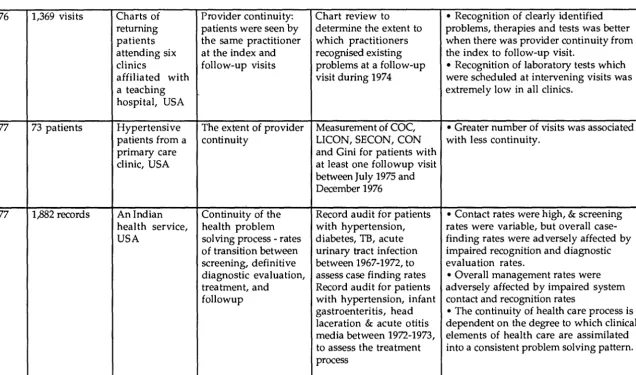
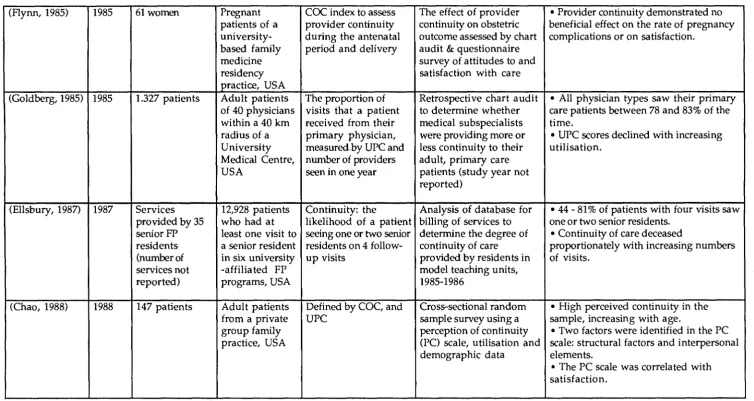
Studies of continuity of care in family and general practice settings ... 24
Australia ... 26
Canada ... 30
Norway ... 34
Sweden ... 38
United Kingdom ... 41
United States of America ... 46
xi
CHAP'fER 3: METHODOLOGY ... 57
Methodology ... 57
Multiple methods ... 57
The epidemiological studies ... 60
Qualitative research ... 61
The qualitative studies ... 64
Reference groups ... 65_ Institutional ethics approval ... 68
Methodological summary ... 70
CHAPTER 4: CONSUMER USE OF MULTIPLE GENERAL PRACTITIONERS and A DOCTOR OF ONE'S OWN? ... L ... 71
Introduction ... 71
Consumer use of multiple general practitioners ... 72
Aims ... 73
Method ... 73
Analysis ... 7 5 Results ... 75
Discussion ... 80
A doctor of one's own? ... 82
Aims ... 82
Method ... 82
Analysis ... 83
Results ... 84
Discussion ... 88
Summary and conclusion ... 90
CHAPTER 5: CONSULTING COLLEAGUES AND CONSUMERS ... 91
The Consulting colleagues study ... 95
Aims ... 9 5 Method ... 95
Analysis ... 99
The Consulting consumers study ...•....•...•...•... 104
Aims ...•...•...•...•... 104
Method ...•..•...•... 104
Analysis ...•...•...•...•... 107
Results ... 107
Discussion ...•... 115
CHAPTER 6: SEEING DOCTORS SURVEY ..•...•...•...•... 118
Aims ...•....•...••... 118
Method ... 118
Results ... 125
Discussion ... 143
CHAPTER 7: DETAILED INTERVIEWS WITH CONSUMERS & GPS ... 147
Aims ...•... 147
Method ... 148
Analysis ...•... 156
Findings and discussion ... 158
Ideal types ... 158
Ideal types and stereotypes ...•... 159
Types-in-practice ....•...•...•... 160
Mixed utilisation over time ...•••...•... 172
Types of utilisation available from GPs ... 174
Seeing other doctors ...•...•... 174
Changing one's doctor ...•...• 177
Summary ... 182
CHAPTER 8: HEALTH DIARY STUDY ... 184
Aims ...•...••.••...•...•...•... 186
Method ...•...•... 186
Design of the health diaries •... 186
Study population and sampling ... 187
Analysis and findings ... 188
Participation ...•...•... 188
First stage of analysis - Individual trajectories ...•... 192
Second stage of analysis - Trajectory patterns ... 195
Development of the typology of GP utilisation ..•...••... 202
Consumers' reasons for their choice of GP ... 202
Consumers' utilisation preferences ... 209
Comparison of consumers' preferred and actual utilisation ..•... 211
Consumers' reasons for choice of GP by preferred and actual utilisation ... 213
Changes in consumers' utilisation ...•..•.•••••... 218
Comparison of the typology of GP utilisation and continuity indices ... 219
Discussion ... 222
CHAPTER 9: REFERENCE GROUPS ... 225
Aims ...•... 226
Membership of the reference groups ... 227
Analysis ...•...••.•... 228
Reference group meetings ... 228
Findings ... 233
GP visits ... 233
Health problems seen in general practice ... 233
Consumers' experiences of uncertainty ...•...•... 234
GPs' experiences of uncertainty ... 239
Towards better management of uncertainty ... 242
Communication ...•...•...•...•... 244
Enhancing communication within consultations ... 246
Enhancing communication between consultations ... 247
Typology of GP utilisation ... 248
Differences between the groups' views .•... 249
Policy implications ...••...•...• 251
Credibility, authenticity and quality of the research ... 252
xiv
CHAPTER 10: SUMMARY AND CONCLUSIONS ... 255
The typology of general practice utilisation ... 256
Relationship between continuity and quality ... 257
The consul ta ti on ... 260
Nature of the problem ... 260
Uncertainty ... 260
Control and trust. ... 261
Influence of external factors on the clinical consultation ... 262
Public and comm unity opinion ... 262
Professional and institutional factors ... 263
Economic factors ... 263
Implications for general practice ... 264
Implications for medical education - undergraduate and vocational.. ... 265
Implications for policy ... 266
Enrolment ... 267
Free market ... 267
Grants as part of pluralistic health funding ... 268
Implications for further research ... 269
Appendices ... 271
CHAPTER 1
Introduction
Continuity of care and general practice
'Continuity of care' is upheld as an essential feature of general practice and
this is reflected in health policy (Royal Australian College of General
Practitioners and Arthur Anderson & Co 1985; National Health Strategy
1992). Also, continuity is regarded as a desirable feature of primary health
care (National Centre for Epidemiology and Population Health 1991;
National Centre for Epidemiology and Population Health 1992; South
Australian Community Health Research Unit (SACHRU) 1995), and is
linked with the achievement of beneficial outcomes for users of health care
services (Wasson, Sauvigne et al. 1984; Hjortdahl and Borchgrevink 1991).
General practice organisations' views on continuity
The Royal Australian College of General Practitioners (RACGP) defines
general practice as:
the provision of primary continuing comprehensive whole-patient care to
individuals,families and their communities (Murtagh 1994).
The RACGP definition emphasises care that is ongoing and indicates that,
in an ideal world, all patients would be seen by 'their' (usual) general
practitioner (GP) and 'continuity' would be the norm.
There is some evidence that community and practitioner opinion accords
with this view. In 1985 a Delphi study of health care experts and
community representatives examined the RACGP standards on quality of
care and how these related to the way GPs practised (Royal Australian
College of General Practitioners and Arthur Anderson & Co 1985). The
study found that 99% of respondents thought that general practitioners were
they should do so for the next decade. Murtagh stated that the essence of general practice is continuity of care (Murtagh 1994).
My initial interest in 'continuity of care' was kindled by the disparity
between the ideals alluded to above and my clinical experience of people
who were attending a number of different doctors.
'Doctor shopping'
In the early 1990s, while working as a GP in Canberra, I saw a number of
patients with complex problems. Some of these patients said that they had
seen several other GPs. They conveyed a sense of dissatisfaction and
frustration with their previous primary medical care and often described
feeling rushed during their consultations. About that time, the expression
'doctor shopping' was used colloquially to describe the pattern of people
seeing one doctor after another. The following vignettes illustrate what was
being called 'doctor shopping'.
Vignette 1: Mr and Mrs A
Mr and Mrs A. came to me feeling frustrated by their situation. They had
consulted three GPs during the preceding months. These visits had been
precipitated by acute stress or the need to renew prescriptions. It was
apparent that there was a complex interplay between the man's problems
which included dementia, gastrointestinal upset and urinary incontinence,
and the woman's postmenopausal and depressive symptoms which were
compounded by chronic carer stress.
My approach was to explore the interactions between the pathological
processes, the medications they were taking and their psychosocial situation.
The input of the physio- and occupational therapists, nurses and day care
centre staff helped everyone gain a more dynamic and detailed view of the
couples' functioning. As their problems were explored, I reflected new
perceptions back to Mr and Mrs A. The couples' understanding of the links
between the various aspects of their problems deepened and they developed
confidence in making decisions about their health.
Vignette 2: Mrs B
Mrs B. was a 44 year old woman who was separated from her husband.
When she first came to see me she described multiple problems including
chronic musculoskeletal and pelvic pain, urinary incontinence, depression
7 years old. Over time I learned that she had consulted 31 health professionals in the preceding 15 months.
During the 18 months that she saw me, it emerged that her own health was affected by an interplay between her physical conditions, the effects of domestic violence and her children's recovery after sexual abuse. A management program was devised that included medication, attending self-hel p groups, and extensive liaison with other members of the multidisciplinary health team and her previous doctors. However, she ended our relationship abruptly when she learned that I had reduced my consulting hours because I had begun doctoral studies. She felt frustrated and angered by my diminished availability and changed doctors again.
General practice utilisation
In addition to the dissonance between the organisational commitment to 'continuity of care' and my clinical experience, I found that the statistical picture of contemporary consumer practice did not fit neatly with the ideal either. The utilisation profile for Australian general practice published in the Health Insurance Commission (HIC) annual report in 1992 showed that 82% of the Australian population attended a general practitioner at least once in the preceding year, and that 56% of patients had seen at least two different general practitionersl (Health Insurance Commission 1992).
Policy options for Australian general practice
Australian general practice has been undergoing rapid structural change since 1989 (Douglas 1990; National Health Strategy 1992; Douglas 1995). As part of a concerted effort to inform the debate about possible future directions for Australian general practice and continuity in particular, I co-authored a discussion paper which explored various financial arrangements that might operate in Australian general practice (Veale and Douglas 1992).
Three policy options were examined for their effect on discontinuity and dissatisfaction. These were enrolment, general practice as a free market, and pluralist funding mechanisms for GP services. They are summarised, below.
1 Medicare, the Australian health care insurance system, provides publicly funded universal
health insurance so access to primary care is not restricted and there is freedom of choice of
GP for each general practice consultation.
Enrolment
Enrolment is a formal link between a patient and a doctor (who is nominated by that patient). Once enrolled, the patient receives their health and illness care from that GP who would thereafter be responsible for personally delivering or brokering all their medical care.
Enrolment is viewed by its GP proponents as a mechanism to re-establish continuity. It endorses the GP as the professional who is responsible for the consumer's health and, in its proponents' view, facilitates the provision of good medical care by GPs. Enrolment is a feature of general practice care in some European countries, for example The United Kingdom, Denmark and The Netherlands.
Enrolment is favoured by some public heath workers· too, but often for reasons other than remedying discontinuity of care. Public health activists see the advantage in a formalised doctor-patient relationship because it defines a link between a population and a GP. This' link allows health promotion efforts to be directed to defined populations, facilitates health program evaluation and makes it possible for disease incidence and prevalence to be calculated locally.
Some health economists and bureaucrats also support enrolment because defining a population in relation to providers is essential for capitation payments for health services. Capitation is one strategy for capping total medical expenditure. Another advantage of defining the population denominator is that it allows comparison of the cost-effectiveness of medical care for different groups.
Free market
A different response to the dissatisfaction and discontinuity problem is proposed by those favouring a free market approach to medical care. These people hold to the premise that medical services are like other commodities and that selling and purchasing services in a free market enhances quality and efficiency through competition. Consumers will choose the best service at the best price and are thereby more likely to be satisfied.
This strategy is favoured by many health economists, consumers and policy makers because it opens general practice to both the scrutiny and price competition of the market place. Many believe that such a policy challenges
the privilege that doctors enjoy as a consequence of their present protection from the full rigours of the free market.
Pluralist health funding
A third solution favoured by some GPs, economists and policy makers is a move away from a funding reliance on fee for service because it rewards throughput. Large numbers of brief visits in general practice are seen as the cause of consumer and GP dissatisfaction so the provision of pluralist health funding (a combination of grants, capitation payments and fee for service remuneration, for example) is promoted because it is likely to decrease the volume of GP visits. For this option to improve consumers' satisfaction and continuity, individual GPs would have to spend longer on fewer consultations.
One example of throughput-independent funding is the payment of fixed monies for non-clinical work undertaken by GPs within geographically defined divisions of general practice (Saltman 1995). Fixed remuneration for divisional work enables GPs to be paid to collaborate with their local communities in defining local health needs, and to participate in the delivery of educational and health promotion programs. Consumer organisations have welcomed, albeit cautiously, this development too (Consumers' Health Forum of Australia 1992).
The Better Practice Program
The Commonwealth government has given a commitment to reforming general practice and in November 1994 introduced the Better Practice Program (BPP) to provide grants to eligible general practices (Department of Human Services and Health 1994). The grants are intended to reward continuity of care (as measured by an HIC algorithm) within one practice and provide an additional income source for GPs that is independent of service volume. The HIC algorithm includes terms for standardised whole patient equivalents, an adjusted patient continuity index for the practice (not individual GPs), and a rural loading (McCallum and Raymond 1996(b)).
However there has been practitioner-led resistance to this innovation. By November 1995 only 32.5% of eligible practices were in receipt of a BPP grant (Dickson 1995).
Dissonance between policy and practice
Clearly there is a dissonance between policy and practice. Many patients are
seeing several general practitioners, but the RACGP stance is that continuity
of care (assumed to be care from one general practitioner) is an essential
feature of good general practice.
I undertook this research with the aim of understanding why some people
saw a succession of doctors and were feeling frustrated and unsatisfied with
their general practice care. Through an exploration of these and related
issues I wanted to contribute to a better understanding of 'continuity of care'
in contemporary Australian general practice and of the links between
continuity and quality of care.
Public health focus in the thesis
This is a public health thesis about Australian general practice. The research
has a population focus as it seeks to explore the perspectives of the two key
parties in general practice care - the consumer and the GP. In addition to the
interest in curative general practice that is evident in the studies I
undertook, there is a focus on health promotion and illness prevention,
and a particular concern for the ethic of empowerment.
Throughout this research I have been conscious of the importance of
listening to people and locating the views expressed within the participant's
context. In this work consumers have been taken to be the critical reference
group (Wadsworth 1991) since it is their interests that should be served by GP services. At the same time, GPs have been seen as an additional
important reference group since it is through an interaction between
consumers and GPs that a service is delivered (or provided and received).
The research program includes work that was collaborative and
multidisciplinary and comprises six studies that use a range of methods and
techniques. The project is informed by a constructivist perspective (which is explored in chapters three and nine) and this in turn informs the theoretical
perspective which underpins the research. Also the link between the
inquiry and action for change is examined in the final chapter.
CHAPTER
2
Literature review
This chapter describes general practice in the context of the Australian
health system, and then reviews the theoretical and empirical literature on
continuity of care.
General practice in Australia
What is the role of general practice?
The role of general practice in Australia is under review at present, as
indeed it is in Europe (National Health Strategy 1992; RACGP Presidential
Task Force 1995; WHO working Group 1995). However there is agreement
that aspects of this role include the provision of first contact, generalist medical care, so services should strive to be accessible and convenient
(Andersen, Bridges-Webb et al. 1986; National Health Strategy 1992; RACGP
Presidential Task Force 1995). Although GP services are broad in scope, it is
acknowledged that brokering of more specialised services will be
appropriate in some circumstances. Also GPs are challenging their
exclusion from inpatient medical care in public hospitals, citing the benefits
of a liaison role and their involvement in inpatient management
(Schattner and Dunt 1989). Quality general practice includes a
patient-centred approach which recognises that the person has their own unique
context comprising family, friends and community (RACGP Presidential
Task Force 1995; Stewart, Brown et al. 1995).
Medicare
Medicare I, the Australian taxation-based health insurance system, has been
operating since 1984. All Australian residents are eligible for health services
covered by the scheme. Among these services, Medicare provides access to
general practitioner (GP) services which are free at the time of the
consultation if the visit is 'bulk billed'. Bulk billing refers to the billing
option where the GP accepts 85% of the schedule fee for the relevant service
and is paid directly by the Health Insurance Commission (HIC) (Deeble
1991). In 1993-94, 68% of all services eligible for Medicare rebates and over
75% of GP services were bulk billed (Health Insurance Commission 1994).
Utilisation of general practice
Between 1984 and 1990 increasing proportions of Australians had at least
one GP visit per year. By 1990, 82% of Australian residents had one or more
GP visits (Deeble 1991). Over a five year period nearly all Australians make
at least one GP visit. McCallum et al. have reported that 99% of their study population in Canberra had one or more GP visits between 1988 and 1992
(McCallum, Lonergan et al. 1993).
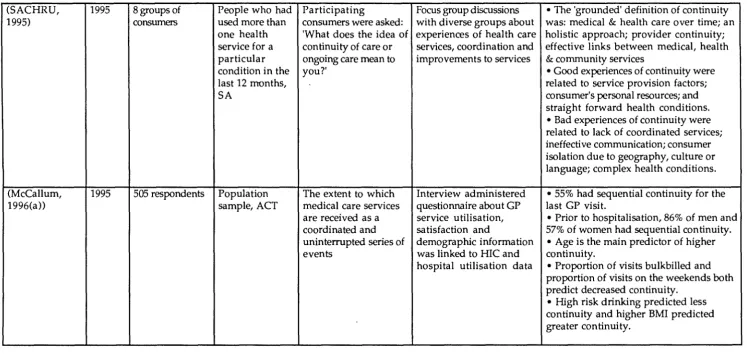
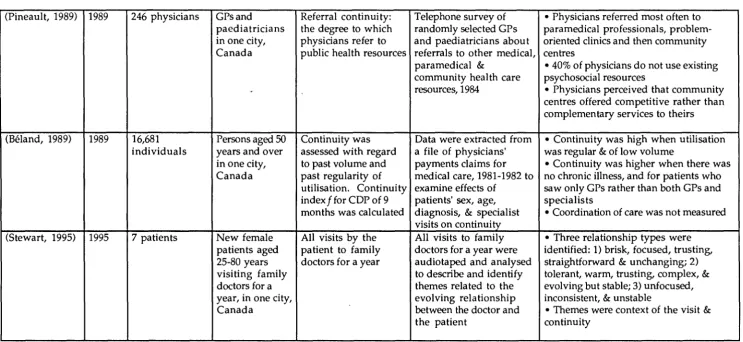
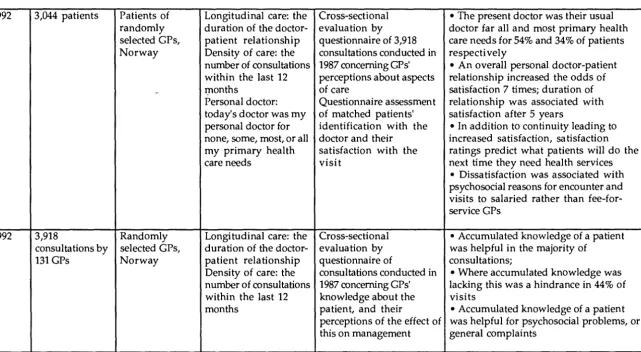
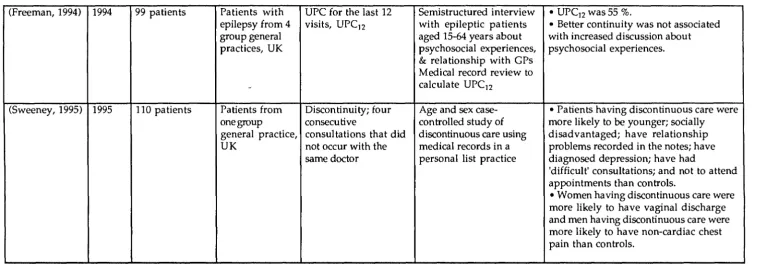
Four large studies of general practice utilisation have been reported in
Australia during the last decade. They are summarised in table 2.1 below. The study by Dunt et al. was performed immediately prior to the
introduction of Medicare (Dunt, Oberklaid et al. 1988). It showed that affordability, proximity to the service, and recommendation affected
patients' choice of services.
The national morbidity and treatment survey (AMTS) by Bridges-Webb et al. (see table 2.1) has provided a wealth of information about people who visited GPs, the health problems2 they presented, and the management
provided by the GPs (Bridges-Webb, Britt et al. 1992). In the absence of specific information for calculating population denominators, this study
provides the most accurate comparative data at this time.
1 Medicare is funded in part by a levy on all persons in paid employment; the remainder is
financed from general revenue.
2 The ten most frequently managed problems were: hypertension, upper respiratory tract
infections (URTI), asthma, osteoarthritis, acute bronchitis, immunisation, anxiety, joint
sprain, arthritis (other than osteoarthritis), and depression.
The AGB Australia study3 compared people from Eastern Australia who
visited one versus two or more general practices and found that 'multi
users' were 13% of their sample, that they were younger, were more
frequent users of health services, that their second GP was more frequently
in medical centres, and that they were more dissatisfied with their GP care
than single users (AGB Australia 1992(a)).
Ward et al. found that younger people in Western Australia were more
likely than other age groups to attend two or more general practices (Ward,
Underwood et al. 1995). They found a higher proportion (31 %) of their
sample with this pattern of GP service use than did the AGB Australia
study. In related studies, Underwood et al. showed that half of frequent
attenders (defined as 4 or more visits) had similar utilisation 12 months
later (Underwood, Ward et al. 1992). Ward et al. showed that a third of high
attenders (defined as having 7 or more visits in a six month period)
continued to visit GPs frequently and that they had more circulatory,
musculoskeletal and mental disorders than others (Ward, Underwood et al.
1994).
These studies show that practically all Australians visit GPs. Younger
people are more likely to see several GPs and yet are less satisfied with the
services they receive than people who attend one general practice.
3 AGB Australia is a market research company. They undertook commissioned research for
the Commonwealth Department of Health, Housing and Community Services.
10
Table 2.1 Studies of Utilisation in Australian General Practice
Author and Subjects Aim and Methods Results
Sample size
(Dunt, Patients visiting Interview study • Patients attending general
Oberklaid et one of 8 general about patients' practice were less likely to be in
al. 1988) practices, a views of primary manual occupations or unemployed
592 patients casualty or a medical care than those attending the casualty or
community services in an community health centre.
heal th centre in industrialised area • Proximity to home or work, then
one city, of low social recommendation were the most
Australia amenity in frequently cited reasons for choosing
Melbourne during a service.
1983
(Bridges- Encounters National morbidity • The most frequently managed
Webb, Britt between 495 GPs data for up to 200 problems were: hypertension, URTI,
et al. 1992) and consecutive consecutive GP asthma, osteoarthritis, acute
98,794 patients visits over 2 one- bronchitis, iminunisation, anxiety,
encounters week periods were sprain, arthritis, & depression.
(weighted by recorded to describe • There were more female (58%)
state) the reasons for than male (42%) encounters overall.
encounter, • 16% of encounters were with
morbidity and their children; 11 % with 15-24 age group;
management, in 48% with adults aged 25-64 years;
1990-91 & 25% with those over 65 years.
(AGB Re pres en ta ti ve To describe & • 80% of adults were single GP users
Australia sample of adult investigate factors and 13% were multi users.
1992(c)) GP users from 7 affecting consumers' •Higher proportions of multi users
750GPusers Australian GP usage patterns, were aged 18-39 years.
capital cities & 1992 •Multi users were more frequent
4 rural towns users of GP & other health services
than single users, & were less
satisfied with services.
(Ward, Patients from 3 Comparison of • 30.8% patients had visits in both
Underwood group practices, morbidity data and observation periods.
et al. 1994) WA grouped service • 51 % were low attenders {1-3
2139 patients utilisation for visits) in both periods; 5% had 4-6
3254 visits patients seeing 14 visits in both periods; 4% had 7+
GPs at 3 practices visits in both periods.
for two 6-month • High attenders had more
periods during 1986- circulatory, musculoskeletal and
88 mental disorders.
(Ward, Patients from 3 Comparison of HIC • 69% of patients did not attend any
Underwood group practices, and practice data other practice during 6 months.
et al. 1995) WA for services • More of the very young {0-3 years)
6.943 provided by 14 GPs and young adults {18-24 years)
patients at 3 practices for attended elsewhere than other
16,303 visits two 6-month groups.
periods during 1986- • 85% of patients did not visit a
Australian general practitioners
Who are they?
At present there is no definitive list of actively practising Australian GPs (Saltman and Mant 1992). The Medical Provider File (MPF; formerly called the Central Register of Medical Practitioners - CROMP) does however list all doctors who are registered to receive payments from the Health Insurance Commission which administers Medicare. This source has been utilised by several researchers as it is the most comprehensive list available. However the MPF does not distinguish GPs from non-specialists4. Thus this file would be likely to over-enumerate practising GPs since they are in a default category which includes non-accredited specialists and hospital-based doctors in training. Also, the file records the number of services that attracted a rebate, not information about the acti'vity level of the practitioners. With these caveats, there were 12,165 full-time GPs and 10,634 who worked part-time in 1989-90.
Since 1989 GPs have been able to apply for vocational registration (VR) which allows access to a higher fee schedule than is available to non-VR GPs. This VR subset comprises GPs with vocational experience of five or more years and/ or the fellowship of the RACGP (FRACGP). The VR subset is likely to be more accurate than the MPF as it excludes non-GPs but it has not been used for research purposes to date.
National information about GPs was collected for the Australian Morbidity and Treatment Survey (Bridges-Webb, Britt et al. 1992; Bridges-Webb, Britt
et al. 1993). The sample was derived from the MPF. Those GPs who had provided 1,500 or more general practice services during 1989 were eligible for inclusion in the survey and 3.5% of active GPs in each state were sampled. The Australian Capital Territory (ACT), Northern Territory and Tasmania were 'over sampled' to permit between state comparisons. The
4 In 1991 Deeble adopted a pragmatic solution to the problems of definition by dichotomising
doctors into specialists and general practitioners (Deeble 1991). General practitioners were
defined as those without specialist qualifications since those with specialist qualifications
were identified for entitlement to higher rebates. Activity in general practice was divided
into full-time and part-time as defined by annual gross fee receipts from Medicare above and
below $A61,000 respectively.
GP respondents to the survey were predominantly male (80.5%), aged 35-54 years (67.9%), Australian graduates (80.0%) and had been in practice for 10 or more years (68.3%). Comparison of respondents and non-respondents showed the latter to be more likely to be male, older and to conduct a proportion of consultations in a language other than English.
More detailed and accurate information about GPs is available in some regional areas. The Hunter region is notable in this regard (Dickinson and Sanson-Fisher 1992). The Hunter Postgraduate Medicine Institute has developed a database which lists all medical practitioners (subdivided into specialists, doctors in training and GPs). Eventually the divisions of general practice should be able to compile a more accurate list of GPs within their geographical area.
What types of practices do they work in?
The practices and affiliations of individual doctors may i,nfluence their style of practice and the clientele who consult them. However, until 1995 the MPF did not include verified information on general practices since the file was established for accounting purposes. One of the aims of the Better - Practice Program that was launched by the Commonwealth Department of Human Services and Health in November 1994 was to gather information about practice affiliations from GPs who applied for practice enhancement grants. Such information is not available nationally at the present time.
Kinder (Kinder 1986) has documented the organisational shift in Australian general practice from solo to group practice. Prior to World War II, solo practice was the norm. By 1966, 40% of GPs in New South Wales (NSW) were in solo practice and this declined to 38% by 1975. (Chancellor and Andersen 1977) Regional differences in general practice organisation were first described in NSW during the seventies. At that time inner-city GPs were more likely to be in solo practice than those in outer suburban and rural practice. In 1988 a survey of South Australian (SA) GPs found that 29% were in solo practice, 13% were in two person practices and 59% were in groups of three or more GPs (South Australian Health Commission and Joint working party of AMA RACGP and SA Health Commission 1989).
The most recent national data on general practice organisation is derived from the 495 GPs to the AMTS (Bridges-Webb, Britt et al. 1992; Bridges-Webb, Britt et al. 1993). When this survey was conducted in 1990-91, 25.9% of the responding GPs were in solo practice, 40.3% were in groups of 2-3 GPs
and 33.8% were in practices comprising four or more GPs. Table 2.2 below
shows the percentage of GPs arranged by type of practice in NSW, SA, and
nationally; these studies show a trend away from solo to group general
practice.
Table 2.2 The percentage of GPs arranged by type of practice in NSW, SA,
and nationally
Type of general Chancellor (1975)
practice NS W
solo GP 38
2-3 GPs
4+GPs
total 100
SAHC* (1988)
SA
29
13
59
100
* SAHC is the South Australian Health Commission
t AMTS is the Australian morbidity and treatment survey
AMTSt (1990-91)
National
25.9
40.3
33.8
100
Britt et al. compared the practice characteristics of urban and rural GPs. Overall, rural GPs were more likely to work in group practices than their
urban colleagues, but those in small towns were more likely to be in solo
practice (Britt, Miles et al. 1993). Table 2.3 is an excerpt from table 4.1, page 523 (Britt, Miles et al. 1993) showing the number of GPs (expressed as a percentage) in each type of practice, by location.
Table 2.3
No. of GPs
In the
practice(%)
Solo GP
2-3 GPs
4+GPs
Total
The number of GPs (expressed as a percentage) in each type of
practice, by location*
Small Medium Large All
Metro-townst towns+ towns§ country politan
(n=59) (n=59) (n=58) (n=176) (n=50)
40.2 15.3 17.9 22.6 29.3
47.6 38.9 21.4 33.7 41.0
12.2 45.9 60.7 43.7 29.7
'
100 100 100 100 100
,. excerpt from table 4.1, page 523 (Britt, Miles et al. 1993)
t Small country towns - postcodes with populations of less than 5,000 (ABS, 1986 census)
:f: Medium country towns - postcodes with populations of more than 5,000 but less than 15,000 (ABS, 1986 census)
§ Large country towns - postcodes with populations in excess of 15,000, but not metropolitan. (ABS, 1986 census)
Continuity of Care
In this section I describe the origins of the concept of continuity of care, its
development in the literature, and measures that have been proposed to
evaluate it. Finally, I review the Australian and international studies
which are related to continuity of care in general practice.
The concept of continuity of care
Continuity of care is widely regarded now as an essential component of
quality general practice care (Royal Australian College of General
Practitioners and Arthur Anderson & Co 1985; National Centre for
Epidemiology and Population Health 1991; National Centre for
Epidemiology and Population Health 1992; National Health Strategy 1992;
South Australian Community Health Research Unit (SACHRU) 1995). Its
importance has been emphasised in statements about, and definitions of,
general practice, for example the statement by the Royal, College of General
Practitioners (RCGP) in the United Kingdom (UK), 1972, that: 'the doctor should provide his patients with personal, primary and continuous care'.
The RCGP, the first general practice college, was established in the UK in
1952. In the nineteenth and early twentieth centuries most medical
practitioners were male and in solo practice. However at the time the
college was founded (four years after the introduction of the National
Health Service) this was changing and only 44% of GPs were solo
practitioners (Gray 1979). The shift from solo to group general practice
occurred more slowly in Australia. In 1975, 38% of GPs in NSW were in
solo practice (Chancellor and Andersen 1977). Definitions of general
practice that emphasised the personal delivery of medical care by one doctor
and responsibility over extended periods, seem to reflect the usual situation
when they were promulgated.
The development of the concept of continuity of care in the literature
In 1975 a series of four papers explored the concept of continuity and
developed the first general (and family) practice theory of continuity care
(Geyman 1975; Hansen 1975; Hennen 1975; McWhinney 1975). The papers
drew on the authors' extensive clinical and teaching experience in general
practice, early health services theory, and studies of continuity of care in
paediatric settings in the United States of America (USA).
Hennen stated that the concept of continuity included first contact care, longitudinal responsibility, integration and the family as the unit of care (Hennen 1975). He described four dimensions of continuity of care:
1) chronological (care to persons of all ages, and care throughout the natural history of illness);
2) geographical (provision of primary care regardless of site);
3) interdisciplinary (management of diseases of several body systems and illness in other family members to facilitate the optimal function of the whole family); and
4) interpersonal (relationships with the patient, other family members, and other medical and health professionals). This last aspect was noted to require the skill of continuity of information, which relied 'to a great extent on the written record'.
McWhinney highlighted the importance of relationships m continuity of care, describing the concept as 'an implicit contract (that) exists between the family physician and the patient' (McWhinney 1975). He went on to say that 'continuity is not delineated by disease and the responsibility continues until death or decision to end the relationship'. However the depth of knowledge gained from continuity of care was thought to be more important than the duration of the relationship. McWhinney listed applications of continuity in clinical practice:
1) 'observation over time can be used as a very effective tool for the validation of diagnostic hypotheses';
2) opportunity to use psychotherapy as needed during 'the continuing personal relationship';
3) doctors see the 'illness in the context of the whole person and his environment'.
Hansen synthesised the dimensions and applications of continuity in proposing the first theoretical framework for continuity of care (Hansen 1975). He emphasised the flow between the 'continuity elements': patient-initiated contact with the doctor, the patient-professional relationship, continuity of necessary data (the medical records), delivery of needed services or care, and desired outcome. Hansen reviewed the paediatric evidence regarding continuity of care to determine whether it made any difference in measurable outcomes. Positive effects cited by Hansen
included a reduction in rheumatic fevers, more cost-effective care for ambiguous illness in children presenting for emergency treatment6 and enhanced patient and provider satisfaction with care7. However the effect of continuity on compliance with medications was unclearB.
Geyman discussed ways that training in family medicine might be altered 'to include more continuity on a program or group level not (only) ... on the individual resident level' (Geyman 1975). He examined the educational, organisational, and operational issues in designing a family practice residency program that included continuity of care.
The early formulation of continuity of care, outlined above, has been very influential. In 1980, Rogers and Curtis sought to elabo7ate the theoretical model and emphasise the importance of continuity of information. They defined continuity in medical care as 'a measurable succession of encounters (and) an attitude as well' (Rogers and Curtis 1980(a)). In their revised model, the medical interaction occurred in 'an encounter' that involved 'the provider and consumer elements', in a 'continuity environment' characterised in terms of seven dimensions (chronological, geographic, interdisciplinary, informational, relationship, stability, and accessibility), and which drew on a knowledge base with 'age-dependent, biomedical and psychosocial aspects'.
Wall reviewed the evidence on outcomes attributable to the elements of continuity described in Rogers and Curtis' model (Wall 1981). He suggested that the informational dimension of continuity was the most critical in
5 Gordis claimed that comprehensive care programs (which included continuity) had been
the critical factor in reducing the incidence of rheumatic fever in the inner city Baltimore
(Gordis 1973).
6 Alpert et al (1970) showed that the continuous care group in the emergency room had fewer
studies and treatments received (and thus lower costs) in situations where the diagnosis was
ambiguous. (Alpert, Kossa et al. 1970; Heagarty, Robertson et al. 1970)
7 Becker (1974) showed greater satisfaction for patient, physician, and clinic staff in the
continuing care group (Becker 1974 (b)).
8 Charney (1967) found that compliance was improved when the patient's 'regular' doctor
prescribed the treatment, but Gordis (1969) showed no improvement in compliance with
penicillin prophylaxis for post-rhematic fever management in the continuing care team in
hospital clinic vs others. (Charney, Bynum et al. 1967; Gordis 1973)
determining important outcomes such as the minimisation of unnecessary or duplicated diagnostic tests, and response to abnormal findings, risk factors or laboratory test results.
More recently, Hjortdahl has proposed a further refinement of the model of continuity (Hjortdahl 1992(d)). He links 'input' or independent variables (longitudinal care, organisational and personal factors, and shared major events) to outcomes of care. The outcomes are primary (medical and personal knowledge of the patient), intermediate (resource use, responsibility, understanding and satisfaction) and final (quality of care, morbidity, mortality, and economic assessment). This model retains the flow and interaction between the elements and emphasises the contribution of longitudinal care to quality and cost-effective outcomes expressed in terms of morbidity and mortality.
The foregoing synthesis of the development of a theory of continuity of care shows that it has been informed in the experience of clinicians and teachers and only recently shaped by empirical research.
Indeed the grounding of commentaries on continuity of care in clinician's experience has been reflected in the debate about definitions of continuity. Most authors have tended to modify the definition idiosyncratically, leading Starfield to observe in an editorial that the notion was characterised by suspense, even continuous confusion (Starfield 1980). She called for a distinction between longitudinality and continuity, proposing that longitudinality be defined as 'a phenomenon involving both the availability of a regular source of care (place or professional) and a decision, by the patient, to seek care from that source whenever care is needed'. Continuity she defined as 'an uninterrupted succession of events (episode of illness); the bridging mechanism between visits for a specific condition or episode with the intent of improving follow-up for patients' problems and facilitating efficiency in diagnostic workup and management (Starfield 1979; Starfield 1980).
Others have proposed different theoretical constructions of continuity of care. Banahan and Banahan highlighted the contractual aspect of continuity and suggested that there were three types (Banahan and B.F. Banahan III 1981). Type A continuity involved a patient-physician relationship extending across periods of illness and well-being and encompassing significant life cycle changes for the patient. Type B was shorter in duration
In summary, descriptions of the elements of continuity of care were founded on the experience of clinicians. Two aspects of continuity have been discussed in detail: the relationship between the doctor and patient, and integration. First contact care is viewed as providing a foundation for continuity by initiating the doctor-patient relationship (Hansen 1975; Hennen 1975). This relationship can be strengthened by the sharing of major health-related events (Banahan and B.F. Banahan III 1981; Hjortdahl 1992(d)). The depth of knowledge gained through repeated interaction and an ongoing relationship has been described by clinicians, researchers and consumers (Hennen 1975; McWhinney 1975; Starfield 1980; Banahan and B.F. Banahan III 1981; Chao 1988; South Australian Community Health Research Unit 1995). This ongoing relationship requires the support of continuously updated clinical information (Hennen 1975;,Rogers and Curtis 1980(a); Wall 1981; Ruane and Brody 1987). A frequently reported function of continuity relates to integration of health care within the context of the patient's family (Hennen 1975; McWhinney 1975), and coordination of health services in the primary and specialist sectors (Hennen 1975; Starfield 1980; Rogers and Curtis 1980(a); Banahan and B.F. Banahan III 1981; Wall 1981; Ruane and Brody 1987; Chao 1988; Consumers' Health Forum of Australia 1992; South Australian Community Health Research Unit 1995) The implications of these understandings of continuity for teaching were drawn out first by Geyman (Geyman 1975). Empirical research has focussed on those health outcomes that can be attributed to the elements of continuity and this has led to considerable interest in measures of continuity which are discussed below.
Measures that have been proposed to evaluate continuity
Broadly, the measures of continuity fall into two categories: those that focus on continuity of care for an individual, and visit-based measures which are used to assess the performance of health systems. The individual measures were first developed in North America where individual benefits of care are a focus. In contrast, visit-based continuity measures were developed separately by teachers interested in program evaluation and by researchers in Sweden. The Swedish researchers were evaluating the public health effects of institutional changes within their primary care system that were designed to facilitate provider continuity (that is, the provision of primary medical services for an individual by one GP).
Individual measures of continuity
Five individual measures of continuity have been described which relate the number of visits to the number of providers seen. These are Usual Provider Continuity (UPC), the index of Continuity of Care (COC), the likelihood of continuity being present (LICON), the average sequential visit continuity (SECON), and the Modified Continuity Index (MCI). These measures are described, below.
Breslau and Reeb, 1975 developed an index of continuity for paediatric practice (Breslau and Reeb 1975). Continuity was defined as 'the extent to which a single physician manages the health needs of the patient or the family'. Usual Provider Continuity (UPC) was defined as the number of visits with the patient's 'own' physician divided by the total number of visits in the year. UPC = n(usual provider)/n, where' n= the number of visits.
Bice & Boxerman described an index of Continuity of Care (COC) (Bice and Boxerman 1977). Continuity was defined as 'the extent to which a given individual's total number of visits for an episode of illness or a specific time period are with a single or group of referred providers'. Bice and Boxerman proposed that all visits to either a usual provider or a referred provider be viewed as having been to a single provider for this index. This assumption is predicated upon perfect communication between the referral parties. COC = Li=l to
s
(ni2 -n)In
(n-1) where n =total number of visits;ni = number of visits to provideri; S = number of unreferred providers;
I
= the sum of calculated values. The COC index assesses an individual's continuity and is sensitive to the total number of visits and number of different providers. However this index is not sensitive to the sequencing of visits.Steinwachs proposed two new measures of continuity: the likelihood of continuity being present (LICON) and the average sequential visit continuity (SECON) (Steinwachs 1979). SECON = Li=l to n-1 (pi /(n-1)) where pi = ith pair of visits. ie SECON = 1 if the same provider was seen on
successive visits, otherwise = 0. SECON was the first index that was sensitive to the order in which visits occurred and LICON introduced the notion that the probability continuity could be different from random allocation of visits.
Godkin & Rice reported another individual-based continuity index called
the Modified Continuity Index, MCI (Godkin and Rice 1984).
MCI = 1- (S/(n+0.1) where n = total number of visits; S = total number of
different providers seen. This index incorporates a weighting for the
number of visits and was proposed principally for use by clinicians.
Murata has proposed a Family Care measure (FC) which is based on
individual measures for members of a family (Murata 1993). FC examines
the frequency of visits, number of family members and number of family
providers. FC = Lj=l to
J
nj2 - Li=l to I nij2I
n2 - Li=l to I ni2 where n= total number of visits by family; nij = number of visits by family memberi toproviderv ni = total number of visits by family membeq; nj = total number
of visits by family to provider to providerj.
Visit-based measures of continuity
Three indices were developed in North America to assess the continuity of
care provided to groups and to allow comparisons between subgroups (not
between individuals). These aggregate measures are Gini and CON, and the
Modified, Modified Continuity Index (MMCI).
Shortell developed two measures, Gini and CON, based on a definition of
continuity as 'the extent to which medical care services are received as a
coordinated and uninterrupted succession of events consistent with the
medical care needs of the patient' (Shortell 1976). The Gini and CON
indices measure concentration for an illness episode and take account of the
distribution of the remaining sources of care (ie the number of different
providers).
Magill and Senf described a Modified, Modified Continuity Index (MMCI)
for use in training settings (Magill and Senf 1987). MMCI = 1- (n of
providers)/{n of visits+ 0.1})/ 1- (1/{n of visits+ 0.1}). The authors designed
the MMCI so it was 'not overly sensitive to the large number of providers
found in a residency training site'.
The Swedish visit-based measures were pioneered by Eriksson & Mattsson
(Eriksson and Mattsson 1983). Five visit-based measures have been
developed and three conceptual distinctions necessary for their application
have been drawn. Eriksson and Mattsson defined sequential continuity, s,
equal to 'one if the provider of the visit was also seen at the preceding visit