1
FORMULATION AND EVALUATION OF GALANTAMINE
HYDROBROMIDE EXTENDED RELEASE CAPSULES
Dissertation submitted toTHE TAMILNADU DR. M.G.R. MEDICAL UNIVERSITY, CHENNAI-32
In partial fulfillment for the award of the degree of
MASTER OF PHARMACY IN
PHARMACEUTICS
Submitted by
Register Number: 26111002
UNDER THE GUIDANCE OF
Dr. P. Thilek kumar, M.pharm., Ph.D., Mr. T. Udayakumar, M.Pharm., (Industrial Guide) (Institutional Guide)
DEPARTMENT OF PHARMACEUTICS,
2
CERTIFICATE
This is to certify that the dissertation work entitled “FORMULATION
AND EVALUATION OF GALANTAMINE HYDROBROMIDE EXTENDED
RELEASE CAPSULES-24mg” submitted to THE TAMILNADU DR. M. G. R.
MEDICAL UNIVERSITY, CHENNAI-32 for the award of the degree Master of
pharmacy in Pharmaceutics is a bonafide research work done by Register
Number: 26111002 under my Guidance in the Department of Pharmaceutics,
C.L.Baid Metha College of Pharmacy, Chennai-600097 during the academic year
2012-2013.
Place: Chennai-97 Mr . T.UDAYAKUMAR, M.pharm., Date: Assistant professor,
Department of pharmaceutics,
C.L.Baid Metha college of pharmacy,
3
Prof . Dr . Grace Rathnam, M.pharm., PhD Principal
CERTIFICATE
This is to certify that the dissertation work entitled
“FORMULATION AND EVALUATION OF GALANTAMINE EXTENDED
RELEASE CAPSULES- 24mg” submitted to THE TAMILNADU DR. M. G. R.
MEDICAL UNIVERSITY, CHENNAI-32 for the award of the degree Master of
Pharmacy in Pharmaceutics is a bonafide research work done by Register
No:26111002 under the guidance of Mr. T.UDAYAKUMAR M.Pharm.,
Assistant professor, Department of Pharmaceutics, C. L. Baid Metha college of
Pharmacy, Chennai-600 097 during the academic year 2012-2013.
Place: Chennai-97 Dr. GRACE RATHNAM, M. Pharm.,Ph.D Date: Principal & HOD
4
DECLARATION
I hereby declare that the thesis entitled “FORMULATION AND
EVALUATION OF GALANTAMINE HYDROBROMIDE EXTENDED
RELEASE CAPSULE-24mg” has been originally carried out by me under the
supervision and guidance of Dr. P. THILEK KUMAR M.pharm.,Ph.D.,
(Industrialguide) Mr. T. UDAYAKUMAR M.pharm., (Instititionl Guide)
Asst.Professor, Department of Pharmaceutics, C.L.Baid Metha college of
Pharmacy,Chennai-97 during the academic year 2012-2013.
Place: Chennai-97 (Register No: 26111002) Date:
5
ACKNOWLEDGEMENT
It is a great time for me to acknowledge those without whom, this work
would not have been fruitful.
It gives me an immense pleasure in expressing my deep sense of gratitude to
my respected guide Mr. T.UDAYAKUMAR M. Pharm., Assistant professor, C.L.Baid Metha college of pharmacy,Chennai-97 for his remarkable guidance, constant encouragement and every scientific and personal concern throughout the
course of investigation and successful completion of this work.
I would like to express my immense gratitude to my Industrial guide
Dr P. Thilek kumar. , M.Pharm,Ph.D., Sr.Manager, Ra Chem Pharma limited, Nacharam Industrial area, Hyderabad-37 for providing the great opportunity to carry out the project with his valuable guidance and support in each and every aspect
of the project.
It is great pleasure and honour for me to owe gratitude to Prof. Dr. Grace Rathnam M.Pharm, Ph.D. principal for all her support and for giving a valuable guidance and scientific support to carry out this work.
I would like to thank Ra chem private limited , for giving me an opportunity
to perform my project work in their organization which helped me to mould my
project work into a successful one.
I feel proud to express my hearty gratitude and appreciation to all my
Teaching and Non-teaching Staff members of C.L.Baid Metha College of
6 I owe my special thanks to Mr. Kondal Rao, Quality Analyst, Rachem pharma limited for referring me to do the project in Rachem pharma limited.
I feel proud to express my hearty gratitude to all my classmates.
Also I want to thank all of those, whom I may not be able to name individually, for
helping me directly or indirectly.
Last but not the least I wish to express my deepest sense to respect
and love to my parents for their constant support and encouragement throughout.
7
CONTENTS
Chapter No. TITLE Page No.
1 Introduction 14
2 Literature Review 43
3 Aim and Objective 47
4 Plan of Work 48
5 Drug Profile 50
6 Materials and Methods 58
7 Results and Discussion 82
8 Summary and Conclusion 114
8
ABBREVATIONS
API Active pharmaceutical Ingredient
BCS Biological Classification System
CI Compressibility Index
DDS Drug Delivery System
EC Ethyl cellulose
ER Extended Release
FBC Fluid Bed Coater
FTIR Fourier transformer infrared spectroscopy
GI Gastro Intestinal Tract
HBR Hydro bromide
HDPE High Density Poly Ethylene
HPLC High performance liquid chromatography
HPMC Hydroxy propyl methyl cellulose
HR Hausner Ratio
ICH International Conference for Harmonisation
IP Indian Pharmacopoeia
IPA Iso Propyl Alcohol
IR Immediate Release
MRI Magnetic Resonance Imaging
PEG Poly ethylene glycol
PET Positron Emission Tomography
RH Relative Humidity
RPM Rotation Per Minute
SPECT Single Photon Emission Computed Tomography
SR Sustained Release
USP United States Pharmacopoeia
9
NOMENCLATURE
% Percentage
µg/ml Microgram/millilitre
Conc Concentration
gm/cc Gram/cubic centimetre
Hr Hour
Kg/cm2 Kilogram/square centimetre
Min Minute
Mm Millimetre
Ng Nanogram
ng/ml Nanogram/millilitre
ng-hr/ml Nanogram-hour/millilitre
10
LIST OF TABLES
TABLE. NO TABLE NAME PAGE NO
1.1
Capsule sizes and their fill weights 25
1.2
Content uniformity 27
1.3
Capsule lock length in mm 28
6.1
Materials List 45
6.2
Hypromellose 46
6.3
Sugar Spheres 47
6.4
Poly Ethylene Glycol-6000 48
6.5
Ethyl cellulose 49
6.6
Isopropyl alcohol 50
6.7
Equipments List 51
6.8
Conditions for compatability studies 54
6.9
Formula and their quantities 60
6.10
Dissolution parameters 65
7.1
Physical properties of Galantamine 73
7.2
Sieve analysis values of Galantamine 73
7.3
Standard curve values of Galantamine 75
7.4
Compatability study of Drug and Excipients 77
7.5
Invitro Dissolution profile of formulation F1 79
7.6
Invitro Dissolution profile of formulation F2 80
7.7
Invitro Dissolution profile of formulation F3 81
7.8
11 7.9
Invitro Dissolution profile of formulation F5 84
7.10
Invitro Dissolution profile of formulation F6 85
7.11
Invitro Dissolution profile of formulation F7 87
7.12
Invitro Dissolution profile of formulation F8 88
7.13
Invitro Dissolution profile of formulation F9 90
7.14 Invitro Dissolution profile of formulation
F1-F9
91
7.15
Characteristics of pellets of formulation F9 92
7.16
Weight variation of all formulations F1-F9 94
7.17 Content uniformity percentage of formulation
F1-F9
98
7.18
Disintegration values of all formulations F1-F9 98
7.19
Moisture content of all formulations F1-F9 99
7.20 Evaluation parameter values at different
temperature conditions
99
7.21
12
[image:12.595.109.503.183.755.2]LIST OF FIGURES
FIGURE.NO FIGURE NAME PAGE. NO
1.1 Plasma Drug Concentration Profile for
Conventional Tablet formulation
5
1.2 Comparison of a normal brain with
Alzheimers diseased brain
14
1.3 Scheme of steps involved in pelletization
by layering
20
1.4 Scheme of stages involved in pelletization
by suspension or solution layering
21
1.5
Fluid Bed Processing 21
1.6 Scheme of pelletization stages in extrusion
and spheronization
23
5.1
Molecular structure of Galantamine 37
6.1 Manufacturing flow chart for extended
release capsules
58
7.1
DSC graph for Galantamine 70
7.2
FT-IR Spectrum of optimized product 71
7.3
FT-IR Spectrum of placebo pellets 72
7.4
FT-IR Spectrum of pure drug 72
7.5
Standard curve of GalantamineHBr 76
7.6
UV Spectrum of GalantamineHBr 76
7.7 Comparative dissolution profile of
formulation F1
79
7.8 Comparative dissolution profile of
formulation F2
81
7.9 Comparative dissolution profile of
formulation F3
82
7.10 Comparative dissolution profile of
formulation F4
13
7.11 Comparative dissolution profile of
formulation F5
84
7.12 Comparative dissolution profile of
formulation F6
86
7.13 Comparative dissolution profile of
formulation F7
87
7.14 Comparative dissolution profile of
formulation F8
89
7.15 Comparative dissolution profile of
formulation F9
90
7.16 Comparative dissolution profile of
formulation F1-F9
92
7.17
HPLC Chromatogram of Blank 95
7.18 HPLC Chromatogram of Sample 96
14
I. INTRODUCTION
Over the past 30 years, as the expense and complications involved in marketing new drug entities have increased, with concomitant recognition of the therapeutic advantages of controlled drug delivery, greater attention has been focused on development of sustained or controlled release drug delivery systems. The attractiveness of these dosage forms is due to awareness to toxicity and ineffectiveness of drugs when administered or applied by conventional method in the form of tablets, capsules, injectables, ointments etc. Usually conventional dosage form produce wide ranging fluctuation in drug concentration in the blood stream and tissues with consequent undesirable toxicity and poor efficiency. This factors as well as factors such as repetitive dosing and unpredictable absorption led to the concept of controlled drug delivery systems.
15 1.1. Oral drug delivery: 2, 3, 4, 5
This is the most widely utilized route of administration among all the routes that have been explored for systemic delivery of drugs via different dosage form. Oral route is considered most natural, uncomplicated, convenient and safe due to its ease of administration, patient acceptance and cost effective manufacturing process.
For the past decades, there has been enhanced demand for patient complaint dosage forms. As a result the demand for the technologies has been increased 3 fold annually. Since the development cost of new chemical entity is very high, the pharmaceutical companies are focusing on the development of new drug delivery systems for existing drug with an improved efficacy and bioavailability together with reduced dosing frequency to minimize the side effects.
Oral drug delivery is the most desirable and preferred method of administering therapeutic agents for their systemic effects. In addition, the oral medication is generally considered as the first avenue investigated in the discovery and development of new drug entities, pharmaceutical formulations, mainly because of patient acceptance and convenience in administration.
16 1.2. Modified Drug Delivery Systems8
Dosage forms can be designed to modify the release of the drug over a given time or after the dosage form reaches the required location. Drug release occurs only after some time of the administration or for a prolonged period of time or to a specific target in the body. Modifications in drug release are often desirable to increase the stability, safety and efficacy of the drug, to improve the therapeutic outcome of the drug treatment or to increase patient compliance and convenience of administration.
1.3. Classification7:
Modified Release dosage form may be classified as Extended Release
Sustained Release
Controlled Release
Delayed Release
Site Specific Targeting
Receptor targeting.
1.3.1. Extended Release (ER):
17 1.3.2. Sustained Release (SR):
This term Extended or Sustained is constantly used to describe a pharmaceutical dosage form formulated to retard the release of the therapeutic agent such that its appearance in the systemic circulation is delayed and prolonged and its plasma profile is Sustain in duration. The onset of its pharmacological action is often delayed, and the duration of its therapeutic effect is sustained. In orally administered dosage forms, this duration is in hours and critically depends on the residence time of the dosage form in GI tract, where as in the case of injectables this period may vary from days to months.
1.3.2a. Advantages of ER/SR Dosage Forms 11:
Improved patient compliance due to reduced frequency of drug administration.
The blood level oscillations characteristic of conventional dosage forms is reduced.
A less obvious advantage that the total amount of drug administered can be reduced, thus maximizing availability with minimum dose.
Better control of drug absorption can be attained, since the high blood level peaks that may be observed after administration of a dose of high availability drug can be reduced by formulation in an extended action form.
The safety margin of high potency drugs can be increased, and the incidence of both local and systemic adverse side effects can be reduced in sensitive patients.
18 1.3.2b. Disadvantages: 11
Administration of Extended Release(ER) medication does not permit the prompt termination of therapy.
Less flexibility in adjusting dosage regimen.
Sustained release forms are designed for normal population, i.e., on the basis of biological half-lives. Consequently, disease states that alter drug disposition, significant patient variation, and so forth are not accommodated.
Economic factors.
1.3.2c. Drug candidates that is suitable for ER/SR Dosage Forms:
Should be effectively absorbed in small intestine.
Biological half life should lie within 1-12hours.
Dosage that is not titrated according to individual.
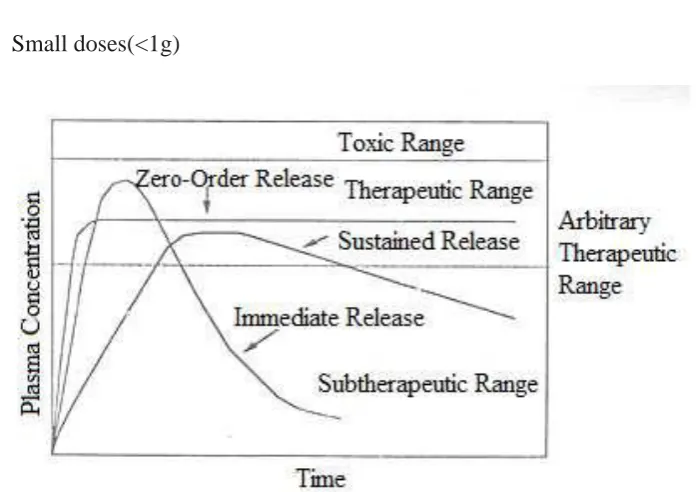
Small doses(<1g)
[image:18.595.131.481.417.663.2]
Fig:1.1 Plasma Dug Concentration Profiles for Conventional Tablet
19 a. Extended/Sustained Release Formulation and a Zero Order Controlled
Release Formulation.
ER/SR system generally don’t attain zero order type release and usually try to mimic zero order release by providing drug in a slow first order. Repeat action tablet are an alternative method of sustained release in which multiple doses of drug are contained within a dosage form and each dose is released at a periodic interval. Delayed release system, in contrast, may not be sustaining, since often the function of these dosage forms is to maintain the drug in the dosage for some time before its release, Eg: Enteric coated tablet or capsules.
The ideal way of providing an exact amount of drug at the site of action for a precise time period is usually approximated by most systems. This approximation is achieved by creating a constant concentration in the body organ over an extended time in other words, the amount of drug entering the system is equivalent to the amount of drug removed from the system. All forms of metabolism and excretion are included in the removal process urinary excretion, enterohepatic recycling, sweat, fecal and so on. Since, for most of the drugs these elimination processes are first order, it can be said that a certain blood level, the drug will have a specific rate of elimination. The idea is to deliver drug at this exact rate for an extended period. This is represented mathematically as following,
Rate in = Rate out = kelim × Cd× Vd Where Cdis the desired drug level,
Vdis the volume of distribution and
20 1.3.3. PHYSICOCHEMICAL FACTORS INFLUENCING ORAL
EXTENDED-RELEASE DOSAGE FORM DESIGN 13, 14
a. Dose size:
For orally administered systems, there is an upper limit to the bulk size of the dose to be administered. In general, a single dose of 0.5- 1.0g is considered maximal for a conventional dosage form. This also holds for sustained release dosage form. Compounds that require large dosing size can sometimes be given in multiple amounts or formulated into liquid systems. Another consideration is the margin of safety involved in administration of large amount of a drug with a narrow therapeutic range.
b. Ionization, pka and aqueous solubility:
Most drugs are weak acids or bases. Since the unchanged form of a drug preferentially permeates across lipid membranes, it is important to note the relationship between the pka of the compound and the absorptive environment. Presenting the drug in an unchanged form is advantageous for drug permeation. Unfortunately, the situation is made more complex by the fact that the drug’s
21 solubility of the compound will be poor choices for slightly soluble drugs, since the driving force for diffusion, which is the drug’s concentration in solution, will be
low.
c. Partition Coefficient:
When a drug is administered to the GI tract, it must cross a variety of biological membranes to produce a therapeutic effect in another area of the body. It is common to consider that these membranes are lipidic; therefore the partition coefficient of oil-soluble drugs becomes important in determining the effectiveness of membrane barrier penetration. Compounds which are lipophilic in nature having high partition coefficient are poorly aqueous soluble and it retain in the lipophilic tissue for the longer time. In case of compounds with very low partition coefficient, it is very difficult for them to penetrate the membrane, resulting in poor bioavailability. Furthermore, partitioning effects apply equally to diffusion through polymer membranes. The choice of diffusion-limiting membranes must largely depend on the partitioning characteristics of the drug.
d. Stability:
22 1.3.4. BIOLOGICAL FACTORS INFLUENCING ORAL
EXTENDED-RELEASE DOSAGE FORM DESIGN 13, 14
Biological half life.
Absorption.
Metabolism.
a. Biological half life:
The usual goal of an oral Extended Release product is to maintain therapeutic blood levels over an extended period of time. To achieve this, drug must enter the circulation at approximately the same rate at which it is eliminated. The elimination rate is quantitatively described by the half-life (t1/2). Each drug has its own characteristic elimination rate, which is the sum of all elimination processes, including metabolism, urinary excretion and all over processes that permanently remove drug from the blood stream. Therapeutic compounds with short half-life are generally are excellent candidate for SR formulation, as this can reduce dosing frequency. In general, drugs with half-lives shorter than 2 hours such as furosemide or levodopa are poor candidates for SR preparation. Compounds with long half-lives, more than 10 hours are also generally not used in sustaining form, since their effect is already sustained. Digoxin and phenytoin are the examples.
b. Absorption:
23 should be approximately 3-4 hours otherwise, the device will pass out of the potential absorptive regions before drug release is complete. This corresponds to a minimum apparent absorption rate constant of 0.17-0.23h-1 to give 80-95% over this time period.
Hence, it assumes that the absorption of the drug should occur at a relatively uniform rate over the entire length of small intestine. For many compounds this is not true. If a drug is absorbed by active transport or transport is limited to a specific region of intestine, ER preparation may be disadvantageous to absorption. One method to provide sustaining mechanisms of delivery for compounds is to maintain them within the stomach. This allows slow release of the drug, which then travels to the absorptive site. These methods have been developed as a consequence of the observation that co-administration results in sustaining effect. One such attempt is to formulate low density pellet or capsule. Another approach is that of bioadhesive materials.
c. Metabolism:
Drugs those are significantly metabolized before absorption, either in the lumen or the tissue of the intestine, can show decreased bioavailability from slower-releasing dosage form. Hence criteria for the drug to be used for formulating Extended-Release dosage form is,
Drug should have low half-life(<5 hrs)
Drug should be freely soluble in water.
Drug should have larger therapeutic window.
24 Even a drug that is poorly water soluble can be formulated in SR/ER dosage form. For the same, the solubility of the drug should be increased by the suitable system and later on that is formulated in the SR dosage form. But during this the crystallization of the drug, that is taking place as the drug is entering in the systemic circulation, should be prevented.
1.3.5. Controlled Release Dosage:
Controlled Release dosage form is generally accomplished by attempting to obtain “zero- order” release from the dosage form which is
independent of the amount of drug in the delivery system (i.e., a constant release rate). Sustained Release systems generally do not attain this type of release and usually try to mimic zero order release by providing drug in a slow first order fashion (i.e., concentration dependent).
The controlled release systems for oral use are mostly solids and based on dissolution, diffusion or a combination of both mechanisms in the control of release rate of drug. Depending upon the manner of drug release, these systems are classified as follows:
a. Continuous release systems 13
These systems release the drug for a prolonged period of time along the entire length of gastrointestinal tract with normal transit of the dosage form.
The various systems under this category are as follows:
1. Dissolution controlled release systems
2. Diffusion controlled release systems
3. Dissolution and diffusion controlled release systems
25 5. pH dependent formulation
6. Osmotic pressure controlled systems
b. Delayed transit and continuous release systems13
These systems are designed to prolong their residence in the GI tract along with their release. Often the dosage form is fabricated to retain in the stomach and hence the drug present therein should be stable in gastric pH. Systems included in this category are mucoadhesive systems and size based systems.
1.3.6. Delayed Release 15, 16
A Delayed Release dosage form is designed to release the drug at a time other than promptly after administration. Dosage forms can be designed to modify the release of the drug over a given time or after the dosage form reaches the required location.
Delayed Release oral dosage forms can control where the drug is to be released, e.g. when the dosage form reaches the small intestine (Enteric-coated dosage forms) or the colon (colon-specific dosage forms).
Delayed Release systems release a bolus of the drug after a predetermined time in a predetermined location, i.e. they do not release the drug immediately after ingestion, for example Enteric-coated tablets and pulsatile-release capsules.
26 The correct selection and balance of excipients and processes in solid
dosage formulations are designed either for improving the micromeritic or macromeritic properties of materials during manufacture and/or for providing a desired drug delivery system. The most commonly used pharmaceutical sustained release solid oral dosage forms today include Tablets, Capsules, Granules and Pellets.
Site specific targeting:
These systems refer to targeting of a drug directly to a certain biological location. In this case the target is adjacent to or in the diseased organ or tissue.
Receptor targeting:
These systems refer to targeting of a drug directly to a certain biological location. In this case the target is the particular receptor for a drug within an organ or tissue.
Site specific targeting and receptor targeting systems satisfy the spatial aspect of drug delivery and are also considered to be controlled drug delivery systems.
1.4. ALZHEIMER'S DISEASE 23, 24, 25
27 they often withdraw from family and society. Gradually, body functions are lost, ultimately leading to death.
The cause and progression of Alzheimer's disease are not well understood. Research indicates that the disease is associated with plaques and tangles in the brain. Current treatments only help with the symptoms of the disease. There are no available treatments that stop or reverse the progression of the disease.
[image:27.595.237.456.286.384.2]
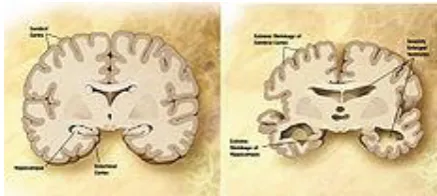
Fig:1.2 Comparison of a normal aged brain (left) and the brain of a person with
Alzheimer's (right). Differential characteristics are pointed out.
Characteristics:
The disease course is divided into four stages, with progressive patterns of cognitive and functional impairments
Pre-dementia:
The first symptoms are often mistakenly attributed to ageing or stress. Detailed neuropsychological testing can reveal mild cognitive difficulties up to eight years before a person fulfils the clinical criteria for diagnosis of Alzheimers disease.
Subtle problems with the executive
28 can also be symptomatic of the early stages of Alzheimers disease. Apathy can be observed at this stage, and remains the most persistent neuropsychiatric symptom throughout the course of the disease.
Early stage:
In people with Alzheimers disease the increasing impairment of
learning and memory eventually leads to a definitive diagnosis. In a small portion of them, difficulties with language, executive functions, perception (Agnosia), or execution of movements (Apraxia) are more prominent than memory problems. Alzheimers disease does not affect all memory capacities equally. Older memories of the person's life (Episodic memory), facts learned (Semantic memory), and implicit memory (the memory of the body on how to do things, such as using a fork to eat) are affected to a lesser degree than new facts or memories.
Moderate stage:
Progressive deterioration eventually hinders independence; with
subjects being unable to perform most common activities of daily living. Speech difficulties become evident due to an inability to recall vocabulary, which leads to frequent incorrect word substitutions (Paraphasias). Reading and writing skills are also progressively lost. Complex motor sequences become less coordinated as time passes and Alzheimers disease progresses, so the risk of falling increases During this phase, memory problems worsen, and the person may fail to recognise close relatives
Advanced stage:
29 words, eventually leading to complete loss of speech. Despite the loss of verbal language abilities, people can often understand and return emotional signals. Although aggressiveness can still be present, extreme apathy and exhaustion are much more common results. People with Alzheimers disease will ultimately not be able to perform even the simplest tasks without assistance. Muscle mass and mobility deteriorate to the point where they are bedridden, and they lose the ability to feed themselves.
a. CAUSES OF THE DISEASE:
The cause for most Alzheimer's cases is still essentially unknown (except for 1% to 5% of cases where genetic differences have been identified). Several competing hypotheses exist trying to explain the cause of the disease. The oldest, on which most currently available drug therapies are based, is the
cholinergic hypothesis, which proposes that Alzheimers disease is caused by
reduced synthesis of the neurotransmitter acetylcholine.
b. PATHOPHYSIOLOGY
Neuropathology:
30 in people with Alzheimers disease as they progressed from mild cognitive impairment to Alzheimer's disease
Disease mechanism:
The amyloid hypothesis traditionally points to the accumulation of beta amyloid peptides as the central event triggering neuron degeneration. Accumulation of aggregated amyloid fibrils, which are believed to be the toxic form of the protein responsible for disrupting the cell's calcium ionhomeostasis, induces programmed cell death (Apoptosis). It is also known that Aβ selectively builds up in the mitochondria in the cells of Alzheimer's-affected brains, and it also inhibits certain enzyme functions and the utilisation of glucose by neurons.
Genetics of the disease:
The vast majority of cases of Alzheimer's disease are sporadic, meaning that they are not genetically inherited although some genes may act as risk factors. On the other hand around 0.1% of the cases are familial forms of autosomal dominant (not sex-linked) inheritance, which usually have an onset before age 65. This form of the disease is known as Early onset familial Alzheimer's disease
c. DIAGNOSIS
31 Emission Computed Tomography (SPECT) or Positron emission tomography (PET) can be used to help exclude other cerebral pathology or subtypes of dementia. Moreover, it may predict conversion from prodromal stages (Mild cognitive impairment) to Alzheimer's disease
d. PREVENTION
At present, there is no definitive evidence to support that any particular measure is effective in preventing Alzheimers disease. Global studies of measures to prevent or delay the onset of Alzheimers disease have often produced inconsistent results. Although cardiovascular risk factors, such as hypercholesterolaemia, hypertension, diabetes, and smoking, are associated with a higher risk of onset and course of Alzheimers disease, The components of a Mediterranean diet, which include fruit and vegetables, bread, wheat and other cereals, olive oil, fish, and red wine, may all individually or together reduce the risk and course of Alzheimer's disease.
Pharmaceutical Management:
Five medications are currently approved by regulatory agencies such, as U.S.Food and Drug Administration (FDA) and the European Medicines
Agency (EMA) to treat the cognitive manifestations of Alzheimers disease.
32 most common side effects are nausea and vomiting both of which are linked to cholinergic excess.
1.5. PELLETS17
Pellets are defined as defined as multiple unit dosage forms which are small (0.5 mm to 1.5 mm), free flowing, spherical particulates formed by agglomeration of powders or granules of drug substances and excipients using appropriate processing equipment. Pellets are also used to describe small rods with aspect ratio of close to unity.
1.5.1. Advantages:
Pellets are more advantageous in developing controlled release dosage forms other than single-unit dosage forms.
High flexibility in designing oral dosage forms
They can be divided into different strengths without formulation or process changes
They can be blended to deliver incompatible bioactive agents simultaneously and provide different release profiles at the same or different sites in the GI tract.
Pellets taken orally can disperse freely in the GI tract, maximize drug absorption, minimize local irritation of mucosa by certain irritant drugs
33 1.5.2. Pelletization Techniques18,19:
The most commonly used and intensively investigated pelletization processes are powder layering, solution/suspension layering, and extrusion-spheronization.
a. Powder Layering:
Powder layering involves the deposition of successive layers of dry powder of drug or excipients or both on preformed nuclei or cores with the help of a binding liquid. Because powder layering involves the simultaneous application of the binding liquid and dry powder, it generally requires specialized equipment. The primary equipment-related requirement in a powder-layering process is that the product container should have solid walls with no perforations to avoid powder loss beneath the product chamber before the powder is picked up by the wet mass of pellets that is being layered on.
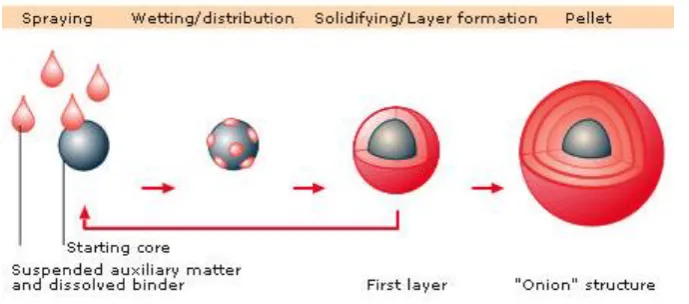
Fig:1.3. Scheme of steps involved in pelletization by Layering.
b. Solution Layering:
34 may be inert materials or crystals/granules of the same drug. In principle, the factors that control coating processes apply to solution or suspension layering and, as a result, require basically the same processing equipment. Consequently, conventional coating pans, fluid-bed centrifugal granulators, and Wurster coaters have been used successfully to manufacture pellets. The efficiency of the process and the quality of pellets produced are in part related to the type of equipment used.
Fig:1.4 Scheme of stages involved in pelletization by suspension or solution
Layering
i. Conventional Coating Pan:
In this technique the granules are placed in the coating pan and the coating solution is sprayed on the granules by atomizer with pressure.
[image:34.595.118.463.275.427.2]35
Fig:1.5 Fluidized Bed processing.
ii. Fluidized Bed Processing:
1. Beads are pushed through the coating column by hot air.
2. While moving through the coating column, beads are sprayed with coating
suspension.
3. As beads circulate through the bed, the coating suspension dries and leaves a layer of solids on the bead.
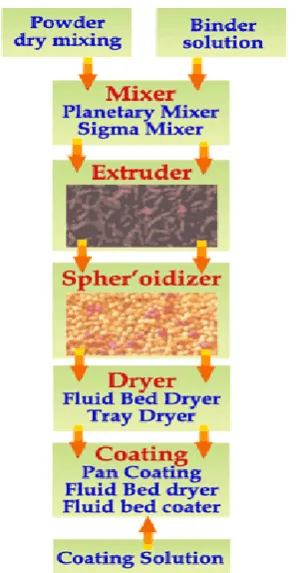
c. Extrusion-Spheronization:
36 owing to gravity, the particles fall back to the friction plate, and the cycle is repeated until the desired sphericity is achieved.
[image:36.595.244.393.157.444.2]
Fig:1.6 Scheme of pelletization stages in Extrusion and Spheronization.
d. Other Pelletization methods
Other pelletization methods such as globulation, agitation and compaction (compression) are also used, although in a limited scale, in the preparation of pharmaceutical pellets.
Globulation, or droplet formation, consists of two related processes,
spray drying and spray congealing.
Spray drying is the process in which drugs in the suspension or
37 Spray congealing is the process in which a drug is allowed to melt, disperse or dissolve in hot melts of gums, waxes or fatty acids, and is sprayed into an air chamber where the temperature is kept below the melting point of the formulation components, to produce spherical congealed pellets. Both immediate- and controlled-release pellets can be prepared in this process depending on the physicochemical properties of the ingredients and other formulation variables. Compression is one type of compaction technique for preparing pellets.
Pellets of definite sizes and shapes are prepared by compacting mixtures or blends of active ingredients and excipients under pressure. The formulation and process variables controlling the quality of pellets prepared are similar to those used in tablet manufacturing.
Balling is the pelletization process in which pellets are formed by a continuous rolling and tumbling motion in pans, discs, drums or mixers. The process consists of conversion of finely divided particles into spherical particles upon the addition of appropriate amounts of liquid.
Capsules12
Capsules are solid dosage forms in which the drug or a mixture of drugs
38 Types of capsules
1. Hard gelatin capsules 2. Soft gelatin capsules
1. Hard gelatin capsules
These sizes are designed by in numbers.
Table:1.1 Capsule sizes and their fill weights
S.No Size of capsules Volume in ml Fill weight in mg
1 000 1.37 615-1370
2 00 0.95 430-950
3 0 0.68 305-680
4 1 0.50 225-500
5 2 0.37 165-370
6 3 0.30 135-300
7 4 0.21 95-210
39 2. Soft gelatin capsules:
These are classified depending upon the sizes and capacities.
The number represents capacities in minims
1) Round-1,2,3,4,,5,6,7,8,9,28,40,40T,80T and 90T.
2) Oval-1,2,3,4,,5,6, 7..5,10,12,16,20,40,60,80,85 and 110.
3) Oblong-3,4,5,6,8,9.5,11,14,16,20,90 and 360.
4) Tube-5,6,8,17.5,30A,30B,35,45,55,65,90,160,250,320 and 480.
5) Misc-6, 17, 30, 35, 60 and 80.
Capsules Standards and limits:
Description:
It should comply with specifications of product.
Content of active ingredients:
40 Uniformity of weight4
Table:1.2. Content uniformity limits(USP)
Disintegration test:
a. Hard gelatin capsules:
Disintegration time shall not be more than 30 min.
b. Soft gelatin capsules:
Disintegration time shall not be more than 60 min.
c. Enteric capsule:
Acidic media –shall not disintegrate in 2hrs and in alkaline medium capsules shall disintegrate within 30 min.
Average weight of
capsules content
Percentage
deviations allowed
less than 130mg 10%
130 to 320mg 7.5%
41 Standard length for hard gelatin capsules in mm
Table:1.3. Capsules lock length in mm.
.
Microbial limits:
Total microbial count, not more than 1000grams of the capsules shell. Atleast One gram of capsules shell be free from E.coli and Salmonella.
Loss on drying:
Between 12.5% and 16% detrained on 0.3 gram of shell by drying in oven at 1050C for 4 hrs or to constant weight.
Reason for selecting capsules:
The Galantamine in tablet form of three times dose per a day the prior art may cause problems in patients with swallowing difficulty for adults and childrens.
Size Cap Body
0 10.68-11.68 18.22-19.22
1 9.51-10.51 16.22-17.22
2 8.67-9.67 14.84-15.84
3 7.73-8.73 12.98-13.98
42 This drawback is avoided with the use of multiparticulate formulations, since they may be dispersed in liquids at the movement of the administration.
It should be kept in mind that pharmaceutical compositions formulated in tablets are subject to variations in their physicochemical properties such as hardness, disintegration time, and dissolution time and also on dissolution rate due to the compression process involved in their production. Such variations are of course undesirable in extended release Galantamine capsules, since the prediction of the dissolution rate is an extremely important factor for the efficiency of the formulation.
Finally Extended release multiparticulate formulations of Galantamine of the invention advantageously provide a better drug release at the gastrointestinal tract
compared with single tablets formulations and the dosing frequency will be reduced. The attractiveness of these dosage forms is due to awareness to toxicity and
43
II.LITERATURE REVIEW
Timo Erkinjuntti, et al 28(2002) Proved robust evidence for the
effectiveness of cholinergic treatments such as galantamine (Reminyl IR) in AD suggests its potential use in the treatment of dementias related to preclinical evidence supports this rationale. Galantamine, which has a unique dual cholinergic mode of action, may be of particular benefit in Vascular Dementia and AD with Cognitive Vascular Dementia.
Patrick Vigneault, Sarah Bourgault, et al 29(2012) Galantamine is a
reversible inhibitor of acetylcholinesterase and an allosteric-potentiating ligand of the nicotinic acetylcholine receptors. It is used for treating mild-to-moderate Alzheimer's disease. Interestingly, QT interval prolongation on the electrocardiogram (ECG), malignant ventricular arrhythmias and syncope have been reported with Galantamine.
Alexis Kays Leonard, et al 30(2005) studied and developed an intranasal
44 Khatavkar UN, et al 31(2011) Developed and evaluated in vivo of novel
monolithic matrix mini tablets approach to control the release of Galantamine Hydrobromide (GAH) in comparison with desired release profile to the Innovator formulation Razadyne(®) ER capsules. The direct compression method was employed for preparation of matrix mini tablets as against reservoir multiparticulate pellets of innovator formulation. It was found that increase in the concentration of high viscosity hydroxypropylcellulose (HPC) results reduction in release rate. In vivo prediction was done by Wagner-Nelson method. Prediction errors were estimated for C(max) and area under curve (AUC) and found to be not exceeding 15%. These results suggest that novel monolithic matrix approach could be suitable technique to formulate controlled release GAH.
Patent number-795562232: Controlled Release galantamine formulations,
including controlled release particles, pellets, granules, and spheres are prepared by using sugar pellets as core, HPMC as Binder cum retardant and Ethyl Cellulose as Sustain Polymer.
Ben Seltzer, et al 33(2010) An extended release form of the cholinesterase
inhibitor (ChEI) drug galantamine (galantamine-ER) was developed, chiefly to increase adherence to medication regimes in patients with mild-to-moderate Alzheimer’s disease (AD). Except for predicted differences in
active-45 controlled, multicenter phase III trial, which compared galantamine-IR, galantamine-ER and placebo in subjects with mild to moderate score range, Since its release onto the market galantamine-ER has enjoyed wide popularity and a recent surveillance study suggests that it has the highest 1-year persistence rate of all the ChEIs.
Olin J, Schneider L, et al 34(2001) was isolated from several plants,
including daffodil bulbs, but is now synthesized. Galantamine is a specific, competitive, and reversible acetylcholinesterase inhibitor., which were similar to those seen in earlier antidementia AD trials, and consisted primarily of mildly to moderately impaired outpatients. In this magnitude for the cognitive effect is similar to other cholinesterase inhibitors including donepezil, rivastigmine, and tacrine.
Guk-Hee Suh, et al 35(2004) Studied in the Korean population rapidly aging
and the nurnber of Koreans with Alzheimer's disease (AD) steadily growing, treatment of AD is becoming an increasing concern. Galantamine hydrobromide, a dual acetylcholinesterase inhibitor and allosteric modulator of nicotinic receptors, is being studied in the treatment of the disease.
Hugo Geerts, et al 36(2005) suggest a role for cholinergic stimulation,
46 Patent No-0142193 37: substantially claims that galantamine formulations
47
III. AIM AND OBJECTIVE
The aim and objective of the present study was to develop extended release Galantamine capsules and these were compared with the Innovator product (Razadyne).
The purpose of the present work was aimed at the following objectives.
The dosing frequency is also reduced by formulate into capsules.
Even though in market Galantamine tablets and gels is available we can formulate pellets because of pellets are having good flow properties in intestine and less cost of production for formulation.
The main aim of the present study was to extended release Galantamine capsules of 16 hours release for to reduce the dosing frequency when compared with the Immediate Release tablet for treating Alzheimer.
48
IV. PLAN OF WORK
Step: 1 Preformulation Study
API Characterization
o Physical Appearance
o Solubility studies
o Sieve Analysis
Drug-Excipient Compatibilty Studies
o Physical Compatibility
o FT-IR Spectrophotometry Analytical Method Development Step: 2 Selection Of Coating Technology
Step: 3 Formulation Development
Step: 4 Evaluation of Pellets
Physical Description Sieve Analysis
49 Step: 5 Evaluation of Capsules
Weight Variation
Content Uniformity
Lock Length
Assay by HPLC
Dissolution by HPLC
Step: 6 Comparison of Dissolution profile of trial formulations
with Innovator.
50
V. DRUG PROFILE
Galantamine25:
Galantamine is a cholinesterase inhibitor that has been used to reverse the muscular effects of gallamine triethiodide and tubocurarine, and has been studied as a treatment for Alzheimer’s disease and other central nervous system disorders.
Chemical IUPAC Name:
(4aS,6R,8aS)-4a,5,9,10,11,12-hexahydro-3-methoxy-11-methyl-6H-benzofuro[3a,3,2-ef][2]benzazepin-6-ol hydro bromide.
Fig: 5.1 Molecular Structure
51 Molecular Weight: 287.15
State: White Crystalline Solid
Melting Point: 269-2700C
Partition Coefficient: Log P =1.39
Dissociation Constant: Pka= 8.2
Purity: ≥98%.
BCS Class: II
Solubility:
Sparingly soluble in aqueous buffers and water, soluble in Sodium hydroxide
Chemical Class: Benzofurans derivative.
Therapeutic Class: Cholinesterase Inhibitor.
Storage:
Store the drug in a closed container at room temperature, away from heat, moisture, and direct light.
52 Indication:
For the treatment of mild to moderate dementia of the Alzheimer's type and also been investigated in patients with mild cognitive impairment, who did not meet the diagnostic criteria for Alzheimer's disease.
Pharmacology:
Galantamine is a parasympathomimetic, specifically, a reversible cholinesterase inhibitor. It is indicated for the treatment of mild to moderate dementia of the Alzheimer's type. An early pathophysiological feature of Alzheimer's disease that is associated with memory loss and cognitive deficits is a deficiency of acetylcholine as a result of selective loss of cholinergic neurons in the cerebral cortex, nucleus basalis, and hippocampus. Galantamine is postulated to exert its therapeutic effect by enhancing cholinergic function. This is accomplished by increasing the concentration of acetylcholine through reversible inhibition of its hydrolysis by acetyl cholinesterase.
Mechanism of action:
53
Dosage:
Dosing differs accordingly with the dosage form, and also indication.
5.1. PHARMACOKINETICS:
5.1.1.Absorption:
Galantamine is rapidly and completely absorbed with time to peak concentration about 1 hour. Bioavailability of the capsule was the same as the bioavailability of an oral solution. Food did not affect the AUC of Galantamine but Cmax decreased by 25% and Tmax was delayed by 1.5 hours. The mean volume of distribution of Galantamine is 175 L.
5.1.2. Distribution:
The plasma protein binding of Galantamine is 18% at therapeutically relevant concentrations. In whole blood, Galantamine is mainly distributed to blood cells (52.7%). The blood to plasma concentration ratio of Galantamine is 1: 2.
5.1.3. Metabolism:
54 increase oral bioavailability of Galantamine modestly O-demethylation, mediated by CYP2D6 was greater in extensive metabolizers of CYP2D6 than in poor metabolizers. In plasma from both poor and extensive metabolizers, however, unchanged Galantamine and its glucuronide accounted for most of the sample radioactivity.
5.1.4. Excretion:
Galantamine Hydro bromide Extended Release capsules on oral administration, about 20% of the dose was excreted as unchanged Galantamine in the urine in 24 hours, representing a renal clearance of about 65 mL/min, about 20– 25% of the total plasma clearance of about 300 ml/min.
Elimination half-life: 7 hours, allowing once daily administration in a clinical
setting.
Special Populations:
Elderly
Data from clinical trials in patients with Alzheimer's disease indicate that Galantamine concentrations are 30–40% higher than in healthy young subjects.
CYP2D6 Poor Metabolizers
55 Galantamine, CYP2D6 poor metabolizers demonstrated a similar Cmax and about 35% AUC increase of unchanged Galantamine compared to extensive metabolizers.
Hepatic Impairment:
Following a single 4 mg dose of Galantamine tablets, the pharmacokinetics of Galantamine in subjects with mild hepatic impairment (n=8; Child-Pugh score of 5–6) were similar to those in healthy subjects. In patients with moderate hepatic impairment (n=8; Child-Pugh score of 7–9), Galantamine clearance was decreased by about 25% compared to normal volunteers. Exposure would be expected to increase further with increasing degree of hepatic impairment.
Gender and Race:
No specific pharmacokinetic study was conducted to investigate the effect of gender and race on the disposition of Galantamine Hydrobromide, but a population pharmacokinetic analysis indicates (n= 539 males and 550 females) that galantamine clearance is about 20% lower in females than in males (explained by lower body weight in females) and race (n= 1029 White, 24 Black, 13 Asian and 23 others) did not affect the clearance of Galantamine Hydrobromide.
Renal Insufficiency:
56 5.2. DRUG-DRUG INTERACTIONS
Use with Anticholinergics:
Galantamine Hydrobromide has the potential to interfere with the activity of anticholinergic medications.
Use with Cholinomimetics and Other Cholinesterase Inhibitors:
A synergistic effect is expected when cholinesterase inhibitors are given concurrently with succinylcholine, other cholinesterase inhibitors, similar neuromuscular blocking agents or cholinergic agonists such as bethanechol.
A) Effect of Other Drugs on Galantamine
Cimetidine and Ranitidine
Galantamine was administered as a single dose of 4 mg on day 2 of a 3-day treatment with either Cimetidine (800 mg daily) or Ranitidine (300 mg daily). Cimetidine increased the bioavailability of Galantamine by approximately 16%. Ranitidine had no effect on the PK of Galantamine.
5.3. INNOVATOR CHARACTERIZATION
Brand Name : Razadyne ER Capsules
Batch No OJG001
57
Physical Characteristics
Capsule Size : 1
Capsule Colour : Caramel Colour Cap and body
Pellets Shape : Spherical
Pellets Colour : Shining White
Average Fill Weight : 294.37mg
% Moisture Content : 0.8
Assay : 101.7%
58
VI. MATERIALS AND METHODS
Table:6.1 Materials List
Ingredients Manufacturer Category
Galantamine Aurobindo Pharma, Hyderabad API HPMC E5 Colourcon, Goa. Retardant PEG 6000 Clarient, Mumbai. Solubilizer Ethyl Cellulose Shandong, China. Extended Release Coating Sugar Spheres
Prime Health Care Ltd,
59
[image:59.595.90.514.157.719.2]6.1.1.
EXCIPIENT PROFILE
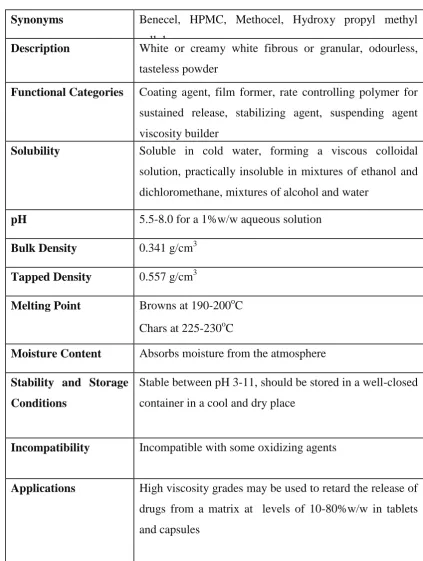
20Table:6.2 HYPROMELLOSE
Synonyms Benecel, HPMC, Methocel, Hydroxy propyl methyl
cellulose
Description White or creamy white fibrous or granular, odourless,
tasteless powder
Functional Categories Coating agent, film former, rate controlling polymer for
sustained release, stabilizing agent, suspending agent
viscosity builder
Solubility Soluble in cold water, forming a viscous colloidal
solution, practically insoluble in mixtures of ethanol and
dichloromethane, mixtures of alcohol and water
pH 5.5-8.0 for a 1%w/w aqueous solution
Bulk Density 0.341 g/cm3
Tapped Density 0.557 g/cm3
Melting Point Browns at 190-200oC
Chars at 225-230oC
Moisture Content Absorbs moisture from the atmosphere
Stability and Storage
Conditions
Stable between pH 3-11, should be stored in a well-closed
container in a cool and dry place
Incompatibility Incompatible with some oxidizing agents
Applications High viscosity grades may be used to retard the release of
drugs from a matrix at levels of 10-80%w/w in tablets
60
Table:6.3 SUGAR SPHERES
Synonyms Non-pareil; Non-pareil seeds; NPTAB; Core;
Nu-Pareil PG; sugar seeds; Suglets
Description Approximately spherical granules of a labeled
nominal-size range with a uniform diameter and containing not less than 62.5% and not more
than 91.5% of sucrose, calculated on the dried basis. The
remainder is chiefly starch
Functional Categories Tablet and capsule diluent.
Solubility solubility in water varies according to the
sucrose-to-starch ratio. The sucrose component is
freely soluble in water, whereas the starch component is
practically insoluble in cold water.
Density 1.57–1.59 g/cm3 for Suglets less than 500 μm in size;
1.55–1.58 g/cm3 for Suglets more than 500 μm in size.
Storage Sugar spheres are stable when stored in a well-closed
container in a cool, dry place.
Applications Sugar spheres are mainly used as inert cores in capsule
61
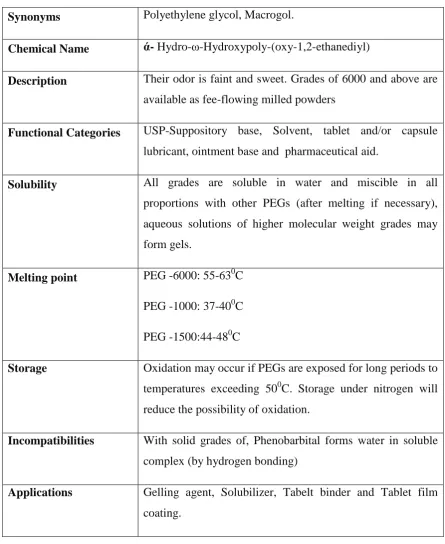
Table:6.4 POLY ETHYLENE GLYCOL-6000
Synonyms Polyethylene glycol, Macrogol.
Chemical Name ά- Hydro-ω-Hydroxypoly-(oxy-1,2-ethanediyl)
Description Their odor is faint and sweet. Grades of 6000 and above are
available as fee-flowing milled powders
Functional Categories USP-Suppository base, Solvent, tablet and/or capsule
lubricant, ointment base and pharmaceutical aid.
Solubility All grades are soluble in water and miscible in all
proportions with other PEGs (after melting if necessary),
aqueous solutions of higher molecular weight grades may
form gels.
Melting point PEG -6000: 55-630C
PEG -1000: 37-400C
PEG -1500:44-480C
Storage Oxidation may occur if PEGs are exposed for long periods to
temperatures exceeding 500C. Storage under nitrogen will
reduce the possibility of oxidation.
Incompatibilities With solid grades of, Phenobarbital forms water in soluble
complex (by hydrogen bonding)
Applications Gelling agent, Solubilizer, Tabelt binder and Tablet film
coating.
62
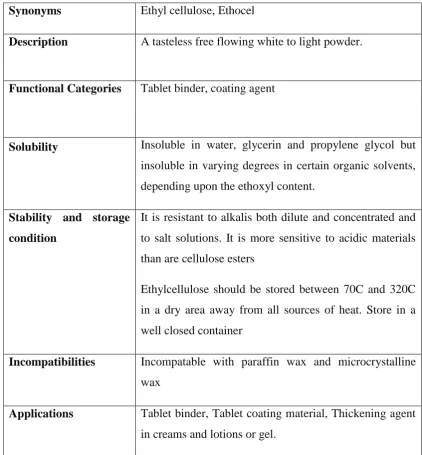
Table:6.5 ETHYL CELLULOSE
Synonyms Ethyl cellulose, Ethocel
Description A tasteless free flowing white to light powder.
Functional Categories Tablet binder, coating agent
Solubility Insoluble in water, glycerin and propylene glycol but
insoluble in varying degrees in certain organic solvents,
depending upon the ethoxyl content.
Stability and storage
condition
It is resistant to alkalis both dilute and concentrated and
to salt solutions. It is more sensitive to acidic materials
than are cellulose esters
Ethylcellulose should be stored between 70C and 320C
in a dry area away from all sources of heat. Store in a
well closed container
Incompatibilities Incompatable with paraffin wax and microcrystalline
wax
Applications Tablet binder, Tablet coating material, Thickening agent
[image:62.595.92.515.183.639.2]63
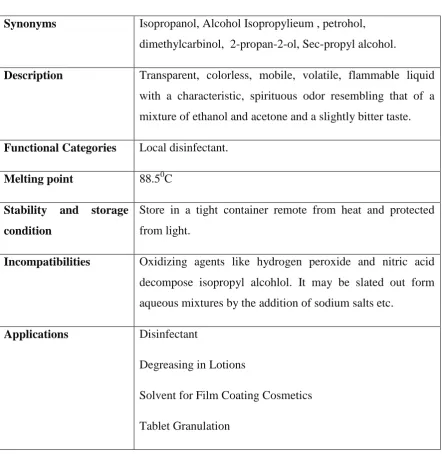
Table:6.6 ISO PROPYL ALCOHOL
Synonyms Isopropanol, Alcohol Isopropylieum , petrohol,
dimethylcarbinol, 2-propan-2-ol, Sec-propyl alcohol.
Description Transparent, colorless, mobile, volatile, flammable liquid
with a characteristic, spirituous odor resembling that of a
mixture of ethanol and acetone and a slightly bitter taste.
Functional Categories Local disinfectant.
Melting point 88.50C
Stability and storage
condition
Store in a tight container remote from heat and protected
from light.
Incompatibilities Oxidizing agents like hydrogen peroxide and nitric acid
decompose isopropyl alcohlol. It may be slated out form
aqueous mixtures by the addition of sodium salts etc.
Applications Disinfectant
Degreasing in Lotions
Solvent for Film Coating Cosmetics
64
[image:64.595.122.479.245.703.2]6.2. EQUIPMENTS USED
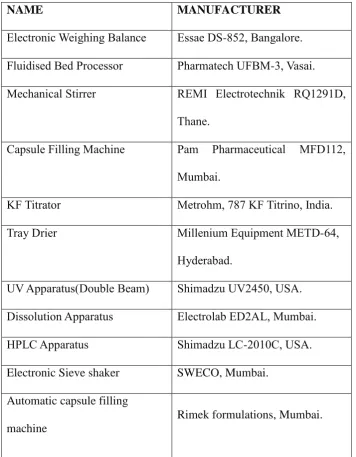
Table No:6.7Equipments List
NAME MANUFACTURER
Electronic Weighing Balance Essae DS-852, Bangalore.
Fluidised Bed Processor Pharmatech UFBM-3, Vasai.
Mechanical Stirrer REMI Electrotechnik RQ1291D,
Thane.
Capsule Filling Machine Pam Pharmaceutical MFD112,
Mumbai.
KF Titrator Metrohm, 787 KF Titrino, India.
Tray Drier Millenium Equipment METD-64,
Hyderabad.
UV Apparatus(Double Beam) Shimadzu UV2450, USA.
Dissolution Apparatus Electrolab ED2AL, Mumbai.
HPLC Apparatus Shimadzu LC-2010C, USA.
Electronic Sieve shaker SWECO, Mumbai.
Automatic capsule filling
machine
65
6.3 EXPERIMENTAL WORK
6.3.1. PREFORMULATION STUDIES10:
a. API Characterization:
The overall objective of preformulation testing is to generate
information useful in developing the formulation which is stable and bioavailable.
Further the use of preformulation parameters maximizes the chances in formulating
an acceptable, safe, efficacious and stable product. For any drug substance to
formulate into a dosage form, it is necessary to study the physicochemical properties
of the bulk drug like physical appearance, solubility, melting point, particle size and
compatibility.
Physical Appearance:
The appearance of the API is done by visual observation
Solubility Studies:
The solubility of drug is an important physicochemical property
because it affects the bioavailability of the drug, the rate of drug release into the
dissolution medium, and consequently the therapeutic efficacy of the pharmaceutical
product. The solubility of a material is usually determined by the equilibrium
solubility method, which employs a saturated solution of the material, obtained by
stirring an excess of material in the solvent for a prolonged period until equilibrium
is achieved.
66
The main aim of sieve analysis is to determine the different size
of drug particles present. A series of standard sieve are stacked one above the other
so that sieves with larger pore size (less sieve number) occupy top position followed
by sieves with smaller pore size (greater sieve number towards the bottom).
Procedure:
A series of sieves are arranged in the order of their decreasing
pore diameter (increasing sieve number) such as sieve number 20, 30, 40, 60, 100
and 200. 100 grams of drug is weighed accurately and transferred to sieve number
20 which were kept on top. The sieves are shaken for about 5-10 minutes. Then the
drug retained on each sieves is taken, weighed separately and amount retained is
expressed in terms of percentage.
b. Drug - Excipient Compatibility Studies:
Compatability studies are carried out to study the possible interactions
between Galantamine and other active ingredients
Procedure:
The compatibility studies are carried out by taking a mixture of drug and
excipients at the ratio in which they are expected to be present in the innovator
product. A part of mixture can be exposed to different storage conditions like
40oC±2oC /75% RH ±5% and control samples were to be kept at 2-8oC. They are
tested with respect to their physical and chemical aspects. These samples are
67
Table:6.8 Conditions for compatibility studies24
S.No. Storage Condition Samples packed in Sampling Periods in
weeks
1 Accelerated
40 oC±2 oC /75% RH ±5%
3 Double polythene
bags 1W,2W,3W,4W
2 Refrigeration 2-8oC 1 Double polythene
bag + 1 glass vessel 1W,2W,3W,4W,
FT-IR Spectrophotometric Method:
It is performed by Potassium bromide pellet method. Potassium bromide is
dried in oven at 45°C before analysis. The pure drug is triturated with Potassium
bromide and pellet is prepared by setting the pressure to 100 kg/cm2 for 2 minutes.
The obtained pellet is analyzed in Burker FTIR Tensor Model, Germany. Potassium
bromide background was obtained initially before analysis of test samples. The same
procedure is repeated for analysis of drug and Hydroxy Propyl Methyl Cellulose E5,
Ethyl CelluloseN45, also drug and excipient mixture free from moisture content are
68
6.3.2. Analytical Method Development:
a. Determination of absorption maxima (λmax) for Galantamine
Standard stock solution containing 100 μg/ml of Galantamine Hydrobromide
was prepared in Distilled water. From the stock, different aliquots were taken and
diluted to 10 ml mark with same solvent to obtain series of concentrations. The
solutions were scanned on Spectrophotometer in the UV range 200-400 nm.
Galantamine Hydrobromide showed absorbance maxima at 289 nm.
b. Preparation of standard curve for Galantamine Hydrobromide .
100 mg of Galantamine Hydrobromide was dissolved in 100 ml
calibrated volumetric flask and completing to volume with PH 6.5 phosphate Buffer.
From this 10ml pipette out in 100 ml calibrated volumetric flask and dilution was
made with PH 6.5phosphate Buffer. From this solution 2 ml, 4ml, 6ml, 8ml…up to
10ml was pipette out in different 10 ml volumetric flask and this was finally diluted
with PH 6.5phosphate Buffer to 10ml. The absorbance was noted max of 289nm.
6.3.3. METHOD OF MANUFACTURING
a. Fluidised Bed Processing:
Raw Material Dispensing:
Accurately weighed quantities of raw materials, measured quantities of