EFFECTIVENESS OF PLANNED INSTRUCTIONAL
MODULE REGARDING KNOWLEDGE ABOUT
HEALTH HAZARDS OF JUNK FOODS AMONG
SCHOOL CHILDREN IN SELECTED SCHOOL AT
VELLORE
BY
C.SHIRELY
A Dissertation submitted to
THE TAMILNADU DR.M.G.R MEDICAL UNIVERSITY, CHENNAI.
In Partial Fulfilment of the Requirement for the Degree of MASTER OF SCIENCE IN NURSING
CERTIFICATE
Certified that this is a Bonafide Work of
C.SHIRELY
Arun College of Nursing, Vellore
Submitted in partial fulfilment of the requirement for the degree of Master of Science in Nursing for
The Tamilnadu Dr.M.G.R medical university, Chennai – 600032.
COLLEGE SEAL
SIGNATURE ____________________
Mrs.J.SUNITHA PRIYADARSHINI M.SC(N) ,M.SC(PSY)
EFFECTIVENESS OF PLANNED INSTRUCTIONAL
MODULE REGARDING KNOWLEDGE ABOUT
HEALTH HAZARDS OF JUNK FOODS AMONG SCHOOL
CHILDREN IN SELECTED SCHOOL AT VELLORE
BY
C.SHIRELY
M.Sc. (Nursing) Degree Examination, Branch – II, Pediatric Nursing,
Arun College of Nursing, Vellore – 632001.
A Dissertation submitted to
THE TAMILNADU DR. M.G.R MEDICAL UNIVERSITY, CHENNAI – 600032.
In Partial Fulfilment of the Requirement for the Degree of MASTER OF SCIENCE IN NURSING
EFFECTIVENESS OF PLANNED INSTRUCTIONAL
MODULE REGARDING KNOWLEDGE ABOUT
HEALTH HAZARDS OF JUNK FOODS AMONG
SCHOOL CHILDREN IN SELECTED SCHOOL
AT VELLORE
APPROVED BY DISSERTATION COMMITTEE
RESEARCH GUIDE ____________________
Mrs.J.Sunitha Priyadarshini ,M.SC. (N),M.SC(PSY)
Principal,
Arun College of Nursing, Vellore – 632001
CLINICAL SPECIALITY GUIDE _____________________
Mrs.Christy Sahaya Mary, M.Sc. (N),
Associate Professor, Pediatric Nursing, Arun College of Nursing, Vellore – 632001
A Dissertation submitted to
THE TAMILNADU DR. M.G.R MEDICAL UNIVERSITY
Chennai in Partial Fulfilment of the Requirement for THE DEGREE OF MASTER OF SCIENCE IN NURSING
EFFECTIVENESS OF PLANNED INSTRUCTIONAL
MODULE REGARDING KNOWLEDGE ABOUT
HEALTH HAZARDS OF JUNK FOODS AMONG
SCHOOL CHILDREN IN SELECTED SCHOOL
AT VELLORE
BY
C.SHIRELY
M.Sc. (Nursing) Degree Examination, Branch – II, Pediatric Nursing
Arun College Of Nursing Vellore – 632001
A Dissertation submitted to THE TAMILNADU Dr.M.G.R
MEDICAL UNIVERSITY, CHENNAI, in partial fulfilment of the
requirement for the degree of MASTER OF SCIENCE IN NURSING
OCTOBER – 2014
____________________
Internal Examiner
____________________
DECLARATION
I hereby declare that the present dissertation entitled
“Effectiveness of planned instructional module regarding knowledge
about health hazards of junk foods among school children” is the
outcome of the original research work undertaken and carried out by me,
under the guidance of Mrs.J.Sunithapriyadharsini, M.Sc(N), M.Sc (Psy)
Principal and Research Guide, Arun College of Nursing and
Mrs.Christy Sahaya Mary, M.Sc (N) Associate Professor, Pediatric
Nursing, Arun college of Nursing, Vellore.
I also declare that the material of this has not found in any way,
the basis for the award of any degree or diploma in this university or any
other universities.
C.SHIRELY
ACKNOWLEDGEMENT
At the outset, I express my utmost gratefulness to the Almighty
God for his Blessings throughtout the study. His unseen presence gave
me strength to complete this study successfully .
I express my sincere gratitude to The Managing Director
Mr.L.Adimoolam and the Managing Trustees for providing all the
facilities for the successful completion of this project.
I express my heartfelt gratitude and sincere thanks to
Mrs.J.SunithaPriyadharsini, M.Sc(N), M.Sc (Psy), Principal and
Research Guide, Arun College of Nursing, Vellore for her expert
guidance,constant interest,continuous support and encour agement for
completion of this study.
I owe my sincere thanks to Prof.Mrs Gomathy M.Sc (N), Vice
Principal, Arun College of Nursing, for her guidance, constructive
encouragement and constant support.
I feel pleasure to extend my heartfelt gratitude and si ncere thanks
to Mrs.Christy Sahaya Mary, M.Sc (N) Associate professor ,Pediatric
Nursing for her encouragement, inspiration and constant support and
also for spending her valuable time with me throughout the study .
I sincerely thank, the Principal Free dom Concept Higher
Secondary School, Poigai for permitting me to conduct the study in
their esteemed institution.
With the special word of reference, I thank all the Experts for
validating my tool and offering worthy suggestions to make it effective.
I would like to thank all the HODs, Teaching and Non-Teaching
I would like to take this opportunity to thank Mr.Ashok,
Statistician, Department of statistics, for his a ssistance in statistical
analysis and presentation of the data.
I am always thankful to my husband, Mr.D.George William
M.B.A for his constant love, inspiration and support from the time of
inception to the culmination of this dissertation and his help rendered to
me in completing my study successfully. And to my son G.Melvin
Freddy for being patient with me.
I submit my hearty thanks to my mother Mrs.J.Santhabai HM
for her support in all times of ups and downs and for her prayers and
blessings.
A special word of thanks to all the students who participated in
this study and their co operation throughout the study without which this
ABSTRACT
The children of today will be the adult of tomorrow, cen tral to
this vision of the future, focusing on today’s children and educating
them to change their behavior towards healthy eating pattern is
necessary. Nutritional problem is one of the major health problem faced
by the millions children of all age group .Preventive approach to
maintain good health with specific education can be of greater benefit
for the children to prevent mental and physical ailments.
STATEMENT OF THE PROBLEM
A study to assess the effectiveness of planned instructional
module regarding knowledge about health hazards of junk foods
among school children in selected school at Vellore.
AIM OF THE STUDY
To create awareness among school children regarding health
hazards of junk foods.
OBJECTIVES OF THE STUDY
To assess the level of knowled ge on health hazards of junk foods
among school children before the planned instructional module
[pretest].
To assess the level of knowledge on health hazards of junk foods
among school children after planned instructional module [post
test].
To determine the effectiveness of planned instructional module
among school children.
To find the association between selected demographic variables
The conceptual framework is based on modified model of Daniel .
L.Stuffle Beam’s evaluation model of planned program .The study was
conducted in freedom concept higher secondary school at poigai in
Vellore district. About 100 students were selected for the study by
lottery method. The instruments used for data collection are
demographic variable and structured questionnaire method to assess the
knowledge regarding health hazards of junk foods. After 7 days post test
was done for the same children with structured questionnaire method.
The collected data was analyzed by using descriptive (mean, standard
deviation, percentage) and inferential statistics (chi square, paired t value)
methods.
MAJOR FINDINGS OF THE STUDY
Demographic variables showed that 57(57%) of majority of
children participated in the study were female. Most of the school
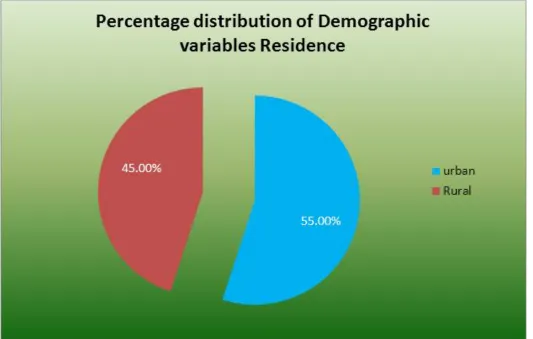
children are from urban area 55 (55%). More than half 55(55%) of
school childrens father were graduates and 39 (39%) of the mothers
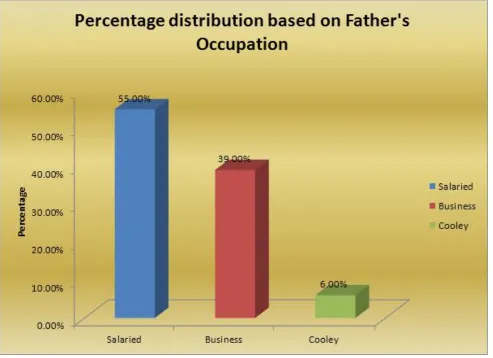
were educated .More than 55(55% )of school children’s father were
salaried and also Majority of 72(72%) of mothers were salaried.
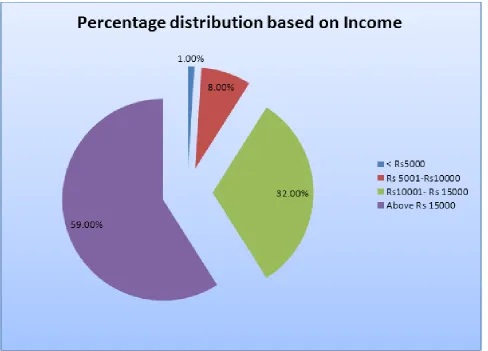
On the whole, nearly 59(59%) had family income of above
Rs.15000 per month. More than 63( 63%) of children were living in
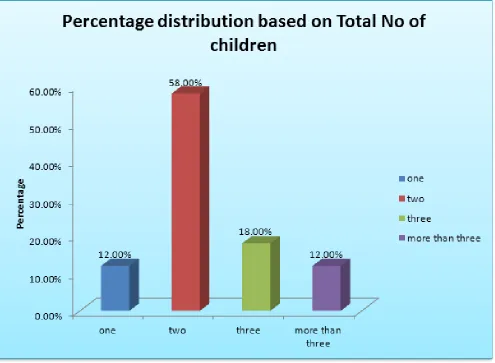
nuclear family,half of the children 58(58%)had more than two
siblings.Nearly 44(44%) of children were getting po cket money below
Rs.50/- per month.
Majority of 79(79%)of children were consuming junk foods for
about 1-3 times per day and 41(41%) were eating only for time pass.
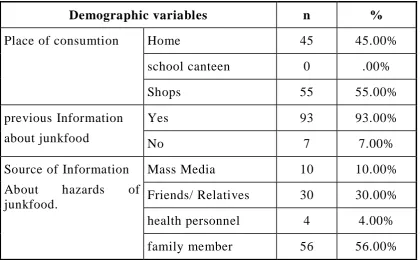
More than half of the children 55(55%)were consuming Junk
foods from shops when compared to that of home and school canteen.
junkfood .On the whole 56% were getting information about health
hazards of Junk Food through their family members and least of 4(4%)
were received information through health personnel.
Chi square test was used to find out the association between
selected demographic variables and post test level of knowledge.The
results shows that there was no significant association between the
selected demographic variables and the post test knowledge on health
hazards of junk foods among school children at p>0.05. Except fathers
education, which shows that there is significant association in fathers
education and level of knowledge at p < 0.05.
Before planned instructional module, out of 100 school children,
89(89%) had in adequate knowledge, 11(11%) had moderate knowledge
and none of them had adequate knowledge. But after the planned
instructional module regarding knowledge about health hazards of junk
foods, none of them had inadequate knowledge, 17(17%) of children had
moderate knowledge and 83(83%) of them had adequate knowledge. The
t value when compared to pretest and post test is 35.24, which is highly
significant when p<0.05.
So,it has been concluded that the planned instructional module
regarding knowledge about health hazards of junkfoods was effective
and showed improvement in the knowledge level of school children
about health hazards of junk foods.
RECOMMENDATIONS
The similar study can be conducted on a large r sample.
Comparative study can be done between rural and urban settings.
A study can be conducted to find out the knowledge and attitude
A true experimental study can be done to assess the knowledge
regarding health hazards of junkfoods.
The effectiveness can be assessed by various methods of teaching
like interactive video and audio programmed instruction about
health hazards of junk foods in implementing the knowledge and
LIST OF CONTENTS
S.
No Contents Page No
I
INTRODUCTION 1
Background of the study 1
Need for the study 7
Statement of the problem 11
Aim of the study 11
Objectives of the study 11
Hypothesis 11
Operational definitions 12
Assumptions 13
Conceptual framework 13
II
REVIEW OF LITERATURE 17
Literature related to changing trends in children’s eating pattern.
17
Literature related to promoting factors for consuming junk foods.
23
Literature related to health hazards of junk foods. 27
III
RESEARCH METHODOLOGY 36
Research approach 36
Research design 36
Variables of the study 37
S.
No Contents Page No
Population 38
Sample and sampling technique 38
Criteria for sample selection 39
Description of the tool 39
Score interpretation 40
Content validity of the tool 40
Reliability of the tool 40
Pilot Study 41
Data collection procedure 41
Data analysis 42
IV DATA ANALYSIS AND INTERPRETATION 44
V RESULTS AND DISCUSSION 73
VI
SUMMARY, CONCLUSION, IMPLICATION AND RECOMMENDATIONS
78
Summary of the study 78
Findings of the study 79
Conclusion 81
Nursing implications 81
Nursing research recommendations 83
LIST OF TABLES
Table Title Page
No.
1. Frequency and percentage distribution of demographic variables of school children
46
2. Frequency and percentage distribution of level of knowledge among school children regarding health hazards of junk foods on pre test and post test.
65
3. Comparison between mean and standard deviation of pretest and post test level of knowledge on planned instructional module about health hazards of junk foods among school children.
67
4. Comparison between mean and standard deviation of pre and post test on level of knowledge and effectiveness of planned instructional module on health hazards of junk foods among school children.
68
5. Analyzing the association between demographic variables and post test level of knowledge on health hazards of junk foods among school children
LIST OF FIGURES
Figure Title Page no.
1 Conceptual framework based on Daniel.L stuffle beams model.
16
2 Shematic Representation of Research Design 43
3 Frequency and percentage distribution of demographic variable based residence
51
4 Frequency and percentage distribution of demographic variable based on fathers education
52
5 Frequency and percentage distribution of demographic variable based on occupation of the father
53
6 Frequency and percentage distribution of demographic variable based on mothers education
54
7 Frequency and percentage distribution of demographic variable based on occupation of the mother
55
8 Frequency and percentage distribution of demographic variable based on family income per month
56
9 Frequency and percentage distribution of demographic variable based on type of family
57
10 Frequency and percentage distribution of demographic variable based on total number of children in the family
58
11 Frequency and percentage distribution of demographic variable based on pocket money per month.
59
12 Frequency and percentage distribution of demographic variable based on frequency of eating junk food per day
Figure Title Page no.
13 Frequency and percentage distribution of demographic variable based on reason to eat junk food
61
14 Frequency and percentage distribution of demographic variable based place of consumption of junk food
62
15 Frequency and percentage distribution of demographic variable based on previous information regarding junk food
63
16 Frequency and percentage distribution of demographic variable based on source of previous information regarding health hazards junk food
64
17 Comparison between pretest and posttest level of knowledge on health hazards of junkfoods among school children
66
LIST OF ANNEXURES
S. No Contents
I Letter Seeking Permission to Conduct the Study
II Request for Content Validity
III Content Validity Certificates
IV Certificate for Tamil Editing
V Demographic Variables (English)
VI Structured Questionnaire
VII Scoring Key
VIII Lesson Plan on Health Hazards of Junk Foods
CHAPTER-I
INTRODUCTION
“We may not able to prepare the future of our children, but we can
At least prepare our children for the future.’’
- Franklin D.Roosevelt
Background of the study
It's the 21st century and "junk food" has gone global. For worse junk
food is now available all over the world. We see it all most everywhere
we go in groceryshop and also in convenience stores.
Children find themselves amidst of a complex society that is
under going breathtaking changes. Concepts, relation ships, lifestyles are
metamorphasised to accommodate the new jet-setting age. Food is of no
exception, Healthy nutritious foods have been replaced by the new food
mantra - JUNK FOOD! Junk food comprises of anything that is quick,
tasty, convenient and fashionable. It seems to have engulfed every age
,every race and the newest entrants in children.
The director of the Centre for Science, Michael Jacobson (1972)
invented the term junk food called “Empty calories”. He was accredited
as the “chief of the food police” by the food industry, for uncovering the
harmful effects of junk food with its use of additives such as vibrant
food colors, Salt and Transfat.
His intent was to boost awareness among people, regarding Junk food that contains low nutritional value , high calories, high sugar and highfat which often lead to many life-threatening ailments.
Any food that has poor nutritional value is considered unhealthy
Junk food is an empty calorie food. These foods have little
enzyme producing vitamins, minerals, amino acids and contain high
level of calories from sugar or fat. So these are called as unhealthy
foods.
Foods commonly considered junk foods include salted snack
foods, gum, candy, sweet desserts, friedfast food, and sugary carbonated
beverages, Soft drinks, chips, wafers, noodles, pizza, burgers , French
fries etc. are few examples from the vast variety of fast food available in
the market.
For years, junk food has been taking the world by storm, with
their attractive colors, tickling the taste buds, irrestible to the young and
old, with their wonderful array of varieties and flavor. But, experts
blame junk food for rising rates of diabetes, high blood pressure and
stroke. Increasing rates of chronic illness affect children who regularly
consume junk food.
S.Patnaik(2010)conducted study about the Prevalence of Overweight And Obesity in a Private School Of Orissa, India. The present study was a cross sectional study conducted in an affluent
English Medium School of Bhuvaneswar during Jan - Feb. 2011. The
data was collected from students of Class 1 to 10. One section from each
class is randomly selected and all the students present during the survey
were screened for overweight and obesity. In this way, data was
collected from 468 children. Complete data of each child were collected
using a pre-designed, pre-test questionnaire.
Result stated that out of total 468 school children, 41.9% were
boys and 58.1% were girls. 44.4% children belong to 5 -10 years age
group while the 55.6% children belong to 10-15 years age group. The
overall prevalence of overweight and obesity in school children of 5-15
14.53%). Maximum prevalence 36.54% was found in children of 5 -10
years age group and 33.65% in boys. Overweight and Obesity was found
significantly higher in Children of 5-10 years age group, with family
history of obesity, not playing outdoor games, not doin g regular
exercise, watching TV and Computer more than 2 hours daily and
consuming junk food regularly.
Junk food is easy to carry, purchase and consume It has little
enzyme producing vitamins &, minerals and contains high level of
calories. When we eat these empty calorie foods, the body is required to
produce its own enzymes to convert these empty calories into usable
energy. It is not desired as these enzyme producing functions in our
body should be reserved for the performance of vital metabolic
reactions.
Kids Health Club magazine(2012) states that junk food can affect a child‟s physical development in different ways, including
unhealthy weight gain, which can result in self-esteem problems. Low
self-esteem can lead to consequences like depression. Nutritionists at
MayoClinic.com also report eating junk food can potentially cause
depression on its own.
Generally, a junk food is given a very attractive appearance by
adding food additives and colours to enhance flavour, texture,
appearance, and increasing long shelflife. Junk food can be appealing
for a variety of reasons, including convenience, price and taste. For
children, who do not always understand the health consequences of their
eating habits, junk food may appear especially appetizing. However,
regularly consuming fattening junk food can be addictive for children
and lead to complications like obesity, chronic illness, low self -esteem
and even depression, as well as affecting how they perform in school
.Children set the foundation for lifelong habits in their youth,
making junk food particularly hazardous to their well -rounded
development. Physical activity is also essential for children of all ages,
and regular intake of junk food does not provide the necessary nutrients
to children need for sufficient energy to engage in physical activity. A
lack of physical activity is harmful to physical and mental well be ing
and may also exclude a child from critical social network.
Also the ease of manufacturing and consumption makes the junk
food market spread its influence so rapidly. People, of all age groups are
moving towards junk food as it is hassle free and often ready to grab and
eat.
National Diet and Nutrition Survey( 2000 )found that70 per cent
of primary school children regularly drink fizzy drinks, on a average
getting throught 30 glasses a week. And 92 per cent of 4 to 18 -year-old
ate more than the recommended adult levels of saturated fat. Children
are eating more junk food than ever, the equivalent of eight chocolate
bars a day.
Nutrition experts have researched the bad affects of junk food had
come to the conclusion that junk food manufacturing companies are
fooling the people by showing deceptive advertisements in market that
junk foods are healthy.
Ramachandran et al (2002) conducted a study among school
children in different parts of the country and showed increasing
prevalence of overweight and obesity, with great disparity between rural
and urban parts of country. The prevalence of overweight (including
obese) in adolescents was 22% in better off schools Overweight and
Obesity was found significantly higher in Children within 5-10 years
age group, with family H/O obesity (P, not playing outdoor games, not
daily, and consuming junk food regularly which has high level of salt,
sugar and calories.
Traditional food skills were not passed on automatically from
parent to child. Most people have forgotten that the primary reason for
eating is nourishment. In the past, food was treated with reverence
because of its life sustaining quality. Enjoying a meal was considered as
sharing experience with the others.
For children who have less vision of the heart disease, cancer, high
blood pressure or diabetes that might befall them decades later, the
tentacles of a junk food environment are virtually inescapable. Studies
reveal that as early as the a ge of 30, arteries could begin to clogg and
lay the groundwork for future heart attacks.Unhealthy food in puberty
period increase the risk of prostate and breast cancer.
Osteoporosis and hypertension are other diseases that appear to
have their earliest roots in childhood when lifelong eating habits are
being formed. Children are especially vulnerable, Poor diets can slow
their growth and development , decay new teeth, promote obesity and
sow the seeds of infirmity and debilitating disease that ultimately l ead to
incurable diseases, death or worse that make life insufferable.
Dr.Drew Ramsey [2013] conducted a new study in Oxford
University U.K, revealed that processed junk food consumption can
lead to aggression, irritability, and even violent tendencies, in children.
Nutrient deficiency is a major cause of behavioral abnormalities,
without the proper nutrients the body cannot produce the appropriate
chemicals and hormones required for clear thinking and healthy mood,
which in turn can lead to irrational and even dangerous behaviors.
Today family dinners are very rare. In many ways, our culture is
supermarkets are propagating a wide variety of enticing j unk foods,
attractively packed and often tagged with a tempting advertisement. we
have a highly seductive environment that undermines eating habits in
children but we should have constructing environment to protect our
childrens future.
Children health depends on what they eat . Foods are the building
blocks of every cell in the body. Our body cells, the building blocks of
our body, are responsible for the proper functioning of the whole body.
Without adequate nutrition, we cannot expect our children to be
healthy.
Several studies have now found that dietary patterns in early
childhood affect IQ scores later in their life. In one study, greater
consumption of fruits and vegetables upon introducing solid foods was
associated with higher IQ and better memory skills when at 4 years of age.
Similarly in another study, children who regularly ate cookies, chocolate,
other sweets, soda, and chips during the first two years of life showed
decreased IQ at age 8 compared to children who did not eat these foods.
Most of the times these junk foods contain added colours often
edible, carcinogenic and harmful to the body. These foods and their
colours can affect the digestive system in later years.
Studies have found that food colouring can cause hyperactivity and
lapse concentration in children. Children suffering from Learning Disabilities
are often advised against eating food with artificial colouring. Chocolates,
colas, flavoured drinks and snacks are full of artificial colouring.
As parents are strongly committed in supporting children‟s
academic achievement.They want the best for their children, and take
they will be well educated and able to compete as working adults in the
technological world.
However, how many parents think about the impact of the foods
they give their children on their academic performance. It is not only
parents but healthcare workers, teachers, and mass media to create
awareness about junk foods and its ill consequences to children to
promote healthy living in them.
NEED FOR THE STUDY
Food habits and patterns are formed during childhood and will
remain till the end of individual's life. Proper nutrition in this age causes
child growth and development and also reduces the risk of chronic
diseases in adulthood.
School-age children often face health related nutritional problems,
when they enter the school environment there will be changes in their
habits, lifestyle and particularly in their food habits. Moreover, the
growth rate and health are closely interrelated with quality and quantity
of foods and the information related to health status and nutrition status
of this group is an important health issue in terms of prevalence of
underweight and overweight.
In many cases, adulthood obesity starts from chil dhood and
effective prevention depends upon the way you cope with and control
obesity in this age. Prevalence of obesity in 6 to 10-year old children
estimated 10 to 30 percent and is considered as one of the basic issues in
this age group.
Nowadays, consumption of junk foods as snacks is increasing
especially among primary school students. Change of food consumption
pattern during few recent decades caused replacement of valueless foods
advertising, attractive packaging and lack of nutritional knowledge and
awareness by parents are the major causes of junk food consumption.
Food Commission (2003) reported that children see more than
5,000 television commercials for junk food every yea r .food advertising
accounted for half of all advertisements hired during children's
programmers, with three-quarters promoting high-calorie, low-nutrient
foods. And manufacturers have plenty of money to spend. The food
industry's global advertising budget is $40 billion, more than the gross
domestic product of 70 per cent of the world's nations and 500 times
more than the World Health Organization is able to spend on preventing
the diseases that junk food causes.
The excessive consumption of junk foods may result in reduction
of appetite and takes away the opportunity of nutrition in foods . These
junk foods contain high amounts of fats, salt and sugar, they are the
underlying cause of chronic diseases including obesity, diabetes, cancer
and so on in further years of life. High salt consumption during
childhood is associated with hypertension in adulthood. On the other
hand, other high-calorie foods provide the background of obesity for
children that by itself are the causes of underlying diseases such as
cardiovascular diseases, diabetes and hypertension.
In a modern urban family, both the parents are usually working,
which gives them little time to pay the required amount of attention to
their children. This is one of the biggest reasons for the shift in the
eating habits of kids. Junk food has become the fastest way for parents
as well as children to satisfy their bon-appetite. However, what remains
unnoticed, are the ill consequences of the same.
A prospective observational analysis on relationship betwe en
consumption of sugar sweetened drinks and childhood obesity showed
of overweight. The study focuses on the trends of childhood nutrition
over the past few years such as changes in fast food and soft drink
consumption . In this way the study explains the increasing prevalence
of overweight in children and critically address the issues contributing
to these changes in nutritional intake.
School days are full of educational challenges that require long
attention span and stamina. Poor nutritional habits can undermine these
pre-requisites of learning, as well as snap the strength that children need
for making friends, interacting with family, participating in sports and
games or simply feeling good about themselves.
Not surprisingly, junk food not only has physiological
repercussions, but also psychological ones - far reaching ones that affect
the child's intellect and personalities. Coping intelligently with their
dietary needs increases their self-esteem, and encourages further
discovery. .
World health organization(2009)stated that top five global
threats to health, are overweight, heart disease, diabetes, cancer and
high blood pressure caused due to faulty eating habits and life styl e
during childhood period. One quarter of 60 million deaths estimated to
occur annually due to these threats.
Nutrition during this formative period has a meaningful long-term
effect, providing building blocks to construct the growing brain.The
brain is highly susceptible to oxidative stress, so a healthful,
antioxidant-rich diet is especially beneficial for the brain and is likely
involved in this link between natural plant foods and higher IQ scores.
The rising accommodation of „junk food,‟ in daily meal is heavily
contributing in making the human body a junkyard, as they carry infinite
formative years should be given highly nutritious food to make the
foundation of their life stronger. On the contrary, the growing
consumption of fast foods has resulted in making the children fall pre y
to hazardous disease conditions like Diabetes, Obesity, high cholesterol
level and various nutritional deficiencies.
Nutritional intake during school age is important for growth and
development, long term health promotion for lifelong eating habits.
Nutritional intake during this period will have long term implications.
Several physical, psychological and behavioural changes may affect
food habits during school age and have long term consequences on
Childrens health status.
The present scenario shows that many of the adult diseases have
their origin in their childhood, this is due to lack of proper knowledge
and awareness about the consequences of changes in their food habits.
The investigator felt that children do not have adequate
knowledge about the health hazards of junk food s in school. Children
are more vulnerable to become addicted to junk foods without knowing
the ill effects. So, the investigator decided to create awareness among
the school children about the health hazards of junk foods and to
promote healthy eating habits in children , for their healthy future and
disease free life.
STATEMENT OF THE PROBLEM:
A study to assess the Effectiveness of planned instructional
module regarding knowledge about health hazards of junk foods among
school children in selected school at vellore.
AIM OF THE STUDY
To create awareness among school children regarding health
hazards of junk foods.
OBJECTIVES
To assess the level of knowledge on health hazards of junk foods
among school children before the planned instructional module
[pretest].
To assess the effectiveness of health hazards of junk foods among
school children after planned instructional module [post test].
To determine the effectiveness of planned instructional module
among school children.
To find the association between selected demographic variables
and the level of knowledge among school children.
HYPOTHESIS Null hypothesis:
1) There will be no significant difference between the pretest and
posttest level of knowledge on health hazards of junk foods
among school children.
2) There will be no significant association between the demographic
variable and their level of knowledge on planned instructional
OPERATIONAL DEFINITIONS Effectiveness
It is the outcome of planned instructional module regarding
knowledge on health hazards of junkfood.
Knowledge
It is the awareness or understanding about the health hazards of
junkfoods.
Planned instructional module:
It refers to systematically prepared instructional teaching module
to improve the knowledge on health hazards of junk foods among the
school children with audio visual aids like power point presentation,
poster and pamphlets.
Health hazards on children:
A material or substance that poses a significant threat or danger to
the health of the children.
Junk food
It refers to the food that is high in salt, sugar or calorie an d low in
nutritive value which directly or indirectly poses health hazards.
Common Junk foods are soft drinks, candy, deep-fried and salted items.
School children:
Children who are studying in the selected school within the age
ASSUMPTIONS
School children are the vulnerable group exposed to the hazards
effects of junk food.
School children have some knowledge regarding health hazards of
junk food.
Planned instructional module will help them to enhance the
knowledge of school children regarding health hazards of junk
food.
DELIMITATIONS
The study is delimited to:
The school children from freedom concept school.
School children between the age group of 8 – 12 years.
Duration of the study is oneweek.
The study is limited to 100 school children.
CONCEPTUAL FRAME WORK
Conceptual framework refers to concepts that offer a frame work
of proposition for conducting the research.
The conceptual framework set up for the study is modified model
of Daniel L. stuffle beam‟s evaluation model of planned programme
(2003). The model is based on the premise that relevant information is
foundational to sound judgment about the relative merits of alternatives
available in the evaluation process. He proposes four decision types
developed by crossing an ends means dimension and an intended actual
dimensions, the four elements of the model are context, input, process
The model is adopted in a modified form for the present study.
According to the to the model,the content identifies discrepancies
between intended and actual programme outcome and the evaluator can
develop casual explanation for the discrepancies.
The core value for present study is enhancing knowledge
regarding health hazards of junk foods among school children.
CONTEXT
According to the theorist, the context is used to define the
operational context of programs and to assess needs and problems. In
this study the context are collective demographic variable (Age, Sex,
Educational status of father and mother, Religion, occupation of father
and mother, Family income per month, Typesof family, Total number of
children in the family, pocket monkey per month, frequency of eating
junk food, reason to eat junk food ,Source of previous health
information regarding hazards of junk food) and assessment of pretest
knowledge among school children. The knowledge is assessed by using
structured interview schedule among school children.
INPUT
According to the theorist, input is determined by structured
decisions. Especially important to this component are decisions about
human, material and resources. The input of present study is preparation
and development of power point presentation, poster and pamphlets and
implementation of planned instructional module regarding health
hazards of junk foods.
PROCESS
According to the theorist, process monitors acquisition of
knowledge regarding health hazards of junk foods among school
PRODUCT
According to the theorist the product provide information to
inform decisions about congruence of intended and actual ends on
achieving important outcomes the product evaluation of present study is
post test evaluation of knowledge regarding health hazards of junk
foods, knowledge is interpreted as adequate knowledge, moderate
CHAPTER-II
REVIEW OF LITERATURE
The term literature review refers to an extensive and systematic examination of publications relevant to research project. Before starting any research a literature review of previous studies and experiences to the proposed study must be done.
This chapter deals with a review of research studies and related material for the present study. The review helped the researcher to develop an insight into the problem area and helped to build the foundation of the study.
The review of literature consists of
Literature related to changing trends in children‟s eating pattern.
Literature related to promoting factors for consuming junk foods.
Literature related to health hazards of junk foods.
LITERATURE RELATED TO CHANGING TRENDS IN CHILDREN’S EATING PATTERN:
Brezniz.Z, (2009) conducted a survey of what children eat during lunch in nine schools across jaipur. The study covered 200 children in
the age group of 9 to 14 years. It found that 65% of the children ate ju nk
food and fast food, 43% guzzled aerated drinks along with it. The survey
showed that pizza was the most preferred foods among the school
children.The study shows that nutritious food is replaced by junkfood in
school and the children were not aware of h ealthy eating habits.
Ethan A. Huff (2010) conducted a study in Oxford University in U.K, the results revealed that children who eat processed junk food can
alter the behavioural patterns in them. In which he revealed that
processed junk food consumption can lead to aggression, irritability and
even violent tendencies.
Without the proper nutrients the body cannot produce the
appropriate chemicals and hormones required for clear thinking and
healthy mood, which in turn can lead to irrational and even dangerous
behavior.
Frazier JP, Barratt MS (2012) conducted a study to document the prevalence of junk foods seen at clinic visits. A cross -sectional 23-item
survey of observed food items were completed by medical staff using a
convenience sample of families. The study was conducted in paediatric
clinics affiliated with the University of Texas Medical School at
Houston. Convenience sample consisting of 738 families with children
from 4 months to 16 years old presenting for visits were included in the
study. Children exclusively breast and formula fed was excluded. Junk
food was observed 20.9% at the clinic visits. Junk food was often seen
at clinic visits. There was a trend toward higher body mass index in
children whose families had junk food at the visit. This indicates that the
children are practicing unhealthy eating habits.
Johnson.C.M et al, (2011) conducted a study that aimed to understand mother‟s everyday food choices using one type of visual
method-participant-driven photo-elicitation. The study revealed that
mothers with a more defined health identity made healthier choices for
themselves and similar food choices for their children. In addition, they
exhibited behaviours that positively influenced their children‟s foods
choices. Mother who struggled to see themselves as healthy indulged
with more junk food and indicated a feeling of anxiety and guilt, these
they tend to prepare more junkfood for their children instead of healthy
nutritious foods.
Mogasale . V. (2010) conducted a study to assess the seriousness of the problem of obesity in school going children. Questionnaires were
used to assess their lifestyle habits. The result revealed that over 17%
children were found to be overweight. Some of them had high blood
pressure and a family history of diabetes mellitus.on the whole 11%
children preferred eating lunch from the school canteen ,and over 81%
children claimed that they went out of a fast food at least once a week,
62% children liked eating junk food like burgers. Pizzas, etc and 47%
children took at least one cold drink every day.Results showed that
overweight children have 70% change of becoming overweight or obese
adults in future.Majority of 81% of children had the habit of eating in
fastfood.the result of the study showed that unhealthy eating practice
cause obesity in children.
Nirmala desikan.s et al., (2010) conducted a study to raise awareness about junk food consumption by children. As part of her
campaign, which ran in 60 schools across Chennai, a combination of
junk and healthy food was laid out on a table in each school. They gave
the children a tray and asked them to pack their lunch. About 80% of the
children picked the tray with junk food and the study showed that
today‟s children are behind junk foods without knowing that hazardous
effect and their awareness about nutritious food is inadequate when
compared to that of junkfood.
Shahin Shahr and Mayhem (2009)conducted a study to assess the relationship between junk foods intake and weight among 6-8years
school children. Anthropometric measures were done and 24-hour food
recall used for dietary information and analyzed with food processor and
overweight or obesity and abdominal obesity was 6.9 percent and 46.1
percent respectively. systolic blood pressure was 105.2 ± 15.6 mm/Hg
and diastolic was 62.2 ± 10.4 mm/Hg.The study showed that totally 3.9
percent of the children had hypertension.
These results indicated appropriate level of macronutrients intake
and unbalanced food mainly junk food. It is recommended to increase
intake of important food groups such as dairy, vegetable, fruit that
include good source of micronutrients, and also it is suggested that need
for strategies can improve competence in the area of nutrition.
Seki .a et al (2008) conducted a study to describe junk foods and beverages consumed at schools in terms of number of serves. The d ata
has been collected from 1000 children aged 4 to 12 years. The result of
the study showed 38% of children had fruit bars, 59% had packed snacks
like potato chips, wrafers. 28% had chocolate bars during their lunch
and coffee breaks.10% of the students purchased fast foods from
canteens and junk food shops . Reduction in unhealthy foods or junk
foods would improve healthy eating habits in school lunch.
Sally Oaken (2011) suggested that Junk food advertisement on TV strongly influence children's eating habits. Young children exposed
to advertisement for unhealthy food products may show a tendency to
consume unhealthy foods in higher amounts and may face an increased
risk of obesity and associated health problems.
Children between the ages of sixto thirteen years were shown ten
advertisements for junk food. After watching the ads, the children were
provided with a questionnaire in which they were asked to choose
between three food options.
The options were described as "high fat, high carbohydrate",
items like roast chicken. The low energy options included items like
salad.The children were then shown a series of ten advertisements for
toys and presented with a similar questionnaire.
The results of the study suggested that children exposed to
unhealthy food advertisements showed unhealthy eating preferences.
These effects were especially pronounced among study subjects who
typically watched more than 21 hours of TV per week. They made these
unhealthy selections and the children did not discriminate based on
brand. According to lead researcher Dr. Emma Boy land, this was one of
the most worrisome results of the survey. Existing network rules already
outlaw junk food advertising on dedicated chi ldren's channels and on
programs directly targeted to children under the age of nine.
Talebi et al (2006) conducted a study on students of Khorram Abad they showed that the consumption of snacks was respectively 20
and 18 percent junk foods among which chips and biscuits were the
highest consumption than others. Daily salty snack reported 53%, fruit
stripe 56%, chewing gums 77% and soda 35% .20 percent of students
consumed soda more than 4 times a week and 15% of them consumed
salty snacks three times a week.
However, in this study nearly8.65 percent of the subjects
consumed soda more than four times a week and 9.2 percent of them
used salty snacks more than three times a week and reduction in
consumption of such junk foods is due to lack of awareness among
parents about the unhealthy nature of junk foods.
University of Otago (2014) conducted a study to call for ban on junk food advertisement among the children. Junk food advertising to
children is urgently needed to help fight increasing rates of childhood
taste and fun, are just some of the techniques used by marketers to
promote junk food to kids, according to a recent systematic literature
review.
Such marketing has been proven to increase children‟s requests
for the advertised foods, their food preferences and ultimately their
diets. For example, free toys, discounts and competitions promote brand
loyalty and improve purchase rates.
University of Otego Wellington colleagues called for an outright
ban on junk food advertising to children under 16 years of age to
prevent childhood obesity.
Zhonghua and Liu Xing Bing. (2008) conducted a Study on factors related to top 10 junk food consumption between 8 to 16 years of
age, in Haitian District of Beijing .Ten types of junk food consumption
(assessed by World Health Organization) among children and adolescent
as well as the contributing factors so as to provide evidence for
developing preventive and control measures and interventions. A
questionnaire survey was conducted to investigate the consumption of
ten types of junk food practices in 1019 children and adolescent aged
between 8-16years.
One month prior to the study, 97.50% of the children and
adolescent had eaten at least one type of junk food and 15.88% of them
had eaten all types of them. Rates on having eaten deep fried food,
pickled food, processed meat products, biscuits, coke orfizzy drinks,
convenience fast food, canned food, dried or preserved fruit, cold and
sweet food, barbecue food appeared to be 70.43%respectively. The rate
on eaten more than once in a dayof these ten types were
37.91respectively. The rates for "do not like" and "dislike" these ten
types junk food were only 10.96%. Most of the children and adolescent
surveyed children and adolescent did not have correct idea on nutrition
of junk food.
They received the information of junk food mainly from sources
as advertisement on TV (67.95%), mother (9.02%), n ewspaper or
magazines (6.71%). Many factors, such as individual factors including
physiological and psychological situations , social factors, family factors
andthe characteristics of food contributed to the junk food practices
of children and adolescent. Education strategies on nutrition should be
developed and launched in order to help children to develop their own
healthy eating habits.
LITERATURE RELATED TO PROMOTING FACTORS FOR CONSUMING JUNK FOOD:
Ahmadi et al (2009) conducted a study to review the c orrelation between snacks of school-age children in Yasouj [place] with
anthropometric assessments of 1790 children (53.6% boys and 46.4%
girls) were evaluated and it was indicated that the children who
commonly had snack with them had greater height growth and the
prevalence of stunting in children received snack were lower than their
classmates. Among the snacks, biscuit and cake, salty snack and chips,
chocolate and candy respectively were the highest consumed items and
nuts and dairy were the lowest consumed items.
In this study TV advertisements, showed that Most of the
advertised foods had low nutritional values and advertising companies
tired to encourage children to consume their products with different
strategies. However, in the present study, amon g the junk foods (chips,
crunchy, snack, candy, chocolate, cacao, biscuits, cakes and cookies,
soda and unnatural juices), cake, biscuit and syrup were the highest
weekly frequency and it was perhaps cause harmful effects to the
Boyland (2012) stated in British department of health that almost one in ten of six year olds and fifteen percent of fifteen year old
children in England were currently classified as obese. Britain is facing
an obesity epidemic, A watershed for junk food adverts would ensure
that they are banned from not just children's programs during the day
but programs shown at night where families view them together. Parents
also need to limit their children's screen time an d talk to them about the
motives behind advertising junk foods.
Carter OB Patterson LJ (2011) conducted a study of Children‟s
understanding of the selling versus persuasive intent junk food
advertising, Evidence of the study suggested that until 8 years of age
most children are cognitively incapable of appreciating the commercial
purpose of television advertising and are particularly vulnerable to its
persuasive techniques. After this age most children begin to describe the
'selling' intent of advertising and it is widely assumed this equips them
with sufficient cognitive defences to protect against advertisers'
persuasion attempts.About 594 children were recruited from each grade
from Pre-primary (4-5 years) to Grade 7 (11-12 years) from ten primary
schools in Perth, Western Australia and exposed to a McDonald's
television advertisement.
Understanding the purpose of television advertising was assessed
both nonverbally (picture indication) and verbally (small discussion
groups of 3-4), particular distinction made between selling ve rsus
persuasive intent. Consistent with previous literature, a majority
of children described that 'selling' intent of television advertising by 7 -8
years both nonverbally and verbally, increasing to 90% by 11 -12 years.
Awareness of 'persuasive' intent emerged slowly as a function of age but
even by the oldest age-group was only 40%. Vulnerability to television
thought. These findings have important implications regarding
regulation of junk food,which have impact on childrens health.
Dean wr , et al (2009) conducted a study to determine the relation ship Between the presence of television during meals and the children‟s
food consumption and conducted the study among 91 parents and
children. Children 10to 14 years were selected ,24 hour‟s dietary recall
was conducted. The result showed that there was a significant
association between television and children‟s consumption of caffenine
related foods.children from families of high television viewing derived 5
percentage more than their energy intake of junk foods when compared
to other families.
Food Commission (2003) found that children see more than 5,000 television commercials for junk food every year .food advertising
accounted for half of all advertisements hired during children's
programmes, with three-quarters promoting high-calorie, low-nutrient
foods. And manufacturers have plenty of money to spend. The food
industry's global advertising budget is $40 billion, more than the gross
domestic product of 70 per cent of the world's nations and 500 times
more than the World Health Organization is able to spend on preventing
the diseases that junk food causes.
Harris JL, Graff SK (2012) stated in his article of protecting young people from junk food advertising.
In the United States, one third of children and adolescents are
overweight or obese, yet food and beverage companies continue to
target them with advertising for products that contribute to this obesity
crisis. When government restrictions on such advertising are proposed,
the constitutional commercial speech doctrine is often invoked as a
We explore incongruities between the legal justifications for the
commercial speech doctrine and the psychological research on how food
advertising affects young people. A proper interpretation of the First
Amendment should leave room for regulations to protect young people
from advertising featuring calorie-dense, nutrient-poor foods like junk
foods.
Victor Srasburger (2012) stated in American academy of paediatrics that Congress should pass legislation prohibiting junk food
commercials on TV shows aimed at children, and paediatricians should
support a ban or severe restrictions on unhealthy food advertisements
appearing in television and schools.
The AAP's policy asks Congress and the Federal Communications
Commission (FCC) to restrict children's commercial exposure during
children's television programs to five or six minutes per hour . 50
percent reduction from current allowances
Recent studies highlighting increasing rates of childhood obesity
have shown that children are constantly bombarded by ads for unhealthy
foods and drinks. Advertisement appearing on the internet, video games,
cell phones, school buses and on school campuses enc ourage kids to buy
unhealthy products , Critics also point out that the UK has already
passed laws banning such advertising to children.
World Health Organization (2010) recommends the reduction of “Both the exposure of children to, and the power of, marketing foods.
In a synthesis of peer-reviewed scientific research on persuasive
marketing techniques used to promote food to children on television, the
researchers found premium offers, the use of promotional characters,
nutritional and health claims, and the themes of “taste” and “fun” were
first of its kind to focus on common techniques used to promote food to
children on television.
LITERATURE RELATED TO HEALTH HAZARDS OF JUNK FOODS
Ashley Gerhardt (2013) published in his journal of archives of general psychiatry found that the addictive nature of many junk foods is
literally the same as the addictive nature of drugs. These rewarding
properties howeve lie primarily in junk food chemicals. Many processed
junk foods are loaded with flavor enhancing chemicals like monosodium
glutamate (MSG), high-fructose corn syrup (HFCS), and aspartame
which are known to be highly-addictive. MSG, for instance, over-excites
the brain to the point that it actually causes neurological brain damage.
Bhaskar et al (2012) stated in the journal of drug delivery and therapeutics regarding the junk food and its impact on health as:
Low Nutrition Value
The nutritional value is lost in the process of making the junk
food so synthetic vitamins and minerals are added to compensate it, but
they are not good compared to natural vitamins and minerals.
Highly Addictive
It is well known fact that fat and sugar are as addictive as heroin
and cocaine, they stimulate the same receptors in the brain that make
feel good due to increased dopamine level.
High Chemical Additives
Junk food have lots of chemical additives which are not useful to
body, things are like artificial colouring and preservatives. MSG and
tartrazine is in almost all type of junk food and all sorts of medical
Lack of Oxygen Supply
Junk food is rich in fat so accumulation of fat can takes place in
bronchioles so oxygen supply tends to reduced in body.
Clinical paediatrics (2014) suggested that there is rapid rise in rates of childhood obesity has also been making the headlines.
According to the Medical Research Council, the number of obese
six-year-old children were doubled over the past 10 years, with numbers
trebling for 15-year-olds. One in five children is now considered obese.
Type two diabetes, usually associated with adults and caused by poor
diet, has become evident in children for the first time during the past
few years due to unhealthy intake of food.
Donroe. J, et al (2009) conducted a study to describe the association of dental carries and intake of chocolates and beverages in
children.642 school children in the age group of 4 to 7 years are selected
dental carries were identified in the children during dental examination
by dentists. The results showed that the childr en had higher mean
intakes of regular beverage consumption. The study recommends the
paediatricians to be in a position to provide preventive guidance to
parents of young children act ( 2010 )was passed by congress
government to let the government set new guidelines for nutrition
standards in schools. This bill involves totally revamping the current
school lunch program. Healthy organic alternatives are to replace French
fries, pizza, fried chicken, salty snacks and fast foods. School cafeterias
are only part of the problem in which, 74% of middle schools and 98%
of high schools have vending machines and snack bars that offer endl ess
choices of junk food. It‟s important to give kids healthy options. Some
healthy alternatives to junk food include organic yogurt, gluten-free
Hunger-Free Kids Act (2010) Federal funds are to increase 6percent per school lunch thanks to this bill. It is expected to cover the higher cost of whole foods and may include the use of healthy vending machines. Replacing junk food with organic alternati ves will
ensure that kids get at least one nutritious meal per day. Trimming
calories and fat from school lunches alone won't cure childhood obesity.
Healthy choices need to be made at home as well, but removing junk
food from school lunches and vending machines is a good start.
Gerald Weismann, M.D(2008) stated in FASEB Journal that addiction to junk food is true addiction "Junk food engages the same
body chemistry as opium, morphine or heroin. Sad to say that junk food
during pregnancy turns the kids into junk food junkies." Eating junk
food while pregnant changes the development of the opiod signaling
pathway in the developing brain. This change results in a higher
tolerance for food that is loaded with sugar and fat. Essentially, babies
are born "junkitarian." They need to eat higher amounts of fat and sugar
in order to feel satisfied.
Greg Crits (2001) conducted a joint study by Harvard University and Boston Children's Hospital stated that such excess liquid calories
inhibited the ability of older children to compensate at mealtime,
leading to caloric imbalance and, in time leads to obesity.
One extra soft drink a day gave a child a 60 percent greater
chance of becoming obese. One could even link specific amounts of
soda to specific amounts of weight gain. Each daily drink added .18
points to a child's body mass index (BMI). Thus, the researchers noted,
regardless of what else they ate or how much they exercised.
Consumption of sugar [high fructose corn syrup]-sweetened drinks is
International Obesity Taskforce [IOTF] (2006) stated in his report that UN agencies and governments to develop globally
enforceable regulations to ban or severely limit exploitative marketing
techniques aimed at children to sell junk food.
At the International Congress on Obesity in Sydney, the IOTF
outlined seven principles that worldwide governments should uphold to
protect children from junk food ads, hopes of stemming the obesity
pandemic. The Taskforce recommends limiting or outright banning TV,
internet and newspaper advertising, sponsorship, competitions, loyalty
schemes and product placements aimed at children of 13years and
younger. The IOTF also says that industry self-regulation has been
ineffective, and governments must step in and implement regulations to
ban on advertising junkfood.
Kim MJ, Kim SA(2013) Conducted a study on Microbial diversity and prevalence of food borne pathogens in cheap and junk foods
consumed by schoolchildren.
Escherichia coli and eight food borne pathogens were tested in
1008 cheap junk foods, including candies, dried cakes, chewing gum,
chocolate, dried and seasoned seafood, ice cream, and sugary foods.
Bacillus cereus was detected in 68 samples ,Escherichia coli and
Listeria monocytogenes were detected in 6 and 1 samples respectively
whereas other food borne pathogens were not isolated. The highest
bacterial counts were associated with dried and seasoned seafood
products and dried cakes, suggesting that appropriate regulations of
these food types should be considered. Cheap and junk foods were
produced mainly in developing countries, but there were no significant
differences in the