DELIVERABLE 5.2
Basic tools for Digital Ecosystem management
PERICLES - Promoting and Enhancing Reuse of Information
throughout the Content Lifecycle taking account of Evolving
Semantics
Project co-funded by the European Commission within the Seventh Framework Programme (2007-2013)
Dissemination level
PU PUBLIC X
PP Restricted to other PROGRAMME PARTICIPANTS (including the Commission Services)
RE RESTRICTED
to a group specified by the consortium (including the Commission Services)
CO CONFIDENTIAL
Revision History
V # Date Description / Reason of change Author
V0.89 21.09.15 Internal draft JB (UGOE)
V0.91 22.9.15 Second internal draft FC (ULIV)
V0.92 23.09.15 Third internal draft. Merge into 5.2. AC (UEDIN)
V0.93 23.09.15 Merges, minor corrections, formatting JB (UGOE)
V0.94 24.09.15 Overall corrections, appraisal section SW (KCL)
V0.95-0.97 29.09.15 Integration of internal review comments JB (UGOE)
V0.99 26.10.15 Integration of changes on all chapters JB (UGOE)
V1.0 28.10.15 Final version for submission CS (KCL)
Authors and Contributors
Authors
Partner Name
KCL Simon Waddington
KCL Emma Tonkin
KCL Alastair Gill
UEDIN Adam Carter
UGOE Johannes Biermann
UGOE Anna Eggers
ULIV Fabio Corubolo
ULIV Jerome Fuselier
ULIV Paul Watry
Contributors
Partner Name
XEROX Jean-Yves Vion-Dury
UEDIN Rob Baxter
Table of Contents
1. Executive Summary ... 10
2. Introduction & Rationale ... 11
2.1. Context of this Deliverable Production ... 11
What to expect from this Document ... 11
Relation to other work packages and output ... 12
2.2. Document Structure ... 12
3. Entity Registry Model Repository (T5.1) ... 13
3.1 Core functionality of ERMR ... 13
3.1. State of the Art ... 15
3.2. Architecture Overview ... 17
Implementation ... 17
3.3. Outlook ... 19
4. Develop processes for digital ecosystems (T5.2) ... 20
4.1. Example Scenario ... 20
4.2. Outlook ... 21
5. Quality assurance (T5.3) ... 22
5.1. Task definition and scoping ... 22
5.2. State of the art on QA and change management ... 23
Quality management systems ... 24
Change management ... 24
Quality validation and testing ... 25
Policies models, languages and standards ... 27
Rule languages ... 29
5.3. Policy definition and model ... 31
5.4. Policy to process derivation ... 32
5.5. QA criteria for policy and processes ... 34
5.6. Management of policy change ... 36
5.7. Policy conflict detection ... 38
Policy conflict detection procedure ... 39
5.8. Implementation of the QA approaches (T5.3.2) ... 40
5.9. Approaches to change management in semantics and user communities (T5.3.3) ... 41
5.10. Outlook ... 43
Task 5.3.1 ... 43
Task 5.3.3 ... 43
6. Support for appraisal processes (T5.4) ... 44
6.1. Objectives and definitions ... 44
Objectives ... 44
Definitions and models for appraisal ... 44
6.2. State of the art and appraisal criteria ... 47
State of the art ... 47
Analysis of appraisal criteria ... 50
6.3. Appraisal scenarios ... 51
Methodology ... 51
Media ... 51
Science ... 53
6.4. Overall approach ... 55
Technical appraisal ... 55
Content-based appraisal ... 61
6.5. Outlook for the task ... 62
Technical appraisal ... 62
Content-based appraisal ... 63
7. LRM based Digital Ecosystem Model (T3.5.2) ... 64
7.1. Refinement of the ecosystem model ... 64
Main Entity Types ... 65
Dependencies and Significance ... 67
Special properties of the entities ... 68
7.2. Representation of the model ... 68
7.3. EcoBuilder: Digital Ecosystem Modelling Component ... 69
Creation of an Ecosystem Entity - A Digital Object of Interest ... 69
Relations between entities - Modelling Technical Infrastructure ... 70
Policy, Processes and Quality Assurance ... 72
7.4. Conclusion and outlook ... 73
8. Digital Ecosystem tools conclusion and outlook ... 74
9. Bibliography ... 75
1. Appendix: Entity registry model repository demonstrator ... 79
2. Appendix: ERMR and its role in support of the LRM Services ... 81
3. Appendix: Policy derivation example ... 86
4. Appendix: Use scenarios for Task 5.3 ... 88
List of Tables
Table 1: Selected appraisal criteria ... 51
Table 2: Classification and characterisation of PERICLES ecosystem entities ... 57
Table 3: LRM base resources and ecosystem inherited resources
List of Figures
Figure 1: Architecture of the PERICLES Entity Registry ... 17Figure 2: Policy model in SCAPE from Kulovits et al (2013) ... 28
Figure 3: a representation of the policy derivation model ... 33
Figure 4: Realisation of a policy with three distinct processes ... 37
Figure 5: Using self-organising maps ... 41
Figure 6: Time series forecasting of purchases per medium ... 42
Figure 7: Technical appraisal workflow ... 56
Figure 8: Examples of Hazard functions ... 58
Figure 9: Digital video entity template ... 59
Figure 10: Collection-level visualisations of material ... 62
Figure 11: New version of the Digital Ecosystem Model ... 65
Figure 12: Policy entity and the relation to other entities of the DEM ... 66
Figure 13: Interaction of the entities “community” and “human agent” ... 67
Figure 14: Creating an ecosystem entity ... 69
Figure 15: Generated ecosystem entity from previous figure ... 70
Figure 16: Creating relations between ecosystem entities ... 70
Figure 17: Generated relations ... 70
Figure 18: Creating communities, human agents and roles for them ... 71
Figure 19: Generated community and human agent entities ... 71
Figure 20: A Policy entity with quality assurance criteria ... 72
Figure 21: The generated policy with two QA criteria ... 72
Glossary
Abbreviation / Acronym Meaning
BPMN Business Process Model and Notation. A graphical language for describing processes.
Cassandra A distributed database system which is part of the Apache foundation.1
CDMI Cloud Data Management Interface is a protocol for accessing cloud storage.
CEPH CEPH is a distributed file system.
Content-based (or intellectual) appraisal
Acquisition and retention decisions or assignment of value based on the content of the digital entities themselves.
CQL Query language to access the Cassandra database.
DBA Digital-born Archive
Digital Ecosystem (DE) Network of technical systems, communities, digital objects, processes, policies, and the relations and interactions between them. This is the object of interest that is modelled with the Digital Ecosystem Model ontology.
Digital ecosystem management
Control layer to provide support and manage change in the digital ecosystem and its entities. In the scope of this task, the QA methods are supporting the validation of changes in the digital ecosystem with respect to policies and high value digital media.
Digital Ecosystem Model (DEM)
Ontology developed by the PERICLES project that allows to model Digital Ecosystems: technical systems, processes, digital objects, policies and users to answer and simulate change related questions.
Digital Object "Digital objects (or digital materials) refer to any item that is available digitally." (JISC, “Definition of Digital Object”)
DoW Description of Work
ERMR Entity Repository Model Repository this refers to the T5.1 component.
iRODS The Integrated Rule-Oriented Data System (iRODS) is an open source data management software that virtualizes data storage resources. The application can be used for data management infrastructure building.
LDAP Lightweight Directory Access Protocol - standard protocol for
distributed directories
LRMS Linked Resource Model Service
Policy Used in very diverse situations both in English, and in IT. A policy is a plan that defines the desired state inside an ecosystem. A policy describes the 'what' (guidelines) and not the 'how' (implementation). Policies can be described in varying degrees in natural language or in a formal language. Policies can also be used to represent the legal requirements and aspects of an ecosystem.
Quality Assurance (QA) “Program for the systematic monitoring and evaluation of the various aspects of a project, service, or facility to ensure that standards of quality are being met” (Webster)
RDF Resource Description Framework. A versatile data model in which assertions are expressed as subject-predicate-object triples.
ReAL The Resource action language describes transformative actions on RDF based models. Enables rule functionality on ontology.
REST Representational State Transfer. A design style for networked applications, usually implemented with HTTP.
SBA Software-based artwork
SPARQL SPARQL Protocol and RDF Query Language. An RDF query language
Technical appraisal Decisions based on the feasibility of preserving the digital objects. This involves determining whether digital objects can be maintained in a reusable form and in particular takes into account obsolescence of software, formats and policies.
Unit Test Technique that originates from software engineering for modular testing of source code
1.
Executive Summary
This deliverable, Basic Tools for Digital Ecosystem Management describes the current state of the WP5 digital ecosystem (DE) research and tools developed for the PERICLES project, together with the concepts, models and software associated with them. The developed tools can be used independently or in combination with test scenarios, which will be part of the WP6 test beds.
The ecosystem tools cover a broad area of topics:
● The PERICLES Entity Registry Model Repository (ERMR) (T5.1 and T5.2) is responsible for storing models and registering entities. The component enables an evolving digital ecosystem where entities can undergo a managed change with the help of quality assurance and risk analysis functionality. The possibility to define policies and triggers on ERMR (T5.2) supports managed change. The ERMR is used by the integrated test bed as a central registry for entity descriptions and storage service for models.
● The development of quality assurance methods (T5.3) enables to add quality assurance criteria and verification to the models: this is an approach to verify that the entities inside the model comply with defined criteria. It is not about validating properties of digital objects, but about adding and embedding QA functionality at the model level.
● Appraisal (T5.4) is concerned with two issues: what (for an archive) should be acquired and what should be retained. It is a traditional discipline for an archive and mostly a manual process. The aim of this task is to specify criteria that can be automated and to provide associated methods and tools. The task deals with both the value of the content and technical issues in its preservation.
2.
Introduction & Rationale
This deliverable describes the current state of development of the tasks in WP5 providing methods and tools for the management of digital ecosystems. Digital ecosystem is a term chosen to reflect collections of interdependent entities, to which the model-driven preservation approach being developed in this project can be applied. Managing digital ecosystems is currently repetitive and time-consuming work, requiring specialised knowledge and continuous monitoring of the state to guarantee correct functioning with respect to the policies and guidelines, management principles and decisions.
The tasks described in this deliverable are: T5.1 entity registry, T5.2 process, policy and process infrastructure, T5.3 quality assurance and T5.4 support functionality for appraisal processes. In addition, the current progress of the task T3.5.2 is briefly described. This task works on a programmatic approach to work with the Digital Ecosystem Model ontology and therefore falls under the category of digital ecosystem management tools.
To make the role of the WP5 tasks with regard to the other project developments clear, the relation to the PERICLES components will be described in this chapter. There is also a dedicated task T3.5.3 for developing the functional architecture, which will include a combination of the project tools and research output, while the focus here is on the WP5 tasks.
2.1.
Context of this Deliverable Production
What to expect from this Document
PERICLES is developing a model-driven preservation approach. During this project several models, together with associated concepts and components are being produced. All of the WP5 tasks will continue until M46, and Task 5.2 has just started, so this document is a progress report on the ecosystem tools and the future outlook. WP5 works on these tasks:
T5.1.1 “Registries for digital ecosystem management”:
the entity registry model repository (ERMR) is responsible for registering entities and storing the different models. It provides access to the information via a query interface.
T5.1.2 “Policy editor”: implements a policy editor that allows changing policies on the entity registry and entity store. As this task has just begun, it will be reported on in the next deliverable D5.3.
T5.2 “Develop processes for digital ecosystems”:
adds event trigger and policies (rules) on ERMR to execute processes. In addition, this task populates the store with some common preservation processes to react on an event (e.g. model update).
T5.3 “Develop quality assurance methods for digital ecosystem management and semantic evolution”:
model to enable validation, for example on the digital ecosystem model. T5.4 “Support functionality for appraisal processes”:
concerns appraisal processes and risk analysis, which of the data needs to be kept, what are the associated preservation risks.
Relation to other work packages and output
Each task of WP5 consists of a research part and practical part. The practical part will feed into the test bed, while some research parts might go into the T3.5.2 digital ecosystem model. In particular the tasks will produce the following components:
ERMR T5.1 and T5.2: Will be a part of the test bed infrastructure. It is the central registry and model store of the test bed. The purpose of ERMR on the test bed is to provide a central registration of entities and models for the test scenarios. The T5.2.1 component works on top of ERMR. It allows the definition of policies in form of rules to react to operations that are being performed involving the ERMR. The rules enable the execution of processes. A subset of common long-term data management policies and processes will be selected for the definition of example rules and processes that demonstrate that ERMR can support the necessary operations from this area.
T5.3 quality assurance develops a policy model and concept that allows the integration of QA into models. As an example for the integration of QA into a model, the definitions of the policy entity will be integrated into the T3.5.2 digital ecosystem model ontology. This allows us to provide test cases for WP6 that demonstrate different aspects of this task.
T5.4 is a research task about technical and content-based appraisal. It examines at the WP2 case studies as well as publicly available collection policies to identify the requirements of appraisal and risk analysis. The research output will be a set of methods, models and processes for evaluating appraisal criteria. Prototypes and test scenarios will demonstrate the work in a set of selected examples.
T3.5.2 Digital Ecosystem Model: The output will be an ontology together with a detailed description and some examples. It is dependent on the WP3 LRM upper ontology. Outputs from T5.3 task will be integrated and if applicable, also from T5.4.
2.2.
Document Structure
The document structure reflects the order of the WP5 task as listed of the DoW.
3.
Entity Registry Model Repository (T5.1)
The primary objective of the task is to provide a registry for entities and a store for models. This middleware application is called the “Entity Registry Model Repository (ERMR). It is a uniform application that provides a user interface and a machine processable interface (API). The registration part of ERMR will be used to coordinate the management of externally stored data and keep further information about entities that are referenced in the models. The resulting middleware is intended to support services based on the PERICLES models and interaction with the Linked Resource Model service, applying the project’s change management functions to the test bed data and metadata. It functions as a central component of the test bed: all services and data pass through the ERMR.
Using the ERMR, it will be possible to activate several LRM services dedicated to model various domains - for example, tracking or controlling the evolution of the target ecosystem; tracking the evolution of LRM ontologies; applying the LRM change management language (ReAL), and so forth.
This chapter describes the evolution of the ERMR as a scalable Cassandra-based system, with a rule engine that can trigger events on distributed data stores and will support policy management requirements. The tool incorporates a query mechanism that supports multi-tiered access control and a logging system that supports authentication, and auditable logs. The ERMR is implemented in terms of a standardised, extensible framework that could in future be extended further to support an integrated data management application, such as an archive.
The T5.1 task relates to the D3.4 deliverable (ReAL operated by the LRM service) and the D6.4 deliverable (test-bed implementation), discussed in other deliverables, along with Task T5.3 (Quality Assurance) and Task T5.4 (Support for Appraisal Processes), described below. Whereas Task T5.1 sets out the repository model; it forms the basis of Task T5.2, which sets out the process infrastructure.
3.1 Core functionality of ERMR
The present section discusses the scope of the ERMR, which constitutes policy-based middleware that can be used to negotiate services between the LRM service and the test bed data. In a nutshell:
The ERMR will act as a persistent store for the models and registration information of entities. This is important for the test bed, because ERMR holds the required information for the test scenarios. Further, it is also important for the LRM service because the LRMS itself does not maintain a persistent store of its outputs.
The ERMR provides distributed and extensible store capabilities, including object stores, row stores, and fact stores; with an easy to use trigger / rules system. The object store (or blob store) has simplified semantics with corresponding increases in performance, reliability, transparency, and ease of use. The fact store (or triple store) store individual triples that can be inference over to extract relationships that emerge from all the facts. Row stores (tables) group related records, so that they may be selected, sorted, and otherwise manipulated in aggregate, without having to load and unpack each individual record, as would be the case with XML.
The ERMR communicates with the LRM service. This will allow inferencing, developed as part of the project. This is important because it can apply LRM services to many data-intensive problems including information discovery, entity resolution and information extraction of the models.
The ERMR supports data sharing, or interoperability between external data stores. This “virtualisation” capability is important because of the need to operate across radically different types of storage and processing technologies; and for the ability of users to access and share data. The actual data (e.g. the blob of a digital object) is not held in the ERMR. The ERMR supports the generation and maintenance of audit trails for specific operations or
events. This is important in order to trace the history of the operations, and to prove that all operations on the digital entities were performed by authorised users, including the update of the authenticity metadata itself. We expect PERICLES inspired architectures to be used across different communities of practice, operating across security boundaries. This will require a policy framework for the description and analysis of security policies. It will also require implementation of interoperability mechanisms used to support interoperability across identity management systems and authentication systems, based on pluggable authentication modules.
With the audit trails ERMR supports data management policies and processes that can be used to demonstrate the management of the lifecycle. This is important for implementing lifecycle management policies as computer-actionable rules, which can be applied across different storage technologies. The policy framework will support triggering of quality assurance processes.
The ERMR supports authentication as part of its ability to track the identity of users working in a high-security environment. This is important given confidentiality and data protection requirements.
Described at a higher level: The “loosely coupled” ERMR and LRM tools will support three core advances in the project:
At a basic level, providing modification of the store and making for Resource Description Framework (RDF) information;
at an intermediate level, supporting some LRM specific services (to be defined); and
3.1.
State of the Art
The project considers the preservation of digital objects as part of continually evolving ecosystems, in which models as well as digital objects are preserved. This view represents an evolution in conceptual thinking, which has its roots in the preservation and lifecycle management approaches.
The technology supporting this requires a step forward from many conventional preservation approaches, in that it assumes that distributed data will be managed locally, and not migrated to a central “archive” repository for long-term curation. This has prompted the development of adaptive middleware technology to provide suitable “virtualisation” technologies, such that services can be applied across different storage technologies and infrastructures, including potentially future technologies as yet unknown, and legacy technologies no longer widely supported or documented.
There are very few available systems possessing this capability and none that we are aware of, which can be configured to support the relational approach of the PERICLES LRM Services. However, we are not working in isolation and a brief overview of related initiatives present some valuable insight into how such an approach may be crafted; and how such an approach relates to significant work in the field. Overall, we see this development as a contribution to a better understanding of preservation, whichever approach is adopted.
Our initial investigation suggests how different communities develop technologies to support the long-term curation of data. These include the data grid community (through the Global Grid Forum working groups), the archive community (through the application of prototype preservation environments), and the digital library community (through initiatives such as METS, supporting the discovery and access of materials).
Each community has focused on an aspect of the problem, or equivalently a subset of the processes required for long-term curation of data. For PERICLES, the development effort informing this task (ERMR) took into account research groups focusing on different areas in order to get an overview of requirements, and to evolve an approach that represents the state of the art in terms of digital curation. The list below is by no means exhaustive, but covers some of the more notable efforts. These include, among others:
The Integrated Rule Oriented Data System (iRODS), which remains the closest system to implementing all components and used in multiple EU projects (www.irods.org).
The Storage Resource Broker (SRB) from Nirvana, which provides the data and trust virtualisation needed for infrastructure independence, but lacks management virtualisation (the ability to express management policies). (www.ga.com/nirvana).
The DSPACE repository software, which provides standard services for ingestion and access (www.dspace.org)
The Fedora digital library system, which is considered as middleware that can be used to implement a preservation environment (www.fedora-commons.org)
Semantic grid technologies, for managing reasoning on attributes inferred about a collection through use of ontologies (www.mygrid.org.uk).
Related work in EU integrated projects (PrestoPrime) has resulted in the development of generic services needed for the manipulation of structured information. (www.prestoprime.org).
It will be noted that the most relevant approaches, including iRODS and SRB, have developed strategies to create virtual data archives where the data are seamlessly preserved and curated (in the case of iRODS, with policy-based rules). The applicability of such approaches to the management of research data is well known and forms a key building block in understanding how we can better extend these approaches to meet the data continuum.
Justification of Technology Choice
Can the current generation of technologies be tailored to achieve the goals of the project? Or will it be necessary to develop new technologies based on the need to support transactional services, which require distributed access to tables, fact stores (triples), and object stores?
To inform our choice, we implemented two architectures for the ERMR. The first was developed in Year 1: this was based on the iRODS system, developing extensions that support the python scripting language (“pyrods”) for executing policies / rules. This was implemented on a server at UGOE.
The second, developed in Years 2-3, was based on the Apache Cassandra open source distributed data system. This version was developed specifically to support the linked and relational database management capabilities required for LRM services. This has also been implemented on a server at UGOE.
While there are advantages to each approach, there are some distinguishing features that favour the Apache Cassandra system, at least for this project.
A current limitation of the iRODS system is that it consists of an object store only; such an architecture might not easily support the RDF based models required for the LRM services (requiring a fact store).
A second limitation is represented by the syntax of the iRODS rule system, which may not easily extend to supporting policies as envisaged for this project. The Cassandra-based ERMR application operates a “trigger” system that allows actions in any scripting language, described in Section 5.2 below.
3.2.
Architecture Overview
This section presents an overview of the Cassandra-based system, which we are now using as the principal basis to deliver “change management functionalities” described in Deliverable D3.3 to external clients. We express this system in terms of adaptive middleware architecture that is sufficiently flexible to support the LRM Services across a range of requirements, use cases, and user communities.
[image:17.595.74.502.240.482.2]This diagram presents the architecture of the ERMR:
Figure 1: Architecture of the PERICLES Entity Registry
Implementation
A more detailed description of the technology is presented in the Appendix 2. A summary of major features, as set out in the appendix, includes:
Storage and content: An explanation of the storage architecture, which is set out in terms of its client/server model, rule system, and metadata catalogue.
Identification system: The method by which the ERMR assigns unique identifiers and accessible locations in which objects are located; and to synchronise the different representations of entities within the ecosystem.
Query mechanism: An explanation of the standardised query mechanisms (e.g., SPARQL and REST API) that will support multi-tiered access control, and different views of stored data. Response format: The capacity for the ERMR to output models in a range of interpretable
formats.
Logging/auditing: Including audit able logs, authentication, and access control.
The following section discusses in more detail the technical components developed to support the architecture. Further information is included in the Appendix 2:
The server software, installed at one or more locations, uses state information to record all metadata attributes that are needed about a file, including the name of the file, the location of the file, the owner of the file, a file checksum, and data expiration data, and other attributes.
The different components are accessible with a RESTful interface and every modification of the state of the registry is sent to a messaging queue so other components can react to changes.
The Digital Objects store provides a metadata catalogue stored in a row-based database. It is responsible for the virtualization of different storage technologies.
ERMR supports a substantial subset of the Cloud Data Management Interface (CDMI) API. CDMI specifies a rich set of operations in a unified and consistent manner to access containers, objects in containers. The CDMI API can be used to manipulate Digital Objects. It can organise objects within collections and associate metadata and ACL to objects.
A rule engine (“listener”) includes support for rule actions in any scripting language (e.g. Python) and RFC 5424 protocol (syslogNG) is used for patterns and trigger mechanisms. The rule engine will be used to automate the enforcement of policies as required for the use cases. The ERMR supports data management policies at a micro level (e.g. replication); and at a macro level (e.g. policies used in the ecosystem models to manage the evolution of the model).
Apache Cassandra is used as a massively scalable database, well suited to distributed repositories, with very fine-grained access control. It will support user-defined tables via the Cassandra Query Language (CQL).
User groups can be given Read Only or Read Write access to specific collections; and the catalogue distribution is automatic. Object location can be finely tuned using intuitive policy replication
Nodes can be added and removed at will, allowing casual expansion and contraction of the registry with automatic rebalancing of both catalogue and storage resources.
Object location can be finely tuned using intuitive policy replication. Parallelism, resilience, and scalability are achieved via HTTP redirections, which require no “special” mechanisms. ERMR uses Lightweight Directory Access Protocol (LDAP) to authenticate users. This is an
open industry standard application protocol for accessing and attaining distributed directory services for an Internet Protocol (IP) network. A common use of LDAP is to provide a simple sign-on, where one password for a user is shared between many services.
ERMR is controlled using standardised ACL (access control lists), which can be applied at any level and will apply to the sub-tree in the same way as storage policy.
3.3.
Outlook
We have presented an extensible and resilient adaptive middleware architecture that is based on policy-oriented data management, for supporting the data continuum model and management processes across different heterogeneous resources. This has been implemented as a “Reference Implementation” that is capable of being extended to production. The interface described, supporting a range of client applications, is based on the Apache Cassandra database platform, which provides resilience and scalability, as well as promoting sustainability.
The reference implementation supports the requirements set out in the description of work. It is designed to track entities and relationships in a digital ecosystem; and the policy-based data management framework that is needed to support application of processes. The policy-based application is capable of implementing interoperability mechanisms needed to link the LRMS with the underlying data stores. The architecture supports the management of data curation in a non-custodial environment. It accomplishes these requirements through technical interoperability, policy, and end user usage requirements. The result is used to track evolution of management policies, in accordance with the LRM Services. These include policy requirements that represent sets of processes or workflows as developed in response to the project’s ecosystem and LRM modelling. Populating the registry is a task that is covered in the D6.4 deliverable.
At the time of writing, the ERMR services all operate within the “core” of the software. The next step will be to investigate what services might be extended beyond the core, using the rule engine. This should increase the power and scope of the software’s ability to apply curation management policies in a distributed infrastructure: relevant capabilities may include federation, versioning, Hierarchical Storage Management (HSM) migration, processing services, and so forth, as required. The application is not limited in its extensibility, and may be tuned to meet the evolving needs of different communities.
4.
Develop processes for digital ecosystems
(T5.2)
This task is a requirement for the set of policy-based data management functions that can be executed by the ERMR tool in support of the ecosystem model and the LRM. As described, the transformation of data management policies into computer-actionable rules is an essential capability that underpins the PERICLES infrastructure. The assumption is that policies that are used for preservation form a continuum with earlier stages of the data life cycle, and are required for future use or repurposing of collections. We are therefore interested in the possibility of evolving policies, as enabled through the Linked Resource and Digital Ecosystem Models. The policies for the LRM service relate to ecosystem management; this may be distinguished from the ERMR policies that can register data management procedures.
The ERMR, described above, provides the operational functionality to support this task, using a rule engine that can trigger events. The rule engine represents a system in which an action (create, update, delete an object, model or its metadata) will cause a procedure to run.
The ERMR is able to execute conditions and actions through triggers. Conceptually, an event (such as a deposit) will trigger the evaluation of a condition that determines whether or not an action
executes. A condition will determine whether the event is a candidate for action (such as the addition of accounting information when a file is created); or whether no action is required.
This capability is supported in ERMR by a listener, which will compare notification to a set of patterns and, when matched, will execute the appropriate procedure. The selection of policies and procedures will support the types of services that are required. The patterns are stored as metadata, which are updatable, as the use of the data store may evolve (e.g. as data collections are repurposed). When an action is required, the ERMR will be able to execute scripts that will execute procedures or services within a workflow.
The approach can be used to develop a range of services, such as follows:
- Automatically dispatch a copy to a remote system
- Normalise a deposited object into a “preservation” format, e.g. by creating PDFs
- Populate metadata using data retrieved from, for example, a corporate database of users - Notification by email of significant events
- Insertion of retrieval data into a search index - Involve the LRM service for evaluating the change
- Execute QA methods that are defined on the models (T5.3)
4.1.
Example Scenario
ERMR interfaces; communication between ecosystem components in the test bed and the LRM service are brokered transparently by the ERMR.
An example of an LRM service consists of the following: A client will ask for a change impact evaluation from the ERMR, which will inform the LRM service about changes occurring in the ecosystem (creation, deletion, update). It will signal these as events, which may trigger reactions from the LRM service. Depending on the configuration of the LRM services (encoded through dedicated triples and ReAL specifications), those events can lead to internal modifications and/or may also trigger calls to external services (most likely again through the ERMR) in order to perform some transformative actions (e.g., launching a command to verify the validity of an XML file, computing a digest, etc).
4.2.
Outlook
5.
Quality assurance (T5.3)
5.1.
Task definition and scoping
This task’s main objective is to define a series of Quality Assurance (QA) criteria for the entities of evolving ecosystems, in particular policies, processes, complex digital media objects, semantics and user communities. This will allow managing change in the ecosystem by validating its entities, detecting conflicts and keeping trace of its evolution through time. This task will make use of the existing ecosystem definitions, models and entities illustrated in Chapter 7, the LRM model (WP3) and related ontologies (WP2) developed in PERICLES.
There is an important distinction in the scope of this task: we aim to provide QA of policies, which shouldn’t be confused with policies for QA. Our methods aim to validate the correct application of policies to the ecosystem. When change happens, the approach will ensure that policies are still correctly implemented. This is different to evaluating QA criteria on a digital object. Instead of operating on specific digital object related issues, such as validating format migration, this task works on integrating the QA approaches into the models. We consider this an important task: it will allow tracing the correct application of the higher-level policies (guidelines, principles, constraints) in the concrete ecosystem implementation.
Policies will be expressed at different levels, using the policy model and derivation method described in paragraphs 5.3 and 5.4, which are integrated in the Ecosystem Model itself. We support the QA of policies by defining criteria and methods that can validate or measure the correct application of policies through processes, services and other ecosystem entities, so assuring that the implementation is respecting the principles defined in the high-level policies. The QA methods will in turn support the management of change in the ecosystem entities, such as change in policy, policy lifecycle, change in the processes implementing those policies, or change in other policy dependencies. These methods will allow statements to be made about the ecosystem and its consistency with respect to the entities in consideration; and recognise changes that can be problematic and require action.
QA of policies and processes
We investigate how policy implementation in an ecosystem could be described by using the LRM, ecosystem models and dependency concepts, based on a formal description of the policy implementation from high level down to processes, services and rules. This task defines a set of QA criteria in order to support policy validation. Changes to policies or to other ecosystem entities will require validation of the policy compliance using the QA criteria. The quality for a policy will be the expression of its correct implementation in the ecosystem. When a Digital Object for example, is migrated between institutions the QA may allow evaluating if the digital preservation or general policies are still valid in the new/changed ecosystem.
any specific structure on the implementing processes. We are assuming that policies and processes in real systems will be implemented using a variety of techniques and we aim to develop a policy layer that can be applied on top of existing ecosystems. This assumption will allow the deployment of such QA methods in systems that are not built using only specific technologies or rule languages, making their adoption much simpler. It has the benefit of not imposing radical changes or restructuring of the existing architecture, which is in line with the principles expressed already in the deliverable D5.1 Initial Report on Preservation2 Ecosystem Management. An external model for the
policy entity will be discussed in paragraph 5.3. The model will be generic and does not only apply to digital preservation policies, as we consider that there will be overlap between preservation and general policies, and those naturally will need to coexist.
Scenarios and Objectives
- Top-down: know what processes depend on a specific policy to validate them in case of policy changes.
- Bottom-up: know which policy depends on a particular ecosystem entity, so that any change related to that entity could trigger policy validation and QA methods. Knowing the policy-process graph will also help notice when the practice starts to deviate from the guidelines that will help update the policies or correct the practice.
Importance of the task
In order to provide reliable management of the ecosystem, Quality Assurance (QA) will be a valid and important methodology to validate and guarantee coherence after changes to the different ecosystem entities. Change and obsolescence are frequent, thus the ecosystem is continuously evolving and requires constant monitoring to trigger QA that will be supported by our task.
5.2.
State of the art on QA and change management
Quality management is an umbrella term that includes all disciplines that deal with quality inside an organisation. Quality means to ensure a certain desired output according to policies or well-defined processes. There are different fields involved in quality management, which are shortly presented in this section.
Quality management systems
These are methods that include the whole organisation to maintain and improve a desired level of quality. One example is the ISO 9000 standard series. It defines principles, responsibilities, and measurement throughout the realisation of a product including the service sector. It consists of several distinct quality topics and typically includes several of the following quality disciplines:
● Quality policy3: a high-level expression which kind of quality should be achieved and what
are the main aims;
● Quality planning4: takes the quality policies and refines the high-level quality policies into
objectives and requirements. There is a set timeframe for achieving these objectives and requirements;
● Quality control5: a process that checks and ensures that a product or service meets the
defined standards of the organisation or a certain norm that should be applied for the item. It is an active process that is performed manually or automatically and verifies the output (product or service) against the standards (policies).
● Quality improvement: a recurring process task that takes all measurements into account. The measurements come from the planning, assurance and quality control. It gives feedback to the quality planning and assurance processes for improvement.
Change management
While quality management methods and the different sub-topics deal with establishing and maintaining a defined set of quality standards, change management deals with controlled processes for introducing change. Change management is well known in two areas: In Information Technology in form of ITIL standard6 and in economics.
● Change management in IT is about modifying an IT infrastructure in a controlled way. To perform a change the change management defines a whole procedure in a form of processes and manual workflows that describe what needs to be done and who is responsible. For example ITIL suggest creating a change request, classifying it, analysing the use, risks and costs, accepting and planning it, creating the documentation, information and evaluation about the change7. It ensures that a change to an IT infrastructure is performed in a
structured and well-defined way.
● In economics change management is a discipline of introducing change into an organisation. In comparison to IT change management this change is not so strongly bound sequential and strict processes and procedures because the topic of a change can be broad. It roughly undergoes a set of transitions: identify that a change is necessary, clarification, planning, accomplishment, monitoring and maintenance. The change can apply to all parts of an organisation: strategy, products, personal, processes and many more fields8.
3 http://www.businessdictionary.com/definition/quality-policy.html 4 http://www.businessdictionary.com/definition/quality-planning.html 5 http://whatis.techtarget.com/definition/quality-control-QC
6 https://en.wikipedia.org/wiki/ITIL
There are also change management approaches in other fields like production processes, which have in common to introduce a change in a structured, controlled way.
Quality validation and testing
The quality control or testing is typically specific to the product or service that should be produced or provided. In the following section an overview of different areas is provided.
Automated testing and production testing
Production testing performs test cases to validate a product, service or software against desired policies and requirements. This is done to guarantee a certain level of quality and to ensure that no defective product leaves the factory. This area has similar evaluation criteria to software testing. Some of the approaches are intended for automatic tests, e.g. dimensional accuracy, surface defects, automated testing in electronics with a test jig or a bed of nails. Other criteria need manual inspection, such as the quality control of finishing and cleaning up of residues from production.
Software engineering
Testing is a stand-alone discipline for quality assurance in software engineering. There are many different test categories for software tests9, e.g.:
● Requirements and analysis testing: This can include acceptance testing, prototyping, scenario testing, e.g. with user stories
● Architecture/Design testing: Model reviews, code proving, specification based testing
● Code testing: Black- and white box testing, unit testing, regression testing, code coverage, and other metric based quality assurance methods
● System testing: Operation and stress testing, function testing, installation testing, integration testing, security testing, performance testing
● User testing: Alpha/Beta phase, user acceptance testing, usability testing
ISO/IEC/IEEE 29119 software testing standard
The 29119 standard series contain a description of software testing procedures. It consists of five parts:
1. 29119-1 Concepts and definitions 2. 29119-2 Test processes
3. 29119-3 Test documentation draft 4. 29119-4 Keyword-Driven Testing 5. 29119-5 Test Techniques
It basically covers the different test methods described above together with information on how to structure the processes around testing and documentation, and replaces the older standards IEEE
829 (Test Documentation), IEEE 1008 (Unit Testing) and BS 7925 (software testing glossary).
There is also the IEEE standard 1012-2012 which is about validation and verification (Standard for System and Software Verification and Validation). It describes the necessary verification and validation activities during software development and testing. It is a kind of checklist and activity description and not about details of verification.
ISO 912610 and ISO 2501011 software quality standards
These standards contain criteria for evaluating the quality of software. The 25010 is the newer one that replaces 9126. They do not promote a testing procedure, but provide criteria that can be used for a checklist for software requirements and software tests/quality. Some of those criteria might be useful for the QA task.
SCAPE project on QA
In SCAPE, a past EU project on Digital Preservation, the focus of the QA deliverables (D11.1, D11.2, D11.3) was on automated, scalable methods for quality assurance, in particular for digital media and documents. The tools developed in SCAPE focus on the aspects of media validation, comparison and repair in case of migration or bit rot; and policies for QA were defined with focus on validation.
The tools released by SCAPE12 for QA are:
● Jpylyzer – JP2 validator and extractor ● Matchbox – Duplicate image detection tool
● xcorrSound – Improve your digital audio recordings
● Flint – Validate PDF/EPUB files against an institutional policy
The tools developed are certainly of interest, but have a different scope from our focus in PERICLES: as most tools developed in the context of digital preservation13 are focused on content and digital
object (DO) technical properties QA, in the scenario of migration or bit rot. Our focus is on the QA of the ecosystem model and the management of entities including policies and processes, as opposed to the building of processes for the QA of DO.
Some tools may be of interest to us for test cases where the QA of DO is also involved; Flint in particular could be of use for QA validation of PDF or EPUB documents according to a policy. QCTool14, a tool for video preservation may be useful for the later task on high value digital media
QA.
10 Draft available at https://www.cse.unsw.edu.au/~cs3710/PMmaterials/Resources/9126-1%2520Standard.pdf
11 Draft available at http://miageprojet2.unice.fr/@api/deki/files/2222/=ISO_25010.pdf 12 http://www.scape-project.eu/tools
Policies models, languages and standards
High-level policies
High-level policies are usually specified as free text. There are many different forms of high-level policies which are often known as best practices, recommendation or just “guidelines”.
These policies are targeted for a certain area. An exhaustive list of preservation policies15 has been
produced by the SCAPE project.
SCAPE for Policies
The work done on policies in SCAPE has been detailed in deliverable D13.1 Bechhofer, S. et al (2013) and D13.2 Sierman B. et al (2014). The scope is intentionally limited to preservation policies, where the policies and systems are designed as preservation systems. In this task and PERICLES in general, we take a point of view where preservation is integrated into the existing systems and workflows; and not a separate system, as illustrated in our deliverable D5.1.
In SCAPE, policies are the input for the SCOUT tool, which is connected to a repository system and collects metrics. These metrics are stored on a dedicated store. The user-defined policies operate on top of that store. They check the events and collected data against policies and can send an alert in case of a policy violation.
This approach is different from the one in this task: SCAPE policies operate on controlled, collected data, in contrast with this task that operates at the model level. We aim to validate parts of the model as well as validating model instances. This is possible because the data elements of the ERMR (T5.1) refer to the models. The approach is generic, and as such it can be applied to different models. There are no constraints on how the model needs to be structured to use the QA methods.
In SCAPE, three levels of policy are defined by S Bechhofer et al (2013):
● Guidance policy: Very high-level statements which apply to the whole organisation;
● Preservation Procedure policy: Natural language human readable policy which may encompass the whole organisation or may be focused on a particular collection or material type depending on the needs of the particular organisation
● Control level policy: These are statements derived from the Preservation Level, which are in both a human readable and machine-readable form and relate to a specific collection or material type.
In our approach, we are not defining strict policy levels, but the base definition of policy can be easily extended to support a policy level hierarchy in general. We believe the levels will be use case specific, therefore we allow them to be added to a customised model without integrating them into the base ecosystem model.
Figure 2: Policy model in SCAPE from Kulovits et al (2013)
As far as preservation policies are concerned, the SCAPE ontology (D13.1) is a good reference; for example, preservation objectives categories (access, format, authenticity… ) can be used to classify lower level policies.
The Catalogue of Preservation Policy Elements (D13.2 and online16) presents templates for a set of
classes of guidance policies to preservation procedure policies in a defined template that includes control policies and examples of concrete policies. This is a valuable resource for building preservation policies and can be used as a reference: the classes of guidance policies can be used to classify policies in our policy model (paragraph 5.3 of this deliverable).
Research Data Alliance (RDA) Practical Policy Working Group - Policy Templates,
September 2014
The RDA Working Group has dedicated its attention to data policies and their implementation in data management systems. The template document from September 201417 defines policy templates
aiming at computer actionable data policies. They include where possible, an exemplary implementation as GPFS18 or iRODS19 rule. The scoping of policies in the context of this group’s
outputs is specific to data management systems and aiming at low level, practical policies that include rule implementation.
16 http://wiki.opf-labs.org/display/SP/Catalogue+of+Preservation+Policy+Elements 17 https://b2share.eudat.eu/record/246
Each policy template contains:
● Policy name
● Example constraints that control application of the policy ● State information that is needed to evaluate the constraint ● Example operations that are performed by the policy ● State information that is needed to execute the operations
In this document the overall policy based data management model is also illustrated, and is specifically aimed at data management policies; with classes for replication, checksum, quota and data type policy. It is evident that this approach has a more precise scoping and is focused on the technical features and operations necessary for data management, and as such is very distinct from our task objective.
SHAMAN
SHAMAN project deliverable D9.1 “Migrating the SHAMAN Preservation Environment”, chapter 4 policies, deals with high-level (strategic) policies. The deliverable proposes to map policies to executable rules with a manual process. It suggests splitting big abstract policies into smaller components and associates them to the SHAMAN lifecycle model. The lifecycle consists of creating, assembly, archival, adoption and reuse. It is suggested to assign the sub-policies to the lifecycle phases.
DIGITAL PRESERVATION POLICIES STUDY, Part 1
This study, Beagrie, et al., (2008) is written in the context of universities and colleges from UK and provides common preservation policies for that field. The study makes a suggestion on how to structure high-level preservation policies (p16f). The suggested categories are: principle statement (how the policy can serve the needs of the organisation’s), contextual links (how it relates to other policies), preservation, objections (which preservation objectives are fulfilled), identification of content (to which content does the policy apply), procedural accountability (high-level responsibilities), guidance and implementation (how to implement the policy), glossary (definitions), and version control (history of the policy). There is a guideline and an example for each category.
Rule languages
Rules are expressed in terms of IT mean machine-readable information. A rule can be a low-level representation of a policy and rule engines can provide the framework for running rules. There is a distinction between rules that originate from the security domain in form of access policies or as generic rules that can be used to change the behaviour of software. There are only a few vendor independent formal rule languages. There are different rule engines on the market which can be embedded into a software product20. Most of these rule engines have their own proprietary syntax.
Rules can be used for expressing preconditions and for the validation and formal language
specification of policy requirements, to express the implementation of low level policy statements, as already noted for example in Smith, M., Moore, R. W. (2007).
RIF
The Rule Interchange Format (RIF)21 mandated by the W3C is designed to be an exchange format
between different rule engines. There are two RIF dialects (Kifer, 2008). One is Basic Logic Dialect (RIF-BLD) which uses horn clauses and the other is Production Rule Dialect (RIF-PRD) that uses production rules. The expression of RIF is XML.
RuleML
The Rule Markup Language (RuleML)22 that supports production rules with forward and backward
chaining. RuleML is written in XML (Boley et al, 2001). The organisation contributes to SWRL and RIF standards. There are different experimental rule engines available.
SWRL Semantic web rule language
SWRL23 is designed for expressing rules for OWL ontologies (Horrocks et al, 2004). SWRL is not an
official standard yet. It is still at a draft state by the W3C. The format is XML and is based on RuleML. Some OWL interpreters support SWRL, for example Protégé.
ReAL
ReAL stands for “Resource Action Language”; it is the main topic of D3.4 Language of Change Management and is still an on-going work. Actions are logical combinations of RDF triple queries, insertion and deletion instructions and aim at updating the model, mainly in reaction of external changes of the ecosystem. Actions are triggered by events, and most importantly, can be combined within nested transactions in order to ease the specification of context-aware and globally consistent RDF modifications. The ReAL interpreter will be operated by an experimental LRM-oriented service (accessed through a REST API), and ReAL specifications will be part of the LRM model instance driving the behaviour of the service itself. The interpretation of ReAL actions will also rely on explicit inference mechanism when needed (querying functions). ReAL is designed to handle dynamicity in RDF store thanks to a much more adapted expressive power than standard alternatives based on production rules.
21 http://www.w3.org/TR/rif-overview/ 22 http://www.ruleml.org
5.3.
Policy definition and model
What we mean by policy
The word Policy is used in very diverse situations both in English, and in IT.
● A policy is a plan that defines the desired state inside an ecosystem. A policy describes the 'what' (guidelines) and not the 'how' (implementation). (PERICLES Glossary)
● A policy is a statement of intent, and is implemented as a procedure or protocol.24
● A formal statement of direction or guidance as to how an organization will carry out its mandate, functions or activities, motivated by determined interests or programs (Interpares25)
● Many more specific uses, such as access control, security, load balancing, configuration policies
We adopt the generic PERICLES definition in a slightly more concrete form for task T5.3:
A policy is a high and intermediate level natural language description of an institution’s aims/goals that contain constraints on how to achieve the aims/goals.
Policies can also be used to represent the legal requirements and aspects of an ecosystem.
We chose to use a generic definition that could fit more use cases, as opposed to a definition that would impose the use of a formal language or of a specific policy format or level. This is represented also in the Policy model here illustrated.
Initial version of the policy model
The policy data model is defined independently of a specific ontology, but it has been implemented in the Digital Ecosystem Model through the process entity and related entities. A first version of this implementation is presented here in paragraph 7.3.4. We plan to refine the process entity model and present a final version in the scope of D5.3 Complete Tool Suite for Ecosystem Management and Appraisal Processes (M44).
The policy model will be used as the parent class for all types of policies, of all levels, and domain-specific sub-classes can be implemented by specialising this class. The entity is defined as follows:
● Identifier: a unique identifier for the policy
● Name: a friendly, not necessarily unique, informal name
● Version: version number (it can use the LRM versioning mechanism) ● Description: short description of the policy
● Purpose: the reason for creating the policy
● Policy statement: detailed definition of the policy contents as text (formal or not formal) ○ Format: formal; or non-formal (free text)
○ Language: the language used for the policy definition (natural, ReAL, SWRL, etc.) ● QA criteria: condition-action, rule, unit test or other formal definition of QA methods
○ Format: formal; or non-formal (free text)
24 https://en.wikipedia.org/wiki/Policy
○ Language: the language used for the policy definition (natural, ReAL, SWRL, etc.) ○ Reference to the QA criteria implementation as described in paragraph 5.5
○ Trigger: what will trigger the QA criteria validation (e.g. reference to the objects that will trigger evaluation on change)
● Classification: defines the type of policy; domain dependent, for preservation policies the SCAPE catalogue of policy elements 26 can be used as a reference.
● Policy authority: the owner of the policy, the entity that mandates the policy ● Responsible (person): responsible for the application of the policy
● Sub-policies: policies that are a more detailed specification of the parent policy as described in the policy derivation
● Enforcers: reference to the processes implementing and enforcing the policy
● Level of compliance: what is the desired level of compliance of the policy (must, should, must not); as defined in RFC 211927
● Current state of the policy: how well the policy is currently implemented ● Validity information: any guidance to the policy lifecycle: Valid from; Valid to
● Conflict detection attributes: map of attributes for conflicting policies detection (see paragraph 5.7)
● Target entities: references to ecosystem and external entities affected by policy (depending on the policy level, consists of a free text description, a query, or a list of entities)
● Target user community: the user community the policy has been designed for ● Replaced policy: in case a new policy is created in order to replace an old one
5.4.
Policy to process derivation
We propose to use policy derivation as a process to trace how the highest-level policies map to intermediate-level policies, down to concrete implementations such as rules, procedures, workflows and services with dependencies to other ecosystem entities. This is a method that will help rationalise the ecosystem structure by showing the dependencies between different level-policies, procedures/services and other ecosystem entities, and will enable policy-based methods for QA and validation of the ecosystem. This supports a managed change on all hierarchy level of the policies. We here illustrate some advantages of policy derivation:
● Enable evaluation of change impact ● Support policy conflict detection
● Can help define the ecosystem model from the top-down ● Support policy-driven systems
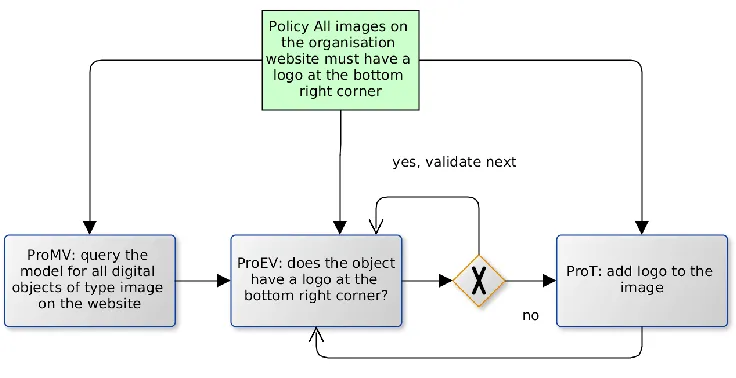
Figure 3: a representation of the policy derivation model
The policy-to-process derivation is a manual task. Interpreting the natural language and transforming it to executable policies automatically is only possible if the model imposes a controlled vocabulary. As a consequence, though, the expressivity of policies is severely limited. Here we prefer a more general model. This requires that a user maps the policy into executable forms in form of processes, and creates dependencies. One or more processes can implement a policy.
A short example of policy derivation is included in Appendix 4.
Policy derivation guidelines
Given that policy derivation will be a manual process, we propose these simple guidelines to help consistent mapping of policies across levels.
Desirable attributes for policies:
● Clear purpose and focused
● As simple and clear as possible: few and explicitly listed exceptions, clear responsibilities ● Verifiable and measurable
● Make assumptions explicit
Steps:
1. Specify the affected digital objects or other ecosystem entities of the policy 2. Specify the target user community
3. Refine the policy into more detailed intermediate policies