
A comparison of task specific and dimension specific assessment centres
339
0
0
Full text
(2) A Comparison of Task-Specific and Dimension-Specific Assessment Centres. Duncan J.. R. Jackson. Members of the Supervisory Panel Dr. Stephen G. Atkins (Chair) Dr. Jennifer A. Stillman Dr. Douglas Paton Dr. Phillip. E.. Lowry. The real voyage ofdiscovery consists not in seeking new landscapes, but in having new eyes -Marcel Proust.
(3) � Massey University COLLEGE OF HUMANITIES. & SOCIAL. School of Psychology. SCIENCES. Private Bag. 102 904,. North Shore MSC, Auckland, New Zealand Telephone: extn. Facsimile:. To Whom It May Concern: This is to state that, with respect to the research conducted for the Doctoral thesis. "A Comparison of Task-Specific and Dimension-Specific Assessment Centres" carried out by Duncan John Ross Jackson, the following statements are true:. entitled. i). Reference to work other than that of the candidate has been appropriately acknowledged.. ii). The research practice and ethical policies approved by Massey University have been complied with.. iii). Although the current thesis guidelines request a word limit of. 100,000, the. current thesis was substantially completed prior to the introduction of this limit.. (It consists of approximately. 117,000. words.). D.J.R. Jackson Candidate. Te Kunenga ki Pttrehuroa Inception to Infinity: Massey University's commitment to learning as a life-long journey. 64 9 443 9799. 9180 64 9 441 8157.
(4) � MasseyUnhter�it�-. School of Psychology. COLLEGE OF HUMANITIES & SOCIAL SCIENCES. Private Bag. 102 904,. North S h o re MSC, Auckland, New Zealand Telephone: extn. Facsimile:. To Whom It May Concern: This is to state that the research carried out for my Doctoral thesis entitled. Comparison of Task-Specific and Dimension-Specific Assessment Centres". "A in the. School of Psychology, Massey University, Albany Campus, New Zealand, is all my own work.. This is also to certify that the thesis material has not been used for any other degree.. D.J.R. Jackson Candidate:. Date:. 2 3 �;af. 2 0() �S'. -;�g<l k_i F'(lrt:ili.ll"O<l Inception to Infinity: Massey University's commitment to learning as a life-long journey. 64 9 443 9799. 9180 64 9 441 8157.
(5) � Massey University COLLEGE OF HUMANITIES. &. School of Psychology. SOCIAL SCIENCES. Private Bag. 1 02 904,. North Shore MSC, Auckland, New Zealand Telephone: extn. Facsimile:. To Whom It May Concern: This is to state that the research conducted for the Doctoral thesis entitled. "A. Comparison of Task-Specific and Dimension-Specific Assessment Centres''. was. carried out by Duncan John Ross Jackson in accordance with the University's Doctoral regulations.. Stephen G. Atkins. Date:. Supervisor. �. � z_a:xs. Te Kunenga ki Pfireh uroa Inception to Infinity: Massey University's commitment to learning as a life-long journey. 64 9 443 9799. 9180 64 9 441 8157.
(6) This work is dedicated to my late grandfather, Mr. Emest F. M. Wilson, who passed from this world at 6am on Sunday the 91h of February 2003. You were such a great and noble man, and your kindness, knowledge, wisdom, and humour will be so dearly missed. I wish I could have shared the contents of my dissertation with you, as I know you would have been keenly interested. You were one of the few people, in my younger years, who tempted me into the realisation that learning could be enjoyable. You shared your extensive knowledge of astronomy with me, and stirred a fascination, which remains today. Just prior to your passing, you said to me in your profound way; "You're my best friend". You are also my best friend, my dear grandfather. May you rest well, until we meet again..
(7) Acknowledgements. Life-consuming ventures, such as the present Ph.D., are never performed on one's own, and due consideration must be given to all those who assisted me through this journey of discovery. From the early stages, I would like to thank Dr. Jennifer A. Stillman, A/Prof. Kerry Chamberlain, and Dr. Douglas Paton for assisting me to consolidate and formulate the methodology that would be used in my research. During the design of the assessment centres I used, I am indebted to Dr. Stephen G. Atkins, Dr. Felix E. Lopez and Dr. Phillip E. Lowry for their invaluable advice. For allowing me to gain access to organisations that use assessment centre methodology, I. am. grateful to Mr. Andrew Hambleton, Mr.. Michael Hope, Ms. Helen Gribble, Ms. Rochelle McKay, Mr. Jason Clarke, Ms. Raewyn Bennett, Sqn Ldr Wanda Morris, Sqn Ldr Paul Gallagher, Sqn Ldr Laura Gillen, and Sqn Ldr Emma Davis. On the measures used in my research, I. am. grateful to Dr. Richard K. Wagner, Dr. Robert J. Sternberg, Dr. Albert Bandura, and Ms. Rebecca Tovey for their generosity. For the data analysis phase, I am indebted to Dr. Jennifer A. Stillman, Dr. Stephen G. Atkins, Dr. Robert L. Brennan, Dr. Richard J. Shavelson, Dr. Noreen M. Webb, Dr. George A. Marcoulides, Dr. John Spicer, Dr. Paul Barrett, Dr. Richard Fletcher, and Dr. John Hattie for their generous advice. For the laborious task of proofing, I am particularly indebted to Dr. Jennifer A. Stillman and Dr. Stephen G. Atkins. Thank you for your kindness, patience, and conscientiousness. In the study of assessment centres, thank you to Dr. Phillip E. Lowry, Dr. Peter Herriot, Dr. Ivan T . Robertson, and Dr. William A. Gorham for not taking the status quo at face value, and having the tenacity to stand against the prevailing view. Thank you to Dr. Filip Lievens for being at the forefront of contemporary assessment centre.
(8) 11. research. Many thanks to Dr. Nikolaos Kazantzis for updating me on acceptable practi ces of assessment in clinical psychology. My gratefulness is extended to the members of my immediate family, my mother Mdm Annette M. Jackson, my father Mr. Michael J. R. Jackson, my two older brothers Mr. Hamish J. R. Jackson and Mr. Alistair J. R. Jackson and my younger sister, Ms. Daisy L. Jackson. Thank you for believing in and supporting me throughout this time. Thanks to all my wonderful friends who have supported me through this journey, particularly Ms. Stella Cho, Mr. Victor Ng, Mr. Peter Johnston, and Mr. Shane Rowe. Lastly, I am forever indebted to all the members of my supervisory panel. Thank you for being both my friends and mentors. Your guidance has helped me to open my mind to the endless possibilities that could result from the study of psychology. The research contained, herein, was approved by the Massey University Albany Campus Human Ethics Committee, MUAHEC 00/047..
(9) iii. Abstract. Three studies were employed to further an understanding of a measurement quandary concerning assessment centres (ACs). A common theme associated with ACs is that they do not appear to measure the trait-based variables that they purport to. To compound this mystery, ACs are found to be predictive of outcome criteria; particularly criteria related to promotion. All three studies took varying perspectives on this measurement dilemma. The first study looked at particular traits that were not formally assessed in ACs, and whether these traits explained variance in overall AC ratings. No definitive evidence was found for this notion; however, tacit knowledge appeared to be associated with a small amount of variance in overall AC ratings in one of the samples under scrutiny. The second study looked at the extent to which assessors and candidates understood the models they were assessing and were being assessed under. Neither party appeared to distinguish trait-based, task-based, or other models as being more or less appropriate. While the first and second studies acknowledged some peripheral issues in the AC literature, the third study addressed the fundamental research question. Specifically, the third study investigated whether an alternative to the prevailing trait paradigm was needed. This study compared two models of assessment in a repeated measures design. One model treated the AC data as though they comprised situationally specific behavioural samples. The second model treated the data as though they were indicative of trait-based responses. Using a generalizablity study, both models demonstrated similar psychometric characteristics, although only data treated under the situationally specific model held a conceptual justification. These findings suggest that the situationally specific task based model presents a more appropriate means by which to treat AC ratings..
(10) A Comparison of Task-Specific and Dimension-Specific Assessment Centres Acknowledgements Abstract. i iii. List of Tables. 5. List of Figures. 7. Principal Notational Conventions. 8. Chapter One: Background and Hypotheses. 9. Background and History of the Assessment Centre Process Group Exercises Individual Exercises Written Exercises The Trait Paradigm Construct Validity and the Exercise Effect The Importance of Construct Validation in ACs Construct Validation of ACs through the Nomological Network Factors that May Improve AC Construct Validity: The Limited Information-Processing Model Rating Dimensions Subsequent to Agreeing Upon Dimensional Ratings Having Assessors Rate a Singular Dimension Across Exercises Reducing Cognitive Load On Assessors and Organising Ratings The Use of Video Recordings Dimensional Transparency Exercise Transparency and Opportunities To Express Behaviour Form and Content of AC exercises Factors that May Improve AC Construct Validity: The Expert Assessor Model Frame of Reference Training Employing Psychologists as Assessors Attributing Variance to both Exercise and Dimensional Features Overall Assessment Rating Integration Discussions in ACs The Measurement of Latent Constructs in ACs The Actual Criterion Contamination Explanation The Subtle Criterion Contamination Explanation The Self-Fulfilling Prophecy/Self-Efficacy Explanation The Managerial Intelligence Explanation The Impression Management Skill Explanation Intelligence, Personality, and their Relationships with Overall Assessment Ratings (OARs) The Behavioural and Interactionist Paradigms The Performance Consistency Explanation Evidence in Favour of a Task-Specific Approach. 9. 15 15 16. 17. 18 21 24 25 27 29 30. 35 35 37 38 39 40 44 51 52 53 54 56 58 61 65 70 72. 75 82.
(11) 2 Summary Overall Research Aim. 87 88 90. Hypotheses Study One, Hypothesis One Study Two, Additional Research Question Study Three, Hypothesis Two. 90 90 90. Chapter Two: Study One, Latent Trait Measurement in ACs. 92. Method Prelude to Studies One and Two Military Sample Participants Assessors The RNZAF Selection Board Selection Board Dimensions Selection Board Exercises Measures Procedure Organisational Sample Participants Assessors The AC AC Dimensions AC Exercises Results Military Sample Set One Set Two Supplementary Analysis for Set Two of the Military Sample Organisational Sample Discussion Military Sample Organisational Sample Considerations Analytical Limitations. Theoretical Implications Chapter Three: Study Two, Perceptions of Assessors and Candidates with respect to Measurement Models Method Candidates Assessors Measures: Candidates Measures: Assessors. 92. 92 93 93 93 95 95 97 99 1 06 1 06 1 06 1 08 1 08 1 09 1 12 113. 1 14 1 15 121 1 26 131. 137. 138 1 39 1 40 141 1 42. 145 145. 1 45 1 45 1 47 1 48.
(12) 3. Results Candidates Assessors Discussion Candidates Assessors Considerations T heoretical Implications Chapter Four: Study Three, A Comparison of Task-Specific and Dimension-Specific ACs Method Participants Assessors T he AC Task Analysis TT A (Threshold Traits Analysis) TT A Respondents Summarising/Scoring Responses to the TTA Presentation to the Managerial Level SME Panel Classification and Extrapolation of Tasks into Dimensions AC Task Ratings and Dimensions AC Exercises Evaluation Approach Assessor Training and the Assessment Procedure Procedure. Results Generalizability Study Factor Analysis V arimax Rotation Direct Oblimin Rotation Confirmatory Factor Analysis. 150. 1 50 1 53. 157. 158 1 58 1 60 161. 163 163. 1 63 1 63 1 65 1 66 1 70 171 1 72 1 74 1 75 1 76 1 77 1 78 1 78 181 182 1 84 1 92 1 93 1 96 1 98 207. Discussion Generalizability Study Factor Analysis Confirmatory Factor Analysis Considerations T heoretical Implications. 207 212 214 215 218. Chapter Five: General Discussion. 222. References. 234. Appe ndix 1: Pilot for Study Three. 251.
(13) 4. Me thod. 251. Results and Discussion. 262. Appe ndix 11: Introduction to Generalizability Theory. 273. Appen dix Ill: Abridged Assessment Centre Manual and Training Guide For Farmers Merchandiser, General Sales and One On One Sales Roles: Including General Sales Exercises. 300.
(14) 5 List of Tables. Table Number 1 2 3 4 5 6 7 8 9 10 11 12 13 14 15 16 17 18 19 20 21 22 23. Title. Average Convergent and Discriminant Validity Coefficients of Assessor Ratings in a Sample ofAC Studies Predictive Validity of Various Designs ofAC Research Various Criteria Used and their Predictive Validity with AC Outcomes Demographic Statistics, Candidates, Study One Military Sample Demographic Statistics, Assessors, Study One Military Sample Demographic Statistics, Candidates, Study One Organisational Sample Overall Means and Standard Deviations for Measures Employed in Set One of theMilitary Sample Bivariate Correlations Between Measures Employed in Set One of the Military Sample Multiple Regression Analysis for the Prediction of OARs in Set One ofthe Military Sample Spearman 's Rho Between Measures Employed in Set One of the Military Sample Overall Means and Standard Deviationsfor Measures Employed in Set Two of the Military sample Bivariate Correlations Between Measures Employed in Set Two ofthe Military Sample Multiple Regression Analysis for the Prediction of OARs in Set Two of the Military Sample Spearman 's Rho Between Measures Employed in Set Two of the Military Sample Bivariate Correlations Between Measures Employed in Supplementary Set Two of the Military Sample Multiple Regression Analysis for the Prediction of OARs in Supplementary Set Two of the Military Sample Spearman 's Rho Between Measures Employed in Supplem_entary Set Two of the Military Sample Overall Means and Standard Deviations for Measures Employed in the Organisational Sample Bivariate Correlations Between Measures Employed in the Organisational Sample Multiple Regression Analysis for the Prediction of OARs in the Organisational Sample Spearman 's Rho Between Measures Employed in the Organisational Sample Demographic Statistics, Candidates, Study Two Military Sample Demographic Statistics, Assessors, Study Two Military Sample. Page Number 22 56 58 94 95 1 07 1 16 1 17 1 18 1 20 121 1 22 1 24 1 25 1 28 1 29 130 1 33 1 33 1 35 1 36 1 46 1 47.
(15) 6. 24 25 26 27 28 29 30 31 32 33 34 35. 36. 37 38 39 40 41 42 43 44 45 46 47 48. Model Assumed to Underlie Assessment: Candidates Model Assumed to Guide Assessment: Candidates Model Assumed to Guide Assessment After Being Informed of the Measurement Problems in ACs: Candidates Usefulness ofIndividual Dimensions: Assessors Dimensions Perceived as Being Seen Exhibited Across All Exercises: Assessors Model Assumed to Guide Assessment: Assessors Model Assumed to Guide Assessment After Being Informed Of The Measurement Problems In ACs: Assessors Demographic Statistics, Candidates, Study Three Private Sector Sample Grand Means and SDs of the Behavioural Ratings (Within Exercises) in the Task-Specific AC Grand Means and SDs of the Dimension Ratings (Across Exercises) in the Dimension Specific AC Generalizabi/ity Study Comparing a Task-Specific with a Dimension-Specific AC in a Repeated Measures Design for the Organisational Sample Relative and A bsolute Error, Generalizability and Phi Coefficients and Interrater Reliabilityfor the Balanced TaskSpecific AC Relative and A bsolute Error, Generalizability and Phi Coefficients and Interrater Reliability for the DimensionSpecific AC Generalizabi/ity Study Showing the Results of the Unbalanced Task-Specific ACfor the Organisational Sample Rotated Factor Matrix for the Task-Specific AC Ratings Rotated Factor Matrix for the Dimension-Specific AC Ratings Rotated Pattern Matrix for the Task-Specific AC Ratings Rotated Pattern Matrix for the Dimension-Specific A C Ratings Standardised Factor Loadings for Model One: The Abridged Task-Specific CFA Model Selected Goodness-OfFit Indices for Model One: The Abridged Task-Specific CFA Model Standardised Factor Loadings for Model Two: The DimensionSpecific CFA Model Selected Goodness-OfFit Indices for Model Two: The Dimension-Specific CFA Model Standardised Factor Loadings for Model Three: The Exercise Effect CFA Model Selected Goodness-OfFit Indices for Model Three: The Exercise Effect CFA Model Advantages of the Task-Specific Approach Relative to the Dimension-Specific Approach to AC Design. 151 1 52 1 53 1 54 1 55 1 56 1 57 1 64 1 83 1 83 1 87. 1 90. 191. 1 92 1 94 1 95 1 97 1 98 20 1 202 203 204 205 206 228.
(16) 7. List of Figures. Figure Number 1 2 3 4 5 6. Caption. Competency/Exercise Matrix for Study One, Organisational Sample Variance Components and Confidence Intervals for Each Effect and Interaction in the Task-Specific AC Variance Components and Confidence Intervals for Each Effect and Interaction in the Dimension-Specific A C Model One: Abridged Task-Specific CFA Model Model Two: Dimension-Specific CFA Model Model Three: The Exercise Effect CFA Model. Page Number 1 10 1 89 1 89 1 99 202 204.
(17) 8. Principal Notational Conventions for Generalizability Studies. p. The main effect for persons, the object of measurement in G studies.. X. The main effect for assessment centre exercises. This and any other source of variance in a G study, except for the object of measurement, is termed a facet.. d. The main effect for dimensions, traits, or competencies. These constructs are assumed to have a quality that is relatively stable and enduring across assessment exercises. This and any other source of variance in a G study, except for the object of measurement, is termed a facet.. px. The interaction term for two (or more) facets in a G study.. pxd, e. The interaction between all the facets in a G study followed by an 'e' indicates the error term for the model. This is the component of variance that is attributable to undifferentiated error.. i:x. The presence of a colon (:) indicates that one facet is nested within another. In this case, the facet 'i' (items) is nested within 'x' (exercises). This occurs in a task-specific assessment centre, because each exercise has its own associated set of items. Relative error term. Used to calculate measurement error associated with all of the components of variance that compare the standing of individuals relative to one another. This term is used in the calculation of the G coefficient.. 2 0" Abs. Absolute error term. Used to calculate measurement error associated with all of the components of variance that relate to absolute decisions. That is, decisions that have a cut-off point, or a pass/fail criterion. This term is used in the calculation of the Phi coefficient.. Ep�el. The G coefficient for relative decisions. This is presented on a scale from 0, indicating poor generalizability, to 1 , indicating excellent generalizability. The Phi coefficient for absolute decisions. This is presented on a scale from 0, indicating poor generalizability, to 1 , indicating excellent generalizability..
(18) 9. Chapter One: Background and Hypotheses. Background and History of The Assessment Centre Process. Assessment centres (ACs) are a popular process used for the assessment of people in organisations. Despite the popularity of this process, ACs are frequently criticised as being anomalous with regard to the psychological constructs that they purport to measure (Chan, 1 996). The history of the AC concept proper dates back to around the 1 930s. After the First World War, the German Military decided to implement new selection procedures for its officers to foster a more powerful armed force for the inexorable Second World War (Seegers, 1 997). The resulting selection procedure employed during the Naz i regime was the foundation for what is now known as the AC process, which involves the utilisation of multiple forms of assessment by which to acquire a standardised evaluation of an individual' s behaviour (Baron & Janman, 1 996). In ACs, candidates participate on several different work-related simulation exercises, which aim to measure a set of competencies relevant to a target job. Each candidate is evaluated by a number of assessors, and any given AC may last from a half day, to three days or longer. Seegers ( 1 997) states that ACs have been used in the contexts of simulations, role-plays, selection, assessment, training, evaluation, and as a means of dealing with personnel issues. The earliest origins of multiple assessment methodologies per se can be traced to the Han Dynasty of ancient China (BC 206 to AD 220), which employed the use of multiple testing across a diverse range of occupations. By the Ming Dynasty (AD 1 368 to AD 1 644), such testing procedures had become even more sophisticated, and involved multiple stages which needed to be completed consecutively before.
(19) 10. candidates were eligible to apply for certain positions. Kaplan and Saccuzzo (200 1 ) suggested that the Western world became familiarised with the Chinese methodologies though the verbal accounts of missionaries. Specifically concerning AC methodology, Feltham ( 1 989) reviewed the h istorical progression of the AC into the organisational context. Ironically, it was the origin al German selection procedures that were instrumental in the development of the next stage in the evolution of the AC: the British War Office Selection Board. The German method of selection via multiple assessment devices became widespread throughout the British military by around 1 94 1 . The British War Office Selection Board was the direct precursor to the Regular Commissions Board (in Britain) and the US Office of Strategic Services selection system, both of which benefited from moderately improved selection precision with the use of multiple assessment methodologies. After the war came the development of the British Civil Service Selection Board, which adopted the British War Office Selection Board methodology for civil service appointments. The emphasis in this latest version of multiple assessment methodology was on the intellectual capacity of candidates. The design of the selection procedure was based on a job analysis of the civil servant' s occupational characteristics. The assessment battery included cognitive ability and personality tests, interest questionnaires, projective tests, peer assessments, interviews and situational tests which were designed as simulations of the civil servant' s job. All data were aggregated and an overall grade was awarded to each candidate accordingly. The British Civil Service Selection Board found the first evidence for the predictive validity of multiple ass essment methodology, with training, job performance, and promotion-related criteria..
(20) 11. Beginning around 1 948, the first adoption of multiple assessment had only a slight (although promising) realisation in selection procedures in a Scottish organisational context o-Jandyside & Duncan, 1 954). The adopted process was very much influenced by the military, reinforced by the fact that the assessment process was constructed "with the advice and assistance of Brigadier F. I. De la P. Garforth" (Handyside & Duncan, 1 954, p. 9). It is interesting to note that even at this early stage, the intention in the AC process was to measure trait-based variables such as "acceptability to others, co-operativeness, intelligence, persuasiveness and leadership" (Handyside & Duncan, 1 954, p. 1 9). The espousal of ACs into the organisational context was pioneered most influentially by the US company American Telephone and Telegraph (AT&T) in 1 956 (Seegers, 1 997). AT&T included the multiple assessment procedure in their longitudinal research into the development of employees. In the original AT&T AC, simulations, group assignments, interviews and tests were used to predict the promotion of candidates to a middle management position. The procedure consisted of a three and a half day AC, which included a two-hour interview, an "in-basket" work sample exercise, a group simulation (which referred to a manufacturing problem), a group discussion (which focussed on discussions surrounding a promotion decision), psychological tests, projective tests and questionnaires (Feltham, 1 989). The AT&T procedure, which was used only for research purposes, yielded impressive results. The AC was reported as correctly predicting the promotion of 42% of candidates into middle management positions (Bray & Grant, 1 966). The AT&T template for the AC procedure was followed by thirteen organisations by 1 969 (Seegers, 1 997)..
(21) 12. The findings pertaining to the predictive validity of the AC process are mixed. Mean corrected predictive validity coefficients for the criterion of job performance from three meta-analytic studies have been reported as .4 1 (Schmitt, Gooding, Noe & Kirsch, 1 984) and .37 (Gaugler, Rosenthal, Thomton & Bentson, 1 987). The median corrected correlation rose to .63 for promotion data and .33 (.43 when corrected for attenuation) for performance across 2 1 studies (Cohen, Moses & Byham, 1 974). In a study of the ratings of school administrators using the same AC across different locations, the corrected job performance validity coefficient dropped to . 1 6 with teacher ratings, and the uncorrected average coefficient for the ratings from the school administrator's immediate supervisors was .08 (Schmitt, Schneider & Cohen, 1 990). Ostensibly, these coefficients are grounds for concern. However, it should be noted that in the Schmitt et al. study, there was an enormous amount of variability across the coefficients obtained for teacher ratings (minimuro. =. -. .40, maximum = .82). and for supervisory ratings (minimum = -.50, maximum = .64). Note also that the supervisory ratings were not corrected for unreliability associated with criterion measures. This study may also highlight some problems associated with attempting to use the same AC across different groups of assessees. Ideally, ACs should be constructed using standardised methodology, however, they should also be tailored to the requirements of specific organisations and based on organisation-specific job analyses (Joiner, 2002). Fleenor (1 996) makes the point that since a lack of standardisation across ACs exists; meta-analysis may not be the best method by which to assess the predictive validity of the process. The strength of a predictive validity coefficient also depends on the type of criterion used (Muchinsky, 2000). It should also be noted with caution that many procedures labelled "ACs" are, in practice, poorly designed and have not.
(22) 13. concentrated on the fundamental theoretical foundations of the procedure, such as carrying out job analyses, designing exercises in accordance with current guidelines, and the training of assessors (Feltham, 1 989; Fletcher & Anderson, 1 998; International Task Force on Assessment Center Guidelines, 2000; Lievens, 2002). The lack of high quality j ob analyses for justification and support is unfortunately common for many selection systems, and this may be especially problematic in New Zealand where selection systems lack structured job analyses (Taylor, Keelty & McDonnell, 2002). In saying this, however, most of the New Zealand based respondents to Taylor et al.'s survey reported using either a job analysis or an "understanding of competencies or tasks relating to target jobs" (p. 1 4) specifically to design AC procedures. The contemporary processes, now commonly called assessment and development centres, focus on standardised evaluations of behaviour, based on multiple samples of behaviour, and using multiple traits in order to assess that behaviour (Ballantyne & Povah, 1 995). Development centres focus more on effective developmental responses, as opposed to being purely diagnostic (Carrick & Williams, 1 999). To encapsulate both assessment and development centres, the more general term AC will be used in this review, as both use identical design elements and fundamental methods, and only differ substantively in regard to their overall aims. Ballantyne and Povah (1 995) outlined the major components of ACs as involving the participation of a group in multiple exercises, who are observed and rated against predetermined task-related behaviours by a team of trained assessors. The data obtained by the assessors are then shared before final decisions are made. ACs are based on the inclusion of multiple participants, and a combination of methods by which to assess behaviour so that a complete profile can be compiled. They utilise.
(23) 14. multiple assessors and ideally, the entire assessment process should form its basis from a job analysis of the target job or task. ACs can also include supplementary measures such as any combination of cognitive ability tests, interviews and personality questionnaires, in addition to simulation exercises, as part of the entire ass essment process (Cook, 1 998). This review will focus on the measurement of human attributes through simulation exercises, which represent the quintessence of AC methodology (International Task Force on Assessment Center Guidelines, 2000). Baron and Janman (1 996), in their review of fairness in the AC, report that primarily, ACs comprise sets of work sample type exercises including the in-tray exercise, the leaderless group exercise, and business games. ACs generally operate under a trait paradigm, whereby the aim of the AC is to obtain measures of stable dimensions that an individual will display across the different exercises. Usually, a dimension must be assessed at least twice during the AC (Cook, 1 998), and will commonly be assessed between 3 and 4 times (Ballantyne & Povah, 1 995). Put another way, the objective of the AC is to obtain a measure of an individual's dispositional characteristics or the stable characteristics inherent within an individual (Fleenor, 1 996) as opposed to situationally-specific behavioural responses to individual exercises. Cook ( 1 998), Ballantyne and Povah ( 1 995), Thomton ( 1 992), and Thomton and Byham ( 1 982) describe the content of ACs as including exercises that may have come 'off the shelf (i.e., generic exercises), or exercises that have been designed specifically for a particular job. Such exercises can be categorised as Group Exercises, Individual Exercises and Written Exercises. Although the summary below is. by no means exhaustive, it provides a guide to the different types of exercise that. are. commonly encountered in modem ACs. The selection of a particular form of.
(24) 15. exercise should be based on its relevance to the requirements of the target job. Due to considerable variation across job requirements, it is likely that new forms of AC exercises will need to be constructed accordingly. Such exercises will need to be guided by, and congruent with, job analysis outcomes.. Group Exercises. Revealed difference technique discussions: A discussion of an individual' s priorities. in a contrived scenario, relative to the priorities of the group as a whole. Leaderless group discussions: A group discusses a point of contention or general. topic, and no leader is appointed to regulate the group. Assigned role exercises: Individuals are allocated particular roles and are provided. with a scenario where they must compete for their share of a budget, etc. Group Discussion Exercises: This can be either co-operative, or competitive. In the. former, group members discuss an issue or solve a problem as a team, and in the latter, group members are required to persuade or negotiate on an issue. Command Exercises: Involves individuals solving a practical problem, e.g.,. constructing or completing a structure. Business Simulations: Often involves the use of computers and rapid decisions with. incomplete information, under inconsistent conditions. Team Exercises: Two teams advocate for opposing viewpoints.. Individual Exercises. Presentation Exercises or Lecturettes: Individuals prepare for an oral presentation.. The level of formality of the presentation is predetermined by the requirements of the.
(25) 16. target job. Presentation exercises are often used in ACs for positions in sales, marketing or training. Role Plays: The individual is required to adopt a role related to those required in the. target job. For example, a disgruntled customer or a person with a grievance. Inte rview Simulation Exercises: These involve one-to-one interactions with a. candidate and an interviewer who plays the role of a customer, subordinate or other role, depending on the requirements of the target job. Fact-Finding and Decision-Making Exercises: These exercises purport to assess the. analytical skill of candidates. Such an exercise could include a situation where a candidate has been requested to formulate sound and cogent arguments surrounding an issue of contention.. Written Exercises. In-Basket Exercises: A simulation exercise, where candidates are given a set of papers. to action (i.e., memos, reports, junk mail, letters, etc) that mimic those that may be encountered in the target job. In-Baskets are supposedly useful for assessing an individual's capacity to manage several issues at one time, delegation, planning, organising and being able to prioritise items of more or less importance. Analysis Exercises: In these exercises, candidates are required to review information. that is presented either numerically or verbally, and to submit a report on the basis of this information. Written and oral communication are of particular salience in analysis exercises. Biographies: Candidates are required to write a biography for such events as, for. exampl e, an obituary for the candidate's own death. Once again, written or oral communication skills are of interest. The extent or type of information assessed in.
(26) 17. this, and any, type of exercise (e.g., facial expression, handwriting neatness, etc) should ideally depend on the outcomes of job analysis data.. The Trait Paradigm. The trait paradigm is the theoretical foundation under which most ACs operate (Klimoski & Brickner, 1 987). Trait theories emphasise the notion that individuals possess particular and consistent attributes and dispositional characteristics that distinguish one person from another (By ham, 1 970). At the core of this definition of the trait paradigm of human attributes lays the notion that behaviour should be reasonably consistent across situations. Stability over time and space is noted as being a "prerequisite of trait validity" (Matthews & Deary, 1 998, p. 50). Under the trait paradigm in the AC context, if an individual is rated highly on any given specific dimension on one exercise (e.g. problem solving), then that individual should score (relatively) highly on that dimension on subsequent exercises (Fleenor, 1 996). Howard ( 1 997) described the characteristics measured in ACs as being composed of mixed collections of "traits (e.g., energy), learned skills (planning), readily demonstrable behaviors (oral communication), basic abilities (mental ability), attitudes (social objectivity), motives (need for achievement), or knowledge (industry knowledge) and other attributes or behaviors" (p. 22). It appears that all of the characteristics mentioned, except perhaps for 'behaviours' , describe notions that are reminiscent of the trait paradigm, in so much as they represent attributes that are theoretically assumed to hold some cross-situational stability (at least over the course of an AC). In practice, the term trait often tends to be associated with personality variables. Frequent terms that are used to describe these characteristics, whilst avoiding connotations associated with personality theory, include 'dimension' (e.g.,.
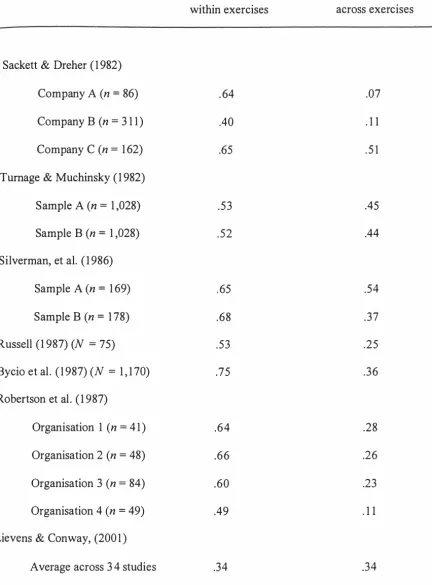
(27) 18. Lievens & Klimoski, 2001 ) and 'competency' (Spencer and Spencer, 1 993). Also, particularly in measurement theory and psychometrics, an underlying trait is referred to as a latent construct. By and large these terms are considered as interchangeable in the present study, as descriptions of characteristics that are assumed to hold relatively enduring cross-situational consistency. However, given the subtle differences between the terminologies outlined above, certain terms may be more appropriate than others given particular contexts, and will be referred to accordingly in this dissertation. Sackett and Dreher ( 1 982) identified the first empirical evidence against the use of the trait paradigm in the AC context, where their results from an AC study did not show evidence for the dimensions intended to have been measured.. Construct Validity and the Exercise Effect. Construct validity concerns the extent to which a hypothetical trait or construct is measured via a form of psychological test (Anastasi & Urbina, 1 997). Tenopyr ( 1 977) argued that the various forms of validation (e.g., criterion validation, content validation, known groups validation) are fundamentally all evidence for construct validation. For the purposes of the present study, as for numerous studies on ACs, it is useful to divide the holistic concept 'construct validation' into its various evidential components. As evidence of construct validity for a given trait or construct, Camp bell and Fiske (1 959) proposed the concepts of convergent and discriminant validity. The former of these notions implies that constructs that should theoretically be related to one another should accordingly correlate with one another. The latter notion suggests that theoretically distinct constructs should remain unrelated to one another. The authors suggested that in order to research these properties of a given psychological trait, a multitrait-multimethod matrix should be developed, whereby multiple.
(28) 19. measurements of traits are obtained, under the utilisation of multiple methods by which to investigate these traits. To evaluate the research on assessment centres using these principles, it is also important to realise that Campbell and Fiske (1 959) considered both convergent and discriminant validity to be complementary, and so it would seem, comparative forms of construct evidence. As the authors state, "for the establishment of construct validity, discriminant as well as convergent validation is required" (Campbell & Fiske, 1 959, p. 8 1 ). Particular attention should be drawn to the words 'as well as' in this quotation, which imply that both sources of evidence should be considered together for an acceptable method of construct validation. Campbell and Fiske (1 959) suggested that for acceptable construct validation, measurements of the same trait across different methods (monotrait-heteromethod measurements, i.e., validity coefficients) should be higher than both different traits measured across different methods (heterotrait-heteromethod measurements) and, particularly relevant in the AC context, different traits measured via the same method (heterotrait-monomethod). The AC process fundamentally functions by way of a multitrait-multimethod mechanism. By definition, ACs employ multiple methods by which to measure multiple traits (Carrick & Williams, 1 999) and as such, the AC presents itself as a multitrait-multimethod psychological measure. To achieve acceptable construct validity, according to Campbell and Fiske, ACs need to display higher monotrait-heteromethod correlations than either heterotrait-heteromethod or heterotrait-monomethod correlations. Through factor analysis, Sackett and Dreher ( 1 982) investigated the construct validity of ACs in an effort to examine the extent to which three ACs actually measured the dimensions that they were designed to measure. In all three ACs, the within exercise ratings correlated more highly than dimensions measured across.
(29) 20. exercises, with factor patterns clearly representing exercises (heterotrait-monomethod correlations) rather than the intended dimensions (monotrait-heteromethod correlations). This study provided no support for the view that ACs measure complex constructs such as leadership or problem solving. Although criterion validity evidence for ACs may exist, the results found in Sackett and Dreher and other studies since (see Hough & Oswald, 2000) raise questions as to why and how ACs are predictive of managerial success. As Sackett and Dreher pointed out, the notion that ACs do not appear to measure the constructs that they were intended to measure does not render the criterion-related evidence in favour of the process invalid. It does, however, suggest that the justification for inferences made about ratings in the AC on the basis of traditional content validated methodology may, in itself, lead to erroneous conclusions. Subsequent studies on AC construct validity have consistently shown the pattern of 'same dimensions across different exercises' exhibiting low correlations (a lack of evidence for convergent validity), and ratings of 'different dimensions within the same exercise' being highly correlated, (a lack of evidence for discriminant validity). Taken together, these findings have given rise to what has been labelled 'the exercise effectt ' (Bycio, Alvares & Hahn, 1987; Carrick & Williams, 1 999; Chan, 1 996; Fleenor, 1 996; Jones, Herriot, Long & Drakeley, 1 99 1 ; Joyce, Thayer & Pond, 1994; Russell, 1 987; Lievens, 2002; Robertson, Gratton & Sharpley, 1987; Silverman, Dalessio, Woods & Johnson, 1 986; Spector, 2000; Tumage & Muchinsky, 1982; Turnage & Muchinsky, 1984). These studies and summaries suggest that ACs are not working as they were designed or intended to, in that they do t Note: The 'exercise effect', in this context, is a method effect and should not be confused with the main effect for exercises in ANOVA terminology. The AC exercise effect reflects the variation of the performance of individuals within exercises as opposed to behaviour measured across traits or dimensions. In ANOVA, the • AC exercise effect' is reflected in the interaction term between the obj ect of measurement and the main effect for exercises. Specifically, the effect for persons crossed with the effect for. exercises. This supposed method effect is only regarded as a source of measurement error under the traditional dimension-specific AC model, which attempts to measure trait-based variables..
(30) 21. not appear to measure the dimensional characteristics that they purport to. Table 1 shows the average convergent and discriminant validity coefficients for a sample of studies showing the exercise effect. Most of the studies mentioned show higher correlations between different traits measured within an exercise than measurements of the same trait sampled across exercises. None of these studies show a particularly convincing picture that variables are being assessed in ACs that hold stable characteristics across exercises. Various attempts have been made to increase the evidence for construct validity of ACs through various methods, as described in the next section.. The Importance of Construct Validation in ACs. It could be argued that, given the predictive power of the AC process, the discrepancies in construct validity represent an issue of little importance. The contention is often presented that ACs gain their predictive properties from content validity, in that they theoretically sample a wide range of the factors that comprise target jobs (Neidig & Neidig, 1 984; Norton, 1 977; 1 98 1 ; Sackett & Dreher, 1 982; 1 984; Thomton, 1 992). Lowry ( 1 996) however, suggested that content validation is insufficient when purporting that trait-based variables are measured in ACs. In this view, the aim of the AC is not merely to sample the domain of what comprises a particular job, but goes over and above this to infer the measurement of psychological traits. If the justification for trait measurement is derived, properly, from a job analysis, then ignoring the validity of subsequent trait measures is akin to neglecting the trait requirements of the job..
(31) 22. Table 1 Average Convergent and Discriminant Validity Coefficients of Assessor Ratings in a Sample ofA C Studies. Sourc e. Different traits within exercises. Same traits across exercises. Company A (n = 86). . 64. .07. Company B (n = 3 1 1 ). .40. .11. Company C (n = 1 62). .65. .5 1. Sample A (n = 1 ,028). .53. .45. Sample B (n = 1 ,028). .52. .44. Sample A (n = 1 69). .65. .54. Sample B (n = 1 78). .68. .37. .53. .25. .75. .36. Organisation 1 (n = 4 1 ). .64. .28. Organisation 2 (n = 48). .66. .26. Organisation 3 (n = 84). .60. .23. Organisation 4 (n = 49). .49. .1 1. .34. .34. Sackett & Dreher ( 1 982). Turnage & Muchinsky ( 1 982). Silverman, et al. ( 1 986). Russell (1 987) (N. =. 75). Bycio et al. ( 1 987) (N. =. 1 , 1 70). Robertson et al. ( 1 987). Lievens & Conway, (200 1 ) Average across 3 4 studies Source: Adapted. from Reilly et al ., ( I 990)..
(32) 23. In terms of convergent and discriminant validity, the robust finding with many of the studies performed on ACs is that they measure exercise constructs (i.e., performance on individual exercises), yet over and above this, the evidence suggests that any inference of traits may be erroneous (Lowry, 1 995). To elaborate, the questions surround what the construct validity evidence, taken holistically, is suggesting about the constructs that are being measured in ACs. This, in itself, is an inherently important reason why construct validation is a variable of consequence to the discipline of industrial/organisational psychology. Making claims with no empirical evidence could threaten the credibility of a practice or even a discipline in its own right. Further to this, Lowry ( 1 996) and Norton ( 1 977) have suggested that construct validity may be a moot point for litigation against companies attempting to use AC technology, particularly for the purposes of recruitment and selection. Both authors contend that courts in the United States recognise construct validation procedures. As construct validation is arguably the most fundamental type of validation in assessment procedures (Tenopyr, 1 977), it is highly conceivable that without empirical construct validation through evidence of the discriminant and convergent vaHdlt:y of an AC, organisations may expose themselves to court cases that may be costly in terms of monetary losses, as well as being threatening to their credibility and reputation. Thus, under this argument, it is with some urgency that the lack of construct validity evidenced in ACs should be investigated and rectified accordingly. The practical significance of this notion extends to the multitude of organisations that use ACs, given the finding that most of these do not assess the validity of their assessment ratings (Spychalski, Quinones, Gaugler & Pohley, 1 997)..
(33) 24. Sackett and Dreher ( 1 982) examined the construct validity of three ACs, through an analysis of the interrelationships among the dimensional ratings of candidates between and within AC exercises. Sackett and Dreher made the suggestion that construct validation, over and above the inherently job related nature of ACs. (i.e., content validity), was essential. This is because firstly, AC dimensions. are often complex (e.g., interpersonal skills, leadership) which makes an inference to underlying and stable attributes potentially more difficult. Secondly, the AC process is, in itself, composed of several complex inferential steps that lead to the outcome of making a prediction of managerial potential. These steps involve the observation of candidates in AC exercises, recording numerous trait ratings for candidates, to the final step. of producing overall predictions of managerial success. Thus, the. underlying traits that are involved in becoming a successful manager perform a vital role in the AC process. Kudisch, Ladd and Dobbins ( 1 997) argued that providing traditional dimensional feedback to the participants of ACs, with the implication that they are. in fact measuring such dimensions, is highly problematic.. In the. developmental context, the low convergent and d iscrim inant valid ity i ssue has dire imp lications in terms of leading to erroneous feedback. That is, participants may be provided feedback on the basis of stable abi lity traits that are not actually being measured (Fleenor,. 1 996).. Thus, decisions in organisations can be falsely made on the basis. of AC. measurement.. Construct Validation of AC Dimensions Through the Nomological Network. Theoretically, evidence of how well a measure defines a construct could be dem onstrated though the extent to which that measure fitted legitimately into an arrangement of expected relationships (Nunnally & Bemstein, 1 994 ). Such a pattern o f evidence. was labelled the nomological network by Cronbach and Meehl ( 1 955),.
(34) 25. where logic states that to be construct valid, a measure must fit in with the theory relating to a particular construct. Using this logic, a small number of studies have attempted to link overall dimension ratings in ACs to ratings of external measures (such as personality or ability measures) to establish the extent to which such ratings formed an expected pattern of construct relationships. Mixed evidence has been reported for the extent to which AC dimensions fit within a nomological network. Shore, Thornton, and Shore ( 1 990) and Thomton, Tziner, Dahan, Clevenger, and Meir ( 1 997) classified psychological (cognitive ability and personality) measures as being either related or unrelated to specific AC dimensions. Generally small expected relationships were found with cognitive ability-related and performance-related-dimensions. Further convergent and discriminant validity evidence, in the form of small correlations, was also found for interpersonal effectiveness dimensions. Chan (1 996) and Fleenor ( 1 996) found evidence against the notion of AC dimensions showing construct related evidence through the nomological network. They reported a lack of convergent and discriminant relationships with nearly all of the expected associations.. Factors that May Improve AC Construct Validity: The Limited Information Processing Model.. Lievens and Klimoski (200 1 ) posited two models that sought to explain why ACs lack construct validity. The first was the limited information-processing model, which suggests that since assessors have restricted information-processing capabilities, they are not necessarily able to fulfil the requirements demanded for trait based measurement (e.g., Miller, 1 956). The techniques for minimising this potential problem are discussed in the following, and incorporate suggestions from Lievens.
(35) 26. ( 1 998) and other authors who have investigated these suggestions empirically. Lievens ( 1 998) reviewed the factors which research suggests are implicated in the facilitation of the construct validity of AC ratings. Twenty-one studies conducted between 1 976 and 1 997 were included in the review. Based on his review, Lievens suggested several techniques for maximising the validity of AC ratings. Many of these suggestions parallel those proposed by Ahmed, Payne, and Whiddett ( 1 997), who interviewed experts and practitioners with regard to best practice in the design of AC exercises. It was suggested that a small number of dimensions be used when assessing candidates. Also, dimensions should be used that are conceptually distinct from one another so as to maximise ease of discrimination for assessors, and dimensions should be defined in a concrete and job related way. In terms of the situational exercises used, exercises should be selected on the basis of their ability to elicit behaviours that are relevant to the dimensions being measured. Any role players used should be trained and their actions should be standardised to the greatest degree possible, so as to avoid across-exercise variance. Moreover, it was advised that role players should seek to elicit dimension-related behaviours, and that dimensions should be revealed to the assessees, especially in developmental ACs. The suggestion has been made that assessors should be provided with observational aids (e.g., behavioural checklists and video recordings of the AC), and that dimensions should be included in a checklist, utilising a maximum of 1 2 behaviours for each dimension. Checklist behaviours should be grouped i n naturally occurring clusters. Rating biases should be minimised by using a rotation system, whereby assessor/assessee combinations are rotated over the course of the AC. This would represent a rudimentary form of randomisation in which rater idiosyncrasies would be systematically allocated among the pool of assessees . The suggestion has.
(36) 27. been made that one dimension only should be rated across exercises (Robie, Adams, Osbum, Morris & Etchegaray, 2000). Some empirical work has been performed with respect to these suggestions to investigate their relative efficacy. In general, these studies conclude that careful consideration given to particular design characteristics associated with ACs is important in terms of maximising evidence for construct validity (Lievens & Van Keer, 200 1 ). It should be noted, however, that some studies that have purposely implemented some of these general suggestions have not been successful in terms of increasing evidence for the measurement of trait-based constructs (Chan, 1 996; Schneider & Schmitt, 1 992; Fleenor, 1 996). The findings from specific studies that have investigated the limited information-processing model are summarised in the following.. Rating Dimensions Subsequent to Agreeing Upon Dimensional Ratings. The exercise effect could possibly be influenced by the fact that assessment dimensions are often rated directly after or during an exercise. This might have an impact on the extent to which AC exercises are treated individually, or whether assessors look for behavioural patterns across different exercises. Silverman, et al. ( 1 986) made great efforts to try to minimise the exercise effect. The authors argued that, traditionally, assessors in an AC are required to rate each dimension on each exercise. Given this, assessors may be forced to process rating information in terms of exercises, thus the exercise effect prevails as assessors rate in terms of exercises. Silverman et al. arranged their AC in such a way that the assessors were asked to rate candidates on dimensions after the rating for each dimension had been agreed upon by a group of assessors. The authors labelled this approach the ' within-dimension' method, in which the assessor group firstly observed and recorded behavioural.
(37) 28. information across all exercises. Secondly, the information recorded for each of the dimensions in the AC was displayed on an overhead and was discussed. Thirdly, from the information gleaned in this discussion, the assessors rated overall dimension ratings for each candidate. Fourthly, these ratings were discussed so as to reach an agreement for each dimension assessed for each candidate. Fifthly, assessors privately rated the performance of each dimension for each candidate on each exercise. Such a procedure appears prolonged, and may even detract from the original behaviour assessed. The emphasis in the Silverman et al. (1 986) study was supposedly on performance related to dimensional characteristics, as opposed to exercise performance. This approach was similar to that used in the original AT&T AC where dimensions were only rated after all of the exercises had been observed, that is, dimensions were not rated after or during each exercise. Despite modifications being made, Silverman et al. found that the pervasive exercise effect prevailed, with factor analyses not revealing any clear dimensional clusters. Silverman et al. interpreted factor rotations of assessor ratings as revealing clear exercise effects. As Silverman et al. commented, "the within-dimension method still showed a smaller amount of discriminant validly than anticipated, and it also showed source or exercise variation". (p. 575 ). Harris, Becker, and Smith ( 1 993) argued that the Silverman et al. ( 1 986) study was rendered problematic by the notion that requiring assessors to determine an overall rating first may have artificially forced assessors to be more consistent in their ratings of dimensions, even though, in reality, the Silverman et al. study did not actually show strong evidence for the measurement of trait-based variables. In a systematic replication of the Silverman et al. study, Harris et al. sought to investigate.
(38) 29. the utility or the improvement in construct validity due to deriving overall dimension ratings only after the dimension rating for each exercise was determined. They found no increase in cross-situational consistency in terms of dimensional characteristics. The more common finding of different dimensions within the same exercise correlating more highly than the same dimension across different exercises was observed.. Having Assessors Rate A Singular Dimension Across Exercises. A curious approach towards maximising the possibility that assessors will display ratings that represent trait-based variables was suggested by Adams ( 1 997). Adams hypothesised that exercise effects occurred because the same raters were measuring different dimensions within a given exercise. By having each individual assessor rate a single, particular dimension across the different exercises, Adams found evidence for the measurement of dimensions across exercises. This same premise was repeated using more robust methodology by Robie, et al. (2000) with almost identical results. The implications of the principles presented above, present some practical considerations in that as many assessors need to be employed as there are assessment dimensions being assessed for each individual. More serious though, is the notion that these studies are in danger of conveying that the extent of correlation between the variables measuring a dimension is more contingent on the rater, and less so on the presentation of a behaviourally manifest trait-based variable. If it were trait-based variables that were being shown, and the raters held a shared understanding of what defined a dimension behaviourally, then it should not matter which assessor rated which dimension. Trait-based characteristics should, theoretically, remain relatively.
(39) 30. stable and enduring across exercises. The underlying premise in the above studies reall y creates a kind of 'mono-trait effect' across a singular rater. In this sense, the measurement of a singular trait is confined to a singular 'method' . In this case that method is a rater. This does not necessarily mean that the method effect has gone, but rather, it may have been turned on to dimensions instead of exercises.. Reducing Cognitive Load On Assessors and Organising Ratings. Some evidence suggests that a lack of construct validity in AC ratings might be influenced by the sheer demands of the arduous task that assessors face. The suggestion related to this involves reducing the demands on assessors, so as to potentially increase the quality of the assessment. Jones et al. ( 1 99 1 ) attempted to improve the validity of an AC for the selection of naval officers by introducing procedural changes. The number of dimensions being assessed was reduced to minimise the cognitive demands put upon assessors. Within a document designed to assist the assessors to organise rating evidence, predictor information was organised under each relevant dimension on a schedule, which visually indicated the relative predictive validity of each dimension. Discussions at the end of the assessment process were focused on areas of disagreement or disparity. Following the modifications, the study found no improvements in predictive validity for training criteria, although there were improvements in the prediction of voluntary turnover. The study found that despite the alterations, the measurement of individuals' traits or abilities was not obtained through AC ratings, and the exercise effect prevailed. Jones et al. ( 1 99 1 ) and Gaugler and Thomton ( 1 989) do, however, conclude that the utilisation of fewer assessment dimensions leads to more accurate ratings, which may.
(40) 31. work by reducing the cognitive load that assessors need to contend with when assessing candidates. Another study by Reilly, Henry, and Smither (1 990) investigated the extent to which excess cognitive load may lead to a lack of construct validity. The cognitive load controversy suggests that assessors may be unable to assess the ability traits or dimensional characteristics of assessees, due to the fact that they are overloaded with information. This makes processing a large amount of information unmanageable or impossible (Spector, 2000). Reilly et al. ( 1 990) attempted to investigate the extent to which this phenomenon exacerbated the lack of construct validity associated with the AC process by providing a checklist of 273 behaviours to use in order to rate candidate performance in assessment exercises. This manipulation lead to an improvement in the convergent and discriminant validity of assessor ratings. The use of behaviour checklists increased the average convergent validity coefficient from .24 to . 4 3, and decreased the average discriminant validity coefficient from . 4 7 to . 4 1 . The latter coefficients here demonstrated slight improvements in the extent to which same traits were judged as being related and different traits were judged as divergent. Note that one hopes to find relatively high convergent coefficients and relatively low discriminant coefficients for construct evidence. Spector (2000) asserted that these results appeared promising, and suggested that by imposing more structure, and lessening the cognitive load on assessors, construct validity might improve. In the study mentioned above, Reilly et al. ( 1 990) reported improvements in convergent validity with their use of behavioural checklists to reduce the cognitive demands put upon assessors. The study only found a difference in overall correlation of .06 in the reduction of discriminant validity. There are empirical questions surrounding whether this is, in actual fact, a notable improvement in the construct.
(41) 32. validity of ACs. Viewed from an alternative perspective, Reilly et al. found only a negligible difference in the extent to which ratings variance was being explained by unrelated constructs, versus related constructs. Note that traditionally, discriminant coefficients should be small, indicating little relationship between theoretically unrelated constructs. Convergent validity coefficients should be comparatively high, indicating strong relationships with theoretically related constructs. In Reilly et al.'s study, convergent validity of the dimensions measured explained 1 8% of the variance in assessor ratings. Evidence for discriminant validity is manifest in smaller discriminant than convergent correlations. However, in this study, discriminant correlations explained 17% of the variance in assessor ratings. Viewed in this way, this results in a somewhat redundant set of information in regard to what was actually being measured in the AC. The author's results suggest there is almost as much construct validity in their AC as there is no construct validity, as evidenced by the similar convergent and discriminant correlations. Reilly et al. endeavoured to reduce cognitive load on assessors through the use of behavioural checklists. However, their results showed little difference in terms of explanatory variance in ratings being accounted for by exercise effects or the measurement of dimensions. The contention as to whether or not this AC was actually measuring ability traits is, by the very nature of the convergent and discriminant validity coefficients observed, seemingly unresolvable. Subsequent researchers have also proposed the use of behavioural checklists to decrease cognitive load. This notion was investigated by Brannick, Michaels, and Baker ( 1989). These authors utilised behavioural checklists to organise ratings across two in-basket exercises. Despite these modifications to the AC process, very little cross-situational consistency in dimensional ratings was reported. This was surprising.
(42) 33. because Harris et al. (1 993) suggested that this study should have provided optimal conditions for cross-situational consistency due to the fact that Brannick et al. used different versions of the same exercise, behavioural checklists, and there was no time limitation for assessor decisions and for the completion of documentation pertaining to candidate behaviours. Donahue, Truxillo, Comwell & Gerrity ( 1 997) also found very similar effects for the use of behavioural checklists, with negligible differences shown between average convergent and discriminant validity coefficients. In a more recent summary ofthe literature on the use of behavioural checklists, Lievens and Conway (200 1 ) found no average difference between the proportions of dimension variance found for 34 studies that either used, or did not use, behavioural checklists. The number of dimensions that should be assessed in an AC has also lead to some debate about lessening the cognitive load upon assessors. Lievens and Klimoski (200 1 ) argued that no more than four or five dimensions should be included within one particular exercise. Empirical evidence was found to support this suggestion recently. In a study of 34 different ACs, Lievens and Conway (200 1 ) found that when five or fewer dimensions were used, variance in scores could be better explained by dimension variance. The results of this study were similar to those found previously by Gaugler and Thomton ( 1 989), who suggested that the optimal number of dimensions that should be assessed across an AC lies between five and seven (also, see Chan, 1 996). Cognitive load considerations need to be weighed against the specifications set for the robustness of a measurement tool. Singular item measures are an issue of controversy, except perhaps for highly deliberated constructs, such as job satisfaction, and present obvious difficulties when considering construct coverage and the calculation of inter-item correlations. Two items may yield a reasonably rudimentary.
(43) 34. esti mate of construct variance through the calculation of only one inter-item correlation. With three measures, the entire construct domain may not be fully covered, however, the third measure allows an additional inter-item correlation for comparison. Theoretically, this is far more robust than one or two measures of a construct. It is therefore argued that in an AC, construct measurements should allow for at least three judgements of a construct across at least three different situations. It may not be that the entire construct domain is necessarily covered by this measurement, and that is why it is vital to select simulations that reflect critical and ecologically valid forums in which a construct might be manifest. The reduction of cognitive demands on the basis of the process by which dimensions are assessed have yielded mixed findings reported by Reilly et al. ( 1 990), Jones et al. ( 1 99 1 ) and Schneider and Schmitt (1 992) discussed later. The approaches used in these studies could be construed as appearing to force a process, which already appears to be efficacious in terms of its relationship with criterion measures, into a paradigm that it does not appear to fit consistently. ACs are often regarded as efficacious predictors of certain criterion measures, so it appears logical to investigate why they work, and under which paradigm they work. Perhaps forcing them into a trait paradigm actually undermines their predictive validity. It might also inhibit attempts to establish an understanding of the true nature of the process by which ACs predict promotion, performance and related measures. In a similar vein, a lack of understanding as to why ACs predict criterion measures may deter the ability to improve the AC process to any significant degree..
(44) 35. The Use Of Video Recordings. Video recordings have also been investigated in terms of their propensity to facilitate trait-based measurement. Buckner ( 1 984) found preliminary evidence that there was very little difference between ratings derived from live assessment and from a video recording. Ryan, Daum, Bauman, Grisez, Mattimore, Nalodka, and McCormick ( 1 995) also compared the ratings obtained from direct observation against those obtained from video-based observation in an AC context. The authors found negligible differences in terms of rating and observation accuracy when comparing live and videoed assessments. The authors conveyed; "These results suggest that videotaping is not worthwhile if the purpose is to enhance accuracy in rating and observation" (p. 668). Allowing assessors to rewind and re-observe behaviour through a video did, however, lead to greater specificity in the recording of behavioural notes during the AC.. Dimensional Transparency. Some research has aimed to investigate how an awareness of the dimensions being assessed, on the part of the participants, might maximise the potential for evidence of construct valid ratings. Kleinmann ( 1 993) argued that the dimensions being assessed in ACs are not transparent enough for assessees, and that this lack of recognition of assessment dimensions may account for the lack of convergent and discriminant validity inherent in the AC process. It was argued that assessees may be unaware of the rating dimensions, and may be unaware of the behaviours that are relevant for each dimension being assessed. In Kleinmann's study, candidates recorded their perceptions as to which dimensions they thought they were being assessed under. It was found that candidates who more accurately recognised the.
(45) 36. asse ssm ent dimensions tended to perform better on the AC. Convergent validity was found to improve when candidates accurately perceived that the same dimension would be assessed across two different exercises. Implications for the usefulness of the se findings in actual AC practice are controversial. Questions surround what characterises a person who is better able to recognise the dimensions under which they are being assessed. Perhaps these individuals are better able to recognise policy-capturing factors, or factors that may please a given audience, and thus, such an ability assists them to get ahead in an organisation. This might lead to the measurement of a latent construct akin to impression management skill, which is discussed later. Kleinmann also suggested that assessees should be told about the assessment dimensions that they are being rated on prior to the assessment process. This could, however, change altogether what it is that ACs measure. One possibility is that ACs may measure latent constructs (Chan, 1 996) that have not yet been identified, and some evidence suggests that these constructs could be useful in predicting managerial potential (Ballantyne & Povah, 1 995). If assessees are informed of the assessment dimensions, the AC process may turn into a test of memory ability or impression management skill. Those candidates who are better able to remember the dimensions that are being assessed or who are better able to manage their impressions may be more likely to perform better on an AC. There may be unidentified and potentially dire consequences associated with interfering with the subtle workings of the AC process in this way. It seems that such a method would be aiming to force the AC process into a paradigm that has questionable relevance in this context. In any case, it seems unlikely that making the dimensions transparent will lead to any substantial gains in the measurement of trait-based constructs. Lievens and Conway (200 1 ) effectively found no difference between the proportions of.
(46) 37. variance in AC ratings explained by dimensions among 34 studies that either used or did not use transparent dimensions.. Exercise Transparency and Opportunities To Express Behaviour. The extent to which candidates are familiar with particular exercises has been suggested as a factor that may influence the quality of measurement in AC ratings. The proposition has also been made that candidates should be given the opportunity to manifest the relevant behaviours being assessed in the AC. Woodruffe ( 1 993) made several suggestions with regard to factors that may act to decrease the occurrence of the exercise effect in assessor ratings. AC architects should begin, in this view, by making sure that dimensions can be assessed independently in each exercise. Dimensions should also be articulated to assessors in such a way that they are easily understandable, well defined, and easily discriminable from each other. Woodruffe also suggested that the extent of the exercise effect was a function of the degree to which candidates were familiar with different assessment exercises. However, as with the previous argument pertaining to familiarising candidates with assessment dimensions, such familiarisation may actually change what it is that ACs measure, in terms of any valuable latent, or other, constructs that may be assessed. Woodruffe ( 1 993) suggested that candidates might not always be given the opportunity to express the behaviours necessary for assessors to make inferences regarding the targeted constructs. Implications from this suggestion might arise in situations where ACs attempt to measure too many dimensions relative to the number of exercises. Turnage and Muchinsky's ( 1 982) study, for example, involved an assessment of all dimensions rated in each exercise employed in their AC. This is acceptably, although not frequently, observed in practice. In such cases where all.
(47) 38. dimensions are rated in each exercise, Woodruffe ( 1 993) argued that candidates might not have sufficient opportunities to reveal all the behaviours that relate to appropriate dimensions. However, this argument does not provide an adequate explanation of the clear factor loadings that revealed exercise effects in Turnage and Muchinsky' s ( 1 982) study. Even if candidates were not able to reveal all of the behaviours that were related to dimensions in all of the exercises, if this were the only reason for the exercise effect, then it might be expected that at least some of the dimensions across exercises may be related to one another (Robertson, et al., 1 987).. Form and Content ofAC Exercises. Theoretically, different types of AC exercise, and the content of those exercises, have the potential to influence the quality of the ratings produced in ACs. Several authors have suggested these might be important considerations for AC design, particularly Schneider and Schmitt ( 1 992), who suggested that the form and content of an AC might be important determinants of the extent to which they yield construct valid ratings. In an effort to reduce the exercise effect, Schneider and Schmitt ensured that assessors were highly familiar with dimensions through thorough training, and also reduced the cognitive load on assessors by minimising the number of dimensions being assessed. An exercise effect was still found despite these precautions. Additionally, candidates appeared to vary in performance across different forms of exercise. In this study, there were two major forms of exercise employed: group discussions and role-play exercises. Schneider and Schmitt suggested that the form of an AC exercise is of great importance in explaining the variance in ratings, and as such the form of AC exercises should reflect those situations that will be encountered on the job..
Figure

+7


Outline
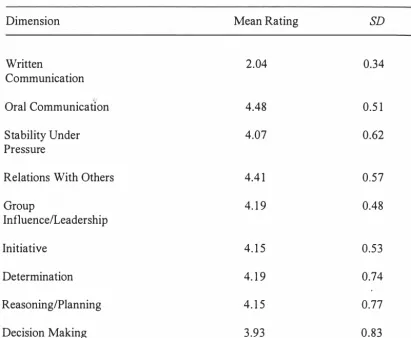
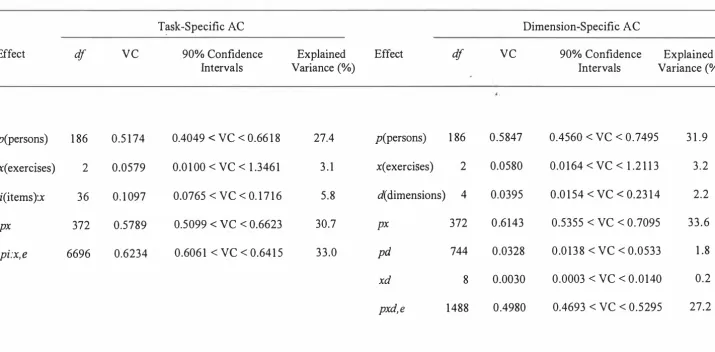
In the Arthur et al (2000) G study, one of the variance components that was calculated was likely to be problematic This variance component related to the
participants in multiple selection boards, although none had received any tertiary training in psychology All assessors had at least two years experience and were regarded as
Practical problems occurred with the measurement of tacit knowledge in the military sample due to non-response on the tacit knowledge inventory The sample
Partial Regression Weights Standardised Beta
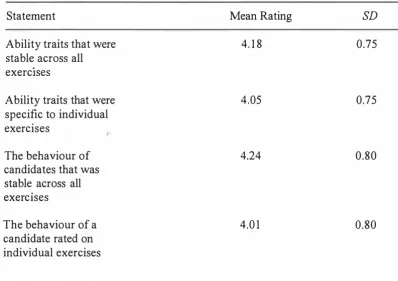
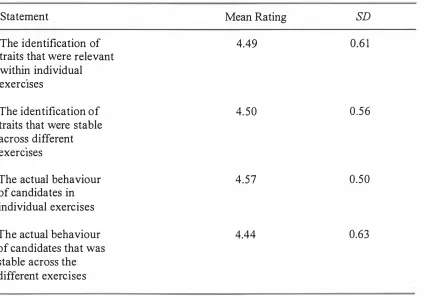
The identification of traits that were stable
Related documents
Cigarettes are the most common form of tobacco used by young people, with 9.2 percent of middle school students and 28.5 percent of high school students reporting being
proyecto avalaría tanto la existencia de una demanda real e insatisfe- cha de este servicio por parte de la población titular de derechos como la capacidad de ambos
This conclusion is further supported by the following observations: (i) constitutive expression of stdE and stdF in a Dam + background represses SPI-1 expression (Figure 5); (ii)
the CaaX sequence) were appended to the C-terminus of the His 6 -EGFP-TEV proteins. Additional substrates were chosen based on high scoring peptides predicted to be FTase..
Laboratory and design exercise reports, module design exercise assessment, essays (individual), group discussions, case.. study exercises, and the
Information relevant to understanding and measuring unsafe abortion covers data from hospital records and surveys, research on abortion providers, unsafe abortion
in contradiction to the notion that high variable transactions costs hinder international diversification, we find that the volume of gross equity flows vastly exceeds net equity
In conclusion, we can say that the Maltese EP elections con firm many of the observations predicted by the SOE model but that there are important limitations, primarily centred on
