This is a repository copy of
Understanding the 'guide' in guided self-help for disordered
eating: a qualitative process study
.
White Rose Research Online URL for this paper:
http://eprints.whiterose.ac.uk/82715/
Version: Accepted Version
Article:
Traviss, GD, Heywood-Everett, S and Hill, AJ (2013) Understanding the 'guide' in guided
self-help for disordered eating: a qualitative process study. Psychology and
Psychotherapy: Theory, Research and Practice, 86 (1). 86 - 104. ISSN 1476-0835
https://doi.org/10.1111/j.2044-8341.2011.02049.x
[email protected] https://eprints.whiterose.ac.uk/ Reuse
Unless indicated otherwise, fulltext items are protected by copyright with all rights reserved. The copyright exception in section 29 of the Copyright, Designs and Patents Act 1988 allows the making of a single copy solely for the purpose of non-commercial research or private study within the limits of fair dealing. The publisher or other rights-holder may allow further reproduction and re-use of this version - refer to the White Rose Research Online record for this item. Where records identify the publisher as the copyright holder, users can verify any specific terms of use on the publisher’s website.
Takedown
If you consider content in White Rose Research Online to be in breach of UK law, please notify us by
Understanding the ‘guide’ in guided self-help for disordered eating: A qualitative process study
Gemma D. Traviss a *, Suzanne Heywood-Everett b and Andrew J. Hill a
a
Leeds Institute of Health Sciences, Academic Unit of Psychiatry & Behavioural Sciences,
University of Leeds, UK
b
Yorkshire Centre for Eating Disorders, Leeds Partnerships NHS Foundation Trust, Newsam
Centre, Seacroft Hospital, Leeds, UK
* Corresponding author: Leeds Institute of Health Sciences, Academic Unit of Psychiatry &
Behavioural Sciences, University of Leeds, Charles Thackrah Building, Clarendon Road, Leeds, LS2 9LJ, UK. Tel: 0113 3430825. Email address: [email protected]
Short-title: Guided self-help for disordered eating
Financial support: This research was supported as part of a doctoral thesis by Leeds Partnerships NHS
Abstract:
Objective: This study aimed to explore how guidance contributes to the outcome of guided self-help for disordered eating and for whom such interventions are most suitable. This was done from a client and guides’ perspective, with a particular focus on the therapeutic relationship.
Method: Seven clients and 5 guides were interviewed following GSH treatment, as part of a randomised control trial. Guides ranged in background and experience of working with eating
disorders. Clients had a range of disordered eating problems pre-treatment. Semi-structured
interviews were recorded, transcribed and subjected to a thematic framework analysis.
Results: Four themes emerged. One was the necessity of having a guide and their roles and skills. Features of the therapeutic relationship were contrasted in clients with positive and poor intervention
outcomes. These included guide qualities and skills, client characteristics, and rupture. The fourth
theme was client suitability
.
Conclusions: These findings have implications for the assessment and delivery of GSH interventions for disordered eating. They suggest the value of assessing clients’ readiness to change, working with
clients with less severe and complex conditions, and the importance of training guides in attending to
the therapeutic relationship.
Introduction:
Evidence-based self-help is a recommended first stage of treatment for bulimia nervosa and binge
eating disorder (BED) (NICE, 2004; American Psychiatric Association, 2006). Self-help materials can
be used alone (pure self-help) or with guidance from a mental health professional or layperson (guided
self-help, GSH). Guided self-help has generally shown superior outcomes to pure self-help for these
disorders (Carter and Fairburn, 1998; Loeb, Wilson et al., 2000; Palmer, Birchall et al., 2002), although there is a lack of explanatory evidence. Studies of efficacy and effectiveness have typically
assessed outcome using measures such as the Eating Disorders Examination interview or questionnaire
(Fairburn and Cooper, 1993; Fairburn and Beglin, 2008). While these measures are considered the
gold standard assessment of eating disorders, they tell us little about the therapeutic processes
involved in such interventions and what factors contribute to their effectiveness.
Looking at the utility of self-help approaches for anxiety and depression, it has been suggested that the
increased benefit shown in GSH may not be due to specific techniques or manualisation, but to ‘common factors’ that operate in all psychotherapies regardless of theoretical orientation (Richardson
and Richards, 2006). Common factors are believed to account for as much as 30% of improvement
compared to only 15% attributed to specific techniques (Lambert et al., 2002). However, DeRubeis
(2005) argues this is unlikely to be the case for disorders in which one psychotherapy clearly
outperforms another, e.g. obsessive compulsive disorder, panic disorder, post traumatic disorder and social phobia, and that credit must be given to the ‘technical maneuvers therapists engage in based
upon a specified theoretical orientation’ (DeRubeis et al., 2005). This strengthens the argument for the
potential role of therapeutic factors in GSH, as the specific factors i.e. the treatment manual, are
consistent in both pure and guided interventions and the difference is the addition of therapist
guidance.
Much of the work on common factors has focused on the therapeutic relationship: “the feelings and
expressed, p.159” (Gelso and Carter, 1985). Cahill and colleagues (2008) suggest an effective
therapeutic relationship goes through three stages; establishment, development and maintenance.
Therapist factors that help the relationship include the establishment of empathy, collaboration and
support early on, and then reflection and security, in nurturing openness and trust. Patient factors
thought to moderate both the relationship and outcome are functional impairment, coping style and
personality disturbance. They also identified potential threats to the relationship such as therapist
intrusiveness, underestimation of the seriousness of the problem, patient resistance and hostility. In the
general psychotherapy literature, reviews have consistently shown therapeutic relationship as a
moderate predictor of outcome (effect size 0.21-0.26; Horvath and Bedi, 2002; Horvath and Symonds,
1991; Martin et al., 2000). The relationship has typically been assessed using self-report measures
such as the Working Alliance Inventory (WAI) or Agnew Relationship Measure (ARM), on which
both clients and therapists have only tended to use the top 20-30% of scales, leading to little variation
in scores and positively skewed results (Tryon et al., 2008).
There has been little empirical research on the therapeutic processes in eating disorders treatment and
what findings exist are mixed (Loeb et al., 2005; Treasure et al., 1999; Wilson et al., 1999). There is
even less specifically relating to self-help approaches. Only two studies have examined the processes
of GSH (Banasiak et al., 2007; Carrard, Fernandez-Aranda et al, 2010). According to Banasiak et al.,
the most and least helpful aspects of GSH treatment for bulimia nervosa were assessed using three
self-report questions. The treatment manual, improvements in outcome, and the helper characteristics
of the general practitioner were the most cited sources of positive commentary.
We conducted a randomised controlled trial (RCT) of GSH for disordered eating (Traviss et al; in
press). The intervention comprised a CBT-based packor written manual (Working to Overcome
Eating Difficulties), congruent with a transdiagnostic approach, that was intended as suitable for a
range of disordered eating except severe anorexia nervosa. The pack was delivered with guidancefrom
to reductions in disordered eating behaviours and psychopathology that were maintained for 6 months.
However, and in line with previous studies, there was a high drop-out rate during the intervention
period (28%).
In order to better understand the processes of change in GSH, qualitative methods have the potential to
capture some of the complexity.Qualitative methods enable an examination of aspects of the
therapeutic relationship and exploration of other potential contributory factors, in the context of GSH,
where self-report methods fall short. The aim of the current study was to explore, from the client and guides’ perspective, how guidance contributes to the outcome of self-help approaches for disordered
eating, paying particular attention to the therapeutic relationship. Secondly, the study aimed to
determine for whom such interventions are most suitable and beneficial. Lending from Cahill’s model (Cahill, Barkham et al. 2008), therapist, client, and contextual factors were explored. Based on the
existing literature, it was hypothesized that guidance (in particular the therapeutic relationship) was
fundamental to the adherence and outcome of the intervention, which was suitable for all mild and
moderate disordered eating except low weight anorexia nervosa.
Methods
Participants
Eighty-one clients with disordered eating participated in the Working to Overcome Eating Difficulties
RCT (Traviss et al; in press). They received GSH delivered by trained guides, either immediately or
following a 12 week wait. For the current study, a sub-sample of 12 participants (5 guides and 7
clients) were selected to represent a range of treatment experiences; 1) guides who had at least one
client complete and one drop out of the intervention, 2) clients who completed the GSH intervention,
and 3) guides who had no clients complete the intervention. The only group not represented in the
sample was clients who dropped out. The sample included three guide-client dyads, which made up
All participants were White-British females. Guides comprised two graduate mental health workers, a
counsellor, and two psychotherapists. Although clients in the main trial were seen in both primary and
secondary care, these participants were all working in primary care. Their mean age was 46.6 years
(SD=10.5). They represented a range of experience of working with eating disorders (mean=11 years,
range=0-25) and of using the GSH pack (mean clients=4.0, range 2-7). Clients were all treatment
completers and had a mean age of 44.7 years (SD =13.8) and body mass index (BMI) of 27.3 kg/m2
(SD=9.1) at entry into the RCT. Diagnostically, three fulfilled the criteria for binge eating disorder,
three had bulimia nervosa (two purging and one non-purging subtype) and one the criteria for EDNOS
resembling anorexia nervosa who did not meet the low weight criterion and had not missed three
consecutive menstrual cycles. The rationale for inclusion of these clients is outlined in the RCT report
(Traviss et al, in press). All clients fell into the ‘no diagnosis’ category at 6 month follow-up. Four
were in full-time employment, one in part-time employment, one was a student and one retired. Pen
portraits for all participants are provided in Table 1.
- Table 1. Near here -
Generating qualitative data
Following completion of the GSH intervention, clients (N=33) and guides (N=24) were invited by mail, to take part in one-to-one semi-structured interviews. From respondents, participants were
recruited to represent a range of treatment experiences and were interviewed by the first author (GT).
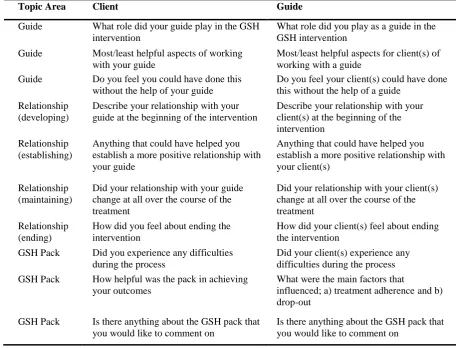
The interview schedules for both were based around 10 primary questions (See Table 2) to explore
three main areas; the role of the guide, the client-guide relationship, and the GSH pack. Questions
based on the therapeutic relationship were developed to explore the three stages of the relationship
(establishing, developing and maintaining) described by Cahill et al (2008). Probing and clarifying
questions were used to elicit further information on any of the areas if necessary. Interviews lasted
approximately 45 minutes, were conducted at the University of Leeds and were recorded using a
Qualitative analysis
All interviews were transcribed verbatim by a third party and assigned a study code to protect participant’s identity (prefix ‘C’ for clients and ‘G’ for guides). Data were managed and coded using
NVivo 8 software package and analysed by GT using a thematic framework analysis (Ritchie and
Spencer, 1994). Thematic framework analysis is a matrix-based analytic method which enables
systematic and transparent data management. The analysis was conducted in five systematic and visible stages, the fundamental component being the ‘thematic framework’ which was used to classify
and organise data according to key themes, concepts and emergent categories. Themes were organised
and presented in charts or matrices which enabled easy retrieval of data. In the current study, the aims
were to categorise the interview material in a coherent manner in relation to the key research questions
generated from the trial and existing literature (i.e. deductive). A diverse sample was necessary to
form an overall picture of the phenomenon from the different perspectives of those involved.
The five key stages of data analysis included; 1) familiarisation of the data, 2) developing a thematic
framework, 3) indexing, 4) charting, and 5) mapping and interpretation. During the familiarisation
stage, all interview transcripts were reviewed in order to gain an overall picture of the data coverage.
During this process, a list of themes and ideas were noted for each interview. These were used to
develop an initial thematic coding framework. The themes were sorted and grouped under a smaller number of higher order headings (main themes) which were largely ‘theory driven’ (Braun and Clarke,
2006), meaning they were informed by the studies’ research questions. This initial coding framework
was applied to several transcripts and revised to include further emerging issues, using an iterative
process. Sub-themes of close similarity were collapsed into one and re-coded accordingly. The final
coding framework was then applied to the data. NVivo was used to code/index data which
corresponded to each sub-theme. Each main theme was then charted in its own matrix using Microsoft
Excel, with columns representing participants, and rows denoting sub-themes. Coded data were lifted
from their original context and presented in the relevant matrices according to the appropriate
sub-themes. Text was summarised in the matrices, with care to retain the original language. Finally, charts
more salient than others based on frequency, whether guides and clients experiences were similar or
different, and whether there were any associations between concepts from evidence within the data
and the existing literature. The analysis process was conducted by a single researcher, therefore steps
were taken to ensure the results were a valid interpretation of the data (See below). Finally, themes
and sub-themes were organised and presented in separate hierarchical charts to show the key
dimensions and characteristics identified in the interviews. A detailed account of the understanding of
all themes and sub-themes relevant to the research questions will be provided in the Results section,
illustrated using excerpts from the interview.
Reliability and validity
The research was conducted in line with guidelines by Elliott and colleagues (1999) for the publication
of qualitative research studies in psychology. Given the a priori hypotheses developed by the authors,
in order to ensure results were a valid representation of the data, various credibility checks were
performed. Themes derived from the data, their descriptions and interpretations were reviewed by two
participants, a client and a guide (C7 and G1) and small sections of the coded transcripts were checked
by two independent researchers for consistency. In the analysis, every effort was made to ensure both
confirmatory and alternative explanations were included, e.g. the role of ‘readiness’ in the processes of
change. Basic descriptive data on participants are provided in the Participants section (Table 1) in
order that readers are able to situate the sample. In the Results section, descriptions of all themes and
sub-themes are provided, with direct quotes from the transcripts to help ground these in the data. Efforts were made to retain participant’s original language and data are presented using figures to
depict the hierarchical structure of themes in terms of both importance to the participant and
frequency. Finally, the sample was purposive in order to represent the views of the study population
overall. The findings should therefore generalise across the larger study and may also be applicable to
other GSH studies for disordered eating, and possibly for other difficulties such as depression, anxiety
and body image. The only group who were not represented in the sample were clients who dropped
out. This should be considered when interpreting the results and is discussed as a limitation in the
Results
How does guidance contribute to the effectiveness of GSH?
Necessity of having a guide
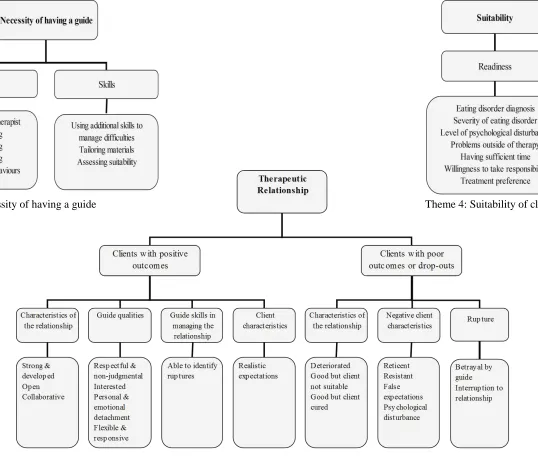
Both clients and guides continually described the ‘necessity of having a guide’ who
contributed
important ‘roles’ and ‘skills’ during the process, which helped clients manage and
adhere to the work required (See Theme 1, Figure 1). One client said;
“You can look through and
say alright so I need to do that but where you got to like
write it down your feelings, the thought process between the actions, and how you think
afterwards. You can’t do that without someone sitting there and explaining it to you, and
giving you examples and stuff.
I don’t think I would have been able to do it.” C7
- Figure 1. Near here
–
Roles of the guide
The role of the guide was described as a ‘facilitator not therapist.’ Guides inferred this was in
contrast to traditional psychotherapy and was positive in that it gave clients more control over
their own recovery. For example;
“I saw myself as a facilitator…I think it was important she had control of booklet...and me just trying to focus her in on a particular area” G5
“The more I act as a guide, rather than a therapist, the better the process seems to go” G4.
Participants described the importance of ‘monitoring’ which was reassuring in case difficulties arose,
was motivational and provided an incentive to keep going. In addition, guides also had an active role
in encouraging clients to persevere at times of difficulty or impasse.
“Without her, I was going only through the pack. I wouldn’t have felt “oh I have to do the pack” and there was all the time then an incentive to do it, because if you don’t have somebody checking on you, you push things off as you don’t want to confront uh issues” C2.
Participants described the ‘supportive’ function of guides as fundamental, providing both emotional
support at times of distress and also in ‘just being there as a sounding board’ G4. A client described
this in the following way;
“If I’d done this on my own I would have found it extremely difficult, it raised a lot of issues...I think I would have got so angry I would have just given up” C5.
Skills of the guide
Participants explained how guides ‘used their additional skills to manage difficulties.’ They
drew upon their experience and skills as a therapist, as well as those provided in the GSH
training, to explore and explain any difficulties encountered. Two participants (C3 and G5)
described receiving/providing additional materials i.e. worksheets, when necessary. Clients
and guides identified that prior professional training was necessary in being able to deal with
therapeutic issues.
“…would they
[a non-therapist] pick up on other things that a therapist would pick up
on quite quickly? So things like avoidance, difficulties, lacking motivation, would somebody
else who’
s not therapeutically trained, have the knowledge in which to d
o that?”
G5.
Guides played an important role in ‘tailoring materials’ to suit client’s individual pathology. This may
have been particularly important in the current intervention because it was designed as suitable for all
disordered eating.
“Although it might say about unwanted behaviours like being sick and stuff, I think it was more along the lines of...yes you might not do those but what would you see as an unwanted behaviour?...so she might personalise it more to me” C5.
All guides talked about the importance of ‘assessing suitability.’ Firstly they described the necessity of
exploring motivational factors in clients, prior to embarking on treatment and also about becoming
more skilled at identifying people who might benefit.
Is there an association between the therapeutic relationship, engagement and
adherence?
In order to address this research question, the nature of the therapeutic relationship was
considered for those with positive and poorer outcomes. The perception of outcome was
The therapeutic relationship in clients with positive outcomes
Four sub-themes emerged, each with several lower order themes (See Theme 2, Figure 1).
Characteristics of a good relationship
When discussing clients who benefitted from the intervention, all participants (clients and
guides) described the relationship as consistently ‘strong’ and that it ‘developed’ over the
duration of treatment. For example;
“I really do think the relationship got better, right throughoutthe booklet” G5. Two guides even suggested being allocated to the 12 week waiting list condition was
beneficial and enabled a longer period over which to develop the relationship. Although there was no
scheduled contact over this time, some had phone and mail correspondence. Clients described trusting
their guides which was fundamental in opening up. Participants highlighted the importance of
establishing reciprocal ‘openness’ in the relationship, in order to address therapeutic issues effectively.
One guide said;
“I wanted to make sure we had an understanding...If she couldn’t tell me she was angry or upset about something simplistic said during a session, then we were going to struggle with the booklet” G5.
Unlike traditional psychotherapy, successful GSH appeared to be very much a joint venture between client and guide. Two clients described how “it was almost a collaborative project, which was nice”
C3, “We’d have the book open between us” C7. Guides and clients explained how they worked
together to resolve issues.
Guide qualities
Both guides and clients suggested that in successful therapeutic relationships, guides were
‘respectful and non judgmental.’ As described earlier, one of their roles was to simply be
there as a ‘sounding board,’ to listen and be accepting of clients diffic
ulties. It was also
identified as important for guides to show genuine feelings of ‘interest’ in client’s personal
circumstances and wellbeing. One client explained how this encouraged them to adhere to the
program:
“Having someone interested in you, you need that to follow these programs” C6.
relationships with friends and family, described as “a more boundaried relationship” C6, that was
“caring but professional” C6. They described the benefit of having someone who had ‘personal and
emotional detachment’ and was less reactive and able to attend to issues objectively.
“You need somebody that’s in the caring profession but is detached so there’s no personal level ...they can explain it objectively without getting emotionally involved” C7.
It was identified as necessary for guides to be ‘flexible and responsive’ in relation to adherence with
the GSH pack and also in terms of time allocation. This helped clients feel valued in the relationship.
Guide skills in managing the relationship
Guides that established positive relationships were ‘a
ble to identify ruptures
’ or
misunderstandings in the relationship, in order to deal with them. Guides recognised this as
important, identifying that clients often struggled to voice their concerns. One guide described
“using bridging worksheets…
basically five questions that say was anything said during the
session that upset you or worried you
”
G5, as an effective strategy in helping the partnership
deal with ruptures.
Client characteristics
Clients who experienced a good therapeutic relationship and more positive treatment
outcomes were described as having either ‘realistic or no expectations’ in
relation to
therapeutic gain (outcome expectations) or anticipated contributions of the guide (role
expectations), prior to therapy. For some, this was because it was the first time they had
The therapeutic relationship in clients with poor outcomes or drop-outs
Three sub-themes emerged, each made up of a number of lower order themes (See Theme 3,
Figure 1).
Characteristics of a poor relationship
The therapeutic relationship with clients who dropped out was established weakly and ‘deteriorated’
throughout the course of therapy.There was little indication as to why guides thought this might have
occurred.
While there appears to be an association between the quality of the therapeutic relationship and
treatment engagement and outcome in most dyads, the following two sub-themes were described in a
minority of cases but they provide alternative explanations for non-engagement and drop-out. Guides reported developing ‘a good relationship but clients were not suitable,’ for example they had
anorexic-type symptomatology or else were not ready to change and required additional therapeutic work prior to commencement of GSH. The following sub-theme; ‘good relationship but client cured’ was only
reported by one guide, but was included to demonstrate that not all drop-outs were for negative
reasons. In this case, the dyad experienced a good guide-client relationship and the client terminated
due to the progress made.
“She really seemed to engage in working through the pack...she did say that things were working out the best they ever had in her life and her bulimia was better under control…perhaps she wanted to just shelve it and not come for any more therapy...sometimes, it’s like going backwards if they’ve moved forwards emotionally” G1.
Negative client characteristics
Guides talked about difficulties establishing relationships with clients who were ‘r
eticent
.’
Therapeutic work was difficult with these clients as they were more guarded, withheld
information and were described as
‘having a
front on’
G4. Consequently guides were unaware
of the status of the relationship and had to invest additional effort in trying to unveil the real
problem. Some clients demonstrated ‘resistance’ to engage in therapeutic work, sometimes
pressures to seek treatment and for those at times of impasse. Although guides were trained to
deal with this, resolution was sometimes interpreted as threatening, with consequences for the
relationship.
“She would just say things like “I can’t do it, if I could answer that I wouldn’t be here”, so that was the kind of resistance that was very difficult to talk round, ok “so you feel you can’t do it, why is that?” “Well if I could answer that question, why would I be sitting here now”… it became very confrontational” G4.
Clients who were difficult to engage in the relationship were described as having ‘f
alse
expectations
’ about outcome and the role of the guide. Some
were described as being overly
expectant and even “
desperate”
G3, whilst others were skeptical about the merits of a brief
intervention and expected a more prescriptive therapist, rather than facilitator. Finally, high
levels of ‘psychological disturbance’
including signs of borderline personality disorder,
delusions, severe depression, chaotic eating and abuse, were reported as impacting on the
therapeutic relationship. One guide said;
“I found her level of psychological disturbance quite difficult to work with…it sounds like I’m saying these easy people did really well, I’m not saying that, I think these people [completers] did have very difficult problems but there was less tied into the therapeutic relationship. Whereas with these two [drop-outs], their level of disturbance was very apparent even just in the room and the relationship” G4.
Another guide suggested the need to lengthen treatment in these cases, to provide additional
time to develop a sound relationship.
Rupture
On two occasions, guides des
cribed encounters that were perceived by clients as ‘betrayal.’
The first was in requesting a client to get weighed to confirm their accuracy in self-reporting
and the second was after asking a client to see her general practitioner to check physical
health. One guide acknowledged that her inexperience in dealing with such issues may have
“maybe I scared her off...I think back to the way I said it and I think could I have said it in another way that maybe she’d have engaged” G5.
Having a break during the intervention was described as counterproductive for the therapeutic
relationship. Whether clients missed sessions or were randomised to the waiting list condition, some guides described an ‘interruption to the relationship’ and loss of impetus with treatment.
For whom is GSH a suitable and beneficial treatment approach?
The main theme of ‘suitability’
comprised eight sub-themes (See Theme 4).
‘Readiness’
was
afforded higher order status due to its perceived importance.
Readiness
Clients
’
level of ‘readiness’ (also referred to as motivation to change) was the most frequently
described determinant of suitability and was considered by three clients and all guides as the
key to success or failure of the intervention. The the
me related to clients’ readiness to become
actively involved in the therapeutic process. One guide explained;
“first and foremost sort ofchecking out they were ready to do it, I think that was the key factor that made the difference” G3.
Clients who dropped out expressed conflicting desires to change.
Client characteristics
Guides observed that clients with bulimia nervosa, binge eating and bulimic-type EDNOS tended to
make better progress than those whose symptoms resembled anorexia. Although, none of the clients in
the RCT met full diagnostic criteria for anorexia nervosa, primarily due to the low weight criterion,
there were several with anorexic-type EDNOS. One guide suggested anorexia was more complex to
deal with and was often associated with co-morbid conditions. Guides also described these clients as
struggling with some exercises in the GSH pack, namely calculating the body mass index, completing
the food diary and the binge-purge cycle, and also being required to read irrelevant sections on
“I think because they were both anorexic, I think maybe anorexia is a lot harder to deal with than maybe bulimia or binge eating…It’s that thing of being weighed. Maybe anorexia goes with more severe mental health problems?” G3.
The intervention was deemed less suitable for clients with severe or long standing eating disorders or
for those who were significantly underweight. Interviews suggested that in these cases, brief interventions were insufficient and more intensive treatments were warranted. Similarly, guides
experienced problems working with clients with high levels of psychological disturbance suggesting
they had difficulties planning and completing exercises. One guide said;
“The last client had borderline [personality disorder]. She had read it ahead, but hadn’t always, yes she hadn’t always done it as conscientiously as the others because she was a more chaotic type of person” G2.
Three guides spoke about ‘problems outside therapy’ as compromising the therapeutic relationship and
contributing to non-engagement and drop-out. The most frequently discussed difficulty related to
personal relationships, however, drug use, family problems and abuse were also highlighted.
The workload involved in the intervention was demanding in terms of client time and effort and it was recognised by five clients that ‘having sufficient time’ to fully engage in therapy and complete the
required homework was crucial. For example; “Anybody who has a very busy lifestyle would probably struggle in the timescale” C5. Guides identified that those who achieved greater treatment benefits
were more ‘willing to take responsibility’compared with individuals who expected the guide to “wave a magic wand and cure them” G3. Three clients talked about a sense of “empowerment” C5, C6, C7
as a result. Finally, ‘treatment preference’ was deemed important. Clients who initially requested
alternative treatment such as counseling or CBT did less well. They reportedly had low expectations
Discussion
Overall, guides were central to this intervention. Their main role was that of a facilitator not therapist and involved monitoring, motivating, supporting and challenging the behaviours of clients. However,
their additional skills as a therapist were beneficial in clarifying information in the GSH pack and
helping clients deal with difficulties. They also enabled guides to tailor the materials to individual
needs. With experience, guides became better able to identify clients who were likely to benefit from
GSH. These roles and skills together helped suitable clients to stay with and make best use of the
intervention.
In line with previous literature (Horvath & Symonds, 1991; Martin et al., 2000) and hypotheses, the
interviews suggested an association between the quality of the therapeutic relationship and outcome.
In those with positive outcomes, the relationship was strong, open and collaborative. Positive
relational experiences were attributed largely to qualities and skills of guides who were respectful,
interested, flexible and responsive to clients needs. These qualities have been shown to reduce patient
hostility and submissive behaviour and increase affiliation (Bedics et al., 2005), which has been
associated with engagement in therapy and positive outcome (Stiles et al., 1998; Tryon & Winograd,
2001). Guides also played a role in establishing and maintaining a good relationship by being able to
identify and repair ruptures that occurred. In contrast, the nature of the relationship in less successful
cases was weak and deteriorated. Guides attributed this failing largely to negative characteristics of the
client, i.e. reticence, resistance, false expectations and psychological disturbance, as opposed to their
own relational abilities. This is not surprising given what is known about external attribution and the
characteristics identified, provide further support for Cahill’s model (Cahill et al, 2008).
Client expectations were also an important factor. Those who reported positive relationship
experiences were those with realistic or no prior expectations, whereas individuals in less successful
suggests expectancies are positively associated with outcome and are the best predictor of alliance,
over and above therapist variables, client adjustment and symptoms (Rizvi et al., 2000).
Some researchers have questioned whether the therapeutic relationship can be as intense in brief interventions as in long-term therapy. The current findings are in line with those of Kokotovic et al
(1990) who suggest it is not only possible to establish a good therapeutic relationship, but that the
clear structure and discrete time period in fact encourages co-operation, adherence and additional
effort to make the most of the time available (Hudson-Allez, 1997).
Interviews shed some light on the characteristics of clients for whom GSH may be a suitable. Clients’
readiness and motivation to change were the most frequently cited factors. This is not new in eating
disorders research. Several studies have shown readiness to change as a significant predictor of
treatment outcome in this client group, particularly in anorexia nervosa (Bewell & Carter, 2008; Geller
et al., 2004). However, the current study suggests an association between client suitability and the
therapeutic relationship. Clients who were ready and motivated to make behavioural changes appeared
to develop better relationships and consequently gained greater treatment benefits. Those who were
identified as not suitable (e.g. not ready, too severe, high level of psychological disturbance) were
reported to have poorer therapeutic relationships. There is evidence to suggest that levels of
motivation, symptom severity, various types of psychological disturbance and incongruent
expectations, all effect the therapeutic alliance (Derisley & Reynolds, 2000; Gaston et al., 1998; Rizvi
et al, 2000; Tyrell, 1999; Zuroff et al, 2000). Similarly, there is a well established link between the
alliance and outcome. A possible explanation could be that the therapeutic relationship was in fact a
mediating factor between client suitability and outcome. This is in line with previous research which
showed pre-treatment contemplation and action scores to be positively associated with the quality of the therapeutic alliance and treatment adherence (Derisley & Reynolds, 2000; Treasure et al., 1999).
These findings argue for assessing clients’ readiness or ‘stage of change’ in order to inform their
appropriate relational stances to aid clients’ in progressing to a stage of ‘preparation’ or ‘action.’ Some
may require preparatory work, prior to treatment commencement.
The intervention was perceived as most suitable for clients with mild to moderate binge-related disorders. This is consistent with previous GSH studies (Banasiak et al., 2005; Carter & Fairburn,
1998; Ghaderi & Scott 2003; Loeb et al., 2000; Palmer et al., 2002), but contrary to assumptions of
the transdiagnostic approach, on which the pack was based (Fairburn et al., 2003). Extreme low
weight has been associated with depression, negativity, obsessional features and mild cognitive
impairment (American Psychiatric Association, 2006) which do not fit well with the requirements of
GSH. Furthermore, guides suggested that clients with anorexia type presentations seemed to struggle
completing various sections of the pack. This has implications for the content of the GSH pack which
may require adaptation for this client group. Anorexic clients also have a tendency to be more
unwilling and resistant, which can produce strong feelings of negativity and countertransference from
their therapists (Hudson-Allez, 1997). The primary aim of treatment for anorexia nervosa is weight
restoration which is typically achieved through dietetic advice and supported meals in either an
inpatient or outpatient setting. Therefore, GSH may be suitable as a second stage of treatment for
anorexia nervosa, following commencement of weight restoration. For bulimia nervosa, a longer
version is being trialed for those who are significantly underweight. The same may be beneficial for
individuals with anorexia nervosa.
The intervention was also identified as problematic with clients who have high levels of psychiatric
disturbance, particularly those with personality disorders, a past history of abuse or severe depression.
Research has shown that individuals with serious psychiatric disturbance have different attachment
states of mind to those without (Tyrrell et al., 1999). These are associated with different approaches to interpersonal relationships and emotion regulation strategies which guides have to be skilled to
recognise and modify. According to attachment theory, individuals with a past history of abuse often
relationships which leads them to believe that their attachment needs will be met with rejecting,
intrusive or violently aggressive responses (Liotti, 2007). A longer duration of treatment is suggested
for these individuals. Similarly, depression has been linked with impaired concentration, judgment,
low self-efficacy and negative expectations which have been linked with poor outcome and are not
amenable to utilizing a largely self-directed approach (Dew & Bickman, 2005; Schmidt & Treasure,
1997). Anti-depression medication should be considered to reduce levels of depression and increase client engagement.
The current research is the first to explore both client’s and guide’s perspectives of the therapeutic
relationship in time-limited therapy such as GSH, in the field of eating disorders. The heterogeneous
sample enabled a wide array of experiences to be examined. However, there are several limitations to
this research. It is important to acknowledge that all clients who took part in interviews were treatment
completers and had no diagnosis at 6-month follow-up. Therefore, it is possible that accounts of the
relationship may be influenced by their positive treatment experiences and outcome, referred to as the ‘halo effect’ (Horvath & Bedi, 2002). There is a possibility that poor relationships were not solely a
result of negative client characteristics but also failings on the part of the guide. The views of clients
who terminated treatment would have provided a more balanced view. However due to the ethical
issues of contacting these patients after completion of the RCT, this was not possible. The relationship
and client expectations change during therapy and so measuring these after follow-up may not
accurately reflect the clients actual experiences during the intervention. The standardization of the
pack and training, and reliance on attribution in interviews, means we were unable to tell whether the
positive therapist characteristics were as a result of the intervention training and supervision or prior
therapeutic experience.
All interviews were conducted by the first author (GT) which ensured standardization. Participants
may however have been less open due to the fact that the author had no prior contact with clients. All
with participants and reaffirm confidentiality. In addition, credibility checks were performed to ensure
validity of the results.
Despite these issues, the current findings have implications for the future delivery of GSH interventions for disordered eating. They suggest such approaches may be most appropriately
delivered to those with less severe and complex conditions and therefore, if detected early, the
intervention may be used as part of an indicated or secondary prevention strategy. There is need for
work to adapt the intervention for use with anorexia type presentations. Furthermore, individual
treatment benefits and cost-effectiveness of services may be optimized by assessing clients’ readiness
to change prior to treatment. Therapist variables are fundamental in the assessment, development and
delivery of GSH approaches and should not be overlooked in favour of the manualisation process.
These findings should be used to inform the training of guides, including education on how to identify
suitable clients, implement motivational strategies, establish and nurture a good relationship and deal
with difficult clients. Finally, with an increased understanding for whom GSH is beneficial, it may
also be possible to educate health care professionals such as General Practitioners, to identify suitable
References
American Psychiatric Association (2006). Practice Guideline for the Treatment of Patients with Eating Disorders. Arlington, VA, APA.
Banasiak, S., Paxton, S., & Hay, P. (2007). Perceptions of cognitive behavioural guided self-help treatment for bulimia nervosa in primary care. Eating Disorders 15: 23-40.
Bedics, J.D., Henry, W.P., & Atkins, D.C. (2005). The therapeutic process as a predictor of change in patients’ important relationships during time-limited dynamic psychotherapy. Psychotherapy: Theory, Research, Practice, Training, 42, 279-284.
Bewell, C.V., & Carter, J.C. (2008). Readiness to change mediates the impact of eating disorder symptomatology on treatment outcome in anorexia nervosa. International Journal of Eating Disorders, 41(4), 368-371.
Braun, V. and V. Clarke (2006). "Using thematic analysis in psychology." Qualitative Research in Psychology 3(2): 77-101.
Cahill, J., M. Barkham, et al. (2008). "A review and critical appraisal of measures of therapist patient interactions in mental health settings." Health Technology Assessment 12(24): 1-47.
Carrard, I., Fernandez-Aranda, F., Lam, T., Nevonen, L., Liwowsky, I., Volkart, A.C., Rouget, P, Golay, A., Van der Linden, M., & Norring, C. (2010). Evaluation of a guided internet self-treatment programme for bulimia nervosa in several european countries. European Eating Disorders Review, n/a. doi: 10.1002/erv.1043.
Carter, J. C. and C. G. Fairburn (1998). "Cognitive-behavioral self-help for binge eating disorder: a controlled effectiveness study." Journal of Consulting & Clinical Psychology 66(4): 616-23.Derisley, J., & Reynolds, S. (2000). The transtheoretical stages of change as a predictor of premature termination, attendance and alliance in psychotherapy. British Journal of Clinical Psychology, 39, 371-382.
DeRubeis, R.J., Brotman, A., and Gibbons, C.J. (2005). A conceptual and methodological analysis of the nonspecifics argument. Clinical Psychology: Science and Practice 12(2): 174-183. Dew, S.E., & Bickman, L. (2005). Client expectancies about therapy. Mental Health Services
Research, 7(1), 21-33.
Elliott, R., Fischer, C.T., & Rennie, D.L. (1999). Evolving guidelines for publication of qualitative research studies in psychology and related fields. British Journal of Clinical Psychology 38: 215-229.
Fairburn, C.G., & Beglin, S.J. (2008). Eating Disorder Examination Questionnaire. In Fairburn CG. Cognitive Behavior Therapy and Eating Disorders. New York: Guilford Press.
Fairburn, C. G. and M. Cooper (1993). The Eating Disorder Examination. Binge eating: nature, assessment and treatment. C. G. Fairburn and G. T. Wilson. London, The Guilford Press. Fairburn, C., Cooper, Z., & Shafran, R. (2003). Cognitive behaviour therapy for eating disorders: a
transdiagnostic theory and treatment. Behaviour Research and Therapy, 41, 509-528.
Gaston, L., Thompson, L., Gallager, D., Cournoyer, L.G., & Gagnon. (1998). Alliance technique, and their interactions in predicting outcome of behavioral, cognitive and brief dynamic therapy. Psychotherapy Research, 8, 190-209.
Geller, J., Drab-Hudson, D.L., Whisenhunt, B.L., & Srikameswaran, S. (2004). Readiness to change dietary restriction predicts outcomes in the eating disorders. Eating Disorders, 12, 209-224. Gelso, C. J. and J. A. Carter (1985). "The relationship in counseling and psychotherapy: Components,
consequences, and theoretical antecedents." The Counseling Psychologist 13(2): 155-243. Ghaderi, A., & Scott, B. (2003). Pure and guided self help for full and sub-threshold bulimia nervosa
and binge eating disorder. British Journal of Clinical Psychology, 42, 257-269.
Horvath, A., & Bedi, R. (2002). The alliance. In Norcross, J. (Ed.) Psychotherapy relationships that work: therapist contributions and responsiveness to patients (pp.37-69). New York: Oxford University Press.
Horvath, A., & Symonds, B. (1991). Relation between working alliance and outcome in psychotherapy: a meta analysis. Journal of Counseling Psychology 38: 139-149.
Hudson-Allez, G. (1997). Time-limited therapy in a general practice setting: how to help within six sessions. London: Sage.
Lambert, M., & Barley, D. (2002). Research summary on the therapeutic relationship and
psychotherapy outcome. In Norcross, J. (Ed.). Psychotherapy relationships that work: therapist contributions and responsiveness to patients. New York: Oxford University Press.
Liotti, G. (2007). Internal working models of attachment in the therapeutic relationship. In Gilbert, P., & Leahy, R.L. (Eds.). The therapeutic relationship in the cognitive behavioral
psychotherapies (pp.143-161). Hove: Routledge.
Loeb, K. L., G. T. Wilson, et al. (2000). "Guided and unguided self-help for binge eating." Behaviour Research & Therapy 38(3): 259-72.
Loeb, K., Wilson, G., Gilbert, J., & Labouvie, E., Pratt, E.M., Hayaki, J., Walsh, T.B., Agras, S.W. & Fairburn, C.G. (2005). Therapeutic alliance and treatment adherence in two interventions for bulimia nervosa: a study of process and outcome. Journal of Consulting and Clinical
Psychology 73(6): 1097-1197.
Martin, D., Garske, J., & Davies, K. (2000). Relation of the therapeutic alliance with outcome and other variables: a meta-analytic review. Journal of Consulting and Clinical Psychology 68: 438-450.
NICE. (2004). Eating disorders. Core interventions in the treatment and management of anorexia nervosa, bulimia nervosa and related eating disorders. Leicester, British Psychological Society.
Palmer, R. L., H. Birchall, et al. (2002). "Self-help for bulimic disorders: a randomised controlled trial comparing minimal guidance with face-to-face or telephone guidance." British Journal of Psychiatry 181: 230-5.
Richardson, R. and D. A. Richards (2006). "Self-help: Towards the next generation." Behavioural and Cognitive Psychotherapy 34(1): 13-23.
Ritchie, J. and L. Spencer (1994). Qualitative data analysis for applied policy research. Analysing qualitative data. A. Bryman and R. G. Burgess. London, Routledge: 173-194.
Rizvi, S.L., Reynolds, S.K., Comtois, K.A., & Linehan, M.M. (2000). Therapeutic alliance in the treatment of borderline personality disorder. In Norcross, J.C. (Ed.). Psychotherapy
relationships that work: therapist contributions and responsiveness to patients (pp. 335-355). New York: Oxford University Press.
Stiles, W.B., Honos-Webb, L., & Surko, M. (1998). Responsiveness in psychotherapy. Clinical Psychology: Science and Practice, 5, 439-458.
Traviss, G., Heywood-Everett, S., and Hill, A.J. (In press). Guided Self-Help for Disordered Eating: A randomised control trial. Behavior, Research & Therapy.
Treasure, J. L., Katzman, M., Schmidt, U., Troop, N., Todd, G., & De Silva, P. (1999). Engagement and outcome in the treatment of bulimia nervosa: first phase of a sequential design comparing motivation enhancement therapy and cognitive behavioural therapy. Behaviour Research and Therapy 37(5): 405-418.
Tryon, G.S., Blackwell, S.C., & Hammel, E.F. (2008). The magnitude of client and therapist working alliance ratings. Psychotherapy: Theory, Research, Practice, Training 45(4): 546-551.
Tryon, G.S., & Winograd, G. (2001). Goal consensus and collaboration. Psychotherapy; Theory, Research and Practice, 38(4), 385-389.
Tyrrell, C.L., Dozier, M., Teague, G.B., & Fallot, R.D. (1999). Effective treatment relationships for persons with serious psychiatric disorders: the importance of attachment states of mind. Journal of Consulting and Clinical Psychology, 67, 725-733.
Wilson, G.T., Loeb, K.L., & Labouvie, E. (1999). Psychological versus pharmacological treatments of bulimia nervosa: predictors and processes of change. Journal of Consulting and Clinical Psychology 67: 451-459
Tables & Figures
Table 1. Pen portraits of participants
Participant Individual Characteristics
C1 Female in 50’s, FT employed. Diagnosed with BN, body mass classified as overweight. Received treatment in the past, randomised to waiting list condition in RCT
C2 Female in 40’s, FT employed. Diagnosed with BN, body mass in healthy range. Received treatment in the past, randomised to waiting list condition in RCT
C3 Female in 30’s, FT employed. Diagnosed with BED, body mass classified as overweight. No past treatment, randomised to waiting list condition in RCT
C4 Female in 40’s, PT employed. No diagnosis according to DSM, body mass in healthy range. Received treatment in the past, randomised to GSH condition in RCT
C5 Female in 50’s, currently unemployed. Diagnosed with BED, body mass classified as severely obese. No past treatment, randomised to waiting list condition in RCT
C6 Female in 60’s, retired. Diagnosed with BED, body mass classified as overweight. No past treatment, randomised to GSH condition in RCT
C7 Female in 20’s, student. Diagnosed with BN, body mass in healthy range. No past treatment, randomised to waiting list condition in RCT
G1 Female in 50’s, counsellor with 25 yrs experience of working with ED’s
G2 Female in 60’s, psychological therapist with 20 yrs experience G3 Female in 40’s, graduate mental health worker with 2 yrs
experience
G4 Female in 40’s, CBT therapist with 8 yrs experience
Table 2. Interview Schedule
Topic Area Client Guide
Guide What role did your guide play in the GSH intervention
What role did you play as a guide in the GSH intervention
Guide Most/least helpful aspects of working with your guide
Most/least helpful aspects for client(s) of working with a guide
Guide Do you feel you could have done this without the help of your guide
Do you feel your client(s) could have done this without the help of a guide
Relationship (developing)
Describe your relationship with your guide at the beginning of the intervention
Describe your relationship with your client(s) at the beginning of the intervention
Relationship (establishing)
Anything that could have helped you establish a more positive relationship with your guide
Anything that could have helped you establish a more positive relationship with your client(s)
Relationship (maintaining)
Did your relationship with your guide change at all over the course of the treatment
Did your relationship with your client(s) change at all over the course of the treatment
Relationship (ending)
How did you feel about ending the intervention
How did your client(s) feel about ending the intervention
GSH Pack Did you experience any difficulties during the process
Did your client(s) experience any difficulties during the process
GSH Pack How helpful was the pack in achieving your outcomes
What were the main factors that
influenced; a) treatment adherenceand b) drop-out
GSH Pack Is there anything about the GSH pack that you would like to comment on
Theme 1: Necessity of having a guide Theme 4: Suitability of clients
Themes 2 and 3: Nature of the therapeutic relationship in clients with positive and poorer outcomes
[image:27.842.139.677.30.486.2]