City, University of London Institutional Repository
Citation: Kirke-Smith, M., Henry, L. and Messer, D. J. (2015). The effect of maltreatment
type on adolescent executive functioning and inner speech. Infant and Child Development, doi: 10.1002/icd.1951This is the accepted version of the paper.
This version of the publication may differ from the final published
version.
Permanent repository link: http://openaccess.city.ac.uk/12934/
Link to published version: http://dx.doi.org/10.1002/icd.1951
Copyright and reuse: City Research Online aims to make research
outputs of City, University of London available to a wider audience.
Copyright and Moral Rights remain with the author(s) and/or copyright
holders. URLs from City Research Online may be freely distributed and
linked to.
City Research Online: http://openaccess.city.ac.uk/ [email protected]
1
The effect of maltreatment type on adolescent executive functioning and inner speech
Mimi Kirke-Smith1, Lucy Henry2 & David Messer3
Keywords: adolescence; executive functioning; child maltreatment; inner speech
Running head: EF, inner speech and maltreatment
Corresponding Author: Mimi Kirke-Smith1, West Heath School, Ashgrove Road,
Sevenoaks, Kent TN13 1SR. email: [email protected]
Lucy Henry, City University2, Language and Communication Science, Gloucester Building,
Whiskin Street, London EC1V 0HB, United Kingdom
David Messer, The Open University3, Childhood Development and Learning, Briggs
2 ABSTRACT
There are indications that different types of maltreatment can lead to different cognitive
and behavioural outcomes. This study investigated whether maltreatment type was related to
executive functioning (EF) abilities and the use of inner speech. Forty maltreated adolescents
and a comparison group of 40 non-maltreated typically developing (TD) adolescents
completed a battery of tasks designed to assess both their EF abilities and their vulnerability
to disruptions to inner speech. They also completed an IQ test. MANCOVA and ANCOVA
analyses were carried out to examine potential effects of maltreatment type (abuse alone;
neglect alone; abuse/neglect combined and no maltreatment) on EF and use of inner speech.
Maltreatment type was related to EF abilities. In particular, abuse only and abuse/neglect
combined had a greater negative impact on EF than neglect only. However, the neglect alone
group were more vulnerable to disruptions to inner speech than the other two maltreatment
groups, suggesting that they may be more reliant on the use of inner speech. These findings
provide new insights into the differential impact of maltreatment type on EF and the use of
inner speech in adolescence, and could be used to improve the educational outcomes of these
vulnerable young people.
3
Child maltreatment, sometimes referred to as child abuse and neglect, includes all forms of
physical and emotional ill-treatment, sexual abuse, neglect, and exploitation that results in
actual or potential harm to the child’s health, development or dignity in the context of a
relationship of responsibility, trust or power (World Health Organisation, 2010).
Maltreatment and Developmental Outcomes
Whilst there is a general consensus that child maltreatment has negative developmental
outcomes (Glaser, 2000; Kirke-Smith, Henry & Messer, 2012), and that maltreated children
have significantly poorer overall global cognitive functioning (Trickett, Noll & Putnam,
2011), there is an increasing body of evidence to suggest that negative associations vary
according to whether the type of maltreatment is abusive or neglectful. Retrospective
research on adults suggests that different areas of the brain are affected by different types of
maltreatment (De Gregorio & McLean, 2013). For example, adults who had experienced
child sexual abuse had a 18.1% reduction in the visual cortex (Tomoda, Navalta, Polcari,
Sadato & Teicher, 2009a), adults who had experienced childhood verbal abuse had a 14.1%
increase in the superior temporal gyrus (Tomoda et al., 2011), and those that had experienced
harsh corporal punishment showed a 19.1% reduction in the medial prefrontal cortex
(Tomada et al., 2009b). Similarly, Hahm, Lee, Ozonoff, and Van Wert (2010) concluded that
not all types of maltreatment are equivalent in their potential contribution to negative
developmental outcomes. As a result, there have been recommendations that studies “need to
meet the challenge of becoming more systematic in delineating maltreatment type if findings
across studies are to be meaningfully compared” (McCrory, De Brito & Viding, 2010, p.
1088).
There are indications that neglect may have a more severe effect on cognitive processing
4
with different forms of maltreatment, and comparisons with typically developing (TD)
individuals. Hildyard and Wolfe (2002) reported that neglected children had more severe
cognitive and academic deficits, social withdrawal, limited peer interactions, and
internalising behaviour problems than physically abused children, whilst Culp et al. (1991),
who examined language ability in groups of abused, neglected and abused/neglected
combined children, found that the neglect only group showed larger expressive and receptive
language delays. De Bellis, Hooper, Spratt, and Wooley (2009) reported that neglected
children showed significantly lower IQ, language, visual-spatial, learning/memory and
academic achievements than TD comparisons.
A potential cause for these developmental differences between abuse and neglect was
suggested by Teicher et al. (2004). They found that neglected children had the largest
reduction in corpus callosum size relative to children who had been physically or sexually
abused. It has also been suggested that the absence of a reliable and consistent caregiver for a
young child is associated with a negative impact on the developing brain, which results in
persistent deficits in social, behavioural, and cognitive development (De Bellis, 2005). This
lends credence to the idea that the underutilisation of neural connections in neglected children
can result in permanent altered growth or even neuronal death. This may be because
neglected children can experience a chronic lack of relational experiences on which to
construct their mental representations of the world, whereas parents who are being abusive
towards their children are, at a minimum, attempting to engage with them in some way
(Nolin &Ethier, 2007). Relational experiences are critical because they form the basis of
linguistic competence, social cognition, problem solving, emotional self-regulation and the
development of coping strategies (Snow, 2009). However, it is possible that neglected
children become more resourceful and vigilant in their everyday lives in order to survive and,
5
and thus develop internal thought processing to monitor their situation (Nolin & Ethier,
2007). Other research has indicated that multiple forms of victimization (poly-victimization)
may have a cumulative negative impact on child developmental outcomes (Turner, Finkelhor,
& Ormrod, 2006). In addition, there is evidence that neglect with physical abuse is more
damaging to cognitive functioning than neglect alone (Nolin & Ethier, 2007).
To extend this line of research the current study compared the cognitive functioning of
individuals who had experienced different forms of maltreatment. Three subtypes of
maltreatment were identified: a) Neglect; b) Abuse (which included physical abuse, sexual
abuse and witnessing domestic violence); and c) Neglect and Abuse combined (see Culp et
al., 1991).
Executive Functioning
Over the past two decades, evidence has accumulated about the association between
childhood maltreatment with impaired performance on assessments of ability involving
cognitive abilities and behaviour regulation (see Kirke-Smith, Henry & Messer, 2012, for a
review). It seems likely that the differences in developmental outcomes between
maltreatment types are mediated by higher order cognitive processes such as executive
functioning (EF) and inner speech. EF involves the skills that underlie flexible goal-directed
responses to novel or difficult situations (Hughes & Graham, 2002; Miyake & Friedman,
2012). These skills include strategic planning, flexibility of thought and action (switching),
inhibition of inappropriate responses, generation of new responses (fluency) and concurrent
remembering and processing (executive-loaded working memory) (Henry, Messer, & Nash,
2012). Inhibition, for example, (which refers to both attentional and motor inhibition, as will
be described in the section on methodology) is considered to be important as the ability to
6
be related to behavioural regulation (Brocki & Bohlin, 2004). Recent conceptualisations also
characterise inhibition as the ‘common’ EF component across different EF skills (Miyake &
Friedman, 2012).
It is now generally agreed that EF in children appears to develop in a sequential fashion
with different developmental trajectories (Diamond, 2013). Whilst some EF skills, such as
inhibition, develop rapidly in the preschool years, there is evidence that other skills, such as
switching and working memory, continue to develop into adolescence/adulthood (Huizinga,
Dolan & van der Molen, 2006). There is increasing evidence that distinct profiles of EF
impairment occur in individuals with a wide variety of developmental, psychiatric and
neurological disorders (Ozonoff& Jensen, 1999). For children subjected to maltreatment, EF
impairments have been reported in a range of investigations (e.g., Carrion, Garrett, Menon,
Weems & Reiss, 2008; De Prince, Weinzierl & Combs, 2009; Kirke-Smith, Henry & Messer,
2014; Webster, Hackett & Joubert, 2009). However, to our knowledge no studies have
focussed on differences according to maltreatment type during adolescence. Furthermore,
MRI studies have shown changes in the frontal cortex during adolescence and EF skills rely
heavily on this area. Hence, it is conceivable that EF abilities might be expected to be
vulnerable during this period.
Inner Speech
Another higher order cognitive skill involves inner speech, which is usually defined as
internalised, self-directed speech that serves as a self-regulatory tool for thinking, planning
and self-organisation (Wallace, Silvers, Martin, & Kenworthy, 2009). According to Joseph
and Tager-Flusberg (2004), language, EF, and theory of mind are all inter-related, and inner
speech is at their intersection. Inner speech relates to EF in that it is a tool of thought that
7
when impairments or delays occur in the internalisation of speech, there may be implications
for behavioural self-regulation and EF (Winsler & Naglieri, 2003). Accordingly, we were
interested in differences between adolescents in the maltreated subgroups in terms of inner
speech functioning.
Inner speech can be regarded as a developmental progression from ‘private speech’, which
is overt, audible speech about an individuals’ thinking that is not addressed to another person.
Following an overall curvilinear developmental trend, TD children initially use overt private
speech in the form of monologues, which appear to help plan and organize their behaviour.
These monologues subsequently become internalised at around seven years to become inner,
or sub-vocal, speech, which provides a basis for thinking. However, it should be pointed out
that while inner and private speech are dichotomous in the sense that they cannot occur at the
same instance, the same individual may make use of both forms of speech depending on
circumstances (Winsler & Naglieri, 2003). On the other hand, the presence or absence of
internalised speech can be seen as evidence for differences in ability between groups.
The Present Study
The present investigation was designed to address whether EF performance and use of
inner speech differ according to the type of maltreatment, or whether the boundaries between
maltreatment types are too blurred to show any differences in outcomes. In the investigation
into EF a comprehensive battery of tasks were used to assess both verbal and non-verbal EF
abilities within the domains of executive-loaded working memory (ELWM), fluency,
switching, inhibition and directed attention. These are widely regarded as key executive
functions (e.g. Henry et al., 2012; Huizinga et al., 2006). The tests were selected to be simple
in order to ensure that each assessment focused as much as possible on the relevant executive
8
we selected to investigate the use of inner speech involved articulatory suppression (AS), a
technique designed to suppress the use of inner speech, previously used in a similar context
by Lidstone, Meins and Fernyhough (2012) and Wallace et al. (2009). Young people in the
maltreated and TD groups were given a number of EF ‘tower’ problem-solving tasks,
whereby individuals had to change an arrangement of discs on three rods into another
arrangement while following a set of rules. In the AS condition, participants carried out these
tasks while repeating the word “Monday” out loud; this was designed to provide an
assessment of their performance without inner speech. In the other condition, young people
carried out the tasks while tapping their feet. This was assumed to control for the effects of
motor performance, and provide an indication of problem-solving performance when inner
speech was possible. Our own work has suggested that the performance of maltreated
adolescents in the foot tapping condition is not significantly different to that of TD
individuals, but their performance in an AS condition is significantly poorer. This suggests
that maltreated adolescents are more vulnerable to disruptions of inner speech, implying that
they may rely on inner speech to a greater extent than TD individuals. In the present analyses
we were interested in whether these effects were present across all types of maltreatment, or
only present in some types of maltreatment, in comparison to the performance of a TD group.
In the first set of analyses we used a MANCOVA with planned contrasts firstly to
compare the EF performance of all the maltreated groups (neglect only, abuse only,
neglect/abuse combined) with the performance of a reference group consisting of TD
individuals. This follows other studies examining maltreatment and EF (e.g. Beers & De
Bellis, 2002; De Prince et al., 2009; Kirke-Smith et al., 2014): in this way it was possible to
determine whether there was significantly lower performance for the combined maltreated
groups compared to a typical sample. It was predicted that all of the maltreated groups would
9
was hypothesised that neglected participants would show greater EF impairments than abused
participants, and, therefore planned contrasts were also conducted to make direct
comparisons between the three groups of maltreated individuals without reference to the TD
group. In this way it was possible to determine whether some maltreated groups had
significantly lower performance than others. An ANCOVA with planned contrasts was
subsequently carried out following the same format to examine vulnerability to disruption of
inner speech. It was predicted that the neglected group might be less affected by the
prevention of inner speech because their advanced cognitive processes would be less
developed (i.e. they would use less inner speech).
Method
Participants
Forty adolescents of both genders who had suffered from maltreatment (either physical,
emotional, sexual, neglect, or witnessing domestic violence as defined by the Working
Together to Safeguard Children paper (H.M. Government, 2010, 1.33-1.36), aged 11-18,
were recruited from specialist schools for youngsters with emotional and behavioural
difficulties (EBD). An age-matched comparison group of 40 non-maltreated TD adolescents
was recruited from mainstream secondary schools, with the stipulation that they had not
suffered from childhood maltreatment and that they did not have any EBD. In the maltreated
group there were 26 males and 14 females, whilst in the TD group there were 23 males and
17 females. Individual matching on IQ was deliberately not attempted as it is known that
maltreatment is associated with lower IQ (e.g. Saltzman et al., 2006) so it is likely matched
samples would be skewed towards higher functioning individuals. It was therefore
preferable to control for IQ statistically rather than matching (abuse group IQ mean: 88.95;
10
All maltreated participants had been subjected to Significant Harm as defined in the
Children Act (Department of Health, England and Wales, 1989), although it was not possible
to ascertain the severity of the maltreatment. Whilst an attempt to use the Maltreatment
Classification System (Barnett, Manly & Cicchetti, 1993) was made, it was not possible to
gain sufficient detail to utilise this system accurately. However, background information was
compiled by means of existing data taken from student records and/or teacher/tutor
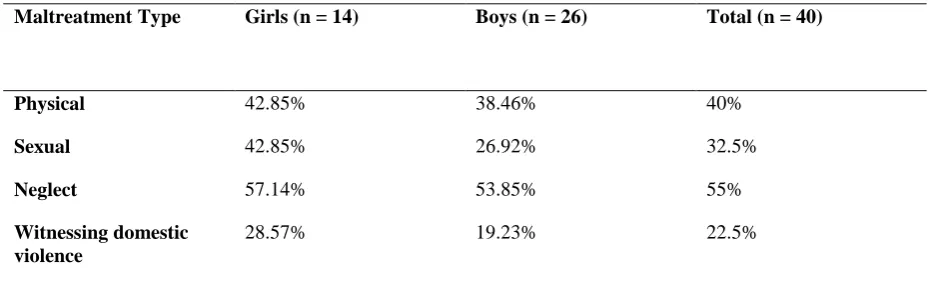
interviews. As can be seen in Table 1, this demonstrated that 40% of participants had been
physically abused, 32.5% had been sexually abused, 55% had been neglected, and 22.5% had
witnessed domestic violence (emotional abuse was not listed separately, as it may be argued
that every act of maltreatment constitutes emotional abuse, Barnett et al., 1993). It should be
noted that these percentages add up to more than 100% because some children experienced
more than one type of abuse, however, 65% experienced a single sub-type, 22.5%
experienced 2 subtypes; 10% experienced 3 subtypes; and 2.5% experienced all 4 subtypes.
- Table 1 about here -
Although some participants had been subjected to more than one type of maltreatment, it
was possible to categorise the maltreated group into three distinct sub-groups: a) ‘neglect
only’; b) ‘abuse only’ (which included physical abuse, sexual abuse and witnessing domestic
violence); and c) neglect/abuse combined. The reference group was the non-maltreated TD
group.
11
The research was carried out in accordance with the Code of Ethics and Conduct of the
British Psychological Society (BPS, 2006). Ethical clearance was obtained from the relevant
University Research Ethics prior to commencing the study. Schools were approached via
letter asking for their co-operation in this study, and help in identifying suitable students for
the study. Once participants had been selected, a letter was sent to their families/caregivers
explaining the purpose of the study and asking for their written consent. In the case of some
maltreated participants, Local Authority consent was also an essential pre-requisite.
Before commencing with the testing, the participants were given a short presentation
detailing the general aims of the study, and informed of their right not to participate, to omit
questions and withdraw their consent. They were given assurances of anonymity, and
assured that no risks or deception would take place at any time. The researcher had enhanced
CRB clearance, and extensive experience of working with youngsters with emotional and
behavioural difficulties in educational settings.
Procedure
All participants were tested individually in a quiet room at school within the school day.
Before commencing the testing, every effort was made to ensure that the students were
comfortable, relaxed and assured that their answers were anonymous and confidential. The
tasks were in a game-like format to ensure they were not too onerous, and assurances were
made that there were no right/wrong answers.
Measures
All participants completed the following tasks:
12
Participants completed the Stanford Binet test: Version 5 (Roid, 2006) abbreviated version
(ABIQ) which contains two subtests that assess both verbal and non-verbal intelligence.
Standardised scores were used to give an overall measure of IQ. Corrected test-retest
reliability coefficients are given as .84 for 6-20 year-olds. With regard to criterion validity the
overall correlation between ABIQ and full-battery IQ scores (FSIQ) is given as .87 for ages 6
and above.
Executive functioning tests.
Executive-loaded working memory (ELWM).
Verbal ELWM was assessed using an adapted version of the Listening Recall task
(Leather & Henry, 1994) which requires concurrent processing and storage. The
experimenter read a series of short sentences (e.g. ‘snails have arms’; ‘water is wet’) and the
participant firstly judged whether each was true or false (processing), before being asked to
recall the final word from each sentence in correct serial order (storage). Trials commenced
with list lengths of one item and proceeded to longer lists up to a maximum of five. There
were four trials for each list length and participants needed to get a minimum of 3 out of 4
trials correct before proceeding to the next level. Total trials correct (a maximum score of
20) were scored. Cronbach’s alpha for reliability of this task was .78.
Non-verbal ELWM was assessed using an adapted version of The Odd-One-Out Task
(Henry, 2001), which is a visuospatial test comparable to the Listening Span task described
above. Participants were presented with a series of laminated cards containing two identical
visual items, and one similar but slightly different item. Participants pointed to the one which
was different (processing), the card was then turned over and the participant was then asked
to recall the spatial location of the ‘odd-one-out’ by pointing to a blank response board
13
item and proceeded to lists of six items with four trials per list lengths. A minimum of 3 out
of 4 trials correct was needed in order to proceed to the next level. Total trials correct were
scored (a maximum score of 24). Cronbach’s alpha for this task was .79.
Fluency.
Verbal fluency was measured using The Verbal Fluency Test, taken from the
Delis-Kaplan Executive Functioning System, (Delis, Delis-Kaplan & Kramer, 2001). Two conditions
were used: Letter Fluency required individuals to generate in 60 seconds as many words as
possible in an effortful, phonemic format using individual letters from the alphabet (F, A and
S in separate conditions); and Category Fluency required participants to generate words from
designated semantic categories (animals and boys’ names), again with 60 seconds for each
condition. Verbal fluency was the average raw score taken from all five tasks.
Non-verbal fluency was measured with The Design Fluency Test (Delis et al., 2001). Two
conditions were used: Filled dots required participants to draw in a response booklet as many
different designs as possible in 60 seconds by connecting filled dots using four straight lines;
and empty dots was the same, but participants were instructed to connect only empty dots and
to ignore the filled dots. Design fluency was the average raw score from both conditions.
Test-retest reliabilities are reported as: letter (.67), category (.70), filled dots (.66) and empty
dots (.43) (Delis et al., 2001).
Switching.
Verbal switching was measured using the Category Switching task in the Verbal Fluency
Test (Delis et al., 2001).This evaluates the ability to generate as many words as possible in 60
seconds whilst simultaneously shifting between two different semantic categories (fruits and
14
(see verbal fluency task above), minus the raw score from the switching task. Test-retest
reliability is reported as 0.53-0.65 (Delis et al., 2001).
Non-verbal switching was also measured by using the switching condition of the Design
Fluency Test (Delis et al., 2001). For this, participants had to switch between filled and
empty dots when producing as many drawings as possible in 60 seconds. Non-verbal
switching ‘cost’ was the average raw score between Conditions 1 and 2 (see Design fluency
task above) minus the raw score from Condition 3. Test-retest reliability is reported as 0.13
(Delis et al., 2001).
Inhibition.
A similar task to The Verbal Inhibition/Motor Inhibition task (VIMI) (Henry, et al., 2012)
was used to test for inhibition. Two conditions were used: Copy and Inhibit. In condition one,
the experimenter said the words either ‘day’ or ‘night’ out loud and participants had to copy
by repeating the word. In condition two, the participants were told to inhibit this copying
response by saying the opposite to the assessor (i.e. if assessor said ‘day’, participant said
‘night’ and vice versa). Each condition had 20 trials, and the sequence was then repeated for
both the Copy and Inhibit conditions (Conditions 3 and 4), making a total of 80 trials. The
combined number of errors on each task represented the measure of inhibition. Cronbach’s
alpha for this task was .91 showing high internal consistency.
The non-verbal motor task followed the same format (loosely based on Luria’s hand game
(Luria, Pribram & Homskaya, 1964), but words were replaced with actions. Two conditions
were used: Copy and Inhibit. For condition one, participants were asked to copy the assessor
by either making a pointed finger or a clenched fist, and then in condition two do the
15
The combined number of errors on each task represented the measure of inhibition.
Cronbach’s alpha for this task was .89, showing good reliability.
Directed attention.
An additional task used to measure inhibition was the D-KEFS Color-Word Interference
Test (Delis et al., 2001). To distinguish between the VIMI and this task, it will hereafter be
referred to as Directed Attention. Three conditions were used: Color naming, when
participants were asked to say the colour of a series of squares (either red, blue or green);
word naming, when the participant was asked to read the words ‘red’, ‘blue’ or ‘green’; and
Inhibition (based on the original Stroop test, Stroop, 1935), where the participant must inhibit
reading words in order to name the dissonant ink colours in which those words are printed
(e.g., the word ‘red’ is written in blue ink, and the correct response is to say ‘blue’). Scoring
was based on completion times, and number of errors made. The ‘directed attention time
cost’ was measured by subtracting the colour time (Condition 1) from the inhibition time
(Condition 3); and the ‘directed attention error cost’ was measured by subtracting the colour
errors (Condition 1) from the inhibition errors (Condition 3). Internal consistency of this task
is moderate to reasonably high (.62 - .79) with good to high test-retest reliability for children
and adolescents (.77 - .90) (Delis et al., 2001).
Inner speech test.
The EF task to assess the use of inner speech was the Tower task (Delis et al., 2001) with
two conditions: Articulatory suppression (AS) and foot tapping. Based on Wallace et al.’s
(2009) study, a four disc Tower task was used. After one practice problem using no
interference, 6 experimental problems were given at three levels: two 2-move problems; two
3-move problems and two 4-move problems. Each pair of problems used both an AS
16
planning/conducting their moves) and a foot tapping condition (to ensure that results could
not be attributed to more general dual-task interference rather than disruption of inner speech
usage). Foot-tapping is thought to be a good control task because, like AS, it incorporates a
motor component and an attentional component. AS and foot-tapping have been shown to
exert equal general dual task demands suggesting the only important difference is that AS
prevents the use of inner speech (Lidstone et al., 2012). At each level, participants alternated
between the AS condition and the foot tapping condition (i.e. Level 1: first problem with AS,
second problem with foot tapping etc.).
Scores were calculated by measuring the total percentage of extra moves taken by the
participant over the minimum number of moves possible. This involved dividing the number
of extra moves taken by the participant by the minimum number of moves required for each
condition. For the three problems in the AS condition the minimum number of moves
possible was 15, and for the three problems in the tapping condition it was 23, so the final
score was ‘xx’ divided by either 15 or 23, expressed as a percentage, where a low percentage
indicates better performance.
e.g.
= final performance score
Note that one limitation of alternating between AS and foot tapping conditions on the
tower test trials in strict sequential order was that the first problem in each pair of problems at
a particular level was slightly easier than the second pair (in terms of number of moves). We
considered that the advantage of maintaining exactly the same problems under exactly the
same conditions for every participant slightly outweighed the potential benefits of
counterbalancing problems and conditions across participants, but this does mean the data
17
condition were used as covariates in our analyses of data from the AS condition, so the two
conditions were never directly compared.
Analyses
A MANCOVA analysis was used for the EF measures with planned Helmert contrasts to
test a sequence of theoretically relevant differences: TD versus all other groups; neglect only
vs. abuse/neglect and abuse only; and abuse/neglect vs. abuse only. An ANCOVA using a
similar approach was used for the inner speech analysis as there was only one dependent
variable.
Results
EF Tasks
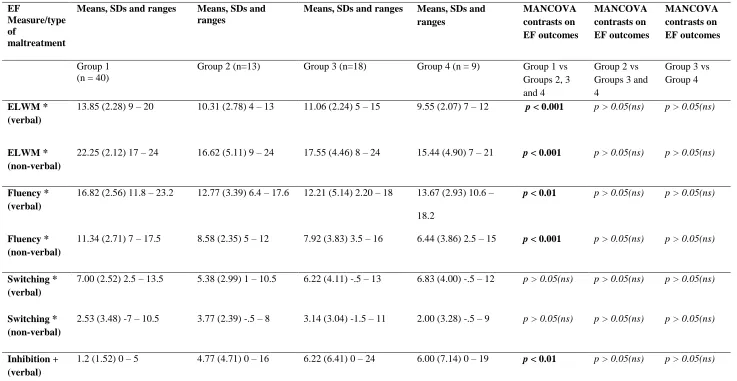
The means, standard deviations and ranges of the four different groups on each of the EF
measures are shown below in Table 2, in addition to the results from a MANCOVA, with IQ
as a covariate, which confirmed that there was a significant multivariate effect: Pillai’s Trace
= .62, F (10, 66) = 4.07, p < .001. As can be seen from Table 2, when the TD group was
compared to the three maltreatment groups (neglect only; abuse only; and abuse/neglect
combined) for each of the 10 EF measures, there were significant univariate differences in
verbal ELWM (F (1,77) = 12.67, p < 0.001, partial 2 = .14), non-verbal ELWM (F (1,77) =
15.91, p < 0.001, partial 2 = .17), verbal Fluency (F(1,77) = 9.70, p < 0.01, partial 2 = .11),
non-verbal Fluency (F(1,77) = 9.81, p < 0.001, partial 2 = .11), verbal Inhibition (F(1,77) =
10.71, p < 0.01, partial 2 = .12), non-verbal Inhibition (F(1,77) = 13.48, p < 0.001, partial
2
= .15), Directed Attention cost (F(1,75) = 4.33, p < 0.01, partial 2 = .06) and Directed
Attention error (F(1,75) = 6.11, p < 0.01, partial 2 = .08). However, there were no
18
planned contrasts were examined to see whether any of the maltreatment groups performed
differently than the other two groups (neglect only vs. abuse/neglect and abuse only;
abuse/neglect vs. abuse only). The results indicated that whilst there were no significant
differences between groups for ELWM (verbal and verbal), fluency (verbal and
non-verbal) and verbal inhibition, the neglect only group scores were significantly positively
different from the other two groups in non-verbal inhibition and directed attention (errors),
suggesting that they performed better in these tasks. Similarly, the abuse only group scores
for directed attention (cost) were significantly positively different from the abuse/neglect
combined group, suggesting that they performed better in this task.
- Table 2 about here -
Inner Speech
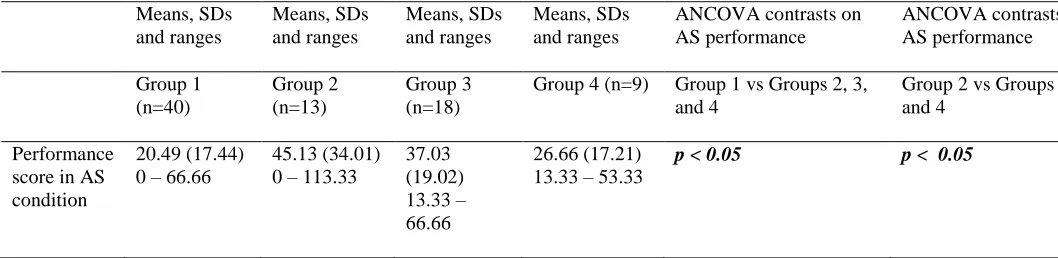
Table 3 below shows the means, standard deviations and ranges for scores on the inner
speech task, in addition to the results from an ANCOVA using Helmert planned contrasts
which was carried out to assess planning performance when inner speech was prevented (i.e.
using AS). IQ and the planning performance scores from the foot-tapping condition (to
factor out general planning ability under conditions without AS but with a motor distractor
task) were entered as covariates; group (TD vs. abuse alone, neglect alone, neglect/abuse
combined) was entered as a fixed factor, and final performance score under AS was entered
as a dependent variable. This revealed a significant difference between groups: F (3, 72) =
3.49, p < 0.05, partial 2 = .07. Helmert planned contrasts revealed that the TD group scored
lower (indicating better performance) than all three maltreatment groups, suggesting that they
were less vulnerable to disruptions in inner speech. When examined further, it became
19
performance) than the other two maltreatment groups, suggesting that the neglected
participants were more vulnerable to disruption to inner speech.
- Table 3 about here -
To summarise, when the TD group was used as a reference group, the maltreatment group
as a whole demonstrated significant impairments on most EF tasks, and showed a greater
level of vulnerability to disruption to inner speech during a planning task. Further
investigation indicated that whilst the neglect only group was less impaired than the other two
maltreatment groups on some EF tasks, they were more vulnerable to the disruption of inner
speech.
Discussion
Previous research has demonstrated that maltreated youngsters have impairments in EF
compared to TD youngsters (e.g. De Prince et al., 2009; Kirke-Smith et al., 2014; Webster et
al., 2009). The findings from this study support this literature, reflecting generally lower EF
performance in all of the maltreated groups in relation to the TD group. However, the current
findings also add to this literature by showing that when comparisons are made between
subgroups of maltreated adolescents, subtle variations in the pattern of EF difficulties can be
identified. More specifically, although all three maltreatment groups showed impairments in
most aspects of EF, those in the ‘neglect alone’ category showed fewerdifficulties in
comparison to the other two maltreatment groups with respect to non-verbal inhibition and
directed attention (errors); and the abuse only group showed fewer difficulties than the
abuse/neglect combined group in directed attention (cost). This implies that adolescents with
experience of abuse alone or abuse/neglect combined may have greater difficulties than
adolescents who had experienced neglect with respect to concentration and the inhibition of
20
However, the findings also suggest that a cumulative effect of abuse and neglect combined is
more damaging to directed attention than abuse only. These findings provide limited support
for previous research in demonstrating that abused youngsters may have different cognitive
profiles to neglected children, and that the cumulative effect of neglect combined with abuse
may be more harmful than neglect or abuse alone (Nolin & Ethier, 2007).
The inner speech analyses indicated that there were group differences in planning
performance when inner speech was prevented (in the AS condition) when all maltreatment
groups were contrasted with the TD reference group. Further investigation demonstrated that
those in the neglect alone group showed significantly worse performance (i.e. a greater
number of extra moves were needed). This suggests that adolescents who had been neglected
were actually more vulnerable to the disruption of inner speech than those who had been
abused, or those who had been subjected to a combination of abuse and neglect. This finding
implies that they may rely on inner speech to a greater extent than other maltreated
youngsters and supports Nolin and Ethier’s (2007) suggestion that because neglected children
need to depend on themselves to a much greater extent, they develop internal thought
processing to monitor their situation. However, it does not support the supposition that,
because language development is often more impaired in neglected children than abused
children (e.g. Culp et al., 1991), greater impairments in inner speech will necessarily follow.
Perhaps in the absence of interactions with caregivers, the internalisation of speech takes
precedence over expressive and receptive language development for neglected children?
The current findings suggest that maltreatment causes impaired performance on
behavioural tests of EF and changes in reliance on inner speech when comparisons are made
with a TD group, and also that there were subtle differences between maltreatment groups.
However, these findings need to be considered in relation to the limitations of this and similar
21
maltreatment types, it was difficult to be absolutely certain that the samples were ‘pure’ (i.e. a
child’s records may only show neglect, but in reality they may also have suffered from
abuse). The inclusion of a formal assessment of the characteristics and history of the
non-maltreated group in future research would also increase confidence about group allocation.
A related and perhaps equally important issue is that the effect of differences in type of
maltreatment may have been confounded with the extent and severity of the maltreatment,
and this is something that is extremely difficult to take account of in statistical analyses.
Together, these issues raise questions about the utility of trying to make comparisons between
maltreatment types, and we believe that these issues need serious consideration in future
research. Thus, while we agree with McCrory et al. (2010) that delineating of maltreatment
type is of theoretical importance, such research remains challenging.
In respect of our study, it also should be acknowledged that sample sizes were relatively
small and unequal once groups of maltreated adolescents had been subdivided, potentially
leading to a power problem. Further, because the maltreated sample was recruited from
specialist EBD schools, they may represent the more severe end of the spectrum of
maltreated individuals, and the results reported here may not transfer to maltreated children in
mainstream schools. Finally, we are unable to determine cause and effect from the analyses,
and confounding variables, such as differences in home circumstances between families of
neglected versus abused children, may also have had an impact on the findings. It should also
be noted, that although the test-retest reliability of the Design Fluency Test was very low, it
was felt worthy of use in order to gain the necessary comparison between verbal and
non-verbal fluency abilities.
Nonetheless, the implications from this study should be of value in helping to create better
structures to help maltreated adolescents both inside and outside the classroom. Deficits in
22
poor attention skills, could also lead to impairments in information processing systems
causing impaired functioning in the classroom and other situations. Knowing that different
types of maltreatment have broadly similar but some subtle differential consequences for EF
could be used to help improve the educational outcomes of maltreated adolescents and close
the achievement gap that currently exists. For example, knowing that youngsters with
histories of abuse (rather than neglect) may have greater impairments in inhibition means that
they can be helped by maintaining routines, keeping everything as structured as possible,
giving lots of short breaks, and trying to adapt tasks to suit the child’s ability to concentrate.
Similarly, the finding that youngsters with histories of neglect (rather than abuse) may have
strengths in their use of inner speech can be used for learning activities which allow them to
become more aware of their thought processes in general and cognitive decision-making in
particular. This is based on the premise that when youngsters are asked to explain and justify
their thinking they are better able to plan, problem-solve, and evaluate their cognitive
behaviour (Zakin, 2007).
Conclusion
The current findings demonstrate the differential impact of maltreatment type on EF and
the use of inner speech. Contrary to prediction, the cumulative effects of abuse and neglect
appeared to be greater than the effects of neglect only on EF, whereas the effects of neglect
only appeared to provide strengths in the use of inner speech in comparison with the other
two maltreatment groups. These findings could be used to target specific interventions to
help maltreated adolescents with both their behavioural regulation and cognitive
23 References:
Barnett, D., Manly, J.T., & Cicchetti, D. (1993). Defining Child Maltreatment: The Interface
between policy and research. In D. Cicchetti and S.L. Toth (Eds.) Advances in Applied
Developmental Psychology: Child Abuse, Child Development and Social Policy.
Norwood, N.J.: Ablex Publishing Corporation, Chapter 2, 7-73.
Beers, S.R., & De Bellis, M.D. (2002). Neuropsychological Function in Children with
Maltreatment-Related Posttraumatic Stress Disorder. American Journal of Psychiatry
159, 483-486.
British Psychological Society (2006).
www.bps.org.uk/system/files/.../code_of_ethics_and_conduct.pdf
Brocki, K.C., & Bohlin, G. (2004). Executive functions in children aged 6 to 13: A
dimensional and developmental study. Developmental Neuropsychology, 26, 571-593.
Carrion, V.G., Garrett, A., Menon, V., Weems, C.F., & Reiss, A.L., (2008). Posttraumatic
stress symptoms and brain function during a response-inhibition task: An fMRI study in
youth. Depression and Anxiety, 25(6), 514-526.
Culp, R.E., Watkins, R.V., Lawrence, H., Letts, D., Kelly, D.J., & Rice, M.L. (1991).
Maltreated children’s language and speech development: abused, neglected, and abused
and neglected. First Language, Vol. 11 (33) 377–389.
De Bellis, M.D. (2005). The Psychobiology of neglect. Child Maltreatment: Journal of the
American Professional Society on the Abuse of Children, 10 (2), 150-172.
De Bellis, M.D., Hooper, S.R., Spratt, E.G., & Woolley, D.P. (2009) Neuropsychological
24
International Neuropsychological Society, 15, 868-878. doi:
10.1017/S1355617709990464
DeGregorio, L.J., & McLean, S. (2013). The Cognitive Profiles of Maltreated Children in
Care and Their Educational Needs: Supporting Good Outcomes. Children Australia,
Vol. 38 (1), 28-35.
Delis, D.C., Kaplan, E., & Kramer, J.H. (2001). The Delis-Kaplan executive function system.
San Antonio, TX: Psychological Corporation.
DePrince, A.P., Weinzierl, K.M., & Combs, M.D. (2009) Executive function performance
and trauma exposure in a community sample of children. Child Abuse and Neglect, 33,
353-361. doi:10.1016/j.chiabu.2008.08.002
Department of Health, England and Wales (1989). The Children Act. London: HMSO
Diamond, A. (2013). Executive functions. Annual Review of Psychology, 64, 135–
68.doi:10.1146/annurev-psych-113011-143750.
Glaser, D. (2000) Child Abuse and Neglect and the Brain – A Review. Journal of Child
Psychology and Psychiatry, Vol. 41 (1) 97-116.
Hahm, H.C., Lee, Y., Ozonoff, A., & Van Wert, M.J. (2010). The Impact of Multiple Types
of Child Maltreatment on Subsequent Risk Behaviours among Women during the
Transition from Adolescence to Young Adulthood. Journal of Youth and Adolescence,
39: 528-540. Doi: 10/1007/s10964-009-9490.
Henry, L.A. (2001). How does the severity of a learning disability affect working memory
performance? Memory, 9, 233-247. doi: 10.1080/09658210042000085
Henry, L.A., Messer, D.J., & Nash, G. (2012) Executive functioning in children with specific
25 doi: 10.1111/ j.1469-7610.2011.02430.x
H.M. Government (2010). Working Together to Safeguard Children. London: Department
for Education (DfE).
Hildyard, K.L. & Wolfe, D.A. (2002) Child neglect: developmental issues and outcomes.
Child Abuse and Neglect, 26, 679-695. doi:10.1016/j.neuropsychologia.2006.01.010
Hughes, C. & Graham, A. (2002). Measuring Executive Functioning in Children: Problems
or Solutions? Child and Adolescent Mental Health, Vol.7 (3), 131-142.
Huizinga, M., Dolan, C.V., & van der Molen, M.W. (2006). Age-related change in executive
function: Developmental trends and a latent variable analysis. Neuropsychologia,
Vol. 44(11), 2017-2036.
Joseph, R.M., & Tager-Flusberg, H. (2004). The relationship of theory of mind and
executive functions to symptom type and severity in children with autism.
Development and Psychopathology, 16, 137-155.
Kirke-Smith, M., Henry, L.A., & Messer, D.J. (2014). Executive functioning:
Developmental consequences on adolescents with histories of maltreatment. British
Journal of Developmental Psychology, Vol. 32 (3), 305-319.
Kirke-Smith, M., Henry, L.A., & Messer, D.J. (2012) Research Review: Childhood
Maltreatment and Executive Functioning during Adolescence, Adolescent Psychiatry,
Vol. 2(3), 211-220
Leather, C.V., & Henry, L.A. (1994). Working Memory Span and Phonological Awareness
Tasks as Predictors of Early Reading Ability. Journal of Experimental Child
26
Lidstone, J.S.M., Meins, E., & Fernyhough, C. (2012). Verbal mediation of cognition in
children with specific language impairment. Development and Psychopathology, 24,
651-660.
Luria, A. R., Pribram, K. H., & Homskaya, E. D. (1964). An experimental analysis of the
behavioral disturbance produced by a left frontal arachnoidal endothelioma
(meningioma). Neuropsychologia, 2, 257-280.
McCrory, E., De Brito, S.A., & Viding, E. (2010). Research Review: The neurobiology and
genetics of maltreatment and adversity. The Journal of Child Psychology and
Psychiatry, Vol. 51(10), 1077-1183. doi:10.1111/j.1469-7610.2010.02271.x
Miyake, A. & Friedman, N.P. (2012). The nature and organization of individual differences
in executive functions: Four general conclusions. Current Directions in Psychological
Science, 21(1) 8-14.
Nolin, P., & Ethier, L. (2007). Using neuropsychological profiles to classify neglected
children with or without physical abuse. Child Abuse and Neglect, Vol. 31, Issue 6,
631-643.
Ozonoff, S., & Jensen, J. (1999) Brief Report: Specific Executive Function Profiles in Three
Neurodevelopmental Disorders. Journal of Autism and Developmental Disorders,Vol.
29 (2), 171-177.
Roid, G.H. (2006). Stanford Binet Intelligence Scales. (5th ed.). Illinois: Riverside
Publishing Company.
Saltzman, K.M., Weems, C.F., & Carrion, V.G. (2006) IQ and Posttraumatic Stress
Symptoms in Children Exposed to Interpersonal Violence. Child Psychiatry and
27
Snow, P.C. (2009). Child maltreatment, mental health and oral language competence:
Inviting speech-language pathology to the prevention table. International Journal of
Speech-Language Pathology, 11(2): 95-103.
Stroop, J. R. (1935). Studies of interference in serial verbal reactions. Journal of
Experimental Psychology, 18, 643-662. doi: 10.1037/h0054651
Teicher, M.H., Dumont, N., Ito, Y., Vaituzis, A.C., Giedd, J., & Anderson, S. (2004).
Childhood neglect is associated with reduced corpus callosum area. Biological
Psychiatry, 56, 80-85.
Tomoda, A., Navalta, C.P., Polcari, A., Sadato, N., & Teicher, M.H. (2009a). Childhood
sexual abuse is associated with reduced gray matter volume in visual cortex of young
women. Biological Psychiatry, 66, 642-648.
Tomoda, A., Suzuki, H., Rabi, K., Sheu, Y.S., Polcari, A., & Teicher, M.J. (2009b). Reduced
prefrontal cortical gray matter volume in young adults exposed to harsh corporal
punishment. Neuroimage, 47(2), 66-71.
Tomoda, A., Sheu, Y.S., Rabi, K., Suzuki, H., Navalta, C.P., Polcari, A., & Teicher, M.H.
(2011). Exposure to parental verbal abuse is associated with increased gray matter
volume in superior temporal gyrus. Neuroimage, 54, 280-286.
Trickett, P.K., Noll, J.G., & Putnam, F.W. (2011). The impact of sexual abuse on female
development: Lessons from a multi-generational, longitudinal research study.
Development and Psychopathology, 23(2), 453-476.
Turner, H.A., Finkelhor, D., & Ormrod, R. (2006). The effect of lifetime victimization on the
mental health of children and adolescents. Social Science & Medicine, 62 (1), 13–27.
Wallace, G.L., Silvers, J.A., Martin, A., & Kenworthy, L.E. (2009). Brief Report: Further
Evidence for Inner Speech Deficits in Autism Spectrum Disorders. Journal of Autism
28
Webster, L., Hackett, R.K., & Joubert, D. (2009). The association of unresolved attachment
status and cognitive processes in maltreated adolescents. Child Abuse Review, 18(1),
6-23.
Winsler, A., & Naglieri, J. (2003) Overt and covert problem solving strategies:
Developmental trends in use, awareness, and relations with task performance in
children ages 5 to 17. Child Development, 74, 659-678.
World Health Organisation (2010). Child Maltreatment. Fact Sheet No. 150. Retrieved
from http://www.who.int/mediacentre/factsheets/fs150/en
Zakin, A. (2007). Metacognition and the Use of Inner Speech in Children’s Thinking: A
Tool Teachers Can Use. Journal of Education and Human Development, Volume 1,
29 Table 1
Demographic information by maltreatment group
Maltreatment Type Girls (n = 14)
Boys (n = 26) Total (n = 40)
Physical 42.85% 38.46% 40%
Sexual 42.85% 26.92% 32.5%
Neglect 57.14% 53.85% 55%
Witnessing domestic violence
28.57% 19.23% 22.5%
N.B. Percentages add up to more than 100% because some children experienced more than one type of maltreatment.
30 Table 2
Means, SDs, Ranges and Contrast Results between Groups. Group 1 = TD Reference, Group 2 = Neglect Only, Group 3 = Abuse Only, Group 4 = Abuse/Neglect Combined
EF
Measure/type of
maltreatment
Means, SDs and ranges Means, SDs and
ranges
Means, SDs and ranges Means, SDs and
ranges MANCOVA contrasts on EF outcomes MANCOVA contrasts on EF outcomes MANCOVA contrasts on EF outcomes Group 1 (n = 40)
Group 2 (n=13) Group 3 (n=18) Group 4 (n = 9) Group 1 vs
Groups 2, 3 and 4
Group 2 vs Groups 3 and 4
Group 3 vs Group 4
ELWM * (verbal)
13.85 (2.28) 9 – 20 10.31 (2.78) 4 – 13 11.06 (2.24) 5 – 15 9.55 (2.07) 7 – 12 p < 0.001 p > 0.05(ns) p > 0.05(ns)
ELWM * (non-verbal)
22.25 (2.12) 17 – 24 16.62 (5.11) 9 – 24 17.55 (4.46) 8 – 24 15.44 (4.90) 7 – 21 p < 0.001 p > 0.05(ns) p > 0.05(ns)
Fluency * (verbal)
16.82 (2.56) 11.8 – 23.2 12.77 (3.39) 6.4 – 17.6 12.21 (5.14) 2.20 – 18 13.67 (2.93) 10.6 –
18.2
p < 0.01 p > 0.05(ns) p > 0.05(ns)
Fluency * (non-verbal)
11.34 (2.71) 7 – 17.5 8.58 (2.35) 5 – 12 7.92 (3.83) 3.5 – 16 6.44 (3.86) 2.5 – 15 p < 0.001 p > 0.05(ns) p > 0.05(ns)
Switching * (verbal)
7.00 (2.52) 2.5 – 13.5 5.38 (2.99) 1 – 10.5 6.22 (4.11) -.5 – 13 6.83 (4.00) -.5 – 12 p > 0.05(ns) p > 0.05(ns) p > 0.05(ns)
Switching * (non-verbal)
2.53 (3.48) -7 – 10.5 3.77 (2.39) -.5 – 8 3.14 (3.04) -1.5 – 11 2.00 (3.28) -.5 – 9 p > 0.05(ns) p > 0.05(ns) p > 0.05(ns)
Inhibition + (verbal)
31
Inhibition+ (non-verbal)
0.5 (1.01) 0 – 4 1.85 (2.15) 0 – 7 4.28 (4.51) 0 – 13 5.00 (6.20) 0 – 16 p < 0.001 p < .01 p > 0.05(ns)
Directed + attention (time cost)
21.38 (7.98) 8 – 41 31.25 (13.48) 11 – 50 30.55 (14.52) 11 – 67 45.88 (33.27) 15 – 115 p < 0.01 p > 0.05(ns) p < 0.05
Directed + attention (error cost)
0.9 (1.3) -1 – 4 2.00 (1.86) 0 – 7 3.28 (4.04) -2 – 16 4.88 (3.56) 0 – 10 p < 0.01 p < 0.05 p > 0.05(ns)
32 Table 3
Summary of Means, SDs and Ranges of Different Maltreatment Types and Vulnerability to Disruptions to Inner Speech.
Group 1= TD Reference, Group 2 = Neglect Only, Group 3 = Abuse Only, Group 4 = Abuse and Neglect combined.
Means, SDs and ranges Means, SDs and ranges Means, SDs and ranges Means, SDs and ranges
ANCOVA contrasts on AS performance
ANCOVA contrasts on AS performance
ANCOVA contrasts on AS performance Group 1 (n=40) Group 2 (n=13) Group 3 (n=18)
Group 4 (n=9) Group 1 vs Groups 2, 3, and 4
Group 2 vs Groups 3 and 4
Group 3 vs Group 4
Performance score in AS condition
20.49 (17.44) 0 – 66.66
45.13 (34.01) 0 – 113.33
37.03 (19.02) 13.33 – 66.66
26.66 (17.21) 13.33 – 53.33
p < 0.05 p < 0.05 p > 0.05