Title Page
A pilot study to assess the practicality, acceptability and feasibility of a randomised controlled trial to evaluate the impact of a pharmacist complex intervention to stroke patients in their own homes.
Corresponding Author: Mrs Anne Kinnear Pharmacy Department
Royal Infirmary of Edinburgh 51 Little France Crescent Old Dalkeith Road Edinburgh EH16 4SA Telephone 0131 2422908
E-mail: [email protected]
Caroline Souter,1Anne Kinnear,2 Moira Kinnear,1 Prof Gillian Mead 3
1NHS Lothian Pharmacy Service, Western General Hospital and Strathclyde Institute of Pharmacy and Biomedical Sciences, University of Strathclyde, Glasgow, Scotland 2NHS Lothian Pharmacy Service, Royal Infirmary of Edinburgh and Strathclyde Institute of Pharmacy and Biomedical Sciences, University of Strathclyde, Glasgow, Scotland 3 Medicine of the Elderly Royal Infirmary of Edinburgh and University of Edinburgh, Scotland
Keywords: pharmacist; pilot randomised study; stroke; medication review; complex intervention
Word count Article – 3143
Abstract
Objective
To test the practicality, acceptability and feasibility of recruitment, data collection, blood pressure monitoring and pharmaceutical care processes, in order to inform the design of a definitive randomised controlled trial of a pharmacist complex
intervention to stroke patients in their own homes.
Methods
Patients with new stroke from acute, rehabilitation wards and a neurovascular clinic (NVC) were randomised to usual care or to an intervention group who received a home visit at 1, 3 and 6 months from a clinical pharmacist. Pharmaceutical Care comprised medication review, medicines and lifestyle advice, pharmaceutical care issue (PCI) resolution and supply of individualised patient information. A
pharmaceutical care plan was sent to the General Practitioner and Community
Pharmacy. Blood pressure and lipids were measured for both groups at baseline and at 6 months. Questionnaires covering satisfaction, quality of life and medicine adherence were administered at 6 months.
Results
Of 430 potentially eligible patients, 30 inpatients and 10 NVC outpatients were recruited. Only 33/364 (9.1%) NVC outpatients had new stroke. Thirty five patients completed the study (intervention = 18, usual care = 17).
Conclusions
Modifications to recruitment is required to include patients with TIA. Questionnaire response rates met criteria but completion rates did not which merits further analysis. Lipid measurements are not necessary as an outcome measure. A reliable BP
monitoring process is required.
Key Messages:
What is known
Recurrent stroke accounts for approximately 25% of all strokes
Systematic reviews of complex interventions in stroke conclude that few have been adequately developed or evaluated
There is scope for pharmaceutical care to optimise stroke secondary prevention
This study adds:
Consider inclusion of patients with TIA to improve recruitment rate. Face to face invitation to participate is more successful than postal invitation
If BP is to be used as an outcome, a reliable process for measurement is required
Although questionnaire return rate was acceptable, reasons for lower completion rates require investigation
Iterative feasibility testing is necessary to inform an randomised control trial
INTRODUCTION
National and European stroke guidelines state that patients requiring admission to hospital should be admitted to a stroke unit staffed by a coordinated multidisciplinary stroke team.[1, 2] In the acute setting this usually includes a specialist clinical
pharmacist whilst on discharge from hospital, pharmaceutical care is generally
to visit the pharmacy in person.[3, 4] Qualitative studies in stroke patients’ homes have identified the barriers and difficulties which patients experience taking their medicines.[3, 4] Stable medicine routines, appropriate medicine and illness beliefs, communication at the secondary/ primary care interface, individualised information and practical help from healthcare staff with medicine organisation are the key factors in optimising medicine taking behaviour.[3, 4]
Medication and lifestyle modification may reduce recurrent vascular events in patients with stroke by 80% over five years.[5]One third of stroke patients discontinue
secondary prevention medication within one year[6]and recurrent stroke accounts for approximately 25% of all strokes.[7]
There is evidence that pharmacists can manage control of blood pressure (BP) in diabetics with cardiovascular disease to reach targets.[8] In stroke patients, a systematic review of interventions to improve BP through adherence to
controlled trial (RCT) to evaluate a complex intervention [14] of structured
pharmaceutical care (Appendix 1) delivered by a pharmacist to stroke patients in their own homes with the hypothesis that the intervention will increase the proportion of patients reaching target blood pressure (BP). In line with Cochrane,[12] elements of education and behavioural intervention for patients and their carers/stroke service providers and organisational interventions including associated communication and follow up with the multidisciplinary team (MDT) would be included. This pilot study assesses the feasibility of the processes required for an RCT to define an appropriate primary outcome measure and potential sample size for a future RCT.
OBJECTIVES
This pilot study aimed to test the practicality, acceptability and feasibility of recruitment, data collection, BP monitoring and pharmaceutical care processes in order to inform the design of a definitive RCT of a pharmacist complex intervention to stroke patients in their own homes.
Pilot Study Outcomes
The outcome was determination of feasibility of the following processes:
Recruitment - consent rate, drop out rate, eligibility criteria, randomisation
process
Data collection – availability and accessibility of clinical and prescribing data
from primary and secondary care patient records, questionnaire return and completion rates
Pharmaceutical care – process of identification and method of resolving care
issues
Pilot study criteria (proposed – agreed by expert group consensus)
Recruitment – two thirds of inpatients eligibility, 50% consent and 10% attrition Data Collection – Clinical and prescribing data accessible at time of retrieval from hospital and GP computer systems. 90% questionnaire return and completion rates. BP – consistency (90%) in measurements taken by clinical pharmacy researcher and nurse in different settings.
Pharmaceutical care –identified care issues are recorded, categorised according to an internationally recognised method [15], acted upon and followed up.
Ethics
The local Research Ethics Committee approved the study in June 2009 (09/S1103/21) and local National Health Service Research and Development Management approval was granted.
METHOD
Participants and setting
Approximately 1400 stroke patients per annum are diagnosed in the regional health organisation which has 3 acute stroke wards, 3 stroke rehabilitation centres and an outpatient neurovascular clinic (NVC).
Inclusion criteria
Patients with a confirmed diagnosis of stroke who were either discharged home from an inpatient hospital unit or attended the NVC.
(1) Dysphasia (assessed by Speech and Language therapy) or confusion (assessed by the Mini Mental State Examination (MMSE) score < 24) severe enough to prevent patients from understanding the rationale for the study or giving informed consent (2) Discharge to long term nursing care
(3) Terminal illness
(4) Inability to nominate a community pharmacy Recruitment
Patients due for discharge from acute and rehabilitation stroke units were identified by the ward team who obtained permission from potentially eligible inpatients to be approached by the clinical pharmacist researcher who visited the patient to discuss the study, provide a patient information sheet and obtain consent. Stroke patients
attending the outpatient NVC were identified through the electronic patient management system and posted an invitation letter, patient information sheet and consent form for postal return.
Patients were included from all care settings as previous work by the research team has shown that all stroke patients have pharmaceutical care needs.[3]
Randomisation
The intervention tool was designed from previous work[3,16,17]and includes a pharmaceutical care plan and individualised patient information sheet (Appendix 1). To populate the intervention tool, the clinical pharmacist researcher collected data from clinical records and from patient interview whilst in hospital (inpatients) or at the one month visit (NVC outpatients). The following data were collected:
Blood pressure and cholesterol measurements Current medication
Lifestyle records (smoking, diet, alcohol, physical exercise)
Social and practical support ( e.g. difficulty in organising repeat prescriptions,
physically taking medicines)
MMSE
An assessment was made of current medication against stroke evidence based guidelines for secondary prevention taking into account co-morbidities and the need for additional therapy. Suitability of doses and medication type was assessed for the individual taking into account medicine interactions, renal and liver function, co-morbidities and potential side effects. Medicines were also assessed for suitability of formulation and medicine device in relation to stroke patient physical abilities.
Pharmaceutical care issues (i.e. problems or potential problems) were identified by the clinical pharmacist researcher, recorded on the tool and followed up with the most appropriate member of the multidisciplinary team.
A copy of the individualised patient information sheet was provided to patients after the interview and the intervention tool was sent to the patient’s General Practitioner (GP) and nominated Community Pharmacy.
may have arisen since last visit and resolve outstanding issues which had not been satisfactorily concluded.
intervention group and at the 6 month home visit in both groups. Issues requiring resolution were included in a letter to the GP for both groups.
BP and cholesterol measurements were accessed at the time of the 6 month home visit and the proportion of patients meeting targets compared.
The clinical pharmacist researcher measured BP in the intervention group at each home visit and in the usual care group at the 6 month home visit. All patients were required to attend a short clinic appointment at the Wellcome Trust Clinical Research Facility (WTCRF) at six months for assessment of outcomes (BP, self reported adherence and patient knowledge questionnaire) by independent nurses blinded to randomisation to minimise potential bias. Patients unable to attend the WTCRF clinic were visited by nurses in their own home.
Usual care
Patients were discharged from all settings following standard procedures. This group received one home visit at 6 months to collect comparison data to the intervention group. Ability to provide a clinical pharmacy service to inpatients may have affected the level of pharmaceutical advice the usual care group received prior to discharge.
RESULTS
Recruitment Process
randomised. Eighteen patients in the intervention group and 17 in the usual care group completed the study as 5 were lost to follow up (Figure 1).
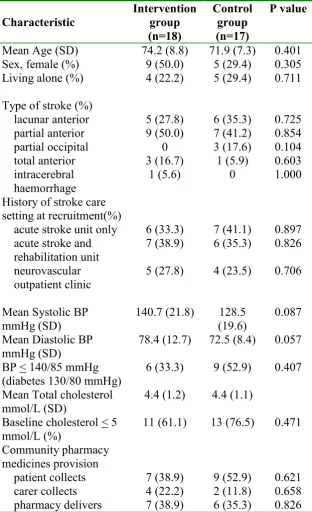
[image:11.595.88.401.224.737.2]Recruitment occurred between July and November and participants were followed up over the following six months. The two groups were similar demographically (Table 1).
Table 1 Baseline characteristics*
Characteristic Intervention group (n=18) Control group (n=17) P value
Mean Age (SD) 74.2 (8.8) 71.9 (7.3) 0.401 Sex, female (%) 9 (50.0) 5 (29.4) 0.305 Living alone (%) 4 (22.2) 5 (29.4) 0.711 Type of stroke (%)
lacunar anterior partial anterior partial occipital total anterior intracerebral haemorrhage 5 (27.8) 9 (50.0) 0 3 (16.7) 1 (5.6) 6 (35.3) 7 (41.2) 3 (17.6) 1 (5.9) 0 0.725 0.854 0.104 0.603 1.000 History of stroke care
setting at recruitment(%)
acute stroke unit only 6 (33.3) 7 (41.1) 0.897 acute stroke and
rehabilitation unit
7 (38.9) 6 (35.3) 0.826 neurovascular
outpatient clinic 5 (27.8) 4 (23.5) 0.706 Mean Systolic BP
mmHg (SD) 140.7 (21.8) (19.6) 128.5 0.087 Mean Diastolic BP
mmHg (SD)
78.4 (12.7) 72.5 (8.4) 0.057 BP < 140/85 mmHg
(diabetes 130/80 mmHg)
6 (33.3) 9 (52.9) 0.407 Mean Total cholesterol
mmol/L (SD)
4.4 (1.2) 4.4 (1.1) Baseline cholesterol < 5
mmol/L (%)
Data collection process
The hospital and GP practice patient record systems were accessible for all participants.
At recruitment, total cholesterol and low density lipoprotein (LDL) measurements were unavailable in 5 and 27 patients respectively, resulting in clinical and prescribing data being available for only 8 (23%) patients.
During the six month study period, complete sets of clinical and prescribing data were available for 16 of 35 (46%) patients. For 1 patient in the usual care group, not a single BP measurement was recorded. Monitoring of cholesterol and LDL was not undertaken for 7 and 19 patients respectively.
90% of questionnaires were returned. Completion rates for the questionnaires are shown in Table 2.
Table 2 Questionnaire completion rates, n(%)
Questionnaire Intervention (n=18) Usual care (n=17)
BMQ 16 (88.9) 15 (88.2)
Perception of benefit 16 (88.9) 15 (88.2)
MARS 16 (88.9) 11 (64.7)
Euroqol 5D 16 (88.9) 14 (82.4)
Euroqol thermometer 17 (94.4) 14 (82.4)
HAD 17 (94.4) 11 (64.7)
Satisfaction 14 (77.8) 13 (76.5)
Blood Pressure Process
in primary care was 2.2 (1.0) for the intervention group and 1.9 (1.7) for the usual care group. One patient had no BP measurements recorded. Five participants opted to have the WTCRF visit in their own home.
Pharmaceutical Care
The total number of care issues identified in the intervention group was 104 (mean 5.8 (2.1) per patient range 3- 10) which fell into the following categories[17]: additional medicine (n=10), unnecessary medicine (n=1), wrong medicine (n=1), dose too low (n=5), adverse drug reaction (n=11), interaction (n=8), inappropriate compliance (n=18) and monitoring and patient advice (n=50). Monitoring included
recommendations for checking records for laboratory tests, International Normal Ratio (INR) and BP measurements. Written and verbal information was provided about medicines and lifestyle behaviours. Pharmaceutical Care Issues identified from observation of medicine taking behaviour in patients own homes included a patient taking two brands of the same antihypertensive, doses remaining in medication compliance aids, stockpiling medicine, use of expired medicines and dispensing errors.
In the intervention group, 23 recommendations were made to GPs, of which 19 (83%) were accepted (Table 3).
Table 3 Pharmaceutical care recommendations to GP (n=23)
Additional drug required
Calcium/Vitamin D recommended in two patients with osteoporosis Proton pump inhibitor recommended for aspirin associated dyspepsia Additional antihypertensive recommended for five patientsa
Unncessary drug
Recommended to stop dipyridamole as warfarin started Wrong drug
Recommended changing dipyridamole to licensed modified release formulation Dosage too low
Recommended increasing dose of levothyroxine based on thyroid function tests Recommended titrating dose of antihypertensive in two patients
Recommended discontinuing dipyridamole in patient experiencing headache
Recommended increasing to indicated dose of proton pump inhibitor for GI prophylaxis Recommended stopping tamsulosin in patient with postural hypotension
Recommended monitoring potassium in patient with hyperkalaemia recently started spironolactone**
Recommended check of creatine kinase in suspected statin induced myopathy Interaction
Recommended change of statin in patient prescribed simvastatin and carbamazepine Inappropriate compliance
Recommended warfarin added to multicompartment compliance aid following risk assessment
Other
Recommended malnourished patient referred to dieticianb
Recommended patient with high HbA1c referred to diabetes clinic Recommended follow up of blood pressure following isolated high result a recommendation not accepted in two patients
b recommendation not accepted
DISCUSSION
Strengths and weaknesses
No data were available from non respondents which could limit generalisability. One single researcher may not reflect practice which could influence the generalisability but a strength was that the researcher was a clinical pharmacist and the intention is that the intervention would be delivered by a qualified prescribing pharmacist.
Recruitment
opposed to the postal method used in this study. This may also elucidate why patients refused to participate as most (22/45) failed to give a reason or reply.
Consideration should be given to screening patients at the first visit to identify those with greater pharmaceutical care needs to determine whether a second face to face visit is necessary. Recruitment may be unaffected but the intervention may be more efficient.
Consideration should be given to further stratifying patients according to complexity of pharmaceutical care needs. This would require to be taken into account when calculating the sample size for a future study.
Data Collection
Data collection from hospital and GP practices was straightforward but electronic transfer methods should be explored to reduce the need for GP practice visits.
Lack of GP measurement of total and LDL cholesterol was the main reason for the low percentage of available data. The rate was too low for meaningful analysis. Given this and the evidence that stroke secondary prevention should include cholesterol lowering agents irrespective of blood total cholesterol,[1] cholesterol measurement would be excluded from a definitive RCT as it would not be a meaningful outcome measure.
Questionnaires were distributed by post and given the attrition rate was only 10%, this method is acceptable. Overall completion rate did not meet the set criterion and was less in the usual care group, possibly due to less researcher contact and was lowest for the MARS and HAD sections. It would be desirable to review the content and explore a shorter version of the questionnaire.
The frequency of routinely collected BP measurements from GP records was insufficient for use as an outcome measure in a future study. The intra individual variation observed in single BP measurements taken by the clinical pharmacist researcher and research nurses suggests that a more reliable method of BP measurement is required if BP is to be used as a future measure of effect of an intervention. Although Ambulatory blood pressure monitoring (ABPM) is recommended by the National Institute for Health and Care Excellence for the accurate diagnosis of hypertension, it may be burdensome for patients. Other studies [12,29] have taken multiple readings, have brought patients to clinics or used home BP monitors, which are also burdensome. There is a need to further test for patient acceptability to estimate size of effect for future power calculations. A future study could not rely on routinely recorded BP measurements by primary care clinicians. BP measurements require to be taken by investigators as part of a definitive RCT.
Pharmaceutical care
Communication of care issues with GPs was by letter and although there was high acceptance of recommendations, it would be desirable to align with local emerging e-communication and paperlite methods.
A prescribing pharmacist delivering the intervention in the main study has the potential to reduce the reliance on the GP to make changes and is in line with the current Scottish Government vision as set out in the Prescription for Excellence document.[28] This is supported by a recent RCT which found a prescribing pharmacist increased the proportion of patients with TIA or minor stroke reaching target BP and LDL levels compared to nurses reporting results to primary care physicians.[29]
A pharmacist led intervention targeting stroke patients’ medicine needs in their own homes would concur with the LoTS care trial recommendations of providing a specialised bespoke service.[30]
Usual care
There were no differences in feasibility of data collection or questionnaire completion rates in the usual care group as compared to the intervention group. The contamination risk from interventions made by community pharmacists and other MDT members is unknown but the risk is similar for both intervention and usual care groups.
CONCLUSION
This study highlighted that before designing a definitive RCT, the following need to be considered: modification of the recruitment and invitation process and inclusion of patients with TIA to increase eligibility and participation; removal of cholesterol measurements as a meaningful outcome measure; a reliable BP monitoring process and further qualitative analysis to improve questionnaire completion rates.
.
Acknowledgments
We thank all the patients and carers and the nurses of the Wellcome Trust Clinical Research Facility for their participation in the study.
Approval/Funding
The study was funded by the Chief Scientist Office as part of the NHS Health Services Research Programme (HSRP006).
Conflict of Interests
None to declare REFERENCES
1. Scottish Intercollegiate Guidelines Network (SIGN). Management of patients with stroke or TIA: assessment, investigation, immediate management and secondary prevention. SIGN Edinburgh. 2008
2. European Stroke Organisation. Guidelines for Management of Ischaemic Stroke. 2008
3. Souter C, Kinnear A, Kinnear M et al. Optimisation of secondary prevention of stroke: a qualitative study of stroke patients’ beliefs, concerns and
difficulties with their medicines. Int J Pharm Pract 2014;22(6):424-32 4. Chambers JA, O’Carroll RE, Hamilton B et al. Adherence to medication in
stroke survivors: a qualitative comparison of low and high adherers. Br J Health Psychol 2011;16:592-609
5. Hakam DG, Spence JD. Combining multiple approaches for the secondary prevention of vascular events after stroke: a quantitative modelling study. Stroke 2007;38:1881-1885
6. Bushnell CD; Olson DM; Zhao X et al. Secondary prevention medication persistence and adherence 1 year after stroke. Neurology 2011;77:1182-90 7. Hankey GJ. Secondary stroke prevention. Lancet Neurol 2014;13:178-94 8. McGowan N, Cockburn A, Strachan MWJ et al. Initial and Sustained
Cardiovascular Risk Reduction in a Pharmacist-led Diabetes Cardiovascular Risk Clinic. British Journal of Diabetes and Vascular Disease. 2008;8(1):34-38
9. De Simoni A, Hardeman W, Mant J et al. Trials to Improve Blood Pressure Through Adherence to Antihypertensives in Stroke/TIA: Systematic Review and Meta-Analysis. J Am Heart Assoc. 2013Aug 20;2(4):e000251
doi:10.1161/JAHA.113.000251 [Published Online First: 23 Aug 2013]
10.Chui CC, Wu SS, Lee Py et al. Control of modifiable risk factors in ischaemic stroke outpatients by pharmacist intervention: an equal allocation stratified randomised study. Journal of Clinical Pharmacy and Therapeutics
11.Nguyen V-HV, Poon J, Tokuda L et al. Pharmacist telephone interventions improve adherence to stroke preventive medications and reduce stroke risk factors: A randomized controlled trial. Stroke 2011;42(3):e244
12.Lager KE, Mistri AK, Khunti K et al. Centre for Reviews and Dissemination (CRD). Interventions for improving modifiable risk factor control in the secondary prevention of stroke. Cochrane Database of Systematic Reviews 2014;5 doi:10.1002/14651858.CD009103.pub2
13.Redfern J, McKevitt C, Wolfe CD. Development of complex interventions in stroke care: a systematic review. Stroke 2006;37(9):2410-9
14.Medical Research Council Complex Interventions Guidance 2008 www.mrc.ac.uk/complexinterventionsguidance (Accessed 8 June 14) 15.Cipolle RJ, Strand LM, Morley PC. Pharmaceutical care practice. The
clinician’s guide.2nd edition. New York: McGraw-Hill 2004:178-179
16.Palenzuela E, Kinnear A, Kinnear M. Adherence to prescribing guidelines and design of a pharmaceutical care plan for stroke patients. Pharm World Sci 2009;31:54
17.Souter C, Kinnear A, Kinnear M. Primary care audit of prescribing adherence to stroke guidelines in patients discharged from an acute stroke unit. Int J Pharm Pract 2009;17 (Supp1):A34
18.Barber N, Parsons J, Clifford S et al. Patients’ problems with new medication for chronic conditions. Qual Saf Health Care 2004;13:172-175
19.Bushnell CD, Zimmer LO, Pan W et al. Persistence with stroke prevention medications 3 months after hospitalisation. Arch Neurol. 2010;67:1456-1463 20.Osterberg L, Blaschke T. Adherence to medication. New Engl J Med.
2005;353:487-497
21.Dorman PJ, Waddell FM, Slattery J et al. Is the Euroqol a valid measure of health-related quality of life after stroke? Stroke 1997;28:1876-1882. 22.Thompson K, Kulkarni J, Sergejew AA. Reliability and validity of a new
Medication Adherence Rating Scale (MARS) for the psychoses. Schizophr Res 2000;42:241–7
23.Horne R, Weinman J, Hankins M. The Beliefs about Medicines Questionnaire: the development and evaluation of a new method for assessing the cognitive representation of medication. Psychol Health 1999;14:1–24
24.Zigmond AS, Snaith RP. The Hospital Anxiety and Depression Scale. Acta Psychiatrica Scandinavica 1983; 67:361 -370
25.Krass I, Delaney C, Glaubitz S et al. Measuring patient satisfaction with diabetes disease state management services in community pharmacy. Research in social and administrative pharmacy 2009;5:31-39
26. Baker. Development of a questionnaire to assess patients' satisfaction with consultations in general practice. British Journal of General Practice 1990;40:487-490
27.Stewart DC, George J, Bond CM et al. Exploring patients’ perpectives of pharmacist supplementary prescribing in Scotland. Pharm World Sci 2008;30:892-897
28.Prescription for Excellence: A Vision and Action Plan for the Right
Pharmaceutical Care through Integrated Partnerships and Innovation. Scottish Government. Edinburgh 2013
30.Forster A, Mellish K, Farrin A, Bhakta B, House A, Hewison J, et al.