City, University of London Institutional Repository
Citation
:
Bryson, A., Forth, J. ORCID: 0000-0001-7963-2817 and Stokes, L. (2014). Worker wellbeing and workplace performance. London, UK: Department for Business Innovation & Skills.This is the published version of the paper.
This version of the publication may differ from the final published
version.
Permanent repository link:
http://openaccess.city.ac.uk/20760/Link to published version
:
Copyright and reuse:
City Research Online aims to make research
outputs of City, University of London available to a wider audience.
Copyright and Moral Rights remain with the author(s) and/or copyright
holders. URLs from City Research Online may be freely distributed and
linked to.
City Research Online: http://openaccess.city.ac.uk/ [email protected]
AFFECT WORKPLACE
PERFORMANCE?
Alex Bryson, John Forth and
Lucy Stokes, NIESR
Contents
List of Figures ... 6
List of Tables ... 7
Abbreviations ... 8
Glossary ... 9
Executive Summary ... 11
Background ... 11
Aims and objectives ... 11
Our approach ... 11
Key findings and policy implications ... 12
How do we conceptualise and measure wellbeing in the workplace? ... 12
What employee and job characteristics influence SWB in the workplace and what employer practices have the greatest effect? ... 12
How can SWB affect workplace performance? ... 14
Findings from analysis of the 2011 Workplace Employment Relations Survey ... 15
What are the implications of the study’s findings for policy makers and employers? ... 17
1 Introduction ... 19
Background ... 19
Aims and objectives ... 21
Our approach ... 21
The structure of the report ... 23
2 What is subjective wellbeing and how is it measured? ... 24
Hedonic approaches to SWB ... 24
The eudemonic approach to SWB ... 26
Three-dimensional view of SWB ... 27
The measurement of SWB in the workplace ... 28
Related concepts ... 30
Job quality ... 30
Experienced utlility ... 30
Job engagement and organizational commitment ... 31
Summary ... 32
3 What factors affect SWB in the workplace? ... 33
Introduction ... 33
Personal characteristics ... 34
Job and workplace characteristics ... 35
Job demands and environmental clarity ... 37
Control and variety ... 38
Opportunity for skill use ... 40
Supervision, interpersonal contact and fairness ... 41
Money ... 42
Physical security ... 43
Career outlook and significance ... 44
Employer practices ... 45
Human resource management ... 46
Other influences ... 48
Summary ... 49
Impact on the performance of individual workers ... 51
Impact of SWB on an individual’s physiology ... 53
Impact of SWB on cognitive processes ... 54
Impact of SWB on work attitudes ... 55
Issues at the level of the individual ... 56
Impact of SWB on workplace performance... 57
Evidence of a link between SWB and workplace performance ... 59
Summary and conclusions ... 61
5 New Evidence from the Workplace Employment Relations Survey ... 63
Introduction ... 63
Overview of the analysis ... 64
Results ... 65
Summary and Conclusions ... 66
6 Key findings and policy implications ... 68
The approach taken in the study ... 68
Key findings and policy implications ... 68
How do we conceptualise and measure wellbeing in the workplace? ... 68
What employee characteristics, job characteristics and employer practices affect SWB in the workplace? ... 69
How can SWB affect workplace performance? ... 70
Findings from analysis of the 2011 Workplace Employment Relations Survey ... 70
What are the implications of the study’s findings for policy makers and employers? ... 72
Bibliography ... 74
Appendix A: List of Search Terms ... 87
Search terms in respect of human resource practices ... 87
Search terms in respect of workplace or organisational performance ... 88
Web of Science subject categories ... 88
Appendix B: The Workplace Employment Relations Survey ... 89
Origins and aims ... 89
Units and coverage ... 89
Methods ... 90
Achieved samples and response rates ... 90
Further information on WERS 2011 ... 91
Appendix C: Analyses of the Workplace Employment Relations Survey ... 92
Why WERS? ... 92
Employee Wellbeing and Workplace Performance: An Investigation using the 2011 Cross-sectional Workplace Employment Relations Survey ... 94
Measuring Workplace Performance ... 94
Measuring Employee Wellbeing ... 96
Method of Analysis ... 100
Results ... 104
Employee Wellbeing and Workplace Performance: An Investigation using the 2004-2011 Panel Workplace Employment Relations Survey ... 107
The Limitations of the Cross-sectional Analyses ... 108
The Advantages of Panel Analyses ... 109
Measuring Workplace Performance ... 111
Measuring Employee Wellbeing ... 115
Method of Analysis ... 116
List of Figures
Figure 1: A two-dimensional view of affect ... 25 Figure 2: A three-dimensional view of SWB ... 27 Figure 3: Factors influencing SWB at work ... 33 Figure 4: Illustration of the relationship between SWB and productivity for an individual employee ... 53 Figure 5: Illustration of the relationship between SWB and performance for a workplace or firm ... 58 Figure 6: Workplace Performance Measures, 2011 Cross-Section ... 94 Figure 7: Distribution of Mean Workplace Job Satisfaction, Nine Facets, 2011
Cross-Section ... 97 Figure 8: Distribution of Mean Workplace Job Satisfaction, Additive Scales, 2011 Cross-Section ... 98 Figure 9: The Distribution of Mean Workplace Job-related Affect, Six Items, 2011 Cross-Section ... 99 Figure 10: The Distribution of Mean Workplace Job-related Affect, Additive Scales, 2011 Cross-Section ... 100 Figure 11: The Distribution of Mean Workplace Job Satisfaction and Job-Related Affect, Non-Linear Measures, 2011 Cross-Section ... 102 Figure 12: Within-Workplace Changes in Performance (unweighted number of
List of Tables
Abbreviations
GDP Gross domestic product
HAPA High activation, pleasant affect
HAUA High activation, unpleasant affect
HIM High involvement management
HR Human resources
HRM Human resource management
LAPA Low activation, pleasant affect
LAUA Low activation, unpleasant affect
OECD Organisation for Economic Co-operation and Development
ONS Office for National Statistics
PANAS Positive and Negative Affect Schedule
SWB Subjective wellbeing
Glossary
Affect A term used in psychology to refer to a person’s
elementary feelings. Positive affect indicates feelings of pleasure; negative affect indicates feelings of displeasure or pain.
Correlation coefficient A number varying between -1 and +1 which indicates the strength and direction of the linear relationship between two variables. A coefficient of 0 indicates that they are entirely uncorrelated.
Eudemonic wellbeing An approach which focuses on the extent to which a
treatment gives rise to a sense of purpose, vitality or personal development.
Experience sampling A research methodology that asks participants to stop at
certain times of the day and to make a record of their feelings or behaviours. Also referred to as the ‘day-reconstruction method’.
Fixed effects model A multivariate regression model that is estimated on lower-level units (e.g. employees) but which incorporates one dummy variable for each higher-level unit in the sample (e.g. each workplace). The approach is used to remove any unobservable differences that are common to all members of the same higher-level unit (i.e. each employee in the same workplace).
Hedonic approach An approach which focuses on the extent to which a
treatment gives rise to positive or negative affect (pleasure or pain).
Human resource management (HRM)
Human resource management practices typically include practices relating to training, recruitment and selection, performance management, teamwork, incentive pay, job security, participation and communication.
Job-related affect The nature of a person’s elementary feelings towards their
job. Also see ‘Affect’. Job-related emotional
exhaustion
One of the key components of 'job burnout'. Emotional exhaustion refers to tension, strain and fatigue.
Job satisfaction A measure of the adequacy of one’s affective feelings
Instrumental variables An analytical technique that uses a variable associated with the factor under study, but not directly associated with the outcome variable, in order to remove bias caused by reverse causation, omitted variables or measurement error.
Meta analysis A statistical technique that combines the results of several
different studies in order to provide an overall indication of the strength of the relationship between the variables of interest.
Monopsony A market situation in which there is only one buyer of the
good or service in question. Often used also to refer to a situation of oligopsony – a market situation in which there are few buyers relative to the number of sellers.
Multivariate regression A statistical technique for estimating the relationship between one outcome (or dependent variable) and a number of predictors (or independent variables). Organizational
citizenship behaviours
Positive and constructive things that employees do, of their own volition, which support co-workers and benefit the organization.
Subjective wellbeing All of the various evaluations, positive and negative, that people make of their lives, and the affective reactions of people to their experiences.
Utility An economic concept referring to the degree of
Executive Summary
Employee wellbeing is increasingly a focus of government attention in
the UK and elsewhere. It is viewed as a legitimate target of government
policy in its own right, but there are also reasons to think that
improvements in employees' wellbeing may be conducive to economic
growth. This paper focuses on the subjective wellbeing of employees
and its potential impact on workplace performance. As yet there is
relatively little empirical evidence on the relationship between
employees' subjective wellbeing and workplace performance. This
paper begins to fill that gap for Britain.
Background
The term subjective wellbeing (SWB) is used to cover a number of different aspects of a person’s subjective mental state and has been defined by the OECD to include “all of the various evaluations, positive and negative, that people make of their lives, and the
affective reactions of people to their experiences”. For many years, policy makers
focused on GDP growth as the best means of securing a better quality of life for citizens. But governments and their advisers have recently turned their attention to other
measures, including of individuals’ subjective wellbeing. One of the motivations has been research indicating that citizens in developed economies have not necessarily become 'happier' as a result of increased prosperity.
Aims and objectives
This study focuses on the links between employees' subjective wellbeing at work and workplace performance. It sets out to address four questions:
• How do we measure and define wellbeing in the workplace?
• What employee and job characteristics influence wellbeing in the workplace?
• What employer practices have the greatest positive impact on wellbeing in the workplace?
• Is there any evidence to link employee wellbeing and business performance?
Our approach
The study consisted of three main substantive stages. In the first stage of the study, we sought to develop a conceptual framework around SWB and its possible links to
workplace performance. Within this conceptual framework, we sought to describe the different approaches to the definition and measurement of SWB, drawing heavily on the existing psychological literature which points to its multi-dimensional nature. The
workplace. It then went on to consider the potential ways in which employees’ SWB might affect their job performance, and the likelihood that such effects will aggregate in such a way as to form a causal link between employees’ SWB and the overall
performance of their workplace or firm.
The second stage of the study comprised a review of the existing research literature on the two broad questions of: which employee characteristics, job characteristics and employer practices affect employees’ levels of SWB at work; and whether employees’ SWB has a causal impact on individual or workplace performance.
The third and final stage of the study involved new empirical analysis of the links between employees' SWB and workplace performance, based on the 2011 Workplace
Employment Relations Survey (WERS). These linked employer-employee data contain multiple measures of employees' SWB and provide the basis for a robust investigation of the SWB-performance link in British workplaces. Using various multivariate regression techniques we sought to isolate the independent relationship between SWB at the workplace and workplace performance.
Key findings and policy implications
How do we conceptualise and measure wellbeing in the workplace?
There are two broad - but complementary - approaches to the conceptualisation and measurement of SWB. Hedonic approaches focus on the type of affective feelings that a person experiences (e.g. anxiety or contentment) and also on the adequacy of those feelings (e.g. whether the person is satisfied with certain aspect of their life). In contrast to these hedonic approaches, the eudemonic approach to SWB focuses on the extent to which a person experiences feelings that are considered to demonstrate good mental health (e.g. the extent to which they feel a sense of purpose).
Most research into employees' SWB has adopted the hedonic approach, with job satisfaction being the most frequently studied aspect of job-related SWB. The study of job-related affect has a more recent history, but a growing body of empirical research investigates this dimension of SWB. The eudemonic approach to SWB has been less frequently operationalised in organisational research. The term SWB is used hereafter as a catch-all for research in any of these three areas, although the focus of particular
research studies is highlighted within the main body of the report.
What employee and job characteristics influence SWB in the workplace and what employer practices have the greatest effect?
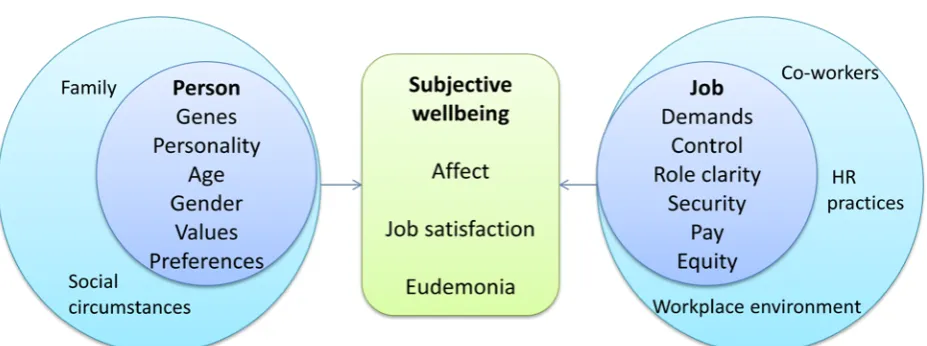
An individual's SWB at work is influenced both by their own characteristics, and those of the job and workplace in which they are employed (see Figure). From a policy
perspective, it is the features of the job and workplace (i.e. those on the right-hand side of the Figure) which are of most interest, as these are typically more amenable to policy influence. Nevertheless, an understanding of the relationship between individual
An extensive literature discusses the characteristics of jobs which influence SWB at work.1 SWB tends to be higher when employees have:
• autonomy over how they do their job and a measure of control in relation to the broader organisation, e.g. participation in decision-making;
• variety in their work;
• clarity over what is expected of them, including feedback on performance, e.g. via appraisals;
• opportunities to use and develop their skills, e.g. via the provision of training;
• supportive supervision;
• positive interpersonal contact; with both managers and co-workers, but also with customers or the general public (where the job requires it);
• a perception of fairness in the workplace, both in terms of how the employee is treated themselves but also how their co-workers are treated, with disciplinary and grievance procedures being one way for employers to address this;
• higher pay, although this relationship depends not only on the absolute level of pay but how this compares with pay of other workers;
• physical security, including the safety of work practices, the adequacy of equipment and the pleasantness of the work environment;
• a sense of job security and clear career prospects;
• a perception of significance, both in terms of the significance that the job has for the worker, and the perceived value of the job to society.
SWB tends to be lower when the demands of the job are particularly high. Job demands result not only from the amount or type of work, but also from any incompatibility with pressures from outside of work.
These relationships are fairly well-established in the existing literature. Employers
therefore have the potential to influence the SWB of their employees through changes in job design.
The picture has its complexities, however. An employee's SWB will reflect not only the actual characteristics of their job, but also the value which they place upon them. In a similar way, individuals differ in their expectations; if an individual has lower expectations of their job, they may rate their job satisfaction more highly than someone who expects more from their work. This has the implication that, in thinking about job and workplace changes that may raise SWB, employers and policy makers need to bear in mind that there may be differing effects for different employees. Any analysis of the factors driving SWB at work therefore needs to take account of individual traits as well as job and workplace characteristics.
In addition, the relationships between the human resource practices adopted by a workplace and its employees' SWB are not always clear-cut. Practices may influence more than one aspect of an employee's job, some of which act to improve SWB, and others which serve to reduce it. There may also be different effects for different employees within a workplace, and different effects of policies from one employer to another. For example:
• Practices which aim to give employees more involvement may raise autonomy, but may also increase the level of demands placed on them.
• Practices aimed at raising the SWB of one group of employees within a workplace may do so to the detriment of others (e.g. if they give rise to perceptions of unfair treatment amongst those who are not covered by the practice).
• Practices may have differing effects on SWB dependent on workplace characteristics (e.g. formal arrangements may be better received in larger workplaces than in smaller ones).
Much of the literature in this area relates to the impact of systems of human resource management (HRM) practices on SWB; here the evidence is inconclusive. Evidence for the UK to date points to a positive correlation between HRM and the job-related anxiety measure of SWB, but also a positive, or at least neutral, impact on the job satisfaction measure of SWB. However, it is clear that there is a case for more robust studies of the impact of employer practices on a range of aspects of SWB.
How can SWB affect workplace performance?
There is a considerable amount of evidence to indicate that there is a positive association
(a correlation) between SWB and an employee's job performance. Moreover there is some evidence which indicates that higher levels of SWB may lead to (cause) higher levels of job performance in some circumstances.
The empirical literature indicates three causal mechanisms through which higher levels of SWB can bring about higher job performance. The first is by affecting employees’
employees’ physiology and general health - improving their cardiovascular health and immunity, enabling speedier recovery from illness, and securing greater levels of energy and potentially effort.
There is not necessarily a straightforward link between an employee's SWB and their job performance, however. For example, raised levels of creativity and improved social interaction is only likely to generate better employee performance in jobs with a substantial degree of autonomy and those that involve team work or customer
interaction. In addition, it is possible that employee behaviours or work attitudes may be most heavily affected when levels of SWB are particularly high or particularly low. There is a need for further examination of the links between SWB and employee performance in real world settings to address these issues.
There are also reasons to think that the relationship between SWB and job performance at the level of the employee may not necessarily be replicated at the level of the
workplace. One reason is that low levels of SWB among a small number of workers may spill over to negatively affect levels of SWB (and thus levels of job performance) among the wider workforce. Another relates to the differing contributions workers make to workplace output, because of variations in their ability and their span of control; the contribution of all workers may not matter equally for the performance of the workplace, and so it may matter who has high or low SWB.
Whilst there are some studies which do show a robust causal impact of employees’ SWB on the performance of the workplace or firm, the evidence is more limited at this level. The review concludes that more research is needed at the level of the workplace or firm in order to generalise beyond the small number of existing studies.
Findings from analysis of the 2011 Workplace Employment Relations Survey
Statistical analyses were conducted using the 2011 Workplace Employment Relations Study to explore the relationship between SWB and performance at workplace level, thereby contributing new evidence to the literature.
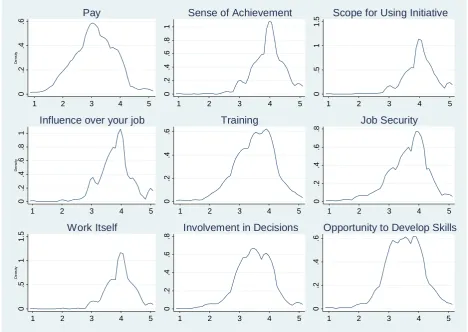
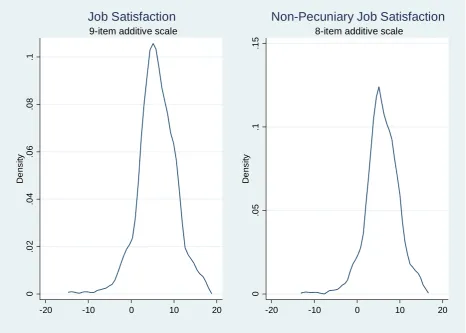
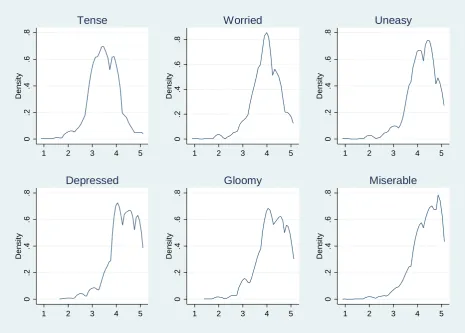
The level of employee SWB in the workplace was measured in terms of the two most studied aspects of SWB: job satisfaction and job-related affective feelings (WERS did not collect eudemonic measures of SWB). WERS measures nine dimensions of job
satisfaction (pay, sense of achievement, training receipt, job autonomy, skill development opportunities, job security, scope for initiative, involvement in decision-making and their satisfaction with the work itself). It contained six indicators of job-related affect, covering the frequency with which the employee feels tense, depressed, worried, gloomy, uneasy and miserable. Workplace performance was measured using the manager’s subjective assessment of the workplace’s performance relative to the industry average on three dimensions: financial performance, labour productivity and the quality of the
output/service. An additive scale formed from these three individual measures was used as a fourth measure of performance.
The analysis was carried out using data from workplaces that took part in the 2011 WERS (the cross-sectional analyses) and workplaces that took part in the 2004 WERS and were followed up in 2011 (the panel survey). The cross-sectional analyses
by the level of employee SWB at the workplace in 2011. The panel analyses explored whether changes in workplace performance between 2004 and 2011 were linked to changes in the level of employee SWB at the workplace between those two years. The panel survey also assessed whether the level of employee SWB in 2004 was predictive of workplace closure by 2011.
The analyses showed a clear, positive, statistically significant relationship between the average level of job satisfaction among employees at the workplace and workplace performance. This finding was present in both the cross-sectional and panel analyses and was robust to various estimation methods and model specifications. Employee job satisfaction was found to be positively associated with workplace financial performance, labour productivity and the quality of output and service. Workplaces experiencing an improvement in job satisfaction – whether measured in terms of the average level of satisfaction in the workforce, or measured in terms of an increase in the proportion "very satisfied" or a reduction in the proportion "very dissatisfied" - also experience an
improvement in performance. By contrast, there was no association between job-related affect and workplace performance. These findings are significant because this is the first such study for Britain.
Considering the findings in more detail, the results from the cross-sectional analyses can be summarised as follows:
• The average level of job satisfaction among employees at the workplace was positively related to all four workplace performance measures.
• Workplaces with "very satisfied" employees had higher labour productivity, higher quality of output, and higher overall performance. Workplaces with "very
dissatisfied" employees had lower financial performance and lower overall performance on the additive scale.
• Non-pecuniary aspects of job satisfaction were positively correlated with overall workplace performance, the quality of output (and, less robustly, with labour productivity) whereas pay satisfaction was positively associated with workplace financial performance but not with other performance measures.
• Job-related affect was not correlated with workplace performance, regardless of the measure used.
The results from the panel analyses can be summarised as follows:
• Increasing overall average employee job satisfaction was associated with increases in all four workplace performance measures.
• Workplaces with rising job dissatisfaction experienced deterioration in all four performance measures, whereas workplaces with an increase in "very satisfied" employees experienced rising quality of output or service and an increase in the additive performance measure, but not financial performance or labour productivity.
• Changes in job-related affect were not associated with workplace performance, regardless of the measure used, although there was some evidence that an increase in employees reporting "ill-being" most or all of the time was associated with deteriorating quality of output or service and a decline in the additive
performance scale, at least in some models.
These findings are consistent with the proposition that employers who are able to raise employees' job satisfaction may see improvements in the performance of their workplace. These improvements are apparent in profitability (financial performance), labour
productivity and the quality of output or service.
Although we cannot state definitively that the link is causal, the findings are robust to tests for reverse causation and persist within workplaces over time, so that we can discount the possibility that the results are driven by fixed unobservable differences between workplaces. Thus the results are consistent with the causal relationship suggested by conceptual work in this area.
What are the implications of the study’s findings for policy
makers and employers?
First, there is a prima facie case for employers to consider investing in the wellbeing of their employees on the basis of the likely performance benefits. The study sets out a conceptual framework indicating the ways in which raising employees’ SWB may improve performance, and also presents evidence which is consistent with there being a causal relationship between the two. Specifically, if the average employer is able to raise their employees' SWB, the theory and available evidence suggest that they are likely to see improvements in the performance of their workplace.
It should be noted, however, that the evidence of a causal link between the job-related affect measure of SWB and workplace performance is limited, and indeed the WERS analysis conducted here finds no such association. Thus there appears to be no clear case yet for employers to invest in that dimension of employee wellbeing – although equally we find no clear disadvantage to doing so.
Equally, there are likely to be routes to commercial success that employers can pursue without regard to employees' SWB. We find no link between employees' SWB and workplace closure probabilities, suggesting workplaces can continue to trade and,
perhaps even prosper, whether employees' SWB is high or low. Thus the "low road" may be a viable option for some employers, although we do find clear evidence that an
increase in job dissatisfaction within a workplace is linked to deteriorating workplace performance.
citizens who are "happier". There are spillovers to employees’ family life, their participation in social activities and their consumption of government services (most obviously welfare services and health care). A higher level of job-related SWB might then be considered a goal in itself – a point reflected in broader arguments about moving beyond purely economic measures such as GDP when considering levels of national progress. Nevertheless, judging by the descriptive information presented in Appendix C of this report, most employees in Britain appear reasonably satisfied with most aspects of their jobs and they are not suffering in large numbers from particularly adverse SWB. The percentages saying they are depressed or anxious most of the time are low.
As regards policy responses, it is apparent from the literature review that we do not yet fully understand what it is about jobs and the working environment that change
employees' SWB. Some things we know quite a lot about. For example, higher pay leads to higher job satisfaction, but even here the relationship is not linear, tailing off at higher pay levels. The complexity of the job satisfaction concept is illustrated by the pay
1 Introduction
Employee wellbeing is increasingly a focus of government attention in
the UK and elsewhere. It is viewed as a legitimate target of government
policy in its own right, but there are also reasons to think that
improvements in employees' wellbeing may be conducive to economic
growth. This paper focuses on the the subjective wellbeing of
employees and its potential impact on workplace and organisational
performance. As yet there is relatively little empirical evidence on the
relationship between employees' subjective wellbeing and workplace
performance. This paper begins to fill that gap for Britain by carrying
out a literature review and new empirical analyses.
Background
It has been acknowledged in a prominent recent report on wellbeing and public policy (O’Donnell et al, 2014: 10) that countries will inevitably want to measure how well they are doing, both over time and compared with other countries; and so the question arises of how to measure success? There are broadly four components to the measurement of societal wellbeing (Allin, 2007):
• The National Accounts and, in particular, the level of gross domestic product (GDP) per person. Clearly if GDP per head rises, the nation is more prosperous and individuals are (on average) better able to meet their material needs and to exercise choices that
satisfy their preferences.
• Other economic measures of welfare, which extend the National Accounts to include measures of social capital and environmental sustainability, as well as considering the distribution of income across society and within households.
• Measures of specific social and environmental conditions, including measures of education, health, social inclusion and pollution.
• Measures of individuals’ subjective wellbeing, including measures of ‘happiness’ and life-satisfaction.
For many years, policy makers focused on GDP growth as the best means of securing a better quality of life for citizens. But recently governments and their advisers have turned their attention to the other measures listed above, most recently given increased
attention to individuals’ subjective wellbeing (SWB).
advising the Sarkozy French Government (Stiglitz et al., 2009). It’s value as a focus for public policy has been prompted, in part, by what has come to be known as Easterlin's Parodox (Easterlin, 1974) which suggests that citizens in developed economies have not necessarily become 'happier' as a result of increased prosperity.2 Measures of
subjective wellbeing also have the democratic advantage of allowing people to decide on the quality of their own life experience (Dolan et al, 2011). The approach then fits with a utilitarian view of the world where governments try to maximise the sum of everybody’s utility or ‘hedonic experience’ (O’Donnell et al, 2014: 10).
Progress is being made on measuring citizens' SWB at a national level (e.g. Tinkler and Hicks, 2011; OECD, 2013) and in identifying policies governments can implement to improve citizens' subjective wellbeing (e.g. O'Donnell et al, 2014: 56-73). Such improvements in SWB, it is believed, may result in improvements in other areas of peoples' lives including their physical health and labour market participation. Certainly, there is a great deal of empirical evidence pointing to a positive causal effect of SWB on individuals' physical health (see Diener and Chan, 2011), and the benefits of greater subjective wellbeing appear to feed through into individuals' performance in the labour market (see Judge et al, 2001; Lyubmirsky et al, 2005).
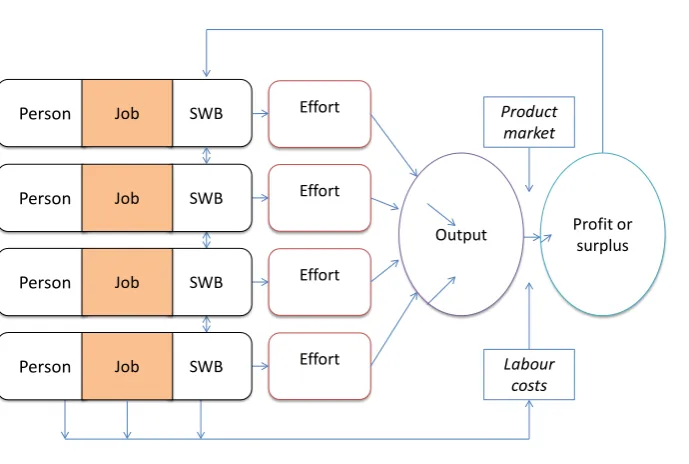
If, as seems plausible, heightened subjective wellbeing can affect individual performance, it is conceivable that policies and practices that target improvements in subjective
wellbeing may result in economic growth. For example, where employees' subjective wellbeing at work increases, they may work harder or "smarter", leading to productivity growth which, in turn, may increase profitability. The causal link between increased wellbeing and improved productivity has recently been established in a laboratory experiment (Oswald et al., 2014) and research is being undertaken to investigate this causal linkage beyond the laboratory. However, there is no certainty that higher
subjective wellbeing will translate into greater profitability at the level of the workplace or organisation. First, one must factor in the costs an employer may have incurred to bring about the improvement in wellbeing. Second, many institutional and contextual factors may intervene, such that any improvements in performance dissipate. Third, group dynamics come into play when considering relationships at a workplace or organisation-level that are not considered when focusing on individual effects. We seek to contribute to this debate by presenting the theoretical and conceptual arguments linking subjective wellbeing to workplace performance, reviewing the literature on the subject, and
contributing new evidence from the Workplace Employment Relations Study 2011 on the links between SWB and workplace performance. To our knowledge, this is the first study for Britain that seeks to accomplish this.
If improving employees' subjective wellbeing is linked to improved workplace
performance, policies targeting subjective wellbeing will result in benefits to employers and benefits to employees, both in terms of future job prospects, but also through direct improvements in how employees feel at work.
Aims and objectives
This study focuses on the links between employees' subjective wellbeing and workplace performance. It sets out to address four questions:
• How do we measure and define wellbeing in the workplace?
• What employee and job characteristics influence wellbeing in the workplace?
• What employer practices have the greatest positive impact on wellbeing in the workplace?
• Is there any evidence to link employee wellbeing and business performance?
Our approach
In the first stage of the study we developed a conceptual framework linking subjective wellbeing (SWB), the factors that might affect it, and how it can affect workplace
performance. We began by defining subjective wellbeing, drawing heavily on concepts in the existing psychological literature that point to the multi-dimensional nature of SWB. We also explored the standard ways in which these underlying concepts are captured in data. The factors affecting SWB at the workplace are various, and include personal characteristics, social influences and experiences outside work; however our prime focus was on job and workplace characteristics, particularly those that are amenable to
employer or government policy influence.
In the second stage we reviewed the existing research literature in the fields of economics, psychology and business/management on the issues covered in the conceptual framework. The literature review was carried out in the spirit of 'realist synthesis' (Pawson et al., 2004), whereby one begins with a discussion of how an
intervention is supposed to work (what Pawson et al. refer to as the ‘programme theory’) and which then gathers evidence in a systematic way to test and refine this theory. This approach is less standardised than some research reviews which seek exhaustively to cover the entire literature on a particular topic, but has the advantage that one can expect to arrive at a better understanding of how an intervention works and in what
circumstances (ibid.: 37-41).
Our review sought out the key literature on each of the four questions listed above. Expert reviews and meta-analyses were sought out in particular, where these were available. However, we were already aware from our knowledge of the subject that certain issues were less well-evidenced than others. Accordingly, specific effort was dedicated to identifying evidence on the following two issues:
• the relationship between human resource practices and subjective wellbeing (as distinct from the relationship between specific job characteristics and SWB).
Our searches in these areas focused more heavily on database search methods, calling upon the Social Science Citation Index through the Web of Science Core Collection (Thomson Reuters), which covers 3,000 of the world's leading social science journals. In each of the two areas cited above, we compiled a list of search terms based on
preliminary reading and knowledge from existing work. The complete list of search terms is provided in Appendix A. Attention was given to research studies in the fields of
economics, psychology or business/management, published since 2000 in academic journals with at least a three-star ranking in either the Association of Business Schools (ABS) or Keele University lists (for economics and business/management journals) or the top 40% of psychology journals in the SCImago Journal Ranking list. Within the list of search results, particular attention was given to those studies with a higher number of citations, after accounting for the year in which the study was published.
The quality of research evidence in each of the four areas cited above was assessed by reference to standard quality indicators as summarised by Farrington (2003):
• Statistical conclusion validity - whether one can be confident (in a statistical sense) that the presumed cause (the intervention) and the presumed effect (the outcome) are related
• Internal validity - whether one can be confident that the intervention had a causal effect on the outcome
• Construct validity - whether the theoretical constructs underlying the study were appropriately defined and measured.
• External validity - the extent to which any causal relationship may be generalised to other places, times or people.
• Descriptive validity - whether the key features of the study have been adequately presented in the research report so as to enable a systematic review of the study in question.
Comments are made in the discussion of the literature (esp. Chapters 3 and 4) to illustrate the limitations of the available evidence along these various dimensions. In the final part of the study we present new empirical analysis of the links between employees' SWB and workplace performance based on the 2011 Workplace
The structure of the report
Chapter 2 sets out a conceptual framework for the study of subjective wellbeing (SWB) and its links to workplace performance. It first introduces the different aspects of SWB, and discusses the similarity of SWB to the economic notion of utility and its
distinctiveness from concepts such as job quality. Chapter 3 then considers the various factors that may affect an employees' SWB in the workplace. In Chapter 4 the discussion turns to the possible impact of employees’ SWB on workplace performance. Chapter 5 then summarises the results of new analysis of the link between employees’ SWB and workplace performance using data from WERS. The final chapter (Chapter 6)
2 What is subjective wellbeing and
how is it measured?
This chapter introduces the concept of subjective wellbeing. It
discusses the different approaches that have been taken to its
conceptualisation: the hedonic approach which focuses primarily on
the extent to which work engenders positive or negative feelings in the
job holder, and the eudemonic approach which focuses more on the
extent to which the job-holder derives a sense of purpose, vitality or
personal development from their work. The chapter also discusses
how the concept of SWB has been operationalised in empirical
research. Finally, the chapter considers the similarity of SWB to the
economic notion of utility and its distinctiveness from concepts such
as job quality.
The definition of subjective wellbeing
Subjective wellbeing (SWB) covers a number of different aspects of a person’s subjective mental state. As noted in Chapter 1, recent guidelines on the measurement of SWB (OECD, 2013) take it to comprise:
“all of the various evaluations, positive and negative, that people make of their lives, and the affective reactions of people to their experiences”
(OECD, 2013: 29). The broader literature on SWB is concerned with people’s affective reactions or feelings towards many different aspects or domains of life, including their housing, family life and so on. Our primary concern is with that component of a person’s SWB which is related to their work: their job-related subjective wellbeing. Irrespective of the particular domain that is of interest, there is nevertheless general agreement on the approaches that may be used to gauge or measure levels of SWB. These can be broadly distinguished into hedonic and eudemonic approaches.
Hedonic approaches to SWB
Hedonic approaches to SWB are focused on whether a person’s affective reactions or feelings towards their job are either positive or negative. The term 'hedonic' (alt.
hedonistic) is used here to indicate that these approaches focus on the extent to which work gives rise to positive or negative affect (pleasure or pain).
feelings (such as enthusiasm or contentment) or negative feelings (such as anger or worry) (see column 1 of Table 1).
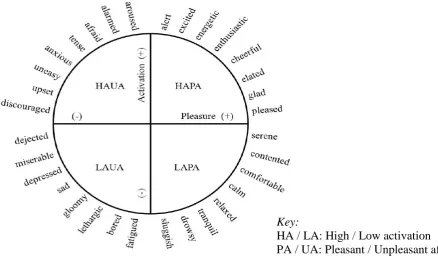
A number of empirical investigations (e.g. Russell, 1980, 2003) have shown that the nature of this affective reaction can be charted on a circumplex with two independent axes, as shown in Figure 1. The horizontal axis is concerned with the degree to which the feeling involves pleasure or displeasure; the vertical axis is concerned with the degree to which the feeling involves a high or low level of mental activation – in other words the extent to which the person is ready to act or expend energy (Russell, 2003: 156). A feeling of enthusiasm is therefore distinct from a feeling of anxiety as the former entails a higher degree of pleasure. Similarly, a feeling of anxiety is distinct from a feeling of lethargy as the former entails a higher level of activation. In an organisational setting, the employee and employer can both be expected to benefit when the job primarily
[image:26.595.81.520.341.598.2]engenders feelings in the upper-right quadrant of Figure 1, indicating the combination of high activation and pleasant affect (HAPA).
Figure 1: A two-dimensional view of affect
Source: Warr et al. (2013) A second hedonic approach to SWB focuses on the adequacy of one’s affective feelings
towards aspects of the job, asking (for example) how satisfied a person is with the work they do or the pay they have received (see column 2 of Table 1). Feelings of satisfaction tend to be correlated with the pleasant-unpleasant dimension of job-related affect shown in Figure 1 (see Weiss et al, 1999) and so there is some relation between the two
hedonic approaches. However, the important distinction in the ‘satisfaction-based’
approach to SWB is that it involves an implicit comparison with some alternative state (for example, the features of that job in a prior period, or the features of jobs held by other employees).
Key:
Whilst a focus on the type of job-related affect may therefore arguably give a more direct indication of an employee’s core feelings at work, a focus on job satisfaction can be particularly informative as it indicates how the employee evaluates those feelings. Such evaluations may factor into the employee’s decision making – for example whether to begin the search for an alternative job (see Green, 2010). Indeed Warr (2007: 51-52) judges that job satisfaction is closer than core affect to being an attitude (that is, a
relatively enduring psychological tendency).3 This is potentially significant, since attitudes are usually described as having three components: affective, cognitive and behavioural, which are reflected in feelings, beliefs and actions (ibid.). For Warr, there is then an “action-tendency” embodied within the concept of job satisfaction that is not present in core affect. In other words, one can expect job satisfaction to have a greater influence on an individual’s actions or behaviour. One might then expect job satisfaction to have a greater influence than core affect on work behaviours.
The eudemonic approach to SWB
Under the hedonic approach, an employee is considered to have high levels of SWB when they are satisfied with their job, and when they experience positive feelings more frequently and negative feelings less frequently. However, it is argued that it is not
necessary for an employee always to gain enjoyment or pleasure from the job in order to attain a positive mental state. The ‘eudemonic’ approach to SWB then focuses on
themes that are considered to constitute aspects of good mental health, such as the extent to which an employee derives a sense of purpose from their work.
The eudemonic approach therefore starts from the position – derived from psychological and philosophical literature – that some actions or personal states are more appropriate or worthwhile than others, and views SWB primarily in terms of self-actualisation and virtuous behaviour (psychological ‘flourishing’) rather than in terms of self-gratification. The essential distinction from the hedonic approach can be illustrated by reference to an employee who, like a parent, may find their role stressful and be dissatisfied with its financial rewards, but who may nevertheless gain a strong sense of purpose from that role.
The three differing approaches to the concept of SWB are illustrated side-by-side in Table 1.
3 The psychological literature notes that there are overlaps between SWB and attitudes (and indeed with similar constructs such as emotions and moods), but ultimately sees these as distinct (see Warr, 2007: 49). Economists are more liable to use such terms interchangeably (e.g. Halliwell and Barrington-Lee, 2010). Indeed psychologists are not universally in agreement: Fisher (2009: 388), for example, asserts that job satisfaction is indistinguishable from an attitude.
Table 1: Differing approaches to the concept of subjective wellbeing, as applied to work
Hedonic wellbeing Eudemonic wellbeing
Affective feelings engendered by the
job
Satisfaction with the job
Psychological functioning associated with the job
Sub-components include...
Sub-components include...
Sub-components include...
Anxiety Satisfaction with work
tasks
Sense of meaning or purpose
Boredom Satisfaction with pay Sense of vitality
Enthusiasm Satisfaction with job
security
Sense of achieving your potential
Contentment Satisfaction with
training
Sense of personal development Adapted from OECD (2013, Figure 1.1).
Three-dimensional view of SWB
An important consequence of the preceding discussion is that SWB may vary along any one of the three dimensions (namely, pleasure, activation and eudemonia).The two-dimensional view of SWB portrayed in Figure 1 can therefore be extended to incorporate a third dimension, as in Figure 2 below.
Figure 2: A three-dimensional view of SWB
Adapted from Figure 2.3 in Warr et al. (2007)
In recognition of the complementarity of the different approaches, research that seeks to measure SWB at a societal level has often attempted to incorporate all three dimensions. For example, as part of its efforts to arrive at a fuller statistical picture of the nation’s wellbeing, the Office for National Statistics included the following four SWB questions in the Integrated Household Survey (Tinkler and Hicks, 2011):
• Overall, how happy did you feel yesterday? Pleasure
A
c
tiv
a
tio
[image:28.595.65.257.493.632.2]• Overall, how anxious did you feel yesterday?
• Overall, how satisfied are you with your life nowadays?
• Overall, to what extent do you feel the things you do in your life are worthwhile?
These questions illustrate the multi-dimensional approach to SWB, as they include
measures of positive and negative affect (bullet points 1 and 2), the degree of satisfaction with one’s situation (bullet point 3) and eudemonia (bullet point 4). Such a
multi-dimensional approach is less in evidence within research on job-related SWB, however, which has tended to give most attention to measures of job satisfaction, with some attention given (particularly in the psychology literature) to direct measures of affect, and which has arguably given least attention to the eudemonic aspects of SWB.
The measurement of SWB in the workplace
Job satisfaction is the most frequently studied aspect of job-related SWB and has a long history dating back at least half a century (e.g. Brayfield and Rothe, 1951). It can be examined in different ways, however. Some enquiries use a single question asking the respondent about their degree of satisfaction with the job as a whole (perhaps alongside questions asking them about their satisfaction with other 'domains' of their life, such as their family life or social activities). Research that is focused on the work domain, however, tends to utilise a battery of questions which ask the respondent about their satisfaction with a number of different 'facets' of their job, such as the level of pay, the
provision of training opportunities, and their relationships with supervisors or co-workers. These facet-specific questions may then be analysed separately, grouped into coherent subsets (e.g. satisfaction with extrinsic versus instrinsic rewards) or combined together to form a single index.4 Whether using a single item or a range of facet-specific items, the level of satisfaction is typically rated on a five or seven-point scale from 'Very satisfied' to 'Very dissatisfied', with a mid-point labelled 'Neither satisfied nor dissatisfied'.
The measurement of job-related affect has a more recent history but, nevertheless, there are a wide range of emprical studies which have sought to implement and validate sets of measures for the core feelings illustrated in Figure 1. Many measures have been based on the Positive and Negative Affect Schedule (PANAS; Watson et al, 1988). The PANAS contains 10 positive terms, including for example enthusiastic and excited, and 10
negative terms such as distressed and nervous. However it has been demonstrated that these items only cover feelings with a high level of activation, i.e. those in the two upper segments of Figure 1 (e.g. Remington et al, 2000). Other measures have therefore sought to follow the circumplex more closely by seeking to consider all four quadrants. Warr et al's (2013) Multi- Affect Indicator, for example, contains 16 items, comprising four terms from each of the quadrants in Figure 1. Each is scored on a seven-point scale according to how often the respondent has experienced that feeling over the past week (from 'Never' to 'All of the time'). Analysis shows that – on a range of measures of fit including chi-square tests – a four-factor model provides a better fit to empirical data than a model which emphasises only pleasure or activation (Warr et al, 2013: Table C1), and
4 Single-item measures have, however, been shown to be highly correlated with multi-item measures (Wanous et al,
1997).
thus supports the view that the four quadrants are somewhat distinct. In other words, positive affect is not simply the absence of negative affect.
As noted above, the eudemonic approach to SWB has been less frequently applied in research within organisational settings – something which Warr et al (2013) attribute to the greater difficulty in specifying the nature of the underlying construct and in separating it from related concepts such as organizational commitment and job engagement (see below). However, some aspects of eudemonic SWB have been explored, including "thriving" – conceptualised as having a sense of vitality and forward movement, with new learning and personal development – and "meaningfulness" – conceptualised as the extent to which the job matters to you. One means of measuring job-related thriving in terms of vitality and learning has been described by Porath et al (2011), who asked respondents to score 10 items such as “I feel alive and vital” and “I continue to learn more as time goes by” on a seven-point scale from “Strongly disagree” to “Strongly agree”. A perceived meaningfulness scale has been described by May et al (2004) who asked respondents to score six items such as “My job activities are personally
meaningful to me” and “I feel that the work I do on this job is worthwhile” on a similar five-point scale. The Ryff Scale of Psychological Wellbeing (Ryff, 1989; Ryff and Keyes,1995) also covers eudemonic aspects, such as meaningfulness, but is not specifically targeted at job-related wellbeing.
One other instrument which, although not job-related, seeks to cover both the hedonic and eudemonic perspectives is the Warwick-Edinburgh Mental Well-Being Scale. The full scale includes 14 items including statements, asking the respondent how often they have felt “optimistic about the future“, “useful”, “relaxed” and so on, with each item scored on five-point scale from “None of the time” to “All of the time”. The scale has been shown to compare well with other scales in validation tests (Tennant et al, 2007). However it focuses solely on positive aspects of SWB and so has the limitation that it may not capture the full dimensionality of affect.5
One pertinent issue that arises in any measure of SWB however is the likelihood of short-term fluctuations, since an individual’s SWB may vary over the course of the day, week or month. Indeed it is very likely to vary if there are changes in their environment
(Xanthopolou et al, 2012; also Chapter 3 of this report). Any measure of subjective wellbeing which seeks to explain an employee’s work behaviours over a period of time ought then to seek to establish the nature of a person’s feelings over a similar period, rather than simply at the moment that the measure is taken. As Warr (2012) notes, measures of SWB have differed in their use of either ‘intensity’ or ‘frequency’ responses, but questions which elicit frequency responses (e.g. how often have you felt ... over the past week) or which encourage some kind of averaging (e.g. in general, how satisfied are you with ...) are to be preferred.6
5 The validation tests showed a higher correlation with the positive (PA) element of the PANAS scales than with the
negative (NA) element. However the scale did show a significant moderately-sized negative correlation with a measure of mental ill-health derived from the 12-item General Health Questionnaire (GHQ-12) (Tennant, 2007: 6).
6 Other approaches to capturing variation in the SWB of a given individual over time include experience sampling (e.g.
Bryson and McKerron, 2013) and the day-reconstruction method (Kahnemann et al, 2004). However both place a greater burden on the respondent than the reflective measures discussed in the text. This makes them expensive to
Related concepts
Finally in this chapter, we consider a number of concepts that are related to SWB,
namely: job quality, utility, job engagement and organizational commitment. For each we discuss the overlap with the concept of SWB, but also those elements of distinctiveness which set these related concepts apart.
Job quality
In the more general literature on societal wellbeing, a distinction is made between individuals’ own subjective assessments of their hedonic or eudemonic wellbeing, and objective indicators of their wellbeing which might be measured through reference to their level of income or their access to education and healthcare (e.g. Dolan et al, 2011: 3). The two are argued to be complementary in assessing overall levels of wellbeing (see Allin, 2007), but subjective measures have the benefit that they allow the individual to decide on the quality of that experience for themselves. This recognises that individuals do not have the same affective reactions to particular circumstances, and do not have the same preferences. It follows that individuals cannot be expected to react homogenously to a given set of circumstances.
In a similar way, within an organisational setting one can make a distinction between measures of job-related SWB, as discussed above, and objective measures of the quality of a person’s job or working environment. Objective measures of job quality might cover facets of the job such as the number of hours worked, the level of pay, the level of job security, the degree of autonomy and opportunities for skill development (see Green, 2006, for example). Many of these facets of the job or working environment have an effect on a person’s job-related subjective wellbeing (see Chapter 3). However, measures of SWB reveal valuable additional information about the job and working environment as it is experienced by the employee (Brown et al, 2012). This experience may be shaped by dispositional traits, norms and expectations, which can differ
substantially between individuals, such that the same level of pay may engender different feelings – and thus bring about differing behavioural reactions – in two otherwise-similar workers.7 Measures of SWB are therefore distinct from measures of job quality, but the two are complementary in understanding overall levels of wellbeing in the workplace, and in understanding the impact that the job or working environment may have on an
employee’s productivity.
Experienced utlility
In conceptual terms, SWB is then closer than job quality to the economic notion of
‘experienced utility’, when the latter is defined in hedonic terms as the degree of pleasure or satisfaction that a person experiences from an outcome (Dolan and Kahnemann, 2008; Stutzer and Frey, 2010). Standard economic theory has tended to focus on outcomes, with an individual’s welfare being maximised when they choose between alternatives. Under this approach, individuals’ choices (their ‘revealed preferences’)
collect in population surveys. Some (e.g. Helliwell and Barrington-Lee, 2010) also argue that reflective measures are preferable, as memories are more likely than the average of momentary reports to influence subsequent decisions. 7 Norms and expectations may also vary for the same individual over time, such that their affective reaction or
subjective evaluation may change from one period to the next.
provide all the information that is required to infer the utility of outcomes. However, once it is acknowledged that individuals make mistakes in their decision making –
‘mispredicting’ the future utility to be gained from a particular outcomes (Dolan and Kahnemann, 2008: 227) – it is questioned whether utility can generally be derived from observed choices. Measures of SWB are thus helpful in making assessments of
individual welfare. This similarity partially explains the recent interest shown in SWB by economists.8
Job engagement and organizational commitment
Within the psychological and management literature, SWB is often discussed in
conjunction with the concepts of job engagement and organizational commitment (e.g. Fisher, 2009; Van de Voorde, 2012). Job engagement can be defined as “a positive, fulfilling, work-related state of mind that is characterised by vigour, dedication and
absorption” (Bakker and Demerouti, 2008: 209). It then incorporates high levels of energy and enthusiasm, as well as a sense of challenge. In these respect, there are clear
overlaps with aspects of SWB. ‘Wants’ and ‘feelings’ are central to both; however it is argued that ‘wants’ are more prominent in the concept of engagement. Engagement is then more motivational than either core affect or job satisfaction – and may thus have a greater influence on levels of discretionary effort (Warr and Iceoglu, 2012). With its focus on fulfilment, job engagement perhaps has a closer overlap with eudemonic SWB than with hedonic SWB and indeed, measures of engagement such as the Utrecht Work Engagement Scale (Schaufeli and Bakker, 2003) often contain similar items to measures of eudemonic SWB.
Organizational commitment is typically viewed as having three components (Meyer and Allen, 2007). The first and second are normative commitment (under which the employee commits to the organisation because of feelings of obligation) and continuance
commitment (whereby the employee commits because of the losses they will incur through leaving the organisation). The third aspect is affective commitment, which
concerns the employee’s emotional attachment to the organisation. Affective commitment is typically measured by asking inter alia about an employee’s feelings of loyalty to their organization or the extent to which they share the organisation’s values. The affective component of this facet of organisational commitment is then clear. However notions of loyalty and value-sharing clearly go further than the hedonic notions of pleasure or pain to encompass attitudes and emotions, and may not necessarily be strongly correlated with an employee’s sense of wellbeing. Some studies would suggest that job satisfaction has a causal influence on an employee’s level of organisational commitment (e.g. Lincoln and Kalleberg, 1990), although other studies suggest that the direction of causation works in the other direction, or that they are jointly determined.
Studies have shown reasonably high correlations between job satisfaction and measures of job engagement (Rich et al, 2010) and commitment (Cooper-Hakim and Viswesvaran, 2005). However, there is value in further unpacking the relationships between SWB, job engagement and organizational commitment beyond that which has been achieved in the literature to date. This is beyond the scope of this study, which has focused on the
8 See Dolan and Metcalf (2008) for one explicit comparison between the ‘revealed preferences’ approach and the
SWB approach to valuing the welfare effects of public policy. For another study relating choice behaviour and SWB measures, see Benjamin et al (2012).
concept of SWB as outlined earlier in this chapter. The broader relationships would be a valuable subject for further research.
Summary
The term subjective wellbeing (SWB) is used to cover a number of different aspects of a person’s subjective mental state. There are two broad approaches to the
conceptualisation and measurement of SWB. Hedonic approaches focus on the type of affective feelings that a person experiences in their job (e.g. anxiety or contentment) and also on the adequacy of those feelings (e.g. whether the person is satisfied with certain aspects of their job). Ratings of job satisfaction can be particularly informative and have been shown to have an influence on employees’ decision-making and behaviours, e.g. as to whether to search for an alternative job. In contrast to these hedonic approaches, the eudemonic approach to SWB focuses on the extent to which a person experiences feelings that are considered to demonstrate good mental health, e.g. the extent to which they feel a sense of purpose in their job.
These various approaches are complementary to one another and research that seeks to measure SWB at a societal level has often attempted to incorporate all three dimensions (as in the case of the ONS program to measure national wellbeing). Such a
multi-dimensional approach is less in evidence within research on job-related SWB, however. Research on job-related SWB has tended to give most attention to measures of job satisfaction, with some attention given to direct measures of affect, and least attention given to eudemonic aspects of SWB. This may partly be due to the conceptual proximity between the concept of job satisfaction and the economic notion of ‘experienced utility’, which makes ratings of job satisfaction particularly attractive to economists. It may also be due to the greater difficulty that researchers have experienced in clearly specifying the nature of the underlying construct of eudemonic SWB and in separating it from relations concepts such as organizational comment and job engagement. Efforts to further unpack the relationships between different elements of SWB and the concepts of job
3 What factors affect SWB in the
workplace?
This chapter extends the conceptual framework to incorporate the
factors that may influence employees’ SWB in the workplace. It also
presents findings from the existing research literature to demonstrate
how those factors affect employees’ SWB and examines the role of
employer practices. Much of the evidence focuses on SWB as
measured by job satisfaction. There is also a sizeable literature on
job-related affect, such as job-job-related anxiety, but few studies have
explored the relationship between job characteristics and eudemonic
aspects of wellbeing.
SWB at work is influenced by both personal attributes and job and
workplace characteristics. Consequently, an employee is expected to
have high SWB at work if their job and workplace have features that
are generally desirable, and if their own characteristics and mental
processes encourage the presence of high SWB. Employers have the
potential to influence the SWB of their employees by the way in which
they design jobs and the practices they adopt.
Introduction
[image:34.595.66.530.557.730.2]An individual's SWB at work is influenced both by their individual characteristics, and the features of the job and workplace in which they are employed (Figure 3).
The relationships between personal characteristics and SWB are well-documented in the literature, as discussed in the following section. Similarly, a sizeable amount of evidence establishes the important influence of a range of job and workplace characteristics. These are, ultimately, of greater policy interest than the personal characteristics of employees themselves, since the characteristics of the job or workplace are less fixed. There is then scope for various stakeholders (policy makers, employers and employees themselves) to initiate changes in job design and HR practices which may promote higher levels of SWB within the workforce. However, evidence on the effects of particular employer practices on SWB is more mixed.
Individual, job and workplace characteristics are inextricably linked. Further, SWB at work is also influenced by experiences outside of work, and also by the SWB of co-workers. In this chapter we first briefly discuss relationships between personal characteristics and SWB, before reviewing the evidence on the influence of job and workplace
characteristics. We discuss the role of employer practices, which may impact on SWB through their effect on job and workplace factors. Finally, we highlight some of the other influences that may also affect SWB.
Personal characteristics
A person’s level of SWB at work is likely to be affected, in part, by the characteristics that they bring into the workplace. These personal characteristics (which are not always separable) include the following:
• Gender: studies have shown women to have greater job satisfaction than men,
although also greater levels of anxiety and depression (Warr, 2007: 291-294).
• Age: job satisfaction is typically highest among older employees, with some studies indicating a J-shaped relationship, with high job satisfaction among the youngest employees, declining through the middle years, before rising again with age (e.g. Clark et al., 1996; Birdi et al., 1995).
• Personality: each of the 'big five' dimensions of personality (neuroticism,
extraversion, openness to experience, agreeableness and conscientiousness) have been shown to correlate with job satisfaction, though in different ways; for example, neuroticism is negatively correlated with job satisfaction while the highest positive correlations are observed for conscientiousness and extraversion (Judge et al., 2002, provide a meta-analysis).
• Genes: studies of job satisfaction among twins have pointed to a genetic component to SWB (Arvey et al., 1994).
• Ability: research into the relationship between SWB and education (as a proxy for ability) has pointed to lower SWB among more educated workers (Warr, 1992; Clark, 1996), controlling for job complexity.