by
\\%t ‘IV‘
P.H.Brown, B.Agr.Sc.(Hons.), Tas.
,e
Submitted in p t drulfilment of the requirements for the egree of Doctor of Philosophy
UNIVERSITY OF TASMANIA HOBART
the best of my knowledge, contains no copy or paraphrase of material previously published or written by any other person except where due reference is made in the text of the thesis.
P.-{.Brown
University of Tasmania Hobart
ABA
Abscisic acid
a.i. Active ingredient
BA 6-13enzylaminopurine
DHZ(R) Dihydrozeatin (riboside)
DNP Day-neutral plant
FR Far red light
GA
n
Gibberellic acid A
n
GC-MS Combined gas chromotography - mass spectrometry
HRC Horticultural Research Centre
IAA Indolylacetic acid
IPA Isopentyladenosine
IRGA Infra red gas analysis
LD Long day(s)
LDP Long-thy plant(s)
LSD Least significant difference
LSR Least significant range
NB Night break
PFD Photon flux density
Pfi.
Phytochrome in the far red absorbing form
PrPhytochrome in the red absorbing form
PGR Plant growth regulator
ppm Parts per million
Red light
RIA Radioimmunoassay
SD Short day(s)
SDP Short-thy plant(s)
Table of Contents
Acknowledgements
vii
Summary
I. Introduction
1
II. Literature Review
31. Introduction
3
1.1 Family Asteraceae
3
1.2 The history of pyrethrum cultivation
3
1.3 Botanical description
4
1.4 Pyrethrins
4
1.5 Insecticidal properties and uses
6
2. Floral initiation and development in pyrethrum
7
2.1 Morphological events
7
2.2 Temperature effects
10
2.3 Photoperiod and irradiance effects
132.4 Men i stem competence
16
2.5 Defoliation effects
17
2.6 Growth regulator effects
18
2.7 Other factors influencing flowering
21
2.8 Summary : Flowering of pyrethrum
22
3. Floral initiation and development
23
3.1 Meristem competence
24
3.2 Floral initiation
25
3.3 Apical morphology and floral development
28
4. Environmental control
29
4.1 Photoperiod
30
4.2 Irradiance
33
4.3 Vernalisation
34
5.1.1 Abscisic acid
38
5.1.2 Auxins
39
5.1.3 Cytokinins
40
5.1.4 Ethylene
41
5.1.5 Gibberellins
42
5.2 Assimilates
45
5.3 Other endogenous metabolites
48
6. Correlative influences
49
6.1 Apical dominance
50
6.2 Root inhibition
53
6.3 Role of mature leaves
53
6.4 Organ correlations within the apical bud
54
6.5 Flower development
55
6.6 Plant growth regulator transport
56
6.7 Hormone-directed transport of metabolites
57
7. Conclusion
59
III. General Materials and Methods
61
1. Plant Material
61
1.1 Controlled environment studies
61
1.2 Field trials
61
2. Environmental Control
62
2.1 Glasshouses
62
2.2 Light tunnels
63
2.3 Growth cabinets
63
3. Observation Methods
63
4. Scanning Electron Microscopy
66
5. Radioimmunoassay
66
5.2 Extraction and purification
66
5.3 Radioimmunoassays
68
5.4 Validation of immunoassays
69
6. Statistics
70
IV.Results and Discussions
71
IV.A Morphological Observations
71
1.1 Introduction
71
1.2 Materials and Methods
71
1.3 Results
72
1.3.1 Scanning electron microscopy (histological descriptions) 72
1.3.2 Macromorphological descriptions
81
1.3.3 Abnormal flower development
82
1.3.4 Autonomous induction
84
1.4 Discussion
84
IV.B Environmental Effects
87
IV.B.1 Juvenility and Meristem Competence
87
1.1 Introduction
87
1.2 Materials and Methods
87
1.3 Results
89
1.3.1 Tissue cultured material
89
1.3.2 Splits
93
1.3.3 Seedlings
96
1.3.4 Endogenous hormonal changes
100
1.4 Discussion
105
IV.B.2 Night Temperature and Duration of Vernalisation
108
2.1 Introduction
108
2.3 Results
109
2.3.1 Optimum temperature and duration of vernalisation 109
2.3.2 Endogenous hormonal changes
112
2.4 Discussion
118
IV.B.3 Temperature and Light Effects on Photosynthesis
121
3.1 Introduction
121
3.2 Materials and Methods
122
3.2.1 Infra Red Gas Analyser, leaf chamber and gas supply 122
3.2.2 Temperature and photon flux density conditions 123
3.2.3 Measurement of leaf area
124
3.2.4 Calculation of net assimilation rates
125
3.3 Results
125
3.4 Discussion
128
IV.B.4 Daylength and Photoperiod Effects
130
4.1 Introduction
130
4.2 Materials and Methods
131
4.3 Results
132
4.3.1 Daylength
132
4.3.2 Photoperiod
132
4.4 Discussion
135
IV.B.5 Day Temperature and Photon Flux Effects
137
5.1 Introduction
137
5.2 Materials and Methods
137
5.2.1 Day temperature
137
5.2.2 Photon flux / vernalisation interaction
138
5.3 Results
139
5.3.1 Day temperature
139
5.3.2 Photon flux / vernalisation
142
5.3.3 Endogenous hormonal changes
145
6.2 Materials and Methods
153
6.2.1 Source of isotope and generation of
14
CO
2
153
6.2.2 Application of
14
CO
2
155
6.2.3 Plant treatment
157
6.2.4 Dissection and drying
158
6.2.5 Autoradiography
159
6.3 Results
159
6.3.1 Whole plant feeding and translocation time
159
6.3.2 Flower initiation and development
162
6.3.3 Devernalisation
165
6.4 Discussion
165
IV.0 Manipulation of Flowering
170
IV.C.1 Trimming
170
1.1 Introduction
170
1.2 Materials and Methods
171
1.2.1 Field trials
171
1.2.2 Endogenous hormone analysis
172
1.2.3 Glasshouse trials
172
1.3 Results
173
1.3.1 Field trial - Trimming of nursery plants
173
1.3.2 Field trial - Timing of trimming
173
1.3.3 Endogenous hormonal changes
178
1.3.4 Glasshouse trials
189
1.4 Discussion
191
IV.C.2 Growth Retardants
194
2.1 Introduction
194
2.2 Materials and Methods
195
2.3 Results
198
2.3.1 Screening of growth retardants
198
2.3.2 Timing of 'Cultar' applications
205
2.3.3 Endogenous hormonal changes
210
2.4 Discussion
214
V. General Discussion
217
VI. Bibliography
229
Acknowledgements
I wish to sincerely thank my supervisor, Dr R.C.Menary, Reader in
Horticultural Science at the University of Tasmania, for his encouragement and
guidance throughout this project.
The assistance given by Commonwealth Industrial Gases Ltd in providing
and maintaining field plots is gratefully acknowledged. I also wish to thank the staff
of CIG and the pyrethrum growers who took the time to discuss with me the details
of pyrethrum cultivation in Tasmania and who proved to be an invaluable
springboard for ideas during the course of my studies.
The financial contribution provided by an Australian Postgraduate Research
Award is gratefully acknowledged.
I wish to thank Dr W.Potts for her help with my field work and experimental
design, and for her continued encouragement. I am also deeply endebted to
Mrs M.Eldridge for proof reading this thesis. Also I wish to thank Ms R.D'Este,
Mrs A.McEldowney, Mr G.Richardson, Mr M.Annandale, Mr W.Peterson and Mr
D.Bradford for their technical assistance. The assistance of Mr Wiablonski of the
Central Science Laboratory, University of Tasmania, during the scanning electron
microscopy work is gratefully acknowledged.
I would like to thank Dr N.Roberts, Dr R.Mensah, Dr C.Dragar and my
fellow postgraduate students for their help and support during this project.
Summary
This study investigated the morphological and physiological changes associated
with flower initiation and development in pyrethrum,
Tanacetum cinerariaefolium
L
Detailed morphological descriptions of vegetative and floral apices have been
given and a scale of reproductive developmental stages based on these descriptions was
proposed. It was shown that each stage of apical development was associated with a
narrow range of apical diameters. The irreversible commitment to floral development
was observed to occur when the first involucral bract was initiated on the apical dome
and this point was characterised by a critical apical size. The apical diameter at this stage
was always approximately 220 pm.
A juvenile-like condition was described for pyrethrum seedlings, tissue culture
explants and vegetatively divided splits. During the period of juvenile-like growth the
plants were not competent to respond to normally inductive treatments. The
juvenile-like phase lasted until the plants had reached a minimum size or stage of
development, but did not depend on chronological age. The attainment of meristem
competence was associated with the release of lateral buds from apical dominance.
Terminal meristems were never observed to initiate flowers. Axillary meristems became
competent to flower a short time after being released from apical dominance, while
older axillary meristems were observed to lose their competence. It was noted that the
loss of competence to flower of lateral shoot meristems occurred after the release from
apical dominance of new axillary buds on each lateral shoot.
The effects of the following environmental conditions on flowering were
examined in a series of experiments; vernalisation, daylength, day temperature and
photon flux. The major environmental requirement for flower initiation in pyrethrum
was found to be a period of low night temperature or vernalisation. While flowering
occurred eventually under 'non-inductive' conditions through an autonomous induction
process, vemalising conditions were required to stimulate rapid flower initiation and
development. Plants displayed a quantitative response to vernalisation as longer periods
under vernalising conditions resulted in larger numbers of flowers, longer flower stems
and more rapid flower initiation and development. Night temperatures of less than
short days and day temperatures of 20- 30°C. •
Both day temperature and photon flux density conditions were shown to modify
the response to vemalisation. Low photon flux density conditions (350 gmol.m
-2
.s
1
or
less) retarded flower initiation regardless of day temperature. High day temperatures
combined with low photon flux resulted in a devemalisation-like effect where the plants
were incapable of responding to otherwise inductive vemalising conditions. A true
devernalisation effect was also demonstrated under these conditions with the
vemalisation stimulus being reversed by a later high temperature / low photon flux
treatment
Daylength had a quantitative effect on both flower initiation and development,
with both processes promoted by long days. The inhibitory effect of short days was
thought to be mediated through reduced assimilate supply and not via the phyochrome
reactions. It was concluded that pyrethrum is a day-neutral species as its daylength
reaction was due to the daily light integral and not to photoperiod.
Autoradiography was used to follow the distribution of
14
C photosynthate during
flower initiation and development under 'inductive' and 'non-inductive' conditions.
This method was also used to study the effect of devemalising conditions on assimilate
partitioning. The terminal shoot apex and young developing leaves were the main sinks
for assimilates under 'non-inductive' conditions. The sink strength of the axillary
shoots in 'inductive' conditions was observed to increase prior to the end of evocation
and they became the dominant sink for radiolabelled assimilates as floral development
progressed. 'Devemalising' conditions reduced the sink strength of the axillary buds,
or prevented the translocation of assimilates to them.
pyrethrum in the field were examined. The first involved the application of growth retardants to reduce flower stem height and the degree of lodging at harvest. 'EL-500' and 'Cultar' at rates equivalent to 5 Kg active ingredient per hectare or above were shown to significantly reduce flower stem height and lodging. The growth retardants also reduced flower yield if applied during the period of flower initiation. The most effective control of lodging, without reducing flower yield, was found to result from application of the growth retardant immediately prior to the period of maximum stem extension, which under Tasmanian field conditions occurs in October. The growth retardant 'Culiar' reduced the gibberellin concentration in treated plants, and the effects of the growth retardant were reversible by application of gibberellin A3.
The effect of trimming on the flowering of plants in the field was also examined. Multiple trimming treatments were shown to be the best strategy for promoting vegetative growth during the normal flowering period. Slashing plants to a height of approximately three centimetres above ground level during October and November, when the inductive vernalising conditions no longer prevail, significantly reduced the flower yield and increased the yield of vegetatively divided splits. This is of economic value in field nurseries where multiplication of planting stock is achieved through vegetative division of nursery stock.
An increasing trend towards environmental awareness and a demand for environmentally friendly consumer products is presently being, witnessed in many industrialised countries. A number of these countries have introduced legislation which bans or restricts the use of an ever expanding list of synthetic chemical insecticides which are considered harmful to humans or their environment. Considerable attention is now being focused on safe alternatives and particularly on natural products. One such alternative is the insecticide extracted from the herbaceous perennial plant pyrethrum.
T. cinerariaefolium L
Six insecticidally active compounds, collectively called pyrethrins, have been isolated from pyrethrum. The pyrethrins are concentrated in the secretory ducts and oil glands of the ovaries or achenes in the flowers. When the pyrethrin content of the flowers is at its maximum the flowers are harvested and dried before the crude extract is isolated through solvent extraction. Refining of the crude extract yields the active insecticidal components which are mixed with solvents, emulsifiers, propellants and perfumes to make a multitude of different insecticidal formulations. As a natural insecticide which is considered non-toxic to human beings, these pyrethrum formulations have become increasingly attractive to insecticide manufacturers in recent years.
Pyrethrum has been cultivated commercially since the early 1800's. The major producers today are located in East Africa where pyrethrum is grown as a highland crop in equatorial regions. In 1978 pyrethrum was introduced into Tasmania and a plant improvement programme was commenced. By comparison with the major producing countries, pyrethrum is grown in Tasmania in arable regions close to or a few hundred meters above sea level, and the prevalent growing conditions produce only one main flush of flowers rather than year round production. To facilitate mechanical harvesting only clonal material generated through tissue culture and vegetatively divided or 'split' is planted in the state.
The differences in environmental conditions, cultivation practices and harvesting techniques between Tasmania and the traditional growing regions have presented many unique hurdles to the establishment of pyrethrum as a successful commercial crop in the state.
the flowering of pyrethrum despite the fact that the crops economic success depends on the yield of flowers. Hence it is desirable to have an understanding of the physiological and morphological changes associated with flowering and their interactions with the environment in order to provide management for the large scale production of flowers.
Aims of the Present Study
(1) Describe in detail the morphological changes associated with flowering in 7'. cinerariaefolium.
(2) Measure and characterise the changes associated with the transition from juvenile growth to meristem competence.
(3) Measure the effects of temperature and photon flux density on photosynthesis in order to more fully interpret the influence of environmental variables.
(4) Investigate the effects of environmental variables on the initiation and subsequent development of the inflorescence.
(5) Examine the changes in endogenous plant growth regulator concentrations during floral initiation and development.
(6) Examine the partitioning of photosynthetic assimilates within the plant during floral initiation and development.
II Literature Review
11.1 Introduction
1.1 The family Asteraceae
The pyrethrum of commerce (Tanacetum cinerariaefolium) is a member of the family Asteraceae, the largest family of angiosperms.The family also contains the genera Dendranthema, Aster, Xanthium, Rudbeckia, Helianthus, Dahlia and
Cosmos that include species which have been extensively studied in flowering research. The flowering behaviour of the Asteraceae is characterised by the production of 'capitula' or 'heads', in which all florets are inserted on the more or less flattened axis (receptacle) and are surrounded by bracts. The capitulum is a racemose inflorescence because the florets are initiated acropetally on the broadened axis (Kinet, Sachs and Bernier, 1985). The family Asteraceae contains around nine hundred genera and about thirteen thousand known species (Weier et al, 1982). Of these, several species belonging to the genus Tanacetum are known to possess insecticidal properties. T. coccineum and T. cinerariaefolium are the two principal species possessing active insecticidal constituents.
1.2 The history of pyrethrum cultivation
T. coccineum originated in the Caucasus while T. cinerariaefolium is a native of the Adriatic coast of Yugoslavia (Contant, 1976). Commercial production of
world's major producer with over two thirds of the world market (Bhat, Menary and
Pandita, 1985).
Several attempts have been made to grow pyrethrum as a commercial crop in
Australia, with the earliest reported plantings being around 1895. Prior to 1978, trial
cultivations had been attempted in Victoria, New South Wales and Tasmania and had all
proved unsuccessful (Bhat and Menary, 1984a). In 1978, pyrethrum was introduced
into Tasmania and a plant improvement programme was commenced. Commercial
production using the selected clonal material from the plant improvement programme
has begun and at this stage the future viability of the crop in Tasmania appears assured.
1.3 Botanical description
Pyrethrum
is a herbaceous perennial whose vegetative development is
characterised by a rosette growth habit. The generative growth phase is expressed as
the development of composite flowers borne on branched leafy stems, typically sixty to
eighty centimetres in height. The leaves are deeply lobed and covered in fine glandular
trichomes. The flowers are twenty to forty millimetres in diameter [although triploid
clones have been reported with flower diameters significantly larger than diploid plants
(Ottaro, 1977)] with an outer whorl of white ray or ligulate florets and the remainder of
the receptacle covered with yellow disc florets. Pyrethrum displays a sporophytic
self-incompatibility reaction, with proteins released by the pollen grains during the
pollination process acting as recognition substances (Brewer, 1974. Brewer and
Henstra, 1974). It is of interest to note that while pyrethrum is grown for its insecticidal
constituents, the flowers are actually insect pollinated.
1.4 Pyrethrins
Josmohn I
Pyreth
• 0 "
Pyrethr.•
Contra. I
N • 0
JOSmohn
p ?????? oss
Catertns
Chrysonthernotip
Figure 11.1.4 Structures of the six insecticidal constituents of pyrethrum extract (from Bourne and Rosenthal, 1976).
The pyrethrins are concentrated in the flowers where they represent between one and two percent by weight on a dry matter basis at harvest (Ikahu and Ngugi, 1989), although workers are attempting to increase this yield through breeding programmes (eg. Bhat and Menary, 1984b). Approximately ninety four per cent of the pyretlirins are present in the secretory ducts and oil glands of the ovary or achene (Head, 1966). The oil glands are located externally on the ovary wall and the corolla while the secretory ducts are present within. Oil glands are also found on the surface of leaves, stems, leaf petioles and flower stalks, and secretory ducts are found in root, stem and leaf tissue where they are often associated with strands of vascular material (Zito, Zieg and Staba,
1.5 Insecticidal properties and uses
When the pyrethrin content of the flowers is at its maximum the flowers are harvested and dried before the crude product is isolated through solvent extraction. Refining of the crude extract yields the active insecticidal components which are mixed with solvents, emulsifiers, propellants and perfumes to make a multitude of different insecticide formulations (Anon, 1978). As a natural insecticide which is considered non-toxic to human beings, these pyrethrum formulations have become increasingly attractive to insecticide manufacturers in recent years. With many countries introducing legislation banning or restricting the use of an increasing number of synthetic insecticides, as well as the increasing environmental awareness being witnessed in industrialised countries, new market opportunities appear certain.
Apart from its lack of toxicity to human and mammalian life, the pyrethrins also possess many of the properties necessary for effective insect control. The pyrethrins are effective against a wide spectrum of insect pests, have a low level of insect immunity and a rapid knock down and killing action as well as a strong repellency action and a good flushing out effect (Anon., 1978). The insecticide is not persistent, rapidly decomposing in sunlight leaving no residual toxicity. Because of this, it is restricted in its uses to non-agricultural applications such as household, school, factory, hospital and other medical uses.
2. Floral initiation and development in pyrethrum
Lack of adequate knowledge of the plant is proposed as one of the factors
responsible for the failure of the early attemps to cultivate pyrethrum in Australia (Bhat
and Menary, 1984a). Pyrethrum cultivation in Tasmania is confined to the arable
regions lying close to or a few hundred metres above sea level and the prevalent
growing conditions induce the plant to produce only one main flush of flowers in
November - December. By comparison, in the major producing countries which are
located close to the equator, pyrethrum is grown as a highland crop with the growing
conditions allowing continuous flowering, with seasonal peaks, all the year round. A
survey of the literature reveals few publications on the environmental requirements for
floral initiation and development in pyrethrum, with the articles published generally
being based on field observations in East African countries. Clearly a need exists to
extend this volume of information to encompass the plants' responses to the
environmental conditions encountered in Tasmania to ensure the continued viability of
commercial pyrethrum production in the state.
While the volume of published information on floral initiation and development in
pyrethrum is presently limited, a great wealth of information exists on the physiological
and morphological aspects of the generative development of the related species
Dendranthema grandiflora,formerly classified as
Chrysanthemum morifolium(Anderson, 1987).
D. grandiflora,the garden or glasshouse chrysanthemum, is a very
important floriculture crop and as such has been extensively studied. Examination of
the literature, supported by preliminary observations, indicated that similarities exist
between the flowering behaviours of
T. cinerariaefoliumand
D. grandiflora.For this
reason the physiological and morphological changes during flower formation in
D. grandiflorawere used during this study as a flowering model for pyrethrum and are
discussed accordingly in this review.
2.1 Morphological events
8
iaz
DescriDtinnI Well developed closed bud II Ray florets vertical
DI • Ray florets horizontal, rust row of disc florets open.
IV Approximately three rows of disc florets open.
V An inflorescence with nearly all disc florets open.
VI Early overblown condition. colour of disc florets diminishing but ray florets still intact.
VII Late overblown condition, little colour remaining, disc florets still intact, ray florets dried out.
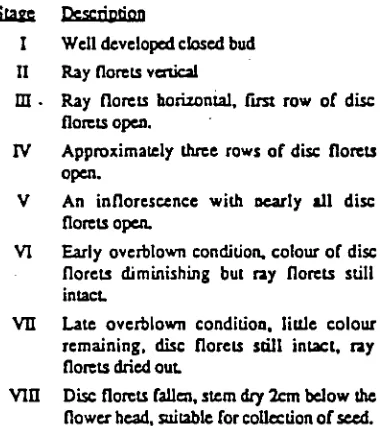
[image:22.557.170.362.90.303.2]VIII Disc florets fallen, stem dry 2cm below the flower head, suitable for collection of seed.
Figure 11.2.1 .a Scale of pyrethrum floral development stages (from Ilcahu and Ngugi, 1989)
Detailed investigations of the morphology, organisation and growth of the apical meristem of D. grandiflora during flowering have been published. The morphological changes form the basis of an arbitrary scale of reproductive development which has been widely used to quantify the flowering responses of chrysanthemum (Cathey and Borthwick, 1957).
0 Stem terminal flat; typical of vegetative condition 1 Stem terminal slightly enlarged
2 Stem terminal forming receptacle; first bracts present
3 Receptacle spherical with twelve or more bracts around its rim
4 Receptacle becoming flattened; many bracts but no floret primordia present 5 Two or three rows of floret primordia on rim of receptacle
6 About six rows of floret primordia on receptacle 7 Receptacle covered with floret primordia except at tip 8 Entire receptacle covered with floret primordia
9 A few floret prirpordia not yet having beginnings of perianth 10 Perianth present on all florets
11 Reproductive organs present on all florets
Figure 11.2.1.b Scale of generative apical development in Dendranthema grandiflora (from Cathey and Borthwick, 1957).
The initiation and further development of the reproductive meristems of cultivars 'Polaris' and 'Bittersweet' have been closely correlated with the size of the apex (Horridge and Cockshull, 1979. Cockshull and Horridge, 1980). Each stage of development is associated with a characteristic, narrow range of apical volumes, with different temperature and irradiance conditions having no influence on this relationship. Furthermore, there appears to be a critical size of apical dome, below which only leaf initiation occurs and above which bract and receptacle formation begins.
(Cockshull, 1985). Floral initiation is marked by the enlargement of the apical dome to form a receptacle and by the formation of bract primordia, which are initiated more rapidly than leaf primordia and are distinguishable by retaining an entire margin rather than forming a dentate margin (Schwabe, 1959). These become the involucral bracts which enclose the receptacle and floret primordia. Floret initiation begins around the outer edge of the receptacle and proceeds acropetally until the entire receptacle is covered.
When grown under certain environmental conditions the apical meristem may form a flower bud which fails to grow rapidly. It may have enlarged involucral bracts and is normally surrounded by leafy lateral shoots arising from the axils of the upper leaves. These buds are frequently referred to in the literature as 'crown' or 'break' buds (eg. Kofranek, 1980. Cockshull and Horridge, 1980. Popham and Chan, 1952. Chan, 1950). The development of these buds has been retarded or arrested by the environmental conditions in which they are growing, but they retain the potential to develop normally (Popham and Chan, 1952). Cockshull and Horridge (1980) have shown that these 'crown' buds display the same correlation between apical size and stage of reproductive development as floral meristems which develop normally.
2.2 Temperature effects
Vemalisation is an essential requirement for flower initiation and development in pyrethrum. Field experiments conducted by Glover (1955) revealed that the yield of pyrethrum flowers in East Africa is inversely related to the mean maximum temperature
buds. This cannot be regarded as the minimum vernalisation requirement as the plants were held in ambient conditions prior to and following the cold treatment and may have received a partial vernalisation stimulus from these conditions. The fact that one third of the untreated, control plants also flowered, albeit with a reduced flower number, supports this conclusion. No results have been published on the minimum duration or optimum temperature for vernalisation under controlled environment conditions even though vernalisation is accepted as the major environmental requirement for flowering in equatorial regions.
The yield of flowers and the pyrethrins content have been shown to increase with increasing altitude in East Africa. Muturi, Parlevliet and Brewer (1969) estimated that for every 360m in altitude there is an increase of 0.15% in total pyrethrins in the product. Using regression analysis on a series of mean temperature and percentage pyrethrins values, Kroll (1964) was able to predict a 0.03% increase in pyrethrins
content for every 0.56 °C (1 °F) decrease in temperature over the range 12.5 to 17.2 °C. This correlation is due to the temperature effect on pyrethrin synthesis and metabolism during flower development. No conclusions can be drawn from this study on any possible effects during flower initiation as the stated correlation is between percentage pyrethrins measurements and mean temperature readings taken in the same month whereas Glover (1955) indicated that initiation occurs some three months before harvest.
degree days values. Again, this study appears to be examining the temperature effects on flower development, although a high temperature inhibition of flower initiation cannot be ruled out from the data presented. This lack of separation between the plants flower initiation responses and flower development responses to various environmental changes is a common problem when analysing the published data derived from field trials. The results of field trials are usually expressed in terms of final flower yield, thus encompassing both flower initiation and development, and so are of little use in establishing the environmental requirements for, and influences on, flower initiation.
While the vernalisation requirement for flowering in D. grandiflora has largely been eliminated from cultivars selected for year-round flower production, earlier reviews examined the requirement in some detail. Basal shoots must be exposed to low temperatures for at least three weeks to obtain the maximum acceleration of flowering (Schwabe, 1950) with a temperature of about 4 °C being more effective than one of 10 °C (Vince, 1955).
The vernalisation stimulus is perceived by the apical bud (Schwabe, 1954) and also by meristems in the leaf axils and at the base of the plant (Schwabe, 1955). Axillary meristems which are formed below a vernalised bud and begin to develop after the period of vernalisation, flower normally. The basal growing points, which normally remain dormant until after the plant has flowered, lose their vernalised state over time and have to be revernalised at the end of the growing season in order to flower (Schwabe, 1955). Schwabe (1957) also showed that vernalised shoots can be devernalised by exposure to high temperatures (>24 °C) in low-light conditions, but only if this treatment is given within three weeks of vernalisation. A devernalised shoot can be revernalised by exposure to a second chilling treatment. The unvernalised and devernalised states appear to be equivalent, with both resulting in vegetative growth and the production of leafy rosettes.
The influence of temperature on flowering is not restricted to vernalisation. Temperature affects flower initiation and flower development in both cold-requiring and photoperiodic D. grandiflora cultivars. The various chrysanthemum cultivars flower over a wide range of temperatures. Cathey (1969) classified all chrysanthemum cultivars into three response groups;
1. thermopositive, flowering inhibited by low temperature, 2. thermonegative, flowering inhibited by high temperaure
This arbitrary system of classification reflects the differences in the optimum temperature for flowering of the various cultivars as the temperature response curves are similar in shape. Most cultivars in use today would be classified as thermozero, for they are capable of flowering over a wide range of temperatures (De Jong, 1978).While flowering can be accelerated by growing plants under optimum temperature conditions, the leaf number on the flower stem may not differ from plants grown at higher or lower temperatures (Cocicshull, 1979) indicating that temperature is influencing the rate of flower development rather than the initiation process. Analysis of clones selected for low temperature flowering shows that reduced sensitivity to temperature accounts for the ability tO flower at low temperatures rather than a reduced optimum temperature requirement (De Jong, 1989a).
Karsson et a/ (1989a) examined the interaction of light intensity and day and night temperature on chrysanthemum flower initiation and development under short-day (SD) conditions, and developed a functional model to predict flowering. Under low photon flux density (PFD) conditions flowering was inhibited by day temperatures less than 10 °C or greater than 23 °C with a night temperature of 30 °C. Flowering was
predicted to occur under all day and night temperature combinations in the range 10°C
to 30 °C at PFDs above 10.8 mole.m-2.day-1. The time to flower from the start of inductive conditions decreased non-linearly as PFD increased, with the greatest increases seen at lower PFDs (Karlsson et al, 1989b). Independent of PFD, the optimum day temperature for the cultivar studied was 17 °C and the optimum night temperature was 18 °C. Optimum temperature does, however, vary during flower development (Carlsson eta!, 1989c., Whealy et al, 1987).
2.3 Photoperiod and irradiance effects
Very high rainfall accompanied by persistent cloud cover generally results in a reduction in pyrethrum flower yield. It has been shown experimentally that 90% shade can reduce yield by 50% (Muturi et al, 1969). It is not discussed as to whether this yield reduction is a result of an inhibitory effect on flower initiation or simply a consequence of reduced photosynthesis and therefore reduced growth rate. The effect of light intensity on flowering is obviously another area of flowering research in need of further study.
D. grandiflora is a quantitative short-day (SD) plant. The critical photoperiod
varies from nine hours to sixteen hours depending on the cultivar and is influenced by both temperature and light intensity (Cathey, 1969). Flower bud development is also a SD response, but generally with a different critical photoperiod than initiation, and in certain cultivars is a qualitative SD response as plants are unable to develop their buds to anthesis in long days (LD). Flower initiation occurs eventually in all cultivars when grown in LD (Cockshull, 1985). Flower initiation under these conditions can be regarded as resulting from an autonomous induction process which proceeds independently of any external signal. Horridge and Cockshull (1979) suggest that the attainment of a critical size of apical meristem triggers this induction process (see Section 11.2.1). This hypothesis has been incorporated into a mathematical model which can predict quantities such as the number of primordia initiated by the apex, plastochron duration and the apical dome mass before, during and after the transformation of the apical meristem from vegetative to reproductive development (Charles-Edwards et al, 1979).
Photoperiodic induction requires the presence of expanded leaves (Cathey, 1969), although one leaf can be sufficient (Tanaka, 1967). Seven or eight SD in succession are sufficient for rapid flower initiation, producing a similar final leaf number below the terminal flower bud as for plants held in continuous SD (Kofranek and Halevy, 1974). Four SD in succession are less effective, but still induce flower initiation before it occurs in LD and at a lower leaf number. When fewer than eight SD are given in succession it is generally only the terminal apical meristem that is committed to floral development, forming a 'crown' bud. As more SD are given, so the number of axillary meristems committed to flower initiation increases in a basipetal progression (Cocicshull, 1972).
to 2.50 M.I.m-2.day-I (Cocicshull, 1972). Higher PFDs also increase the rate of flower development (Hughes and Cockshull, 1971a). The flowering response is related to the daily total of radiant energy rather than to the maximum irradiance (Hughes and Cockshull, 1971b). In addition, plants are capable of integrating the radiant energy received over at least two days and then responding accordingly, as the effect of low light intensity in one day can be countered by the provision of high light in the following day (Cockshull and Hughes, 1972). Higher daily solar radiation integrals increase the rate of flower development and decrease the number of days to flowering and the variability of flowering (Noble and Ellis, 1990). Light quality (spectral energy distributions) also influence flower development, with blue light significantly reducing stem length and stimulating lateral shoot development (Mortensen and Stromme, 1987). The effect may be mediated by phytochrome as the light has a high red (R) content but it is suggested that the blue to red light ratio also influences plant morphogenesis.
The number of leaves produced in LD before autonomous induction is similarly irradiance dependent, and is also increased by high or low temperatures (Cockshull, 1979). This similarity to the SD responses suggests that the inductive processes of the two daylengths have features in common. The influences of irradiance and temperature on the flowering response indicate that photosynthates form an essential part of the floral stimulus.
Night break (NB) lighting is used commercially to inhibit flower initiation and to promote vegetative growth. The inhibition of flower initiation becomes more pronounced as either the duration (Sachs, Kofranek and Kubota, 1980) or the photon flux density (Kadman-Zahavi and Yahel, 1971) of the NB light increases when given near the middle of the night. Under SD (8 hr) maximal delay of flower initiation is achieved when the NB is given within a 4 hour period at the middle of the dark period and is diminished if it is preceded or followed by 10 hours or more of darkness (Horridge and Cockshull, 1989). The amount of photosynthetically active radiation received during the day can also influence the effectiveness of a NB treatment, with more energy being required during the NB when the daily integral is high (Sachs
et al,
1980). Although there is no evidence that red light or dark reversion of phytochrome is changed by daytime irradiance, it is possible that the total phytochrome titre is affected and this in turn may determine the response to NB lighting.(FR) content (Borthwick and Cathey, 1962). Kadman-Zahavi and Ephrat (1973) found that FR illuminations after an 8 hour photoperiod delayed flowering and completely inhibited flowering when combined with a threshold amount of NB illumination. On the other hand, 20 minutes of red light at the start of the dark period alleviated some of the inhibitory effects of the threshold NB lighting (illumination which delayed but did not prevent flowering). Low levels of the physiologically active far red form of phytochrome (Pfi. ) during the early part of the dark period appear to promote flowering, particularly during the four hour period near the middle of the dark treatment. Sensitivity to high Pfr decreases after this time, as demonstrated by the diminishing effects of NB lighting. Night break treatments altering this balance are inhibitory to flower initiation.
2.4 Meristem competence
Parlevliet (1970) noted an irregular variation in the flower yields of thirty five different clones in the first season after planting, but in the second and third seasons, a very regular periodicity in yields was observed. In the second and third seasons all clones showed a very similar periodicity, with yield troughs occurring simultaneously and yield peaks showing a maximum difference of fourteen days. He proposed that the irregular pattern in the first year is most likely due to differences in the quality of the splits and establishment of plantings. The possibility exists that the difference between the splits was in their competence to respond to inductive conditions. Although the implications of a period of juvenility or unresponsiveness to conditions normally conducive to floral initiation are significant in terms of yield reductions following planting, the conditions or parameters of meristem competence have not been elucidated for pyrethrum.
of a minimum number of leaves, the number being a characteristic of each cultivar,
through a physiological ageing of the apical meristem (Cockshull, 1976). The
observation that plants must reach a minimum dry weight before becoming competent
to flower (Hughes and Cockshull, 1971a) is consistent with the view that the apical
meristem must reach a certain physiological age before it becomes responsive to
inductive conditions.
The phase of juvenility appears to be a property of the shoot tip as the period of
unresponsiveness is less evident in shoots arising from axillary buds on the main axis
(De Jong, 1981a). A gradient of increasing readiness to flower exists from the base to
the apex of seedlings. The apical meristem is, however, less competent to flower than
the top axillary meristems (De Jong, 1981a). Axillary meristems released from apical
dominance by decapitation of the main shoot are temporarily unresponsive to inductive
conditions but flower more readily than the main apex of intact plants, with the length
of the period of unresponsiveness varying with cultivar (De Jong, 1981b). Cuttings are
competent to respond to SD throughout the year whereas seedlings must produce a
minimum number of leaves before becoming competent to flower. The minimum leaf
number is dependent on photon flux density and increases as radiation increases
(De Jong, 1989b), but is not correlated with the rate of leaf initiation (Cockshull,
1976). This dependence on irradiance again implies a role for assimilates in the
flowering process, but the lack of correlation with the rate of leaf initiation or growth
rate indicates that the effect is not due to overall assimilate levels but may be due to
changes in distribution patterns. Meristem competence may rely at least partially on the
plant's ability to partition assimilates in a pattern which favours flower initiation and
development. Hormonal factors may influence this and other physiological changes
during this switch from juvenility to competence.
2.5 Defoliation effects
Removing all mature leaves from plants for four weeks prior to vernalisation prevents floral initiation, while removing all mature leaves during the vernalising treatment has no effect on initiation (Brown, 1988). It is suggested that the former treatment may have maintained the plants in a juvenile-like state of unresponsiveness. Plants maintained in a state of unresponsiveness continue to grow vegetatively, a desired characteristic for nursery multiplication of plants under Tasmanian conditions.
Defoliation of D. grandiflora after three weeks of vernalisation does not prevent initiation (Schwabe, 1957) while low light intensity combined with high temperature applied three weeks after vernalisation results in devernalisation. It appears that the devernalisation response is not a direct result of a decrease in the plant's carbohydrate status.
2.6 Growth regulator effects
The cytokinin, 6-benzylaminopurine (BA), when applied as a foliar spray, increases the shoot to root ratio, leaf area and chlorophyll content of field planted pyrethrum splits. BA tends to increase shoot dry matter of older plants but has little effect on splits immediately after planting. Gibberellic acid A3 (GA3) increases leaf area and shoot dry matter at early stages of growth, and when applied with BA, can increase leaf area, shoot to root ratio, tiller number, rosette height, number of flower buds per plant, flower stem elongation and pyrethrins content, and slightly increase flower weight (Mnzava and Mpina, 1988a).
The same authors (Mnzava and Mpina, 1988b) have reported that silver nitrate, a potent anti-ethylene agent, delays flower senescence when applied at the stem elongation stage or the flower opening stage but not when applied at bud initiation. The treatment also tended to lower the pyrethrin content irrespective of the floral development stage at application. While flower fresh weight increased when treated at the opening stage, those treated in the bud stage weighed less than water treated controls. It is inferred that normal development of flowers and maturity of achenes, whose inhibition reduces pyrethrins content, might be regulated at least partially by ethylene.
250ppm applied monthly to three month old field planted seedlings increased the yield of dried flowers and also slightly increased the total pyrethrins content. The absence of data on the endogenous changes in hormone levels during the flowering of pyrethrum precludes any conclusions being drawn on the physiological significance of the above results.
Gibberellins are generally reported as promoting floral initiation and development in D. grand iflora. The concentration of endogenous gibberellins in plant extracts rises when plants are vernalised (Tompsett and Schwabe, 1974). Gibberellin A3 can replace part or all of the vernalisation requirement in cold-requiring cultivars, although some negative results have been reported (Cockshull, 1985). While gibberellins and gibberellin-like substances have been reported both to promote (Pharis, 1972) or to have no effect on flower initiation (Cathey and Stuart, 1958), there is more evidence to suggest that they promote flower development and hasten anthesis (eg. Menhenett, 1979). In addition, extracts from apical buds of induced plants (Parups, 1980) and from young flower buds (Jeffcoat and Cockshull, 1972) contain high concentrations of gibberellin-like compounds. Flower stem extension can be reduced and flowering delayed by the application of a range of growth retardants. These growth restrictions can generally be reversed by subsequent applications of GA 1, GA3, GA5, or GA4+7. GA13 is much less active while GA5 has a relatively greater effect on the time of flowering than on shoot elongation (Menhennett, 1981). The response to GA9 varies according to the retardant used as certain retardants not only block gibberellin biosynthesis but also wholly or partly restrict the metabolism or action of the endogenous gibberellins (Menhennett, 1982).
Langton, 1979). Unlike ethylene and propylene, the effects of ethephon are persistent, perhaps because the plant tissues are stimulated to produce ethylene (Cockshull and Horridge, 1978). Ethephon delays flower initiation, reduces stem elongation and reduces apical dominance. The effect is generally greater when applied closer to the apical bud although ethephon is translocated out of the leaves within twelve hours (Stanley and Cockshull, 1989).
Auxins have also been reported to inhibit flower initiation in chrysanthemum. In the cold-requiring cultivar 'Sunbeam' auxin levels increase after vernalisation but decline rapidly, while a rise in auxin-oxidising activity is also observed (Tompsett and Schwabe, 1974). Extracts from vernalised plants held in LD contain higher auxin levels than those in SD and fail to flower. Low light intensity treatment or exogenous auxin applications reduce gibberellin-like substance levels and cause devernalisation. Jeffcoat and Cockshull (1972) also detected a rise in auxin activity in flower buds shortly after initiation, followed by a decline. Application of auxins alone (Graves, Adams and Winsor, 1977) or in combination with GA3 (Cockshull, 1985) delay flower initiation in SD, and may also delay flower development (Lindstrom and Asen, 1967) although this is not always observed (eg. Menhenett, 1979). Graves et al (1977) concluded that auxin delays flower initiation but not development, with lateral shoots further down the stem showing the greatest delay. Plants treated with ethylene also contain higher levels of auxin than untreated plants (Tjia, Rogers and Hartley, 1969) suggesting that the two hormones may both be operating in the same inhibitory process.
2.7 Other factors influencing flowering
The majority of studies on the flowering of pyrethrum have centred on the effects of cultivation practices such as plant spacing, irrigation, ridging and in particular fertilizer use. Conflicting reports on the effectiveness of nitrogen, potassium and phosphate applications in increasing flower yields have been published. Nitrogen has been reported to increase yields (eg. Alvord, 1976. Hussain and Ram, 1976) and to have no effect (eg. Rajeswara Rao, Singh and Prakasa Rao, 1983. Ngugi and Ikahu, 1989) and similarly both potassium and phosphate applications have been observed to cause yield responses ranging from no effect to significant increases (eg. Hussain and Ram, 1976. Rajeswara Rao
et al,
1983. Sastry and Singh, 1990). It appears obvious that the nutrient status of the soil in which the plant is growing determines the effectiveness of nitrogen, phosphate and potassium applications and that the effect of fertilizers is on plant growth and not directly on flower initiation.Sastry
et al
(1987) showed that increasing soil pH up to 6.5 - 7.5 significantly increased flower yield in acid soils, while an increase in soil reaction above 7.5 decreased yield. No differences were observed in pyrethrins content of flowers due to the treatments. Kroll (1962) also observed that raising the pH of acid soils can result in increased flower yields. An increase in the availability of certain mineral nutrients, particularly nitrogen and phosphorous, from the soil at neutral or slightly acid pH would result in more vigorous plant growth and hence increased flower yields. Similarly the yield increases associated with vesicular-arbuscular (VA) mycorrhizae innoculation of seedlings (Kandasamyet al,
1986) can be attributed to nutritional effects through increased phoshorous uptake.Irrigation has been reported to increase flower yield (Kroll, 1963. Alvord, 1976) but cannot extend the flowering season in Kenya into the dry season (Kroll, 1963). Rand (1990) reported that water stress had no effect on flower initiation but resulted in a decrease in flower dry weight and flower number (possibly due to flower abortion), particularly when applied late in flower development, at flower stage II or later. Again it is likely that the effect of irrigation on flower yield is through a response in plant growth.
may have on the flowering response.
2.8 Summary : flowering of pyrethrum
Serious deficiencies exist in our present understanding of the flowering process in pyrethrum, particularly under temperate, low altitude environmental conditions. Published research data are generally based on agronomic trials in tropical, high altitude regions which emphasise the effects of environmental and cultivation factors on the time from sowing to harvest and on yield components, but fail to differentiate between the effects on flower initiation and on flower development. It has been possible, through careful examination of these reports and the published material on the flowering of D.
grandiflora,
to ascertain the principal environmental influences on the flowering of pyrethrum.A period of vernalisation is the principal requirement for the rapid initiation of
flowers in pyrethrum. A night temperature below 16 °C for between two and six weeks has been cited as fulfilling the vernalisation requirement. Maximum temperature during the period of vernalisation can modify its effect, with mean maximum temperatures of
24 °C or higher for a week causing inhibition of flower bud initiation. Analysis of field data has shown that over ninety percent of yield variation is due to the combined effects of mean maximum and minimum temperature, indicating that, for equatorial, highland areas, a vernalisation stimulus under moderate maximum temperature conditions controls flower bud initiation and development in pyrethrum.
The observation that low light intensity may be inhibitory to flower initiation is supported by the published data on the flowering behaviour of D.
grandiflora.
Low light intensities combined with high temperatures have been shown to devernalise plants, while chrysanthemum flower development is hastened by increasing light intensities.The micromorphological changes at the apex during floral evocation and the physiological mechanisms which control these changes in pyrethrum are not known. The first priority for research in this area must be to identify the changes in apical morphology during evocation. Quantifying the plant's responses to environmental stimuli, and separating the effects on initiation and flower development, are then possible. The specific reactions involved in evocation can only be studied through an understanding of the morphological and physiological changes involved.
The few experiments that have been carried out with pyrethrum on the action of plant growth regulators indicate that they play a regulatory role in flower development and possibly initiation. However to determine the physiological significance, if any, of these observed responses to exogenous plant hormone applications the endogenous metabolism of plant hormones during flowering must be known. This area of research is needed to link environmental stimuli to the plant's morphological responses. Using the information available on the physiological and morphological aspects of floral initiation and development in chrysanthemum as a guide, this study examines the early changes during the flowering of pyrethrum and some of the physiological reactions controlling flowering.
The remainder of this review summarises our present understanding of the flowering process. The emphasis is placed on the early physiological and morphological events at the apex which are associated with floral initiation. Environmental stimuli and the correlative influences which affect these events are discussed along with the possible endogenous chemical substances which regulate the flowering process.
3. Floral initiation and development
3.1 Meristem competence
Not all shoot meristems can react to conditions that otherwise are known to
promote flowering. In many species of higher plants, and particularly in woody plants,
a period of juvenility exists between germination and the time when the plant becomes
competent to respond to inductive treatments. A juvenile-like condition may also exist
in plant material taken as cuttings from older, non-juvenile plants. The juvenile period
in herbaceous plants is generally short and until recently was attributed to physiological
limitations in other plant parts, especially the leaves, and not to meristem incompetence.
Recent genetic and physiological studies have indicated that this is an oversimplistic
view as juvenile meristematic cells may be intrinsically different from the meristematic
cells of mature, competent shoots.
The juvenile phase commonly lasts until the plant has reached a minimum size or
stage of development, after which reproductive development can be induced. The
commitment to form flowers is correlated with the number of nodes produced by a
meristem in tobacco (Singer and McDaniel, 1986) while in the raspberry, shoots of
fewer than fifteen nodes do not respond to inductive treatments and blackcurrant
cuttings with fewer than twenty nodes cannot be induced to initiate flowers (Schwabe
and Al-Doori, 1973). In the latter case the juvenile-like condition is associated with the
proximity of the shoot tips to the roots as aerial rooting on long, mature shoots prevents
flower initiation. Gibberellin activity is detected in the roots and lower parts of the
stems but not in the tops of long (mature) shoots, and it is suggested that this may be
decisive in determining juvenility in the blackcurrant and possibly other species.
Bidens (Poulhe, Arnaud and Miginiac, 1984) and the axillaries in Pharbitis (Owens and Paolillo, 1986).
In PiSUM, the length of the juvenile phase is controlled by several genes (Murfet,
1985). Two of these genes have been shown to act in the leaves, and their activities decrease as the plant ages. A third gene acts at the apex and influences its ability to respond to the balance between floral promoter(s) and inhibitor(s). The Veg gene, when homozygous recessive, totally prevents flower initiation in the most favourable conditions or after grafting to the most promotory donors, but does not affect normal vegetative development. Studies of these and other genetic mutants offer the greatest opportunity to understand the molecular and cellular mechanisms of meristem competence.
Juvenility or meristem incompetence can be attributed to several physiological systems. Firstly, and most frequently observed in annual plants, floral expression by meristems may be restricted by insufficient photosynthetic capacity and/or other metabolic limitations in the leaves. Secondly, other correlative influences such as apical dominance and the activity of the root system may maintain meristems in a juvenile condition. These influences are discussed further in Section 11.6. Thirdly, 'true' juvenility or the inability of a meristem to respond to floral
stimuli
produced in the plantcan occur. This implies an intrinsic difference between cells
in juvenile and competent
meristems. The development of new techniques and protocols for the quantitative
detection of minute quantities of proteins, genetic material and plant growth regulators
offers hope that the molecular and cellular basis of juvenility may be unravelled in the
near future.
3.2 Floral initiation
The morphological and physiological changes associated with the switch from
vegetative to generative growth have been well reviewed (Bernier, 1988. Bernier
et al,198 lb. Murfet, 1977. Zeevaart, 1976). Most of this work is based on a small number of species which are considered absolutely photoperiodic. These species have been considered ideal for flower initiation studies as a single inductive photoperiodic cycle results in an irreversible commitment to flowering, allowing experimental observations of physiological and morphological changes.
processes. Using species requiring exposure to only one photoinductive cycle, the start of evocation is assumed to be the time of arrival at the apex of the leaf-generated floral stimulus. The situation becomes more complex for species requiring more than one photoinductive cycle or other inductive stimuli, and even for the model plants dramatic changes may be observed in the meristem prior to the arrival of the floral stimulus (Bernier, 1988). The start of evocation is thus difficult to determine accurately. Likewise the end of evocation or floral determination, the point at which the meristem is irreversibly committed to flower formation, has not been accurately characterised experimentally. Bernier (1981b) considers that floral determination of Sinapis occurs when inhibitors applied to the apex can no longer prevent flowering. This point occurs before any visible, macromorphological signs and at about the time most histological changes start, indicating that evocation is essentially a molecular and cellular process whose completion triggers the changes at the higher levels of organisation. Excision and tissue culturing of DN tobacco has revealed that internode tissue, not organised in meristems, becomes florally determined at about the same time as determination of the apical bud (Singer and McDaniel, 1987), supporting the observation that evocation is essentially a molecular and cellular process.
During the process of floral evocation and the subsequent formation of flowers, the apical cells begin to express a set of genes that are not expressed in the vegetative phase of growth, and these changes can later be detected by the presence of organ-specific proteins. Two views have been put forward concerning gene expression during evocation; the first states that the switch to flowering primarily requires a change in gene expression which sets in motion the complex sequence of all other changes while the second proposes an unspecific activation of the meristem, with changes in the expression of genetic information for the geometry of the generative growth pattern following the elimination of the vegetative growth pattern. To date, no changes in gene expression have been detected until after floral determination is morphologically evident (King, 1991). This suggests that an early but non-specific activation of the meristem occurs before floral-regulatory genes are expressed. Limitations in the resolution of the current techniques may, however, mean that early expression of floral genes has simply not been detected. More work in this field is necessary before either of the above views can be rejected.
fractions occurs early in the evocational sequence (Bernier et al, 1981b) and that the protein complement may be altered before flower primordia are initiated (Pierard et al,
1980). These changes are to be expected as flower development must be associated with a change in gene expression in the meristem, whether it be the primary action during evocation or a secondary result of other fundamental changes. In Pharbitis, the differences between evoked and non-evoked apical meristems is remarkably subtle with very few consistent quantitative differences in the pattern of polypeptides at the early stages of flower formation (Araki and Komeda, 1990).
A powerful combination of new gene isolation techniques is now yielding new information that will provide a conceptual understanding of the molecular basis of flower induction and development. Genes involved in the flowering process have been isolated and cloned from both Sinapis (Melzer, Majewski and Apel, 1990) and tobacco (Kelly et al, 1990). This work has lead to the division of the genes involved in flowering into two classes : the regulatory genes whose primary function is to modulate the activity of other genes, and the genes whose products form a functional part of the flower. Identifying and understanding the functions of these genes may provide some insight into the early events of flowering. A model based on the effects of three major regulatory genes in Arabidopsis has already been proposed for early floral organ development which accounts for the specification of all types of floral organs observed (King, 1991).
Other molecular changes reported during evocation include rises in sucrose and ATP levels, invertase activity, mitochondrion number and energy charge (Bernier et al,
1981b). Since only minute amounts of meristematic tissue are available for analysis, the need for sensitive preparatory and analytical techniques is obvious if meaningful measurements of molecular changes are to be made.
3.3 Apical morphology and floral development
The changes in apical growth pattern observed during generative growth reflect the profound alteration from vegetative production of leaves to the formation of the various reproductive structures. Some changes are common to many, if not all, plants while others are specifically related to the kinds of reproductive structures that will be formed.The changes in apical morphology during the flowering of D. grandiflora have already been detailed (Section 11.2.1) and it is my intention to review not just the changes observed for it and related species but also the many different and varied changes in apical growth patterns observed, with particular reference to those events which give an insight into the physiological processes involved.
Activation of the central zone of the apical meristem, resulting from the loss of the zonate pattern typical of many vegetative meristems, is one of the commonest and earliest changes during initiation. This change does not signify the end of evocation in
Dendranthema as the resultant domed apices may persist in vegetative growth (Horridge and Cocicshull, 1979). Nougarede (1967) describes meristems such as these as 'intermediate' (or prefloral) while Bernier (1988) suggests that evocation in the apex has started but cannot be completed as only some of the endogenous controlling factors are available.
While enlargement of the apical dome in D. grandiflora (Horridge and Cockshull, 1979) and other Asteraceae species (Sharman and Sedgley, 1988) is essential for flower initiation, as the apex must reach a critical minimum size for flowering to begin, an absolute size requirement is not a universal determinant of flower formation. The meristem of Impatiens does not change size during initiation (Lyndon and Battey, 1985) while the Humulus meristem becomes smaller (Thomas and Schwabe, 1970).